
Módulo 1000: Psychedelia Beyond the Walls of Brazilian Rock
This article by Patrícia Marcondes de Barros explores the story of Módulo 1000, their place in Brazil’s underground rock scene, the making of ‘Não Fale com Paredes’, and Luiz Paulo Simas’s memories of the band’s music, censorship, experimentation, and later legacy.
Amid the cultural ferment that, from the 1960s onward, transformed behaviors, sensibilities, and forms of expression, Brazil experienced a profound tension between creativity and repression. On one side was a generation of young people eager for new aesthetic experiences and alternative ways of life; on the other, the increasingly restrictive environment imposed by the military dictatorship. Within this context, artistic production became a privileged field of experimentation, as different forms of expression sought to break away from established conventions. Music, in particular, opened the door to sounds that challenged prevailing ideas and expanded the boundaries of what could be heard, created, and imagined.
The best-known narratives of Brazilian music during this period tend to revolve around two major currents. On one side was the protest song, directly associated with the political tensions of the era. On the other was Tropicalismo, which profoundly reshaped the relationship between popular music, mass culture, tradition, and modernity. Between these poles, however, another, less familiar musical production was taking shape: musicians were exploring new possibilities for Brazilian rock, incorporating elements of progressive rock, psychedelia, and hard rock while drawing on diverse musical backgrounds and traditions. The resulting sounds did not always fit neatly into a single category.
It is precisely within this borderland that the story of Módulo 1000 unfolds.
A Heavy Sound and a City in Transformation
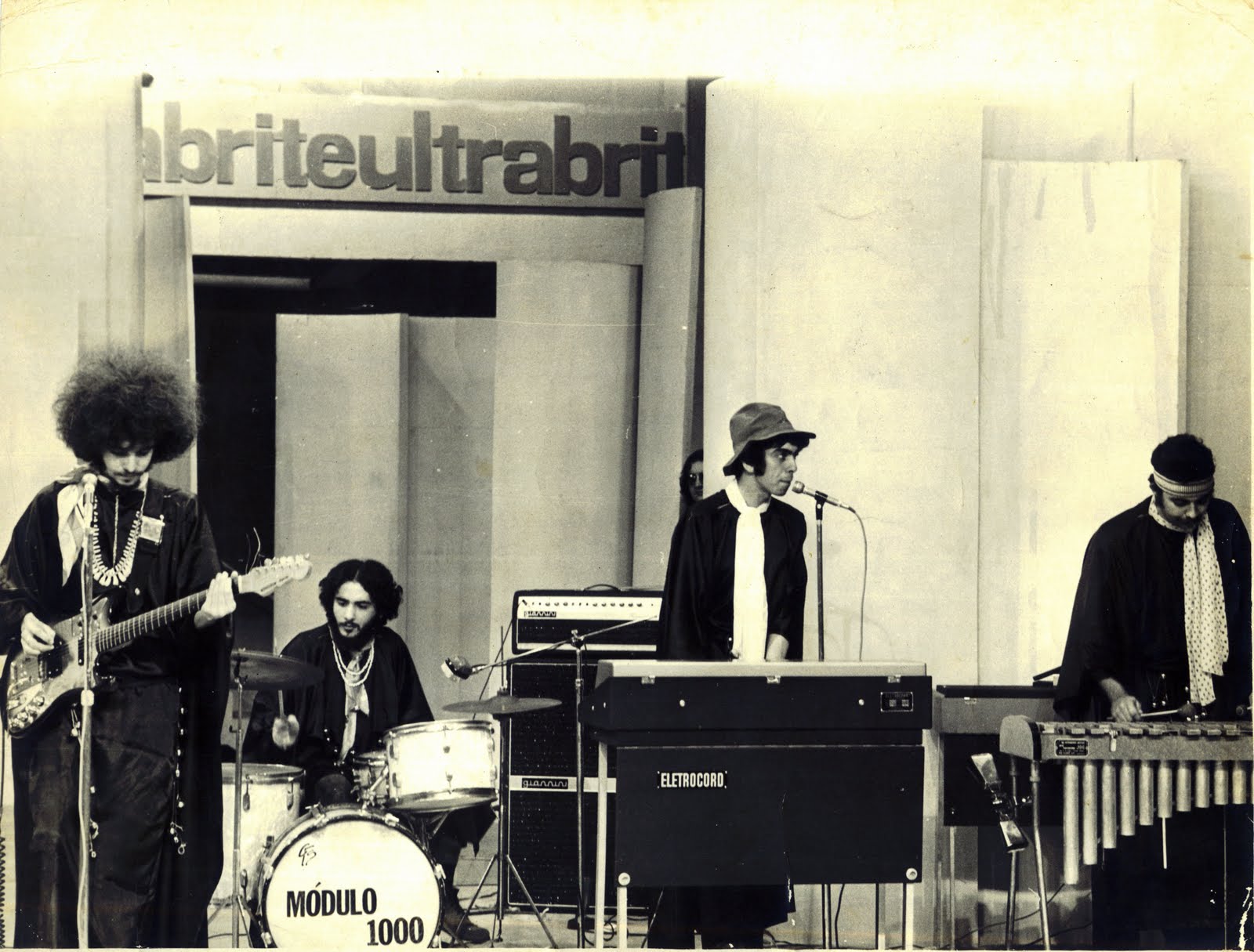
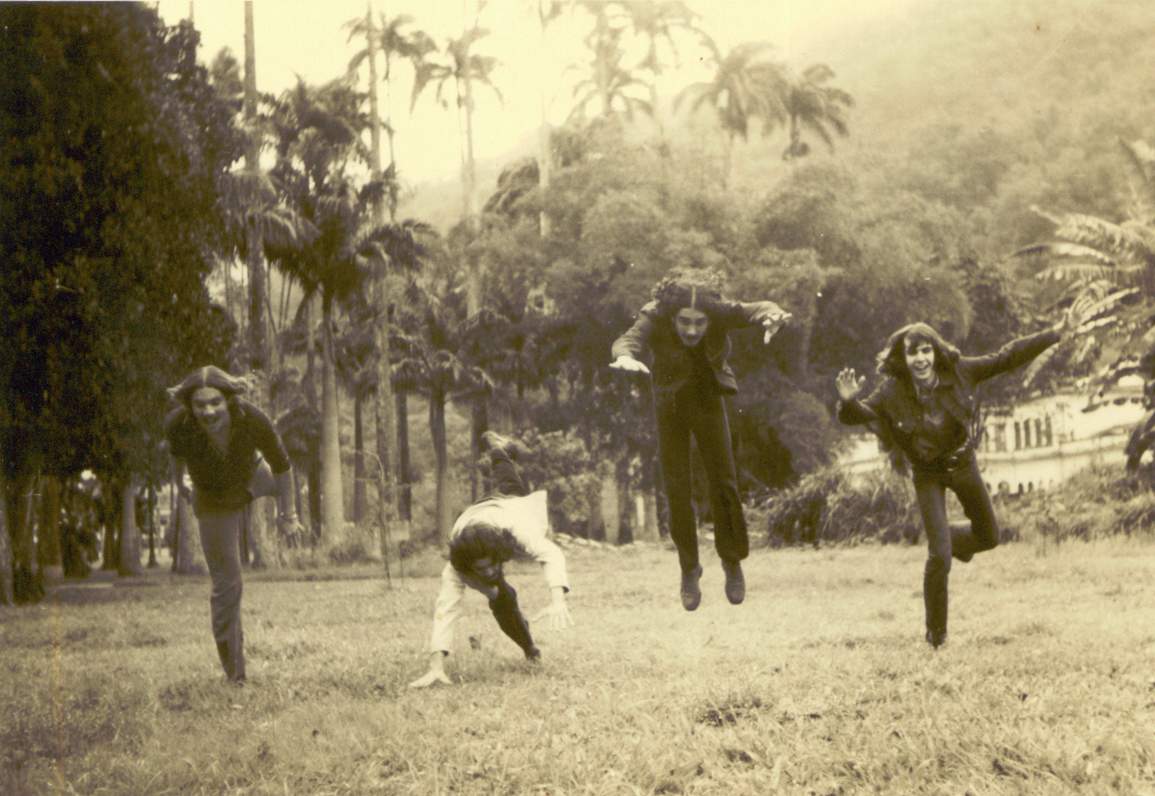
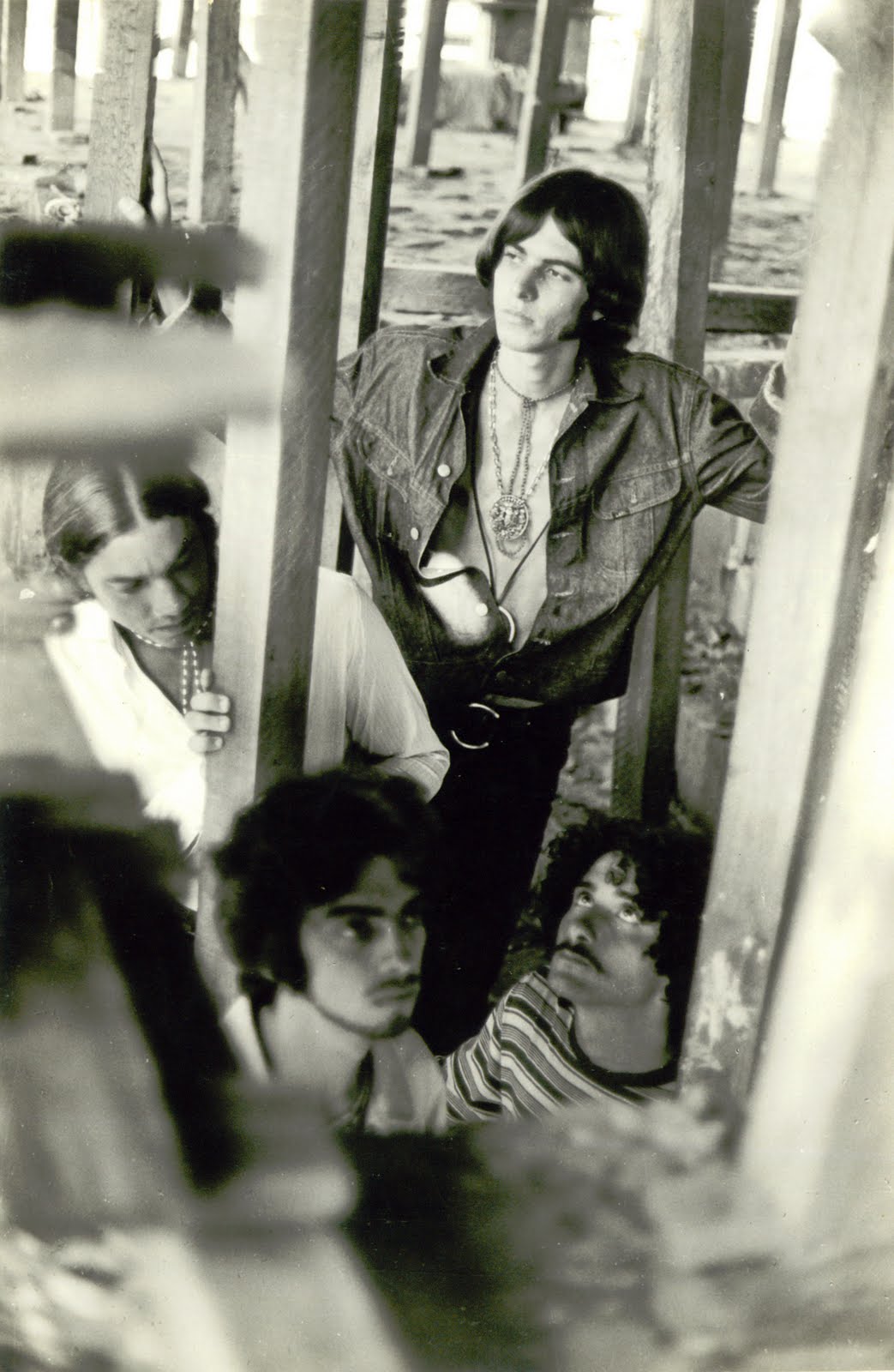
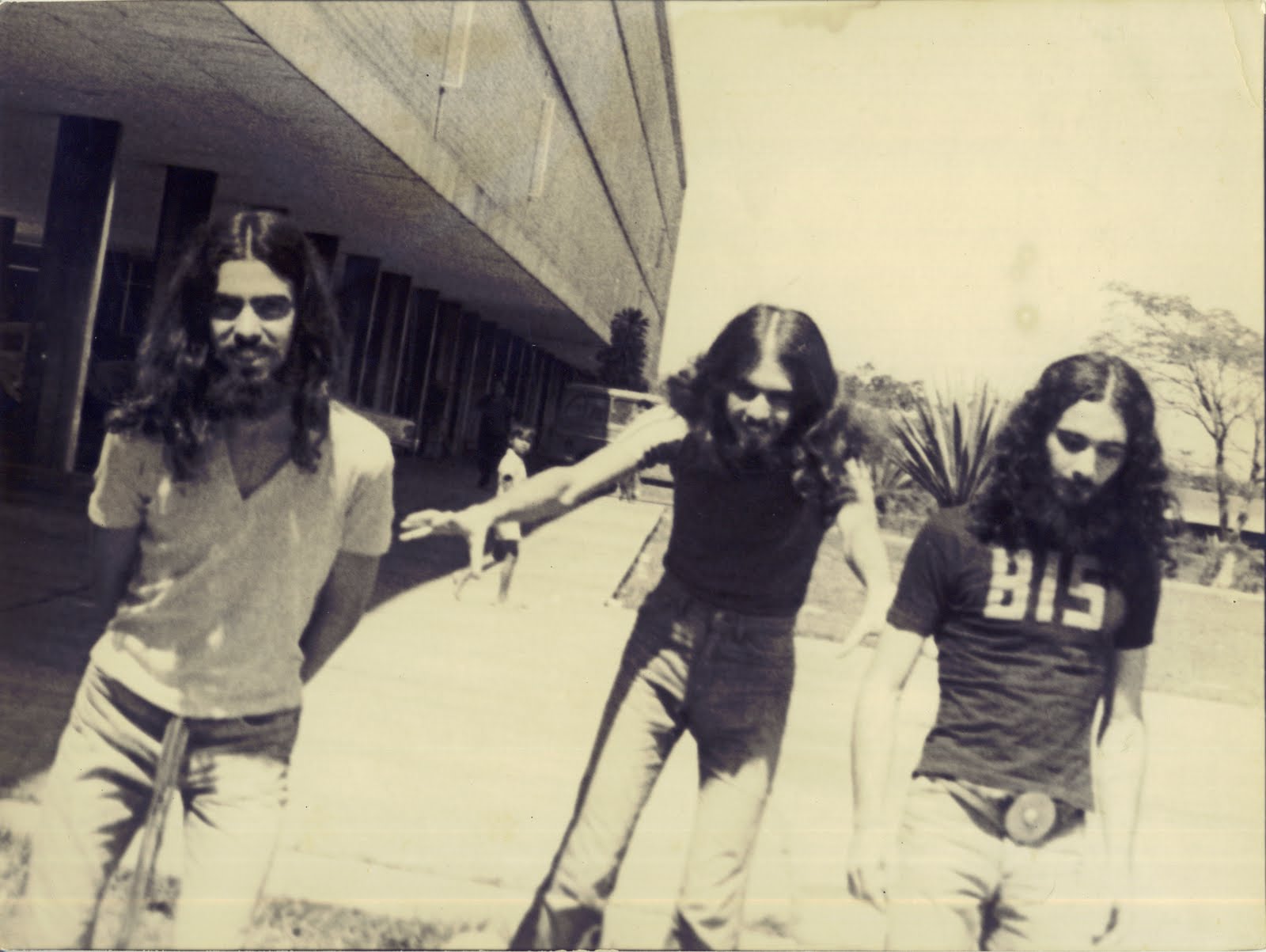
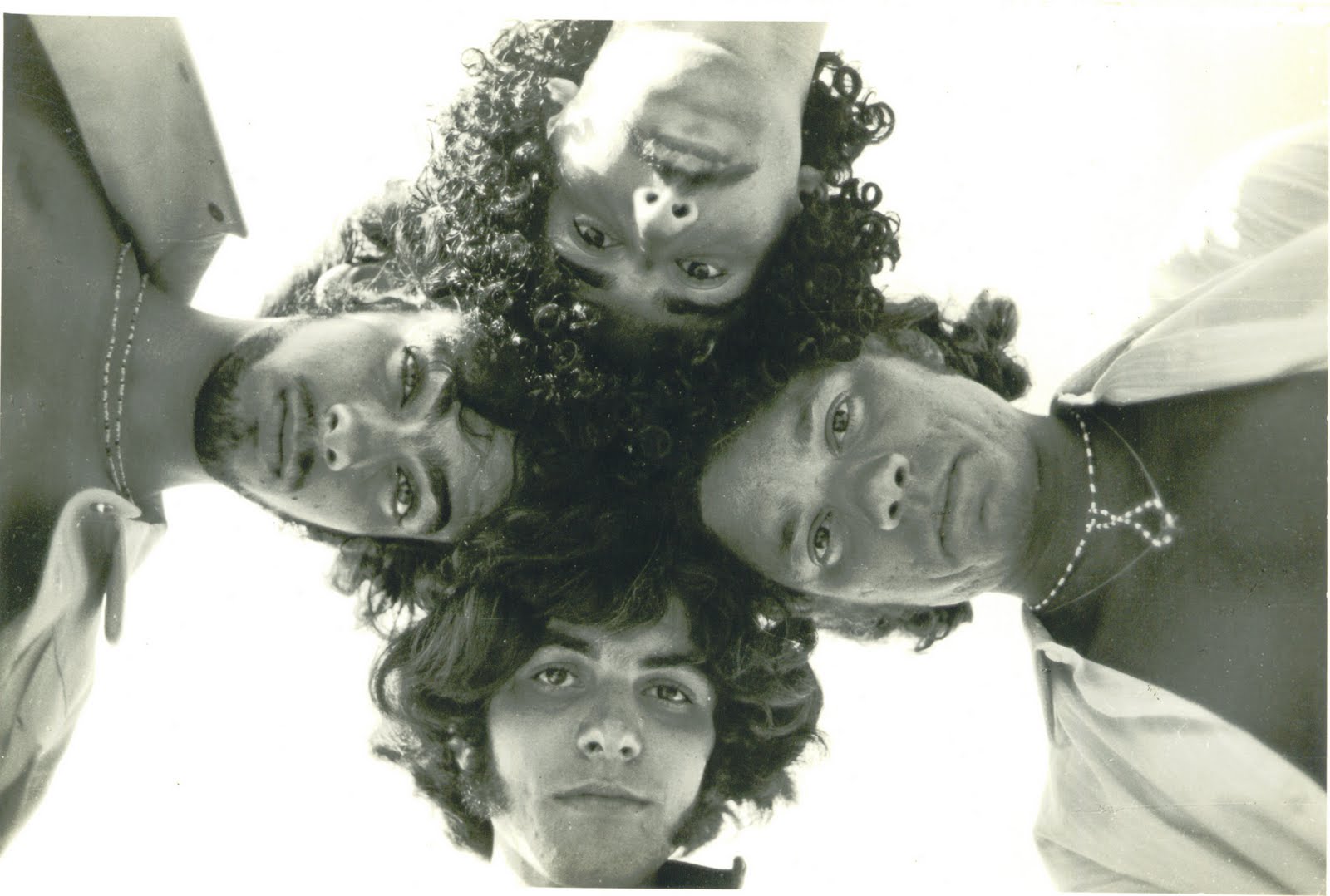
In late-1960s Rio de Janeiro, a group of young musicians from the city’s South Zone began developing an experience that emerged from the dance-music circuit but soon moved in other directions. Initially formed as a sextet, Módulo 1000 gradually evolved into a quartet, increasingly embracing the sound of artists such as Jimi Hendrix, Steppenwolf, and Deep Purple.
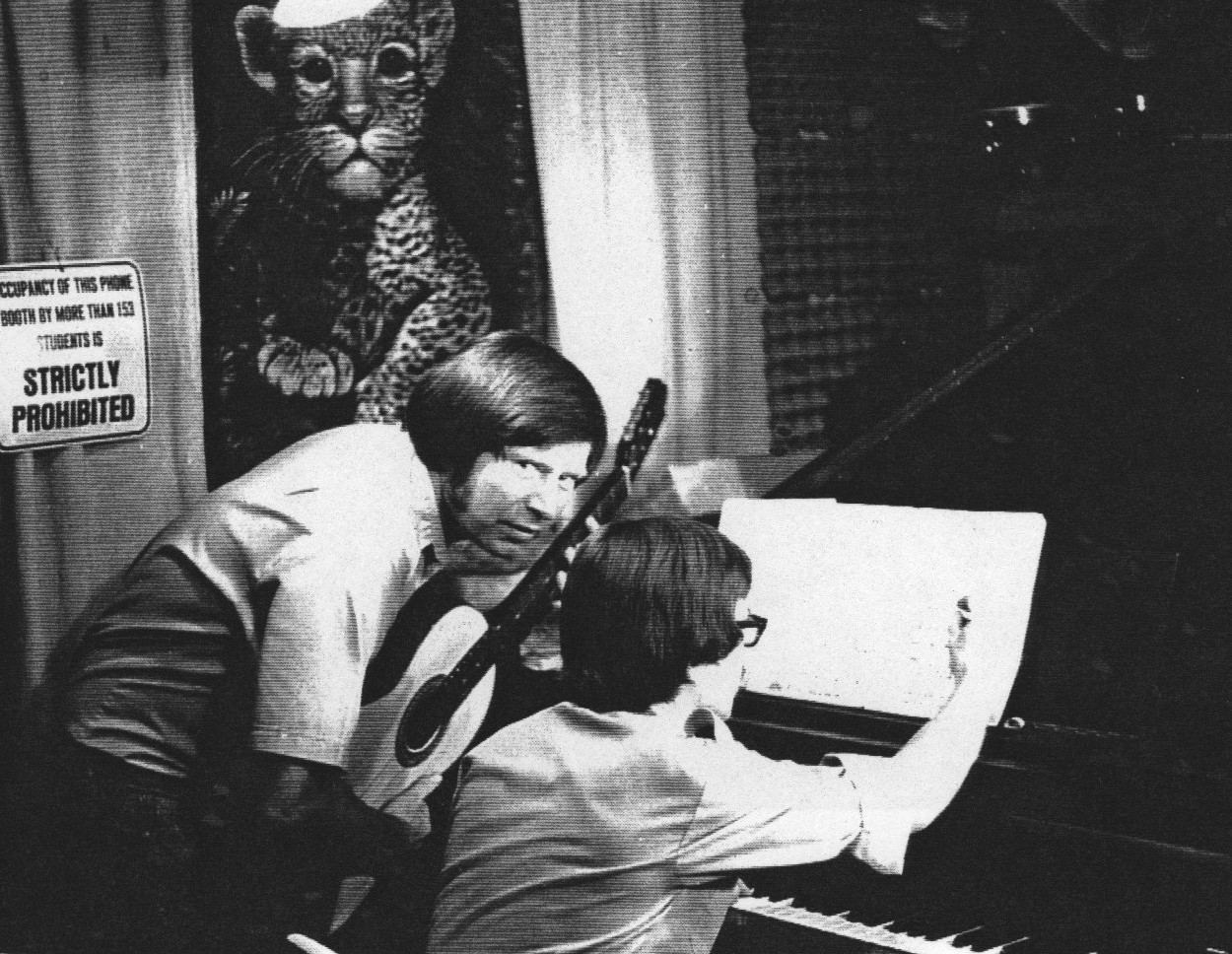
Among the musicians who became part of the quartet was Luiz Paulo Simas, whose musical background was rooted in classical music and bossa nova. The keyboardist began to feel the need to move beyond the cover versions that formed part of the band’s repertoire and advocated writing original songs in Portuguese. This shift would become fundamental to the band’s identity.
A period spent in São Paulo intensified this process. Contact with the city’s music scene brought the musicians closer to the experiences associated with Tropicalismo and underground rock, encouraging the band to stop thinking of rock merely as a repertoire to be reproduced and instead to approach it as a language to be reinvented.
Back in Rio de Janeiro, Módulo 1000 encountered a particularly fertile musical environment. Groups such as O Terço, O Peso, and A Bolha performed in venues where original music could find an audience, including the Instituto Villa-Lobos in Flamengo. The band also took part in events such as ‘Aberto Para Obras’, becoming part of a network of musicians interested in developing their own musical languages.
Amid electric guitars, keyboards, amplifiers, and sound effects, international influences were absorbed and reworked through local experiences. Conventional song structures gave way to improvisation, guitar-driven heaviness, and experimentation, expanding the possibilities of musical creation in Brazil.
According to Simas, the process was essentially intuitive: the songs emerged from what the four musicians listened to, played, and discovered together.
Módulo 1000’s music would later be described in a variety of ways: hard rock, psychedelia, progressive rock, proto-metal, and experimental rock. The range of labels itself reveals how difficult it is to fit the band’s work into a single category. Módulo 1000 seemed to exist precisely between them.
‘Não Fale com Paredes’: When a Breach Became a Record
The opportunity to document this musical experience emerged through the band’s encounter with Ademir Lemos, an influential DJ and producer who moved with equal ease between dance halls and the offices of the Top Tape record company. Founded in the 1960s by businessman Nelson Motta and initially focused on importing magnetic tapes and licensing international hits, the Rio-based company gradually established itself in the Brazilian market through independent and adventurous productions.
Lemos already knew Módulo 1000 from the dance circuit and recognized the band’s potential. His involvement created a crucial bridge between the group’s unconventional artistic ambitions and the infrastructure of the recording industry. Through Top Tape, music that had emerged from alternative circuits found a path into the commercial record market.
The recordings made in 1971 at the Musidisc studio in Lapa, Rio de Janeiro, resulted in the album ‘Não Fale com Paredes’, released by Top Tape in 1972 under catalog number TT-1000. The LP contained nine tracks: ‘Turpe Est Sine Crine Caput’, ‘Não Fale com Paredes’, ‘Espêlho’, ‘Lem-ed-êcalg’, ‘Ôlho por Ôlho, Dente por Dente’, ‘Metrô Mental’, ‘Teclados’, ‘Salve-Se Quem Puder’, and ‘Animália’.
The record condensed some of the characteristics that made the group so distinctive: heaviness, psychedelia, unpredictable structures, and formal freedom. But it was not only the music that resisted conventional patterns. The lyrics also contributed to the album’s atmosphere of estrangement.
Music, Words & Danger
The album’s lyrics are economical and often fragmentary. Rather than constructing conventional narratives, Módulo 1000 worked with images, expressions, and linguistic games. Latin appears alongside Portuguese; everyday words coexist with unusual expressions; and the titles evoke mental states, conflict, displacement, and survival.
There is no need, however, to turn every track into a political allegory of the dictatorship. As Luiz Paulo Simas points out, the songwriting process was also intuitive: a song could emerge from a subjective experience and later acquire different resonances when placed within a particular historical context. This distinction makes it possible to understand the album without reducing its complexity to the political circumstances of its time.
Language, however, is never entirely neutral, particularly under a dictatorship. Censorship interfered with what could be published and circulated, but there was also a less visible dimension: the constant awareness that a word, image, or behavior might be interpreted as threatening.
The danger, therefore, did not lie only in explicitly saying something prohibited. It could also lie in being interpreted in a way the artist had never intended.
The song ‘Turpe Est Sine Crine Caput’ illustrates this zone of ambiguity. The Latin expression can be translated approximately as “A hairless head is shameful” and referred, within the band’s universe, to long hair and the transformations in youthful appearance and identity. The use of Latin, however, added another layer of estrangement, turning what might have been a simple reference into something enigmatic.
The episode involving the authorities made this characteristic even more significant. There are accounts that officials interpreted the song as a possible coded and subversive message. Regardless of the musicians’ original intention, the episode reveals how repression itself could generate meanings. A Latin expression, a band of long-haired young men, and music that resisted easy classification could all become signs of suspicion. This is where the album’s lyrics become interesting, not primarily as a collection of explicit political statements, but as part of a cultural atmosphere shaped by ambiguity.
The title track offers perhaps the most suggestive key to understanding the album. ‘Don’t Talk to Walls’ is, at first glance, a simple expression: there is no point talking to someone who does not listen, respond, or care. But a wall also separates, blocks passage, establishes boundaries, and conceals what exists on the other side. Placed against the historical experience of the dictatorship, the image acquires a particular resonance.
The “wall” can assume much broader meanings: censorship, family, morality, society, the police, cultural conventions, or the limits individuals encounter when trying to express what they think. There is also a particularly suggestive dimension when the title is considered in relation to surveillance. The strength of the album’s title lies precisely in its openness. It can refer to difficulties in communication, family and generational conflicts, social barriers, or the impossibility of freely expressing certain opinions. Módulo 1000 does not explain the wall. It leaves the listener standing before it.
Beyond the Walls…
The history of Módulo 1000 allows us to approach Brazilian rock of the early 1970s from a less predictable perspective. Rather than focusing exclusively on the movements and artists that would later become central to the established narratives of Brazilian music, we can look at a network of experiences that remained partly hidden in the margins of history.
This territory included bands experimenting with extended structures, psychedelic sounds, heaviness, improvisation, and emerging technologies; musicians moving between different musical traditions; and young people beginning to recognize rock not simply as foreign music, but as a language capable of expressing new sensibilities.
The album matters not merely because of its heavy sound or because it was later associated with progressive rock, psychedelia, proto-metal, or experimental rock. Its significance also lies in the attempt to create something new at a moment when the boundaries of these languages were still being defined in Brazil.
The band’s freedom was not necessarily expressed through explicitly political lyrics. It could also be found in the way the musicians played, the length of the tracks, the combination of influences, the choice of words, the use of Latin, the strangeness of the titles, and the refusal to fit neatly into a single category.
For this reason, ‘Não Fale com Paredes’ can be understood as a document of a generation experimenting with new ways of existing and creating.
The walls were everywhere: in politics, family, morality, criticism, the music industry, and language itself. Módulo 1000 did not tear them all down. But it found a way to make music beyond them.
To expand this perspective, Luiz Paulo Simas, keyboardist and composer of Módulo 1000, shares his memories of the band’s formation, its musical influences, and the creation of ‘Não Fale com Paredes’.
Interview with Luiz Paulo Simas
In the late 1960s, Rio de Janeiro was experiencing an intense transformation in its music scene, with the emergence of new bands, performance venues, and new ways of circulating rock music. What were the circuits and references that nourished that scene, and how did you, Daniel, Eduardo, and Candinho come together?
Actually, I was first invited by the members of a dance band because they had obtained a contract that required the group to have an organist. The contract was to play at a new nightclub in São Paulo, ‘Katraka’. I accepted, it was my chance to leave the Architecture program at university (I was halfway through my second year) and devote myself entirely to music.
I left my parents’ house and moved to São Paulo with the group, which already had the name Módulo 1000. At that point, the group was still a sextet, with a vibraphonist, who was the band’s leader, and a female singer. We played foreign pop hits and some Brazilian popular music.
Later, the group became a quartet, without the vibraphonist or the singer. Our repertoire shifted more toward rock in the style of Jimi Hendrix, Steppenwolf, Deep Purple, and others. We stayed in São Paulo and Santos, at Praia Grande, playing at dances for two years.
Over time, coming from a background in classical music and bossa nova, I felt a strong need to compose our own songs in Portuguese, and I brought this idea to the group. Later, we returned to Rio.
In Rio, as you said, the music scene was very vibrant, with many bands performing original music, Equipe Mercado, O Peso, A Bolha, O Terço, and many others. One of the main venues for these bands was the Instituto Villa-Lobos, in Flamengo. We also performed at a special event in downtown Rio called ‘Aberto Para Obras’, together with O Terço and Charanga.
Módulo 1000 emerged during a period of intense political tension, but also of intense artistic experimentation. Looking back at those songs today, what stands out is the mixture of languages and the willingness to break with more conventional formats of rock and songwriting. To what extent did the environment in which you lived, with its restrictions, prohibitions, and contradictions, influence, perhaps indirectly, what you created and presented on stage?
Our nature was never to conceptualize first; the works emerged from an essentially intuitive impulse. Therefore, the environment and the period had a strong influence on our creations. Our lyrics were minimalist, consisting of only one or two sentences. We were interested in doing something new, with original ideas.
We were not politically engaged, but we lived during the dictatorship, with all its restrictions, and we were always aware of the dangers posed by the existing order.
Módulo 1000 followed a very distinctive path, moving toward experimental rock, psychedelia, and different artistic languages. Some compositions, however, encountered problems with censorship, such as ‘Curtíssima’ and ‘Ferrugem e Fuligem’. How did these interventions affect you and the way you created and performed your music?
In order to survive artistically at that time, you had to be careful to write lyrics that would not provoke the censors, either because they were completely apolitical or because they used metaphors whose meaning was obscure enough to escape censorship.
I don’t remember what problem the censors found with ‘Ferrugem e Fuligem’, but in the case of ‘Curtíssima’, they must have thought that “eu quero ver as imagens” (“I want to see the images”) necessarily had something to do with drug use.
It was impossible to know for certain whether a lyric would be censored or not.
In 1971, Módulo 1000 recorded ‘Não Fale com Paredes’, bringing together influences from hard rock, psychedelia, and progressive rock into a very distinctive sound marked by weight, experimentation, and formal freedom. How was this sonic identity developed through rehearsals, compositions, and the interaction among the four musicians?
Our manager, Marinaldo Guimarães, and disc jockey Ademir Lemos convinced Top Tape to release ‘Não Fale com Paredes’. When the owner of Top Tape heard the recording, he hated it and thought it was a crazy idea, but by then there was no turning back.
We arrived at that sound in a very intuitive way. As I said before, we were not inclined to develop concepts before making our music. Everything came from what we listened to and experienced at the time, together with a desire to create something new.
We did not call our music hard rock, psychedelic, or progressive. Perhaps we called it experimental music; I don’t remember exactly.
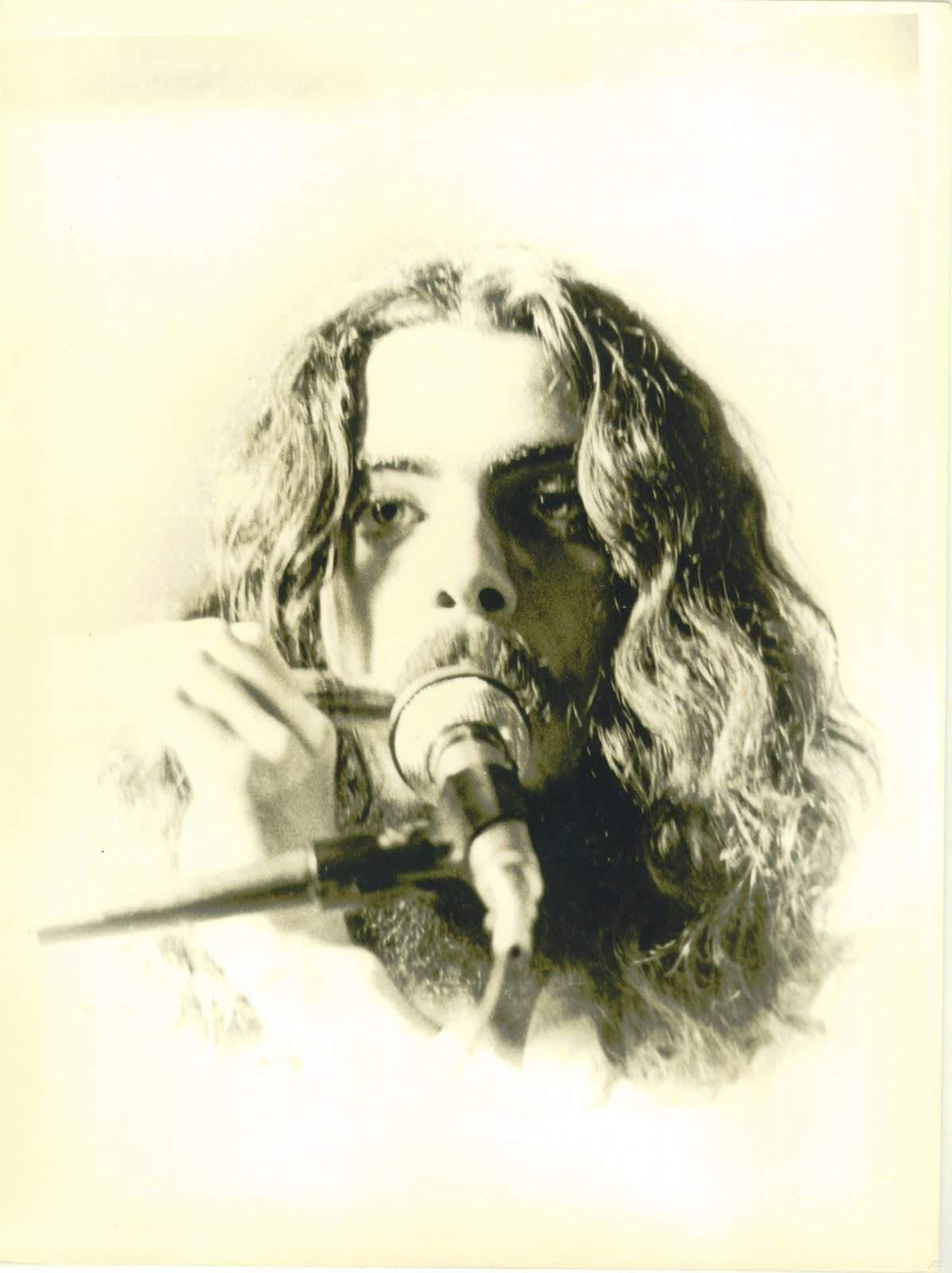
Daniel (guitar and vocals) and I (keyboards and vocals) would normally initiate the musical ideas, supported by Candinho’s highly original drumming and Eduardo’s powerful bass. Everyone contributed to the final form of the songs.
Some tracks seem to allow for different interpretations of that historical moment. ‘Olho por Olho, Dente por Dente’, for example, can be heard from a perspective more directly related to the social and political tensions of the time, while ‘Turpe Est Sine Crine Caput’ employs a more metaphorical language, including the reference to hair, an element that assumed a strong identity-related dimension within the counterculture. How did you think about these images and symbols?
Regarding ‘Olho por Olho, Dente por Dente’, I probably opened a dictionary of proverbs, remembered that phrase, and decided to make a song out of it. I did not intend it to be related to the social and political tensions of the time, but who knows, it may have been something subconscious.
As for ‘Turpe Est Sine Crine Caput’, yes, I deliberately wanted to make a humorous reference to the fact that society at the time was against us, the “longhairs,” since the Latin phrase translates as “A head without hair is ugly.”
Your later career also reveals a continuing willingness to experiment and cross boundaries between different forms of expression. As a composer, singer, and pianist in Brazilian popular music, you were the first musician in Rio de Janeiro to use a synthesizer in your performances and took part in different musical experiences, including rock with Vímana and collaborations with artists from other genres.
Looking back at this journey, is there a thread of continuity connecting the young musician from Módulo 1000 to the artist you became? What did that experience leave in the way you think about sound, creation, and the possibilities of dialogue between music, technology, and other artistic languages?
Everything I do is influenced by what I did before, whether bossa nova, samba, or rock in its various forms. This is evident in many of the songs on my album ‘Cafuné’. Tracks such as ‘A Chama’ and ‘Normal’, for example, show this very clearly. They are neither samba nor rock, and they have a very free form that could be described as “experimental.”
Since moving to the United States, I have devoted myself more to playing acoustic piano rather than keyboards, but I have never abandoned technology. I frequently record with keyboards, and many of my recordings combine keyboards and acoustic piano.
Nowadays, I have been making many recordings from my studio in which the musicians are in different cities or even different countries. They are not recordings made simultaneously, because current technology still does not allow that, but they are made with care, precision, and inspiration, and the result is always very good.
As for the use of Artificial Intelligence, there is a great deal of abuse of AI in the creation of poor and irrelevant music, with the sole purpose of replacing real musicians. I know AI can be used creatively, like any technology. I am beginning to experiment with it, but very carefully.
More than five decades later, the LP ‘Não Fale com Paredes’ has ceased to be merely a record of a musical experience from the 1970s and has come to occupy a particular place in the memory of Brazilian rock, being rediscovered by researchers, musicians, and new generations.
Looking critically at this trajectory, what do you believe Módulo 1000 anticipated or broke away from in relation to what was being done at the time, and what perhaps remained misunderstood back then?
Honestly, after Módulo 1000 ended and I joined Vímana, I became less interested in Módulo’s music. This was because, with my background in classical music, bossa nova, and MPB, Vímana’s progressive rock attracted me much more, with its inventive and varied melodies and harmonies.
But nowadays, I recognize that what Módulo was doing was indeed very audacious and unusual. There was no other band at the time doing anything similar, and I have developed a new appreciation for the group’s music.
What direction is the artist Luiz Paulo Simas taking today? What are your current projects?
Luiz Paulo Simas: I have been focusing more on composing than on performing live. I now live in Beacon, about an hour and a half from New York. Booking shows is always a very difficult and thankless task, and clubs pay very little, always depending on the artist to bring in an audience.
Since the pandemic, I have been doing very few shows, and only in very good venues. In September, I will be going to Brazil, and I have a show scheduled for the 24th at Manouche club in Rio.
In terms of compositions, I have been making and recording instrumentals that I really enjoy, such as ‘Out of the Blue’ and ‘Out of the Red’, combining real musicians and virtual instruments.
I also composed and recorded a new song called ‘Canção dos Povos Originários’, for which the designer Leon Vilhena created an incredible video. It is on my YouTube channel, ‘Luiz Simas Music’.
Recently, I had the honor of collaborating with the legendary Roberto Menescal on two songs, ‘É Bom Sonhar’ and ‘Simpatia Total’, the latter with lyrics by the great Márcio Guedes.
And I also continue to compose solo piano pieces, such as ‘Greenway Trail’. I am always busy with different creative projects, and I hope I can continue this way!
Patrícia Marcondes de Barros
Headline credit:
All photographs courtesy of Módulo 1000, used with permission.
Módulo 1000 Interview | The Story Behind Brazilian Heavy Psych Cult LP ‘Não Fale Com Paredes’