
Head Wound | Ali Khajah on Kuwaiti Sawt, ‘Hard Sawt’ and ‘The Sound’
In the following interview, Head Wound’s Ali Khajah talks about his fascination with traditional Kuwaiti sawt music, the forgotten composition behind ‘Who Told You To?!?!’, and his attempts to turn it into something altogether louder and stranger.
Khajah returned to Kuwait from London in 2020, having previously played guitar with the synth-punk band Fatherland. Over the next few years, he became increasingly interested in sawt, a musical tradition built around the oud, the mirwas hand drum and sung poetry. With guidance from musician Yousif Yaseen, he spent three years listening to old recordings, studying the music and trying to understand what made it work. He was particularly taken by the sheer force of the playing, the rhythms and the distortion heard on some of those recordings. He began calling what he wanted to create ‘hard sawt’.
One of the pieces he came across had almost disappeared from the tradition altogether. Recovered by researcher and performer Dr Ahmed Al Salhi, it eventually became the basis for ‘Who Told You To?!?!’, the first single from Head Wound’s forthcoming album ‘The Sound’, due January 22, 2027, through Brutal Panda Records. The seven-track album was recorded at Khajah’s home studio in Kuwait.
What makes the conversation particularly interesting is how seriously Khajah takes the music he’s pulling apart. He’s happy to distort it, change its rhythms and push it somewhere unfamiliar, but he’s also conscious of what might be lost in the process. As he explains, there’s a great deal of love for the original music behind all that noise.
“I became hellbent on creating ‘hard sawt’ – the next (il)logical step in the genre’s (d)evolution.”
‘Who Told You To?!?!’ reimagines a traditional Kuwaiti sawt song through abrasive guitars and heavy percussion. What initially drew you to this particular piece, and how did you approach transforming it while preserving its original spirit?
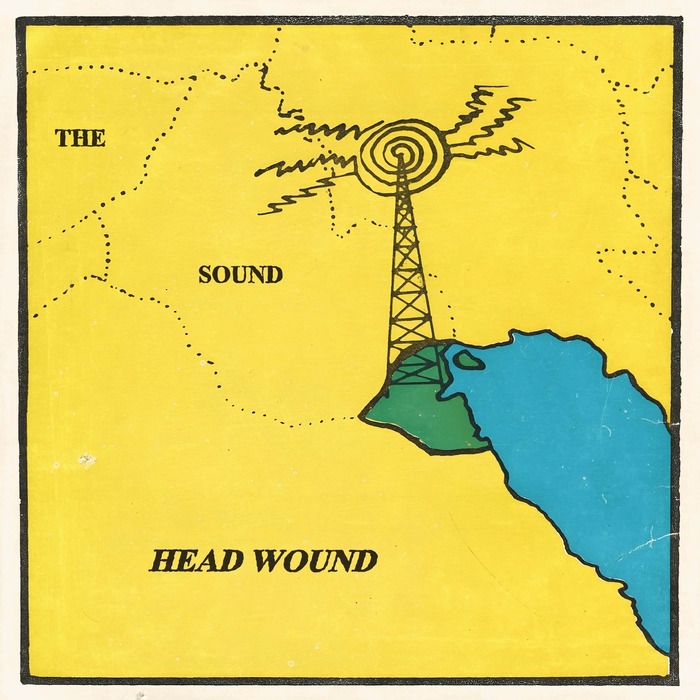
It started with trying to learn microtonal guitar and maqam music about three years ago, which led to an obsession with the genre of sawt as a whole. This was in large part thanks to the mentorship of dear friend and mega-talented musician Yousif Yaseen during this initial learning period. For those who aren’t aware of sawt – which I assume is the vast majority of people – it’s a musical tradition local to Kuwait, built around the oud and a small hand drum called the mirwas. Sonically, there was so much that pulled me in. The oud playing can be really aggressive, there’s insistent repetition and riffing. The mirwas drums are manic, syncopated and polyrhythmic. A lot of the recordings are so hot that everything starts to distort and saturate. I wish I had the synesthetic language skills to describe this music vividly – I urge everyone to go and have a listen themselves. Maybe I’ll make a sawt YouTube playlist or something. But the idea is that I heard a certain heaviness within this tradition. There was rock ’n’ roll already built into it. I imagine that’s how rock ’n’ roll sprung out of the blues to begin with. The blues had rock ’n’ roll already built into it. I became hellbent on creating ‘hard sawt’ – the next (il)logical step in the genre’s (d)evolution.
This fusion of microtonal folk/maqam music with rock or modern music wasn’t something new per se. It’s been done ad nauseam with Anatolian or Levantine music. But sawt doesn’t actually share much musical genetics or history with those more classical maqam traditions. It evolved separately, springing out of orally inherited, raw Yemenite traditions and Arabian Peninsular palettes as opposed to the heavily formalised Byzantine-Ottoman influence on the maqam music of the Levant, Anatolia and Egypt. Sawt was, in the wider scheme of things, an obscurity. And I relished in that obscurity, digging deeper and deeper into this treasure trove of hidden gems. I became obsessed with finding more and more obscure songs, and eventually – through Yousif – I became aware of this particular piece that ‘Who Told You To?!?!’ is based on. This specific piece (من قال لك تصنع لوسطك بريم) was a sawt song that was quite literally unearthed from the archival depths by sawt researcher and performer Dr Ahmed Al Salhi. It had somehow fallen out of the sawt repertoire at some point in history. Given that the sawt tradition is orally passed down and was never codified in any sort of way, I was struck by how fragile such art forms can be. Even the most immersed and experienced sawt performers were unaware of this piece because it was never passed down to them. So a lot of this initial draw to this particular piece is centred around this concept of fragility and breathing new life into the obscure.
Then the melody gets stuck in my head. That’s usually how the process begins for me with most of these tracks. It loops for days on end and I start mentally jamming along, exploring the different contours of the melody and rhythm, seeing where accents can be added, riffs can emerge. This particular piece was in maqam Sikah – i.e. the root note of the key is a non-tempered microtonal half-flat note – which gives the melody such a bittersweet, longing character. I always approach these re-imaginations by first asking, which parts can I mutate and contort? And which parts do I have to keep faithful to the original?
The song incorporates the distinctive 6/4 mirwas rhythm, which you’ve translated onto the guitar through alternating low and high notes. Can you walk us through that process and how it shaped the track’s unconventional sound?
The original piece falls under ‘sawt Arabi’, which is a specific form of sawt that has a very distinctive syncopated 6/4 mirwas rhythm. So that rhythm, in and of itself, is an essential component of the piece, there’s no doubt about it. But calling back on what I was touching on earlier: where are the potential areas of deviation? How can I deconstruct this, reformulate it, flip it on its head? I’ll keep the rhythm – sure. But maybe it’s not the drums that will take on this role. Maybe I’ll have the guitar outline both the melody AND the rhythm of the original piece. The mirwas drum can play a low note (called the ‘dum’) and a high note (called the ‘tak’), and I essentially transferred this dum-tak structure of the original rhythm onto my guitar by using the low strings as my ‘dum’ and the high strings as my ‘tak’. The result was this angular, jagged riff that outlines the melody in such an outlandish way because of all the octave displacement happening. And now this freed up my drums to play something straighter, focussing on drive rather than syncopation, giving you something to latch onto. The sum of those two things gives you something that feels so different from the source material yet still preserves the melodic structure, the essence and the poetry. A lot of what I’m trying to do on this record as a whole is to create songs that are rocking and groovy, instead of taking things into a more ‘high brow’ or even esoteric direction. To create something that is equally Steve Albini and Ibrahim Al-Khashram. Equally Lightning Bolt and Salman Al-Ammari.
You’ve described the song’s poetry as exploring desire rather than traditional love, connecting those feelings to lust, consumption, and even the pursuit of power. How did those darker interpretations influence the music’s intensity and aggression?
That’s just my reading of it. The kind of love depicted feels quite painful, longing and unresolved. I’m not saying this poem is secretly about consumerism or power, but I can’t help but interpret that that feeling of desire and wanting so intensely that it starts to take hold of you extends beyond the bounds of mere romance. Especially in our day and age, our modern modes of being. The terminal ennui and decadence. The endless pursuit of pleasure, wealth and hedonism. The merciless subjugation under power structures and our chase to gain power within them. I’d imagine that modern man would more likely dedicate this love poem to money than to his romantic partner. Or to his commodities, his seat of power, his substances, his vices. A delusion in thinking such pleasures could ever satiate and nurture the human soul.
It’s not so much that the poem itself has shaped the music. Rather it is that the world as a whole has become bleak in many ways, creating a new meaning for a poem that, at one time in history, may very well have been solely about ‘pure’ or ‘innocent’ love. And this new bleaker world is what leaves the imprint on the music. I guess I wanted to mirror that change. The poem remains the same, but the world around it has darkened – likewise on this track, the original poem remains the same, but the music around it has darkened. That’s where much of the aggression comes from. An urgent need to be loud, heard, to push against the grain. To give physicality to the intensity we feel when trying to break out of the inertia which our own desires have shackled us into.
Midway through ‘Who Told You To?!?!’ you briefly return to a more traditional arrangement before plunging back into heavier territory. What inspired that shift, and what did you hope listeners would take away from the contrast between the two approaches?
A few different reasons, I would say. For one, I wanted the listener to, quite literally, physically feel the difference between the two grooves as the song shifts from my ‘rocky’ rendition into the more traditional arrangement. You get a little taste of the original source material, though still in many ways shone through the lens of a rock song. Plus I really wanted an excuse to record a mirwas for this song! You can hear the mirwas during this section doing little bits of improvised percussive syncopation. So the listener even gets a little glimpse into the traditional instrumentation of sawt. I’m hoping people would be intrigued enough to dive into this rabbit hole and delve into the old recordings of sawt. I hope to spark that sort of enthusiasm about this tradition. But it’s not too long until the song shifts away from this faithfully traditional style back into third gear, with a very intense rock format. I suppose the song structure evokes this dialectic that I’m trying to touch upon with this whole album. This struggle of local cultures under a hegemonic Western pressure. And the irony isn’t lost on me; the fact that I’m part of this exact phenomenon that I’m so puzzled by. I guess this is my attempt to disentangle and make sense of these struggles between local culture and the increasingly globalised mindset. But in some ways, I’m also not trying to necessarily portray them as directly opposed to one another, or to paint this black-and-white ‘East vs West’ image.
Another reason for the shift was more of a creative choice. A lot of these traditional songs are quite structurally repetitive. The poetry takes equal standing next to the music, if not more. So there isn’t a necessity for the musical accompaniment to evolve much, per se. I, admittedly, haven’t put much emphasis on the poetry as I have on the music. So by virtue of that, there was a running challenge throughout this whole album’s creation process. To reinterpret source material that is quite structurally repetitive and inject dynamics, shifts, keeping things alive and interesting whilst still working within the bounds of the source material, trying to keep its essence still intact and remain faithful to it. For what it’s worth, I’m a huge sucker for dramatic mid-song shifts anyway.
You’ve described your work as ‘preservation via deconstruction’, while questioning where homage ends and defilement begins. Did reworking ‘Who Told You To?!?!’ challenge your own boundaries of what should remain sacred within traditional Kuwaiti music?
Yes, although I’m still questioning where those boundaries are exactly. And this goes for the album as a whole and not just ‘Who Told You?!?!’. I have so much respect for this tradition, its history, its performers and I spent about three years listening, researching and learning before I could even attempt to understand where I can really start pulling things apart. Not out of a destructive instinct, but out of my deep love for each element of the tradition and not just the whole. I needed to know those elements one by one and wanted to use them as building blocks. I didn’t want to simply replace the oud with the guitar, replace the mirwas with a drum set, keep everything else the same and call it a day. To me that just felt lazy, almost verging into ‘world music’ territory. If I were to do that, that would mean that I was simply in love with the sawt song as a monolith. Surface level admiration. No interest in its individual components. No! I was in love with each element: The sonic quality of the recording mediums; the role each instrument occupied; the raw vocal style; the melodic contour of each sawt song; the historical context; the relationship between melody and poetry. Once that process of deconstruction was over, I was left with an ingredient list that I had free rein to manipulate, twist and distort. But how much free rein did I actually have? Or rather, how much free rein would I allow myself?
I got to say, I did give myself so much freedom. But that’s not to say that there wasn’t this constant internal struggle or anxiety throughout the process. That anxiety comes from an uncertainty of whether my respect towards the tradition comes across to someone else. Especially someone with a much longer relationship with sawt. I can’t decide that on their behalf. But this is how I’m able to express my admiration honestly through the musical language I’ve developed. I placed so much emphasis throughout this whole process to never ever ever make something that is self-orientalising, that would play into preconceived notions and tropes of what music coming from this region ‘should’ sound like. To me, that’s what’s sacred – staying true to yourself.
Another thing that should remain sacred is the deep appreciation for the history and tradition. But to keep the music stagnant for generations on end is to do it a disservice. That is not an act of love. An act of love is to take the music and you let it consume you, let it take its own form through you, breathe new life into it and let it breathe new life into you.
Headline credit: Omar Al-Nakib
Head Wound Bandcamp / Instagram / YouTube
Brutal Panda Records Website