
Tony, Caro & John | The Story of a 99-Copy British Psych-Folk Rarity
Tony Doré and Caro Clark look back on the making of ‘All On The First Day’, their years of recording together, and the friendship with John Clark that started it all.
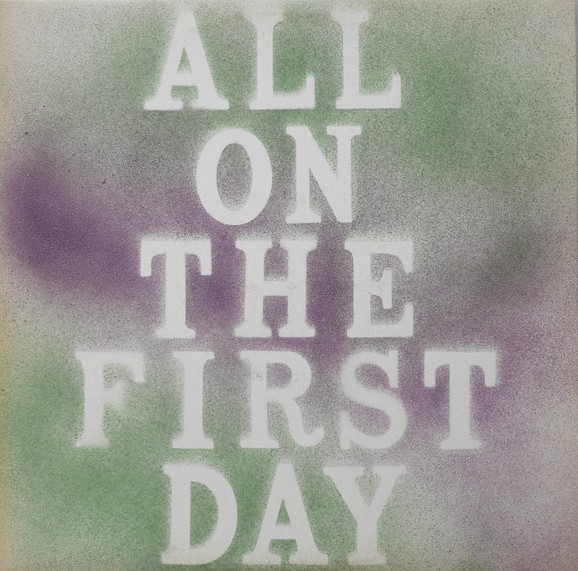
In 1972, Tony Doré, Caro Clark and John Clark made 99 copies of their first album, ‘All On The First Day’. They made the sleeves themselves, using plastic house letters, spray paint and sometimes a few grains of rice. No two looked quite the same. Caro remembers that pressing a hundredth copy would have meant paying tax on the whole lot, so they stopped at 99.
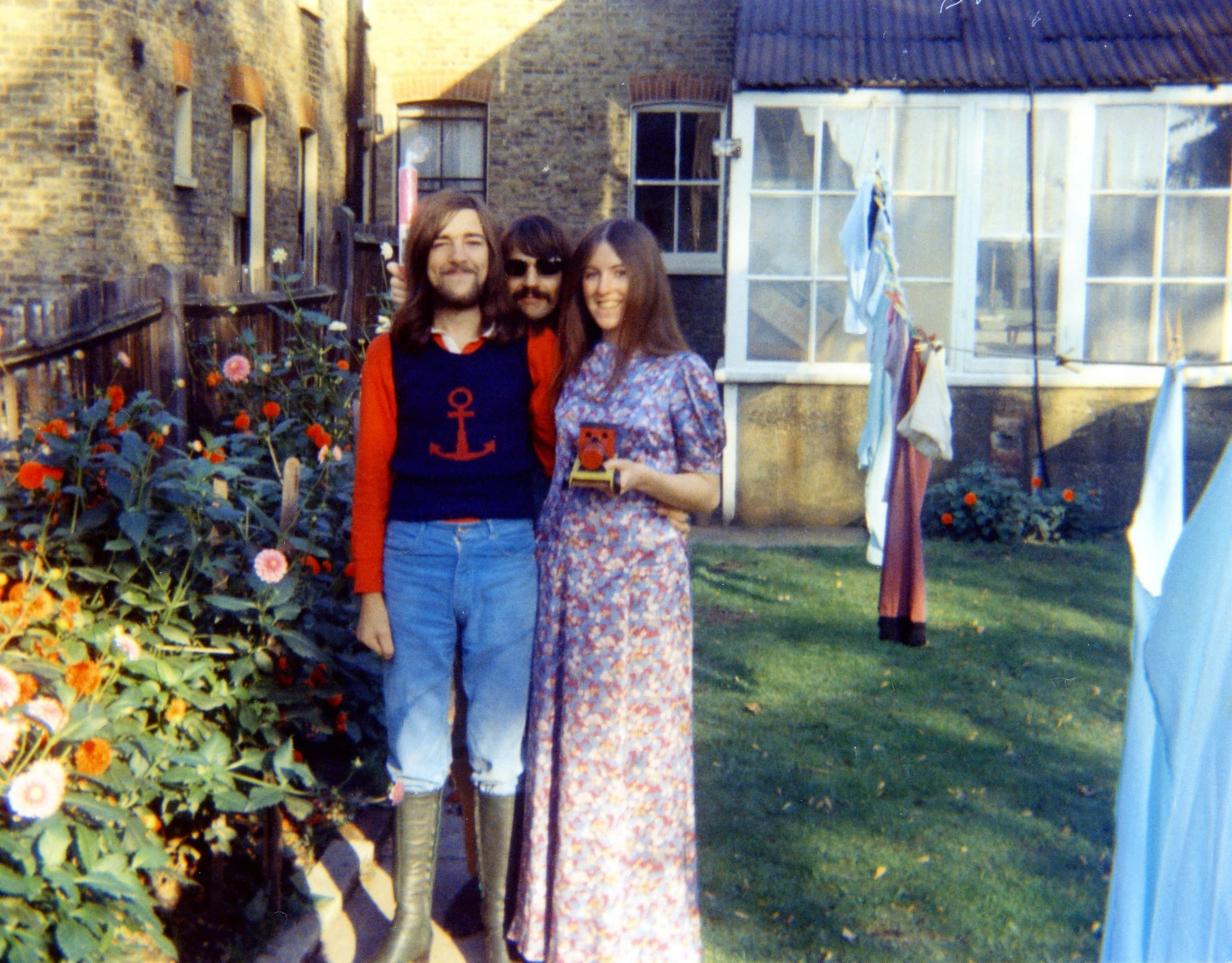
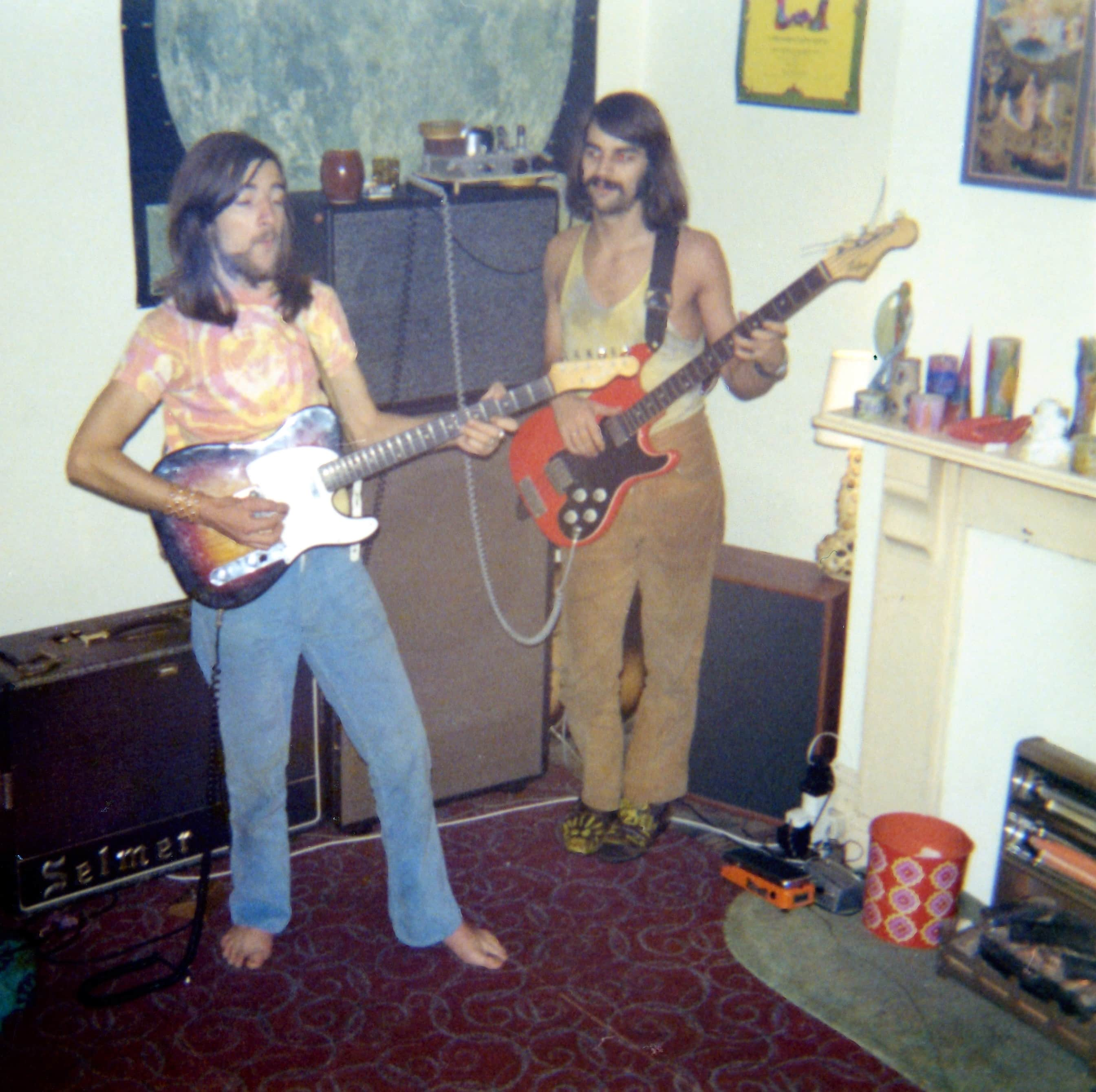
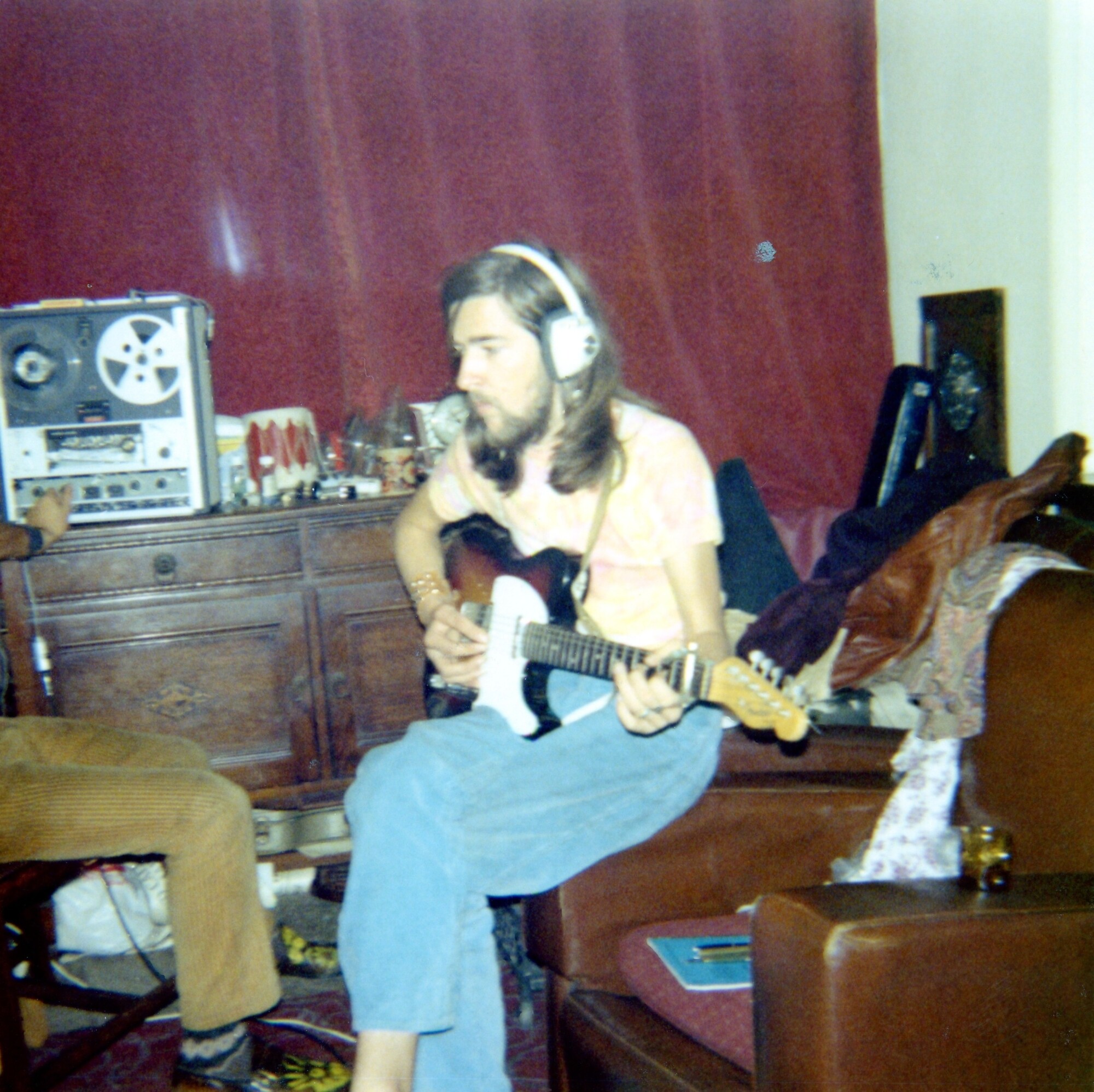
Most of the music had been recorded in the living room of their rather scruffy flat on Fulham Palace Road. John had a two-track Ferrograph tape recorder and a Shure microphone. Tony was writing songs faster than he could record them, Caro sang with him, and sometimes you could hear the buses and lorries passing outside. They were friends who enjoyed making music, and somehow they had managed to make a record of their own.
It took years for the album to find a wider audience. John, who had kept almost every tape they made, lived to see the first reissue before his death in 2005. Tony and Caro have carried on making music, and in 2018 returned to the stage in London and Germany. I asked them about those early days, the records they loved, the later recordings and their memories of John. There was plenty to talk about.
“John was the centre of gravity of the band.”
I’d love to begin with the early days. Tony, you and John grew up together in Derby, while Caro, you grew up in Bristol in a big family where singing seems to have been part of everyday life. What did music mean in your homes before any of you thought about getting on a stage?
Tony: My dad was a self-taught musician – I think he mainly learned in the Navy. He was particularly good on the piano accordion, but also played piano, harmonica and Jew’s harp. He was an ear player in the purest sense. He mostly played on the white notes and, quite literally, didn’t even know what the notes were called. But he was good enough to get occasional gigs in local pubs. He also had a beautiful baritone voice. So, there was often live music and singing echoing through our house, before I even picked up an instrument.
Caro: I am Welsh. I was born in Cardiff which is the capital of Wales. Both my parents are Welsh and I have many Welsh relatives. Most Welsh people love to sing. My dad would go to rugby matches in Cardiff where the whole stadium would be singing. There was nothing he enjoyed more than an evening spent drinking beer and singing. He really appreciated Tony’s guitar playing and singing. One of his favourite songs was Big Ted by the Incredible String Band. We recently resurrected that one for the first time in 45 years at a mini-gig for my sister’s birthday party.
Tony, John remembered initially being your road manager because he knew about electronics, and then being persuaded onto bass when somebody dropped out. What were those first Derby groups actually like? And when did you realise that John, despite apparently having “no musical leanings” at first, had become essential to the way you made music?
Tony: There was a succession of Derby bands with names like The Ejogs, The Drifting Sands and (cringe) Perception. We couldn’t really play very well, and John had to improvise amplification for us from old radios and tape recorders. We were still at school at the time. John actually started playing bass accompanying me in folk clubs. We didn’t have a bass, so he played on the lowest four strings of an acoustic guitar. He bought his first actual bass, a Hofner, in London, from (I think) an ex-member of Van Der Graaf Generator. He later decorated it in swirly patterns with PVC paint.
John never really knew much musical theory – he just played what sounded right. But his technical expertise was obvious from the start, he was a whizz at electronics, and we leaned on him heavily for all that stuff. After John died, I had to teach myself recording technique from scratch. It was either that or no recording.
Caro, I’d especially love to hear about the Bathurst folk club in Bristol. You’ve remembered Adge Cutler singing there before The Wurzels, and later in London you were seeing people like John Martyn, Richard and Linda Thompson and Martin Carthy in tiny rooms. What was that folk-club world really like?
Caro: The Bathurst folk club was held every Friday evening. They mainly featured local singers. Fred Wedlock was also a regular performer. I went to lots of live music in Bristol during my teenage years. I saw Cliff Richard, The Beatles, The Rolling Stones, The Hollies, Joan Baez, and the Tamla Motown tour. My favourite female singers included Sandy Denny, Joni Mitchell and Carole King. Mary Hopkins was a second cousin of mine.
When you and Tony began singing together at University College London, did the harmonies happen naturally? Tony has affectionately described your way of sliding up into notes as “banana notes”. Caro, did you realise at the time that you had such an identifiable way of singing, and did Tony’s teasing ever make you try to change it?
Caro: I sing the way I sing! When Tony and I are singing harmonies, I have to be careful to sing my harmony and not Tony’s.
I love to sing. I have joined a local choir called “Alive and Singing”. I am now classified as a tenor. The choir meets each week to learn new material. Choir members are given the opportunity to vote on which new songs are chosen. We often perform for people in nursing homes and also for those with dementia. It is rewarding to see the smiles on their faces. This year we have also sung at two “Celebrations of Life” for former choir members.
Tony: But do they allow the banana notes? Seriously, I am now fully on board with the bananas and wouldn’t have it any other way.
Around 1970, Tony, Caro and John all ended up living together in the Fulham flat. You’ve called it a kind of hippie commune, but what would an ordinary day there actually have looked like? Who was coming through the door, what was being played on the record player, and how much of the day somehow ended up turning into music?
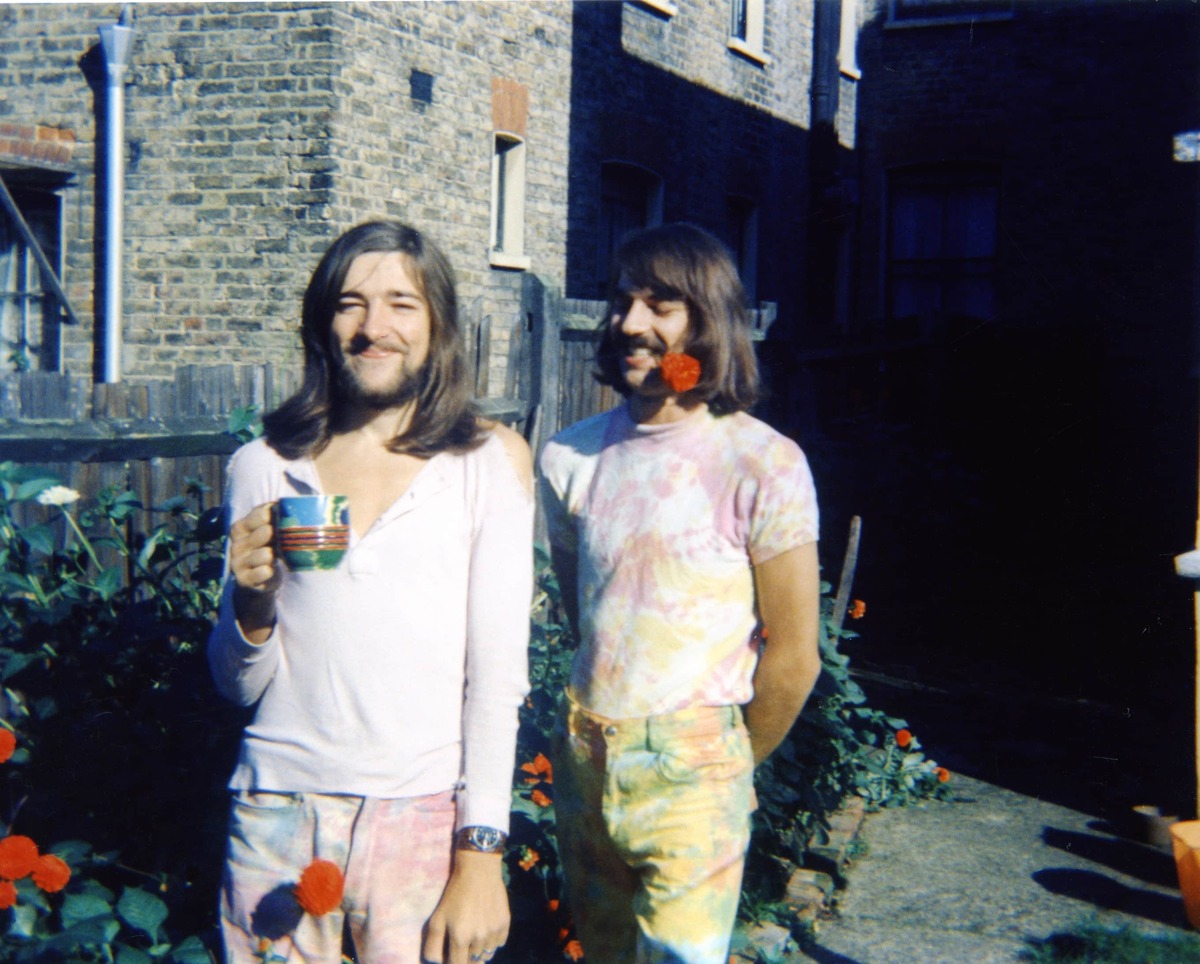
Caro: When we were living in Fulham John and I were working full time, and Tony had started a postgraduate degree in marine geology. These were all in central London, so about an hour away by bus. The hippy commune was only a part of our lives. Money was in short supply so we did not go out much, and tended to make our own presents – tie-dyed T-shirts, tie-dyed table cloths and candle making. I bought my clothes at jumble sales.
Tony: Yes, I guess calling it a commune might be going a bit far. It was a very scruffy ground-floor flat on the Fulham Palace Road, with a rather grasping and frequently drunk landlady, celebrated in ‘Meg II’. We did all the hippy things you would imagine – tie-dyeing clothes, making candles, dressing in jumble sale clothes. Fellow students/hippies would often drop round without any pre-arrangement, and a certain amount of chemical enhancement would add to the vibe. Music was a constant backdrop, either on the turntable or from us. We had pretty eclectic taste, but because of Caro and my folk leanings, the Incredibles, Steeleye Span and the Young Tradition featured strongly. John was a little more inclined towards electronica, like Tangerine Dream. All three of us loved John Martyn. The major difference from today is that the acquisition of a new LP was a major event. Someone would arrive with a new album and we’d sit round listening to it all night, and probably roll up on the sleeve.
Many evenings John would say “fancy a play?” and we’d just spend hours on meandering improvisation.
Tony, you’ve described that period as a real “creative fugue” when you were writing hundreds of songs. What had opened up in you? Was songwriting almost compulsive at that point, where another song would arrive before you had finished thinking about the previous one?
Tony: I remember reading somewhere that Dylan says he now has to write consciously what used to come to him intuitively. I think that’s what happens. The late teens and twenties, when you’re just becoming independent and developing your own identity, is a time when stuff just tumbles out. After that you cool down a bit, and creative process becomes more deliberate.
Yes, sometimes the songs would come thick and fast and overlap each other. Of the large number of songs I wrote during this period, often the lyrics weren’t very good and most went unrecorded. They still flash into my memory from time to time and I sometimes cannibalize the melodies for my newer songs.
Were there records, books, films or conversations feeding the album that people have largely missed when they call it “psych-folk”?
Tony: Well of course, the term “psych folk” didn’t exist then, so we didn’t know we were playing genre music. But I quite like the term, actually. It fits. I don’t recall us ever deliberately trying to carve out a unique niche. More likely, we were trying to emulate the music we loved, but lacked the resources to do so.
John bought his two-track Ferrograph because he felt Tony’s songs needed to be recorded. I’d love you to take us into that room. Where exactly was the machine sitting? Where were the microphones? Were neighbours complaining? And could somebody still be making tea or walking through the flat while a take was being recorded?
Tony: It was a pretty small flat – the ground floor of a Victorian terraced house, so there is no way we could have a separate recording area. John’s Ferrograph and Shure microphone were set up in the living room, which faced the main road. According to John, if you’ve got good ears, you can actually hear the buses and lorries rumbling by on some of the tracks. The living room was constantly in use and, frankly, extraneous noise was the least of our worries.
Also parked in the living room was a big Selmer combo amplifier, which weighed a ton. We’d bought it second hand in Sheffield and somehow managed to lug it down to London by train and bus. It had an old-fashioned spring reverb, which we used for Caro’s vocal on ‘Waltz for a Spaniel’.
As for the neighbours – well, there is one incident I remember. Some of the tracks were recorded at another flat in Muswell Hill, North London, which had a young couple living upstairs. John had devised a rather complicated bass line for ‘Eclipse of the Moon’, but he couldn’t get the take he wanted. We were monitoring through the air at the time, not through phones, and we couldn’t splice or drop in, so the entire take had to be done in one. He kept plugging away at it for hours, so many times that we’re lucky the tape didn’t get ruined. Eventually the couple living upstairs came down and complained, saying “We don’t mind a bit of noise, but why are you playing the same song over and over again?”
“We didn’t have the luxury of waiting until the end to mix all the tracks together, so it had to be done on the fly.”
The limitations of that Ferrograph became almost part of the band. Every new overdub meant bouncing what was already there and accepting another generation of sound, and John later described everything ending up in mono. Did you ever hear the degradation and think, “that actually sounds better”? How much of the atmosphere of the album came from things technically going wrong?
Tony: We didn’t have any choice about the mono – obviously by flipping between tracks using sound-on-sound that’s how it would end up. In retrospect, I’m amazed John managed to get decent mixes at all. But I guess that limitation is to a large extent responsible for the sound of the album. We didn’t have the luxury of waiting until the end to mix all the tracks together, so it had to be done on the fly.
There is one track where the degradation seems to enhance the song, and that’s ‘Forever and Ever’. That was another one that came just after we had AOTFD pressed, and was eventually released on the ‘Blue Clouds’ anthology. We decided to do a straight rock track, albeit without drums, and did so many overdubs of guitar and backing vocals that the recording got shredded. It sounds like it’s coming out of a faulty PA, but we liked the raw, buzz-saw quality. It has always been Caro’s favourite, and we played it for the first time in years at her 70th birthday party.
Tony has recalled bringing John an impossible sound he could hear in his head, John saying it couldn’t be done, and then returning a couple of hours later having found a way to do it. Can either of you remember a particular sound on the album that came from one of those conversations? ‘Sargasso Sea’ and ‘Don’t Sing This Song’ especially have little noises and effects that seem impossible to explain from the basic instrumentation.
Tony: You’ve identified the two obvious ones! On ‘Sargasso Sea’ I told John I wanted to hear creaking timbers and the cries of wheeling seagulls. He grunted and said something like “You don’t want much, do you?” Later he came back with the idea of making a separate effects tape and blending it into the original track of just me on vocal and acoustic guitar. So, I recorded some slide guitar whoops and we both made creaky vocal sounds at the same time. We then played the tape backwards on an old domestic tape recorder and mixed it in with the track in real time, fading it up and down with an old-fashioned volume knob. It worked quite well I thought, and the backwards slide is definitely seagull-ish.
For ‘Don’t Sing This Song’ I had the idea of a spoof live performance by a band called, for some arcane reason, “Salome and the Nihilists”, as heard in the rather cynical introduction. We wanted crowd noises and applause, and that was way back before you could just get samples. So, John pinched them from George Harrison’s ‘Concert for Bangladesh’ album – literally playing the LP on the turntable and fading the audience sounds in and out in real time. The “thank you, thank you” at the end of the applause isn’t me – it’s George!
On ‘Eclipse of the Moon’ I really wanted the last note of the song to go into massive echo overload. Easy now, but you have to remember we had very little money or equipment. I can’t remember how John did it but, as you can hear, he figured it out.
There’s a darker side to some of these songs. ‘Eclipse of the Moon’ feels almost ritualistic, ‘Apocalypso’ imagines the end of the world intruding on domestic life, and ‘Sargasso Sea’ turns personal uncertainty into an oceanic nightmare. Was that simply Tony’s imagination, or did the early 1970s genuinely feel slightly apocalyptic to you?
Tony: ‘Eclipse’ and ‘Apocalypso’ are both genuine dream sequences. ‘Morrison Heathcliff’ too. I’d have a dream and then, as soon as I woke up, I’d scribble down the images before they faded. Still do, in fact. I particularly value these sequences because I don’t quite understand them myself. They work more by resonance than logic, and because of that they retain a certain mystery for me.
In ‘Morrison Heathcliff’ Jim Morrison was somehow mixed up with the anti-hero of ‘Wuthering Heights’ (my favourite novel) – two doomed Byronic characters super-imposed. It all made perfect sense in the dream. I’m not certain, but I suspect ‘Eclipse’ channelled Rider Haggard’s ‘King Solomon’s Mines’, which I’d read much earlier, probably in my early teens. In that book, the main character’s knowledge of an impending eclipse manages to fool a primitive tribe into thinking he has God-like powers over the heavens. ‘Eclipse’ also has that feeling that “there’s something different about me,” which I now realise isn’t exactly unusual for people at that stage of life. I was gorging on outsider-themed literature – Colin Wilson’s ‘The Outsider’, Camus’ novel of the same name and, particularly, Hesse’s ‘Steppenwolf’, which runs all the way through ‘There Are No Greater Heroes’. I’ve changed my position on this by 180 degrees now. What was I thinking? There’s no nobility in self-imposed isolation and suffering.
Then ‘Apocalypso’ was a very vivid “wake up in a cold sweat” nightmare. The 60s and 70s felt more than slightly apocalyptic. I was a bit young to really understand the Cuban Missile Crisis, but the Middle Eastern wars – when the superpowers were genuinely poised over the button – were very real. John and Caro were a bit more fatalistic about it, but I was genuinely terrified. I wasn’t the only one – all the great “end of days” songs come from that time – ‘Morning Dew’, ‘Come Away Melinda’ ‘All Along the Watchtower’ and more.
So, the darkness came from my turbulent subconscious, post-adolescent insecurity and fear of global destruction. I had a brush with a more immediate threat too. During the Fulham years, my health took a dive and I managed to catch tuberculosis. Luckily, they’d recently found out how to treat it, but I still spent a couple of months in hospital and was on antibiotics for 2 years. That’s probably where some of the existential angst comes from.
The words are surprisingly literary too. ‘Sargasso Sea’ brings in Magellan and the Ancient Mariner, while the title song invokes Blake’s Urizen. Tony, what were you reading then? Were those references consciously woven into the songs, or was all that material simply swimming around in your head?
Tony: Blake’s ‘Tyger’ gets a nod in ‘Sargasso Sea’, too. The references were both consciously introduced AND were swimming around in my head. I was in love with Blake at the time, and even tried to make illustrated books mimicking his ‘Songs of Innocence and Experience’. Unfortunately, I lost those somewhere down the line. I was also reading the romantic poets, particularly Coleridge, and was particularly entranced by an edition of ‘The Ancient Mariner’, illustrated by my namesake Gustave Doré. Here’s one of the pictures, that shows exactly where the last verse of ‘Sargasso Sea’ came from:
Caro, I’m interested in how you approached songs that Tony had written from quite personal points of view. Something like ‘Hole in My Heart’ becomes almost a conversation when your voices come together. Did you need to identify with a lyric before singing it, or was it more a case of finding the right way to sing it with Tony?
Caro: I knew the story behind many of Tony’s songs so I could feel his emotion. ‘All on The First Day’, ‘The Snowdon Song’, ‘Apocalypso’ and ‘Waltz for a Spaniel’ are other examples.
And what do you remember about ‘Homecoming’? It lasts less than a minute, but hearing all three voices together at the end feels like a fitting way to finish the record. Was that always the intention?
Tony: I think you’ve more or less nailed it. It’s saying that the things we value most are love and friendship. Success and prosperity are nice, but not the top priority. In our reunion gigs, we turned it round and started with the song – meaning we’re back, we’re coming home, and we still believe in these things.
There’s another oddity I’d love you to clear up. The album is called ‘All On The First Day’, yet the original pressing appears to finish with ‘Homecoming’, while the actual title song was added to later editions. Why did you name the record after a song you didn’t originally put on it? Was it recorded too late, too long for the vinyl, or was there another reason?
Tony: The song AOTFD was written and recorded while we were getting the album privately pressed. Simon Burrett (who we’d just met) played the defining riff, and he shares composing credit. We loved the title, so we took it for the album. When Tapete Records made the most recent re-release, they said they wanted it to be exactly like the original, so we found the best imprints we had of the songs and sent them. Days later, they came back asking “Where is AOTFD?” I had to explain that we’d given them exactly what they asked for – the original album, without that song. So they went back on their original intention and put the song on the album.
Then there is ‘Don’t Sing This Song’, which basically tells the audience that you don’t need their approval. It’s very funny, but it also seems remarkably close to the philosophy the band actually followed. How serious were you underneath the joke? Were you genuinely suspicious of ambition and the whole idea of becoming professional musicians?
Tony: No, I wasn’t suspicious of ambition, and briefly entertained the possibility of being a professional musician. I don’t think John or Caro ever did, though. In retrospect they were right – by and large, musicians have a tough life. But the song was mainly a reaction to the folk club scene of the time, when many clubs were wary of original material and just wanted the good old traditional chorus songs. So, in my frustration, I wrote this facetious little ditty. In reality, of course, we do need appreciation, and indeed we’ve subsequently had some – not on a massive scale, but a little goes a long way.
You did make some attempts to take the record further. Tony has recalled two sharply dressed men arriving at the flat and saying they might release you if there were “more ballads with the chick singing”, while John apparently sent a copy to John Peel at Dandelion and a copy is said to survive with Peel’s notes on the lyric sheet. Do either of you remember who those label people were? And have you ever actually seen the John Peel copy?
Tony: My memory fails me a bit on this one. I can’t remember the name, but it was what we’d now call an indie label. I can still picture the two guys though. One, the owner, was a hip-looking guy in a sharp leather jacket and longish hair. The other, his financial advisor, wore a loud pin-striped suit with a psychedelic tie, and had an extremely plummy public-school accent. ‘Waltz for a Spaniel’ was the track that particularly attracted them. Dana Gavanski did a beautiful cover of that one recently.
Likewise, I don’t remember much about the annotated John Peel copy. It must have come from John.
Caro: I never saw the annotated John Peel comments on the album. I don’t think we ever got access to them.
Tony: I do know John spoke to Peel on the phone, who said he couldn’t release AOTFD on Dandelion because the label had just folded! It was a great label while it lasted though; I’m thinking of Medicine Head’s first album and John Mayall’s ‘The Blues Alone’, both of which I’ve worn thin with playing.
John and I had met Peel some years earlier, while still at school. Peel was broadcasting on the ship-borne pirate station Radio London, a show called “The Perfumed Garden.” He’d just arrived over from the US west coast with a bunch of albums nobody had ever heard here, for example Beefheart, Country Joe and the Fish, Jefferson Airplane, Moby Grape. He invited listeners to come and meet him at the Middle Earth club in London, so John and I hitch-hiked down to the big city, slept rough and turned up at the club. There was a very sparse attendance but Peel was friendly, and introduced us to the main act, a slight, elfin-looking guy called Marc. Later we witnessed his band, Tyrannosaurus Rex (basically Marc with his bongo player Peregrine Took) playing to about 14 people.
John wrote that you deliberately pressed 99 copies because making the hundredth would have created a tax liability on the whole run. Is that really how it happened? Who came up with that wonderful piece of accounting? And who actually made those individually sprayed sleeves?
Tony: When John wrote that, I had either forgotten about the tax thing or maybe never even knew it. John and Caro were always more financially savvy than me, particularly at that time.
Caro: I remember clearly that we could make 99 copies tax free but pressing the 100th copy made us liable to pay tax on all 100 copies. We therefore stopped at 99!!
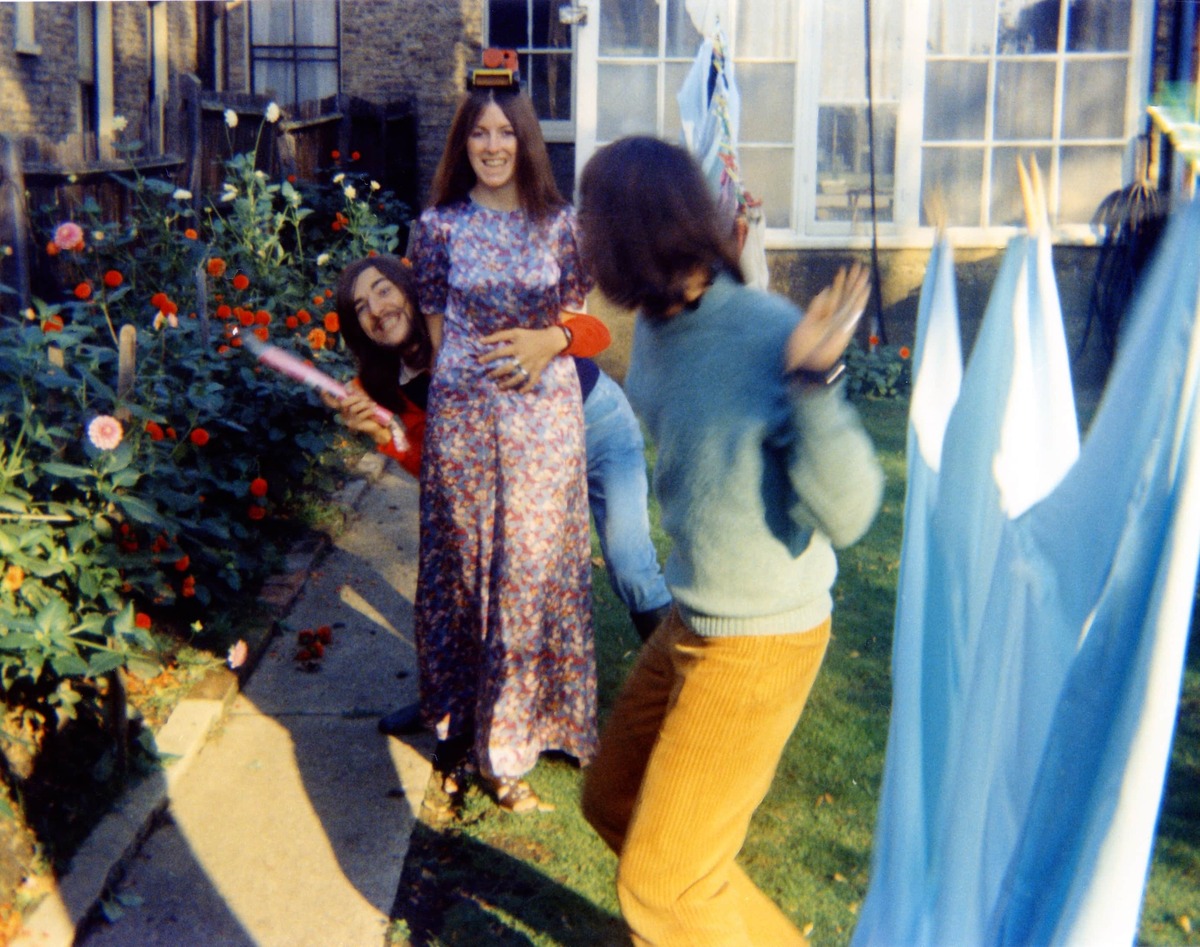
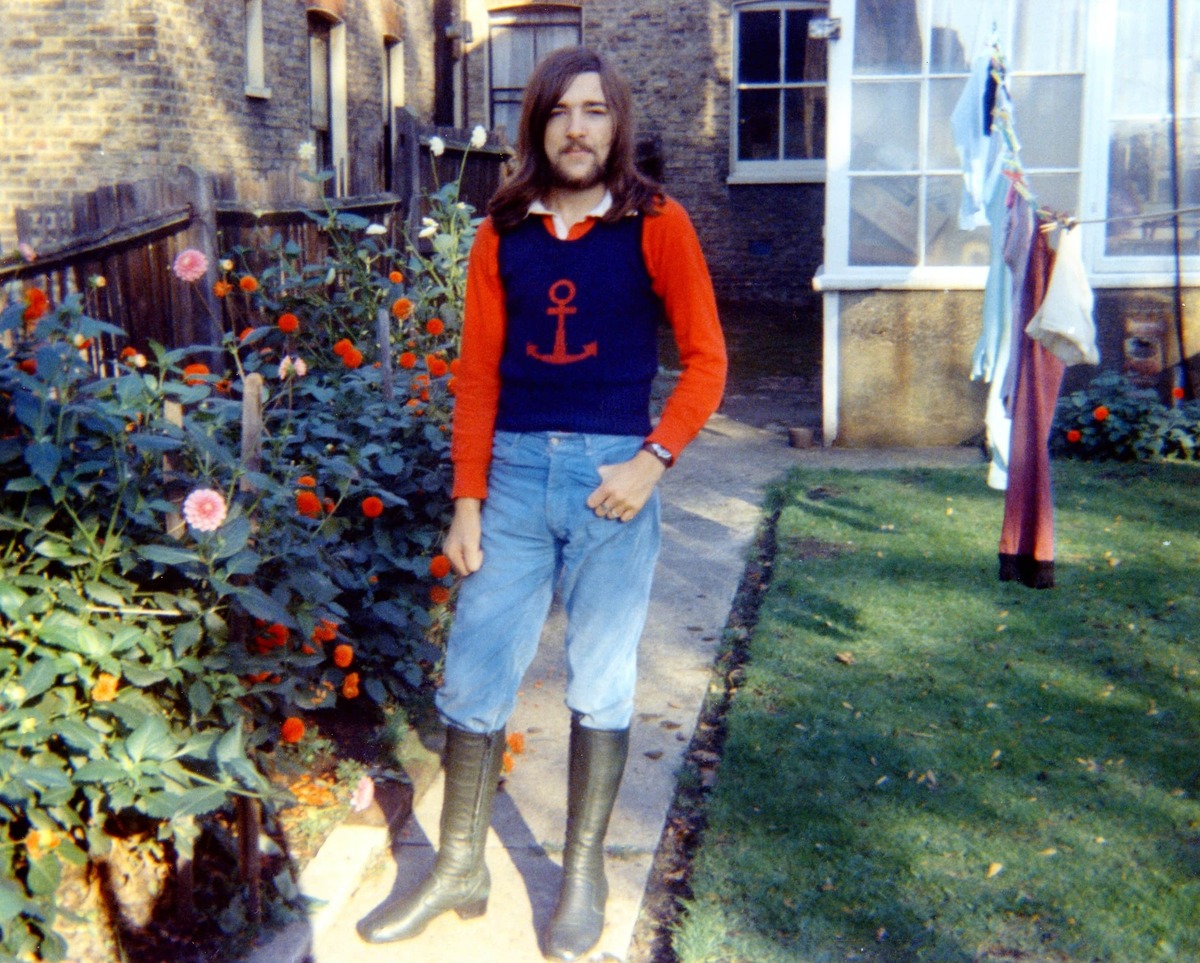
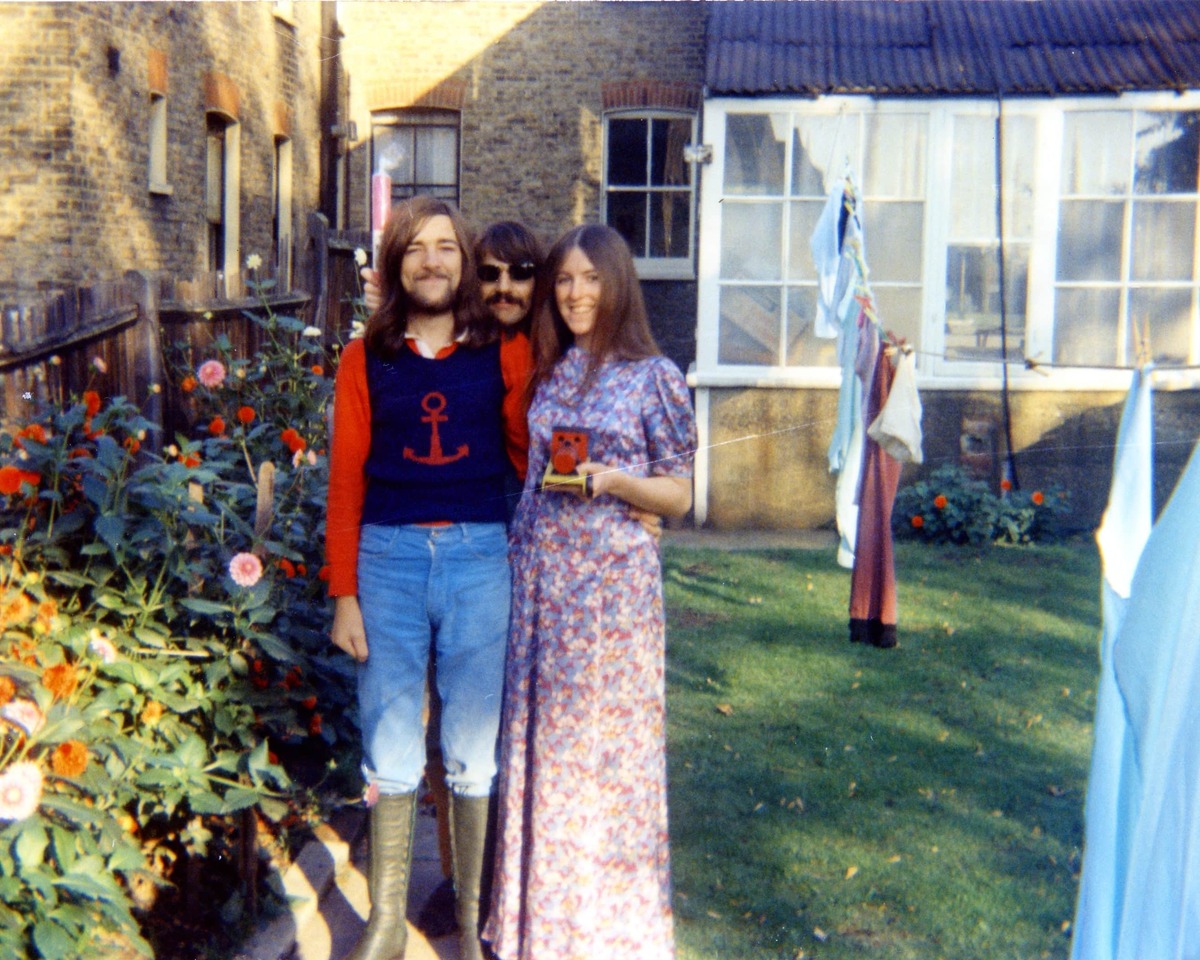
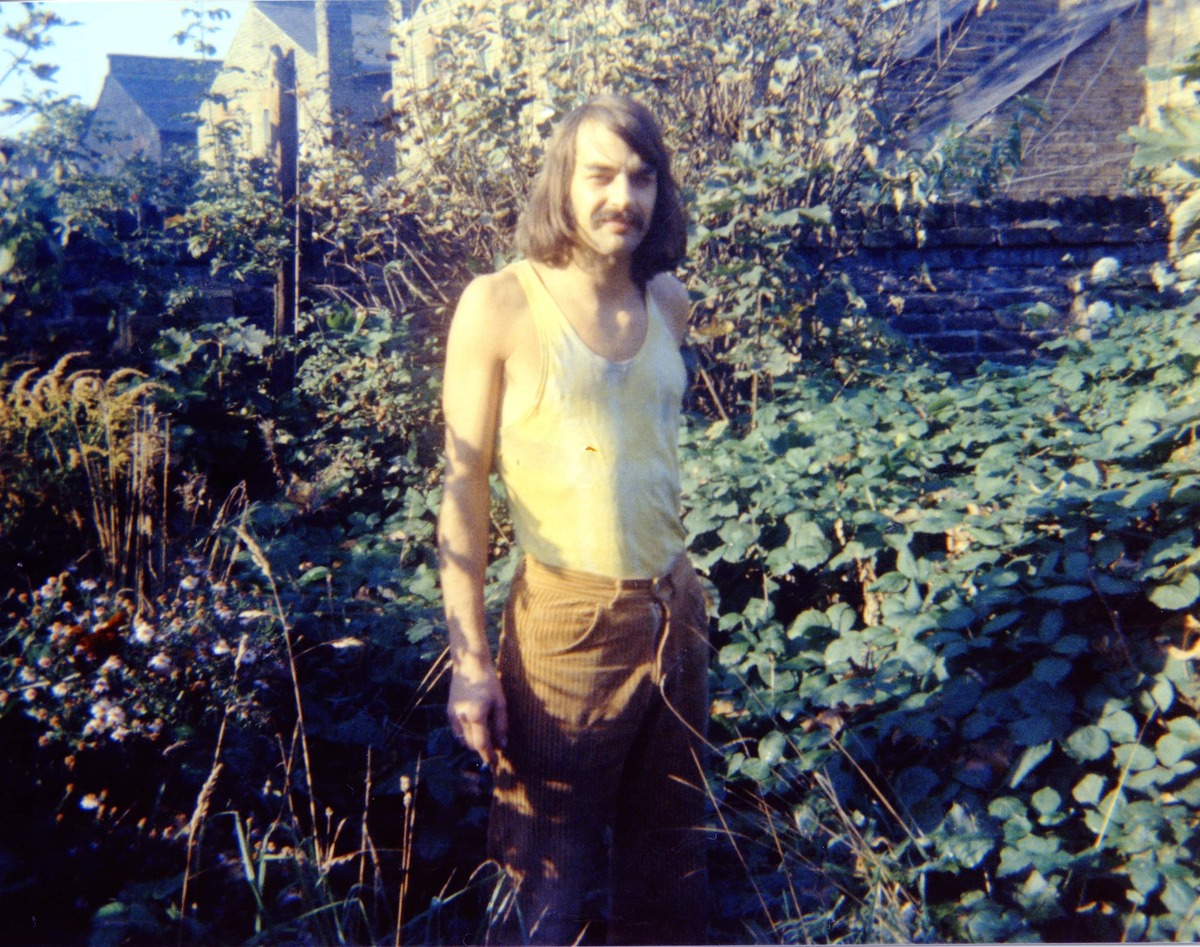
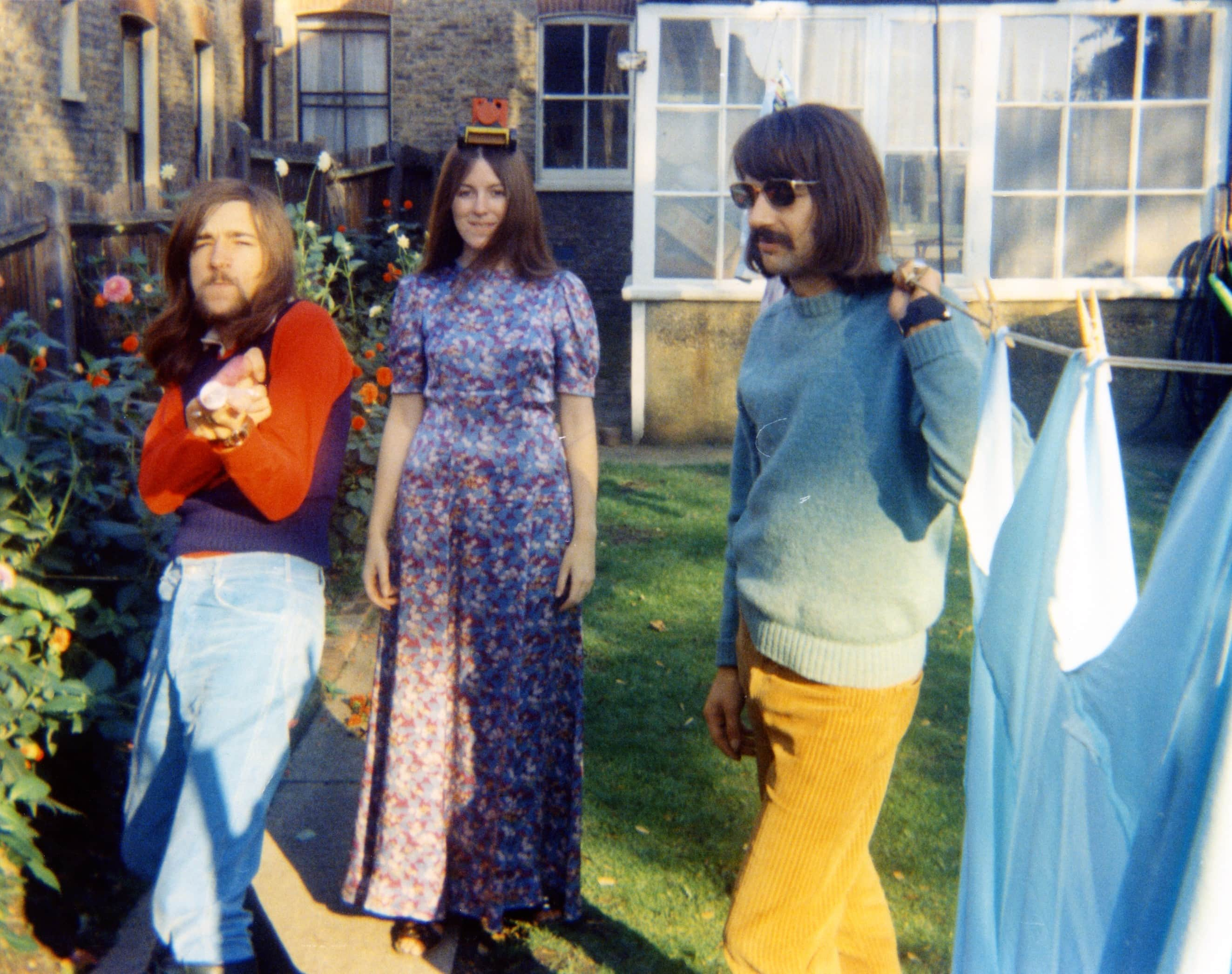
Tony: All three of us co-operated on the sleeve spraying. We bought some of those plastic letters that people use on the outside walls of houses to show the house name and number. We also bought 3 cans of spray paint – green, blue and maroon, then arranged the letters, sometimes with some added grains of rice, and sprayed around them. So each one is unique. I can’t remember for sure, but I assume we did it in the back garden of the Fulham flat, where some of the band photos were also taken.
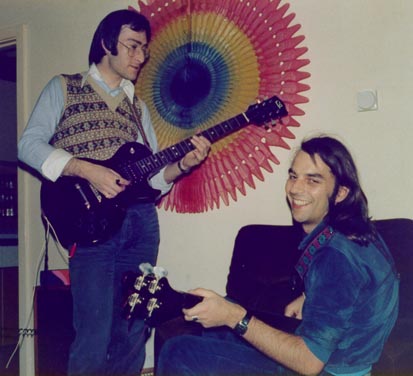
Almost immediately afterwards the circle widened into Forever and Ever, with Simon Burrett, Caro’s brother Jonny Owen, Julie Doré and eventually Rod Jones. Did that feel like the same group simply getting larger, or did Simon’s electric guitar and Rod’s early synthesizer fundamentally change what you wanted to do?
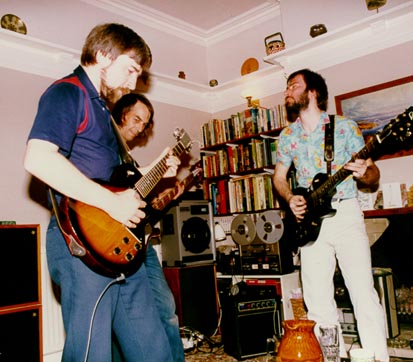
Tony: Well, the obvious change is that we got “rockier.” Simon’s first and continuing love was R&B, so obviously that changed things, although apart from a few one-off gigs we never had a drummer. The live tracks on Blue Clouds are pretty representative of how we sounded. We still performed some of the songs from AOTFD though. The much later TCJ reunion gigs were actually more in the FE&E mould – mainly because I really enjoy playing with a lead guitarist and with Jonny’s harmonica and added vocals.
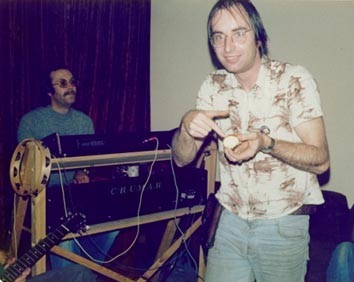
Rod originally just did the mixing, but then he bought his EMS synth! It was a prototype, and very unusual for bands of the time. With its complex vertical plugboard, where you had to juggle an array of jack plugs to get the different sounds, it attracted a lot of curiosity from the audience.
John died in 2005, but his habit of saving and organising everything allowed the story to continue after him. When you hear those tapes now, what do you hear in John that perhaps listeners don’t? What did he contribute to this band beyond the bass playing and the engineering?
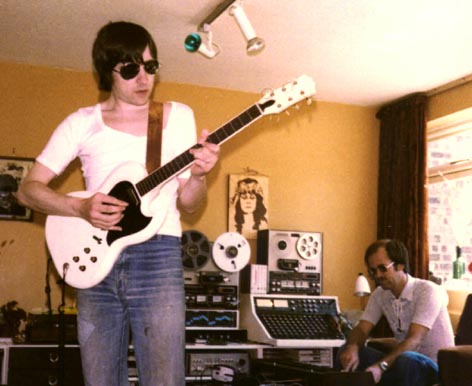
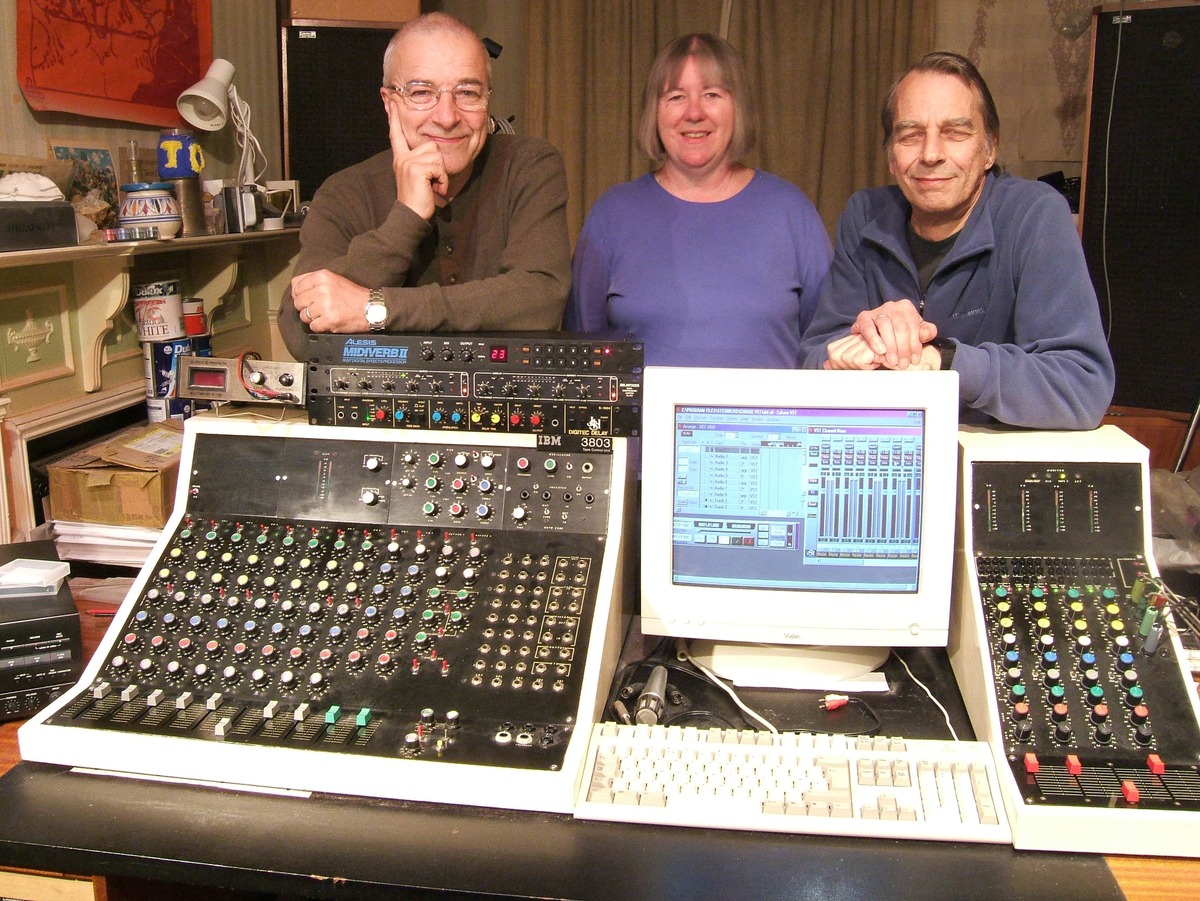
Tony: In the 1980s John bought a Dokorder, which allowed easier overdubbing and recording in stereo, and built his own mixer from scratch. The thing that stands out for me is his ability to record vocals – I still can’t get them sounding as good. When I listen to those recordings, I think of his incredible patience and his refusal to let any task beat him.
John was the centre of gravity of the band. Apart from the recording, mixing and bass-playing, he also arranged and hosted all of our jams, then presented edited versions of them to us, at first on cassette and later on CD. We’ve had jams since John died, but not as frequently.
Looking at what’s been written about John so far, you might get the impression of him as this rather laconic figure in the background, keeping everything running. But that’s not the whole story. He was a voracious scientific reader, particularly of cosmology and particle physics, and shared my love of rocks and minerals. He was also a complete nutter, with a mad sense of humour. That’s actually the part I miss the most.
The rediscovery itself must have been surreal. Thomas Hartlage at Shadoks apparently tried contacting Dorés around Britain until he finally found Tony, and suddenly an album you had almost forgotten was worth extraordinary sums to collectors. Was there a moment when the two of you just looked at each other and thought the whole thing was completely absurd?
Tony: Well, John was still around at the time, so all three of us were equally dumbfounded. I wasn’t looking at the internet much at the time and never did internet searches. So, when Thomas contacted us, we went online and realised that there were references to the album all over the place. John, being more internet savvy than the rest of us, actually set up an alarm so his system would ping every time a new reference to the album dropped.
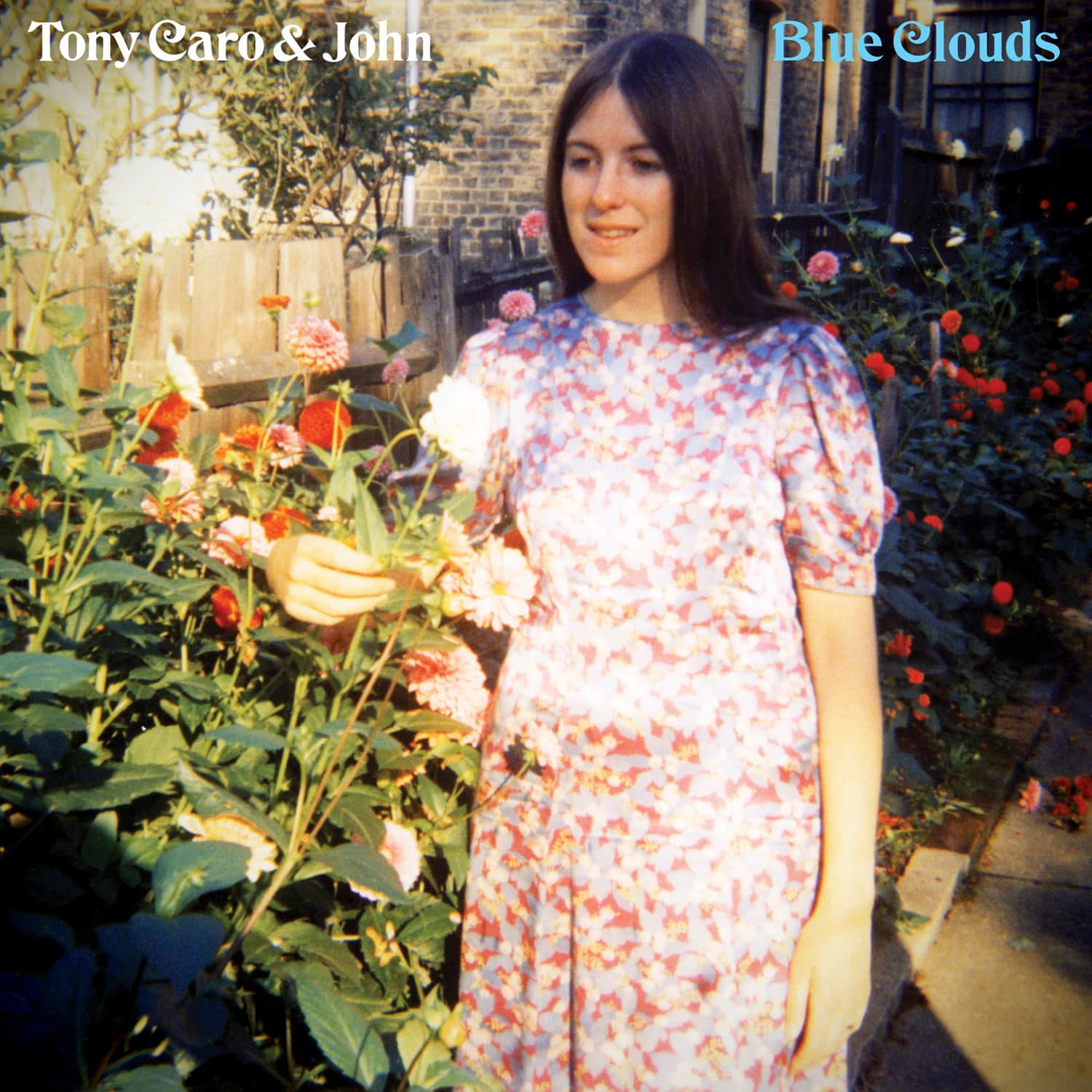
This is where John’s archiving zeal came into its own. He already had clean copies of the tracks on different media, so it was easy to supply Thomas with good quality versions. He was originally going to just take the songs off the LP. He also asked us if we had any out-takes and other contemporary stuff he could put on a bonus EP, and of course John had those too. Those songs eventually found their way onto ‘Blue Clouds’.
One of my biggest pleasures is knowing that John’s talent was rewarded, and that he at least lived long enough to see it happen.
Then ‘The Snowdon Song’ acquired another life when Beach House recorded it as ‘Lovelier Girl’. Tony, what was your first reaction when you heard their version?
Tony: It was a strange time for me. My wife Barbara was in hospital having a serious operation, and I was sitting at home waiting with my son Michael. To distract us from the worry, Michael started looking up the latest TCJ online news. To his surprise, he found a lot of traffic on ‘Lovelier Girl’ and its similarity to ‘The Snowdon Song’. We listened to LG, and although Beach House had changed the key, and changed the time signature from 4/4 into 3/4, it was unmistakably the same tune and lyrics. I was both pleased that somebody had covered the song, and concerned that we weren’t credited – especially as the song had a huge number of plays, among the highest on Beach House’s first album.
I was going to just shrug it off, but some of our friends took matters into their own hands. For example, Simon wrote to BH’s website saying “I played this song live 40 years ago!” Eventually I made contact with the BH duo Alex and Victoria. They were very decent about it. The Shadoks re-release of AOTFD had been doing the rounds on the Baltimore music scene, and when they recorded LG for their first album, on the indie Carpark label, the proprietor just automatically credited all the songs to Alex and Victoria. He later told me he’d never released a cover song before! BH were just breaking big at the time, and Victoria was still waitressing to make ends meet.
Eventually I received more royalties than I’d ever had in my life, and we agreed to split the future proceeds on the ‘Lovelier Girl’ incarnation of the song. Hard to argue – because of them, it got several orders of magnitude more attention than before. We met BH when they toured the UK, and they gave us a massive plug from the stage.
In 2018 you went back on the road and played Café OTO, Cologne and Hamburg after roughly forty years away from full-scale live performance. Caro, was there a moment before walking onstage when you wondered what on earth you had agreed to? And what was it like discovering that much of the audience was considerably younger than the record itself?
Tony: Caro hasn’t responded to this one yet, but I can tell you that she is ALWAYS up for singing live! We loved the fact that younger people had discovered the record, and knew all the songs. For the first tour there was actually a complete spectrum of ages, but for the second reunion show in London the audience was on average much younger, presumably lured in by the podcast. Some people had travelled halfway across the country to see the show.
You both went on to have demanding careers outside music. Tony became a geologist and exploration leader, while Caro became a professor of medical statistics. Do you think having lives outside the band helped you keep the music and the friendship going?
Tony: I think it came down to the fact that it enabled us to keep the music in the category “fun.” Friends and family came first, music a pleasurable second.
Tony, your songs are full of seas, planets, weather and landscapes, and geology became such a big part of your life. You’ve said you don’t really separate science and music because both require imagination. When you hear those early songs now, can you already hear the young geologist in them?
Tony: Yes, definitely. I’ve even written geological songs (there’s one hiding on the limited release ‘Retrospect’ album). But there’s one thing I haven’t yet said – geology came into my life before the music. Having collected minerals and fossils, I announced to my parents at the age of 8 that I was going to be a geologist. They probably thought it was just another craze. It was another 6 years before I learned my first guitar chords. But as you’ve observed, I’m serious about the blurred boundaries. Geological deep time and music both invoke a sense of wonder and mystery for me, and both tap into the same creative source.
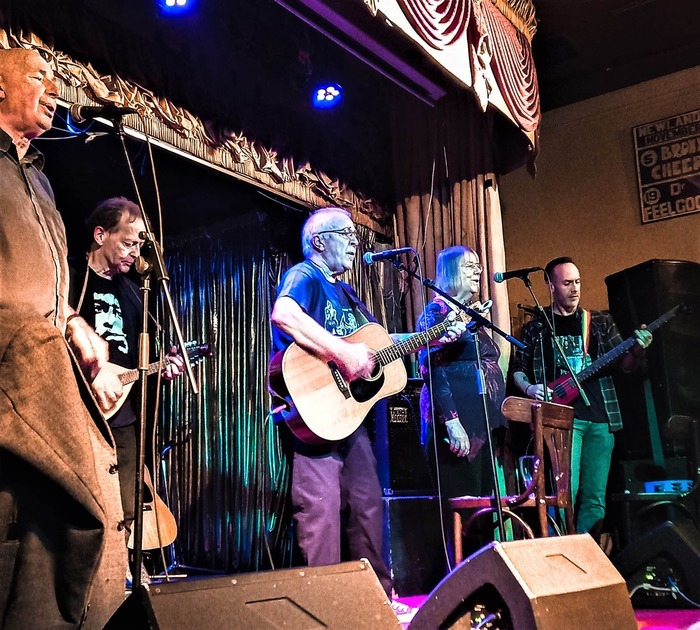
Caro, you still go to a great deal of live music and follow younger folk artists. When you hear somebody like The Unthanks or Catherine Priddy now, what feels familiar from the folk world you knew in the late sixties, and what feels completely different?
Caro: I now live in Bedfordshire, so I usually find my folk music at local venues. My regular haunts are Hitchin Folk Club and The Stables (Milton Keynes). Over the next few months I have tickets for John Tams, Steve Knightley, Chris While and Julie Matthews, Sam Kelly, Urban Folk Quartet, Bob Fox and Stu Luckley, Track Dogs, Gigspanner and St Agnes Fountain, Kathryn Tickell, Blazin’ Fiddles, Martyn Joseph and Fairport Convention (60th Anniversary Tour). I take a car load of friends to gigs. If we don’t enjoy a particular act we don’t book again.
Before I moved to Bedfordshire, Tony and I would go to folk gigs in London. I particularly remember the Unthanks, Applewood Road and several of Cara Dillon’s exquisite Christmas concerts at the Union Chapel.
Tony: I would add that modern folk is much more tolerant and all-embracing than in the late 60s. The root is still in traditional music, but after that anything goes. There’s one big difference between folk clubs now and those in the 60s; most of the early folk clubs we played in didn’t have mics or any amplification. You had to project your sound acoustically to a room full of people, and somehow keep their attention. If they didn’t like what you were doing, they’d just talk over you.
“Because the fact is, we never stopped making music and are still making it now.”
Finally, after the reissues, ‘Blue Clouds’, the reunion concerts and the wonderful ‘There Are No Greater Heroes’ series, there is now far more of the story in public than you could ever have imagined in 1972. But what is still missing? Is there one memory, recording, person or part of Tony, Caro & John that you wish people would ask about, but somehow nobody ever does?
Tony: The question people seldom ask is “So, what music have you done lately?” Because the fact is, we never stopped making music and are still making it now. But I understand that it’s not a problem unique to us. Even global megastars have to contend with people preferring the stuff they did in their twenties. Our later music is better-produced of course, but has to compete against the massive current music glut and the fickle nature of online listening (“get their attention in the first 20 seconds, or they’ll swipe.”) So, I can see why the early 70s, do-it-yourself material has a naivety and charm that doesn’t exist today.
Klemen Breznikar
Klemen Breznikar
Tony, Caro & John Website