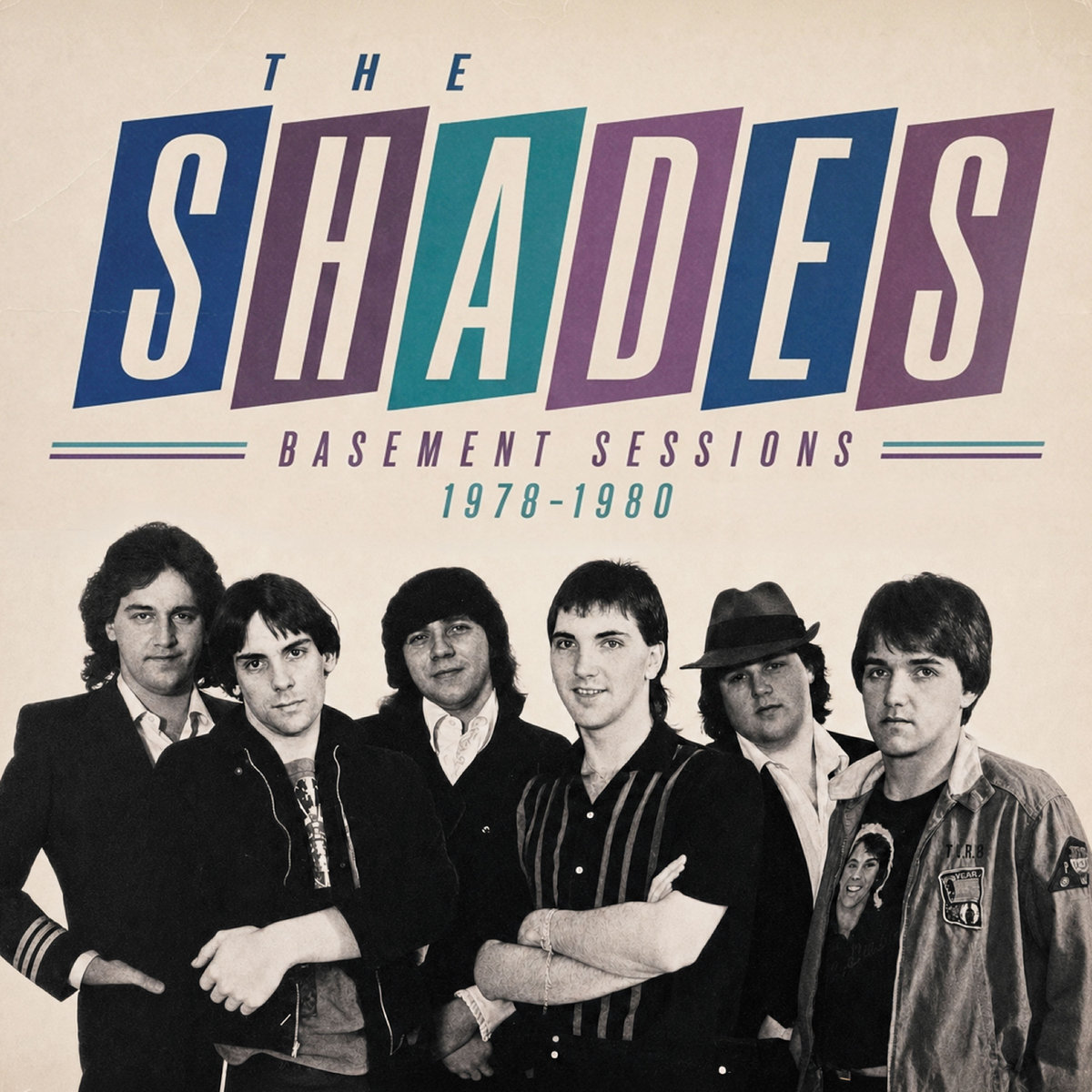

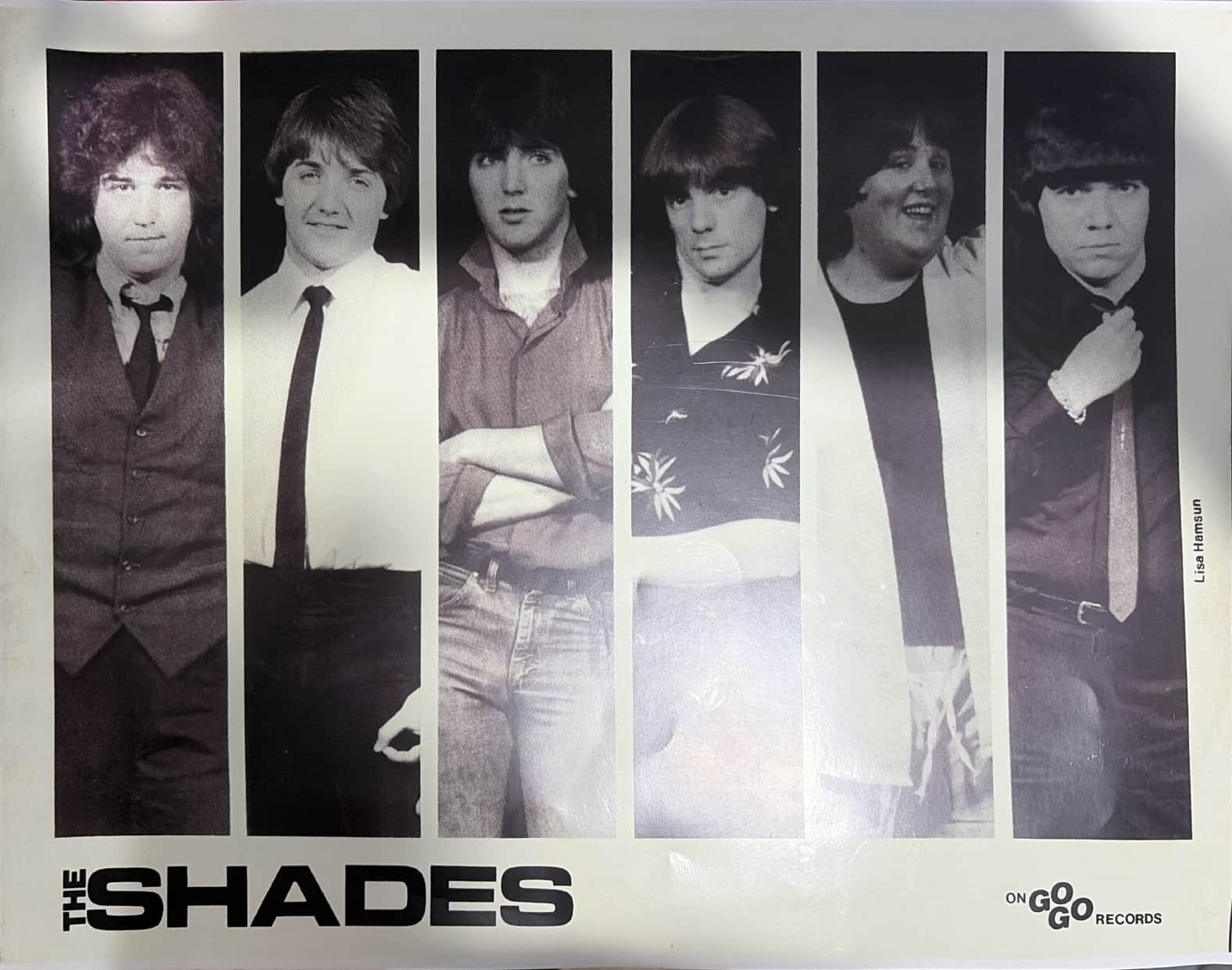
The Shades | The Trenton Years and the Basement Tapes
The Shades came out of the bars and clubs around Trenton, New Jersey, in the late seventies.
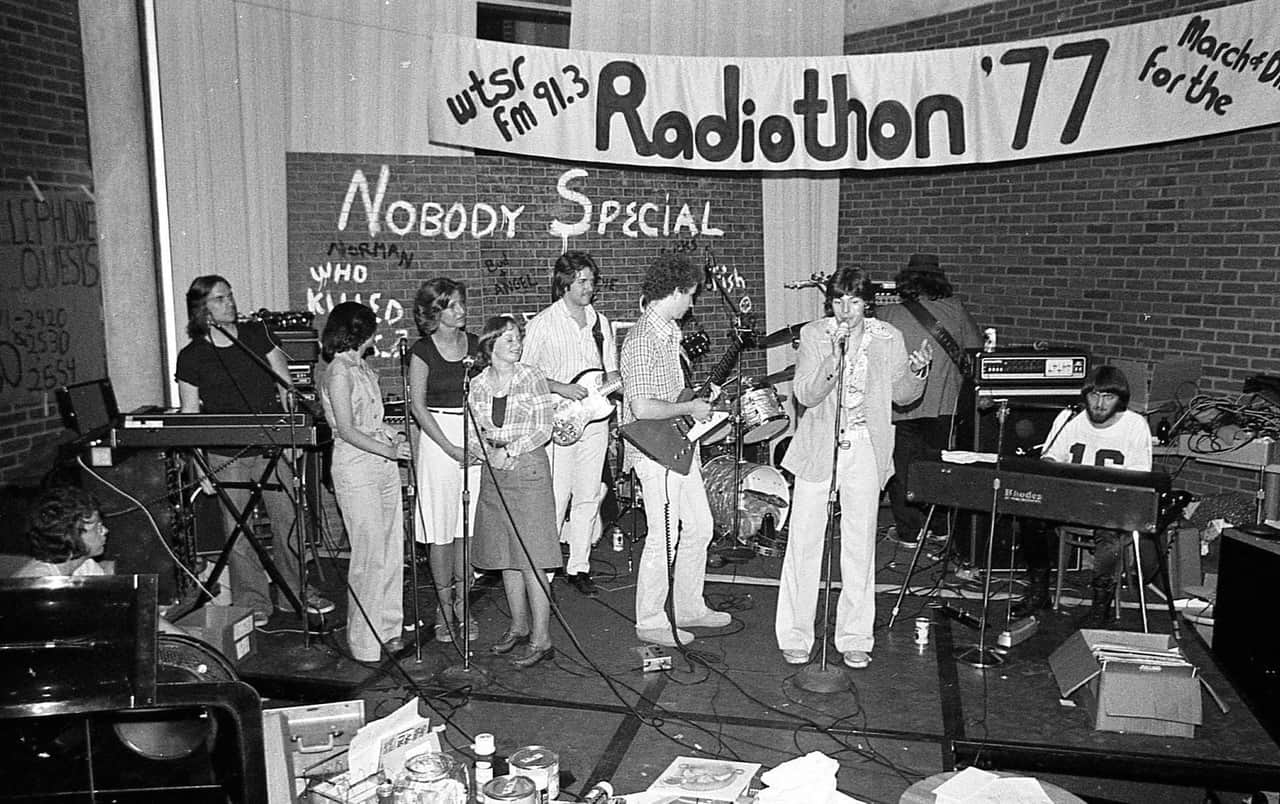
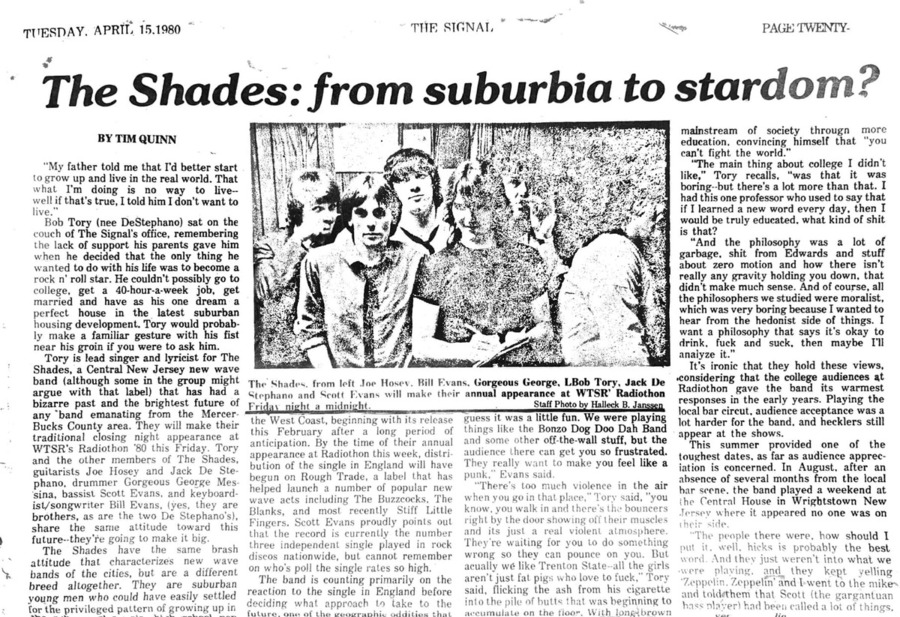
Before settling on the name in 1978, they had been Nobody Special, a group of school friends centred on two sets of brothers, Jack and Robert DeStefano and Bill and Scott Evans. They were mad about The Kinks, The Move, Roxy Music and the Bonzo Dog Band, and often chose covers that other local groups wouldn’t touch. They were also rather fond of making a spectacle of themselves. Scott wore strange hats, glasses and, on one occasion, a silver asbestos fireman’s outfit. Behind them stood a fake brick wall borrowed from the Sensational Alex Harvey Band’s stage show.
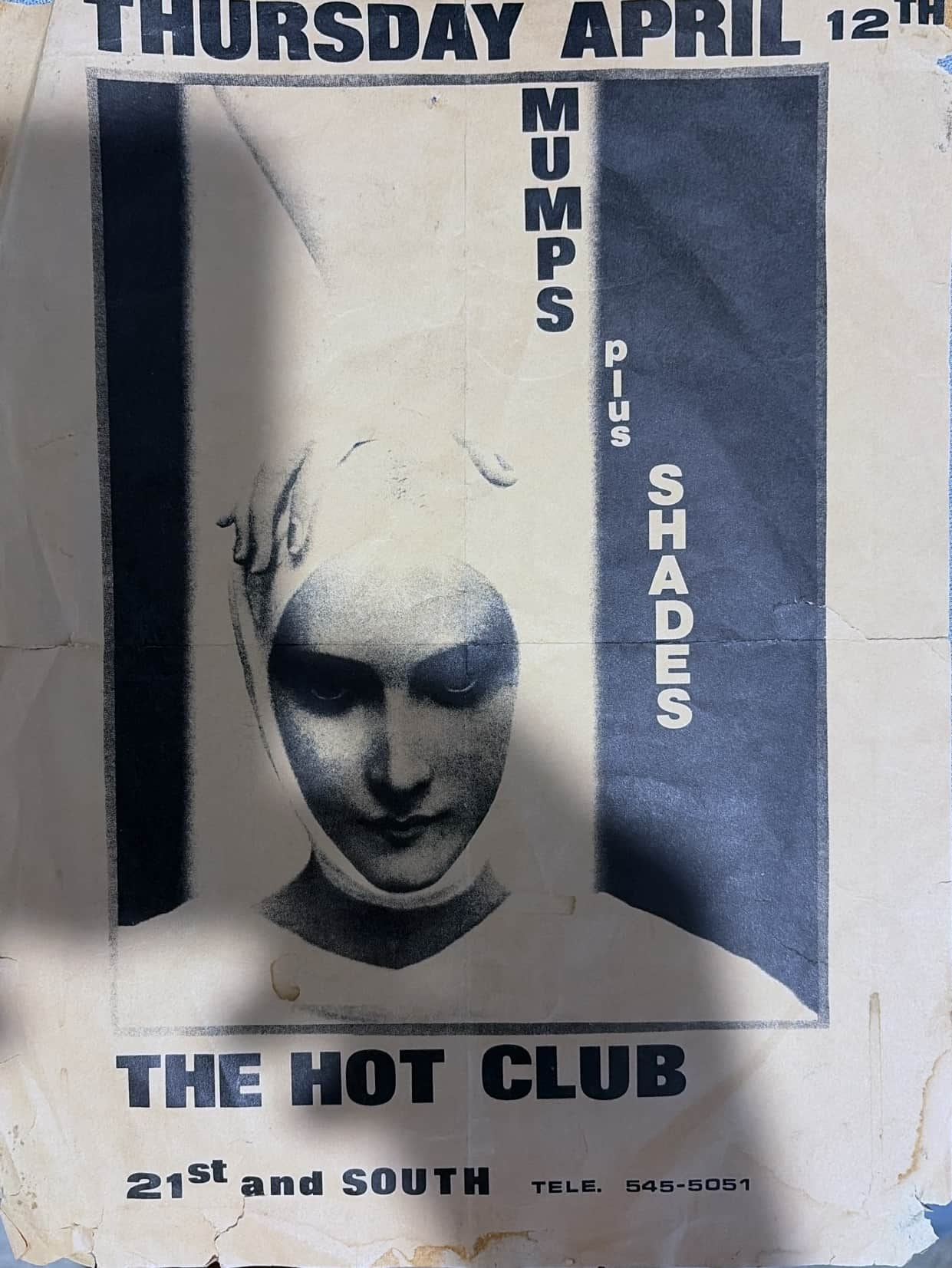
As Robert DeStefano and Bill Evans began writing more songs, the covers gradually made way for original material. With Joe Hosey on guitar and George Messina on drums, The Shades played four-set nights in local bars while taking their own songs to places such as Philadelphia’s Hot Club and Trenton’s City Gardens. They shared bills with the Mumps, travelled as far as Detroit and opened for The Police at Philadelphia’s Walnut Street Theatre in April 1979. Jack remembers thinking they were on the verge of making it. Their only record at the time was the Go-Go single ‘Hello Mr. Johnson’ backed with ‘Are You My Angel?’, which also reached Britain through Rough Trade.
Meanwhile, sound engineer John DeMarzo had been recording the band in the basement of Bill and Scott’s family home. Bill’s bedroom served as the control room, and John was doing his best to get six musicians onto a TEAC four-track machine. Scott remembers singing backing vocals to ‘Men from the Boys’ at two in the morning, with his parents asleep upstairs and a demo needed for a record company meeting the next day. Some sessions went on well into the night, with everybody keen to hear what they had managed to put down on tape.
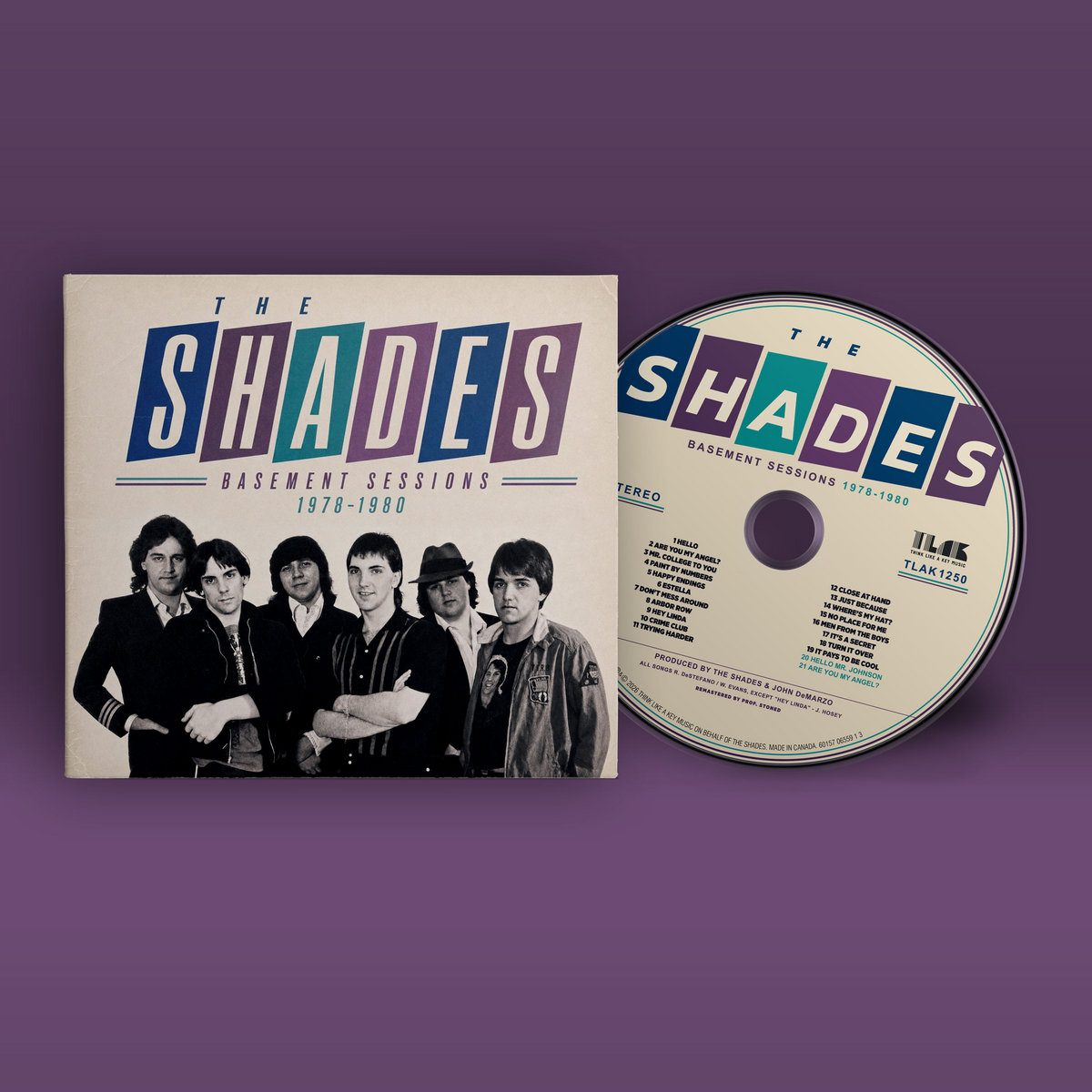
John kept the reels, and nineteen of those recordings have now appeared on ‘Basement Sessions 1978–1980’, released by Think Like a Key Music and remastered by Prof. Stoned. The CD also includes both sides of the original 1979 single. We caught up with the musicians and John to talk about the old bands, the clubs, the recording sessions and what happened when their hopes of making a living from their own music began to fall apart.
“We mostly sat in our rooms and wondered why nothing was happening.”
Let’s start before The Shades. What was Central New Jersey like for you as teenagers in the mid-seventies, and how did the group that became Nobody Special actually come together? With the Evans brothers and the DeStefano brothers both involved, was music already happening around the two families before there was a proper band?
Robert: Jack and Bill were in a band with a drummer called Bob Brenna and a guitar player called George Wells when they were 15. At that point, Jack played bass. Jack mentioned to me that I could be in the band, so I got my parents to purchase a shitty electric piano for me. At that point, I’d not spoken to any of the other band members. I recall asking Jack, “Are you sure everyone is okay with my being in the band?” Jack, as we were wont to do in those days, grunted a monosyllabic “yup.” So, I nervously grabbed my new instrument and headed to Bill and Scott’s house for band rehearsal. I plugged in and tried to play along. We were then known as Dunkirk Connection. Most of the songs that we played were cover tunes, chosen mostly by Bill. Our repertoire was unusual for Central/South New Jersey bands. I had been writing songs for years by then, and we managed to work a few of them into our sets.
Jack: Both sets of brothers were in the same elementary school and were friends. We played Little League and other sports together. We, meaning everyone in The Shades, were into music. Bill and I had a “band” that played in the sixth-grade talent show. Then we formed our first real band, Relics. Soon after, Robert and Scott joined, and we became The Dunkirk Connection.
Scott: In the mid-seventies, the central NJ area was inundated with bars/clubs that focused primarily on disco dance nights and rock cover bands. There were probably 8 to 10 venues within a 15-minute drive from where we lived. Bill and I had grown up with Bob and Jack; they lived about a mile from us. We went to the same schools, played in the same baseball league. The first band I remember being part of was called Dunkirk Connection. I believe it was Jack, Bob, Bill and I, along with Bob Brenna on drums and George Wells on lead guitar. Bill was the “lead” singer for a minute… somehow (meaning I don’t remember), we ended up becoming Nobody Special. Steve Bross was the best bass player around; however, since I was the current bass player, we asked him to play guitar. Steve figured that if Phil Manzanera from Roxy Music could do it, so could he. Tommy O’Brien came on as drummer, and Joe Tobias, Jr., who was also a childhood friend, became the lead singer. As for me, I was influenced by early Genesis, Roxy Music, The Kinks, The Move and the Sensational Alex Harvey Band. The Nobody Special fake brick-wall background was, of course, influenced by SAHB’s live show. Yes, we did learn a lot of songs off albums. I clearly remember playing bass to Genesis, Yes, The Who and Roxy Music albums constantly.
What were you listening to in the Nobody Special days? Were you all bringing different records to rehearsals, or did you tend to agree on what to play?
Robert: I learned so much from Bill regarding what/who was happening in the music field. Scott was a huge Alex Harvey fan, and we soon followed suit. Bill and I were massive Bonzo Dog Band, Move and Kinks fans, and we covered many songs from all those bands. Bill turned me on to Roxy Music, of whom I became a very big fan. By this time, Bob Brenna and George Wells had exited, replaced by Steve Bross, Tommy O’Brien (Obie) and Joe Tobias. This is when we became Nobody Special. I was growing increasingly frustrated by the group practice of “everyone can choose a song to do,” as I believed that this practice diluted our direction and focus. I was also a bit of a musical snob. I told the group that if we were to stay together as a band, then the song selection would have to be done by Bill and me. Obie was not comfortable with this, understandably, and decided to leave the band. A band friend, the very talented, late, great Fran Kowalski, suggested George Messina as a replacement drummer. After the first song played together at his audition, we all looked at each other and, in the words of Steve Bross, “I think we found our drummer.”
Jack: First, like almost every band in our age group, we saw The Beatles on The Ed Sullivan Show. I think, like every other male in the United States, well, almost every male, we wanted to be in a band and be rock stars. Bill seemed to have every album ever released in his room. FM radio was taking hold, and we all listened and gravitated to our own tastes. I was probably the most pop-oriented; the others were really into the alternative side. We grabbed so many covers from that obscure and alternative side that people attending the shows thought they were Nobody Special originals.
Scott: It seems as if we all had similar tastes in music. The older days of playing four sets at clubs made us tighter live and had us doing cover songs mixed with a few originals here and there. As a band, we figured that if we had to play cover songs, we would do ones that others wouldn’t touch. We did songs like Bonzo Dog Band’s ‘Tent’, ‘Pleasant Valley Sunday’, ‘I Fought the Law’, ‘Wild Tiger Woman’ (The Move), ‘Then He Kissed Me’. I remember Bob singing ‘Mother’ by John Lennon solo on piano as one of our opening songs.
Bill: There was no internet at the time. It would be years later that I would learn that Lou Reed (whom I adore) had a high school doo-wop group called The Shades and that at least one other doo-wop group had used the name. I still chuckle at our doo-wop interlude in ‘It Pays to Be Cool’. Maybe it was our destiny to try doo-wop, if only for 30 seconds or so.
Nobody Special had that fake brick-wall backdrop inspired by the Sensational Alex Harvey Band, and Scott was turning up in lab coats and other strange outfits. Where did all that come from? Were you trying to make the shows as entertaining as the music?
Jack: I’d like to point out that only Scott wore the lab coat, asbestos suit, hats, glasses and jumped around the stage with so much energy that it was contagious. And yes, we were trying to be cool, different and memorable.
Scott: We all had our stage personas that carried over into our daily lives. Joe Hosey was “king of pop,” I was the crazy guy, we were all too over-the-top “cool.” I have been a bit over the top (lol) with the theatrics on stage, usually wearing an array of odd hats, glasses and wardrobe, which once included a silver asbestos fireman’s outfit. Circus Magazine once wrote a review that included the line “the bass player jumps around the stage like an elephant in heat.” One thing was certain: you would remember us.
At some point the covers began giving way to original songs and Nobody Special became The Shades. Do you remember when it first occurred to you that you could become an original band rather than simply a working bar band? Did changing the name make it feel like a fresh start?
Bill: It was always an aspiration to write original songs. It was a necessity to play covers, since the work available to us in local bars and clubs required us to play several sets each night. Many nights we played about 60–70 songs. We loved so many songs and bands, it was a joy to play cover songs. Still, we always made a point to play some original songs in every set. Jack and I had been loosely thinking since we were 11 or 12 years old that we would build a band, and we did indeed write an original song or two and performed in public now and then. We knew cool bands wrote their own songs. Our early songs weren’t very good, as I recall. Fortunately, we discovered Jack’s younger brother, Robert, could write songs. Good songs. I think the name change to The Shades was our way of stating our goal to focus on our original material.
Jack: Their original songs were so good, we knew we had to play them. I guess The Shades made it feel like a fresh start. But we also opened City Gardens and moved away from the cover scene.
Scott: As time went on, we focused primarily on the original songs. We just got tired of doing covers. What I recall is Bob would come in with a song he had written, usually with a strong melody and chord structure, and we would all work out our own parts for the arrangement. Bill would lock himself in his room and write the lyrics. We all put our influence into the arrangement of each song. Occasionally, one of us would hear a part for someone else and suggest it. It was even met with gratitude once in a while. Since Dave Davies was my vocal hero, I got all of the super-high background vocal parts.
Robert and Bill wrote most of the songs, but everybody had a hand in arranging them. How would a new song come together at rehearsal?
Bill: The music came first, brought to us by Robert. Robert would always have some “placeholder” lyrics, but also often have some lyrics and titles too good not to use. Sometimes entire completed lyrics that we left untouched. As I recall, ‘Turn It Over’ is one such song. I sometimes just filled in the gaps or elaborated, but also enjoyed opportunities to write 100% of the lyrics for songs Robert brought to us.
Jack: I think in general the song would be presented by Robert. Then the rest of us would find the groove, work on bass, drum and guitar parts and come up with ideas that would be incorporated into the song.
Songs like ‘Where’s My Hat?’, ‘Crime Club’ and ‘It Pays to Be Cool’ sound as though they must have stories behind them. Were the lyrics drawn from things happening around you, or did some begin as private jokes?
Bill: You caught me. Yes, some songs had elements of inside jokes of sorts. For example, ‘Where’s My Hat?’ is an homage to Fran Kowalski, now deceased. He was a brilliant local musician appreciably older than us, one of the few local music scene people we admired and who in turn admired us. He never appeared on stage without a hat. The lyric celebrates his tenacity but suggests there is potential sadness associated with a life pursuing musical creativity without great success. In his last years, he wrote and recorded advertising jingles that I often stumbled across on local radio; they were unmistakably his. He was carrying on the fight ’til the end — his hair having given up decades earlier.
In retrospect, ‘Crime Club’ is perhaps my favorite song on the ‘Basement Sessions’ release. It has nothing to do with anyone I knew or any real-life situation. I think we played it live only a few times, since audiences did not expect us to play a slow-paced six-plus-minute song. I cribbed lines from poetry for ‘Crime Club’. ‘Are You My Angel?’ is a line from an Allen Ginsberg poem. I took distinctive titles wherever I could find them!
Jack: Years later, when I started listening to The Shades songs again, I was struck by how many of Bill’s and Robert’s lyrics were personal stories.
Joe, you joined after Shot in the Head had finished. Jack, Bill and Robert had already seen that band and thought you might be a good fit for The Shades. What do you remember about first getting together? Jack and Joe, how did you work out the two-guitar approach between you?
Joe: So, what I remember is that during Shot in the Head we were using the same booking agent as The Shades, and that’s how the connection was made upon discovering that we had similar likes and were covering a lot of the same material. Originally, they were looking at our other guitarist, Peter Tomlinson, and ended up with my phone number, and the rest is history. Peter went on to make a lot of great music with the late Fran Kowalski and is still up my list of all-time great guitarists. I met Bob first on my way to the Evans house where all the work was done, and I remember a conversation about Beatle harmonies. It was like talking to myself. My first gig was on a Hudson River cruise that I think was a college frat party. Peter filled in on drums for that gig! Also had my first migraine, ugh. From there it was the 9:30 Club in Washington, DC, and I believe we opened that show for Ultravox. Then it was constant recording and gigging. Jack and I always tried to play different voicings and parts while tape was rolling, and I was always proud of what we did. We mostly had different approaches to the guitar. I always secretly thought of us as Johnny Ramone and George Harrison!
Jack: Joe walked into the soon-to-be-famous basement with Robert and Bill (I think) and looked around, obviously nervous, not really knowing the band. I grabbed a beer and tossed him one and said, “Grab a beer, it don’t cost nothing,” from Animal House, and we all laughed and Joe settled right into making music and bringing that “King of Pop” influence to The Shades.
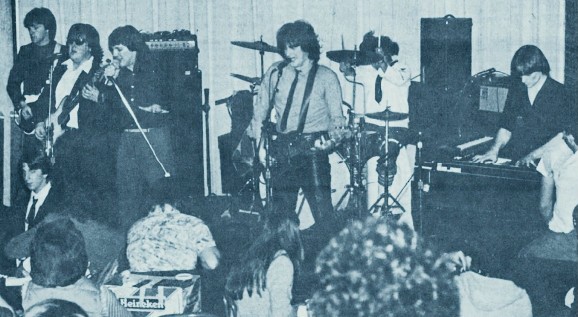
You had two guitars, keyboards, saxophone and several voices to fit into the songs. How did you work out the arrangements without everybody getting in each other’s way?
Jack: We did work on getting the sound Robert had in his head. Not always successful, I would assume!
But we all worked out parts in the song. Joe and I always tried to have different sounds and play different shapes of the chord. So it just wasn’t two guitars bashing out the same chord and sound.
You were still earning money from four-set bar gigs while taking your own songs to clubs in Philadelphia, New York and further afield. How different were those nights? Did all that time onstage help when you began playing more original material?
Jack: I remember always thinking we were just an OK live band. When you are on stage, you hear every wrong note, every little mistake, etc. But years later, I listened to a recording from City Gardens and couldn’t believe how we rocked and sounded. Yes, years of being on stage helped us refine the sound.
What do you remember about your first gigs at the Hot Club in Philadelphia? Was it very different from playing the bars closer to home?
Jack: I remember being excited about the new venues and opportunities to move out of our backyard.
You’ve spoken fondly of the Mumps, but there must have been other bands you enjoyed seeing and sharing bills with. Who stands out when you think back to those nights?
Robert: We were fortunate to meet a great many talented artists over the years. To me, none of these come close to the Mumps. I was an arrogant shit in my 20s, and when we got our first gig playing with Mumps, my attitude was, “Great! Here’s another person trying to capitalize on their 15 minutes of fame.” With my arms crossed, daring them to impress me, I nearly fell from my chair when I heard them.
Unfortunately, I lost contact with Kristian and Lance until the mid-1990s. It was Kristian who brought me back to music. That they loved my music was manna from heaven for me. I was friends with Lance until his death, and I am still quite close to Kristian.
Robert: We were fortunate to meet a great many talented artists over the years. To me, none of these come close to the Mumps. I was an arrogant shit in my 20s, and when we got our first gig playing with Mumps, my attitude was, “Great! Here’s another person trying to capitalize on their 15 minutes of fame.” With my arms crossed, daring them to impress me, I hear the words, “You bought that sofa that I wanted for years and it made me cry, but they’re crocodile tears.” I nearly fell from my chair.
Unfortunately, I lost contact with Kristian and Lance until the mid-1990s. It was Kristian who brought me back to music. That they loved my music was manna from heaven for me. I was friends with Lance until his death, and I am still quite close to Kristian.
Jack: We had a great time with the Mumps, loved the Real Kids, met the Romantics in Detroit and brought them into Philly. Bill and I (probably the rest too) watched An American Family on PBS, where we were introduced to the Loud family (Lance) and his friend Kristian. I think we played with them first at the Hot Club. Loved those guys.
Scott: We loved working in Philly and NYC. We would cross paths with many other bands. But we did truly enjoy working with the Mumps. The Hot Club days in Philly started the journey of us looking to do demos for record companies. Recording at a studio in Society Hill (Stars?) was our second studio gig. We did a two-song demo with Nobody Special somewhere in northern NJ back in 1975/76? Once John brought his four-track into our home, we almost completely focused on making demos for A&R peeps. Of course, we did record late into the night at times, forgetting that my parents were sleeping upstairs. I still remember singing the background harmonies for ‘Men from the Boys’ at the top of my lungs at around 2:00 am because we needed to finish a demo for the next day’s meeting. It was fun!
You opened for The Police at Philadelphia’s Walnut Street Theatre in April 1979. What do you remember about that night? Did you come away thinking the band might finally be getting somewhere?
Robert: I can recall playing at Walnut Street Theatre, and I do remember thinking that “we’re on our way.” Boy, did I get that wrong.
Jack: In one word, YES. Frankly, we thought we were on the doorstep of breaking through. And then we weren’t, and it took a lot of the wind out of the sails. But Robert still was, and still is, making incredible music, so they kept on pushing. You can hear his incredible writing on The Blood Rush Hour collection.
The centre of the new release is the material you recorded with John DeMarzo in Bill and Scott’s basement between 1978 and 1980 on a TEAC quarter-inch four-track. What was that basement actually like when the six of you were down there recording? How did you manage a band of that size with only four tracks to work with?
Jack: I don’t remember any issues, but ask John.
Nineteen of the basement recordings are on the new release, which is still a lot of material for a band that only released one single at the time. What did you think those tapes were for back then? Were they demos for labels, a way of keeping track of new songs, or was there ever serious talk about making an album?
Jack: Oh, we had way more than 19. That was our dream.
Joe, ‘Hey Linda’ is the one song on the collection credited solely to you. What is the story behind that one?
Jack: All I can say is “My Zelda, she took the money and ran with the tailor.”
‘Hello Mr. Johnson’ and ‘Are You My Angel?’ were then recorded at Veritable Studio for the Go-Go single. How different did it feel going from the basement into a professional studio? When you compare those versions with the basement recordings now, which comes closer to how you remember The Shades actually sounding?
Jack: The recording technique at the time was to record the bass and drums, then one guitar, then the other, then keys, then vocals. I think our ‘Basement Sessions’ have more feel and aggression than the single.
The Go-Go single also reached Britain through Rough Trade distribution. Did you know at the time that the record was making its way overseas? Did anything ever come back to you from Britain, or was that something you only really became aware of much later?
Jack: I’m sure we did, but I really can’t remember.
The booklet says that by 1982 people had started coming and going from the band. What happened after the period covered by these recordings? When did that classic lineup really begin to come apart, and how long did The Shades continue in one form or another?
Robert: Joe left the band in late 1981 or early 1982. He would know better than I. We went through several different setups. We worked with Eddie Wilson, guitarist extraordinaire, for a year or two. I recall writing a few songs with Eddie. He usually came up with a single-note riff or a two- or three-chord riff, and I would flesh it out with melody and further harmonizations where needed. We also had a stint where I played bass, and Scott moved to lead guitar. These were difficult times for me. We all were, in the words of the wonderfully talented Peter Tomlinson, “notorious underachievers.” We had moved into late 1983 by this time. I was still writing songs. Bill would write lyrics on occasion by then, but he mostly left it to me. None of us took any time or energy to try to get booked anywhere, promote the band, look for an agent who had some passion about us, etc. We mostly sat in our rooms and wondered why nothing was happening (not Bill, he was building an academic career). By the time it became obvious that we weren’t able to do what we needed to do to get noticed, 1983–84, I was in complete despair. It was so painful for me to engage with music in any way that I stopped listening to and playing music at all. We played two reunions in 1990 and 1992 (I believe) that were well attended, and we played all the songs we’d played over the years and included everyone who’d ever played in The Shades.
John, you still have all those original reels. What do you remember most about making the recordings, and did you ever imagine they’d get a proper release nearly fifty years later?
John DeMarzo: As a kid, I was always fascinated by how I could manipulate sound using tape recorders. I’d always had some type of reel-to-reel machines since I was seven years old. I can still recall the smell of fresh tape when opening a new tape box. So, fresh out of high school, I bought my first serious professional tape machine, a four-track TEAC 3340S quarter-inch reel-to-reel tape deck. I still own that machine. Don’t think I’ll ever let it go. It was on this deck that I recorded all The Shades material, with the exception of the Go-Go single, which we produced at a professional studio, Veritable Studios, in Ambler, PA.
In 1978, I auditioned for The Shades to be a sound man for their live shows. The first time I saw these guys and heard their performance, I was in love! Their show mixed incredibly cool covers with brilliant originals, and I loved all the songs. I was incredibly fascinated by Bob’s beautiful melodies and Billy’s incredible lyrics. That first line in ‘Estella’, as Bob moves up to the top of his range, “City at night can change behavior,” is nothing short of brilliant! And Joe would always bring his pop classics to their performances. Plus, the stage energy from Scott, Jack and George was infectious. I knew I wanted to capture that energy on tape.
So, when I mentioned to the guys that I was studying sound engineering/producing and had just bought my own four-track tape machine, they were intrigued, and we went to work setting up a studio in the Evans’ residence basement. Billy’s bedroom was our control room, while the family room was our studio room.
Our recording process was not too dissimilar from the way The Beatles recorded their early four-track albums. I ran all the instruments through the band’s sturdy Yamaha 12-track live mixing board. I mixed the basic tracks to stereo on tracks 1 and 3. In many of the first sessions where we recorded ‘Estella’, ‘It Pays to Be Cool’, ‘Don’t Mess Around’, ‘Hey Linda’, etc., I bounced stereo tracks 1 and 3 to 2 and 4 while the band would overdub their parts live during the bounce. This process made things a little difficult on the band because if any band member made a mistake as we were doing the bounce, we’d have to go all the way back to the beginning of the song and start the bounce again. Also tough for me because I had to get the levels correct during the bounce as well. This led to some late-into-the-night sessions. And I loved every minute of the work.
On some songs, I lost count of how many overdubs we did. This also produced a lot of tape hiss, but we didn’t care because we were going after big ABBA/Beach Boys/Phil Spector wall-to-wall sound. And I was overly influenced by the extravagant studio recordings of the 1970s, maybe a little too much so. I remember we would get up the next morning and couldn’t wait to listen to what we finished the night before. I can vividly recall the joy on their faces as we listened back! We were so fascinated by what we were capturing on tape!
For the subsequent sessions that started with the songs ‘Hello’ and ‘Are You My Angel?’ and beyond, I had borrowed a second four-track from a friend. This gave us access to more tracks and increased flexibility, much less tape hiss, and we had improved control over the instruments during recording and mixing. If you listen to the original rhythm tracks before overdubs, they sound really clean and professional, especially for basement tapes. I have a tape of an instrumental that Bob had written as a late-night TV show theme song, that was recorded with the full band live to tape, and it sounds great. We had so much fun, especially since the band loved to experiment with different kinds of sounds and effects. Once, we used a wind-up toy for that whirling grinding sound effect on ‘Crime Club’.
I still have all the master tape reels. A few years back, Scott and I transferred everything to digital with Pro Tools. I can only imagine the sounds we could have created back then if we were working in a Pro Tools environment, like I do today. I’m not sure how the CD was mastered and what source was used, but I am so excited that after almost 50 years, the world finally gets access to this incredible music. We must’ve recorded over 50 songs during those couple of years. I also have some pretty clean live tapes, too. So, if we need to do a follow-up album, I’m sure I can curate enough music for the guys to review.
I was a young, awkward kid when I started working with the band. But it was one of the best times of my life. They inspired me to keep recording, producing and composing, a passion that I have continued to pursue. I cherish those years, their music and friendship. I am forever grateful that the guys allowed me to capture them on tape. Despite the fact that we don’t see each other as often, I think of the band members like my brothers. When we do get together, it’s like we haven’t missed a beat.
I hope everyone enjoys the songs as much as we enjoyed putting them down on tape. Long live The Shades!!!
Klemen Breznikar
The Shades Bandcamp
Think Like a Key Music Official Website / Facebook / Instagram