
Adam Brodsky Interview | Anti-folk, ‘American Epitaph’ and the Return of the Dork
Adam Brodsky has a habit of knocking himself down before anyone else gets the chance. At one point in our conversation he describes songwriting as little more than “taking some words, finding two that rhyme, putting them at the end and choosing which of the four chords I know should go where.”
A little later, he says something much closer to the truth: “I’m a songwriter. It’s how I define myself. It’s what I do best in the world.”
Brodsky came up around Philadelphia in the early 1990s, playing acoustic songs with the attitude of somebody who had spent as much time with punk records as folk ones. For a while he thought he had stumbled onto something new. Then he discovered Lach’s Antihoot at the SideWalk Cafe in New York and realised there was already a whole community of people making similarly unruly music. He remembers that first visit rather perfectly: “We were such wide-eyed waifs.”
What followed was a run of records, endless touring, his own Permanent Records label and, in 2003, the wonderfully excessive business of playing all 50 US states in 50 days. Eventually the pace slowed and Brodsky more or less disappeared from record-making.
More than two decades later, he is back with ‘American Epitaph’.
It sounds like Adam Brodsky because it does not try too hard to sound like anything else. Some songs arrive with a band, others are little more than voice, guitar and harmonica. There is anger, grief, bad taste, politics and quite a lot of laughter at moments when laughter probably should not be possible. ‘Birthday Cake’, written for his late sister Shari, is the song he did not even realise was important until other people told him it was.
Brodsky can talk seriously about politics or loss and then puncture the moment with a line nobody else would think of saying. He talks about discovering antifolk, playing to punk crowds, recording, bluegrass, the 50-state tour, getting older and learning when to abandon a bad song. His philosophy of recording may be the best description of the whole thing: “We are capturing an event. And events have mistakes. Mistakes are awesome.”
And somewhere along the way Brodsky offers another line that may explain why he is still writing at all: “I don’t love writing nearly as much as I love having written.”
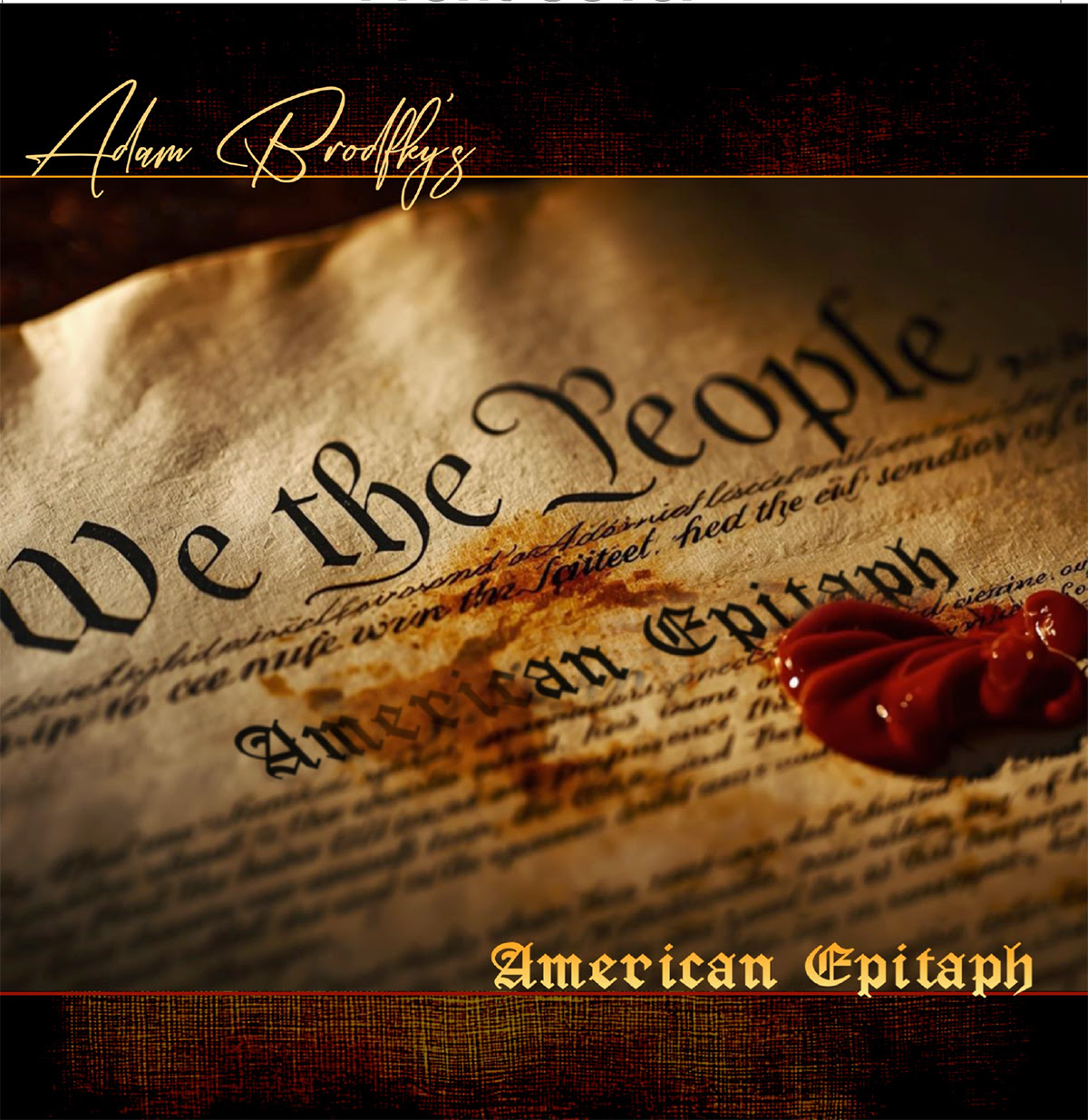
“I don’t love writing nearly as much as I love having written.”
You grew up in Warminster, just outside Philadelphia. What was home life like, and where did music first enter the picture for you?
Just your basic middle-class Jewish suburban Gen X childhood. I had a Schwinn Sting-Ray. I used to make ramps and jump over whoever was stupid enough to lie down in front.
My folks weren’t all that into music. They had a couple dozen records. My dad seemed to love the Cleveland Orchestra conducted by George Szell. I remember they had one Beatles album. It was ‘Yellow Submarine’. I listened to that because the cartoon on the front looked cool.
But I basically found and fell in love with music and songwriting by myself.
You’ve joked that before discovering antifolk you thought you’d invented the whole thing yourself, punk attitude meeting old folk music. What were you hearing in your head at that point, and how did those two worlds come together for you?
Well, I thought I invented it in my bedroom. It was 1992; the internet was just Al Gore and a few bulletin board services.
I, like many antifolkies, was able to snuggle into the corner at the intersection of the DIY ethos of both punk rock and folk music. To oversimplify: musical proficiency is nice and all, but the emotional weight of your song and its message are primary. As a kid who had just learned his first Mel Bay chords two years prior, this worked out well for me.
Then you found out there was already a whole antifolk scene in New York. How did that actually happen, and what do you remember about your first night at the SideWalk Cafe?
Well, the way the full story goes is that I was a regular at the John & Peter’s open mic in New Hope. That was my first stage, and I loved it there and went just about every Monday for four years or so.
One night these two kids came down to the open mic. They were from Staten Island. I remember they dressed a little bit like Hasidim, but were just two chubby Jewish kids in suits. They called themselves the Humans. I’m pretty sure they have a track on Lach’s Antihoot record that came out on Shanachie 150 years ago.
Anyway, at the bar we started talking and they told me that not only hadn’t I invented folk-punk, but it was called antifolk, and the first wave of practitioners had all already been signed to major-label imprints and dropped. At first I felt like one of those Midwestern gay teens on Oprah in the ’80s: “I thought I was the only one. It turns out there’s a whole community of freaks like me.”
Anyway, Butch and I went up to the Fort, which was the club in the back of the SideWalk Cafe at Sixth and A, for the Monday night Antihoot. That first night we didn’t even play. We didn’t bring our guitars. We were just on a reconnaissance mission, and we came home scared. Everybody was great.
There’s an old song of Butch’s called ‘New York’, where he claims that New York is a time bomb, not a town. That’s how we felt that night. All of these people were going to be big, gigantic music stars. We were such wide-eyed waifs.
Eventually we drove back with our guitars, played some songs, and they liked us.
You stayed very much a Philadelphia person while becoming part of a scene centred in New York. Did that bit of distance help? What did Philly give you that New York couldn’t?
One of the reasons I love Philadelphia is that it is achievable. Or at least it was back then.
In New York you have to live in a $1,200 closet, and you spend so much of your time and energy merely surviving. Philadelphia was much more affordable. The parking was much better, and I could play bigger rooms than in New York. I could also play for more than 25 minutes on a Tuesday from 7:10 to 7:35 sharp for tips.
I still like Philadelphia because it’s two hours from everything. Two hours from the mountains, two hours from the beach, two hours from New York, two hours to D.C.
Also, Lach and I ended up in a semi-symbiotic relationship. I would sometimes get treated as a foreign dignitary when I showed up in New York because Lach wanted to colonise Philadelphia. At our peak we waged a war on two fronts. I hosted a weekly, or maybe it was monthly, who remembers, Philadelphia Antihoot at the Khyber, and I would book and promote antifolk shows, using locals, most of whom I informed of their antifolk tendencies. Then I could bring down an act or two from New York every month or two and let those talented kids play in Philadelphia.
You also spent a lot of time walking onstage in front of punk crowds with nothing but an acoustic guitar and harmonica. Did you enjoy having to win people over from scratch?
Flush with the insouciance of youth, I relished the challenge of dragging a crowd from WTF to OMG, he’s pretty good. On my best days it felt a little Kaufmanesque.
Anyone can take an audience that’s primed and ready for a good time and give them one. The real challenge is to make them question and even dislike you first, and then drag them to the top of the mountain.
So these kids, ready to bang their heads, would see my D-16 and my harmonica rack and wonder if they had maybe stumbled into the wrong club. Winning those kids over was so much more satisfying than a bunch of hippies on a hill.
Quite often they would say, “Man, I really thought I hated folk music. Turns out I just hate the folk music my hippie aunt plays. I like your stuff, man.”
I could bask in that shit all night.
Where did ‘the Dork’ come from? Was he basically you turned up a few notches, or did the character let you get away with things Adam Brodsky might not have?
Yeah, that guy onstage is definitely a character, but he evolved out of me. Honestly, his origin story is just that I found that if I kibitzed a bit and told a yarn about the song I was preparing to sing, people would listen more. I would warn them, “Take note in the second verse. I rhyme something with orange… twice.” And it would perk them up.
And yes, I was young, so the persona sort of gelled as an enfant terrible, or however that is spelled in French. A lovable scamp who would say things that were outrageous and inappropriate, but so funny he would get a pass. And I would use that pass to make them listen to the songs I wanted to sing and the messages in those songs. Sometimes they didn’t even know they were going to school.
The Dork contains a bit of, “Oh my God, I can’t believe he just said that. I wish I could say that.”
The first record kept the interruptions, forgotten words and banter, whereas ‘Folk Remedy’ leaned harder on the songs. When did you start thinking differently about what a Brodsky record should capture?
So the first record, I thought, had to be live because so much of the show was the banter. And frankly, some of those songs are good, some less good. I mean, I was very young.
But by the second record, ‘Folk Remedy’, a year or two later, my songwriting had evolved. I took it more seriously. I wanted other people to take it more seriously. And while the songs are still funny to me, they mean a lot more.
Now, when we’re talking about the actual recording, I don’t get too involved in all that, usually. Up until this new record, my previous three were all produced by Sean McClintock. He’s an absolutely amazing producer who has an amazing résumé as well. He was my producer, but he was an engineer on so many famous live records because he worked for Dave Hewett in that big truck. You’ll see his name on things like Nirvana’s ‘MTV Unplugged in New York’, the Bob Dylan 30th anniversary show and lots of other stuff like that.
He made a mediocre guitarist with an adequate voice sound so much better than he deserved to. He was going to produce this record, but unfortunately he decided to die a couple of weeks before the first recordings.
One of the cool things about having him as a producer, and later Matt Muir and Butch Ross, is that I could trust those guys. To paraphrase Tom Waits, “A gentleman is a producer who has a lot of knobs but hardly uses any.” Or something.
The fact that I could trust them not to want to play with all their new shiny toys meant that I could focus on giving a great performance and, you know, remembering the words. I could trust that they would make it sound great.
There are many different philosophies in the studio. I was talking once in New Orleans with another great songwriter, Mike West, who does some producing as well, and we were talking about how Steely Dan and The Beatles had this philosophy: “Let us record the perfect version of this song, and we’ll do take after take, note by note if we have to, to acquire the perfect version.”
Whereas what I’m trying to do, and what Mike West tries to do, and really what everybody I would hope to work with tries to do, is: let us make a really great-sounding document of this song played by these people, in this room, at this time.
We are capturing an event. And events have mistakes.
Mistakes are awesome.
You also started Permanent Records and put out other people’s music. What was it actually like running a tiny label in those days?
It was really fun, mostly because I wasn’t in it to make money, which, as you know, saps the joy out of everything.
The record label was, and I guess technically still is, a confederation. Almost a co-op, except nobody has to come man the store one Sunday a month.
If I had a friend, or a fellow musician who wasn’t a friend, whose music I really liked, I would put their record out on Permanent Records. They would come to me with the finished recording, and I would pay for the printing of CDs, which used to cost real money. Then they would pay me back as they sold records. Once I recouped my money, the terms would change to heavily favour them.
But the real concept was that it was a confederation. So if you were an Adam Brodsky fan or a Todd Young fan, you knew that we all stood behind each other’s music, and in theory, if you liked one artist, you could buy any record on Permanent Records and you should like them all.
We were such young, stupid idealists.
‘Hookers, Hicks & Heebs’ is a strange mix on paper: Jewish history, bluegrass, politics, jokes, some very dark material. How did that record find its shape?
So I have this theory about artistic growth. If you’re on a musical journey, and you want that musical journey to be subsidised by your fans coming to shows and buying records, you kind of owe them something.
On one side you’ve got AC/DC, who have made the same record 12 times. And then you have somebody like Billy Corgan or Neil Young or Lou Reed, who take these giant musical leaps and insist that their fans come along for the ride. ‘Metal Machine Music’? Come on, man.
So with that record, I was really loving bluegrass, so I started writing some bluegrass songs. If you get into the origins of bluegrass and Bill Monroe and Uncle Pen and all those guys, everybody always thinks of Bill Monroe as just an old bald Opry star. But when he invented bluegrass, that shit was punk rock. The things he was doing to country music were radical and scared people.
Those are some of the things I like about bluegrass. So I wrote a few bluegrass songs, Jewgrass, as I call it, and recorded them for the record.
Remember, this was GWB 1, 9/11 was like yesterday. So we were all living in this new world, watching our government panic and Patriot Act and bitch-slap the Constitution in ways that now seem fucking quaint. So I wrote ‘Uncivil Rights’.
Also, I guess all middle-aged dudes go through that World War II obsession, unless they go the brisket route. I guess mine came early, since I was in my early 30s when that record came out.
But I was watching Steven Spielberg’s Shoah Foundation interviews with Holocaust survivors. And they interviewed these two people who had been married for 1,100 years. They met in the camps. He was a Jewish soldier. She was a prisoner who he thought was dead. She was just lying there.
Anyway, they got married and lived in Brooklyn or whatever. I’m sure they’re dead now. But I wrote ‘The Ballad of Abraham Gottleib’ about them. It’s like a seven-minute folk song, so I never sing it, but I’m glad it’s on that record.
In terms of balancing the humour, my take on that is somewhat unique, and it’s something I’ve said might be my life’s purpose: to prove to you that just because something is horrible doesn’t mean it’s not also hilarious.
People say comedy equals tragedy plus time. I like to say comedy equals tragedy plus 18 inches. As long as it didn’t happen in my personal space, that’s hilarious.
But seriously, you take a song like ‘Missing You’ or ‘The Gaucho Named Klaus’ or ‘Birthday Cake’ on the new record, and I work hard to weave the tragedy and the comedy together in the same bolt of fabric.
One of my favourite things to do is have people laugh at a song and think they’re listening to a jolly novelty, only upon later reflection they’re like, “Damn, there are concentration camps in America. That’s not cool.”
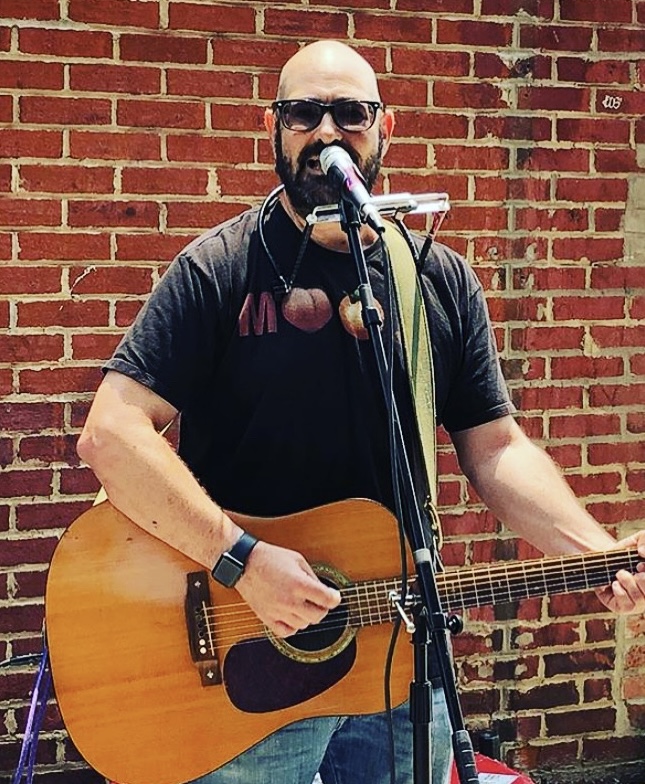
In 2003 you played all 50 states in 50 days, then Washington, D.C. the next night. Once the Guinness record and the insanity of the schedule are put aside, what do you remember most clearly about America on that tour?
It wasn’t just what I learned on the 50-state tour. It actually took three, or maybe four, national tours before that tour to sort of plant the seeds.
I’d go play in a bunch of clubs and either they’d like me or they wouldn’t. So when we called back later and said, “Hey, listen, we need a date on Tuesday the 23rd. No, it has to be Tuesday the 23rd. Can you work with us?”, they did.
But it’s interesting. I played all 50 states during 2003, a time that seemed like a very divisive time… you know, by the old standards.
And what I found was remarkable. Even in Alabama, where they dare defend their rights, and other shitty red states, the vast majority of people who came out, whether intentionally to listen to me or just to get a beer, were very cool and seemed to be free of the odious politics for which their region is notorious.
And I credited this to two basic tenets that I have done literally zero empirical research on. One is mob mentality. People will sing along in a mob almost without thinking about what they’re singing. If you’ve seen Sacha Baron Cohen get all those people to sing “Throw the Jew down the well”, you can understand.
The second is about self-selecting demographics. These are people who went out to a coffeehouse or a bar to hear live music, or a place where they knew live music was going to be, or they came specifically to see me. In general, those people, at least back then, tended to be cooler lefty folks while the Nazis all stayed home.
Would that it were still that way.
At one point you were playing something like 250 shows a year, and eventually you stepped away. Did the songs slow down too, or were you still writing when nobody was waiting for a new record?
I definitely wrote fewer songs, but I believe that was just a by-product of getting old rather than not touring. In fact, when I’m driving on tour, I write very few songs. I tend to write songs on off days. And during the 50-state tour, there weren’t any.
But you know, when you’re young, you’re just sitting down and writing songs because that’s what you do, and you get three a month for years. And then that dries up and you spend the rest of your life with your knife in that mayonnaise jar, trying to get one more sandwich worth out.
But I also stopped writing songs, or stopped writing as many songs, because I was now good enough at it to know what a good song was and what a bad song was, and I’m not going to finish a bad song. I used to, because it’s exercising the muscle and maybe you can cannibalise it later. But if I’m two verses into a soggy morass that I know isn’t going to get any better, I just leave it alone.
Different songwriters feel differently about the actual act of songwriting. When I’m in the zone, it can be fun. But even when it’s really humming, I don’t love writing nearly as much as I love having written.
But yeah, I would still write songs. Sometimes formally, you know, sitting down with a notebook, or more recently just warbling into my phone. But a lot of songs start out as stream-of-consciousness jams while I’m watching TV or sitting around a campfire with friends. And if it’s good enough, maybe I’ll write it down and tell myself to look at it in the morning. Sometimes songs start that way.
And those didn’t stop because that songwriting blooms out of a non-songwriting pastime.
Also, I’m a songwriter. It’s how I define myself. It’s what I do best in the world, and if I were more woo-woo, I would say that’s what I was put here to do.
‘American Epitaph’ sounds pretty final for a record that keeps insisting on showing up and fighting anyway. How seriously were you taking the title when you chose it?
Can I be straight-up honest with you?
There were many proposed titles for this record. ‘The Democracy Demos’. ‘Whatever Happened to Adam Brodsky?’, which would have had a title track that didn’t get recorded for the record. It’s not a great song, but there is a line about how I treat audiences like Richard Speck treated nurses. In context it works.
But I was just tossing out names because it’s got to be called something. I also wasn’t too concerned with the artwork. I was like, “Butch, let’s just slap something together. I’m putting these songs out so hopefully people will hear them, but I know nobody goes to shows and our three-second attention spans aren’t really even long enough for a single song, let alone an entire fucking record like it’s the ’90s.”
So I came up with the name and, rather than agonising over it and living with it and asking everybody I knew and focus groups, I was just like, “Slap ‘American Epitaph’ on it. Done. Let’s go.”
But then Adam Dawson got wind of me putting out a record and said, “No, no, no! You’re not just pissing this out into the void.”
Adam has been a good friend and a strong supporter of my music, one of the strongest, for decades. And it continues. This record seems to be getting good press and people are liking it, and that is because of the hard work of Adam Dawson at Broken Jukebox Media.
Anyway, Adam insisted that I get CDs made, so I did, which meant the artwork had to be CD-ready and fit all of those parameters.
Did you know that you can’t name a song after another artist? There’s a song on this record called ‘Johnny Cash’. But they wouldn’t let me call the song ‘Johnny Cash’, because it can’t flow by on your stereo saying Johnny Cash is playing, because people are going to be like, “That don’t sound like Johnny Cash. That sounds like some antifolk dork.”
So on the CD it says ‘Johnny Cash’. But if you look at the official digital track listing, the song is called ‘The Song I Wrote the Day Johnny Cash Died’.
But yeah, I don’t want to sound hopeless, but oh my God, shit looks bleak. And as it’s mentioned in several of the songs, ‘Gentle’, ‘Nazis in the White House’ and a couple more, whether or not you think you’re going to win is irrelevant to trying.
This is the hill to die on.
And even though I may have a diamond of pessimism growing inside my gut, I’m still going to show up at the marches and write the songs and energise the people to fight fascism, because we are going to fight until the end. If we go down, we’re going down swinging.
And the refrain in ‘Nazis in the White House’ says:
“Singing songs and marching may not change my country
But I still do it every day so my country don’t change me.”
And I think that’s vitally important. The struggle is going to take decades. In fact, generations.
I don’t think I will live to see America beautiful again. But I will fight, fight, fight until it’s time to pass the torch to the next generation, who will fight, fight, fight.
Maybe they’ll sing my songs when they’re doing it.
You’ve come to see protest songs less as a way of changing somebody’s mind and more as a way of keeping people from feeling alone. Was that the idea that brought you back to this kind of writing?
Absolutely.
One of the things that burnt me out was a futile feeling of, what is the point of singing these songs to people who already agree with me? But then I had a reset.
After “retiring”, I came to the conclusion that protest songs, at least these days, aren’t going to change minds. But what they are going to do is foment community. When we sing together, when we know we’re not alone, we get the energy and the joy to go out there the next day and throw some sand in the gears of this fascist regime.
And I’m just a folk singer. I sing some songs. There are more important movers and shakers than I am.
And I hope these songs and my show will energise those important people to go out and do the important work. Maybe they’ll share my songs with people and energise those people too, or share other people’s songs.
I don’t fucking care. Just get these fucking Nazis out of the White House.
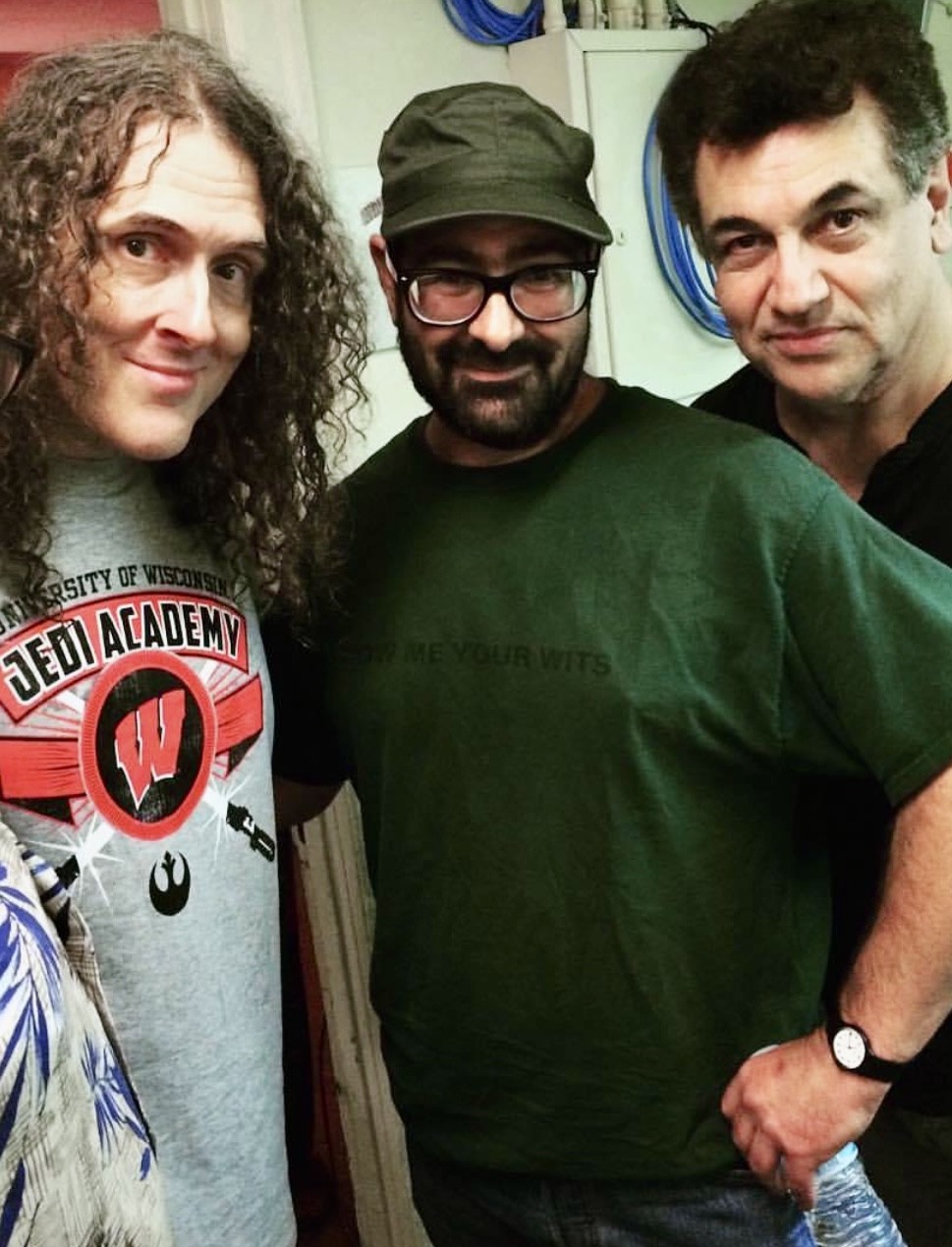
Jesse Lundy and Butch Ross seem to have been important in getting this album over the line, and then there’s the band around them. What did they hear in the songs that made them want to put so much time into the record?
Honestly, I don’t know. I write these songs. I sing them. People like them. Sometimes they don’t.
But seriously, each of these guys knows hundreds, probably thousands, of musicians and hundreds of songwriters. That they chose my songs and my project to put their energy into is a gift and an honour that I don’t take lightly.
And that’s everybody in this project: Alec Meltzer on drums, Chris Bixler on bass, Matt Muir producing the band tracks, Jesse playing guitar and organising the sessions. And Butch spending hours in his basement with my annoying voice in his ears day after day.
And the harmonica!
I know I can be a great songwriter and a great performer. But when other people validate that, because I was raised with a paucity of self-esteem, that means everything to me.
Like I said, these guys could be spending their time working with real musicians, and they chose a songwriter who can barely play barre chords? That vote of confidence means a lot.
I mean, I’m just taking some words, finding two that rhyme, putting them at the end and choosing which of the four chords I know should go where. I suppose it’s more complex than that, but that’s how I see writing songs.
Making a whole soundscape around those songs? That’s a fucking mystery, man. And I’m glad and honoured that there are people who want to do that to my songs.
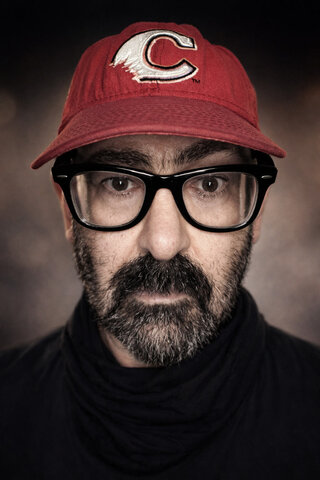
‘Birthday Cake’ started as a poem for your sister, and at first you didn’t even think of it as a song, never mind an important one. When did you realise other people were hearing something in it that you hadn’t, and has it changed what you think can belong in an Adam Brodsky song?
Yeah, that’s a weird one because, right, I didn’t write it as a song. I wrote it as a poem on my sister’s birthday that I was going to post on her Facebook page. Then I started strumming and boom, it was a song.
My sister really loathed the harmonica, so obviously there had to be a harp solo.
Whatever. I just thought it was an album track. But then Butch heard it and Adam Dawson heard it, and they insisted it was one of the standouts.
I see some problems with it. There are a couple of weak stanzas. I would’ve told the story a little differently if I knew this many people would hear it. I would feel a certain responsibility to give a balanced portrait of Shari.
But none of that happened because I didn’t think it was a song. And then when it was a song, I didn’t think it was a good song. And then when it was a good song, I didn’t think it was an important song. And then I didn’t think it was a catchy song.
So what the fuck do I know? Everyone loves it.
I get text messages and DMs and however people reach out, saying, “Fuck you for making me cry on the way to work.” Which I guess I understand. I couldn’t sing that song for years because I’d cry at the end.
I’ve sung it in public exactly once, at the record release party, and I got through it.
So the ultimate question: what is an Adam Brodsky song?
I don’t know.
Probably a melody from ‘Blonde on Blonde’, swapped into 3/4 time and transposed to a major key.
Yeah.
That’s an Adam Brodsky song.
Klemen Breznikar
Adam Brodsky Website