
Temple Solaire: The Long Road to ‘Past Due’
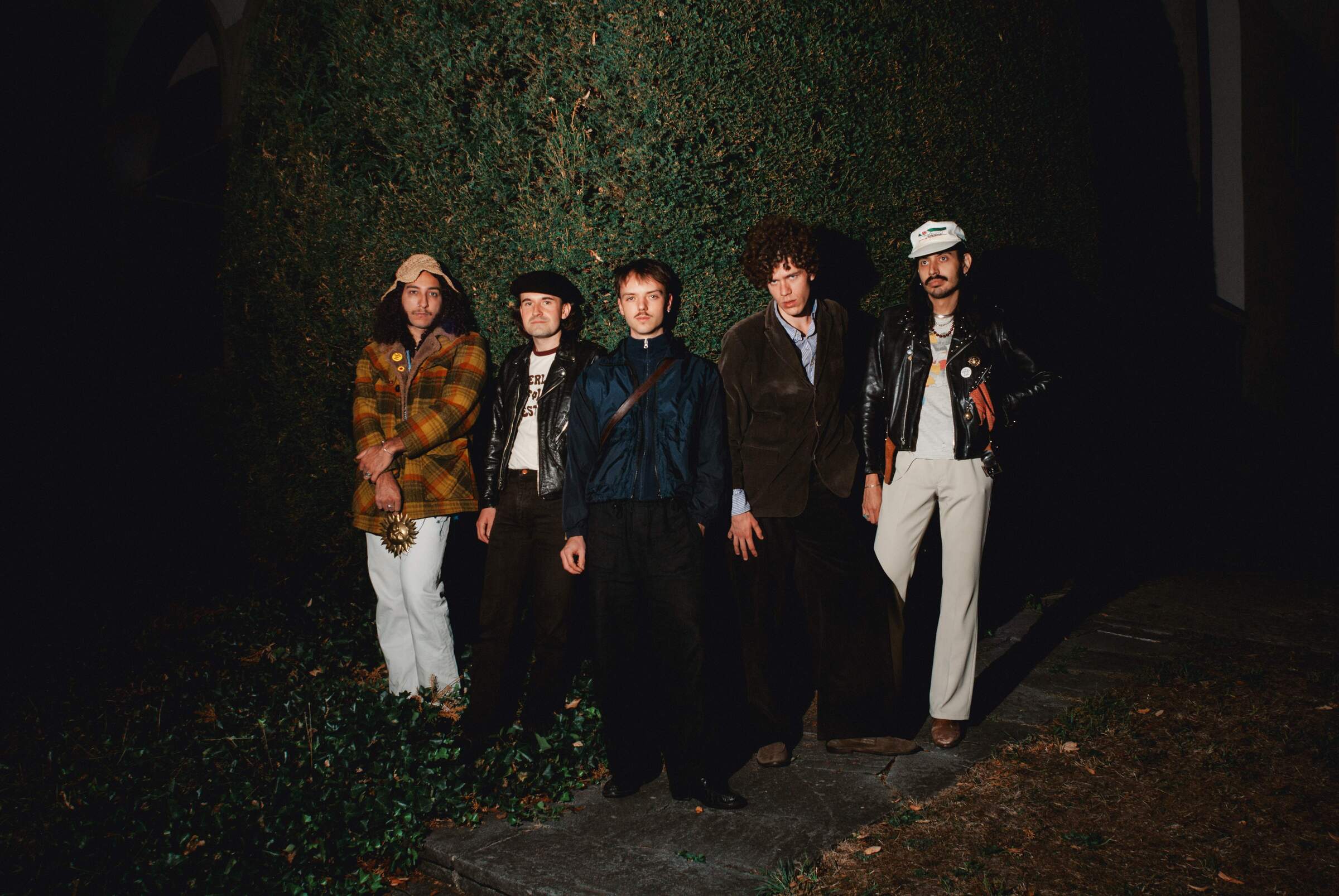
Temple Solaire have been making music in Zürich since 2015, but it’s taken them more than ten years to release their first album.
They’ve changed names three times, had more than twenty musicians come and go, and spent years playing and rearranging some of the same songs. Their debut, ‘Past Due’, was finally released by Taxi Gauche Records in March 2026.
The album was recorded on tape at M.I.R. Tape Rec. Unit with Gabriele de Mario. For Giovanni A. Fortunato, finally getting these songs recorded means he can stop going back to the same material and start working on something new.
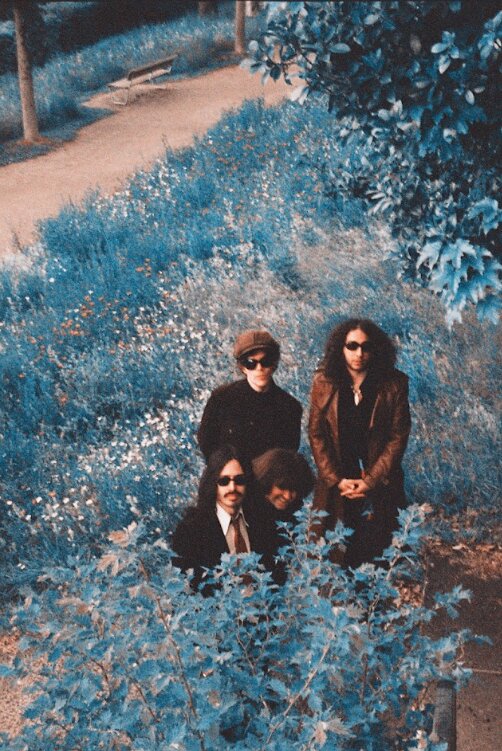
“We’ve been playing these songs forever”
You’ve been around since 2015, but ‘Past Due’ is only now your first proper album. When you finally finished it, did you feel relieved, or was it more a case of, “Right, now we can actually begin”?
Indeed! But we have come a long way since. We’ve changed names three times and had over twenty members come and go, for instance. The music’s changed quite a bit too. We felt like letting go. We wrote several of the songs more than seven years ago and rearranged them several more times, changing the whole vibe and feeling of the song. To finally have them etched onto tape and released kind of closes that door of rearranging and opens the door to new things, or to doing things better from the beginning and keeping on moving.
‘Past Due’ seems a fitting title for an album that’s taken this long to make. But I wondered if there was more to it than that. Where did the title come from?
We’ve wanted to close this chapter for a while now, since we’ve been playing these songs forever and it felt like overdosing. Revisiting them all the time to feel something that’s not the same as it was anymore. Once I watched a documentary about New York in the ’70s and heard the term ‘Past Due’ as slang for overdosing on smack, which stuck. I saw a parallel in that and the whole dark vibe of ’70s New York.
Your songs often take their time and change direction along the way. Is that how they come together when you play in the rehearsal room, or do you spend a lot of time working out the arrangements?
Most times, we start a song in a very loose form and take the time to understand each other’s ideas and try out several things. It’s not always been like that. It needs the right people, mindset and a solid foundation to focus on one vision and leave the ego outside.
What does psychedelia mean to you now, when so much of it has become a style people can copy very easily?
For us, it’s been trying to reconnect to our higher self through music. Meditation. The search for meaning. It all sounds too cliché, but it’s becoming harder and harder to reconnect with one’s true self in a super-fast-paced and ever-evolving society. We all share this feeling and we thrive on keeping that constant thread, that spirit, going. To copy something has always been easy, but the art lies in making its worth last.
You once described the band as a “psychedelic jingle jangle tralala hopsasa band from Zürich.” I take it you don’t worry too much about how people describe your music?
We don’t take ourselves too seriously. We’re humans, after all!
There’s an obvious association between Temple Solaire and the Order of the Solar Temple, particularly in Switzerland. What did the name mean to you when you first chose it, and when did you find out about the cult?
We like the ancient symbolic meaning of the sun and wanted to bring it together with the word ‘temple’, since that’s both shelter and a place for the conscious search for a higher state of mind, reason, purpose or whatever people believe. We were first called ‘The Solar Temple’, and when we found out about the Swiss cult, which was based in the French-speaking part of Switzerland, we changed our name to French. It felt dangerously inspiring and we felt more connected to the psychedelic scene, since there’s always been some connotation between psychedelic band names and cults.
The band has gone through a lot of changes over the years, with musicians coming and going and some changing instruments or roles. Does Temple Solaire feel like a settled band these days, or do you expect it will always keep changing?
We’re very grateful to have found each other and keep a very tight-knit circle around us. A few members have been around since day one and by this time it feels like family. We’re open to changes, like experimenting with other instruments, listening to each other’s ideas and having meetings every now and then, since we can only move forward by truly wanting to.
‘Past Due’ was recorded on tape at M.I.R. Tape Rec. Unit with Gabriele de Mario. From what I understand, the studio felt more like a cosy rehearsal room than a formal recording studio. Did that help you relax and play the way you normally would?
We felt right at home. Just like in our rehearsal room. We could be ourselves, also because Gabri gave us the room to do so. He’s one of us and he knows his room and his gear too well, so we could just trust him on that. For instance, we didn’t bring a single guitar amp of ours to the studio, which at first felt like a no-go, since our gear matters a lot to us!
The album was recorded mainly by three of you, whereas the live band is bigger. Was that simply a practical decision, or did you find it easier to work that way?
It was a necessity for the size of the room, but also for the work ethic we had in mind, since it’s easier and more efficient to work with fewer people. It’s also nice to have that live experience vary every time, by having everyone from the group seasoning the stew.
I like how ‘Excitation > Expectation’ opens the album. Was it always going to be the first track, or did you decide on the running order later?
It revealed itself later as the first track, as it’s the only track where Lorenzo, our former drummer, plays. It made sense to us to have the first song with him on the drums, since he’s got a very particular drag to his playing, which was very important to the song.
Some of these songs have been around for years. Could you take us through the album and tell us a little about how they came together?
‘Excitation > Expectation’ was originally called ‘Exitation’, from ‘Exit’, which was the word that followed me for a period of time back then, after my dear friend David, to whom I’ve dedicated the song, decided to end his earthly being.
His departure traumatised me severely and that gave me the urge to finally put my thoughts onto paper for the very first time.
‘Rebel’ followed shortly after ‘Excitation > Expectation’ and it had a Part I and Part II, where Part I was more of a ’60s garage rocker and Part II heavy, fuzzy psychedelia. We used to extend it up to ten minutes live in the very early days.
Eventually, we grew tired of the ’60s revivalist connotations and opted to rearrange ‘Rebel’ to sound timeless, since the lyrics are timeless too. The constant drag of trying to fit in and make ends meet…
‘Celeste’ came very naturally and easily. It was one of those rare moments where everything just fell into place and it was perfect.
Elia, a brief member of the group, and I were jamming on the three chords and the melody, vocal arrangement and song arrangement just flowed into it.
We showed the band the song the day after at rehearsal and the drumbeat and bass line just sat. The song was done in one afternoon and one evening and we didn’t revisit it.
‘Keep Walking’ had a similar approach and the early version had more of a breakbeat to it and the main melody was played on Mellotrons.
The lyrics were inspired by a talk with a friend about how people on the outside can be completely different on the inside and what we see might not always be real or authentic.
‘Vacant Room’ is probably our most progressive song and the one that had the most rearrangements besides ‘Rebel’.
The early version was a love song and it had a cheesy pre-chorus that slowed down the song and we didn’t vibe to it anymore, so we took it as a goal to give the song several different parts and make it sound more often and less repetitive than the other songs.
It became a song about grief and being indifferent instead of seeking revenge.
‘Supernova’ was written a short time after we’d recorded all the other tracks and it became one of our favourites to perform, since it gave us a new edge and we could show the band from all its facets.
Double vocals, primitive drum and bass, and drony but crispy guitars.
‘Starstreamer’ and ‘Ket Faker’ were written during a depressive period of time, when standing up and doing anything felt like an impossible task.
Both songs are about the search for meaning, the craving for compassion or shelter and recreation.
‘Starstreamer’ is inspired by the Vox Starstreamer guitar that we use extensively and ‘Ket Faker’ by ketamine and Chet Baker.
Your earlier single ‘Clouds Repeat Themselves’ featured sitar, shruti, tablas and various percussion instruments. Do you still see that as part of Temple Solaire’s sound, or have you moved away from it?
Either. ‘Clouds Repeat Themselves’ could really work well as an epic album closer, but we weren’t ready back then with the rest of the album. We’d like to experiment again with all those instruments, it’s just very difficult to execute when on stage, because of the size of the instruments, the pickups and microphones, feedback, etc.
Taxi Gauche Records have been involved with the band since the early days. Your ‘Flowing Free / Mind’s Garden’ single was their first 7-inch, and they’ve now released the album as well. What has that relationship with Piet meant to you over the years?
Piet is a great guy and in the early days of the band, he pushed us a lot and kept us going when times were hard. It’s really nice to have him get together several great bands we like a lot, but sadly we’ve drifted apart a bit. That’s life, I guess! We keep busy, but the love is there.
What’s the music scene like in Zürich these days? Is there much support between bands, or does everyone mostly do their own thing?
It amazes me to realise how many great bands there are, but everybody is cooking their own soup. We do have a small circle of friends in other bands, with whom we collaborate by putting shows together, helping out when someone’s not available, etc. But I feel that that’s rather rare than welcome. There’s a lot of competitiveness instead of support, which is sad.
You’ve shared stages with Black Market Karma, Tess Parks, Levitation Room, L.A. Witch, The Night Beats and Allah-Las. Have you made lasting friendships with other bands along the way, or does it depend on who you’re playing with?
Depends on the band you spend the night with, ha-ha! We do like to think we’re a big family and we try to connect with the other bands. There are several bands to which we’re close now and call them friends, or even family. Black Market Karma and Levitation Room, for instance. Also Black Delta Movement from Hull, but we haven’t seen each other in a long while. We feel that all the mentioned bands are very different, which is great. Aren’t we all outsiders, in the end?
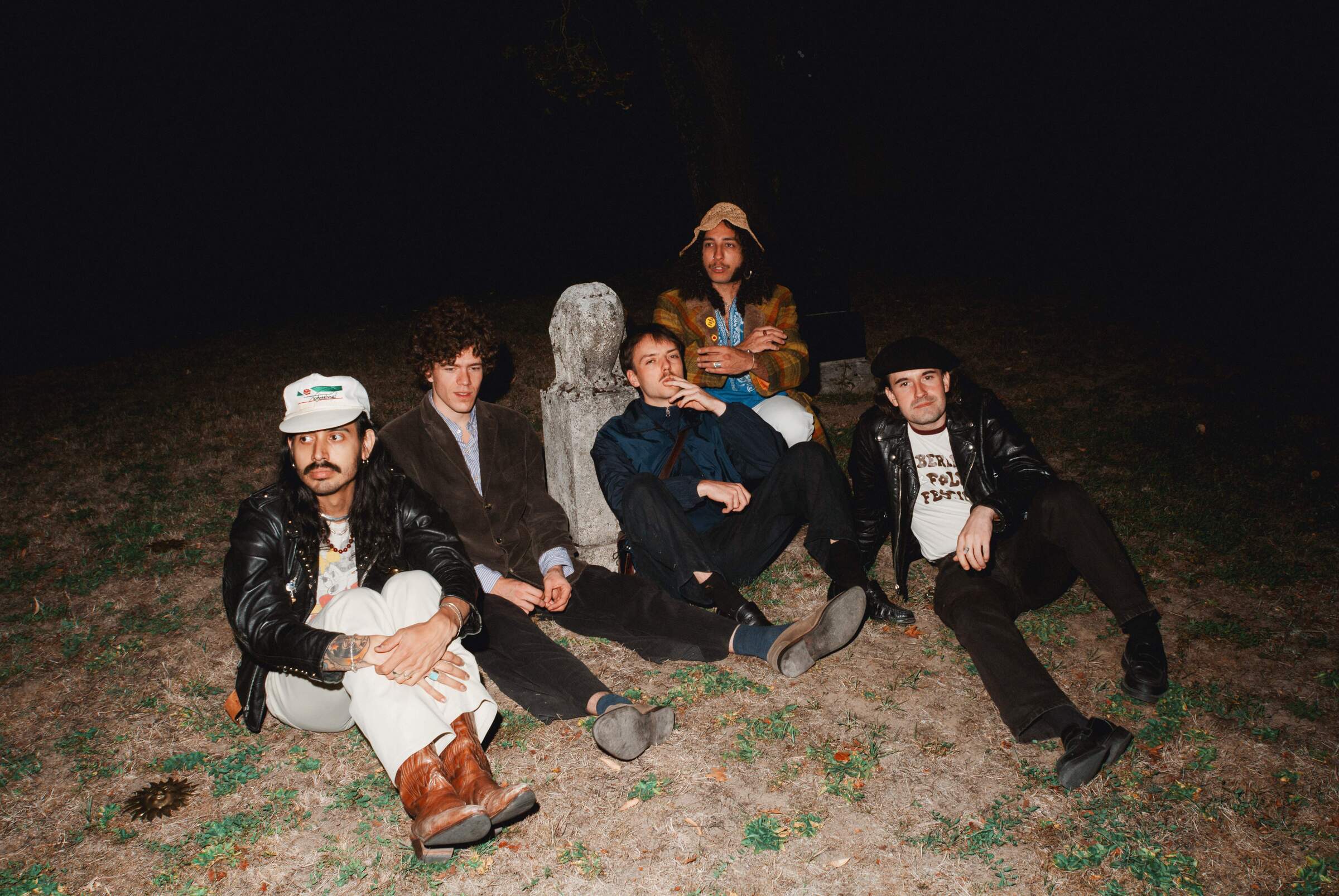
Now that ‘Past Due’ is finally out, has the long wait changed the way you want to approach the next record?
We definitely learned our lesson and realised that to stay relevant, you have to stay visible and while we understand that platforms like TikTok can be powerful tools, that’s just not us. We’d rather find the spaces in between… the blank spots where we can create something meaningful on our own terms. We just want to keep growing, keep creating and never stop moving. Thank you very much for this fun interview and your loving support.
Klemen Breznikar
Headline credit: Lars Gebeter
Temple Solaire Bandcamp / Facebook / Instagram / SoundCloud / Spotify
Taxi Gauche Records Official Website / Facebook / Instagram / YouTube / Bandcamp