
Ergo Phizmiz | Lost Operas, WFMU and Music-Making Machines
The British experimental musician and artist looks back on his early recordings, radio work, operas and films, and discusses the mechanical instruments behind his recent music.
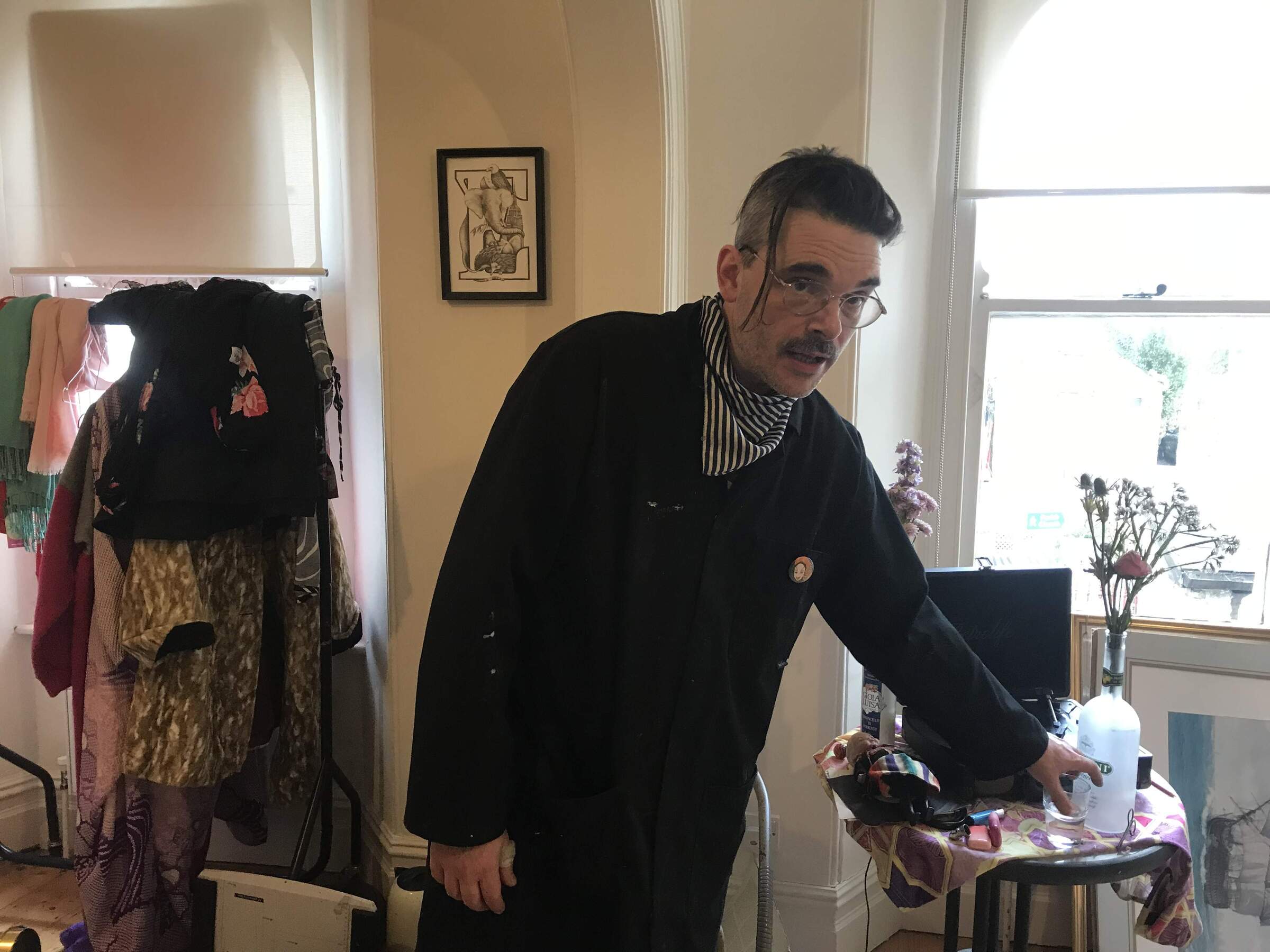
Ergo Phizmiz, also known as Dominic Robertson, has spent more than twenty years making records, radio plays, operas, films and visual art. He began experimenting with tape recorders as a child and started writing his own operas at twelve, after seeing a production of Gilbert and Sullivan’s ‘The Pirates of Penzance’. He later spent time doing stand-up comedy before returning to music. His recordings range from experimental pop and sound collage to much larger works, including the fifteen-hour ‘The Faust Cycle’, ‘M: 1000 Year Mix’ and songwriting albums such as ‘Things to Do and Make’ and ‘Eleven Songs’.
In the early 2000s, his music came to the attention of poet Kenneth Goldsmith, who began playing his recordings on WFMU. Ergo went on to host his own programme, ‘Phuj Phactory’, between 2006 and 2008. He has also made radio works for Resonance FM, BBC Radio 3, WDR and Bayerischer Rundfunk, and his operas and stage productions include ‘The Third Policeman’, ‘Gala’, ‘Gargantua’ and ‘Mozart vs Machine’. He has collaborated extensively with Vicki Bennett of People Like Us and has made much of his music freely available online.
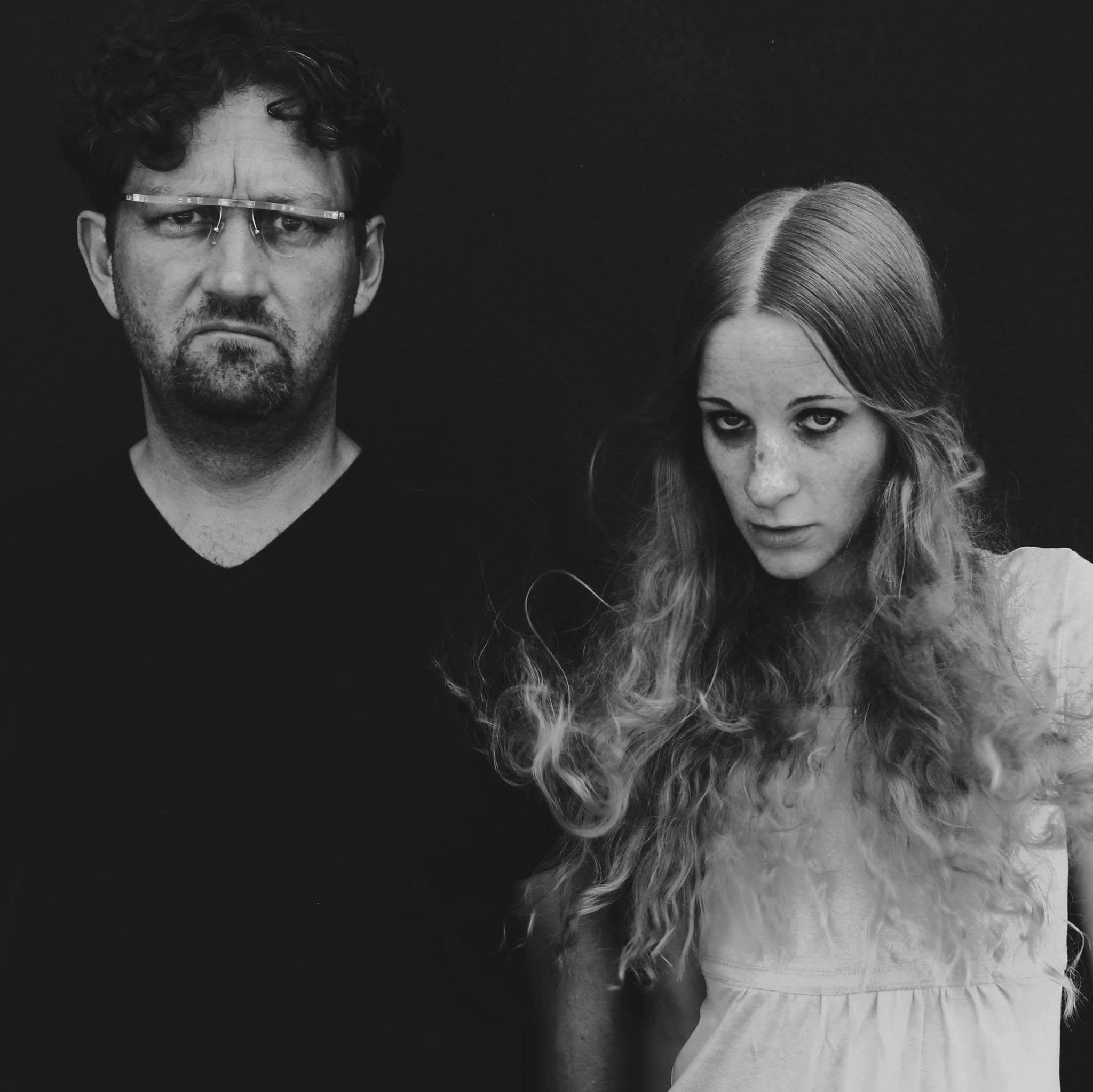
In recent years, Ergo has been working closely with Lottie Bowater, also known as Depresstival. Their projects include music, film and visual art. He has also returned to turntables and cassette machines and begun building mechanical instruments that use wind-up gramophones, suspended pencils and other everyday objects to make music.
In this interview, Ergo talks about his childhood, his time at WFMU, the making of ‘The Faust Cycle’, his operas and radio plays, and his recent experiments with mechanical sound. He also discusses his work with Palestinian musicians, his collaboration with Lottie and the forthcoming triple album ‘Smoking, Baby!’. He has shared a track from the album, ‘The Blockhouse’, especially for this interview.
“I love the unreasonable idea. Most ideas don’t interest me unless they are just a little bit over-the-edge of sanity.”
You’ve mentioned going through a period as a child when you were fascinated by sailors. What else were you interested in growing up, and what was life at home like?
Ergo Phizmiz: Well…after some recent news stories, a chasm of memory opened for me when I realised why my grandmother used to have dancing businessmen playing bongos in circles in her living room, so maybe I was becoming a sailor to avoid reality when I was very young. Needless to say, I don’t consider myself as having a parental family anymore. Outside of that, I think as a kid I just drew pictures constantly, comic strips, inventing fictitious bands and making little books about them. Tape machines, of course, were everywhere in the 80s, so I recorded noisy, skronky songs around age 10 (the first was called “We’re Martians!”). On the other hand, I still love dressing as a sailor should the opportunity arise, but I also dress a lot as things like a golfer, a telephone engineer, a priest.
You started writing operas when you were twelve, but later threw away the tapes, and the scores were lost too. How do you feel about that missing work now?
Ergo Phizmiz: My recent personal revelations have obviously made me rethink a lot of motivations for things I’ve done. Obviously I hugely regret throwing out these tapes, I’d love to hear my teenage MIDI! The scores existed in a big red crate, until my lovely parents threw them all away in the early 2000s – this is the subject of my radioplay Disappearing Boxes for WDR from the early 2010s. For a long time I did not value what I did, now of course I recognise my own shimmering, radiant magnificence!
You also spent a few years doing stand-up and performing rather than making music. What was that period like? Did working directly with audiences influence what you later did in music and theatre?
Ergo Phizmiz: The world of stand-up comedy was a very different atmosphere at that time, not such an entirely commercialised space – somewhere you could really try out ideas, which was the way I treated it. I had no aspirations to blaze a trail to the big stand-up auditoriums – this was really when I discovered my love for working with an audience in a small room, the creation and suspension of atmospheres and tension. Really it was never straight stand-up – there were little live radioplays where I played all the characters, imaginary game shows, readings, songs and, because the audience response was generally one of bemusement, in retrospect it was really a testing ground for many things I’ve developed since.
There have been recurrent periods in my life where I’ve gone away from music, for different reasons. Up until my early 30s music was sometimes an attacking, insomniac force – non-existent symphonies would play in my head whilst trying to get to sleep. It’s different now and I can control it – if I want to listen to, say, an imaginary piece by Bach I can just request it and the magic jukebox starts spinning until I switch it off. At this point in my life I’ve reached a stage where I want to be music and pretty much am. I do not engage in society and think 99% of humans are insane.
Some of the music you made between 2001 and 2003 has recently resurfaced as ‘Selected Ambient & ASMR Works 2001–2003’. What was your setup in those days? Were you already thinking in terms of collage and imaginary environments, or did that come later?
Ergo Phizmiz: I wasn’t thinking in terms of collage at that point. All of that material is made with instruments and devices using multitracking in a space, so on that level it is conventional composition. I was interested in something very specific, the idea of infinite composition through the overlaying of loops of differing lengths and natures – the LP is cut from a five hour set of recordings. This method, then, creates imaginary spaces for the composer and, one hopes, the listener.
I can’t help but associate image and environment with music, I suppose in the same way that I can’t help but be musical with paintings. Ultimately I think it’s all the same thing, with the first line drawn in the sand and the musical gasp of awe that the line looks like the stick it was drawn with. There’s a whole lot of mystery going on with art that none of us have quite got our heads around yet, and in many ways that’s what drives me – it is a question, of course, for which there will never be an answer, which is what makes it a marvellous place to explore.
There’s one on the album that, very specifically, gave me visions of giant wooden xylophone keys falling through black space then, 15 years or so later, having a petit-mal seizure – I have some weird un-pinpointable neurological issue – where the bed broke under me and I fell into a black space with the wooden bed slats falling below and above me, and in the hallucinatory seizure space thought “Wow this is just like that old piece I wrote”. That went on, in turn, to form a scene in my radioplay Die Bayerischer Prinzessin.
The thing they now call ASMR on this album was driven by wanting to recreate the frisson given to me by psycho grandmama’s adding machine – to have one’s ears tickled.
How did you first get played on WFMU, and what was it like having your own show there?
Ergo Phizmiz: In those dreamlike days of the early internet, my 21 year old self discovered Ubuweb – this was where I first came across any avant-garde practice outside of Captain Beefheart and the Velvet Underground. I wrote an email to the website, just to tell them how it had blown my young dropout mind, and Kenneth Goldsmith – the editor as well as a poet who makes really longform work around found texts and “uncreative writing” – wrote back to me. At that time I had a website with examples of radiophonic work I’d been making called Sesmisarea, another imaginary universe type thing and, within a week, Kenny was spinning it on WFMU and did so over the following months. I think that stuff is still archived on their website, which would be the only existing material from that project, which was another 12 hour thing. Kenny G is still somebody whose opinion I rate very highly. As far as I know he’s left society completely and gone to live with goats in the mountains somewhere – which is pretty much my plan at this point too, though hopefully with a massive chicken.
WFMU is marked out by its independence of spirit and, to this day, it is difficult to turn on WFMU and not be surprised by something within about ten minutes. They were kind enough to give me a weekly show for a couple of years – recording it in France where I lived at the time – and in many ways I consider that programme Phuj Phactory to be my university. I’d been making radiophonic stuff for a few years by that point, mainly on Resonance, but considered all of that to be composition work – using samples but also lots of arrangements with instruments and voices and blurring the lines between it all. The weekly radioshow had to stick within the remit of being about other people’s music, a DJ show, so it led me into an interesting process of listening and suggestion – if something triggers an idea or association, then start looping, mixing, cutting – making the cutting and reconstitution of historical music an investigation of the material itself and how music works. But, Jesus man, it ain’t easy to listen to your own mic breaks from 20 years ago.
There were also artist sessions (sent remotely), themed episodes, a Valentine’s show where lover’s requests were sliced and diced, animation soundtrack specials – on the whole the show helped me at that time to order my thoughts. Artists used to send me new releases, which was fantastic. I once received one from a Japanese duo that was completely silent.
‘M: 1000 Year Mix’ draws on a thousand years of music. How did you put it together? Did you set yourself any rules?
Ergo Phizmiz: I love the unreasonable idea. Most ideas don’t interest me unless they are just a little bit over-the-edge of sanity. On a political level, I was beginning to see signs that folk would start to say cultural exchange was a bad thing, so wanted to make a grand statement saying “Look, we’re all the same, we all make music and it can all dance together”.
The only rule I set myself was that it must be 100% sample based, which I’d never done before. The episodes are themed, though I decided not to reveal this to the listener. They go: Tonality, Atonality, Communication/Technology, the Human Voice, Rhythm, then “let’s all have a party” – lots of my work ends with a party or Christmas.
It was the golden age of mp3 sharing so I had accrued a lot of very interesting music from all over the place – the early internet was a great place for the acquisition of knowledge. These and my highly undesirable record collection formed the basis of the piece.
It was absolutely an improvisation – I wanted to be collaborating both with the material, following its curves and insinuations, but also with the idiosyncrasies of the computer, permissiveness to accidents. The work is a mix insofar as it’s entirely sample based, but working with very small fragments, building melodies out of single notes, and so on.
I’m also very much a child of the Squarepusher/Aphex mangled, manic beats generation, where we all got excited about how fast and complex we could make things with the super advanced late 90s DAW. M: 1000 Year Mix is very much a product of that time.
I cannot do this really sample heavy work now, mainly because I find the experience of using a computer almost as bad as having my eyes scraped out. The older I get I am more incapable of sitting still in front of a screen.
You’ve released so much of your work under Creative Commons licences and have long been interested in sampling. Has your view of copyright and musical ownership changed over the years?
Ergo Phizmiz: As you probably know, most of my work is Creative Commons licensed, because I think we should all be sampling each other. I find current copyright law pathetic – big artists like the Rolling Stones should have let themselves become folk music, instead of “product”. Copyright law only helps rich folk and maintain a status-quo. I’ve always felt like that and expect I always will.
Before getting to know plunderphonics people, my only reference regarding sampling was remembering the controversy around Ride On Time. Plunderphonics found me because people thought they were listening to sample music, whereas it was me playing instruments, singing and banging on things.
It was a few years before I made something entirely sample based (the 1000 Year Mix), instead I worked sampling into my existing compositional model – the longform piece I made at that time was Sticky White Glue for Resonance FM. Sampling could do things like add a string section to a number by placing and pitch-shifting about a piece of classical music, or the rhythm of a fragment of speech could begin or interrupt a composition. In some ways I saw it as political: I can’t afford a string section, so I’ll make one by taking five bars of Schubert and fucking around with it. Take THAT music academies!
The creation of worlds and imaginary spaces – taking for example recordings of Laurel & Hardy and placing them within a context of experimental music – you are working with the weight and aura of that source material, and every “musical object” for sure carries this mysterious weight. This led me to a practice of respect for samples, to not use historical sounds flippantly. I want to know everything about the sounds I work with and feel like a charlatan if I don’t.
You’ve recorded your own versions of music by the Velvet Underground, Aphex Twin and others. What interests you about reworking somebody else’s music?
Ergo Phizmiz: Parody has never really been an interest of mine, my cover versions are driven either by affection or curiosity. I discovered the Velvet Underground at 15 and wouldn’t be the person I was now otherwise. I love everything they made, even their weird reunion where Lou Reed refused to sing any of the songs properly. I get the feeling of sometimes wanting to go inside the music I love, find the things at the core, and try to treat the song-information as raw material to then reinterpret, Tin Pan Alley style. I’ve just done it with Led Zeppelin IV. The 1920s-30s music industry model of songs to be interpreted by different bands and sung at home around the piano is way better to what we have now. “Classic rock” and super-well known pop music becomes, at some point, folk music – pub bands play it, people sing it in the shower – any composer should be delighted to have their work reinterpreted by anybody – we live in a universe of one-off phenomena. I, for one, would be delighted to hear Mick Jagger’s rendition of my “Eat the Billionaires Before The Billionaires Eat You”.
‘The Faust Cycle’ runs for around fifteen hours and took years to make. Did you know from the beginning it would be so large? How did you finally decide it was finished?
Ergo Phizmiz: I had made very long things before but never with the intent that it would be very long at the outset. I love cathedrals, and wanted to try to make one radiophonically, so size mattered from the outset. I’m interested in vastness and grandiosity but, as any cursory look around any European cathedral will tell you, these spaces are the accumulation of tiny details, many stories in stonework and woodwork, and most of these stories are metaphorical, then the meaning is existing outside of the object itself. You may find one, beautiful stone relief is one person’s entire life’s work, so the weight of that is held within this stone – which is much the way I think about samples. The Faust Cycle is a house to walk around in and, despite a general outline, I was certainly opening doors and finding out what was inside. I was heavily interested in Russian and Eastern European animation at that time and there’s a definite Svankmajer/Yuri Norstein/Jiri Trnka feel going on – both atmospherically and in the way the sounds are constructed (the Bird Machines sequence particularly is an homage to stop-motion animation, which is kind of the electronic music of cinema).
It had been three years of working on the bloody thing and I was left with too many loose ends to tie together. I locked myself away for three days in my studio at the time, with two bottles of whiskey and a pack of cigars, and didn’t come out until it was as finished as it could reasonably be. I dig myself into narrative holes sometimes and have to find ways out through long, weird internal processes – it turned out the ending of The Faust Cycle was a big Broadway style show in outer-darkness, and the music for the sequence ended up being the first piece of music I had written for the piece and initially rejected. It’s difficult to explain, in a non-conventional narrative, how you know when something is “right”. I think David Lynch said something about this a few years ago to the effect of “you know it’s right when it sits just right”. Incidentally, I don’t drink whiskey or any alcohol for many years now but I love smoking.
James Nye was of huge impact on The Faust Cycle throughout the process, and has had a huge impact on how I think about music in general. He’s a remarkable musician, composer, writer, film-maker who lives a lovely quiet life with his beautiful husband and just happens to have correspondence from people like John Cage, Robert Anton Wilson and Ivor Cutler sitting in a box. For years he was editor for the genius performance-artist Ken Campbell. He was very kind and generous to me and my ideas, opened up a lot of cultural avenues for my thought, and made me think more rigorously about composition. I think he may also have introduced me to Thelonious Monk, who is one of my heroes.
You’ve made radio pieces such as ‘Paul Klee, a Balloon, the Moon, Music and Me’ and ‘Conversations With Birds’, as well as work for German radio. What can you do with radio that you can’t do elsewhere?
Ergo Phizmiz: On radio you can go anywhere, do anything, with no budgetary constraints. One scene can be in Bedfordshire, the next on Jupiter. On radio I’ve been with animals in space, sat in a balloon with Paul Klee, spanked a Bavarian princess, discussed Bruno Schulz with an owl, joined a group of aviators in the 1850s. All you need is a microphone and something to edit on and you can tell any story you like. I’m firmly with Spike Milligan that mental-images are far superior to television.
Radio is also still fairly uncharted territory – the progress of technology made it quickly considered an inferior medium to TV – so the radioplay still feels like a space where “theatre workshop” type ideas can still happen. A lot of my radio stuff is made very cinematically, actors in different locations, the rhythm of the dialogue cut together through editing, but more lately I like working with more time-based ideas – notions of improvised theatre etc, or workshops where things start to occur to confuse both listeners and participants. Recently with Radio Aspic we had actors in a broadcast studio, a sound effects team in the kitchen, synthesiser operators along the bar, me running around with a megaphone – and nobody could hear each other, working from a rough set of timings on a piece of paper.
The craziest radio production I was involved with was “Hollywood: A Bestiary” for Bayerischer Rundfunk. They have these brilliant dramaturgs as producers who are really challenging to writers and, very late in the process, they decided that rather than run the Bestiary A to Z in the live broadcast, we would pick the letters out of a hat – this was a complex piece with turntable cues, multiple actors, a piano score, never mind the audience in the studio for the broadcast. I have never seen a cast and crew more mortified. As it turned out the only person who fucked anything up was me.
In Germany there is and has been for a long time the culture of hoerspiel, but in most other countries people don’t even know that radio can be used for more than playing songs and reading the news – this from years of running radio workshops for young people. The podcast thing I thought for a while might be exciting but it seems to be mainly angry guys shouting about things they don’t like.
You and Vicki Bennett have worked together on ‘Perpetuum Mobile’, ‘The Keystone Cut-Ups’ and other projects. How did you first meet, and what did you learn from working together?
Ergo Phizmiz: There was definitely some shared spirit when we met in the early 2000s, via Kenneth Goldsmith’s WFMU which Vicki was guesting on – there were shared reference points, particularly our mutual fascination with glitz, chintz, novelty songs, easy-listening and light classical music. We also had some genuinely funny and weird times – Harpo Marx abruptly haunted a theatre we played in once and the whole audience knew it too. We once played a festival where pretty much every other act in the programme was completely naked. We gigged together quite a lot and I remember a lot of “trying not to laugh around arts administrator” type situations, which is always a joy. Vicki’s husband Peter, who collaborates on the animation work, is a very lovely, erudite and funny man.
Vicki comes from an a/v background rather than a strictly musical one, so edits off-grid in a way that’s more like video editing, the collaboration – sending things backwards and forwards – began to manifest some really interesting musical shapes, I would say I began to see more flexibility in composition, particularly in the early stages of the collaboration. I love the album “Perpetuum Mobile”. I had already been, for a couple of years, combining samples with instruments and voices/lyrics, so it seemed a natural progression to work with somebody who is entirely a samplist and explore that blurry line between disciplines further. I also like very much our film “The Keystone Cut-Ups” – where Vicki made the film-collage and I composed the music – about the crossovers between early comedy cinema and Surrealist cinema.
You’ve made pop songs alongside your long collage works, operas and radio pieces. What draws you to the three- or four-minute song?
Ergo Phizmiz: Really I was doing all these things at the same time. Writing and recording a pop song is a space I’m very comfortable in – bear in mind all the radio stuff, operas etc tend to contain songs. At one point there were some half hearted attempts by nefarious types to turn me into some kind of pop star, and I got to work with Bono’s favourite cameraman who said I was much more of a pro than Bono, for a video which as far as I know was never edited. I also got painted up as a skeleton by Lone Taxidermist for another video which never appeared, and she remembered me from a local adult education programme I did in my early 20s in the North-East!
The pop song particularly interests me because it is an astonishingly precise, succinct form of communication – it can literally transmit information and embed it, forever and sometimes infuriatingly, in one’s consciousness. A pop song can be like a dart, and lodge itself in the mind of the passer-by whether they like it or not – this capacity to implant in consciousness, without the choice or approval of the listener, is another reason big pop-rock music should be reclassified as folk music and people should be allowed to sing the songs they like without worrying.
Peter Fengler’s invitation eventually brought you back to opera and theatre. How did you approach working with actors when you returned to the stage?
Ergo Phizmiz: I always like being asked to do things in art that I wouldn’t have thought of doing. What is very strange for me now is that I spent my 20s thinking I had zero interest in theatre – I quickly realised it was my favourite thing to do. I don’t go into directing a production with a fixed idea, I direct productions because I want to work with the individuality of each actor, with their ideas. My rehearsals are very relaxed, exchanges of ideas, lots of laughter, conversation, staying up late together, then in runs or tours of shows my job as a director becomes to throw in little mischievous obstructions, encouraging actors to still try things out – a piece of art should always be alive and not replicate itself. Movies are fixed, theatre should be writhing and wriggling towards the blackout. I have zero interest in contemporary theatre because it all seems to look like Netflix. The theatre needs new Artauds and Grotowskis.
You’ve made operas including ‘The Third Policeman’, ‘Gala’, ‘Gargantua’ and ‘Mozart vs Machine’. What does the word ‘opera’ mean to you now? Does it have to contain anything in particular?
Ergo Phizmiz: As far as I’m aware I pioneered the use of projections in opera during this period because, drawn from my interest in animation, I realised you didn’t need a big heavy set if all the scenography was back projected. Then you realise, oh the scenography can move too, and can become narrative propulsion, be used for suggestion, trickery, shifts of visual perspective. A whole lot of opera houses were putting on things that looked like Gargantua in the years following, but I got my own back by designing The Rake’s Progress at the Maggio Musicale in Florence.
Opera is interesting because it means “the work”, it’s fun – almost anything can be an opera if you frame it that way. I think it comes down to an attitude, the chances are it will not be naturalistic. I would describe Beckett’s “Not I” as an opera, and define certain pop-up books or automata as opera. Klaus Kinski’s Jesus performance, audience interventions included, is an opera. Some people’s lives are an opera. A good, engrossing, enthralling exhibition – not a common thing, but still – is an opera, as is The Marriage of Figaro. But Figaro is also architecture, and Kinski is also a screaming crazy guy – maybe opera is any artwork at the heights or extremes of expression.
For a while you retired the Ergo Phizmiz name and used Dominic Robertson for some of your work. You later brought Ergo back, and now you sometimes use Dr Ergo Phizmiz. Does that distinction between Dominic and Ergo still mean anything to you?
Ergo Phizmiz: Well, retiring the name didn’t work on an economic level because nobody knew who it was. I did it, really, because of years of badgering by various people, music industry types included. I’ve never been Dominic really, and recent family revelations have put him firmly back in Pandora’s Box forever. I’ve been Ergo since 21 (I’m 46 now) and it does represent what I am.
I’m Professor Ergo Phizmiz when I do my Mr Punch radioplays, and Dr Ergo Phizmiz because I managed to infiltrate the academic work and do a PhD – “Adapting Don Quixote” which is a giant opera created entirely out of reconstituted materials about the difficulties of adapting epic works of literature into other mediums.
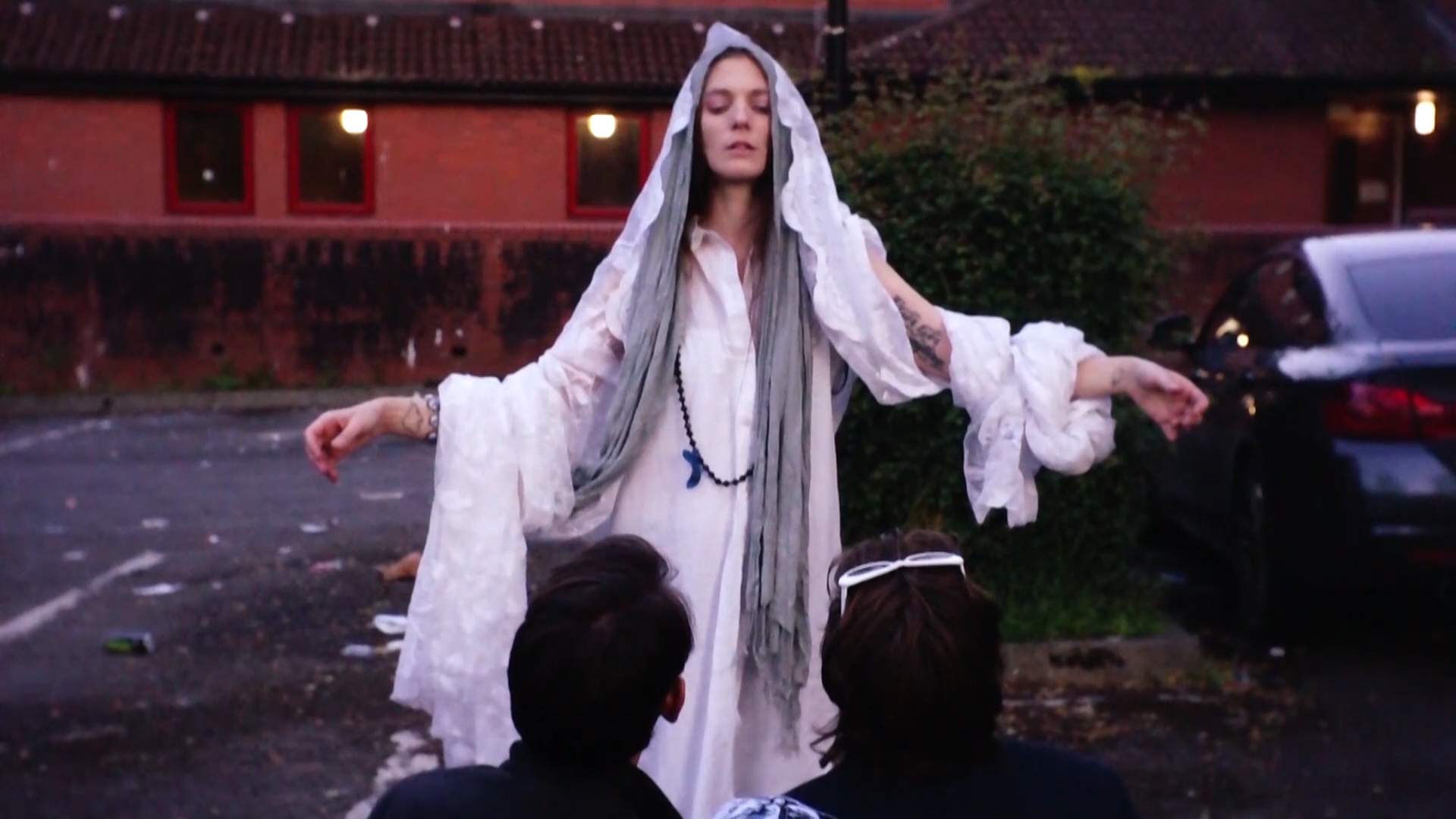
With ‘The Madonna of Bedminster’, you worked with actors improvising rather than following a conventional script. How did that work in practice? And what do you mean when you describe the film as a plea for re-enchantment?
Ergo Phizmiz: Naturalism. I don’t like the way films are made now, mainly because I see no focus on acting as an artform, and dialogue writing is generally atrocious. I can’t write screenplays because you have to work in Courier New and I can’t stand looking at it. So, to make the movie, we set up basic situations and took actors for long walks – myself and two assistant directors. Also to hark back to devised theatre – as an editor, one can take twenty minutes of improvisation and cut it like a play-script into two minutes of super-tight dialogue and action, and the acting is superb because it appears in the irrepeatable moment. I like to find things in and through art, rather than having an idea and trying to concretise some interior vision.
For me, the story of the last 1000 years is of disenchantment, from the destruction of local European traditions by the Catholic church right through to the suppression of information – and the rather ludicrous supposition – that this planet is the only one with life on it. Reality is way stranger and more wibbly than we give it credit for, and I think the great harbinger and mechanism of disenchantment is bureaucracy, and we all ought to spend more time away with the fairies. Life is short but ought to be sweet, living, as we do, in a vast cosmological riddle.
The movie begins with a reference to Fritz Lang’s statement that, despite his atheism, he lamented the loss of religion because, as he says, “how will we teach ethics?”. And here we are now in a world where people claim it is sometimes ok to kill children.
I don’t think humans are frightened of mystery, I think they are too arrogant to acknowledge that a mystery is all that reality is.
You’ve helped release music by Palestinian musicians including Samih Madhoun, Ezz Khalifa and Ahmed Muin. What has that work involved, and where does the project stand now?
Ergo Phizmiz: All but one of the Palestinian projects are raw recordings from the Gaza strip, I did a little compression and EQ but that’s about it. The Samih Madhoun collaborations album is musicians from all over the world collaborating with the maestro. They are all astonishing musicians: Ezz Khalifa, Samih Madhoun and Ahmed Muin, and I am certain their albums are the most important of this era. I’ve handed over the Maestros of Gaza project to a guy in New York now as, after nearly three years, being smeared in The Wire magazine, blacklisted by just about everybody, my name being left out of reviews of albums I had written words and music for, I needed to hand it on out of exhaustion. We raised about 20k for those musicians over that period altogether. I am, however, working on a new “collaborations” release with Palestinian singer Ahmed Abo Shanab which will go out on the label.
You and Lottie Bowater, also known as Depresstival, seem to work on almost everything together these days. What’s it like working so closely, both musically and outside of music?
Ergo Phizmiz: Lottie and I had met about 15 years before we started working together and, I admit, I thought then they were the most beautiful and damn sexiest creature I’d ever seen and still do. Lottie is a fierce, totally uncompromising intelligence and a songwriter of astonishing verbal dexterity who can also whip out Prokofiev’s “War Sonata” on piano. We talk very easily and pretty much constantly, and are lucky to not have a “normal relationship” of bickering, squabbling and so on. Everything we both do now is to some degree or other a collaboration. I trust Lottie’s taste and opinion pretty much without question, and if I do question I end up realising within the hour that they’re completely right. We have fun, make things, engage in pacifying my 19th century French nihilist literature erotic tastes, look at small animals, and make friendships with the local bird populations. Lottie is a very rigorous and extremely empathetic person, always following multiple interests, keeps me on my toes. Also, frankly, because I got such a crush after all these years I still want to impress ’em.
For that extra scandal element, Lottie was the girlfriend of one of my students when we first met.
‘Turntable Symphony’ takes you back to three turntables, records and live radio. After all the different technologies you’ve worked with, what brought you back to the turntable? How much of those broadcasts depended on accidents you couldn’t reproduce?
Ergo Phizmiz: It was made during broadcasts on Soundart Radio, with Lottie present and a very flu-ridden Goodiepal at one point. It’s records plucked from Soundart’s collection, which is a real hodgepodge of things like records left there, DJ previews, the old Dartington collection, etc. I had just finished a PhD which culminated in a lot (a lot) of very formal, classically scored composition, which I really spent the PhD brushing up on – my recent symphonies which exist as digital realisations on Bandcamp were created in this way.
Lottie and I took a total change of scenery (from Bristol) to living by Dartmoor, and I found myself inclined to go back to very, very simple ways of making music. My interest has always been – with the exception of pop songs – not to physicalise my musical imaginings but to hear music I couldn’t imagine, the scored music in my doctorate having been arrived at through processes of collage and manipulation. Concurrent to making the Turntable Symphony – which is cut from four or five live radio sessions – I was composing music using cassette machines, digital delay, casio keyboard – older machines which you can eventually trick into making patterns and repetitions, things like that. It’s a post-academia knees-up for music. I should probably add that in any work I’ve done with turntables I don’t use headphones – I’m not cueing up precise sounds – it’s about trying to drag flying debris into some kind of order. So, 100% depended upon unreproducible accidents, the decision making is based on rough approximations of textural juxtapositions, historical association, etc.
In ‘Object Oriented Ontology’, a wind-up gramophone, coat hangers, pencils and other bits of machinery physically play instruments. What do these machines give you that a human performer doesn’t?
Ergo Phizmiz: The idea of the transforming loop and built-in imprecision, basically another aid towards hearing music I couldn’t imagine. It was something I wanted to develop for a long time, but couldn’t figure out a mechanism, until the pencils suspended on copper wire came into the game. I love my robot composers, they are a delight to live with, and it is genuinely impossible to get them to play the same thing twice. Working with different placements and tunings, different instruments, sometimes a second gramophone with pitched-percussion also spinning, it’s a process that I see myself working with for some time yet. I’ve also a general weakness for automata, mechanical music, things like orreries and astrolabes – this work draws these things together.
You’ve used AI-generated music and words in ‘AIs Wide Shut’, but you’re also making music with unpredictable physical machines. What interests you about AI, and where does it fall short for you?
Ergo Phizmiz: I loved AI art right at the beginning, when it wasn’t really working properly and could be tricked into making really weird visual compositions. Lottie and I incorporated it into our stage design for The Rake’s Progress, so that was probably the first use of it in theatre, as far as I know. As the technology has “improved” it doesn’t really offer me anything – it’s a technology with no capacity for fuckery. AI music is useless to me as it can only create based on what already exists.
Except, of course, for my amazing spectacular AI rap posse. This is my ethical Achilles’ heel, in terms of adding to the drought. I don’t make those groovy AI beats because there are already plenty of them on Youtube. It’s a game and a kind of exercise. I’m not allowed to read the generated text or listen to the track before, then just have to wing it. It’s an example of the kind of things Lottie and I get up to in our quest to avoid society completely.
It all started because, a month or so after the levee broke on my childhood memories, I realised I’d coped with it all rather too well, and owed myself a psychotic break. So, whenever the fancy takes me, I am now five or six American hip-hop guys.
The AI text generators will make the easiest rhyme first, if there is a cliche to grip onto it will seize it, there is structural similarity in everything it makes – it’s really quite primitive when you look at it, despite the hype. Ultimately AI is a brilliant tool for scientists, archaeologists, etc and should maybe be kept that way. Otherwise I’ll just be continuing with my psychotic break.
There’s an idea in the West, thanks to capitalism and art’s weird attachment to the progress of technology, that new sounds aren’t possible. It isn’t true. The composer Gwilly Edmondez once said to me something to the effect that the next earth shattering piece of music could be by an academy trained musical genius, but equally or more likely it could be from some person with a tin-can and some spoons. The UK Poo scene has really gripped me recently.
“I see my work as a tree and I jump between branches like a little monkey.”
Do you see the mechanical music as a continuation of your early experiments with tape and collage, or does it feel like something quite different?
Ergo Phizmiz: I see my work as a tree and I jump between branches like a little monkey. I’ve never seen why I shouldn’t follow as many lines of inquiry as I like. The full circle, really, was from my early work composing music-theatre as a kid through to my “Adapting Don Quixote”, grand-opera-movie doctorate. Then I was kind of able to feel I was starting again almost from scratch but with a way more refined toolkit. When we were shooting “The Madonna of Bedminster” my oldest friend Elvis Herod, who is genuinely one of the great actors we have on this planet right now though nobody but me seems to have picked up on that, said “This is great, it’s like we’re making films with a friend’s video camera as teenagers again” and, in a hyper-consumer art landscape, that’s pretty much where I want to be right now.
You make records, films, operas, radio plays and all sorts of other things. What does an ordinary working day look like for you now? Do you tend to finish projects quickly, or are some left for years before you return to them?
Ergo Phizmiz: It used to be that I couldn’t abide a thing sitting around unfinished, now I have a few things unfinished by choice. My movie “War With France” is something I’ll finish at my own pace, it was interrupted by our societal descent into war-type madness – the older I get I like to leave long gaps, sometimes years, for reflection, in projects that aren’t answerable to any external party, funder, whatever. There’s about one hour of finished material which constitutes one strand of the narrative – next, maybe this winter, we’ll make the detective story element of the film. The new album “Smoking, Baby!” is something I’ve been working on for a long time – not constantly, just going back into bits of it, adding things, subtracting things, etc. Generally I’ll make an initial idea then spend a long time letting it sit and visiting it intermittently. I’m glad to say that “Smoking, Baby!” is about 99% done as I type.
My daily rhythm depends on what Lottie and I are working on. I am a big fan of the Devil’s Lettuce, coffee, nicotine and I eat food-what-grows-out-the-ground and not things with eyes. If there is a commission for a puppet theatre score or whatever, then I will work on that very intensively until it is finished and delivered. A lot of our time is quite academic – both of our practices necessitate a lot of reading – but then our house might become a rehearsal space for a few weeks and accommodation for actors, then there is tremendous activity, people acting, singing, painting sets and so on, but also generally hanging out, talking, exchanging ideas – there’s a thin line between leisure time and work time on a production if you make actors feel comfortable, and they will often come up with the most brilliant ideas after a nice Ergo-cooked curried extravagance and a long, often very funny, conversation. When we are filmmaking it tends to be a very intensive time, an all-hands-on-deck type situation with constant interchange of roles depending on the situation. Big opera house work is insane-crazy-time. Radioplays I like to let cook relatively slowly, then recording is very quick and intense. I used to travel more for work in Europe but Brexit did-done-and-dusted to that old chestnut.
We live with small animals, we talk a lot. My drive is to make art but my favourite thing to do is get high whilst talking with intelligent people.
‘Welcome to the Pyrocene’ leads into your forthcoming triple album ‘Smoking, Baby!’. What else are you working on at the moment?
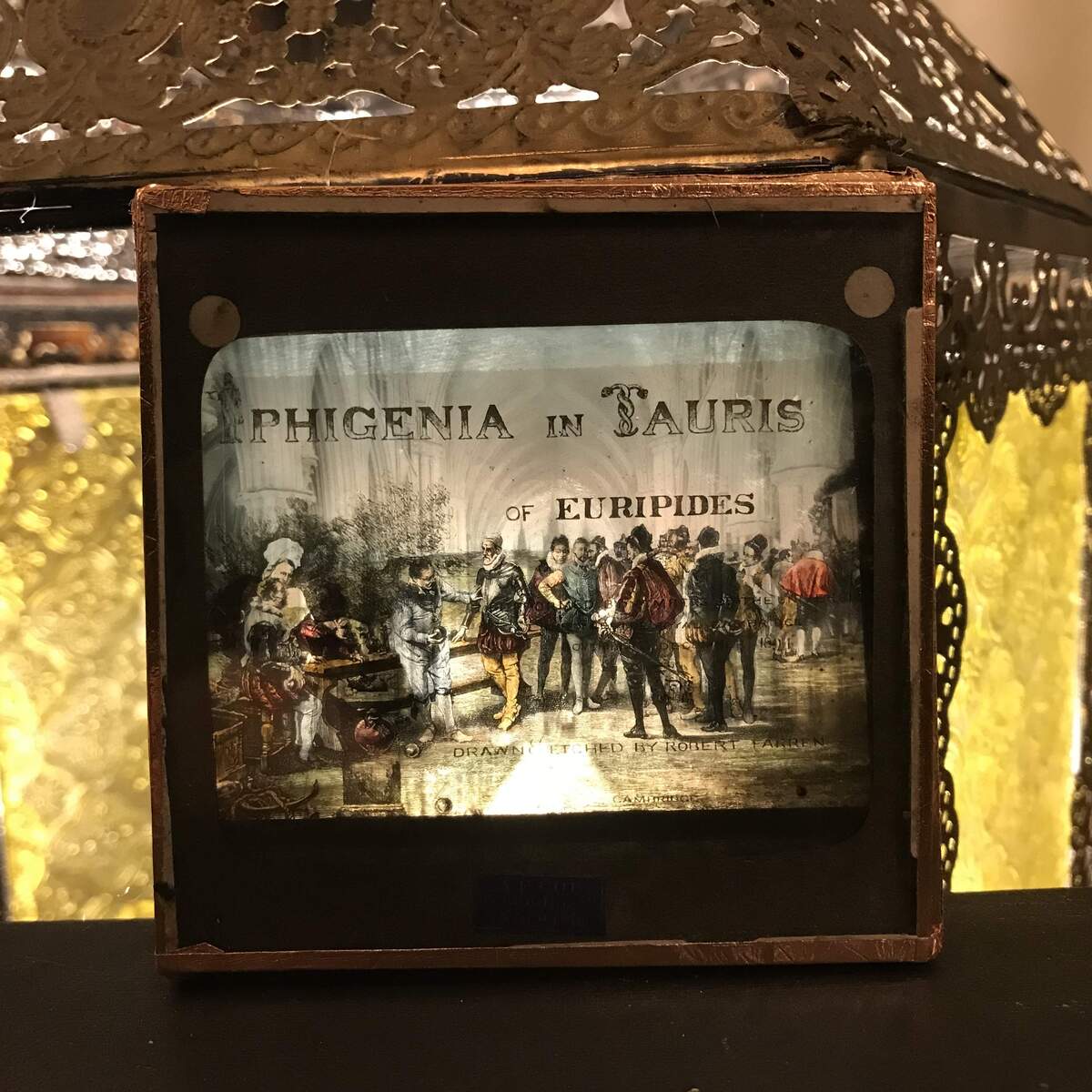
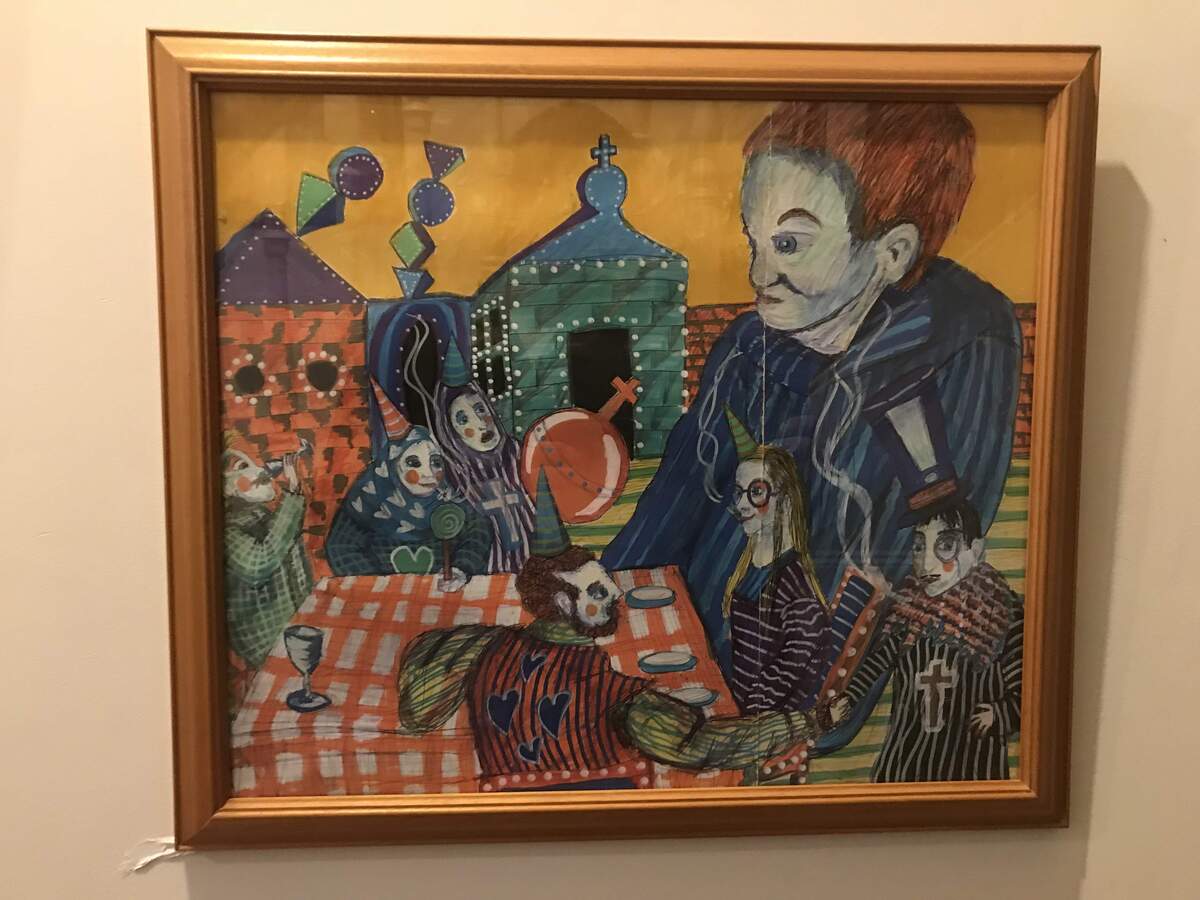
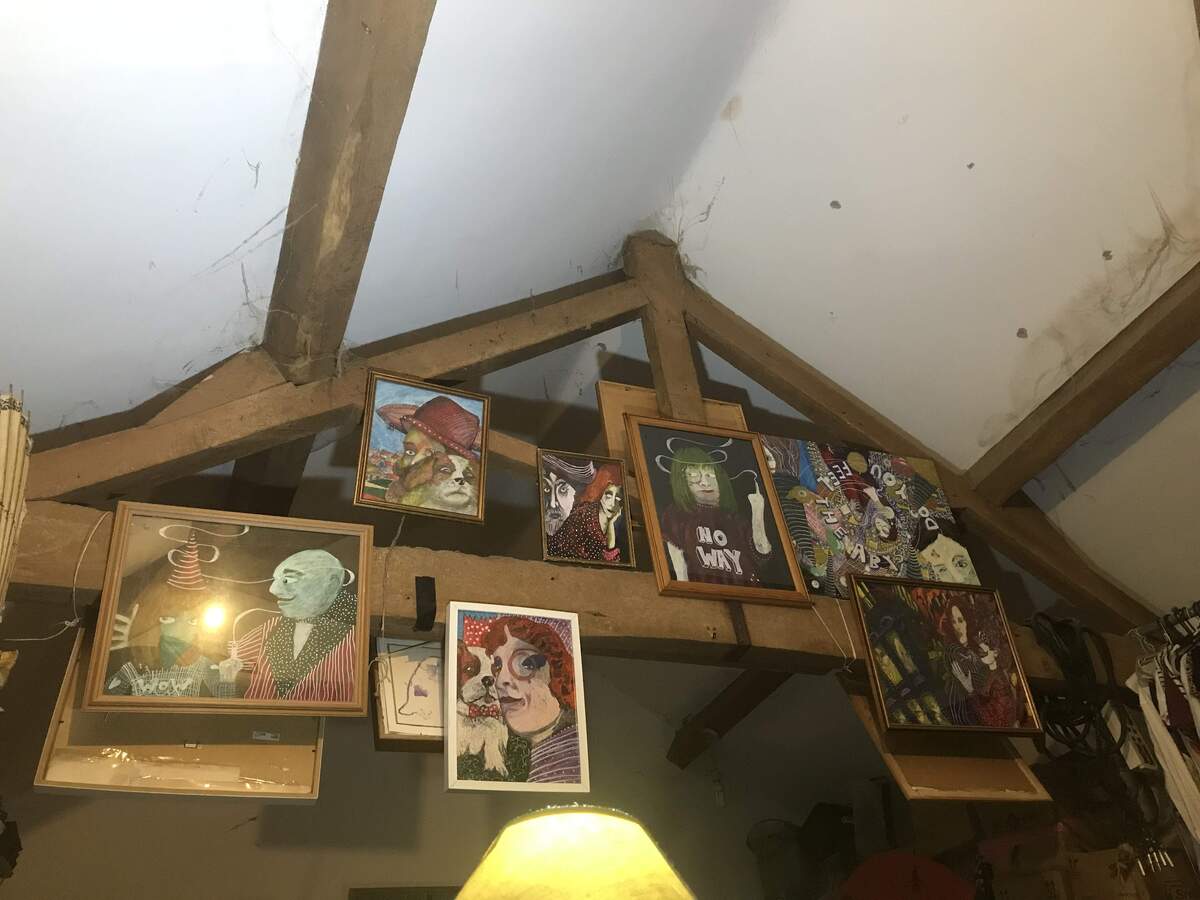
Ergo Phizmiz: At the moment I’m working on a novel called “The Continued Success of the Dirigible in 1948” which is being published by Frolic Press, who are a wonderful publisher of beautiful editions of new weird things and old curiosities, next year. It’s a novel with pictures – old found photographs, Victorian magic lantern slides, original paintings, collages – about a wedding in a parallel dimension. The wild, tabloid style articles about my work in The Wire magazine, and lack of solidarity from people in that whole scene, has precipitated a total withdrawal from the whole UK axis-of-evil Wire-Oto-Resonance thing, and I’m much happier. Lottie and I have been running some pretty wild, live on-air adult education workshops, which is a wonderful and exciting way to find new things. I’ve always, to greater or lesser degrees, been a community artist – I like facilitating ideas. We have an interactive production called “The Void: The Musical” which we may do more with. I’ll be making a movie, as yet untitled, about a group of people on benefits with really horrible lives who decide “Let’s put on a show!” like a 1930s musical, going into big imaginary productions numbers etc – this will shoot on the Isle of Wight in late 26-27. My mechanical music work is ultimately to get me to a point to compose an electromechanical opera called “The Book of Miracles” based on the Augsburg manuscript. Over the last couple of years I started painting, in a style I’ve called Electro-mechanical Fauvism, using magic lantern slides to sketch compositions and then using colour expressively to complete the images. There are about 100 pieces now in that series, and if I can bring myself to talk to people I might be exhibiting more but, in this cultural and political climate, I’m in no rush to entertain “The People”.
Klemen Breznikar
Ergo Phizmiz Bandcamp / Instagram / Facebook