
Hiroyuki Takahashi on Lost Aaraaf, Les Rallizes Dénudés and Eternal Womb Delirum
Hiroyuki Takahashi came of age inside Tokyo’s underground at the turn of the 1970s, when rock, free jazz, experimental film, theatre and politics were often happening in the same places and among the same people.
As a drummer, he was there at the formation of Lost Aaraaf with Akira Asami and Keiji Haino, later played with Takashi Mizutani in Les Rallizes Dénudés, and in 1974 started Eternal Womb Delirum, a group that used improvisation, film, electronics and even physiological measurements to explore what sound could do to the body.
His work soon extended well beyond playing drums. Takahashi organised concerts, took films such as ‘Woodstock’ and ‘Monterey Pop’ around Japan using concert PA systems, set up rehearsal and recording studios, and later founded Idol Japan Records and the DEAD FLOWER label.
In the following conversation, Takahashi looks back on Apple House, Lost Aaraaf, Sanrizuka, Electric Pure Land, Les Rallizes Dénudés and Eternal Womb Delirum, as well as the ideas about sound, freedom and culture that have stayed with him throughout his life.
“I regarded that spirit itself as ROCK.”
Where did you grow up, and what sort of music did you hear at home when you were a child?
I was born and raised in Tokyo. The music I heard at home was mainly Japanese popular music, including Hibari Misora, Kyu Sakamoto, The Peanuts, Michiyo Azusa, and others.
You started listening to FEN when you were around ten. What did you discover there that stayed with you?
It was wonderful because, over time, I was able to discover many different genres of music. I listened to big-band jazz, country, folk and rock. What left a particularly strong impression on me was the blues, especially Willie Dixon and Robert Johnson. In rhythm and blues, I became interested in Sam Cooke, and later Bob Dylan and the Rolling Stones.
I also began paying attention to Duke Ellington, Count Basie, Billie Holiday, Dizzy Gillespie, and many others. As for classical music, my first exposure came through elementary school classes, where we were instructed to listen to classical music and then write our impressions of it. At that age, I actually disliked it.
You also spent time at places such as La Seine, ACB and jazz cafés. What did hearing music live give you that records could not?
It was the power of live performance. In coffee shops where jazz and rock were played at high volume, I was able to encounter artists and songs that I had never heard before. But when I saw jazz or rock being performed right in front of me, the impact was enormous. It made me want to try doing it myself.
What was your first band like, and how did you end up behind the drums?
My first band consisted of classmates from middle school. We played Beatles and Rolling Stones songs with relatively simple riffs, such as ‘I Wanna Be Your Man’, ‘Satisfaction’, ‘Tell Me’, ‘Stand by Me’, and ‘Lady Jane’.
I initially taught myself drums by watching and imitating other people. However, I thought I should learn properly from a professional, so I became a student of the jazz drummer George Otsuka. I quit after just one day. After that, I attended a jazz school, where I learned Latin rhythms such as bossa nova and Afro-Cuban rhythms.
It was a one-on-one school, and I continued going for about a year because I found the girls who were taking vocal lessons there very cute.
What was Apple House in Nanpeidai like when you first started going there? Who were the people you would meet there?
Apple House was located about a five-minute walk from Shibuya. The first floor was a free space, while the second floor was used to run Beatles and Rolling Stones fan clubs. The people who ran those fan clubs paid the rent.
At the back of the first floor were people involved in left-wing student activism. Next to them was a film-making collective. In the large hall near the entrance, many different people came and went, including young people who had run away from their homes in the countryside, theatre troupe members, painters, and many others. There were also two small huts on the property where Apple House was located. One was occupied by a group studying Mao Zedong, and the other by a group of photographers.
To the south of Apple House, a former church had been converted into a photography studio. Famous photographers and models came and went in foreign cars I had never seen before. Spaces similar to Apple House appeared simultaneously in Sapporo, Nagoya, Kyoto and other places. I believe that the people who came and went through these various spaces were the ones who supported Japan’s free-concert movement.
Apple House seems to have brought all these different worlds together. How closely connected were music, theatre, film, politics and the wider counterculture at the time?
The people who ran the Beatles and Rolling Stones fan clubs had previously worked with the theatre director Shuji Terayama. Terayama led the Tenjo Sajiki theatre troupe and toured Europe. Similarly, Yutaka Higashi led the theatre troupe Tokyo Kid Brothers and performed in the United States. Members of both theatre groups frequently came to Apple House as well.
There were also many other kinds of people coming and going, including dancers from Tatsumi Hijikata’s group, one of the leading figures in the world of Ankoku Butoh, as well as rock bands and people from various areas of the media. It was a space where all kinds of people gathered: people who wanted to start something new, people who wanted to escape from their boring everyday lives, and many others with completely different backgrounds.
Apple House had rules such as: “You can do whatever you want as long as you don’t cause trouble for other people.” Another rule was that if you stayed there overnight, you were expected either to help with the fan-club work for one day or participate as an observer in a youth program at NHK.
You first performed with Akira Asami on 19 June 1970 at Setagaya Kumin Kaikan. How had the two of you met, and how did that partnership eventually turn into Lost Aaraaf?
I met Akira Asami at Apple House. Around April 1970, he approached me and said, “I hear you play drums?” We went to a nearby rehearsal studio, had a session together, and immediately hit it off.
Asami was scheduled to perform one song at a Beatles fan-club event, and I agreed to help him. That became our first stage performance together. The condition was that we had to play Beatles songs, so we performed ‘Revolution 9’ and two other songs.
Between June and early July of that year, Asami brought several ideas for the group name. We eventually decided to make the name somewhat ambiguous, based on the idea of “lost laughter,” and it ultimately became Lost Aaraaf. I had left the entire decision about the group name to Asami. The reason was that an outdoor festival called Rock in Highland was suddenly scheduled for late July, and the organizers were asking us to give them our group name as soon as possible.
How did Keiji Haino and guitarist Ono become involved, and what do you remember about Lost Aaraaf’s first appearance at Rock in Highland?
Haino was introduced to us by one of the organizers of the Rock in Highland festival. Apparently, the organizer had asked someone to introduce him to any interesting bands they knew.
The guitarist Ono joined because the guitarist from the band I had played in during middle school had switched to bass, so we needed someone to replace him on guitar. We needed a guitarist because, in preparation for Rock in Highland, we didn’t have enough songs and wanted to perform two cover songs, including the Animals’ ‘House of the Rising Sun’. After that, the three of us continued performing together until we found a bassist.
There were about thirty bands performing at Rock in Highland, but I remember that it was rather lonely because there were only around one hundred audience members. Since we were a new band, we performed as the opening act for all three days. Les Rallizes Dénudés also performed at the festival, and that was when I first met Takashi Mizutani.
How did Lost Aaraaf work on its music? How much was planned before you went onstage, and how much could change once you started playing?
Before every performance, the three of us would have a session at a rehearsal studio. One of the three would decide on a theme or the overall structure, and we would rehearse based on that. Of course, the actual performance would turn out completely different from the rehearsal, but I think both versions were good in their own way.
The same was true of ‘Ashura Suite’. A friend from another band saw Haino lying down on the stage and singing and said, “He looks like Ashura.” Before we knew it, the piece had become known as ‘Ashura Suite’. It may have been because his appearance resembled the character Ashura from the manga ‘Ashura’ by George Akiyama, which was extremely popular at the time.
Around the time Lost Aaraaf began, what were you listening to yourself? And how were you beginning to think about your own way of playing the drums?
This is not directly an answer to one of your questions, but around the time I began Lost Aaraaf, the music I was listening to included John Coltrane, Ornette Coleman, Thelonious Monk, and Charlie Haden & the Liberation Music Orchestra. In rock, I listened to the Grateful Dead, Jefferson Airplane, Soft Machine, The Doors, and others.
Around this time, I often went to a classical music café that I used as a place to have meetings. Because of this, I gradually came to love classical music, which I had previously disliked, and began listening to a much wider range of music.
As for drumming, I knew that I could not play as powerfully as Elvin Jones or Art Blakey. So, as a Japanese drummer, I began thinking about an approach that placed greater importance on ma — the sense of space, timing, and silence between sounds.
Something else I realized around this time was that, just as the body needs nutrition, the “brain” also needs to be nourished through what we see, hear, and read. I decided that I wanted to expose myself to excellent works that attracted attention around the world. During this period, I enjoyed watching experimental films with my friends, including films by Kenneth Anger, Jordan Belson, and others.
Another thing that encouraged me to start listening to classical music was seeing Stanley Kubrick’s ‘2001: A Space Odyssey’. I still have enormous respect for Kubrick today.
Lost Aaraaf played both Shojiko Rockoon and the Sanrizuka Genyasai in 1971. What stays with you from those two very different events, particularly the reaction at Sanrizuka?
At Shojiko Rockoon, there was no piano, so Asami performed on an organ. The organizers of this concert were a group of friends, and I helped with the publicity together with my friends’ band, Blues Creation. The stage had been built on the shore of the lake, but unfortunately there were very few people in the audience.
I don’t remember the actual performance very well, but I heard that several years later Haino released a recording of it on CD as a bootleg.
Sanrizuka Genyasai was organized jointly by several left-wing student groups, with opposition to the construction of Narita Airport as its central theme. The government was trying to build the airport on land that had belonged to local farming families for generations, without respecting the farmers’ wishes. When the farmers tried to protect their land, the authorities forcibly removed them. Students stood alongside the farmers and clashed with police and riot police sent by the government. This became known as the movement against the construction of Narita Airport. The struggle had already been going on for years, so the students decided to organize a summer festival for the farmers. That was how Sanrizuka Genyasai came about.
One of the groups involved included a friend of mine who was connected with Apple House. However, there were many free-jazz performers, while the other performers were mainly rock and folk musicians. As a result, arguments broke out in various places, with people shouting things like, “Whose festival is this!?”
The event was documented by the television production company TV Man Union, and a two-LP analog record was released. A documentary was also broadcast on NHK. Because I had a friend among the organizers, we were able to perform as the very last act. I believe it was sometime after midnight, because the entire schedule had been considerably delayed.
Our manager at the time proposed that we make the performance ritualistic. During the performance, we staged an act in which a chicken was slaughtered and I smeared its blood on my body. This provoked an extremely divided reaction from the audience. In one sense, you could say that it was a success. In another sense, there were intense boos, and some people even threw stones onto the stage.
The analog recording of this performance was later released on CD.
You were moving between theatre, free jazz and rock around this time. What did working with En Theatre (えん劇場) and Mototeru Takagi open up for you?
I met Ikeda, who ran En Theatre, through a mutual friend, and in January 1972 we jointly organized an experimental concert. As a result of that concert, I became responsible for the music, using percussion alone, for the theatre group’s bus-tour production ‘Hashire Monsoon’ (“Run, Monsoon”), which toured around Japan at approximately ten locations, I believe. Haino joined the project partway through.
Les Rallizes Dénudés also performed at the experimental concert in January. Their drummer was unavailable, so I played with them for the first time as his substitute. Mototeru Takagi also performed solo alongside Les Rallizes Dénudés. His performance was incredibly intense, as if he were exploding with anger toward something.
That was how I became close to Takagi as well, and we developed a very enjoyable relationship in which we would invite each other to perform on various stages.
When we formed Lost Aaraaf and decided to continue the group, our central theme was “to create music that had never existed anywhere before, music that nobody had ever made in the past.” I regarded that spirit itself as ROCK.
Mizutani of Les Rallizes Dénudés and Takagi were both extraordinary performers. At one point, I was told that the Japanese poet Yu Suwa was looking for musicians for a performance at a live house based on the theme of improvisation. I was asked, “Would you like to do it?”
I ended up participating with Mizutani on guitar, Takagi on saxophone, and myself on drums. We kept the rehearsals fairly restrained, but we gave everything we had during the actual performance. Afterwards, I remember being scolded because the poetry could not be heard at all.
This performance was broadcast at the time on a popular Nippon Television program called ‘11PM’. As an aside, I also first met Hiroshi, the bassist, after the Kyoto performance of ‘Hashire Monsoon’.
You have said that you felt rock had not really taken root in Japan yet. What did you mean by that, and what were you trying to change through the concerts and film screenings you organised?
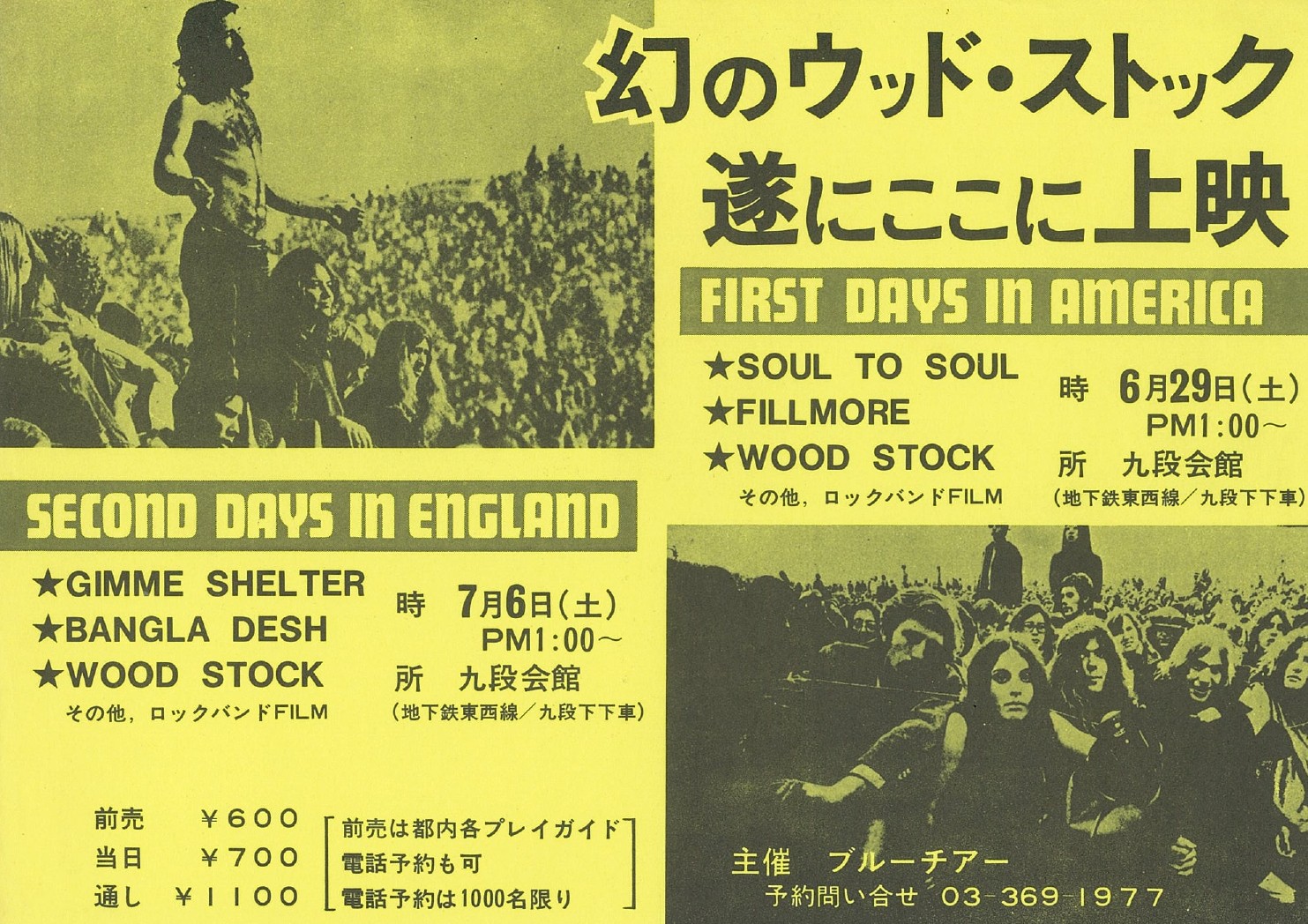
Whenever I participated in or went to concerts, I constantly felt that rock music had not yet really taken root in Japan. There were many reasons for this. For example, when the film ‘Woodstock’ was shown in ordinary cinemas, the sound was played at such a low volume that it had absolutely no impact.
Because I was staying at Apple House, I had an opportunity to attend a preview screening of ‘Woodstock’. At the time, I advised someone from the distribution company, “When you show this film, you have to play it at high volume.” However, they ended up showing it at a low volume, and the screening was cancelled in less than a week.
There were probably some people who had seen ‘Woodstock’ in magazines or listened to it on vinyl records, but I don’t think many people really understood what Woodstock actually was. They didn’t understand the meaning of the four-part split screen, either.
To put it somewhat dramatically, I wanted to help cultivate rock music in Japan, so I arranged screenings of ‘Monterey Pop Festival’ and ‘Woodstock’ throughout Japan using PA systems. At that time, regulations inside concert halls were not as strict as they are today. People were free to sit in the aisles, stand up, dance, and generally move around. I tried to create that kind of environment.
This phenomenon eventually spread to the publicity and production departments of major distribution companies and record companies, and people began saying, “If you want to promote a music film, you should ask him.” As a result, I was asked to handle publicity for films such as Ken Russell’s ‘Tommy’ and Martin Scorsese’s ‘The Last Waltz’, among others.
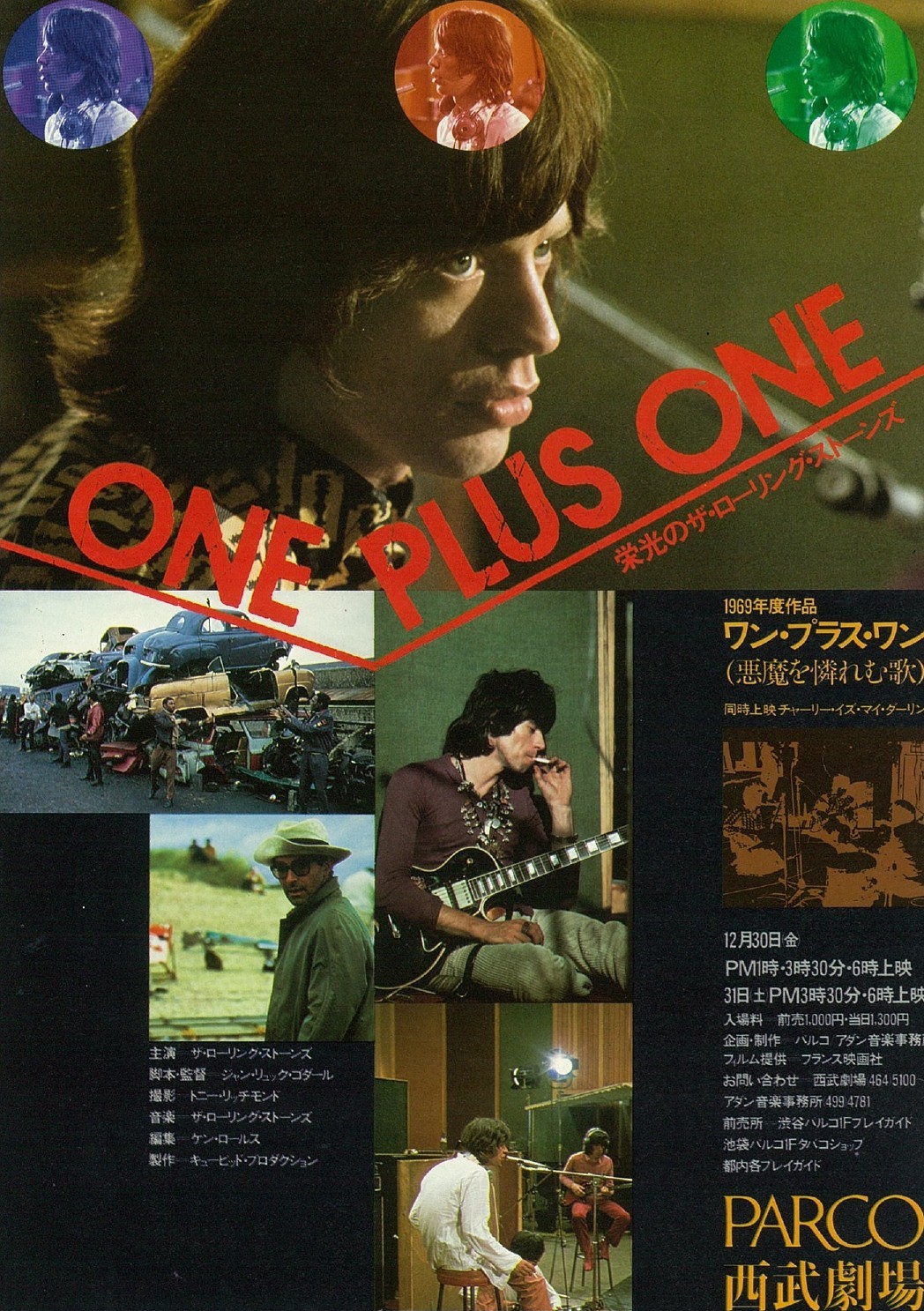
Jean-Luc Godard’s ‘One Plus One’ was shown exclusively through me. Record companies also asked me to handle publicity for Bob Marley, the Rolling Stones, the Ramones, Fania All-Stars, and many others.
Until 1976, I was extremely busy because I was not only playing in bands but also producing concerts. Nevertheless, it made me very happy to see the number of rock fans gradually increasing.
By 1973, you and Mizutani had become close enough to start putting on your own concerts. How did Electric Pure Land begin, and what did you want it to be?
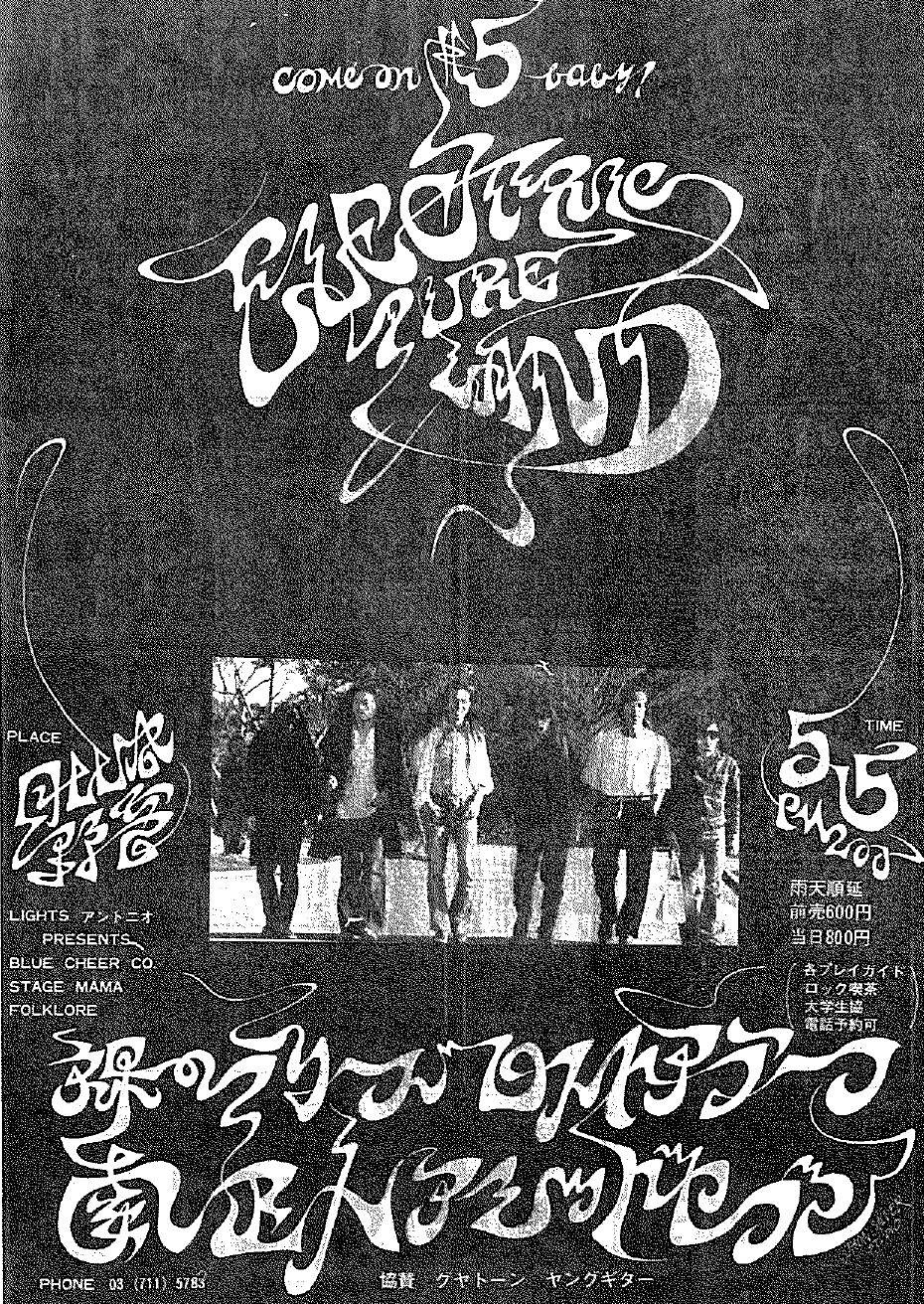
The first Electric Pure Land took place on July 3, 1973, at Theatre Green in Ikebukuro. By 1973, Mizutani and I had also become quite close, and we began talking about putting on concerts exclusively with our own circle of musicians, sharing the financial risk between us.
One of the performers was Masato Minami, who had appeared at our concert on October 4, 1970. When Robbie Robertson came to Japan to promote ‘The Last Waltz’, Minami sang two songs with Robertson accompanying him. Another was Acid Seven, a band whose members were living communally in Yokohama while continuing to perform.
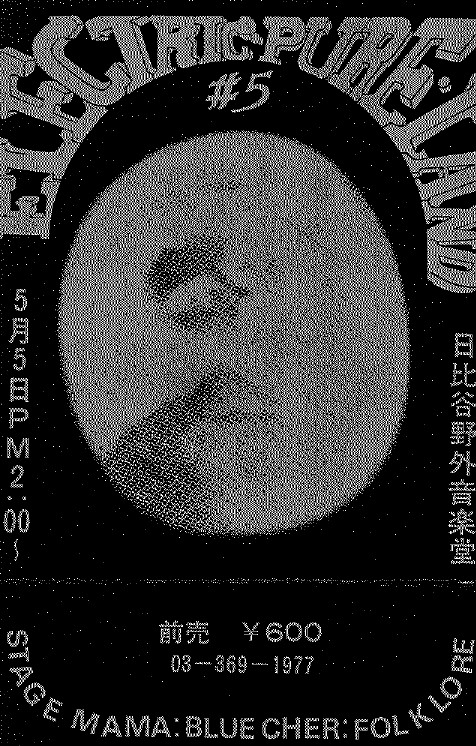
Together with these groups, we held the fifth Electric Pure Land at Hibiya Open-Air Music Hall on May 5, 1974.
Around the time of the first Electric Pure Land, there were some changes in the Lost Aaraaf lineup. Suda replaced Asami on piano, and Saito joined on bass, making the group a four-piece with Haino. However, around this time I had also begun thinking about forming a different band, separate from Haino.
After Japan’s defeat in 1945, “America” entered Japan in many different forms. At first glance, it appeared to be a “free wind,” but in reality it was an aggressive form of American supremacy.
Japanese people accommodated themselves to it, and people who behaved as if making money was all that mattered appeared everywhere — from politicians and executives of major corporations to government officials whose livelihoods depended on taxpayers, and even within Japanese music organizations. Education was largely centered on producing children who would not question the government. It was the exact opposite of education that nurtures children’s imagination.
I wanted to somehow change a Japan filled with companies like those in the automobile industry, which spread pollution without restraint because making money was all that mattered, and companies that discharged methylmercury into rivers, contributing to what became known as Minamata disease.
We wanted to use music and events to explore the theme of “What does it mean to live?” In Mizutani’s words, we wanted to do it “kakkoyoku” — in a cool way.
When did you feel Lost Aaraaf had run its course? And how did ‘Parado’, later released as ‘Smile of 1999’, come together?
I had already been thinking about ending Lost Aaraaf when Asami, the pianist, left the group. It wasn’t because I was becoming too busy with event production or other work. Rather, Asami’s presence in the group had been extremely important.
The concert in January 1974 became Lost Aaraaf’s final stage. The music for that performance was structured in three parts. Suda and I created the overall framework, and Haino interacted with that basic sound. We developed this structure in the autumn of 1973.
The title I gave it was ‘Parado’. Someone apparently recorded the performance, and when Haino later released it as a bootleg CD, he seems to have given it the title ‘Smile of 1999’.
You had already sat in with Les Rallizes Dénudés in 1972. How did your involvement with Mizutani and the group grow from there?
As I have mentioned several times before, I was occasionally asked to play drums for Les Rallizes Dénudés from 1972. From 1973, I also had sessions with Mizutani at Adan Studio, and Hiroshi, who would later join Les Rallizes Dénudés on bass, also participated in some of these sessions.
In 1974, I played drums with Les Rallizes Dénudés several times. When Shoda decided to leave, I continued playing with them for a while. Of course, Mizutani also participated on guitar in Eternal Womb Delirum.
The Les Rallizes Dénudés performances I particularly remember include an all-night outdoor festival held in Ishikawa Prefecture in 1975, and a performance at the Kyoto live house Circus & Circus.
There was also a Les Rallizes Dénudés solo concert in Tokyo in 1976. That was the concert after which I decided to leave the group. I performed at several other venues as well, but I was extremely busy during this period and simply don’t remember them all.
After our final concert together, Mizutani said to me, “Let’s meet again if fate brings us together!” True to his words, we met again in December 2018.
Of course, even after I left the group, I continued to have Les Rallizes Dénudés perform at concerts that I organized.
“I wanted to add color and depth to the guitar that Mizutani was creating in the space around us.”
How different was it to play drums with Mizutani compared with Lost Aaraaf? And do any recordings survive on which we can hear you with Les Rallizes Dénudés?
If you want to hear Les Rallizes Dénudés recordings in which I participated, apparently several songs are included in a five-hour VHS released around 2000. I have heard this from fans, but I have never checked it myself.
With Lost Aaraaf, the foundation was a kind of exchange in which sounds collided with each other and were almost shattered against one another. The question was how dramatically and dynamically we could express that.
When I played with Les Rallizes Dénudés, however, I tried not to think of what I was doing simply as “playing drums.” Instead, I wanted to add color and depth to the guitar that Mizutani was creating in the space around us.
Like an impressionist painting.
Apart from Lost Aaraaf, Les Rallizes Dénudés and Eternal Womb Delirum, what other groups or short-lived projects were you involved with?
From the summer of 1973, I formed a group called the Electric Percussion Group with Toshi from Zuno Keisatsu (Brain Police), Chikko from a jazz band, and myself. It was a three-drummer group, and we performed live three or four times.
I also had occasional sessions with Mototeru Takagi at jazz cafés in Shibuya and Shinjuku. More recently, I have participated in a band led by Taisuke Morishita, a researcher of Andy Warhol, as well as sessions with Masato Minami.
I have also participated in a solo exhibition by an avant-garde artist whose name I unfortunately can’t remember, performing drums three times a day at the gallery. By “drums,” I mean one cymbal and one tom-tom.
I also performed several times as a drummer with a rock band called Kikyo, produced by Takehisa Saito, one of the producers of the Sanrizuka Genyasai. It was almost like noise.
The group had around seven members, including guitarist Michihiro Kimura of Taj Mahal Travellers, Toshi, who had also participated in the Electric Percussion Group, and the guitarist from Acid Seven, among others.
By the summer of 1973, before Lost Aaraaf had completely ended, you were already thinking about Eternal Womb Delirum. What were you hoping to do differently with that group, and where did the name come from?
In the summer of 1973, I was already thinking that after Lost Aaraaf, I wanted to form Eternal Womb Delirum. The members were Chikko, who also participated in the percussion group; Suda on piano; Saito on bass; Kenagano Jun, who had left OZ Band, on guitar; and myself — five members in total.
We began rehearsing in February 1974. Our first stage was at Electric Pure Land #5.
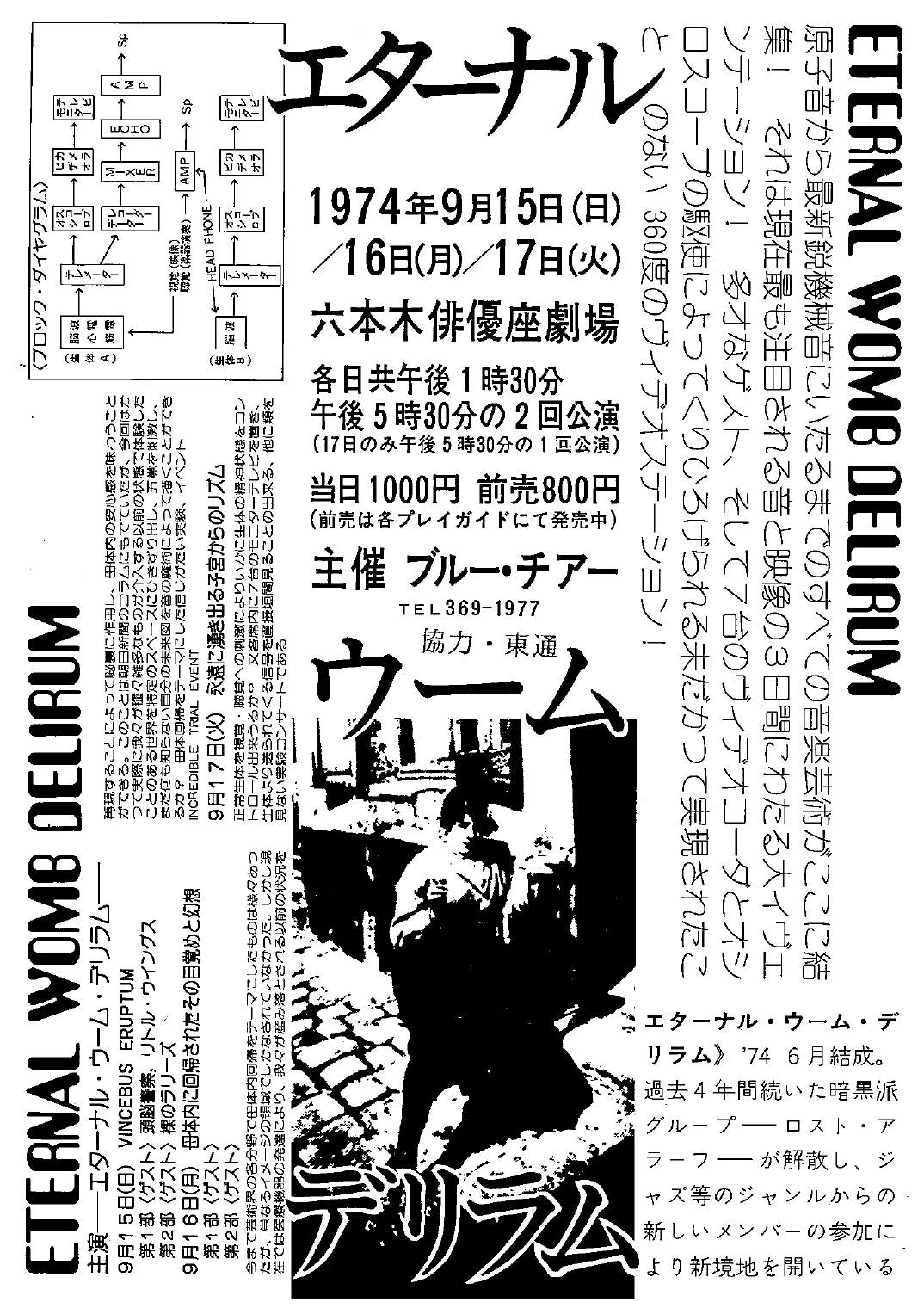
For some reason, the formation of this group attracted a lot of attention. Even though we had never performed before, we were booked for a concert in Sapporo in June, Osaka in July, Hibiya Open-Air Music Hall in August, and then the Haiyuza Theatre in September.
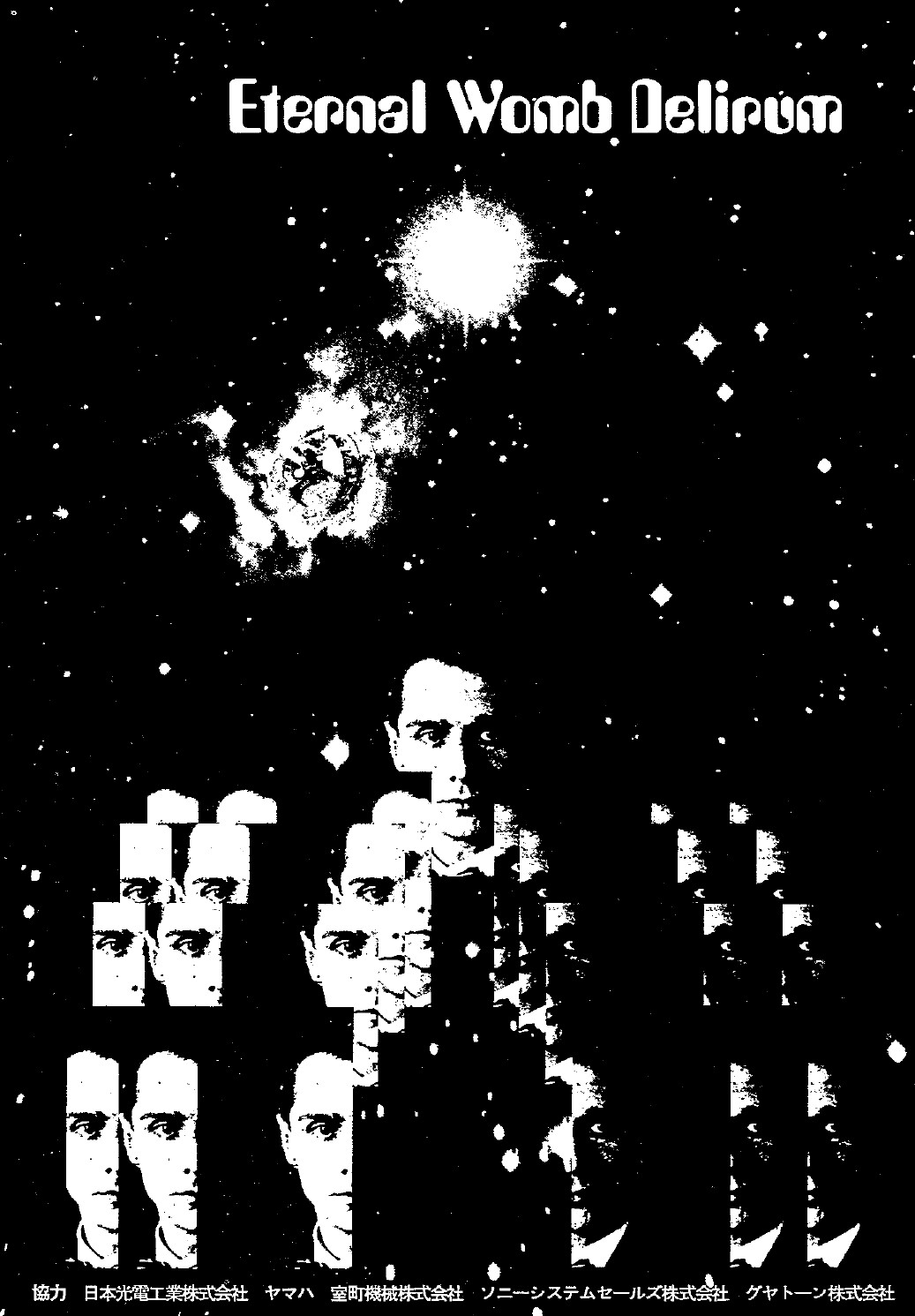
What I wanted to express through Eternal Womb Delirum was something similar to what is depicted in Stanley Kubrick’s ‘2001: A Space Odyssey’: Why do living creatures and humanity travel through space and time, from prehistoric times into the future and beyond?
I expressed that idea in different forms through the phrases “the womb is eternally in a state of delirium” and “rhythm eternally springing from the womb.” Finding a way to express this through music was difficult, but it was a theme that I found deeply rewarding.
The first piece Eternal Womb Delirum presented was called ‘Bundobar (Wunderbar)’, meaning “beautiful.” It was approximately 25 minutes long. The piece was structured around edited footage from ‘2001: A Space Odyssey’, ending with the imagery moving into outer space.
The contemporary composer Kazuaki Arita became interested in this concept, and we decided to work together for the September performance at Haiyuza.
I was able to express the world I had envisioned through this group.
Who were the musicians around Eternal Womb Delirum, and how did the line-up change as the project developed?
The bassist Shima was a friend of Chikko’s and joined us from the Sapporo performance in June.
The performers who took part in the experimental concert in September were centered around the members of Eternal Womb Delirum: myself, Toshi, Chikko, Jun on guitar, Saito on bass, and Suda on keyboards.
Kazuaki Arita participated on synthesizer, while his junior colleague Ryuichi Sakamoto played piano. Mizutani also made a special appearance on guitar.
At this point, there was also another somewhat unconventional band in Japan that was performing regularly and emphasizing Japanese scales and ma — a sense of space and timing. Hiroshi was the leader of that band, playing bass, vocals, and keyboards.
We invited San-chan, who had been playing in a blues band, to join us on guitar. I played drums.
The three of us performed regularly, and when we played at live music venues, we asked Saeki to play bass.
Where did your interest in the effect of sound on the body come from? What were you hoping to understand through those experiments?
At the time, I was very interested in the idea that a person’s sensibility is greatly influenced by the environment in which they grow up, and that this environment can change the things in which they become interested.
For example, most Japanese people enjoyed Japanese popular songs, while only a very small number were interested in American or European music. Only a few percent of Japanese people were interested in artists and musicians such as Miles Davis, John Coltrane, Picasso, Jean Cocteau, Godard, Fellini, Mozart, Verdi, and others.
And yet, at Apple House, there were many young people who shared these interests. I often wondered, “Why?”
When I began asking and researching the backgrounds of the people who gathered at Apple House, I found several things in common. One of them was the environment in which they had grown up. Among their grandparents, parents, siblings, relatives, neighbors, or schoolteachers, there had almost always been someone who was interested in this kind of culture, and I believe they had been influenced by that person.
There were other patterns as well. Some people found both their homes and schools boring, so they spent entire days in bookstores exploring worlds they did not know. There were many similar cases. For example, as you become accustomed to reading books, you begin to read faster, and sometimes simply seeing a title or the name of an author allows you to grasp the overall character of a work.
As I continued thinking about these things, I began to wonder whether food and drink shape the body, while the things we experience through our five senses might have a similar effect on the brain.
When I discussed these ideas with friends, Kei Yoshimura and Kazuaki Arita were among those who immediately shared my interest.
For example, I once experienced a work in which the scale gradually moved from C to the C one octave higher over a period of about forty minutes — works by Terry Riley and others. I felt calm while listening to C, anxious at F, warm at G, cold at B, and then somehow returned to my original state when the music reached the higher C.
The experimental film ‘Powers of Ten’ expresses the relationship between the macro and the micro. A similar idea is also used in ‘2001: A Space Odyssey’, although the methods of expression are completely different.
Through experiences and explorations such as these, I was trying to discover how sound and music affect the human body.
Can you take us back to the three-day Haiyuza event in September 1974? How did the measurements, projections and live music actually work together?
The first two days of the three-day event consisted of concerts featuring several different groups. The third day was the experimental concert.
The performers on stage were as I described previously. At the center of the stage were three large projectors. The projector in the middle displayed the brain waves of a person listening to the music performed that day.
The projectors on either side displayed examples of brain waves in different states: the brain waves of a person in a normal state, and those recorded when a person was excited or depressed. Another projection displayed the brain waves of a person in a state of madness.
One member of the audience was selected and asked to sit in the center of the stage. We measured that person’s brain waves, electromyogram, electrocardiogram, and other bodily responses. Everything coming from that person’s body was converted into sound.
The band listened to those sounds and, using a structure that had been prepared in advance, created music around them. The idea was to take the participant on a journey toward madness through sound.
The themes were joy, anger, sorrow, pleasure, and finally madness. Each section was intended to last approximately twenty-five minutes when we began the performance. There were many members of overseas media in attendance that day.
Kei Yoshimura acted as the host and explained the project. Musically, I controlled the overall performance through my percussion. The performance lasted approximately one hour.
In order to bring together some of the most advanced technology available in Japan at the time, Marubeni provided support, Sony PCL assisted with the visual technology, and Totsu provided technical cooperation with the equipment.
In the end, the experiment itself was a failure, although the concept received support and approval from many people. The reason for the failure was that the participant sitting in the chair at the center of the stage found the music so pleasant that, after about thirty minutes, he fell deeply asleep.
How did Kazuaki Arita and Ryuichi Sakamoto become involved? Once the performance began, what was fixed beforehand and what was left to improvisation?
Arita had been interested in this event from the beginning, so he had been scheduled to participate from the outset. Sakamoto came to the event on the day of the performance with Arita, who said something like, “I would like him to play the piano.” I agreed.
I created the overall structure of the performance, which lasted approximately one hour. The basic idea was that I would give musical cues through my sound, and the other instruments would enter in response.
Many of the performers were musicians I had played with numerous times before, so we were already accustomed to improvisation. My cues consisted of slow crescendos and decrescendos on the drums. Sometimes I used a tom-tom, and at other times cymbals or bells.
Part of the performance from that day — approximately thirty-six minutes — survived because Yoshimura had a cassette recording of it. As far as we know at present, no other recording of the performance has been discovered. That is very unfortunate.
Although the event lost money, the attention it received from newspapers and many other media outlets became a major advantage for my later work as a producer. Around this time, I also began to feel that my years of traveling throughout Japan carrying 35mm films in order to introduce rock and rock culture had not been wasted.
How did ‘Yappari’ and ‘Cloud Pillar’ come together, and who was playing on each recording?
The lyrics and music were written by Hiroshi, and the idea for the style of performance was also based on his wishes.
The musicians on ‘Yappari’ were: Takashi Mizutani — guitar; Hiroshi — vocals and bass; myself — drums.
The musicians on ‘Cloud Pillar’ were: Hiroshi — vocals, keyboards, and bass; San-chan — guitar; myself — drums.
The three of us rehearsed ‘Cloud Pillar’ several times and decided on the direction of the sound. Because San-chan came from a background in blues and rock, we arranged the music in a way that was comfortable and natural for him to play.
Eternal Womb Delirum did not last very long. Did it end deliberately, or did it simply fade out? And how did the surviving tapes eventually reappear? Do you think there may still be more recordings out there?
As I mentioned earlier, Eternal Womb Delirum performed at Electric Pure Land #5 at Hibiya Open-Air Music Hall, followed by Sapporo Kosei Nenkin Hall in June, Takashimaya Hall in Osaka in July, another performance at Hibiya Open-Air Music Hall, and finally Haiyuza in September.
After that, there were more opportunities for sessions at my studio, and I also began playing with Les Rallizes Dénudés more frequently. In addition, the guitarist Kenagano Jun left the group. As a result, Eternal Womb Delirum gradually came to an end naturally rather than formally breaking up.
Regarding the discovery of the recordings: From 1992, I produced a group called Seifuku Kojo Iinkai (Uniform Improvement Committee) and helped them make their debut. In 1995, I established Idol Japan Records, through which I produced several groups and released CDs and DVDs.
Seifuku Kojo Iinkai released approximately fifty CD albums, ten live DVDs, and five DVDs introducing school uniforms. The Grateful Dead sold various kinds of merchandise at their concert venues, and I began thinking about what we could sell for Seifuku Kojo Iinkai.
In the end, we decided to release ten original videos every month, and this attracted a great deal of attention from our fans. The contents were varied and included previously unreleased live performances, short dramas, talk shows, and other material.
From around 2000, a staff member who was a fan of Les Rallizes Dénudés began suggesting that he wanted to supervise and release recordings from the 1970s in which I had been involved. We therefore created a new label called DEAD FLOWER.
All of the artwork and design for the label was handled by Kei Yoshimura. The cassette that Yoshimura had kept contained part of the Haiyuza performance.
The DEAD FLOWER label also received approaches from people who had secretly recorded performances and asked whether we would be interested in purchasing their recordings.
So perhaps, in the future, more recordings may still appear…
You kept building things after the 1970s: studios, labels, The DOORS, Seifuku Kojo Iinkai and archival releases. Do you see all of that as part of the same idea you had when you were younger?
In order to plant the seeds of rock culture in Japan, I organized screenings of ‘Soul to Soul’, ‘Woodstock’, ‘Gimme Shelter’, and other films throughout the country. In order to help develop bands, I created rehearsal studios and recording studios, and I produced all-night concerts and other events.
However, bands that actively communicated messages were slow to appear. At the same time, in order to improve my own skills, I also worked in television, film, and for major advertising agencies.
Then I began thinking: if teenage girls could communicate messages about the environment surrounding their own lives, then surely people involved in music and culture could also communicate messages about society and the way we live. That was one of the reasons I created Seifuku Kojo Iinkai.
More specifically, the group proposed new ideas for school uniforms and organized uniform fashion shows. They also actively participated in campaigns against littering and campaigns to protect nature. They took part in movements to protect the ecosystem of nearby mountains.
We also visited Peace Village in Hanoi in order to report on the continuing scars of the Vietnam War and conducted interviews there. Peace Village is a facility that helps people whose bodies and lives were severely affected by Agent Orange, which was extensively sprayed by the U.S. military during the Vietnam War, with the aim of returning to society.
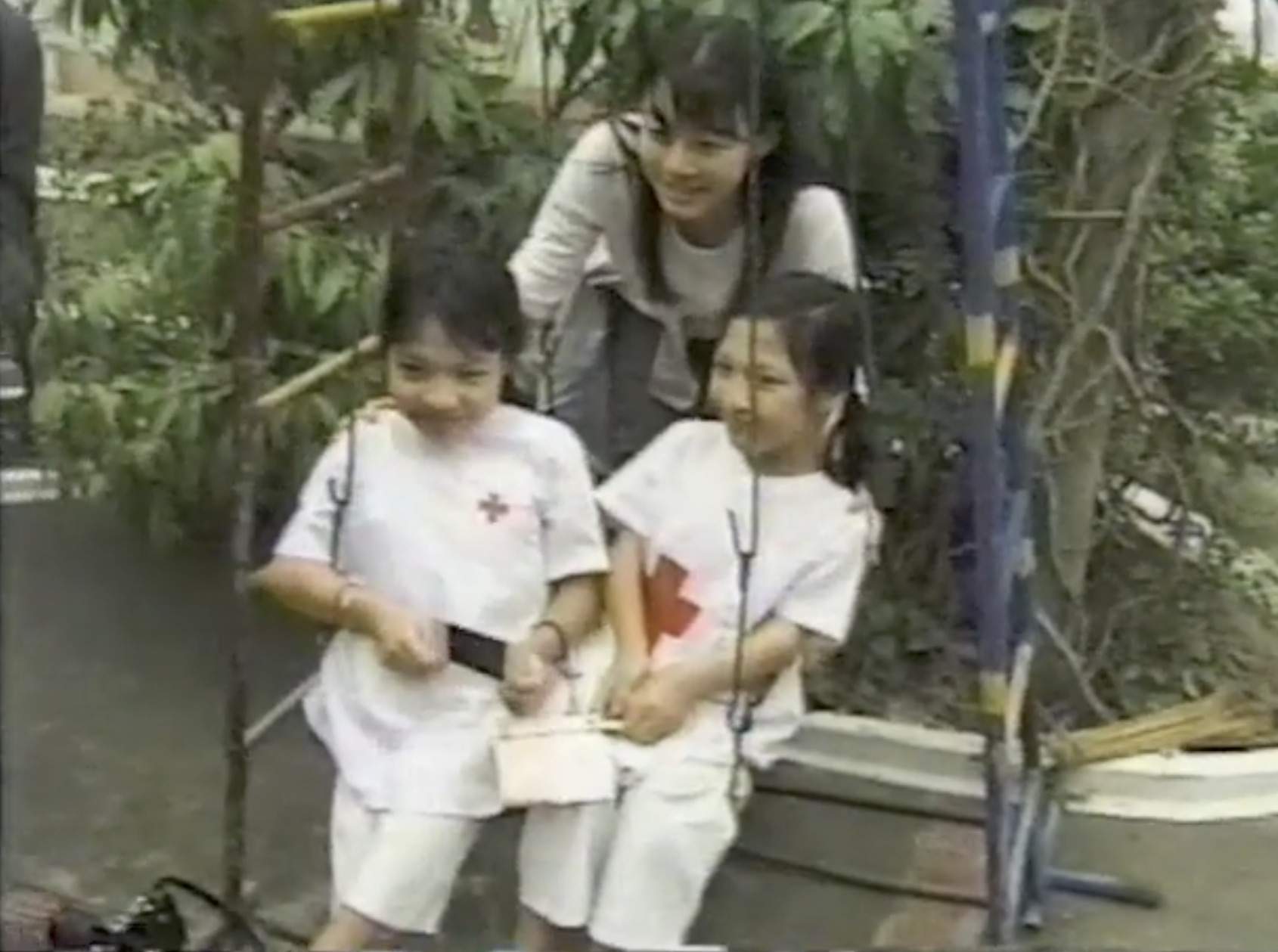
We also visited facilities throughout Japan where children abandoned because of family circumstances and people with severe disabilities were living. We sang and played together with them. I also wrote a song called ‘Volunteer Spirit’.
Within Japan, the group participated in gatherings opposing the Iraq War. Following the nuclear accident in Fukushima in 2011, we also participated in events calling for the end of nuclear power at approximately four hundred locations throughout Japan.
These are only some examples of the activities of Seifuku Kojo Iinkai.
In 2001, I produced and opened a live music venue in Tokyo called The DOORS. Its concept was: “Open this door, and you can go out into the world.” Through the venue, I wanted to help develop bands.
However, many young people in Japan were not communicating messages through their work. They were quietly absorbed in television, games, and other things, and the situation did not develop in the interesting direction I had hoped for.
Many of the ideas I had been thinking about since the 1970s were difficult to realize. In 2018, however, I met Mizutani again, and we became excited about the possibility of doing something together. We tried many different ideas, but sadly, he passed away before we were able to fully realize them.
Returning briefly to an earlier point, from around 2000 I established the DEAD FLOWER label and began restoring and releasing recordings from concerts and events that I had organized during the 1970s.
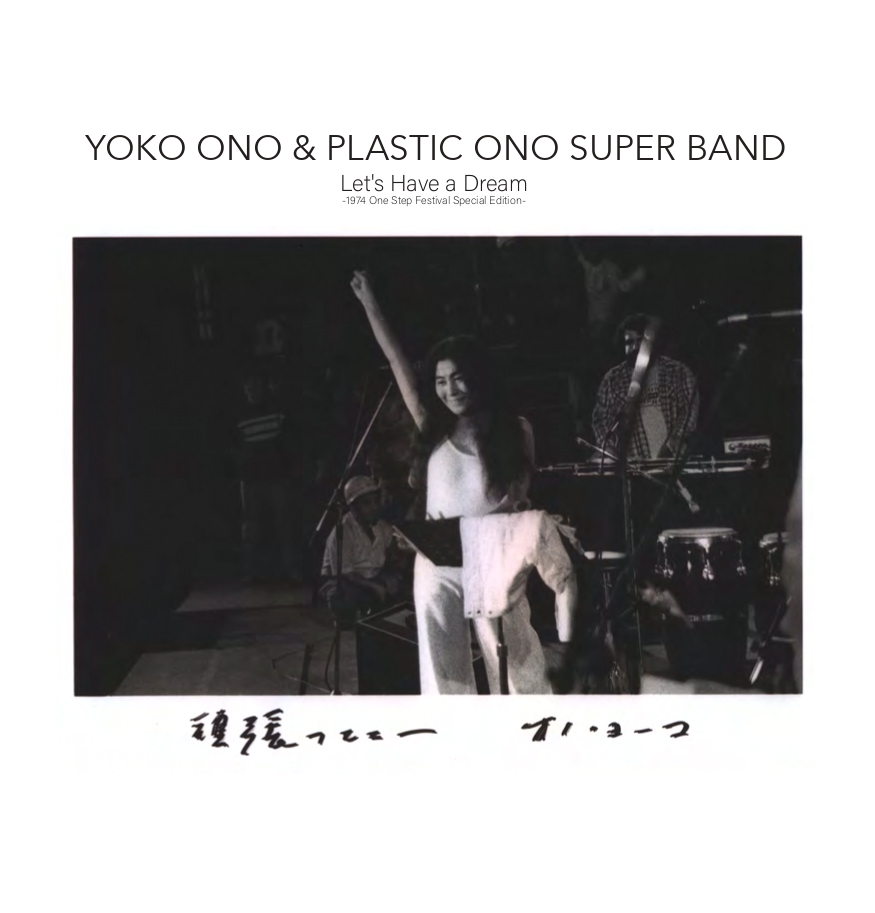
In addition to the 1974 Eternal Womb Delirum recordings, we released recordings from the One Step Festival, which was held in Koriyama, Fukushima Prefecture, in the same year. The festival was released as a 21-CD box set. The performers included Yoko Ono & Plastic Ono Super Band, Rita Coolidge, and approximately thirty Japanese bands.
We also restored recordings from the Rolling Coconut Revue, held in Harumi, Tokyo, in 1977. The performers included John Sebastian, Paul Winter and Odetta, with approximately thirty artists and groups in total, including the Japanese participants.
Through DEAD FLOWER, we restored and released recordings and films that were otherwise very difficult to obtain.
For me, freedom means living in harmony with the Earth, respecting nature, and recognizing one another. We do not know where humanity is ultimately going, but I believe that to live means to enjoy the present.
It also means expressing those ideas through poetry, paintings, and other forms of expression. And when I encounter the opposite of those values, I believe in communicating a message and resisting it.
Today, prices in Japan have become extremely high. I personally feel that the government’s policies toward its own people have become a form of abuse. If similar actions were carried out against another country, they could be described as an act of war.
It is said that spent nuclear fuel may require ten thousand years before it can return to a natural state. I strongly believe that it is irresponsible to operate such dangerous nuclear power plants without taking full responsibility for the consequences.
I feel this very strongly today, because I want to protect the freedom and future of my children and of the Earth.
What are you working on now, and what would you still like to get done?
At present, the value of the Japanese currency has become very low, and only a relatively small number of Japanese people can afford to travel to America, Europe, South America, and other parts of the world. For young people in particular, such experiences have become financially out of reach.
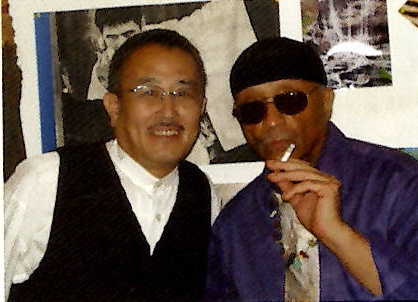
I believe Seiji Ozawa also spoke about the importance of going to the places where things actually happen. I myself learned a great deal during the 1970s by going to live music venues in America and seeing Grateful Dead concerts. Shuji Terayama was also very active in taking his work overseas.
I would very much like young people in Japan to have similar experiences.
In 2007, Raoni, an elder of the Kayapo people of the Brazilian Amazon, visited Japan at the invitation of the Japanese nonprofit organization Rainforest Foundation Japan. He warned about the destruction of nature by modern civilization and the cutting down of forests that produce the air essential to life.
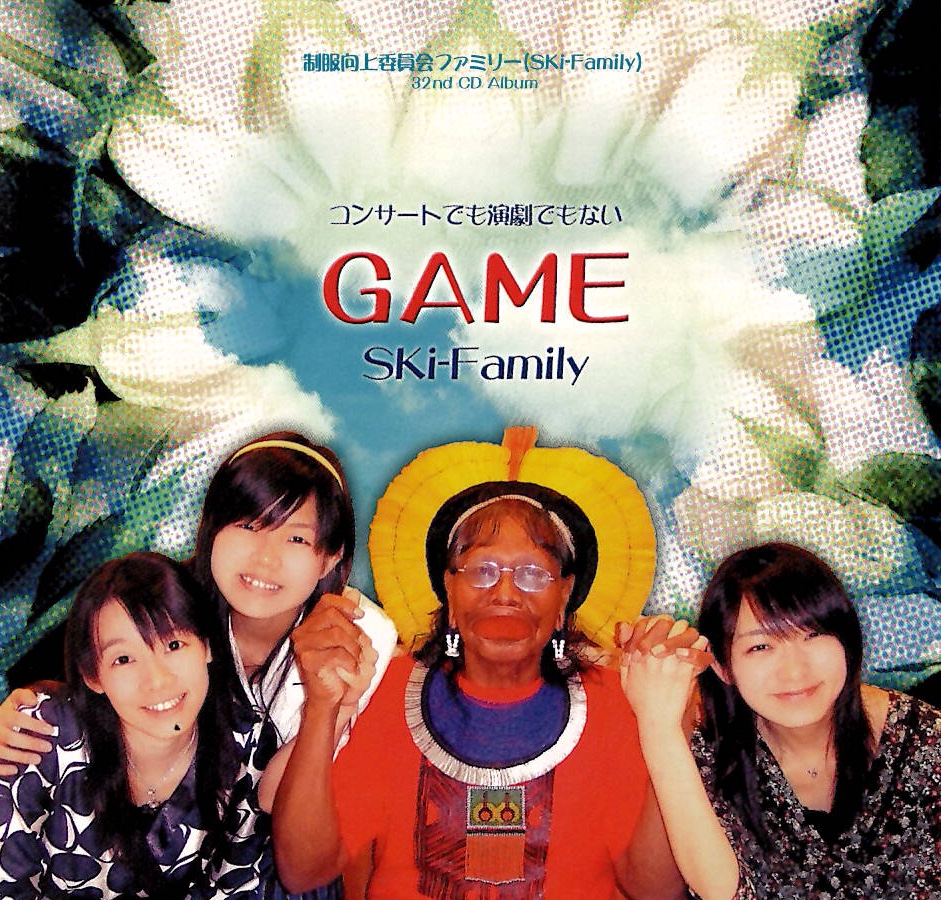
I feel that many politicians and business leaders lack this perspective and think only about what is convenient for them at the present moment. Moreover, America and Japan both spent enormous amounts of money on measures against COVID-19 and are now struggling to fill the financial gaps that resulted.
In my view, some countries are now seeking profits amid the confusion created by war and international conflict.
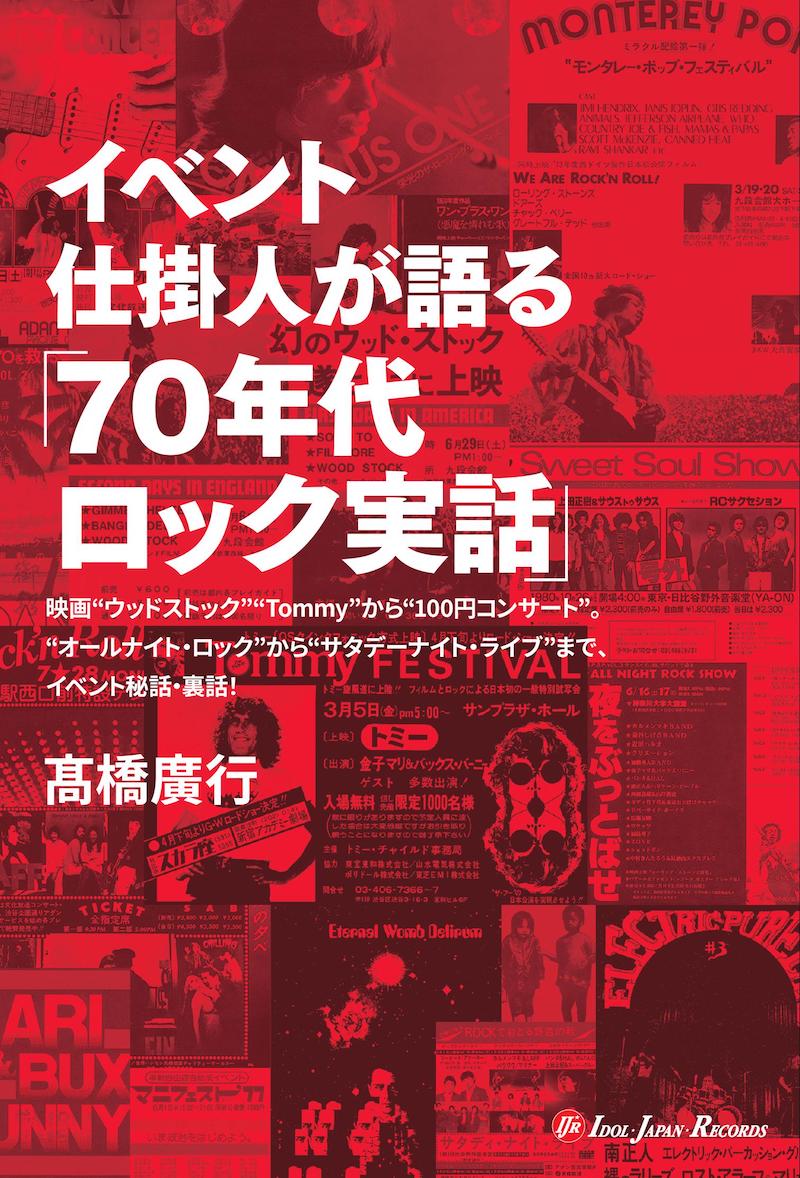
Precisely because we live in such times, I am currently preparing a book project that I would like to publish under the title ‘The Thinking of Shuji Terayama’.
I am also preparing another project involving Seifuku Kojo Iinkai. Out of approximately one thousand songs for which I wrote the lyrics, I would like to select the best one hundred, record them again, produce them, and release them.
There are many other things I would like to do, but I hope to accomplish them one by one.
The people I admire are Bob Dylan, Picasso, and Mozart. I also greatly admire Stanley Kubrick.
I would like to continue doing work that brings me even one step closer to the level of achievement of those artists.
Klemen Breznikar
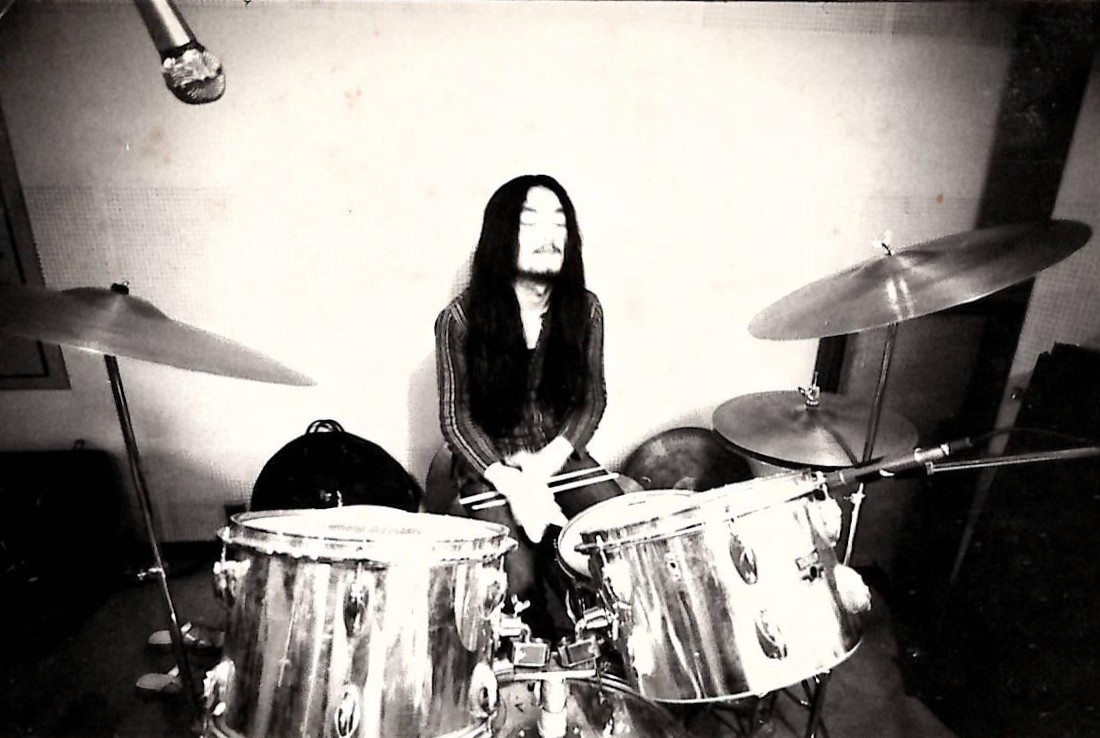
Headline credit: Hiroyuki Takahashi at Adan Studio, March 1975. Courtesy of Hiroyuki Takahashi.