

Kommissar Hjuler & Mama Baer | ‘We Started as Musicians and Ended Up Both as Artists’
For more than 25 years, the German duo have been making experimental recordings, handmade records and visual art. Here they discuss their early years, Brotkatze, their collaborations, Fluxus and Detlev Hjuler’s recent novels.
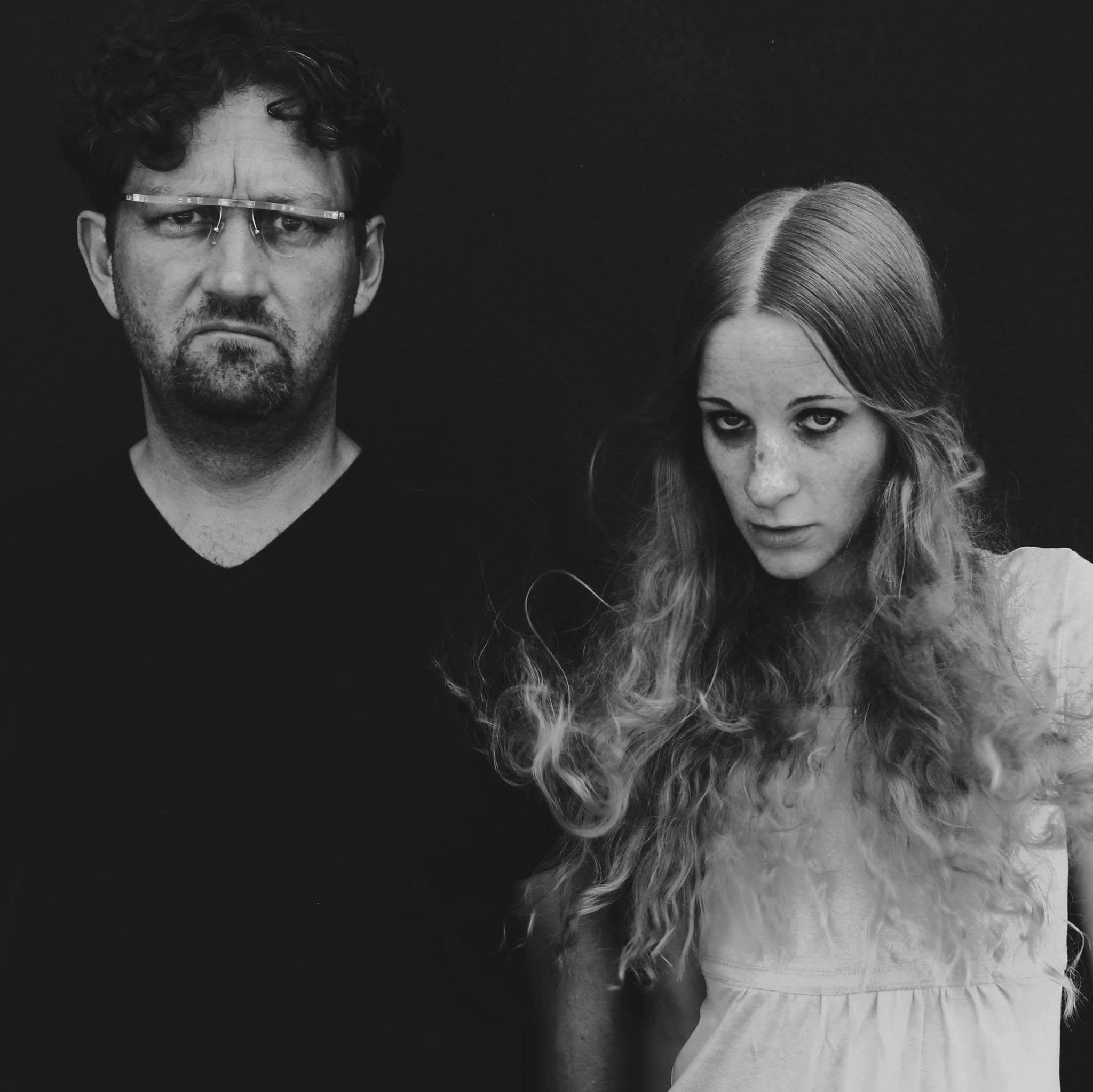
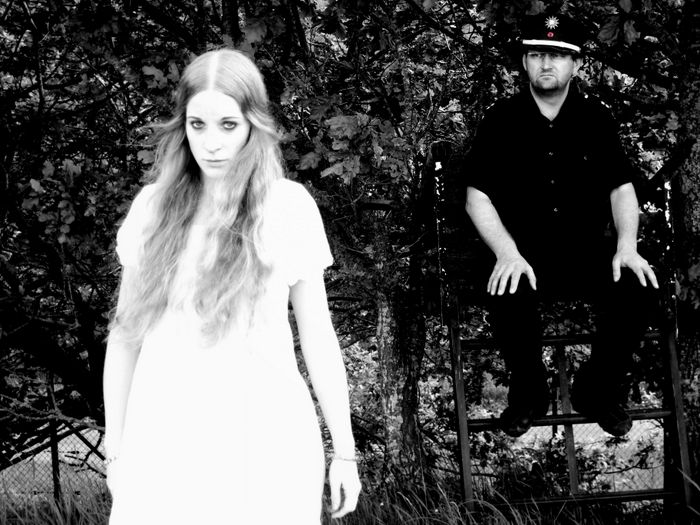
Kommissar Hjuler (Detlev Hjuler) and Mama Baer (Andrea Hjuler) have been making music and art together in Flensburg, northern Germany, since 1999. Their earliest recordings were made with tape recorders, voices, household sounds and whatever instruments they had around. They released them in small editions through Der Schöne-Hjuler-Memorial-Fond (SHMF), which Detlev originally started with Jan Iwers for their Tuulen Laulu recordings.
Over the years, they began making paintings, films, performances and assemblages, while their handmade record covers became artworks in their own right. They became involved with NO!art in 2009, and Detlev later began putting together the Fluxus +/- series for Psych.KG. Their many collaborations include work with Deutsch Nepal, Family Fodder and Medium Medium.
In this interview, they talk about their early recordings, Brotkatze, working together and their relationship with Fluxus. Detlev also discusses his novels, including ‘Der Napfkuchenmann’ (‘The Bundt Cake Man’), which he hopes to turn into a film or television series.
“I am not really sure that we do fluxus.”
Detlev, before you began recording, you were already collecting a lot of experimental music. Which records and artists made the strongest impression on you when you were young?
Detlev Hjuler: My whole life I was looking for more and more experimental music, first contact were radio broadcasts, first LP I ever bought as a child was “Remain in Light” by Talking Heads, but this was still music, and first LPs a bit more experimental to me were “Monkey Banana Kitchen” by Family Fodder and “The Glitterhouse” by Medium Medium as a teenager. Ditterich von Euler-Donnersperg/Uli Rehberg run a small store at Hamburg for experimental music, and here I was able to listen to LPs from Whitehouse first time, still the greatest band to me in the world. Also lot of Industrial music. I contacted several bands by letter, it was in the late 80s. Karlheinz Stockhausen invited me to a concert and backstage talk, when I was 18 years old. It was like a drug to contact musicians, and I bought records, records, records, mainly from copied typewriter lists sent out by letters from set sellers. My collection was huge, but to be honest, in the end I was even more a collector as a listener. This does not mean, that I did not listen to the records, but from all those thousands of LPs only few ones really touched me. Today my collection contains about 150 LPs, beside Whitehouse and lot of rarities you find Crosby, Stills, Nash & Young or Cat Stevens. From NWW only their Brainticket-Cover-Version is left, Brainticket-LPs I own as well, and I was to do my own cover version called “Vandroogenbroeck”. Several of the musicians we worked with later I knew from my time as a collector. It was much easier to contact musicians at that time as today. Mostly you found on inserts the original addresses of artists or the labels handled letters to them.
You met Jan Iwers, also known as No One, in the late 1990s and began recording together as Tuulen Laulu. What were those first sessions like, and how different were your ideas about making music?
Detlev Hjuler: 1997 I began to question my way of collecting, at the end started to reduce the mass of recording I had, more and more through the following years. Same time I got in contact with Jan Iwers by chance, we lived at same town. I saw him recording his music, and it was much easier, as I expected it to be. He asked me to join in. After graduation I travelled to Flensburg, here I met my wife, we continued the recordings, and she joined in as well. Jan was a perfectionist, whereas Mama Baer and I improvised and we both brought in weirdness. Equipment was by him, but during the recording we all saw, that there will be no further recordings as a group, our expectations on recorded music were too different, a bit like the situation with Amon Düül one and Amon Düül two, free improvisation or structure. Jan then gave me my first professional tape recorder as a gift, and Mama Baer and I tried it out. We bought more equipment, working with instruments with different results and also combined it. She worked with more-channel recordings, I reduced equipment to mono cassette recorder, for I loved my harsh cut-ups and wanted to be more “non-likefully-listenable”. At that time this was my expectation on music by other musicians as well. To break with the term music.
“If you know too much industrial music, you run the risk to copy anything you like.”
Mama Baer, you came into this without Detlev’s background as a collector of experimental music. What do you remember about making your first recordings? Did not knowing all that history actually give you more freedom?
Mama Baer: At that time I listened to some music Kommissar Hjuler liked, TG “Discipline” for instance. But only selected music I listened to by chance. If you know too much industrial music, you run the risk to copy anything you like. An example is FOR THE MAINCONTROL as music track and as music video, I was totally free. I did not listen to a track in this vein before. When my husband was at night shift I often used the time for my personal experiments with voice, feedback, keyboard, flute, and guitar, with four channel mixer, trying backwards channels as well. When I played it to him in the morning, when he came home, it often was a big surprise to him, how I managed it. But he always told me the result was good, so I could only trust the meaning of other ones. Hahaha!
A lot of the early material was made with very simple equipment: voices, microphones, cassette recorders, household sounds and whatever happened to be around. Was that limitation important to you, or was it simply what you had?
Detlev Hjuler: Both reasons, we started to buy equipment step by step through the early years, but even more Mama Baer used the sources, to me it was important to do anything spontaneously. I often had my mono cassette recorder with me, so when I came across usable field recordings, I started recording. I could have asked Mama Baer for mixing, but I liked the cut-ups I used. Often made a sound with spoon and cup to point out the cut-up as a real interruption of the flow. Just to have non-music. A magazine called me the most “incompetent person for collage techniques”, and I loved the term.
How did Der Schöne-Hjuler-Memorial-Fond begin? Was the idea originally just to release your own recordings, or did you already imagine something larger? And where did that name come from?
Detlev Hjuler: It should have been “Fonds”, a mistake Jan and I made, when coming across the name. At our country we have a “Schleswig-Holstein-Musik-Festival” each year for a week at several towns, playing classic music. Abbreviation for the festival is SHMF. So we looked for a name, for which this abbreviation fitted as well. It was Jan Iwers’ idea as well. At that time it was simply to find a label name for the Tuulen Laulu release, no plans for more recordings.
Some of your early releases came out in editions of only five or fourteen copies. Was that mainly because of the time it took to make them, or did you also want to keep them small?
Detlev Hjuler: Every copy took a bit work and time, but not as much as my covers take today. Here I often spend hours for a single unique cover art. I copied CD-Rs in real time, a reason more to have short editions. The number of collectors was small, so it was not a release, it was sharing a recording with friendly guys.
Your record covers gradually became objects and artworks in their own right. Was there a particular point when you started thinking about the covers differently, or did that happen over time?
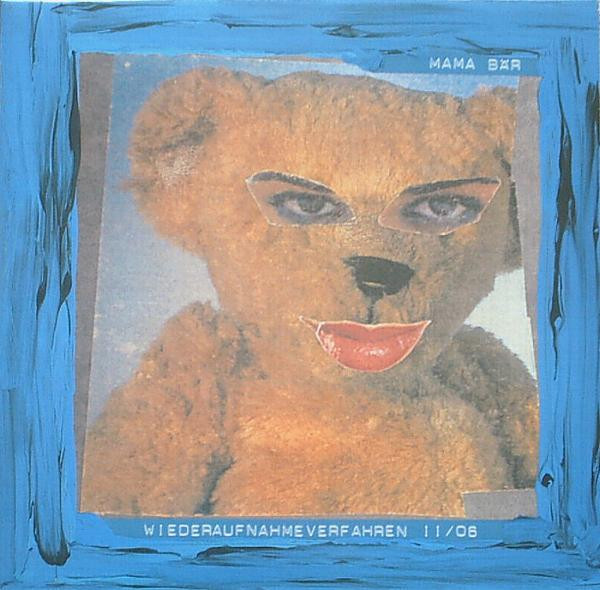
Detlev Hjuler: There was a process in self-perception, we started as musicians and ended up both as artists. And the more we worked in art, the more we saw cover art as normal way of art presentation. LP covers became part of exhibitions as well, whereas at the beginning there was art on the one hand and music on the other hand. And the output changed from regular edition of 177 copies beside 11 copies with handmade cover art (DVR-HGA) into 25 copies regular music and 75 copies handmade unique covers per LP (Psych.KG, Malmlund Rec.) or later each LP with handmade cover art (SHMF). But the music still was important as well, often there is a symbiosis between music and cover.
Mama Baer, Detlev once said you began painting because you didn’t want other people’s pictures hanging in your home. What were those first paintings like, and how did your style develop?
Mama Baer: That is correct. My first paintings were abstract figures, but I was not that happy about the result, so tried better and taught myself how to draw and paint better. Those early paintings were as serious, but I later preferred the realistic drawings.
Mama Baer, your recordings often draw on things happening around you. Do these pieces usually come about spontaneously, or do you already have a particular idea in mind?
Mama Baer: No, we both were influenced by our surroundings, so “23XX/23Xy” was based on the influence my father and my mother had on me. “Da muss Streit drauf” we made at the window of our house, because normally our neighbours were arguing loud in the garden each weekend for a short time. We wanted to record their dispute, but that evening they did not argue, so the recordings was the sound of us waiting for their dispute with little conversation, mixed by me later. Just two examples. I can present any background for any tracks I made, always starting with a certain idea fixed by influences from my life or special situations.
How do you actually work together? If one of you comes up with an idea, can the other completely change it? And is it usually obvious when something should be a Mama Baer work, a Kommissar Hjuler work, or something by both of you?
Mama Baer: We have a certain influence on the other one for all our works, so there are a lot of recordings declared as Mama Baer, whereas they could have been Kommissar Hjuler und Frau as well. And often my husband brought in an idea, mostly pretty absurd, so that I tried to fix a result more musically and listenable, as his aim was. Concerning my paintings It sometimes felt as if he had destroyed them by adding metal, wood, and construction foam, and it took weeks, months or years to realize, that he was right finishing it that way.
Asylum Lunaticum includes records, paintings, films, photographs, objects and many collaborations. Do you think of them as separate works, or do some of them belong to larger, continuing projects?
Detlev Hjuler: FLUXUS +/- series with all its works I see as a project, a series I compiled for Psych.KG, releasing items on my costs, spending all money coming in on the next releases. Mostly people picked up some LPs for their collection, but I like the idea to see it as one big release of more than 150 different releases on vinyl or tape. The (SHMF) is a catalogue of all other works we produced, and separate works, whereas sometimes you find corresponding positions. The catalogue number at the list gives you the information, that items belong together.
‘Die Antizipation des Generalized Other’ eventually led to more than a hundred interpretations by other artists. How did the original recording come about, and what happened when you began sending it to other musicians?
Detlev Hjuler: A self-reflected question about role-taking ended up into this recording. People overestimate the text, because at several passages one might see, that we possibly misunderstood the theory. We later listened to the text and expected it to be a funny result, because we did not knew that lot about George Herbert Mead as others might expect us to. The conversation was mostly improvised on a self-given theme with short period of preparation time for each one of us. Mama Baer then stated, that people might think we were kidding when listening to it. So I came across the idea to give the recording to artists just to check, what they are able to use the text for. There are more than hundred versions that returned, but I probably sent out 500 or more CD-Rs to artists, so about 400 artists were not able to finish a work or were not willing to do, maybe expected it as a silly project. So now to state, that anyone understood our piece or not, is difficult to say. Each artist worked in the vein he always works, and the result was his music. But the text was non-musically as non-musically a text source can be. Text channel was like an instrument offered to the artists, to check, how they use it.
You’ve worked with so many musicians and artists over the years. How do those collaborations usually begin? Are there any that have meant something special to you?
Detlev Hjuler: Brotkatze Collaborations was an early project in art, I sent my small figures of dried bread in the shape of Katjes cat to several artists I knew or was able to get in touch with. In my mind there was a comic like story about Brotkatze, taking place like in a comic, each work was a part of a complete comic, built as assemblages. And the project was to see – like for George Herbert Mead – if anyone would be able to use such a source. The idea for FLUXPORN was formed when Dietmar Kirves (NO!art) told me, that my work is too much of porn. I had the idea to invite porn actresses in order to create real art, not porn, and some of them had nice ideas. Other collaborations in music or art were based on friendly contacts. So one example: Mama Baer listened to a track by Deutsch Nepal at YouTube and told me, she liked it. I contacted him, we made a split, and later Mama Baer and he collaborated. Collaboration was with Family Fodder I am proud about, because they were one of my idols as teenager, and for split-LPs I was happy like a little child, when being able to work with Medium Medium, same reason, both bands were part of my youth.
Where did the first Brotkatze come from? And when you began sending the little bread cats to other artists, did it ever feel strange to see what they made of them?
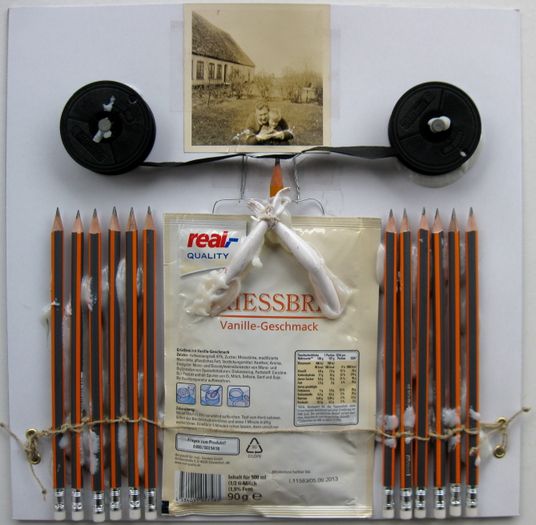
Detlev Hjuler: At work I cut a bread roll in two pieces and at the middle a small flake of bread was built by the knife I used. I took the flake and formed this cat. Dried it and started to do more ones. I played with them like girls playing with Barbies, and then did my assemblages in the vein of comic-like situations. The work other artist made while collaborating were their works as if I handled to each artist involved a red felt-tip pen stating, do whatever you want, I will exhibit it later.
Detlev, how did you find a way to bring your tape cut-ups into the Brotkatze performances? And how did your approach to playing live change when you began working with other musicians?
Detlev Hjuler: The Brotkatze recordings I made were based on the text from a film by Paul McCarthy, the text I understood from film was “Wir kochen eine Suppe aus Ziegenpeter”, so used the passage, and to have my cut-ups, I threw my head into a tub filled with water, going on until I was totally exhausted. Often being naked. For other live performances we used spoon and tin to have the cut-ups taking part of it. Later our stage appearance often was a collaborative improvisation with other musicians, pretty nice results with PAAK/Peter Kastner from Hamburg.
You became involved with NO!art in 2009. What did that connection mean to you then? Does being connected to something like NO!art or Fluxus still matter to you now, or are those names less important after all these years?
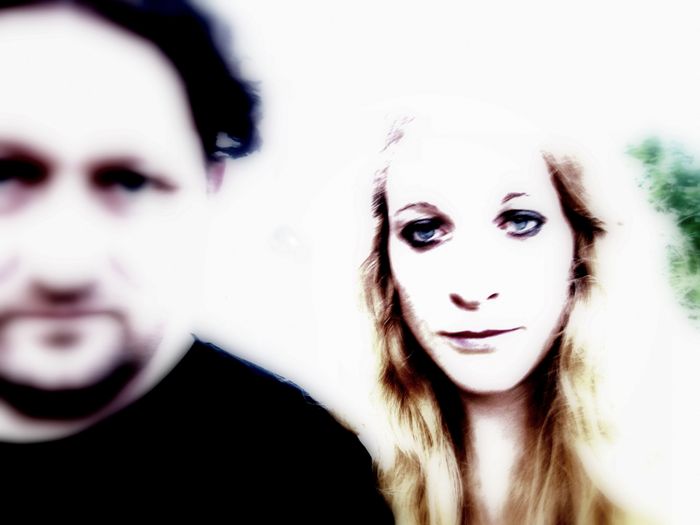
Detlev Hjuler: The NO!art lists a lot of famous artists, so to become listed is something special to us, but at least those artists are dead today or work for their own. We mainly have been in contact with the leaders, who appreciated our work, and collaborated with them. FLUXUS and NO!art are mainly terms other people need to have a frame for us. You can store a record of ABBA from your collection at the letter “A”, and if you need letters for record storage, you can use Fluxus to store Kommissar Hjuler & Mama Baer at Fluxus. I am not really sure that we do fluxus.
How did the Fluxus +/- series on Psych.KG begin? Did you ever expect it to grow into so many releases?
Detlev Hjuler: Some months before ALBRECHT/d., a friend of us, died, we made a recording by phone. And very shortly before he died, he sent me a bunch of photographs from his time with Beuys and COUM Transmissions/Throbbing Gristle. I was astonished, we phoned and his voice sounded depressive. I tried to call him back few days later, but he died in between. I had the idea to put this track on a one-sided 10inch. Pressing costs at Hungary were same for 12inch and 10inch, so I invited friendly artists to send me tracks to fill a one-sided 12inch. I did not expect all artists to send a track that soon, then had tracks for two one-sided vinyls and wanted to present them at (SHMF). I needed an European Tax Number as a label, so Matthias Horn of Psych.KG allowed me, to use his one, and the two one-sided LPs appeared at Psych.KG. I was never interested into lot of money, but the LPs sold well and I got back all my costs pretty soon, also received more tracks by artists, and Matthias and I pressed the following LPs, going on with catalogue numbers of Psych.KG. I used all money coming in for new projects in this series. And today you find about 120 LPs in the series. Always friendly musicians.
How did Fluxporn begin, and what did collaborators such as Texas Patti and Annika Bond contribute to the works you made together?
Detlev Hjuler: One is not allowed to use porn in art or combine it, if one wants to be a good artist, a statement we often heard. And this statement forced me, to involve porn, whenever I wanted to. In real life you find porn stuff anywhere, and those people stating that porn is bad influence have dozens of magazines hidden somewhere, the internet is full of porn. Art shall not be restricted by such statements, especially if one of the leaders of NO!art brings such a statement. We never went commercial ways, no need to make any money. To invite actresses was a way of doing anti-art by creating real art on basis of ideas by non-artists. Instead of giving blowjobs or becoming double penetrated the girls showed up interesting ideas. Texas Patti grew up as a Catholic girl, very religious youth. So we created Images of the Madonna with her worn lingerie. Annika Bond stated that her career often is a comic strip to her, not even real, she felt as a figure in a comic, so we created comic assemblages.
Detlev, literature has played a part in your work for a long time, from Hugo Ball and Kafka to Trakl and the Brothers Grimm. What finally made you decide to write your own novel, ‘Der Napfkuchenmann’?
Detlev Hjuler: I was kidding about it first, the title “DER NAPFKUCHENMANN / The Bundt cake Man” I used pretty long time before I really fixed the idea of writing, telling anyone, I will write it, I will write it, but no specific idea, probably two years ago. After an operation at my spine I was not able to do heavy work, so started to write this novel, and wrote it in astonishing short time, now working on part three. Weird ideas, like 6-Million-Dollar-Man and Tony Petrocelli are super heroes in the future, and they have a three-some with Elaine Giftos, who is 150-years-old at that time; Adolf Hitler and Adam Ant rule a democratic regime at one side of a flat earth, Henry Rollins tries to fight them, so a mix of weird ideas became one complex story, and my son Cy Hjuler appeared as perverted murderer in the vein of David Parker Ray. Cut-up text passages become one story.
You and Mama Baer had already appeared as characters in Foltergaul’s writing before you began publishing fiction yourself. Did that experience find its way into your novels?
Detlev Hjuler: Foltergaul, the author of those novels became character at my novel as an absolute loser, a helpless person whom we adopted as our third son. Not to insult him, just another kind of weirdness. In real life Foltergaul is still our all-day-companion in order to find ideas for his novels and involve us as characters again. My wife also wrote some passages about him for part two and three, and this was really funny. Not for him, only for us, probably for the reader.
Your novels seem to have something in common with your music and art, particularly the mixture of humour and criticism. How important is that combination to you?
Detlev Hjuler: All assemblages, paintings, anti-releases or releases, films, music, anything we did has a certain part of critic and a certain part of humour. If you only criticize things one fine day a person might appear and ask you to do it better. But concerning society, politics, … one probably is not even able to do things better. If you only present humour, people will at a certain point no longer ask for the reason behind your humour and it will turn into slapstick. And we try to involve the reality as well. Pornography is real, a serial killer is real (police statistics state that at the moment about ten serial killers are “at work” only at Germany), fascism is real, survival of the strongest is real, we can go on with the list, but we will certainly not be able to change reality. So humour and critics belong together if you will handle the reality.
After more than twenty-five years of making things, is there still something you’ve wanted to do but haven’t found the right form for yet?
Detlev Hjuler: I now try to contact film directors like Ari Aster, Yorgos Lanthimos, …, and artists like Jesse Plemons, Emmy Rossum, …, to let THE BUNDT CAKE MAN become a film or small series. Any help welcome!
Klemen Breznikar
Asylum Lunaticum Website

We like it.