
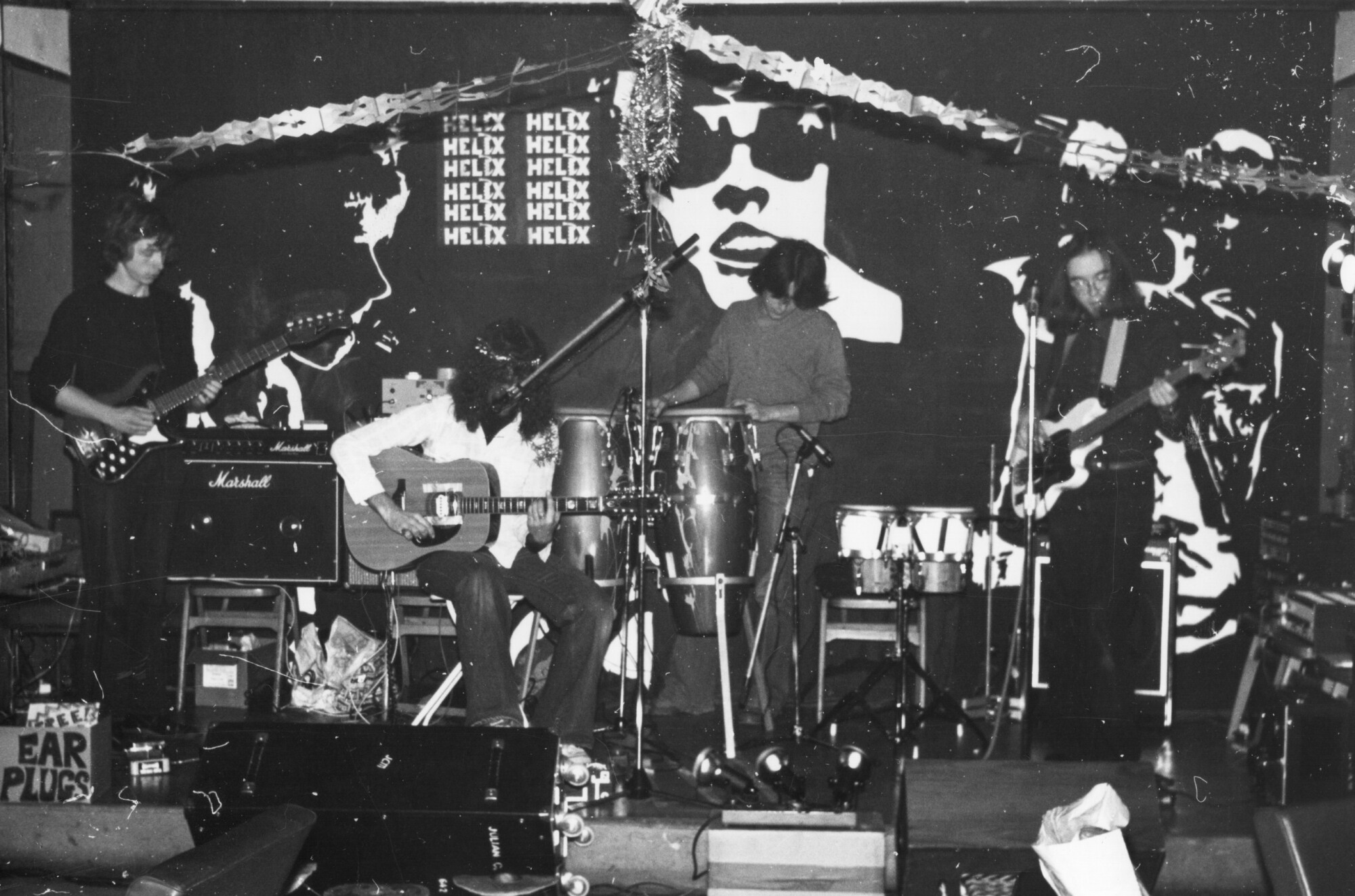

Seelie Court Unearths Helix’s ‘Phoenix’, an Incredible Lost Gem of British Fantasy Rock
Recorded in 1979 and unheard in its intended form for nearly half a century, ‘Phoenix’ reveals the strange electric world Julian Mount created after Weaselsnout.
By the spring of 1979, Julian Mount had travelled some distance from the folk clubs where he had first learned his trade. He was still writing the songs and still playing a 12-string acoustic guitar, but now it was amplified and sent through a row of analogue effects. Around it were electric guitars, bass, synthesiser and percussion. The band was Helix, and they had a name for what they were doing. Fantasy Rock.
Across three sessions at Phoenix Studio in London, on 31 March, 5 April and 8 April 1979, the group recorded the ten songs now gathered on ‘Phoenix’. Mount produced and engineered the sessions himself. Nothing came out at the time.
Nearly half a century later, Seelie Court has unearthed the recordings and released them through Good Time Records. It is a wonderfully difficult album to place. At times it sounds like amplified folk music, at others like progressive rock that has wandered away from the path and found itself in a pub back room. Mostly, it sounds like five musicians building their own peculiar little world without worrying too much about where they fitted in.
I first came across Helix when I interviewed Mount about Weaselsnout and ‘Unsung Lies’. Until then, I thought I had a fair measure of him. Here was the young songwriter carrying an acoustic guitar around Watford, London and the home counties, recording an album in his bedroom and writing songs about friends, cartoon figures and mythical situations. Then he mentioned Helix.
“We played a lot of gigs on the pub rock circuit,” he told me, “and we were a bit weird.”
It was the “bit weird” that stayed with me. Musicians are not always the best judges of their own oddness, but in this case he had put it rather neatly. ‘Phoenix’ sounds very different from ‘Unsung Lies’, although Mount’s distinctive songwriting remains at its centre, now performed by a full electric band.
I should mention that I later wrote the liner notes for both the Weaselsnout and Helix releases, which gave me the chance to hear more of Mount’s story and look closely at the surviving material.
A Guitar You Could Carry
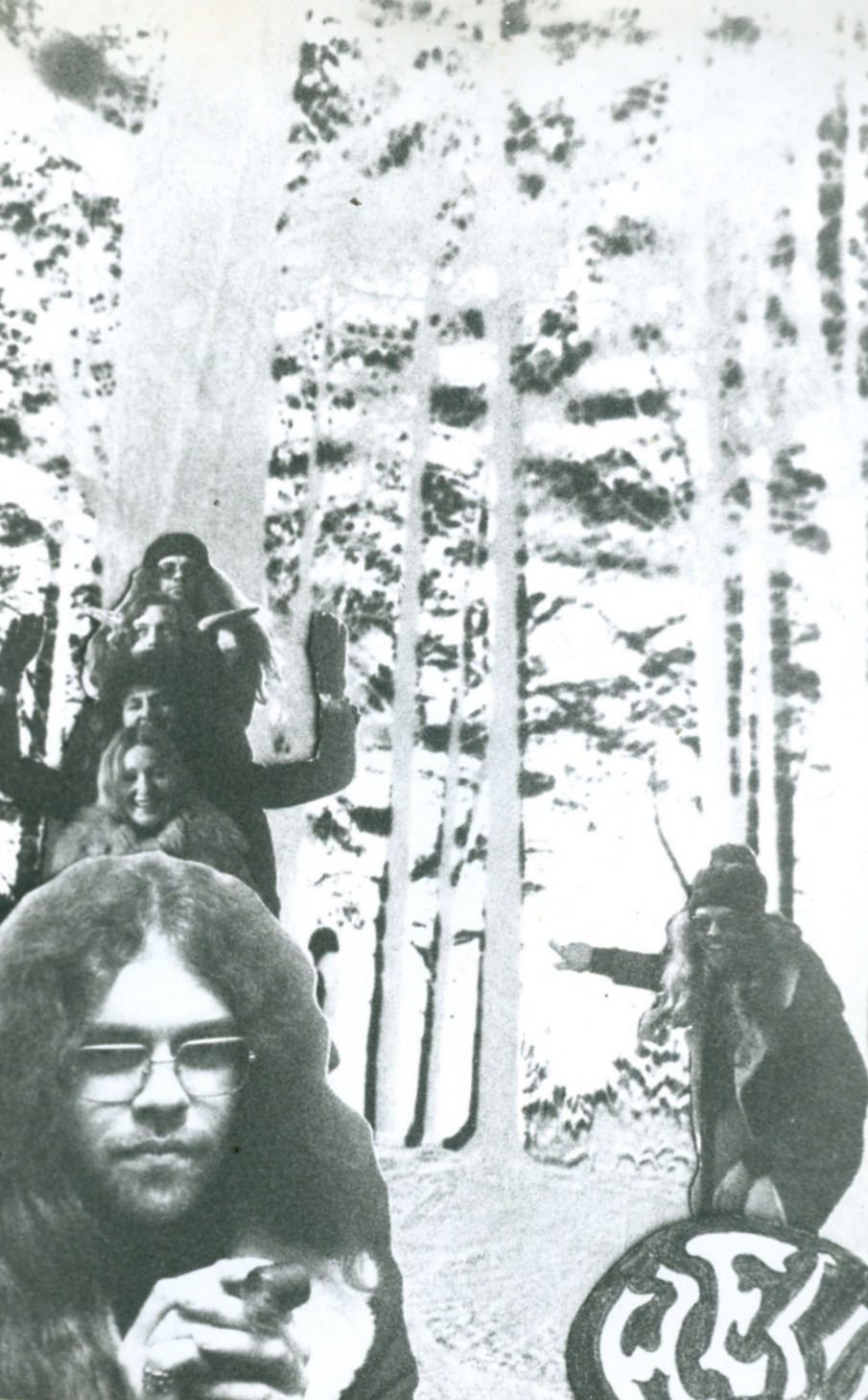
Mount grew up listening to Pete Atkin, Joni Mitchell, Donovan, Neil Young, John Martyn and Joan Baez. He was less impressed by Bob Dylan, despite everyone around him apparently thinking Dylan was wonderful. Mount had his own ideas from the beginning.
“I liked the acoustic guitar because you could take it with you,” he recalled. He could travel into London carrying little more than the instrument and entertain a room with songs sung in his own way.
Back then there were plenty of places to play. Watford alone had eight folk clubs at one point, and Mount played all of them, often as the headline artist. He travelled through London and the home counties, taking floor spots and “hustling for a paid gig”. By the time ‘Unsung Lies’ appeared in 1973, he was performing three or four nights a week.
The reason for making the album was fairly simple.
“I wanted people who listened to my live performance at folk clubs to be able to take my music home with them.”
‘Unsung Lies’ was recorded in 1972 in Mount’s bed-and-music room in North Watford. He used an open-reel tape recorder and one microphone. “Microphone placement was crucial, as you can imagine,” he said. He produced the album himself and took copies to his gigs after its release the following year.
Most of the songs were his own. “I wrote about cartoon characters, friends and mythical situations,” he explained. “I wanted to produce something original and quite unlike anyone else.”
The recording may have been modest, but the imagination inside it was already wandering far beyond the usual folk-club repertoire.
Twelve Strings, Effects Pedals and No Drummer
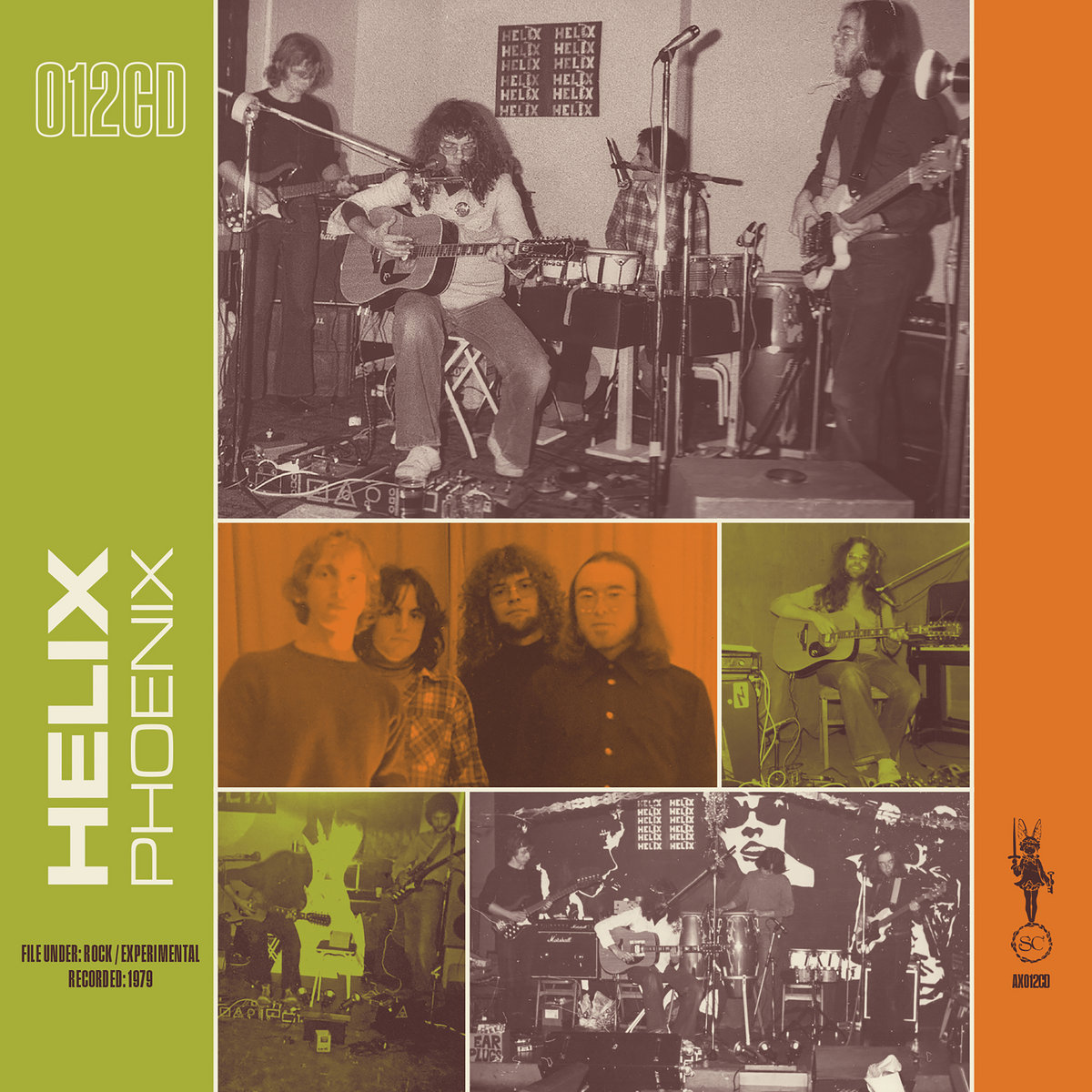
Helix began in the mid-1970s and went through two separate line-ups, with only two members surviving both versions. Mount continued to perform solo while the band was active, but Helix allowed him to make what he called a “bigger sound”.
The line-up heard on ‘Phoenix’ was Julian Mount on vocals, 12-string acoustic and electric guitar, David Barnett on electric guitar, Paul Boizot on bass and electric guitar, Greg Hunter on percussion, and David Wicken on guitar, bass and synthesiser.
Mount’s 12-string remained central to the sound, this time amplified and played through analogue effects pedals. The rhythm came from Greg Hunter, whom Mount is careful to describe as a percussionist, “not a drummer”. The absence of a conventional kit can be felt throughout the album. The music moves and sways where another band might simply have hammered away.
“I can’t tell you who we were like,” Mount told me. “We had a really original sound, which we called ‘Fantasy Rock’.”
The name sounds faintly whimsical until you hear the record. Goblins march across a pebble ridge, a disappointed spaceman drifts through the universe, Lady Howard rides in a coach made from the bones of her husbands, and Lady Macbeth finds herself turned into a modern media figure. Elsewhere, Mount writes about a London bedsit, a doctor’s surgery, New York and a relationship coming apart.
“Helix was an experiment in fusing folk and rock music together,” he said. “Serious songs about all kinds of things, delivered in a memorable and unusual way.”
Three Spring Days at Phoenix Studio
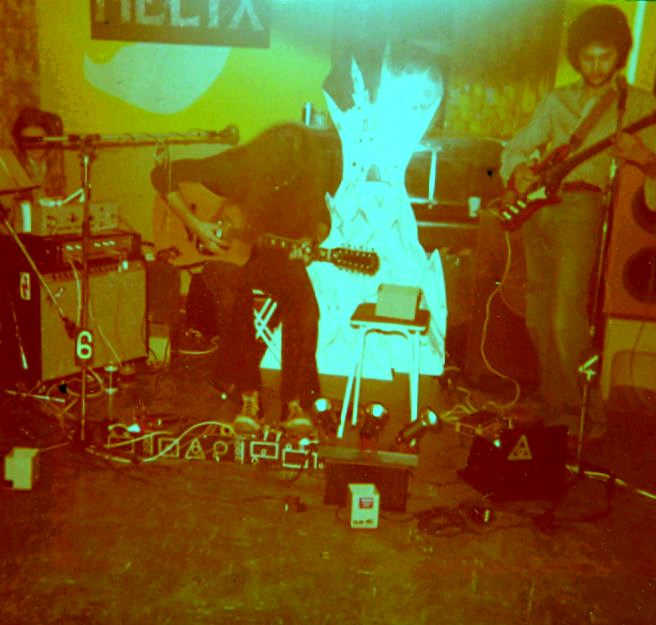
Mount produced and engineered the ‘Phoenix’ recordings himself, just as he had taken charge of ‘Unsung Lies’. A band with an amplified 12-string, a synthesiser and no drummer was unlikely to fit comfortably into any of the boxes on offer in 1979. Helix worked the pub-rock circuit all the same, playing songs that seemed to have arrived from several different versions of the decade at once.
The ten tracks explain Fantasy Rock better than anything else, really.
‘The Goblins of Pebble Ridge’ opens with a ship heading east towards Bristol, the Atlantic close behind and the pebbles at low tide turning into marching goblins. Each new stone marks another sailor claimed by the sea. It has the feel of an old coastal warning, though one that Mount appears to have dreamed up himself.
‘Black Velvet Sea’ points in the opposite direction. A childhood wish to fly rocket ships ends with the traveller stranded somewhere in deep space. Mount’s universe is not sleek, it’s more lonely and beyond rescue.
Then ‘Kensington Muse’ brings everything back to London. This is fantasy too, but it has traffic outside and an eye on the clock.
‘Madness in My Eyes’ begins with a visit to the doctor and a conversation about who is entitled to call anybody mad. The joke soon darkens as the narrator looks beyond his own diagnosis to war, deceit, false love and death. Mount often approaches a large subject through an ordinary encounter, and here it begins with a waiting room and the sound of the receptionist’s buzzer.
‘Big Apple City’ imagines New York through yellow cabs, neon, police precincts and “plastic faces”. The city attracts and repels him in roughly equal measure. It is somewhere to dream about, but perhaps not somewhere to trust.
The strangest turn comes with ‘22nd Century Renegade’. Its narrator travels across a million years and returns as a forgotten father or fallen god. The old divine names have disappeared, while his own has been reversed into “Dog”.
‘Lady Howard’s Night’ reaches back into English folklore. Mount retells the Dartmoor legend of Lady Howard, who rides after midnight in a coach fashioned from the bones of her dead husbands.
‘Something’s Got to Give’ strips all that away. Two people have hurt each other and are trying, rather awkwardly, to talk again. It is one of the album’s plainest songs and one of its most human.
‘Dimensions’ starts as a love song and gradually finds its way to an overcrowded tea party with Alice, the Hatter, the Dormouse and the March Hare. The final track, ‘Lady Macbeth’, pulls Shakespeare into the world of cameras and a smile that may be no more than stage direction. Mount’s “media princess” sounds remarkably at home in the present day.
What connects these songs is Mount’s habit of looking at ordinary things sideways. A doctor becomes an authority on sanity, a stretch of pebbles becomes an army of goblins, and a Shakespearean actress becomes a creature of the screen. Helix gave him more colours, and he used nearly all of them.
The Record That Never Appeared
Helix played widely but found little encouragement from the record business. Mount describes the band as “true underground stuff, which didn’t appeal to mainstream record companies at all”.
“It was a struggle getting our music heard and noticed,” he said, “but we did our best with the resources available to us at the time.”
When the second version of Helix came to an end, Mount briefly played in a duo called Science Fiction before returning to solo work. His songs changed during the 1980s, leaving much of the fantasy and teenage unease behind in favour of the quirky humour that still runs through his writing today.
The Helix music was not entirely lost. The band’s bass player recorded rehearsals on open-reel tape, leaving what Mount calls “hours and hours” of material. The ten studio recordings survived too, but the album they might have formed never appeared.
That makes ‘Phoenix’ rather different from ‘Unsung Lies’. An original copy of the Weaselsnout album once reportedly sold for £1,250. ‘Phoenix’ has no first pressing, it has had to wait nearly half a century for its first proper release.
Seelie Court now presents all ten tracks on CD, while the vinyl edition offers a seven-song sequence chosen for the format. Issued through Good Time Records, the two editions finally place Helix where it belongs in Mount’s musical story. It is odd, tuneful and entirely itself. So nearly half a century late, Helix’s Fantasy Rock finally has an album of its own.
Klemen Breznikar
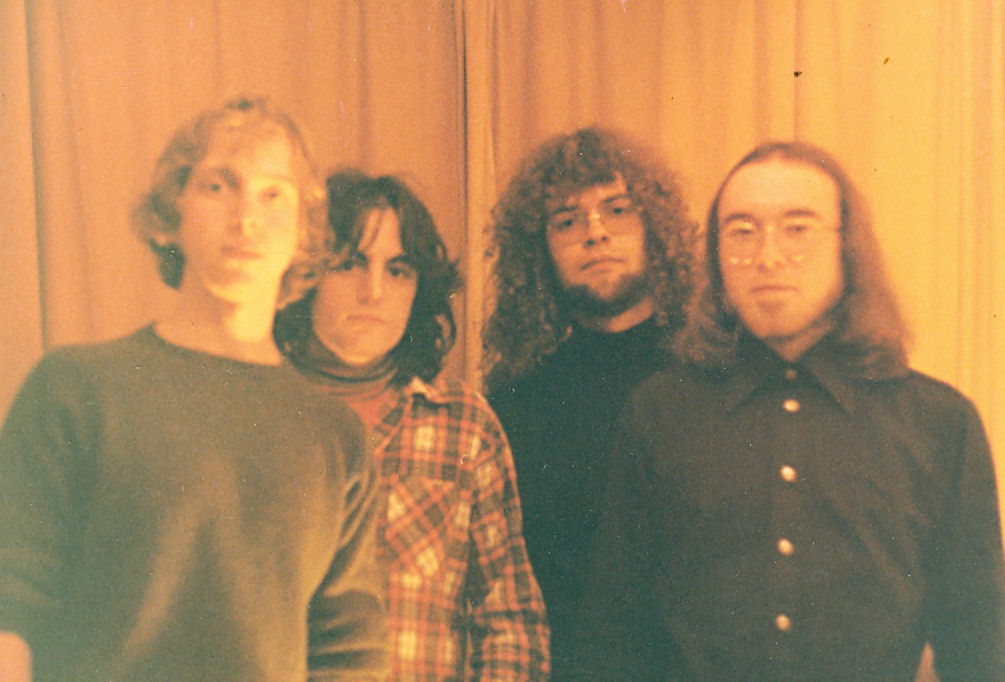
Headline photo: Helix (1978) (Credit: Seelie Court / Good Time Records)
Julian Mount / Bandcamp / SoundCloud
Seelie Court Facebook / Instagram
Good Time Records Website / Facebook / Instagram
Unsung But Not Forgotten: Julian Mount, Weaselsnout And The Private Press Afterlife Of ‘Unsung Lies’

Julian Mount is also on YouTube as “Julian Mount Music”