
Howard Eynon on ‘So What If I’m Standing in Apricot Jam’, Spectangle and ‘Mad Max’ | Interview
Howard Eynon discusses his 1974 album, the musicians and theatre people who helped make it, his film work and the record’s rediscovery decades later.
Howard Eynon was born in St Ives, Cambridgeshire, and grew up on a dairy farm near Deloraine, Tasmania, after his family moved from England to Australia. He won Australia’s ‘New Faces’ in 1971 and worked in theatre before meeting Nick Armstrong at Spectangle Studios in Hobart. The two recorded ‘So What If I’m Standing in Apricot Jam’ in 1974, with Eynon’s distinctive twelve-string guitar playing at the centre of an album full of strange characters, humour and songs drawn from everyday life.
The album received little attention when it first appeared, but gradually became a sought-after record among collectors. Eynon also worked extensively in Australian theatre and appeared in films including ‘Mad Max’ and ‘The Man from Snowy River’. In 1976, he performed before Hunter S. Thompson during the writer’s Australian speaking tour. Decades later, his album returned to circulation through Buttercup Records in Australia and Earth Recordings, the reissue imprint of Fire Records, internationally.
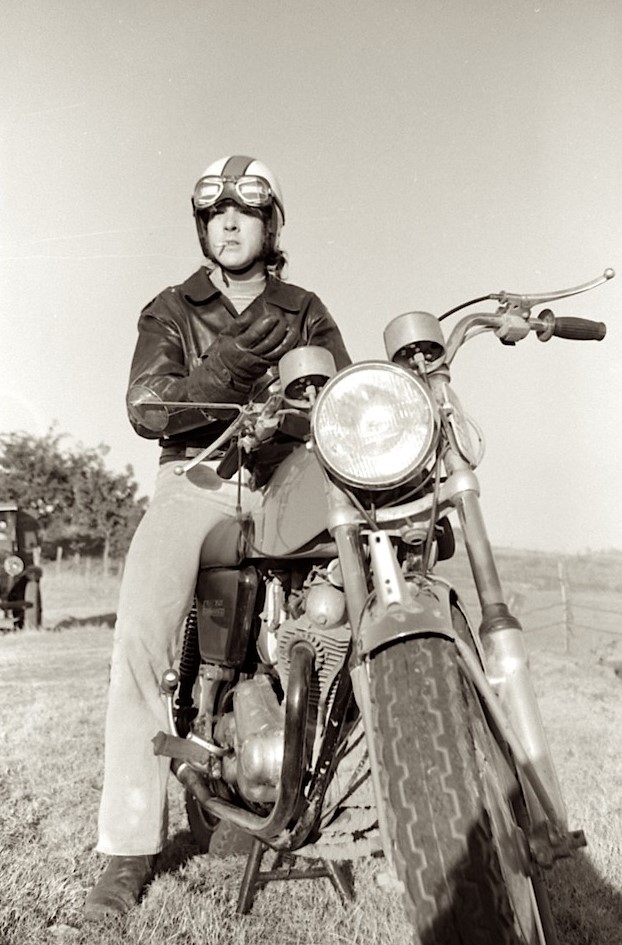
“I’ve just made a life habit of being under the radar. An analog man in a digital world.”
My memories begin from about age three or four. I remember Chichester well, and our house between Emsworth and Southbourne where we moved later. I remember the surrounding fields, streams and ponds I used to play in whenever I had the chance. I remember being sent to Sunday school around when I was seven or eight. Also the Southbourne Anglican Church choir for a year or two before we left for Australia.
My sister Sonya was 12 years older than me, so was like having a second mother. She helped expose me to culture in many different ways, took me to shows and movies and kept me supplied with great books as I grew up. One early book of poems was called ‘The Golden Staircase’. I read some of them over and over.
But it was also a culture of radio, cinemas, theatre and 78 rpm records. I can remember at age eight being glued to many half-hour radio shows. ‘Journey Into Space’ was one. The sound effects alone were enough to transport you. There was a range of comedy shows, including ‘Hancock’s Half Hour’ and ‘The Jimmy Edwards Show’, but nothing compared with ‘The Goon Show’. Spike Milligan, Peter Sellers and Harry Secombe, with the outrageous wit of this team and the multiple characters they produced between them. It was the same humour that morphed into ‘Monty Python’s Flying Circus’.
Mum played piano, loved theatre and had the challenging roles of being wife to a military man and full-time carer for her mother, who lived with us in a wheelchair and was unable to speak due to “nerves” from the bombing raids during the war.
My dad, who was posted overseas a lot, was behaviourally unpredictable when he was home. He was a man of extreme mood swings, having been badly injured during the war. Hard going sometimes, but fortunately both parents had a sense of humour.
I loved England as a kid. It was easy to get out in the fields, play around ponds and streams. I was interested in nature in general, birds, newts, frogs and tadpoles. I loved fish and the idea of fishing, but had never been shown how to do it.
Did Tasmania feel like an adventure when you arrived at eleven, or did you miss England? What was life like on the dairy farm near Deloraine?
A bit of both. I think it fed my imagination because it was totally different, with strange wild animals and raw untouched country called “the bush”. When we first arrived in Deloraine, we stayed with my mother’s brother, Don, and his family. They lived next to the Meander River and my uncle occasionally took me trout fishing. When I actually caught one for the first time, it slipped out of my hands and back into the water. Apparently I jumped in after it.
Then the farm came along and it was a boy’s world. You could do anything as long as you didn’t hurt anyone or damage property. I loved driving tractors, working paddocks, milking cows, rearing calves, feeding pigs, cutting hay, making silage and disappearing into the bush. Our neighbour Frank was an old man who worked his paddocks with a Clydesdale horse called Prince. I used to hang out with him sometimes. He could plough a perfectly straight line with Prince.
I was friends with a couple of the farmers’ sons around the place. Established farmers who’d give us help and advice from time to time. We were the English ring-ins, certainly not born on the land. Still, we had 40 beautiful cows, pigs, chooks, ducks and pigeons and a creek running through the place.
I was roughed up a bit at school for my posh pommy accent and caned for misdemeanours, but still have fond memories of the Deloraine school.
Your father had an unusual way of tuning the guitar, and you carried that over to the twelve-string. How did you begin writing songs in that tuning?
Maybe the songs grew from the sound of the guitar. The old one lying around had Dad’s tuning, which he’d roughed together himself during his years in Iraq singing bawdy songs with RAF buddies. As time has passed, the guitar is often the catalyst for words that end up as a song.
At the time, I didn’t have any connection with anyone who played guitar, so kept making chords up in that tuning. It’s a terrible tuning for a six-string, but when I brought the twelve-string in, it had a different voice which I really liked.
After leaving the farm, you worked all sorts of jobs and travelled across Australia, eventually joining the RAAF. How did you end up joining the RAAF?
The first job I ever had was night shift on a pea-viner about 20 km away from the farm. The shift was 10 pm to 6 am and involved pitchforking pea vines brought in by trucks onto a conveyor belt all night. At the end of the first night I fell asleep riding the bike home and woke up on a gravel patch, just avoiding disaster. The adrenaline shot got me home.
I left the farm shortly after and went to work for Comalco at Bell Bay, but that was around 1964. I began playing in a duo with an art teacher, David Voigt, under the name ‘David & Howard’. I moved to Hobart and had a job with the Animals and Birds Protection Board for a while, met a beautiful girl who worked in the library and got engaged, only to get cold feet at the last minute. I moved to Melbourne and stayed with my sister and her husband.
To go through the different jobs would take too long. It was a time when jobs were plentiful. William Hortan & Co Ltd was a Melbourne wool trading company where I learned to play poker round the morning tea and lunch table. At one stage I was driving a Mr Frosty ice cream van in Sydney. Another time during the Vietnam years, I applied for the RAAF.
In ’68, a friend and I drove to Queensland and worked on a cattle station for a while. Then up north to the Noonamah pub for a couple of weeks before Darwin, where I got a job with Shell, bunkering (refuelling) ships at the wharf. We met and lived with some amazing characters there. It was frontier stuff.
At the end of the year I received a letter saying I’d been accepted into the 69 BFTS pilots’ course at Point Cook. They flew me down first class for induction. I had no intention of dropping bombs on anybody but liked the idea of the training.
I enjoyed the six months of ground training. Then, during study for the aerodynamics exam one evening, I subconsciously doodled a coffin with a set of wings and air force roundels and pinned it on the wall. They checked the rooms every day. I was sent to see a shrink who asked if there was any history of suicides in the family. Then they booted me out. I was devastated, but figure it likely saved my life. Two years later I read in the paper an obituary for my good mate Ronnie Betts, shot while co-piloting an Iroquois in Vietnam.
Your first attempt at ‘New Faces’ didn’t go particularly well, but you ended up winning the national final in 1971. How did that happen?
It was all live television in those days. Melbourne had a TV talent show called ‘Kevin Dennis New Faces’. KD was a car dealer. Sydney had an equivalent show. The winners of the local shows would go into the national ‘Australia’s New Faces’.
I entered the local Melbourne one and decided to play the Beatles’ song ‘Blackbird’. With my different tuning this was never going to sound exactly the same. However, just before going on live, I had this wild idea to change the key without using a capo. The result was fairly catastrophic and they hated it.
Sometime later, the job I had working for Kalamazoo took me to Sydney for training. So I entered the local New South Wales ‘New Faces’. This time I sang Simon & Garfunkel’s ‘Homeward Bound’ and won the heat.
I returned to Melbourne and at some point played in the first heat of the national ‘Australia’s New Faces’ (representing NSW), singing ‘California Dreamin’’, and won that. I think there might have been another round but one way or another, I ended up in the grand final with 12 finalists.
Over the previous months I’d been going to drama classes with a lady called Natalie Raine, who was well known in the Australian entertainment business. When she found I was in the final, she helped me block out how I was going to present the song.
Interesting what happened. There was a 36-piece orchestra. My setup was two circular stages, an upper and a lower one. The lower one had a microphone stand, guitar stand with guitar and a stool in front of the mike. That lower stage was also surrounded with a ring of light bulbs, the old-fashioned kind that push and twist in.
The setup was to start the song on the upper stage with a handheld mike, the first verse slow and meaningful. At the end of the verse the orchestra picked up tempo with four bars in the same key, then another four in a key change, and during those eight bars I had to step from top to bottom stage, put the mic in the mic stand, pick up the guitar, sit on the stool and play a single note precisely on time. I think they gave me two rehearsals and on each of them I missed it by two or three beats, which would’ve killed the performance.
So it came to the live take.
At the end of the first verse, as I stepped down to the lower stage, I trod on a light globe which sort of “exploded” up my leg. My mind went blank.
The next thing I knew I was sitting on the stool, guitar in hand, mic in the stand and two beats left to play that note, with no memory of how I’d got there. The song went well, but the last thing I expected was to win the night. I hadn’t prepared for that.
The presenter called me up and was talking his stuff, but I was still in shock and forgot to thank Natalie for her help.
The following year I found myself in the entertainment business with Channel 9’s ‘Sound of Music’, one of the six Claire Poole Singers. As far as how comfortable I was with the singing and dancing, it was challenging but it taught me a lot.
You were accepted by NIDA, ‘Jesus Christ Superstar’ and the Queensland Theatre Company. Why did you choose Queensland?
It seemed more of a practical decision. Suzie and I had been in Sydney for a year and the Channel 9 ‘Sound of Music’ show I’d been employed in had come to an end. I auditioned first for NIDA with a piece from Edgar Allan Poe. Then for ‘Jesus Christ Superstar’ and finally QTC. When I found I’d been accepted for all three, I turned down NIDA first because it felt like going back to school, then ‘Jesus Christ Superstar’ because we’d already been in Sydney for a year and the city wears on country folk. So we decided on the Queensland Theatre Company.
They also offered Suzie a job so she could tour with us. What an incredible year that was! We were doing a schools tour with three productions, ‘Antigone’ by Jean Anouilh, a romping revue by Michael Boddy called ‘Living off the Sheep’s Back’ and an anthology of poetry and song.
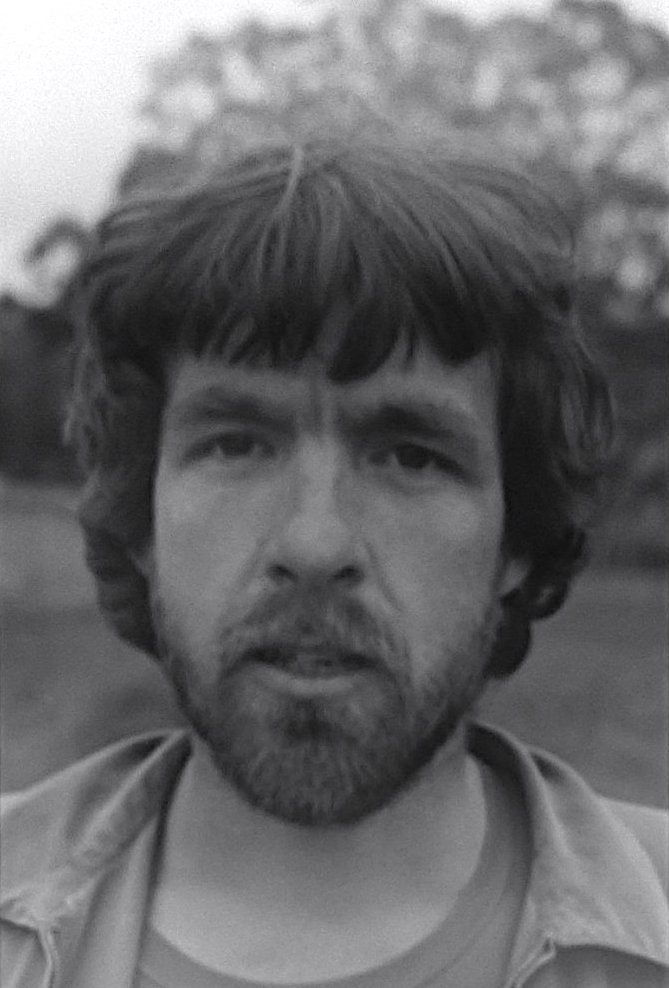
You shared a house in St Lucia with Bille Brown, Geoffrey Rush and Trevor Smith. What was life like there, and what do you remember about the weekends at “the farm” outside Brisbane?
I’m very grateful to Trevor Smith for inviting me into this house for the six weeks we were rehearsing. The year was a life-changer. Surrounded by these talented, switched-on people, I felt like the boy from the bush and did my best to adapt.
Things would happen with a certain flair. There were two other guys living there, Peter someone and Nick Langton (the dark intellectual) with his girlfriend. I remember dinner one night: dishes were brought to the table. Bille put on a well-known piece of classical music and then stood on a chair conducting with the professional intensity of Sir Malcolm Sargent, while the rest of us made our way to the table religiously in time to the music.
We used to visit a place just outside Brisbane known as “the farm”. Johnny G rented the house there and I remember spending many weekends there. This was where psychedelics found me, pure acid in the form of “orange barrel” and “mellow yellow” and Cubensis or gold top mushrooms.
Boundaries dissolved.
Some time later, Allen Ginsberg visited “the farm” and wrote his signature in large letters on one of the walls. I heard that when Johnny left the farm, he took the wall with him.
There’s a lot of acting in your songs, even when you’re the only person singing. Did your theatre work have something to do with that?
Songs seem to come accidentally from somewhere. I’m often aware I’m speaking through a character. Maybe having been an actor for a time helped that happen, I’m not sure. Or the influence from my sister and her love of Edward Lear, Lewis Carroll, Gerald and Lawrence Durrell and others. Tolkien and Douglas Adams all affected me. Or the different personas that form our personalities? Otherwise I’m thinking you may well be right!
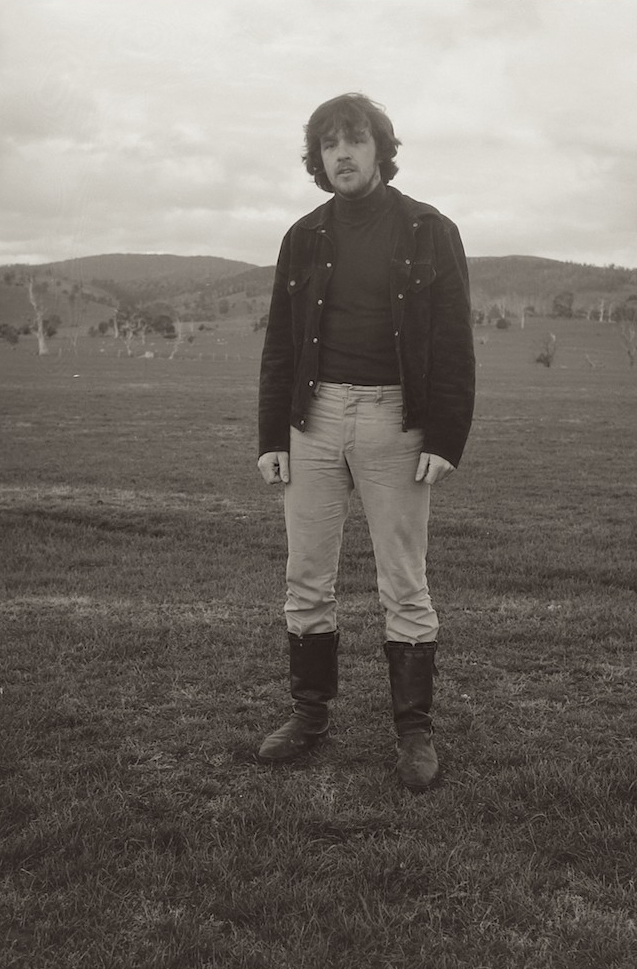
An assignment for the Tasmanian Theatre Company took you to Nick Armstrong’s Spectangle Studios. Which play was it for, and what happened at that first session?
That year we did four or five plays. Wilde’s ‘The Importance of Being Earnest’, Wesker’s ‘Roots’, Buzo’s ‘Rooted’ and maybe Hampton’s ‘The Philanthropist’. I think it was for ‘Rooted’ that they asked me to record some guitar music. They took me to Spectangle Studios where I met Nick. I improvised a couple of tracks and the production was happy with them.
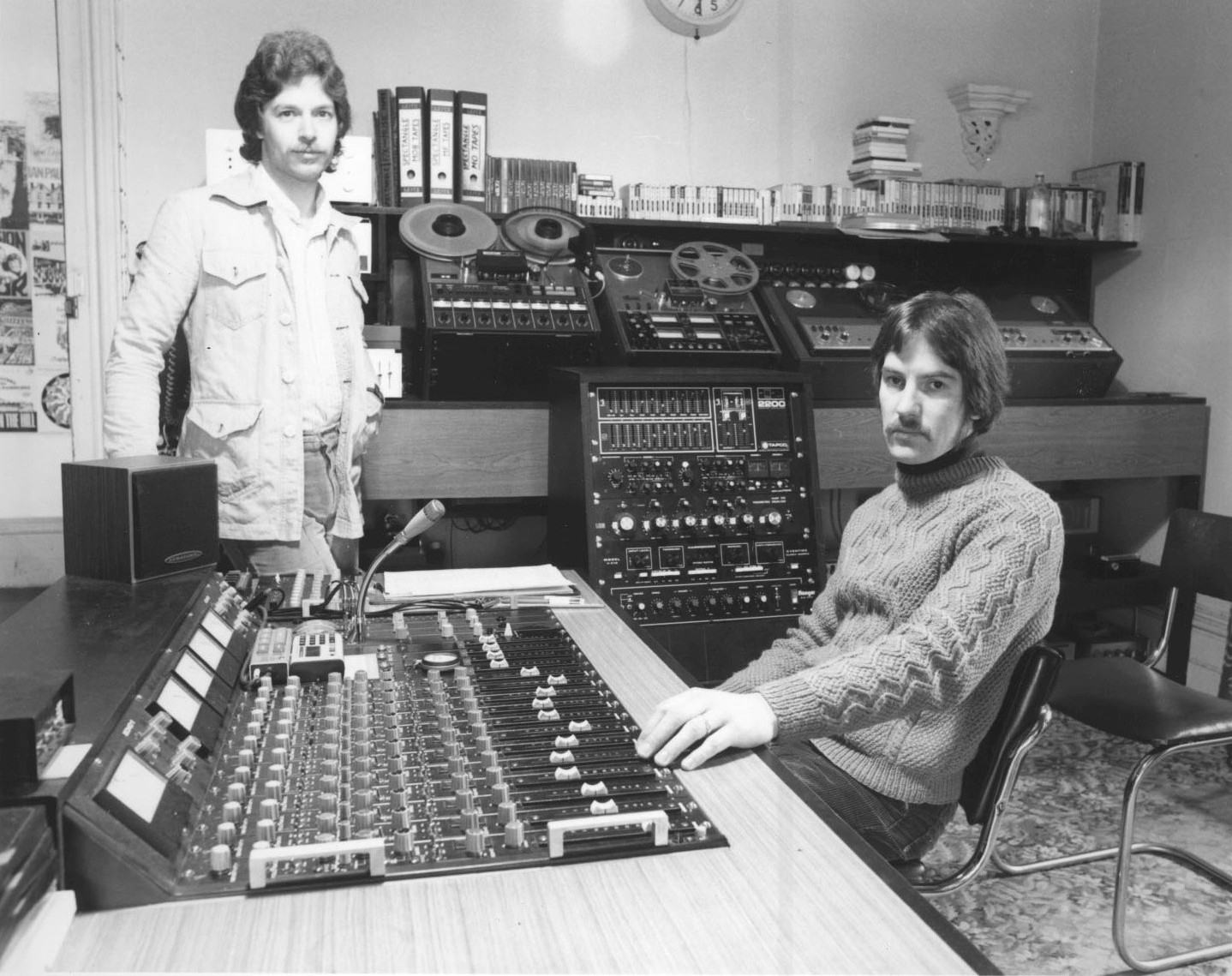
When did Nick suggest making an album? What made you trust him with your songs?
The theatre piece was recorded during the period when Nick was making albums for people. One day he asked me if I was interested in making an album. He was going to fund it and it seemed a great idea. What made me trust him was his whole manner. He must have had a bit of an idea of my songs.
Were the songs mostly finished when you started recording, or did some take shape in the studio? How did ‘Village Hill’ come together?
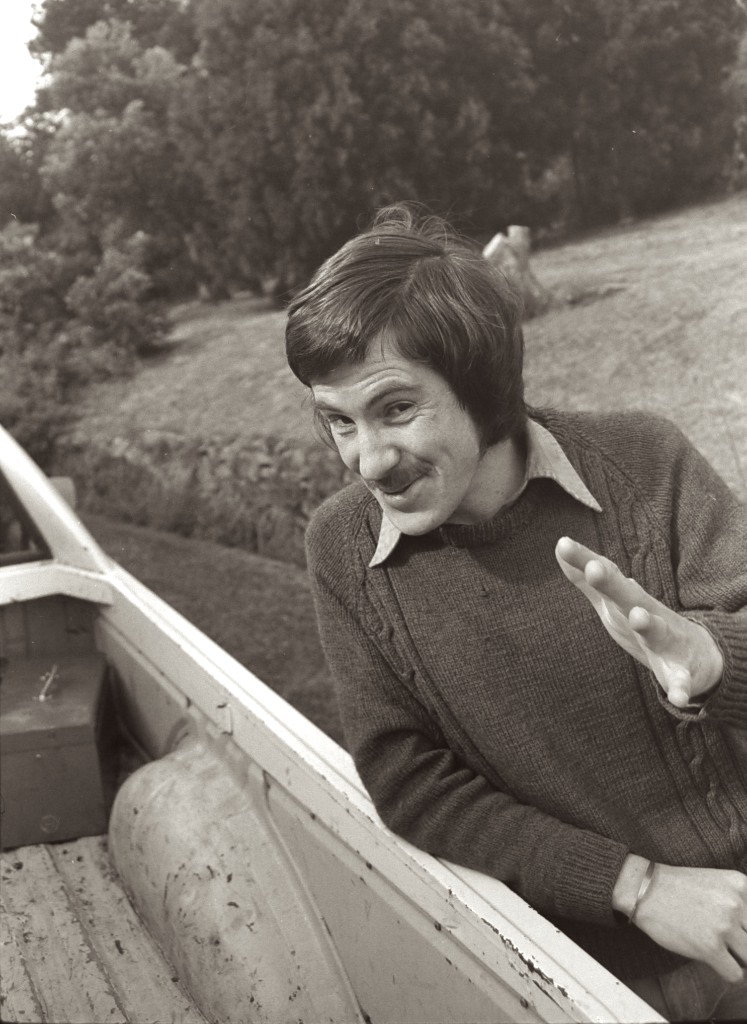
I had a number of them complete and had been gigging around Hobart. Others gelled during recording. ‘Village Hill’ was written at my parents’ place shortly after having walked up that hill next to Richmond. I was on the floor of the living room in the middle of the night with pen and paper. I’d find a flow, then fall asleep, then wake up again with another verse. Must have taken a couple of hours.
Peter Daly had been staying with us for a while with his viola. We sometimes played gigs together. When we did ‘Village Hill’, Peter just swept it away with that extraordinary viola improvisation.
Recording-wise we achieved exactly the time frame Nick had set and completed everything in May.
What was Nick like to work with? Did he generally leave you to follow your own ideas?
Nick was the best around with a great reputation and able to achieve any effect or change you might dream up. Nothing was ever said about how the record should sound. It was just allowed to happen. We worked well together. Or maybe it was his professionalism that caused him to be so easy for an artist to work with. While entirely different personalities, in the studio zone we were talking the same language.
Who else was around Spectangle during the sessions? I’d love to hear more about Alf Properjohn and Ian Sherrey, as well as Garth Tompkins and Luke Swann.
Probably not everyone now. Ian Sherrey was working on the technical side under Nick. Nick brought in Alf Properjohn, a highly regarded drummer, initially for ‘French Army’ then for all tracks requiring drums.
Garth was and still is an extraordinary person who was a close friend of Luke Swann’s at the time. We’d all met in Brisbane the previous year. We’d become good friends and I’d been offered a theatre contract in Hobart the following year. Garth and Luke decided to come down to check out Tasmania. I think we drove down together in a van.
“We were all in a magical headspace at a magical time.”
Did the other musicians work from written parts, or were the arrangements worked out by ear? What do you remember about Ian Cugley and Peter Daly’s contributions?
To the best of my memory, most of the musicians worked by ear but some may have written guides.
As far as hearing a song differently, I think I was affected by pretty much every musician playing with me. I was generally a solo guy. Working with these other musicians was a new and stimulating experience.
Ian Cugley, who was with the Conservatorium, was wonderful support in so many ways. I used to stay at his place some days. He had an interest in helping me understand more about what I was doing. I remember his beautiful family, and him playing the Mellotron in ‘Now’s the Time’. He also had access to a synth for the up-sliding section of the song and I remember playing it while Ian recorded it.
Peter Daly’s contribution to ‘Village Hill’ blew me away, totally changed the piece. Nick’s ideas frequently added something meaningful to various moments.
We were all in a magical headspace at a magical time. The environment of my friends and the theatre contributed to the album just happening.
You were living near Richmond with Suzie and your young son Dylan, with musicians and artists often coming through the cottage. What was a typical day like at the cottage?
We all just fitted well together. Luke was a wonderful, zany artist. If he wasn’t perched on the back of chairs sketching someone or rolling a joint, he’d be playing guitar and making up Tolkienesque tunes like his Tom Bombadil song where he put a tune to one of TB’s poems.
It really felt to me like living in a version of Middle-earth. Outside was the “muggle” world, to mix metaphors. Working in theatre gave me two fantasy worlds to play in.
How did the cover artwork come together? Did you give Luke and Suzie much direction?
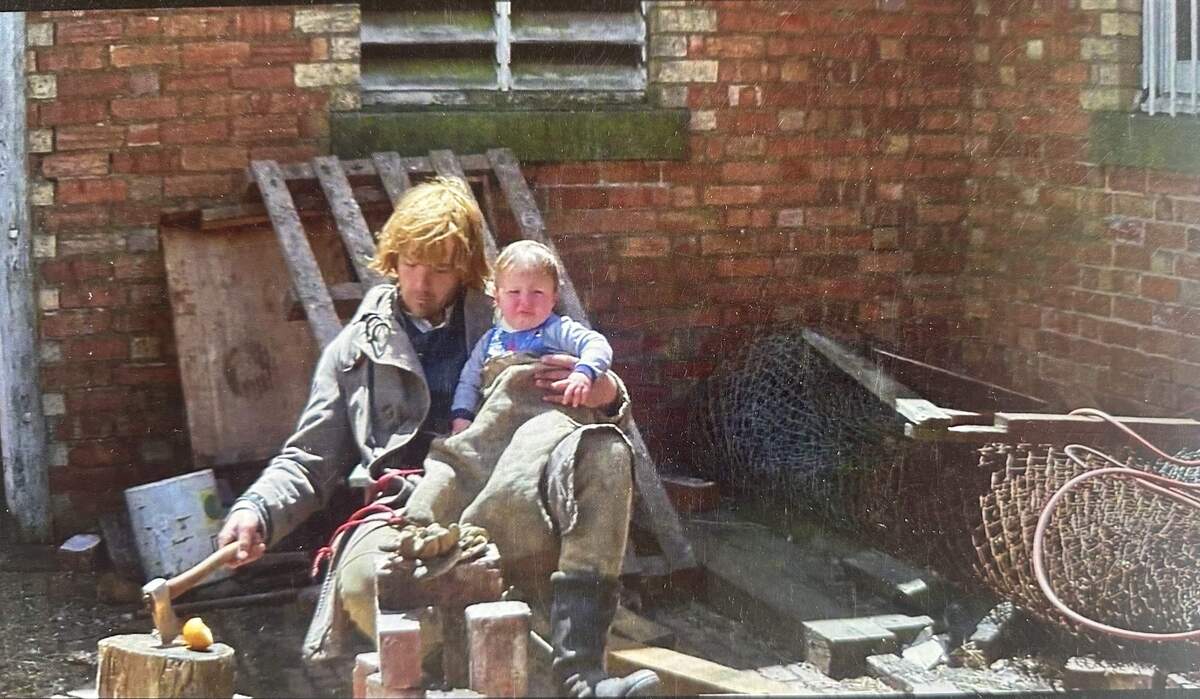
The only direction I offered was, “Please make it orange, black and white.” I loved the finished look. Suzie and Luke took care of that.
And how did you end up standing in apricot jam?
Suzie used to cook bread in the big old wood stove we had and we’d sell her loaves at Salamanca Market. One morning I was standing looking out the window, deep in thought. Suzie came by and put a slice of toast with apricot jam in my hand while I was still in a dream. When I went to move I found the jam had trickled down my sleeve, dripped onto the floor and I was standing in it.
I thought, “So what…!”
No idea if that name affected sales.
Where did all those strange names come from? I’m particularly curious about ‘Wicked Wetdrop, Quonge and Me’ and ‘Hot B.J.’
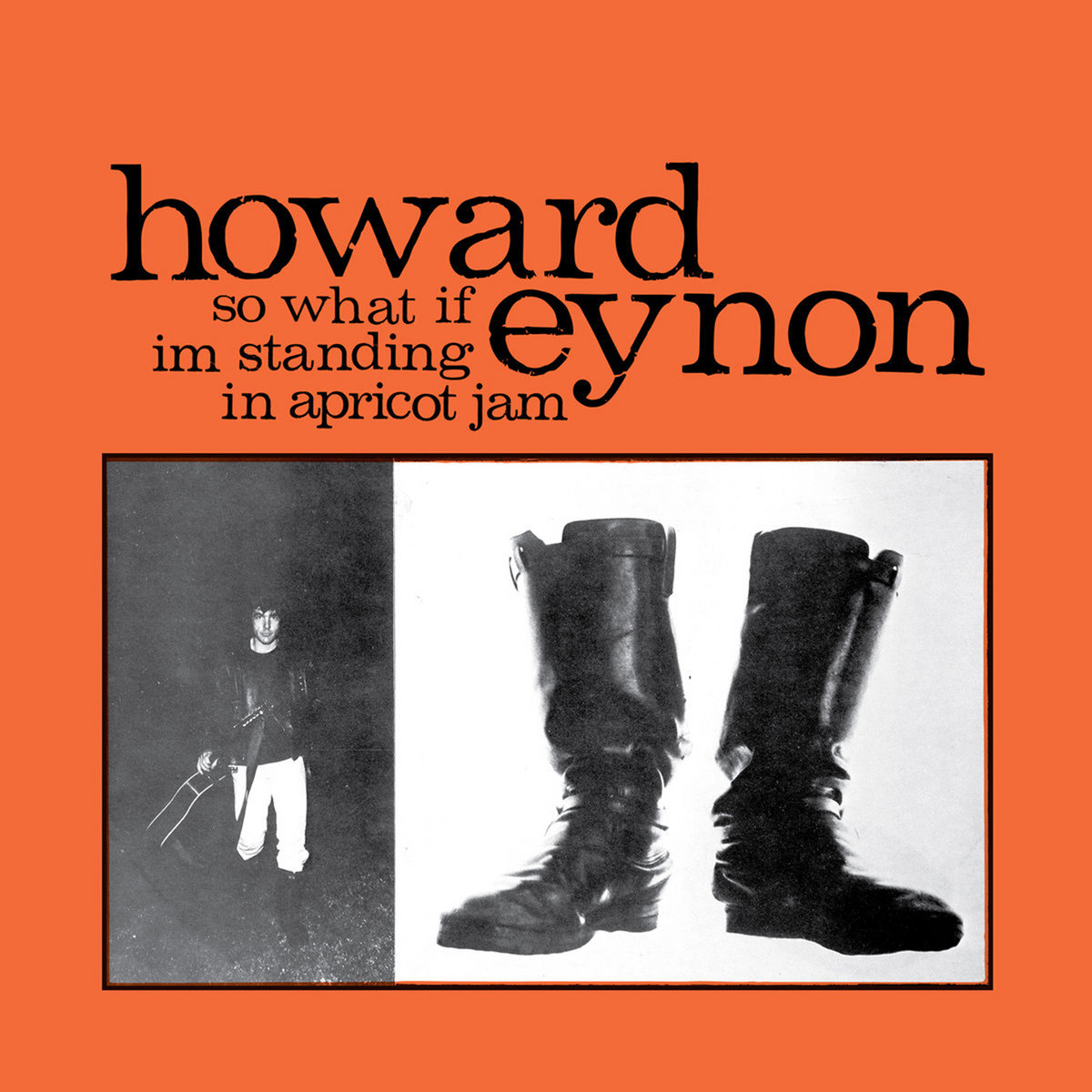
Not real people but many real moments. Those influences were definitely present, along with the company we kept.
‘Village Hill’ describes the actual experience. I’d spent the night with some friends in a house at the bottom of the hill and was feeling seedy, so decided to go for the walk.
Our son Dylan had been born during rehearsals for Oscar Wilde’s play. The stage manager’s mum used to work in the box office and one evening she presented me with a gift she had knitted for the baby. It was like a very colourful platypus. I thanked her and, looking at it, said, “This is a quonge!” The song came after that. I was a big fan of hot blackcurrant juice back then!
What was behind ‘Boots & Jam & Heads & Things’? And what happened in Brisbane that led you to write ‘Roast Pork’?
‘Boots & Jam & Heads & Things’, I guess, was a celebration of being in the present moment, and the revelations of the amazing Cubensis gold top.
‘Roast Pork’ came from a Brisbane memory when I’d been walking along a road late at night. There were a couple of Aboriginal guys a few metres in front of me. Suddenly a paddy wagon drove up and stopped next to them. Two cops jumped out, grabbed them and threw them in the back and I heard them say, “Resisting arrest and abusive language!” These kids had been doing nothing but walking along a road. It really pissed me off, hence the song.
What prompted ‘French Army’? Did you ever think of yourself as a political songwriter?
I always had the feeling there was something amiss, something not quite right in the world. Today that “something” has clearly shown its face.
In the early ’70s the French were testing their nuclear bombs on Mururoa Atoll in the Pacific Ocean. Nothing humorous about that, but ‘French Army’ was my little way of saying this is so wrong!
I also think some things can be conveyed better with nonsense than with so-called sense.
Where did ‘Commitment to the Band’, ‘Good Time Songs’ and ‘Shadows & Riff’ come from?
‘Commitment to the Band’ is funny inasmuch as I never had a band, but it applied to the company I was in.
‘Good Time Songs’ came straight out of a night playing eight-ball in the Richmond pub. This kid came up to me while I was buying a beer and said exactly those lines: “I play on the local eight-ball team…” It made me think of the “straitjacket” of the system.
I understand that a population of our size requires just and intelligent application of the rule of law. But if the justice system and levers of power fall into the hands of criminal cartels, we are led into a cycle of dysfunction.
‘Shadows & Riff’ reflected everything I’d learned from life so far. We and the whole universe are an interconnected vibration of Divine Love!
Did you and Nick decide on the running order together? And can you clear up the confusion over the Basket and Candle labels and when the album was first released?
I think Nick and I worked through the running order. My friends had input into that as well. Then I made the call.
It was recorded in ’74 and released the same year.
I understood record companies play around with different labels, so Nick’s labels were just a thing for me.
Do you remember how many copies Nick had pressed? Was the album getting much attention at the time?
Initially I think only 500 or 1,000 copies, and then later the same again. Everything was kept at Spectangle. I had nothing to do with that side of it so I could be wrong. I don’t think anyone bought a copy from me during the ’70s because I didn’t sell them. It had radio exposure and they were sold in record stores.
Dylan still has the master copies.
You’ve told a curious story about a booking agent calling after a radio interview with Mick Jagger. What do you remember him saying?
The Stones came to Australia again in 1973. I thought it was later because that’s when I was full-time in Melbourne, but I used to travel back and forth over the years.
Whenever it was, they’d been staying at Montsalvat, an elegant castle-like colony established in 1934 by Justus Jörgensen in Eltham. I’d been there a couple of times and played in what was known as the Grand Hall. I’d also met Justus’ son Sebastian a couple of times.
Anyway, the guy that was booking me gigs in Melbourne called me in an excited state one Saturday morning and asked if I’d heard the interview with Mick. I hadn’t. Apparently the interviewer asked Mick one of those questions like, “And where are you going while you’re in Australia?”, and the response from Mick was, “We’re thinking of going to Tasmania to check out the apricot jam.”
How did you come to perform before Hunter S. Thompson at the Sydney and Melbourne town halls in 1976? What were those evenings like?
There were two performances, one in the Sydney Town Hall and the other in Melbourne Town Hall. A friend, Chris, was contacted by a fellow called J. J. McRoach who had organised Hunter’s tour. He was also a part of the Australian Marijuana Party which was around for a while. Both places were packed with bikies, journos, politicians, artists and writers. My Sydney show went really well. The Melbourne one I was a bit thrown when I saw in the front row a man named Barry Jones who I’d grown up watching on TV.
There was a lot of talk at the time about the light aircraft flight that took J. J., Hunter and company from Sydney to Melbourne, flying through thunderstorms with cocaine, which they had mixed with water for some reason, sloshing about on the floor. We went to a party after the Melbourne show but I never got to spend meaningful time with “the duke”. A lot of competition for his attention.
You kept writing after the album, but a second record never appeared. What else was occupying your time in the late seventies?
Music and theatre connect for me through working with live audiences.
I was writing a lot of the time. I even began a “rock opera”, which sadly is still a work in progress. A lot of the stuff I wrote back then I’ve been using recently. Pages of poetry, scripts and so on would find their way into boxes and become stained and nibbled by mice. I had many dreams which I used as sources for songs.
In the latter half of the seventies we were sort of share farming an acreage on Mount Macedon, owned by a Tasmanian lawyer. I always got distracted by the land.
We had six or seven horses and I built a two-storey stable there with dormer windows!
Previously we’d bought a Clydesdale/Percheron cross mare with a foal at foot from Metro Dairies who used to deliver milk around Melbourne in milk floats. We gradually collected equipment and saddlery to work them. We had a vague hippie plan to travel around Australia in a gypsy caravan pulled by horses. (Sigh)!
How did you get the part of Diabando in ‘Mad Max’? What was it like being part of that shoot?
I used to do quite a few Crawford shows. At some point I was involved in a pilot which was to star Bert Newton, a well-known personality of the day. During the shoot I met Hugh Keays-Byrne, an English actor who had done time with the Royal Shakespeare Company, in other words a real actor. We got on together. He and his lady Stina came to the Hunter S. Thompson show in Sydney. I remember that night Hugh had just discovered he’d won an award for one of his performances.
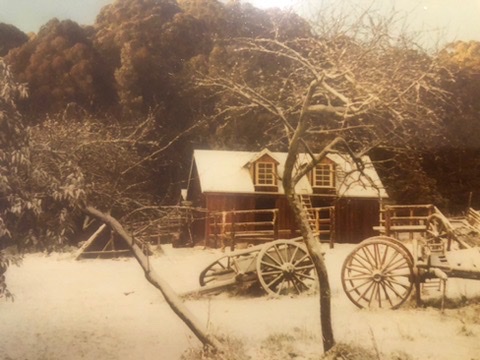
He knew I was into motorbikes and some time later, after George Miller had cast him as the Toecutter in ‘Mad Max’, he called to say George was doing some casting in Melbourne and would like me to come in to audition. By this time the main parts were cast but George added me to the pack as Diabando (the littlest bikie). He had about three lines in the movie and I said to George I think this guy would just make animal noises. George liked that so I talked myself out of the three lines.
Being in that movie is just a string of incredible stories. I wouldn’t know where to start but there has been much written about them. I was given the Toecutter’s bike to take home and “ride it in” till the movie started, which was about six weeks away. And when it all started it was a six-week shoot for me.
We were given a letter to carry with us at all times in the event we were pulled up by the authorities.
The gist of it was something like:
“The bearer of this letter is involved in a film production which is supported by the Victorian government.
We ask that reasonable assistance be provided by authorities where possible.
Signed,
Inspector Bloggs.
Victoria Police.”
Twice I had to produce it and the effect on the constabulary was astonishing.
The first time I had been riding through Melbourne city somewhat quickly and was intercepted on St Kilda Road by two policemen. As they read the letter under torchlight, their manner completely changed and they escorted me to the party I was going to in South Yarra.
The second time I had to produce it, we were again escorted by a rather excitable policeman, this time to the set in Werribee. Standing around with us, he heard that the next stunt being planned required a handbrake turn. He told us he knew how to do that and went off in the police car to demonstrate. Unfortunately, he misjudged it right in front of the caravan and ended up in the ditch.
You also appeared in ‘The Man from Snowy River’. Was acting ever as personal for you as making music?
Later I was offered a part in ‘The Man from Snowy River’. Another amazing experience from a different angle and oddly, directed by a different George Miller. In this movie I had the distinguished name of “Short Man” (the littlest rider as I call him).
There’s a pattern here.
Music was always the more personal form. Acting was kind of my “real job” for a while.
But then things changed after Suzie and I drifted apart.
When did you realise ‘Apricot Jam’ had become such a sought-after record? How did the reissues by Buttercup and Earth come about?
My son Dylan sent me an eBay link showing the album selling for about US$1,000. There were others for sale and reviews by various people. It had been designated “psychedelic acid folk”. I had never considered my songs as being of any genre.
Sometime after, I received a letter in multi-coloured pencil from a Melbourne record aficionado named Scotti, requesting to reissue the album locally under Buttercup Records. Eventually he pulled this off nicely.
Then Fire/Earth Records discovered it through Scotti’s site and offered me a contract to reissue it worldwide. The little European tour happened, which was a lot of fun. But it took a year of doing open mic nights in pubs to get myself in some kind of shape.
The later editions also brought out ‘Drury Lane’ and ‘Mad Mike’. When and how were those two songs recorded?
‘Drury Lane’ and ‘Mad Mike’ were from two different time zones. ‘Drury Lane’ emerged late one Saturday morning at Spectangle Studios, and that was where I met Maurie Fields, who was staying in one of the rooms in the house and had a set of bongos. Ian Sherrey, Nick’s assistant, was also about. When Maurie and I started jamming in the passageway, Ian brought out some gear and began recording. ‘Drury Lane’ came from that morning.
‘Mad Mike’ was a lot later, written in Melbourne. Nick had a different studio by then and we recorded it sometime in the early ’80s.
How did you come to know Zak Olsen, Leah Senior and Jesse Williams? They seem to have played a part in getting you back on stage.
In 2019 I was contacted through my Facebook page by Jamie Wdziekonski, a much-respected photographer of Australian bands and musicians. His Instagram handle is “sub_lation”. Jamie asked if I was going to be passing through Melbourne, could he take a few pictures for his history of Australian folk music. Later he asked if I’d like to do a gig in Melbourne.
So late in 2019, we did a house party in Preston where Leah Senior, her partner Jesse Williams, Zak Olsen and his partner Ashleigh Goodall were living together. It was a memorable evening with each of us doing a set to a packed house.
I became friends with these souls. On a couple of occasions they visited our place on the Central Coast where we held some mini music festivals and recorded a few things together. Zak Olsen (Frowning Clouds, Traffik Island and Orb) had originally found the old album, passed it on to Jamie and the others and so this relationship came to be. I have them to thank for having pulled me out of the woodwork and inspired me to start doing shows again.
You received a mesothelioma diagnosis in 2022. If you’re comfortable talking about it, how did you deal with that news, and did it change your sense of time and creativity?
In 2022, a diagnosis of mesothelioma and a prognosis of nine to fourteen months was a surprise. I always had a fairly healthy lifestyle, including ocean swimming, Wim Hof practices and regular fasting.
I kind of accepted this surprise as a part of the crazy journey.
The combination of good lungs due to the earlier practices and being steered towards immunotherapy by the surgeon who did the biopsy was all life-saving. As was stopping the treatment after six months due to side effects which would have eventually done me in.
My relationship with Eastern philosophy kept me grounded.
Fear? False emotions appearing real.
Time? An illusion. Life is the present moment.
Creativity? What we are here to be.
Your music is often called “acid folk” or “psychedelic folk”. Do either of those descriptions mean much to you?
I understand descriptions such as “acid folk” or “psychedelic folk”. I don’t think of my work as being one or the other, just what comes out of the moment.
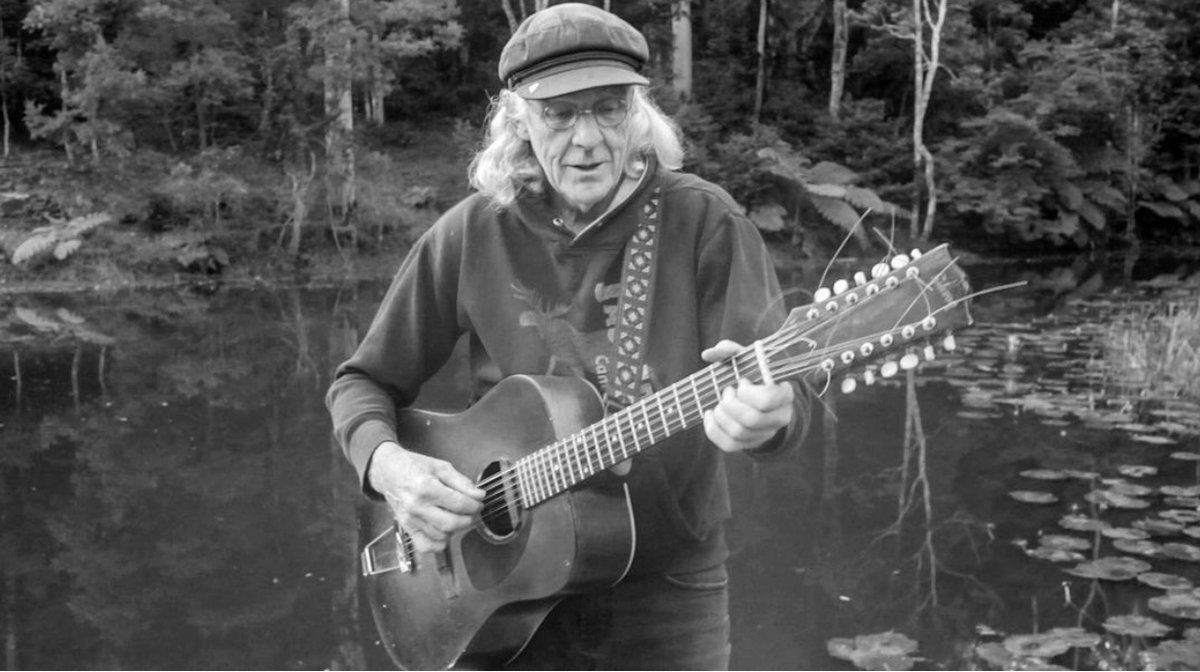
You’ve recorded more material in recent years and developed ‘The How Would I Know Show’. What is the idea behind the show, and what would you still like to release?
I recorded an album’s worth of material in 2020 but didn’t release it for some reason. Then when I was in Melbourne staying with Zak and Ash in 2023 while dealing with my chest and lung issues, somehow we recorded another album’s worth of material.
The gents who run the Holiday Maker label in Melbourne have the tracks.
‘The How Would I Know Show’ evolved from an intention to connect the songs with life, the universe and everything. Alan Watts once said, “It is our responsibility to feel the joy.” There is a lot of anxiety in the world today and a lot of beautiful hearts I see at the gigs I’ve done recently. The show is all about sharing the love.
Yes, there is material in the archive I’d like to see out there. Still some moments worth sharing. I’ve just made a life habit of being under the radar. An analog man in a digital world.
Klemen Breznikar
Headline credit: Courtesy of Howard Eynon
Howard Eynon Website / Facebook / Instagram / YouTube