
Richard Sinclair on Caravan, Hatfield and the North and Camel: “I Don’t Have Fans. They’re All Friends”
In January 2026, musician and record collector Dereck Higgins spoke with Richard Sinclair across three video conversations, covering his life in music from his earliest days in Canterbury to his more recent work in Italy.
Richard has plenty of stories to tell, and many of them begin with his father, a singer and bandleader who first taught him to play when he was four years old.
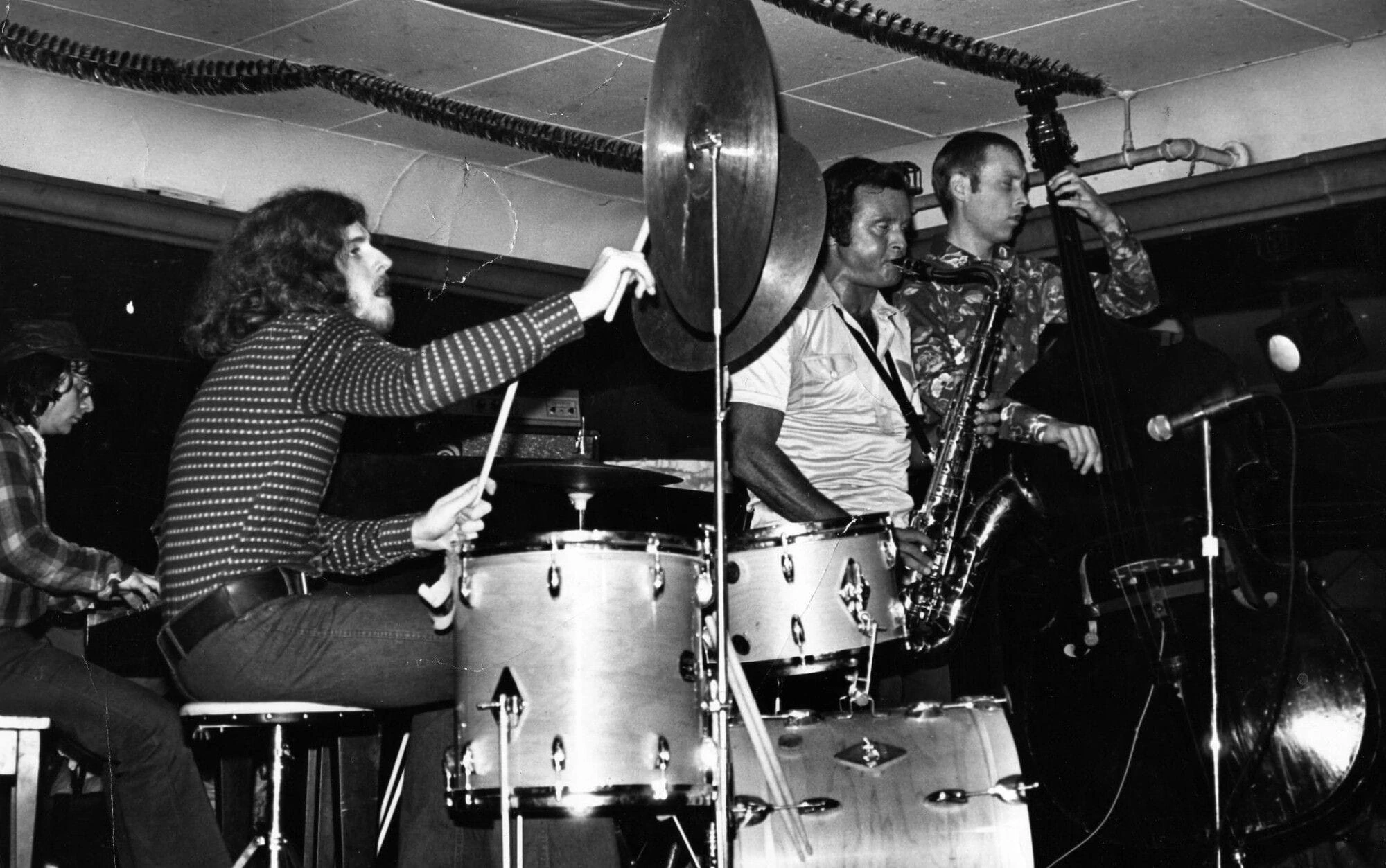
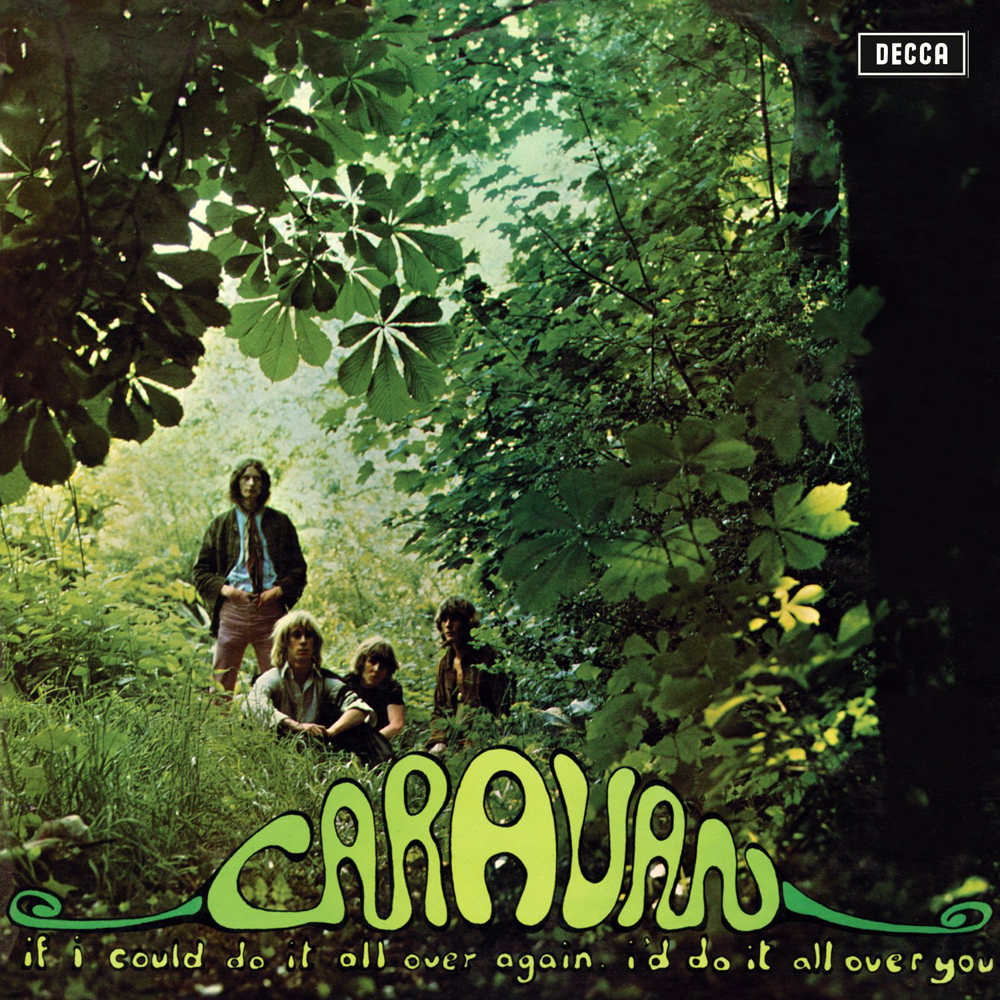
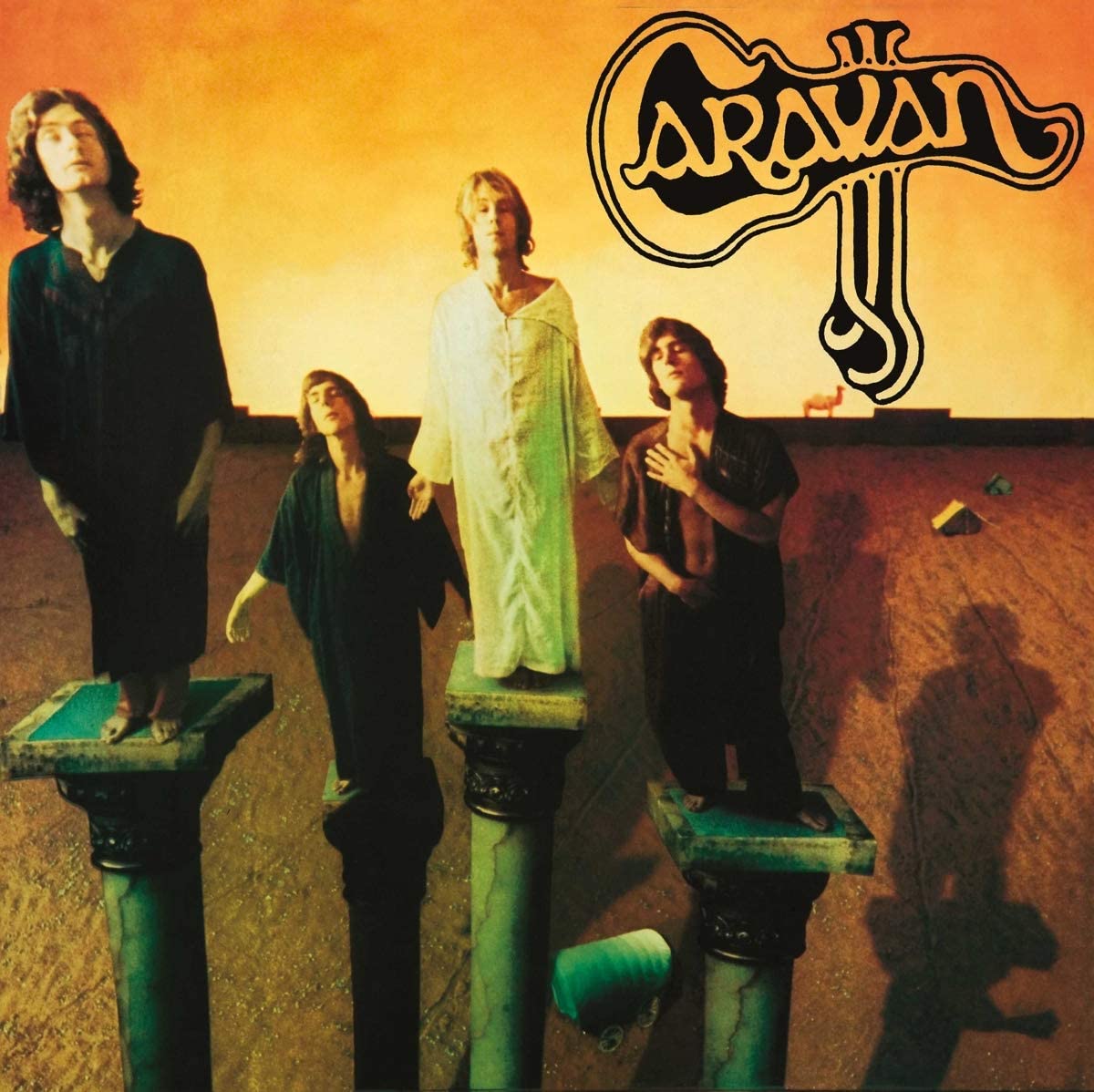
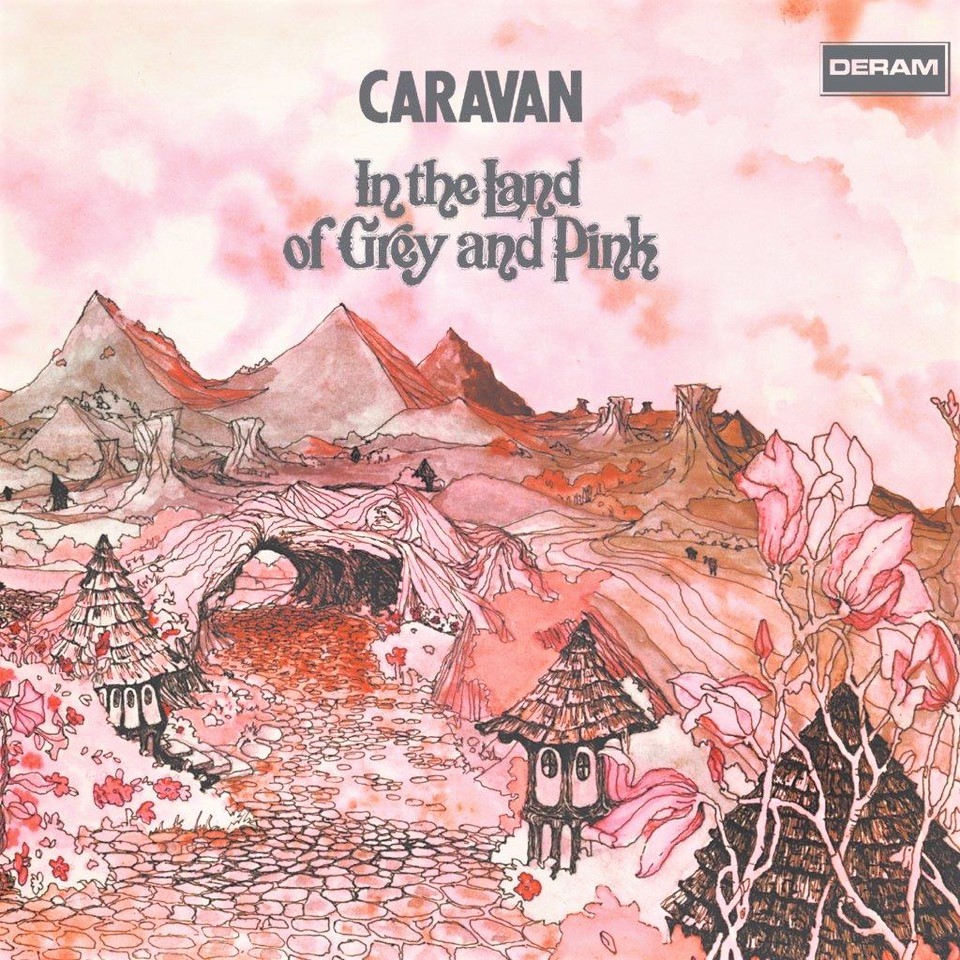
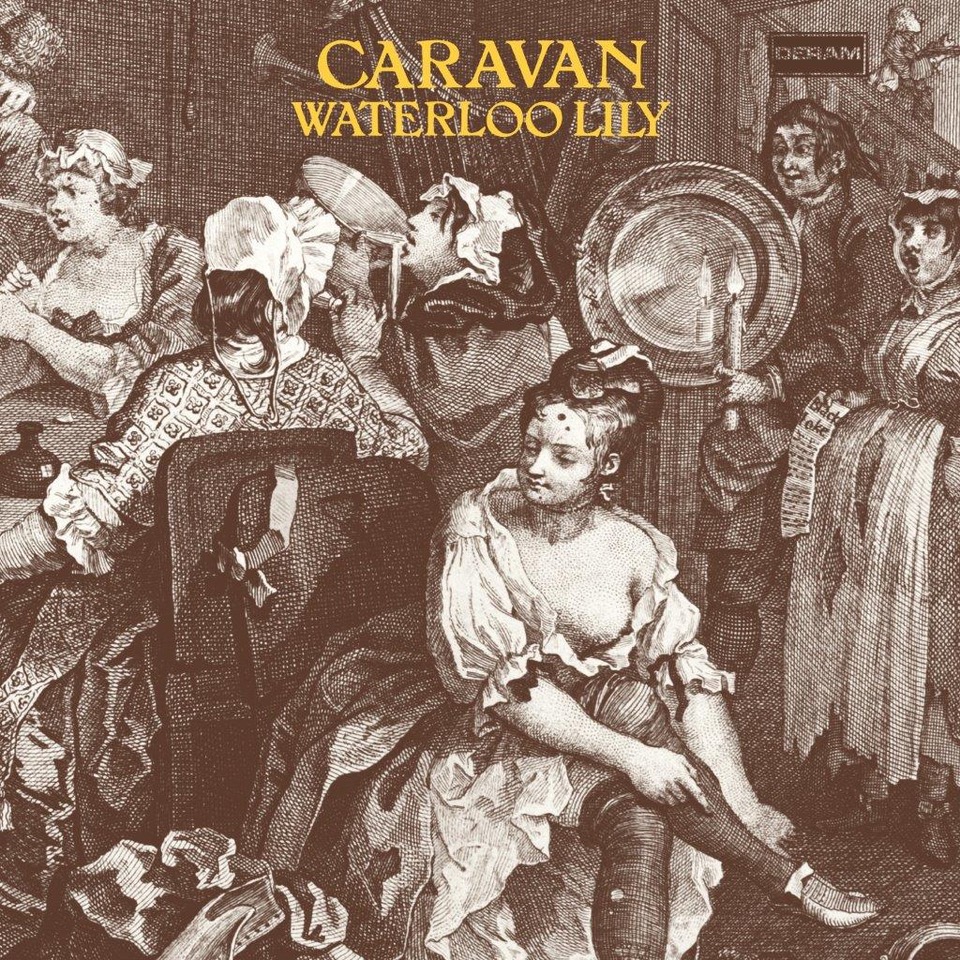
Born in Canterbury in 1948, Richard Sinclair was an early member of the Wilde Flowers, the group from which Caravan and Soft Machine emerged. In 1968, he became a founding member of Caravan, playing bass and sharing vocal duties with Pye Hastings. He appeared on the band’s first four albums, including ‘In the Land of Grey and Pink’ (1971), which featured his songs ‘Golf Girl’ and ‘Winter Wine’, and ‘Waterloo Lily’ (1972). After leaving Caravan, he joined Hatfield and the North alongside Phil Miller, Pip Pyle and Dave Stewart, recording two albums with the group. He later joined Camel, appearing on ‘Rain Dances’ (1977) and ‘Breathless’ (1978). His other work includes Robert Wyatt’s ‘Rock Bottom’, recordings with Alan Gowen and Phil Miller, and his own projects, including Caravan of Dreams.
Throughout these conversations, Richard recalls the early days with the Hopper brothers and Robert Wyatt, his years with Caravan and Hatfield and the North, and the friendships he developed with musicians including Pip Pyle, Phil Miller, Alan Gowen and Kevin Ayers. There are also some wonderful stories about Jeff Beck and Andy Summers, along with memories of his family, his work as a craftsman and the many people he has met along the way.
Now living in southern Italy, Richard continues to make music, work with younger musicians and sort through his extensive archive of recordings. Dereck kindly shared these conversations with It’s Psychedelic Baby! Magazine, and we’ve brought them together here in one written feature. Our 2021 interview with Pye Hastings offered another perspective on Caravan’s history. Here, Richard recalls those years in his own words, with plenty of humour along the way.
Conversations conducted by Dereck Higgins. Transcribed, edited and arranged by subject for publication by It’s Psychedelic Baby! Magazine. Questions adapted for this written edition.
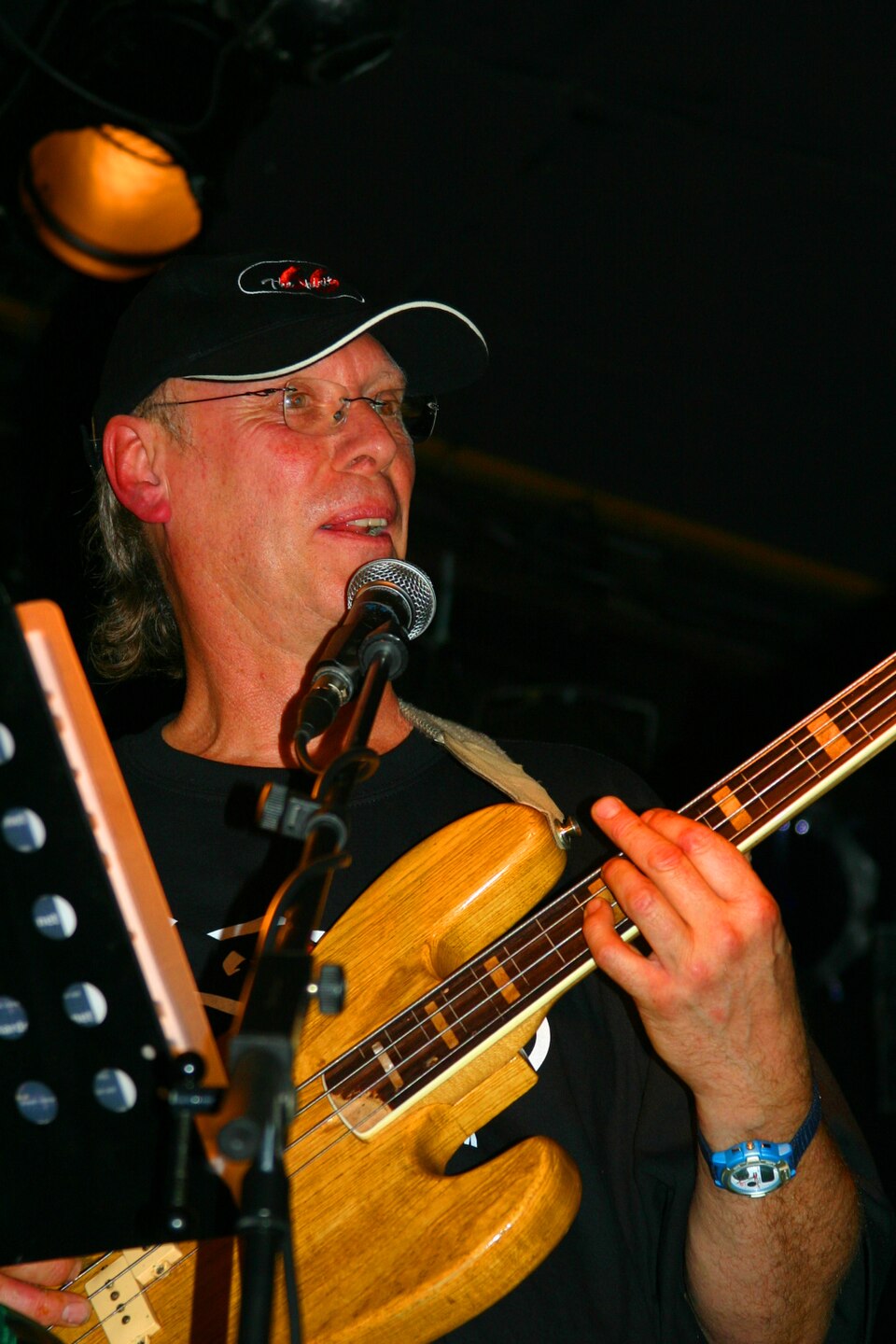
“Everything I play, I sing.”
You’ve said that your father was your greatest musical influence. What did you learn from him?
Richard Sinclair: It all comes from my dad. He’s my main influence, totally. He was the number one singer in Canterbury and a bandleader. He had his own quintet before the Second World War. He played drums and double bass, but his main thing was singing. He also played four-string instruments, like ukuleles. He was highly skilled with woodwork and used to repair and make his own instruments.
He started me when I was four, when I couldn’t even hold the instrument properly. He used to stand behind me, take hold of both my hands and place them on this little tiny instrument. The very first song I learned was ‘She’ll Be Coming Round the Mountain’. There was a verse about wearing pink pyjamas, so I think that’s probably where the ‘In the Land of Grey and Pink’ words come from! [Laughs]
He used to sing like Nat King Cole, but in an English accent, a Canterbury accent. That’s where my voice comes from. The American music I heard was that kind of music, played at that standard. My dad used to say that the Rolling Stones sounded like someone was delivering the coal!
He was there for the audience. People loved him because of his voice, his bass playing, his drumming. He was an entertainer. One of the things he used to do was go onstage with a piece of wood and a saw. He’d cut the wood in rhythm, and then, with that piece of wood, he’d play the saw. He’d play all these lovely melodies on the singing saw. All that sort of stuff. He had a very nice personality.
He played the big hotels, and my mum and I used to go and have dinner and watch him play. My sister Margaret was a singer too. She used to go and sing with him, and enter competitions where he was playing with the band. She used to win everything. Everything around me was always music.
He had to go and fight in Burma. He was doing signals in front of the front line and could send Morse code faster than anybody could read it. They had to tell him to slow down! He told me about the sounds of the bullets. It was all to do with sound. He got malaria and was moved back. He was having nightmares and putting everybody out of their bunks. Later he worked as a musician in the officers’ mess. He just breezed into that, because he was an entertainer.
My mum and dad said, “Richard, do what makes you most happy.” I followed those instructions, and because of that I’ve met many other happy people.
What would you like people to know about your family’s place in Canterbury’s musical history?
Richard Sinclair: It really came together through the media, and yes, there’s a certain sound that came from the Wilde Flowers. But Canterbury already had many other great musicians, especially in jazz. They didn’t just make it up. I have to tell people the real story, because it’s usually written by people who met the musicians at different times. My Canterbury scene, the Sinclair family, goes back to 1800. There’s a whole story from Canterbury.
My great-great-grandfather was a hussar, a military man with a sword. I can’t remember his name. He was quite small, not a tall man. There was also Richard Sinclair, the artist and photographer, and the photography business in Northgate, Canterbury. There are lots of photographs. You can look up Richard Sinclair and Sons.
My granddad performed in theatres in Canterbury and around the coast, places like the Herne Bay Pavilion. He went to London to play as well. He was a comedian and singer, what they called a coster. He wore a suit with pearly buttons, a pearly king. I call my grandmother the pearly queen too, though maybe I’ve made that bit up. If he was the king and she was his wife, she had to be the queen! My cousin David has a poster from 1901 of my granddad and grandma singing at the Herne Bay Pavilion. My dad used to play there too.
They called themselves Dick Sinclair. My dad was another Richard, another Dick Sinclair. So it’s really a line of Dicks that I come from, but I decided not to call myself Dick. I call myself Rich, in the hope of…! [Laughs] If someone calls me Richard, I know I’ve got to do something: “Open the door, Richard!”
The Canterbury scene is a bit of a joke in that so many of the musicians aren’t from Canterbury. There are Londoners, people from Australia and France, all joining the musicians at different stages, from the band that was originally the Wilde Flowers, and then Soft Machine and Caravan. It’s very much like Chaucer’s Canterbury tales, with everybody leaping in and out of bed with different girlfriends! It’s one hell of a story.
I have to tell my Canterbury story because it isn’t quite like the media story. It’s very much to do with Canterbury. My family lived there, and I have many artefacts relating to that history. I want to do it with photographs. I’m not a very good reader and haven’t read that many books. The ones I liked most were ‘The Lord of the Rings’ and ‘Shōgun’. I’m more interested in reading about antiques, furniture, tools and metalwork. I’m into the craft side of things. I’d rather write my own book, which I haven’t done yet. Other people take my stories and put them into interviews, so I can always look back at those.
You also learned woodworking from your father and trained in design. How did you manage to keep that going alongside the music?
Richard Sinclair: I’m a choirboy. I went to the Archbishop’s School in Canterbury because I was in the parish of St Stephen’s. My headmaster was Mr Ratledge, Mike’s dad. I’ve been a choirboy all my life, and now I’m the jazz choirboy! Other people might imagine me as a singing rock star. I was a pretty boy, wasn’t I? But I learned to play.
Robert Wyatt, Mike Ratledge, the Hopper boys and my cousin Dave went to the grammar school. My dad went to Simon Langton too. I didn’t get into the grammar school, and I’m quite happy I didn’t, because it meant I was at school with girls. I had girlfriends all the way through. Much more fun!
I was taught music at school. Once I knew a melody, I could read the music and see how it worked. I could understand it. But my way of learning is mainly by ear.
My dad was an amazing antique furniture restorer. These bags of furniture used to come to our little home in Downs Road, Canterbury. I’ve always been building things myself. I’m a woodworker, and when I became a kitchen fitter I knew about the electrics, water, gas and tiles. I could do all of it.
I went to college in Canterbury, which was one reason I stopped being in the Wilde Flowers. I wanted to do my education. I’d done so much woodwork that I became a silversmith. The course was industrial design. I was one of the sharp-pencil brigade! I can draw too. My mum and dad taught me all these things; they were highly skilled.
Even when I was designing people’s bedrooms and kitchens, I was still playing music. I’ve always played music. Every day of my life.
How did you first meet Hugh and Brian Hopper, and how did those sessions become the Wilde Flowers?
Richard Sinclair: I was only fifteen when my father took me up there. The Hopper boys’ parents used to go and see my dad sing at dinner dances. Their mum told Hugh about my dad, and he’d heard that I’d just been bought a new guitar and was playing. Hugh phoned and said, “We’re starting a band. Please bring Richard up. We’d like to try some music out.” That’s what happened.
I was going up there every week or every other weekend, meeting the other musicians they were trying out. It was about a year and a half before it became the Wilde Flowers. Eventually Robert Wyatt came along with a snare drum, two sticks, a cymbal and a bass drum. That kicked it off.
People in Canterbury who knew Robert said, “There’s a guy with blond hair like you who behaves a bit like you. His name is Kevin.” Kevin Ayers was asked to join the band. I’m on those Wilde Flowers recordings, but the record was made much later. It doesn’t really tell the beginning of the story. It has everybody on it who became the Wilde Flowers.
I was the baby of the band. The others were older than me, and there was this beatnik thing. I could play guitar, chords and that sort of stuff, but I wasn’t really a soloist then. I enjoyed playing with Hugh and Brian and everybody, but I had my own musical things to do and I had to go to college. Kevin had already left by then. I gave my guitar job to Pye.
Later Richard Coughlan joined when they needed a drummer. Richard was friends with Hugh and Brian. Then my cousin Dave Sinclair joined on keyboards. Robert was in the Wilde Flowers, not Caravan. He always wanted to be a singer, and Soft Machine came from that, with Daevid Allen as one of the main instigators. Hugh was really the one who started the Wilde Flowers.

What do you remember about the earliest recordings and gigs?
Richard Sinclair: Brian Hopper had all the tapes, and that’s how the Voiceprint release came about. We first made recordings at Wout Steenhuis’s place. He was a very good guitarist, quite famous in the south of England, in Kent, and he came from Holland.
I first met him because he came to play at one of my dad’s concerts. I went with my mum to see my dad play at the Hythe Imperial Hotel on the East Kent coast. I was about fourteen. My dad had bought me a very thin Höfner guitar, and I had a piggyback AC30. He and my mum bought that stuff for me.
Wout was playing this amazing Gibson 400, a big jazz guitar. My dad said, “Richard plays guitar,” and he said, “Have a go on this one.” That was the first time I played somebody’s really beautiful guitar. I remember it very well.
When it became the Wilde Flowers, we did our first concert quite close to Canterbury, in Whitstable, about five miles away, at a pub called the Bear and Key. There are photographs of all that. It’s going to be in my Canterbury history story.
How did Pye and Jimmy Hastings come into your life, and how did those friendships connect with the beginnings of Caravan and Soft Machine?
Richard Sinclair: Pye arrived in Canterbury with his sister Jane. She had been married to John Aspinall, who had the zoo outside Canterbury. Kevin became her boyfriend. There were all these family connections, and Caravan came from the Wilde Flowers through Pye.
Pye was influenced by his brother Jimmy Hastings, who was a wonderful saxophone and flute player. He played in the BBC orchestra. My dad used to play with him. I first met Jimmy at my sister Margaret’s twenty-first birthday party. She was nine years older than me, so I was only twelve. Her husband, Douglas Inkpen, was a musician too.
There was lots of music at that party. I remember drinking the drinks people hadn’t finished. Jimmy went outside for a pee and disappeared into the mud. He came back with mud up to his knees! It was a very nice birthday because there was so much music. My sister sang as well.
Pye stayed with me for his first weeks in Canterbury. I was part of the Wilde Flowers then, so we got to know one another. He’d been bought a guitar, I think probably by his sister, or maybe even Kevin.
Jane helped pay for the first rehearsals for what became Soft Machine, out at a hall in Sturry. I remember seeing Mike Ratledge for the first time with his organ on the lawn. She’d arranged it so they could live together, and Pye was staying there too.
I got on with Daevid Allen, for sure. I got to know him more through Pip, because Pip was playing drums with him. When Soft Machine went down to the festival in France, Daevid couldn’t get back into the country. He came from Australia and didn’t have the right permission to return, so then Soft Machine became Kevin, Robert and Mike Ratledge.
What was it like sharing the singing and writing in Caravan with Pye and Dave, and how did things change when Steve Miller joined?
Richard Sinclair: We had two singers in the band, which was always interesting. We were like chalk and cheese. We all had different ways of wanting to play. I was a bit more, I suppose you could call it jazzy, but really it came from my dad and the standards he sang, the melodies. My cousin Dave and I were both songwriters. I loved singing his music, and Pye’s music too. Pye was really the leader.
Dave left after we’d finished ‘In the Land of Grey and Pink’. He wanted to move on and do something else. His great piece, ‘Nine Feet Underground’, was on the other side of that album. It really works. It’s amazing.
I had to get another keyboard player into the band, and I got Phil Miller’s brother Steve because I knew him. I’d also had Phil come and play on ‘Waterloo Lily’.
The business is the business. I’m there for the people. But I couldn’t stay in Caravan any longer. I had to move forward with my musical studies and my ability, learning more about how to be myself, rather than just playing barre chords and bass. Really, I’m a guitarist. I’m a musician, if you like, but I’m more of an entertainer.
What was the story behind ‘Golf Girl’? And who first suggested writing ‘nursery rhymes for adults’?
Richard Sinclair: The ‘Golf Girl’ was my first partner in life. Her name was Pat, and we sat under a tree and she kissed me.
‘In the Land of Grey and Pink’ was the first time I decided it needed a few nursery rhymes for adults. That’s what my dad said to me: “If you want to be successful, Rich, write a few nursery rhymes for adults.” He didn’t say famous, he said successful. I’d given my mum and dad the first Caravan album and the second album, and he said that just before we made ‘In the Land of Grey and Pink’. That’s what I did.
It worked for Paul McCartney too, didn’t it? Those songs are beautiful, that thirties type of thing, like ‘Your Mother Should Know’. Nursery rhymes. Life is funny, isn’t it? Otherwise you decide it’s all too serious.
‘If I Could Do It All Over Again, I’d Do It All Over You’ was a comedian’s phrase, taken from Spike Milligan and ‘The Goon Show’. I think it probably came to Pye through his brother Jimmy. If we could all do it over again, we’d do it over ourselves, I suppose. They’ve done that already!
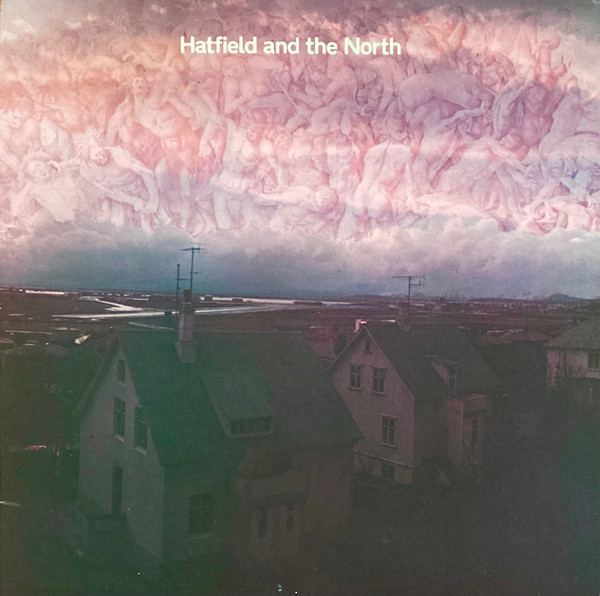
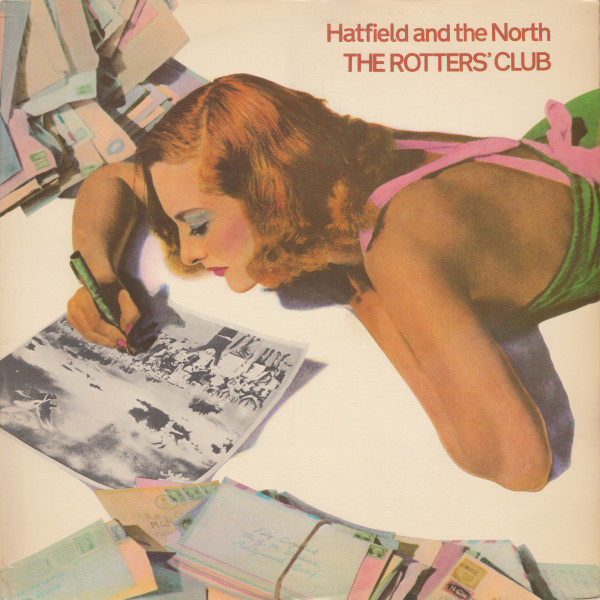
What drew you towards Hatfield and the North, and what do you remember about playing with Pip Pyle and Phil Miller?
Richard Sinclair: Pip was such a generous person. I was invited up, and that’s how it started. I already had Steve Miller in Caravan and Phil had come and played on ‘Waterloo Lily’. Hatfield started off with Steve Miller. I wanted to move forward with my musical experiences and learn more about how to be myself.
Pip was an amazing rock drummer who decided that everything had to be free-flowing. My time with Pip was always amazing, and with Phil too. They were like brothers. Their houses backed onto one another when they were children. Phil and Steve were brothers, and Pip lived there too, in Sawbridgeworth.
I lived with Pip, with our two families together. There was always music, and we were friends with Alan Gowen as well. Those were the people I played with and listened to.
Pip wasn’t the leader of Hatfield, but he certainly should have been. When the band put together recordings from radio programmes and things we’d done between 1973 and 1975, he decided to call the first one ‘Hatwise Choice’, like the old radio programme ‘Housewives’ Choice’. Really, it should have been called ‘Pip’s Wise Choice’, the drummer!
I wanted to be me. I didn’t want to have to read notes and dots all the time. I can do it a little bit, but I mainly do it by ear. I’m a parrot, you know, a pretty Polly one as well! I’d like people to learn my music by ear, because then it can be them, rather than me telling them what to play.
I have tapes of my music from that time, things that came out on my later albums. I didn’t really get the chance to use it then. I was never very forceful. By that time Dave had taken over the band, and both Pip and Phil had followed him.
“Hatfield and the North never played the set the same way. Never, ever.”
Did Hatfield and the North ever play the same set twice?
Richard Sinclair: Hatfield and the North never played the set the same way. Never, ever. It was always chopped about. We used to travel down the motorway at ninety miles an hour in Pip’s mum’s sports car, a Capri, and they’d be rewriting the set and all the little links.
Pip used to write down the tracks and what was happening between them, but those links weren’t written down mathematically, with all the dots. That was why I loved Hatfield. It just got to be too much written stuff from one person. Pip and Phil were going more towards the complicated side of music. I don’t find jazz more complicated than pop music. Music is music. Good jazz is like good pop music, like good music.
Jazz musicians are having a conversation with one another at the same time. They don’t play the same notes every time. With rock music, if something is played slightly differently, people say, “You’re making mistakes.” Well, it isn’t necessarily a mistake. It’s progressive. That’s why I moved to Hatfield, to get a better understanding of how I played.
With some bands, people want it to sound the same every night, like the record. The same running order, the same announcements, the same three tracks at the end for the encores. I think that’s a shame. You can’t be experimental if you’re making an enormous din in a small club.
I’ve always said to people that if you can’t talk to one another onstage, you’re playing too loudly. You can still play loudly, but why do you need this massive volume when you’re only playing to a hundred people, or three hundred, or even a thousand? It isn’t a gigantic dome or a field that’s miles square, where you’re trying to make it so that people on the moon can hear it! I wanted to hear what I was singing, instead of being surrounded by monitors louder than the PA.
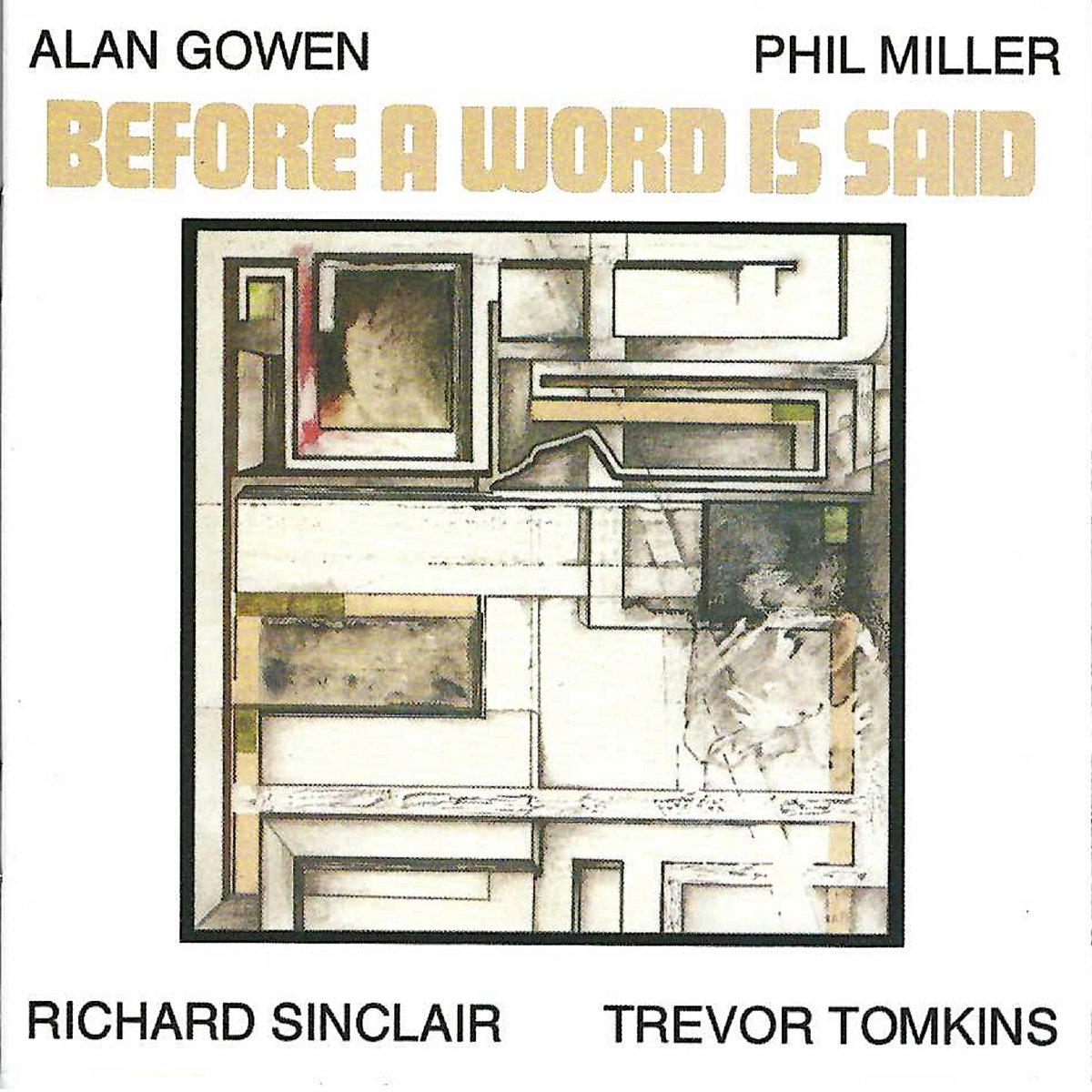
What was Alan Gowen like to work with, and how did ‘Before a Word Is Said’ come together?
Richard Sinclair: Alan was around near where we lived with Hatfield. I remember being one of the first people to go round and play bass with him when he was starting Gilgamesh. I met the other musicians there, including Phil Lee, who was a very good guitarist.
When I was in Hatfield, rehearsing and doing all that stuff, I’d go round and have a play with Alan. He was one of the sweetest people on the planet who played music. There was no one sweeter. He was a delight to be with, and you can hear it in his music. He was organised to play lovely music.
Phil and Alan became good friends when Alan came to play at Hatfield gigs, when it got a bit broader. He was also a friend of Dave Stewart. Phil and Alan wanted to make an album, and I was immediately asked to be the bass player. I was blessed to do that. It’s some of the best music I’ve played, and some of my best bass playing then too.
It was made in Alan’s house in South London. We recorded over about three weeks, with an engineer who was a very good friend to us all. I think he’d worked for the BBC too.
Alan was very ill then. He was going into hospital every week, and he knew he wasn’t going to be staying on the planet. His music sounds like that, doesn’t it? It’s amazing what he plays. It’s like he’s already out there. The later tribute was organised mainly by Dave, Pip and Phil, to celebrate Alan’s music and his passing.
We tried Gary Husband as a drummer. He came round and read the music, just whizzed through it, but said it wasn’t for him. He didn’t have the time to join us because he was going to be playing with Allan Holdsworth. He’s a great keyboard player as well.
Phil hadn’t really wanted me to sing, which was a bit of a shame. I wish they’d all sung. The jazz musicians who say they don’t sing are singing inside themselves anyway. You can hear it. A voice can make it easier for the people in an audience who are more interested in the entertainment side to connect with what you’re doing.
You once described Allan Holdsworth as ‘a rainbow that was exploding’. What was it like hearing him up close? And how did you come to know Tony Coe?
Richard Sinclair: Allan was amazing. You had to stand next to him to get that energy. It was like standing next to a rainbow that was exploding. It was all colour.
That could be a bit of a problem for me, because at first every piece of music sounded the same, which of course it wasn’t. It was played at such speed and with such intensity. Allan had his own way of playing. It wasn’t really about the maths of music; it was like a picture. Amazing.
There was no one else like Allan. Just as there’s no one like Jaco Pastorius, Jimi Hendrix or Jeff Beck, who was one of my favourite guitarists. Everyone has their own world. I suppose I’m a loony as well, completely in my own world!
Tony Coe, for me, was the number one clarinet player on the planet, and he came from Canterbury. My dad used to play with his dad. I got to know Tony, and he always liked coming to play my music. We talked about Allan, because Tony had played with him a couple of times, and he called him a lunatic, a maniac! [Laughs] There was no one like him.
Tony sang too. He didn’t have a problem with singing. He was an entertainer, a real Canterbury entertainer. I’m sure he played with Don Rendell, and many other people. They wanted him to go to the United States to play with the big bands, but Tony wouldn’t fly. He couldn’t even go up the stairs in a church to play on the upper level.
I have two tunes recorded with him in Haarlem, where we did a Canterbury festival. Heather, my girlfriend, organised a lot of that. She did so much work for the Canterbury scene and never really got a thank-you for it.
How did you come to join Camel, and what did you make of the partnership between Peter Bardens and Andy Latimer?
Richard Sinclair: I think Andy Latimer had decided it was time for Doug Ferguson to move on. That was a shame, because I think the band sounded so good before I came in and played the bass parts. Peter Bardens and Andy had a very good partnership. It was a bit like John Lennon and Paul McCartney.
Pete was amazing at playing those arpeggio-type chords. He’d been in Van Morrison’s band Them, and he was a real rock star. Pete and Andy were a very good combination. They made ‘The Snow Goose’ and ‘Moonmadness’, all those things before me.
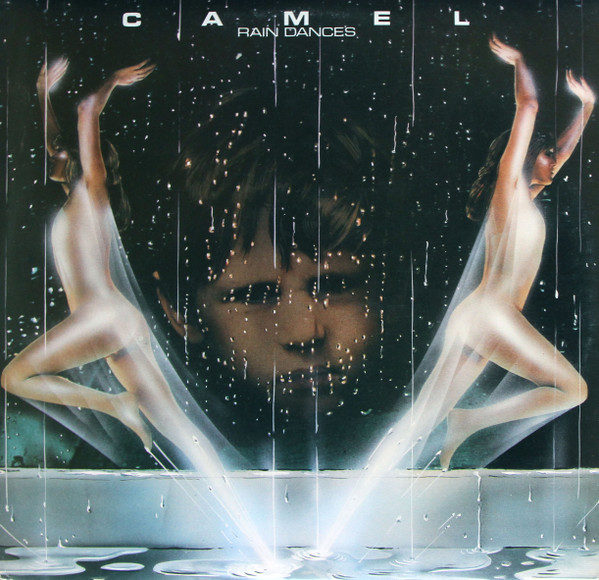
When I came in, Pete was really on the case with ‘Rain Dances’, starting the music. They combined their writing and their energy to be inventive. Andy was very strong, very grounded. He knew what he wanted.
I had a wonderful time. Those songs I sang were beautiful. They perfectly matched my voice, on ‘Rain Dances’ and ‘Breathless’. I tried to persuade Pete and Andy to keep singing, for us all to sing together, but we never really sang together. Andy’s voice was a bit more rock and roll.
They’d been waiting for Camel to go to Japan. They’d had a lot of success in the West before going east. They weren’t right at the top, but they were climbing all the time. Beautiful music, wonderful music.
Some of the bass playing was a bit simple for me, but it had to have a certain feel. Andy directed me quite heavily in how he wanted it to sound. I’d never really played some of those straight bass parts before. I managed to elaborate them a bit and make them move.
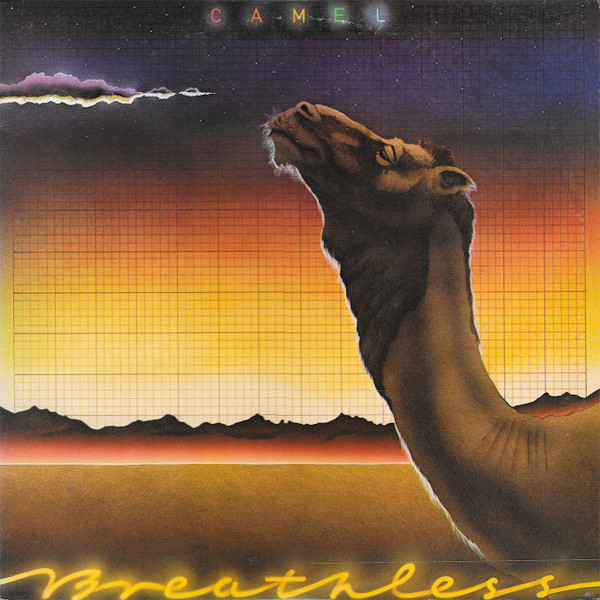
How did ‘Skylines’ and ‘Summer Lightning’ come together during your time with Camel?
Richard Sinclair: I got the job because I could play ‘Skylines’. Andy had already played it to me. I gave it the title ‘Skylines’. I thought that was a good title because it’s something that appears in my lyrics, beyond the skylines, that sort of thing. It’s in ‘Summer Lightning’.
Andy extended ‘Summer Lightning’ with a bridge, which is wonderful. It was a very good combination. That’s why he’s got his name on the tune as well, because he wrote the middle bit.
I’d already played that music with Caravan when we were trying to make an album together earlier on, when we came back together. It wasn’t used then. Pye used his own songs later, when Jan Schelhaas was in the band. That’s another bit of the history.
With a part like ‘Skylines’, it’s about the fingering. If you can sing it, you can learn how to play it the easiest way, with your fingers in the right position. You spend a long time finding your own way.
You keep coming back to singing what you play. How does that shape your bass playing and the way you help other musicians?
Richard Sinclair: Everything I play, I sing. I’m singing while I play, and I try to show everybody how to do that. That’s the secret. I don’t really teach; I show people how to teach themselves, the way my dad showed me how to do things.
I tune to a note and ask, “Can you sing that note?” If they can, I know they can be a really good player, because I show them to sing what they play and play what they sing at the same time. You can do it easily with a song you already know. You copy it and find the notes.
You’ve got four fingers on the bass or guitar. It’s about finding the position, your own way of doing it. Look at how Pat Metheny gets his thumb over to play, or the size of Jaco Pastorius’s hands. But it’s their ears as well. Jaco’s ears were absolutely on it.
Once I knew a melody, I could look at the written music and understand how it worked. I was taught that at school. I’d like to read more, but I don’t see a reason to make everything depend on it. I like people learning my music by ear, because then they can be themselves. They can be experimental and play with one another, like a conversation.
You see guitarists tuning to a light now. If it’s green! What is that? It’s silence, isn’t it? Music is silent until you play it. I show people how to teach themselves, and it’s done by ear.
When I played with Robert Wyatt, particularly on ‘Rock Bottom’, Hugh Hopper got three tracks and I got three. I got my favourite tracks, which was really good. I thought Nick Mason could have had the bass a bit louder in the mix. I was having fun. I wasn’t trying to be clever.
That’s been the story of my life, playing bass as if it’s a double bass, but it’s a fretless. I’ve still got my dad’s old Premier turquoise-glitter drum kit too. Bass and drums are traditionally the platform.
If you’re a bass player, you’re the rhythm section with the drummer. It’s good to have a drummer you can deal with. There can be a bit of a fight, but it’s good, especially in the jazz world. With Pip, and with Richard Coughlan, it could be quite a thing. I’m really a guitarist, but I sing everything I play, so I can play those riffs and all the things Dave Sinclair brought in.
I used to be able to sing through four octaves. I’m really an entertainer, and I’m able to do this by ear. You want to hear a real bass player, listen to Victor Wooten. What a gorgeous player. An amazing bass player.
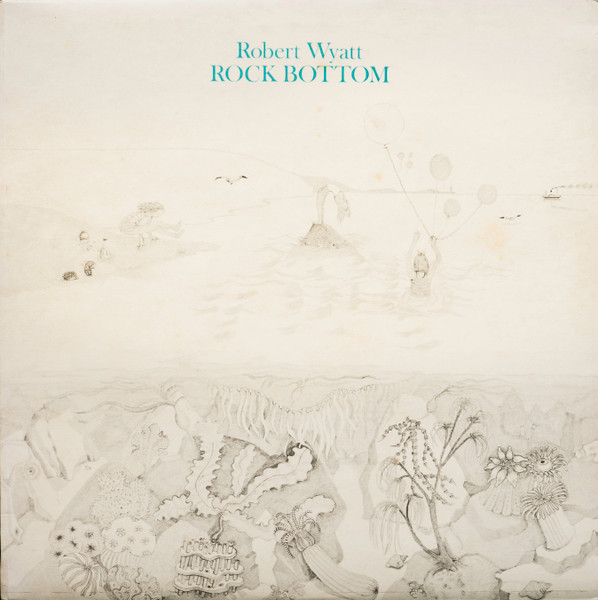
How does a new song take shape, and how do you bring the audience into it?
Richard Sinclair: It all comes from chords, from playing over and over and slowly picking out a song. I’ve got many new songs, and I have to make a new solo album. When musicians get in touch, I can help them with their compositions and show them how I compose.
The singing and the playing go together. When I’m in front of an audience, I’ll say, “I’ve got a new tune. I want you to help me write it.” First I’ll get everybody on the note. “Hello, everybody. I’m going to keep talking to you until you start singing this note!” It’s amazing when you get everyone singing together.
Freddie Mercury was a master at that. When you hear a whole audience singing, wow. I wish I’d done more of that in the early days. Now everybody sings along when I do ‘Golf Girl’, but sometimes you have to say, “Sing up, I can’t hear you!” When they do, it’s a wonderful experience.
Hendrix sang. Jeff Beck didn’t, but when he played Beatles music you could hear it coming out of him. He was an amazing guitarist. I wish more players would sing as well. They’re singing inside themselves anyway.
You’ve been working through a large archive. What are you finding, and what do you remember about bringing Hatfield and the North back together?
Richard Sinclair: I’m here trying to work on my archive series. There’s a company in Japan, Vivid Sound, that I’m doing it for, and a lot of this material is on Bandcamp. My friend in Seattle helps put it up. I haven’t got a clue how to do that myself. I can just about do video Messenger. I’m seventy-seven; I’m used to dialling things! Someone has to come and show me.
I have thousands of tapes from those times. I had a good recorder, and a lot of the tapes went to Phil, who didn’t have such a good one. There’s a tape that came up recently with Dave Stewart’s picture on it, but it’s actually Steve Miller playing. I think it’s one of my tapes. There’s a lot of hiss on it, but there’s a lot of history there too.
Caravan and Hatfield both did the Bedrock television series. We reformed the original Caravan, and Hatfield was put together again for that show in 1990. Pip’s girlfriend played because Dave Stewart wasn’t going to play the Hatfield music again with us.
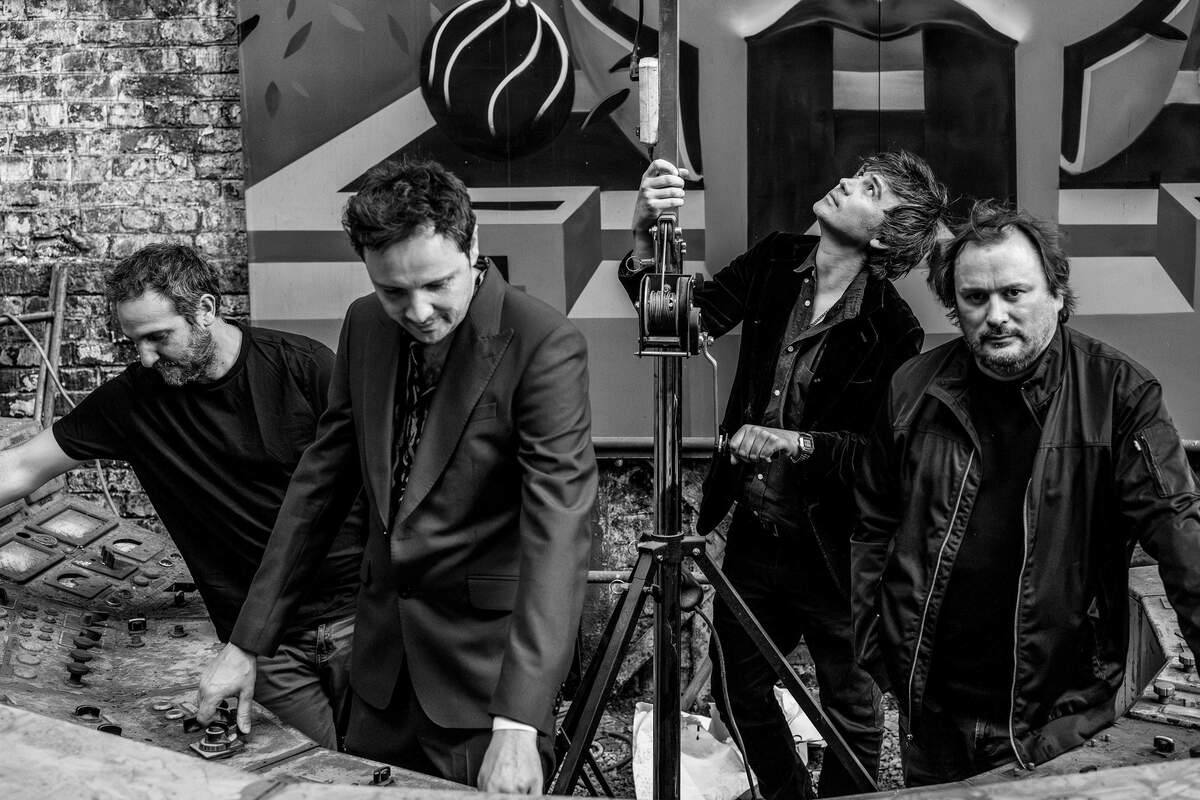
I also managed to get the boys back together for Hatfield in 2005, and we went to Japan. We did a whole series of tours. There’s that concert in the archive series, and I’ve got many files to sort out for Vivid Sound.
Pip died in 2006. We did the last three concerts with Phil Miller’s drummer, Mark Fletcher. It’s really sad. All these people have left the planet.
Heather Kinnear did a great deal of work behind the scenes over the years. What would you like people to know about her part in the story?
Richard Sinclair: Heather did such a lot for the Canterbury scene. When we reformed Caravan for the Bedrock television show in 1990, my cousin and I, a lot of the help came from her. She had T-shirts made and really went for it. She helped bring it all together.
She was an amazing artist. The artwork was fantastic, and we made ceramics together. She was wonderful at that. She was a bit of a singer too, but wouldn’t sing. She left that to me. It’s a shame she never really got thanked for all the work she did for the music.
I met her in the eighties, when she was working as a night nurse at Canterbury Hospital. I moved into her apartment, which was in an old mayor’s house in Canterbury. We had the middle floor and this enormous garden, about 150 feet long, near the centre of town. I’d have birthday parties with 150 people in the garden, friends from the Archbishop’s School and all these other people. Barbecues for three days!
On the third day I’d go out with a vacuum cleaner and clean up all the bottle tops and joint ends. Everything went up into the vacuum cleaner, the spiders and all! [Laughs]
We went around the world together when I was doing solo concerts. She was very good at that, although she should have been doing her ceramics too.
I first came to America with Camel and did a series of concerts in California. It was a shame we didn’t go all around the country. Later, when I started my own bands and my solo career, I went back. I played in people’s homes as well, and I’m still in touch with those people. I know some great musicians in Kansas, and a lot of friends there who listen to the music.
What brought you to Italy, and what is life like at your home near Martina Franca?
Richard Sinclair: Dave Sinclair and I reformed the original Caravan because we’d been asked to do the Bedrock television series. After that, in 1991, we were invited to Italy with the original band. We played Rock in Umbria. None of us had been to Italy before. I fell in love with it, and came back the following year. That’s how it started.
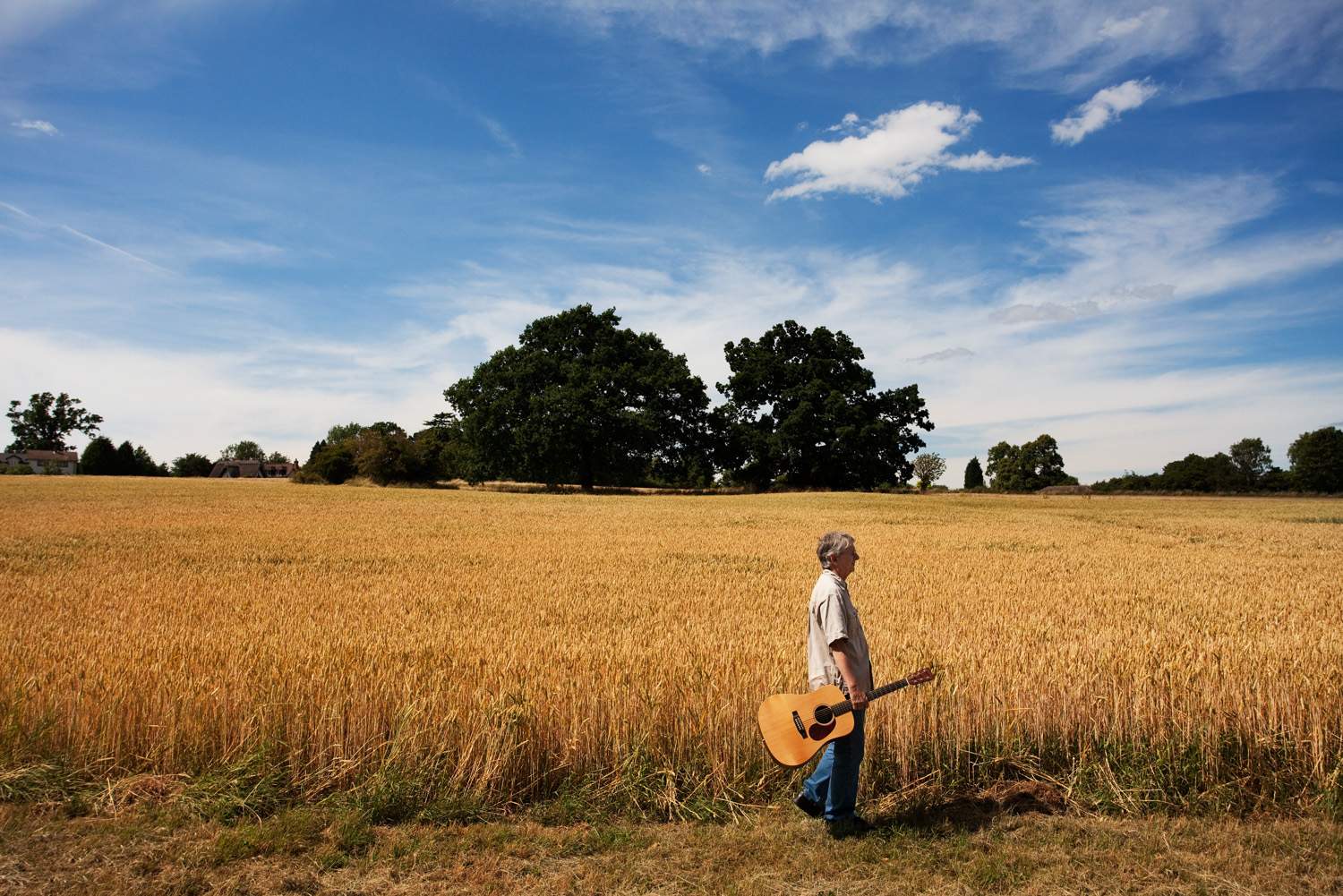
I live in the countryside, about three and a half miles outside Martina Franca, in Puglia. It’s beautiful, and there aren’t many people where I live. You have your peace, which is what you need if you’re composing, thinking about music or just living. The air is good, the food is good, and some of the best things grow down here. All of Italy is beautiful, but a lot of it is full of people and tourists. I moved here for very good reasons.
Sometimes the weather around Christmas and into the new year is amazing. This year it’s been a bit chilly. I’ve been feeding the dogs and working on the house.
It’s a trullo, and I’m putting in a floor. The floors are at different levels. The part where they used to make the wine is lower than the floor I’m on, and then there’s the kitchen. I’m trying to make it level all the way through. It’s going well. I’m working on it every day, as well as sorting the music files.
I don’t really speak Italian. All my friends want to speak English, so they’ve been learning by speaking to me, even the people in the bank. They’ve known me for years and know I’m a musician. I give them CDs and they’re thrilled about it. I’m not very good at doing the banking on a phone either, so I go in and see them. They’re friendly to me.
Do you get many opportunities to play with local musicians in Italy?
Richard Sinclair: There’s some very nice music played here, and a good following for classical music and jazz. I’m honorary president of several progressive rock societies. There are young musicians starting out with their first CDs, and I’m always involved with them.
Martina Franca is really about classical music. There’s a classical festival every year, in July. In the courtyard inside the palace it’s all acoustic, with everyone looking very smart and tidy. It sounds fantastic. The young musicians know me, and they’ll be leaning out of their windows before they play, saying, “You’re coming to see us, aren’t you?” I get invited to sit at the front and watch the bass players. I play with some of those classical musicians too, because they also play modern music.
I played with douBt at Beppe Crovella’s studio. He’s from Arti & Mestieri, one of the Italian progressive bands from the earlier days. He’s a nice man, good fun, and a great follower of the Canterbury scene, especially the keyboard side. He’s a keyboard player and writer, a bit of a singer too. That was good fun.
We were going to form a band called Kent, but it didn’t quite happen because I didn’t have enough time to do it all. It still might happen. It’s funny he wanted to call it Kent. I don’t think he meant Clark Kent! Canterbury, Kent, the nearest thing to that Canterbury connection.
I have other friends here who put concerts together with very nice young musicians, playing ‘Winter Wine’, the Caravan of Dreams music and my new music. I stay with their families. At one concert there was a little boy, only two, up near the microphone late in the evening, because all the families were there. I’ve always played for families. It’s always been that way for me.
The people who followed the music in the sixties had children, and now it’s grandchildren too. The young ones call me and play the music better than I can play it. It’s a real thrill.
Have you had a chance to make music with your son Jason or Dave’s son Nicholas?
Richard Sinclair: My son Jason has a great voice, like mine. He’s been living in Hong Kong for about twenty-one years, and for a long time I’d really only seen him on video. He came here with his wife Jojo and my granddaughter Sophia, who plays the piano. We had a lovely three days. It really set me up for the new year.
Jason writes songs. He was very into George Michael, and I kept saying, “You have a Canterbury voice. You’ve got a great voice of your own.” We’re going to do some work together. You’ll hear it on my Bandcamp. I’m going to be singing with him.
My cousin Dave lives in Japan and makes his own music. His youngest son Nicholas came down here a couple of years ago, and I immediately got him onstage to sing my tunes and his dad’s tunes. He’d never done that before. Jason said, “Wow, that takes a lot of courage.” He hadn’t done that himself yet, but he’s going to.
Nicholas has restored Dave’s Hammond A100. I’ve still got my copy of the first Caravan album, and I’ve signed it. I’ve put wings on it, a halo and a heart in the middle of me, as if I’m an angel, because I’m a choirboy. I’d like to sell it to the highest bidder to raise some money for Nicholas, for that restoration. It’s all part of the Sinclair family story.
What are you working on now, and how is SinclairSongs Club helping you make time for it?
Richard Sinclair: It’s going incredibly well at the moment. I’ve been having calls from musicians all over. There’s a young guitar teacher in Brazil who was born in 2000. He’s starting his own band, playing this cross between jazz and other things, and wants me to help him.
People are joining my Bandcamp club, which really works because it gives me money and time to do this. I don’t have a lot of money. I’m completely skint! I opened my PayPal and there were five hundred euros in it, which was great. I could buy wood for the house. It dribbles in every week. A couple of people have paid fifty euros to join the club, and it means I can do quite a lot. People ask me to play on their first or second CDs, and I can spend time working on those.
I was working today with Francesco, my guitarist, student and friend. He’s about forty and making his third CD. I heard it today and it sounds great. He’s played everything himself. He didn’t really get going until his thirties, but he’s just passed his tests in programming, studio engineering, sound engineering and PA engineering. That’s important. People try to do the sound from their phones, instead of being at the desk listening to the PA. He’s got all that together.
I’ve also been playing bass and singing for William Hayter in England, who’s making a Kevin Ayers tribute album, doing the tunes in a slightly different fashion. I’ve been doing ‘Singing a Song in the Morning’.
I remember Kevin bringing that song to the bungalow where Caravan were staying, St Elmo in Stodmarsh Road, overlooking the golf course. We were there for about six months, starting to do recordings in London for the first album. Kevin was a friend of Pye, and Jane was his girlfriend.
We were having a party and Kevin turned up late, saying he had a new tune. He sang it and everybody joined in, even some of the musicians who don’t normally sing. There were a lot of people there, Caravan and their friends, and he entertained everybody. They sang it for four hours, nonstop! Everybody was very drunk, and whatever other substances were available. I was one of the last to leave, as usual. I love a drink, but I always eat when I drink, and these days I’m trying to be a bit more careful about it.
There are many new songs of my own too. I need to make a new solo album, and I’m sorting out the archive recordings for Vivid Sound. The club helps give me time to do all of that.
What do you enjoy listening to these days? Are there any records or players you keep coming back to?
Richard Sinclair: Yes, everybody I play with and everybody I’m trying to help. I’ve got an amazing collection. When I lived in Friesland, I used to drive into Germany to buy jazz records. John Scofield’s ‘Quiet’ is one of my favourites. Check that out.
I heard Eric Dolphy when I was fifteen or sixteen, around the time of ‘Out to Lunch!’. Before that I’d been listening to the Beatles. The Wilde Flowers introduced me to Chuck Berry and Mose Allison. I listen to lots and lots of music, the old entertainment stuff, Christmas music, classical and modern. Slade, ‘Last Christmas’, Frank Sinatra. I listen to everything, especially if there’s a really good singer.
I’ve always collected music I enjoy. I never really got into the Stones in the same way, but I get into them through other people, because so many people enjoy them. Mainly I listen to the people I play with. It took me a long time to understand how to make that work, how to listen as the bass player in a rhythm section.
My favourite Jaco Pastorius playing isn’t with Weather Report. It’s with Joni Mitchell and Pat Metheny, and that band with Michael Brecker. What a band. It gives me goosebumps just thinking about it. Joni wrote those beautiful songs and tuned her guitar in all these different tunings, so she could play the most amazing chords, perfect for the music. And Jaco’s bass playing, wow.
Victor Wooten is an amazing player too. A gorgeous player.
I’ve listened to Stanley Clarke with his young musicians, and Hiromi. She’s beautiful, the way she plays. She’s so present in it, not looking down in concentration all the time. She’s the spirit of the music. It’s lovely to see that.
I saw a clip this morning of a twelve-year-old girl playing drums. I don’t know whether her dad is a drummer, but somebody knows about that funk music. She was spectacular, really on it. At the end she stopped and you could see she’d enjoyed it. The joy. That’s what it’s about.
And Tal Wilkenfeld, with Jeff Beck and Vinnie Colaiuta. Amazing musicians. I’m always busy listening and finding these things.
You crossed paths with both Jeff Beck and Andy Summers. What do you remember about those encounters?
Richard Sinclair: Jeff borrowed my strap when Caravan played at the Hammersmith Odeon. We were the support band. I’d made this really nice strap, and he was dressed in pink leather. He came up and said he couldn’t find his strap and asked if he could borrow mine. I said, “Of course.”
So, did I meet him? Yes, but really I just lent him my strap! I was over the moon about it. I make things; I’m a leatherworker and a silversmith. He gave it back. He didn’t need to keep it, he just wanted to use it. He had his own somewhere, all special.
I think he set his guitars up himself, or had them made with particular components, to his own specifications. I love his playing. When he played Hendrix, he went a stage further.
I first met Andy Summers in 1968, when he came down to do some things with Soft Machine. He came to the Caravan place, and he played a couple of numbers with us at the Bridge Country Club outside Canterbury. One was ‘Summertime’. Dave was playing the Hammond. It was great.
Andy became an acquaintance, rather than a very close friend. I visited him in Los Angeles in 1992, when I was doing solo concerts. A friend said, “Let’s go down and see Andy Summers.” I knew him from London and from when he was playing with Kevin, so we phoned and he said to come round to the back door.
He had this big place, with a dome at the top where you could see the Hollywood sign, and a huge studio with two grand pianos and all his guitars. It was just before Christmas, and his guitar man, Dennis, was putting the guitars away. I’d brought my Washburn acoustic, a cutaway, and Andy grabbed it and wanted to play it. I set my guitars up well, so I spent the afternoon listening to him playing my guitar.
When he opened the back door, he burst out laughing at the way I looked. He still had all his hair, looking like a pretty boy! We had a lovely afternoon. Then we had to stop because his daughter had to go to acting school. He went down to the garage and couldn’t open the electric door!
He’s a very good acoustic player. He played duets with John Etheridge, and he’s made some great music of his own, a lot of it like film music. It’s deep. And Stewart Copeland, what a great drummer. The Police were a great band.
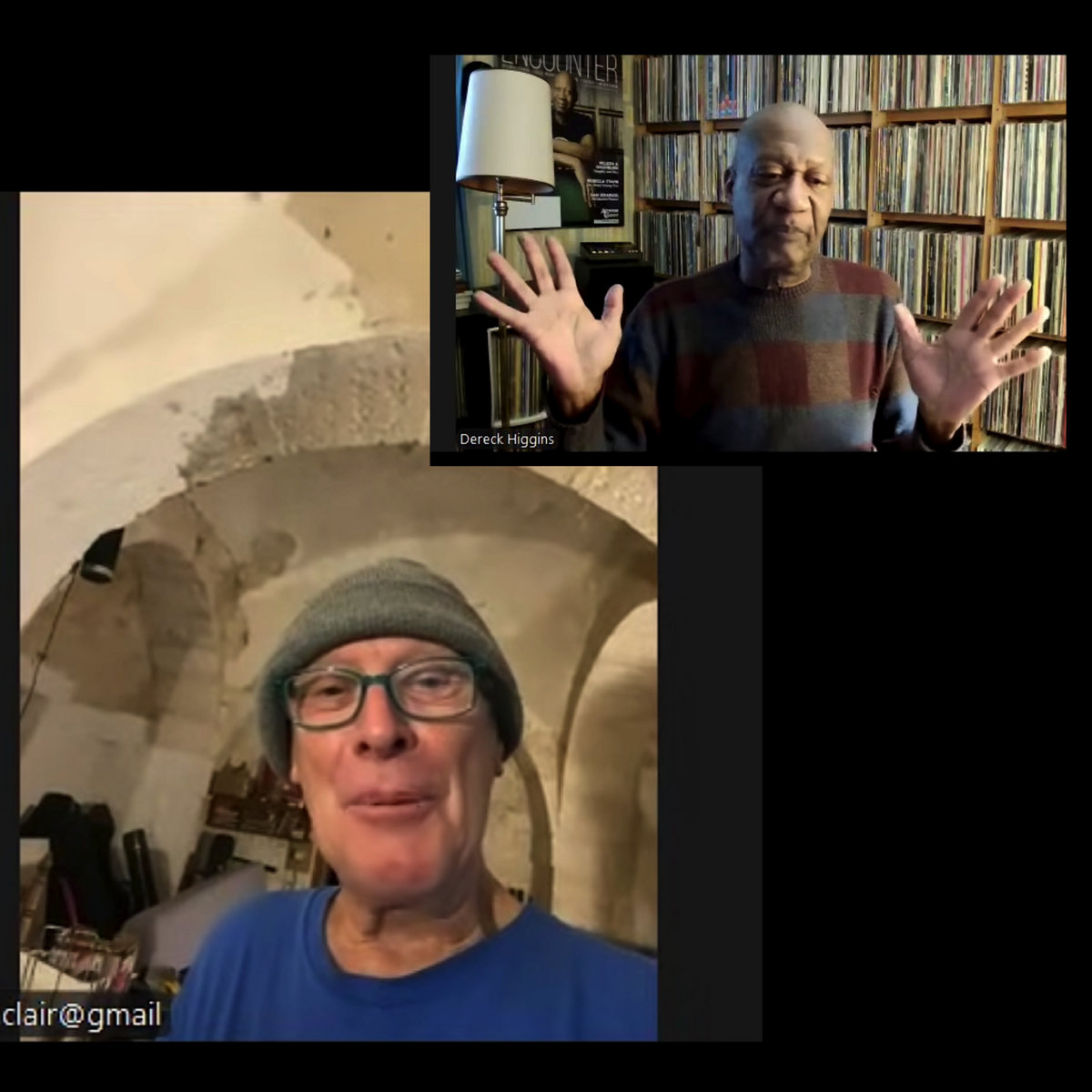
You often say that you have friends rather than fans. What matters most to you in making music with people?
Richard Sinclair: I don’t have fans. They’re all friends. I’ve always been there for the people. Before I went onstage I’d be out talking to them, finding out who they were. I know their families, and now their grandchildren are playing my music. That’s wonderful.
That comes from my dad too. He was there for the audience. My mum used to say, “If you haven’t got anything good to say about people, don’t say it.” I’m an entertainer, and the music is about the people. If you’re interested in the Canterbury scene, you can be part of it. There are people all around the world linking together, and I think what you get from it is peace of mind.
Love, peace and harmony. I keep coming back to Pythagoras and the idea of being in harmony with each other, in small spheres. We should be able to sing together. Music is such a lovely thing. It’s a shame we can’t save the world with it at the moment. I think it’s the best way.
Some of what’s called prog doesn’t sound progressive to me. It sounds aggressive, like these gigantic warlike hymns. I don’t understand that. You can be powerful and still have peace in mind. I think John McLaughlin got that right with Shakti. His music can be very powerful, but it has that peace, that spiritual thing.
Keep on caring. Let’s be in harmony together. It’s a much better way to live and exist in paradise. We aren’t going to paradise; we’re already in it.
And have fun. That’s the main thing. When you do, that’s when it works.
Dereck Higgins
Richard Sinclair Bandcamp
Original video conversations
Richard Sinclair with Dereck Higgins, January 2026 – Part One
Richard Sinclair with Dereck Higgins, January 2026 – Part Two
Richard Sinclair with Dereck Higgins, 20 January 2026 – Part One
Richard Sinclair with Dereck Higgins, 20 January 2026 – Part Two