
Bates Motel’s 1980 Concert Recordings Finally Released on ‘Live in LA 1980’ | Interview
Les Bohem and David Kendrick look back on Bates Motel, the late-’70s Los Angeles club circuit, the demos they made with Andrew Gold, their move into Sparks and Gleaming Spires, and the tapes that finally became ‘Live in LA 1980’.
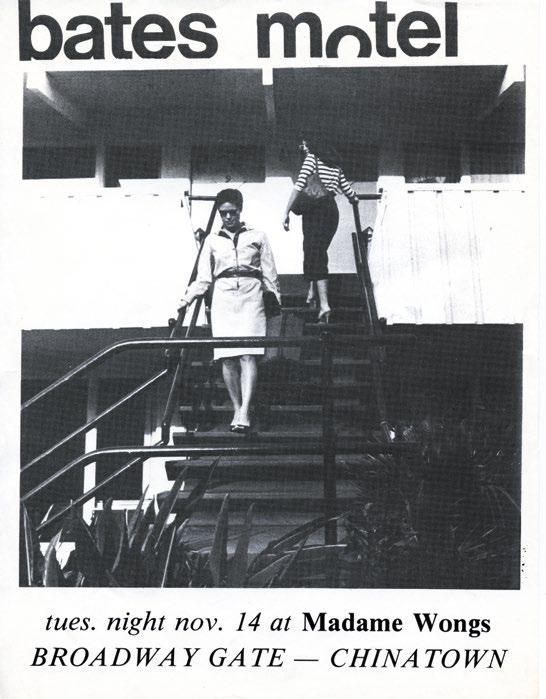
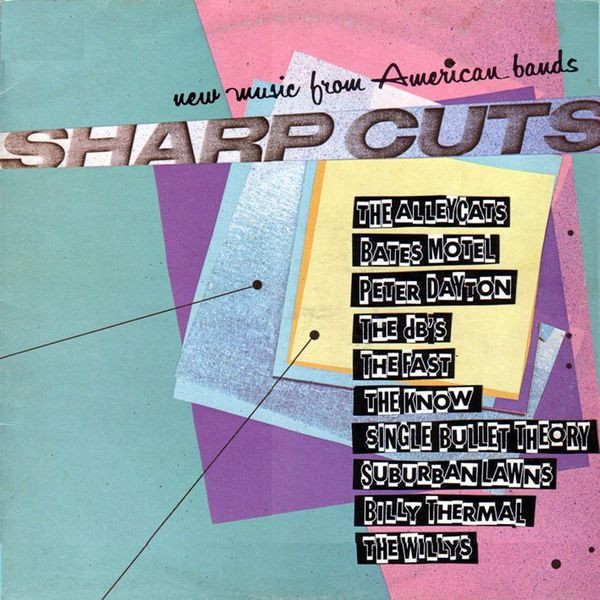
In 1979, Bates Motel were playing regularly across Los Angeles and the rest of California. They appeared at the Whisky-a-Go-Go, the Starwood, Madame Wong’s, the Hong Kong Café and Blackie’s, and built a loyal following, but never toured outside the state. Apart from ‘Live Among the Dancers’ on the 1980 compilation ‘Sharp Cuts’, they released nothing while the band was together.
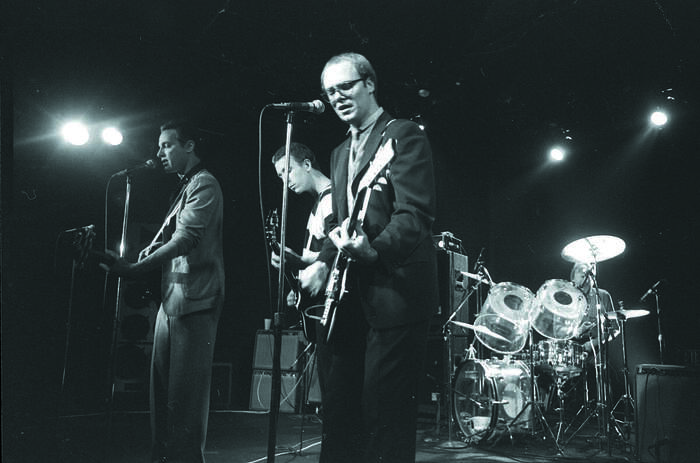
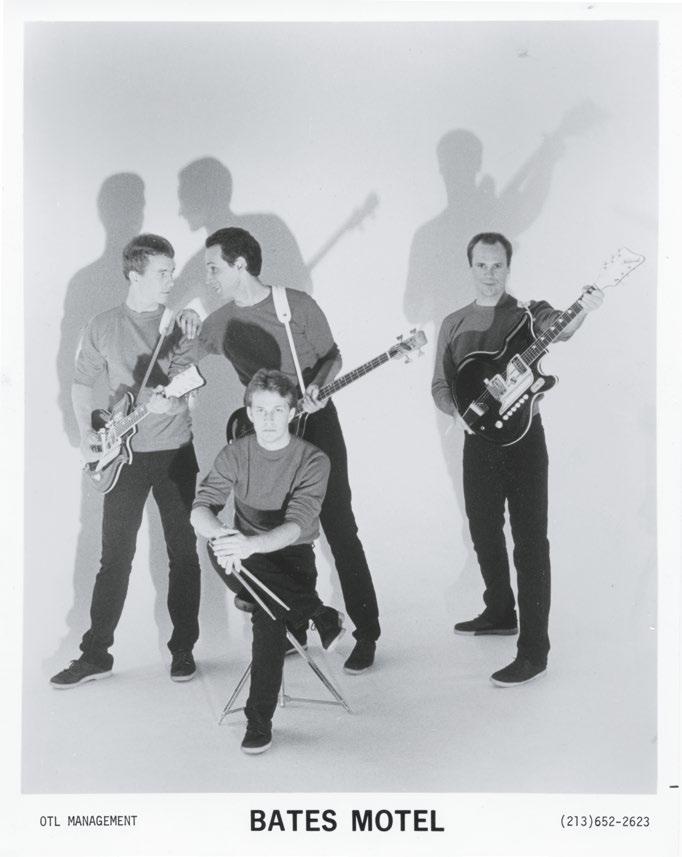
David Kendrick joined in 1979, completing the lineup with Les Bohem on bass and vocals, Bob Haag and Dave Draves on guitars and vocals, and Kendrick on drums. With three writers and three singers, Bates Motel mixed rock ’n’ roll, power pop and new wave. This gave the band its range, but made them difficult for record companies to understand, as labels expected a rock band to have one clear lead singer.
The band came close to a breakthrough several times. Lenny Waronker and Ted Templeman showed interest, while Stephen Stills wanted to produce them and later joined them onstage at the Starwood for ‘The Last Time’. Graham Nash became a friend and allowed the band to record demos at his studio. They also backed Chuck Berry in San Francisco and at the Hollywood Palladium, and recorded four demos with Andrew Gold. None of this led to an album deal.
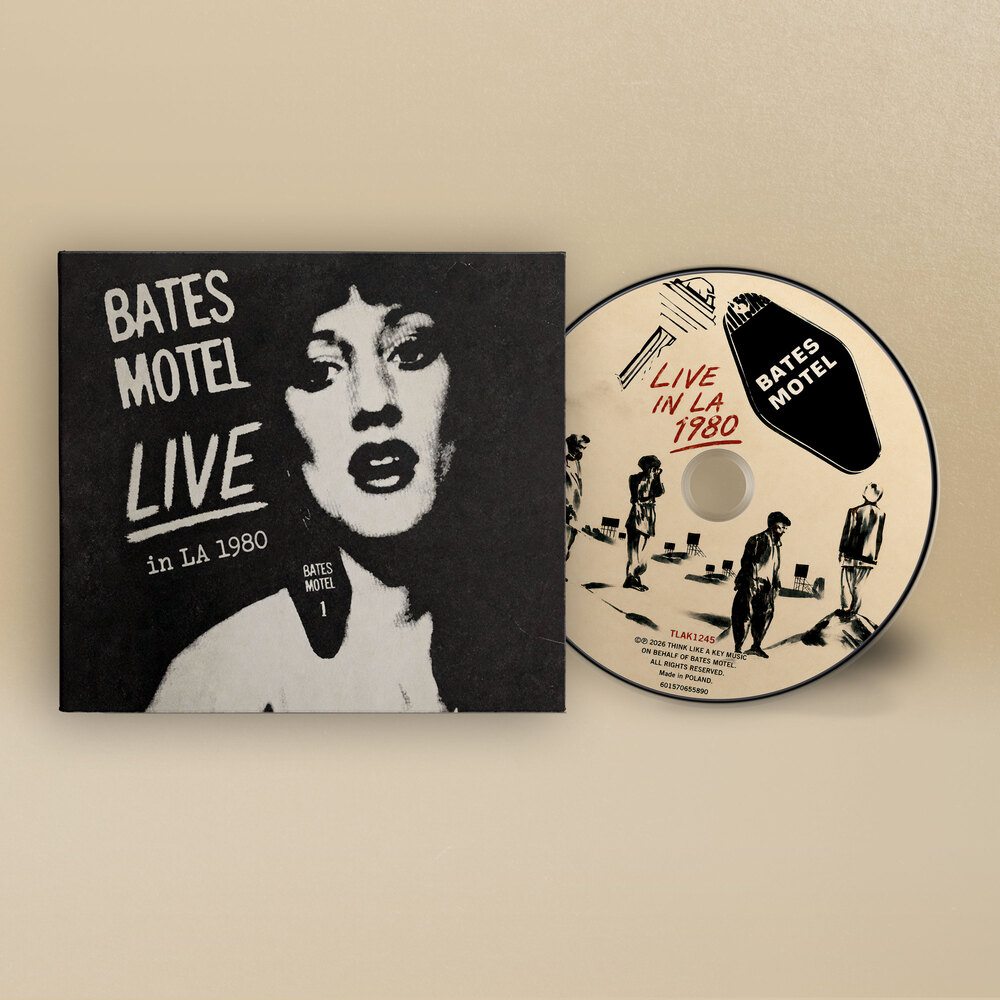
David Kendrick kept cassette recordings of two Bates Motel performances from 1980. Ten tracks were recorded at the Starwood on June 4, with the remaining five coming from the Whisky in January. The original analogue tapes were restored and remastered by Prof. Stoned, and all 15 performances are previously unreleased. ‘Live in LA 1980’ will be released by Think Like A Key Music on September 18. The recordings capture the band shortly before Bohem, Haag and Kendrick joined Sparks, and Bohem and Kendrick formed Gleaming Spires.
“We were more on the new wave side,”
David, before we get to Bates Motel, where did you grow up, and what was the music scene like there? Were there any local bands, venues or radio stations that were important to you?
David Kendrick: I grew up in the Midwest, outside Chicago. I formed groups in high school and was very much British Invasion-obsessed: the Who, the Kinks, Cream, the Stones and Hendrix, who was British in my head at first.
I was an early FM convert. Chicago had Triad Radio, a great mix of counterculture stuff, and there was an AM radio show on Sunday nights, Ron Britain’s ‘Subterranean Circus’.
Where did you buy records when you were young? Any particular shops where you discovered new stuff?
David Kendrick: There were local indie shops in Barrington and Wauconda, close to where I grew up. I bought LPs there. The price was $3.10, I recall!
What were your first bands like? Where did you rehearse, what songs did you play, and when did you first begin writing your own material?
David Kendrick: My first group was a power trio called Dead Air, my radio-joke name. My role models as a drummer, Ginger Baker and Keith Moon, were not necessarily the best examples to follow, but I liked lead drums, I guess.
I moved to Chicago after high school. You could play A LOT, but mostly cover songs. This was 1975. I played in one or two bands that wrote original songs and met one guy, Steve Summers, who I still play with now in Empire of Fun. I actually got some bands to cover Roxy Music, Be-Bop Deluxe and Sparks!
I liked art rock and krautrock, and the tail end of the ’60s vibe was still going. I loved Dylan’s ‘Blonde on Blonde’ for the lyrics. I wrote lyrics even then, but never wanted to sing. I still abhor my “voice” to this day. Egads…
Les, what do you remember about the Monday nights at the Troubadour, when you played with Stephen Bishop, Jules Shear and others?
Les Bohem: That’s a book-length essay. For one thing, I met my wife while playing in that band. I had just moved back to LA from Santa Cruz. I was living in the Valley with Steve Diamond and Jimmy Jacobs. Steve was a grammar-school friend, and I’d known Jimmy from junior high onwards. We all played music. Jimmy went on to play piano in the Jerry Garcia Band, among other things, while Steve became an amazing writer and is still writing hits as we speak. Steve and Jimmy were already professionals.
Someone knew someone, and Steve and I wound up in that Troubadour band. Monday night was Hoot Nite, and we’d back anyone who got up, play our own songs, etc. We had replaced that first Monday-night band, which was pretty much the Eagles and J.D. Souther, so those were big shoes.
The “and others” included John Jarvis, who went on to play piano with virtually everyone and write a bunch of great songs; Steve Bartek, who was about to join Oingo Boingo; and the quite visionary Joel Tepp. It was, in retrospect, crazy.
Bobby Beland was in that band, and when Jules got signed, he and I played with him for a bit. A record executive told Jules to fire me because I didn’t look like a rock star. Honestly, it could have been because I sucked. He did. Out of that, Bobby and I started the first Bates.
David, after your experience with Kim Fowley and the Continental Miniatures, what appealed to you about Bates Motel when you first rehearsed with them?
Les Bohem: It was because I looked so much like a rock star, right, David?
David Kendrick: I have to say, my life was utterly changed by a call from Kim Fowley to come to Los Angeles for some version of rock stardom! I packed my Ludwig drums and books in my VW van and drove from Chicago to Los Angeles. The group promptly fell apart, but I stayed.
Los Angeles really bewitched me: palm trees, a thing called the Antelope Freeway, ocean, mountains, desert, the music and film world. Jeez!
The Continental Miniatures got a record deal pretty quickly, had a single chart in ‘Billboard’, and we made a full record and then broke up. I have been dying of encouragement ever since…
The first lineup had several singers and writers and drew on very different influences. What did that version of Bates Motel sound like, and why did it not last?
Les Bohem: I can send you demos if you’d like. Bobby Beland wrote pretty sophisticated pop. If I had to say it sounded like anyone, I’d say Tom Petty.
When Allan Slater was in the band, he and I wrote some sort of R&B-sounding stuff, like we thought we were Hall & Oates, and one great wannabe Kinks song that we never recorded called ‘Easy Street’. Allan and I still sing it to each other.
I had some songs I’d brought down from my Santa Cruz band that arguably sounded like Bruce, although I wrote them before I’d ever heard Bruce. One even mentioned a boardwalk. It was the Santa Cruz Boardwalk and not New Jersey. That was ‘Nowhere Else to Go but Tomorrow’, which lasted all the way through Bates and which I still play.
When Bob Haag joined, we were still all over the map. Bowie was getting into the mix, all of that. Bob can play anything, so we would find ourselves heading six ways at once.
How did punk and new wave affect the band’s direction? Did you feel part of the Los Angeles scene, or somewhat apart from it?
Les Bohem: Two shows at the Whisky, Elvis Costello and David Johansen, and we knew we were getting it all wrong.
The scene around us? There were a lot of good bands, and we were all discovering that we’d grown up on the same music. The Falcons were doing some great Stax-era soul; bands like the Plimsouls and 20/20 loved pre-psychedelic pop; bands like Code Blue were just good.
We did the Del Shannon song ‘I Go to Pieces’, closer to the Peter & Gordon version, and I remember a night upstairs at the Starwood with Peter Case, who was so happy to hear the song that we spent an hour just listing our other favorites.
The punk bands, if they noticed us at all, hated us. They were the cool kids, and those scenes were adjacent but different, like hair metal up the road.
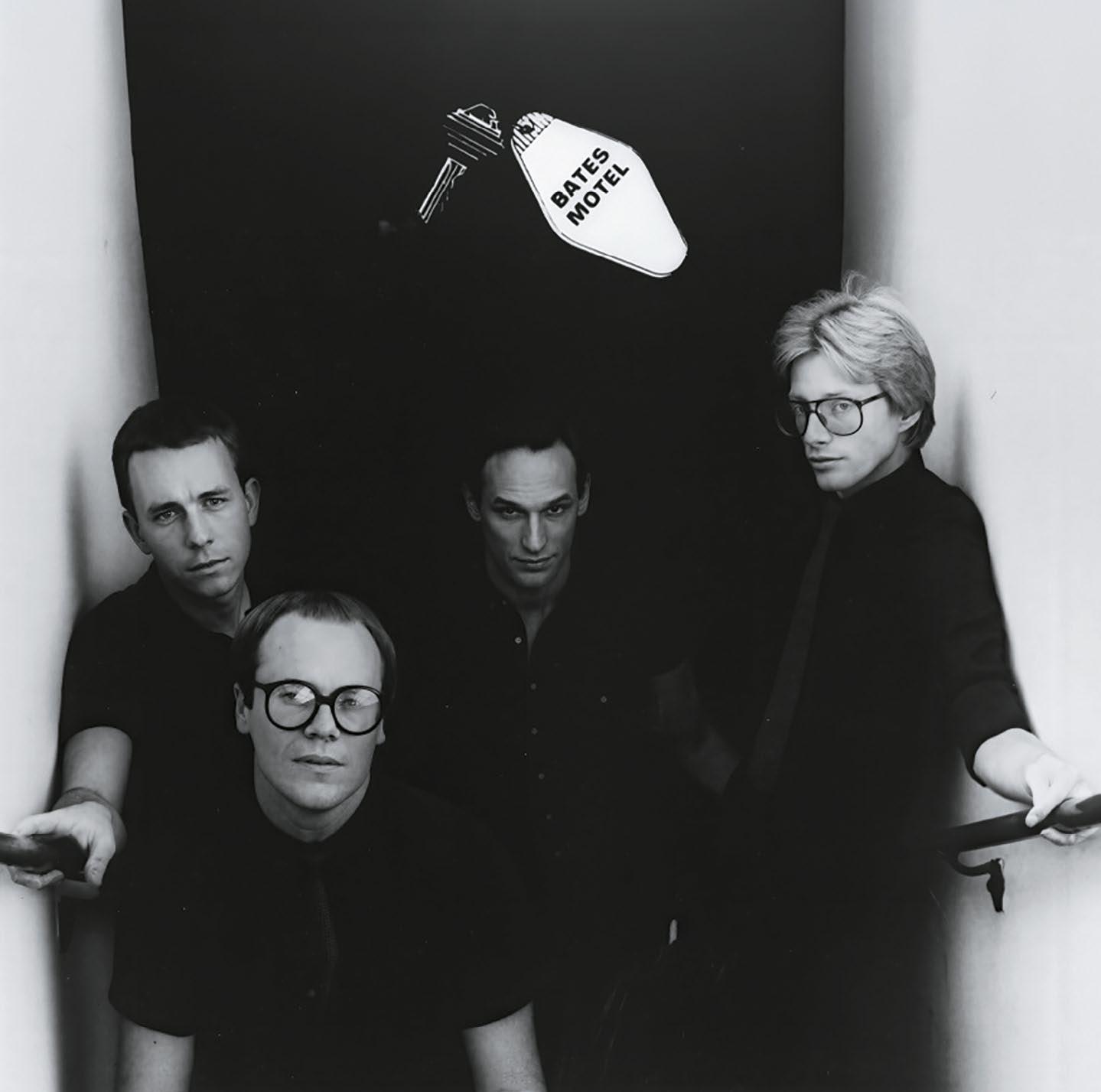
David Kendrick: Punk and new wave kind of had venues of their own. We were more on the new wave side, I suppose, but we could dish out attitude if need be!
You played constantly and built a strong local following without an album. What do you remember most about those shows?
Les Bohem: Frustration.
David Kendrick: The group played a lot, all around California, and we were tight. We seemed to get audiences going, which was no small thing in jaded LA.
Several producers and label people were interested in Bates Motel, but nothing led to a deal. Which opportunity came closest, and why did it fall through?
Les Bohem: You would have to ask them.
David Kendrick: I still wrangle with this, and ‘The Way Marlena Moves’ still seems as though it could have had the kind of success the Knack had as a single. But the major labels of the time didn’t get the two-singer, “we don’t look like rock stars” thing. And we never thought about independent labels in those days.
You recorded four demos with Andrew Gold. How did those sessions come about, and what did he bring to the songs?
Les Bohem: Andrew was a grammar-school friend. We grew up together. I ran into him at the Starwood, I think. This was just after his Linda Ronstadt days. We did those at his house on a TEAC four-track, I think.
What did he bring to them? He was an incredibly gifted producer. He made us sound great. I think hearing ourselves sound that good changed the way we played live.
David Kendrick: He and we had a great energy at that point. I was super-excited to get new songs I’d had a hand in recorded, and we all seemed ready to take on anyone. That tape is still great, and why no one signed the group after hearing ‘The Way Marlena Moves’ is still beyond me, as I just said!
Andrew basically engineered a very good live group. There was not a lot of trickery, just some effects on ‘Real Time’.
Most of the songs were written by Les and Bob, while David also became part of the writing. How did the three of you work together as songwriters? Which song do you feel best represents Bates Motel?
Les Bohem: Bob and I wrote together every which way. In a room, or with a lyric first, or “Here’s a song I can’t finish,” or “Wouldn’t ‘In the Jungle of Cities’, from the Brecht play of the same name, be a good title for a song?” I told you Bowie was lurking in those days, and there were pretensions.
David and I usually worked together in Bates and Spires, from his lyrics or with a bit of melody. For “Which song?”, can I have two? I’d probably go with ‘A Boy and a Girl’ and ‘The Way Marlena Moves’. My personal favorite is ‘Unexpected Overnighters’. Oops, that’s three.
David Kendrick: For me, then, I was writing lyrics, and Les or Bob did the music. We had a grim defiance and, hopefully, a sense of the worth of things even when it didn’t always seem to go your way in the wordage.
From this period, I’d shoot for ‘The Way Marlena Moves’, ‘Dedication’ and ‘My Time’. I leaned toward the barn-burners.
‘Live Among the Dancers’ was the only Bates Motel song released at the time, appearing on the ‘Sharp Cuts’ compilation. How was that song chosen, and what did you hope the compilation might lead to?
Les Bohem: Chosen? Again, you’d have to ask them. Bob is the better singer, that’d be my guess. And I still didn’t look like a rock star.
What did we hope? That deserves a “duh…”
David Kendrick: If I’m not mistaken, I thought we were figuring on saving our very best songs for a record, but we felt ‘Dancers’ was pretty catchy.
‘Live in LA 1980’ combines recordings from the Starwood on June 4, 1980 and the Whisky-a-Go-Go in January. David, how were the tapes made and preserved? What do the two of you remember about those shows?
Les Bohem: For me, the shows run together in a blur. There were, I think it goes without saying, drugs involved, and we played the Starwood probably twenty times.
But the Whisky was sacred ground. I saw Jimi Hendrix and Sam & Dave on the same bill, Procol Harum and Cream there when I was a kid.
I believe we’d already played there once before David joined the band. It was a show where we opened for Dwight Twilley. Robert Hilburn reviewed the show for the ‘LA Times’. Twilley was great, a combination of the raw energy of Elvis Presley and the street cred of Springsteen. “Bates Motel showed no new ideas.”
I think that, for this show, I was hoping he’d show up so I could punch him, but alternately hoping we could blow the place apart. My memory, but again, there were drugs involved, is that we did.
David Kendrick: The Starwood shows were always packed for us. It was release night for ‘Sharp Cuts’, and we were on it. We played two blazing sets that night.
I’d asked the house soundman if he could run a cassette of the PA mix, and he obliged! I was able to do that at the Whisky as well. Things were a bit looser then.
I had the tapes stored for many decades before they were digitized and worked on for the Think Like A Key release. The quality from a cassette source surprises me.
You ended the Whisky set with ‘Stop! In the Name of Love’, the only cover on the album. Why did you choose that song?
Les Bohem: Because it’s awesome. Although it violates Rule One of performance: never do a cover that’s better than your originals.
David Kendrick: For the ‘Stop’ hand choreography we all did!
What was it like hearing these tapes again after so many years?
Les Bohem: Did I already mention frustration?
David Kendrick: We were extremely tight and rocking, and smart. I probably kicked the tempos up a notch! I know the two-singer thing threw some people, and the vintage gear threw some people, but really…
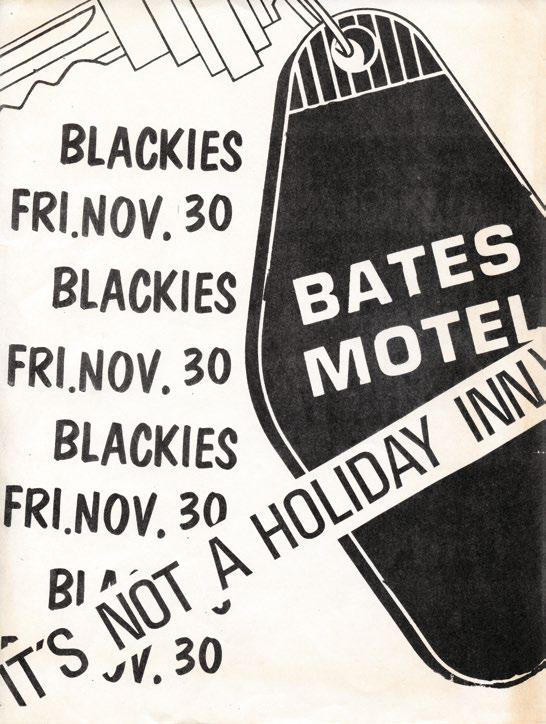
When Ron and Russell Mael came to see you at Blackie’s, you thought they might produce Bates Motel. What was your first reaction when they asked you to join Sparks instead? How was the decision made, and what did it mean for Dave Draves?
Les Bohem: I have to say, at the time, I didn’t realize what a momentous decision we were making. It was becoming increasingly clear we weren’t going to get signed.
“What did it mean to Dave?” is a question I can guess the answer to, but you would have to ask him. It was a brutal moment. Dave was insanely gracious.
David Kendrick: As a guy who had loved Sparks since my Chicago days, it meant the world to me to be asked to play with them and to be acknowledged by musicians I’d so admired. That just does not happen very often. Wow.
Sparks’ success turned them into a new band, especially in America in the ’80s, and I was very pleased to have been on board. With Gleaming Spires going as well, it was a crazy decade.
Soon afterwards, you were recording ‘Whomp That Sucker’ in Munich and appearing with Sparks on ‘Saturday Night Live’. What changed most for you as musicians? How much freedom did you have to develop your own parts?
Les Bohem: No pressure. More fun. Not playing pretend anymore. And, for the most part, Ron and Russell trusted us to do what we did.
But what changed is obvious: we weren’t playing our songs.
David Kendrick: The joy of the first Sparks records was that Ron and Russell wanted a band again, one that could figure out how to play the chord patterns that were presented. There was a title but no lyrics at the time we were working the songs up in a rehearsal room.
I came up with all my drum parts, and there are some odd ones, but they went for it! I knew their music and loved adding to the history of that band. I feel ‘Whomp That Sucker’ and ‘Angst in My Pants’ are up there with Sparks’ finest work of all time!
While you were with Sparks, Les and David began recording as Gleaming Spires, and Bob later joined. What could you do in Gleaming Spires that had not been possible in Bates Motel?
Les Bohem: It was a recording project first, so we could be much more experimental. Three-quarters of the songs on the first two albums, we would never have been able to do live.
In my own writing, I was in a weird, confessional space, and it was deeply satisfying. Once Bob and Jim joined and we started playing live, it was a lot of the same clubs and felt a bit more like an extension of Bates.
David Kendrick: Bates was all about being a live, two-guitar rock band, and Spires started from a very different mindset: if no one was going to sign Bates, then Les and I would write whatever we were hearing in our heads, be it slow, noisy, beautiful, heck, even humorous.
It was all in subservience to the song, and so the variance was quite wide.
How do you look back on the end of Gleaming Spires, when the first planned US tour was cancelled after Bob left?
Les Bohem: Well, there’s frustration. I think, by then, it was as obvious as it had been about Bates that we weren’t getting signed. We were playing some nights at clubs where the only people in the audience were the bartender, the waitress and Bob’s cousin Rich, who helped us with the equipment.
In retrospect, I think I was a bit relieved that I wouldn’t be banging my head against that particular wall anymore, but at the time I just wanted to stay outside and play a while longer.
Like the decision to join Sparks, it was only later that I realized a big decision had been made. In this case, the party was over. I guess 35 is a bit late to grow up, but there we were.
David Kendrick: I certainly wish the whole US had gotten to hear the band live. It’s hard to know, ultimately, what might have changed.
Les, you began writing screenplays while you were still playing in bands. Did songwriting help prepare you for screenwriting? What later drew you back to your own music with ‘Moved to Duarte’?
Les Bohem: I got my first writing jobs because junior executives in LA were Sparks and Spires fans and were trying to develop movies about rock and roll, which their bosses, who couldn’t give a flying fuck about Sparks or Spires, would then not make.
I wouldn’t say songwriting helped, but being in bands certainly did. You get a lot of notes in my day job, A LOT OF NOTES, and have to collaborate a lot. I think I’m able to do that because I had the experience of “Could you try a different bass part?” early and often.
I didn’t play much after Spires. I played a bit in Seattle with some friends. You can find that single, ‘Honeymoon Jungle/Heart of Nowhere’, in all the usual spots. I wrote some songs, mostly in Nashville, but I kind of thought I’d closed that chapter.
I was never much of a guitar player, and you can’t really play bass by yourself unless you’re a whole lot better than I ever was.
Screenwriting, however, gave me enough money to buy a nice acoustic guitar, and one day I thought, “You can’t just sit here looking at this guitar. I’m going to learn to finger-pick, just one Mississippi John Hurt song, just one.”
Then my wife pointed out what a dreadful dye job Bruce Springsteen was sporting. That really made me sad. All of a sudden I was writing a song with my new, nowhere-near-John-Hurt finger-picking skills. Then I was writing another one about a recent bad experience in the movie business. Pretty soon, I had maybe forty.
So, back to your bands-on-the-scene question, I had stayed friends with Marvin Etzioni from a The Model/Bates show in Redondo Beach. He’s also a terrific producer. I went over to his house, weeded through those forty songs… ‘Moved to Duarte’. And thanks for asking.
David, you later played with Devo and now Xiu Xiu. You have said that you approach the drums with the song and lyrics in mind. How has that shaped your work since Bates Motel?
Les Bohem: And David, what do you owe Les for that shaping?
David Kendrick: I love playing a wood trap set and cymbals, but I love adding oddball percussion, gongs, bells, anything really that enhances. So I think around the lyric.
I try not to interfere, but will add to all that is there, rather than, say, just trying to play with a bass-guitar pattern. I always have a lot more lyric backstory in my head, but it’s hard to say how that helps… or hinders.
I’ve recorded with many, many, many more bands and singers than mentioned, and I love working with fiercely dedicated artists. All the bands I have worked with have had that quirk.
Has this release encouraged you to look for more Bates Motel tapes or consider working together again?
Les Bohem: Hey, Bob, we have all those other demos! All the way back to ‘Tony’s Bar’. We might even have ‘In the Jungle of Cities’.
Klemen Breznikar
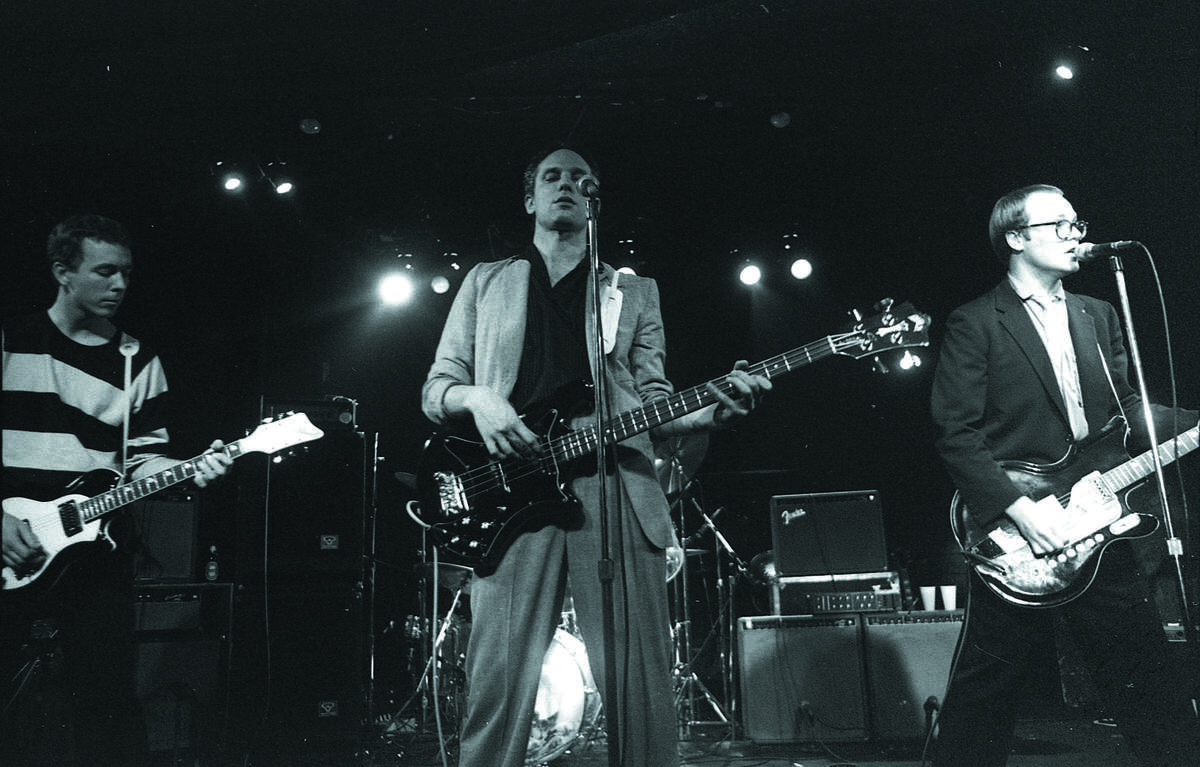
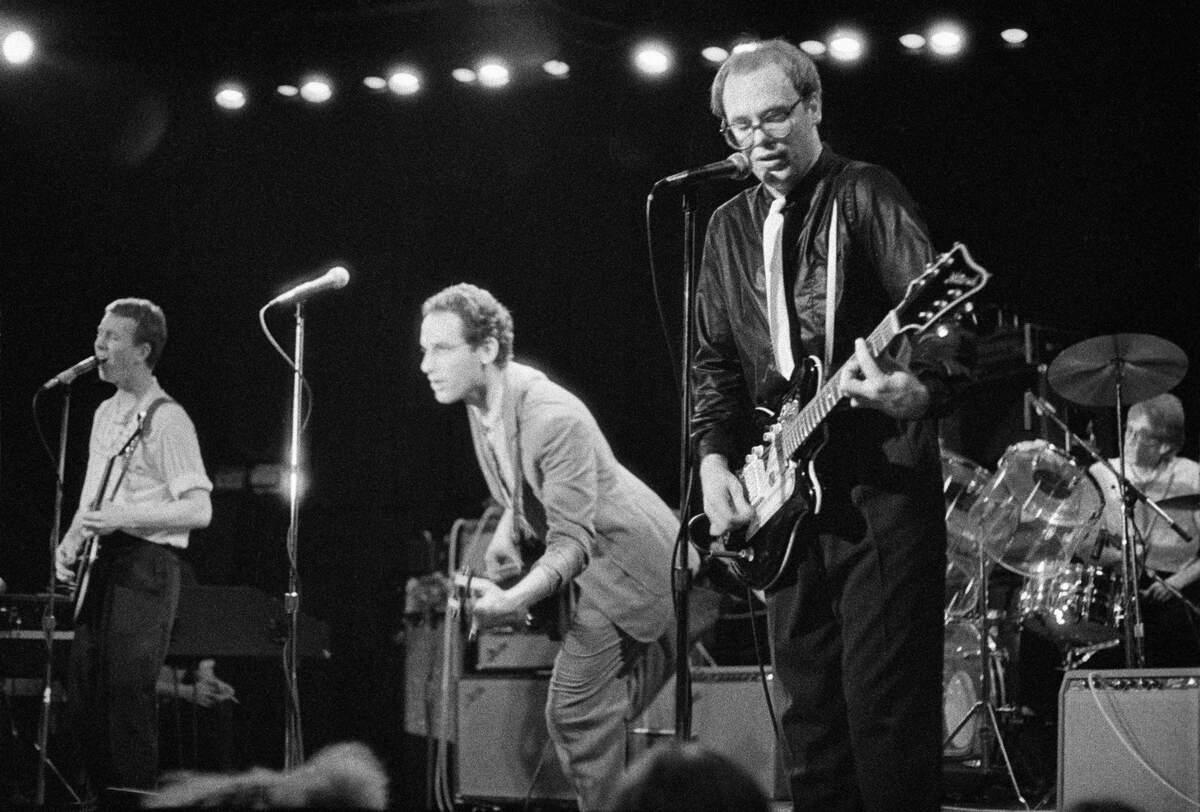
Headline credit: Bates Motel onstage, circa 1979–80. Photograph: Rich Modica.
Think Like A Key Music Official Website / Facebook / X / Instagram / Bandcamp / YouTube