
Flood | Interview | “We Were the Heaviest Band Around in Exeter at the Time”
Mark Flood looks back on the Exeter underground, Hot Head, Julian Piper, supporting Hawkwind and Genesis, and the recordings that finally became ‘A New Way of Living’ more than fifty years later.
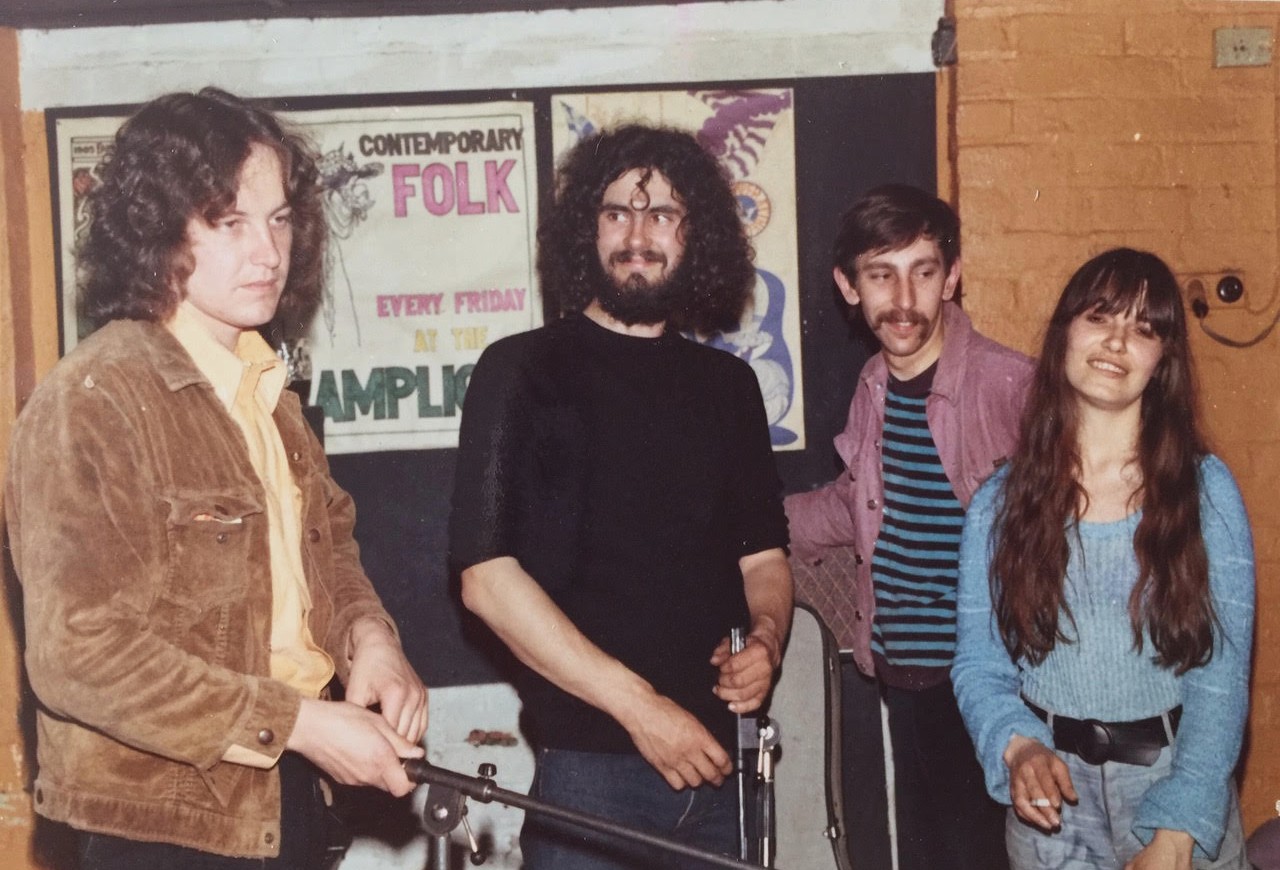
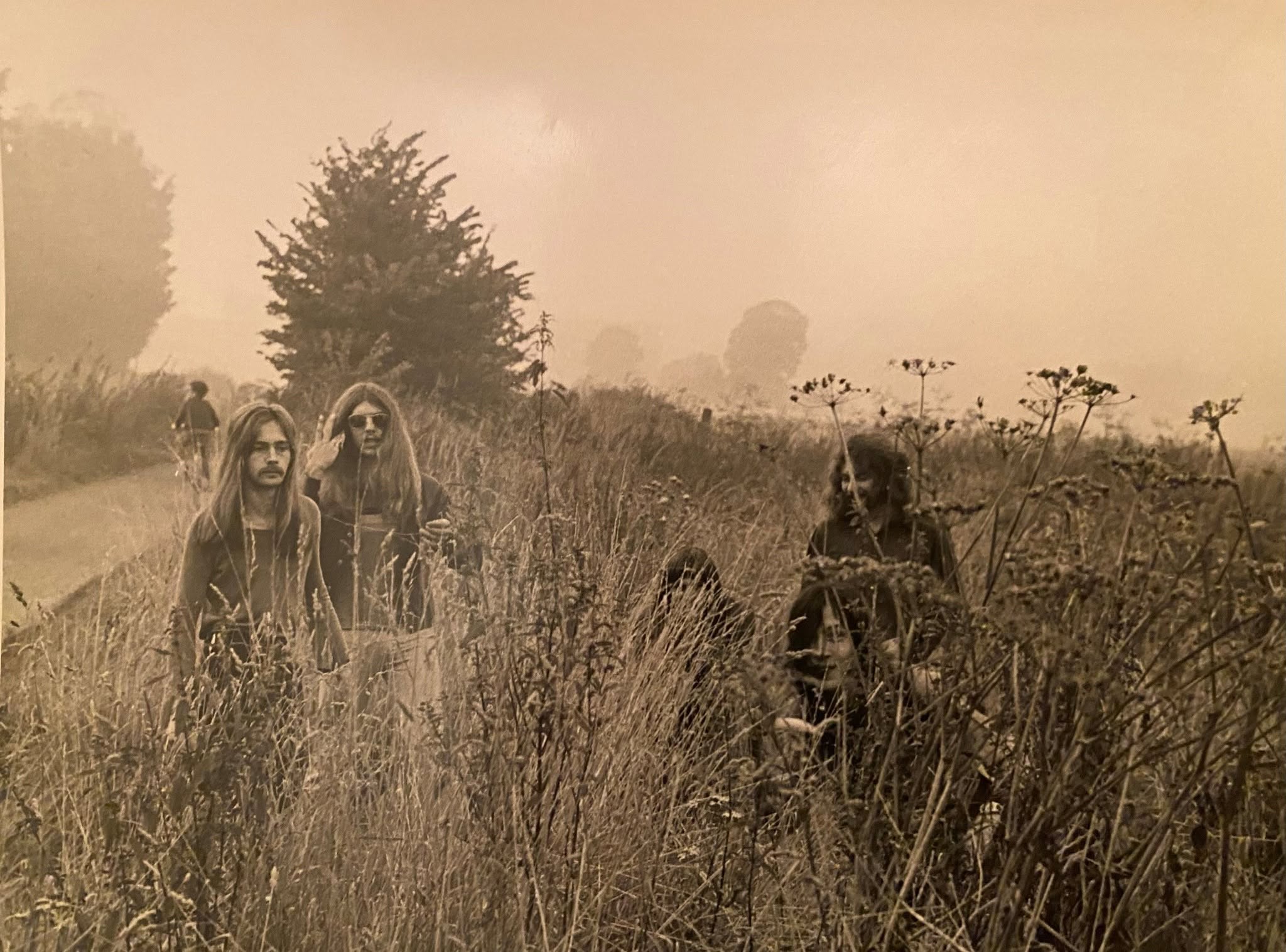
Mark Flood remembers Exeter in the early ’70s as a small but lively place for underground music. There was the Black Horse in Longbrook Street, the Emporium head shop, gigs at the Quay Club and St George’s Hall, village halls, rehearsal spaces and the usual problems with equipment. Flood were loud, sometimes far too loud for the places they were playing, and gradually became one of the heavier local bands. ‘We were doing it for the love really,’ Mark says. There was never much money in it, but they still found themselves sharing bills with Hawkwind, Genesis, Van der Graaf Generator, Stone the Crows, Arthur Brown and others. Julian Piper was at the heart of the band. He was the guitarist, one of the main songwriters and, as Mark remembers, the driving force behind much of what Flood were doing. Later he became closely involved with the blues as a musician, writer, broadcaster and promoter, but Flood was never something he completely left behind. Before Julian’s death in 2019, he and Mark had started talking seriously about releasing the old recordings and even playing together again. Mark says Julian saw Flood as ‘unfinished business’. The surviving studio recordings were made at Command Studios in Piccadilly and TG Studios in Fulham in 1972 and 1973. More than fifty years later, they finally appeared through Bright Carvings as ‘A New Way of Living’.
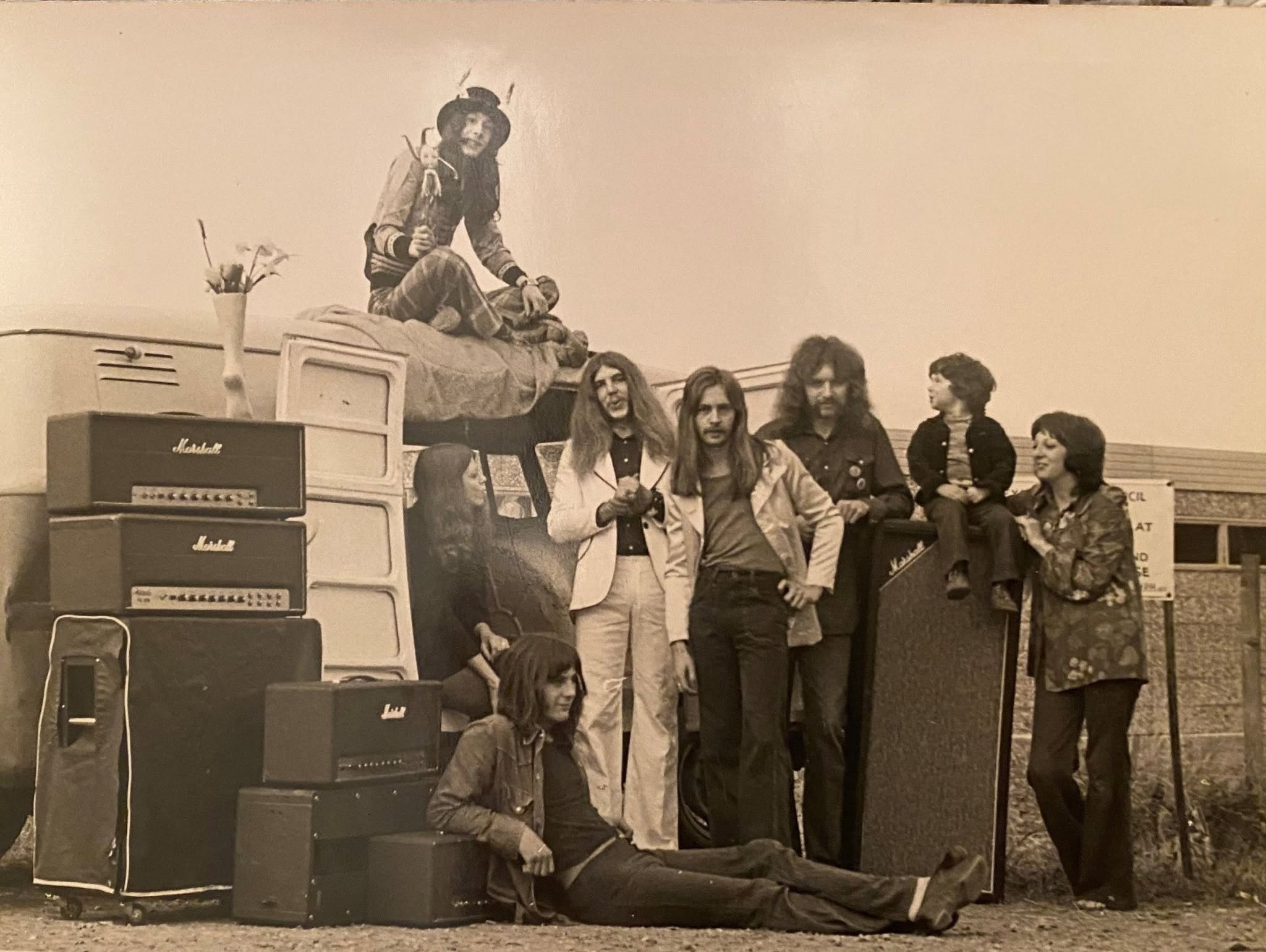
“I remain very proud to this day that I am probably the only person who has managed to freak out Hawkwind with my flower arranging!!”
Can we begin with Exeter in 1971? What kind of place was it for young musicians, and was there much of an underground scene?
Mark Flood: Exeter did have a small but thriving underground scene in the early ’70s, based around the Black Horse in Longbrook Street, our local pub and rendezvous point for like-minded people and those en route to Cornwall, etc. The Emporium in New Bridge Street, Exeter’s only ‘head’ shop, sold underground magazines, candles, joss sticks, stripped pine furniture, etc., plus had an upstairs ‘meeting’ space where we would sometimes gather in the evening. Hot Head rehearsed there in the sub-basement.
The Quay Club and St George’s Hall were the main Exeter venues for rock and blues bands. Tiffany’s was also occasionally used, for example for a Hawkwind and Pink Fairies gig on Wednesday, 30 June 1971. I was in Seagull, the support band. Most clubs were mainly disco-orientated. I don’t remember much live music taking place in pubs.
Bill Greenhalgh was the main music shop for the area, purveyors of equipment and repairers of it when it blew up! Left Bank/Minns music shop sold festival and London concert tickets. Local bands playing their own music had to search out venues, including village halls, and like-minded promoters willing to include them on the bill with touring ‘name’ acts across the South West.
All the members of Hot Head/Flood had been in bands or playing before joining. Both Mitch and Rawden had spent time in Germany playing at American Army bases.
We all had our own equipment. Julian owned ‘Adolf’, a red-and-white VW camper van which we used for transport. Later, Charlie also used ‘Starship Ferris’, a dark red Morris Minor van with a black Hammerite-painted interior and dashboard embellished with small silver stars. Our occasional band ‘Limosine’ was Julian’s soft-top Morris Minor. I can remember travelling down to the Flamingo in Redruth, Cornwall, to support Arthur Brown’s Kingdom Come with Stacia from Hawkwind so she could meet up with Arthur.
All Paul needed equipment-wise was his flute and then sax, which I remember him using for the first time when we supported Genesis at the Quay Club on Wednesday, 17 November 1971. This was also the first time Flood was used as a name.
Flood began as Hot Head. How did the sound change as the line-up evolved?
Richard’s drumming, Mick’s bass playing and the early numbers, Eric Clapton’s ‘Let It Rain’, ‘Pearly Queen’ and ‘My Sunday Feeling’ by Jethro Tull, gave Hot Head a lighter feel. Julian quickly added some of his own songs, so the transition away from being a covers band started early on. The ‘heavier’ sound gradually developed with the music.
Richard left to teach maths in London, not very rock ‘n’ roll, quite early in the band’s career. When Mitch joined, his drumming was more percussive and heavier, which changed the sound. He also started to contribute his own songs, which, if anything, were slightly less rock-orientated than Julian’s. He also added additional vocals which were more rock-orientated than mine. He sang any rock ‘n’ roll numbers which we sometimes ended the set with.
What were those early rehearsals like? Did Julian bring in finished songs, or did they grow with the band?
Early rehearsals were friendly and relaxed, and I felt at home with the band and the music they were playing. I was also happy and relieved to move away from another band I was in at the time, Grit Ferret. I don’t remember us playing any Spirit numbers, but that doesn’t mean we didn’t!
We rehearsed in a few different places. Hot Head used the sub-basement of the Emporium. We had to lift Mick’s very heavy 18-inch Selmer Goliath bass cabinet up a ladder and through a trap door! An upstairs room at the rear of Barts Tavern and Budlake Village Hall were also used.
I don’t remember there being any problems making the transition away from blues covers, a few of which remained in the set throughout the time Flood was together. It was a relatively gradual evolution for us musically. Julian’s and then Mitch’s songs started as shorter numbers and evolved at rehearsals over time into much longer, more complex and progressive pieces. I contributed lyrics and ideas when we reformed in 1974, but the different line-up didn’t work out and I have very little memory of what we did over the five months we were together at that time.
The name Flood seems to have arrived almost by accident. Did it end up fitting the band better than anyone expected?
I liked what the band were doing but never liked Hot Head as a name. I’m not sure any of us did. I thought early posters advertising us as The Hot Heads were really naff. When the name Flood was proposed I was amused, but did think it would be a better name. Fortunately, the band agreed. Piper was never suggested as a name for some reason. I would say Flood described our music much better, although it was Julian who was primarily the driving force in the band.
Paul’s flute and sax gave Flood a distinctive sound. How did that side of the band develop?
I would say Paul’s prominent flute playing enabled the band to sound different from other bands around locally at the time.
Although blues was a strong interest for Julian, I don’t think we were looking towards any particular bands or scene. Our sound evolved at practices and during live performance as a result of the songs being written, the instrumentation and each individual’s style of playing. We were loud because we were fortunate in having quite a large sound system and backline amplification.
It was very early days in PA development and the idea of mixing desks and onstage monitors had only just come in and was outside my budget at the time. I would have loved to have been able to buy a synthesiser such as a VCS3 or similar, but the nearest I got was a Stylophone through a WEM Copicat and reverb unit, which just sounded like a Stylophone with echo really! We were limited by finances. Income from gigs was quite low. We were doing it for the love really. I spent most of that time ‘in hock’ with HP payments to Bill Greenhalgh, our local music shop.
People remember Flood as an unusually heavy live band. Did the band change once the music began hitting harder onstage?
I think we were the heaviest band around in Exeter at the time. Other good bands doing their own music at the time were Ipsissima, David Hubbard’s instrumental band, and Retrospect. Steve Crook, the guitarist in both bands, won a £200 guitar as the most promising guitarist in the country in the Melody Maker competition. Other bands were Dependable Delivery, a US-focused Art College band, and Dilendas Vaal, which was more rock-focused.
Another band David played with at this time was No Mere Nosebleed, an avant-garde/jazz group with talented musicians. All of them were quieter than Flood. Musicians in these bands tended to stick together as a close-knit gang, with a friendly rivalry with other bands. Flood did organise several free open-air concerts in aid of Friends of the Earth, to which we invited other local groups to play on the bill with us. Most of us had little contact with local ‘covers’ bands, which were the only bands local agents were interested in.
Folk duo Salonica, with Len Gammon and Trevor James, played on the same bill with us on numerous occasions, as did Bowman Ear Stereo Progressive Disco.
Mitch’s drumming was frightening to David Hubbard, a gentle soul, when he joined on bass and first heard it at practice. He continued to play with Ipsissima and other musicians, the reason he finally left, but had to learn to play at volume with Flood.
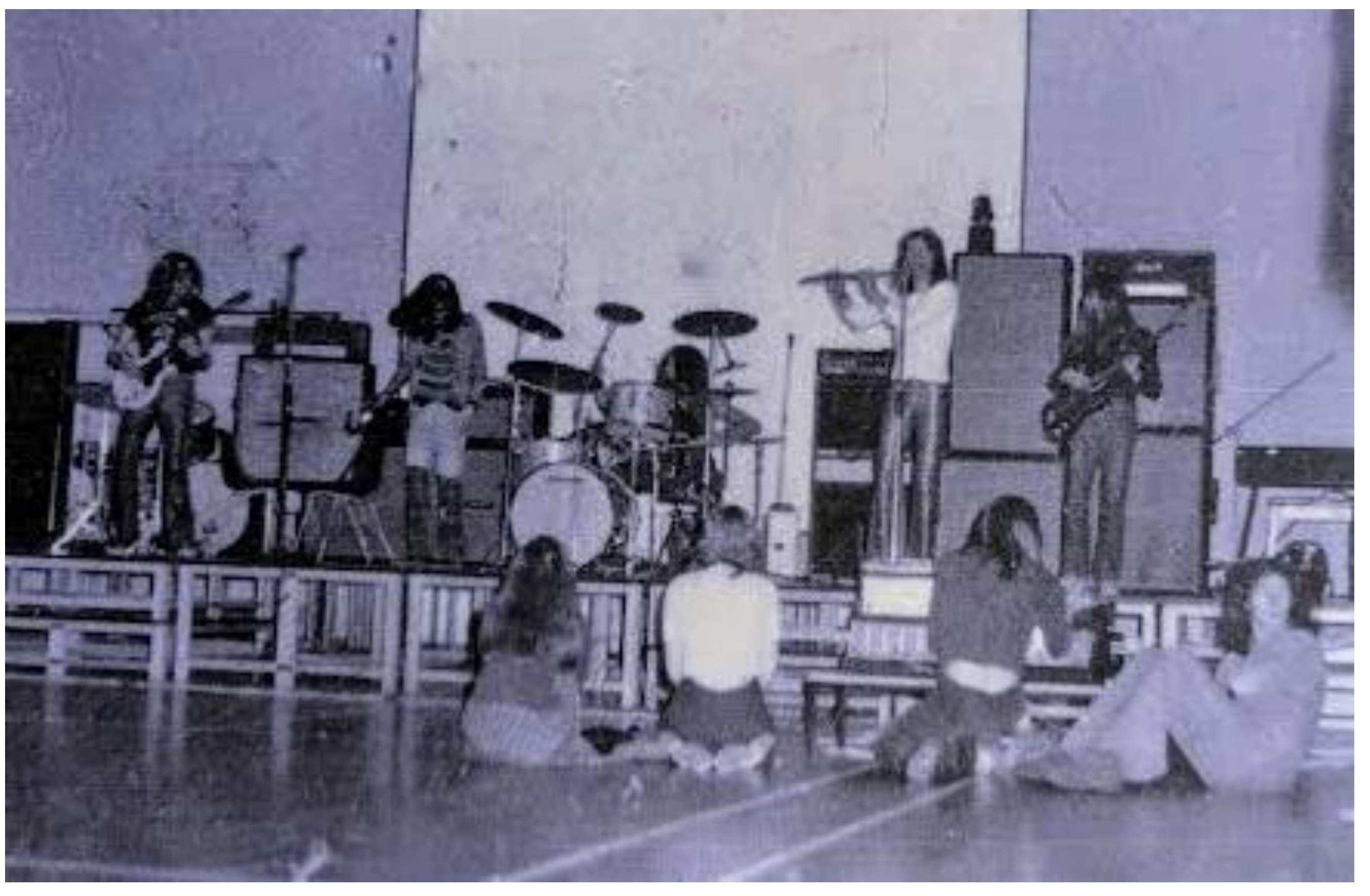
You supported Hawkwind, Van der Graaf Generator, Genesis, Stone the Crows, Arthur Brown and many others. What did you take from seeing those bands at close quarters?
I think watching the bands we supported made us aware of their live performance rather than just listening to their music on record. It was great sharing the bill with many of the bands we supported and getting paid, not very much, to see them. I certainly saw bands that I hadn’t heard before, with some remaining favourites with me to this day, including Arthur Brown’s Kingdom Come. I think we did feel we belonged on that kind of stage, more so as the band developed.
What’s the wildest story you remember from those days?
One story that resonates with a lot of the band is us turning up at a small seaside town hall which was obviously a biker haunt. At the start of our set, Mitch would introduce Paul and then me during ‘Junior’s Wailing’, our first song. I was still waiting to go on and feeling rather anxious that rock ‘n’ roll songs were going to be expected all night when I heard the band falter and stop, and then they came running back into the dressing room followed by the wives, etc.
Shortly afterwards, Charlie, our roadie, arrived and banged on the door to be let in. The dressing-room door was finally pushed closed against the oncoming ‘biker hordes’, who were wrapping their fingers around the door and trying to force it open. A judicious application of billiard cue to some biker fingers by Claire, Julian’s wife, resulted in them giving up and us managing to barricade the door.
Fortunately, apart from pushing the PA speakers over, they didn’t take it out on our equipment. Apparently Julian had asked Charlie, who was at the front of the stage, to ask a biker to stop lying across the PA amplifiers, resulting in Charlie receiving a kick in the face. I think we had to get a police escort out of the building and to the edge of town.
I also remember our gig at the Marquee in London, which promised great things but in reality was a let-down. We found out at very short notice that we had the opportunity to play supporting Mahatma Kane Jeeves, the resident band. The venue was pretty well empty and the very small dressing room smelt like a urinal, but we were able to add our name to the amazing wall of autographs and band names.
Frustratingly, we were blighted by equipment failure. Unusually, it was our 200-watt Marshall PA amp this time and not Julian’s guitar amp which kept blowing a fuse. Charlie had it back to front at the front of the stage and, when it cut out, usually during a vocal section, he would unscrew the fuse holders, chuck the dead ones over his shoulder, put two new fuses in, give me the nod and I would continue singing if there was any verse left!
Obviously it also affected the flute, so although the rest of the band ploughed on regardless, the resulting sound must have been patchy to say the least. The venue finally let us borrow a 100-watt PA amp, but this was just not loud enough.
Another memory is the six of us being offered a place to crash by a young lady after a Café des Artistes gig. This was to be on the far side of London, but was too good an offer to turn down. When we arrived it was obvious it was her mother’s house, and we could hear her mother upstairs questioning who she had brought back.
A large photo of an Alsatian dog halfway up the stairs resulted in me getting into my sleeping bag minus only my shoes. When her mother found all six of us lying in the dark in the front room, she went berserk. I was at the van and waiting for the others some time before they joined me! We had a very uncomfortable and smelly night trying to all sleep in the van in a lay-by just outside London.
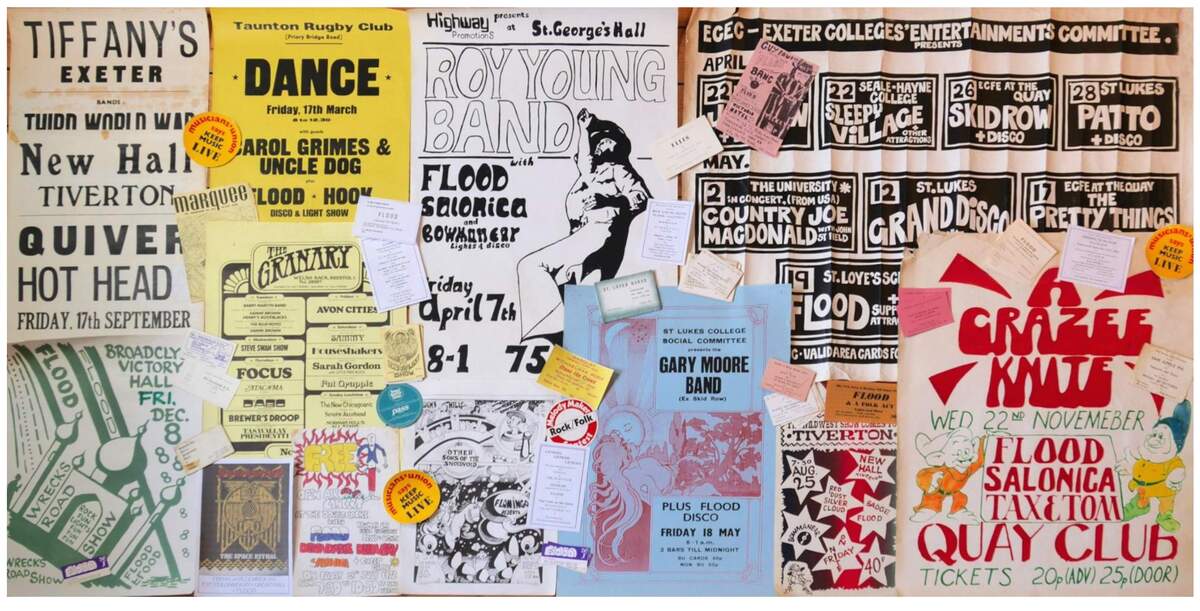
There’s also the wonderful story of Flood being paid to go home because you were too loud for Woodbury Village Hall. How loud were you really?
The Woodbury Village Hall gig was on 21 April 1972. We could have done two or three of these a night and made significantly more money than actually performing!
Either the band or possibly Julian owned our 200-watt Marshall PA, and I added a further pair of Marshall 50-watt columns and amp, so the PA at 250 watts was a reasonable size for the time. This was a good thing, as the backline varied from Julian’s 50/100-watt Fender, Marshall/Sound City guitar amps, eventually evolving into a 100-watt stack. David Hubbard and Rawden both had 100-watt 8×12-inch bass stacks. Mitch was a loud drummer anyway, but also had a vocal mic which picked up some drums.
The volume was a result of all the musicians working with equipment which had to be driven reasonably hard to get a good sound, rather than a conscious effort by us to be heavy. I am sure 100 watts was louder then than it is today though!
How important was the visual side of Flood?
The light show, consisting of oil and normal film slides and short film loops, etc., was important when we could afford to include it. We also regularly used a strobe, extending this to two strobes for a Bath Arts Workshop gig, but even Charlie, our roadie and strobe operator, thought this was a bit over the top after the gig!
The rest of the band always took their stage look very seriously and looked the part. Although I took my vocal contribution very seriously, I felt the need to try and present a bit more of a visual performance. So any stage decoration and my pixified outfits were my idea.
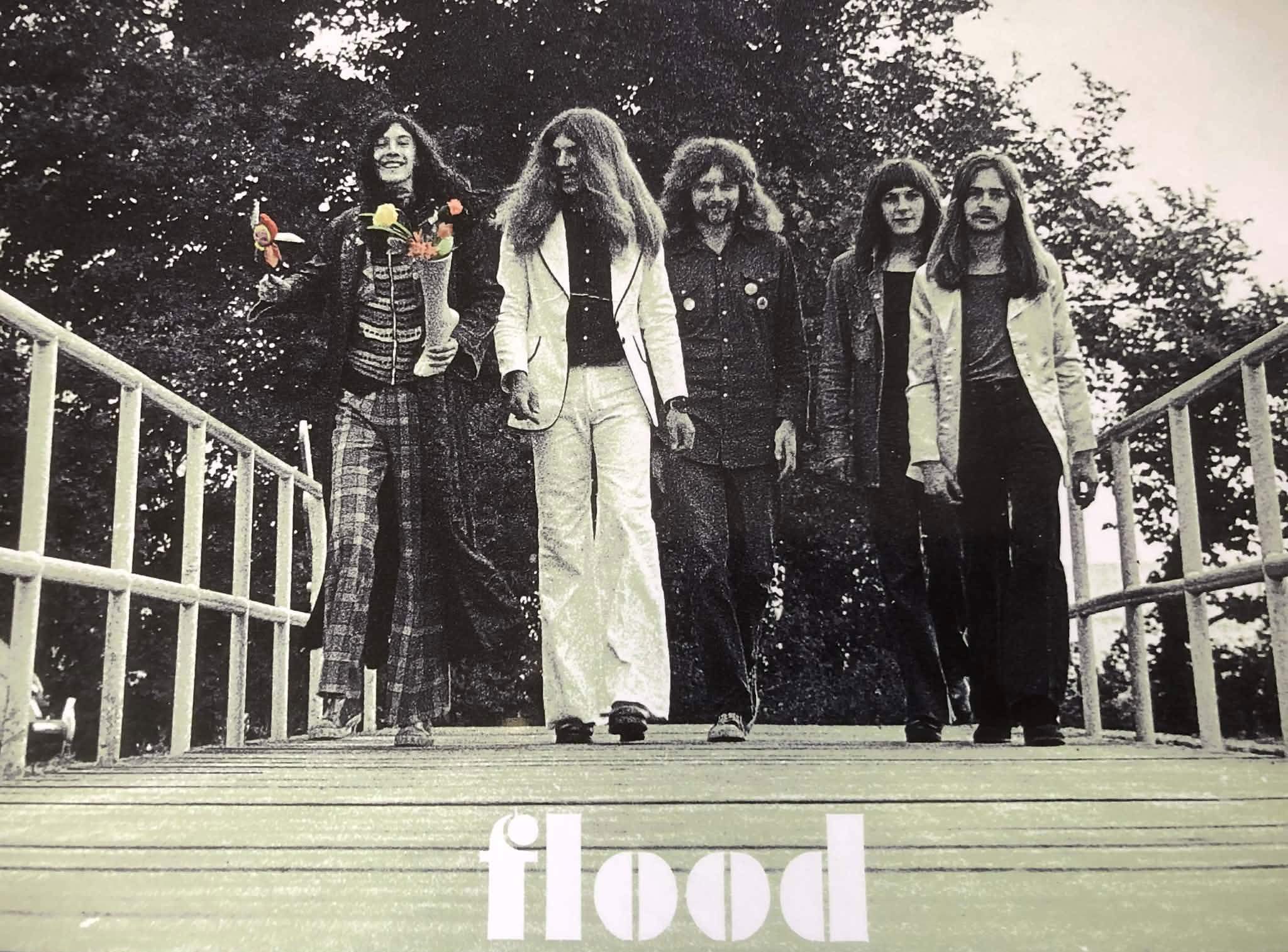
The strobe was really effective on my multicoloured stripy jumpers, which were designed to interact with it and knitted by my mum. Unfortunately, I never saw the effect as I was always on stage wearing them! Claire, Julian’s wife, did embroider a long red dressing gown for me to wear, and I did get a really nice blue tails and red waistcoat outfit made, but this was stolen the first time I wore it. Paul’s very tight red trousers were his idea!
At the Hawkwind ‘Space Ritual’ gig on Friday, 1 December 1972 at Exeter University, Julian apologised to the crowd for my onstage large paper flower arrangements, apparently at Hawkwind’s request. I remain very proud to this day that I am probably the only person who has managed to freak out Hawkwind with my flower arranging!!
I would have liked for us to have presented a more consistently visual show, but van space and finances were too tight for me to develop this any further.
What do you remember about recording at Command Studios and TG Studios?
It was strange for all of us. The opportunities to record were few and far between in the early ’70s. We had been playing most of the numbers live and did rehearse them prior to getting to the studio, so I think we were ready.
We had also recorded our 45-minute set when we supported Hawkwind at the ‘Space Ritual’ concert, which contained most of the numbers we subsequently recorded at Command and TG Studios. Unfortunately, the sound quality on the only surviving cassette copy of this recording is not particularly good, but it remains my favourite live recording of the band.
Our live onstage volume presented challenges in the studio for the band because we had to try to get the same sound at much lower volume levels. It was the opposite for me, as I was no longer singing through a wall of sound with no monitors but could actually hear, almost too clearly, what I was singing.
As well as the studio recordings, we did manage to record a few of our live performances, with limited success due to the recording technologies available at that time. I seem to have all of these recordings, which were used together with Paul’s Command Studios acetate to compile a 23-track double CD which I produced in Julian’s memory for his Memorial Festival on Sunday, 10 October 2021.
Thanks must go to the small dedicated group of sonic masseurs who massaged these old and often poor-quality recordings into sonic submission for the CDs.
‘Dream of Bombadil’ became one of your longer pieces. How did it develop, and why did you record it twice?
‘Dream of Bombadil’ was one of the first of Julian’s songs to develop into a significantly longer piece of music and was a favourite part of our set over several years. We actually tried to impress the judges at a Melody Maker competition with it, but to no avail sadly!
I think this track and ‘Song For Seasons’, written by Mitch, were seen as our stronger tracks by Julian, so both were recorded on the two occasions we got into the studio.
Another later track, ‘Seeds For Reaping’, also developed into a bit of an opus. The only recording of this heavier track is from Flood’s ‘Space Ritual’ performance. Also on this recording is another self-penned track, ‘Taking My Time On The Road To Nowhere’, which was also a longish composition.
What did ‘A New Way of Living’ mean to you at the time?
I think the ’60s and ’70s were a time of people looking for something better. We were all quite young and maybe idealistic and hopeful in our outlook. Looking at how things are developing at the moment, I don’t think as a generation we made any lasting impact sadly.
The music scene we were involved in locally felt quite positive, and as a band we were developing a good reputation. We were playing the music we enjoyed and not just doing it for the money. I suppose in the back of our minds we were hoping for more recognition and that the band might open up a different future, but being close to family and friends was also good.
Do you think staying in the South West limited what could happen with Flood?
Being based in the South West did limit opportunities available to us, for example contacts with other bands and the wider music industry, available venues and increased opportunities to play together live. I am sure being in a bigger city would have offered all of these and tightened the band up.
Moving away might well have provided more opportunities, but this in itself could also have been a threat to the band’s continued existence together. I think if things had developed we would have seriously considered spending more time playing the music we enjoyed performing, but I’m not sure we were really chasing ‘superstardom’ as such.
Financially, we all needed an income in addition to what little we could get from gigs. I was still at college and had hire purchase for my equipment to pay back. I did this through part-time Saturday and evening employment.
We were a reasonably big fish in a relatively small pond with a good reputation. If we had moved, we would potentially have been a very small fish in a much bigger sea containing lots of potential ‘sharks’ and other hazards! The music industry can be a very unpleasant and cut-throat business, and I am not sure Flood would have survived unscathed had we moved to London.
It would have been great to have received more recognition, but I for one am not disappointed that we didn’t move away.
Mitch did eventually take up an offer to join Stan Fowley in Maidstone at the time and moved away. David Hubbard eventually also moved away to pursue a professional career. Julian did not allow being based in the South West to limit his musical career, remaining in Exeter apart from a year in the US.
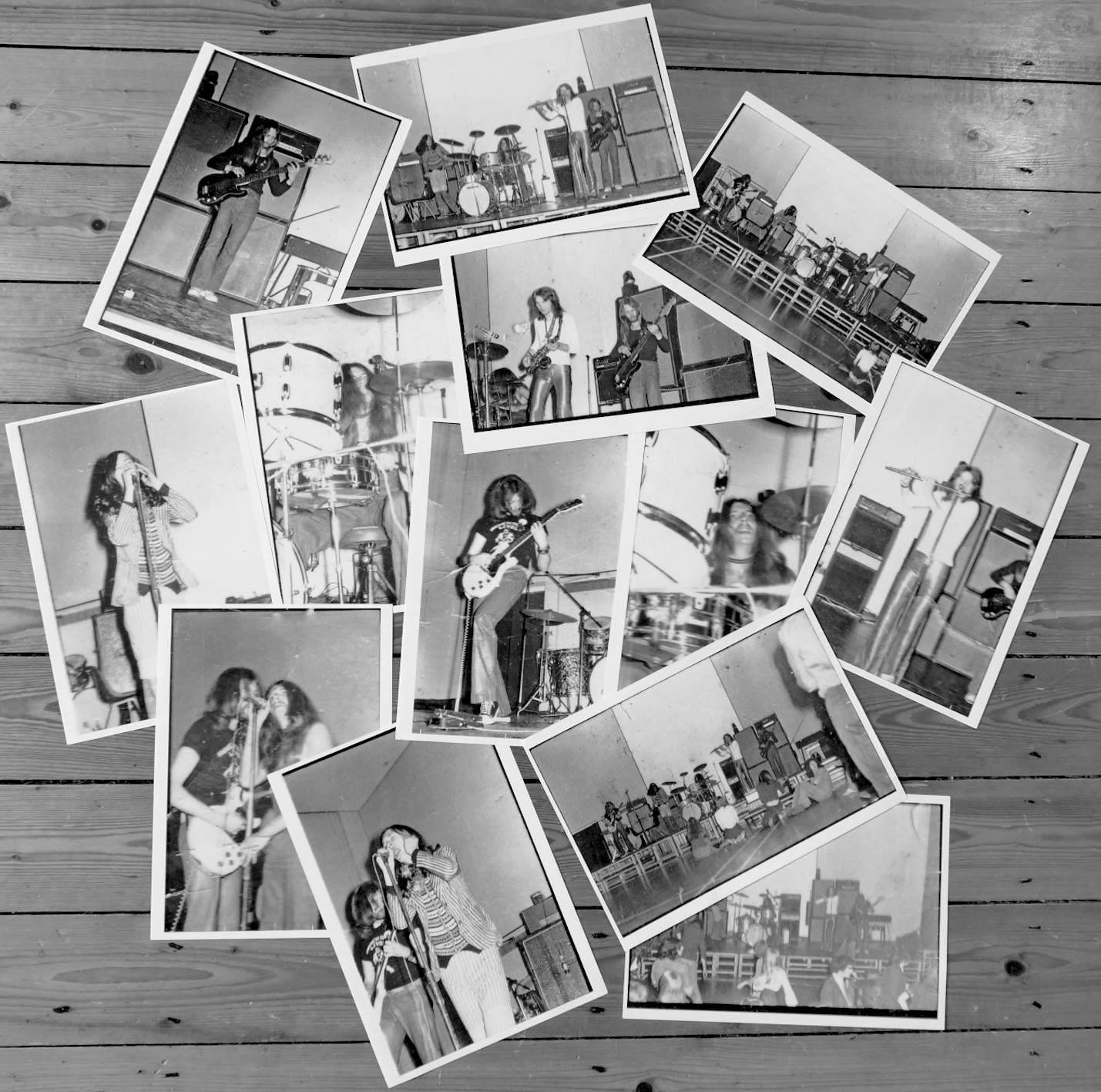
Can you take us through your memories of the tracks that now make up ‘A New Way of Living’?
Given the limited number of tracks and time available at our first London studio session at Command Studios, Piccadilly, there was little opportunity for overdubs or re-recording tracks. We managed to record three tracks in four hours: ‘A Song For Seasons’, ‘New Way of Living’ and ‘Dream of Bombadil’.
Time was limited at this recording session as we had a gig directly afterwards at Café des Artistes, 266a Fulham Road. Apart from the challenges mentioned above, I don’t remember there being any particular issues with getting everything down on tape.
The TG Studios, Fulham recording lasted from 11.00am until 7.30pm and we recorded four tracks: ‘New Way of Living’, ‘Look In The Mirror & Smile’, ‘Dream of Bombadil’ and ‘Song For Seasons’. Mitch sang this on this occasion. I was disappointed with not singing this, but it was Mitch’s song and the resulting recording sounds very similar to my Command Studios version.
Unfortunately, Rawden was unable to make this recording and David Hubbard stood in on bass with just one day’s notice. Flood at that time did not use keyboards, but David could play them as well as bass and guitar, so when Julian saw a Hammond organ in the studio he said, ‘Stick some Hammond on Bombadil, David’, which he did with no rehearsal!
This track, ‘Dream of Bombadil – Redux’, is on side two of the ‘A New Way of Living’ album. Len from Salonica also played acoustic guitar on some tracks.
I personally feel that on both these recording sessions the vocals are buried in the mix, to the extent that I found it very difficult to work out the lyrics on ‘Look In The Mirror & Smile’ when Jon Groocock from Bright Carvings asked me for them for the album release.
Do you remember where the acetates were pressed, or how many copies were made?
Jon at Bright Carvings now has the acetates and sadly Julian is no longer with us to share that info. We only made enough copies for each of us to have one and a few to send to record labels.
Were any sent to radio stations or labels? Did Flood receive any airplay?
I don’t remember there being a local radio station at the time. These appeared after Flood had disbanded. We did get write-ups in several smaller-circulation newspapers and fanzines, and had a very indistinct 10-second film of Hot Head shown on Westward TV. I think we were too loud for the recording equipment even then! This was when we were on the beach at Watergate Bay playing in aid of the lifeguards in 1971.
Local agents and most of the clubs were only interested in pop ‘covers’ bands. Most clubs just played disco music.
We did get a very nice letter from one record company saying they already had similar bands on the label but complimenting us on the LP which they were returning. Unfortunately, the LP was by a Canadian band called Fludd, I think, so not actually us!
Had you imagined what a Flood album might have looked like at the time?
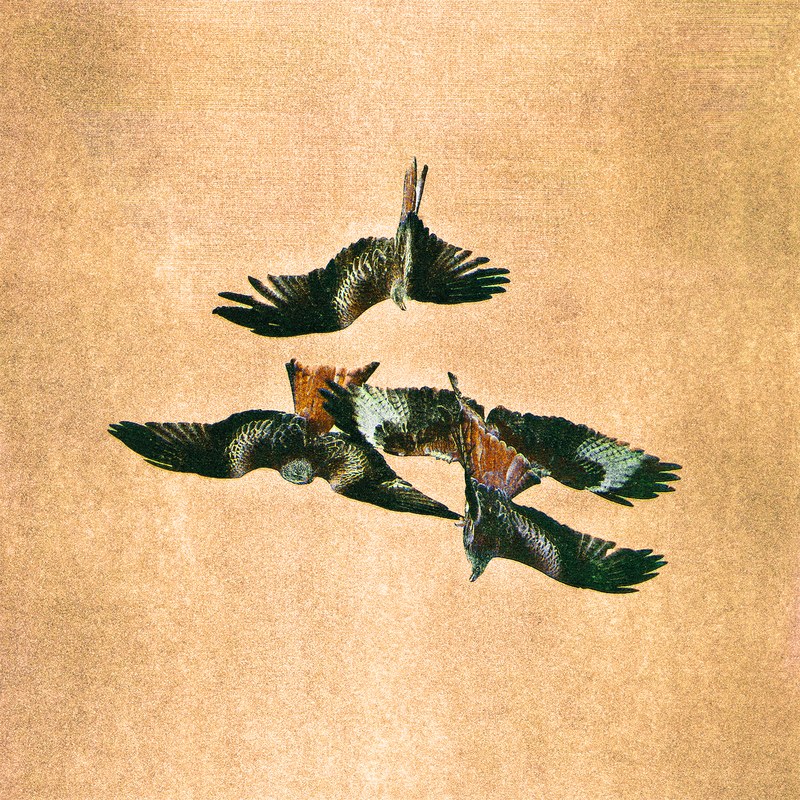
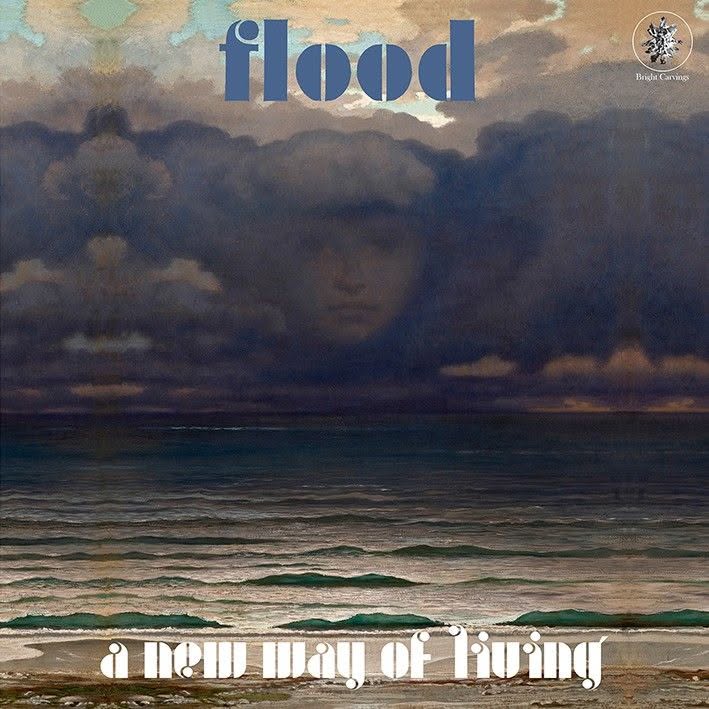
I have some original cards for the band and a couple of posters I designed for concerts which have logos on them that were used on the album covers, etc. I still have my stripy jumpers, a bit tight now, and the hosiery display foot ready to receive a plastic flower arrangement that I am carrying on the album cover.
I very much enjoyed putting the double memorial CD together and, as a result, I am in the process of compiling a document containing Hot Head/Flood photos, concert dates, ticket and poster images and reminiscences of anyone who can remember the band. I am not sure what I am going to do with it though if I ever finish the project!
When did Flood finally come to an end, and what happened to the members afterwards?
Flood with the original line-up broke up in June 1973 when Mitch and Charlie, our roadie, left to join Stan Fowley in Maidstone with Ray Kemp, a guitarist originally from Exeter. Flood reformed in September 1974 with a different line-up and without Paul on flute and sax. This line-up consisted of Julian and me, plus Dick Hartman on bass, Gary Hughes on piano and David Stevens on drums.
Unfortunately, things didn’t really gel and the band split for the last time in March 1975. Julian had started rehearsing the first, very blues-focused Junkyard Angels in February ’75. David Hubbard and Len Gammon were in the first line-up, and Rawden was in later line-ups. This band continued with a myriad of line-ups until Julian’s accident and death in 2019.
All the other members of Flood went on to play in other bands. Paul and Mitch still continue to regularly perform live. Rawden hung up his bass four or five years ago, having played in a number of Exeter bands, including an early Junkyard Angels line-up.
David was in the first Junkyard Angels and went on to have a successful career in music, working with several signed bands and individual musicians, including Alvin Lee. He still works in his own studio in London producing music for TV, film and advertising.
I traded my 50-watt Marshall PA for a pair of WEM Vendettas plus a 100-watt band mixer system and continued singing with local band Beckon for a couple of years before providing sound for several local bands, including Sweet Revenge and Scratcher, a disco-funk band that got through to the finals of the Melody Maker competition at the Roundhouse.
I improved on my sound system, which was used regularly at Routes, a club on the River Exe promoting live music. This culminated in a 2,500-watt PA plus lights, which I regularly used across the South West and at Exeter University Cornwall House Pit on a Sunday night.
Having qualified as an occupational therapist working in mental health, I eventually concentrated on just lighting, mainly for Sahara, a local rock covers band with a residency at the Ark Royal pub in Plymouth on a Friday night.
When you hear these recordings now, can you already hear the blues musician Julian would later become?
Listening to the songs now, I think you can hear various influences on Julian and possibly other members of the band. One of the lead breaks in ‘Dream of Bombadil’ sounds quite Santana-ish, and a song called ‘Lonely Time Feeling’, which might be released, sounds a bit like ‘Junior’s Wailing’ by Steamhammer on amphetamines!
I know he also liked The Allman Brothers Band, who we went to see when they played at the first Knebworth Festival. Skydog, a band Julian formed after Flood split up the first time in June ’73, was quite influenced by them. I sang with this band for a while until Flood reformed in September ’74.
But Julian always was a ‘bluesman’ at heart. Even whilst Flood was together he did one concert with a very blues-orientated three-piece with him, David Hubbard on bass and Mitch on drums. They performed at the Quay Club after one rehearsal, which David described to me as the worst gig he ever did, as after just one rehearsal he didn’t know the numbers and couldn’t see what Julian was playing onstage to get an idea of what key to play in!
When, in 1975, the reformed Flood with a different line-up failed to make an impact, Julian quickly formed Junkyard Angels, a very blues-orientated band. This band continued with a myriad of line-ups for the rest of his musical career.
You and Julian had been talking about releasing these recordings before his death. What does the album mean to you now?
I think all of the above. As well as us pulling together the recordings for a potential LP release, Julian had also suggested a reunion concert, probably at the Phoenix in Exeter. I was very much looking forward to singing at this and would have been very interested to hear what the final concert would have been like after all this time. Finally with monitors!
Having the album released after all this time has been a bittersweet experience for me and the rest of the band. I am very sad that Julian can’t be here to enjoy it, but very pleased we are getting some recognition at last. I think although his true love was the blues, Julian saw Flood as unfinished business, so was genuinely excited at the prospect of an album release and reunion concert.
I am very thankful to Colin Hill from Pygtrack Records and others who made sure Jon Groocock at Bright Carvings got to hear the CD I compiled. Obvious thanks also to Jon for seeing through the ‘noise’ on the recordings and having faith in the music.
Jon has done a remarkable job of cleaning up the original acetate recordings, and it was great that my Hot Head/Flood archive could finally be put to good use. Feedback from those who have heard or bought the album seems to be very positive, and I am amazed and very pleased the limited-edition release has sold out, with a further blue-vinyl edition being necessary.
What keeps you busy these days?
I moved to North Yorkshire with my wife in 1988, where I continued to work in mental health together with providing lighting for local bands. I subsequently set Orb Community Arts up, which I ran until my retirement in 2019. I still provide sound for local community events, including Remembrance Sunday and The Great Knaresborough Bed Race! Both my children have grown up and I am a very happy grandpa to their children.
I spent a couple of years as the token non-musician in the Tidswell Noise Collective and Cave, but unfortunately my retirement put paid to our rehearsal space and Covid prevented us from meeting together, which unfortunately spelt the end for our very enjoyable sonic explorations!
Although I still miss performing live, I am not at all sorry that ‘superstardom’ somehow passed me by!
Klemen Breznikar
Headline credit: Flood
Bright Carvings Official Website / Facebook / Instagram / YouTube