
Serguei Spoutnik Interview: Memory, Identity and the Making of ‘Transcend’
French electronic musician Serguei Spoutnik made ‘Transcend’ from a series of recordings begun during a seven-day residency in Reykjavík.
Working with a different borrowed synthesizer each day, alongside camcorder footage shot by local people, he built the album from brief sounds and ordinary images that might otherwise have disappeared.
The record also looks back at his childhood, adolescence and coming out. Processed voices, accidental sounds and fragments of memory come together in music that is deeply personal without becoming confessional. As Spoutnik puts it, the album is about “trying to preserve moments that were never meant to last”.
“Trying to preserve moments that were never meant to last.”
Let’s go back to Reykjavík. You had seven days and a different borrowed synthesizer each day. Did you enjoy not knowing what instrument would be waiting for you, or was it sometimes frustrating?
Serguei Spoutnik: I don’t think the synthesizers were really the point. They were more like an excuse to create a meeting. Every morning, there was a new instrument, a new personality to discover.
What I enjoy most isn’t understanding every function or every hidden possibility of a machine. I like that immediate encounter, before everything becomes too intellectual. You switch it on, you play, and for a few seconds something unexpected happens.
I’m fascinated by those fleeting moments, almost like snapshots. A sound appears by accident, you recognize something in it, and then it’s gone. Those brief captures often become the seeds of pieces that stay with me for years, long after the original moment has disappeared.
Maybe that’s what the album is really about: trying to preserve moments that were never meant to last.
Your first EP came from surveillance-camera footage, where the people being filmed had no idea you were watching. This time, people were choosing what to film and giving it directly to you. Did that make the images feel different to you?
In a way, it wasn’t so different. In both projects, I was entering someone else’s intimacy without physically being there. I wasn’t sharing those moments; I was witnessing them afterwards.
The little camcorder was essential. Its image quality was quite poor compared to a smartphone, and that’s exactly why I chose it. People didn’t try to make beautiful images. They didn’t think about composition or aesthetics. They simply filmed fragments of their everyday lives.
What fascinates me is that gentle intrusion. Through these ordinary moments, I quietly enter someone else’s solitude, their private world. Those images don’t feel like performances; they feel like traces of real life.
I’m much more interested in ordinary moments than extraordinary ones. I think that’s where people reveal themselves without even noticing.
Was there anything in the camcorder footage that really stayed with you? Maybe just an ordinary little moment that somehow became important once you saw it?
It wasn’t one particular moment that stayed with me. It was the way all these completely independent videos gradually started to speak to each other.
Without planning it, everyone seemed to be filming the same invisible subject: Reykjavík itself. Someone was walking home after a party, filming the streetlights. Someone else was making breakfast in a strangely playful way. Another person was exploring the coastline where an artist had built wooden sculptures years ago. By pure coincidence, someone else filmed that exact same place while walking their dog. At the same time, Iceland Airwaves was happening, so one person filmed backstage at a concert while another filmed an art installation elsewhere in the city.
For me, as an artist in residence but also as a tourist discovering Reykjavík for the first time, those fragments slowly became my own experience of the city. They created a strange continuity, as if everyone had unconsciously shared the same visual language. The result was constantly shifting between ordinary life and something almost dreamlike.
You seem to love strange sounds, but you also love a simple melody that gets straight to you. When you were making ‘Transcend’, what usually came first: the unusual sound or the song underneath it?
That’s a really good question because I’m not sure I’ve ever tried to intellectualise my creative process.
If I had to answer, I’d say that the sound usually comes first, but not as a finished idea. More like a capture: a few seconds when something unexpected happens and immediately catches my attention.
Ironically, that’s the shortest part of the process. I spend far more time composing from those initial captures than searching for them. Once I feel I’ve found something alive, I can spend months building a piece around it: finding the melody, the harmony, the structure and everything that allows that first moment to unfold.
So the sound often comes first, but composition is where I spend most of my time. The capture is just the spark.
You’ve said that the heart of a piece often appears very quickly, and then you build everything around it. Which song on this album came together most easily, and which one took the longest to get right?
It’s actually difficult for me to answer because every song goes through alternating moments of obviousness and struggle. The difference is that they don’t happen at the same stage.
Sometimes the first capture comes almost instantly, but then I spend months composing around it. Sometimes it’s the opposite: the foundation takes a long time to find, while the arrangements almost finish themselves.
‘Digital Fruit’ is probably the best example. I spent a huge amount of time refining the original Lyra-8 recording. It wasn’t played in a conventional way. There was no strict rhythm, and I had to pitch the notes manually while performing. Then I spent even longer writing the vocal part, which sits somewhere between spoken word and singing, following that very free musical flow. But once I arrived in the studio, the arrangements came together almost naturally. There was surprisingly little left to do.
‘Memory’s Shore’ was almost the opposite. Every stage took time, but none of them felt particularly difficult. The whole process unfolded with a sense of continuity, as if each step naturally suggested the next.
On other tracks, the initial synthesizer capture appeared within five or ten minutes, almost effortlessly. But that first intuition was only the beginning. Everything afterwards required experimentation, doubts, revisions and patience.
Having access to a borrowed Pro-One at that stage helped me unlock several pieces, and Apollo Noir’s perspective became invaluable when it came to the arrangements.
The album takes you back to your teenage years in a French housing estate. When you started returning to those memories, did you find they were still clear, or had time changed them?
That’s a beautiful question because it’s really at the heart of the album.
For a long time, I couldn’t see myself as queer. That possibility simply didn’t exist for me.
Then, a few years ago, something shifted. When I looked back at my childhood and my teenage years through that new perspective, it was as if everything suddenly became clear.
I wasn’t discovering new memories. I was seeing the same memories differently. Suddenly there was an alignment between the person I saw in old photographs and the person I am today. For the first time, they felt like the same person.
That feeling was incredibly powerful. It was as if all the pieces of my life had been there from the beginning, but I finally knew how they fitted together.
The record is also closely tied to your coming out and the person you are now. Did you know from the beginning that you were making such a personal album, or did that only become clear once the songs were finished?
Yes, I knew from the beginning. To be honest, that wasn’t something I found particularly exciting from an artistic point of view. Making a deeply personal record isn’t necessarily the most original idea, and there’s always the risk of becoming self-centred.
But I also felt I had no real choice. It wasn’t a concept I had decided to explore; it was something I needed to go through. The album became a kind of continuum, almost a trace I felt I had to leave behind before moving on.
At some point, I also realised that this personal story could resonate beyond myself. Growing up without allowing myself to see who I really was isn’t just my story. In that sense, maybe the album carries a quiet political dimension, not because it makes a statement, but simply because it exists honestly.
More than anything, I wanted ‘Transcend’ to be sincere. I think it’s the most exposed I’ve ever been in my work. Now it’s out in the world, and I feel I can move forward. Maybe the next records will look somewhere else.
You’ve said that processing your voice helps you say things that might otherwise feel too exposed. Was there a particular lyric on ‘Transcend’ that you found difficult to sing, even with that distance?
I don’t think the processed voice protects me. If anything, it probably reveals me more.
For a long time, I tried to perform a version of myself that wasn’t quite true. I tried to pass as a straight, cisgender man. But my voice often betrayed me. People would mistake me for a woman on the phone, question me, or simply comment on the way I sounded.
After years of trying to transform myself into someone I wasn’t, that act of transformation almost became second nature. It’s like a piece of software that’s still running somewhere inside me.
So processing my voice doesn’t feel like putting on a mask. It feels strangely familiar. Pretending, transforming, becoming something else… I’ve been doing that for a long time.
The difference today is that I choose it. I almost celebrate it. Sometimes I push it into absurdity or humour, because that’s where it becomes liberating instead of painful.
That’s probably why, on stage, I love distorted voices and slightly ridiculous costumes. They make me feel comfortable. There’s something both sad and funny about them, but they’re honest. It’s simply part of who I am.
You described Apollo Noir as almost a second version of you in the studio. Did he ever take one of the songs somewhere you had not expected, or hear something in it that you had missed?
Honestly, I don’t think ‘Transcend’ would exist in its current form without Apollo Noir. There is a part of him throughout the entire record.
What I admire most about Rémi isn’t just his musical talent. It’s the trust he gives me. He never tries to redirect my artistic choices or impose his own aesthetic. On the contrary, he often encourages me to trust my own intuition even more.
He has an incredible ability to understand what I’m trying to express emotionally, sometimes before I’ve even managed to put it into words myself. Then he finds ways of amplifying those ideas without ever changing their nature.
What’s most impressive is the speed with which he does it. He immediately grasps the feeling I’m searching for and somehow makes it stronger while remaining incredibly respectful of it.

The album ends with ‘Somewhere, I’. It sounds like the beginning of a sentence that was never completed. Where did that title come from, and why did it feel like the right place to leave the record?
I think you’re right. It does sound like the beginning of a sentence that was never completed.
Maybe that’s because, after this album, I wanted to leave the rest of the sentence to the listener. Not to finish it with more words, but with a dance.
I’ve always loved dance scenes in films. They’re often the moments that move me the most. They create an incredibly powerful emotion in me because they feel like moments of liberation, when bodies suddenly express what words no longer can.
To me, that’s how the sentence ends: not in language, but in movement.
Klemen Breznikar
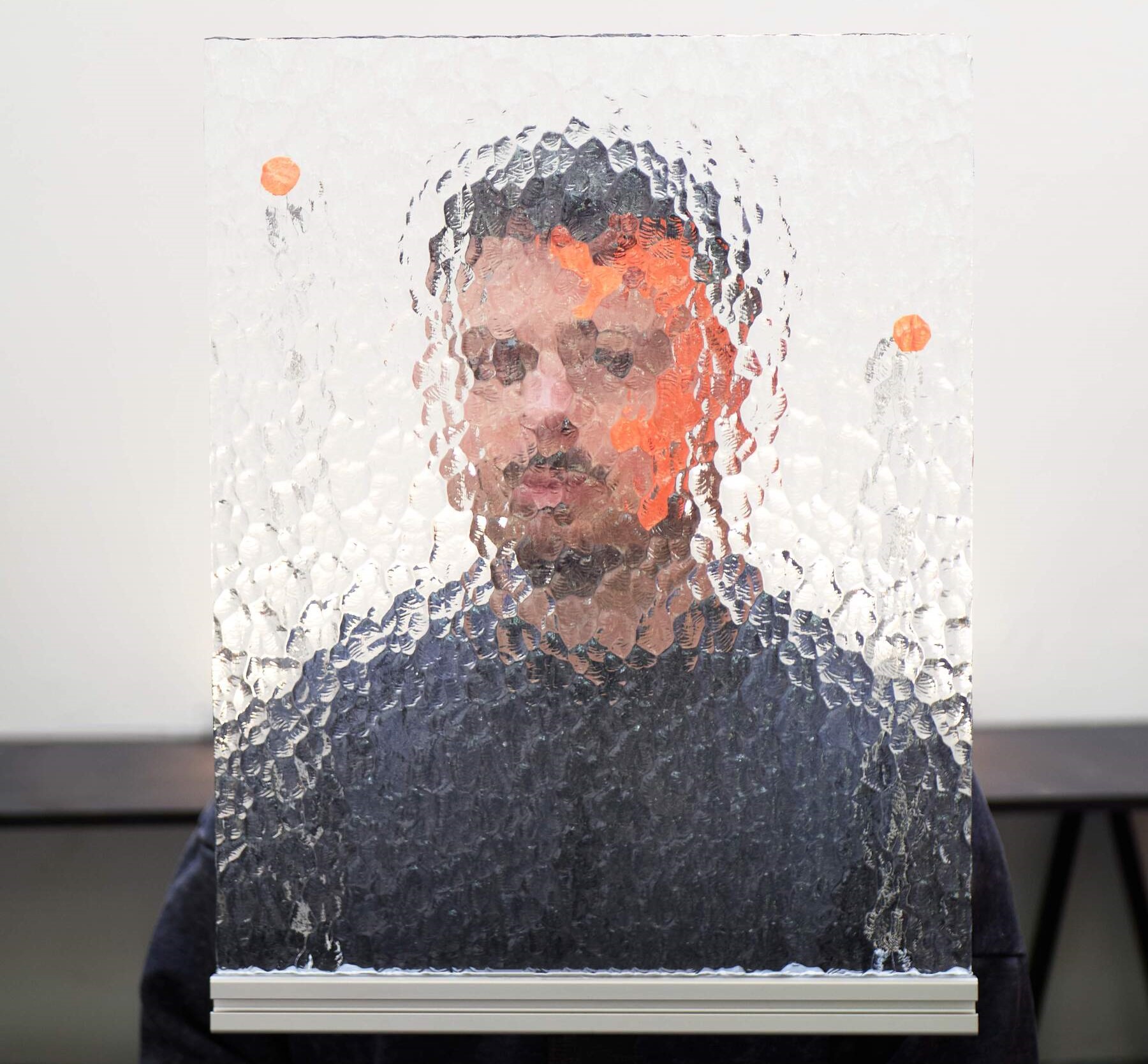
Headline photo: Lukas Persyn
Serguei Spoutnik Website / Facebook / Instagram