
Jonathan Segel on Camper Van Beethoven, Øresund Space Collective and ‘Puzzle World’
From Camper Van Beethoven and Sparklehorse to improvised music and ‘Puzzle World’, Jonathan Segel talks about the records, collaborators and experiences that have shaped his music.
Jonathan Segel was still relearning the violin when Chris Molla asked him to join Camper Van Beethoven. He had broken his left hand at school and stopped playing for a couple of years. At UC Santa Cruz he started lessons again, studying with Roy Malan and spending much of his time on scales and bowing exercises. Camper had already been playing in Redlands, where David Lowery, Victor Krummenacher and Molla had worked with another violinist, David McDaniels. When the musicians came together in Santa Cruz, they rehearsed in the dormitory lounges at College V. Segel discovered that he could follow what the guitarists were playing by watching their fingers. The others generally let him work out his own parts, and when violin wasn’t needed he played a Casio keyboard or guitar.
He was also studying composition and electronic music, experimenting with tape, synthesizers and whatever equipment the university had available. His musical education continued outside the classroom. Molla introduced him to Henry Cow and Art Bears, while Krummenacher played him records by The Fall and Throbbing Gristle. Camper recorded their first album, ‘Telephone Free Landslide Victory’, at Samurai Sound Lab in Davis in January 1985. By the following year they had their own Pitch-A-Tent label and were recording at Tom Fox’s studio in Felton. ‘II & III’ came out in February 1986, followed by the self-titled third album in August. There was plenty of experimentation, and a lot of joking around. Segel remembers the handmade sleeves, the early tours and a phone call from Michael Stipe that David Lowery initially took for a prank.
Camper’s move to Virgin brought ‘Our Beloved Revolutionary Sweetheart’ in 1988, but Segel was increasingly unhappy with the band’s working arrangements and the production of the record. He left in early 1989, shortly after releasing his first solo album, ‘Storytelling’. The following years found him running Magnetic Records, playing with Hieronymus Firebrain and Jack & Jill, and working in film sound in Los Angeles. He also spent more than a year touring with Mark Linkous in Sparklehorse, an experience he remembers with considerable affection, despite the difficulties of life on the road.
At Mills College, where he studied with Fred Frith, Pauline Oliveros and Alvin Curran, Segel found himself reconsidering what he wanted to do with music. His studies took him further into improvisation, composition and listening. These interests continued after his move to Sweden. In 2014 he joined Øresund Space Collective for a recording session, having discovered that the group’s Dr Space was Scott Heller, an old acquaintance who had taped Hieronymus Firebrain shows in California. He has been recording and mixing with the Collective ever since, alongside his work with Obygden and other musicians. Another project, ‘Hall of Mirrors’, released in 2025, finally gave him the chance to return to a composition idea he had first proposed at university forty years earlier.
His latest solo album, ‘Puzzle World’, appeared in June 2026. The sleeve was assembled from more than 2,000 photographs of lost gloves, something Segel had been collecting for years. The songs deal with politics, mortality, anxiety and the difficulty of finding much to be hopeful about. He is also concerned about how little attention new music receives, particularly when the musician has to promote it himself. Yet he continues to write and record. As he puts it in the interview, ‘Every album I make is an argument against despair’.
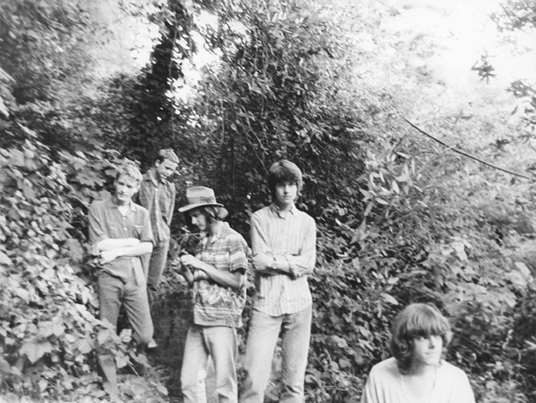
“Every album I make is an argument against despair”
Your parents’ shelves ran from classical music and Brecht to the Beatles and Jefferson Airplane; in Tucson, record-shop people pointed you towards Alice Cooper and Led Zeppelin, while KDVS brought punk and post-punk into the house. Did those sounds seem contradictory then, or only later, when scenes told you they ought to be?
Jonathan Segel: Hard question to answer in specifics, as I don’t quite remember exactly what I thought when I was a little kid, but my inclination is to say that I understood that they were all music, and a lot of post-Beatles music was that bass/drums/guitars stuff. And I was fascinated early, listening to AM radio from San Francisco playing late 60s rock, I have drawings from 6-year-old me of little hairy Cousin Itt looking characters with electric guitars. Really though it was in high school when the idea of “scene” and “clique” came to the forefront, my psychedelic little group of friends were definitely a “scene” of our classic rock music, leaning into the new wave and punk. This as opposed to, say, the cowboys listening to crappy modern country or the jocks with the commercial rock stuff, so there was definitely an element of looking like your genre, taking the fashion cues, but sounds-wise, I don’t think they (these different genres) are contradictory, exactly. More like, for some things you want to hear distortion and some things you don’t. But they can exist together. I don’t think I’ve really ever been an adherent of purity in any scene or genre! I’ve always been one of those people who likes to listen to and play different kinds of music; one night I’d head over to sit in with the Davis Pickers and Singers, next was rehearsal with Bürnt Toast.
I remember going to see the Talking Heads ‘Fear of Music’ tour (1980?) and KDVS in Davis, the local college radio, had a very big area to radio out to, existing as it did in the middle of the Sacramento Valley. So lots of people came to this show from all over. Everybody was looking around, there were punks, new wavers, hippies, whatever, everybody thinking, oh, is this a punk show then? Is this a new wave show? What is it? And then the B-52s opened the show and nobody knew what the fuck to make of it.
At UCSC you were cutting tape, experimenting with Moog and Buchla synthesizers, and even running sound through a five-storey stairwell. How much of what you were learning at university found its way into the early Camper Van Beethoven recordings?
We were all trying to learn and do as much as we could, with those growing minds of one’s early 20s! University experience forces you to see and hear so much new stuff, new ideas, new sounds, new ways of thinking about things. That and reading are exactly why the ultra-right authoritarians hate it, education being the leading cause of leftism and all; the more you read, the more your analysis of and/or empathy toward other points of view can grow, very dangerous! Anyway, we all played in different ensembles at the same time as Camper, so yeah, Camper was sort of a testing ground for all sorts of new things or weirder ideas. And you know, we take in whatever the world around us feeds us, whether it’s first-century Roman history or Indonesian Gamelan music. It’s all bound to affect something bouncing around in your head.
A tangent to this discussion is music discovery, which was intense during this period. I all but stopped listening to current music or even rock music for a while there in order to try to catch up on 1000 years of Western Music History, so I listened to tons of classical music until I started having to know something about the bands that were touring small clubs in the early 1980s (which was that new scene of alternative/college rock, you know). And the guys in Camper turned me on to music I hadn’t heard, Molla playing me Henry Cow and Art Bears, Victor playing me The Fall, Throbbing Gristle, etc.
When I interviewed Greg Lisher, he talked about how everyone’s different musical background influenced Camper’s songs. When you joined with your violin, how did you find your place in the band? Were you free to work out your own parts, or were there already arrangements you had to follow?
Well, first off, I wasn’t an “original member” exactly: Victor, Chris Molla and David had been playing as Sitting Duck and then Camper Van Beethoven and the Border Patrol during the summer in Redlands, CA, and they had a violin player there, David McDaniels (I believe that is correct? David L wrote him into one of his semi-auto-bio songs, I think McDaniel became a priest later) so I guess they wanted to have that same sound for the band. Chris Molla was in music classes with me and suggested that I join them when they got back to UC Santa Cruz, and when Victor came up to go to school, the following September. We started practicing in the lounges in the dorms or near the dining hall there at College V (which became Porter College the following year). My secret weapon was probably that since I played guitar, I could read their fingers and know the notes they played on their guitars and figure it out quickly. They let me make up my own parts except of course for the melodies of some of the instrumentals that were already in the repertoire; the idea of doing pseudo-ethnic melody over ska-style rhythm section was already an idea.
Now, I had stopped playing violin during the last couple years of high school, I had broken my left hand in PE earlier and it was tougher to play violin. So I just played guitar and bass. When I moved to UCSC in 1981, I started the music program so I thought I should learn violin, and play in the orchestra! So I started lessons with Roy Malan, who was (is?) the concertmaster of the SF Opera Orchestra. He was like, wow, you suck entirely, we’re going to have to start all over again, so bowing and scales for a year or more, bow holding exercises, finger exercises. So I was glad to start playing with Camper to play something at all! The other opportunities were Grateful Dead jams in the dorm lounge.
My point here is that I was relearning how to play violin at the same time as playing with Camper, starting up and trying to fit in with the band. And violin isn’t always what you want, you know, so I played a Casio keyboard also, and sometimes guitar if we could stand to have 3 guitars on a song. So as far as serving or arguing with the songs, both things happen with all of us, on different songs. Some are natural and some are intentional juxtapositions. As far as quietly (loudly) changing the band, I attribute that not to myself but to each of us over that period of time from say, 1983 to 1989. The band changed all the time, because of or despite each of our individual pushes and pulls.
On Camper’s 1986 self-titled album, you were experimenting much more with the studio, and Eugene Chadbourne was involved too. Was there much formal thought or planning behind what you were doing, or were you just trying things out? And did humour encourage you to experiment more?
I’m not certain what you mean by formal thought, like having a manifesto, preconceived notions of what we would do? Nope! None of that. We were just using what tools we had, expanding what we could do. We had started recording up in Felton at Fox Studios, and it was an excellent place to play with the recording ideas, multitrack so we could do cool overdubs. Playing with the “sound” more, plus better recording quality for drums and guitars! We had recorded the first album, and mixed it, in two weekends at Dave Gill/Dave Scott Millington’s Samurai Sound Lab in Davis. (I grew up there, had played with Dave Gill a bunch. He had converted his two car garage into the recording space.) The second album was half done there and then we started working at Tom Fox’s, so we started to get an idea of how to record more than just the “live band sound.” There are actually two releases of the second album ‘II & III’, with different versions of ‘Bad Trip’.
The timeline was like this: January 1985: record ‘Telephone Free Landslide Victory’, [things happen, Victor in touch with Bruce Licher]
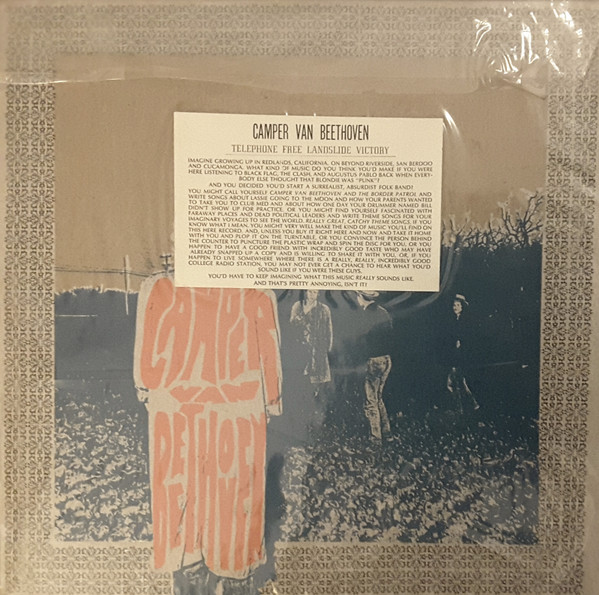
June–September 1985: TFLV comes out, [I graduate college], Camper does west coast and even off to Texas tours, records more.
October–November 1985: shows in SF etc, finish recording and mixing ‘II & III’. By this time—6 months!—Bruce had gone into multiple pressings of the initial letterpress version of TFLV, we negotiated with Rough Trade in SF to take over distribution, partially so they could get it to England. Steve Connell at Rough Trade US (also running Puncture Magazine) advised us to start a record label and then do a deal with Rough Trade for Marketing and Distribution. So we did, Pitch-A-Tent Records. We drew weird little logos and whatever, actually filed the papers with the county to start our own label and publishing company—the publish company still exists! So the soonest we could get ‘II & III’ out was Feb 1986.
Also at this time we needed to get a real drummer, Anthony Guess who played on TFLV was into other things, (he played with us at the 40th anniversary of the album at the Fillmore in April 2025, though!) and the other way we had dealt with it was that David Lowery and Chris Molla took turns drumming. As just about everybody in Camper was at one point or another in a band called Box’o’Laffs, we got Chris Pedersen after he had played with them, as we did Anthony. Chris’ first shows with CVB were opening for the Butthole Surfers in San Francisco in January 1986. (also a last minute recording of Chris Pedersen on ‘Bad Trip’ and inserted into second pressing of ‘II & III’)
February 1986: Frank Riley and Venture booking had agreed to book us shows out to the East Coast to see us and decide if they wanted us on their roster. So a February tour across the country, very cold. Met a lot of people who were literally creating the scene that allowed bands like us to have shows and tours. ‘II & III’ comes out, we’re promoting.
March–April 1986: Touring west coast/Pacific Northwest (without Greg! He had had enough on the national biz. So we used lighting hairspray and strobe lights in place of any guitar solo.)
When we got home we were starting to record the third album. So the band was solidifying as players, and we had more time to spend doing it in the studio over the summer. This album was sewn up and out in August! That’s three albums in under two years, just like people used to do way back when. So the chaos was only tempered by the small push and pull by each band member, and yes, the humour did give us permission to try more. I don’t mean to try to make a literal joke out of something, but to make ourselves laugh. Little in-jokes and musical things that we thought were funny. I still do that all the time! My music is full of jokes.
I’ve read that all culture comes from backwaters, people in isolated areas develop their own in-jokes, their own styles and tastes—new genres—then these ideas eventually are exposed to the more urban mainstream/corporate world of culture where they are found to be “fresh” and “new” and become faddish for periods of time, and incorporated into the plasticized precession of simulacra that makes next year’s cultural products. Of course, this is harder now due to the globalization of tech and internet culture, almost everything is everywhere all the time. Where are the new genres that are entering the mainstream? Is it Angine de Poitrine? Is that what we get now from the backwaters? Is this going to become a cultural wave, microtonal looping and masks?
Anyway, this was definitely the development of our pod of cultural seeds, which grew in Santa Cruz with the nourishment of the upcoming college rock scene, and we went forth and brought the weirdness to the world. I think it was missed in a lot of parts of the country, the world. When this came out, Michael Stipe called David to ask us to tour with REM—David thought it was a prank call, but we did end up touring with them that fall. So I had to quickly figure out what an REM was.
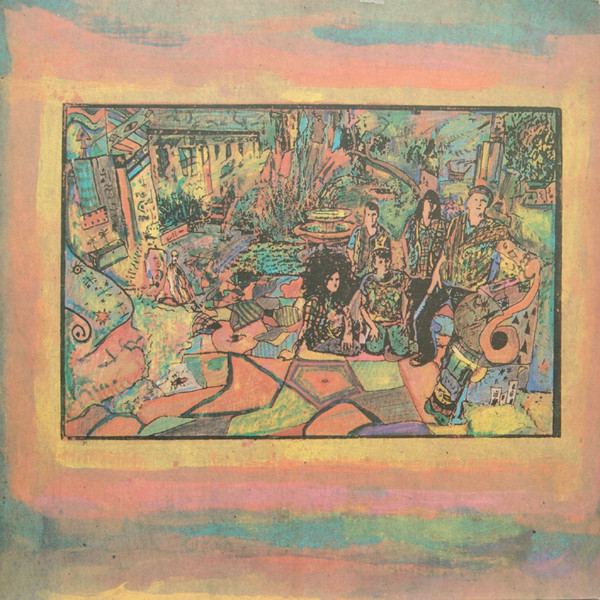
When you prepared the ‘II & III’ reissue, some of the original lyric-sheet material was left out because it no longer seemed quite as funny as it had when you were younger. How do you feel about those early records now? Are there things you still enjoy and others you find embarrassing?
Yeah, we were cocky little snots. I can’t remember what all was on there, but you know we made the album covers with Letraset decal-type letters on paper, we were also screen printing our own shirts, making our own screens (Pitch-A-Tent logo, Monterey Pope Festival, various Camper Van Beethoven T-shirts.) And xeroxing the shit out of things to heighten contrast to make those screens, so we took the photos Edie Winograde took of the band and made screens and printed that, made little lyric inserts with Letraset witchy hexes or whatever other weirdness from the ‘Illuminatus!’ books or something. Funny! But yeah, probably didn’t age well.
Now the songs, well, most of them can still be played and we mean it! We did TFLV entirely last year for its 40th Anniversary, I think all of those songs stand the test of time for the most part. If the audience would still get a punk rock joke like ‘Club Med Sucks’, that is.
On ‘II & III’ most of the songs hold up, though I am a little embarrassed by ‘Goleta’, it’s such a dumb and sassy song, but you know, it is still relevant, poking fun at privilege. A lot of the instrumentals on this album are my favorites, ‘ZZ Top Goes to Egypt’, ‘Abundance’, ‘Cattle (Reversed)’. What’s weird is that this album has more songs with introspection than the others; I mean, there are the satirical and taunting songs ‘Cowboys from Hollywood’, ‘(We’re a) Bad Trip’, ‘No More Bullshit’ but then I had two “relationship”-type songs, ‘Chain of Circumstance’ and ‘Form Another Stone’ and even David has ‘Sometimes’ and ‘Sad Lovers’ Waltz’. So that’s a little weird maybe for Camper, but again, not standing still. I actually still play ‘Chain of Circumstance’ sometimes when I play live.
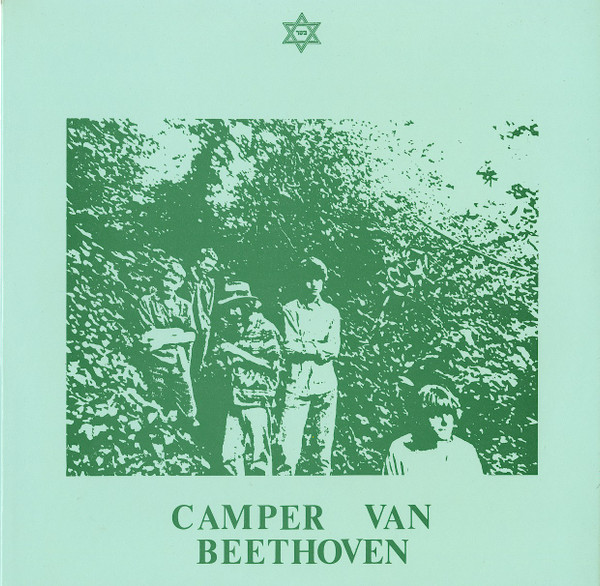
‘Storytelling’ was your first solo album, although several musicians from Camper and Monks of Doom played on it. Did making a record under your own name give you more freedom, or did you still depend just as much on what the other musicians brought to the songs?
Wow. Well, while I had definite ideas of how I wanted ‘Storytelling’ to be made, I didn’t really want “complete control” over the process: I relied on the other musicians to bring themselves to it to make it what I couldn’t. By this point The Monks of Doom had formed also, and I could definitely trust Chris and Victor to be able to play anything I threw at them. At the time that was a lot of very fast strumming of odd time signatures! They made their own parts, my goal during the recording was making a wall of rhythm instruments for the most part, working out which was front for which song, Acoustic guitar (all the basic tracks are me playing acoustic guitar in an isolation booth and Victor and Chris in the bigger part of the room) first, electric guitar, electric 12 string, mandolin, octave mandolin. I had some idea about not having violin because I played it all the time elsewhere, though I did use viola.
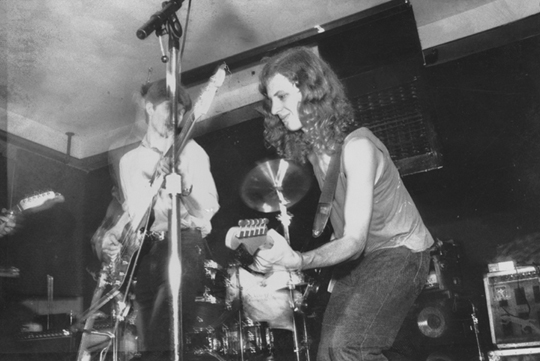
So Chris and Victor really brought the goods to make that album what it could be. It’s not my “control” that made this, it’s the opposite, that I want the players to respect the music (I believe they did) and make it sound like what they thought it needed. This is also especially true of Graham Connah who played piano and organ, so good. Without his parts there, some of those sections would be boring as shit. Same with David Immerglück. Immerglück is one of those players that has the right thing to say and the right time, something that works and fits. He’s responsible for some of the strength of several guitar passages, definitely.
Then the Wrestling Worms horns did their thing, and Chris DiFrancesco played clarinet and bass clarinet—though I did give him some specific things to play. Andrew Norton was my extra ears on this, he supervised the recording experience and only played a few tidbits now and then. The engineer here was David Gibson, who had amazing theories of sound and mixing spatially, we mixed it in San Francisco at 245 Hyde St (Sandy Pearlman’s studio) and Gibson was really into the stereo spectrum and placement of sounds and how it all works to mix. There’s an amazing video set of classes of his on YouTube on mixing and how to do it, they’re slightly outdated now but they are amazing, check it out! https://youtu.be/-iYrfo4ytQY?si=jMe6l3ad1CK9BS1R
When you listen back to ‘Our Beloved Revolutionary Sweetheart’ today, how do you feel about the sound of the record? You’ve also talked about being fascinated by the production of Fleetwood Mac’s ‘Tusk’. What interested you about the way that album was recorded?
OBRS sounds super dated now. Luckily the Omnivore reissue cleaned it up a lot with new mastering, it sounds way better than it did back then. I heard things I had forgotten were in there!
I was way into the ‘Tusk’ album (duh, even back then) which has some of the worst pieces of engineering mixed in with some of the best: Every Stevie Nicks track has its own special reverb, perfectly fit, while other tracks have what are clearly bathroom recordings, replete with mistakes that are left in, somebody accidentally mutes a cymbal ringing then realizes their error and unmutes it. Ok then! Two separate drum tracks recorded at separate times superimposed, whatever. But it’s organic, it was made that way while it was happening.
You’ve connected your bluntness in the press about that record, and about the band’s shifting songwriting balance, with David eventually saying, “I can’t work with you anymore.” Did being forced out change the way you spoke inside later groups, or convince you that candour was worth its cost?
Yes and no, tough to give an overall answer. But ultimately, no, I still pretty much say what I think. And true, it has cost me; probably nothing good ever came from me trying to be forthright (for me that is) but then again, you know, I still believe in it. I don’t think people should just abide stuff that is contrary to their ideas of ethics, aesthetics, morality, whatever. Needs to be dealt with, not hidden away like some closet secret. If a person is being mistreated or not respected, people need to be aware of that to change the situation. In the CVB situation mostly everything was unspoken and that made it tough. David was becoming very difficult, as the subsequent band breakup in 1990 shows as much as me leaving the group a year prior.
I think what I say in other groups depended on what they were, or how I came to be with them. I had little position to say anything when I was playing in Sparklehorse, for example, because Mark had recorded the entire album (‘Good Morning Spider’) essentially by himself, so I was hired to fill out the parts he couldn’t do. It was tough, and of course I made it my own in terms of how the songs were played, whether intentionally or not. The only things I had to say were about human conditions when we were having difficult times on tour just trying to stay sane.
More recently (2012) I was pretty vocal about Pandora geotracking its listeners to serve ads without their consent, and on top of that, serving homophobic hate group ads to listeners, that sort of thing, accepting dogmatic advertising. But I had only been working for them for a year or so, they were just going public so they fired me. No place for somebody pointing out ethics! They kept saying, oh we’re just like Clear Channel in what we will advertise, no pornography or gambling! And I would say, you don’t have to be like anybody else (and that’s not even a good role model), you are making your own media rules. Pandora could be a beacon of cool in the tech world. But no. Tim W, the chief face of the place, kept lobbying for lower royalty rates and trying to get the listeners to write their congressmen about it, so I pointed out that he was already politicizing his name and the company, he would counter with something like, “well, I’ve read Chomsky and…” trying to claim he was not at all political. While screwing over musicians driving a company based on music.
So yeah, that didn’t end well for me either and now I don’t live in the US anymore. Also I realized that nobody says anything because everybody is kept in a state of fear, fear that they might also lose their jobs. The entire hierarchical corporate structure and that way of dealing with people really messed up my head, I still feel psychologically damaged from that experience. I fucking hate all tech company libertarianism. I mean this was 2012, look at it now!
The reunion grew in odd little stages: ‘White Riot’, archive fragments, then Camper’s deliberately false backstory for recording ‘Tusk’ on a four-track during a 1987 snowstorm. Was pretending to be the old band a safe way of discovering whether the people you had become could actually work together? What did that elaborate joke make possible?
I’d say yes, that elaborate joke made it possible, like maybe plausibly deniable! And yes, the processes were tests to see what we could do together, and whether we still could. David had built up the Sound of Music Studio in Richmond, VA and we worked there mostly. It was super fun not having any real goal in mind (except, for instance, to make a version of every track on ‘Tusk’) and just playing. We CVB’ers sat in with Cracker during this period to do Apothecary Show Traveling Circus type shows, but by 2002 we got the whole band together again and rehearsed to play a show as Camper Van Beethoven and that was eye-opening: once the band all got together and started just relying on muscle memory to remember the songs, it all fell back into place, I realized that these musicians were really how I learned how to play music in a band.
In 2004, ‘New Roman Times’ imagined a United States split into red and blue territories, unknowingly manipulated by outside powers. You later called it prescient. Does the record now feel uncomfortably less absurd than it did, and if Camper wrote about America again, could the band still hide its alarm inside jokes?
Did you ever see that somebody (“Evan Brown”) wrote a novel of ‘New Roman Times’? Takes place in Santa Cruz, most of the info from the album. It’s really good!
Anyway, yeah, it is unfortunate that it is less absurd now, but in our version, you know, the factions are controlled by different groups of aliens. I don’t think that’s the case currently in reality. When Camper wrote about America again, it was on ‘La Costa Perdida’ (2013) and ‘El Camino Real’ (2014), which are more specifically Northern and Southern California takes. David continued this with Cracker’s ‘Berkeley to Bakersfield’.
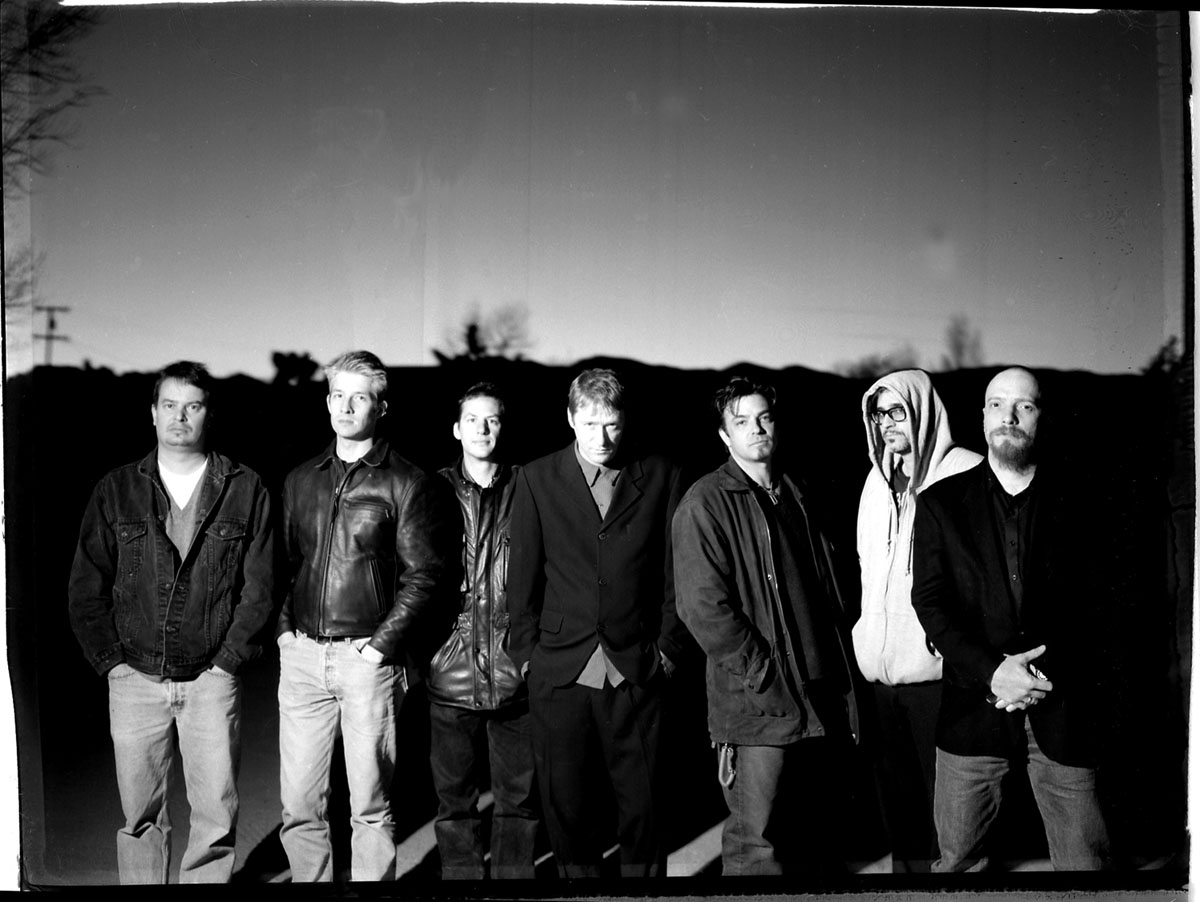
After Camper, you financed Magnetic through bar work, released Hieronymus Firebrain and Jack & Jill records, and played shows that sometimes drew almost nobody. Musically you were loosening control just as, practically, you had to control everything. How did that contradiction shape you, and did independence ever feel like freedom?
Yeah I ran a record company…Into the ground!
Sure I was free to do whatever I wanted musically I guess. And while the day-to-day of clerical or postage or whatever does give the impression that you are “doing something” that helps somewhat in your music world, it’s really mostly mindless and of dubious value. But I really would rather never have to deal with that stuff, trying to promote and all. And the filling out of forms for every fucking royalty collector, that still goes on. I really don’t want to have a company or especially have to try to sell anything, I’m just no good at any of that. I get embarrassed about trying to sell my own music, luckily Victor’s music could sell anyway, so Magnetic stuck around. I have always wished for somebody else to believe in what I do enough to do like what Rough Trade did with CVB, at least the marketing and distribution. If they would market anything at all. I know that Jack & Jill, as an example, would have appealed to a great many people who never heard it, nor got the chance to. Who are they? How would they ever find it, or have found it then, or come across it these days? Obscurity isn’t really fun, despite the fact that you’re “free” to do what you want. Music is a social experience as much as anything else, it’s a communication between people. If there are people.
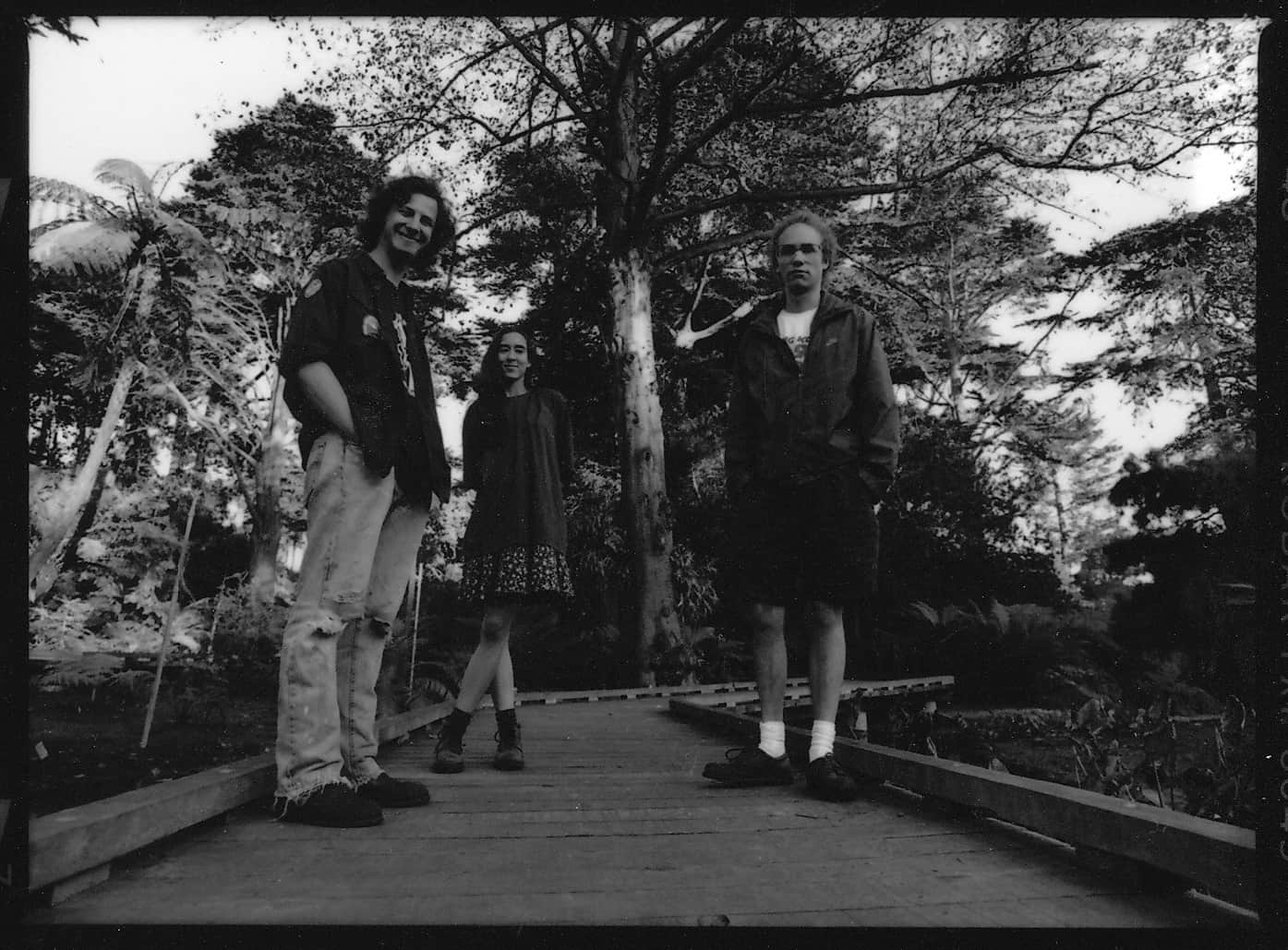
In Los Angeles you recorded machinery for ‘Boogie Nights’, foley for ‘Phoenix’ and effects that survived into ‘The Matrix’, yet you felt technical competence could trap creative people in service roles. Did film work alter the way you hear a room or build a record? When did technique become imaginative again?
Coming from having studied academic electronic music, working in film sound was like relearning to hear in frequency ranges rather than specific sounds. They have to fit together in a whole, mixing film layers is really cool with background sounds, music, diegetic sound effects, hard sound effects, foley, dialog, ADR crowds, etc, it’s quite incredible. And I worked for Dane Davis (him with Academy Awards now!) who is an incredibly creative sound designer, it was a great learning experience. He was the only person of all the studios I tried to get work at who said, “oh a musician, you will have different ears, that’s great.” All the others said, “oh a musician. you won’t have any idea how this works.” So I got to do a lot of different things, from recording to creating effects, but yeah, ultimately you’re an editor sitting there placing sounds in a timeline on a computer. And sure enough, as in Hollywood where everyone wants to be a director, every job in that huge list of credits at the end of a movie is someone who learned the technical stuff to enable them to get somewhere creatively, now just doing the technical work for someone else’s idea.
But yeah, I started using these ideas immediately in the second Dent album ‘Verstärker’ which is full of weird recording stuff and samples of whatnot, and then ‘Scissors and Paper’ which has some definite sound effect sections, like the middle of ‘Voices in My Head’. Both of those albums were made mostly in my apartment in Hollywood. The album ‘Edgy Not Antsy’ also has these sorts of electronic music-film SFX bits in there. The SFX stuff is also really helpful in musique concrete tape collage, which as you know I do love. I mean, there was a time when I was maybe at the impressionable age of 6 or 7 where every rock album had a tape collage, Jefferson Airplane, Frank Zappa, the Beatles, etc. I thought it was obligatory! (And it shows up on ‘Storytelling’ of course, and the middle of the CVB version of the song ‘Tusk’, but the biggest and best is the centerpiece on ‘Superfluity’ called ‘Phenomenon and On’.)
You spent roughly fourteen months playing with Sparklehorse. What was it like working with Mark Linkous and learning to play songs that he had largely recorded himself? What do you remember most about his approach to arranging and recording, and has any of it stayed with you?
This would be an entire separate essay, the entire experience was so intense on many levels, and so whirlwind really. In and out again, from Hollywood sound editing to that world of big record company and famous peers, at a time when such things existed. I loved Mark, what an amazing person. Yeah, he had his issues, but in the end I trusted him and his ideas, especially regarding music and recording. He brought his own ways to everything he did, and sure, several of those have rubbed off. It was educational to pay attention to how he wanted the arrangements to be, he had a sense of different qualities of sounds and how to juxtapose them, for example using highly distorted vocals quietly in a soft slow song, things like that. I had several instruments to be the orchestra with, electric guitar, violin (the upright bass had a bow also), keyboard and glockenspiel. So it was my job to be what he wasn’t when playing live, it was contained but very fun. When any group is together and makes the music be what it is supposed to be, you can feel it in the group, and we had many instances of projecting the intensity of Mark’s songs into a cohesive mass. It was… well, overwhelming sometimes. In big places too! And sometimes the most intense were the quietest songs.
Of course there were minor difficulties, as you’d expect when you’re touring forever. But that didn’t affect what we could do musically. It did affect shows sometimes: Mark would get really mad about people in the audience talking, so would refuse to do encores, that sort of thing.
Choices I make in the studio… I try to learn from every experience, so yes, there must be things I do in recording that are influenced by Mark. But also things I don’t do! Because in Sweden he was an idol, all the other musicians loved him, so people copied so much. I don’t know how many listeners (here) are aware of that. I mean obviously The Cardigans because Nina recorded the A Camp album “with Mark” at the Sound of Music in Richmond, VA (I say “with Mark” because while he may have been physically there, often he was crashed out in a vocal booth at the time. Nonetheless, I guess it was a big deal to have him there.) And if you listen to so many late ’90s/early 2000s Swedish pop recordings, especially all that sultry girl singer with a sparse band stuff, there’s so much copying of his studio ideas or sounds (I shouldn’t name names) to the point where now people think these ideas originated in the studios here. Precession of simulacra and all. Håkan Hellström, a huge rock star here in Sweden, like arena gigs but then almost nothing outside of Sweden, he even translated the lyrics to one of Mark’s songs and made it into his own song. I bet his audience doesn’t even know that.
You’ve written for Cid Pearlman’s dance work since the early 1990s, a relationship far longer than most people realise. When music has to meet a moving body rather than carry a lyric, what changes in your sense of time? Has dance quietly shaped the way you arrange songs and improvisations?
Yes time is different. In grad school at Mills (2001-2003) I had a class on music for dance with Pauline Oliveros and one of the early exercises was to get all the musicians and dancers and have them walk across the room, “Take exactly one minute” or “Take exactly five minutes”. Musicians are generally better at managing the passage of real time, dancers invent time in their bodies. The “beat” in a dance is often not the beat in a song.
When I was at UCSC (1981-1985) doing the composition and electronic music stuff, it was mostly with Gordon Mumma. He had been part of the touring ensemble for Merce Cunningham Dance Company in the 1960s–’70s, with John Cage and David Tudor. He showed us films of their tours, and of course what the music was like—it fit only in time. That is to say, regardless of what the dancers did, the music did what it did for the same length of time. So that’s the first demand, is that the quantity of time is synched. Music is just sounds in a delineated time. That’s how Cage could write a piece like ‘4′33″’, it’s just the time that’s prescribed, three movements adding up to 4 minutes and 33 seconds. What you hear during that period of time is the piece.
With Cid, after a couple of shows with me simply accompanying the ensemble live, we started to compose. We would start with rough timings of sections, then draw a picture of the timeline on paper, like it has this serenity in this section, tumultuousness here, then it gets loud, then backs off, then back to the serenity, whatever. We made pictures left to right of the approximate times, and I would essentially fill it in. Now, there were some shows where it was rock band music (even live with the dancers) and others with string quartet and vocal quartet live, but eventually we settled into a playback pre-composed score. And then it’s tape music, essentially.
I’m sure this has changed my outlook on everything, songs and improvisation, though to pinpoint it would be tough. Like saying, reading novels has surely changed how I write songs, but I can’t point out a single line that illustrates that!
When I interviewed Fred Frith, he described discovering free improvisation simply by doing it, as though a door had opened. You arrived at Mills after nearly two decades of professional music and said it taught you to “think again”. What did Fred, Pauline Oliveros and Alvin Curran help you unlearn, and what did they return to you?
One thing that happened was that the previous year, after playing so much with Sparklehorse, I had done a few independent film scores, and being told by the directors what they wanted was confusing—film people have visual metaphors, huh. So when they say “I want this music to be dark or light” it probably means something entirely different than a musician saying that. (In sound effects world it was also incredibly funny: “Make that gull sound lonelier in this scene”.) So anyway, I had been making music to fit into what other people wanted for a while and I was losing perspective on what I may have had still to say to add to the ever expanding outward spiral of human endeavour. It was perfect timing that Fred, Pauline and Alvin and Chris Brown, Maggi Payne, David Bernstein were there at the time—plus all the visiting musicians and composers we worked with. Plus Gordon Mumma was around sometimes, and Steed Cowart worked there, who was the only Grad student in the music department at UCSC when I had been there!
So as an improviser, besides noodling on guitar solos, I learned a lot by playing with Eugene Chadbourne. That can be “free” improv at any moment. On tour with Camper Van Chadbourne, we played American Music on tour in Europe during the Gulf War, and it was almost all protest music, but in the forms of country, folk, jazz, rock, whatever American genre. I was daunted by jazz playing, never been very good at that so actually trying to play something like a Miles Davis tune was tough. But Chadbourne is allowing, you could go anywhere with it. And when in doubt, distortion. Or just rely on the sound.
Since most of what I had been doing recently hadn’t been improvised, that was definitely a thing to explore at Mills, and I discovered a whole different route to it and through it, mostly in that world of more academic improvisors from the 1960s (AMM, Cardew, and then Alvin Curran had the Musica Elettronica Viva in Rome with Frederic Rzewski, etc. And the Sonic Arts Union guys in the US.) And they were political, which I thought was very interesting. Worth it? I wrote a lot about Cornelius Cardew and his journey, even my thesis, I met the guys in AMM, Prévost, Rowe and Tilbury. Hard to sum it up, but as improvisors, they were trying to rid themselves of connotation through their sounds, to move away from anything prescribed. Hard to do with traditional instruments that will always come with baggage. A fucking drum comes with hundreds of thousands of years of baggage. But there you go, they had piano, drums and Rowe’s table of guitar-ishness. It’s weird and wild music, very “sound” based, and the response to a sound heard. They also were trying to avoid the hierarchy of composer/conductor/musician. I mean, philosophically these were all necessary steps, though in reality you know sounds do have connotations with them, almost any sound from an instrument especially. The whole idea of sampling was based on [the musique concrete idea of] taking a sound out of its context and putting it into a new one where it is heard or examined with different ears. I mean, that is, until the sampler guys sampled music to make music, then the snake started eating its own tail.
I interviewed Rzewski about the politics aspect of the music, of his music, can that work? He said it was like believing in magic: if you think it’s working, it must be! (If this exists on film still —I think it does—it would be like some weird ~turn of the century film cartridge digital format. That would be tough to format-translate if I had to back up this quote…)
BUT THEN! in the course of all of this in a class on 20th century something or other I realized that what Fred had been alluding to regarding free jazz was that all of it was political. The whole time. Free jazz, free speech (free love, freedom) were, in context, specifically civil rights issues. Just trying to be free, or have some freedom or autonomy led the black jazz world into freedom. The white free improv world that wasn’t jazz, much was either jazz-based or a sort of academic-western-music-based thing, and ended up being “free” in response to the struggle between composer, performer (and audience) coming from the tradition of Western Art Music. In the 1950s the composers were getting very prescriptive with the serialism and all, even Cage’s aleatoric pieces were then made into exact scores by David Tudor when he performed them. Cardew at the time was Stockhausen’s scribe, drawing his music scores for him. He specifically was tired of having a composer be the boss and the performer be the worker, so when he left he started doing self-interpretable graphic scores, the largest of which is called ‘Treatise’. The performer decides what sound to make out of the written music. He was an amazing draftsman, the piece is a hundred plus pages of beautiful art, to be interpreted how the performer figures it. (We took a page or two to perform with Chadbourne around this time as well.) (etc etc, there’s a lot more to tell for this story of course, Portsmouth Sinfonia, Eno, Robert Wyatt, etc.) So both directions had political intention, as of course had Fred (see Henry Cow!) And Pauline, and Alvin. That said, Fred is a funny guy and is rather indirect though entirely bemused by people finally figuring things out. But literal politics were sort of unspoken at the time, and the idea of free music was trying to remove itself from the political background it had once had, or emerged from. People did different things in the local free music world, in the Bay Area it was a huge combo of jazz and academic musicians, all working together. So combine this with the Pauline world of Deep Listening and there is a lot to open a person’s mind/ears. I entered thinking “hey I want to write music, I have no limits about what or why, I just want to make it beautiful” and learning, well, what is beauty anyway? Also how some of my own physical limitations in playing determine what I was able to make or play. And how I was learning to hear music in new limitless ways, and how to listen to and maybe respond to sound in or out of context, but really: how to listen. Or at least to consider how to either respond, or instigate a gesture, in free improvisation. It’s unknown territory.
I made little etudes for myself when listening to concerts: try to remember as much of what you hear as you can all at once, how long can you do it? Try to forget everything you have just heard up till now. Try to only listen to what is happening at this exact moment. Listen to the room you’re in, where is the music in it? Try to listen to each player and hear them within the mix of sounds. Try to listen to the overall sound as one thing. Etc, etc, etc.
(And I still probably play too much! It’s my physical response to the situation of playing music, like an overactive talker at a party. I got a lot to say. Or “I have nothing to say and I am saying it”—John Cage)
It was entirely entertaining studying composition and improvisation with Fred for so many reasons, but one thing I always really admired is how he’s amazing at self-production, great at improvising from nothing, even just by himself. I think in general I am more reactive to other players or situations, so I tried to understand how he does what he does. He was like, ok, sit down now and play. What are you going to play, is it what you want to play? Is that the music you want to make?
And I had an acoustic guitar, so I strummed it and made some shit up and thought, fuck how is this even interesting? How is it what I want to say musically? Because, for me, music is like this continuum of communication, we each do what we can to speak it and what we do can affect the future of how music is listened to or how it is heard. I am a firm believer in the history of music, and how its changes reflect humanity. As a musician, and a composer, as I deign to be, what I do should be entirely responsible to the continuation of music as an art form by what I put into it as much as what I take out of it, learning about it and its history. This idea has become sort of a radicalization over time, even recently I’ve had discussions with other musicians about taking responsibility for what you play—this is mostly in regards to what some players feel is good enough to put out publicly as music. But if you think it’s no good, do better. Because you are responsible for the sounds you make.
You’ve said Pandora dismissed you after you challenged decisions you considered unethical. You were also looking for interesting music from Sweden around that period. Did Pandora play any part in your discovery of Øresund Space Collective, or was that something you found entirely on your own? And how did it lead to you playing with them?
Well now, I wouldn’t give Pandora credit for my connection to Øresund Space Collective. I was actively searching for cool music from Sweden, I was already traveling back and forth with my wife, so I wanted to know what was around. I looked for what Swedish bands existed that weren’t the bullshit I already knew of. I actually don’t like a lot of Swedish music, even if it’s “good”. I saw so many Swedish bands at SxSW whenever I was there, it was ridiculous. They pushed the music hard in the latter 90s-early 2000s or so, so Swedish music became popularized all over the world, but a lot of it isn’t really anything. There was a lot of money in the Swedish arts world at the time, so a lot of people got to get broadcast outside of Sweden. (I mean, there are 10 million people, imagine any city of 10 million sending/funding a worldwide wave of music only from that city.) And a lot of them are technically really good—at the time music education was great in schools, and choir singing is everywhere, there are a lot of people who can sing well, a lot of people who can play instruments well. Unfortunately so many of these people choose to work in some specific genre and do it exactly right. They get the right equipment, the right tones, the right look, the right methods of writing the songs, how they are supposed to sound. It’s almost perfect rock/punk/country/Americana/metal/emoGirl/whatever, but when you delve into it, there’s nothing really being said–possibly because they are mostly writing in English and while Swedes “know” English, they really don’t. They use a lot of English expressions or phrases that sound cool, but often with the wrong implied meaning. They still mix up the words “fun” and “funny” (same word “rolig” in Swedish, completely different usages in English. See many Abba songs, for example.) And the accent is still there. The result is that for me, I get the creeps seeing some of these bands, it’s like watching Westworld robots trying to pretend they are humans. Uncanny valley.
So I started looking for instrumental bands and found Gösta Berlings Saga, who had put out 2 or 3 albums at the time, all incredible. Now they have maybe 10? These guys are their own thing, it was obvious from the first listen, they built their own style of complicated instrumental music. In searching for more psychedelia, I came across Øresund Space Collective and a few other older Swedish bands like First Band from Outer Space, Råg i Ryggen, some others. But I really got into the ØSC, early ones like ‘It’s All About Delay’ and ‘The Black Tomato’.
Two coincidences happened surrounding this also. First, out by where my (ex) wife’s family has a country cabin, out in the countryside where we’d go for summer, there was a small touristy little town nearby and they had a music festival one summer. It was tiny, but Gösta Berlings Saga played! So I went and met them and talked with them about music, and we kept in touch so that this led to me playing with them a little after I moved here, and also with Einar, their guitarist (on their 2nd-5th albums, I think it was) on his solo projects, and it was through playing with them that I met Mattias Olsson with whom I’ve been playing in one group or another ever since. He’s on several of my albums, he and I play in Obygden, we back up other songwriters, he even plays in ØSC these days!
Also at the music festival there was a giant record/CD stand run by Mellotronen Records, full of prog old and new, so I learned a bunch from Stefan Dimle right then and there, and got some early Swedish prog albums to start exploring.
The second coincidence was finding ØSC online and realizing Dr Space was Scott Heller. Scott had been getting his PhD at Berkeley in the early 90s and he was a mad show taper so he was at several shows I played, he recorded a bunch of Hieronymus Firebrain! So I emailed him and said I was living up in Stockholm, he was in Copenhagen (since has moved to Portugal). He said, we need to get you down to record, and that happened in November of 2014, I drove down with Alex from Gösta Berlings Saga who played drums at this recording and KG Westman, who was in the process of quitting Siena Root as a guitarist and becoming a sitar player and keyboardist, so he played a lot of synths at this recording session, some guitar. Since then he’s only played sitar.
I somehow managed to convince Scott to let me mix some of these and, well, I’ve been doing a lot of playing and recording and mixing of ØSC ever since. Almost 12 years! That first session gave us albums like ‘Different Creatures’, still one of my favorites, also ‘Ode to a Black Hole’ and ‘Visions Of…’, also later ‘Relaxing in the Himalayas’.
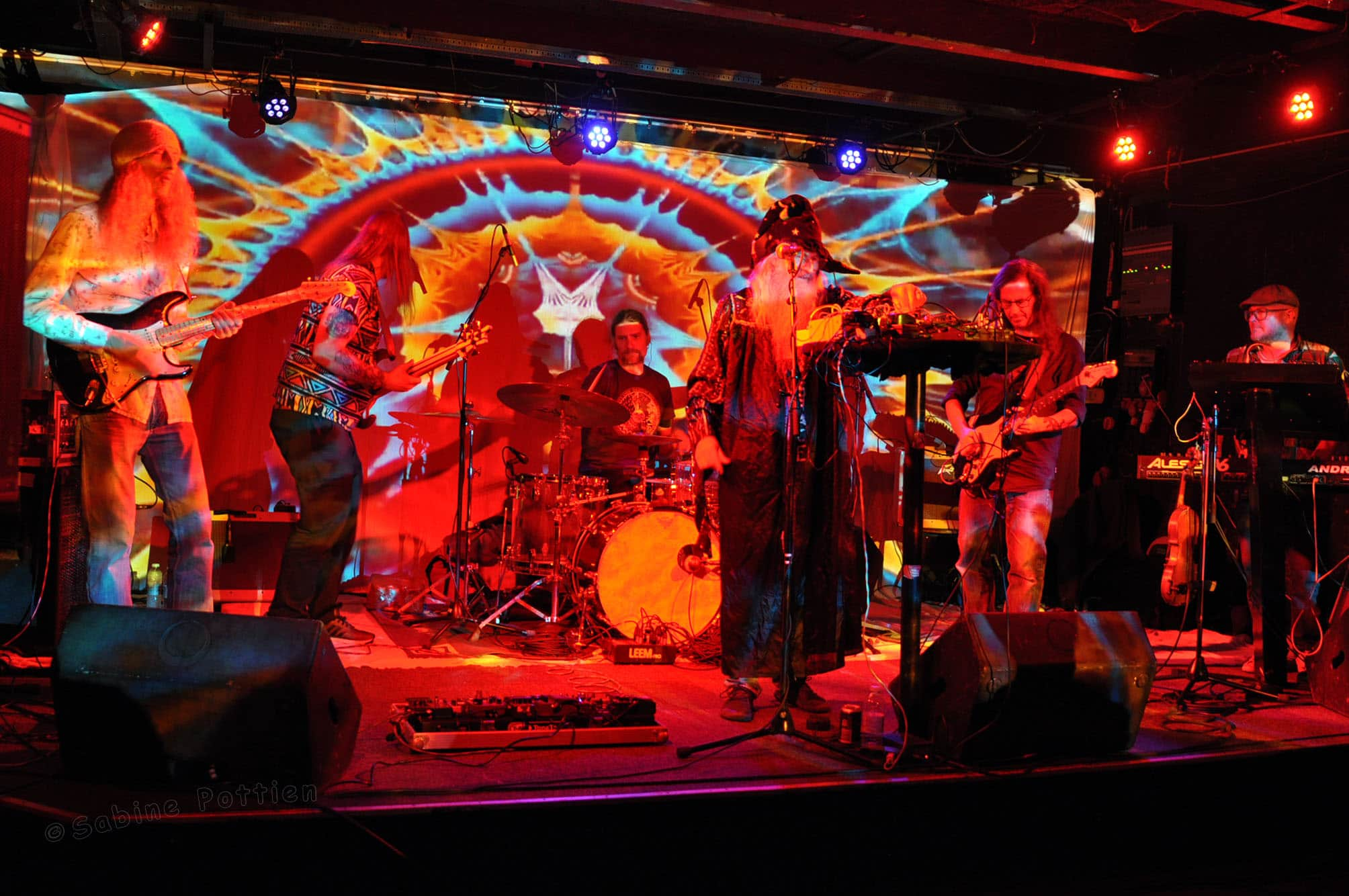
With Øresund Space Collective, you can come away from a session with hours of improvised music, whereas Obygden’s recordings are generally left much closer to how they were played. How do you decide what needs editing? And at what point does working on an improvisation in the studio become composition?
This is almost a trick question. Is improvising composing? Are you composing in real time? Many people combine the two, either conducting or composing bits or entry points to improvise, or as with Cardew’s ‘Treatise’, the composer gives full authority to the performer to make what sounds they believe the score represents.
Improvisition, comprovisation. And it is different for different music, and it depends on what your intention is, really. Our intention with Obygden is the raw and full length run of the four of us composing/improvising in real time. What shocks me every time is how much of it seems like it must have been planned. It’s an odd group of people, musically, all very different. I think we make some great stuff (other members are less thrilled with the outcomes. But again, I say, “take responsibility for what sound you make”.)
With ØSC there are often more people, and the guiding sound of the band is the space synths that Scott (or Mogens) does. Different sessions, even different days, produce different types of things, sometimes the rhythm section or the band wants to hold onto an idea for an hour, sometimes they seem to want to shift to something else every 10 minutes. So in this case, editing can extract a piece out of a longer jam. And often things need to be edited to album side length, so there’s that. But I do try to keep the music in a cohesive piece for as long as it can. I like long music. That’s a big challenge point from many people that I know or work with. Some people think that even my pop songs need to be shorter, or that instrumental sections are too long, or that nobody wants to listen to a half hour piece of music. More John Cage quoting, “If you’re bored after five minutes, try it for ten!” Plus I like guitar solos, people always have something to say about guitar solos being self-indulgent noodling or something, especially after the punk era, but I really like the personal development. Chadbourne said something like, a guitar solo is the musician searching for something, a melody, a sound, something. And as I’ve always said, if you aren’t being self-indulgent, you’re pandering.
Mattias, Mogens, Jiri and I (all from ØSC, and this ensemble called T.A.L.L. https://roth-handle.bandcamp.com/album/t-a-l-l) were in the studio last week and Mogens and Jiri were very much into the music not being ØSC, even though we were improvising often. They made a rule, nothing over 8 or 10 minutes. (After the first jam, of course.) But this music does have some composed elements as well, or starts with a composed idea, and as with the first TALL album (link above) the music we improvised was then essentially made into compositions by Mogens afterwards. He did a lot of part editing and time editing, extensive mixing, it became a wholly different beast. I expect he will with this one also.
It’s a similar method I have used forever, improvising and then making it into a composition, even when writing songs. As far back as Hieronymus Firebrain, we would improvise and I would even try to make up lyrics on the spot and sometimes these worked their way into being songs, but also there are extreme instances like the song ‘Superfluity’ on the album ‘Superfluity’, which was initially an improvisation with Mattias and I, I played baritone guitar, he played drums. https://jsegel.bandcamp.com/album/superfluity Then out at the summer cabin, I started finding the implied melodies and reinforcing them, figuring out how lyrics might fit, etc. Then sent it to Kelly Atkins who did complete vocal arrangements for so much on that album. Now it’s a composition.
I also did that quite a bit with the Sista Maj albums, https://sistamaj.bandcamp.com we would improvise (in the same underground garage as Obygden, but on the other side!) and I would take the audio and reinforce areas to bring out themes, overdub some to make it more cohesive, add filigree, whatever. I really liked the end product, I think that Sista Maj music is pretty amazing. Very interesting group of musicians with Micke Tuominen from Kungens Män (etc) playing bass, Andreas Axelsson on drums and later Per Wiberg on keyboards.
I guess to answer your real question, “when do you know what needs to be done”, I’d have to say any of it can go in any direction, it just depends on what you want out of it. As I listen, if the people are still interacting, if somebody is still making a statement, the music is still happening. You can edit however you want or not to make what you want of it. Or add to an improvisation to make into something else.
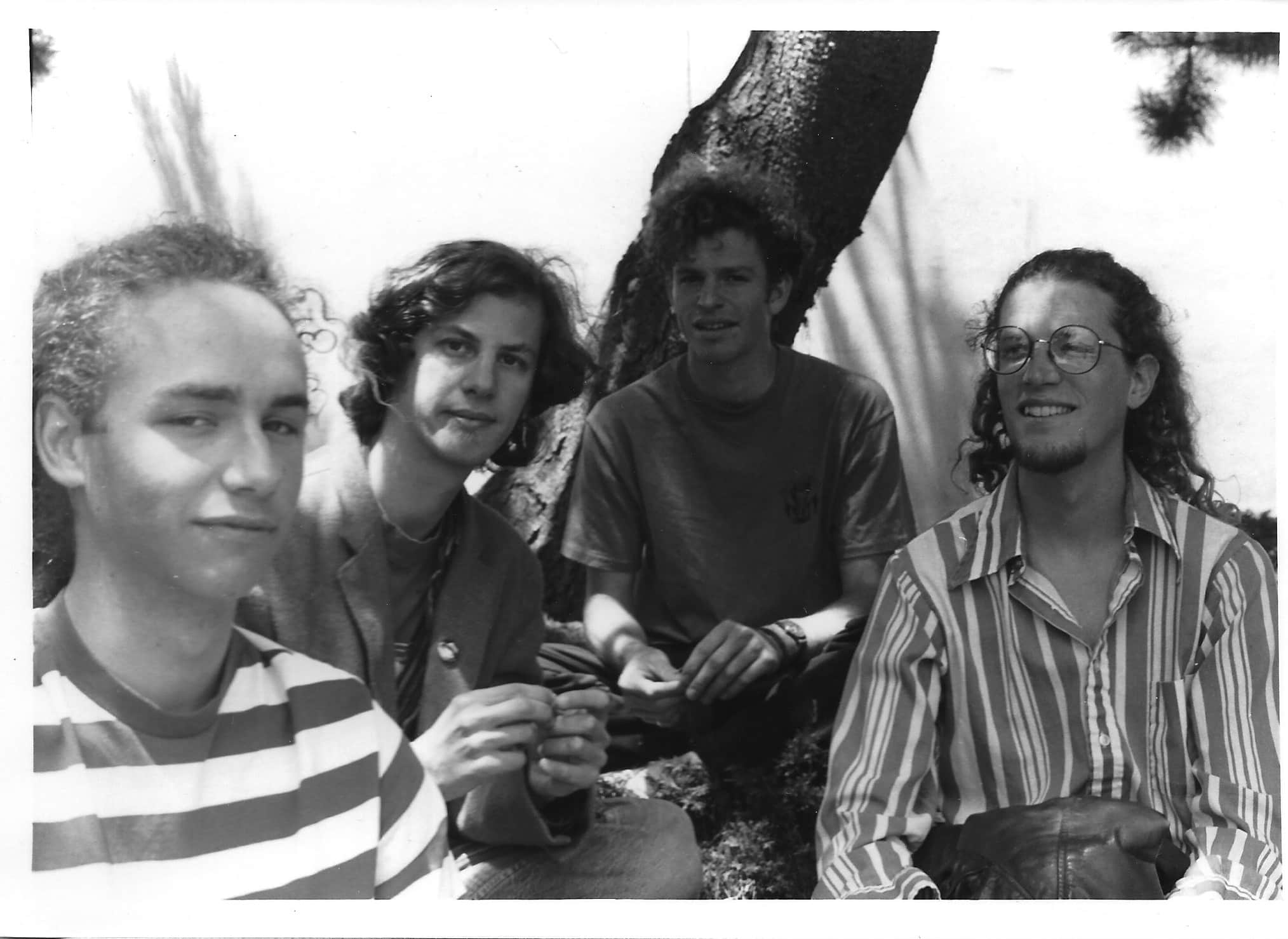
In 1985, a professor rejected your idea for a piece based on ‘The Odyssey’, built around stretches where time passes but nothing happens. Forty years later, Halldorophone feedback and Buchla pitch-tracking finally became ‘Hall of Mirrors’. What survived intact across those decades, and did improvisation give you a way to realise something notation couldn’t?
I carry many old ideas around, things that sit there in the back of my mind waiting for realization (or not). I thought my Odyssey idea was pretty cool, at the time I was thinking of the realization in terms of what I knew as “minimalist” music, which is to say, the greats of the genre, Reich, Glass, Riley, Borden. Each of these have distinct styles that they use for their extended music. I wasn’t sure how to not be like one of them, yet still make the music seem “timeless”. But then there’s also composers like Olivier Messiaen who, besides synaesthetically making wild chordal tonalities out of how they appeared to him in terms of color, made odd-time polyrhythmic superimpositions of parts that seem to lose the pulse. That was his semi-mystical approach to representing eternity (as a mystical Catholic.) The idea of my piece is eternity, eternity in a moment, or an endlessness, a timelessness. Some of the Odyssey places, like the islands Ogygia and Aeaea have specific time spans, yet while there nothing actually happens as if time has stopped, the protagonist is useless so nobody bothers to write the story. Other places like the Underworld (‘Hall of Mirrors’) or Elysium are eternal timelessness. In my mind’s eye, I was seeing this as a theatre performance, which would be incredibly tough to sit through, but with characters, like say Menelaus and Helen in Elysium after everything is over, with minimal lines offered.
Act V, Elysium.
M: (sees Helen) “Oh, there you are.”
H: “Yes.”
So is this going to be drone? That seems too blunt. I wanted things to happen but with no real temporality or temporal set-up. But all my attempts at creating music with moving lines yet static ended up sounding too much like other people’s minimalist music, so eventually I put it back there on the way far back burner. Then when I had a residency at EMS in Stockholm, I initially wanted to just focus on Buchla but they had this Halldorophone there so I was itching to try it out. And when I did I instantly understood its application. This instrument is a resonance based drone instrument with a cello-like fingerboard, it has something like e-bows under each string and a slider system for volume and tone for each. So what I did was make sets of tunings for the strings, based on its lowest string being a B or a C or a D. Then when you play it, your fingerboard fingers search for a note that resonates, and then you can control it somewhat with the sliders. I recorded several sections. With that as a basis for making composition from, I needed some other musicians and some other sounds. Andreas Axelsson was perfect for adding drums and percussion, making it both motive and static. His playing is perfect for this context. And Daniel Borgegård Älgå with the flute and bass clarinet, also a perfect fit, and Tom Djll on trumpet, etc, on Aeaea. I found little melodic bits within the recordings, and had different ways of treating each section to make them distinct (not that anyone can tell) like how the Buchla was used with respect to the Halldorophone, or what instruments I added, or whether I used Supercollider processing.
In the end it made the piece sound right to me, though many of my ideas (like the theatrical presentation) got lost in the process. It became something new. It uses many if not all of the ways of composing and making sounds that I know, they’re all there. The ‘Hall of Mirrors’ is a culmination of an old idea and many years of working on other ideas and learning what to do.
I recently saw The Necks play and there were moments of ecstatic timelessness in their sets, when everything seems to be floating off the ground, the piano player sweeping fast runs or arpeggios with the damper pedal open, the bassist bowing, the cloud of harmonics became simultaneously a static nebula of sound but you could also hear lines being formed, played by instruments that weren’t there, saxophones, trumpets, just out of the harmonic cloud. Really quite amazing. It also kind of reminded me of the end noise wash from My Bloody Valentine in concert when I saw them 35 years ago. It was unending feedback and cymbal hitting and everything all at once, went on forever, after a while people started taking out their earplugs and bathing in the sound. That is the timelessness I was after.
You built the sleeve for ‘Puzzle World’ from more than 2,000 photographs of lost gloves. What kept you stopping to notice them for a decade? In writing about ‘Earworm’, you say making something and showing it to other people is itself the point. Are those two habits, noticing and passing something on, really the same impulse for you?
People break consciousness down to the basics, needing the subject to perceive an object or an other against a perceived background that is neither subject nor object. In the “brain circuits” that Timothy Leary and John Lilly wrote about, these are the first 3 circuits of consciousness, represented by 3 dimensions. First is here or there, moving forward or backward, basic life does that. Then there’s side to side for evading or moving your path, now we’re 2D, then later with the mind developing, there’s the up-down axis, more complex animals rear up or cower down. But then the 4th circuit is time based, and as we humans grow up and become ourselves over time, we become social. With these basic functionalities of consciousness, we are a social animal living in space and time. Using 4 brain circuits. (Leary, Lilly, and RA Wilson say there are 4 more!)
Artists are filters, all they do is perceive the world around them and then create something that is their experience filtered through them, whoever and however they are. Humans are social, so they want to have interaction with other humans, so they show others the things they do or make. It’s also, I think, part of the inherent difficulty in individualism, that we can’t exactly know what others think or who they really are. I feel like that’s what I’m doing, is constantly just showing you who I am: this is how I hear music, this is something I think is aesthetically pleasing. I think music is a social communication also, I could of course just make music for myself to listen to it, but I don’t because, yes, seeing and saying, noticing and passing it on, are both important to me, that process of connection with other people. And whether they agree or not isn’t the point, really, it’s that there is a communication happening. It proves one is not alone in the universe, there actually may be other conscious beings! Or maybe we are pseudo-individualized blips within a field, who knows.
So, the gloves, well. Hmm. I like lists of things, I like how that is used literarily by Rabelais, Joyce, Pynchon, Eco, etc. I’ve done other “photo essays” with subjects like all the broken umbrellas tossed out in trash cans in New York, or all different types of control panels in elevators, each with exactly the same purpose, yet different in appearance. It’s sort of like the idea of sampling, you take something and record it, put the recording in a completely different context and it takes on different meaning. The single gloves thing was funny, because obviously gloves are supposed to be a pair, so on their own they must be lonely! And once I started taking photos of them, I started noticing them everywhere. Then Nick Cave did a book of HIS photos of single gloves, so I thought, crap, well that’s that. I wanted to make mosaics out of the pictures, a mosaic of a picture of a lost glove made out of tiles of other pictures of lost gloves. I wanted to propose this as a literal tile mosaic for one of the new subway stations they are building in Stockholm, but apparently they only take art students, and even then, the new subway station designs were chosen already back in 2015, so I had no chance for my proposal.
But I made the picture mosaics. And that became the album cover, and the material for the ‘Earworm’ video. Eventually I think I would like to do a print out of the pictures and arrange them in mosaics in a gallery space, it would be hard to do. Not sure if that will ever happen. But you could have a good joke for the show title, like ‘Looking for Glove’ or ‘Singles Bar’ or whatever.
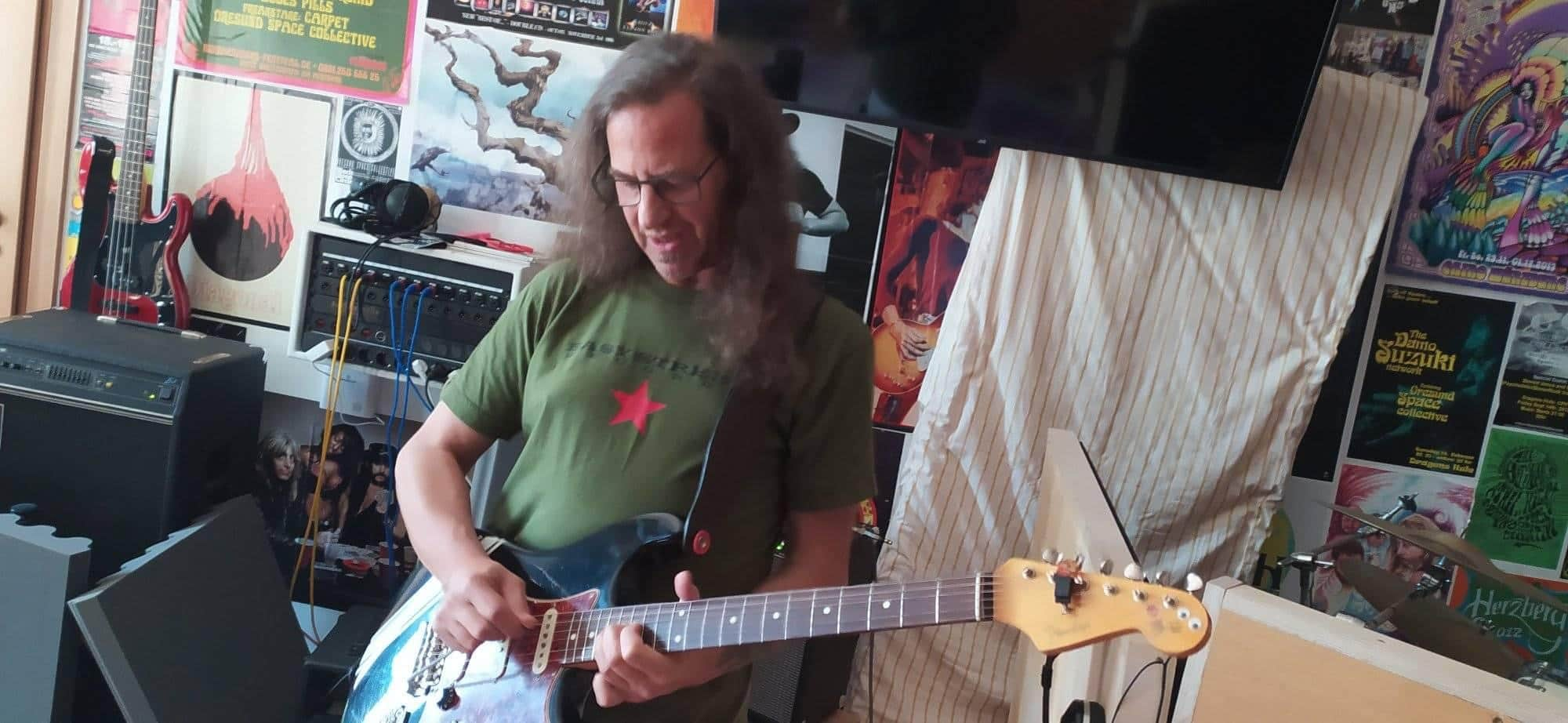
On ‘Puzzle World’, songs such as ‘World Still Burns’ and ‘Memento Mori’ deal with some pretty difficult things: politics, death, fear and the state of the world. But there’s also a lot about empathy and staying connected to people. Does making an album like this help you deal with some of those feelings? Do you see it as an argument against despair?
Well, people in general are pretty fucked up these days, aren’t they? It’s inconceivable to me how so many people who are scared by everything being thrust upon us (I mean, I am!) then turn around and cause pain or suffering or other problems (like environmental issues) as their way of dealing with it. I really worry about the world, it’s really messed up! So my lyrics are usually my inner feelings, sometimes presented by a character, but usually it’s just me. I’m not one of those songwriters who writes universally, it’s all very personal. A lot of writers start with the personal, but then once they grow up they don’t want to express that stuff anymore and their craftsmanship of writing has developed so they could write about anybody or anything. I admire that, but I don’t know if I can do it so much. I’m sure I could “craft” a song, or help a committee a la Nashville write a song, but it wouldn’t mean much beyond an assignment. (By this I am talking about songwriters, I realize that many literary fiction writers get to the auto-biographical fictionalization later!)
And I can’t separate myself from the world around me (like the song ‘Compartmentalize’ on ‘Shitty Nuggets’, I get really affected by shit around me.) And I get depressed, for the world, humanity, my own life and value, the value of what I do that I think is important versus the value of it in a world-wide objective way—music is what I do, it’s worthless now. Not just music, all culture, books, reading the whole biz. What does a 60+ guy do now that he’s spent the past 40+ years learning and plying his trade in this world and finds out that it is now entirely valueless? So in a way, every album I make is an argument against despair. I’m trying to talk myself into believing that it’s important to do it regardless. Look at the song ‘Scars’ on the ‘Honey’ album, Donald Lupo told me when we were playing together that we had to do that one because it meant so much to him that he would listen or sing it when he felt overwhelmed.
So yes, making the album(s) is an argument against despair to begin with. The very fact of continuing to do it is impetus to stay alive, keep going. Because I do think it’s important to make “real” music, people’s hands moving on things willfully making these things make sounds in time, putting it together, writing words, and singing them to say an idea out loud.
And my hope for presenting all of this out loud is that somebody finds it and is into the way it sounds, likes the things I say, is pleased that another person made this collection of sounds. I know the finding music part is really hard now, I don’t think the reach of this newest album is very far at all—when I get reports from Apple Music about what songs of mine are played, they’re overwhelmingly the old ones from ‘Storytelling’. I’m not sure if it’s because nobody knows or cares about anything newer or that somehow the older albums are associated with Camper Van Beethoven so listeners stumble upon those and only those. Who knows. I can’t pay to play, there are many promo companies who promise to “get your shit in front of the influencers!” Like that would work. It’s a fluke if anything gets heard by anybody at all. That makes me despair a little as well, that’s the post-finished-album depression! When an album isn’t finished yet, you still have hope. Once it’s done, poof. There it is, that’s that. Put it out in the world and hope somebody responds. Mostly the people that say anything just say, oh, you have a new album, huh. Like that Italo Calvino story about sending a sign to aliens on another planet and waiting the years it takes to get a message back, and the message they get back is, “hey, we saw your sign.”
Klemen Breznikar
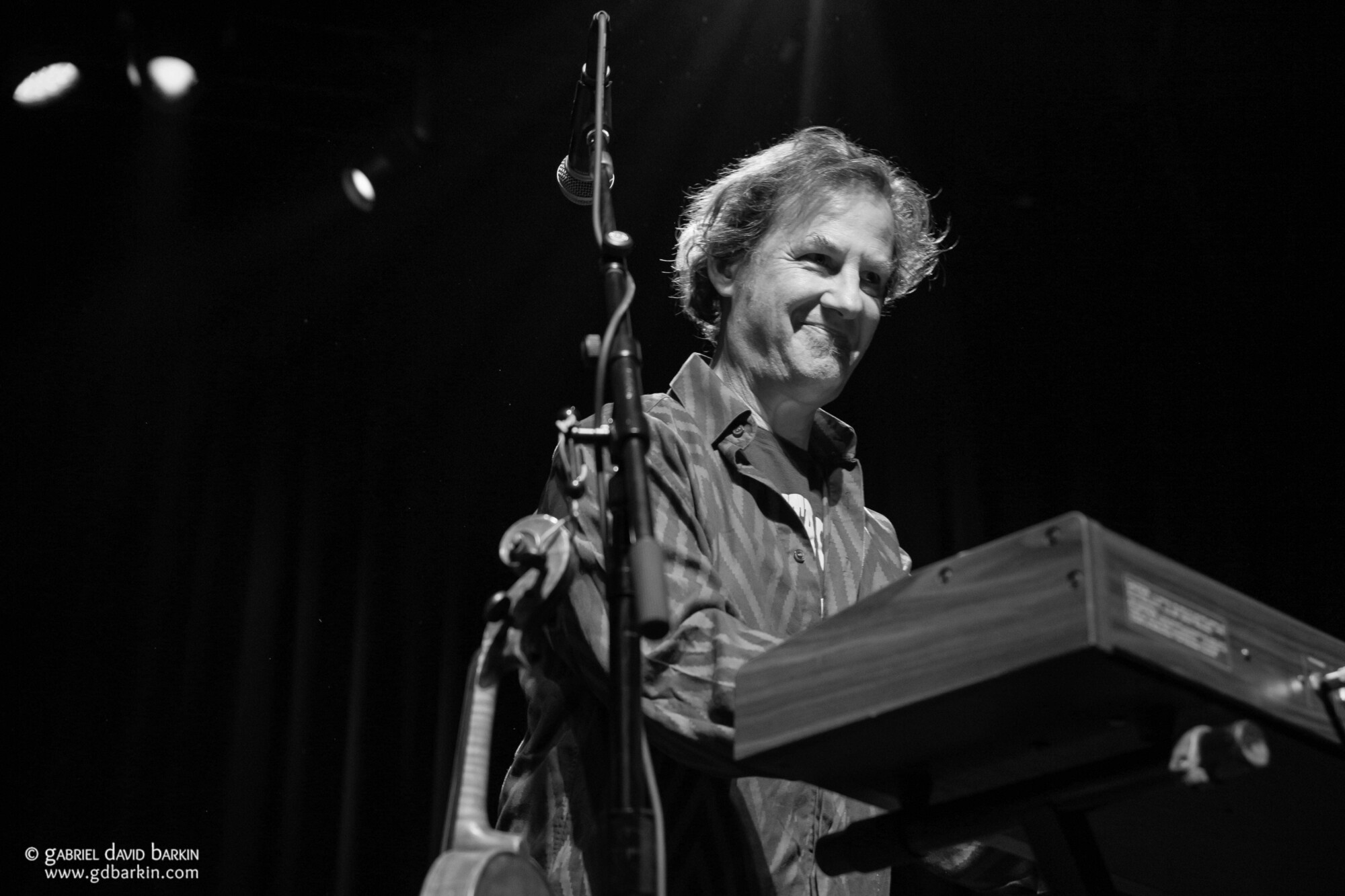
Headline photograph: Camper Van Beethoven at the Fillmore, San Francisco, 26 April 2025. Photograph by Gabriel David Barkin.
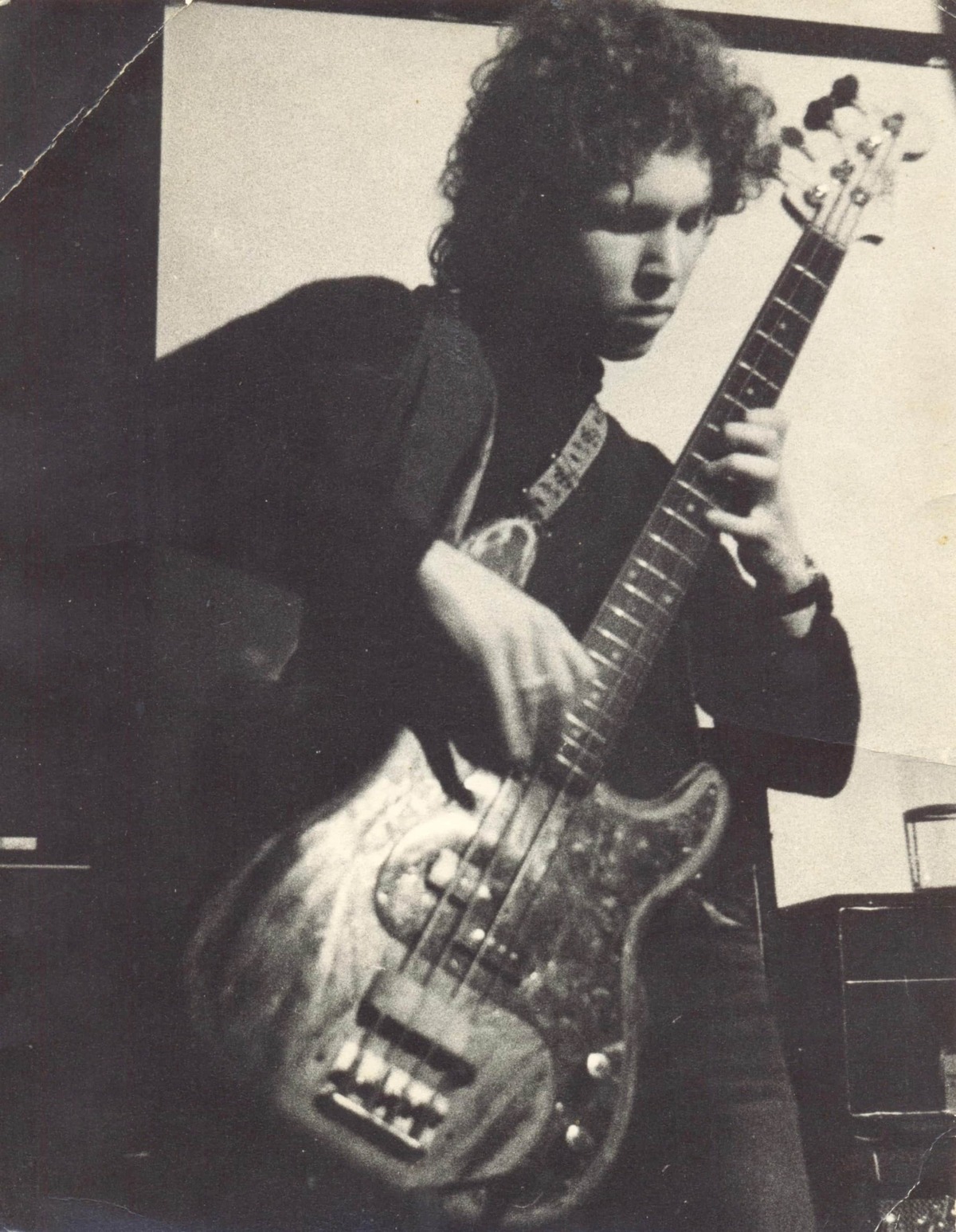
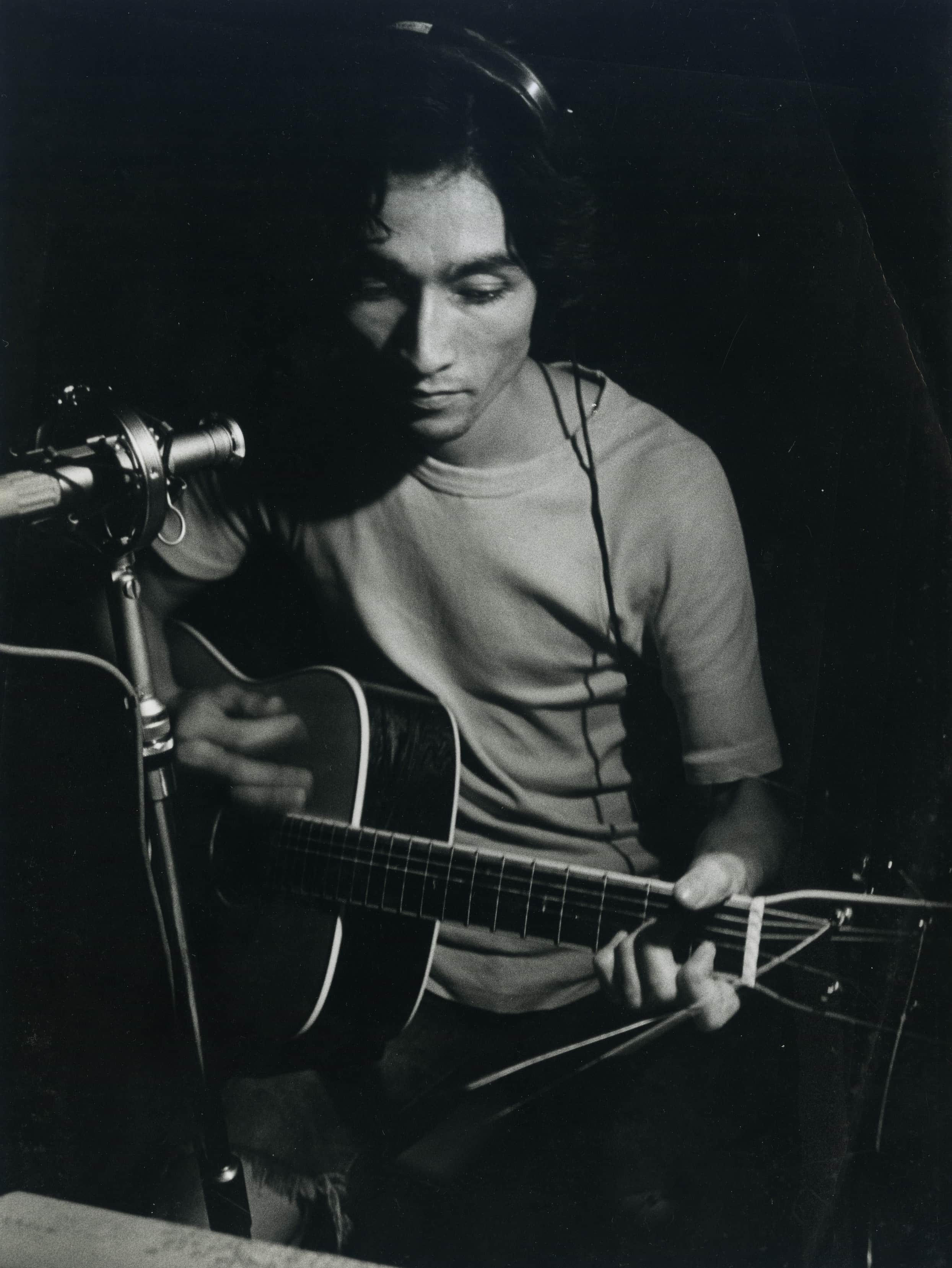
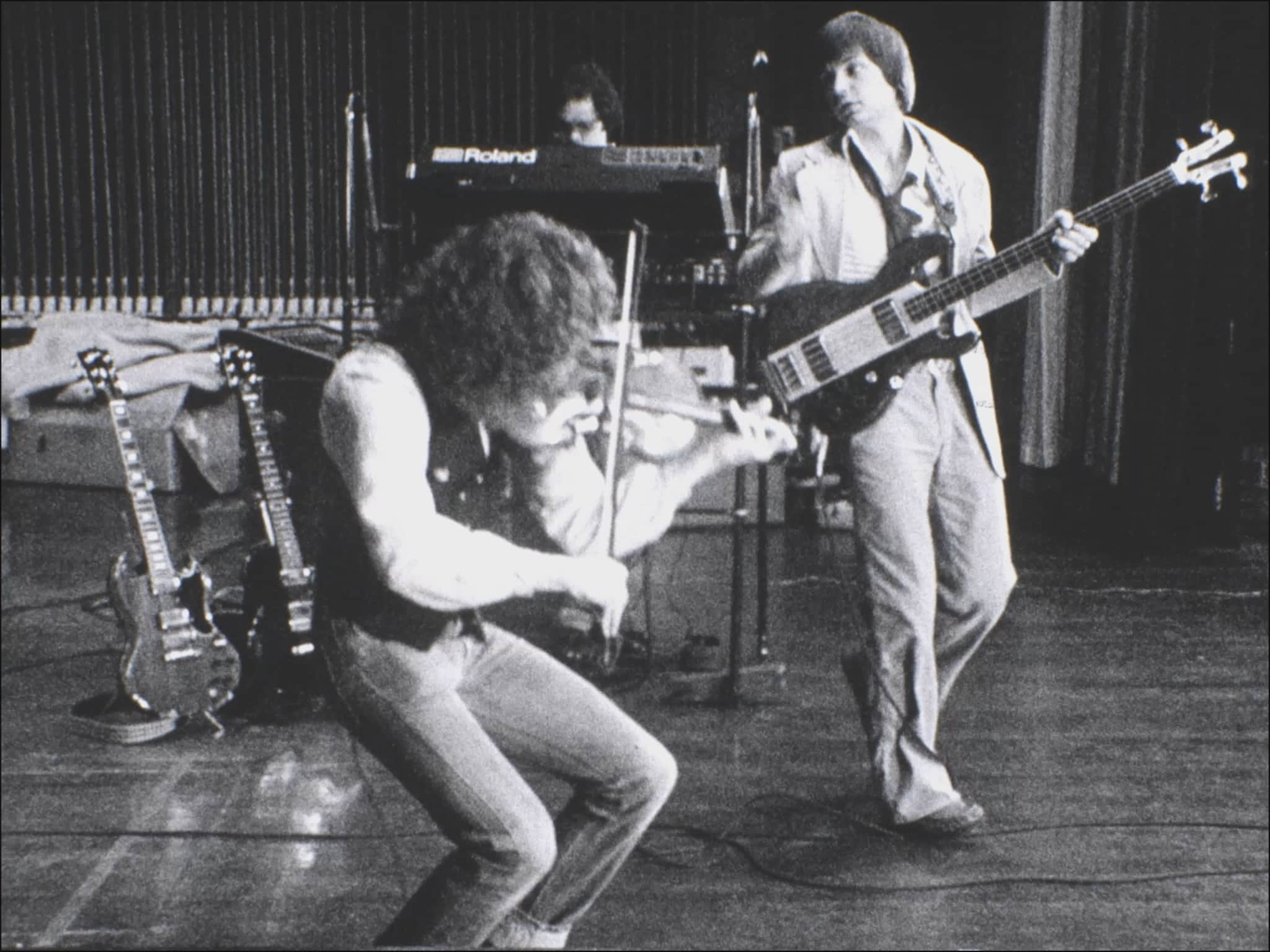
All photographs supplied by Jonathan Segel for promotional use, with individual photographers credited where known. All rights remain with the respective copyright holders.
Jonathan Segel Website / Facebook / Instagram / Bandcamp
Camper Van Beethoven Website