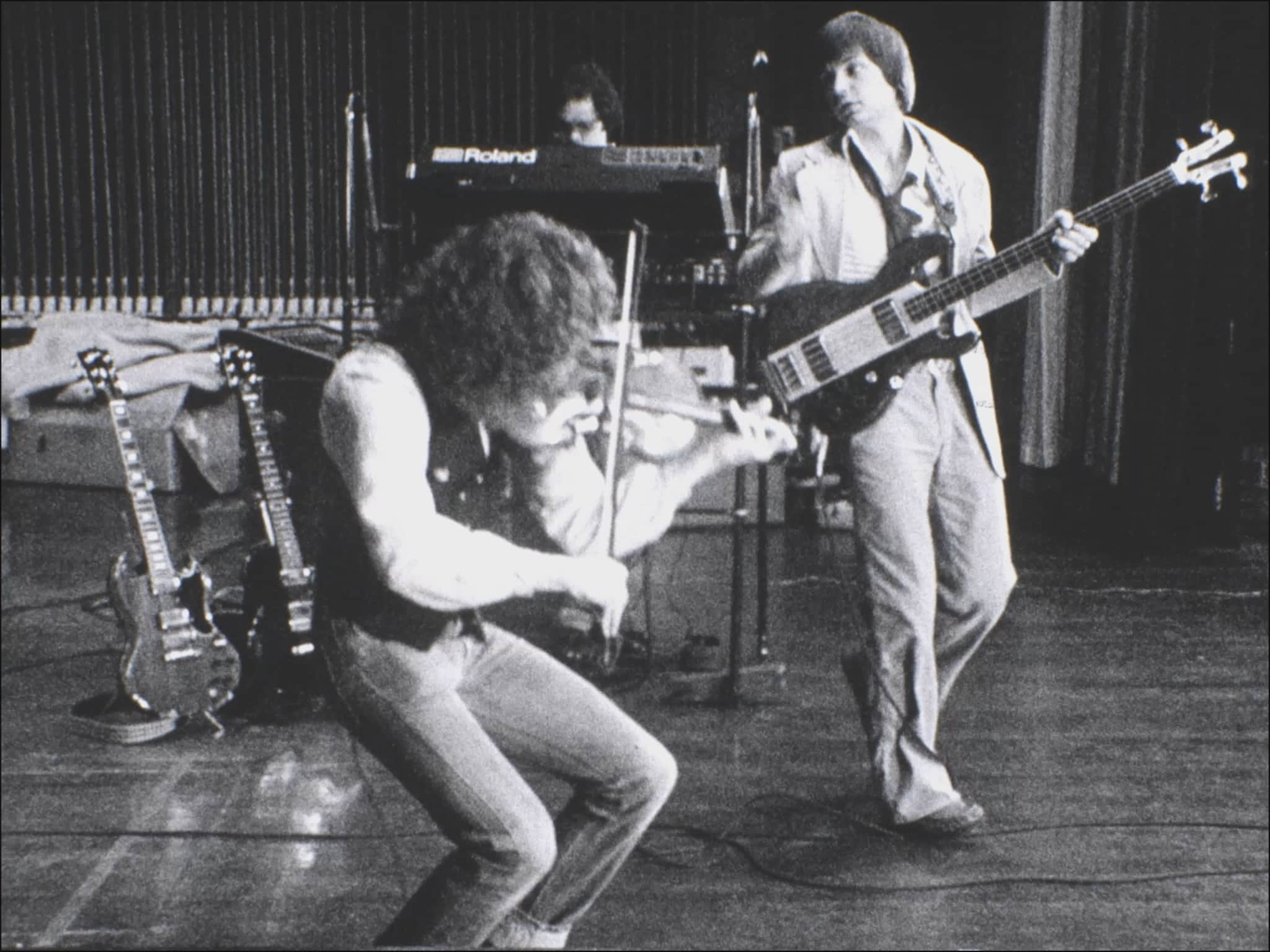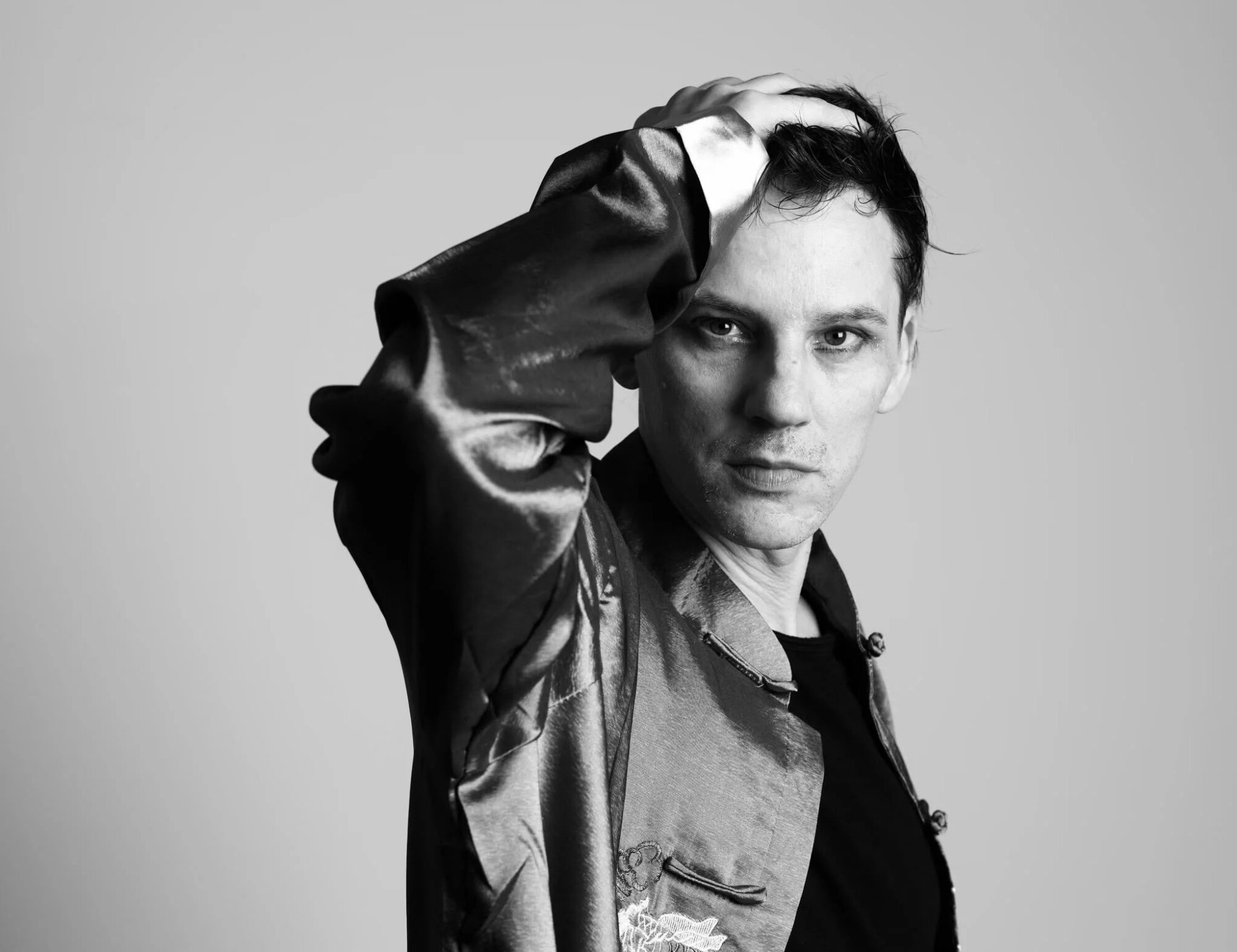

Kazuki Tomokawa: The Wild Voice of Japan’s Underground Folk
Kazuki Tomokawa, the Japanese singer, poet and painter whose extraordinary career began in the early 1970s, talks about his first records, Chūya Nakahara, J. A. Seazer, P.S.F. Records, cinema, painting and the anger that still drives him.
Kazuki Tomokawa remembers very little about recording his first album. He does remember falling out with the recording director, and he remembers coming up with the title, ‘Finally, His First Album’. It was released in 1975, after two singles, and the joke was entirely his own. Before making records, he had worked in hotels, on construction sites and as a basketball coach. He came from Hachiryū, a village in northern Japan’s Akita Prefecture, and the local dialect came naturally into his songs. So did a manner of singing that could move from an almost conversational delivery to a cry that seemed to come from somewhere much deeper.
His first three albums appeared on Harvest between 1975 and 1977. There were songs about family, work and his native Akita, but little about Tomokawa fitted comfortably into the conventions of Japanese folk music. He had discovered the poetry of Chūya Nakahara while still at school, and in 1978 recorded an album of Nakahara’s work with arrangements by J. A. Seazer. The previous year he had written ‘Yoru e Isogu Hito’ for Chiaki Naomi, whose extraordinary interpretation introduced his music to a much wider audience.
The records continued, and so did the painting. From the early ’90s, his association with Hideo Ikeezumi and P.S.F. Records produced a remarkable run of albums, often involving musicians from Japan’s free improvisation scene. His songs also found their way into films by Kōji Wakamatsu and Takashi Miike, while Vincent Moon later made him the subject of ‘La Faute des Fleurs’. Away from music, he has spent decades studying and writing about keirin bicycle racing, where an unexpected result can mean a great deal of money won or lost.
Tomokawa returned to the studio for ‘Going to Buy Squid’ in 2024, eight years after ‘Gleaming Crayon’, working again with longtime collaborators Toshiaki Ishizuka and Masato Nagahata. At seventy-six, he continues to perform and has no interest in allowing his age to dictate his work. With the assistance of Naoki, we spoke with him about his early records, the poets and musicians who changed his life, and why, after more than fifty years, he still has so much left to say.
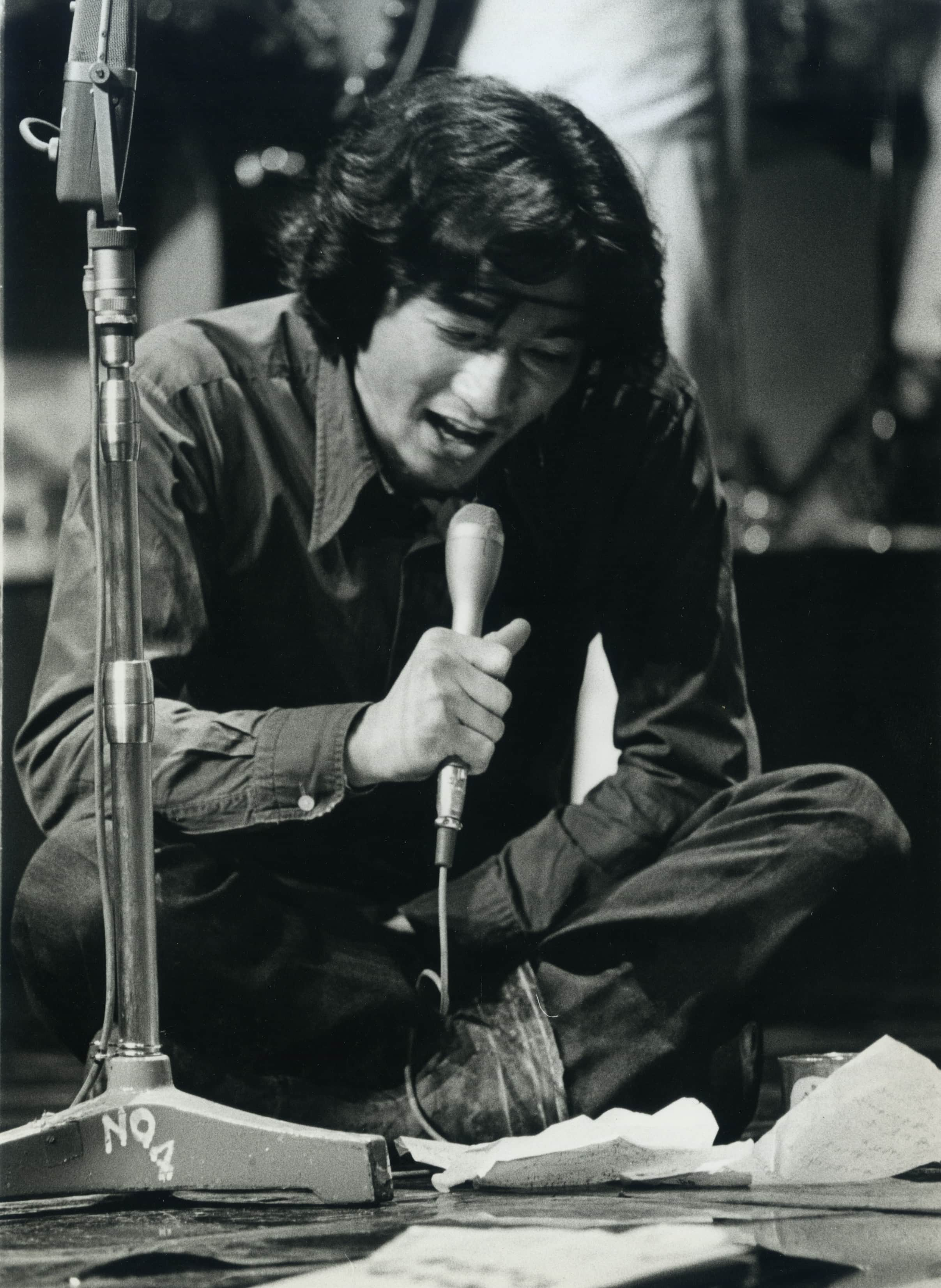
‘I don’t live a life defined by age, generation, or genre.’
You grew up in Hachiryū Village in Akita, and you’ve continued to sing in the dialect you grew up speaking. Did you ever consider singing in standard Japanese? And what is it about your hometown that has stayed with you all these years?
Kazuki Tomokawa: Dialects are so deeply ingrained in me that trying to forcefully correct them is futile. That’s why my accent naturally comes through when I sing. As I’ve lived a long life, I’ve developed a kind of nostalgia. But it’s not simply a feeling of longing; it’s more like a mix of love and hate—a primal force that predates language. Somewhere deep inside, I still feel that I mustn’t simply draw a line under my ties to my hometown.
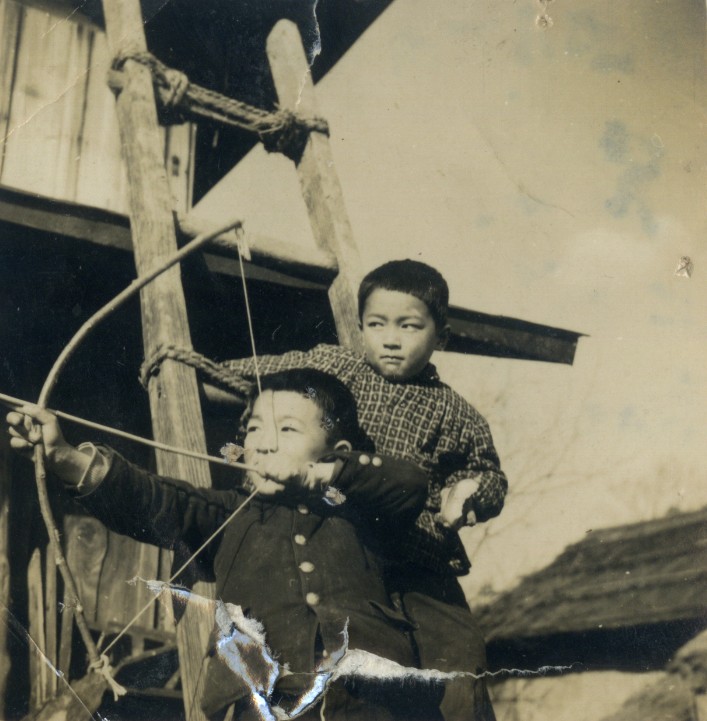
You discovered Chūya Nakahara’s poetry while still at school. Do you remember the first poem that really affected you, and what it was about his writing that stayed with you?
This is a poem titled ‘Bones’ that I stumbled upon by chance in the library when I was in my second year of junior high school.
Look, look—these are my bones,
Having broken through that filthy flesh
Filled with the hardships of my life,
Washed pale by the rain,
The sharp tips of the bones
Poke out.
When I read this, it was a complete bolt from the blue—my mind went completely blank. I didn’t really understand the meaning of the words, but it was a shock, to say the least. After that, I started reading books. Looking back now, I think Chuya taught me to view things from a bird’s-eye perspective. Without that, expression simply doesn’t hold together. But my encounter with Chuya had a profound impact on my life. I was astonished to realize that human beings can unleash madness at such a speed.
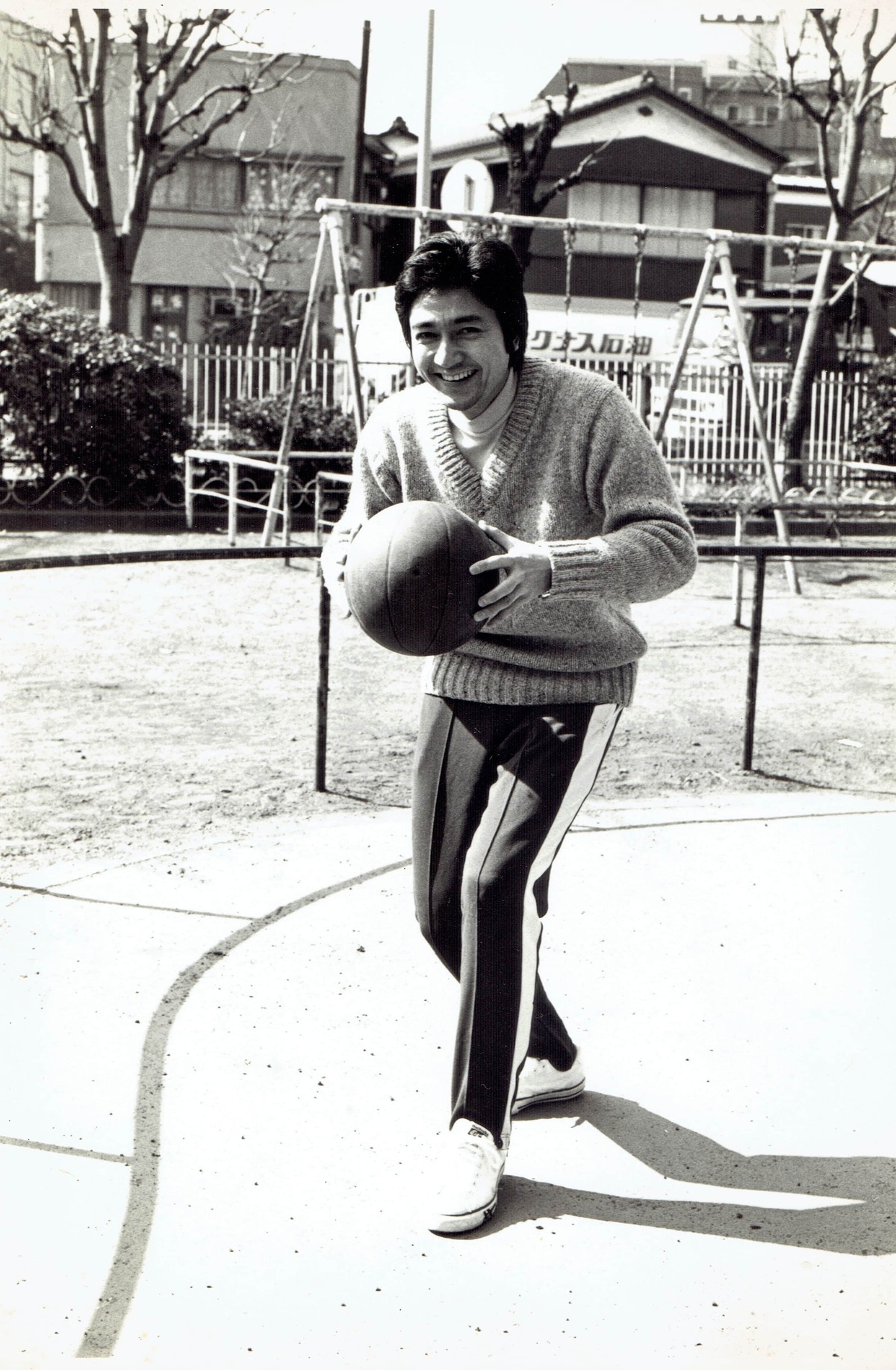
Before making records, you worked in hotels, on construction sites and as a basketball coach. How much of that everyday life found its way into your songs? Was there a particular singer who showed you that these experiences were worth writing about?
Of course, the people I met and the work I did when I was younger serve as inspiration for my songs. It was the Japanese folk singer Nobuyasu Okabayashi who taught me that. When I heard lines like, ‘Today’s work was tough. All that’s left is to knock back some shochu’ (‘Sanya Blues’), I realized, ‘It’s okay to sing about everyday life just as it is!’
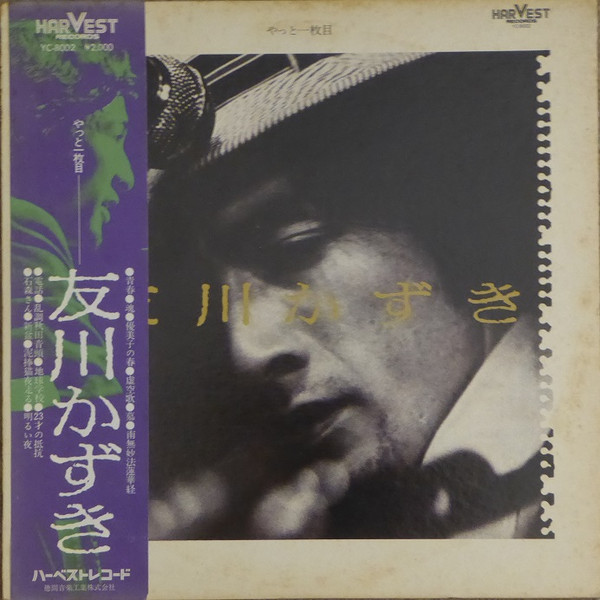
Your first single, ‘Jōkyō no Jōkyō’, appeared in 1974, followed by ‘Try Saying You’re Alive!’ and then ‘Finally, His First Album’ in 1975. What do you remember about those early recording sessions, and how did you come up with the album title?
It was so long ago that, I’m sorry to say, I don’t remember. I do remember, though, that I didn’t get along with the recording director. I was the one who came up with this title. I thought I’d go with something like ‘Finally, the First Album’, then ‘Gently, the Second Album’, and then ‘It’s About Time for the Third Album’. The words don’t really matter. It’s just a bit of humor.
Your second album, ‘Nikusei’, appeared in 1976. Who chose that title, and did you feel the songs were different in any way from those on your first album?
I guess the director came up with this title. My songs tend to be full of personal anecdotes, and I feel like this album is just a collection of those.
Your third album, ‘Senbazuru o Kuchi ni Kuwaeta Hibi’, appeared in 1977. Where did that extraordinary title come from?
I was out drinking with the illustrator who drew the cover for ‘Senbazuru o Kuchi ni Kuwaeta Hibi’ and the photographer who shot the album cover for ‘The Song That Never Stops Playing Inside Me: A Collection of Works by Chuya Nakahara’. It just so happened that I got drunk and ended up holding a thousand paper cranes in my mouth—that’s how it all started. Just a bit of fun.
In 1978, you recorded an entire album of Chūya Nakahara’s poetry, with arrangements by J. A. Seazer. How did you find melodies in poems that hadn’t originally been written as songs?
I didn’t discover the melody—it was just there. Just as the mountains and the sea exist there, the melody is there too, like a landscape. So it’s not so much a matter of setting poetry to music as it is of drawing it out.
You wrote ‘Yoru e Isogu Hito’ for Chiaki Naomi in 1977. How did she first approach you, and what do you remember about seeing her perform before you wrote the song?
Yes, this song was originally written for Chiaki. I once sang ‘Say You’re Alive’ on a TV show. The very next day, I got a call from Chiaki Naomi’s agency. Chiaki herself asked me directly, ‘Could you write a song for me?’ To get a feel for her style, I went to see her perform live, and she was singing Janis Joplin. I was completely blown away. I thought, ‘No one else can sing Janis like that.’ The image just came to me right away, and it came together fairly easily. Recently, artists like Yo Hitoto have covered it. It’s a strange feeling. It’s a little embarrassing, but I’m happy and truly grateful.
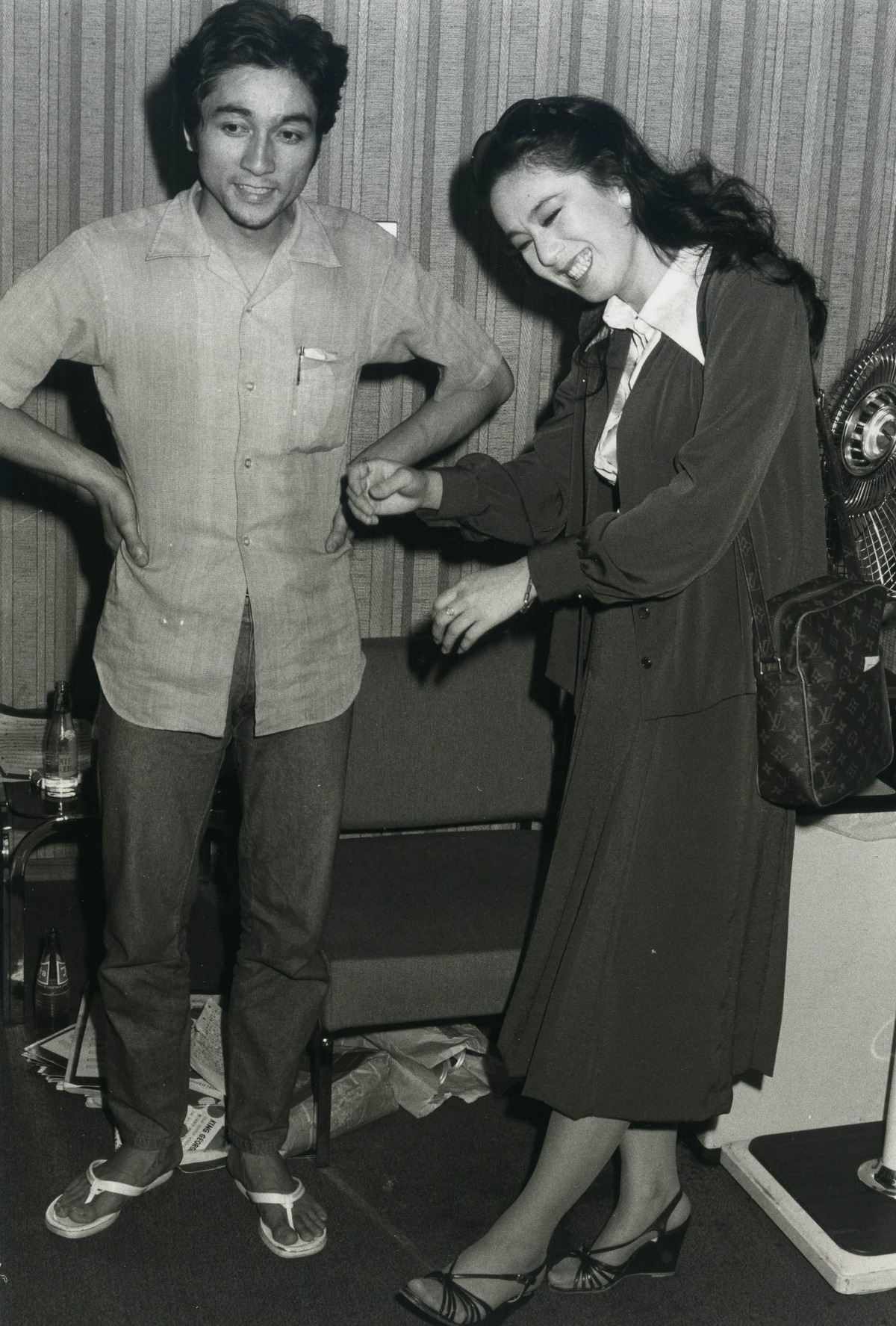
When you’re onstage, how do you think about the people listening? Do you feel they’re part of the performance too?
I think everyone who comes to my concerts is someone who’s interested in themselves. So, while I’m a performer, the audience members are performers too. Anyone who acts on their own free will is a performer. I just happen to be singing, and people just happen to be sitting in the audience or just happen to have come to listen to me sing—those actions aren’t because someone told them to do so. They’re expressions of their own will. That’s why I believe people who share that interest and curiosity connect with one another.
‘Beauty Without Mercy’, released in 1986, deals with some painful losses, including the deaths of your younger brother and your friend Tako Hachirō. How do you approach writing songs about people who have died?
It might feel like forcing the deceased to find peace through song. When it comes to life and death, there are things that a single person simply cannot bear alone. It’s not easy for people to let go of one another. Yet, we can’t go on living while still holding on to the past. In that sense, turning it into a song is a way of mourning.
You began working with Hideo Ikeezumi and P.S.F. Records in the early ’90s, recording with musicians including Motoharu Yoshizawa, Toshiaki Ishizuka and Masato Nagahata. What was Ikeezumi like to work with, and how much direction did you give the musicians in the studio?
I think the reason Mr. Ikeezumi produced so many of my albums was because he really liked my singing. During recording sessions, I’d just hand him a piece of paper with the lyrics and chords, sing a little bit myself, and then leave the rest entirely up to the musicians. They’re geniuses, so there’s no need for me to micromanage.
You’ve been painting for decades, alongside writing and performing music. When did painting first become important to you? Is it a completely different kind of work from writing songs?
I’ve always loved drawing. When I was in middle school, I copied a painting by Maurice Utrillo, and I felt a strange shiver run through my body—that’s when I clearly realized, ‘Painting is wonderful.’ Once I entered my 30s, I started getting more opportunities to design LP covers.
I create both songs and paintings, but they’re completely different things. A painting isn’t directed at anyone; it’s self-contained. On the other hand, songs and writing are created with listeners and readers in mind. While I’ve been influenced by novels and music myself, I think I’ve been most influenced by painters. I could talk endlessly about my favorite painters.
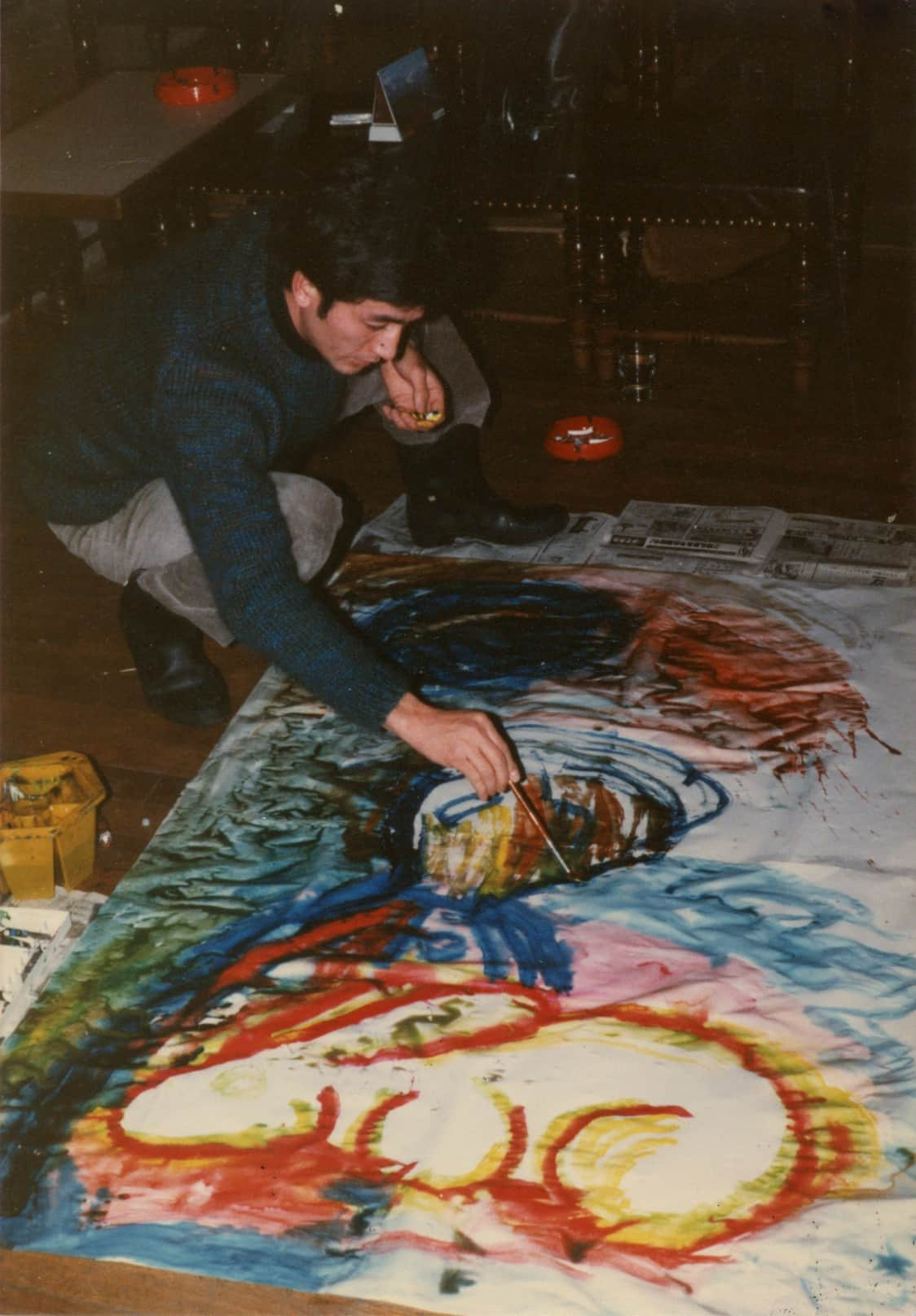
You’ve followed keirin bicycle racing for decades and written extensively about it. What is it about the riders and the races that keeps you so interested? Do you see any connection between gambling and making art?
I’ve always liked gambling. Starting with hanafuda, which I learned at a construction site in my early 20s, I’ve tried just about everything—pachinko, horse racing, boat racing, and more. Eventually, I ended up with keirin. People often ask me what makes keirin so appealing, and it’s the fact that the subject of the bet is a human being. In horse racing, it’s the horse; in boat racing and auto racing, it’s the engine. In keirin, on the other hand, humans are the driving force. Of course, physical ability is important, but other factors—such as a rider’s personality, interpersonal relationships, and even the size of the prize money for each race—also come into play. That’s what draws me in. I’m the type who goes for long shots, aiming for big payouts with small bets. It’s a dream, really. Dreaming of the kind of huge sums of money you’d never get in everyday life might be similar to grasping something invisible through expression.
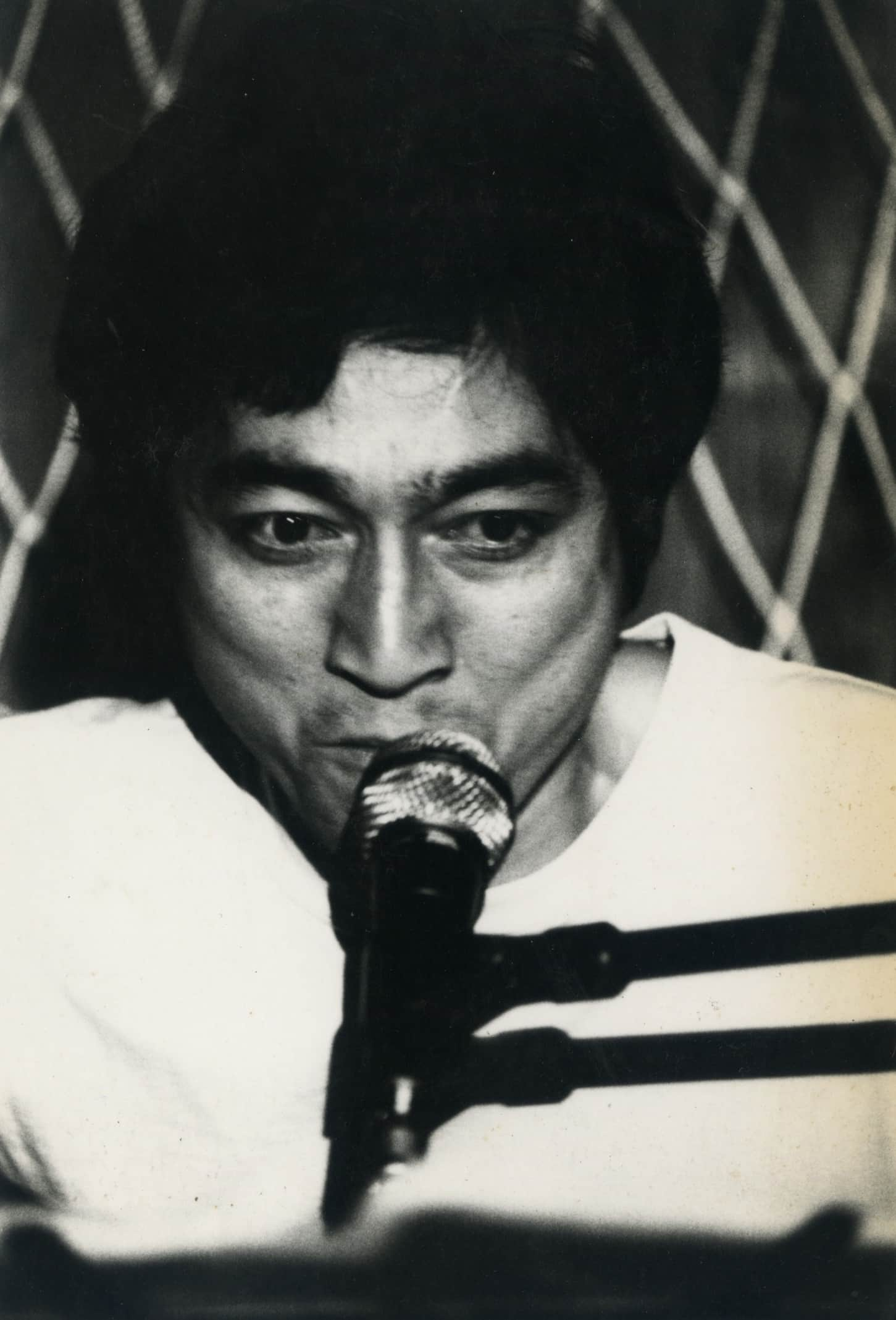
Your music has appeared in films by Kōji Wakamatsu and Takashi Miike, and you also appeared in Miike’s ‘Izo’. Later, Vincent Moon made ‘La Faute des Fleurs’, a documentary about your life. How did you feel about having someone follow you around with a camera, and what did you think of the finished film?
At first, I really didn’t want to be followed around for a documentary—it’s just exhausting. But when I saw Vincent Moon’s ‘Take Away Show’, I was so surprised by the freshness of his footage that I ended up agreeing to it. Personally, I didn’t like how ‘La Faute des Fleurs’ was edited to feel like a sentimental story about a parent and child. I told Vincent that, but he wouldn’t fix it, so it ended up being released just as it was. Still, there are aspects of his talent that I truly admire.
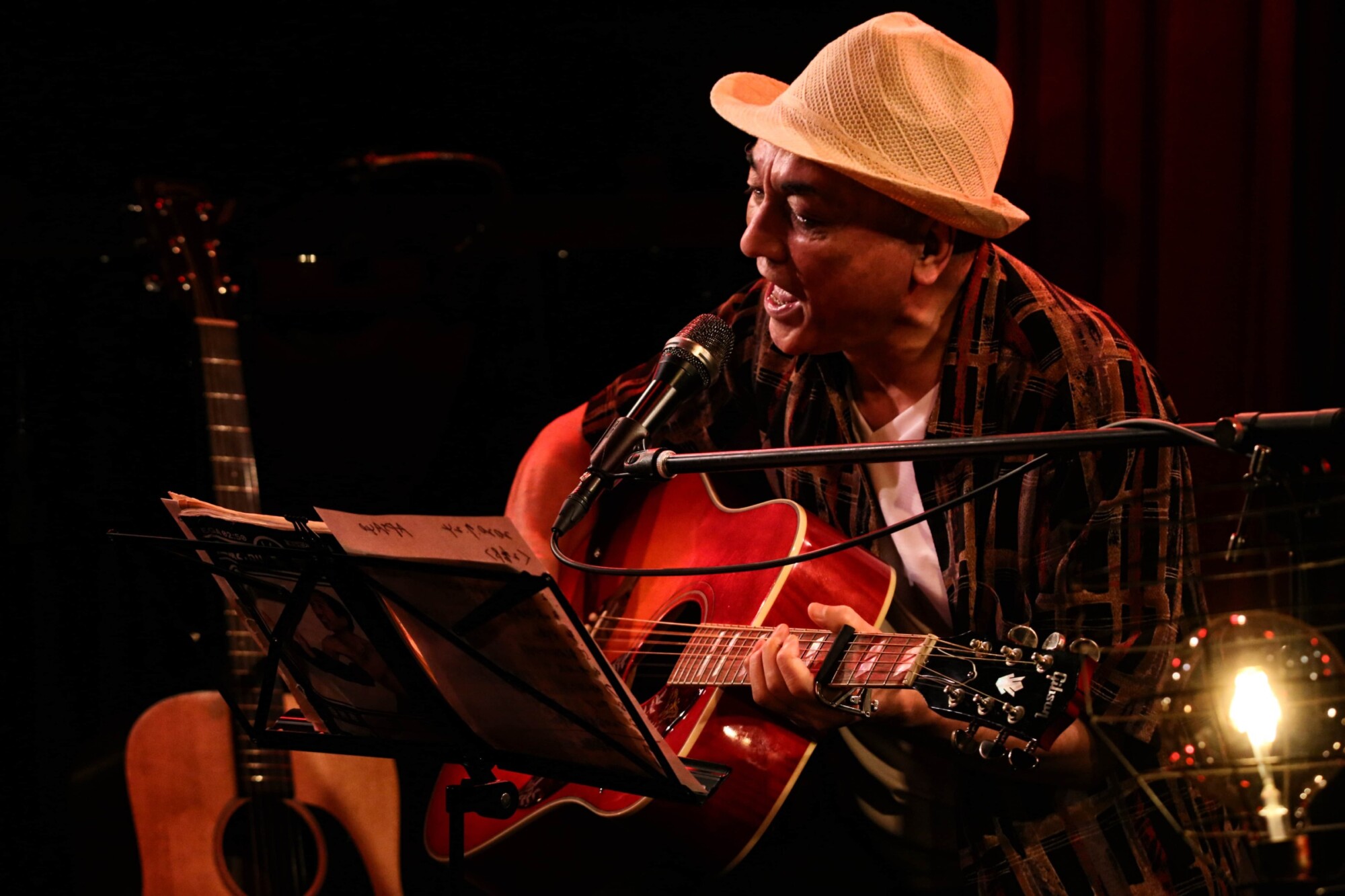
‘Going to Buy Squid’ appeared in 2024, fifty years after your first single. Has what makes you angry changed much since those early days? And does growing older affect how you think about the work you still want to make?
The targets of my anger may have changed, but the essence remains the same. Recently, the nuclear accident following the East Japan Earthquake and the Trump administration’s brazen behavior have reignited my sense of concern. Some people worry about my future because of my age, but if I start thinking about my age, my creativity will wither away in an instant. I’m not satisfied, and I have no intention of fading away. I don’t live a life defined by age, generation, or genre. I’ve made up my mind: I want to remain an artist who doesn’t pander to the times. I have no intention of becoming a people-pleaser. I won’t put my arm around anyone or join a crowd. I won’t pander to those around me; I’m just happy if what I have to say reaches even a single person. I know I have no talent—after all, I’ve never had a hit. But within myself, things I need to do keep popping up one after another. It’s simply a matter of tackling them one by one. I’m perfectly fine with it being an endless string of mediocre works.
Klemen Breznikar
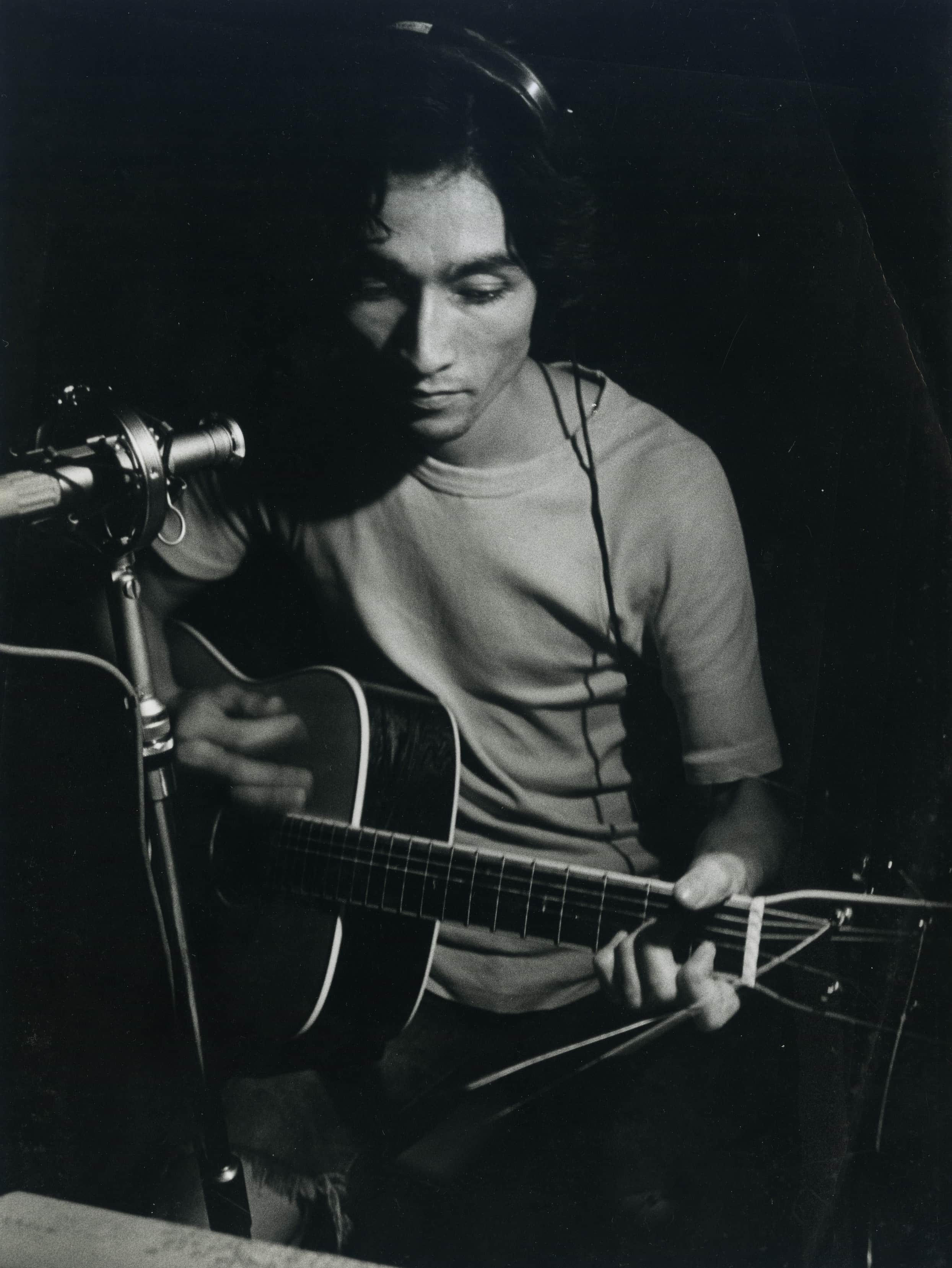
Headline credit: Kazuki Tomokawa during a recording session. Photograph: Courtesy of Kazuki Tomokawa
Kazuki Tomokawa Official Website / Official Store / 1975–1977 Recordings / Going to Buy Squid – Album Trailer