
Gone Cosmic | ‘End of Totality’ and the Years That Shaped It
Calgary’s Gone Cosmic are preparing to release their third album, ‘End of Totality’, on February 5, 2027, through Grand Hand Records. We’re premiering the visualiser for ‘In Stride’ today, alongside an interview with all four members of the band.
It’s been four years since ‘Send for a Warning, the Future’s Calling’, and quite a lot has happened in the meantime. Singer Abbie Thurgood suffered a serious skydiving accident and faced a long recovery. There have also been marriages, children and other musical projects. All of these experiences have had some part in shaping the new record.
The band spent years working on the songs, recording their rehearsals so they could listen back and decide what to keep. Eventually they headed into the studio with Jesse Gander at Rain City. ‘In Stride’ was one of the songs that came together quickly musically, although Thurgood was still struggling with the lyrics just days before recording began.
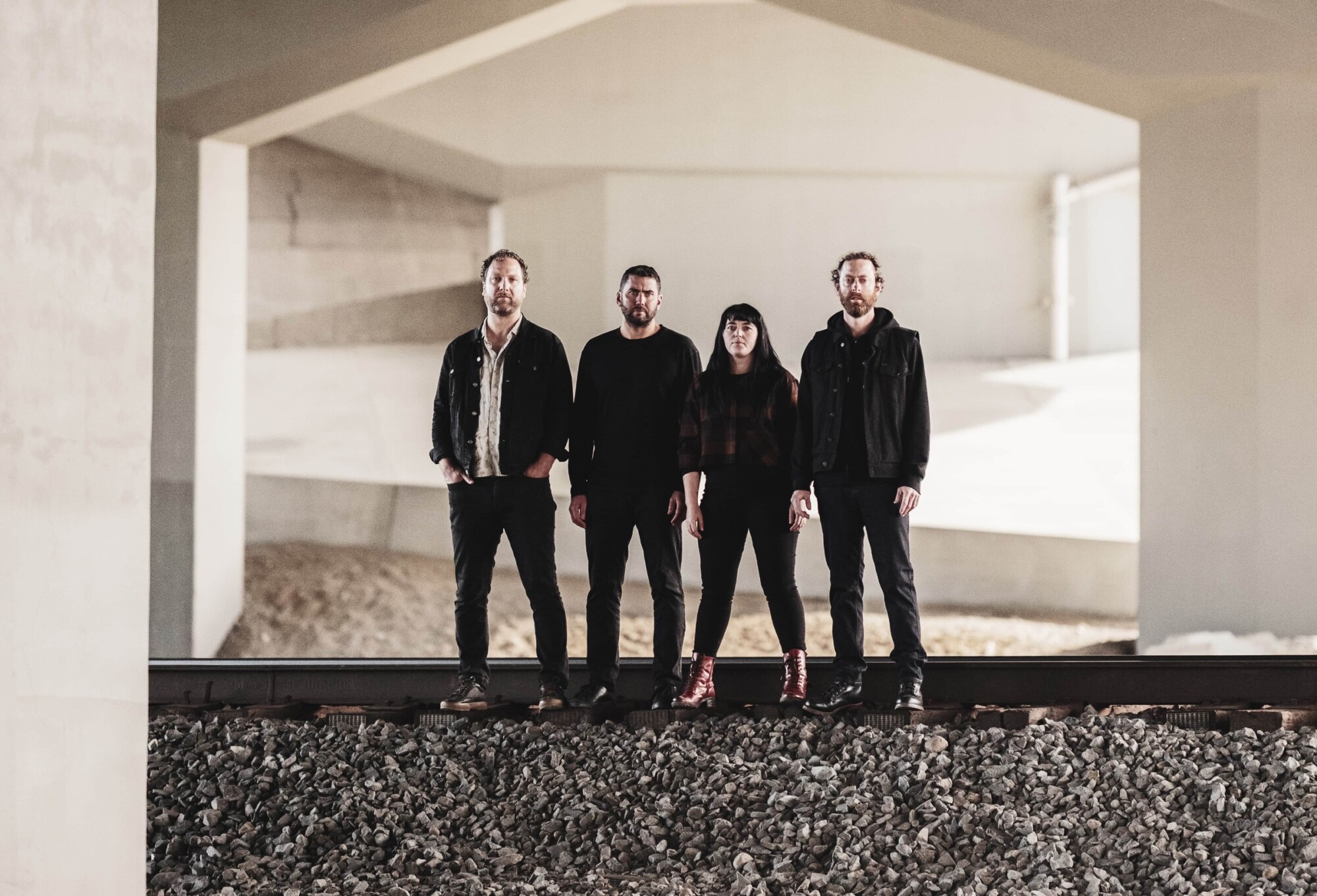
We spoke with Abbie, guitarist Devin ‘Darty’ Purdy, bassist Brett Whittingham and drummer Marcello Castronuovo about making the album, their very different musical influences and the childhood memory of a solar eclipse that gave the record its title.
Watch the visualiser for ‘In Stride’ below, followed by our interview.
“It wasn’t about pretending the darkness never happened but recognizing that it doesn’t last forever.”
Five years of writing, growing, struggling and navigating some of life’s darkest moments have gone into ‘End of Totality’. How did those experiences shape the record, and was making this album in some ways a cathartic process?
Abbie Thurgood: We were all tested in different ways over the last few years, and for me personally, this record carries an especially significant weight as it’s the first album since my skydiving accident.
Experiencing a life-changing accident changed my perspective, priorities, relationships and, in many ways, my understanding of myself. It really put me in a position where I had to confront and process a lot of traumas rather than ignore it or distract myself from it. This inevitably found its way into the music.
End of Totality is closing a multitude of chapters and making room for whatever comes next. It’s not necessarily about tying everything up neatly or having all the answers. It’s more about recognizing the journey, accepting that challenge, making the change and moving forward.
The album is described as your darkest and heaviest work to date, while still balancing infectious hooks with expansive psychedelic passages. Was this a conscious direction for the band, and how did you approach finding that balance?
Brett Whittingham: We didn’t necessarily set out to write meaner, heavier tunes – but I think we’ve all been affected by the heavier times we’ve experienced as a band and individually, and this showed up in our songwriting. Many of these songs had their beginnings around the tail end of pandemic years which brought instability and uncertainty to our favourite thing to do: jam and play live together. Abbie’s skydiving accident was devastating – it was terrifying to see our sister so severely injured and the incredibly challenging recovery journey she undertook.
However, there was also lots of positivity that shone through the dark times: band members got married, became parents, released albums from solo projects, regained their ability to walk and wail. We’ve always had heavy, trippy and melodic elements, but the trials and tribulations we navigated together definitely surfaced in what each of us brought to the table through the songwriting process.
The title ‘End of Totality’ is a fascinating one. What does it mean to you, and what ideas or imagery did you want it to evoke?
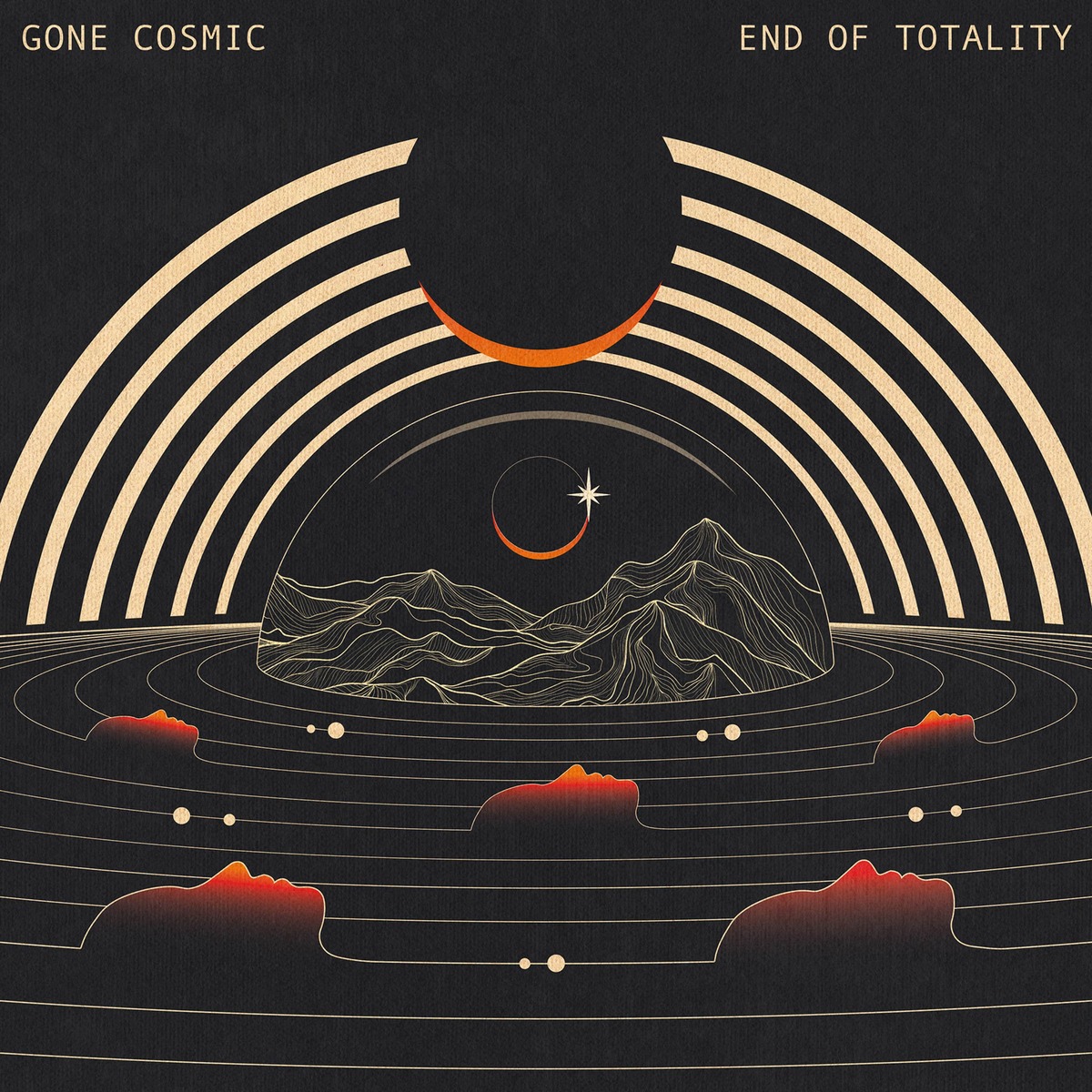
Abbie Thurgood: When I was quite young, my granddad took me to the English coastline to watch a solar eclipse. I remember constantly looking up at the eclipse, and eventually he told me to turn around entirely since I couldn’t stop looking up. After a little while, he let me turn back, and after a few moments, I looked up (again) at the exact moment the Moon began to uncover the Sun. For the safety of your retinas, I don’t recommend this ha-ha. But it’s funny how certain memories stay with you without you necessarily understanding why. Nearly 30 years later, I found myself thinking about that moment again, and it really resonated with me. The idea of totality, that brief period of complete darkness before the light begins to return, felt like such a fitting reflection of the record and everything that had gone into making it.
End of Totality represents that transition. The darkness has shifted, the path has been relit, and there’s a sense of moving into a new chapter. The symbolism felt incredibly personal. It wasn’t about pretending the darkness never happened but recognizing that it doesn’t last forever. Once that connection clicked, the title felt right.
‘In Stride’ is our first glimpse of the new album. Abbie, you’ve mentioned that the music came together almost immediately, while the lyrics took months to finalise. What made the lyrical message so difficult to pin down, and what does the song ultimately mean to you?
Abbie Thurgood: Some songs come together in minutes while others take their sweet time to evolve. In Stride was the latter. I tend to write from the feeling of a song and the emotion of the arrangement; the melody finds its place and the lyrics follow. With this one, I felt like I just couldn’t quite communicate with it. I bounced back and forth between several different melodies and approaches. Looking back, I wonder if some of that disconnect came from the message itself. I’ve spent a good portion of my life putting other people ahead of myself, often without really realizing or questioning it. “In Stride” is almost the opposite of that. I was wrestling with a perspective that I hadn’t fully learned to embrace. Eventually, “In Stride” found its footing, and I’m glad I gave it the time it needed and kept the persistence.
How does the songwriting dynamic work within Gone Cosmic? Do songs tend to emerge from individual ideas, or is it more of a collaborative process, and has that changed over the course of three albums?
Devin ‘Darty’ Purdy: Our songwriting approach often starts with some guitar parts being shared to the band ahead of a jam, and sometimes Brett and myself will work on some ideas in advance of the whole band, so we are bringing a solid foundation to collaborate on. Brett has an amazing ear and very strong songwriting skills which helps to rein in the chaos to serve the song. Marcello is a beast of a drummer and can create some very unique and innovative drum parts to any ideas and weird time signatures we present to him – both meticulously planned out and improvising in the studio. And Abbie is a truly remarkable singer who brings powerful vocals and melodies to our songwriting sessions. We often are reconfiguring the structures to find the perfect fit to Abbie’s vocal arrangements. This has been a consistent approach to the writing on all our albums.
One element that stood out from our previous records is we set up recording equipment in our jam space and recorded every session for years of writing. This really helped to elevate our songwriting as we had the opportunity to listen back to each jam while not playing the songs, which puts you in the perspective of a listener vs. a player – I believe this really benefits the songwriting process. We also didn’t rush any part of the songwriting process with this album and refined each song until we felt we’d achieved what we were striving for. We really feel this resulted in our best, most cohesive album to date.
You worked with Jesse Gander at Rain City Records on the new record. What did he bring to the recording process, and did his involvement help you explore any new sonic territory?
Marcello Castronuovo: Jesse is a true master of his craft, and we were incredibly fortunate to work with him and the rest of the team at Rain City. He brought golden ears, an unmatched work ethic, an incredible collection of gear, and, most importantly, the patience and curiosity to explore our ideas. The studio became another instrument in the recording process, with every piece of gear adding its own colour and character to the record. Of course, those tools are only as good as the person behind them, and Jesse knew exactly how to use them. He layered tasty production elements, textures, and sonic details in ways that pushed the songs far beyond what we thought possible. The result is something that feels bigger, deeper, and radder than we could have imagined. We couldn’t be prouder of what we created together.
Your music draws on heavy psych, blues, progressive rock and hard rock, with comparisons to bands like Elder, Black Mountain and All Them Witches. What artists or records have been particularly influential in shaping the sound of Gone Cosmic, and are there any unexpected influences listeners might be surprised by?
Devin ‘Darty’ Purdy: We are all self-proclaimed music nerds who are obsessed with all aspects of creating and listening to music. I think one aspect that makes our sound so unique is our diverse range of influences from all genres of music. From a guitar lens I feel this record reflects the admiration I have for some of my biggest guitar influences (the heavy riffs of Tony Iommi, the melodic arpeggios of Nick DiSalvo, the psychedelic aspects of David Gilmour) while staying true in showcasing my own creativity and developing a unique sound as it complements the rest of the band and serves the songs.
Abbie Thurgood: La Dispute, Radio Moscow, Florence Welch, Black Mastiff, Janis Joplin, Aretha Franklin
Brett Whittingham: A few of the bands and artists as I was listening to in frequent rotation while we were writing this new record include Khruangbin, King Gizzard & the Lizard Wizard, Once and Future Band, Spidergawd, Idris Muhammad, Booker T & The M.G.’s, Curtis Mayfield
Marcello Castronuovo: Drum grooves may have been influenced by: Manzel, Supermax, Danzig, Type O Negative, Ozric Tentacles, Ultimate Spinach, Circus 2000
Looking back at ‘Sideways in Time’ and ‘Send for a Warning, the Future’s Calling’, how do you feel you’ve changed as a band, and what do you hope listeners take away from ‘End of Totality’?
Abbie Thurgood: I do believe we’ve evolved as a collective. You can hear that progression across each album, with every record building on the last and pushing us further into the weird and wonderful world of Gone Cosmic. We’ve been playing together for quite some time now and have also experienced some significant life events along the way. I think that history, trust and strength really come through on this record.
More than anything, we hope End of Totality offers comfort, a sense of connection, and a reminder that even the darkest times are temporary and brighter days are ahead.
We are so grateful to have the opportunity to continue making and performing music together and we can’t wait to share these new tunes with all the amazing people who’ve supported us and new friends who want to join us on this strange trip!
‘End of Totality’ will be released on February 5, 2027, through Grand Hand Records, on vinyl and digitally.
Gone Cosmic Bandcamp / Facebook / Instagram