
Philip Lewin Interview | The Story Behind His Rare 1975 LP ‘Am I Really Here All Alone?’
Philip Lewin looks back on his privately pressed 1975 album, life in Toronto, the musicians he worked with and the unexpected return of his early recordings.
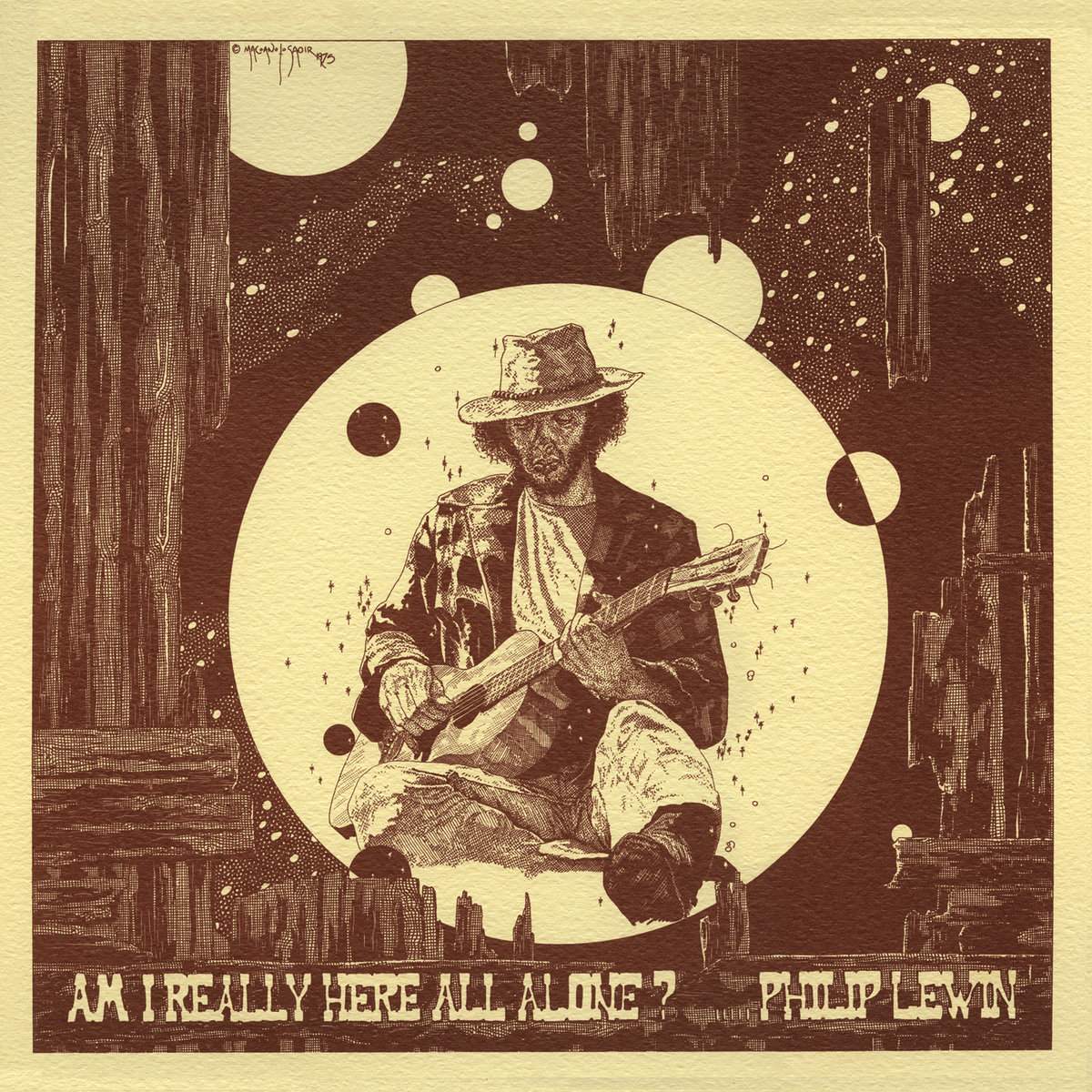
Philip Lewin had 300 copies of his first LP pressed in Toronto in 1975. By then he’d spent a couple of years recording songs at his friend Robert MacIntyre’s house, with one piano piece recorded at his own place on Gothic Avenue. He couldn’t afford a conventional sleeve, so he glued poster artwork onto plain white jackets. He signed and numbered the first hundred copies before getting tired of it.
Most of ‘Am I Really Here All Alone?’ is Lewin singing and playing guitar, sometimes with an unusual doubled sound that came from experimenting with the tape recorder. The album attracted little attention at the time, but copies eventually began turning up among collectors. In 2017, Tompkins Square reissued it from the original tapes.
Lewin had continued making music in the meantime. His second album, ‘Diamond Love and Other Realities’, brought a group of Toronto musicians into the picture, and he went on to record more albums, including one assembled from tapes that had sat unfinished for decades.
In our conversation, Philip remembers life on Gothic Avenue, the people who helped make those early records and what happened when his music found a new audience decades later.
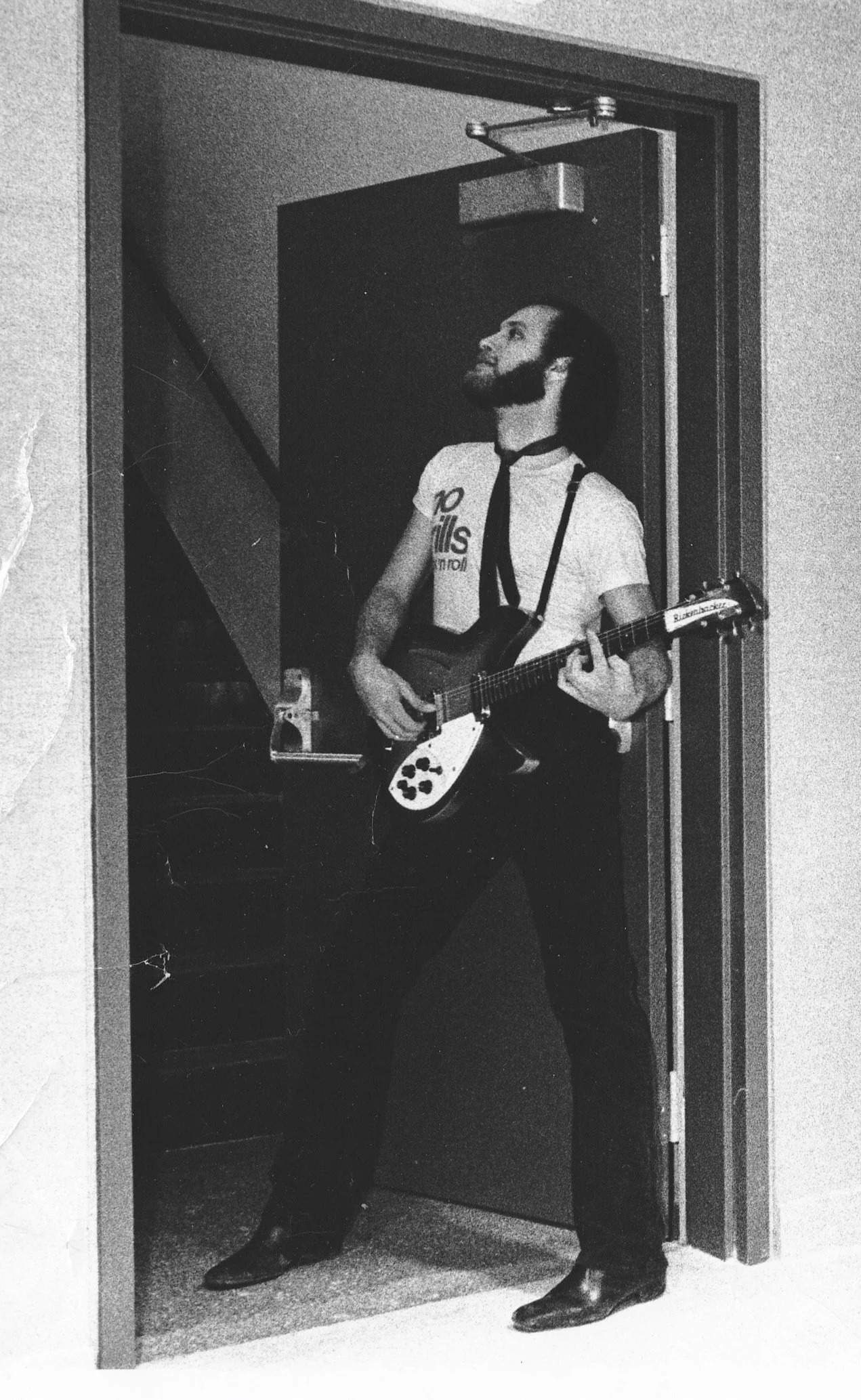
“It made my music independent of my existence.”
Can we start right at the beginning? What kind of music was around you growing up, and when did you begin making music yourself?
My father was nearly all only listening to classical music. Not the pop stuff, but serious music. My mother had a piano, played and sang Broadway show music. My first records were Broadway shows. Oliver was my favorite, then Camelot. No sound of Musak (spelling intentional). I started playing piano at age 6 and fooled around creating instrumental pieces.
You started playing piano before taking up guitar. Did you find yourself writing differently on the two instruments?
When I started writing more intentionally I did not have access to a piano, so all writing was guitar based. I am a better piano player than guitar player with influences on style ranging from Carole King, Rod Argent, Ray Manzarek to Steely Dan. So, when I did begin writing more on piano for my second released album, there was more complexity to the musical arrangements.
You were fifteen when you went to Windsor Mountain School. What was that experience like for you?
It was an escape from a horrible reality. It was a school that was on the leading edge of racial issues. It was relatively untouched by the typical propaganda taught in schools. It brought the teachers and students closer together. A simple example is everyone was on a first name basis. I should also point out that many teachers were radically underemployed refugees from eastern Europe, many with serious political backgrounds. I already had a pretty dim view of the human race overall politically, so I think I fit in more than I changed.
What do you remember most about your university years in Rochester? Were you already writing a lot of songs?
I wrote an album’s worth of music during University I have never released. The title of the unreleased album is “(Songs escaped from) The Well of despair”. I did have access to a cheap tape machine and did some recording which I have recently flipped to digital. Most was guitar based but I have one instrumental recorded on my Ace Tone organ!
How did you end up moving to Toronto? Did you expect to stay there?
Some Canadians visited a mutual friend in Rochester and they convinced me that immigrating to Canada was both possible and a good idea as I was at loose ends financially. They said we could all share a house in Toronto and they could find me work. My sister and her husband were already in Toronto. Those were the days when one could apply and be accepted at the border. I flew in and left the airport as a legal resident of Canada. Life escalated from there and there never was a reason to think of returning to the USA.
What was Gothic Avenue like in those days? Who were the people living around you?
Gothic was like a giant coop of like-minded people. It was scheduled for demolition to be replaced by a high rise, which was successfully fought. However, by the mid ’70s we no longer could stay in the homes, which are now worth millions. Penny, who was a writer for a magazine, lived across the street. Bill, a keyboard player, eventually played in Janis Joplin’s band. There were a lot of talented and interesting people.
How did you meet Robert MacIntyre, and how did you end up recording at his house?
I was part of a Queen Street based comic and art community, which is how I met Rob. He had a decent tape machine and was kind enough to allow me to record all but one song from my first album. He also did the beautiful cover in his unique style. One song was recorded in my living room on Gothic on a piano I had purchased for $50.
Were those first sessions fairly informal? Did you already have an album in mind, or were you simply recording songs as you went along?
I had songs. I had the opportunity to record them at Rob’s. The idea of releasing them as an LP developed as the recording process was happening. One of my neighbours on Gothic had just released a solo album after being part of a Canadian band called “Perth County Conspiracy does not exist”. It may have given me the idea to actually release an album.
I’ve come across different dates for the recordings. Some sources mention 1973, while others suggest sessions continued into 1975. What do you remember about the actual timeline?
Recorded in 1973 to 1974. It took a while to get the LP done as I had never done anything like that. I couldn’t afford to print a normal cover, so I had white jackets and made a cheap poster which I glued as a wrap-around. Having friends who did numbered prints, I decided, for no other reason, to do the same with my pressing of 300, but got bored and stopped signing and numbering at 100.
There’s an unusual doubled sound to parts of the record. How did you discover that effect with the tape recorder?
The tape deck had sound-on-sound and sound-with-sound. The idea was that you recorded a second track combining a prerecorded track and a new, live one. But, as the new track with everything on it had a slight delay due to head locations in the machine, I discovered that the original track of vocal and guitar was like a pre-echo. I loved the effect and used it in a final mono mix.
What do you remember about recording ‘Touch’ on the $50 piano? Was much of it improvised?
I don’t know what to say here. It was a very different emotion in some ways. I still play it the same way. The break would not be note for note, but for all practical purposes the same.
“I tended to use heavy metaphor to hide some of what I was writing about from people who would recognize it otherwise.”
Some of the songs came from your own experiences, while others were about people you knew or things you imagined. Did you approach them differently when writing?
I explain the process of songwriting as first writing what you know, then what you see around and finally what you imagine. I tended to use heavy metaphor to hide some of what I was writing about from people who would recognize it otherwise. The line “always asks the garden for its flowers”, for example, is trying to explain the state of mind of the girl I was writing about, but she certainly never actually did!
‘Watercolours’ is a particularly personal song. What do you remember about writing it?
I remember everything. It was a traumatic experience at the time. It is written with a lot of metaphor specifically to not share the where and when, but to maintain the emotion.
You’ve mentioned William Faulkner and Bobbie Gentry in connection with ‘Sweet Georgia’s Got to Be Home Tonight’. How did that song come about?
One of my few songs not rooted in a reality. Think of William Faulkner meets Bobbie Gentry as the inspiration.
How did you know Doug Henning, and what do you remember about writing ‘The Magic Within You’ for him? Did he ever hear or perform it?
One of my close friends, who was the woman whose friends convinced me to move to Canada, became his stage assistant. We were all somewhat of a community, particularly once Doug’s musical “Spellbound” became a Broadway type show at the Royal Alex theatre. After the show ended, another member of our household, who had become a key part of Doug’s support staff, asked me to write an appropriate song for him to perform at a show in (I think) the Caribbean. The show never happened and I have no reason to believe Doug ever heard it.
Where did the title ‘Am I Really Here All Alone?’ come from?
Of course, it is a song title on the album. In spite of having good relationships by then, I did not have in my early life. You can be lonely in the middle of a crowd as has been often said. I wondered if my music would find an audience beyond myself.
The original LP was very much a handmade affair, from Robert’s cover to your gargoyle drawings and the numbered copies. How important was it to you to have a physical record?
The gargoyle drawings were based on a real house at the corner of Gothic Ave. Gone now, alas. The LP was very important. I have an expression based on what a dog does by leaving its scent on as many posts and hydrants as it can on a walk. I call it, “Peeing on the fire hydrant of life.” It made my music independent of my existence.
What happened once you had those 300 records pressed? Were you selling them yourself, giving them to friends or taking them into shops?
A bit of all of the above. I had some in a few record shops on consignment and never got any money. I gave some to friends. I can’t remember if anyone actually paid me for them at the time. Years later, a record dealer in California bought some from the pile I still had. By now I also had the second album. I got curious enough as to how he found me and what was happening to discover there was an interest in my records and he was making a lot of money per album! I continued over the decades to sell mostly to resellers and a few direct copies to fans who found me. I still have less than 10 copies sitting on a shelf.
You’ve told the story about someone in the music business asking to hear your “product”, which immediately put you off. Did you always have trouble with the business side of music?
Not a difficult relationship. There is a commercial music industry. For the most part the creators are not well treated, except at the highest levels. Bands with massive hits often had to keep touring years later because the money was made by the suits in the record companies. I decided not to even try that route after the “product” guy and created my own publishing company and record label.
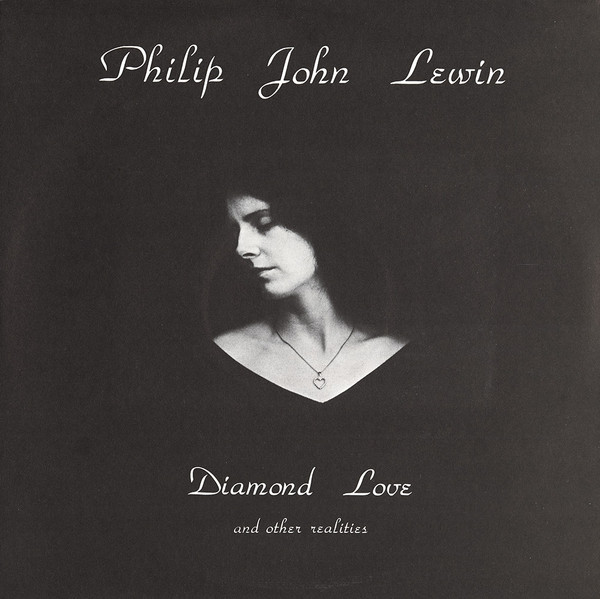
‘Diamond Love and Other Realities’ was quite a change, with Brian Gauci, Wyatt MacDonald, Toni Hoyland and other musicians involved. What was it like going from recording mostly alone to working with a band?
Brian knocked on my door on Gothic. He lived down the street with a friend who had my album. He heard I was going to make another album and wondered if I would be interested in having him play guitar. We started to play the songs. He was wonderful! He said we needed a bass player and brought in Wyatt. He was amazing. He then brought in Ray to drum, but after only recording one song, Ray had to go play in Las Vegas. Brian then brought in Manny. Toni lived in a house with my girlfriend at the time and I invited her to do some harmonies. Her part became bigger as we rehearsed. These musicians were amazing at taking my explanations of what ambience I was trying to achieve and making it happen with very little attempt at direction.
You and Brian later started another album with Uli Bonnet, but it wasn’t completed at the time. What happened to those recordings, and how did your son Andrew become involved when you returned to them?
The three of us made a demo of a follow-up album. It was rough mixed to mono and not expected to actually be used. I ran out of money and had to shelve the project. Years later, it was down to a cassette of the demo and I realized we had (in my mind) something we never could achieve again, so I wanted to turn the demo into an album with all its issues. It was a long, expensive process where technical issues seemed unresolvable until an engineer, Sandro Perri, found me because of my earlier music. He made it work enough to make the LP “Real Classic”. Andrew is the best pure musician in our family of musicians. He had already played some drums, flute and who knows what for my digital album “In Twilight’s Quiet Hour”.
When did you first realise people were looking for copies of ‘Am I Really Here All Alone?’? How did Josh Rosenthal and Tompkins Square eventually become involved?
As I mentioned, a dealer in California found me. Then a label, Big Pink Korea, asked to reprint my first two albums on CD. Josh found me later and wanted the rights for the album. I agreed to a 10 year lease which expires next year. He then approached me with the agency to find other uses for my music. I would have veto on any use. Immediately after, the movie “Skin” appeared to use Watercolours. On a positive note, they did a masterful job on making the new master from the original tape. Also on the positive side, I received a lot more publicity as a result.
One small record-collector question. The Tompkins Square reissue appears to have a slightly different running order from the original sleeve. How did that come about?
Not a real change. The original album cover had it in the wrong order. They corrected it to match the LP.
Have you played much of this music live over the years?
I was once asked in a NYC radio interview (set up by Josh) if I got tired playing the same music live. I didn’t have the heart to tell the interviewer that over the last 50 years I have only done a half dozen live concerts of my original music, including the concert in NYC arranged by the owner of the Palto Flats label, who has befriended me over the years. This is my “One Night in NYC” album.
Do you still have recordings from the Rochester or early Toronto years that haven’t been released? And are you still writing new songs?
I don’t have much to say, so I have written almost nothing lately. There is a song you can find a rough recording on YouTube called “Ghosts”. It is self-explanatory. Another song was written for a benefit to raise money for cancer research. It is loosely based on the death of a young girl from cancer.
Klemen Breznikar
Tompkins Square Official Website / Facebook / Instagram / SoundCloud / Twitter / YouTube / Bandcamp