
Nicole Zuraitis Interview | “I’m Trying to Revive New Romanticism in Jazz”
Winning a Grammy for ‘How Love Begins’ could have pushed Nicole Zuraitis towards a safe follow-up. She went the other way. ‘The Devil I Knew’, released by La Reserve Records, is bigger, darker and more personal, a five-part song cycle about a love story coming apart and the reckoning that follows.
Zuraitis says she wanted to “revive New Romanticism in jazz”, then puts it simply: “More is more.” The emotions are large, the arrangements rich, and Zuraitis allows the songs to be vulnerable without making them feel closed off to anyone outside her story.
She calls her approach jazzlore, bringing personal experience together with older voices and storytelling. Poems by Dorothy Parker, Emily Dickinson, Edna St. Vincent Millay and Frances Ellen Watkins Harper sit at the heart of the record. Their words help turn one person’s experience into something wider. “Being the villain in your own story is a tale as old as time but not often told,” Zuraitis says.
Larry Klein produced the album and pushed her hard on the writing, especially when a lyric became too private or too ornate. Then there is the band: Christian McBride, Gilad Hekselman, Donny McCaslin and Larry Goldings, with Jerry Hey arranging the horns and Vince Mendoza writing for strings, including the Budapest Scoring Orchestra.
The record has plenty of scale, but Zuraitis is never lost in the cast. She wrote and arranged the music, sang, and played piano. She sang and played live without a click track, leaving room for the songs to move slightly differently each time. “The takes are the takes,” she says. “Every take is different.”
In our conversation, Zuraitis talks about making ‘The Devil I Knew’, working with Klein, finding confidence at the piano and her hope that today’s songwriters can help build a new Modern Songbook.
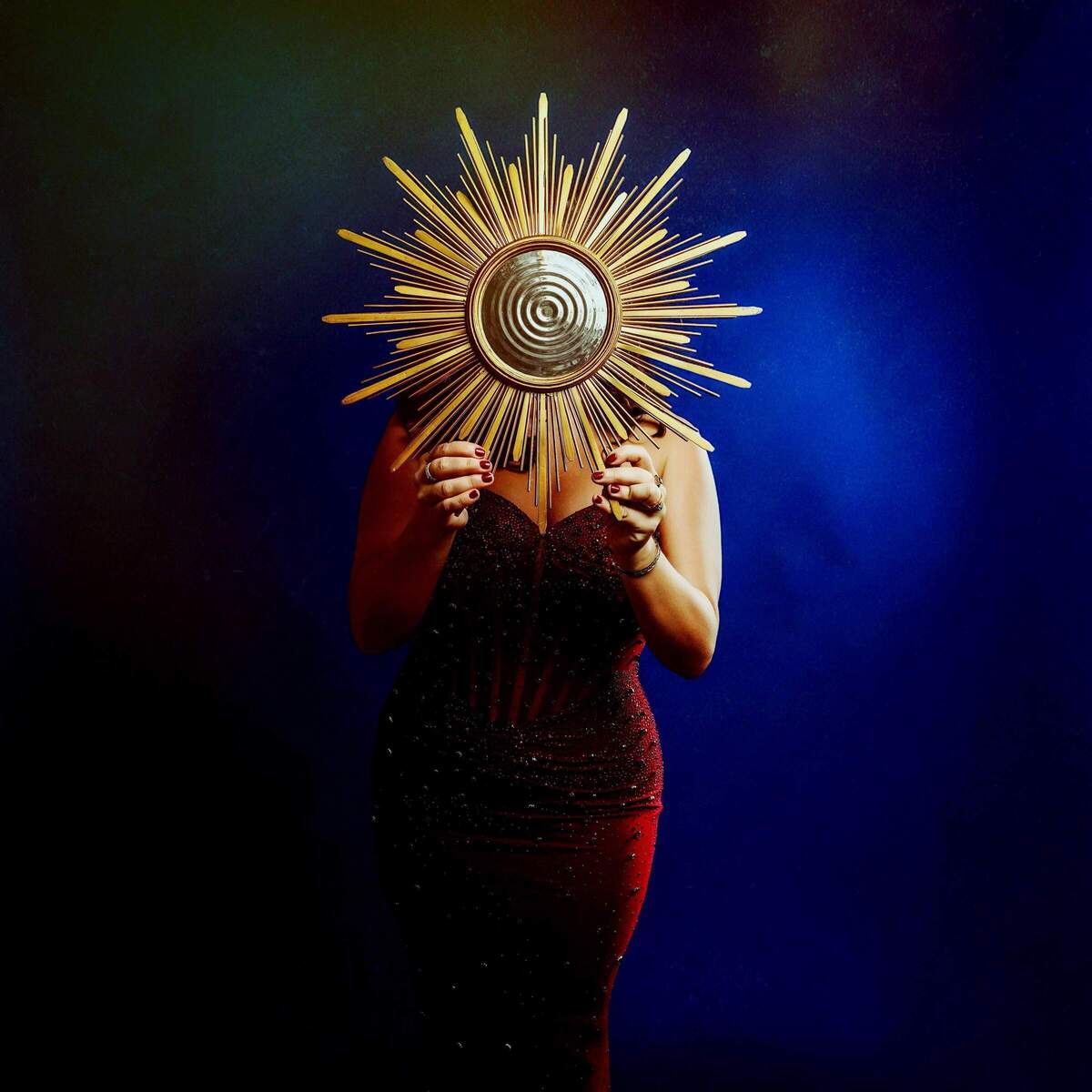
“I’m trying to revive New Romanticism in jazz.”
‘How Love Begins’ won a Grammy. Did that success give you more freedom when making ‘The Devil I Knew’, or did it add pressure?
I purposely released multiple EPs (‘Siren Songs 1’ and ‘Siren Songs 2’), a holiday EP, and ‘Live at Vic’s Las Vegas’ to try to remove the “big follow-up record” stigma because I absolutely felt pressure to level up. It’s not like I suddenly had a huge record label backing me despite winning the GRAMMY. I think I actually intimidated the powers that be even more, and rather than welcoming me into their club, they took another step back. But don’t worry. I’ve come this far on my own, and I bring along a gigantic community that is more powerful than the gatekeepers. That being said… I absolutely have been worried about how people will digest my next concept record, especially one with difficult subject matter.
I like to keep people guessing. I didn’t come up through jazz academia, and part of what has made me successful is the fact that I walk to the beat of my own drum. Why give people the opportunity to guess your next move if you have plenty of ideas that could surprise them?
To be honest, Larry Klein was worried about the length as well, until I really explained my concept and narrative: I’m trying to revive New Romanticism in jazz. More is more. Big emotion, big orchestration, and big risk are the direct answer to a culture that’s been trained to prize detachment, irony, and efficiency over vulnerability. The jazzlore, the storytelling, can’t be done in eight songs and 40 minutes. And who says it has to be, besides big tech and people with short attention spans and little imagination?
‘The Devil I Knew’ is divided into five parts: ‘The Mirror’, ‘The Martyr’, ‘The Malediction’, ‘The Reckoning’, and ‘The Requiem’. When did you realise the songs belonged together as one larger story?
I’ve always loved the theater. I love framing a narrative around an album. I love using my imagination, and that’s why I coined the word jazzlore, because I feel jazz is missing the art of storytelling. Creating an album as a mythic, generationally inherited story rather than a diary took the personal sting out of my own words and made them more universal, like watching a movie or reading a little book. I say that songs are little books; each lyric is the responsibility of the listener to decode. Listing the chapters dramatically just helps someone give themselves permission to think fantastically and leave the confines of the boxes we are being forced to live within as a society.
The album draws on poems by Dorothy Parker, Emily Dickinson, Edna St. Vincent Millay, and Frances Ellen Watkins Harper. What did their words bring to the album?
I turn to poetry when I can’t find a lyric, and so often the poems I love the most are written by women. Jazzlore is storytelling with the DNA of folklore, using the voices that came before me, Parker, Dickinson, and Millay, to tell a story that feels older and bigger than my own life. It’s a Romantic revival fighting the robots and amplifying the voices of women from generations ago who were feeling the same things I am now. Being the villain in your own story is a tale as old as time but not often told.
Some of these songs are deeply personal. How did you keep them honest while still leaving room for listeners to find their own meaning?
Larry Klein is the king of lyric revision. He was ruthless with me about my words, saying, “Too personal, Nic,” “Show, don’t tell,” “You can do better,” and “It’s too flowery. Get to the point.” He’s brilliant, and I learned HEAPS by being in his company. He’s worked with some of the best songwriters on the planet and is an incredible songwriter himself. He would show me a Leonard Cohen lyric and say, “See? Do that.” LOL. Not in those words… but he didn’t let me wallow in mediocrity for a second. I am so thankful.
There are a few songs on there that are so deeply personal and so deeply painful that I think I masked them under the narrative of universal reckoning rather than let the world know that I, Nicole, am suffering.
What made Larry Klein the right producer for these songs? Was there a moment when he pushed you somewhere unexpected?
He was immediately drawn to me because he loved that my music sat within the cracks between genres. That’s his favorite place to be. He’s a jazz legend, but he’s also a brilliant storyteller and writer. He can arrange, he can play, and he can make you laugh. I trusted him without a doubt from our first meeting.
He also trusted and respected me. I’m a producer as well, and we would go back and forth on ideas and find a middle ground on certain things. There are moments when we still don’t agree, but the mutual respect is stronger than the egos. I still can’t believe I got to make a record of this caliber with someone as legendary as him.
You wrote and arranged the music, and you also sang and played piano. When you sing your own songs at the piano, do you feel more exposed or more protected?
PROTECTED IN ALL CAPS. Ha!
I feel like the motor that gets to drive the entire boat. I decide when we swell and when it’s time to pull back on the dynamics from the piano chair, and the vocals are also the conductor’s wand. I’ve learned to trust myself all these years later as a writer and arranger, and even as a pianist. When I sit at the piano, there isn’t any doubt anymore. It’s merely a vessel for me to get the emotion out sonically. I sing and play live on the record. The vocals bleed into the piano, and there’s no room for error. We didn’t use a click either, so the takes are the takes. It’s a beautiful thing, and I think that’s another reason why it’s a jazz album. Every take is different.
I do love to stand and sing, though. That’s a whole different way of channeling.
The musicians on the album all have strong individual voices. How do you lead players at that level while still giving them room to surprise you?
I try to write music that is intuitive and not hard for the sake of being hard. Many jazz musicians, and especially jazz singers, equate hard with good. I think intuitive equals good. I hired the musicians because I trust them, so I don’t need to hold their hands, write out their parts, or micromanage every single line, like I know a lot of people do. On the first day of recording ‘How Love Begins’, it was me singing and playing piano, Billy Kilson on drums, Gilad Hekselman on guitar, and Christian McBride on bass… My imposter syndrome was screaming, “How the hell did I get here? I’m a self-taught pianist, and I arranged this, and what if it’s not good, and I can’t hang with these cats, and ahhhh!” When they came into the studio 3.5 years later, they were not only my friends but also my colleagues. There’s no big, fancy ass-kissing needed. As with Larry, there’s mutual respect. I think that is one of the greatest accomplishments I’ve made as a woman in music, and especially as a woman in jazz. No one looks down at me as a “chick singer”. They are there to listen to me because they respect what I have to offer, just as I respect what they do.
PS: Only in the last five months have I even started CONSIDERING saying nice things about myself. It’s funny how the older you get, the more you realize that self-deprecation is just protective, not useful.
Could you tell us a little about the recording sessions?
It was a freaking blast.
Are you kidding me? With all those amazing musicians? Over three days in NYC? With Susan Bloomberg, the executive producer, wining and dining us too? The vibes were SKY HIGH.
The overdubs later were also incredible. Larry Klein has a Rolodex of close friends that one could only dream of, and since he’s such an amazing human being, everyone answers his call. I’ve never seen anything like it. He is the GOAT.
As a producer myself, I learned so much from Larry. The biggest takeaways were space, being upfront, not beating around the bush, and keeping all interactions light.
Jerry Hey arranged the horns, and Vince Mendoza wrote the strings. What did they bring to the songs?
Phewwwwww. Talk about legends. First of all, Jerry Hey must be one of the nicest people on planet Earth. With a career like that, the man is kind, generous, good-natured, and brilliant. I am Team Jerry for president. What a guy.
It’s funny, Larry brought Jerry in when I mentioned I heard TOO MUCH space in ‘Won’t Make It Out Alive’ and ‘He’s a Demon, He’s a Devil’. I told him I heard horns, and he said, “I know just the guy.” Did I think he would call Jerry Hey and he would say yes?! Sheesh.
Larry was beautiful when he worked with Vince. He knew what he wanted, and we had two stunning drafts from Vince. Larry isn’t afraid to push the envelope, and the second choice for strings on ‘I Get Along’ was more esoteric and haunting, matching my arrangement on piano. I couldn’t be happier.
Why did ‘I Get Along Without You Very Well’ belong on this album? What drew you to the song?
I’ve loved this song forever and couldn’t figure out an arrangement. Once I heard the backstory, though, I immediately sat at the piano and hammered out my take on it.
The background of this classic jazz standard unfolds through several key events:
* The Poem: Around 1924, a friend passed a copy of the poem to Carmichael after it was published in an old issue of ‘Life Magazine’. Carmichael kept the poem for years, eventually borrowing its opening line and bittersweet themes.
* The Missing Author: When Carmichael was ready to publish and record the song in 1938, he faced a hurdle. The magazine’s old archives couldn’t help, and the author was credited only as “J.B.” Carmichael used a radio broadcast to publicly ask for help identifying “J.B.” so he could secure the rights.
* The Discovery: Editors from the old magazine heard the broadcast and were finally able to positively identify the lyricist as Jane Brown Thompson, though not until well into the 1950s.
* The Radio Debut: The song was introduced on the radio by singer and actor Dick Powell. Heartbreakingly, Thompson died the very night before the broadcast aired.
Talk about heartbreaking! And she’s another female poet. A perfect tie-in for my album.
You have spoken about the “Modern Songbook”. What do you think is missing from the way jazz vocals are discussed today?
The Great American Songbook was made up of the standards of its era. The Modern Songbook argues that we’re writing today’s standards right now: songs built to last, not just to trend. We are missing respect for storytelling in jazz, while difficulty is too often used to decide whether something is jazz or not. When you hear a catchy melody, why do we assume it’s pop or cabaret? The GAS was the pop music of the day: brilliant writing with brilliant lyrics. The Modern Songbook Society is trying to create a more inclusive canon of living songwriters and build community through music in an attempt to fight AI and canonize songs being written today, so people can still sing them 50 years from now, just like the GAS.
What comes next for you?
We’re in the middle of an 80-date worldwide tour, with a release show at Dizzy’s on August 5. You can check out the dates at [www.nicolezmusic.com](http://www.nicolezmusic.com/).
I’m hoping that next year we tour a bit less and I can focus on building up the Modern Songbook Society even more, with the launch of the book, chapters across the US, and then finally a recording!
Finally, what have you been listening to lately?
Oooo.
I’ve been on the hunt for Modern Songbook composers, so if you have any that you love, let me know and I’ll add them to our Modern Songbook Society community playlist!
I’m more of a playlist girl. I save songs based on inspiration or things I want to transcribe. I’ve always been that way!
Thank you for these beautiful questions. I appreciate you, and you can always follow up with me!
Klemen Breznikar
Headline credit: Nicole Zuraitis
Nicole Zuraitis Website / Facebook / Instagram / X / YouTube