
“Anything Can Be Funny, but That Is Not Always the Case” | Eugene Chadbourne Interview
The guitarist, banjo player, composer and writer talks about his early years in Canada and New York, Shockabilly, country music, the electric rake and why he has always preferred to release music himself.
Eugene Chadbourne has spent more than fifty years moving between free improvisation, country music, rock, protest song and experimental composition. He released his first album, ‘Volume One: Solo Acoustic Guitar’, in Calgary in 1975, establishing the Parachute label in the process. The record introduced the prepared acoustic guitar work that became an important part of his early music.
Chadbourne moved to New York in 1977 and became involved with musicians including John Zorn, Wadada Leo Smith, Frank Lowe and Polly Bradfield. During the following decade, he brought country songs and political songwriting into his work more openly. Shockabilly, his trio with Kramer and David Licht, placed familiar songs inside a mixture of rock, country and free improvisation. His later work with members of Camper Van Beethoven continued in a similarly open spirit.
Alongside his solo recordings and compositions, Chadbourne has worked with a long list of musicians, including Jimmy Carl Black, Han Bennink and Anthony Braxton. The Jack and Jim Show, his duo with Black, became one of his longest musical relationships. His 2017 sessions with Braxton were released as the eight-disc ‘Duo (Improv) 2017’. He has also continued to write, from his early journalism for the Calgary Herald to ‘Dreamory’, a book of more than 1,000 pages drawn from tour diaries, dreams and memories.
His electric rake and sense of humour remain among the most familiar parts of his public image, but they are only one part of a much larger body of work. In the following interview, Chadbourne discusses his early years, the discipline behind improvisation, his approach to country songs, the advantages of releasing music independently and some of the collaborations that have shaped his life.
“If you are a good musician, everything will influence you.”
You grew up in Boulder, Colorado, at a time when the same radio station might play the Beatles, Roger Miller, Johnny Cash… Did those distinctions mean very much to you then?
Eugene Chadbourne: Obviously, this was the beginning of my lack of interest in categories, which has stayed with me ever since. Later, some categories became even more distasteful to me as I learned more about music history and, for example, the element of racial profiling. A good example would be Johnny Shines playing ‘Sitting on Top of the World’. That was blues, but if Doc Watson played it, it was country or old-time. The category depended entirely on the race of the performer, not the music.
When you moved to Canada during the Vietnam War, you were still in high school. How difficult was it to leave your friends and start again somewhere new? You later became an entertainment writer and editor at the Calgary Herald. Did reviewing other musicians ever affect the way you judged your own work?
The major change for me personally at that time was not so much political, although that was an obvious element and I was happy not to be put into the army. But I was still in high school and a teenager, so of course everyone is familiar with the situation: losing all my friends and moving to a new school at that age. It was ridiculously hard. No wonder I dropped out!
I have never thought about any connection between writing about music and my own work. I think a lot of musicians are very demanding regarding their own work, no matter what other occupations or hobbies they engage in. You have to make demands on yourself to be any good.
Your first album, ‘Volume One: Solo Acoustic Guitar’, appeared in 1975 and marked the beginning of the Parachute label. You tried approaching a few other labels before putting it out yourself. When did that begin to feel like the right answer? Did it set the pattern for the way you have released music ever since?
I made a few attempts to place it with a label. I even sent the tape to Manfred Eicher at ECM, but more as a joke that developed when the local distributor for the label gave me his contact information. I wrote to Eicher that he should fire all the other artists on the label and have the initials stand for ‘Exclusively Chadbourne Music’.
Because I was immersed in the jazz scene at the time, I knew that some of the best artists were putting out their own music on their own labels. It only took a few people I respected, such as Mark Vasey of CKUA Radio and later the Edmonton Jazz Society, to tell me I should put it out myself before I jumped right in.
As the formats for listening to music developed, it kept getting easier to put out your own music.
Eventually, after Shockabilly, I had enough of a name that some labels would put out my music, but it became such a hustle getting a label interested and catering to their whims. When the CD-R came along, it was a tremendous relief. Now I am in a situation where I need to keep my entire catalogue available. There is always someone wanting something, and that might be the only sale of that item that year, but I still need to make it available.
Did you already sense, before moving to New York, that experimental music could be just as argumentative or narrow as any other scene? When you arrived there in 1977, what actually felt different?
I knew that well before I went to New York. The two musicians I played with in the Western Music Improvisation Company in Calgary were always fighting about what we were doing. The main difference in New York was that there were so many professional musicians there. You ran into them all the time and struck up dialogues. Someone would talk to you simply because you were carrying a case. During my first week there, for example, I met a bassist from Kool & the Gang on the subway.
People who mainly know the improvised side of your work might be surprised that you practise music by Bach, Bartók, Schoenberg, Ives and Messiaen. What does that daily practice give you? When you improvise, how much of what appears spontaneous comes from those years of study, even when you are not consciously thinking about it?
Improvising involves using everything you know, much of it subconscious. But I have never measured, as you say, ‘how much of what appears spontaneous’ is or is not, and I do not know how anyone could figure that out.
Anything to do with the public image or public perception of music is sort of a stupid thing to ask about. Each person has their own perception. Some people are quite perceptive and others have no idea what they are talking about. One concert can produce different reactions from every listener.
Works such as ‘2000 Statues’, ‘The English Channel’ and later ‘Insect and Western’ were written for particular improvisers. How much did you tailor the music to the individual players? Has the difficulty of getting these pieces properly rehearsed changed your interest in writing them?
The main change is that I am much less motivated or interested in trying to do it, because in the new-music scene there is rarely the infrastructure to present a well-prepared performance of a piece. In cities with lots of avant-garde activity, you have musicians flitting from rehearsal to rehearsal, usually unprepared but willing and able to fake their way through the entire experience. As long as it sounds like ‘new music’, then that is good enough.
My main inspiration for dealing with improvisers was, and still is, Duke Ellington and the idea that specific pieces could be created for specific players whose distinctive styles you knew well.
Of course, a huge problem with music written for improvisers is that most of these players have developed new and often unusual techniques on their instruments, but these rarely have any coherent form of notation attached to them. Then you have composers ‘coming up’ with things for you to do on your instrument that are impossible or stupid.
‘There’ll Be No Tears Tonight’ made your connection between country songs and free improvisation especially clear. At the time, country music was not considered hip in downtown New York. What did a song need to have before you wanted to make your own version of it, and why do you think some improvisers reacted so negatively?
The reason I play a song is that I love the lyrics, melody and chords. Usually, I have to love all three of those elements. Once I feel that way, the only reason I would lose the desire to play the song is if my version of it was not up to the standard of the other pieces I was playing at the time.
As for what improvisers might have missed, I am fortunately not in their heads, so I cannot tell you what they did or did not miss. Unfortunately, most of the negative reaction at the time was because, for some years, country and western was not considered hip in New York City. Despite trying to come across as iconoclastic outcasts, many members of the so-called downtown scene paid close attention to what was considered hip at the time.
Years after I left, the situation changed and remains changed. Country and western is now considered hip, so my early embrace of it became a positive. How it helped me in the first place was that, by performing both country and free improvisation, I was basically doing something no other artist was doing.
You had always loved the banjo, and over time it became as important to your work as the guitar. Was there any particular moment when you began taking it seriously as an improvising instrument? Its notes fade almost immediately. How did that affect the way you played it with other musicians?
I do not remember any one development that made me take the banjo ‘seriously as an improvising instrument’. I always loved it. If you are a musician, you are reacting to rhythm, space and many other things all the time, whatever the instrument is.
The banjo has a very quick decay. A few of my playing partners, such as drummer Paul Lovens and bassist Brian Ritchie, have made comments to the effect that whatever I do is gone immediately. With the banjo, there is never much to worry about.
Shockabilly could pull a familiar song apart without losing it completely. How much rehearsal and arranging went into that? Were there songs you tried that simply never worked? Did all those hours together on the road lead to much discussion about what the band was doing?
This was a similar process to developing my cover versions. We rehearsed new pieces a lot until they could be played tightly. Some things would get dropped. For example, we always played ‘Are You Experienced’ and ‘Purple Haze’, but other Hendrix covers I arranged, such as ‘Castles Made of Sand’ and ‘House Burning Down’, were tried and then dropped.
Likewise with the originals, ‘Secret of the Cooler’ was always played, but others, such as ‘Cops Vs. Guardian Angels’, were tried and dropped. Sure, we talked about a lot of things. When you are driving all those hours, you can talk endlessly.
Some of the process was less than intelligent. We were doing a cover of Willie Nelson’s ‘On the Road Again’, which was a new song. Because Kramer did not follow country music, he thought it was old, so he got mad and dropped it because he thought we should only do old songs. For this reason, I could not get him to do a cover of ‘Time After Time’, which I wanted to do the moment it was on the hit parade!
Your collaboration with members of Camper Van Beethoven became the 1987 album ‘Camper Van Chadbourne’ and continued for many years. What made them so easy to work with? Did that partnership change anything in the way you approached rock music after Shockabilly?
I have no understanding of any relationship with rock music on my part and how it might have changed. I think it is always the same. I just keep discovering things.
The appeal of Camper was that it was another band I could collaborate with. I had already worked with the Red Clay Ramblers and Evan Johns and the H-Bombs, but the Camper collaboration was the most successful, both in terms of sales and longevity. We continued recording and touring off and on until the original band was pretty much dispersed around the globe and only getting together for special occasions. I still play with Jonathan and Victor.
Their appeal was that they were easy to work with, open-minded and interested in learning a lot of the same material I was working on.
“Improvising involves using everything you know, much of it subconscious.”
The electric rake quickly became one of the things people associated with you. Did the humour help at first, or did it end up distracting people from the rest of the performance?
The entire thing is a distraction based on the sad premise that the public ignores genius but loves stupid things. I did have some fun with the electric rake in performances, but only when it was part of the entire performance. I did not enjoy the attempts by certain curators to isolate it and use me as a kind of freak show.
Your singing voice can be funny, angry, fragile or deliberately uncomfortable. How did you grow comfortable with that voice? When you are writing a political song, how do you know whether the subject can carry parody or needs to be said plainly?
I do not know if I found any voice, but whatever it is, I am stuck with it. I am told it has improved with age. Any decision about the songs has to do with the subject matter, obviously. If you do parody or protest music, the overall philosophy might be that anything can be funny, but that is not always the case.
You were sending out your own cassettes in the early 1980s, and during the pandemic you began sending ‘Head of Books’ subscribers a new guitar solo almost every day. Do those projects feel connected to you? Have you ever been interested in making one definitive album?
Well, I cannot think of anything less important than the idea of ‘one definitive album’, and there is an obvious connection between all these periods: it is my life.
Your partnership with Jimmy Carl Black as the Jack and Jim Show lasted for many years. What was it like playing with someone whose music had meant so much to you as a teenager? What did his ‘sweet, sweet, steady beat’ bring to your own playing?
The connection was really primal, working with someone who had been involved in music that was so important during my adolescent years. Then there was his really simple drumming. ‘Sweet, sweet, steady beat’ was written on his drum cushion. It was a change from all the flamboyant, busy drummers I had been playing with, and it really appealed to the public, allowing them to focus more on what I was playing.
You have written throughout your life, from journalism and sleeve notes to tour diaries and ‘Dreamory’. Is there anything you can say through writing that you cannot say through music? Did working on ‘Dreamory’ change the way you understood your own past?
Age helps one understand different parts of the past and expectations for the future. Writing could be part of that process, but everything is. I am not sure what you mean by reaching something through music or writing. That does not mean anything to me.
You have played with Derek Bailey, John Zorn, Han Bennink, Keiji Haino and Anthony Braxton. What makes playing with someone work for you? With Braxton, did it come down to the willingness to follow one another? Do collaborations ever require you to step away from who you are musically?
This has to do with the individual musicians. On my part, I do not think I could say I ever collaborated with Keiji Haino. We played one concert together, and he played so loudly that I am sure he could not hear a note I played. In fact, for at least half of it I just pretended to play because his volume was so obnoxious.
This is all part of being a musician: the likes and dislikes. Braxton and I liked following each other. I think following anything would make Han Bennink sick.
I do not understand the idea of ‘stepping away from who you are’. Elements of music are not so dominating of a personality, in my opinion. I sat in with a gospel band in Tasmania, but that did not mean I was stepping away from who I am.
Several generations of musicians have now grown up with your records. When younger players approach you, do you ever hear your influence in them, or is that not something you try to identify?
Again, I have no idea what someone else is hearing. If you are a good musician, everything will influence you. Critics can try to pick it apart, but they are just making assumptions.
Because the electric rake, the humour and the sheer number of records are easy things to write about, do you think the music itself sometimes gets overlooked? When you think back to ‘Volume One’, do you still recognise the musician who made it?
Someone offered me a copy of ‘Volume One’ for $450, and I said, ‘Why would I want that? I can play it on the guitar if I want to hear it.’ So, sure, I recognise it.
Once again, I have no idea what people understand or misunderstand. In general, there are some things audiences get confused by. In some cases, it is the combination of seriousness and humour. That could be one thing.
Klemen Breznikar
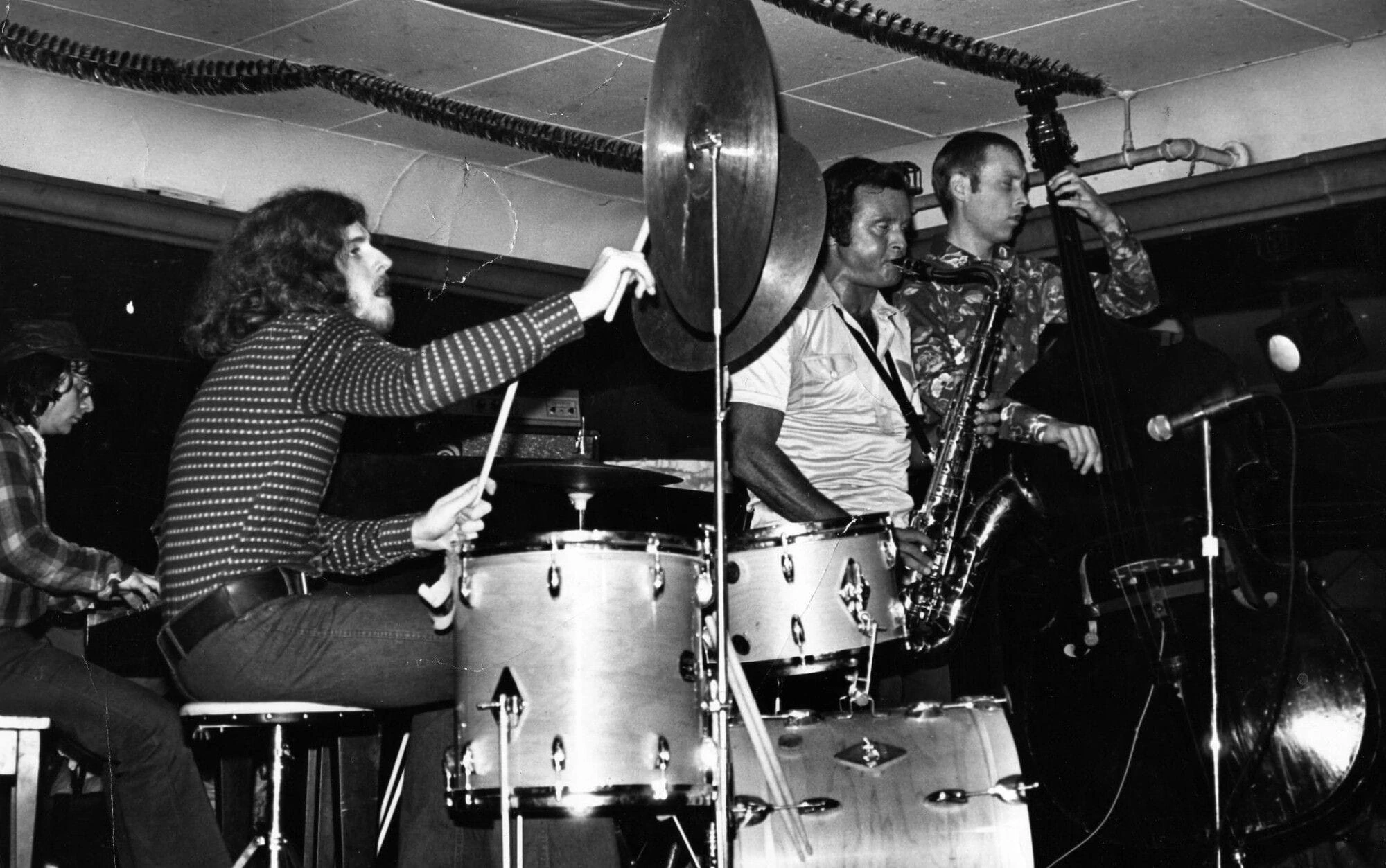
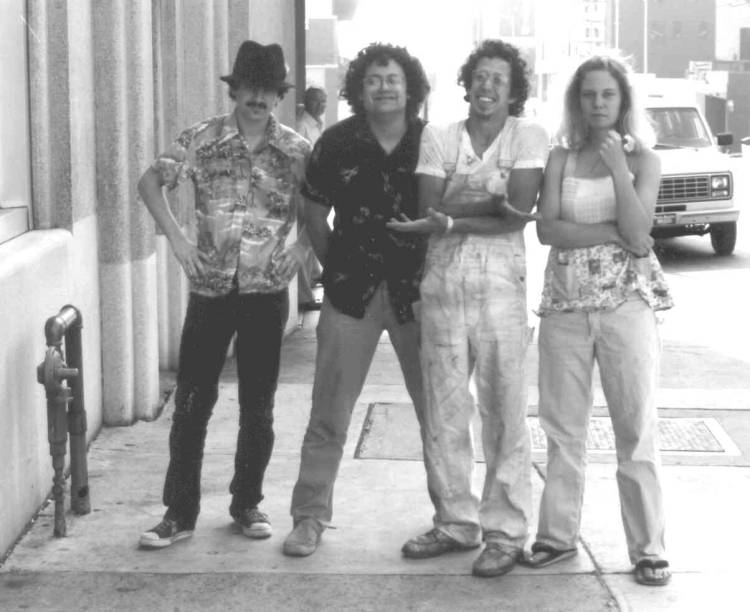
Headline credit: Eugene Chadbourne in Calgary. Courtesy of Eugene Chadbourne.
Eugene Chadbourne Website / Facebook / Instagram / Bandcamp