

Alan Gerber Interview: From Elektra and Rhinoceros to ‘The Well’
Alan Gerber was just 20 when Paul Rothchild at Elektra Records gave him a choice: cut a solo album or join a new band the label was putting together. He went with the band. It became Rhinoceros.
Rhinoceros was put together in a pretty unusual way, even for the late 60s. Instead of coming out of a local scene, Elektra basically assembled the band from different places. The final lineup ended up being Gerber, John Finley, Danny Weis, Michael Fonfara, Doug Hastings, Jerry Penrod and Billy Mundi. Their first album, ‘Rhinoceros,’ came out in 1968 and included three songs written by Gerber: ‘When You Say You’re Sorry,’ ‘That Time of the Year,’ and ‘Along Comes Tomorrow.’ He also co-wrote ‘I’ve Been There’ with Finley.
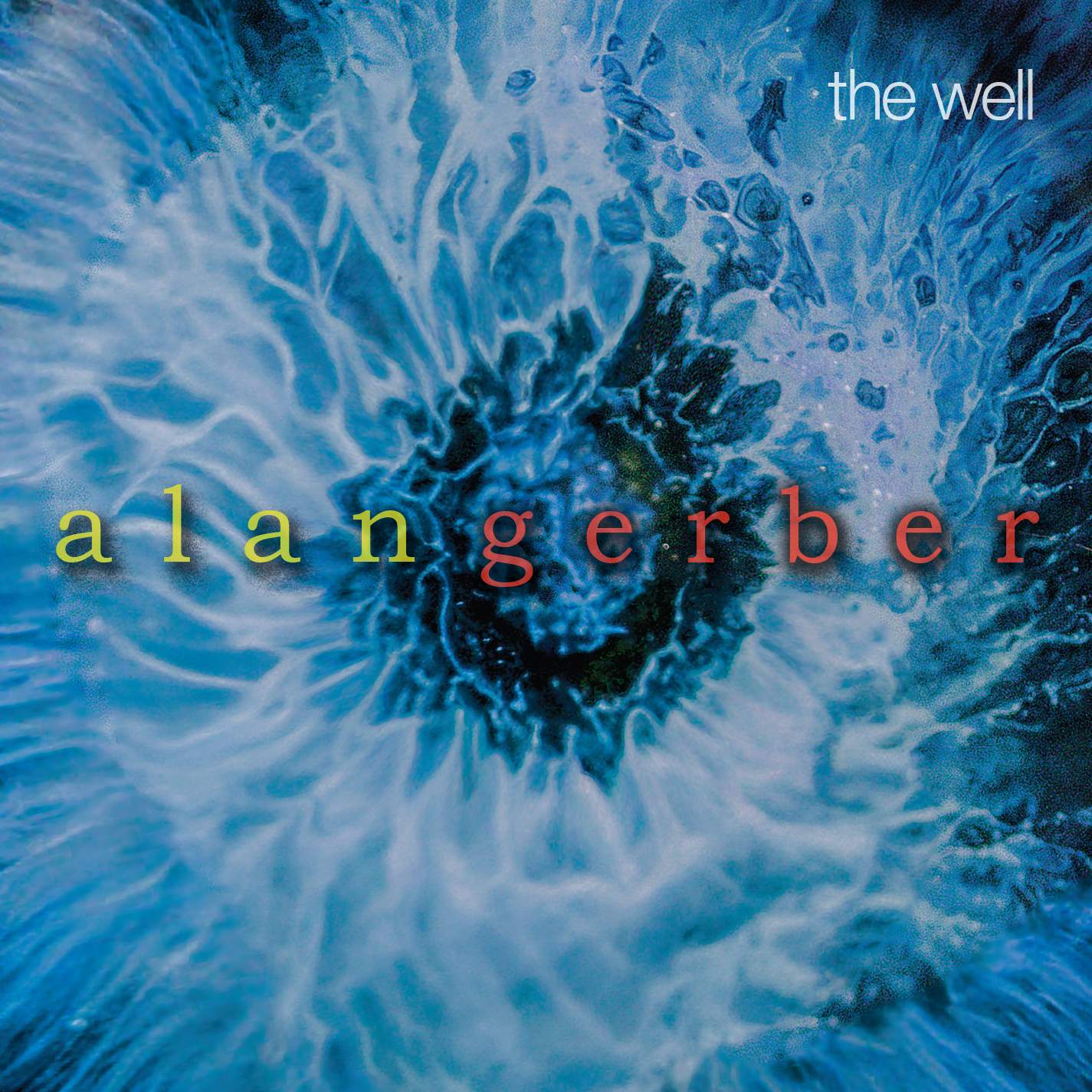
Gerber’s new album, ‘The Well’, brings the story up to the present. The record was co-produced with his son Eli and includes contributions from his daughter Hannah, longtime Rhinoceros guitarist Danny Weis, and his late songwriting partner Rolf Kempf, with whom Gerber worked for nearly 50 years.
In the interview below, Gerber looks back on his early years in Chicago, his first recordings at Chess, meeting Rothchild, the formation of Rhinoceros and the musicians who shaped him along the way. He also discusses his family, his long partnership with Kempf and the making of ‘The Well’.
“Music was definitely an ordinary part of family life!”
You wrote and produced ‘Put Back My Heart’ with your son Eli. What was it like working together so closely, and did being father and son change the way you approached the song?
Alan Gerber: It is interesting working with my son Eli as co-producer and co-writer. We have the level of father-and-son trust along with multi-generational creativity sources. We work well together, have lots of laughs. Gotta love it!
You first met Rolf Kempf in Laurel Canyon in 1967 and went on to write together for about 50 years. How did that friendship become such a long songwriting partnership?
I met Rolf Kempf in 1967, in Laurel Canyon, at a party in the backyard of record producer Paul Rothchild. Rolf had an idea for a song and borrowed my guitar to write it. It turned out to be ‘Hello Hooray’, his big hit song that Alice Cooper recorded.
We became fast friends and wrote together for about 50 years. Rolf brought his quirky, brilliant poetry to our creations and to seven songs on the new album, ‘The Well’.
Family is all through ‘The Well’, with Eli co-producing and playing, Hannah singing, Robin’s ceramic work on the cover, and your sister Barbara’s poem becoming ‘Time Is My Treasure’.
My family and life are one and the same! I am fortunate to be able to drink from this well of creativity in my everyday life, and there’s no doubt that the family feeling of ‘The Well’ was there from the start of this album and many that preceded it.
Growing up in Chicago, music was always around you. Your mother played piano, your father sang, and your uncles played blues and jazz piano. What do you remember most clearly about music in the house?
Music was definitely an ordinary part of family life! Whether sitting on my mother’s lap as she played, hearing my older sister Barbara, or playing four-handed blues with either of my uncles, music was always at the forefront for me. And then, when I discovered the phonograph, a whole other musical door opened!
You were still a teenager when you made your first single with Don Czerniak. How did the Earic/Chess connection come about, and what do you remember about hearing your own record on WLS?
The Earic/Chess connection happened through a lawyer, Bernie Wolf, introduced to me by a friend of the family who liked the songs I was composing at the time. Bernie got me an audition with someone he knew at Earic/Chess, who liked my music enough to say, “Let’s make a record.”
I was thrilled, recorded two tunes for a single with my partner Don and a couple of studio musicians from Chess, and not long after, my first single, ‘It’s You I’m Thinkin’ Of’, was playing on Chicago’s WLS most-requested telephone call-in show. Of course, I had everyone in my high school phoning in constantly. What a wonderful, crazy teenage experience that was!
There were also unreleased tracks from that period, including ‘Break Away’ and ‘I’ll Be With You’. Do those acetates still exist?
If I recall correctly, the acetates are in a box somewhere in my house, and there may even be a digital copy. These tunes were recorded at Chess Records with their incredible house rhythm section, horns and my friend Fred Poindexter, who added the fuzz-tone harmonica. This was definitely a precursor to my eventual musical direction.
You studied classical piano at Roosevelt University, but your own music was pulling you in another direction. What made you decide to leave and follow that instinct?
The main difficulty at the time was that I had a student deferment from the Vietnam draft, and by leaving school to pursue my own musical direction I was making myself eligible to be drafted. There was no doubt in my mind about pursuing my own personal creativity.
Katie arranged your meeting with Paul Rothchild at Elektra through a friend of hers at ‘Variety’.
It was my girlfriend, Katie, but it was a friend of hers from ‘Variety’, the music magazine. I was completely surprised the morning I woke up at Katie’s and she told me to take my guitar and go to a meeting at Elektra Records with Paul Rothchild.
He was so personable. We talked for a good hour before he even heard a song! I played many songs for him, like ‘When You Say You’re Sorry’, ‘A Fine Day For Loving You’ (which, in retrospect, could have been a huge hit but somehow never was recorded), ‘Which Way Do You Go’, ‘Time Of The Year’ and many others.
He was extremely appreciative of all the songs, but it was ‘Time Of The Year’ that he had me play over and over again for various people in the office. Finally, he said he wanted to produce me as a solo artist or with a “supergroup” he was putting together. I chose the supergroup that became Rhinoceros.
Paul loved my songs, the way I sang them and, eventually, we became good friends and neighbours in Laurel Canyon. I was barely 20 years old, and this was certainly an exciting moment in my life!

What was it like being thrown into that situation?
An aspect I saw more clearly years later was the coming-of-age, high-pressure experience of arriving in this intensely competitive situation to be a part of Elektra Records’ new supergroup. Out of the 14 original musicians assembled for the group, only three remained at the end, John Finley, Doug Hastings and myself, when we were joined by the fabulous players Danny Weis, Michael Fonfara, Billy Mundi and Jerry Penrod to form Rhinoceros.
I also didn’t fully appreciate the opportunity I had to play with the calibre of musicians in Rhinoceros until many years later, when I had subconsciously incorporated some of their skills into the palette of my creativity.
Klemen Breznikar
Headline credit: Alan Gerber by Luc Robitaille
Alan Gerber Website