
David J. Cord on Power, Failure, and Hope
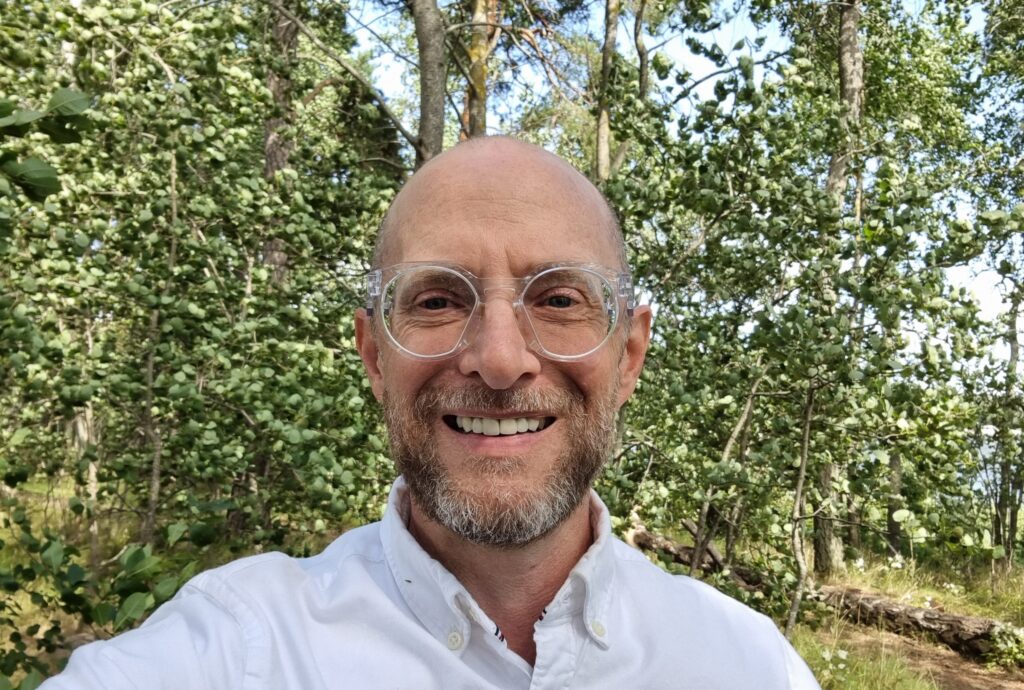
David J. Cord is an American-Finnish writer whose books move between nonfiction and fiction. He is perhaps best known for ‘The Decline and Fall of Nokia,’ written about the company’s collapse while many of the people involved were still dealing with its aftermath.
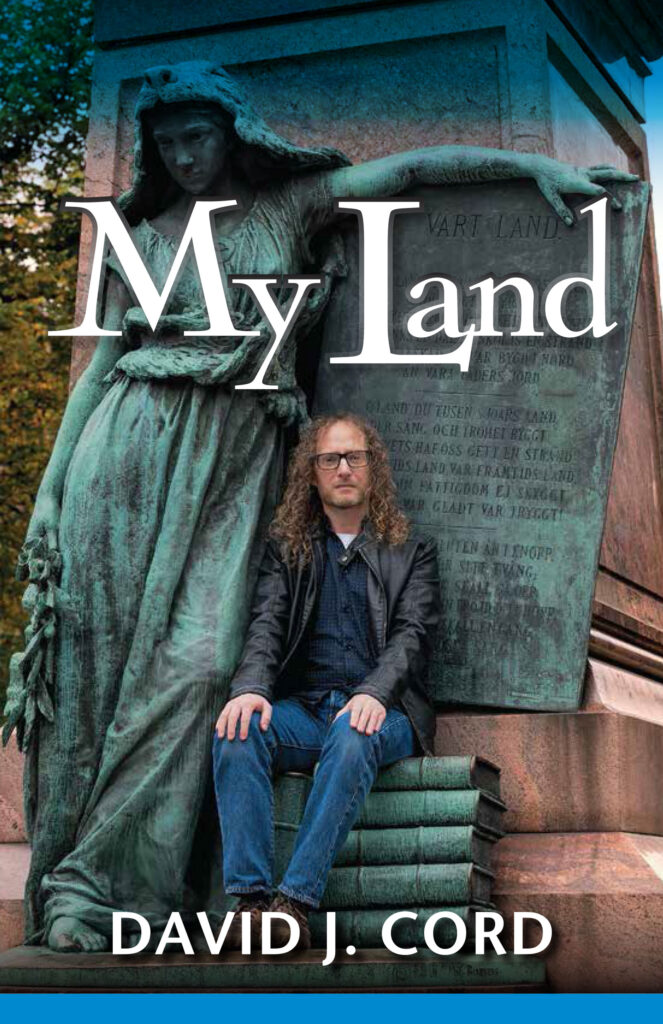
He has also written ‘Mohamed 2.0,’ about entrepreneur Mohamed El-Fatatry and the social platform Muxlim, while his fiction includes ‘Dead Romans’ and ‘My Land.’ Cord has deliberately avoided sticking to one subject or genre, preferring to move between technology, business, history and fiction.
We spoke about Nokia, Muxlim, writing as both an American and a Finn, ambition and failure, the attraction of outsiders, AI, and why he still sees room for optimism. He also discusses a new idea involving a magician in ancient Rome.
“You can be right and still fail.”
Your nonfiction work often returns to collapse: Nokia’s fall, the failure of Muxlim, the personal disintegration at the heart of My Land. When you study institutions or lives at the moment they break, what do you look for first, the structural flaw or the moral hesitation that allowed it to widen?
I start with the goal, what they hoped would happen. What did Mohamad El-Fatry want that led him to create Muxlim? What did I want in marrying a Finn and moving to Finland? What did Nokia want in mobile phones? From there, I like to examine both the structural flaws as well as the moral hesitations.
The Decline and Fall of Nokia reads almost like a classical tragedy in corporate form, with technological hubris replacing royal arrogance. Did you consciously model the narrative on the logic of tragedy, or did the historical record itself impose that dramatic shape?
Yes, from the first conception of The Decline and Fall of Nokia, it felt like a classic tragedy to me, like Oedipus Rex or Macbeth. That is the strongest part of the book. Recently, there have been books that are much better at analysing the business of Nokia, but none of them have captured the emotion of the tragedy like our book. I believe the main reason for that was simply timing. We had the first book about the collapse, and all those people we interviewed were still traumatised. Their emotions came through in the text, which you can still feel today when you read it.
Having lived inside the Nordic world you report on, you write neither as an outsider nor quite as a native observer. How has this in-between vantage altered what you notice in policy debates or innovation culture that a fully domestic journalist might miss?
I’m both American and Finnish, so I’m able to look at something from both points of view. This has helped me understand different motivations based upon people’s backgrounds. In both policy and innovation, people have different goals and drivers. A Finnish entrepreneur might want something that seems entirely foreign to an American, and vice versa. In Finnish politics, it is common to cite other countries we admire, like Sweden or Norway, and use them as examples of something we should do. That really isn’t done in America.
In Mohamed 2.0, you examine an attempt to build a social platform that resisted the cynicism often attached to internet culture. What did that story teach you about the limits of optimism in technology, and about the stubborn persistence of idealism among entrepreneurs?
Mohamed El-Fatatry brought his humanity to his technology, which makes it such a compelling story. No one is interested in a story about an online platform; they want to know the people behind it. When Mohamed first approached investors about his idea, he stressed the potential human benefit much more than the financial benefit. That was what was important to him, and I love that idealism. I think Mohamed was 100% right about the need for his platform, but you can be right and still fail.
Dead Romans turns from corporate boardrooms to the ancient Mediterranean, yet the novel circles around patronage, ambition, and the price of telling flattering lies. Were you drawing quiet parallels between the ancient literary marketplace and the modern one you inhabit?
Yes, to some extent. When I started writing Dead Romans, the third character’s story wasn’t working. The shepherd’s and mistress’s stories flowed nicely, but the baker’s story struggled. So I turned the baker into an aspiring writer, Aristides, and it worked. An old saying is that writers should write what they know, so I put what I knew about writing into him.
Many writers divide their careers into “serious nonfiction” and “imaginative fiction,” yet your books move freely between the two. Do you experience research and invention as different mental climates, or as neighboring rooms connected by the same corridor?
Most people have multiple interests, as do I. Typically, the smart thing for a professional writer to do is to specialise in something. When the Nokia book became a hit, the publishers told me I needed to write more books about Nordic companies. That is the smart thing to do for marketing purposes. But I wanted to evolve as a writer and try different things. There are relationships between fiction and nonfiction, so I see them as neighbouring rooms connected by the same corridor.
In chronicling Nokia, you interviewed executives, engineers, analysts, union leaders, and competitors. When testimony conflicts, as it inevitably does, what persuades you to trust one voice over another, documentary evidence, tone, institutional position, or something less tangible?
Generally, I felt that if we had several different sources saying the same thing, then we could trust it. We also examined the quality of the source: whether someone was in the right place at the right time and had the right job to know something. However, we had to be careful. Emotions were still raw, and some people were angry about the failure of the company. They tried to shield themselves from responsibility and blamed others for what happened.
Finland appears in your work not merely as a setting but as a psychological landscape, sometimes austere, sometimes liberating. What has the country taught you about the relationship between geography and inner life?
As modern humans with our 24/7 climate control and indoor lighting, we tend to forget that we are just a clever animal who is very much connected to the natural world. I believe this is more noticeable in Finland, thanks in part to the extremes. Extremes of weather, extremes of geography. When you go months without seeing a clear sky, it can really impact your mental health. Similarly, in Finland, you can go from a vibrant, 21st-century metropolis to a real wilderness of uninhabited islands or vast tracts of forest. One of the key themes of My Land is that geography can be a mirror to the soul.
You have written about both corporate power and individuals pushed to the margins: a slave boy in Dead Romans, an entrepreneur outside Silicon Valley’s orbit, a foreigner rebuilding his life in My Land. Does your work aim to show that systems reveal themselves most clearly at their edges rather than at their centers?
I think the outsider’s view is fascinating. Systems may not reveal themselves more clearly from the outside, but the view is certainly different. Humans are social animals, so the outsider both attracts and repels us.
Technology narratives are often told as triumphalist epics. Your account of Nokia refuses that arc and lingers on hesitation, misjudgment, and institutional inertia. Do you think readers are finally ready for technological history written as cautionary literature rather than celebration?
Definitely. AI is the technology everyone is thinking about today, and in fiction AI is always a cautionary tale. Look at 2001: A Space Odyssey or The Terminator. Even farther back, Frankenstein explores humanity’s hubris in creating a thinking being. The Nokia book is about the company Nokia and not the technology of mobile communications, yet it has relevance for people today caught in doomscrolling. Nokia wanted to connect people, not make them mindless automatons staring at algorithm-selected and AI-generated videos for hours every day.
Across your books, characters and institutions chase recognition, whether literary patronage in ancient Ephesus or market dominance in the smartphone era. Is ambition, in your view, primarily a creative engine or a subtle solvent that dissolves judgment over time?
Ambition is a trait that can lead to good or bad things, but I want to focus on positive things. Ambition is absolutely a creative engine.
You have written in several genres and for audiences across many languages. Looking ahead, what story still unsettles you because it has not yet found the form capable of carrying it, and what kind of book would you have to write to finally confront it?
I have a story about a magician in ancient Rome which I can’t get out of my head. It is a marriage of traditional fantasy fiction and ancient-world fiction: think Harry Potter in Gladiator. It has some dark themes, yet overall it is light-hearted and fun. If the world needs something today, it is hope. That is the guiding thought behind this book.
Klemen Breznikar