
This Heat’s Charles Hayward Meets Dälek: Inside ‘HAYWARDxDÄLEK’
Charles Hayward of This Heat and Will Brooks, aka MC Dälek, joined forces to collide musical instincts at full velocity.
Recorded largely live over two feverish days, the album thrives on what Will Brooks calls “letting the music be what it’s supposed to be,” a process with “no formula,” only trust, momentum, and immediate response. For Charles Hayward, that responsiveness becomes almost architectural: “All we have to do is obey the sound. It tells us the next step, setting up diagonals, strange curves.” What results is a record that feels as if structure is continuously emerging from pressure and friction.
Despite assumptions about sampler versus drum kit, this is not human versus machine. “There’s more than one sort of clock,” Hayward insists, rejecting fixed grids in favor of what the duo “manifested as an alternative.” Brooks, meanwhile, pushes against nostalgia: there was no “arguing with the past,” he says, because “the project is our soul.” Out of heavy abstraction and pulverizing low end, a shared language emerges, shaped through listening rather than restraint. “There is no holding back,” Brooks states. “The steamroller thing only happens if you don’t listen,” Hayward counters.
In that tension between force and attentiveness, ‘HAYWARDxDÄLEK’ becomes a document of two choosing uncertainty over comfort, and finding, in that instability, a new rhythmic truth.
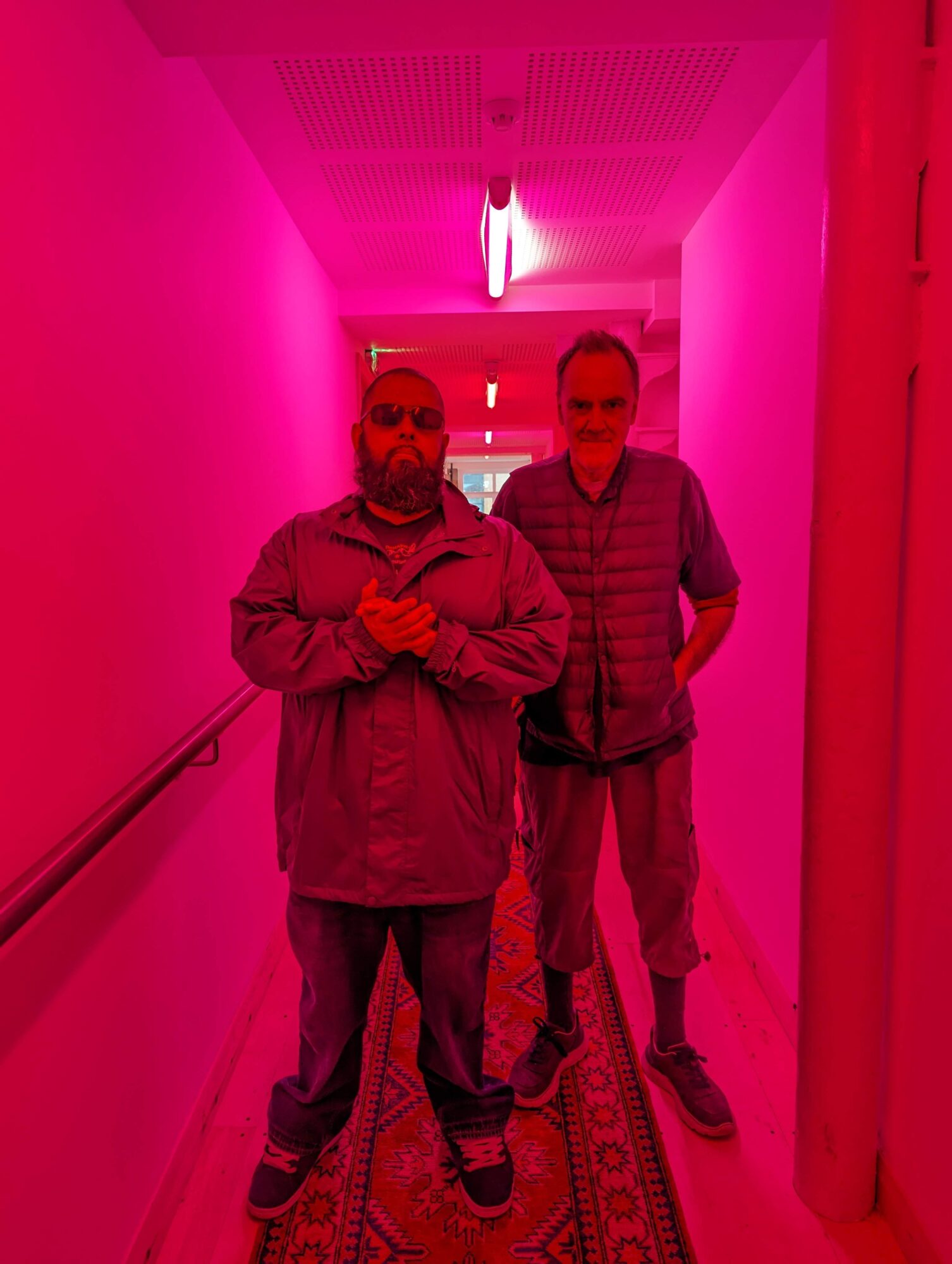
“All we have to do is obey the sound”
Your album bio talks about a whirlwind week where most of the music came together in just two feverish days of improvisation. That’s insanely quick! When you’re caught in that kind of creative rush, what’s the feeling or instinct that tells you, “Wait, that weird little sound we just made is actually something”? How do you know when you’ve hit something special while moving that fast?
Will Brooks (aka MC Dälek): It’s really all about trust in the people you are working with and about letting the music be what it’s supposed to be. I don’t know that there is any kind of formula; we just went with the ideas that sounded and felt right from the jump and built from there.
Charles Hayward: If things are right with how the instruments feel in the room, how they sound, and our ears, bodies, and heads are open to respond, then all we have to do is obey the sound. It tells us the next step, setting up diagonals, strange curves. We have to be ready at a moment’s notice; it’s a lifetime thing.
Tell us about the recording process.
Will: What we created in Salford, we created together. The album was only mixed and mastered back at Deadverse. I added vocals to three of the four vocal tracks, but the songs and what the album was already existed from the recording sessions. There was no “arguing with the past” because the recording and album are of now. I didn’t have to “balance keeping Charles’ soul” or fit it inside “the world of Dälek” because the project is our soul.
This Heat’s influence is huge, but Dälek’s sound is its own storm of noise rock and hip hop intensity. Was there ever a point where one of you thought, “Maybe I should hold back so I don’t steamroll the other person’s sound”? Or was the goal to just go all in and see who could push things further? Did that trust between you only show up after surviving that crazy week in the van together?
Will: Any collaboration is based on conversation and trust. I knew that we spoke a common language. I knew that it was our nature to push and explore. When I work, there is no ego; my main concern is that the music sounds as it should, so you find a footing where you each should be and create. There is no holding back.
Charles: We’d have disappointed each other if we had held back. The steamroller thing only happens if you don’t listen. Music is more than the sum of its parts, refuses territorial reduction.
Charles, you’ve got rhythm in your DNA, but working with Will means dealing with beats built from samples and programming… When you sit behind the kit, are you trying to make the machine sound more human, or do you aim to become part of the machine yourself?
Will: I know this is a Charles question, but I have to mention: Charles is 98% of the drums on this project. The only song that has programmed “boom bap” drums is ‘Breathe Slow’ (he’s doing the cymbal work and percussion on that one). The rest of the songs are all Charles on drums, no programming. Also, the samples weren’t programmed. I used the SP404 for drones and more so for its effect processing. The samples were played using an iPad running SAMPLR, on which I play the waveform segments almost like granular synthesis. So the playing was way more organic between the two of us.
Charles: There’s more than one sort of clock. I think Will and I manifested an alternative. The way the culture is using clocks right now is a form of centralized intelligence, and I think that’s inherently totalitarian, brittle. It’s going to break soon; we’re just helping it on its way.
“Music has always been therapeutic for me”
Will, on tracks like ‘Asymmetric,’ your lyrics really take on the cruel state of the world. Do you feel like this kind of abstract, heavy sound is the only way to tell that truth in 2025?
Will: No, it’s just my way to tell our truth. Music has always been therapeutic for me in that sense.
Charles, you’re on drums and synths, Will’s on the sampler, and there’s no dedicated bass player. Was leaving out the bass a creative choice, or just how things happened with the duo setup? Did that push you both to come up with new ways to fill the low end, maybe using silence or drones instead of a steady bass line? (Charles’ synth was primarily for bass, as were the drones. Some of the played “samples” also introduced low-end frequencies.)
Charles: I’ve been developing ways of playing drums and keyboard at the same time, so that was happening too, as part of the live take, along with gaffering notes on this Yamaha keyboard I’ve got with a really low-end capability, put it through a volume pedal and play rhythmically. Sometimes, minimal or static information leaves space for other details to speak more. It’s a camera angle thing.
This whole project came to life during a residency in Salford, UK. Do you think this record could have happened the same way if you’d just booked time at Deadverse or a London studio? Did that intense, time-limited residency — the unfamiliar place, the schedule, the pressure — actually help pull something brilliant out of you that a chill studio session might not have?
Will: The time constraint, the intensity, and the pressure all played as factors in what this album is. It definitely forced us to focus. So it absolutely would have been different under different circumstances. I don’t know if it made it better or not; it just made it what it is. It’s a beautiful thing that so many factors affect creativity. You end up capturing these moments in time. That’s what every album or project is to me: a snapshot of who I am at those particular moments.
Charles: Different situations put you in a different headspace, great way to scale up the uncertainty, on the run, quick decisions, time is running out. Actually, time is always running out. And Islington Mill is a super groovy place.
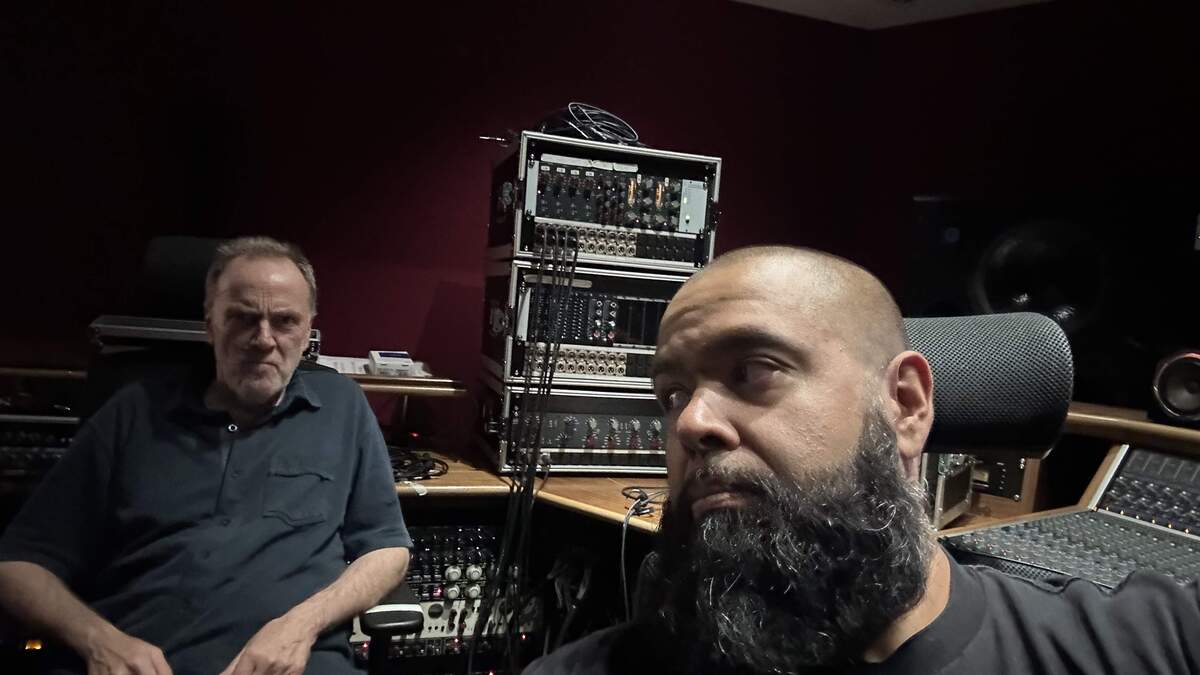
Will, you mentioned that when Charles first walked into Deadverse, your crew was literally playing This Heat records and you were freaking out. Once that “fan” moment passed, how did it feel to start treating him not as a hero, but as a creative equal riding around in your van? How did that shift from admiration to collaboration show up in the music?
Will: I’ve been lucky enough to meet a lot of musicians whom I admire, with varying results (hahaha). Charles is the real deal. The reasons why I admired him as a music fan are on full display on this album. He is an incredible drummer! I’m probably more of a fan now because of the work ethic, creativity, and endless energy he displayed while writing, recording, and performing. When I get to work with people whose work I am a fan of, I want to match that energy, that passion, and I want to build with them. I’m lucky to count Charles as a friend, but I will always be a fan of his as well.
Charles, you’ve said that working with Will “changed your head.” That’s a big statement coming from someone who’s been making boundary-pushing music for decades. Can you point to a specific sound, technique, or studio approach Will used — something from the hip hop world that made you rethink how you make or feel rhythm?
Charles: Well, Will is a forward artist. We each have our agendas and ways of seeing the world. When you make something with a fellow spirit, you’re opening yourself up to a whole new thing. The problem would be if he didn’t change my head. The record is intense.
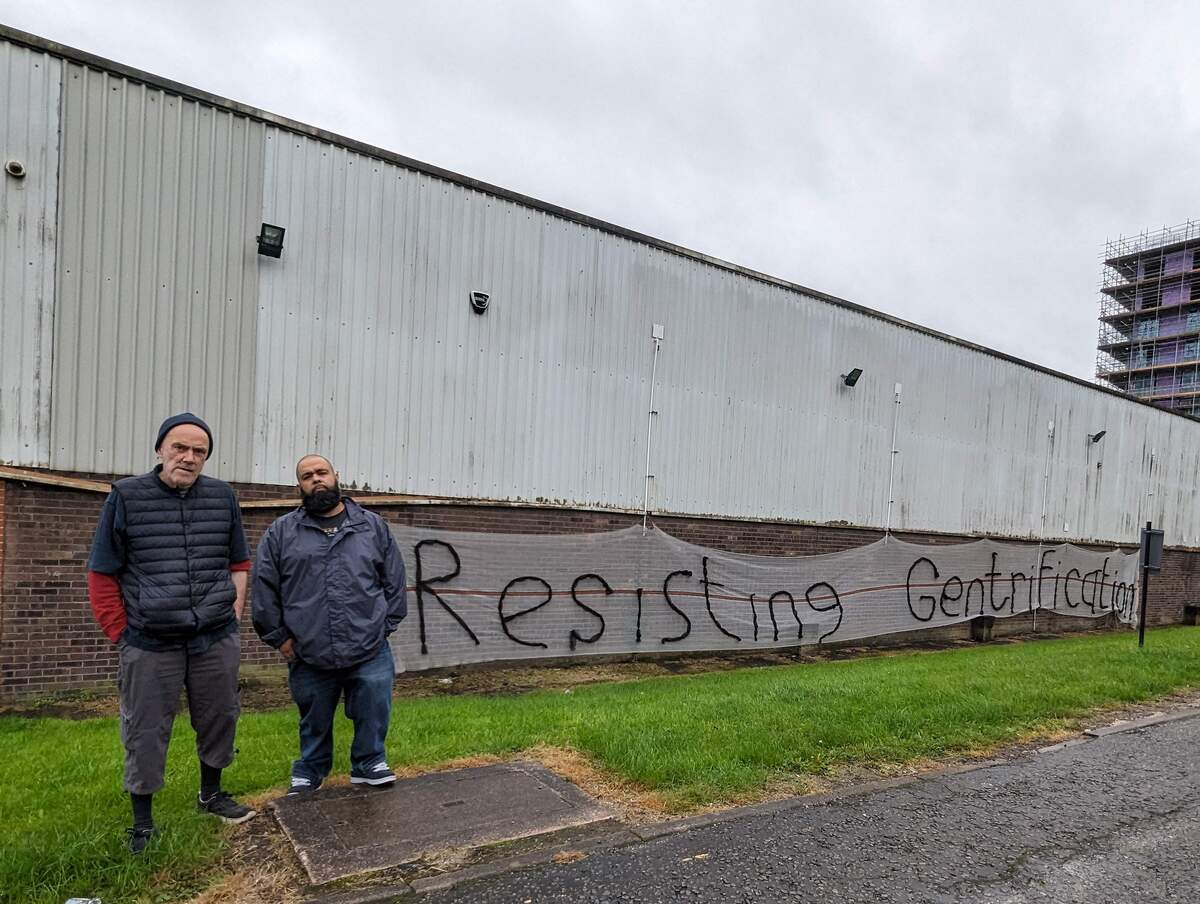
The album’s been described as heavy and full of complexities. For two artists who love pushing limits, is the best sign of success when both you and the listeners feel a bit off balance or challenged? Do you think real innovation only happens when there’s a little discomfort involved?
Will: I guess? I don’t know… I suppose I enjoy challenging music… I just like the music that moves me. The music that gives me goosebumps, you know? I think a lot of people get caught up in trying to define an album or a project, or are challenged if it doesn’t fit exact “boxes.” I’ve always just tried to find where things sound right to me… but maybe what’s right to me is off balance. Music is such a subjective thing. Most times when I am creating… nothing is ever quite “finished.” I just keep pushing to a place where I’m finally OK with releasing it and letting it go. Letting it exist, and then moving on to create more. Finding like-minds to create with in that fashion is very special to me.
Charles: I’m into uncertainty, no more maps.
Klemen Breznikar
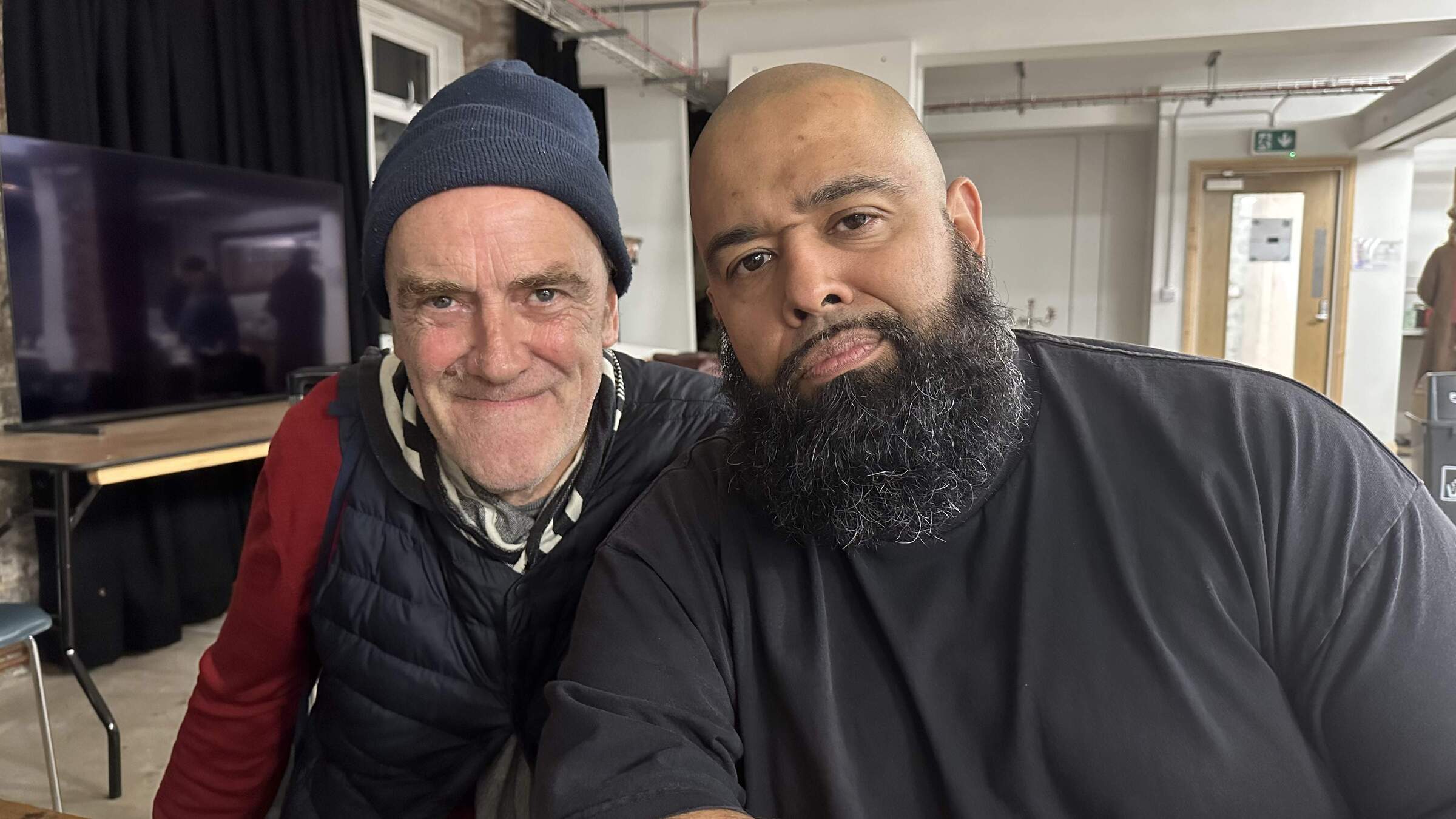
Headline photo: Charles Hayward x MC Dälek (Credit: MC Dälek)
Charles Hayward Facebook
MC Dälek Website / Facebook / Instagram
Relapse Records Website / Facebook / Instagram / YouTube / Bandcamp
‘Ventriloquist/Dummy’ Gets a Fresh Twist from DJ Dairy as Abstract Concrete Launches Remix Album
Abstract Concrete | Charles Hayward | Interview
This Heat | Interview | Charles Hayward