
Bubu’s Daniel Andreoli on ‘El Último Cortejo’, the Band’s Final Album
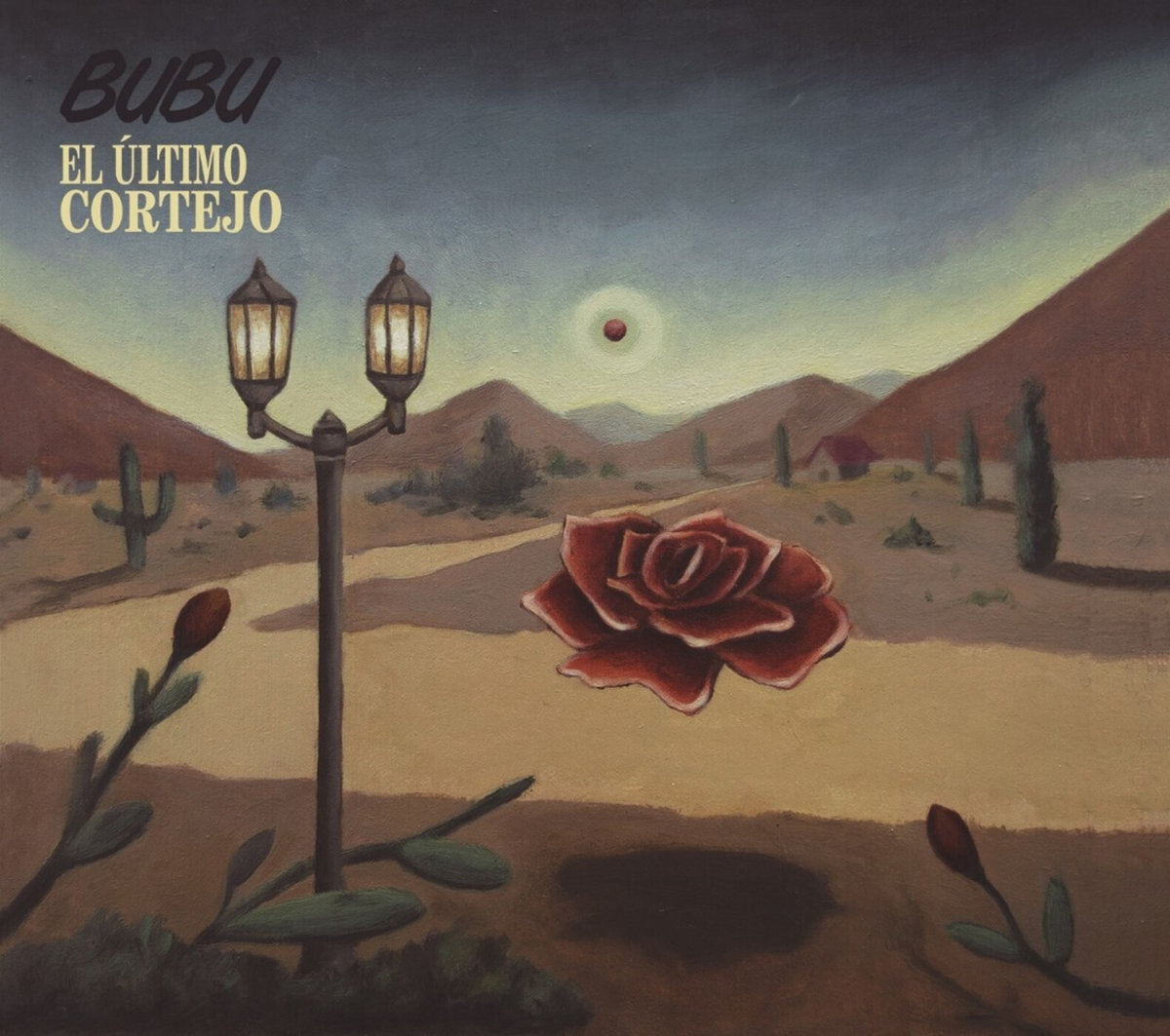
Bubu return with ‘El Último Cortejo’, their third and final studio album, bringing together compositions from the seventies and new material recorded with a younger generation of musicians.
When I last interviewed Daniel Andreoli in 2021, he told me Bubu would make a third album. He was fairly sure it would be their last. Five years later, ‘El Último Cortejo’ is finally here.
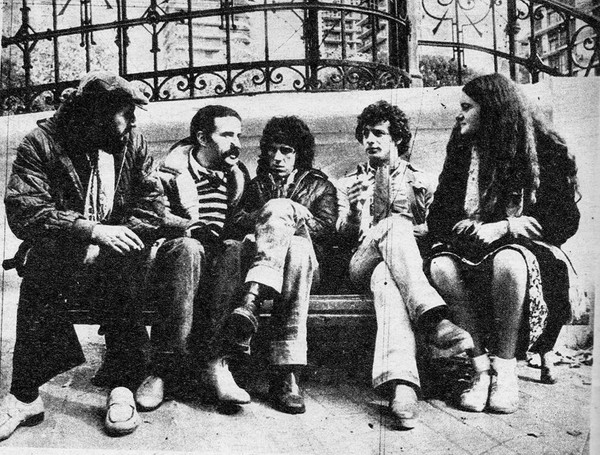
Bubu came out of Buenos Aires in the seventies and recorded ‘Anabelas’ for EMI, released in 1978. It was an extraordinary record, with complex arrangements bringing together violin, flute, saxophone, guitar and vocals. The band had plans for another album, but it never happened. Andreoli eventually returned with ‘El Eco del Sol’ in 2018, almost forty years after the debut.
The new album brings him back to some of the music he was writing in those early days. Old notes discovered in his parents’ house provided part of the material, including ‘El Tren de las Nubes’, a piece Bubu had performed at the Teatro Astral in Buenos Aires. Andreoli has now revisited these compositions with a younger line-up, replacing the violin with keyboards and drawing on tango, northern Argentine folk music and memories of his youth.
His son Ariel has played an important part in getting the album made, taking care of production and organisation while Daniel concentrates on composing. George Rossolatos, whose PQR-Disques plusqueréel label reissued ‘Anabelas’ in 2021 and released a new deluxe edition earlier this year, has also released ‘El Último Cortejo’ on CD and vinyl. The CD includes two additional pieces, ‘Otoño’ and ‘Vuelan’, the latter written by keyboardist Dante Fisi.
Daniel discusses the early compositions, working with his son and the younger musicians, and why he considers this the last Bubu studio album. There may still be a chance to hear the band on stage, though.
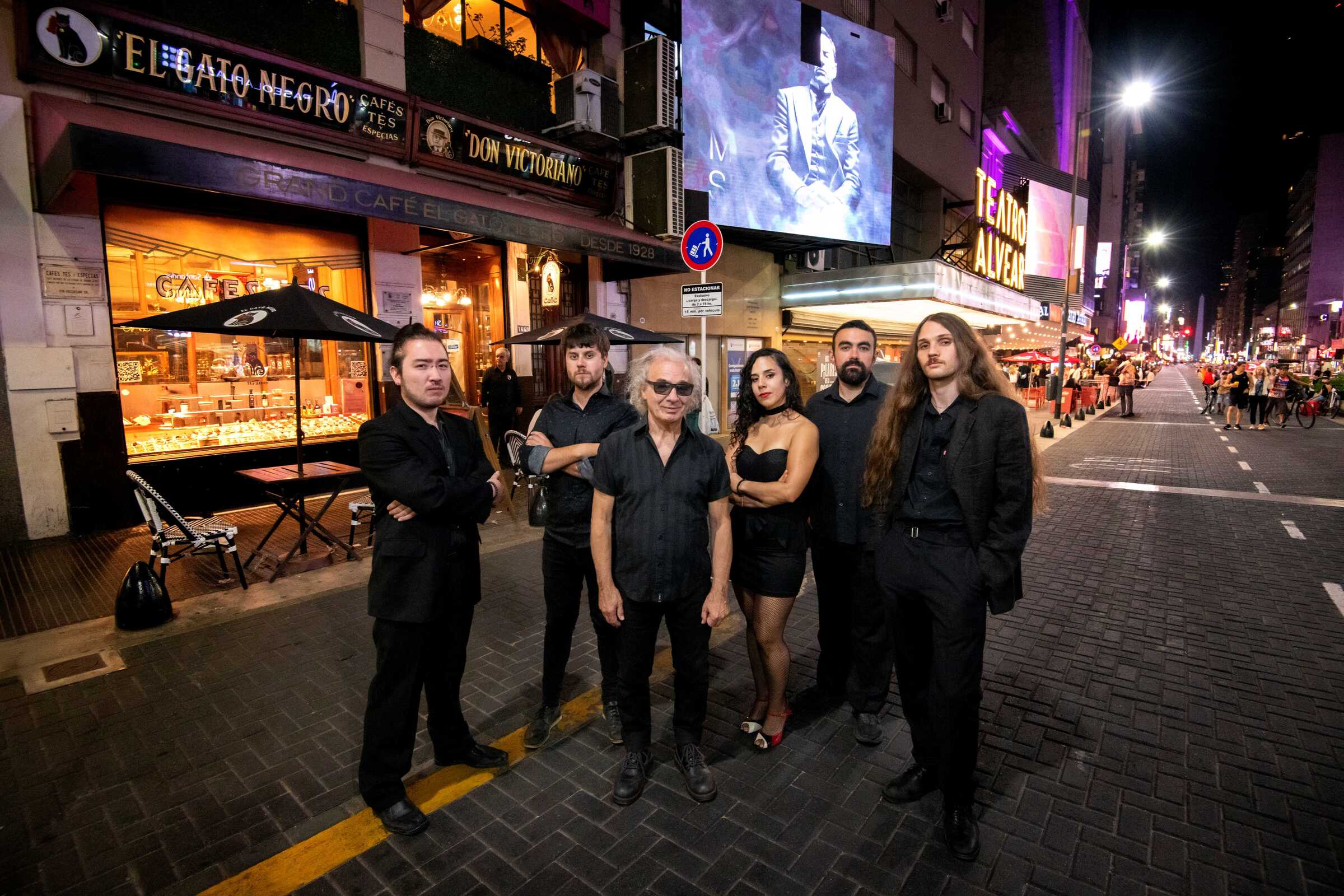
“Time grants you a remarkable economy of resources and teaches you to value space.”
Daniel, when we spoke in 2021, you told me there would be a third Bubu album and that you thought it would probably be the last. Five years later, here it is. How does it feel to have finally finished it? And how much of this music goes back to the seventies?
Daniel Andreoli: First of all, thank you for reminding me of that conversation. Indeed, ‘El Último Cortejo’ is finally here among us, which fills me with happiness and confirms that visualizing our desires is an incredibly powerful tool. This holds even greater significance when considering that creative energy at seventy is not the same as it is at twenty. However, to be completely honest, both eras coexist within this material: a substantial part of the work traces its origins back to the seventies, something that any attentive listener will surely notice. Throughout our conversation, I will separate the wheat from the chaff so that you can better understand what I mean.
When we spoke about ‘Anabelas’, you told me that, for you, it was pure inspiration rather than a concept. You’ve since described Bubu’s three albums as parts of a single work. When did you begin to see that connection?
That is correct. Each child possesses its own personality and even its own essence, but they are nonetheless siblings. As in any family, the eldest exerts an undeniable influence. ‘Anabelas’, that child born of my twenties, scattered many seeds. For instance, anyone who pays close attention to ‘Cortejo de un día amarillo’ (from ‘Anabelas’) will clearly find its genes replicated in the title track of this new album, which was conceived as an explicit homage to our very own roots.
I was interested to learn that your original deal with EMI was for two albums, and that some of the music intended for the second was already being performed in the seventies. One of those pieces was ‘El Tren de las Nubes’. What do you remember about playing it back then, and how different is the version you’ve recorded now?
On this new album, you will find a piece titled ‘El Tren de las Nubes’, which is none other than that exact composition from the seventies. As a side note, it is worth recalling that we actually premiered it back then at the mythical Teatro Astral on Corrientes Street. It featured a stunning stage design by Renata Schussheim—an exceptional, multifaceted artist who designed iconic pieces both in Argentina and abroad—and showcased a brilliant performance by our frontman and lead singer at the time, Miguel Zavaleta.
Naturally, in this 2026 version, the context is completely different: it is a purely instrumental arrangement, without violin, with a renewed focus on keyboards, and created under much tighter rehearsal constraints. Faced with this reality, I had to resort to other conceptual tools to rearrange the same material and adapt it to the present day.
Some of the music on ‘El Último Cortejo’ was written nearly fifty years ago. What was it like to return to those compositions? Did you find yourself thinking about music in much the same way as you did when you were young?
Although you will often hear me speak about the timelessness of art, I subscribe to the general notion that creative energy inevitably changes with age. Nevertheless, when confronting the final results of this record and reflecting on what I experienced over these past few years in the intimate solitude of composition, I felt states of mind and epiphanies very similar to those of my youth. For that reason, I allow myself to doubt that rigid generalization.
Has your approach to complexity changed with age? Have you become more comfortable leaving space in the music rather than adding something to every passage?
Absolutely. Time grants you a remarkable economy of resources and teaches you to value space. As the old saying goes: “Good things, when short, are twice as good.”
You spent part of your youth in Jujuy, and those memories seem to have found their way into pieces such as ‘Originarios’ and ‘El Tren de las Nubes’. What do you remember about that time, and how did those experiences influence the music?
‘El Tren de las Nubes’ is not a mere metaphor; it is a tangible geographical reality. In the seventies, this legendary train departed from the province of Salta, climbed and crossed the Andes mountain range, and arrived in Antofagasta, Chile, after a two-day journey suspended in the vastness of the mountains.
I was just 18 years old and embarked on that fascinating journey with a group of friends heading towards Machu Picchu, Peru. During that trip, I met the woman who would become my first wife, a native of Jujuy, with whom I had my first son. That explains my deep and prolonged stay in the landscapes inhabited by the Coyas, the native people of those highlands.
Musically, these experiences translate into vivid soundscapes: the introduction of the piece evokes the poignant solitude of the Coya amidst the vastness of the landscape; the development portrays the vibrant and festive community life; and the conclusion ascends with space rock textures, reflecting the perspective of the old composer contemplating the cosmos from his own deep-seated roots.
‘Ciudad’ seems to come from a very different place. When you were writing or revisiting that piece, what kind of Buenos Aires did you have in mind?
As a true specimen of the 20th century, I must confess that a deep nostalgia for the Buenos Aires of yesteryear overwhelms me. This feeling completely permeates ‘Ciudad’, a city whose architecture still evokes the ghosts of the past. The main theme, inherently tango-like in nature, is presented after an introduction that clearly outlines the dramatic character and complex harmony upon which the piece will unfold. The composition modulates constantly through various rhythmic passages before converging into a final section where the alto sax introduces a distinct jazz phrasing, crowning the track with an epic finale in the truest Bubu style.
The violin was such an important part of Bubu’s sound in the seventies, and it was there again on ‘El Eco del Sol’. Why did you decide to do without it on this album?
The current socio-economic reality of our country has forced many valuable musicians to emigrate for strict survival reasons. Unfortunately, that was the case for Alvar Llusa Damiani, the brilliant violinist who had been working with me since the ‘El Eco del Sol’ era. In his absence, and considering that the primary goal for this new album was to solidify the band into a strictly instrumental format, I decided to take an aesthetic turn and bring in a keyboardist to complete and enrich the harmonic spectrum of the band.
You’re now working with musicians from a very different generation. How much freedom do you give them when they begin rehearsing one of your compositions? I’m particularly interested in how you worked out the drum parts.
The current musicians have assimilated this complex aesthetic universe with astonishing naturalness, as if they had walked through the seventies themselves. Far from imposing a rigid, unchangeable score on them, I always left a generous space for their own sensibilities and their neo-progressive contributions. A clear example of this was our work on the drums; we sculpted the rhythms side by side during rehearsals, granting the instrument a remarkable creative independence.
‘Vuelan’, one of the two bonus tracks on the CD, was written by your keyboardist Dante Fisi. Was it strange to have somebody else contribute a composition to Bubu for the first time?
On the contrary, it deeply enriched the concept. The collective spirit beating at the heart of this project is crowned on the album by two essential pieces: ‘Otoño’, a tango with a deep and distinct Piazzolla influence, and ‘Vuelan’, a beautiful piece written by our keyboardist Dante Fisi. The inclusion of the latter marks a true historic milestone in our career, as it represents the first time Bubu has ever recorded a composition written by someone other than myself. For me, this gesture symbolizes the definitive passing of the torch to the new blood of the band.
The recording process must have been very different from the days of ‘Anabelas’. Did having more freedom to record in different studios make things easier this time?
The current independent and technological ecosystem is infinitely more accommodating and flexible. In fact, we were able to split the process quite comfortably: we tracked the drum and bass foundations in a large-scale studio (Moscop); the flutes were recorded in the instrumentalist’s private studio, as were the keyboards and guitars; while the sax sections and backing vocals were tracked in the very same studio where we ultimately completed the final mix (El Limonero).
Your son Ariel has become an important part of Bubu’s recent history. He encouraged you to return to music and has been heavily involved in this new period of the band. What’s it been like working together, father and son, on something that began so many years ago?
Without a shadow of a doubt, it is the most beautiful, moving, and fruitful experience I have ever had in my entire formal career as a musician. Thanks to his unconditional support in production and logistics, for the first time in Bubu’s history, I was able to shed all executive pressures and concentrate solely and exclusively on my core role: being a composer.

When we spoke in 2021, PQR-Disques plusqueréel had just reissued ‘Anabelas’, and you spoke very warmly about working with George Rossolatos. Now he’s also releasing your final album. What has that relationship meant to you over the years?
George Rossolatos has truly become a cherished figure in my life, someone I consider part of my own family, and I fervently wish him the greatest success in all his endeavors.
You’ve said that ‘El Último Cortejo’ will be Bubu’s final studio album. Do you feel you’ve now said everything you wanted to say with the band on record? And although this may be the last album, is there still a chance we’ll get to see Bubu performing live? I certainly hope so!
Regarding the closure of this creative cycle, I feel that my studio work with Bubu has reached its definitive conclusion through these recordings. However, when it comes to the living, breathing dimension of music, we are still eagerly awaiting the arrival of the physical records here in Argentina, driven by the profound hope of bringing this magnificent new lineup onto the live stage.
Thank you very much, Psychedelic Baby Magazine.
Klemen Breznikar
Bubu Facebook / Bandcamp
PQR-Disques plusqueréel Official Website / Facebook / Bandcamp / YouTube
Previous Bubu Interview (2021)