
Mike Cooper Interview | ‘I Am Still a Folk Musician, Really’
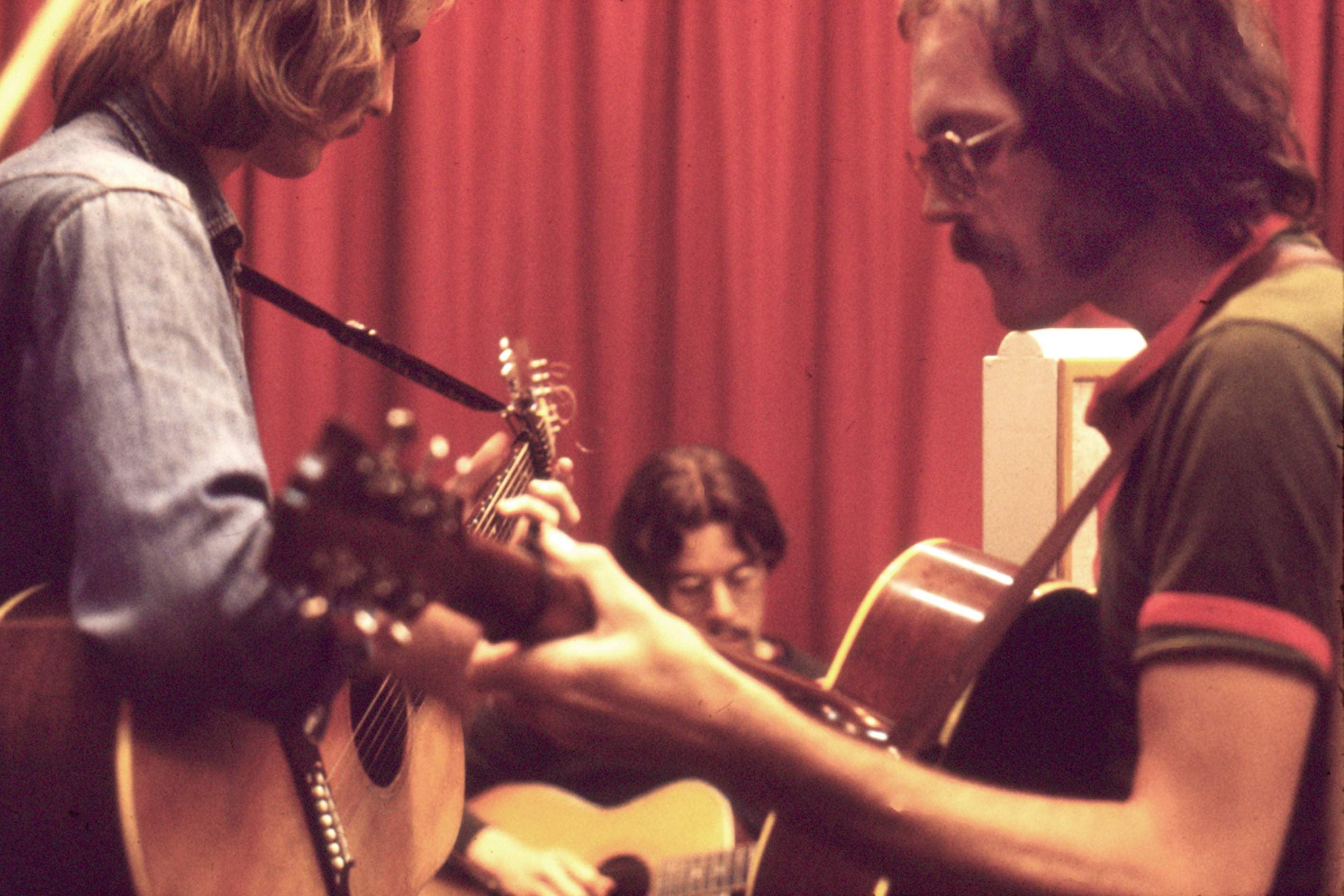
British guitarist and singer Mike Cooper has been making music for more than sixty years, beginning in the folk and blues clubs of the 1960s before moving into jazz, free improvisation, Hawaiian music and experimental sound.
Cooper was fired on his wedding day and hasn’t held another full-time job since. He made his first albums with producer Peter Eden and, by the early 1970s, was working with jazz musicians including Harry Miller, Mike Osborne and Louis Moholo. Albums such as ‘Trout Steel’, ‘The Machine Gun Co.’ and ‘Life and Death in Paradise’ were quite different from the blues records that had first brought him attention, and not everybody knew what to make of them.
He later became involved with the London Musicians Collective and spent thirty years playing with Lol Coxhill and Roger Turner in The Recedents. His interest in Hawaiian guitar took him to the Pacific, while his years in Rome saw him making his own recordings for Hipshot, his homemade CD-R label. Along the way he also became involved in field recording, electronics, radio, silent-film soundtracks, photography and video.
Mike has plenty of stories to tell, and some of the most interesting ones come when he wanders away from the original question. I’ve left those in.
“Sometimes by getting it wrong you get something right.”
You grew up hearing singers on the radio and spent part of your childhood in Australia. What music stayed with you from those years? How did you come to pick up the guitar?
Before I begin to answer any of these questions I would like to say that they should be treated a bit like dub music. In other words a version. There are quite a few versions out there and here is another one and I hope you enjoy it. If you feel like re-mixing it go ahead.
I experienced practically all of my first music via the radio. Growing up the radio was the family entertainment centre and television came a bit later. I heard a lot of singers; crooners and jazz singers. At school, aged about nine years old, I was involved in a school musical and was asked to sing and I realised that I had a voice. Nothing more happened until my family immigrated to Australia where I spent my early years from aged eleven. I was obsessed with climbing trees and at the top I would sing. I remember I was particularly fond of the voice of Slim Whitman and a song called ‘Rose Marie’ which I had heard on the radio. Apart from his great falsetto singing ( which I rediscovered in Hawaiian singing) that record featured what would have probably been my first experience of hearing lap steel guitar. The steel guitar player was Hoots Rains who played in Slim Whitman’s band the Stardusters as well as on several of Slim’s records. Incidentally there is a Slim Whitman song called ‘Indian Love Call’ that is featured in the film “Mars Attacks”.
When the Martians hear Slim singing ‘Indian Love Call’ their heads explode inside their glass helmets!!! Nothing like that happened to me I’m glad to say. Music pretty much disappeared from my life after that until we came back to live in England. I arrived back just as Rock and Roll was breaking and I decided I wanted to be a singer. I started to learn acoustic guitar just to accompany myself and to learn some songs that I liked. I was attracted to the distinctive voice of Buddy Holly and also of black singers like The Platters and other Doo-Wop groups like the Drifters and Frankie Lymon and The Teenagers and Dion and The Belmonts, all from the 1950s, all great singers. I am still a fan of Dion. His solo acoustic records of the 1970s are some of my favourites. ‘Sit Down Old Friend’ (1970), ‘You’re Not Alone’ (1971), and ‘Sanctuary’ (1971) still get to me. His voice is instantly recognisable. To answer the last part of your question I was working after I left school in a company that sold timber to builders.
They thought that I was going to be trained as management but my life and my consciousness evolved in such a way that they finally decided that it would be best if I left. I had been playing music in my own time and they knew that and gave me the ultimatum to choose the career or play music. I left the job and had a couple of other work things after that and I got married. On the day I got married I got fired and I never worked again in a full time job. In a way being a full time musician was forced on me by circumstance. But, talking about life choice let me tell you about my friend Geoff Hawkins. The later version of my first band The Blues Committee, which disbanded in 1964/5, had my saxophone playing friend Geoff Hawkins in it. Geoff has a special place in my history. We met when we both worked for that same timber company called Baynes in Reading. We were both in our early twenties. He arrived after me to work in the offices and by that time I had been moved from the offices and was ‘doing time’ in the actual timber yards with the real workers.
We discovered we were both musicians and loved jazz. I gave him a book that had influenced my life a lot when I had read it some years before when I had begun to look at the lives and music of jazz musicians and the ‘beat’ culture in America. It was “Really The Blues” by Mezz Mezzrow published in 1946. Years later Geoff told me that the book completely changed his life. It changed mine as well. Mezz Mezzrow was a white Jewish clarinet player who totally identified with black musicians. He was often in jail, usually for drug related problems, and in the end they put him in the black Afro American part of the jail because he was accepted and identified with those inmates so much that they labelled him a ‘white spade’. He was totally outside what was considered ‘normal’ society and apart from the music this is what appealed to me. This total outsider attitude. I was already being drawn towards ‘outsider’ literature like Jack London, Robert Louis Stevenson, Walt Whitman, James Baldwin etc. Geoff and I both grew up in post-World War Two Britain. Very conservative and not a lot of fun.
One of our desires in life was as soon as possible to get out of our parents’ lives and make our own. Any mentoring or role models in that direction was welcomed. That book (“Really the Blues”) and another, “The Holy Barbarians” by Lawrence Lipton (1959) a book about the ‘hip and beat generation’ of poets, writers, artists and musicians in Los Angeles in the late 1940s and early 50s, were catalysts. Part of a review of that book reads – “I love the holy barbarians, the beatniks, who are not comparable to the hippies taking over the 60s. These people were the actual intellectuals who were actually fighting against the world not relying on any kind of ideology whatsoever (which is exactly why they are so respectable to me, they were not just some other idiots backing another stupid ideology promising to save humans).” It is a flawed book in many ways but it served as a road map to other books and through it I came to read Kerouac, William Burroughs, James Baldwin etc. and then British ‘outsider anti-establishment working class’ writers like Colin MacInnes, who wrote about black culture in Britain in his books “City of Spades” in 1957 and “Absolute Beginners” in 1959; Alan Sillitoe who wrote “Saturday Night and Sunday Morning” “chronicles the hedonistic, anti-establishment rebellion of 21-year-old machinist (sic factory worker) Arthur Seaton against mundane working-class life in post-war Nottingham.” These were more keys to a door of escape and music was another one.
Looked at in retrospect I think that I subconsciously adopt a persona of someone from another culture as another route of escape. Music became a mask for me to perform and become someone else outside my parents frame of reference. My parents only ever came to one concert of mine and I don’t think they recognised me. They never came to any more and in fact they never visited me at home once I had left. When I questioned my mother later in life about this she said “Well you never invited us.” Probably true.
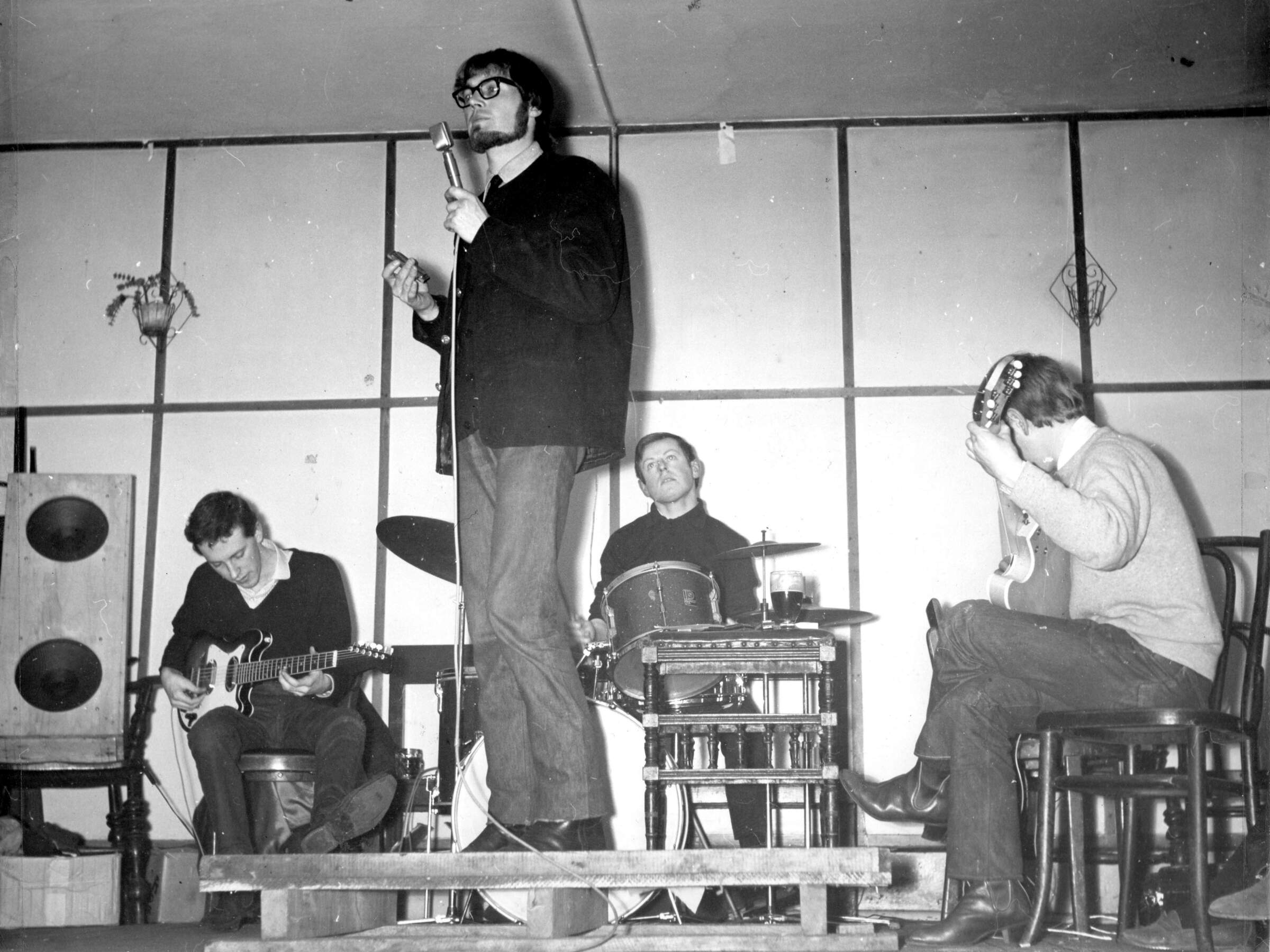
With The Blues Committee you supported John Lee Hooker, Jimmy Reed and Sonny Boy Williamson. What did you learn from seeing musicians like that in person?
Yes of course encountering those masters changed a lot for me. Being close up I realised the intensity with which they performed and lived. The reality that they brought to life with their music. I didn’t see or feel that intensity in the music of most pop musicians of that time. Cliff Richard was hardly an intense experience. It was especially an extreme experience when I began to play solo acoustic blues and came face to face with musicians like Fred McDowell, Bukka White and in particular Son House. This was stripped down music and pure emotion being presented to you. They had no band to help them convey what they offered. It was just blood, sweat and deep commitment to whatever spirit came along. That attracted me. Not technique on the guitar. That went back to where I started when the guitar was just something to help you sing a song. I was after emotion in the voice as I was experiencing it when I heard Son House for instance. That was what ‘Oh Really!?’ was about for me.
Later I experienced the same intensity in Flamenco singing and in Greek Rembetika and the Qawwali Sufi singing of Nusrat Fateh Ali Khan and Youssou N’Dour and much music from around the Mediterranean where I have lived for the past 50 years.
You learned a lot of those early blues records by ear, sometimes finding your own way around the notes. How did that shape your playing? And did you think much at the time about being an English musician playing Black American blues?
Let me talk about the last part of your question first because I think that I answered some of this question in my answer above maybe? Back in the late fifties and early sixties there was no talk about cultural appropriation. We were involved in a culture of the folk music tradition. My first public performances were in folk music clubs. The music performed in them was from all over the place. American, Irish, Scottish, English etc., etc. A lot of those songs share the same roots. Music does not exist in a vacuum. In 1965 I shared a concert with the American musician Doc Watson. He grew up in North Carolina and his music is a mix of Appalachian mountain and folk songs and Black Country Blues. Appalachian mountain music is a mixture of European immigrant folk music and Black syncopated rhythms. Pete Seeger, the American folk musician, sang and championed blues and as a co-founder of the Newport Folk Festival he brought many musicians, such as Son House and Howlin’ Wolf among them, to a wider and particularly white audience. As a musician you play the music that speaks to you and that you love no matter where it is from.
People talk a lot now about ‘cultural appropriation’ but cultural appropriation is a two way river. Hawaiian music is a hybrid music. A mixture of traditional Hawaiian chants and European melody and harmony. Hawaiians had no stringed instruments only percussion, flutes and voice. When King Kamehameha V first saw and heard a brass band on a visiting Austrian ship in Honolulu he wanted one. In 1872 they sent him the instruments and a Prussian bandmaster named Henri Berger who formed the Royal Hawaiian Band, teaching the Hawaiians how to play the instruments and to read and write European melody and harmony. In 1793 Captain George Vancouver came with a gift of several cattle for King Kamehameha I. He instantly put a ‘tapu’ or tabu on them forbidding anyone from killing them. They were left to roam wild and proliferate. They eventually became a menace eating crops and wandering where they should not be. In the 1830’s King Kamehameha III invited Mexican cowboys to come to Hawaii to teach the Hawaiians how to handle cattle, ride horses, rope and brand cows. The Hawaiian cowboys, known as ‘paniolo’ a mispronounced word for ‘espanol’ or Spanish.
Mexicans brought Spanish guitars with them and in 1878 the first Portuguese arrived to work in the sugar cane plantations. They brought with them a Portuguese instrument, the braguinha, which evolved into the ukulele. The scene was set for a musical revolution. Especially when Joseph Kekuku invented the lap steel guitar in the late 1800s. With the invention of recorded music and the record industry in the 1920s music began to travel very quickly.
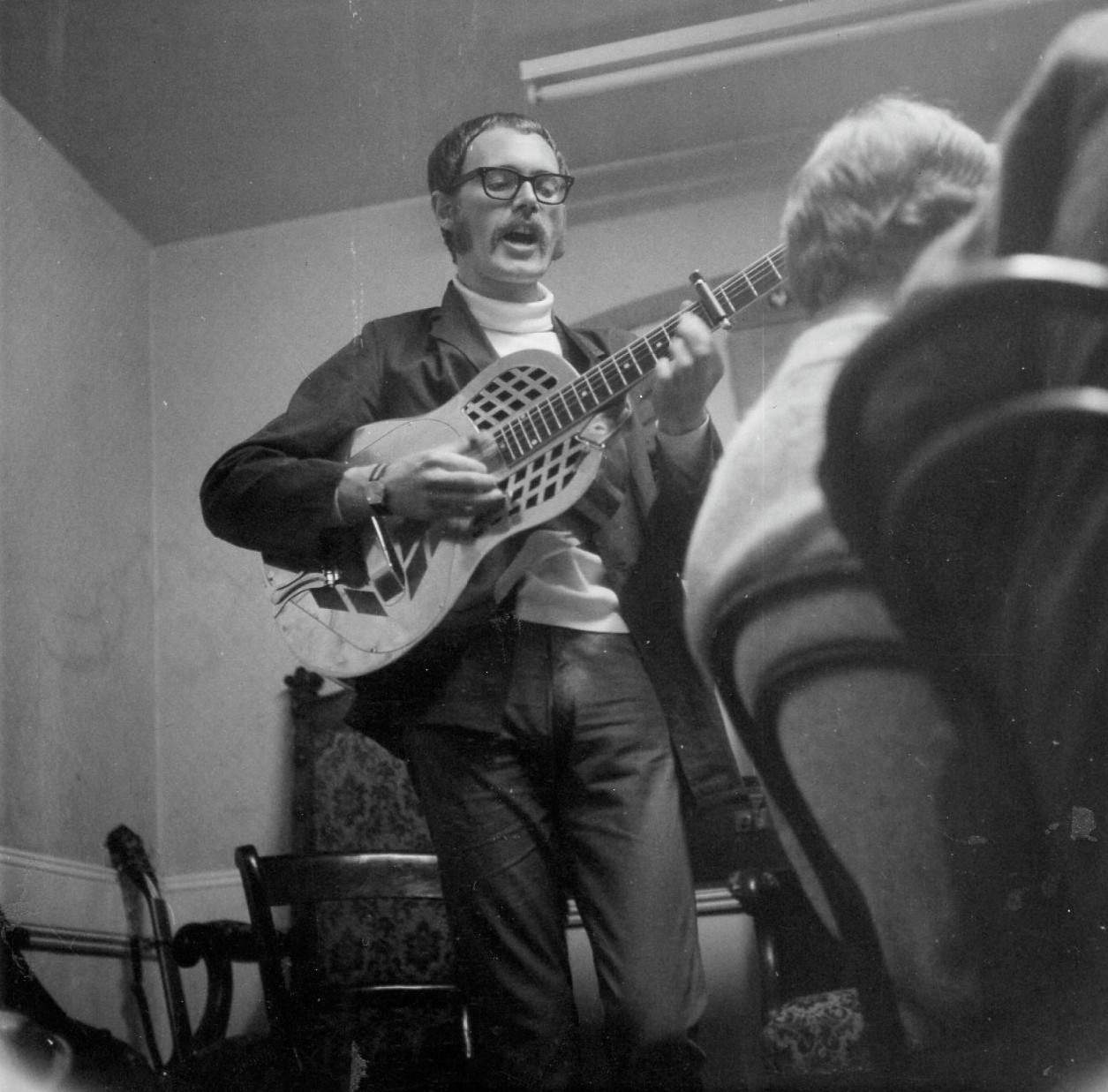
That guitar you mentioned is my 1932 National resonator guitar. It was designed and built by John Dopyera an immigrant to the USA from what is now Slovakia. He loved the Hawaiian music that he heard on records and maybe even saw played live living in California where Hawaiian bands would sometimes play. Hawaiian musicians were looking for a louder instrument that could compete with the recent inclusion into their music of saxophone players. Dopyera set out to build one. He had experience of the extremely simple acoustic amplification technology involved in the early wind up gramophone machines that everyone was listening to their newly invented records on. He adapted that technology and came up with three aluminium cones, like inverted loudspeaker cones, placed inside the body of the instrument underneath the bridge over which the strings passed. The cones acoustically amplified the sound of the strings, and the body of the guitar, made of metal, amplified it even more. Hawaiians loved it for its sheer volume, sweetness of tone and its look. Polished German silver, a copper-zinc-nickel alloy, often engraved with floral patterns or island scenes of surfers or Hula dancers.
When I visited Trnava, the village where the Dopyera family originated from, I discovered a speciality of that place was glass engraving and many of the patterns on National guitars originate from Trnava. My research into the fact that I heard lap steel guitar being played Hawaiian style in local music and even sometimes playing actual Hawaiian songs on records from around the world. Indonesia, India, Greece, Japan, Vietnam led me to investigate the source. I found that a family of Hawaiian/ Samoan musicians, the Tau Moe family, were employed by a touring American professor Madam Claude Riviere to perform while she gave lectures and showed picture slides about Hawaii and Hawaiian culture. The Tau Moe family would play music, sing and dance. They left Hawaii in 1928 and headed for Manila, Japan, China and India. They split from M. Riviere in the 1930s and became an independent touring show. Tau Moe his wife Rose, an amazing singer and their two children who both performed playing ukulele, singing and dancing. In 1939 when the second World War commenced they were stranded in India where they stayed for several years.
While there Tau as well as performing began to teach Hawaiian lap steel to local guitarists. He also did during his travels in the other Asian countries. So Tau Moe can be traced as the true source of any Hawaiian lap steel guitar you hear on any recording from Asia and other places. They only returned to Hawaii 50 years after leaving, probably the longest known tour of any band. Tau Moe was among the virtuoso players of lap steel guitar that came to prominence in the 1930s and 1940s in Hawaii and in mainland America. Troupes of Hawaiian musicians had been touring mainland North America and Europe since the beginning of the 20th century and one of the first-ever recordings of music of any genre was Hawaiian. In 1904 the American Record Company recorded and released the first commercial recording of Hawaiian Music by the Royal Hawaiian Troubadours singing “Aole Wau E Paoina Iaoe”.
By 1916 Hawaiian music sold more than any other recorded genre of music and influenced, via the lap steel guitar, country music and early black country blues musicians. It is quite possibly the source of blues slide guitar playing.
I started to learn those pieces from the Blind Boy Fuller records as best I could. Playing what I thought I was hearing. In fact what I thought he was doing was wrong. I was playing it with the wrong chords and in the wrong key but I found a way to play it and make it sound good and convincing it seems. So it becomes a version of the piece. I did it with the Son House pieces as well. I turned it into another version of the same song. I realised later when I saw him live, face to face, exactly what he was doing of course. I eventually even started to play some of the Blind Boy Fuller pieces in the same style as Son House. They were completely different styles of the blues of course but eventually I was able to mix up the different styles and different techniques and arrived at something else. When I discovered Hawaiian music the same thing happened. Hawaiians were playing blues by copying blues and jazz records but playing them in a ‘Hawaiian’ way with Lap Steel Guitar and singing in Hawaiian.
Eventually I ended up playing almost everything on lap steel guitar dropping the various techniques I had learned from the blues players in favour of the Hawaiian style very much in the style of the blues lap steel guitarist Casey Bill Weldon or even the more contemporary musician David Lindley.
Tell me about Derek Hall and those evenings at The Shades in Reading. What made that little club so important to you?
Hawaiian and other folk musicians have a way of teaching that is expressed in the sentence “Sit, watch and listen and then imitate me”. That’s it. That’s how you learn to play music, by sitting in front of someone and then going home and doing it. You might get it wrong but, as I pointed out above, sometimes by getting it wrong you get something right. Listening, watching and imitating. I am self taught in everything I do in terms of artistic practise and that’s how I learnt to do it with music, video, film, visual art. The Shades was a very special place and Derek Hall was a very special musician and guitarist. When he moved from London to Reading he worked in the Shades for his lodgings in the rooms above the cafe. We immediately bonded musically and became the ‘support act’ at The Shades every Saturday when sometimes guest musicians would be booked to perform. A very young Mike Oldfield was one of the local acts as well. Eventually I began to work in the London Clubs like Les Cousins, Bunjies, The Troubadour and integrate into ‘the scene’.
Those clubs were so well known that people would travel to London just to go to them and through that we began to get work playing in other cities around the country and also abroad. I was invited to play on The Holland Blues festival in 1967 two years before I had even made a record. I went there together with a very young Dave Kelly brother of JoAnn Kelly, both fantastic blues players. Derek and I made a seven inch four track record, recorded in my kitchen and paid for by Sidney Lackington the owner of The Shades. Obviously the title of the record is ‘Out of the Shades’. It must be one of, if not the first, independent records ever made. He had phenomenal technique on the guitar. He played a big jumbo D28 Martin with a beautiful tone and huge bass notes. He sang well and favoured a swinging jazz finger picking style unlike the more folky stylings of John Renbourn or Bert Jansch but more like Davy Graham. Funkier.
He left Reading and moved back to London eventually and the last time I saw him was when he came and played on my record ‘Oh Really!?’ on one track. The Bessie Smith song ‘Send Me to the Electric Chair’. I never heard from him again after that until maybe 15 years ago when somebody traced him down living up in the north of England in Northumberland I think. He was living alone and giving guitar lessons. We corresponded for a while and he sent me a tape of his current music. It was exactly the same as when I last heard him in 1969. I never got to see him again and heard from someone later on that he had died. I have no idea what he had been doing all those years apart from at one point I traced him down as working in The British Museum Library but when I went there asking about him he had left and no one knew where he was. He died in 2019.
You were already listening to quite a lot of jazz by the time ‘Oh Really!?’ came out. Did Peter Eden understand straight away what you wanted to do next?
By the time I made ‘Oh Really!?’ I had already been playing music for seven or eight years for a living and I had been listening to a lot of different music along the way as well. I was very aware of a lot of jazz for instance.
The later version of The Blues Committee, which disbanded in 1964/5, had my saxophone playing friend Geoff Hawkins in it. Geoff has a special place in my history. We met when we both worked for the same timber company called Baynes in Reading. We were both 19 years old. He arrived after me to work in the offices. By that time I had been moved from the offices and was ‘doing time’ in the actual timber yards. We discovered we were both musicians and loved jazz. I gave him a book that had influenced my life a lot, called “Really the Blues” by Mezz Mezzrow. Years later Geoff told me that the book completely changed his life and it changed mine as well. Mezz Mezzrow was a white Jewish clarinet player who totally identified with black musicians. He was often in jail, usually for drug related problems, and in the end they put him in the black Afro American part of the jail because he identified and was accepted with those inmates. They labelled him a “white spade”. He was totally outside of what was considered “normal” society then and was a jazz musician.
Although I had been listening, to Voice Of America’s ‘Jazz Hour’ with Willis Conover since 1956/7 it was through my friendship with Geoff that I got closer to jazz and the repertoire of the later version of The Blues Committee included pieces like ‘Watermelon Man’ by Herbie Hancock (written in 1962) and my version of the Bobby Timmons song ‘Moanin’ (culled from a Lambert, Hendricks and Ross record) and of course the Charles Mingus tune ‘Haitian Fight Song’. The attention given to ‘Oh Really!?’ by the music press and radio (particularly by John Peel) gave Peter Eden confidence in me as a musician. He was producing jazz records for Decca and Deram labels and was responsible for recording some of the top young British jazz musicians in the late sixties and early seventies.
When I expressed a desire to expand my musical horizons beyond folk and blues and incorporate other creative musicians he not only encouraged me but could provide me with all the musicians I might need to achieve that. I did know that I did not want to use rock musicians because I knew where that would go and I didn’t want to go down that road.
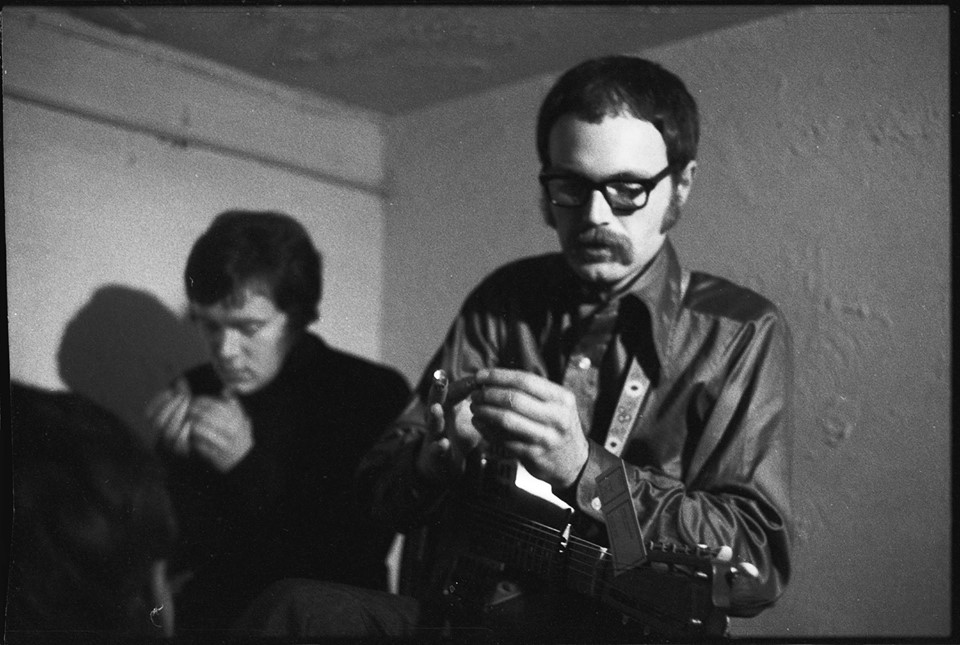
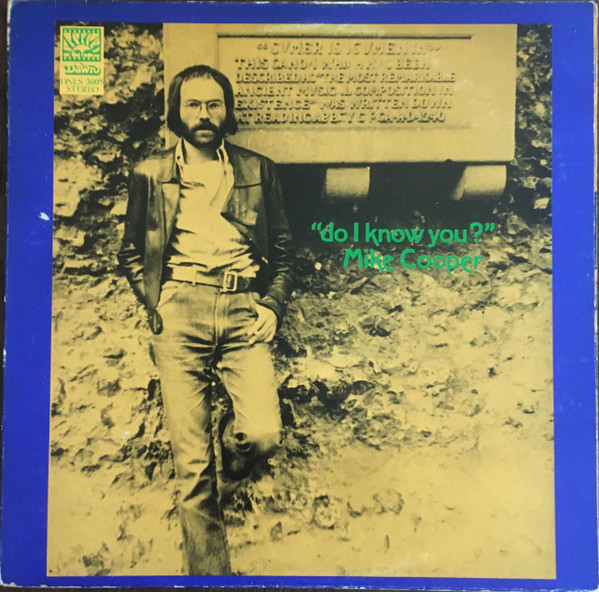
You asked Peter Eden to bring Harry Miller into the ‘Do I Know You?’ sessions. What was it like playing with Harry for the first time? And what gave you the idea of using birdsong and other recordings?
1968/9 was a fantastic year for recorded music for me. Some of my still favourite records were made in that period and a lot of them featured bass players that I came to love. For instance Peter Eden had given me a copy of a record that he was releasing on the MusicMan label, the first solo acoustic bass record ever recorded. It was by Barre Phillips and I still have it of course. ‘Astral Weeks’ by Van Morrison impressed me with its improvised music feel and in particular the bass playing of Richard Davis who actually brought together the whole concept of the session musicians improvising over Van Morrison’s voice and guitar. The album had a profound effect on me as to how to proceed and I still find ‘Astral Weeks’ magic. Peter knew all the jazz musicians in London and I knew Harry from seeing the South African band The Blue Notes led by Chris McGregor. I asked him to get Harry for me and let’s see how it goes.
I didn’t know how a jazz musician would react to being asked to play with a singer guitarist with no musical knowledge or any idea about arrangements or anything. I just wanted it to sound improvised. We recorded a couple tracks and when Harry realised I had no preconceived ideas about how the music would go and he could do whatever he wanted he loved it. It’s not one of my favourite records of mine although I know some people love it. I had a very bad cold when we recorded it and I have always felt it is a bit frail and unfinished. It was very cheap to make and done in a couple of days. I was probably the cheapest artist recording for Pye in those days which is why they loved me and why they gave me and Peter the go ahead for whatever I wanted to do next and I knew what that was.
About the bird song etc on the end of both sides. In 1968 John Fahey released his album ‘Yellow Princess’ which is an album of what is known today as ‘American Primitive Guitar’ music. I don’t like that title because there is nothing ‘primitive’ about Fahey’s guitar at all. It is very sophisticated and elegant. However, on that record is a piece called ‘The Singing Bridge of Memphis Tennessee’. It is a field recording of a railway bridge, presumably near Memphis, with someone whistling towards the end. There is no discernible acoustic guitar on it but there might be some electric guitar in what became the later style of Fahey’s music going on in the background. The piece is based on a record by Big Boy Cleveland and is called ‘Quill Blues’ which is played on a set of bird feather quills. That would have been an ancient African instrument similar to Pan Pipes but made from quill instead of bamboo. The piece intrigued me and would have been the first time I ever heard a field recording or anything like that type of composition.
I was not familiar with European tape collage or acousmatic music at the time. I asked Peter to find me some bird and ocean recordings that I could use which would later and more recently prove to be a major part of my current field recording/compositional style 50 years later.
I was also a fan of Miroslav Vitouš who was 22 years old at that time and played with Herbie Mann in a group that included free jazz guitarist Sonny Sharrock. Sharrock’s record at that time ‘Black Woman’ changed my way of hearing guitarists. Miroslav’s record ‘Infinite Search’ was in my collection then as was Herbie Mann’s ‘Stone Flute’ which features both Miroslav and Sonny Sharrock. Herbie Mann had Sonny Sharrock in his band for years and on many records which I began to collect just for the Sharrock solos that were always featured. The hybrid nature of a lot of Herbie Mann’s music influenced a lot of what I do. I have a record he made in 1974 called ‘Gagaku & Beyond’. It blends American jazz-funk with traditional Japanese Gagaku, Shomyo chanting, and min’yō folk music.
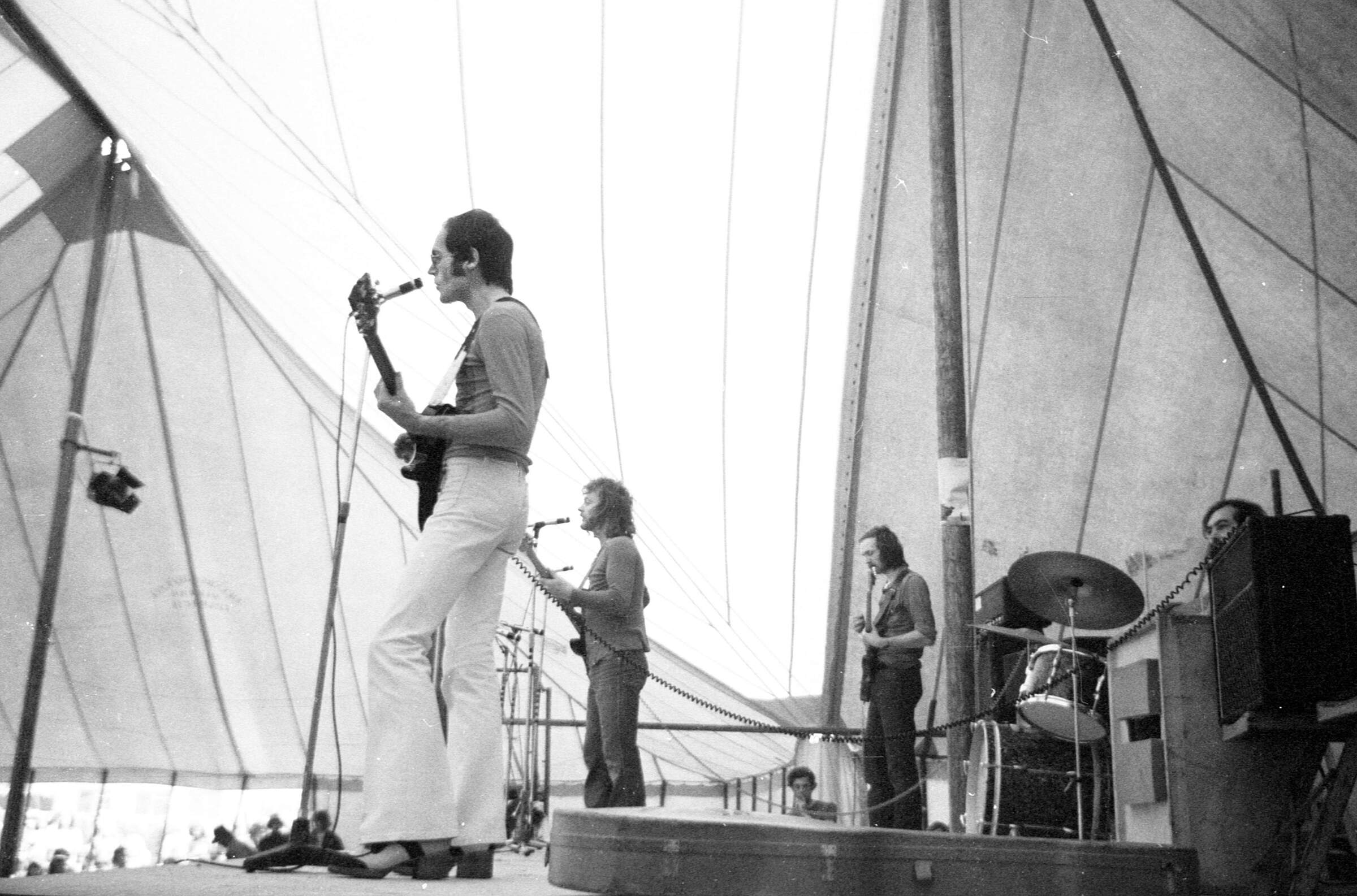
You spent quite a bit of time in Almuñécar in the late 1960s. What was life like there, and what happened to your songwriting while you were away from England?
I had a friend, a painter, Rowland Fade, who was originally from Reading and had moved to Almunecar with his wife and young daughter to dedicate his life to serious visual art. Previously in Reading he was a window dresser and sold his paintings on Bayswater Road in London in the open air art market that still exists to this day I think. After visiting this tiny fishing village, which is directly south of Granada in Andalusia, he decided to move there permanently. I first went there in 1968 and again the following year after the release of ‘Oh Really!?’. I played there in local bars and I wrote a lot of lyrics while there, inspired by local Spanish culture, landscape and literature. I had begun to read Spanish poets like Lorca and Machado and as you mentioned Richard Brautigan. I was also interested in Buddhism and Sufi teaching at that time. The poetry of Rumi and the works of the Chisti Inayat Khan who wrote “The Mysticism of Sound”. I had already used a quote from the spiritual guru Gurdjieff on the cover of ‘Oh Really!?’ and a lot of that influenced the lyrics for the next three albums.
I am not a religious person and I don’t believe in god but I was interested in meditation exercises expressed by these, and other, spiritual groups. I joined a small Sufi group based in London led by Reshad Feild whose real name was Tim or Timothy Field. He had been one of the founding members of the pop group The Springfields. The other members being Tom Springfield and his sister Mary who became Dusty Springfield. In the late 60s Reshad was initiated as a sheikh in the Sufi Order International by Pir Vilayat Inayat Khan. Feild studied with Bülent Rauf, a Turkish Sufi descended from a line of Sufi masters going back to the Andalusian mystic Muhyiddin Ibn Arabi. I met Vilayat Khan through Reshad at a seminar in Brighton once. I was interested in the possible health/healing qualities to be gained from meditation and from music. I gained a lot of knowledge and moral strength from these meetings with these, sometimes remarkable, people. Things that stayed with me even after we parted company.
There was a small immigrant community in Almunecar of young Americans avoiding the Vietnam war, some hippie spiritual seekers, Germans who would come in summer and open drinking and eating places on the beach and unemployable British travellers having their dole money sent to them; some older American beatnik poets and genuine writers, artist and poets that knew a good place when they found it where life was cheap, and the sun shone. I played a couple of times, once in an open air discotech called The Electric Balloon run by a young American runaway veterinary surgeon and in a place called La Ventura run by a German where I learned the delights of white rum and Fanta!!! I loved living there and went back often, but I was still committed to making a living, somehow or other, with music and I still had the possibility of making records with my five album contract with Pye. However I still wasn’t sure about what I was doing. I had changed guitars, exchanging my trademark National Steel for a big Gibson jumbo that I bought from Michael Chapman and my style changed completely from finger picking country blues to strumming this big wooden guitar.
A lot of people who came to my concerts were very disappointed with what I was doing. The blues fans didn’t like it at all as I introduced more and more of my own material in concert. The title of the next record ‘Do I Know You?’ kind of said it all really. Even I wasn’t too sure. After that record I teamed up with another guitarist/ singer from the Reading area Bill Boazman who was, still is, a great guitarist. I felt more comfortable as a duo with another musician by my side. We toured in Belgium and I remember one night in Ghent we went to a concert in the German Library which advertised a ‘free jazz night’. That night changed everything. We were confronted by European Free jazz at its best. Peter Brötzmann, Derek Bailey, Peter Kowald, Han Bennink et al, et al. That sealed it and I knew what direction I wanted my music to go.
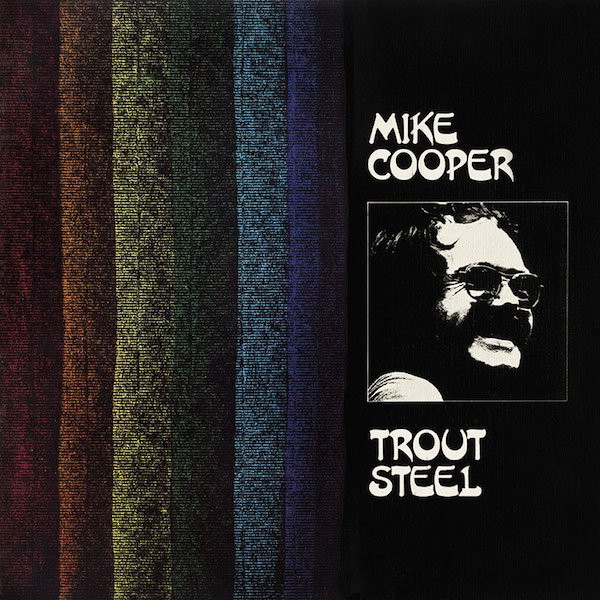
For ‘Trout Steel’ you brought in Mike Osborne, Alan Skidmore, Harry Miller and other great improvisers. What did you give them to work with when you had no written arrangements?
I never had to re-think anything because I came with no ideas other than some chords and some lyrics. I knew that the musicians that I asked Peter to get for me, and he chose most of them, were improvisers and that was what I wanted them to do. We did some of the tracks on ‘Trout Steel’ live and on others overdubbed some saxophone solos after I had recorded the backing and the vocals. ‘Pharaoh’s March’ was all live obviously apart from the middle section. We split the track into two pieces and edited in the parts where I play the slide guitar. Bill Boazman is there on ‘Trout Steel’ as well as guitarist Stefan Grossman and Geoff Hawkins from my Blues Committee days. Most of the other players were members of Mike Westbrook’s band at that time and included sax players Mike Osborne and Alan Skidmore, Roy Babbington and Harry Miller on basses, Alan Jackson on drums, John Taylor on piano. Nick Pickett and Jerry Field on violins were from the folk music world but great improvisers.
‘Places I Know’ and ‘The Machine Gun Co.’ were supposed to be two parts of one double album. What do you remember about making them side by side? And why did it all go wrong with Pye?
‘Places I Know’ was a more conceptual album for me. It was me trying to write songs in the style of someone else. ‘Broken Bridges’ was like an early Elton John ballad and ‘3.48’ was like a Neil Young song; ‘Now I Know’ was me being George Harrison and ‘Night Journey’ was me being Bob Dylan. Some of it had arrangements by Mike Gibbs the jazz composer and arranger who Peter Eden was working a lot with. I had the pleasure of going to watch recording sessions with Mike Gibbs Orchestra that Peter was producing and a memorable one included a huge amount of classical session musicians, who were not in the least interested in the music they were asked to play, and when they were not actually playing would read books or eat sandwiches. Jack Bruce the featured bass player booked for that session and he turned up very late. He finally arrived and settled down and just before they started recording two police officers burst into the studio and demanded “Who owns that Lamborghini parked in the street outside?” Jack reached into his pocket and took out his car keys and tossing them to one of the cops said “It’s mine could you move it for me please?”.
They hesitated for a moment and then realised that they might never get the chance to sit inside and drive a Lamborghini ever again. One of them came back with the keys after and they left. I had been introduced to Mike Gibbs by Peter obviously and I visited him in his house one day and sat and played him some of my songs. Coming from the Berklee School of Music he was intrigued by my musical naivety and lack of knowledge about anything to do with arranging or harmony and was eager to work with me. He arranged pieces on the record particularly the brass section on ‘Goodbye Blues’ which I envisaged as a Randy Newman song. We did more than ‘Places I Know’ together. There are some seven inch records with three or four tracks on that he worked on with me which include some of the jazz musicians that I used on ‘Trout Steel’ and ‘Places I Know’ as well as Dudu Pukwana and Mongezi Feza from the Blue Notes. I did a live session with the Mike Gibbs Orchestra for a radio show called Jazz In Britain (I think) and that was a thrill.
I felt like Frank Sinatra with this huge orchestra behind me. I remember the guitarist Chris Spedding was on that session and some of those seven inch records. Then we decided we would make the Machine Gun Company recording in parallel with ‘Places I Know’ because we were rehearsing and playing live in the hope that we could break through into a wider concert market than just me playing solo. The problem was we never had a manager or a booking agent that liked us or who had confidence in us and when Machine Gun Company was released even the record company didn’t like it. The mixture of Rock, Art Song, Folk and Free Jazz was not a concept that they were ready for just yet. The result was they refused to make any more records with me despite the fact that I still had another two years on the contract. This meant I couldn’t record for anybody else for the next two years.
The band had very little work and I was pretty sad about the reception of the record and my life started to spiral out of control one way and another and I decided to stop playing for a while and went back to Spain where I did a lot of thinking about music and the music business.
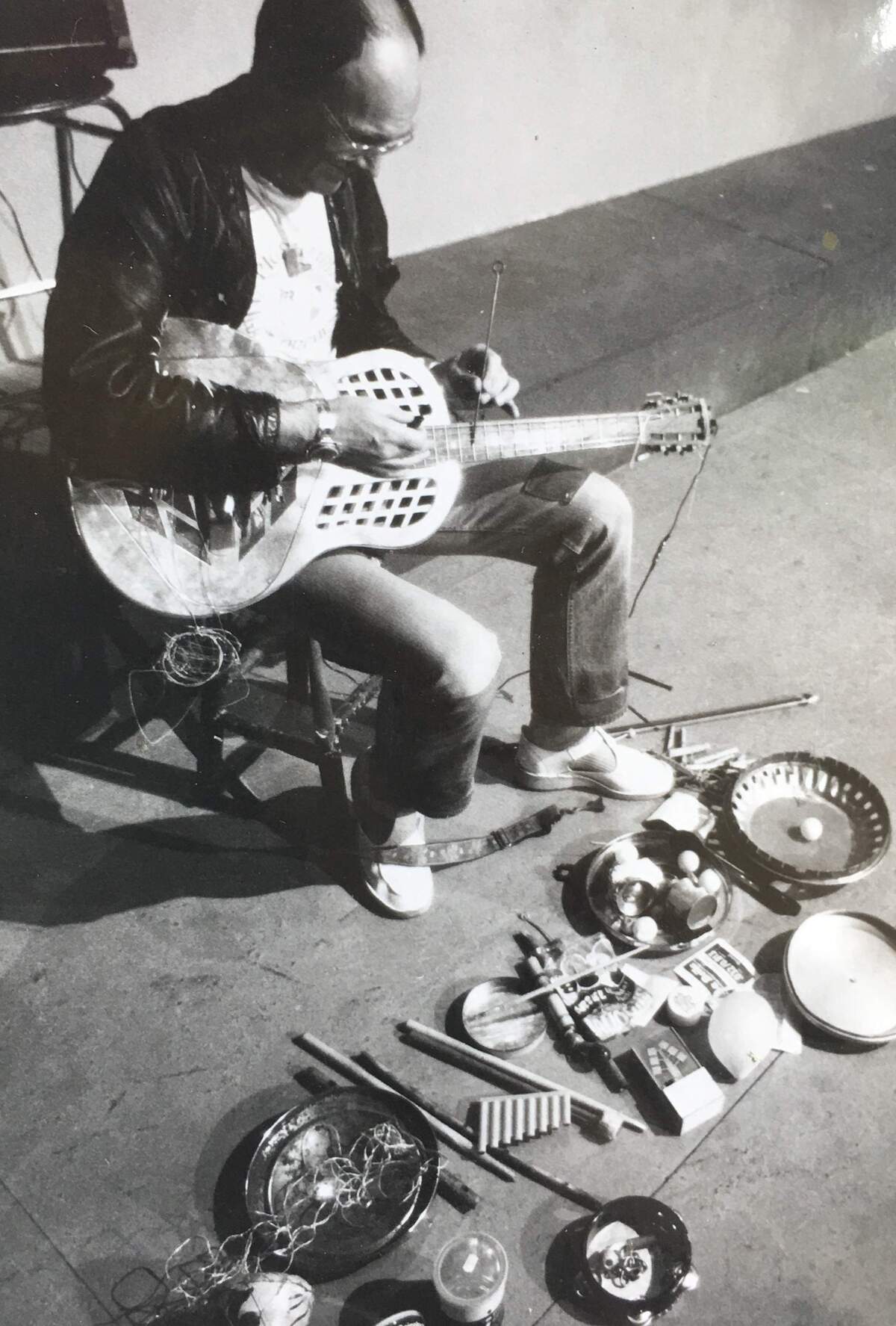
You had Harry Miller, Mike Osborne and Louis Moholo together on ‘Life and Death in Paradise’. Was it the sort of record you had been trying to make for years? How badly did the reviews affect you?
That record ended up in the hands of the wrong reviewers. Some of whom were already hostile to the music we were producing. I was still considered part of the ‘folk music’ scene, We even played on The Cambridge Folk Festival I remember and one reviewer described it as “Great music for killing your cat with or by.”
After my Machine Gun Company / Pye records fiasco I went back to Spain for a while to stay with Roland and his family again. Roland would often sell his work from the studio, which was part of the house, to clients who would come visit. One day I was there and this couple arrived to buy something and the guy was introduced to me as Tony Hall and he suddenly said ‘I know you. What are you doing here?’ I told him the story above and he said “Well if you ever change your mind and want to make another record I am starting a new label called Fresh Air and I would love a record from you and you can use whoever you want because I know that you know some great musicians.” I knew who Tony was of course as the person who had first brought Wilson Pickett to Europe and was a very well known broadcaster on Radio Luxembourg and a tv presenter and promoter of things like Ike and Tina Turner’s records.
I still had some musical ideas, mostly about ‘unfinished business,’ and after a while I left and went back to England, back to Reading in fact where I renewed contact with some of my old Reading musician friends and told them I had this offer of a record. I met Louis Moholo one day in the street in London and told him and asked him if he would participate. He told me he had a trio with Harry Miller and the sax player Mike Osborne and that they would do it for sure. I had made records with Harry and Mike and I knew Louis from sessions I had done with Dudu Pukwana and Mongezi Feza and I loved the energy that the South African musicians had brought into the London Jazz scene in the 60s blowing away the boring suits and ties of most of the London jazz scene. It was going to be my dream band. I took along couple of the Reading guys as well and we went into Mike Finesilver’s little studio and played everything live; apart from ‘Critical Incidents’, where we tracked the piano of Alan Gowen, and ‘Rocket Summer’ where we put Harry Millers bass through a synth pedal at Pye Studios.
In the live sessions we were all in the same room which made separation a nightmare when it came to mixing but the atmosphere and energy was electric. I was very happy with it and I took it to Tony Hall but he didn’t like it at all. He thought that Harry was playing out of tune (?) and I was very pissed off. However, true to his word, he released it. As you know it got terrible reviews by people who should not have been given it to review in the first place. They knew nothing about jazz or much about contemporary music at all. Combined with a few other things that happened in my personal life I left England again and went wandering around Europe, first to Amsterdam and then to Heidelberg where I met some very nice people, mostly students and teachers at the university, who all looked after me and were very inspirational one way and another.
I produced a record for an all female punk band called Trümmerfrauen and painted backdrops for a production of “The Importance of Being Earnest” by Oscar Wilde for a man who I am still friends with and then went back to Spain for some relief and space to think.
While I was there a friend sent me two records. ‘Izipho Zam’ by Pharoah Sanders and Leon Thomas (another 1969 recording) on Strata-East Records and ‘Marquee Moon’ by Television. Another friend sent me an issue of Studio International an arts magazine which had features in by Brian Eno, about “The Great Learning” which is a composition by the British composer Cornelius Cardew; a composition for professional and amateur musicians with no specific ‘score’ only instructions for a possible outcome. There was also an article about the British artist Tom Phillips and his graphic novel “A Humument” which he had produced by a method similar to William Burroughs cut-up technique. Instead of actually cutting up pages of a book Tom drew and painted around words creating another version of the book he started with. That work has been published in several editions over the past 50 years and each version is different. That was a special edition of that magazine dedicated to experimental music in the arts. November/ December 1976 edition.
One article by Paul Burwell which he co-wrote with David Toop titled “Radical Structure” explored the theoretical frameworks of free improvisation and time-based performance art which changed a lot for me and answered a lot of questions that I had about improvised music, the music business, popular culture and alternatives to all of those subjects. I had read a review before leaving Heidelberg of Chris Marker’s film “Sans Soleil” in Sight and Sound. For those unfamiliar with the film “Sans Soleil” is “….in the documentary genre, (an) experimental essay film…a composition of thoughts, images and scenes, mainly from Japan and Guinea Bissau, two extreme poles of survival” Some other scenes were filmed in Cape Verde, Iceland, Paris and San Francisco. A female narrator reads from letters supposedly sent to her by the (fictitious) cameraman Sandor Krasna.” The review provoked me to seek out the film and it eventually inspired me on many levels both musically and to make my own films and video works in the future.
I decided to go back to the UK after a while and seek out David Toop, Paul Burwell, Tom Phillips and the London Musicians Collective. Just by chance there was an exhibition in a London Gallery called A Deck of Cards. “In 1976, Christian Neffe had the brilliant idea of asking 54 British Artists, including David Hockney, Patrick Heron, and Maggi Hambling among many others, to each create their own version of a playing card. One card per artist to complete a standard deck of 52 cards with 2 jokers.” You can read about the original idea and its subsequent history here –https://deckofcards.info/?view=exhibit
I met both Tom Phillips and Brian Eno at the gallery’s opening night of the exhibition. David Toop and Paul Burwell I would eventually meet when my old friend Geoff Hawkins learned of my desire to meet them and told me that he was currently playing in Eddie Prévost’s (AMM) Quartet and that Eddie ran an open workshop every week at the London Musicians Collective and that I should attend and meet everyone that I wanted to meet and get involved in the scene.
How did you find your way to Eddie Prévost’s workshops and the London Musicians Collective? It sounds as though you were discovering a whole new way of performing, not just playing.
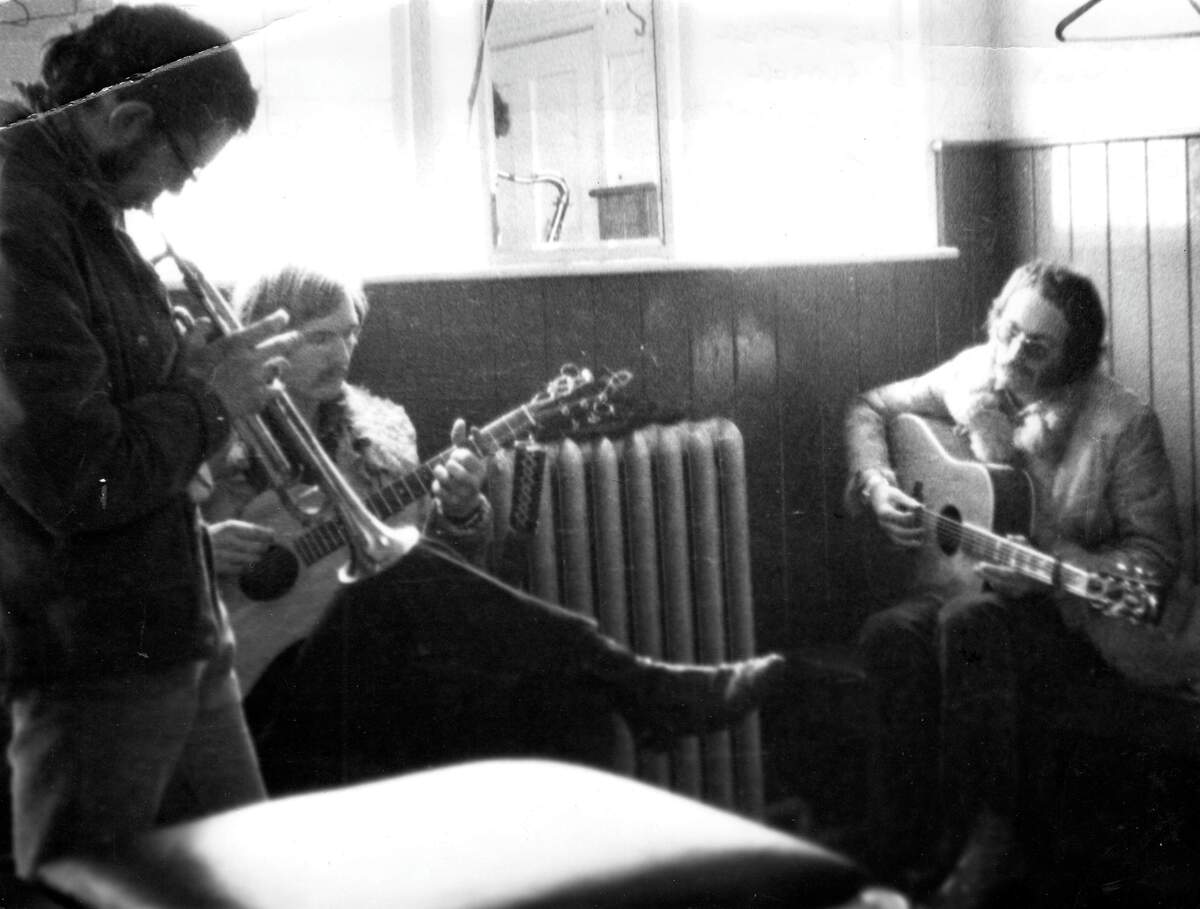
I joined Eddie’s workshop workshop group and through that group I met a trumpet player Jerry Gold. I had formed a relationship with JoAnna Pyne who, although with no previous ‘art’ dance experience was convinced after a visit to a session at the LMC that she could and would ‘dance’. We performed as a quartet for a while with Gerry and my old friend the singer Viv Corringham. Then Joanne and I started as a duo during which time we recorded some of our performances in Germany. These subsequently came out on vinyl on Eddie Prévost’s record label Matchless as ‘Ave They Started Yet?’ That record is the first evidence of my ‘free improv’ guitar playing and is probably one of the first records to feature a dancer. Jo did use her voice in her improvisation and so her presence is audible as well as felt on the record. Together with Keith Rowe, who at that time also had a relationship with a female dancer, we performed as a quartet in the foyer of The Hexagon in Reading for four or five hours as shoppers came and went on a Saturday to either eat lunch or drink beer after shopping.
Performance art and live improvised music presentations in public spaces were a speciality of many of the artists involved with the LMC at that time. I remember several of us did a ‘flash tour’ of London in a double decker bus visiting many sites to perform, un-announced, in public spaces. We ‘took over’ Waterloo railway station en masse for a spontaneous ‘come dancing’ session. The police were called and several of us spent minutes being pursued up and down the escalators by the police. Jo and I were wearing masks of Marilyn Monroe and Ronald Reagan at the time as I recall but we escaped. By then we had teamed up with Lol Coxhill as a trio which we began to tour. It was Lol that expanded my appreciation of what ‘performing’ meant plus I was living back in Reading close to the art department of Reading University. Lunchtime performance sessions with visiting artists were organised by the then head of the department Roger Cook who would later play Jesus in Derek Jarman’s film “The Garden”. Roger was a visionary and brought many of the UK’s then current performance artists to perform at these sessions.
Lol came often as did Ian Hinchcliffe, the absurdist anarchic artist who “Hated blandness and rarely distinguished between being “on” or “off stage”. His impromptu and chaotic performances took place everywhere from traditional art galleries and consecrated churches to public transport, pubs, and social clubs. His performances frequently involved drinking to excess, stripping naked, and surreal, absurdist stunts.’ (wikipedia). I witnessed him eat his own wristwatch one time. How he managed to avoid serious hospitalisation I have no idea unless he was a magician as well of course. My horizons were being broadened without me ever attending actual university or art college. Lol was the perfect partner for me at the time with his sense of improvisation both musically and performance wise. Nothing was barred, everything was allowed and nothing was sacred.
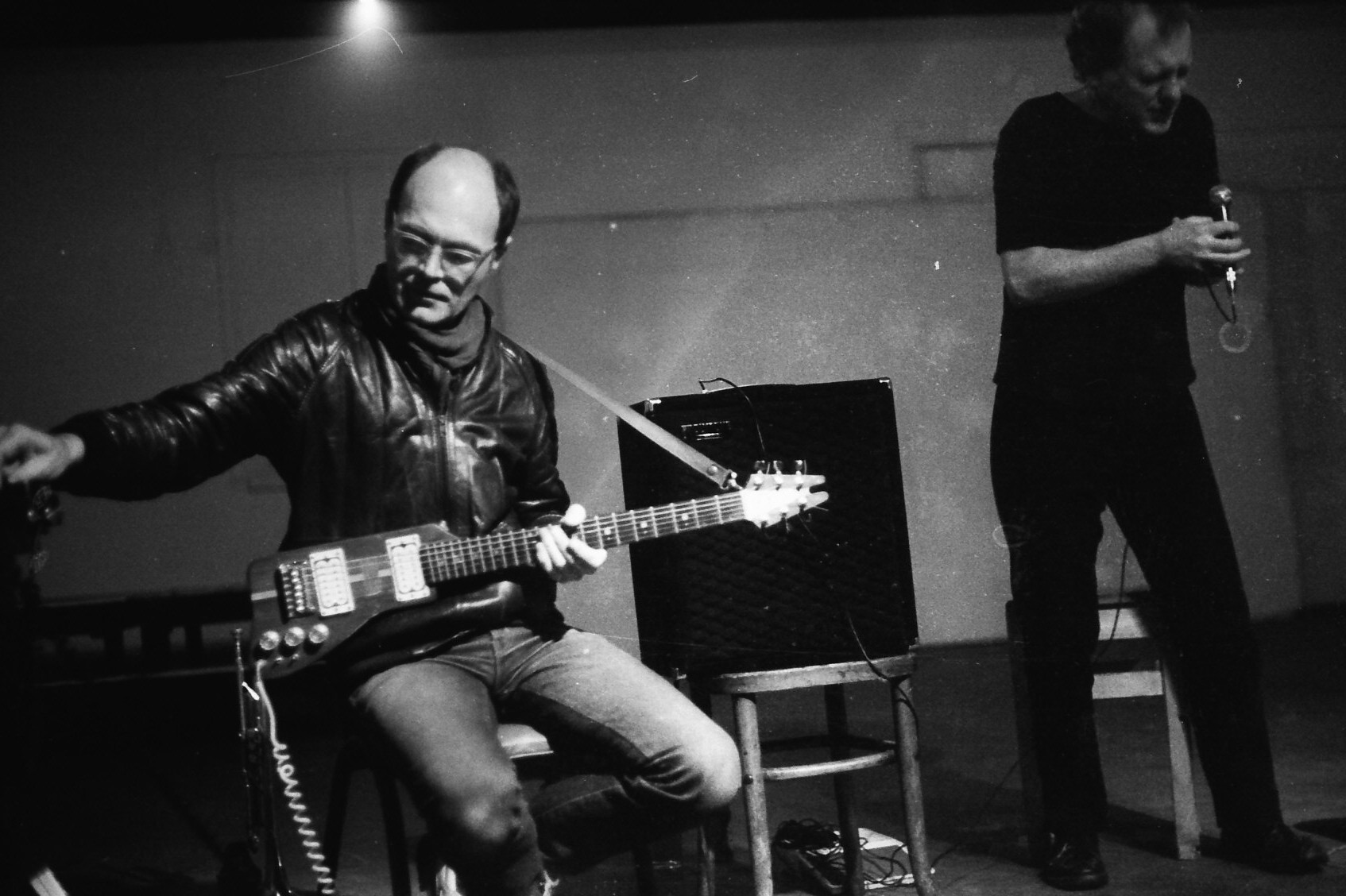
“I never played music that I hated neither did Lol and he was always open for a new adventure in music.”
The Recedents lasted thirty years, which is quite something for a group built on improvisation. Why did playing with Lol Coxhill and Roger Turner work so well? What do you remember most fondly about Lol?
Lol Coxhill saxophone player. Roger Turner drums and percussion. Two of my favourite musicians to play free improvised music with. When Lol died in 2012 I didn’t want to play in another fixed line up because for me it was the perfect group. The only other group that I really like that was similar was (is) Alterations with David Toop, Steve Beresford, Terry Day and Peter Cusack. All they lacked was the humour that Lol could bring to any situation although Steve Beresford comes close without really trying. We crossed genres bringing all of our individual musical likes and dislikes into the compositions sometimes. We had ears for each others musical space. Sometimes we respected it and other times we would barge in and completely destroy something that someone might be doing. I moved to Rome in december 1987 and so we were not available all the time to play and only played festivals or special gigs or whenever I went back to the UK or when either Lol or Roger organised a short tour.
The gap in between our concerts meant we always had something new to bring into the event because we had all been doing something else in the meantime. One time Roger broke his arm and still went on playing with us at the next concert with his arm in plaster. Lol was a very special guy (how many times have I said that? Not enough.) He lived in an arts centre most of the time that I knew him until he married Uli his second wife. He brought up four children practically single handedly. Three girls and a boy and played music most of the time doing it. He was for me the role model for ‘Live by playing music whatever happens if you can.’ Sometimes that might mean playing music that you might not play all the time but make it music that you enjoyed making. He busked on the streets of London and wherever and whenever he felt like it.
A lot of the ‘free improv’ purists criticised both me and Lol for doing what we did but we did it anyway. I never played music that I hated neither did Lol and he was always open for a new adventure in music.
You have spoken about free improvisation as folk music. After everything you have played over the years, what does the word “folk” mean to you now?
Folk music is a cultural voice of the people mostly of the working class traditionally. Where that leaves us now I’m not sure anymore. I thought of ‘free improvisation’ as folk music in the 80s. I thought of Free Jazz and Jazz as folk music as well. But now there are schools of jazz and lots of funding ( in some countries) for jazz and so what is the music of ‘the people’ and who are ‘the people’ now? Here in Europe ‘folk music’ is mostly a nostalgic revivalist genre not a living cultural tradition. In other countries (Asia etc) there are still living cultures of local music. I think now people equate ‘folk music’ as a sound more than as a living cultural comment. Any thing with an acoustic guitar etc. In Spain (where I now live) of course there is a living creative culture of Flamenco. A cultural musical phenomenon that stretches way back into India and Pakistan. When I revisited Australia in 1995 I was pleasantly surprised to discover in Melbourne that Greek Rembetika music was alive and well and flourishing.
I had encountered it first through Max Eastley when Viv Corringham and I used to go to Max’s house and we would listen to Rembetika records and try to play it. I also had a friend in Reading, Fred Hardy, who had a huge collection of music on cassette tapes not only of Rembetika but African and Indian music. He was a professor of Comparative Religion and knew India well. In Melbourne the Greek immigrant community had kept alive a lot of music that had died out in Greece. The same with Maltese għana music. One day I discovered the Maltese community in Melbourne and this music which was a tradition of rhyming poetry similar to Sicilian and Sardinian ballad structure accompanied by guitars. A vocal tradition with Arabic influenced melodies. The għana singers had never played outside their own Maltese community gatherings in Melbourne and I managed to get them on to the National Folk Festival in Canberra. They refused monetary payment but accepted guitar strings because they believed ‘folk music’ was for the community not for money.
It was not until I went to the island of Syros, where the rembetika singer/songwriter Vamvakaris was born, some years later, that I witness a revivalist culture of this music that had begun in the 1920s in Piraeus but had lived on in Melbourne. Now Syros is Rembetika central. I played on the Syros International Film Festival for five years mostly accompanying silent films.
What first sent you looking into the history of Hawaiian steel guitar? And how did that interest find its way into the Uptown Hawaiians?
The history behind the Hawaiian lap steel guitar changed my perception of many things about a lot of music, not just blues. There is a recent book titled “Noise Uprising” which tracks the history of the movement of music throughout the world through records and the spread of the Hawaiian lap steel guitar along with it during the early part of the 20th century. Sailors took records and live music with them wherever they went and popular vernacular music began to spread mostly through the great port cities of the world. From Honolulu, to San Francisco, to Tokyo, to Singapore, to Jakarta, to Hong Kong, to Mumbai, to Marseille and Naples. All these places experienced music especially from Hawaii and came up with hybrid musics that blended local tradition with the sound of the steel guitar. The Uptown Hawaiians was an acknowledgment of that fact. We played a hybrid music made from many other musics that we all knew about and loved. There are records of African bands playing Cuban rhythms that were originally from Africa, singing in Spanish with Hawaiian lap steel guitar in the band.
When you finally travelled through Tahiti, Fiji and Hawaii, what did you find that the records and books could not have told you? Did you get to play with the Hawaiian guitarists you admired?
I went to school in 1953 in Australia as I said before and so I had a memory of a place that actually no longer existed. There was also an Australia that I had no idea existed even in 1953. This memory of place later fed into my music, especially memory of place that was never there in the first place. A made up place from nostalgia etc. Tahiti was the first really tropical island culture we had ever visited. Suddenly many signifiers of daily life meant nothing. Nature moved in and out of the house at random. People slept whenever and wherever they wanted. Family life was different in that you never knew who anyone was really related to and children were a shared responsibility and would come and go whenever. Rain was a fact of life and a leaking roof meant nothing but a plastic bowl on the floor to catch some water. The colour of things and certain objects were also a meaningful fact of life and meant a lot of different things. Things shifted in significance. We often heard the phrase “If we had the time”.. we could do this or that.
Whereas in fact sometimes time was all that they had. In Hawaii I was able to catch the end of the great Slack Key guitar players which at that time were being recorded by George Winston for his Dancing Cat label. George is best known as a ‘new age’ piano player on the Windham Hill record label but his real love and life work was in recording the great slack key guitarists of Hawaii before they all passed on.. Slack Key guitar precedes lap steel guitar in the Hawaiian culture but the two are intertwined. Slack Key means re-tuning the guitar away from standard European classical tuning and many families of Hawaiian musicians developed their own system of tunings, often kept secret from others. It is a finger picking style and usually meant as accompaniment to singing or dancing. I was first alerted to it by a couple of records from Ry Cooder and the Gabby Pahinui Band in 1974. I knew about lap steel but not about slack key but Ry did.
He went to Hawaii with a mobile recording studio, rented a house and installed the complete Gabby Pahinui family band; Gabby his sons Bla, Cyril, Philip, and Martin Pahinui, plus Atta Isaacs and Sonny Chillingworth and they made enough music for three albums.
Dave Guard an ex member of The Kingston Trio, a folk group from the 60s, had gone to school in Hawaii and grew up around Hawaiian musicians, most of whom played slack key guitar or ukulele. It was compulsory to learn ukulele in school then. Dave recorded a double LP album of solo voice and guitar with Gabby Pahinui on one record plus an interview about slack key style on the second, in the 1960s. However his efforts did not materialise as an actual record release until 1978, ten years after being recorded, due to lack of interest by record companies in anything Hawaiian then. It eventually came out on the Hawaiian Hula label based in Hawaii and is one of the greatest documents in the library of Hawaiian recorded music. On our trip to Hawaii in 1995 I had enough knowledge and contacts through George Winston and others like Jay Junker at the University of Hawaii to get to not only meet all these great players but to play with some of them as well in an informal situation.
We visited Ray Kane at his home and sat and played a while and I did a concert at the Honolulu Academy of Arts together with Cyril Pahinui, one of Gabby’s sons and Ledward Kaapana another great slack key player. I didn’t play slack key before I went to Hawaii but sitting with these people I picked up enough to be able to later play, sing and record ‘Lei Nani’ on my ‘Island Songs’ record. I sang it in Hawaiian, parrot fashion, and I have never been able to play it since. I recorded it one afternoon sat in a garden in a friend’s house near Rome. It was an inspired spirit thing where I was able to channel all these people that I had met the year before into one piece of music for one time only. The version of ‘Memphis Tennessee’ on the same record also comes from sitting with a bunch of musicians in Fiji who played it on ukulele. Magical moments that filter into your music if you let it unrestricted by style or genre.
My whole musical experience during that first visit to the Pacific was distilled, along with some other things into that one record ‘Island Songs’ on the NATO label. One of the favourite records of mine.
When you made ‘Kiribati’, were you thinking of the old exotica records, or did the title suggest somewhere quite different to you?
Exotica comes in many forms not just the 1950s Martin Denny/Arthur Lyman version. Go back through the works of Sun Ra (many) and Pharoah Sanders’ ‘Karma’ for instance; Alice Coltrane’s early solo records ‘Ptah, the El Daoud’ all very exotica in my ears. One of the first jazz records that I owned was a seven inch EP of the Gerry Mulligan Quartet. I thought Gerry Mulligan had a very cool haircut and so I bought the record. A seven inch EP from 1956 with the tune ‘Frenesi’ on it. The Chico Hamilton Original Quartet 1957, all very exotica to my young ears. What could be more exotica than Duke Ellington’s ‘Caravan’?
I think what I meant by ‘imagined places’ was a futuristic music not necessarily a tropical island nostalgic paradise although it was interpreted that way, which was ok. The Dutch musician Ab Baars wrote and told me that it reminded him of being a child travelling through Bali in the night and hearing all these strange and wonderful night sounds and music as they passed through villages in an open top car. So it worked as a nostalgia thing for him. There were several architectural projects at the time for a projected future for ‘Kiribati’ which involved floating modules in the ocean. One of them was Marcin Kitala’s Floating Island System. It is still viewable online. Some others can be seen here as well. https://web.cantieredellemarche.it/en/kiribati-floating-houses.html – so my record was made from various elements and I had these projects in mind when I made it. It had elements of prepared guitar, electronics and some digital files that I had made over the years plus some new (at the time) technology I had recently acquired.
I try to incorporate my nature field recordings into my records as an equal partner rather than manipulate them as a sound source. They are never just decoration or background noise. They are often the only discernible rhythm on some pieces.
I think ‘Kiribati’ is the first of several imagined future musics that I have made. A combination of field recordings, analogue acoustic/electric traditional instruments and electronics and incorporating the avant -garde. Not a nostalgic or hauntological series of records.
‘Kiribati’ was the first CD-R on my Hipshot label, which I ran for ten years, releasing around 35 editions on CD-R. Each one burned individually by me at home with paper covers inside a plastic envelope. the covers were all photocopied handmade collages. I sold them for cash inside a birthday card in an envelope. I still have most of the cards in my archive. I sold varying amounts of each one sometimes 100 sometimes only 30 or so. ‘Kiribati’ was made on a four track cassette machine and two MiniDisc recorders in my studio in Rome. I had no mixing desk at the time and bounced things from one device to another. The first track ‘A Pattern of Islands’ features a short sample of drums, recorded on a cassette, from a King Sunny Ade record and I over dubbed electric lap steel guitar.
Most of the field recordings are from Australia and it features my home instrument my La’ap (which I am currently using again) and various stones, a coffee cup on a marble table top, acoustic prepared National resophonic guitar, saucepan lids, a Casio SK1 sampler, a Cracklebox hand held synth and lots of imagination. No major labels or funding were involved in the project or any of the editions that followed for the next ten years.
You met Steve Feld by chance, and his ‘Voices of the Rainforest’ recordings made a big impression on you. What did you hear in them? And how do you decide whether a sound you have recorded needs anything added to it?
I answered a bit of this question above probably? I met Steve in a lift in a hotel where we were both staying when I was with The Recedents at a festival in Canada. We had played a set and so had Steve the day before. He was playing trombone at the time in a trio with Tom Guralnick and maybe Charles Keil(?). I was fresh back from Australia and Hawaii and had lots of field recordings which I used in our set. Steve had heard us apparently and as he exited the lift he slipped a cassette into my shirt pocket and simply said “ I think you might like this.” I certainly did as it was his ‘Voices of the Rainforest’ recordings made in Papua. We crossed paths again the following year in Australia where I was touring and he was teaching in Sydney I think. We became friends and I followed up on him and his books and recordings. The idea of the looping, out of sync, out of time and pitch of natural sounds in the rainforests of Papua sent me looking for a sampler that would do that for me and I discovered my trusty Zoom Sampletrack Sampler, which I still use ( I have two in fact).
It was produced in 1999 the year I started my Hipshot cdr label and it cost just 200 pounds. It was basically 8000 pounds worth of sampler for 200. Its main feature of use for me was its capability of live sampling. It makes 24 samples triggered by 24 pads with 22 built in effects. I bought one in time to make ‘Rayon Hula’, released in 2004, which is made almost entirely on that piece of technology. It gave me the means of producing multiple loops or sampled loops that would play back and overlap out of sync or hocketing. Ornette Coleman’s Prime Time uses this technique live combined with his Harmolodics theory. I never owned a computer until 2008 and so any software was not an option for me. Anyway part of my DIY aesthetic has always been cheap technology. In my mind it didn’t need changing otherwise I probably wouldn’t have recorded it in the first place. I recorded it because I liked the way it sounded.
During several visits to Bangkok I was attracted to the sounds of the floating water taxi piers that are up and down the Chao Phraya river that runs through Bangkok and operate like buses. The piers are tethered to the river bed on steel columns and are made of metal. They float and because the river is tidal and rises and falls, especially in the rainy season when the river floods, they move up and down the steel columns. As they do they make the most amazing almost animal like sounds. I recorded about 32 of them and produced a CD-R and a video (“Listen Better”) from that experience. The voice of the river needs no processing. As I said I try to collaborate with the field recordings rather than just use them as another texture.
One of my most recent releases ‘Dream Island of Birds’ ( a vinyl on Discrepant) uses field recordings that I made during a month long residency on a small island, Pulau Ubin, between Singapore and Malaysia. It is the second edition where I invite the sounds of Ubin. The first was a digital only release on my Bandcamp site titled ‘You’re Going to Miss Me When I’m Gone’. The title does not refer to me but to the insects and birds on the recordings. They are raw natural field recordings. On the ‘Dream Island’ record I use the same recordings but have added my own musical presence to produce something new. Singapore has limited green space and Ubin is a favourite weekend getaway place for Singaporeans but who knows how long it will remain. The island is a stopover place for over 400 migrating species of birds let alone its own unique insect life, monkeys and wild boar.
“Beach Crossings – Pacific Footprints” began with your own Super 8 film and later became a radio piece and several different live performances. How did it all come together?
I wrote the original piece in English as a narration to be performed live to accompany a super eight film of mine titled “Planet Pacific – Pieces Of Heaven?” I am a fan of surf films, even though I am no surfer and can barely swim even (Reluctant Swimmer/Virtual Surfer). I have always loved the film “Endless Summer” by Bruce Brown and when he produced that film in 1964 no one would screen it. He premiered his 16mm version in Santa Monica and then toured it as a lecture piece as silent footage and narrated the story himself and played records to provide some background music. I loved that idea and wanted to do something similar with my super eight film that I had filmed touring around the Pacific and similar places. I had been collecting various pieces, articles and stories about the history of the Pacific, both historical and recent from different sources and over time a piece evolved. It was all in English and I was living in Rome at the time but I had access to an independent cinema called The Detour, where I often played and performed music to classic silent films and so I could screen it there.
I had the text translated into Italian realising some of the audience might not speak English. A friend, Leila Bongiorno, translated it and I enlisted a local actor Federica Santoro to narrate it for me. It worked quite well apart from a timing thing. When you translate from English to Italian any text usually ends up almost a third longer which caused a bit of a problem for Federica who had a lot of words to read often in an allotted short time. However, in the audience that night was Pino Saulo a radio producer and he suggested I adapt it for a radio and they would record it and produce a CD of it on their label. This was an opportunity to do a much bigger production rather than me play solo and I engaged a small group of my local Roman improvising musician friends. I had no fixed notational score for the piece but produced a graphic score. No notes to play just suggestions of when to play. I was very fortunate to have Richard Nunns a New Zealand musician and expert on traditional Maori instruments in town to invite and also my friend and long time Rome resident Alvin Curran to play piano for me.
I treated it as a ‘conduction’ (conducted improvisation) with some hand signals to supplement my ‘suggestion score’. But basically it was all improvised. The musicians understood the text (it was in Italian) and so any atmosphere was going to be appropriate. It is available on the RAI3 label on CD I have performed the piece in English in Australia for ABC National radio with producer and friend Brent Clough narrating the text and we did a live presentation together at the Randwick Library in Sydney. Other versions have been presented in Portuguese in Lisbon with Paulo Raposo reading and in Palermo, in Italian, with The Mike Cooper Dedication Orchestra of local Palermo musicians as part of a festival organised by the late Lelio Giannetto. I performed several concerts, solo and accompanying silent film and collaborations with other local musicians over the period of a week in Palermo. In Beirut a version in Arabic was realised with an orchestra of local musicians for the Irtijal festival which included guitarist Sharif Sehnaoui and trumpet wizard Mazen Kerbaj. The suffering goes on in a seemingly never ending story these days.
Beach Crossings was just one of several projects that I have made with music, text and visuals and in 2013 together with Australian video artist Grayson Cooke we made an ‘electronic opera’ called “Outback and Beyond”. It was the story of Charles Todd who put the telegraph across Australia in 1870, a brutal undertaking as they had virtually no knowledge about the interior of the country at the time. Grayson put a video together utilising archive film and photographs of the expedition and I wrote a libretto with information culled from a book called “The Singing Line” by Todd’s great great great granddaughter Alice Thomson. In performance I improvised a live backing and sang the text to accompany Grayson’s video work which he manipulated live. We toured Australia and Europe with this project and in 2013 won a prize at the 16th Tokyo New Media Festival which got me to Japan for two days.
My video piece “Hotel Hibiscus City” was conceived after a visit to Hong Kong in 2008 where I met up with Australian composer and video artist Robert Iolini. He was in the process of making a piece called “The Hong Kong Agent” which inspired me to make my piece four years later in 2012. My piece was initially made in several episodes to be downloaded onto mobile phones only. I invented an alien detective who comes to earth to investigate the cause of a pandemic of out of control and wild dancing that is affecting the planet. His name is ‘Agent Kupa’. It chronicles his travels around the planet going from Australia to Hong Kong, Thailand, Malaysia etc. in search of a mysterious and illusive guru who might help solve the mystery. I narrate the story and it is on YouTube in 14 parts. It has had limited public performance although several copies exist on dvd which I gave to friends.
These video works with narration were influenced in style by Chris Marker’s film essays and Patrick Keiller’s videos “London”, “Robinson in Ruins” and “Robinson in Space” and of course “The Hong Kong Agent” by Robert Iolini, although all of those filmmakers works are far more political than mine.
How did you first get the idea of playing live music to silent films? With films such as “Tabu” and “Legong”, how much do you prepare before a screening?
Performing live music to silent films is one of my favourite activities. In Valencia I am currently a member of the Wild Cat Quartet performing live to silent films. Myself, Pierre Bastien, Mark Cunningham and Dr. Truna. I began this mode of performance solo in 1995 when I happened to see FW Murnau’s film “Tabu” on tv. I thought it would be nice to play some lap steel guitar accompaniment to it. I had been invited to The Brunswick Music Festival in Melbourne and I offered it to them, to which they agreed. The film was the last classic silent film of that era. In fact talking pictures already existed but Murnau believed in pictures telling stories not voices or even texts as intertitles. There are no intertitles and the only time anything written appears on screen is when someone is writing notes about an event in a journal. I wanted the soundtrack that I would produce for it (and with all the soundtracks that I have produced since) to be as modern as the films were when they were first released.
I wanted to leave room for improvisation and to include some electronic passages. There is even a version of Santo and Johnny’s 60s hit tune ‘Sleep Walk’ for a dream sequence. I had a repertoire of Hawaiian tunes that I could play on lap steel guitar and some slack key pieces that I could draw on to fit certain sequences interspersed with some pre-recorded electronics on MiniDisc. I have performed the film many times and over time my musical presentation has changed quite a lot as I became more familiar with the film and I am able to improvise more freely with it drawing on my musical memory of the genre. I wonder if you have seen the film “Zama”? It is set in Argentina in the 18th century but the soundtrack is all recordings by Los Indios Tabajaras a folk and traditional music group from the 1950s. Totally out of time with the films subject. I am happy with that approach to all my live silent film soundtrack presentations.
With “Legong”, as the film is set in Bali, I decided I wanted a ‘gamelan’ sound and found a website that sold metal wind chimes. They had short samples of the different scales which I downloaded into my Zoom Sampletrack. I could loop them and change pitch etc and more importantly play several loops together creating a faux gamelan orchestra which is mostly what my soundtrack is. I can improvise with the various loops to make it different each time. Trawling the internet for more films shot in the South Seas or similar places I came across “White Shadows in the South Seas” in the Warner Bros. archive and they would burn and sell you a dvd for ten dollars which I purchased. No one I knew had ever heard of the film at that time it seemed. It was the first silent film with a synchronised musical sound track which I turned off of course when I screen it. It is pretty terrible orchestrated versions of some Polynesian sounding tunes as they perceived them in 1928. My soundtrack is very out of time and made of electronic loops and ambient soundscapes.
Both “Tabu” and White Shadows are anti colonial films in the end although I am not sure that that was the intention of both directors. There are great stories that connect both films which is something I love about doing these projects. The side stories and the wormholes they send you down. We can share some of these another time maybe?
Another great silent film that I have presented with live music is “Que Viva Mexico” a 1930 film directed by Sergei Eisenstein. I formed the Oktober Orchestra a sixteen piece orchestra of improvising musicians to perform a visual score I had prepared to be performed at the Centro Social Angelo Mai in 2010 for the 100th anniversary of the Mexican Revolution. My score includes free jazz, ambient exotica, Mexican pop melodies, some original tunes and vocals. There is a dedicated page with video on my website. It has had more than one performance but only in Rome due to the logistics and cost of a 16 piece orchestra.
Many people have said my music now is very cinematic and maybe this is true. Collage has played a very big part in my music especially in recording. I mostly work as a collage artist with music these days. I try to record everything I do. I make short digital files and store them and when I feel like I want to make a piece I go through them and start ‘pasting’ them seeing which file sounds right with another. I work in GarageBand for editing. I don’t believe in paying for more software than I already paid for when I bought the computer. My videos are all edited the same way in iMovie. They are moving collages. I also make digital collages which I reproduce as Giclee prints which I have recently exhibited in Rome, Brussels and Switzerland, and I have a book of some of my early analogue photographs, mostly shot in Australia in the early 2000s, called “photoGRAFIX”. 70 photographs in a book which includes QR codes for free digital downloads of some of my music exclusive to the book. It is on Folderol Editions.
The great thing about working with digital files is that I can carry them around on flash drives and when the opportunity arises in my travels I can print out collages or screen video which I can use in my live concerts. Everything is portable these days.
You never really stopped singing, but ‘Spirit Songs’ gave you a new way to do it, using texts taken from Thomas Pynchon. How did you arrive at that idea? Do you ever sing a piece the same way twice?
Well I was a singer when I started out on my musical journeys and so it was always with me. In fact I never gave up singing. For a number of years from the 80s onwards I had parallel careers. One in improvised music, mostly in the UK and Europe but in, Australia and New Zealand I still had a career singing acoustic blues, folk and some pop songs that I liked. Visiting Australia and New Zealand in the early 90s I discovered there were a number of acoustic music festivals with huge audiences which would book me to do what I could still do and enjoy doing and I returned for about 23 years running. As time passed over there I slowly discovered the alternative, underground and creative improvised music scene and integrated into that. I met Oren Ambarchi and the What Is Music Festival, Jim Denley, Chris Abrahams in Sydney and Joel Stern and Lawrence English (Room40 Records) in Brisbane. In New Zealand there was Jeff Henderson, Richard Nunns, Dean Roberts and many others who all welcomed me into the improvising, alternative, new music scenes over there.
I lost interest in the idea of first person narrative songs and the Pynchon project of ‘Spirit Songs’ started to come together over a few years mainly during touring. I would work at collecting these texts from “Gravity’s Rainbow” and “V.” by Pynchon and other books without really any idea what I would do with them at the time. I wanted to have a body of text that really had nothing to do with my personal expression or opinion about anything but were not just abstract Dada type utterances. Tom Phillips’ “A Humument” gave me a kind of template, as did Brion Gysin and William Burroughs. It was actually nothing new in terms of generating texts. So I had, still have, this volume of words. I printed them out as a small fanzine type booklet, which I still have, and carried them around with me for a few years. One night in Berlin I was playing with an improvising group playing very minimal quiet music and at a certain point I felt like singing and began a deconstructed version of the Neil Young Song ‘Only Love Can Break Your Heart’.
I realised that you could sing a song across any backing that you chose if you knew the tune. At my next solo concert, which was planned to be all instrumental, I decided to break out the text. I had no planned melody in mind and I had set up several abstract loops, all going out of sync and out of tune with each other and just grabbed one of the songs, that I had printed out A4 by now, and sang the words with whatever melody came into my brain, throat and out of my mouth. It worked for me. To answer your question about it sounding like a new piece, yes it does because my choice of the text is always random and sung over whatever random backing I have set up. They are never the same song. I recently released a four volume digital package of live versions of ‘Spirit Songs’ on my Bandcamp page. Some solo, and some with small groups of improvisers. It can work in any context.
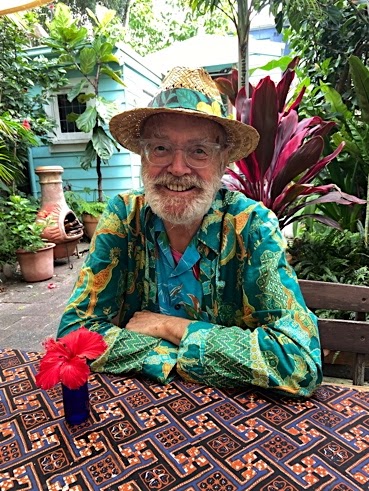
“All new ideas are worth pursuing at least until they fail.”
You made the early Hipshot CD-Rs yourself, right down to the sleeves and the envelopes. What did that independence give you? And what keeps you interested in making something new?
Is a new project worth doing? Well it’s what I do with my day my job. I make stuff. Music, video, collage, digital drawing etc. In 1999 no one was knocking on my door offering to record me, for which I am grateful really because it freed me from any obligation and expectations. I was free to do whatever I wanted artistically etc. At a festival in Baltimore I shared the bill with Eugene Chadbourne and after his set he was outside with a table full of homemade CD-Rs., cassette tapes etc., etc. all wrapped in homemade packaging that looked really great and I stole that idea. I made collage covers and photocopied them and burnt CD-R at home all in real time. Very time consuming but very rewarding as an artistic practise and then I sold them for cash inside a birthday card in an envelope as I said earlier. Sometimes people were very creative with what they sent me money in and I still have most of them. Make a nice installation one day. Very DIY and very punk and I did that for ten years until Bandcamp came along.
Now Bandcamp is the digital version and I am very prolific and put it all up there. My musical library. All new ideas are worth pursuing at least until they fail. These days I am exploring a lot of digital music making apps. A couple of years back I was invited to take part in a project with a group of artists from Thailand to support the sea gypsies, the Orak Lavoi, that live off the coast of Thailand on Koh Lanta island. I needed to find a small, portable, solar or battery powered means of producing music. I had already invented a folding lap steel guitar which fits inside my carry on suitcase when flying, due to restrictions one way and another on transporting instruments on flights. I had a very small mono four channel mixer which used no power; two mini rechargeable speakers and a battery powered mini Kaoss Pad and my iPhone which all fitted inside a small wooden box. That was the challenge to produce a live event with just that on a beach or in the forest on the island. It led me to explore more small portable digital devices.
Now I have my DNA (digital nomadic arts) set up that I can produce music and carry my digital collage prints and video films all on a USB flash drive. An iPad mini, two iPhones, a Samsung tablet and a small portable battery powered four channel stereo mixer. This all goes inside my carry on flight suitcase with, optionally, my folding lap steel. With a backpack and buy clothes I’m ready to travel and perform anywhere. I find that system very inspirational. All roads are open and worth following. I don’t need a huge production and in fact prefer the smaller events. I am still a folk musician really. I have a disdain for the nostalgia and hauntology of lost pop causes and ‘ghosts of the musical past’; a positive relationship and collaboration with nature. A ‘re-futureing of the imagination’ for a ‘post capitalist world’. New sounds from new technology combined with traditional sounds and instruments and a collaborative eco-attitude.
Klemen Breznikar
Headline credit: Mike Cooper, Bill Boazman and Stefan Grossman during the recording sessions for ‘Trout Steel’ in 1970. Photograph: Courtesy of Mike Cooper
Mike Cooper Official Website / Bandcamp / YouTube