
Jeff Williams on Ant Trip Ceremony’s ‘24 Hours’, Stan Getz and Lookout Farm
Jeff Williams recalls the making of Ant Trip Ceremony’s ‘24 Hours’, the jazz musicians he met as a child, and his years with Stan Getz and Lookout Farm.
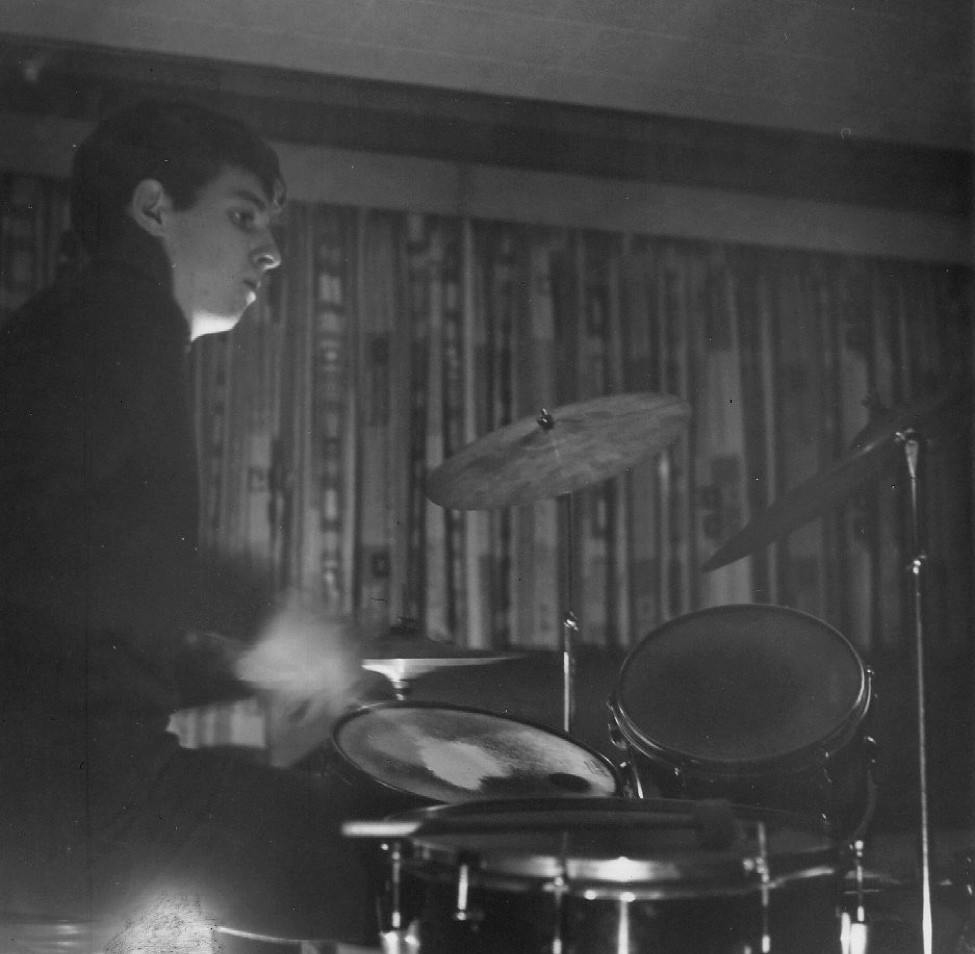
Jeff Williams was still in high school when he joined Ant Trip Ceremony, the psychedelic rock band based around Oberlin College in Ohio. He had been playing professional jazz engagements since the age of fourteen, working with older musicians around northern Ohio. Both his parents loved jazz, and his mother, singer Ann Williams, moved to New York in 1959 to pursue her career. During visits to see her, he met Coleman Hawkins, Miles Davis and many other musicians. He was also able to watch them perform and, on occasion, sit in himself.
Williams became involved with musicians at Oberlin College in 1966, and the local version of Ant Trip Ceremony probably took shape in the autumn of 1967. The lineup included Steve Detray, George Galt, Roger Goodman, Gary Rosen and Mark Stein. Their only album, ‘24 Hours’, was recorded on the Oberlin campus during the 1967–68 school year, with the LP appearing in the spring of 1968. Around 300 copies were pressed, and the band split up not long afterwards. Over the years, the album became a sought-after psychedelic record and was eventually reissued several times. Some of the details surrounding its recording have remained uncertain, including whether it was made in one session or two.
After leaving Oberlin, Williams attended Berklee in Boston before moving to New York in 1971. There he became involved with Dave Liebman’s Free Life Communication collective and began playing with musicians including Stan Getz and Lee Konitz. He spent several years with Liebman’s Lookout Farm, recording for ECM and touring internationally. He later worked with Paul Bley, Joe Lovano and many others, while recording his own music and leading a number of groups. Britain became an important part of his life too, both as a performer and a teacher at the Royal Academy of Music and Birmingham Conservatoire. He now lives in Lisbon, where he continues to play and record.
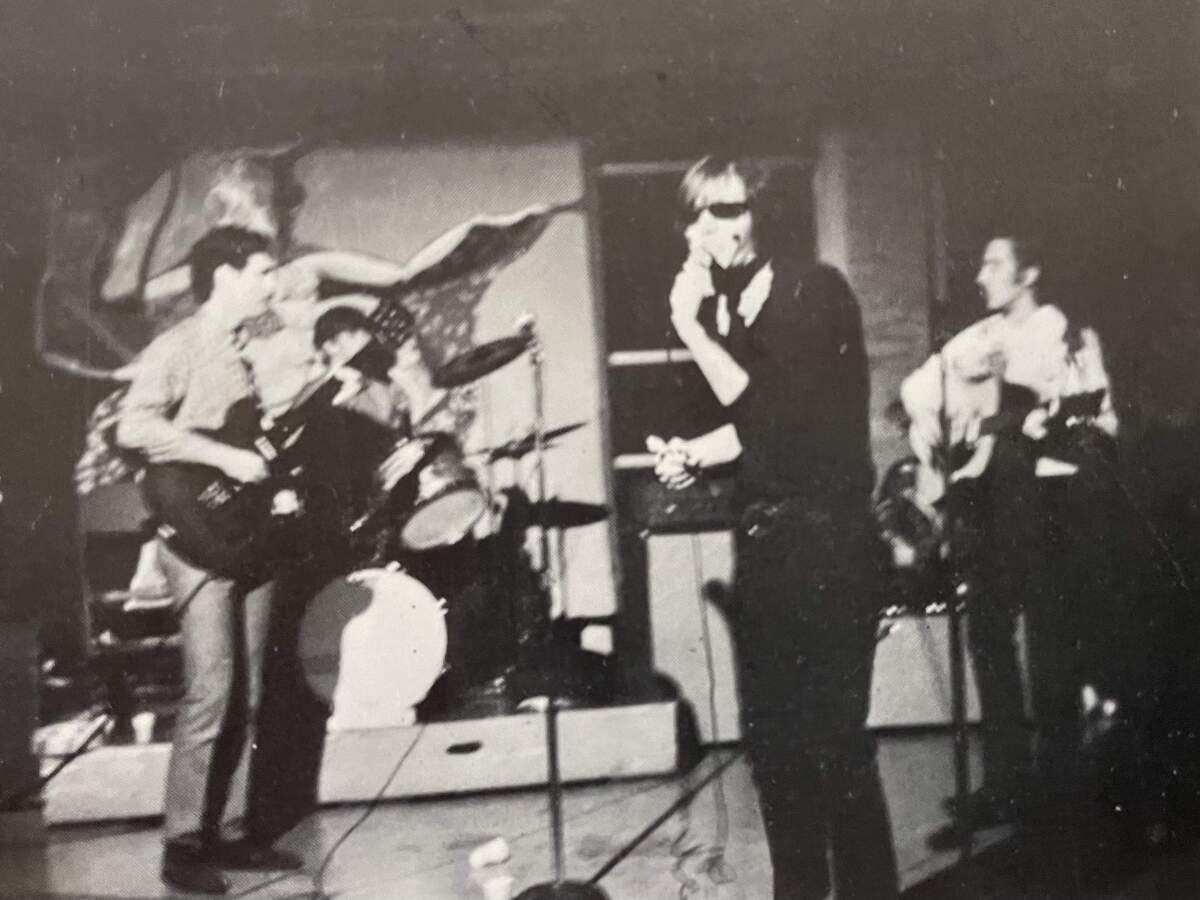
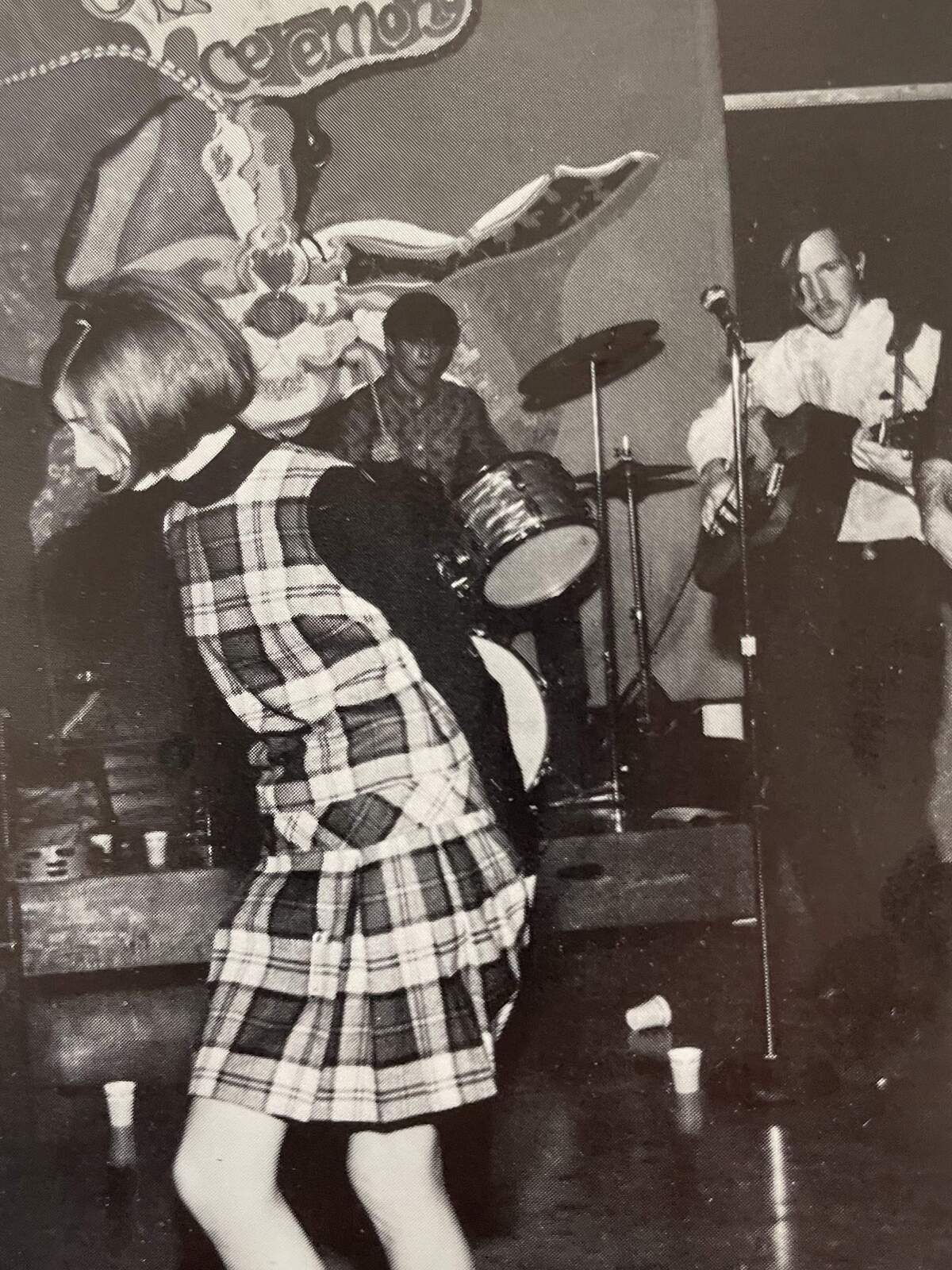
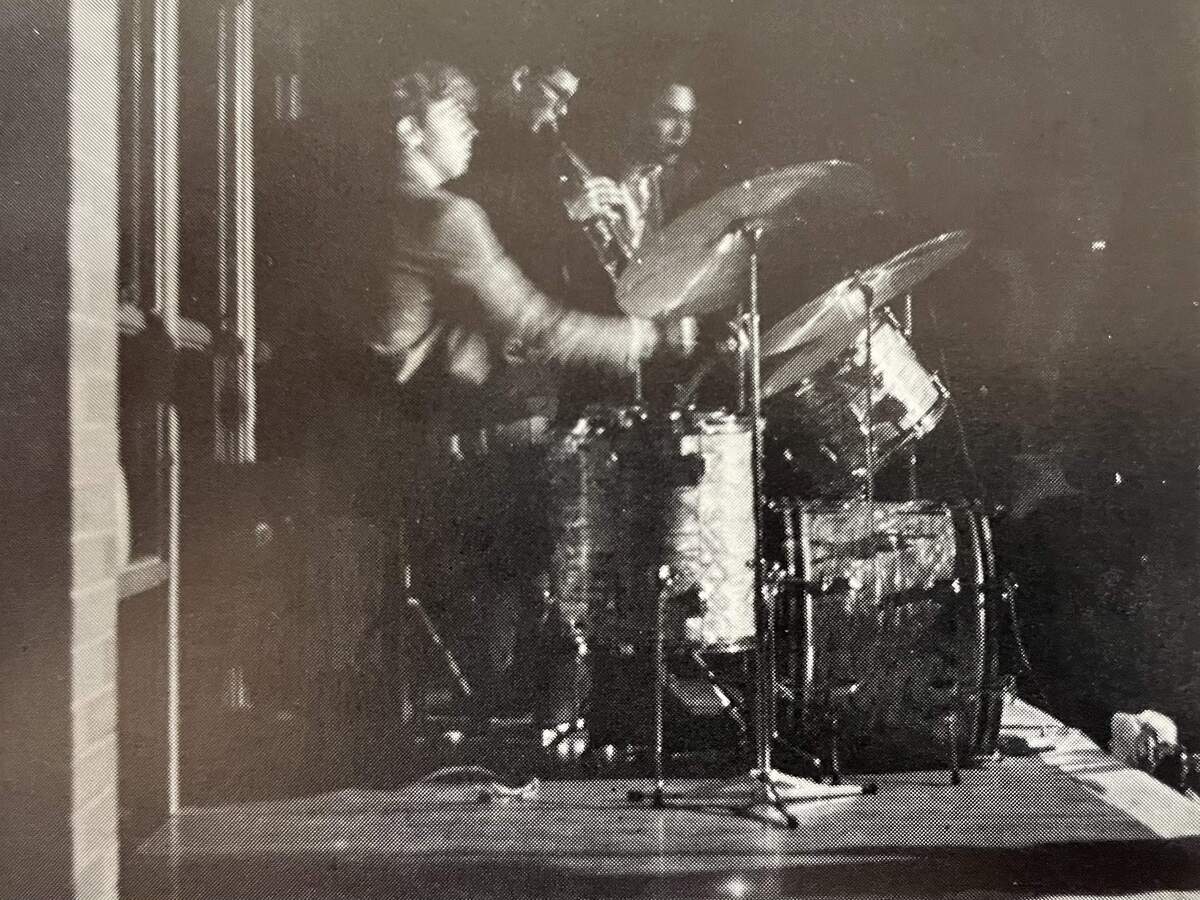
For this interview, Williams recalled his childhood in Oberlin, his early jazz experiences, Ant Trip Ceremony and the years that followed. He also went through his old high school yearbook and found photographs of Ant Trip Ceremony performing at Oberlin High School in 1967–68, which he kindly shared with us.
“We were honestly and exactly who we were.”
You were born in Mount Vernon, Ohio, in 1950, but grew up in Oberlin. What was Oberlin like when you were a child? Was there always a lot of music around the house?
My father was the editor (and eventual publisher) of the Oberlin News Tribune. When I was four, we moved into a house in a new development on the other side of town from where everyone else seemed to live, which felt a bit isolating. By fifth grade everyone would be attending the same school, which enlarged my social life considerably. Oberlin was quiet and safe, I could ride my bicycle everywhere, explore the woods near our house, and generally feel a sense of freedom.
Both of my parents enjoyed listening to jazz and there were plenty of records for me to discover in our home. I found those I liked, mainly Miles Davis and Ahmad Jamal, and listened to them repeatedly. We had a piano that my mother would occasionally play, as would I. It would prove important later on as she began her singing career.
Your father showed you a basic brush pattern, and you spent hours playing along to Ahmad Jamal Trio records on a cardboard box, learning Vernel Fournier’s playing by ear. What was it about the drums that fascinated you so much?
When I was three I saw a drummer on TV. It was a polka variety show with people dancing. The camera panned to the drummer and my impression was that he was responsible for the happiness everyone exhibited. Plus the drum set was the greatest thing I’d ever seen. That was it for me. My parents would buy toy sets that I would end up destroying in minutes, much to my regret.
At age eight I was given a snare drum and took a few lessons with a local drummer (whom I would end up replacing at age fourteen with saxophonist Red Carmen and pianist Frank ‘Count’ Williams). For years I had been playing for hours after school on my cardboard box along with records and I wanted to show the teacher what I already knew. He wasn’t interested, instead insisting on basic exercises. While practicing these, one day, out of frustration, I jammed a stick through the head of the snare, returning to the cardboard box until I got my first set at age twelve. No more lessons…
Your mother, Ann, moved to New York in 1959 to pursue her singing career. When you visited her, you met musicians such as Jo Jones, Elvin Jones, Herb Lovelle and Oliver Jackson. What was it like being a young boy among all those musicians? Are there particular encounters you still think about?
My mother was very brave to move to New York as a woman alone in 1959. Her desire to sing was such that it overcame any trepidation. Almost immediately she was embraced by the New York jazz community. There were several places musicians would congregate, notably Jim and Andy’s. She liked to have a late dinner there and sit for hours of conversation. There are so many names I could drop here. I was too young in the beginning to participate very much in what was being discussed but I heard everything. The kindness and dignity of these people eclipsed anything I had known. Regardless of my youth I was taken seriously. The great Coleman Hawkins, sitting across from me one night, asked, “So you want to be a jazz musician, huh?”
I answered in the affirmative. He replied, “Well, you better love it.” As I started to reply, he shushed me. What he meant was, that’s it, not fame, money or anything else. The requirement is love.
The seven years my mother spent in New York offered me the opportunity to see all of the great drummers in jazz, to see and be introduced to Miles Davis at Birdland in 1961, to sit in the room while Aretha Franklin recorded ‘Runnin’ Out of Fools’ with Herb Lovelle on drums (having taken me with him), to sit in with Clark Terry at age fifteen and so much more. This was my education.
By fourteen, you were already playing professionally around northern Ohio after pianist Frank Williams heard you. How did those first jobs come about? What was it like playing entire evenings with musicians who were so much older than you?
Frank was my mother’s accompanist in Oberlin and also played on her first album. He was an accomplished pianist and a wonderfully kind and gentle man. He would come to our house in Oberlin quite often to run over songs with my mom. One day she suggested he hear me play. I selected a recording I had played along with so many times that I had every nuance down. That was apparently sufficient for him to hire me for a steady gig at what was then the Campus Restaurant in town, just the two of us, organ and drums.
Soon after Frank brought me along to play with Sandusky tenor saxophonist Red Carmen. Red was skeptical at first, to say the least, until we started to play. Then he couldn’t manage to continue playing because he was laughing so much at the incongruity of what he was hearing versus my youth and appearance. Thus we found a steady weekend gig in Sandusky that lasted for quite a while. They couldn’t seem to find a bass player they liked so we did without one. I ‘feathered’ the bass drum to make up for it, as I’d been taught by bassist Al Hall, and that seemed to provide what was needed. Swinging for the entire evening was what was required. No drum solos. I was making $100 a week while living at home and doing what I loved.
You began spending time at Oberlin College while you were still in high school. How did that come about? What was happening musically around the campus in those days?
I had nothing to do with Oberlin College until 1966 when I began hosting a two-and-a-half-hour radio show every Saturday morning for the next two years on WOBC, the college station. This came about as a result of a requirement that the college include some community content. We played Top 40 (also required, though I would occasionally slip some jazz in) and did sketch comedy. It was a blast.
As a result of that I had a reason to be on campus. I quickly discovered there was music going on with some of the students. There were at least two bands, one called simply ‘The Blues Band’ and another called ‘Alicia and the Terribles’, which was more R&B/Curtis Mayfield. Both were led by a fantastically talented Chicagoan whose surname escapes me but who was known as ‘Mac’. His first name was Larry. I remember meeting George, Mark and Gary as members of ‘The Blues Band’.
I started showing up for rehearsals and performances itching to replace the drummer(s). That eventually happened.
As far as the political atmosphere is concerned my interests were elsewhere. There were demonstrations against the war in Vietnam and other such events but I did not participate. Outside of the college there was no music scene in Oberlin.
You were the only member of Ant Trip Ceremony who wasn’t an Oberlin College student. How did you first become part of the group? Steve Detray had previously used the name in Utah. Did he ever explain where it came from?
Steve wasn’t on the scene yet when I began playing with the others. I think I may have sat in a bit with ‘The Blues Band’ and that gradually morphed into Ant Trip with some of the songs carrying over. I later found a photograph in my high school yearbook showing Mac with Alicia and the Terribles. He was obviously still around in 1967–68, so he hadn’t graduated yet. It seemed a natural transition. I didn’t socialize with the band, being still a high school student. I would just show up to play. I never questioned the name of the band and can’t remember being told anything about it. There was a giant poster/painting of the Ant (similar to the original album cover but in color) that would be mounted behind us when we played gigs.
Obviously when Steve arrived he brought the name with him and that was the beginning. I don’t recall any individual rehearsal in particular but they were a regular thing. We never actually played a bunch of gigs, only a few. Making the recording became the focus.
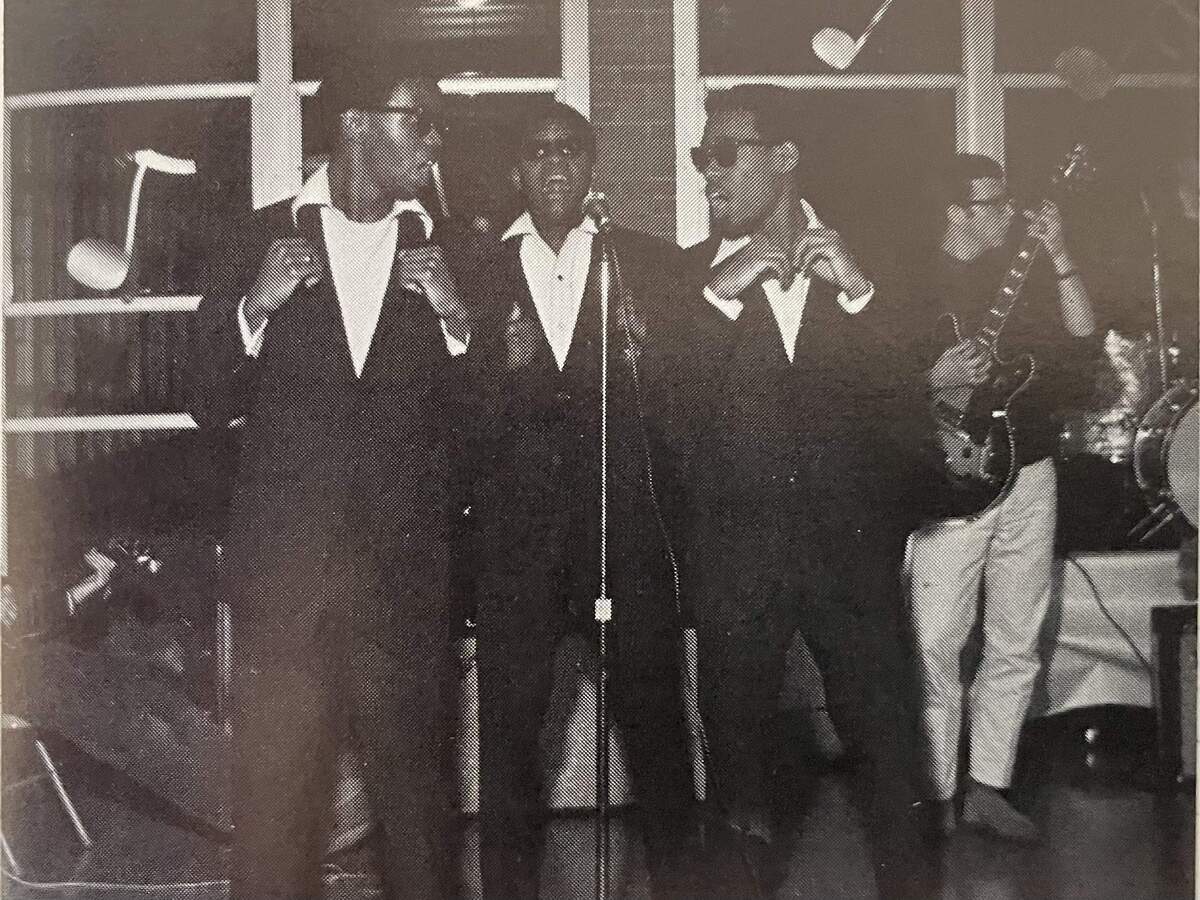
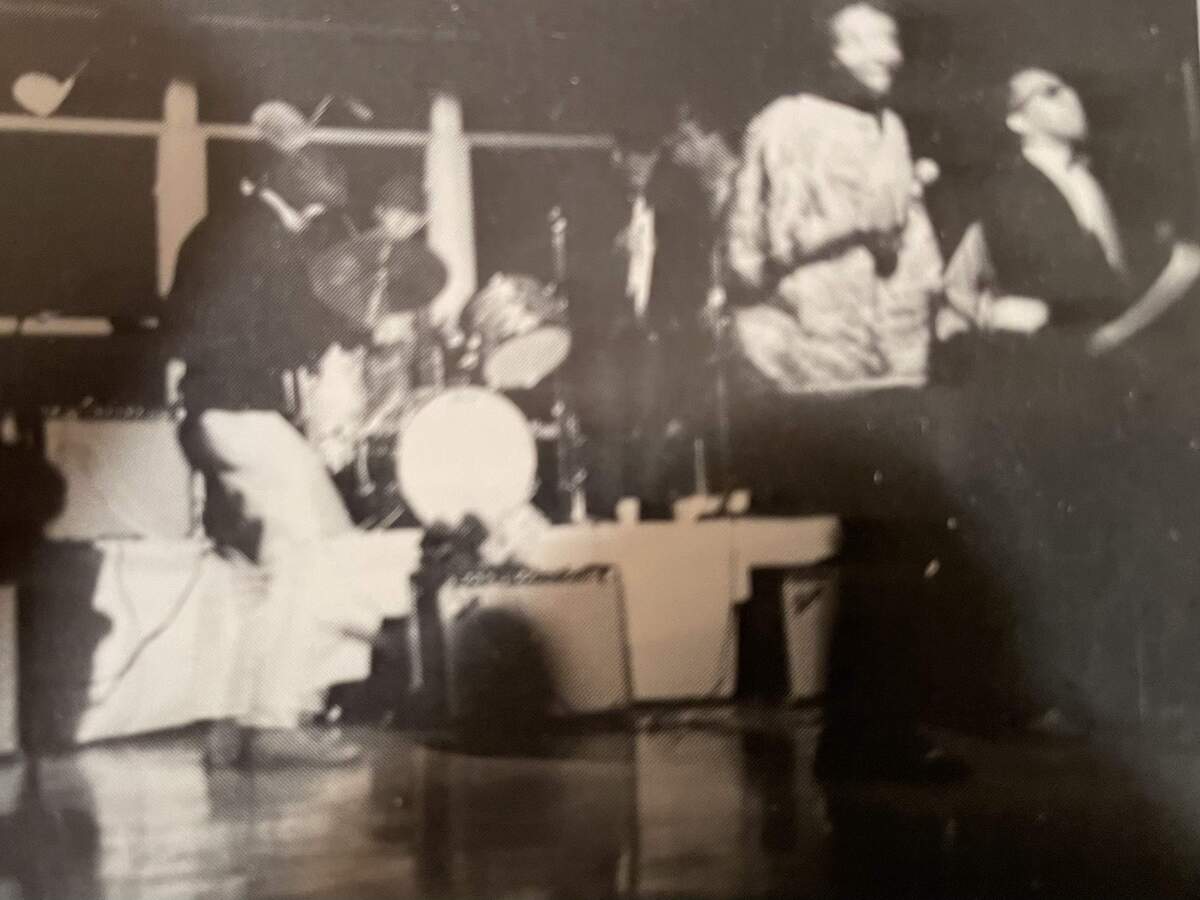
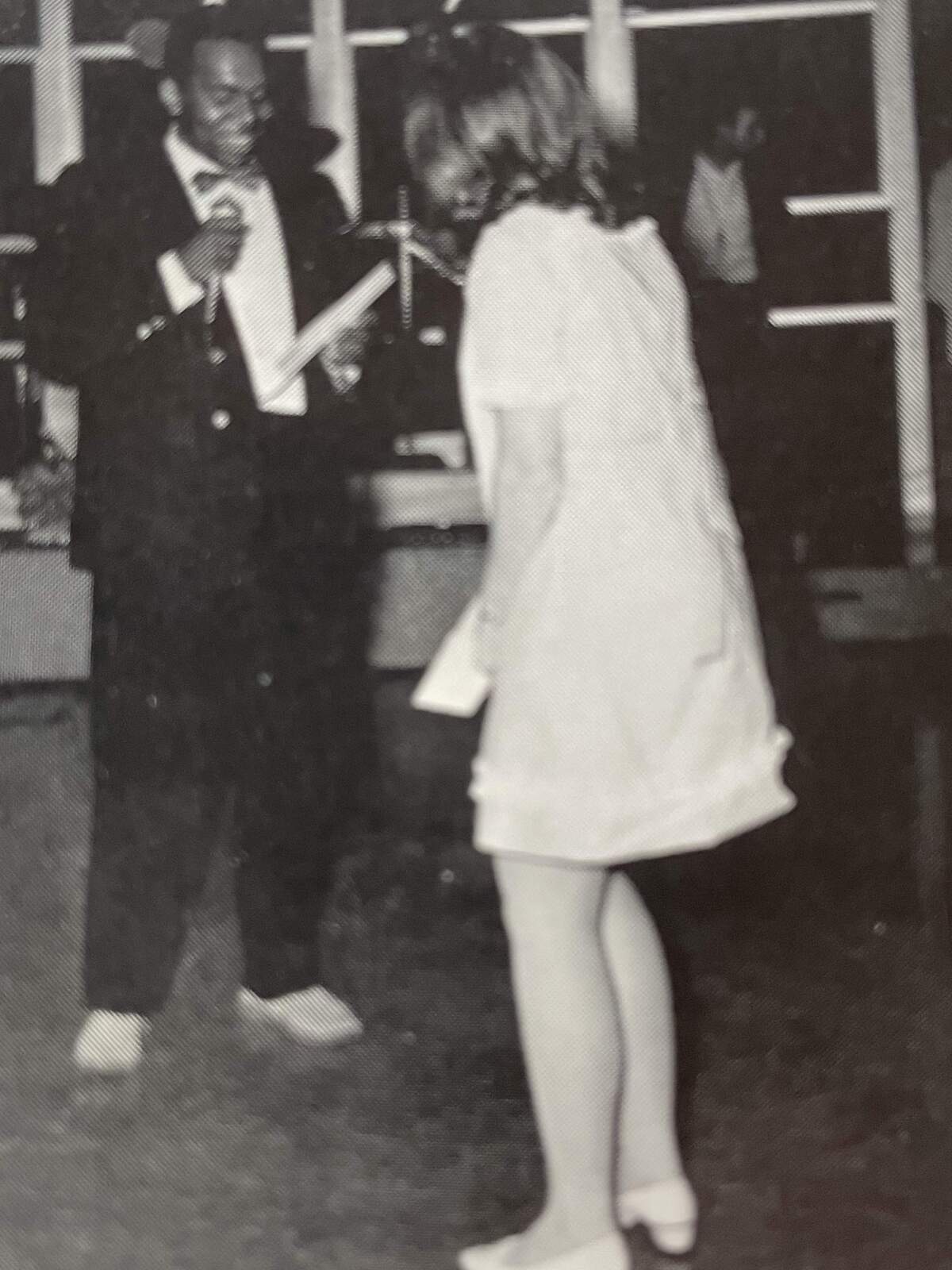
Alongside you, the band included Steve Detray, George Galt, Roger Goodman, Gary Rosen and Mark Stein. What do you remember about each of them as musicians and people? How well did everyone get along?
Unsurprisingly I didn’t spend time with any of them outside of Ant Trip so it’s hard for me to delineate aspects of their personalities. Within the band environment I was struck by each person’s dedication to what we were trying to achieve. While this wasn’t specifically stated necessarily the atmosphere was serious, while also being fun. There was freedom to experiment. All had strong personalities but there was mutual respect. Musical ability varied somewhat with Mark being a standout, along with Steve. Roger’s voice is one of a kind.
George, Gary and Mark had played together in a blues group, while you came from jazz. How did the music develop once you were all playing together? Did you have much interest in rock at that point?
The sound of the band evolved organically in my memory. While I had never been in a rock band I was aware of what that entailed and had played along with various records, mainly Motown and James Brown, those styles, as well as having listened to the psychedelic music emerging at the time. I felt prepared and excited to be playing with people closer to my own age. For all I knew then I might end up playing rock instead of jazz in the future.
As far as the rest of the band is concerned I think each member had a fairly wide scope of musical interests to draw from. What seemed important to me was that we weren’t copying anyone or trying to sound like someone else. We were honestly and exactly who we were. I didn’t contribute to the repertoire. I felt my job was to interpret the music the band wanted to play, though I sometimes made suggestions that proved useful.
“I was probably the only one there not tripping on acid.”
What were the Ant Trip Ceremony concerts like? Do you remember any particular shows, or how the audiences reacted to the band?
While there may have been others, the performance I remember best included a huge crowd in a large room at the college. I was probably the only one there not tripping on acid. Suddenly it was total darkness for a period with only a strobe light pulsating. It was hard to play with the strobe going at a different pulse than the one I was keeping. The band was on fire and the audience loved it. We had rehearsed enough, and possibly already recorded by then. This was peak.
Some accounts describe Ant Trip Ceremony performances lasting for hours. Does that match your memory? How did you handle the longer pieces, particularly ‘Elaborations’?
I think a lot of times we would play/rehearse in the same room where we recorded the album. Sometimes that would attract people who could just wander in to listen. I just don’t remember that many performances outside of that. ‘Elaborations’ was the piece that I do remember being played for long durations, being more or less a raga. In that case there were cues in the melody and form that could be initiated by Steve, most often, which would tell us we were moving on. Otherwise, most of the songs were fairly short, although they could be opened up for long solo sections. It seemed we were all attuned to each other to sense where the music was headed.
With several guitars, flute, harmonica and vocals, there was quite a lot happening at once. How did you find your place as a drummer without getting in the way of the other instruments?
It requires listening to everything as a whole. Texture is important. Should I use brushes, mallets, sticks? What does the song need? How do I blend with the ensemble of instruments? It’s sensibility and putting aside any personal agenda.
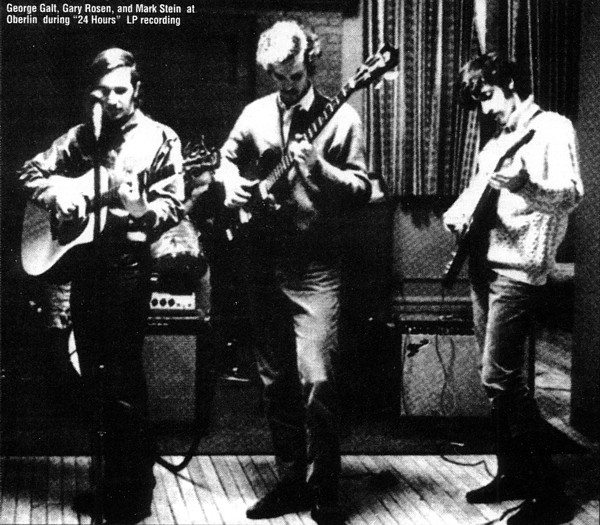
‘24 Hours’ contains original songs alongside material such as ‘Hey Joe’, ‘Violets of Dawn’ and ‘Get Out of My Life, Woman’. Who chose what the band played? Did everyone contribute ideas?
I think George brought ‘Violets of Dawn’ and maybe ‘Get Out’, although that came from ‘The Blues Band’ I’m fairly sure. Steve brought ‘Elaborations’, Gary wrote ‘Locomotive Lamp’. Maybe Roger contributed ‘Four in the Morning’. It seemed to me that anyone could suggest a song and it would be accepted. I don’t recall any rejects.
You’d been playing jazz for years before Ant Trip Ceremony, and some of that comes through on the record. Were you consciously bringing jazz rhythms into the music, or was that simply how you played?
At that time the concept of ‘jazz-rock’ was beginning to take hold. The boundaries were beginning to dissolve. Certainly my brush playing on ‘Violets of Dawn’ comes from my jazz background, as well as the cymbal pattern on ‘What’s the Matter Now’. It wasn’t a conscious decision to apply these, again, I was just aiming to serve the music. Fair to say the language I spoke included both.
What made the group decide to record an album? Did anyone have plans for what might happen afterwards? And how did you come up with the title ‘24 Hours’?
I don’t think there was a sense of where the band was headed when the decision to record came up. I remember something about Atlantic Records having expressed interest. That didn’t pan out. Obviously everyone, except me, was going to graduate and likely move on. I don’t recall any future being discussed. For me it was just, ‘we’re going to record’. I don’t remember more than that. I guess it was deemed possible to record in our rehearsal space with the equipment available and manufacture LPs fairly easily. The thought being that three hundred albums could be sold on campus and it would pay for itself. I think this proved to be correct.
‘24 Hours’ refers to how long it took to make the album. We played as we always did, no separation, overdubs, studio tricks or editing.
The album was recorded in your rehearsal space on the Oberlin campus rather than in a proper studio. What do you remember about setting everything up and actually making the recordings?
We set up in a different part of the room. Other than that it was the same as always. Probably some considerations were made as to where instruments were situated, distance between them and microphone placement.
The repertoire was well rehearsed so I don’t remember doing many takes of anything. I don’t recall feeling anything being tense, like trying for perfection. We just played the material.
An Oberlin student named David Crosby has been credited with helping record the album, which later caused some confusion with the famous David Crosby. Do you remember him or what he actually did?
I guess David was possibly the engineer, though I have no recollection of talking to him. Someone wrote that the other David Crosby was involved and I saw it on the internet.
Some accounts say the album was made in two sessions, with Steve absent from the second one. There are also stories about a faulty speaker affecting the mix. Do you remember whether any of that happened?
I find it confusing that ‘24 Hours’ is the title of the album since there were two different sessions. Or were there?
It’s possible Steve wasn’t present for the second session but I don’t remember. If Steve’s distinctive guitar sound is not on a particular track maybe he wasn’t there. As far as the mix is concerned, I wasn’t in on it. The background vocals may have been using a cheap mic going through a guitar amp.
‘Elaborations’ is one of the longest pieces on the album, with a clear Indian influence. How did it come about? Was it something you played regularly at concerts?
The Ant Trip’s repertoire was quite diverse so I can’t say ‘Elaborations’ is somehow the signature piece. I see it as more of a departure. It was perhaps an example of the climate of that time. Ravi Shankar had performed at Monterey Pop and Indian music was establishing a presence. It was something Steve introduced to the band and it immediately took off. We enjoyed the freedom and it was different every time we played it.
Are there particular songs or performances on ‘24 Hours’ that you’re especially fond of when you listen to the record now?
I am fond of Roger’s vocals on ‘Hey Joe’ and ‘Four in the Morning’. He definitely kills it. Mark’s flute solo on ‘Four in the Morning’ is great too. Also in that song, at the end we extend the phrase until Roger sees fit to end it, feeling it together.
Only around 300 copies of ‘24 Hours’ were pressed. What do you remember about holding the finished album for the first time? Did you keep a copy?
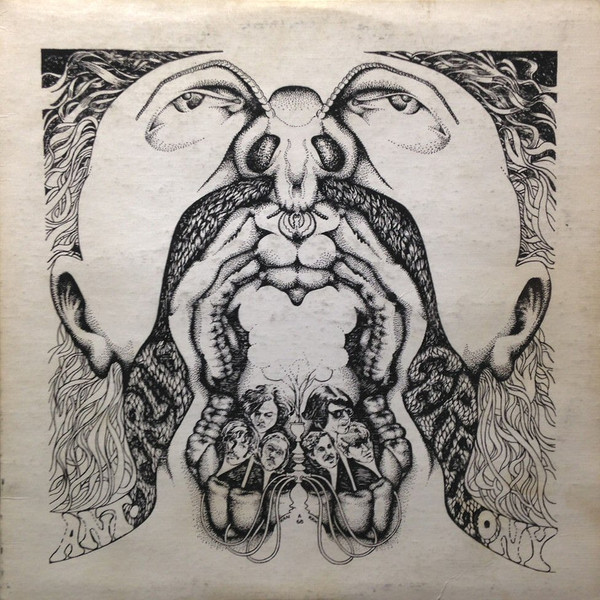
Of course it was exciting to hold the album in my hands and I did keep several, one of which I still own. The package was a bit bare bones but the cover illustration is still amazing.
Ant Trip Ceremony ended not long after the album appeared. Was there a final performance, or did everyone simply go their separate ways? Have you stayed in touch with any of the others, and do you know if any more recordings might exist?
I was more focused on my own future by the time Ant Trip was over. There was no final announcement or performance that I remember. It seemed understood everyone would go their own way. I stayed in touch with Gary, eventually sharing an apartment with him for a while when I moved to New York in 1971. In more recent years I had occasion to see Mark briefly but other than that I lost touch. Although I am in touch with Steve now. We had tried to meet up last May but I was overseas. I’m not aware of any other recordings.
‘24 Hours’ eventually became a sought-after collector’s record, with bootlegs and several official reissues appearing over the years. When did you first realise that people were still listening to it? How do you feel about its reputation today?
I often tell people Ant Trip is my largest presence on YouTube, which came as a surprise some years ago. Sometimes I’m listed as ‘Steve’ Williams, who happens to be a great jazz drummer. I enjoy playing a track or two for musician friends who would have never suspected me of being a part of this band. Guitarists especially like the sound of the unprocessed guitars. It would have been impossible to predict the album’s afterlife back then.
After high school, you went to Berklee in Boston in 1968, hoping to study with Alan Dawson. What was that experience like? What sort of music were you going to hear while you were living in Boston?
I realized very soon Berklee was not for me. My parents insisted on my higher education and Berklee was a compromise that was reached. Oliver Jackson called Alan Dawson insisting he get me into the school at the last possible moment before fall term began. Unfortunately Alan didn’t remember this once I was there and I didn’t announce myself as Oliver’s recommendation. I would later study privately with Alan when I turned thirty, but at Berklee we didn’t connect.
On the bright side Boston was brimming with music. I could see Miles at the Jazz Workshop, Sly & the Family Stone at the Psychedelic Supermarket, The Who opposite Tony Williams Lifetime at the Boston Tea Party and so on. I didn’t know what type of music I would end up playing professionally so I soaked up all of it.
Collective improvisation has always been an ingredient in jazz. I didn’t think I was somehow in the psychedelic rock world in the small town of Oberlin, nor did I aspire to be in it. What was happening was the intermixing of the musics and it was exciting to be a part of that.
You moved to New York in 1971. How did you meet Dave Liebman and become involved with Free Life Communication? What was it like trying to establish yourself in the city at that time?
I left Oberlin in 1971 having been given Dave Liebman’s phone number. Dave had started a musicians’ cooperative called Free Life Communication, along with a number of other musicians roughly my age. I rang him up and he invited me to the organization’s loft. We ended up playing for the next five years in the band we formed, ‘Lookout Farm’, recording numerous albums for ECM and other labels as well as traveling the world.
I hauled my drums all over town to play sessions with people like Marc Copland, John Abercrombie (sharing a loft for a while with both), Randy Brecker, Albert Dailey, Steve Grossman and many more.
While playing a session at bassist Glen Moore’s loft Dave Holland appeared and I got to play a couple of tunes with him. He then asked me if I was interested in working with Stan Getz. The timing couldn’t have been better as my savings were exhausted.
I continued with Stan until ‘Lookout Farm’s’ first recording was released, then remained with LF until 1976.
What I remember about that time was the incredible amount of activity going on, basically below ground. There was very little paying work. Still, I was playing everything from free jazz to bebop to what would later be known as fusion. I played every day, often at more than one location. Careers were taking off, including mine.
By 1972, you were playing with Stan Getz and Lee Konitz. Was it difficult adjusting to those groups after playing amplified rock with Ant Trip Ceremony?
Music is music, regardless of style, so you adjust. I did develop a certain ‘rock technique’ during my time with Ant Trip (much to the distress of Frank Williams and Red Carmen with whom I continued to work in tandem with Ant Trip). It would serve me well in the amplified environment of so-called ‘fusion’, which was a component of ‘Lookout Farm’. But with Stan and Lee it was acoustic jazz, of which I was quite familiar.
Lookout Farm brought you together with Dave Liebman, Richie Beirach, Frank Tusa and later Badal Roy. You recorded for ECM and toured extensively. Did anything about playing in that band remind you of Ant Trip Ceremony, despite how different the music was?
I never thought of the similarity. There is one, of course, both are about being in a band, which is all I ever wanted. ‘Lookout Farm’ was wildly successful for us, providing an opportunity to play consistently for many years and develop a unique sound. That almost never happens today. Ant Trip had too short a run to experience very much of that kind of development but the openness of approach in both instances is similar.
After Lookout Farm, you spent time freelancing, ran a publishing company in Maine and eventually returned to New York in 1982. What happened during those years? What led you to begin writing music and putting together your own groups?
My departure from New York was by necessity at the time. When I returned the scene had changed considerably. I didn’t have any gigs for almost two years. During that time I started writing music, eventually putting a band together and recording my first album as a leader in 1990. It was also by necessity that I did this in order to reestablish myself in New York. By doing so I began to be called to join other projects.
You’ve led groups including Interplay, Coalescence and Circadian Rhythms, and made a number of albums for Whirlwind. How has your approach to putting a band together changed over the years? What makes a group work for you?
I wish the idea of a ‘working group’ existed in any of the projects you mentioned. I came closest to having one in the UK for a few years, occasionally even achieving what could be considered a tour. It’s a thrill to hear your music played by great musicians who interpret it in their own way. By choosing musicians carefully, and successfully predicting they will enjoy each other’s company, it’s beautiful what can be accomplished. No one has to be told what to do when you already know what they can do when you select them.
You spent a good deal of time in Britain from the mid-2000s onwards, playing with musicians there and teaching at the Royal Academy of Music and Birmingham Conservatoire. What did you enjoy about that period? Did teaching change anything about your own playing?
The UK offered me a new chapter featuring a host of great musicians of whom I knew nothing. It was a fruitful period to say the least. In addition to leading a band I also got to play with so many fantastic musicians and travel all over the country. My teaching positions allowed me access to young players that would sometimes end up being in my band. It was very rewarding.
Of course teaching did shine the spotlight on my own playing and my ability to demonstrate what I was talking about. I often played piano with my students in order to find out how it felt to play with them from that perspective. I would record it and listen back with the student so we could both make evaluations.
You’re now living in Lisbon and playing with musicians there, including in Panoply. Your album ‘In Duo’ with Dave Liebman was recorded back in 1991 but only released in 2024. Do you see any similarities between its late release and the renewed interest in ‘24 Hours’?
‘In Duo’ has largely gone unnoticed since its release. I wouldn’t expect it to somehow become some kind of cult classic like ‘24 Hours’. Liebman has hundreds of recordings and this is simply another one. Also, ‘24 Hours’ was never exactly lost. Its fans have continued to make sure of that. Would that such good fortune find its way to ‘In Duo’.
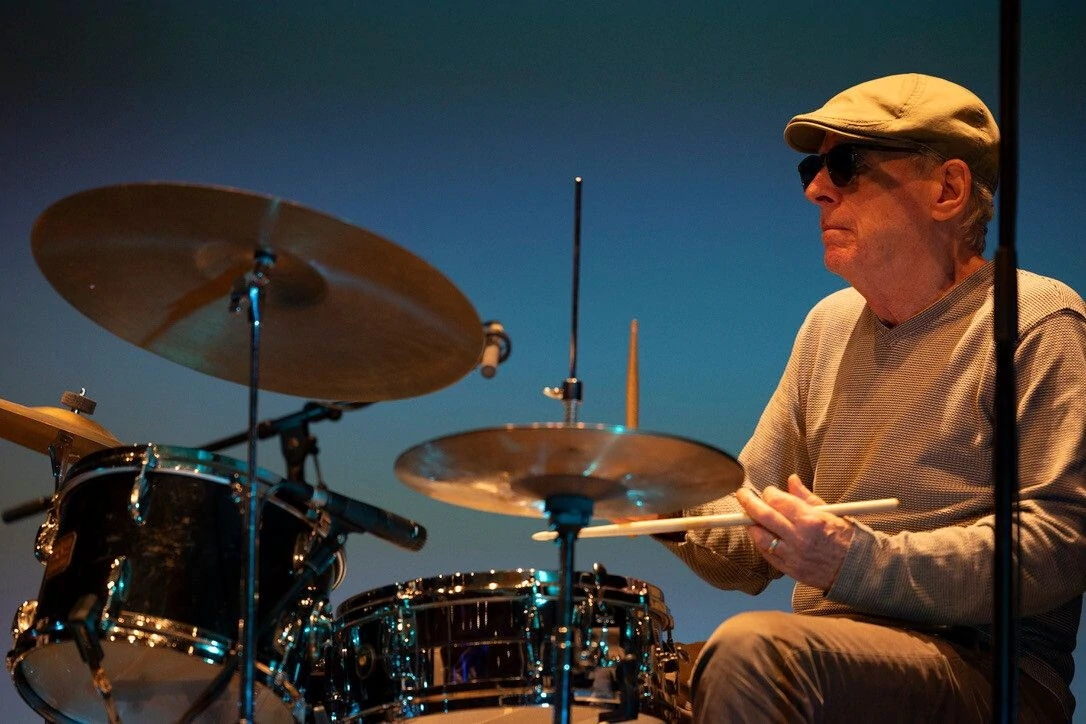
Finally, when you listen to ‘24 Hours’ today, do you still recognise yourself in the young drummer playing on those recordings? And what are you most enjoying about making music these days?
I did listen a bit today. I recognize myself as I continue to be in some instances. Mostly I hear a sensibility that remains. It’s there, even with the limitations present at the time. I’d say pretty good for a seventeen-year-old. Shows promise. I was lucky to be a part of it.
The most exciting aspect of this whole thing is not knowing where the music will take me. There is so much I’m involved in right now, most of it brand new, with Portuguese musicians, others in New York, as well as in the UK. I’m just grateful to still be doing it at my advanced age.
Klemen Breznikar
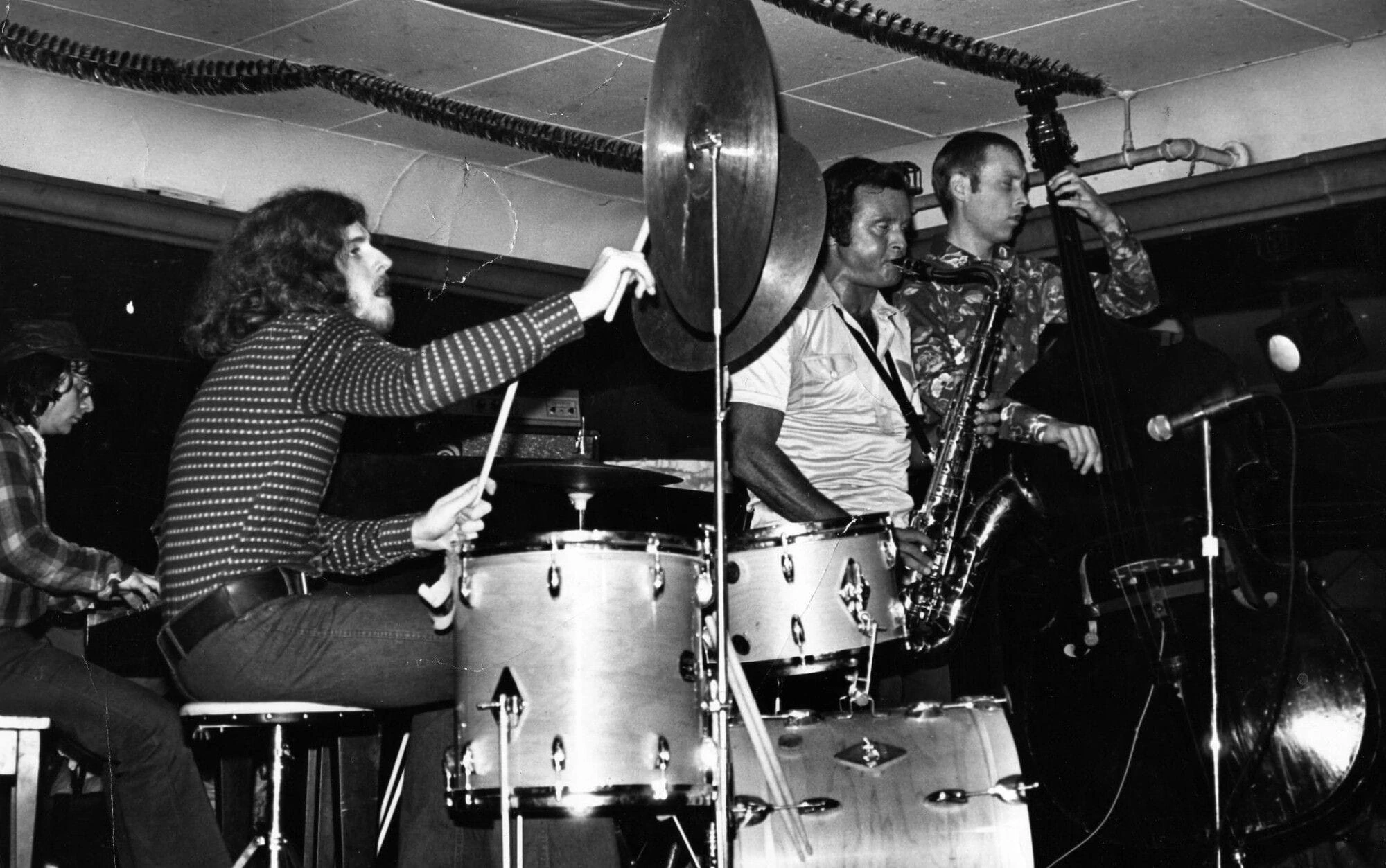
Headline credit: Richie Beirach (piano), Jeff Williams (drums), Stan Getz (tenor saxophone) and Dave Holland (bass) at The Esquire Show Bar in Montreal, autumn 1972. Photograph from Jeff Williams’ personal collection.
Special thanks to Don Berman for his work restoring the original yearbook photographs.
Jeff Williams Website