
Leszek Możdżer Interview: Miłość, Chopin, Komeda and the Decaphonic Piano
Ahead of his appearance at the Polish Jazz Festival in London, Leszek Możdżer looks back on Miłość and the early yass years, his encounters with Chopin and Komeda, working with Zbigniew Preisner, the strange demands of playing alone, and his continuing search beyond the twelve-note piano.
Leszek Możdżer came to jazz relatively late. He had spent years studying classical piano when, at eighteen, hearing Chick Corea’s Elektric Band changed the direction he wanted to take. Not long afterwards he was playing with Miłość, one of the central groups of the Polish yass scene, while also working with Zbigniew Namysłowski and continuing his studies at the Gdańsk Academy of Music.
The piano has taken him in several quite different directions since then. Chopin became an important part of his solo language, collaborations with Zbigniew Preisner changed the way he thought about composition, and his trio with Lars Danielsson and Zohar Fresco has lasted for more than twenty years. More recently, his interest in tuning has taken him outside the familiar twelve-note system altogether, including the construction of an acoustic decaphonic piano with ten notes to the octave.
Komeda is another musician to whom Możdżer has kept returning. He recorded the solo album ‘Komeda’ in 2011, after waiting until he felt ready to approach the music, and on 26 September he returns to it at Cadogan Hall as part of the Polish Jazz Festival in London.
In this conversation, Możdżer goes back to the beginning, speaks openly about his years at the academy and with Miłość, remembers how his first Chopin record came about, and explains why solo playing remains such a difficult test. He also discusses Preisner, his long musical relationship with Danielsson and Fresco, the decaphonic piano, life on both sides of the stage as musician and festival director, and why Komeda’s music continues to give him somewhere to confront his own fears.
“The silence becomes infinity when you are alone on stage.”
You came through classical training and only became seriously interested in jazz when you were about eighteen. What did you first hear in jazz that you hadn’t found in the music you were studying?
Leszek Możdżer: I was keen on Polish pop bands, the sound of electric guitars was a part of cultural invasion on communistic Poland at that time, the invasion was successful, today we are completely conquered, all the culture is Americanized, young people use a lot of English words in their private conversations. My first jazz knockout was Chick Corea Elektric Band – it was a perfect combination of electric rock force and complexity of Classical Music. Since then I decided to be a jazz musician. I wanted to play electric music, but my first band was actually acoustic, it was called Miłość – “The Love.”
Your first rehearsal with Miłość was on your twentieth birthday, in March 1991. What do you remember about walking into that band? Did it immediately feel different from life at the academy?
Tymon Tymański would write very complex and complicated compositions, it took a lot of work to learn that music, luckily I was able to do that because I was classically trained. Meanwhile Zbigniew Namysłowski hired me also, so I had a lot of work, but I had to be quiet because jazz music was still not legal in Poland. Academic teachers treated the jazz music as low level entertainment connected with drugs, alcohol and nightlife.
I would play at big festivals abroad but nobody at my school knew about it. My psychological situation was absurd, because I could not tell anybody that I was touring. I had to pretend I was an obedient student.
Miłość and the whole yass period came out of a very particular moment in Gdańsk. When you look back now, what stays with you most strongly from those years? And what did playing with Lester Bowie bring to the way you thought about improvisation?
Today I understand that my activity was aligned with the cultural invasion to make a Polish culture a small part of a global culture, but back then I was simply fascinated by jazz music. The political situation was steaming, Gdańsk with Lech Wałęsa with the Solidarity movement was in the very middle of all the events which were staged by the international business that built all the scenography in Poland to make people believe that they were fighting for freedom, but the real purpose of the game was hidden: it was the Polish economy which was on sale. Back then nobody was able to understand what’s really going on and jazz music was just a little part of the game. But it was not little to me – it was all my world and my biggest love.
You started working with Chopin quite early in your career, although the original idea came from outside rather than from you. Once you began improvising on that music, what did it open up in your own playing?
One of the famous Polish producers Stanisław Sobola asked me to play an album with jazz arrangements of Chopin’s pieces. At the beginning I did not agree, but he called also other musicians and the first Chopin albums started to pop up. I was afraid that the train would leave without me, so I decided to record this album. It was my first solo recording, I knew nothing about music production. I had to invent my musical language and make myself mentally strong enough to perform a solo recital. It took a big effort, but I was able to record only 45 minutes at that time.
Solo piano has remained an important part of your work, from the early recordings through ‘Piano’, ‘Komeda’ and the concerts you continue to play today. What changes when you’re completely alone at the piano? Is there more freedom, or in some ways more responsibility?
Playing alone is a different kind of trip, the loneliness on stage is completely overwhelming. Being there alone is a kind of drama which makes the inner world amplified, every time it is a confrontation with inner demons and inner light. I hate playing solo, I treat it as a training and ultimate verification. The silence becomes infinity when you are alone on stage.
You once remembered being in the studio with Zbigniew Preisner, hearing him whistle a melody and writing it down, and learning something about melody and silence from that moment. How much did working with Preisner change the way you compose?
Yes, his way of working was the biggest influence, he showed me all the possible tools I am using today. I learned a lot from him, I am very grateful. I do not imitate everything he does, I do not accept some of his strategies, but it was still one of the most important experiences to work with him. I have my own path and I choose to play with musicians I understand and who understand me.
Your relationship with Lars Danielsson and Zohar Fresco has lasted for more than twenty years. After hundreds of concerts together, what is different when the three of you play now compared with the early days of ‘The Time’?
Our last album breaks out from the tonal reality, I use three pianos simultaneously – one tuned in 440 Hz, second 432 Hz and third tuned in a decaphonic tuning (decimal temperament). Mixing different tonal systems makes the music much more abstractive and stimulates the imagination in a different way. We played hundreds of concerts, we communicate on a different level today. Each of us has passed some life experiences also, we are mature today. Lately I have felt enslaved by the twelve note tonal system…
You once described ‘Earth Particles’, with Holland Baroque, as the first record where you had really reached a kind of music you had imagined for a long time. Does it still feel like such an important record to you now?
Well I am not sure if what I said was actually true, every time the new album comes out I have to work some propaganda slogans. Yes, this music was ringing inside me long time before I wrote it down, but every time I give the interview I have to tell some fairy tales to promote something. It is just a part of the game. I play and I talk, sometimes as a musician, sometimes as a promoter.
Your search for another musical language eventually led to the acoustic decaphonic piano, with ten notes to the octave rather than twelve. What first made you want to step outside the normal piano tuning, and what happened when you finally heard the instrument?
I was hired to play on a mathematical conference in Warsaw and I was asked to prepare something special. The decimal tuning was a mathematical idea, it seemed hip at the beginning, the crew of the conference helped to finance the construction of this instrument and it was ready somewhat two weeks before the show. When I first tried it, the sound was so abstract and absurd that I was devastated.
But I had no choice, the contract was signed, the date was set and I had to play it publicly. Slowly I started to understand the vocabulary of a decimal tuning and worked out some ideas how to play it. Today I find it very refreshing, but it still needs a lot of work to imagine that music inside. The imagination is important.
You’ve been artistic director of the Enter Enea Festival since 2011, so you’ve spent many years looking at music from the other side as well, choosing artists and bringing musicians together. Has that changed you as a player?
Being an organiser made me see the Music from a different perspective, it really widens my understanding of music. As a musician I was inside the box, as a promoter I had to go outside. It healed me on many levels. I am much more relaxed as a musician, I understand the point of view of managing people, I do not take things so personally any more, because I simply understand what they mean when they say certain things. As an inexperienced musician sometimes I felt offended, but not today.
“Playing this music is healing.”
You recorded ‘Komeda’ in 2011 after waiting until you felt ready. Fifteen years later, you’re returning to his music for the Polish Jazz Festival in London. What do you hear in Komeda now that you might not have heard then?
Komeda’s music offers a lot of space for an improviser, so that you can be personal. This music is simple, but smart, deep but transparent. I can be myself while playing it, that’s why I love to do that from time to time. This music verifies me. When there is so much space in the chart you have to fill it with faith and the faith is the most important part of the stagecraft. Komeda’s music does not cover my fears, I have to overcome them myself while playing it.
Komeda has become such an important figure in Polish culture that sometimes the music itself can disappear behind the name. When you sit down alone and play his compositions now, how do you keep them alive rather than treating them as something from the past?
Komeda makes the past become the essential part of a present moment. His music is an expression of a smart mind, and a secret code of a humble man. Komeda had red hair and one of his legs was shorter, so his childhood was not easy. His music is a shelter where a musician can protect his fragility, exercise accomplishments and save his dignity. It is really a powerful tool and the cure, because the music itself was the cure for Komeda’s suffering mind. Playing this music is healing.
Klemen Breznikar
The Polish Jazz Festival takes place across London from 11-27 September 2026. Presented in partnership with the Polish Tourism Organisation, Warsaw Tourism Organisation, and co-financed by the Ministry of Culture and National Heritage.
More information at polishjazzfestival.com.
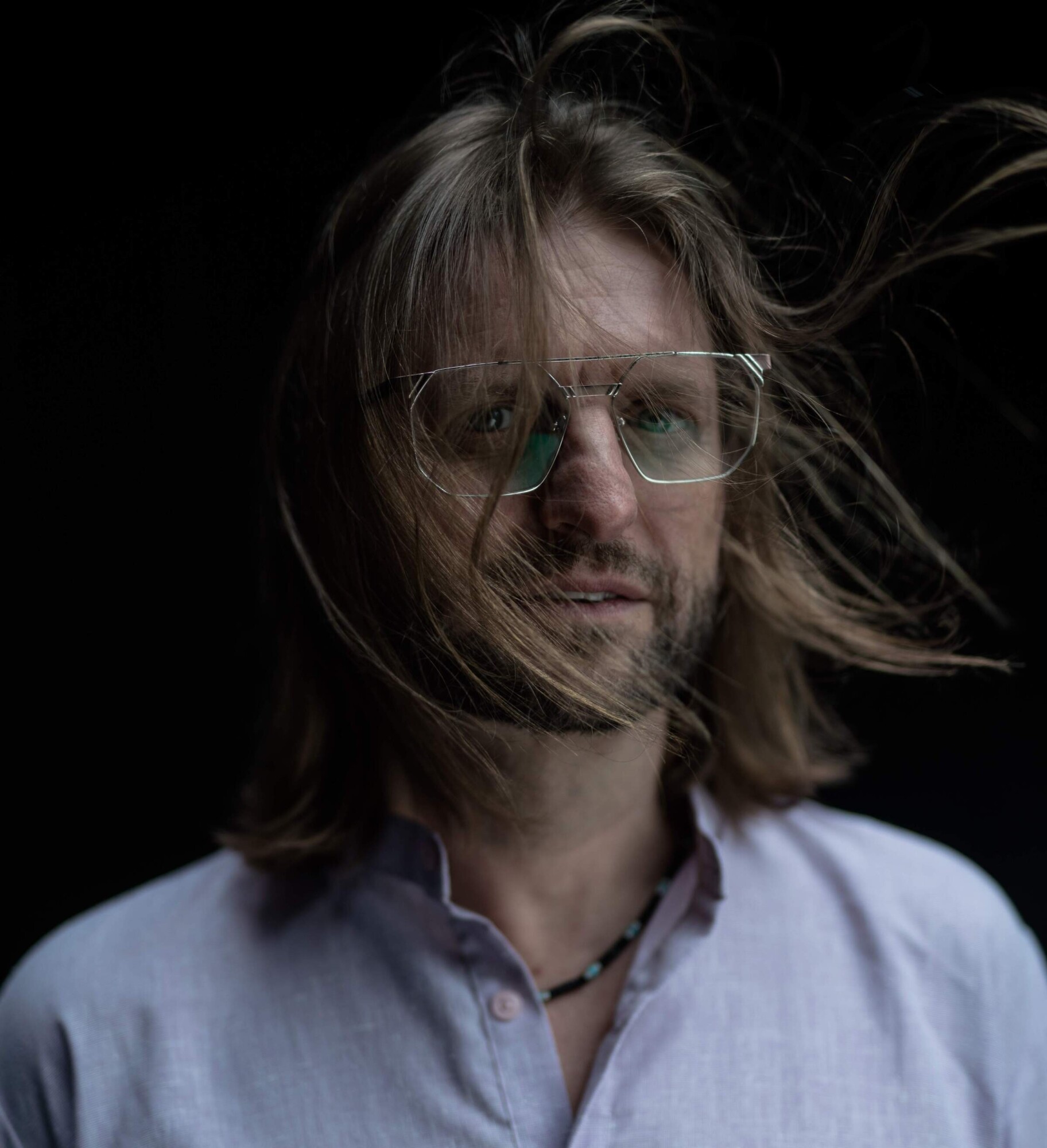
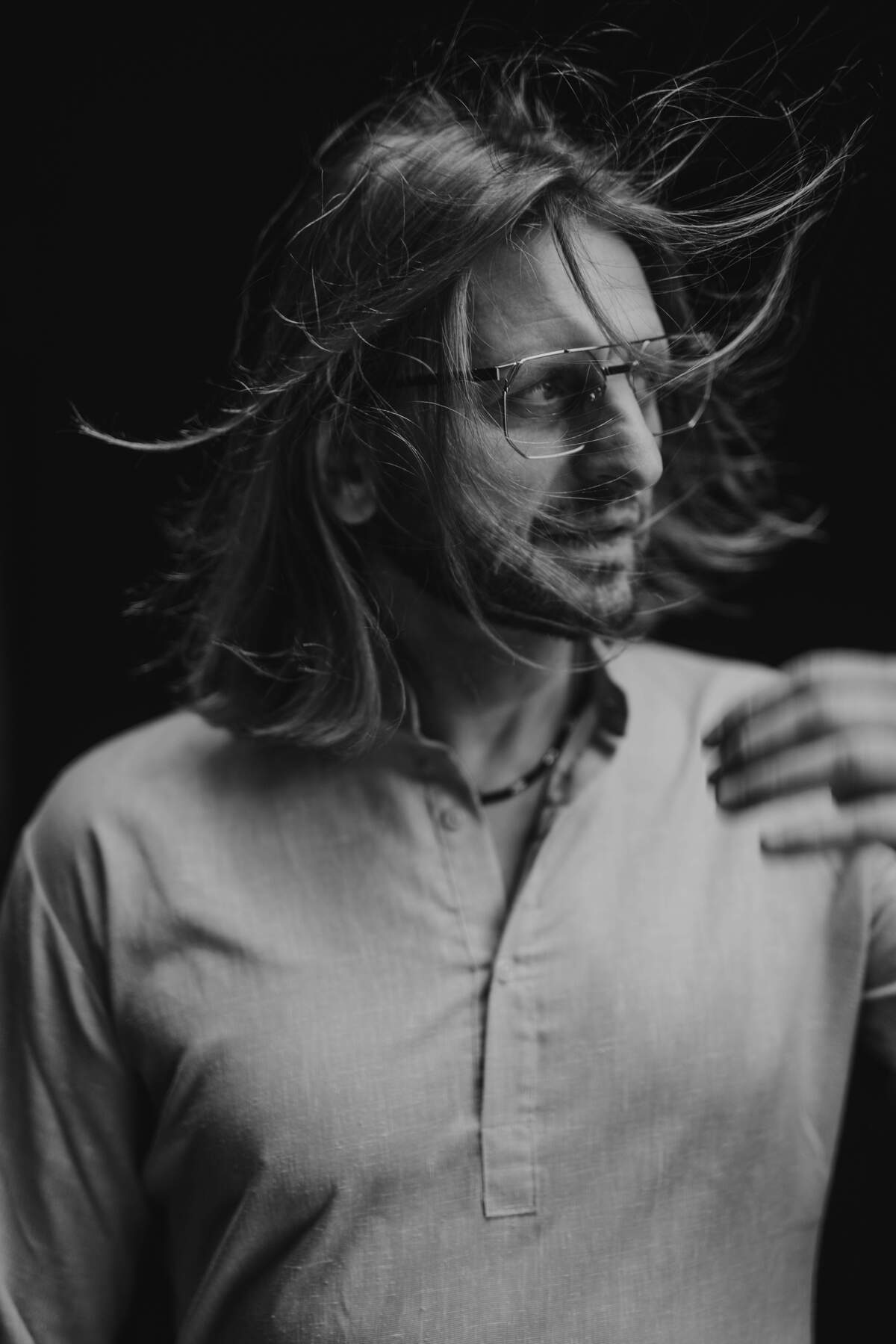
Headline credit: Leszek Możdżer. Photograph: Sisi Cecylia
Leszek Możdżer Website / Facebook / Instagram / YouTube / Bandcamp