
John Surman Interview | A Life in Improvisation and Sound
John Surman has spent more than six decades following sounds wherever they led.
He began as a choirboy in Plymouth, picked up the clarinet and baritone saxophone as a teenager, and entered the London jazz world at a moment when the boundaries between jazz, free improvisation, new composition and the wider avant-garde were opening fast. From Mike Westbrook and John McLaughlin to The Trio with Barre Phillips and Stu Martin, S.O.S., Karin Krog, Jack DeJohnette, Anouar Brahem and a long relationship with ECM, his music has moved through very different settings without losing its identity.
What is striking in conversation is how little sentimentality Surman attaches to any of it. He remembers ‘Extrapolation’ as exciting but also “another day at the coalface”; early electronics as a matter of curiosity and making do; and improvisation as something like a three-minute seaside portrait, a sketch made before the moment disappears. He speaks with great affection about Mike Westbrook and Jack DeJohnette, and with dry humour about the jazz police, airports and the increasing weight of a baritone saxophone.
Surman has stopped touring, but the music has not stopped. He still practises, composes, plays and records. In the conversation below, he looks back from his choirboy years to the London scene of the 1960s, the physical intensity of The Trio, the discovery of tape loops and synthesizers, writing for voices and large ensembles, the freedom he found with ECM, and a question that has followed him throughout his career: how to give music enough structure to have a shape while leaving enough room for something unexpected to happen.
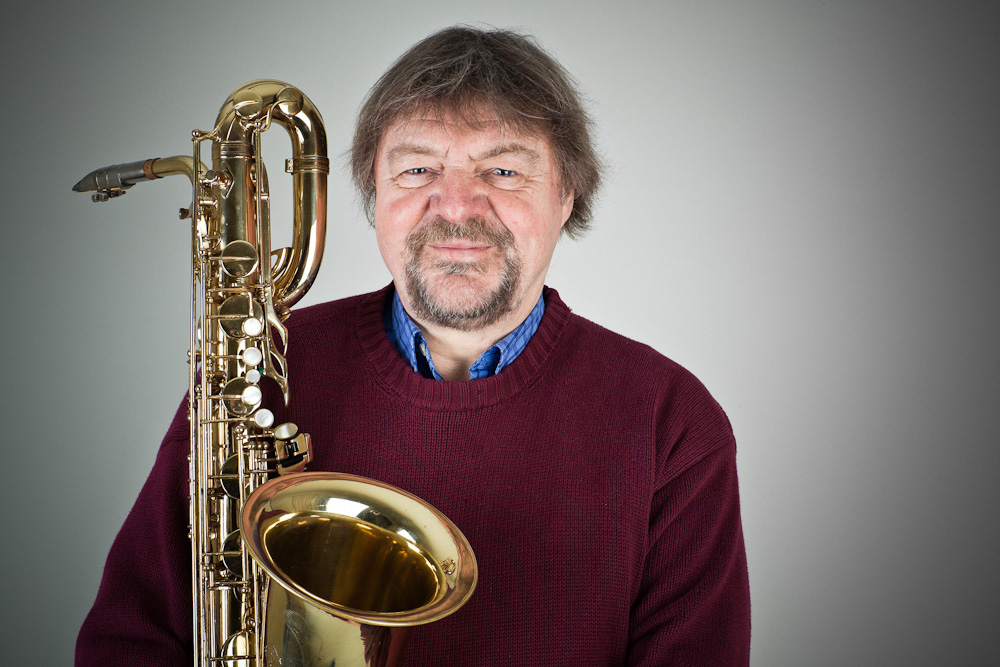
“Sometimes, when you have too many resources, things become too easy.”
You began as a singer, long before you became an instrumentalist. What did singing give you when you later moved to wind instruments? Are there voices from those years that have stayed with you?
John Surman: When you start singing at that age, and I had quite a good soprano voice, you learn to breathe and you learn to read music to a certain extent. It is also great ear training. Singing is simply a wonderful start for anybody who wants to become involved in music, and it gave me a great foundation when I picked up a wind instrument.
You asked about particular voices. There was an English contralto called Kathleen Ferrier who had a wonderful, dark voice, and I was very taken by it. She sang a folk song called ‘Blow the Wind Southerly’. I think it is English, perhaps Scottish. I loved the sound of that, so maybe I began to be drawn to darker voices quite early on.
I did quite a lot of solo singing in oratorios as a choirboy. You become accustomed to a large acoustic and to sending your voice out into that space. I suppose that may have been useful too.
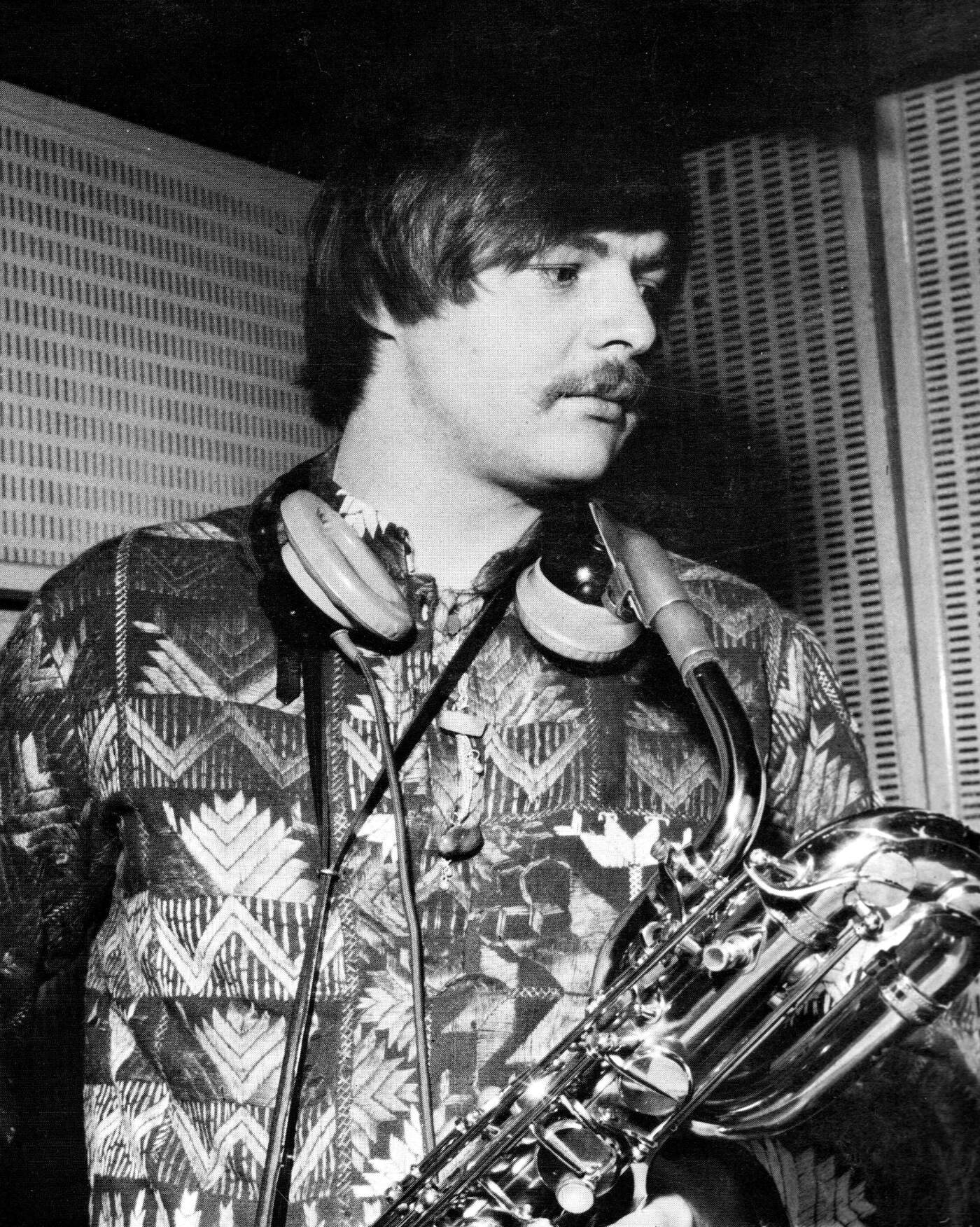
After your voice broke, you bought a second-hand clarinet and soon moved to the baritone saxophone. Peter Russell in Plymouth pointed you towards Harry Carney. What did Carney and the Duke Ellington Orchestra show you about the instrument?
It was Peter Russell who said, ‘The man you should really listen to is Harry Carney.’ Of course, the way to hear Carney is with the Duke Ellington Orchestra. It is not only what he did as a soloist, but what he brought to that whole music. In a way, it was a lesson about much more than the baritone saxophone. What better introduction could you have to the wide world of jazz than Duke’s band?
That was very important. It was not that I could try to sound like Harry Carney, but he gave me some idea of the baritone’s role and of what the instrument could do.
As for moving away from your influences and recognising a sound of your own, that takes a long time. At that stage I was nowhere near it. I was trying to blow the instrument, get from the top to the bottom, understand something about the language of jazz, learn to improvise and discover how to play with other people.
Mike Westbrook knew you while you were still at school, and your musical paths continued to cross for many years. What did his encouragement mean to you at that age, and what do you remember most strongly about him now?
Mike led a weekly jazz workshop at Plymouth Arts Centre. As you say, he was an art student, and many of the people around that workshop, including Keith Rowe, who went on to become a founder member of AMM, and the trombonist Ron Hills, were at the art college. They all shared an exploratory ethos and a desire to be creative.
I was a schoolboy in short trousers, coming from a very Victorian background. Mike had been around, seen a little of the world, completed his National Service and been to college. He brought some wisdom, and his enthusiasm was a real inspiration to me. In many ways, he changed my life. I am not sure how things would have turned out if I had not met him.
His creativity stayed with me. He did not want to copy things. He was searching for his own way of making music, and that was a great influence at the time. What did he see in me? I have no idea. Probably just a very enthusiastic young man who wanted to play.
The memory I have is of a very approachable and generous person to whom I owe a great deal. I also think ‘Marching Song’ was way ahead of its time as an anti-war work. It is as relevant now as it was then. It would be interesting to hear somebody revive it in another form.
At the London College of Music you studied clarinet while playing saxophone on the London jazz scene at night. How did those two sides of your musical education fit together? What did Wilfred Kealey give you that remained important later?
It was Mike who said, ‘You like music, so why don’t you apply to music college?’ I was supposed to be studying the sciences, but I applied and managed to get into the London College of Music. Basically, I was training to become a music teacher. I had started too late to become a classical clarinettist and was lucky to pass the audition at all.
I studied with Wilfred Kealey, and he placed enormous importance on breathing, tone and basic control. He taught me how to produce a sound on the instrument and made sure that I understood its fundamentals and could find my way around it. We spent a lot of time with the classical repertoire, and I did what I could with that.
I was at the college for three years, followed by a year at the University of London Institute of Education. During that fourth year, we could continue having lessons with our original teachers. I had grown up in a very formal world of school ties and calling teachers ‘sir’, so I eventually said, ‘Mr Kealey, sir, I have to tell you that I have been out playing baritone saxophone every evening.’ He replied, ‘I thought there was something going on with you, Surman.’
By then I had saved enough money to buy a bass clarinet, so I took it to him. He said, ‘I don’t know anything about bass clarinets.’ I discovered that clarinettists can be a very particular breed when it comes to the bass clarinet. But he was obliging and helped me with it, and those lessons moved me forward.
In the early part of my career, I did not think much about the relationship between my formal classical studies during the day and the jazz I played at night. Later, when I began writing for brass, voices and strings, I suddenly realised that I knew something about voice leading, orchestration and how those instruments worked. The two sides eventually connected, and much of what stayed in my mind from college proved useful.
The London scene of the late 1960s brought you into contact with musicians such as Dave Holland, John McLaughlin, John Taylor, John Stevens, Evan Parker and Chris McGregor. Why do you think audiences were so open to adventurous music at that moment?
The first thing to understand is that, in the 1960s, the avant-garde was popular across all the art forms. It was happening in painting with people such as Rauschenberg, in the theatre with the Angry Young Men, and in dance. Revolutionary things were happening everywhere. Think of Coltrane’s ‘Ascension’. It sold thousands of copies, and that is pretty far out. There was a general interest in the avant-garde, to use that word again.
You also have to remember that Britain was emerging from a long period of austerity, with memories of food and clothes rationing still very close. There was a new freedom of choice and a great bursting of energy. I think that fed into all the activity in music and the jazz scene, not only in London but throughout the country.
As far as jazz was concerned, there was an especially strong period from around 1967 into the early 1970s, when John Stevens, Evan Parker, John McLaughlin, Chris McGregor, Mike Gibbs and all those people were doing their thing. It was a relatively short period, but it was very intense and a wonderful time to be there. I was simply hoovering up everything I could find, playing with as many people as possible, enjoying myself and learning.
Charles Fox once called you ‘the Common Market Jazz Man’ because you were working so extensively outside Britain. What did Europe open up for you? Did the different countries feel like separate scenes or part of one larger network?
The UK is an island, and there were only so many possibilities. You could live in London, work in Manchester, perhaps go up to Scotland or Birmingham. Once you moved into Europe, you could play in Madrid, Copenhagen, Berlin and many other places. It simply opened the door to a much wider scene.
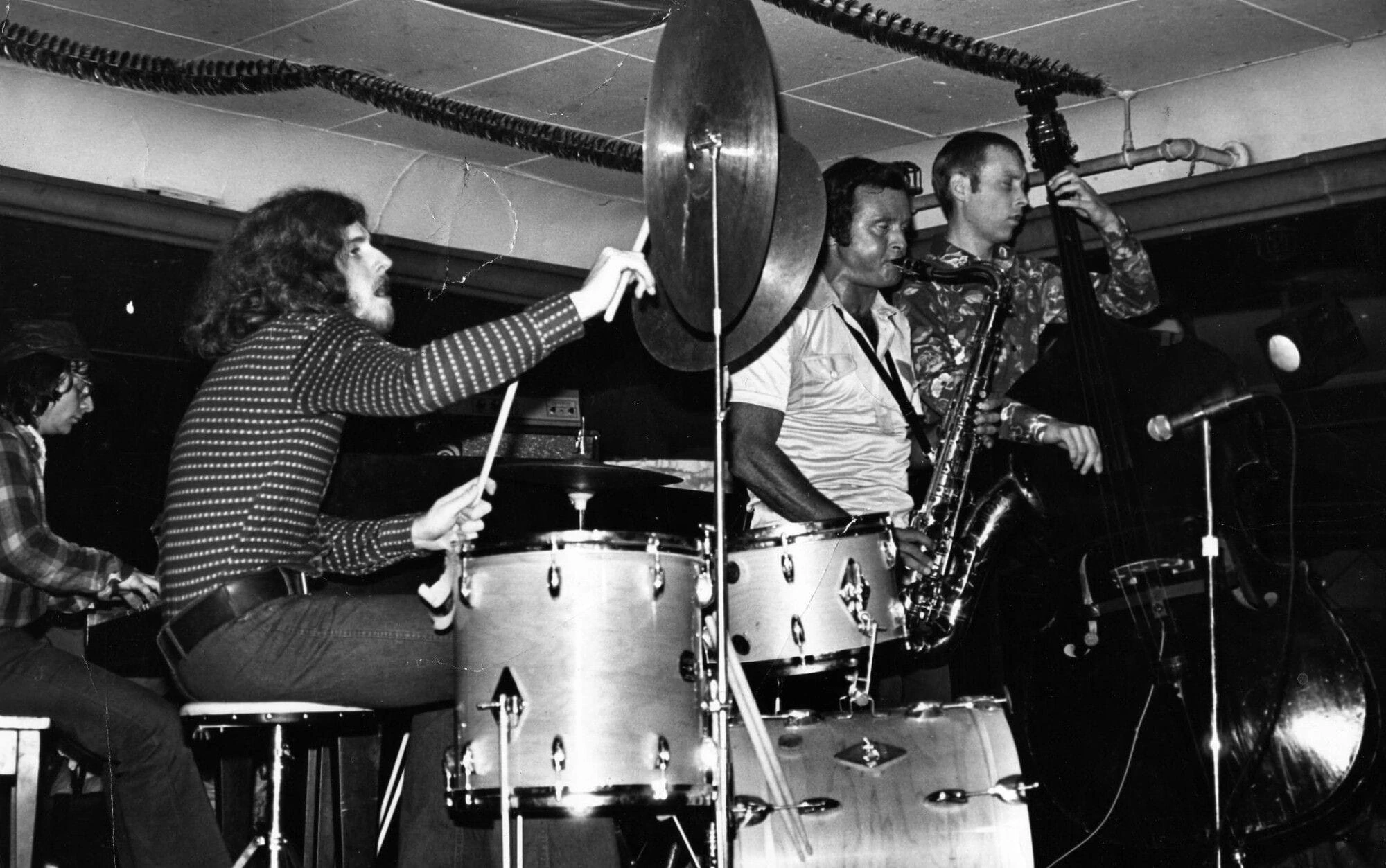
When Stu Martin and Barre Phillips came through London, we got to know each other and decided to do something together. For practical reasons, they could not live in Britain because of the Musicians’ Union restrictions, so if we were going to form a group, we had to live abroad. The three of us moved to Belgium.
Even before that, windows had begun to open in Germany in particular. The radio stations supported a great deal of jazz activity. Hans Gertberg produced jazz workshops in Hamburg, while Joachim-Ernst Berendt was involved with projects around Baden-Baden and Frankfurt. There were many opportunities, including crossover productions, and I was invited to some of them. Whenever I could, I took friends along to play.
As for audiences, once you communicate with people, they respond in much the same way. Some venues make it easier to listen and create closer contact between artist and audience, but that is another matter. As far as the people themselves are concerned, people are people.
Soon after your first album as a leader, you recorded ‘Extrapolation’ with John McLaughlin. What do you remember about the session and his unusual time signatures?
I do not think you feel that kind of pressure at that age. It is all excitement and adventure. There were certainly some interesting time signatures on ‘Extrapolation’, perhaps 11/8 and 13/8, although I cannot remember them now. But it was not a problem. You simply got on with it.
We had one rehearsal in the basement of Ronnie Scott’s and recorded soon afterwards, probably the next day. As I remember it, Tony Oxley and I were both in Ronnie Scott’s band at the time. The studio was not far from the club, so we left the session, played a set with Ronnie’s octet, then returned and carried on recording into the night. I am not absolutely certain of that now, but I think that is what happened.
John was not difficult to work for, so it was an enjoyable session. ‘Extrapolation’ later became a special album for many people, and of course it was John’s first record as a leader, which gives it an added importance. At the time, though, it was another day at the coalface. It was exciting and great fun, but it was another job.
We did a couple of gigs together afterwards. Brian Odgers was not available for at least one of them, and I think Dave Holland played. We did not perform together very much, but it was good fun. Only later did the album acquire the reputation it has now.
The 2025 release ‘Flashpoints and Undercurrents’ presented the complete NDR Jazz Workshop session you recorded in Hamburg in 1969. Hearing it more than fifty years later, what struck you about your younger playing and the energy of that group?
The radio workshops in Hamburg were very important. If you wrote material, there were royalties, and everybody received a substantial fee. It was all handled very professionally, and the sessions were wonderful opportunities to learn about recording and the entire process of making records.
I think Hans Gertberg invited me and made some suggestions, including having Ronnie Scott involved. The other musicians were fairly obvious choices because Mike Osborne, Alan Skidmore, Harry Miller, Alan Jackson and Kenny Wheeler were all people I was playing with, or whose names were very much in the air. It was a lovely proposition.
I have listened to some of the release, although I do not think I have yet heard both CDs from beginning to end. Nothing surprised me greatly. The memory is still there. I begin hearing one of the pieces and think, ‘Oh yes, I remember that.’ It has not completely disappeared from my mind.
I did notice the very strong John Coltrane influence in my soprano playing, but there is nothing surprising about that. Anyone who played soprano at the time was fiercely inspired by Coltrane. My sound may have changed a little since then.
The other striking thing is the sheer amount of energy going into the music. It was incredibly intense. Sometimes the desire to get everything out there becomes so overwhelming that the listener may need some kind of filter. But in those times and circumstances, that was how the music was. We had to get on with it, and we did.
The Trio with Barre Phillips and Stu Martin could be extraordinarily intense. What made the work so demanding, and what finally told you that you needed to step away?
When we got to Belgium, we found a house. Barre never lived there all the time because he had connections in Paris, but we would spend a week or so together, then go away for a while. Quite soon we began getting gigs, and once that happened, we worked very hard. There was a great deal of travelling all over Europe in a Volkswagen bus.
Barre and Stu were both older, sadder and wiser, and much more experienced on the road than I was. The thing that made the music especially difficult is that sound systems were nothing like they are now. Clubs and even concert halls often had no monitors. Stu had a large drum kit with two bass drums, Barre had an amplified bass, and I was playing a baritone saxophone, which is not the easiest instrument with which to cut through all that sound.
Playing at that level of intensity took an enormous amount of energy. You received very little sonic feedback from the stage. It was all about putting the sound out. The combination of constant travel and playing those instruments with such physical intensity was the hardest part. Musically, the group was fine.
In the end, I was simply exhausted, physically and mentally. I did not have a breakdown or anything like that. I was just tired and needed a break. Suddenly I thought, ‘Hang on a minute, I have to get away.’ That is what I did. It was traumatic for everybody at the time, but that was the way it had to be.
That break led into ‘Westering Home’, which became an important period of reflection for me. I began making loops and exploring melodic ideas without a rhythm section. It may sound like a simple observation, but removing bass and drums made me ask, ‘Where am I now? What am I doing?’ That became important for S.O.S. and for many other things I did later.
S.O.S. worked with choreographer Carolyn Carlson on ‘Sablier Prison’. What did working with dance teach you about space, timing and supporting movement?
Of course it did. Space becomes enormously important, and so does the whole sense of theatre. I often thought of the dancer as the soloist. You were accompanying somebody, but the solo was movement rather than another sound.
‘Sablier Prison’ was a group piece with a great deal of collective dancing, and parts of the music were highly disciplined. If you are using rhythm for dance, you have to get the tempos right. You cannot suddenly improvise something twice as fast or half as fast as the dancers’ movement. You have to support them. In other places, we were completely free to respond to the way a dancer felt.
Those first pieces with Carolyn were quite structured, and they gave me a tremendous education in theatre. The Paris Opéra was certainly the largest stage I had worked on at that point. Later, I did a couple of one-to-one pieces with Carolyn that involved much more improvisation. Even then, it was still a duet. You might be accompanying, but you were also responding to each other.
It is rather like film music in the sense that you support the action, help create the emotion and underline what is unspoken behind a movement. The dancers naturally suggested musical decisions and inspired you to find other solutions. The biggest lessons were about space and pacing. You do not have to fill every gap.
‘Westering Home’ grew out of experiments with multitrack recording at Tangerine Studios. Was it planned as an album, or did the record emerge from the experiments? Did the limitations of the equipment help?
‘Westering Home’ was really a research project. I went into the studio and thought, ‘What can I do?’ I spent a day there, came home, listened to the results and decided they were not too bad. I thought I might be able to make a record from them, so I went back and added a couple of other things.
This was before synthesizers became affordable, so we used processes such as tape flanging in the literal sense, putting a thumb against the edge of one of the reels. We worked with reversed tape, tape loops and all that sort of thing. Robin Sylvester, who owned Tangerine and engineered the sessions, was a tremendous help. It was great fun discovering how those processes worked.
The primitive nature of the equipment was probably useful because it forced you to be creative. Sometimes, when you have too many resources, things become too easy.
When you began working alone with electronics, did melodies from your childhood and the music you had sung in church start to reappear naturally?
One thing leads to another. With electronics and synthesizer loops, you could create repeating patterns and atmospheres. It was rather like the dance situation we were talking about. A pattern creates an environment in which the dancer becomes the soloist. The electronics created an atmosphere in which I could place the soprano, bass clarinet or baritone, whichever instrument suited that particular environment.
I had grown up singing songs from ‘The National Song Book’ because it was the only music book we had at school. That was where I learned melody. So it is not surprising that, when I was thrown back on myself and wondering what to do, those kinds of melodies, along with some of the church music, began to emerge. I realised, ‘This is all right. This is simply how I am.’
It was probably liberating, but I doubt that I analysed it at the time. I have never been particularly analytical about making music. I am very much a person who thinks that if it feels right, it is all right. Working that way brought out those simple melodic elements, and there they were. I could not do much about it. That is what I sound like.
‘Morning Glory’ brought together John Taylor, Chris Laurence and John Marshall, and the three later returned with you on ‘Stranger Than Fiction’. What kept that musical relationship alive?
The important thing was the relationship with John Taylor, John Marshall and Chris Laurence, and to a certain extent with Griff. Terje was involved too, of course, and I worked with him again later in Norway. But John, Chris and John were people I had, in a sense, grown up alongside. It was simply wonderful to play together. John Taylor was an extraordinary pianist.
Whenever we met, we had a small repertoire, but the music might go one way on one occasion and somewhere else the next time. We knew each other well, although we might play together only two or three times in a year. By the time we met again, each of us had been doing different things and brought those experiences back to the group.
Chris might have been doing more arco playing and would bring out the bow more often. John Marshall might arrive with some different percussion, and John Taylor would have been developing other ideas. All of that entered the music. We were not trying to reproduce the same thing every time. We were trying to discover what was happening that day.
The old understanding was the foundation that made it work, and then we carried on from there.
You and Karin Krog were both experimenting with electronics quite early. What drew you to transforming sound in that way, and what has kept your collaboration unpredictable?
For me, all the electronic work came from curiosity about sound. I have always been interested in different instruments. I once heard Sonny Rollins say that he loved looking through the windows of music shops at the instruments, and I am exactly the same. Musical instruments are often beautiful objects. Think of French horns, violins and harps. They can be as beautiful as the music they make.
Electronics offered a whole new palette of possibilities. There were plenty of unpleasant electronic sounds, of course, but you can make unpleasant sounds on any instrument. That was not the point.
Karin had been working with Don Ellis in Hollywood, where she encountered ring modulators, phasers and other devices. She brought some of them back to Norway and began experimenting with loops independently of anything I was doing. We knew each other around the time of Expo ’70, then went our separate ways for a while.
Later, we crossed paths at a gig in Nuremberg. She was travelling one way and I was going the other, and Stu Martin said, ‘You two should make a record together with all this electronic stuff.’ That is how it came about.
‘Cloud Line Blue’ was the record where we ran out of money. We had so many synthesizers in the studio and spent several days working on it. We completed the recording but never properly finished the mix. Eventually, Karin found an outlet for it in Norway through Polydor.
If you do not work with too many rules, everything remains unexpected. A piece is never quite the same twice. Sometimes it is surprising when it comes out similarly, and sometimes it goes somewhere completely different.
Working with Karin also gave me the opportunity to write songs and learn how to write for a voice. That was challenging and great fun. I have written quite a lot of songs for her, and the wonderful thing is that she sings them. The best way to discover whether your writing is any good is to hear somebody else perform it.
Your first ECM appearance was on Barre Phillips’ ‘Mountainscapes’ in 1976, and ‘Upon Reflection’ followed as your first ECM album as a leader in 1979. What did Manfred Eicher bring to the process, particularly when you were building multitracked pieces alone?
I had spoken with Manfred about ten years before I finally recorded for him as a leader. During the Trio period, Barre, Stu and I were under contract to other companies. I later recorded for Island and Dawn, so there were various contractual commitments. It was not until 1979 that I made ‘Upon Reflection’.
I have made quite a few records with Manfred since then, as you know. He was immensely valuable on the solo projects. If you are building a multitracked piece with seven, eight or ten layers, it helps enormously to have someone who can listen as you add the third layer and say, ‘Yes, John, that sounds good. You could add something here, but if you do any more over there, it is going to become crowded.’
You still need a clear idea of what you are trying to do, but it gives you somebody with whom you can exchange thoughts. You do not have to stop and reassess every part alone. He was very important in all that work.
I also saw him produce sessions when I was working with people such as Paul Bley and Miroslav Vitouš. He might say, ‘This piece is good, but don’t you think it worked better when you did it this other way?’ He is a very serious producer, and I always found him immensely helpful.
He never stopped me from doing anything. Occasionally, I might receive a wry look that seemed to ask, ‘Is this really what you want?’ If it was, he let me get on with it. It has been quite a journey working with him, and always a pleasure.
Do you think of the baritone saxophone, soprano saxophone and bass clarinet as separate voices, or different parts of the same voice? How do you decide which instrument belongs to a piece?
I think of it in all those ways. Sometimes they are the same voice and sometimes they are different voices. Certain pieces feel right on one instrument, while with others it does not matter. A piece may feel best on bass clarinet one day and on baritone another.
When I am writing, I may think, ‘This is going to work on soprano,’ or, ‘This is a dark piece, so it belongs to the baritone.’ At other times I have to try it and see. It can depend on the key, the range, the surrounding texture and what else is happening in the arrangement.
If John Warren had written an arrangement for the Brass Project, for example, he might ask whether I wanted a part in B-flat or E-flat. I would look at the texture and think, ‘This is already quite dense with all the bass trombones, so let us use the soprano,’ or perhaps the reverse. It is horses for courses.
I am so accustomed to all three instruments that I am happy with whichever one suits the moment. The biggest change later in life concerned travelling with the baritone. During my final years of touring, I often travelled without it and discovered that the bass clarinet could fulfil much of that role. It is not the same sound, but it can do the job.
As for my physical relationship with the baritone, the answer is really, ‘How is your back?’ It certainly feels heavier now than it did when I was twenty, although I can still handle it.
Places such as Bodmin Moor and Saltash appear throughout your music. Do titles usually come before the music, or do you recognise the place only once a piece has begun to take shape?
Sometimes the titles mean something very specific to me, and sometimes I think they offer listeners a way into the music by placing an image in the mind.
With ‘Bodmin Moor’, for example, I could picture trying to cycle home from there late in the evening as the mist came down. It is a rather spooky place. ‘Whistman’s Wood’, on another album, refers to a place on Dartmoor with a similar atmosphere. Those are pieces where I know what the image is. I may not know it when I begin writing, but as the piece develops, I recognise where it is going and think, ‘Yes, this is Bodmin Moor,’ or, ‘This is Whistman’s Wood.’
‘Saltash Bells’ was directly inspired by hearing bells across the River Tamar when I went sailing there with my father. Some titles arrive with the music, but I do not always know precisely where they come from.
Everything begins with a blank sheet of paper or a blank mind. As a journalist, you must know that feeling of wondering what you are going to write. It is a matter of making the first move. Gradually, you begin to see how things are taking shape. Once you have done a certain amount, you may think, ‘This is becoming very dark, so perhaps I need to brighten something here.’ Then you begin to understand what you are working towards.
At the beginning of a project, it is often a matter of discovering what is in the air and what feels right. As for sentimentality, I can only hope that the pieces do not become sentimental pictures of the past. There is always that danger, and I try to avoid it.
You have written a great deal of music for large ensembles made up of very distinctive players. What did you learn from Gil Evans’ way of leading a band, and how do you make room for individual voices in your own writing?
I have never enjoyed writing for an anonymous big band, where you sit down and write for four trumpets, four trombones, five saxophones and a rhythm section without knowing any of the musicians. Most of my large-ensemble music has been written with particular people in mind. I want to know who is there and who I am writing for.
That probably goes back to Ellington and the way he wrote for the individual voices in his band. The Brass Project and my choral pieces were created for people I knew and with whom I was working.
The magic of Gil is difficult to explain. We all admired him so much. I remember arriving at gigs where everybody was talking and there was a general hubbub. Somebody would say, ‘Gil’s here,’ and everyone would settle down. Gil would appear, the whole atmosphere would become calm, and we would feel ready to play.
Some people have that kind of presence. They make you feel comfortable and give you a sense of leadership without your quite knowing how. Gil hardly seemed to do anything, but by God, if he stood up and waved his arms, something happened. It was magic.
I have never been very analytical about other people’s music. Much as I love Ellington’s band, I never wanted to dissect how he did everything. That was his magic. I had to find my own way of putting things together.
Leaving space for individuals comes back to knowing the people. The parts for the Trans4mation String Quartet are largely written down, but while writing I might think, ‘It is time to hear Bill Hawkes’s viola here,’ or, ‘I must give Rita Manning something beautiful to play over the top.’ I might want a rhythmic passage in the middle, or a line for Nick Cooper to play with Chris Laurence.
They will interpret those parts in their own ways, and the dynamics may change from one performance to the next. If Chris and I become more intense during an improvisation, the quartet will respond. We may begin gently and grow more powerful, or start with greater force and go somewhere else. They react to what happens in the moment.
The same principle applies everywhere. Listen to the way somebody plays. One musician may thrive on high intensity, while another is a beautiful ballad player. You try to create a place in the music where that person’s particular voice can emerge.
Malcolm Griffiths was extremely helpful with the Brass Project. He was a wonderful soloist, but he also knew which players to bring in. You could not always hire exactly the same people, but Griff found compatible musicians who genuinely wanted to be involved. Chris Laurence did something similar when we formed the Trans4mation String Quartet. The people with whom you work are enormously important.
You have worked extensively with classically trained musicians, from ‘Proverbs and Songs’ and the string projects to The Dowland Project. What have those musicians brought to your work, and how has that relationship changed since the 1960s?
The Dowland Project was interesting because I felt that I was the person taking the greatest risk. I thought, ‘My God, I could make a complete arse of myself trying to improvise on Dowland. This is dangerous.’ But it worked, and my early experience in the choir became useful again.
I had learned to read plainsong for the psalms, so when John Potter arrived with an archaic-looking piece of music written in C clefs, I knew what they were. That was handy. The whole project was challenging and tremendously exciting.
During my lifetime, the relationship between jazz and classically trained musicians has changed enormously. In the 1960s, some string players would not use their best violin for pop music. Anything slightly strange or outside their normal world was unlikely to happen.
Successive generations changed that, as did the development of film music. Younger classical musicians now have a much broader range of skills. They may not all be great improvisers, but they can handle glissandos, freer passages, unusual textures, syncopation and jazz rhythms. Brass players are very aware of the techniques used by jazz musicians.
The musicians in London Brass were wonderful. There were excellent trumpet and trombone soloists in that group, and they had no difficulty with syncopated or jazz-based material.
What do classically trained players bring? In the Brass Project, we had two magnificent principal bass trombonists, one from the London Philharmonic and the other from the BBC Symphony Orchestra. They brought an extraordinary depth and foundation to the band. Griff could find remarkable players like that, and they gave real body to the music. Great musicians are great musicians.
On ‘Thimar’, you and Dave Holland were given music without conventional bar lines or chord symbols. What did that ask of you as listeners?
It was a little bit of a shock. Dave and I stepped into the corridor, looked at the parts and thought, ‘What is this?’ But it was fine.
You certainly could not play on automatic pilot. Not that either Dave or I would want to, but we had to pay close attention to the way Anouar phrased the music. We had to pick up on that phrasing and find our place within it.
But that is what jazz musicians are supposed to do, isn’t it? We listen and relate to one another. This was simply another way of doing it.
I do not know whether silence itself was more important than usual, but the oud is a very quiet instrument, so listening and finding the right dynamic were essential. It was Anouar’s music. He was not trying to move towards jazz. He was finding his own path through the material and improvising in the context of that music. It was our job to fit into that world when he was playing, although there were also moments when we had the freedom to step outside it.
It was a great adventure in listening and in exploring music that sounded different and rested on a different foundation.
Jack DeJohnette died in October 2025. What first brought the two of you together, and what do you remember about him away from the records?
What made the communication immediate was that Jack and I shared the same sense of humour. That may sound like a small or trivial thing, but it was not. It brought us together very quickly.
Jack was married to an English woman, Lydia, and during his time in London he had listened to some of the radio comedy programmes of the 1960s. I loved them too. They were full of strange voices and catchphrases. After we met at Ronnie Scott’s, we would telephone each other and exchange these ridiculous voices. So we became friends before we really began playing together.
The first time we actually played was during a teaching event in Italy. Jack was giving a drum clinic and I was giving a saxophone clinic. We said, ‘Let us combine them and do the clinic together.’ When we began to play, the music took off. It was fantastic.
Jack recommended me to Manfred for Mick Goodrick’s ‘In Pas(s)ing’, with Eddie Gomez. Then, after I had made ‘Upon Reflection’, Manfred asked what I wanted to do next. I said that I would like to make a duo record with Jack, and that became ‘The Amazing Adventures of Simon Simon’. After that, as they say, the rest is history. Whenever we could, we got together and played duo concerts.
Ultimately, my son, who is a sound engineer, married Jack’s youngest daughter, so we became family. That is the story of Jack and me apart from all the music.
He was amazing to play with and had a tremendous spirit of adventure. He used electronic drums, went through a period of playing Latin American percussion and would sometimes arrive with a full set of congas. He was also a fine pianist, so we played pieces with him on piano, as well as things using completely electronic drums.
There was always a feeling of, ‘Let us try this. Let us see what happens.’ Then he might establish a medium-tempo groove in 8/8, 12/8, rock, funk or whatever it happened to be, and we would improvise.
Jack was open, and he made it easy to make music with him. But when things became complicated and he really got stuck in, you had to listen and hold on because it could become quite a hairy ride.
“Improvisation is the act of sketching the idea. Composition allows you to return and fill in more of the detail.”
Your work has moved between completely improvised music and carefully written structures. How do composition and improvisation differ for you? Is improvising a kind of composition in real time?
Let us be realistic, they are distinct activities in one sense. Composition involves sitting down, nowadays with a computer and originally with paper and pencil. You have the opportunity to go back and think, ‘I could do that better.’ In improvisation, it is too late. As Eric Dolphy said, once the music is in the air, it is gone.
The difference reminds me of the artists you used to see at the seaside who would draw your portrait in three minutes. It would be only a few lines, but it was recognisably you. For me, improvisation is like that. It is compositional sketching in real time. You cannot fill in every detail or play every note.
To play absolutely everything that comes into your head would be extraordinarily difficult. A chromatic phrase in a particular tempo might need to be practised before you could execute it exactly. If you are genuinely trying to create rather than simply allowing your fingers to repeat familiar habits, you can only suggest certain things, hint at them and build from there.
That interests me more than playing stock phrases or shapes over chords. Improvisation is the act of sketching the idea. Composition allows you to return and fill in more of the detail.
The trick is finding ways to combine the two. If you know who you are writing for, you can create material that the musicians can enhance and develop. You can make a structure flexible enough to change according to the circumstances.
That is an ongoing process. I would not claim for a moment that I have come close to mastering it. You simply forge ahead, do what you can and hope for the best. You make progress, certainly, but I have yet to find the final answer.
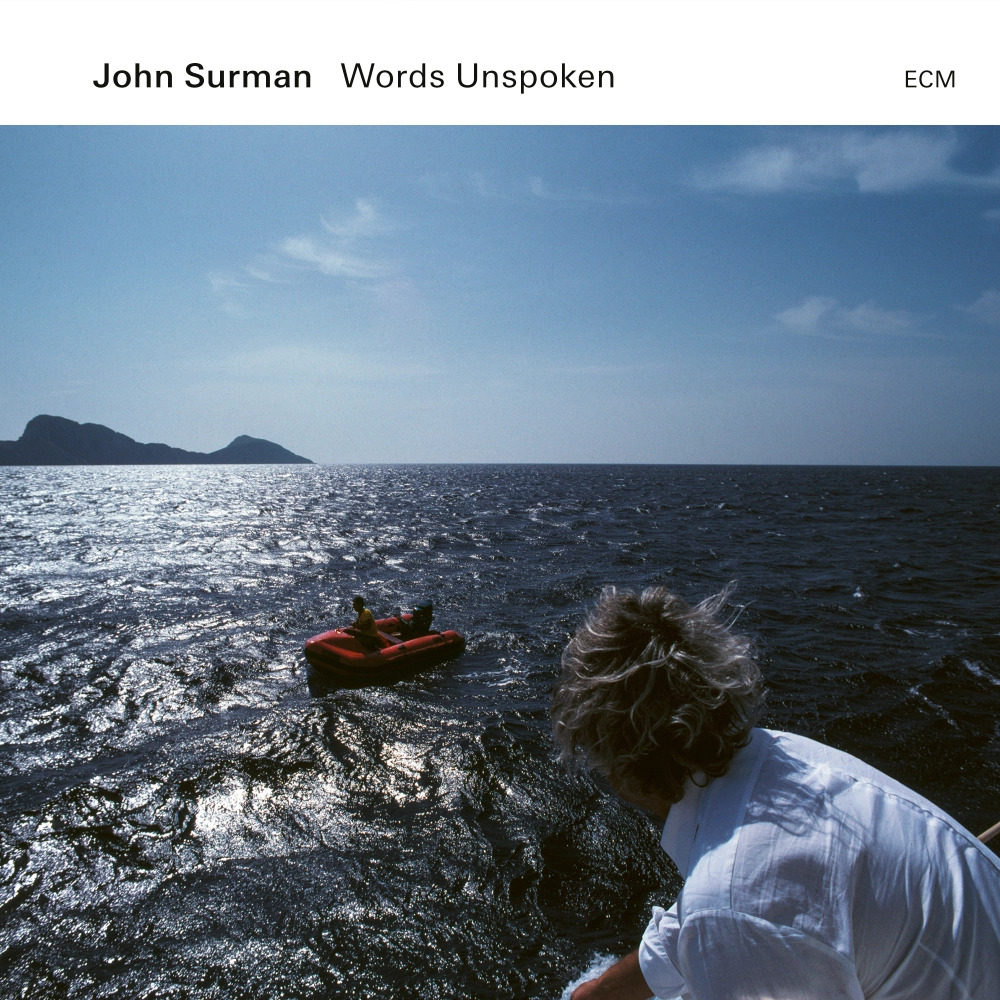
On ‘Words Unspoken’, you gave Rob Luft, Rob Waring and Thomas Strønen sketches with plenty of room around them. What did they find in the music that you had not anticipated? Did the difference in generations matter?
There you have it. You have put it into better words than I could: I supplied sketches and compositions and left enough space for the other musicians to reshape them. You can quote me on that.
What did they find that I had not expected? A great deal, thank goodness.
The generational difference was not especially noticeable to me. For many years I returned to England annually to work on Take Five, a project in which eight or ten young British musicians would spend a week developing their understanding of the music business and working together as a group. Every year, I spent time with a different group of young players. Most were from Britain, although we also held some international workshops.
That meant I was constantly exposed to what younger musicians were doing. Rob Luft had taken part in one of those workshops some years before he eventually played with me, so I already knew his playing. If you keep your ears open, you are aware of what is happening and are less likely to be surprised by generational change.
Younger musicians naturally bring a different energy, but age is only a number. Things change from one generation to the next, and it is up to the rest of us to remain aware of that. They bring what they bring, I bring what I bring, and we put it all into the pot, stir it and see what comes out.
You have stopped touring, although you still play, compose and record. After more than sixty years on the road, what do you miss, and what are you happy to have left behind?
I certainly do not miss the travelling. I am sick to death of airports, waiting, queuing and fighting to get an instrument onto a plane.
Unless you are working at a very high level, always travelling in business or first class with an entourage to take care of everything, moving around day after day with instruments is difficult. Sometimes they do not even want the soprano in the cabin. If you take the baritone, it may not arrive at the next gig. I have been through that so many times. I struggled with it, coped with it and survived, but I do not miss it.
The music is still here. I come down to my studio, take out the horns, put on a loop and play. I may call a couple of musicians and ask them to come over, or Karin may have a gig for which I need to prepare. Almost every day I sit at the piano and play for her while she works on pieces.
It is less intense now, but I still practise every day. Part of that is simply physical maintenance, keeping the embouchure and the chops together, so that when I do have a gig, as I did a couple of days ago, I am ready to play.
I have had a couple of hip operations, so the travelling and getting around became more of a problem. But the music remains important, and it is still going on.
Looking back, what was misunderstood at first, what still feels unfinished, and does it matter to you how the music is labelled now?
I do not really know how to answer those questions. I have been lucky. Most of the work I have done has been fairly well received.
The jazz police in Britain were rather upset when I began using synthesizers, but they eventually got over it, and now everybody is doing it. Some things were met with suspicion at first. Three saxophones seemed a strange thing to do, for example. But that was all right. It did not bother me.
As for unfinished projects, everything is unfinished in a sense. Nothing is ever completely done. There is always something else one might do.
One thing I particularly wanted to complete goes right back to Harry Carney. I wanted to record a tribute to him using Billy Strayhorn’s music, and I have now done it as a solo project. Manfred has heard it, and ECM intends to release it, possibly in early 2027. That may be the first thing I have done for ECM since retiring from touring, although other things are still happening too.
Future listeners are welcome to approach my music however they like. If they call it European jazz, English pastoralism, jazz or, as we all like to say, simply music, then so be it. I will be happy with that.
Klemen Breznikar
Headline credit: John Surman. Photograph: Courtesy of Cuneiform Records
John Surman Website