
Medusa: Rare and Unreleased Recordings from the Mexican Underground, 1973–1997
Medusa began in Mexico City in 1972, during one of the most difficult periods in the country’s modern history. The student movement of 1968 and the Halconazo massacre of 1971 were still fresh in the minds of young musicians, and rock had become something more than entertainment.
For Víctor Moreno, Javier Plascencia and Luis Antonio “Toño” Urquiza, it was a way to speak openly about repression, pollution, frustration and the lives they saw around them.
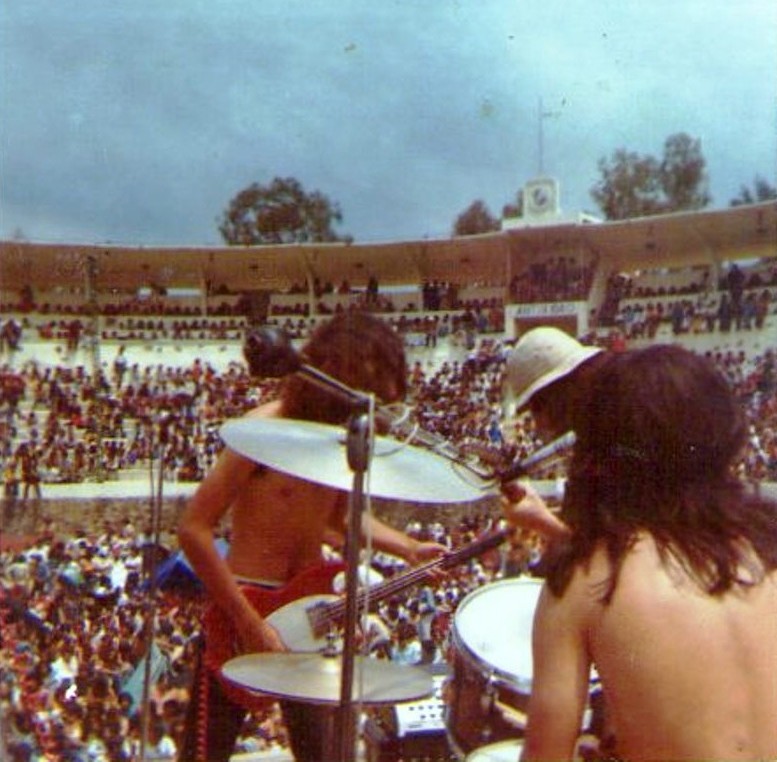
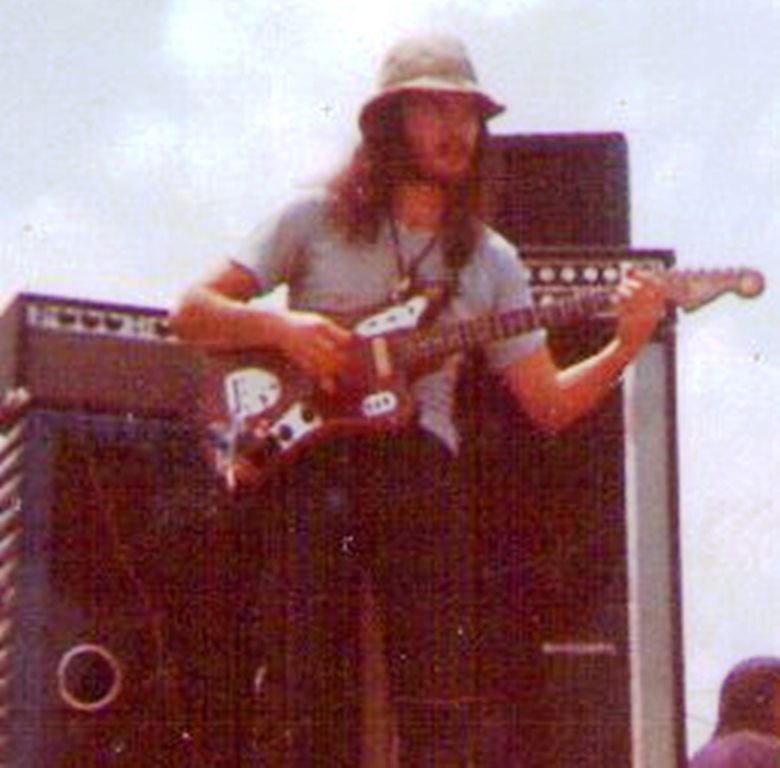
The band made its debut on the Day of the Dead, 2 November 1972. The date was a coincidence, but Moreno later came to see a deeper meaning in it. “We were 18 years old and were a dark, aggressive and discontented group,” he recalls. Medusa rehearsed for six or seven hours a day, developing a sound that was unusually heavy for Mexico at the time. Toño’s distorted Fender Jaguar, Javier’s writing and the direct force of the power-trio line-up gave the band a character of its own.
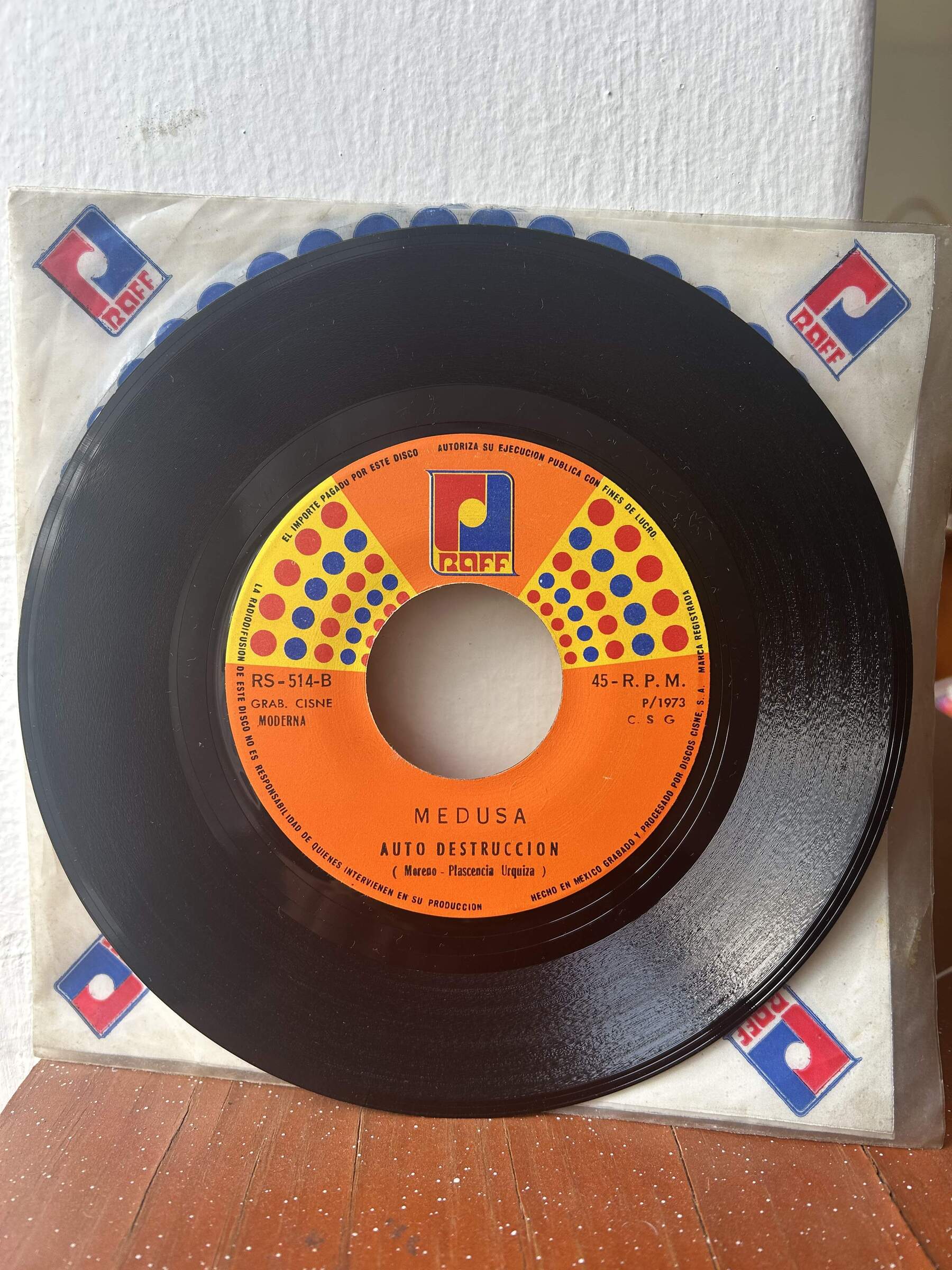
Within six months, Medusa had signed with Cisne-Raff. Their first single appeared in 1973, followed by two further recordings in 1974. Radio, television and large concerts followed, but the opportunities did not last. When the label asked them to move towards romantic ballads, the band refused. Their planned album was never completed, and Medusa entered a long period of changing line-ups, reunions, underground concerts and independently recorded rehearsals and performances.
The recordings collected on the new Out-Sider/Guerssen release cover several chapters of that history, from the original Cisne-Raff sessions to later live and rehearsal tapes preserved by Moreno. They reveal a band that remained remarkably consistent in its intentions, even when the circumstances around it changed.
Medusa never found an easy path, but that is part of what makes the story important. As Moreno puts it, “When you do something with true conviction and dedication, there is no retirement.” More than fifty years after the band began, its music finally has the chance to travel beyond the world in which it was created.
Very special thanks to Alex Carretero for making this interview possible.
“We were the original ‘stoner band’, and no one sounded like us.”
Medusa was formed on the Day of the Dead in 1972, an important date in Mexican culture. Looking back, did starting the band on a day devoted to honouring the dead affect its identity in any way? Did it give the music a connection to memory and loss, or did that meaning only become clear later?
Víctor Moreno: At that time, Javier Plascencia, Luis Antonio Urquiza and I had already spent a few months shaping our identity as a band. In fact, we began playing together in mid-1972 under the name Pax, which had previously been used by a group formed by members of El Ritual in Tijuana. They kindly passed the name on to us as a gesture of support. However, we were already considering changing to a name of our own, and that became Medusa. It was proposed by our bassist, Javier Plascencia, based on the personality of the mythological gorgon, which we felt perfectly represented the impact our music could have.
It was purely coincidental that our debut happened on such a significant date in Mexican culture. Still, it made me think that it would somehow add weight to our work. We were 18 years old and were a dark, aggressive and discontented group. We had come through an extremely sombre period between 1968 and 1971, and in a way, as you rightly point out, it instilled a sense of communion with memory and the recent social losses of that time.
On a personal level, my participation in the 1968 student movement in Mexico City deeply marked me. It made me understand that Medusa had to speak about it, and I did so in a couple of the compositions I contributed. We were unable to record that material in the 1970s, but we always performed it live and finally recorded it at the beginning of the 21st century. I will soon release it along with several demos that we accumulated over the years. As you mention, the significance of Medusa emerging on that date gradually became clearer and stronger over the following decades.
Medusa began only a few years after the 1968 Student Movement and the 1971 Corpus Christi massacre, known as the Halconazo, both of which left deep scars in Mexico City. How did that political climate enter your songwriting, particularly on early tracks such as ‘Self-Destruction’? Were you consciously documenting what was happening around you, or was it simply the only honest way you could write at the time?
This question follows on from my previous answer. Javier Plascencia and I were both participants in and witnesses to the events of that period in Mexico’s history, which culminated in the massacre at the Plaza of the Three Cultures in Tlatelolco on 2 October 1968. We were students at the National Polytechnic Institute, where we met, and we suffered the consequences of those events. We met Luis Antonio Urquiza in 1970, and the following year the brutality was repeated in the episode known as the Halconazo, three months before the Rock y Ruedas music festival in Avándaro, in the State of Mexico.
It was impossible not to feel outraged by what we saw our government was prepared to do to its own people, with the complicity of television and the press, which lied in order to blame young people, students or otherwise, and hold them responsible for the events. From the beginning, we decided to make our own music, and for that reason we addressed different subjects, with an emphasis on social protest. This was directed not only against government repression, but also at issues such as environmental pollution, which we were already experiencing and which was driven by powerful industrial and corporate empires.
We believed that, as a rock band, we had a duty to denounce this. The lyrics of ‘Autodestrucción’ (‘Self-Destruction’), written by Javier with music composed by me, speak about it. Our lyrics documented our time, exposing the facts and putting forward ideas, all infused with heavy rock.
In the early 1970s, many bands associated with the Onda Chicana movement chose to sing in English. You made a deliberate decision to write and sing in Spanish. Was that an artistic instinct, a political stance or both? Did you face censorship, pressure from promoters or more subtle resistance for insisting on playing heavy, socially conscious rock in Spanish?
This is a great question and deserves a detailed answer. I will simply point out that rock in Mexico had been performed in Spanish since its beginnings in the late 1950s. By the mid-1960s, bands arriving in Mexico City from the northern border, very close to the United States, brought with them the rock and blues they performed in English. By 1970, it was still common for bands to record versions of songs from the hit parade, with Spanish lyrics adapted to Mexican culture.
In that context, radio stations in Mexico City suddenly began heavily promoting an original English-language recording by a band from Guadalajara, Jalisco, called La Revolución de Emiliano Zapata, and it became hugely successful. This led record labels to turn their attention to the many bands already active in the scene, signing them and opening up a new and profitable market that had previously been neglected. However, the condition imposed on these bands was that they had to record in English, although there were some exceptions. For this reason, someone came up with the name La Onda Chicana for the movement, because although the bands were Mexican, they sang in English rather than Spanish.
In reality, the Chicano community, meaning the children of Mexicans born in the United States, had nothing to do with it. No actual Chicano bands, such as ? and the Mysterians, participated. Most bands of that era followed the trend and, truthfully, they did quite well, getting their recordings played on the radio alongside artists such as the Rolling Stones, Creedence Clearwater Revival, Led Zeppelin and even the Beatles.
At that time, I was working as a roadie with El Ritual, and I was present during the recording of their only album, which consisted entirely of original material and was sung in English. This was not surprising, since they came from Tijuana, a Mexican city bordering San Diego and Los Angeles, so English was practically their second language.
The climax of the Onda Chicana period was the Avándaro Festival, which drew more than 250,000 people. I was in charge of the backline on stage, and El Ritual gave a standout performance. However, by 1972, most bands had begun to understand that, in order to connect more directly with audiences, they needed to write and record in Spanish. El Ritual had already decided to do this on their second album, which was ultimately never recorded due to circumstances beyond their control.
Bands such as Los Dug Dug’s and La Revolución de Emiliano Zapata released their second LPs in Spanish. Náhuatl, formed by former members of Peace & Love, and later Enigma and Three Souls in My Mind, also began recording in Spanish.
That was the landscape in which Medusa was born. Given that background, it became clear to us, both as an artistic instinct and a matter of social commitment, that if we wanted to make an impact and be understood by our audience, we had to sing in Spanish. The aim was to communicate the message of our compositions, and the reality was that neither our audience nor we ourselves had a strong command of English. Nor did we feel that it was necessary.
We had no problems with the record label over our decision to record in Spanish. They never objected, although they also failed to promote us properly. We encountered more resistance on the radio, where not everyone was willing to broadcast songs with subversive lyrics like ours. Even so, we did receive some radio play in the beginning, especially with ‘Autodestrucción’ (‘Self-Destruction’).
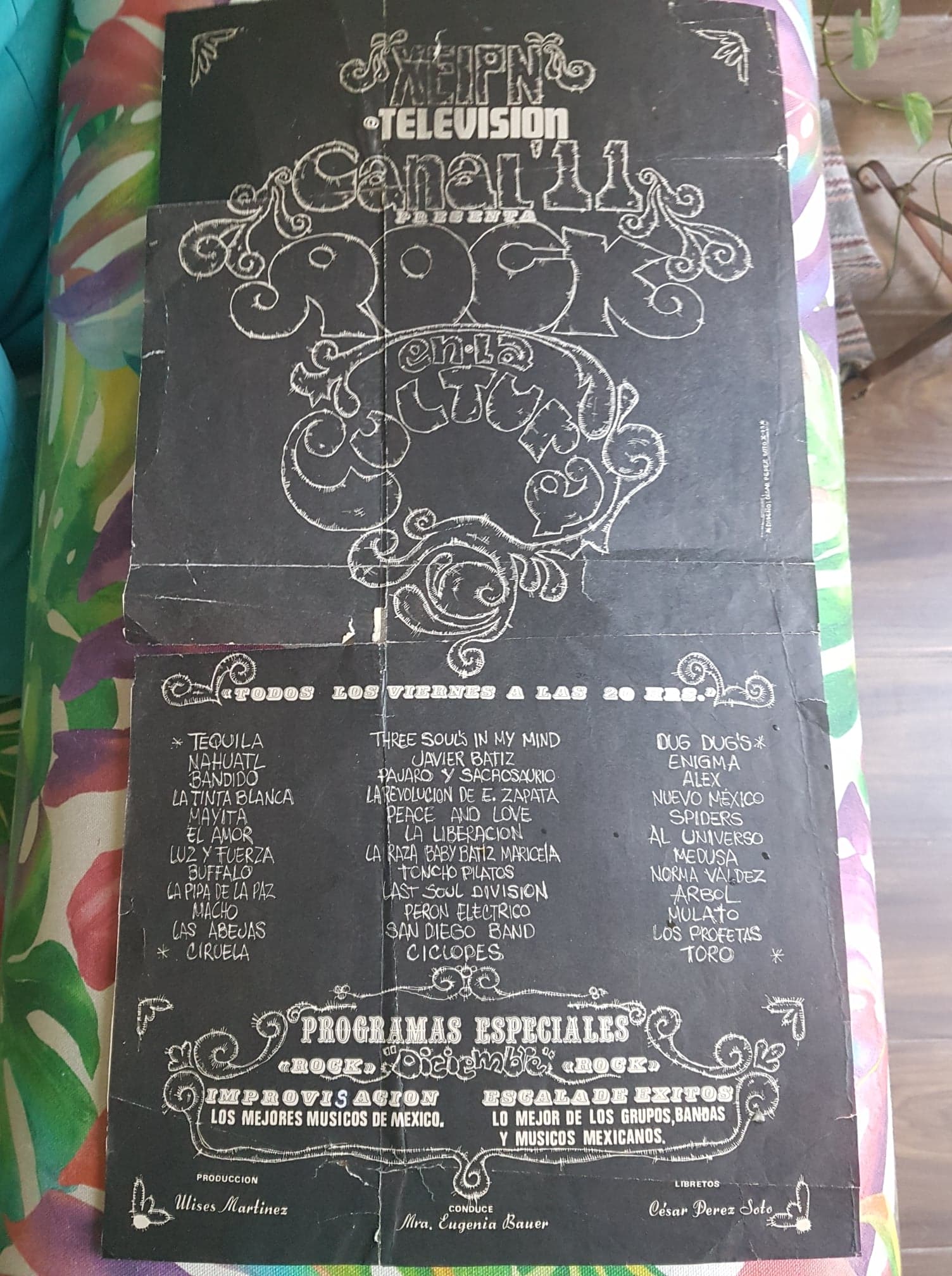
Commercial television was much harder to access. We almost appeared on the programme La Hora Cero, but it was cancelled just as we were about to be given a recording date. The show promoted Mexican rock on Televisa, which was still establishing itself at the time and occasionally allowed rock bands to perform. It would largely stop doing so a couple of years later and only begin again, to a lesser extent, in the mid-1980s. However, we did appear on the legendary television programme Rock en la Cultura, broadcast on Channel 11 of the National Polytechnic Institute, which gave it a cultural rather than commercial profile. Most of the active bands of the 1970s appeared on that show.
And yes, Medusa definitely had a clear political position. As rock musicians, we could not assume that being “artists” meant we should refrain from criticising what our system of government was doing to the country.
Let’s talk about your early rehearsals: Toño on guitar, Víctor on drums, and Javier on bass and vocals. Before the singles and before any recognition, what was the chemistry like in that room? Was it immediate, or did the Medusa sound emerge slowly through trial, error and very loud amplifiers?
There was a little of everything you mention. From the time Javier and I met in 1968, we knew we had to form a band, even though we had no experience at all. We were only teenagers, but we began to play with the idea. When we met Toño Urquiza in 1970, things really took off, largely because of his enthusiasm and his knack for acquiring equipment. We began planning the purchase of electric guitars, as we all played guitar, and in 1971 Toño acquired a Fender Jaguar that Ricardo Ochoa of Peace & Love sold to him.
Later, I got hold of a Kalamazoo bass, and by mid-1972 we began putting the band together, still without a name. At first, I played bass while Toño and Javier both played guitar. We found a drummer, and with that quartet line-up we began arranging our compositions. That was when we started performing under the name Pax. However, the drummer left after our first show, which held us back. We began missing opportunities because we had no drummer, although we continued rehearsing.
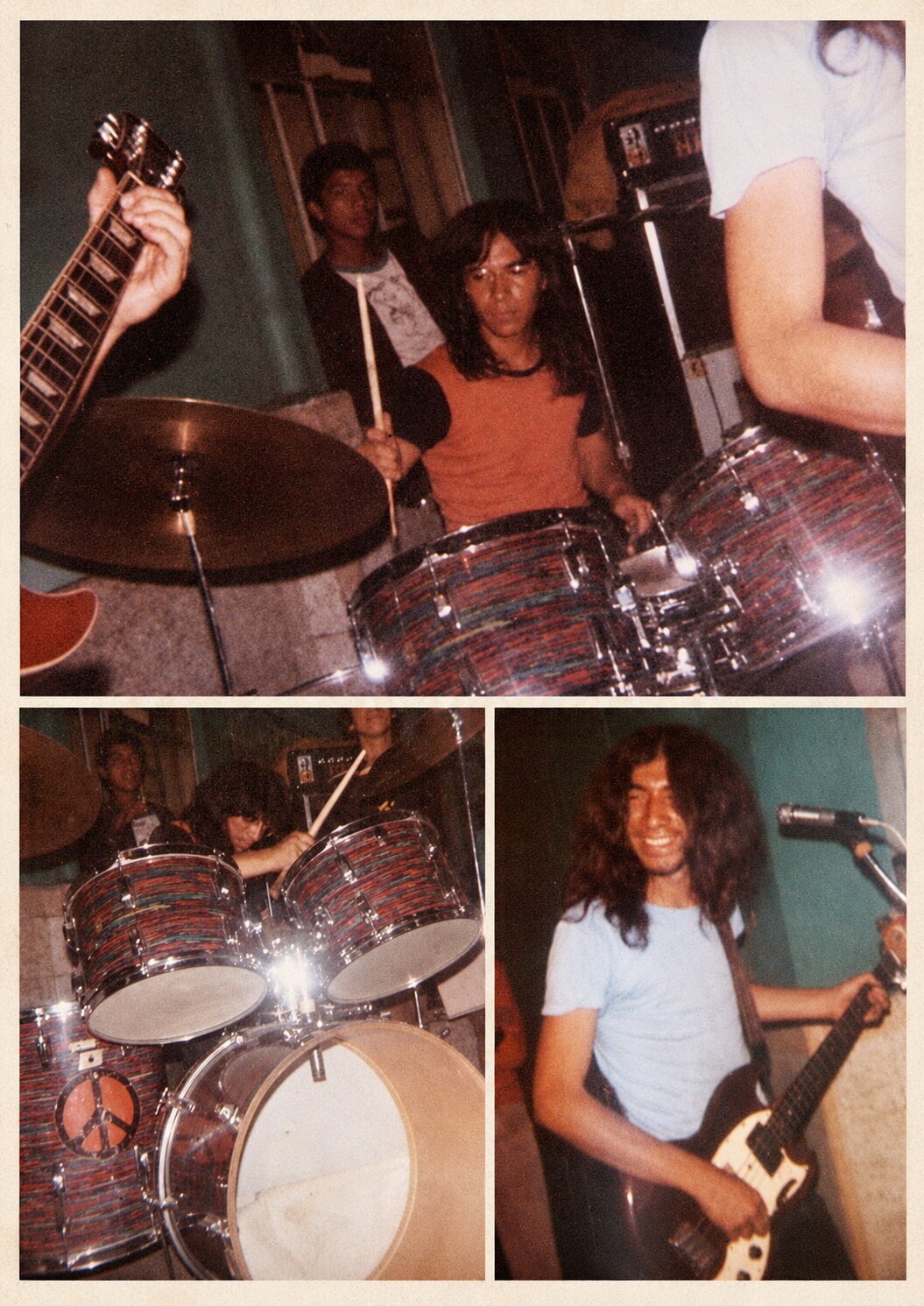
While working with El Ritual, I occasionally improvised with them on drums, as my main role was as their drum technician. Without intending to, I learnt a few things from their drummer, Lalo Barceló, and found him fairly easy to imitate. Once our own project was under way, and rather than waste time, we began rehearsing our songs with me on drums and Javier on bass. That was how we discovered that the power-trio format worked perfectly for us.
We were invited to play at an event on Día de los Muertos, 2 November 1972, and there we realised that this was how we should continue. From that point on, the quartet Pax came to an end and the trio Medusa was born. That is why we consider that date our true beginning.
We rehearsed like crazy, every day for an average of six or seven hours, and because of that we progressed quickly. The chemistry emerged immediately. We had a great deal of drive and many songs. That initial phase was very prolific, and all three of us contributed ideas, both musically and lyrically.
Through our connections with the major bands in the scene, we were fortunate to be in the right place at the right time on several occasions, and we began to attract attention. At the same time, we understood that we could not become complacent, as we were being associated with the best bands of the period. That forced us to work twice as hard to remain within that circle.
Over the next two years, Medusa improved tremendously. I must say, without false modesty, that we were never a mediocre band, not even at the beginning, because we never had any doubts about our goals. Through their dedication in rehearsals, Toño and Javier became very skilled on their instruments, and I believe I was not far behind.
Six months after starting out, in May 1973, we secured a recording contract with Cisne-Raff, and within a couple of months we released our first single. We then began playing large events, including the bullring in Cuernavaca and the football stadium in Querétaro, before audiences averaging around ten thousand people and alongside the best Mexican rock bands.
In less than a year, we achieved what many bands would not accomplish in their entire existence. We had a presence on radio and television and in the specialist press. That led me to believe we were on the right path. What I did not understand at the time was that Mexico was not a country with a strong rock culture, and for that reason our fate, along with that of other bands of our generation, was already sealed.
Those in power had decided that bands like ours, which had moved beyond go-go and yé-yé music to speak to people about insurrection, nonconformity, fantasy and poetry, did not belong in their world. We were not living in London or Los Angeles, where rock music had an industry behind it and musicians were treated with a certain degree of respect and tolerance. Mexico was more rigid, and without fully realising or understanding it, we had devoted ourselves to rock at the worst possible moment in our history.
“We always knew that none of them sounded as heavy as we did.”
Medusa moved in the same circles as Peace & Love, Dug Dug’s and El Ritual during the Avándaro era. Did the scene feel like a brotherhood, with a shared purpose in the face of repression and indifference? Or was there also competition to sound stronger, darker and heavier than the other bands in Mexico City?
That is a very good question. There was certainly a sense of brotherhood, but not necessarily between the bands themselves, perhaps only among some of their members. Not everyone shared the romantic idea of peace and love promoted by the hippie movement. The scene was harsh and difficult, and so were some of the people in it. Perhaps this was because the competition was intense and opportunities were rare, or perhaps it also had something to do with our own Mexican character.
In my personal experience, the people who behaved with genuine camaraderie and respect towards other musicians included all the members of El Ritual, Armando Nava of Dug Dug’s, Ricardo Ochoa of Peace & Love and Náhuatl, who was always supportive and involved, Pájaro Alberto of Love Army, Tony Vértiz of Hangar Ambulante and everyone in Enigma, among others.
Just as some people prudently remained neutral, there were also deceitful and insecure individuals who reacted badly when they felt threatened by bands or musicians who were clearly better. They blocked others as though doing so would somehow increase their own “talent” or popularity, when in reality they only added to the repression we were all facing at the time.
Yes, there was competition, and it was not always healthy or silent, but time has since placed everyone in the position they earned in the history of Mexican rock. We measured ourselves against Enigma, Náhuatl, Ciruela, Dug Dug’s and Toncho Pilatos, bands that had an advantage in experience and audience support. But we always knew that none of them sounded as heavy as we did. We worked in a hard-rock vein, following the example of Black Sabbath, Cactus, Led Zeppelin and Blue Cheer, without realising that we were helping to lay the foundations for heavy metal and punk in Mexico. That is why historians consider us the fathers of stoner rock in our country.
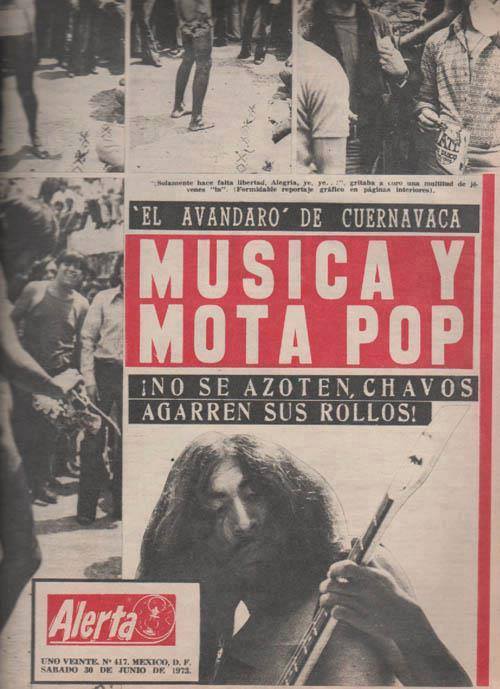
Medusa recorded a single in 1973 and an EP in 1974, but a full-length album never materialised because you refused to compromise your artistic direction. How did you feel when the label dropped you: angry, relieved or both? And now that those early recordings are finally receiving a proper vinyl release decades later, does it feel like vindication?
I felt a little of everything you mention. When Cisne-Raff signed us, the artistic director was Mr Edgardo Obregón. He had previously worked for other record labels, knew the music business very well and had vision. He signed Peace & Love, La Cosa Nostra, Love Army, El Ritual, Three Souls in My Mind, Ciruela, Náhuatl, Medusa and others whose names escape me. He gave all of us complete creative freedom in the studio and supported the release of our recordings. He believed in us, and history shows what became of the groups he signed. By 1975, Peace & Love, El Ritual and Love Army no longer existed, and for reasons unknown to me, Mr Obregón left the label. The inevitable change in artistic direction followed. First, they asked us to change our style and move towards romantic ballads, which was definitely not in our plans. When they saw that we would not comply, they decided to get rid of us. We were very young and inexperienced in contractual matters, so we did not know how to handle the situation, especially when we found out that Three Souls and Ciruela had also been dropped. They kept only Náhuatl, who managed to negotiate their stay by agreeing to record as backing musicians for Enrique Guzmán. In my opinion, those recordings have great merit because they turned his rock and roll songs into hard-rock pieces comparable to what bands such as Cactus and ZZ Top were doing at the time. Enrique Guzmán never sounded better.
Personally, I felt resignation and a certain frustration when we were dropped, because we had already been moving towards completing the LP. Perhaps because of my age, I did not fully understand the weight of that loss. However, it was clear to me that the Medusa of 1975 sounded much more powerful and cohesive than the band that had begun recording in 1973. We knew we could make an album with a kind of heavy-rock sound that no one else in Mexico was producing. I was out of the band throughout 1974, when they recorded the two tracks that completed the EP, ‘Tratando de Olvidar’ and ‘Después de la Tristeza’. I returned in 1975 and left again in 1977 because I had to find a job like anyone else. I also pursued other projects, including Espíritu del Aire with Jaime García Mares, until we reunited as Medusa in 1982 as a quartet, with Jaime on keyboards and guitar. That was when we performed at the Palacio de los Deportes in Mexico City, and from that performance came the recording of ‘Rompesueños’, included on the new Out-Sider/Guerssen vinyl. In a way, the album does indeed serve as a vindication of our work.
In 1978, Medusa, without me, negotiated a contract with Discos Orfeón to record the long-delayed LP. However, that also came to nothing. Only the songs intended for the album were registered with the publisher, and I understand that the registration has since expired.
Medusa’s sound in the early 1970s was extremely heavy, almost proto-doom. Given the limitations of the studio technology available in Mexico at the time, how did you achieve that distorted tone? Was it down to experimentation, luck or sheer volume?
Again, it was a mixture of all those things. I should make it very clear that Medusa’s sound was largely due to Toño Urquiza. At a time when guitar pedals did not exist, he knew how to get everything possible out of a device called the Boss Tone, a kind of overdrive unit that plugged directly into the guitar and provided a fairly wide range of distortion, depending on how it was used. It was a very popular effect among Mexican guitarists at the time, but none of them achieved the kind of sound Toño produced with his Fender Jaguar. Historically, that guitar was more closely associated with surf music until, twenty years later, Kurt Cobain also managed to get very harsh sounds from the model. Using only that device and a great deal of amplifier volume, Toño gave it tremendous sonic weight.
It is also worth mentioning that much of the band’s sound came from Javier Plascencia’s approach to composition. Medusa achieved that proto-doom sound using standard tuning. We never tried “downtuning”, as later bands did to achieve greater heaviness, although it might have been interesting to experiment with it. Medusa’s style was always clearly defined, and all three of us contributed to that sound, both in performance and composition.
In the late 1970s and throughout the 1980s, Medusa played everywhere: stadiums, television programmes, underground “hoyos fonquis” and even prisons. Is there one particular concert that still stays with you, perhaps a night in an especially rough place?
From the very beginning of Medusa’s career, we played several very intense shows and found ourselves in both rewarding and uncomfortable, even dangerous, situations. We were taken to perform in the most unexpected places and at the strangest events. On one occasion, we played at the wedding of a drug dealer, where a man who was extremely high put a gun to Javier’s head in the middle of the set. He thought it was funny, but it was obviously extremely dangerous. We played in prisons and detention centres several times, in all the “hoyos fonquis” on the circuit and in schools. The place that affected me most personally, however, was the juvenile detention centre, where children who had supposedly committed crimes were taken. It was striking enough to play for those young people, but even more so to interact with the girls being held there, isolated from their families. They were angelic children between the ages of 10 and 16. I could not understand why they were there until the director told me that many had been abandoned in that place by parents or relatives who could not afford to support them. It was very hard to accept this as part of Mexico’s social reality, because apparently nobody cared.
At one point, we were working every weekend at a popular “hoyo fonqui”, and the “promoter” kept promising to pay us everything he owed at the next show, but he never did. Eventually, I confronted him and demanded our money. In response, he snapped his fingers and ten men appeared, ready to beat me up. Fortunately, I managed to get out without being touched, but the bitter aftertaste of that episode stayed with me for weeks. Obviously, the man never “hired” us again.
Over the decades, Medusa played a wide range of venues. Looking back, I can say that this is a source of great satisfaction and something I am very proud of.
Despite being marginalised by the media, you continued writing and recording independently throughout the 1980s and 1990s. What kept Medusa alive during those years when recognition was scarce?
The creative drive does not stop, even when conditions are far from ideal. Whether recognition comes or not, one still feels the need to create, compose, rehearse and, whenever possible, record. Medusa was inactive for a decade, from 1984 to 1994. When we resumed in the 1990s, we once again worked as a quartet with Jaime García. In the meantime, he and I had a heavy-metal project called Áspid. Jaime has always been proactive, and he put together a very simple but effective recording set-up with which we began taping our rehearsals. Before that, I had also made recordings on a cassette recorder, and some of that material was later used for the new Medusa album on Out-Sider/Guerssen.
By the 1990s, we were no longer teenagers. We were entering our forties and had wives and children. We were adapting our approach to the circumstances of the time, already aware that any recognition, if it came at all, would be based on our history, since we did not fit the fashionable formula known as “Rock en tu Idioma” (“Rock in Your Own Language”). Through the 1990s and into the 21st century, unlike many of our contemporaries, we remained active and eager to keep moving forward.
The greatest recognition for me was realising that, nearly three decades later, we were performing for a generation of listeners who knew us only by reputation. They had not heard us in the 1970s because, in most cases, they had either not been born or were still very young. Above all, we realised that they genuinely liked our music. No other band had emerged in all that time to fill our place. We were the original “stoner band”, and nobody sounded like us.
When Medusa returned in 1994, a younger generation embraced you as pioneers of heavy metal and early stoner rock in Mexico. What was it like to meet younger fans who had discovered the rare singles and knew the band’s history? Did they hear Medusa in the same way you had always understood the band?
When we returned, some people initially had no idea who we were or what we had been. Others told us that they thought we were a different band using the same name, until they saw us play. It was very satisfying to have young musicians in their twenties, whether they were into metal or influenced by grunge, recognise us as forerunners of what they were doing. Toño was still using only a distortion pedal, and several guitarists asked how he could sound so powerful without the pedalboards they used, which in their case did not produce the tone or colour he achieved.
Some people told us they owned, or at least knew of, our 1973 single, and they were amazed when we played those songs live because, for them, it was like a history lesson. I believe we truly sounded the way we had always thought we should, without compromise or doubt. That was when people began telling us that what we did was “stoner”, that it had always sounded that way and that no other Mexican band from the 1970s sounded like us. It was extremely satisfying because, in the end, that was exactly the kind of recognition that motivated us.
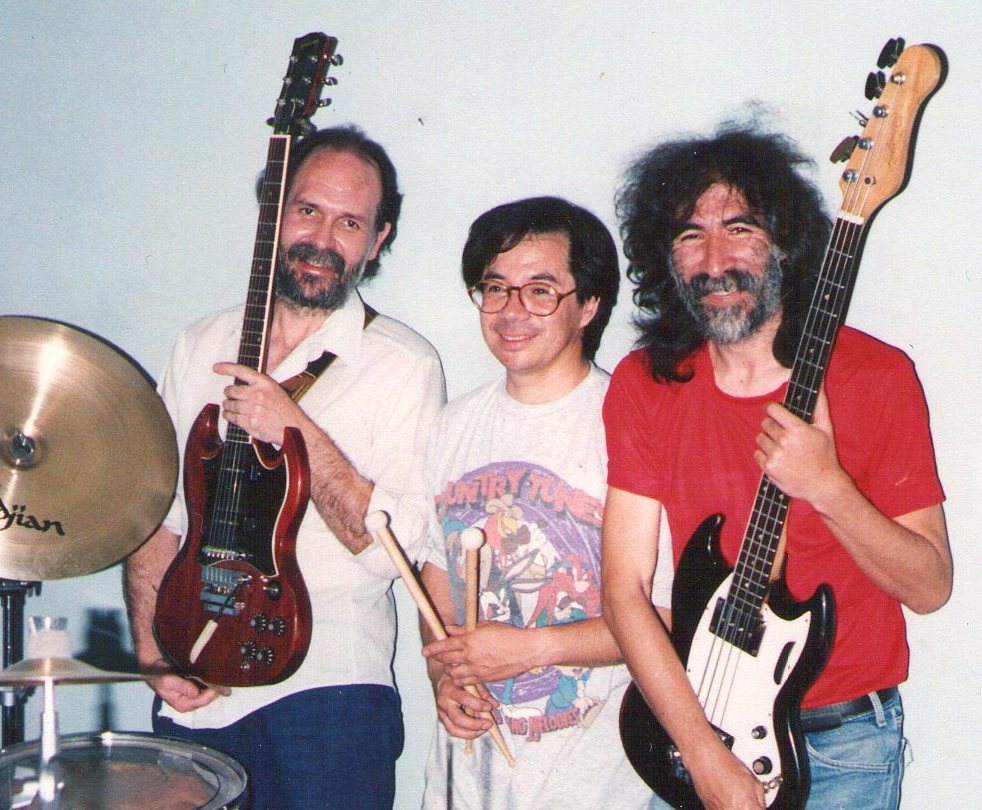
Jaime García Mares joined later and became part of a new chapter for the band, which included a national television appearance in 2006. How did his presence change the dynamic within Medusa? Did it feel like an expansion of the band’s original spirit, or like everything you had built since 1972 finally coming together?
We met Jaime in 1975. At the time, he was not yet playing professionally; he was studying music. In 1979, together with him and my cousin Alfredo, we formed a group called Espíritu del Aire. That was where he began developing as a lead guitarist and synthesiser player. By mid-1982, the two of us joined Javier and Toño in a new project called 1810, named after the year of Mexican independence. Shortly afterwards, however, we realised that we were essentially still Medusa because we were the same members. We therefore decided to continue under that name, but with additional material that leaned more towards progressive rock without abandoning our heavy-rock approach. There is a recording from December 1982 at the Palacio de los Deportes in Mexico City, where Medusa performed songs written for the quartet line-up with keyboards. We also continued playing material from the 1970s, but by the following year we felt somewhat stuck. Jaime left to form another project, and Medusa continued with the original power-trio line-up of Toño, Javier and myself.
A year later, realising that we were still in a creative and promotional dead end, I also left to form Áspid with Jaime. Medusa went on indefinite hiatus, which eventually lasted a decade. When we reunited in 1994, calmer and more mature, I felt that we were in a privileged position, at least from my perspective, because we had access to better equipment and had gained more experience. Although Jaime did not rejoin immediately, he returned shortly afterwards, and we resumed as a quartet. With renewed enthusiasm and Jaime back in the band, the sound became more cohesive. Any gaps that might once have existed were now filled by his synthesisers or second lead-guitar parts, depending on what was needed. We sounded more mature and complete. The next step was to record the album that had eluded us for decades.
Towards the end of 1995, however, Toño decided to leave the group, which was a major setback because he had been the backbone of our sound. There was no formal resignation; he simply left, leaving the matter unresolved. We moved forward once again as a trio, with Jaime, Javier and myself, trusting that Toño would return at any moment. He did return, but only sporadically over the following years, as he did for the 2006 reunion when we recorded the Televisa programme and sounded very good. It was unfinished business that we managed to resolve thirty years later, although Toño left again afterwards.
Between 2000 and 2015, Medusa performed much less often, so Jaime and I both pursued other projects. These included El Retorno de los Brujos, led by Jaime, while I worked with members of Dug Dug’s and Ciruela.
Returning to your question, Jaime García’s involvement definitely brought more melody to the band’s compositions, enriching the colour and texture of our work. After Toño left, however, the responsibility for carrying the band’s sound fell to Jaime when he took over as lead guitarist. It was a substantial change and a huge challenge, which we overcame thanks to Jaime’s professionalism and his commitment to filling the role that had always belonged to Toño.
The recently released Medusa album contains three pieces that showcase Jaime’s talent and dedication: ‘Caminando Rumbo al Cementerio’, ‘Crepúsculo’ and ‘Rompesueños’. Toño does not appear on the first two, and Jaime’s guitar playing is superb. On the third, Jaime plays synthesisers while Toño plays guitar. It is the only track on the album to feature all four of us.
Recordings featuring Toño and Jaime accumulated over the years, both live and in rehearsal, and somehow found their way to the Tianguis del Chopo, where bootleggers released CDs of the material without our knowledge, permission or supervision. Personally, however, it helped me gauge the interest Medusa continues to generate, even 50 years later.
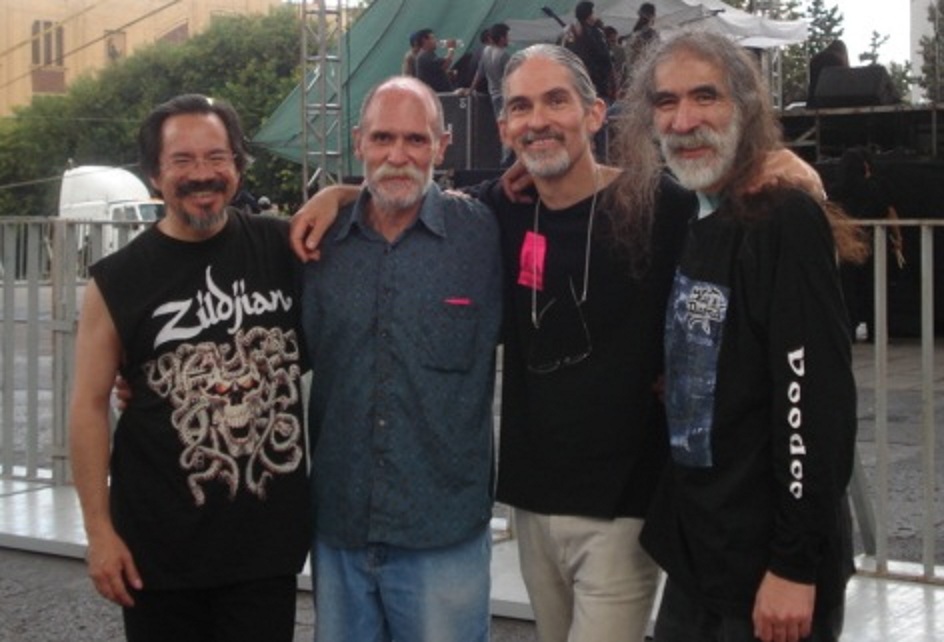
In 2015, the Tianguis del Chopo and the Fonoteca Nacional recognised Medusa as a founder of stoner rock in Mexico. After decades of working against the grain, what did that official recognition mean to you? Did it bring closure, pride or a complicated mix of emotions?
Recognition from official bodies in my own country made me understand that our work went beyond us. We were honoured by organisations that had paid no attention to Mexican rock musicians in the past, and here we were, finally being valued in an unexpected way. We never sought such recognition, and the fact that it came on its own pleases me greatly.
For me, it confirms that we made the right decision when we were 18. Now that we are over 70, we can say that the harvest has been satisfying. The Out-Sider/Guerssen album is the icing on the cake for me. We never really talked about bringing the journey to a close, but at this point, and because of various circumstances, I think it is extremely unlikely that Medusa will ever return, especially now that Toño has passed away. Without him, it would never be the same.
I should explain that our relationship within the band was always much like that of brothers, with the arguments, disagreements and joys found in any family. Toño and Jaime formed a deep, lifelong friendship. The news of Toño’s death devastated all of us, and for that reason, I repeat, there will most likely be no more Medusa.
At present, Javier has distanced himself considerably from us and prefers to move forward on his own, which we respect. Jaime continues to make recordings independently and is now fully immersed in progressive rock. He has also launched a record label that supports bands working in the genre. In recent years, he and I have collaborated with Sol & Deneb, a company that has presented concerts in Mexico by legendary artists including Le Orme, Balletto di Bronzo, Steve Jolliffe of Tangerine Dream, David Cross of King Crimson and Premiata Forneria Marconi.
As for me, I have continued working with many musicians from the Mexican scene, from Mexico City, Guadalajara and Tijuana. In 2023, I released an album called ‘Los Viejos Sacerdotes’, once again in a power-trio format, featuring pieces written by me and my new bandmates. Its sound inevitably echoes what I once did with Medusa, but in a different way.
And, of course, I am very proud of what I have contributed to the history of Mexican rock.
The new LP on Out-Sider/Guerssen brings together your rare recordings from the early 1970s and later self-produced material such as ‘Genes de Maldad’ and ‘Rompesueños’. Víctor, you kept these tapes in your personal archive for decades. What went through your mind when you heard them again after so many years?
Listening to these recordings again was like looking at old photographs. You recognise yourself in them, but you are no longer the same person. I realised how much potential we had to reach an international audience, because I think we were somewhat out of step with the prevailing trends in Mexico. Medusa’s music seems to connect better with audiences abroad than it does at home. Without intending to, I feel we were closer in spirit to bands such as Barón Rojo, Metallica, Obús, Budgie and Nirvana than to contemporary Mexican groups.
Do not get me wrong. I am not saying that we were better than our contemporaries, but rather that we had something in common with the bands I mentioned, because we drew from the same sources: the Yardbirds, Black Sabbath, the Kinks, the Stones, Deep Purple and the Who. Those groups were, of course, also influences on bands around the world in the 1960s and 1970s.
Every time I listen to these Medusa recordings, I think that we could have done more. If it did not happen, it was partly because of the circumstances that affected us and partly because of decisions we made at the time. You do not understand things in the same way at twenty as you do at forty or seventy. You are always left with the feeling that you could have done better, and that is something you carry with you until the day you die.
Could you tell us about the songs, the stories behind the lyrics and how new material usually came together?
The album opens with the four tracks recorded at Cisne-Raff: two from 1973, ‘Autodestrucción’ and ‘Tan Solo lo Hagamos’, and two from 1974, ‘Después de la Tristeza’ and ‘Tratando de Olvidar’. The first two were originally released as a single, and all four were later issued as an EP with a picture sleeve. As noted in the credits and liner notes for the new album, I did not play on the last two songs. Hugo Mayoral was the drummer on those recordings. He left the band at the beginning of 1975 and retired from music completely.
I will mention again that ‘Caminando Rumbo al Cementerio’ is a rehearsal recording made around 1997. Toño Urquiza does not play on it; Jaime García handles both guitar and keyboards. Side B opens with ‘Genes de Maldad’, recorded live in April 1995. It features the original trio of Javier, Toño and Víctor, as does the following track, ‘Medita Sinceridad’, which comes from the same performance.
‘Crepúsculo’ is also a rehearsal recording, again featuring Jaime García on guitar and keyboards, without Toño. It is the second part of the song and builds to a climactic ending. The first part had to be left out because of a performance error, which is a shame because Javier’s lyrics are very good, but they do not appear in this version. Even so, I believe the excerpt allows listeners to hear the band’s intention to explore more adventurous passages, moving into progressive-rock territory without losing the essence of Medusa’s sound.
The album closes with ‘Rompesueños’, another recording I have already mentioned, captured during a live performance at a festival held at the Palacio de los Deportes in Mexico City in December 1982. Here we performed as a quartet, with Toño on guitar, Jaime on synthesisers, Javier on bass and vocals, and Víctor on drums. Once again, we explored more electronic and progressive ideas, built around an insistent rhythmic line and carefully placed breaks.
As I mentioned before, all the lyrics on the album are by Javier Plascencia. They cover a variety of subjects, but always follow a questioning, philosophical and sometimes introspective line. We had other pieces with lyrics by Toño and myself, but they are not included on this release. Some demo recordings were made early in the 21st century, and the plan is to release them in the not-too-distant future.
Since Medusa ceased activity in 2015, there have been no new songs under that name. Jaime and I have both composed and recorded new material, but not as Medusa. We have done so separately through other projects, although we do not rule out working together again in the near future.
What do you remember about the recording process?
I believe that, for any creative musician, the opportunity to work in a professional studio hired by a record label is one of the greatest goals one can achieve. When Medusa was given its first recording opportunity, I did not quite believe it until we actually set foot in the Cisne-Raff studio, the same place where El Ritual, Peace & Love and several other groups had recorded.
We arrived on time that day, and to my surprise, the studio was being prepared for another group that played tropical music. When we checked the logbook with the person in charge, he confirmed that we were not scheduled there on that date. I began to think that I had made a mistake and perhaps confused the dates, but I was certain that I had not.
Then Mr Obregón appeared. When he saw us at the studio entrance, he asked, “What are you doing here?” That unsettled me even more and made me think that I really had got it wrong. I told him that we were there because we understood we were starting to record that day, and he replied, “Yes, you are starting today, but not here. You are recording in the new studio.”
Cisne-Raff had built a larger and better-equipped studio only a few streets away from the one I knew. Carlos “Bozzo” Vázquez, the drummer of Náhuatl, had told us about it and was also going to act as our adviser for the first recording. He was supposedly waiting for us there, which proved to be true, but he was at the new studio, Super Grabaciones 16. It was named after its 16-channel console, while the old studio, where El Ritual had recorded, had only eight channels.
I could not believe it. We had only just been signed, and they were already giving us their best studio, the largest and best equipped in the country at the time. We went there, and “Bozzo” was indeed waiting for us, puzzled because we were already late. The incident unsettled us and made us a little nervous when we walked in. It was our first experience of recording, although I had already gone through something similar with El Ritual. Because their sessions had used an eight-channel recorder, they had even asked me to record a small organ part while their keyboardist, Martín Mayo, played piano at the same time.
For me, the fact that Medusa was beginning to record, and with so many advantages, was a dream come true. Despite our initial nerves, we pulled ourselves together and managed to record the first song, including the overdubs, vocals, mixing and mastering, or what was then called the “transfer” of the recording to the master. Everything was analogue at the time. They worked with one-and-a-half-inch tape, and the entire process took all day, from nine in the morning until nine at night.
Recording sessions can be long and tedious, but I enjoyed every part of the process. The support of “Bozzo”, who had studied audio engineering in Boston, and the opportunity to work again with Ernesto de la Cruz, the recording engineer who had worked with El Ritual, gave me confidence. They supported us a great deal, particularly because they asked for our input and did what we requested. It was fantastic to work that way, without objections or resistance, especially at a time when it was not easy to be hired to record original heavy rock with subversive lyrics like ours.
It confirmed once again that we had secured the recording contract by being in the right place at the right time. The same process was repeated during the following sessions, and the results can be heard on the new album.
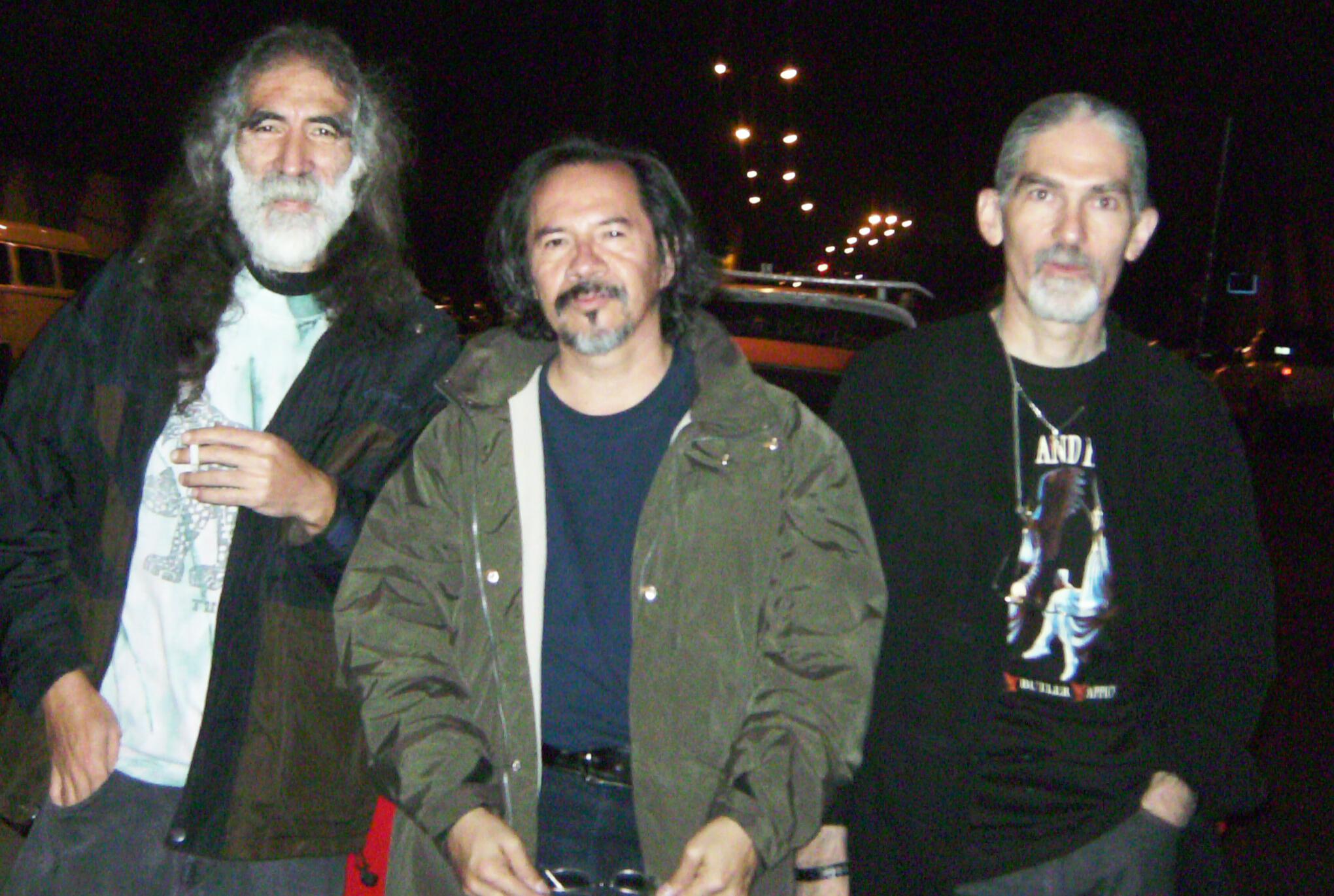
Since this LP covers several periods, from the raw singles of the 1970s to underground recordings from the 1980s and 1990s, do you feel that it finally tells the full story of Medusa? Or is it more of an introduction to a much larger body of work?
It is more like a window onto a much larger body of work, because there is still more material waiting to be released. The Guerssen LP works very well as a survey of what Medusa did between the first recording from 1973, ‘Autodestrucción’, and the latest track included here, ‘Crepúsculo’, from 1997. I have demos recorded between 1999 and 2006 that I hope to release soon. None of them has been heard before. There is also a live Medusa album featuring performances recorded in 1975 that is currently being prepared for manufacture. Once that is released alongside the new vinyl, we may finally be able to say that the complete recorded history of Medusa is available.
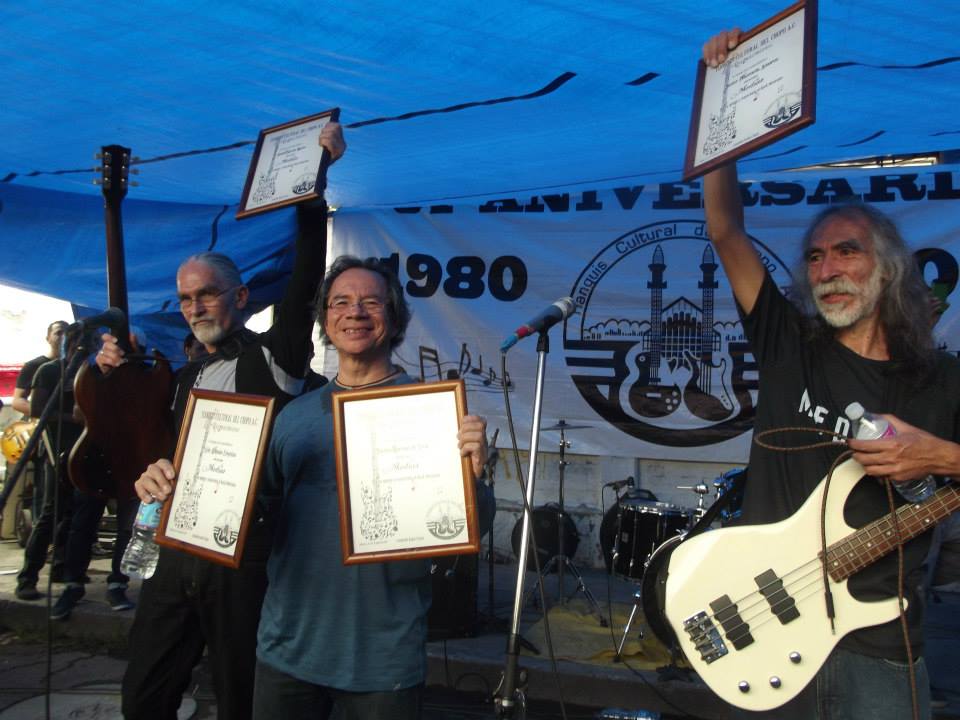
Medusa’s 43-year chapter ended in 2015, and the members went on to follow their own paths. Now the band’s music is reaching listeners around the world through the new Guerssen release. If a young Mexican musician hears the record for the first time, what do you hope they take from Medusa’s story?
The main thing I hope is that young Mexican musicians who love rock will hear our music and feel encouraged to continue the movement. I hope it motivates them to compose and create music with intelligent lyrics, to care about the message rather than the fame they might achieve, and to understand that this is something you do for life. Rock stopped being just for teenagers a long time ago. It should be clear that it is up to us to create work that lasts, without being driven by whatever happens to be fashionable, because a body of work is built over an entire lifetime. When you do something with true conviction and dedication, there is no retirement. You do not need it.
Given the conditions in my country for those of us devoted to rock music, we understand it not only as a profession but as a career that is not always financially viable. It is also a test of endurance. Nowadays, I find it increasingly difficult to imagine those just beginning in this field surviving for 50 or 60 years, as some people I know have done. They began in the 1950s or 1960s and are still active today.
I hope that in 50 years there will still be a genuine interest in Mexican rock music, and that we will be remembered as a group that struggled against many obstacles, tried to do things properly and left behind a historical legacy, with all the good and bad that this implies. I hope Medusa’s journey serves as an inspiration and an example to new generations of Mexican rock musicians.
Klemen Breznikar
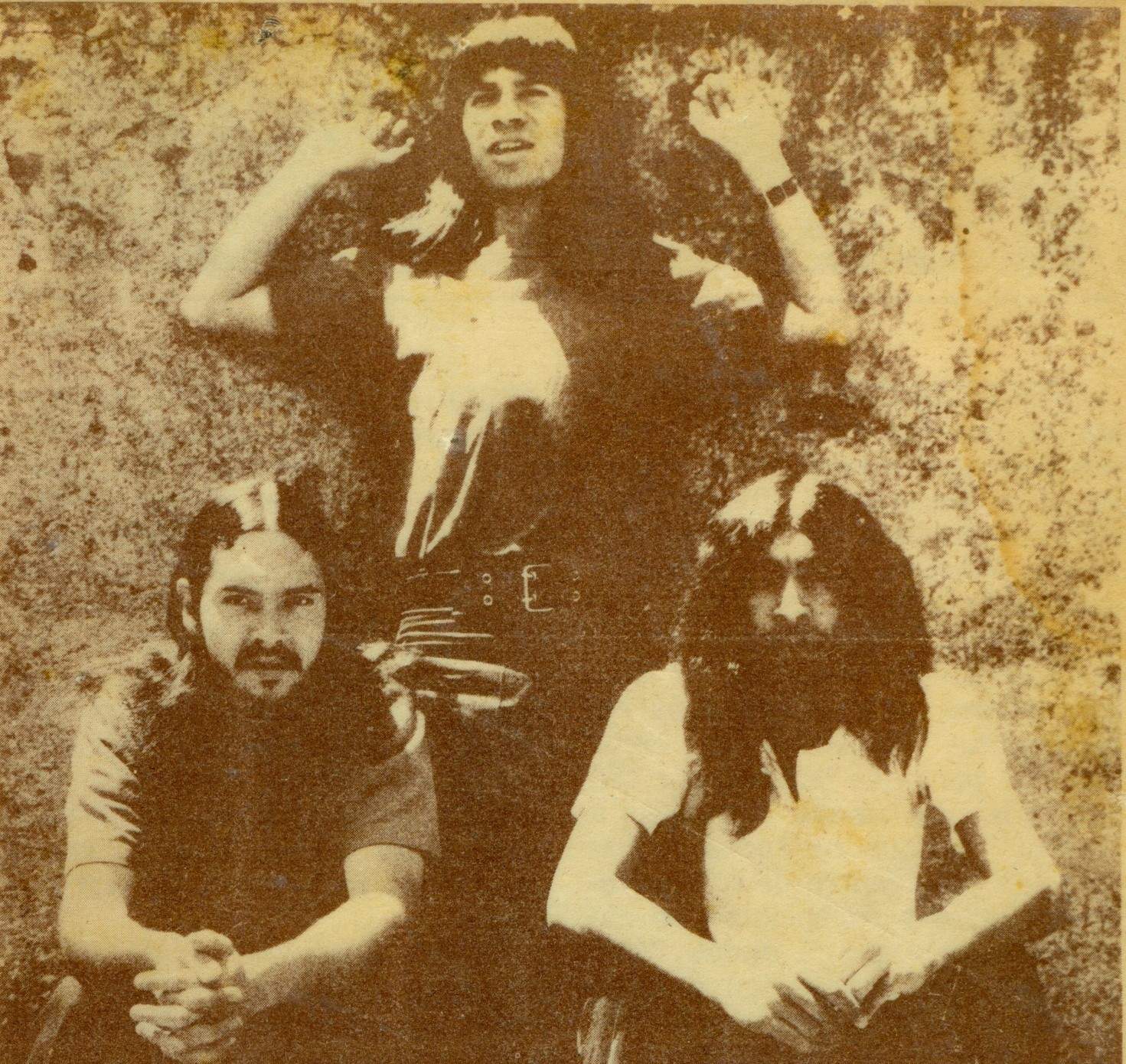
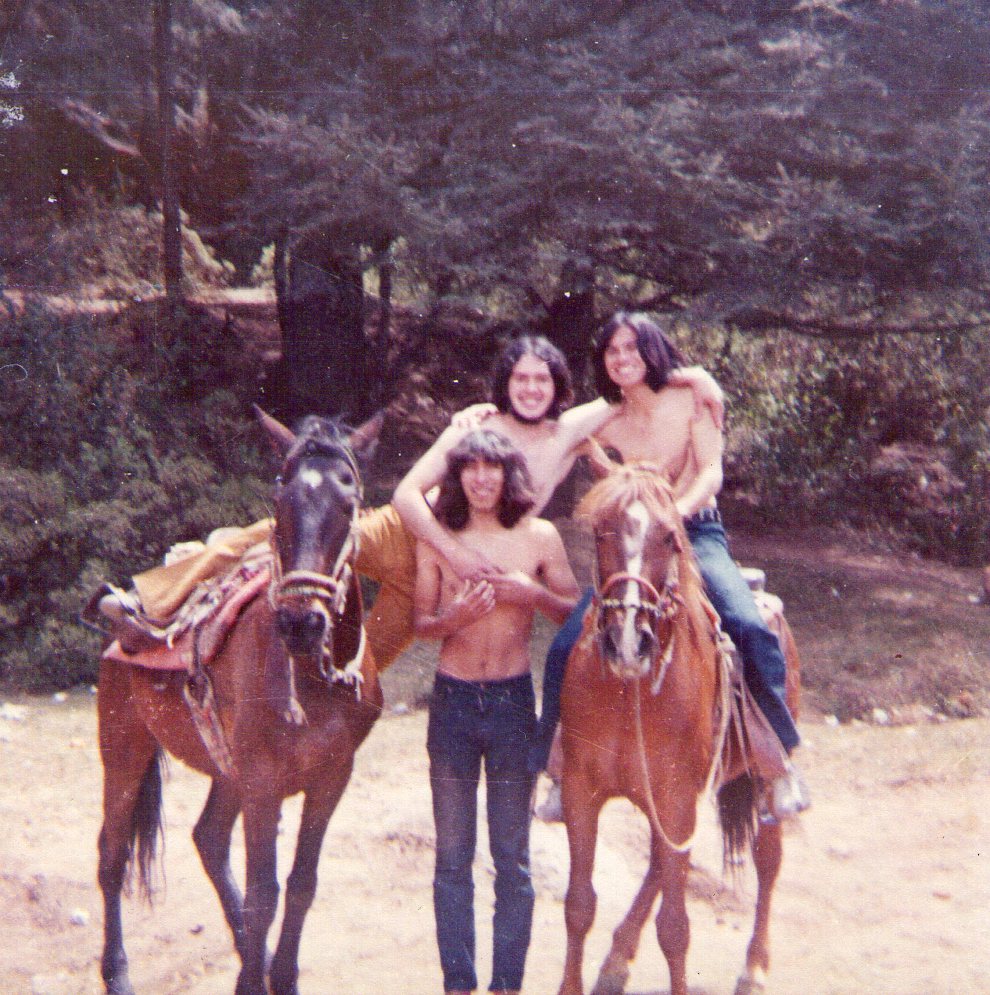
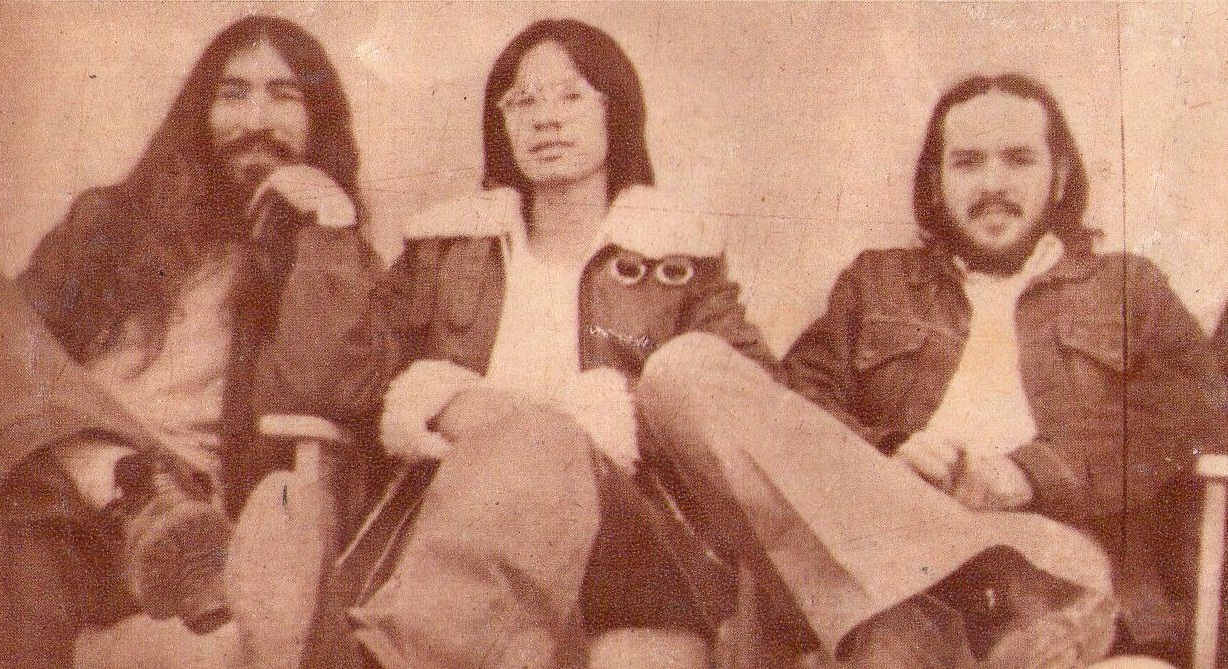
Headline photo: Medusa members Luis Antonio Urquiza, Víctor Moreno and Javier Plascencia, 1973.
Guerssen Official Website / Facebook / Instagram / X / Bandcamp / YouTube