
Narada Michael Walden on Tarpan Studios, Mahavishnu, and His New Song of Love
Before becoming one of the defining producers of modern popular music, he played with the Mahavishnu Orchestra and absorbed lessons in listening, control, and power that still shape the way he works.
Later, his productions for Whitney Houston, Aretha Franklin, Mariah Carey, George Michael, Jeff Beck, and many others helped create records that reached listeners across the world.
His new single, ‘I’m Riding in a Pink Bubble’, comes from a much smaller and more personal place. The idea began with a remark from his daughter Kelly, who said she was going to ride in a big bubble. Walden turned it into a pink bubble, because pink was her favorite color, and the image quickly became a song about love, healing, and sending good energy into the world.
What began as a playful family moment soon took on a deeper meaning. In our interview, Walden explained that after hearing a story connected to a child lost in the Texas flood, the image felt larger than he first understood. “When I heard that, I thought, maybe this is more important than I realized, this whole concept of a pink healing bubble,” he said.
In the conversation below, Walden discusses the making of ‘I’m Riding in a Pink Bubble’, the role of Tarpan Studios, his years with John McLaughlin, and the approach that helped him shape landmark records with Whitney Houston, Mariah Carey, Aretha Franklin, and others.
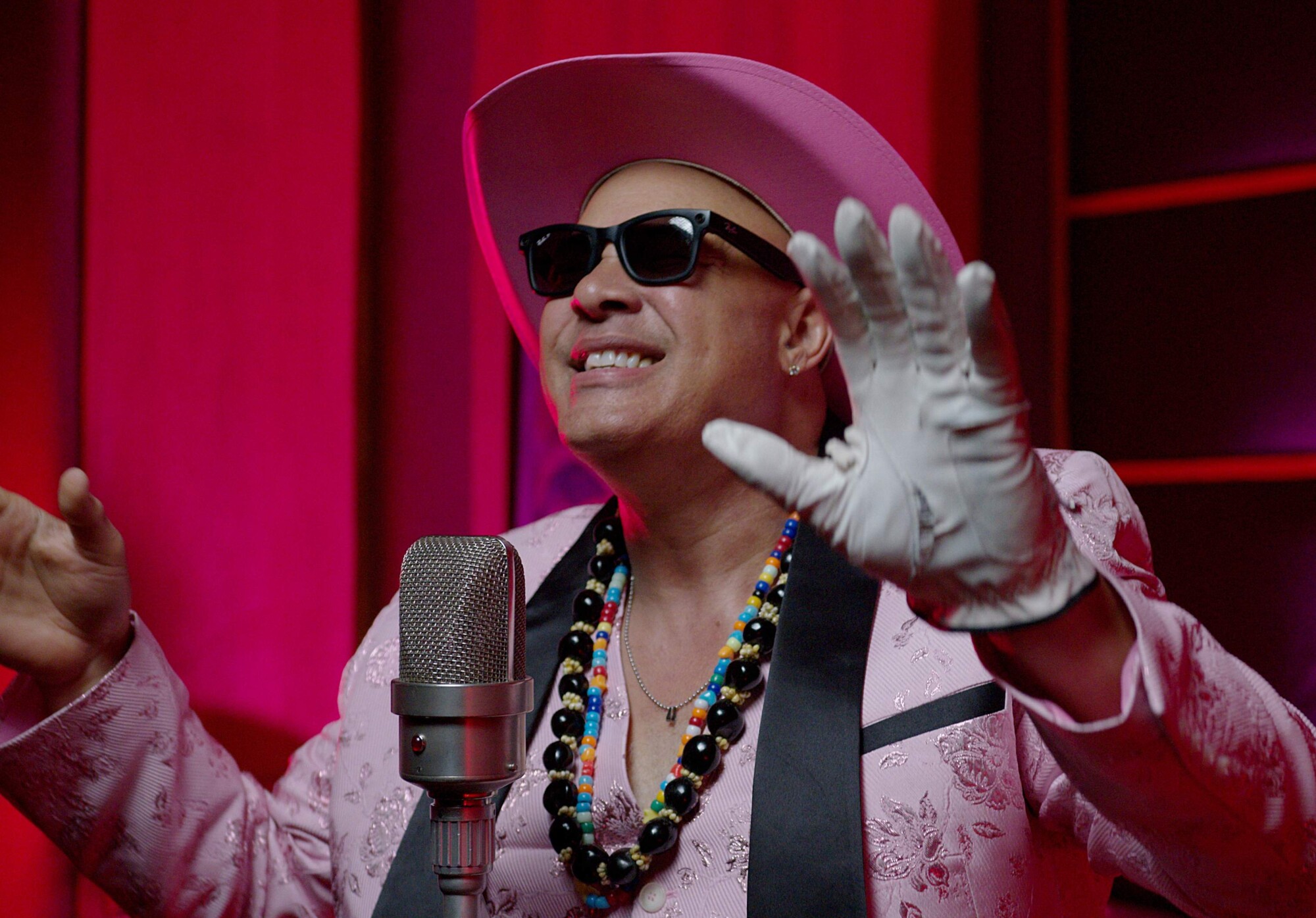
“I trust the music. I trust my adventure.”
‘I’m Riding in a Pink Bubble’ began with something your daughter said in the car. When did you realize that this small, playful idea could become a full song with a deeper meaning?
Thank you for the nice question. Yes, I was in my car, and as I thought about what my daughter had said, “riding in a big bubble,” I thought, “She loves the color pink. Let’s make it pink.” Riding in a pink bubble. Immediately the idea hit me.
I thought, what if I went around the world in that pink bubble and waved at children, and waved to animals, and hippos and giraffes in Africa, spreading good vibes? I thought, “This is a good time for this kind of message.” Then the melody came. So the idea and the melody came at the same time.
When I got back home, I told my wife about the idea that came from my daughter’s offhand remark. I told her I had an idea for a song called ‘Riding in a Pink Bubble’. She said, “Wait a minute.” She had just been to see a medium named Felix, and Felix had told her that he had comforted a mother whose daughter had died in the Texas flood. The daughter told the medium, as she was rising to heaven, to tell her mother that she was okay, because she was going to heaven in a pink bubble.
When I heard that, I thought, maybe this is more important than I realized, this whole concept of a pink healing bubble. And because I have Tarpan Studios, I came right over here and started working it out, getting it ready to cut. Then I had the idea that maybe it would be good to release it for my birthday. That is how it all came together very quickly. I was not thinking about an album, necessarily. It was just a single. It really came through spirit.
The song holds two parallel images. One is playful and visual, almost cinematic with the Glinda reference, the other is tied to loss and transcendence through that story of the Texas flood. How did you decide how far to let that second layer shape the emotional tone of the performance?
The second layer was not something I knew about when I was writing the lyrics. I discovered that second layer after I went back home and my wife told me the story about the girl going up to heaven in the pink bubble. That pushed me over the edge. It made me want to get into the studio and manifest the song.
But I had already gotten the lyric concept, which was about positivity, flying around the world, waving, and giving love. That was what I felt we needed at the time.
You recorded the track at Tarpan Studios with a very specific ensemble, including Angeline Saris, Vernon “Ice” Black, and horns from Eddie M.
It was intentional to keep it warm and not overly polished. I had gone to see Sting in the city, and he rocked my world with his trio: bass, guitar, and drums. I had that in my mind. I wanted to keep it to bass, guitar, and drums, almost like what could fit inside that bubble.
At one point I thought about the bubble being big enough for us to be inside it: Ice, Angie, and myself. Maybe Eddie M too. That is how it came to be. You need precision, of course. Records today are very precise, so I always keep that in mind. But I wanted it simple, clean, and very intentional.
On this song you are singing lead, playing drums, and producing. When it is your own voice, does your approach change? Do you think differently about phrasing, timing, and emotion than when you are producing another singer?
I have been making my own records since 1976, since ‘Garden of Love Light’. I have something like 18 solo albums, so I am used to singing and carrying my own records.
With this type of song, it was important to keep it always in the groove. I always want a hooky chorus, something people can sing along with me. I am very conscious that I would like people to sing along, and I also want to keep it soulful.
In my mind, I think of Ray Charles. I think of the people who inspired me on the soulful side of things. So it is a combination of that spirit of Ray Charles, what I learned as a kid, and then being current and contemporary, with a tightness that people can actually sing along with.
The track is being released in multiple versions, including a “floating” version and a story version. What do those alternate forms reveal about the song that the main version leaves unsaid?
The floating version was created by my engineer, Jim Reitzel. One day he showed me that he had been working on taking away all the rhythm, leaving just the floating keyboards, my voice, and a bit of ambience, as if we were in the clouds. I thought, “Oh, that’s kind of cool.” It had nice textures, so I said, “Let’s put it out there.” It felt very sweet that way.
Then there is the story version. My video director said, “Do your story on camera, so we have it.” When I told the story on camera, I felt that maybe it was an important part too, because it tells how I made the song. For those who are curious about that aspect, I wanted to have it.
And because it was my birthday, I wanted to offer all of it as a birthday gift: the story, the song, and the floating version.
You released the song on your birthday and called it a gift. What did you want to give people with this song, and what did the moment mean to you personally?
Love. L-O-V-E. Love.
I have always believed in it and I always will. I came to San Francisco after hearing about the love explosion back in the ’60s: flower power, Hendrix playing out here, The Beatles wanting to come and see what was going on in Haight-Ashbury. It was so powerful. I heard about it in Kalamazoo, Michigan, in 1968, and I thought, “Wow, we have to go to San Francisco someday, because it is so beautiful out there. They are actually believing in love.”
So I am kind of a hippie in that regard. I believe in love, and I believe it is my job to spread love in the music.
Before you became widely known as a producer, you played with the Mahavishnu Orchestra and worked closely with John McLaughlin. What did that period teach you about discipline, listening, and intensity that still affects the way you make records today?
Mahavishnu was about listening. John would sometimes scold me and say, “You don’t listen.” It was very important. I learned how to listen to the very tiny nuances of his whispering on the guitar, all the way to the extreme roars on the guitar, sometimes in the same phrase.
The power of listening is so deep, and I always keep that with me. I also learned the power of intensity. I have always loved Jimi, and I have always loved the power of intensity, amplification, and really playing. I keep that with me too.
Your own records in the 1970s already mixed jazz, funk, and vocal music. When you later started producing big pop records, did that feel like the same musical ideas in a new form, or did it feel like a completely different way of working?
It was the first one. It was taking the energy that I learned from the Mahavishnu Orchestra and from jazz-rock fusion, and powering pop records with that motor.
If you listen to ‘I’m Every Woman’, ‘Who’s Zoomin’ Who?’, ‘How Will I Know’, ‘I Get So Emotional’, which is very rock, you can hear the energy of the Mahavishnu Orchestra in those tracks. “Freeway of Love” with Aretha Franklin also has that energy I learned with Mahavishnu inside it.
When you first worked with Whitney Houston, what stood out in her voice? Was there something in her tone, control, or power that made you feel she could reach a huge audience?
Great question. It was the purity of her voice, and the power of her voice coming from such a thin girl. The control that she had from head voice to chest voice and back was effortless. You could say there were three areas: the head, the middle area, and the chest. All three of those gears could work effortlessly. I was really stunned by that.
For example, I cut ‘How Will I Know’ out in San Francisco. I called her on the telephone and said, “Can you sing high? Because the opening line of the song is very high.” She said, “Yeah, I can sing high.” I said, “Okay, because I’m bringing a tape with me from San Francisco to New York, and if it’s too high for you, we’ll be stuck.”
When I got with her and she could handle that kind of height, and then exploded on that recording, that is when I knew she was going to be a super, super-duper star. That, along with how beautiful she was. The combination was really unparalleled.
You have to imagine a young Aretha Franklin, a young Gladys Knight, a young Patti LaBelle, that kind of energy coming up for the new generation. That is what she had.
When you worked with Mariah Carey, how did you build the arrangement around such a powerful and flexible voice without putting too much around it?
With Mariah, I am so glad God said, “Just take her into a studio and listen to her sing.” When I first met her, she was so quiet and shy. She would only tell me that she liked George Michael. Of course, I had a number one with George Michael and Aretha at that time, so that was a good thing. But as far as her letting me know too much, she was extremely quiet and shy.
So we went to Sony’s studio. I had a Fender Rhodes piano, she had a microphone, and I had a microphone. There she opened up for me and began to sing. You got young Michael Jackson in her voice, with all the riffs and little things that she could do with precision. It was uncanny. I thought, “Oh, you have that kind of ability.” Her ear was developed enough to be able to show me those nuances. I knew she was a fantastic singer.
I said to her, “We need a song with drama to really showcase your gift.” I have told this story before, but I told her about something I experienced when I was a little boy at the Regal Theater in Chicago. There was a man named Walter Jackson who was pushed out onto the stage in a wheelchair. He sang so powerfully from that wheelchair: “It’s an uphill climb from the bottom.” The audience was riveted.
Then, when the song started to modulate at the end, he fell out of the wheelchair onto the floor. The audience started screaming, because they were shaken by what they were seeing, and he kept singing from the floor. It was so riveting.
I told Mariah this story, and somehow ‘I Don’t Wanna Cry’ came out of it. The chords, the feeling, the emotion, and then the lyric from her. ‘I Don’t Wanna Cry’ was born out of four songs we wrote that day. These are like little miracles.
When you work with someone like Aretha Franklin, who already has such a strong musical identity, how do you approach the session? Do you mostly guide the song and arrangement, while leaving enough space for her to be herself?
Hit song. We had to really focus on the hit song. Thank God to Preston Glass for reminding me. He said, “That song you’re working on for yourself called ‘Freeway of Love,’ that might be a great song for Aretha Franklin.” I said, “Preston, I would never have thought of that.”
Then I thought, “Wow. Okay.” I had to get Jeffrey Cohen to rewrite it for Aretha. I had an idea that if we did it for Aretha, we should mix it with a Motown sound. Even though she was not on Motown, she is all about Detroit, and people identify her with that. Then we could do a car thing, because ‘Freeway of Love’, the pink Cadillac, that was cool.
I wanted to make the drum fills feel like Motown, but get Randy Jackson to do a new sound on synth bass. Put all these new sounds around her. So, for me, it was about a hit song and a strong chorus, but also that production juxtaposition: old meets new. Old Motown-style guitar work, but a new synthesizer bass sound that we had never heard before.
There was a real intention of mixing old and new for Aretha, while giving her lots of space to do her thing. In fact, that song is over six minutes long, and the mind-blowing thing people should know is that all six minutes of it were memorized. I went over to the music stand, thinking I might make a little correction to a lyric, and there was no lyric on the stand. Yet every time she did it, it was the same thing. Memorized. That is when I realized how professional she was.
Rhythm has always been a strong part of your work, whether with Jeff Beck, Stevie Wonder, or your own records. Do you think first as a drummer when you build a track, even when you are producing or programming rather than playing drums yourself?
Whether I play the drums or not, if I am programming, yes, rhythm is essential. Phrasing is essential. I learned that from Sly Stone. I learned it from Nina Simone. I learned it from the great jazz work of Cannonball Adderley, Horace Silver, Dave Brubeck, Peggy Lee with George Shearing, Patti Page, and Johnny Mathis. On ‘Chances Are’, the phrasing is what grabs you.
So yes, the rhythm of things is really paramount. I know it is a big secret to having hit records. Quite frankly, if James Brown were alive today, if Aretha were alive today, if Prince were alive today, they would still be threats because their rhythm sensibility was so profound.
Over the years you’ve worked in jazz, fusion, pop, R&B, and film music. Even though the styles are different, do you feel there’s one idea that has always guided the way you make music?
Yes, I like a strong chorus. No matter what style of arranging I do, or what genre of music it is, that does not matter so much to me, because I like being able to reach all kinds of people around the earth. It is a fun thing to do, but I always look for the chorus. Can I sell the chorus?
That is true for instrumental music with Jeff Beck, for Whitney, Aretha, Mariah, Gladys Knight, or even a soundtrack like ‘Licence to Kill’. That was a challenge: taking that kind of lyric and making it a hit. But if you make the music memorable, it has a chance to become a hit.
That is my thrill: the love and the hook, no matter what I do.
When you hear a new singer early on, what are you listening for?
I am listening for the tone of their voice, and what they have to bring that is unique to their style and their sound. I am also listening to help find the right vehicle, the right song for that voice.
If they are a songwriter, that is fine. We can work from that angle. Or we can write together. Or it can be an outside song. But I want the right song to match the voice, where they can really be a shining example of love on their own. That is very important.
Tarpan Studios has been your home base for many years. Today, music can be recorded almost anywhere. What does a real studio still give you that is hard to get elsewhere, in terms of sound, focus, and the way musicians work together?
I have been here since 1985, and my guru gave me the name Tarpan. Guru said, “Tarpan Studios.” The word Tarpan means “satisfaction unparalleled.” Guru said every heart and soul would have satisfaction unparalleled here.
In fact, living in the building are emissaries, what you might call little fairies, little angels of light, delight molecules. The great people who have been here, their molecules are here with me. Whitney’s mom, Cissy, Patti LaBelle, so many people have been here. The molecules are here. That is the point I am making. That makes it very special.
Yes, I can work in almost any studio, but I like the comfort of my studio and the magic of Tarpan.
Looking back at your records, some were clearly made to reach a wide audience, while others feel more personal or experimental. Do you see those as two separate sides of your work, or do they overlap more than people might think?
I cannot really answer that question, because for me it is all just the giving of music. I do not look at it as, “This is different,” or, “This is not different,” unless it is from a jazz-rock fusion standpoint, where I know it is meant to be really exploratory.
Most things I am doing for other people are meant to reach the mainstream as much as possible. Even my first production for Don Cherry, who played pocket trumpet with Ornette Coleman, had Tony Williams on drums, Lenny White on drums, Ray Gomez on guitar, and Stanley Clarke on bass. I was still trying to drive that music toward the commerciality of ‘Bitches Brew’ with Miles Davis, to reach the mainstream audience that liked that kind of music.
No matter what the music is, I always want to connect to people. That is always my intention and my love. I never want to do things just for me. That is not my DNA. I know jazz musicians who do not really care if you dig it or do not dig it. I am the opposite. When it comes time for my drum solo, I want to put some fatback somewhere and get you up off your feet.
When you look at ‘I’m Riding in a Pink Bubble’ alongside your wider body of work, does it feel connected to what you have always been doing, or does it feel like something new for you?
It is hard for me to answer that kind of question, because I do not look at it that way. I am not trying to judge these things. I just let myself be open to the flow of the music coming through, and I trust it. I trust the music. I trust my adventure. I am not trying to judge it.
Klemen Breznikar
Headline photo: Tarpan Studios
Narada Michael Walden Website / Facebook / Instagram / X