
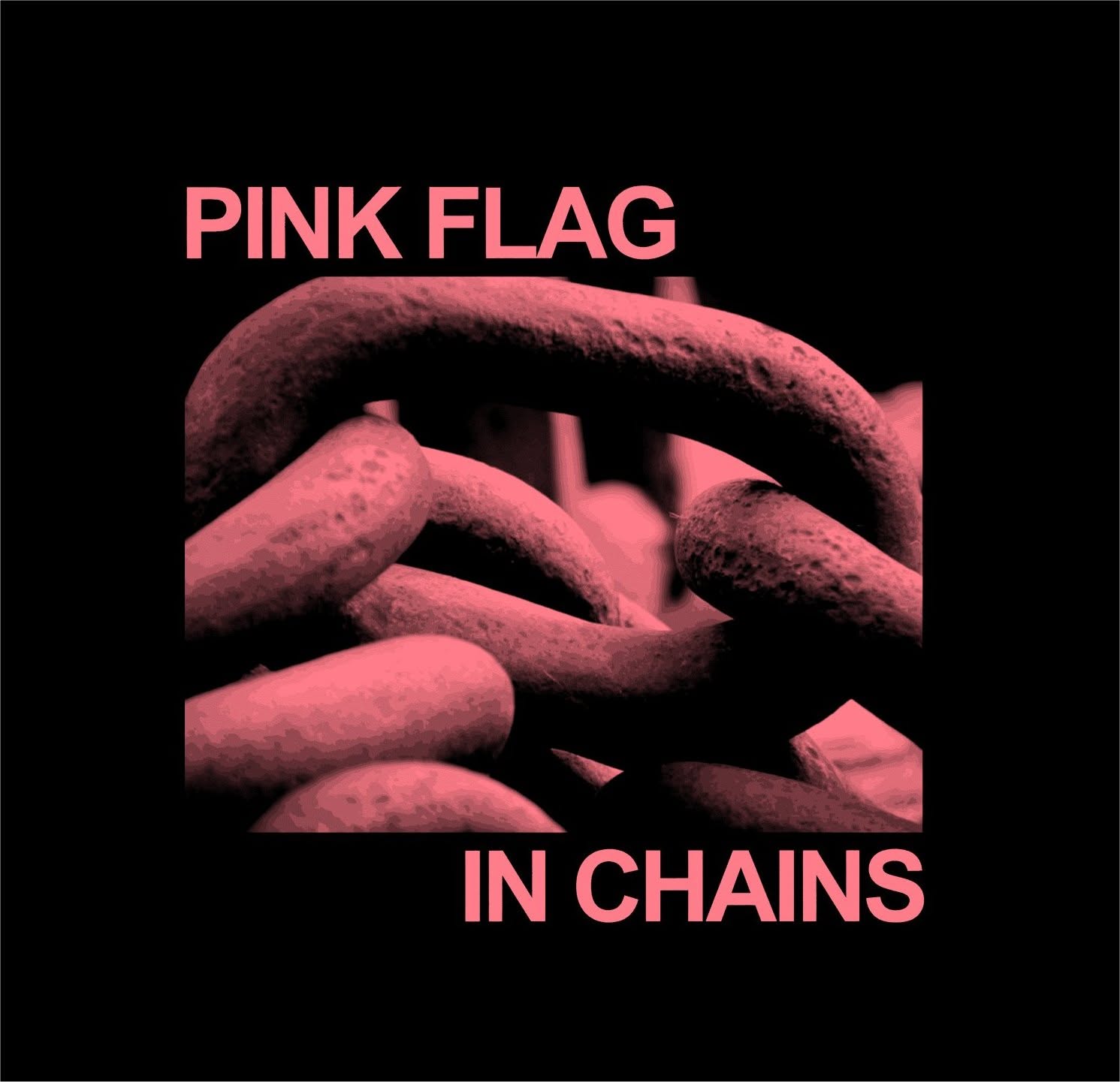
Pink Flag on the ‘In Chains’ EP
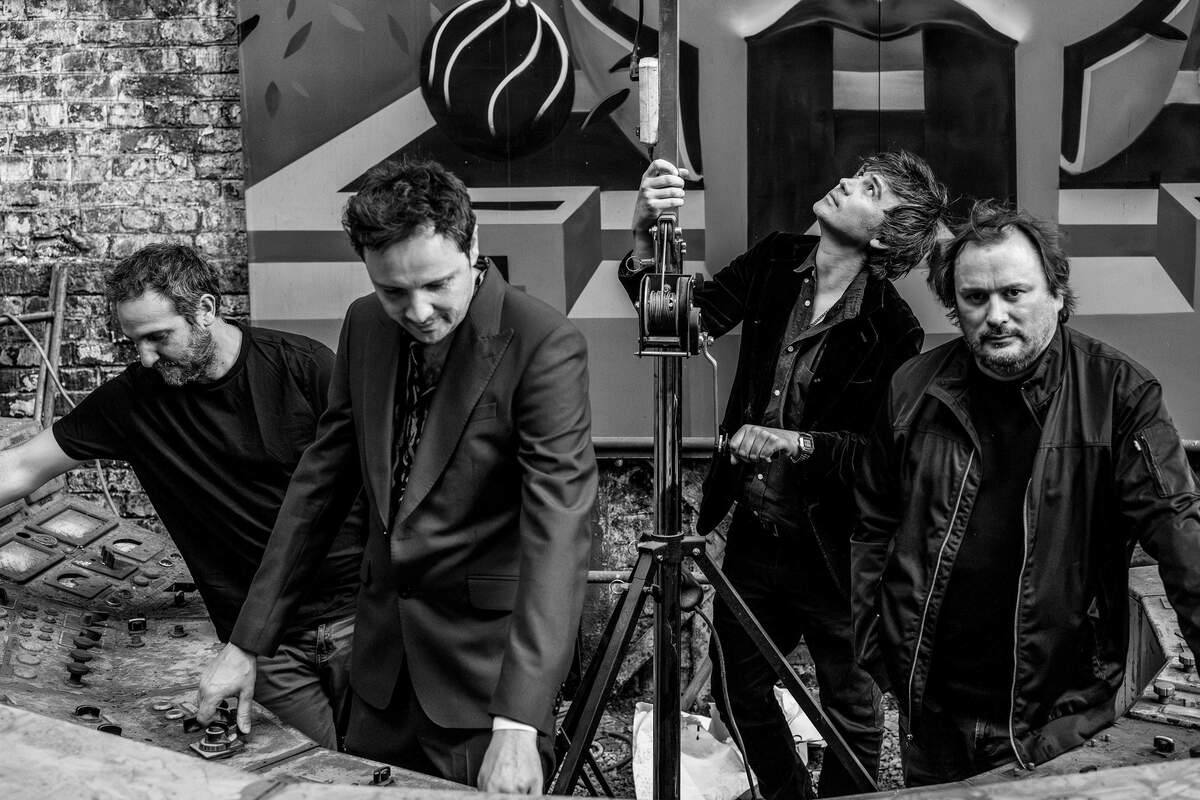
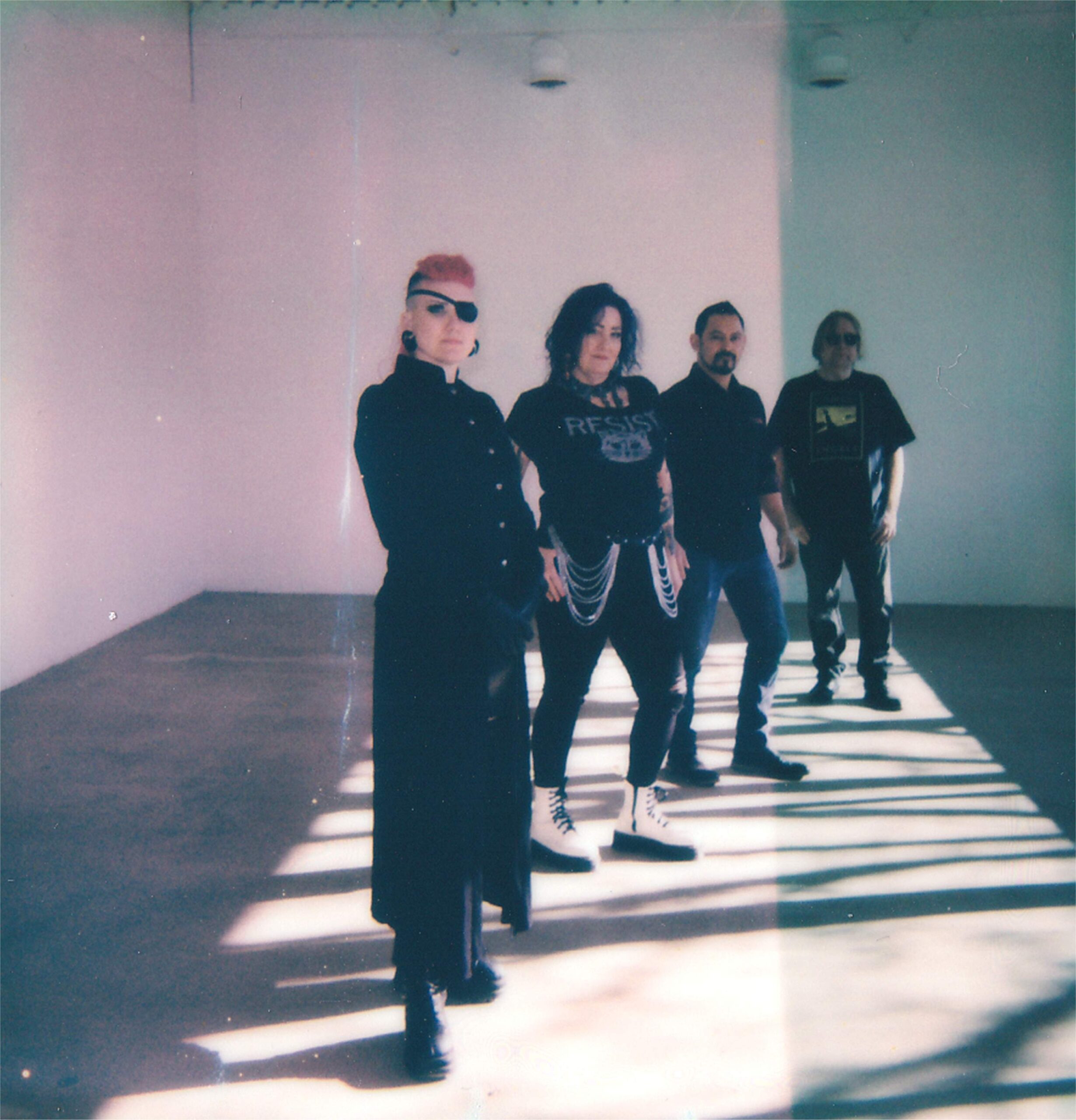
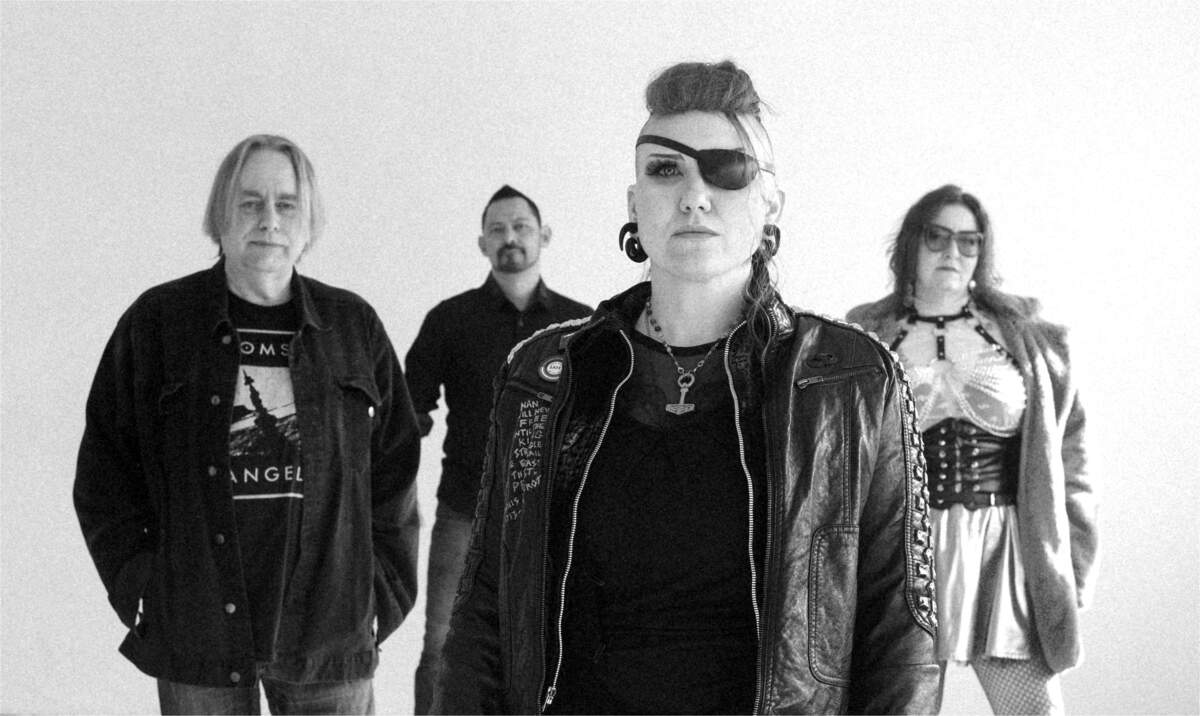
Pink Flag are a post-punk band from Des Moines, Iowa. Three members also play with Lene Lovich, and last year they joined her on a North American tour: 26 shows, about 22,000 miles by van, 12 dates opening for The B-52s and Devo, and two nights at the Hollywood Bowl.
Their new EP, ‘In Chains’, was recorded in a basement studio while events were unfolding a couple of hours away in Minneapolis. The recordings are straightforward and keep the sound of the room. In this interview, they talk about making ‘In Chains’, their approach to recording, and their connection to Minneapolis.
“Right now love has become defiantly political.”
You made this record while things were getting tense a couple of hours away. Did that creep into the room, or were you trying to keep it out and just focus on the songs?
What happened in Minneapolis shocked the world. They are practically our neighbours, so it was impossible not to be affected by it. How it manifests in the recordings, I can’t define clearly, but it certainly does. The way you play is quite easily influenced by the moment. We didn’t consciously try to keep it out. Dani and I were actually discussing it today, because we’re playing in Minneapolis soon and we feel this material sort of belongs there. I was just there last week with Throwing Muses, and you can really feel it. Right now Minneapolis is the rebel heart of America.
Why a basement? What about that space makes it feel right to you?
I never use commercial studios. Unless you can afford to work at Abbey Road, you’re really just paying for the engineer anyway. And you can learn those skills yourself. I could never get what I wanted out of producers and engineers, so I just studied the ones I liked and became my own engineer. When we were looking for a house, we deliberately looked for one with a basement that would accommodate a decent home studio. So the studio was here before the band.
When you say people can’t trust what they’re hearing anymore, what are you reacting to? What was the moment when you started feeling that?
The move towards digital-based equipment really started in the ’80s, and almost everything recorded back then sounds terribly dated now. There was a little bit of a sonic renaissance in the ’90s, thanks largely to Nirvana, but then computers took over in the 2000s and everything started going down the toilet. There is a handful of software that most people use, maybe about four or five programs that dominate the digital studio industry, with their various plugins, and the consequence is that everyone sounds the same now. They’re quantizing drummers and replacing recorded drums with samples. You turn on the radio and hear ten songs in a row with the same fucking kick drum sample. It’s lazy and it sounds terrible, and it’s ruining bands and creating bad musicians. In the old days, musicians had to bring their very best game to recording sessions. And no two sessions were ever the same. If you even moved or changed a microphone, the whole sound and feel would be different. The sonic variation was infinite. And now they’re even using AI tools for mastering, and AI doesn’t try new things out, it just regurgitates whatever the algorithm thinks is the correct balance for the genre it thinks it has detected. It’s all bullshit, and audiences are being robbed of any authenticity. There are some exceptions, of course, but so few that they’re actually obvious. I know that Tropical Fuck Storm or Wet Leg or Amyl and the Sniffers or Jack White have NEVER quantized a drum track in their lives, and that’s why I can listen to them and still feel something. And when you hear something recorded in the ’60s or ’70s, it leaps out of the speakers and sounds fresh as a daisy. Even bad records from the ’70s now sound infinitely better than most contemporary music, but most importantly, a lot of them actually don’t sound dated. Whether it’s Zeppelin or the Sex Pistols, or The Beatles, it’s like you can feel the literal air moving in the room. It’s alive. All of that is disappearing, and now we’ve even lost Steve Albini. If you wanna hear what drums sound like, listen to ‘Bone Machine’ by the Pixies and ‘Serve the Servants’ by Nirvana. No one ever recorded sound better than Albini. The stuff you’re hearing now is mostly fake. And I don’t think anyone really wants fake anything. Life’s too short for fakes.
You’re using gear tied to Joy Division. Do you think about that at all while recording, or is it just tools to you?
You’re referring to the BiAmp reverb unit, which was what Martin Hannett used on ‘Unknown Pleasures’. They just sound amazing, as proven by that album. The way I like to record, analogue gear has a big advantage over digital because the frequency band is narrower, which stops it getting muddy and overwhelming. You can use as much reverb as you like and you’ll still be able to hear everything. We basically record live, the whole band playing in one room, with a DI on the bass and the guitar amp in another room. The vocal preamp splits the microphone output. One is dry and the other one goes to the reverb, which is recorded to its own track. The only effect I’ll add afterwards is the vocal delay, if we’re using it, which is a stereo tape echo delay. I actually own the original Cute analogue delay from Britannia Row in London, which was used on Joy Division’s ‘Closer’ and Pink Floyd’s ‘The Wall’, but we didn’t use it on this album. But to answer the question, the gear is chosen for the sound, and that choice is of course influenced by the records that they were used on. But to sound like Joy Division, you have to write and play like them, which we don’t do. So we don’t sound like them, we just have some of the same equipment that they used.
Do you ever get tempted to clean things up a bit more, or is the roughness kind of the point?
I don’t think about it. I just know that the radio is a vast sea of polished turds, and when you occasionally hear something that isn’t, it’s like an explosion of sonic wonder, and you just have to pay attention to it.
How do you know when a track is done, especially when you’re doing everything yourselves? Is there a moment where you just go, “Okay, leave it”?
Pretty much, yeah. These days I record with the effects on, which is how Tony Visconti used to record David Bowie. You make those decisions in the room, and then when it comes to the mix, you work with what you have, which prevents endless tinkering. I’ve been down the rabbit hole of taking a year to mix a record. What you learn is that no one but you really cares whether the snare drum is perfect. They’re listening to the song as a whole. If you play it well and capture the sound well, it should almost mix itself. Of course, if you start faffing around with plugins, or if you give yourself too many options at the mix stage, you’re just creating more work for yourself that has nothing to do with the spirit of the moment. For me, recording music is a matter of urgency. Unless you’re Kate Bush or Scott Walker.
The name Pink Flag… did that come before the music, or did it show up later and suddenly make everything make more sense?
I knew what I wanted to do, and the name came when I was developing the concept. Then I looked for the people who could do it. When I found Dani, I knew it was going to work artistically. You can’t argue with talent like that. And she understood the concept too.
You talk a lot about survival. Do you feel like you’re documenting something happening around you, or just trying to get through it yourselves?
I’ve never had any ambition to be overtly political in my work. I think love is the human condition, and right now love has become defiantly political. We didn’t create that situation, but we are dealing with it. It’s like how it’s not your fault if you get flu or something, but it is down to you to deal with it until you get well, and so you do. Or at the other end of the spectrum, the songs of Ilse Weber and Frida Misul and David Wisnia, written and performed while they were prisoners in Auschwitz. As I said, when we were making the record, it was impossible not to be affected by what was happening in Minneapolis. If some of the anger and frustration that we felt seeped into the performances, then so be it. And I do believe absolutely in Virginia Woolf’s creed of “survive, create beauty, and tell the truth.” Three simple things that encompass an entire artistic philosophy, and also an ideal for living.
When you listen back to ‘In Chains’, does it feel like a snapshot of that time, or does it already feel separate from it?
Right now, it feels frighteningly current. You’d have to ask me in a couple of years, maybe once some sanity has returned to the world and perhaps we’ve made another album or two.
If someone walks in cold, no context, what do you hope they feel first?
I think any emotional response is valid, whatever it may be. If someone’s first response to it is an emotional one, then to me that means we have succeeded. And if they start to think about it afterwards, even better.
Do tell us a bit more about the background behind you recording the ‘In Chains’ EP and what’s next for you.
We had those songs for a while, but we had to take time out because Beth, Celestino and I had a tour playing with Lene Lovich, opening for Devo and The B-52s. When we reconvened, the intention was to record the songs for an EP. We started work on 11th January, four days after the Renee Goode shooting. By the time we finished, we’d actually written several more songs, so the initial plan was to put out a second EP as soon as we could. We’ll probably still do that, but we also realised that both EPs are of the moment and belong together, so we’re also combining them into an album. We have some shows coming up in the summer. Then I have a film to make, ‘Three Witches’, which is a black comedy that combines elements of ‘Macbeth’ with ‘Heart of Darkness’. Pink Flag is doing the soundtrack. Dani wrote the perfect title song, which we’ve already recorded. Then hopefully more shows, and more of everything generally.
Klemen Breznikar
Headline photo: Lizzie White
Pink Flag Website / Facebook / Instagram / Bandcamp