
Quadrature: Inside the Expanding Raga-Rock Universe of ‘Black Hole Blues’
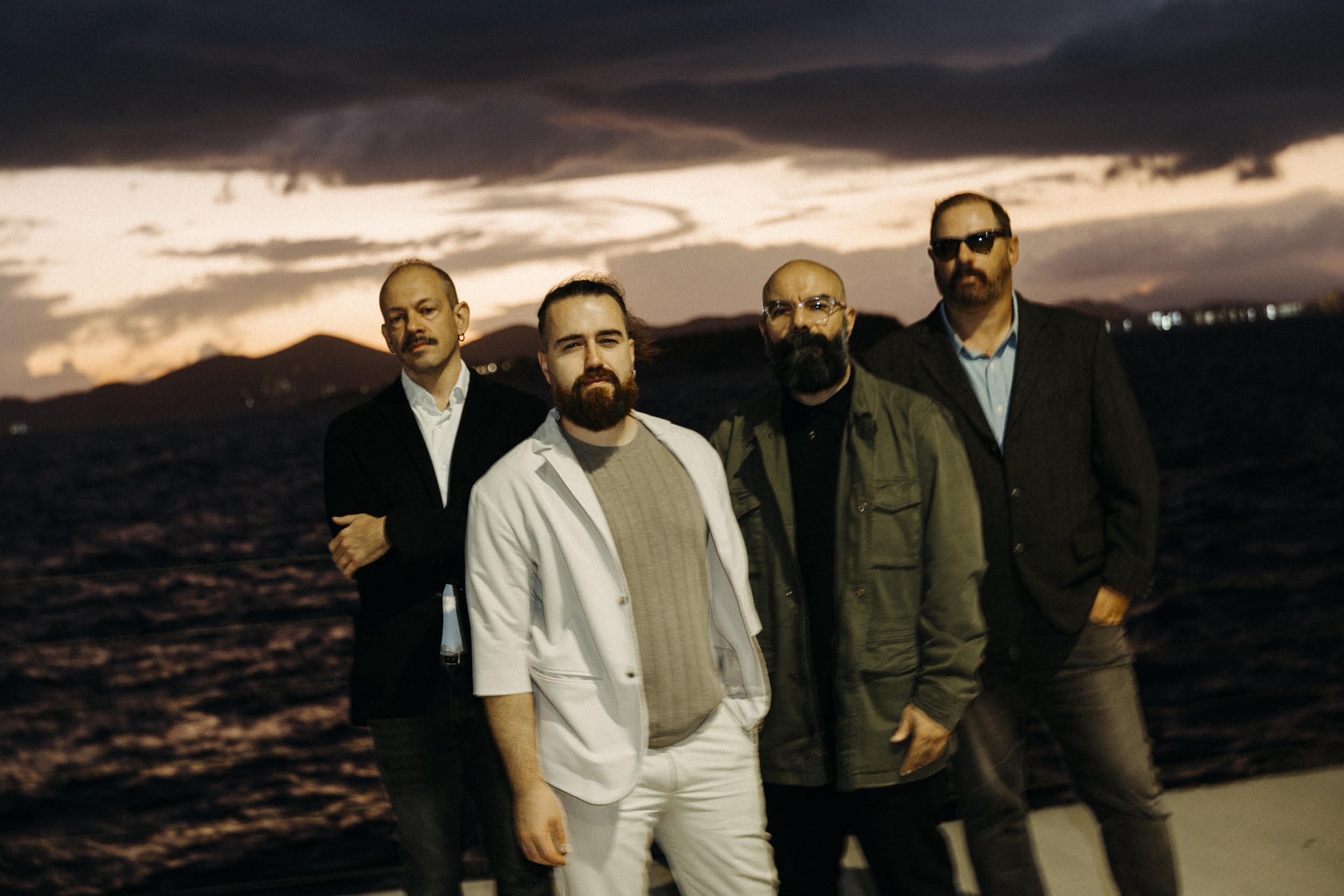
Quadrature formed through sessions at Brooklyn Raga Massive, where the members began playing together regularly and developing a shared approach.
As they describe it, “it wasn’t really planned—we just kept playing and it started to take shape.” The group works across raga, jazz, progressive rock, and electric improvisation, combining those elements in a way that reflects their individual backgrounds. Their first full-length album, ‘Black Hole Blues’, documents that process. “A lot of it comes from how we play live,” they note, adding that the material is “structured, but there’s always room for it to change.” In this interview, the band talks about how they came together, their instrumentation, their approach to improvisation, and how ‘Black Hole Blues’ developed from their live performances.
“Improvisation is always at the heart of what we do”
Great to have you here. Quadrature seems to have grown out of the Brooklyn Raga Massive sessions rather than forming as a traditional band from the start. How did the four of you first connect, and when did it begin to feel like a group?
Indofunk: Ooh, I do love our origin story! It starts with the monthly jam sessions that Brooklyn Raga Massive runs …
Neel: I have known all these musicians for decades, but coming out of the pandemic, we reconnected at the BRM jam sessions. One session in particular stands out, as we effortlessly jumped from raga-based jams to a whole set of classic rock tunes off the cuff. Soon after, when asked to put together a BRM band for an event, I knew I wanted to work with these guys! I did not want to play classic rock covers, but I loved that we had this shared language, which we reference in our music in our own ways.
The early performances were improvised and often rooted in ragas. What do you remember about those first shows, and how did that way of playing shape the way you listen to each other now?
Neel: The first few performances were all in post-pandemic, outdoor, street settings. Having improv as the starting place meant we had to really listen and engage with each other. I remember someone asking us at our first show, “Who writes your compositions?” He could not believe me when I told him it was all improv.
Indofunk: As one of the members in the band with the least experience playing raga music, I was scared as hell during our first performances! Like all music, there is a certain shared vocabulary and certain stylistic idioms that allow musicians to communicate in a genre-specific way. I knew a little of this before diving into Quadrature, but playing with musicians who really have a deep understanding of the genre brought me up to speed quickly! 2024 me would be pretty damn impressed by the musical growth that 2026 me has experienced.
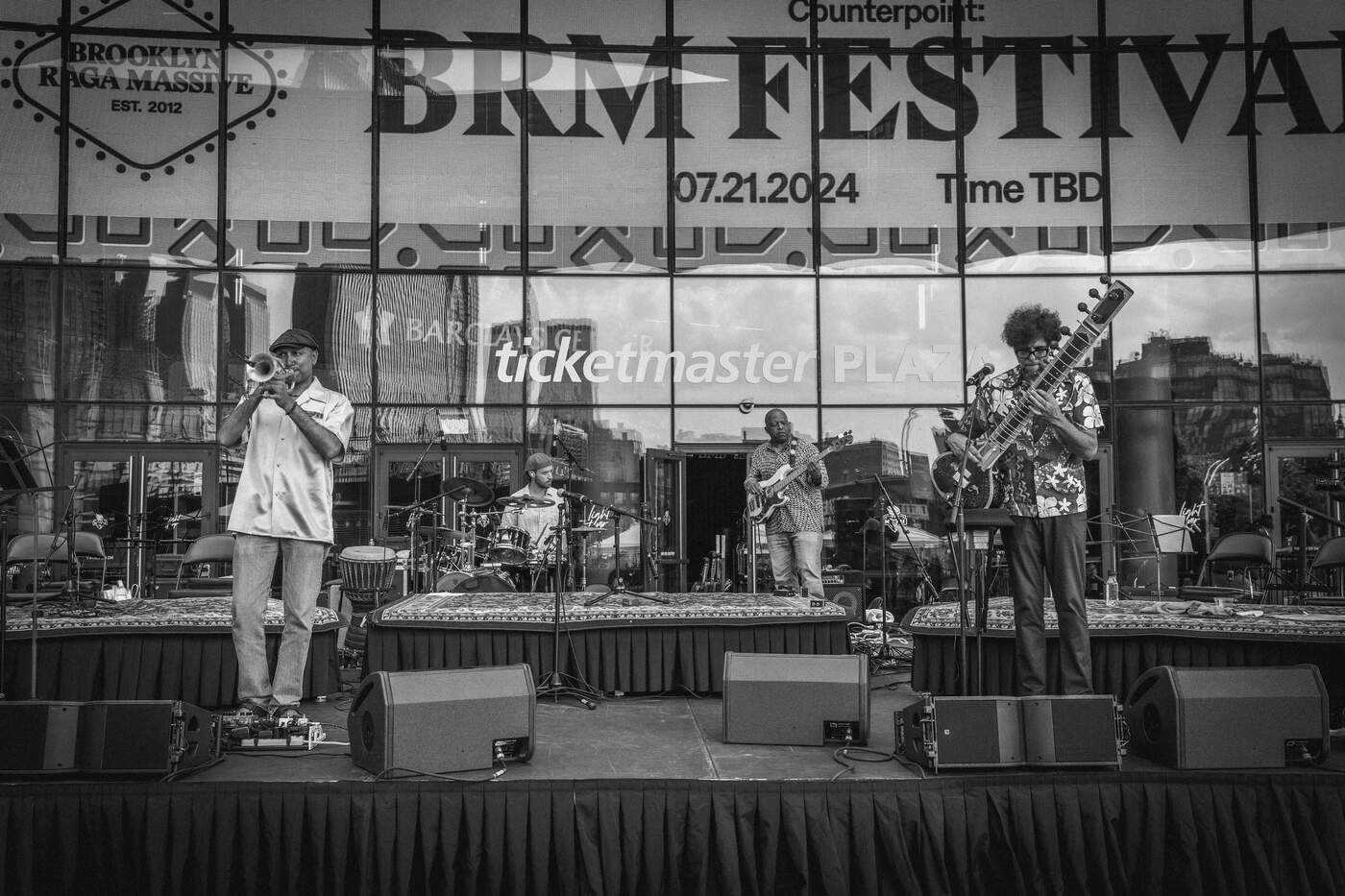
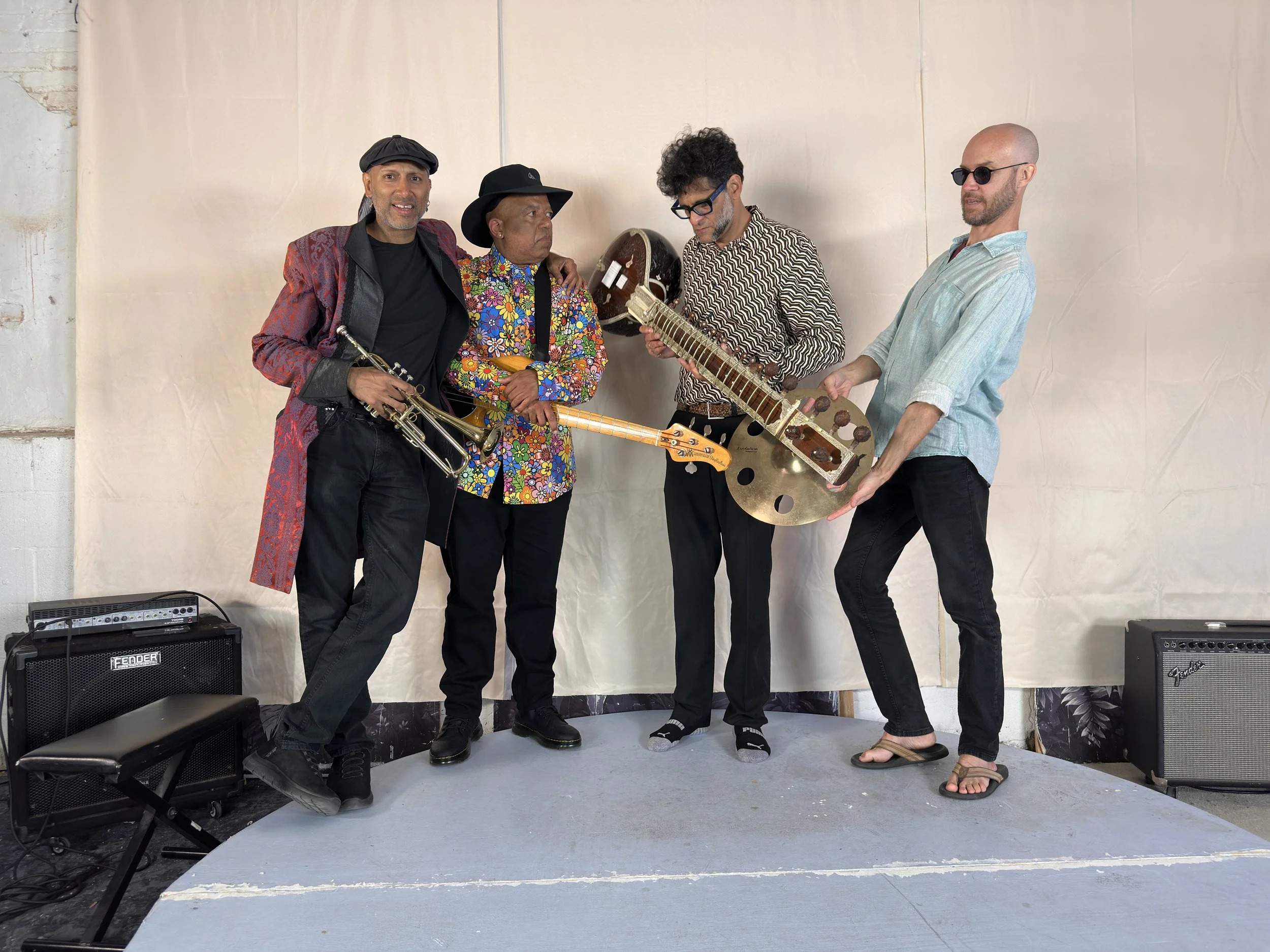
The group uses an unusual lineup: sitar with effects, Firebird trumpet, bass, and drums. When you first started playing together, did you have a clear idea of how those instruments would work together, or did the sound develop through playing?
Indofunk: I think there are aspects of both. We’ve each individually played our instruments in dozens of different musical contexts, so we know how to fit in with a wide variety of instrumental combinations.
Neel: I knew it could work, having experimented with many lineups over the years, but mostly I was drawn to play with these guys because of who they are, just as much as what instruments they play. Tripp started out playing percussion on the first few gigs before deciding to go with the drum set. My own use of effects on sitar has evolved through Quadrature … Our sound has emerged gradually, for sure.
Indofunk: One thing that never gets old for me is that having three instruments that rely heavily on effects, trumpet, sitar, and bass, results in many instances where I’m hearing something and I have no idea if I’m making that sound, or Neel, or Damon. The only way to find out for sure is to turn everything off and see if the sound stops!
The name Quadrature comes from mathematics and astronomy. When did the name come in, and what did you like about it for this band?
Neel: The name came later, after a few gigs, when we had an opportunity to play at Lincoln Center and the pressure was on to finally name this band. I do have a layperson’s interest in astronomy and astrophysics, so I was looking through lists of astronomy terms and, after seeing Quadrature, I realized that was also a setting on one of my effects pedals. It seemed fortuitous! The name relates to how I think about the music figuratively more than structurally. We are the area under the curve of raga and contemporary music, and aim to take listeners on a journey to the outer realms of space and time signatures.
The music draws from raga, but also touches on progressive rock, jazz, and other areas. When you work with a raga framework, how closely do you follow its rules, and where do you allow yourselves more freedom?
Neel: Any raga framework we use is loose. We are not trying to strictly play classical music in this context, but to be inspired by it. We remain free to go with what sounds good to us over any rules.
Indofunk: All musical rules are meant to be broken!! We’ve already thrown the concept of sticking to one raga per song out the door, and often during my own solos I’ll go off on a jazz tangent, i.e. non-raga, for a while. One thing we definitely do like to stick to is the concept of a tihai, which is a short rhythmic cell that is repeated three times and usually ends on the downbeat. We often end songs with tihais.
You spent time as artists in residence at the David Rockefeller Creative Arts Center. What changed for the band during that period? Did the music become more composed, or did it stay mainly rooted in improvisation?
Neel: The music did become more composed at that time. Indofunk and I both brought in some older compositions that we rearranged with the group, collectively imposing the Quadrature sound. Improvisation is always at the heart of what we do and how we interact, but these pieces gave us more structure.
Let’s talk about ‘Black Hole Blues’. When you went into the studio, did you want to record the band as it sounded live, or did the material change during recording and mixing?
Indofunk: Warning: opinions may differ among the band. I think one thing that we do agree upon is that the initial goal was to document the music, and record it more or less the way that we had been playing the songs up to that point. But after the recording was finished and we started diving into the mixing, done in-house by our multitalented drummer Tripp, I think we fell in love with a lot of the details, slips, trips, and happy accidents of the recording, and they became more cemented in our subsequent performances.
Neel: Here I do agree with Indofunk. We set out to document the live feel, but some of the things we recorded now feel canonical. I have had to figure out some elements of my improv in the recording so I could recreate them live.
Indofunk: Just last night Neel and I were talking about an improvised lick that Neel played on the song ‘Black Hole Blues’ and how we can integrate that into a different part of the song.
Neel: Side note: that lick, and much of the ‘Black Hole Blues’ song, was inspired by various Beatles tunes!
Indofunk: Another great change that came out of the album was at the beginning of ‘Spaghetti Eastern’ … originally Neel and I had a harmonized line, but Tripp pulled my trumpet out to hear what it would sound like, and that simple change opened up that section of the song and allowed the song to bloom and develop. We’ve played it like that ever since.
The album includes pieces such as ‘Charukeshi Constant’ and ‘Mother Durga’, which clearly draw from raga structures, alongside more hybrid material. How did you decide on the order of the tracks?
Neel: As our drummer Tripp was doing the mixing, we gave him a lot of say in the sequencing. We knew we wanted to start with a raga-heavy piece like ‘Charukeshi Constant’ and end with ‘Black Hole Blues’, the only tune with vocals. The sequence presented itself after some trial and error.
Indofunk: This may be a “don’t look behind the curtain” answer, but I personally feel that there’s no such thing as the “right” order for any album, concept albums aside, of course. Whatever order the artists come up with ends up being the correct order. Can you imagine, say, ‘Songs In The Key Of Life’ or ‘Off The Wall’ in any other order?
In concert, the music can move from meditative sections into heavier and more rhythmic passages. How do you handle those changes as a group?
Neel: By listening to each other! When we do our best listening, the dynamics are spontaneous and electric!
Indofunk: In a way, this is another example of the Indian classical influence on the music. Traditional raga playing starts out slow, soft, and out of time, and then gradually gets louder, faster, and more frenetic.
You have played venues such as Lincoln Center, Pioneer Works, and Joe’s Pub. Do you change the music depending on the room and audience, or does that happen naturally during the performance?
Indofunk: This is a bone of contention within the band! Ideally, we adapt our sound to fit the space, keeping our dynamics more controlled in smaller spaces and going more full tilt in larger halls. The challenge, of course, is to keep the intensity of the performance just as high whether we’re playing in a small venue or a large one. The audience deserves the same energy level no matter where they see us!
Now that ‘Black Hole Blues’ is out, what comes next for Quadrature? Do you want to keep documenting the music in the studio, or is the main focus still on playing live and letting the material develop there?
Indofunk: This is a live band! The focus will always be on evolving the music. That said, we’re using the spectre of a follow-up album to inspire ourselves to write more songs. Since the album dropped, Neel and I have written two or three new songs, which we perform live, and there are more brewing!
Neel: When we have enough new tunes together, we will certainly look to get back in the studio!
Klemen Breznikar
Headline photo: Adrien Tillman
Quadrature Website / Instagram
Deko Entertainment Official Website / Facebook / Instagram / X / YouTube