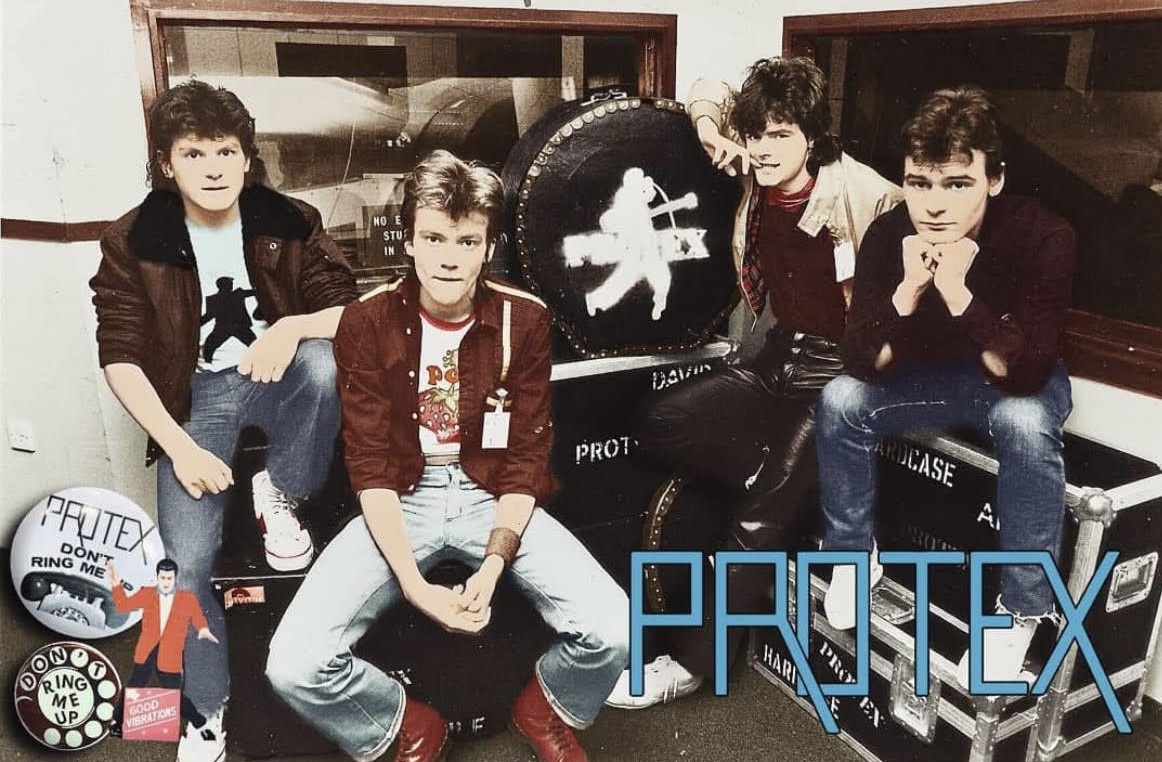

Protex: Good Vibrations and the Belfast Punk Years
Protex came out of Belfast in the late 70s, at a time when the city was difficult, divided, and often shut down after dark.
For a group of teenagers, music offered a way out of that atmosphere. “We saw music as an escape from the dullness and the Troubles,” they recall.
Around Good Vibrations Records, The Harp Bar, and the first wave of Belfast punk, Protex found themselves playing alongside bands such as Stiff Little Fingers, The Outcasts, and Rudi. They weren’t too fussed about fitting neatly into what people thought punk ought to be. There was plenty of energy and attitude, but it always came back to the songs. As they put it, “we were always about melody and loud guitars played with attitude.”
They took a bit from the scene around them, but just as much from 50s rock ‘n’ roll, Slade, T. Rex, Dr. Feelgood, Thin Lizzy, The Kinks and Small Faces. Looking back, they’d simply say they were a power pop, rock ‘n’ roll band.
In this interview, Protex look back on Belfast, Good Vibrations, early rehearsals, the move to England, the recordings, the split, and the later return to making music.
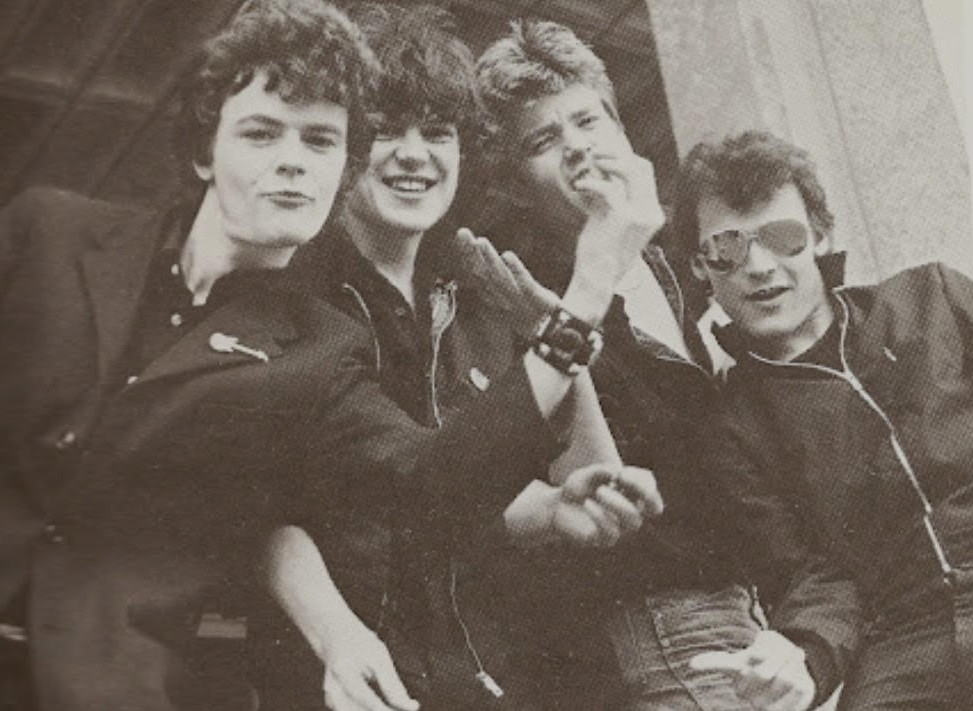
“We saw music as an escape from the dullness and the Troubles”
Good to have you here. There’s a decent amount written about the Belfast scene, but the details around Protex still feel scattered, so it makes sense to start at the beginning. You came together in the late 70s, right in the middle of that first wave. What was Belfast actually like from your side of it when the band formed?
Aidan Murtagh: Belfast. You have to remember that we were right in the middle of the Troubles at that time. Everyone stayed in their own neighbourhoods, and the city centre was a ghost town after 7 pm. For us, it was a fairly boring place to be, and making music was what we were into doing.
The Belfast punk scene was pretty small at the start. I recall Stiff Little Fingers, The Outcasts, and Rudi being the main bands that Protex gigged with. There were really only two or three places to play, which were in the city centre. Terri Hooley provided an outlet in The Harp Bar, which really changed things, as did his record label.
But for Protex, as teenagers, we saw music as an escape from the dullness and the Troubles. We hoped to get a record contract and leave Belfast, which we eventually did.
If we stepped into your lives back then, what would we have seen?
Terri’s shop, Good Vibrations, was where we got our records. We looked for them after hearing the music on BBC’s John Peel show. However, we were also big fans of Slade and T. Rex, and we listened to 50s rock ‘n’ roll, The Everly Brothers, and Buddy Holly. Not many local punks liked that.
We were also big fans of Dr. Feelgood and Thin Lizzy, as well as listening to Generation X, The Clash, the Pistols, and so on.
Our rehearsal room started in our parents’ front living room. They were very tolerant. I suppose they knew where we were and that we were safe! Later, we rehearsed in church halls. Yes, our guitars were cheap, but it did not matter. We began writing our own stuff, and this became a whole new exciting thing.
What did everyday life feel like at that time in Belfast?
I suppose we were like any other teenagers. We thought our city was dull and unexciting. We rebelled against school, grown-ups, and so on, and we listened to all the new music that was coming out. Being in a band seemed the logical way forward.
Before Protex, were you already playing in groups or figuring things out individually, or did most of that learning happen once the band came together?
Yes, myself and our drummer had previously played in bands, covering Dr. Feelgood songs, Thin Lizzy, and stuff like that. So I was singing and playing guitar from the age of 14, and I also had limited experience of gigging.
There’s always talk about the Belfast explosion around Good Vibrations Records. How aware were you of that scene as it was happening, and where did you see yourselves within it?
We were there right at the start of Good Vibrations. As Terri and the label progressed, we got more and more chances to play gigs every weekend, usually with The Outcasts, Rudi, and SLF. SLF soon left Belfast to tour.
It kind of took off without us realising it, but soon the British music press were in Belfast and we were getting interviewed. Belfast became hip, mostly because of SLF breaking through.
Journalists automatically thought we were singing about the Troubles and stuff, but Protex did the opposite. We were the first band made up of both Catholic and Protestant members from the beginning.
When you first started rehearsing, what did it sound like in the room? Was it tight from the start, or more about energy and getting something moving?
We must have sounded pretty poor at the start, but we thought we were wonderful! Back then, it was about the excitement and energy of playing our own original music. We were always about melody and loud guitars played with attitude. Us against the world.
Your early sound has that mix of punk drive and melody. Where did that balance come from?
Straight punk, for us, was dull. We always sought a melody. All our heroes played melodic songs, but with attitude, and that is where we felt comfortable.
Which records were actually on repeat at the time? Was it bands like Ramones, or were you pulling from earlier pop and rock as well?
I can remember pulling from Buzzcocks and Generation X at the time, as well as The Heartbreakers and, to some extent, The Clash. As I said earlier, we loved 50s rock ‘n’ roll and also pulled from The Kinks and Small Faces, none of which were on the punk radar!
When you started writing your own material, how did songs usually take shape?
Really, the song was written and the structure was brought to the band, and everyone did their bit. Not a lot changed in terms of arrangements and so on. I suppose harmonies were added and developed.
Looking at those early singles and sessions, how much did the songs change between rehearsal and recording, or were they already locked in by the time you went into the studio?
To be honest, the songs did not change that much in the studio. We knew what we wanted. Perhaps a lead part may have been created and harmonies developed. We often stuck to our guns when producers tried to change things.
There was one exception to this, which was the final single, the 45 version of ‘A Place in Your Heart’. It was recorded in 1980, I think, and we allowed a producer to put his slant on it. In my opinion, this was a major mistake, and it did not sound like our band. I feel the song was overproduced.
How did your releases come together in practical terms?
We signed to Polydor Records, and they took care of everything regarding releases.
What were the gigs like in that first run?
The gigs were energetic, full on, exciting. Just amazing for us. When we moved to England, we gigged frequently and became a tighter band.
Was there a particular show that really summed up what Protex was at that point?
I think all our shows were important and represented what we were about. There is a YouTube clip of us in Hurrah in New York City in 1980, which is a great representation of us at that time.
Inside the band, was there a clear direction everyone shared, or were there different ideas about where the sound should go?
We all shared the same vision and desires, and I think that was what was special about our band.
At the time, did you think of yourselves as part of a wider movement?
When we were in Belfast, I think there was a sense of being part of a movement. When we got a record deal and moved to England, we lost that feeling. We were on our own, and I suppose we lost the feeling of being part of a punk movement.
Things stopped fairly early on. When the band first ended, how did that actually happen? Was it gradual, or did it just reach a point where it could not continue?
It was a sudden stop when our guitarist decided to quit. It was at a time when music trends were changing. Ska was coming on board and the 1980s were happening. We also had no record deal. It felt that the band had run its course. We had packed a lot into a short period of time.
The release of ‘Strange Obsessions’ pulled together a lot of that early work. Hearing it assembled like that, did it change how you heard those songs?
No. That is how I remember them. That is how it was.
Listening back now, what stands out first? The melodies, the rawness, or things you would approach differently if you had the chance?
I love the melodies. I love the vocal tones and most of the guitar sounds. The only thing I would possibly change would be to slow some of the tracks down a little, as some are too fast.
Because the early catalogue is not huge, those songs carry a lot of weight. Do you feel they represent the band fully, or just one phase that never had time to develop further?
They certainly represented what we were about. It is difficult to say if we would have developed into a different sound. I doubt it, to be honest. We were a power pop, rock ‘n’ roll band.
You’ve come back with new material, including ‘Sticking With You’. When you started writing again, did it feel like picking up where things left off, or did the approach shift completely?
No, I wanted to approach the band as I remembered it. I do not want to change too much and take away from that original sound and structure.
When you write now, how does the process compare to the early days?
The process is still the same. I bring my songs in, and the band learns the chords and structure.
Playing shows again after all that time, what feels different?
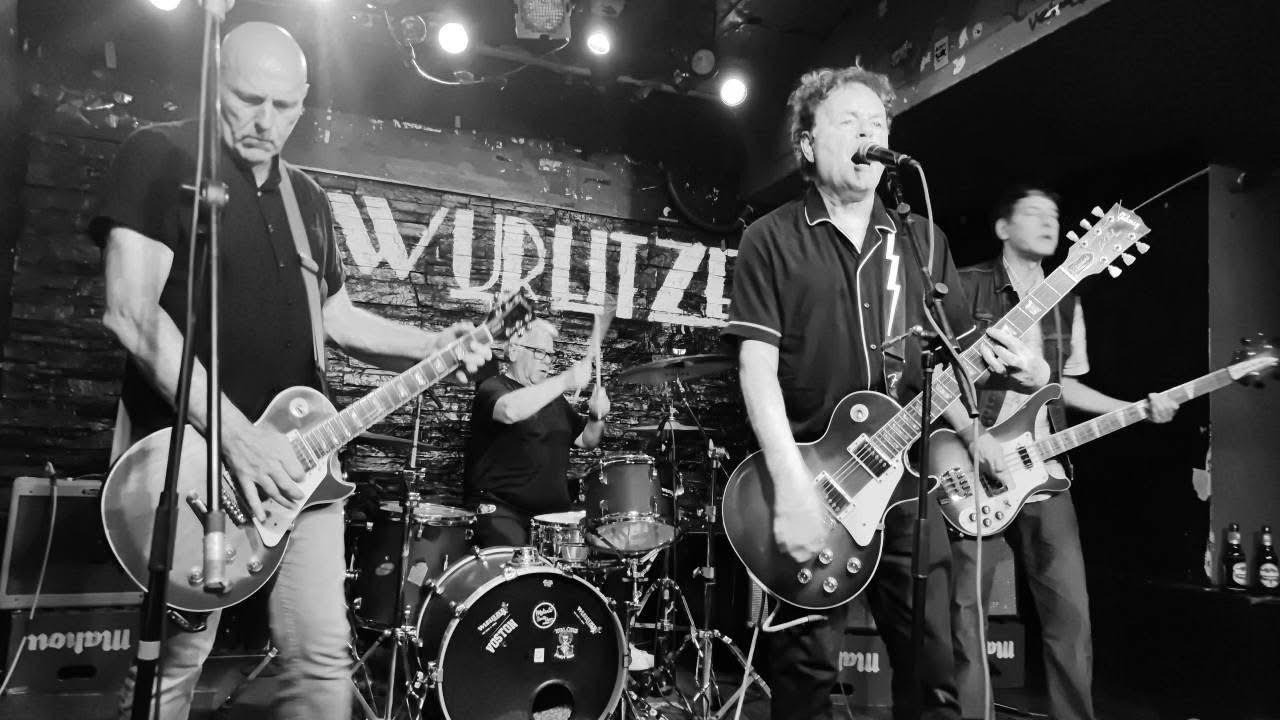
To be honest, the audience reactions are often more appreciative now than before. Also, many people know the words of the old songs and sing along. I think we are also more seasoned musicians than back then. The feeling on stage is still the same, and we have a great time.
Looking back across everything, do you see a clear line connecting the early Belfast recordings to what you’re doing now, or do they feel like separate chapters?
It feels such a long time ago, but to me it kind of still feels the same. I am doing it for the same reason, and the songs are similar.
If the band had never stopped in the early 80s, where do you think the music would have gone?
I find that one difficult to answer. I think we would have continued very much in the same vein, remaining raw and melodic.
And to finish on something simple. If we were sitting around after this, putting records on, what would you choose first? One of the records that fed into the band early on, or something you have been listening to more recently?
It might be ‘One Track Mind’ by Johnny Thunders and The Heartbreakers, or maybe something completely recent by the band Softjaw!
Klemen Breznikar
Protex Website / Facebook / Bandcamp
Bachelor Records Website / Facebook / Instagram / YouTube / Bandcamp