
Green Cosmos: Spiritual Jazz and the Unearthed Sounds of ‘Morgenmusiken’
In the hinterlands of late 1970s West Germany, specifically the quiet town of Marsberg, a unique musical synergy was taking place.
Far removed from the metropolitan heat of Europe’s jazz capitals, Green Cosmos functioned as a closed circuit of spiritual exploration. Comprised of saxophonist Michael Boxberger, pianist Benny Düring, and the uncanny, almost telepathic rhythm section of twin brothers Alfred and Ulrich Franke, the quartet turned their isolation into a very unique recordings.
While their debut, ‘Abendmusiken,’ adhered to a certain structural elegance, the newly unearthed recordings of ‘Morgenmusiken’ (Frederiksberg Records) document a radical pivot. Here, the group embraces “live compositions.” Spontaneous, meditative architectures built on the fly. Influenced by the modal expanse of the John Coltrane Quartet and the electric fluidity of Miles Davis, yet grounded in a distinctly pastoral European sensitivity, the music breathes with a rare organic quality. It is a sound where the bass acts as percussion, where silence is weaponized as a “source of strength,” and where the boundaries between jazz and “cosmic” music dissolve.
We caught up with the members of Green Cosmos to discuss the resurrection of these lost tapes.
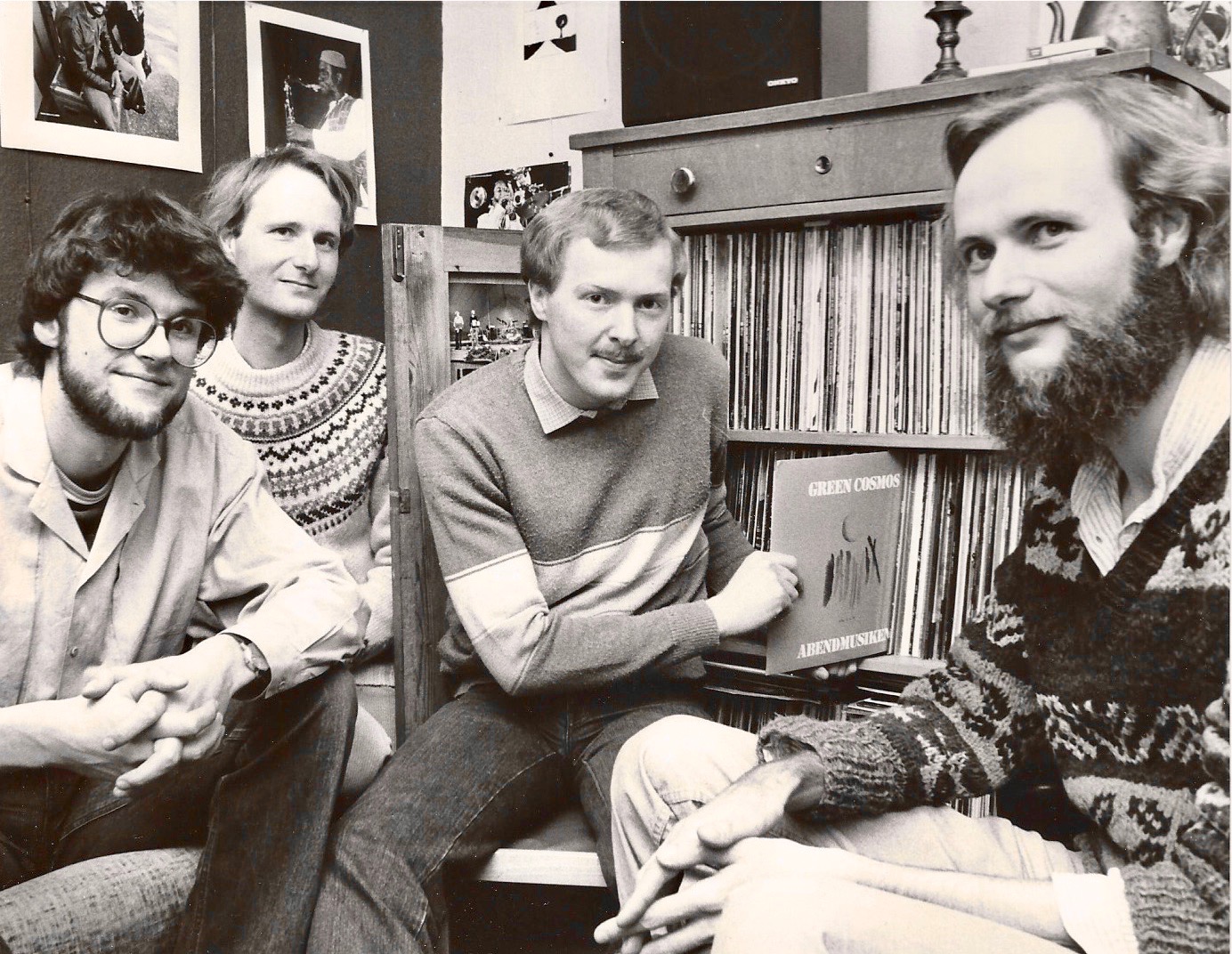
“We intended to create cosmic music”
Your music has been described as having a “Coltranesque mood”. We’re curious to know how John Coltrane influenced your unique sound, especially the way you use pauses and melodic freedom.
In the late 70s, the music of the classic John Coltrane quartet was the most inspiring music for us. We listened to the recordings and were motivated by the intensity and emotion of the music. Trane had shifted the music to a new level of spirituality. At that time, many saxophone players wanted to sound like Trane. The modal scales allowed more freedom in improvisation. Expression was the dominant factor.
The liner notes for the ‘Morgenmusiken’ album mention that it shifts from a “jazz ballad-oriented” sound to more “free-form ethnic music”. Was this a conscious evolution, and what inspired that change in direction?
We consider this a continuous evolution. The Abendmusiken LP featured mostly ballad compositions in a classical style. Only a few tunes were played in a free style, like the ‘Kalimba Suite.’ One year later, we got a stronger influence from world music and free jazz. We tried playing in a free style without any written compositions. We called this concept “live compositions.” Somebody started to play, and the other band members responded. We never played any tune twice. Sometimes the result was not so well-inspired, but sometimes new sounds emerged from this approach. We got the inspiration from meditation and listening to other recordings. The basic idea was to grow through creative challenges and create new sounds.
What’s your story of discovering jazz and learning your instruments? Were there any early bands you played in before Green Cosmos, and did any of them release recordings?
Before the four of us came together, we played cover songs in high school bands. Since there was no music school in our hometown, we learned autodidactically simply by doing. In 1975, we started with some of our own compositions in a style between jazz and rock music. Later on, we discovered the classic jazz standards from the Bebop era, the music of John Coltrane, and fusion style. We did several recordings, but ‘Abendmusiken’ was our first official release. All band members participated in different recording projects following the release of ‘Abendmusiken.’
We’d love to learn more about the musical environment you were a part of. What was the jazz scene like in your town back then? Were there specific clubs or venues you frequented, and which artists or performances left a lasting impression on you? How did those experiences ultimately shape your own sound?
In our small town Marsberg (in English: Mars Mountain—yes, we have been on Mars long before Elon), there was no music scene and no clubs for playing live music. Our inspiration came from LPs and from visiting jazz festivals. One of the most inspiring concerts was listening to McCoy Tyner at the Montreux Jazz Festival with some intense post-Coltrane music. From visiting the Moers Free Jazz Festival, we got inspiration for playing in free form. Some acts from that time were the Sun Ra Arkestra, Yosuke Yamashita, or Peter Brötzmann. These experiences helped to shape our sound.
Your name, Green Cosmos, is so unique. There must be an interesting story behind it. Could you tell us how you came up with the name and what it means to you?
Good question; we do not remember all the details of this name. “Green” stands for the sound of nature and “Cosmos” for the inspiration “out of this world.” We intended to create cosmic music including influences from world music.
What would you say was the original concept when forming the band?
Every 1-2 years, the concept of the band changed from the different influences coming from the music we discovered at that time. There was no local jazz scene, no clubs, and only a few LPs available. We listened together to music and tried analyzing the music for a better understanding. The concept of the band was always related to improvised jazz music, from Bebop to Fusion, playing the music of our heroes.
The rhythm section is featuring twin brothers, could you share how this unique bond influenced the playing, especially on tracks like ‘Galeria’ and ‘Island’ where the bass acts more like a percussion instrument?
The twins have a unique style with telepathic understanding. Both were playing rhythmically like one person. They had a very natural sense of timing and could change the metric patterns without any notice, and were always well synchronized. Both were playing percussively on all instruments like a single unit. On ‘Island,’ the Fender fretless jazz bass is the dominant force, played in a very unique and percussive style. This might be one of the most innovative tracks on ‘Morgenmusiken.’
Your recording sessions for ‘Morgenmusiken’ were largely spontaneous. Can you tell us more about what it was like to compose and record live without prior rehearsal, and how that contributed to the final sound?
We usually started with some kind of meditation, clearing the brain. The idea was to play spontaneously, like composing. Ideally, the music should sound like a written composition with melody and form based on one modal scale. We usually started playing in a slow and mellow tone, increasing the dynamics and intensity over time. However, it never got too wild like in classical free jazz. The idea was creating free compositions sounding warm and beautiful. There was no classical composer; the music came from the interaction of all band members. It is much more inspiring creating music in a group than composing alone at home. We always felt some magic when playing together. Playing was shifting into another world without the use of drugs.
With the release of previously “lost tapes” like ‘Eine Reise’ and ‘Fools of Paradise’ from the ‘Abendmusiken’ sessions, we’d love to hear more about how these tracks fit into the story of the band.
‘Eine Reise’ and ‘Fools of Paradise’ are the connecting link between ‘Abendmusiken’ and ‘Morgenmusiken.’ Both originated from the ‘Abendmusiken’ session but are closer to the ‘Morgenmusiken’ mood. We rediscovered the songs when listening to the original tapes when Frederiksberg asked us for the master tapes. For some reason, they had not been published on the ‘Abendmusiken’ LP. ‘Morgenmusiken’ starts with these two tunes, showing the continuation from ‘Abendmusiken.’
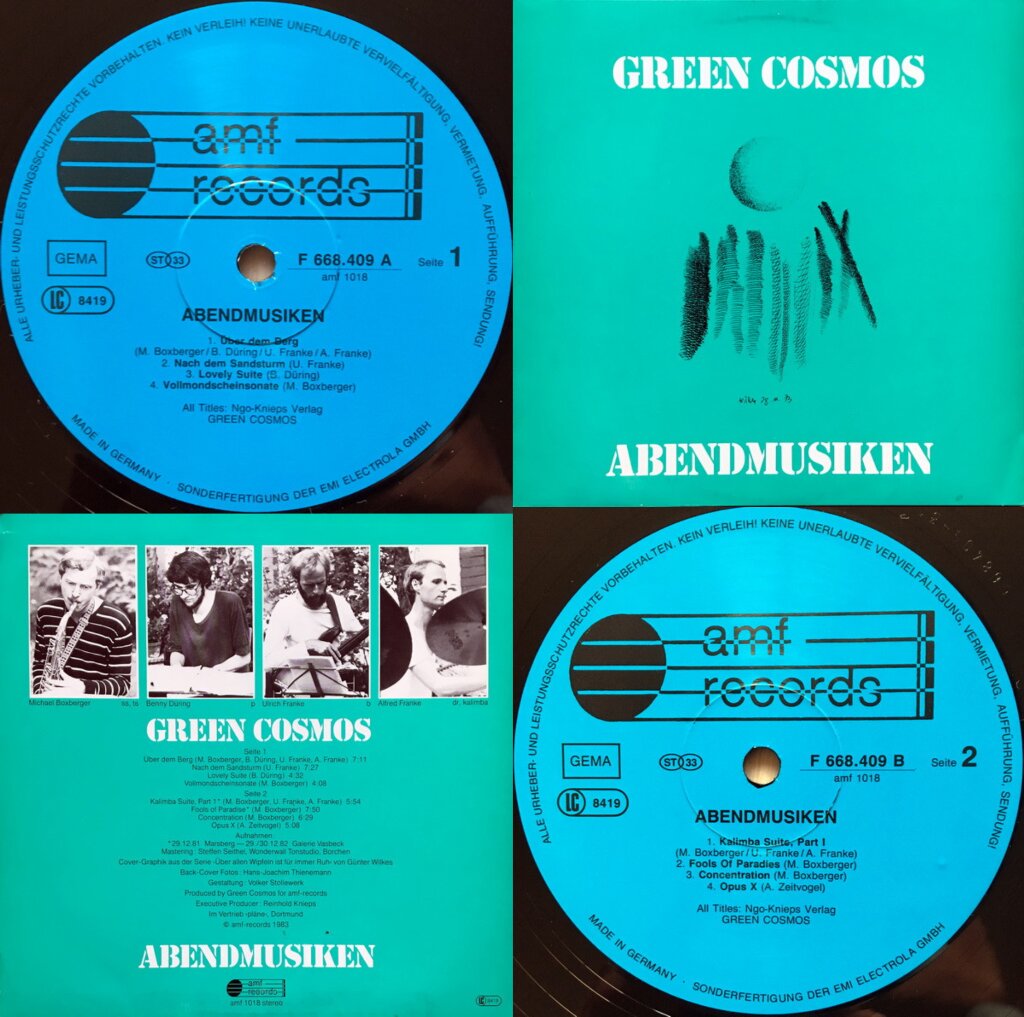
Could you tell us about AMF Records that issued your album in 1982? How many copies did they press? Were they sold at shows or in local record shops?
AMF Records was a small independent German label established in the 70s by Reinhold Knieps. The music on AMF was between free jazz and Indian music, e.g., a record with the music ensemble of Benares featuring Zakir Hussain. They pressed only 400 copies, which were distributed by the independent “Plaene” group to local record stores without any promotion.
Did you get any airplay back then?
There was some limited airplay because there was no dedicated jazz radio station or podcasts available in Germany. Most memorable was the comment from jazz writer Joachim-Ernst Berendt noting: Green Cosmos is a band from which we will certainly hear more in the future.
Tell us about your concerts? What are some of the most memorable?
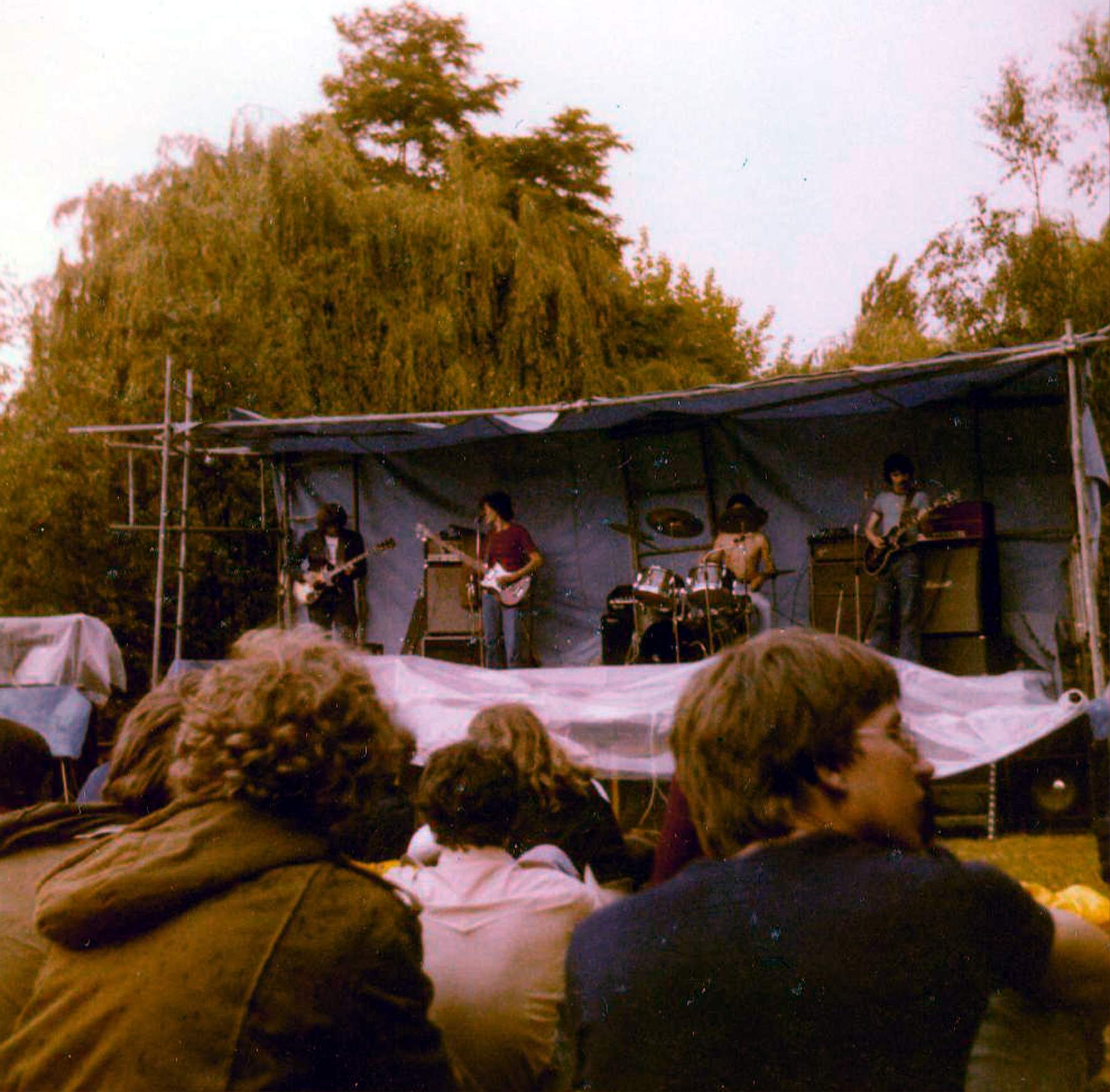
Following the release of ‘Abendmusiken,’ Green Cosmos unfortunately only played two local concerts before the band members split up due to other career options. The comments from listeners have been quite mixed. Some were irritated by the unusual free form; others were impressed, experiencing the spirit from Miles Davis and John Coltrane mixed with new age and Indian music styles. One listener commented: the music came out of nothing and captured the mind.
Miles Davis’s ‘In a Silent Way’ is mentioned as an influence on the track ‘Govande’. Can you elaborate on how that album, along with your fusion of Indian and Western music, shaped your creative vision?
We grew up with the European music tradition. So-called “Euro Jazz” often shows influences from classical music. Miles Davis opened up some new music on ‘In a Silent Way.’ The fusion of classical jazz and electric rock styles influenced a whole generation of musicians. Different from later recordings like ‘Bitches Brew,’ ‘In a Silent Way’ was more esoteric and meditative. When playing with Indian sitar player Narayan Govande, we were in a similar mood of listening and responding.
The art gallery of Guenter Wilkes seems to have been a truly special place for your band, serving as your recording studio. Could you tell us about the atmosphere there and how it might have influenced the meditative and collaborative nature of your music?
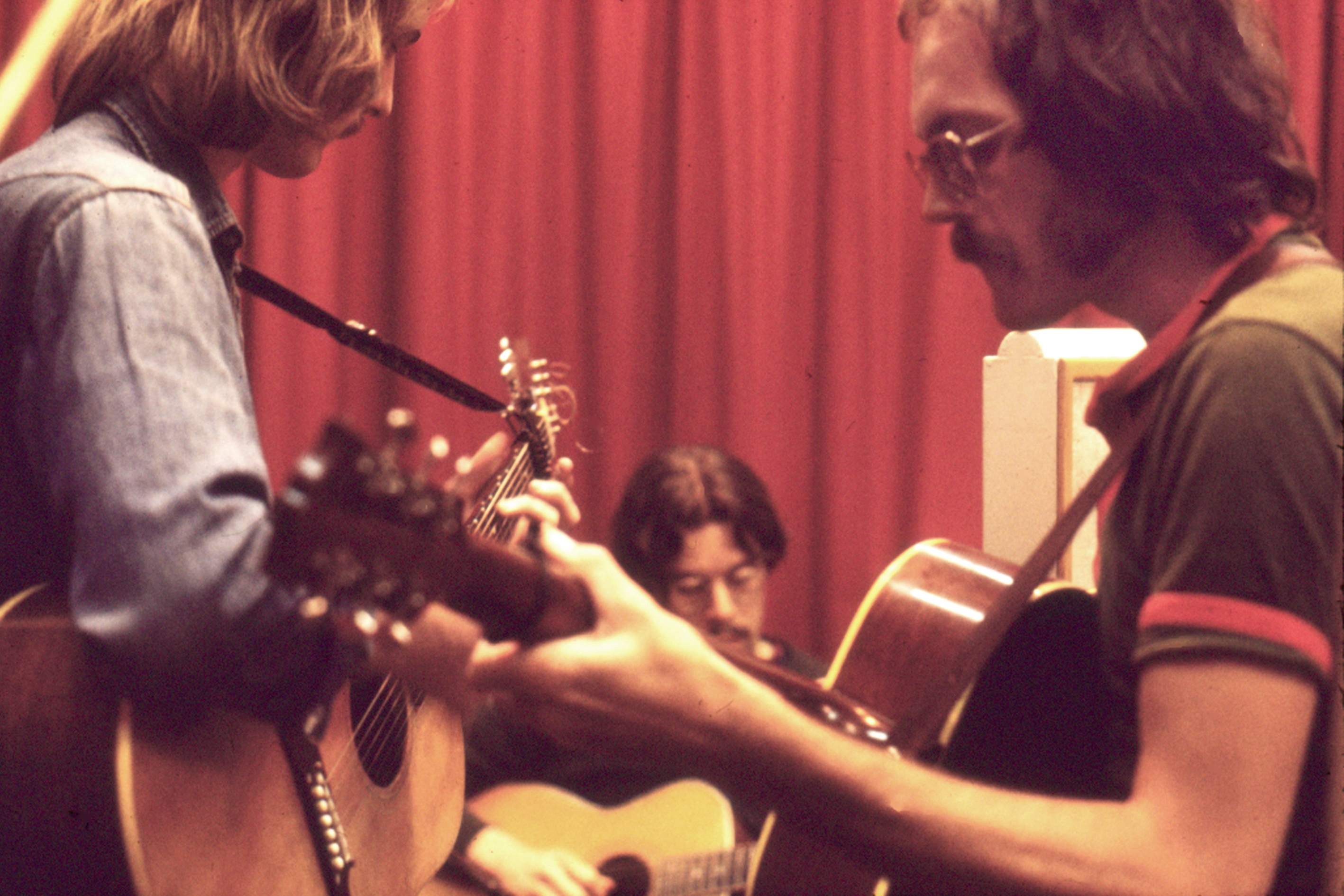
There was a fine piano available, great artwork, and a very natural reverb in the art gallery. This is different from usual sterile recording studios sounding more “dry.” For the musician, this natural sound feels different and does not require any electronic reverb post-production. This certainly contributes to the sound quality of both ‘Morgenmusiken’ and ‘Abendmusiken.’
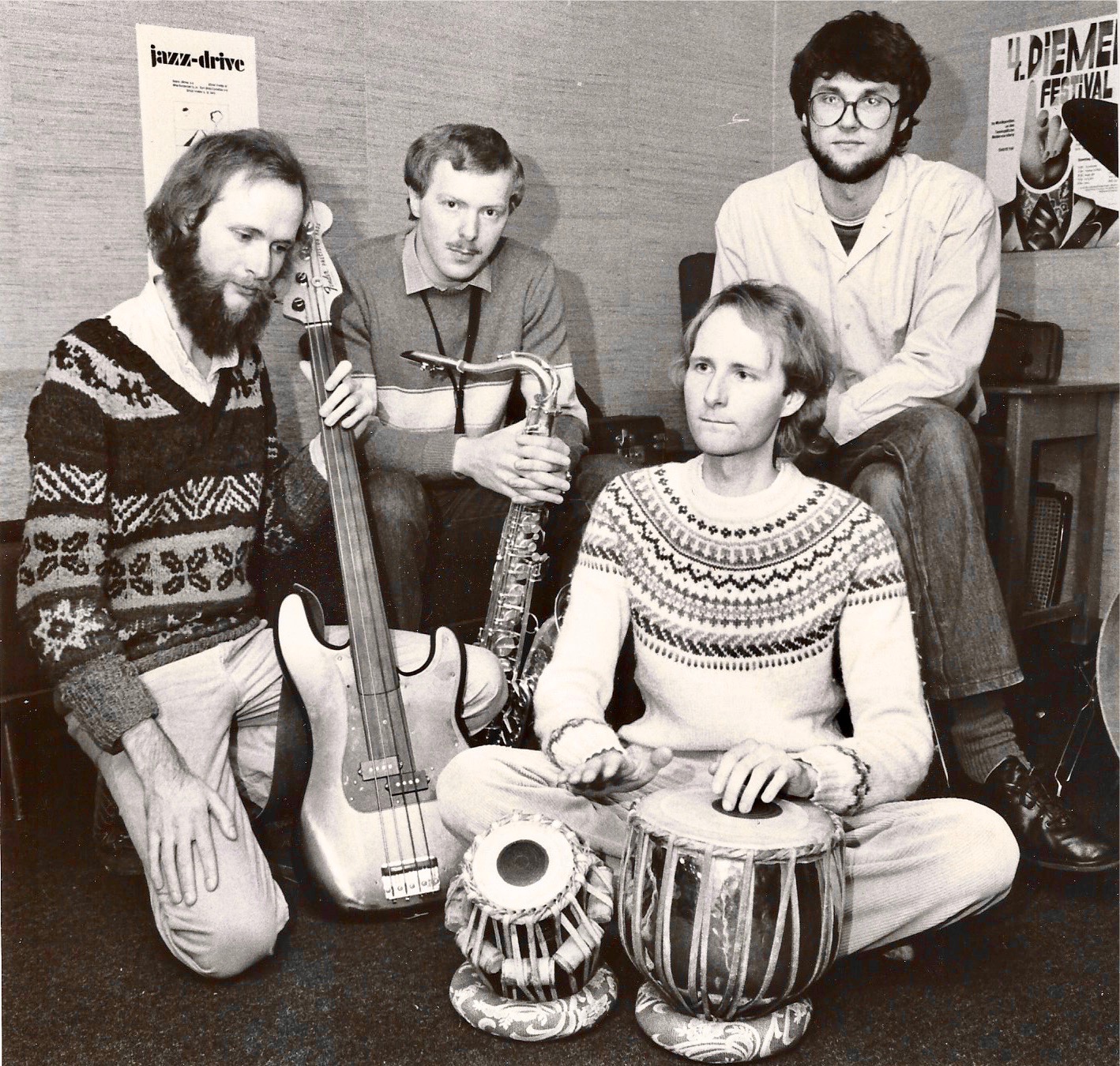
“Silence might be the most beautiful part of music.”
The liner notes describe your music as having “not one note too many” and using pauses as a “source of strength”. Could you share your thoughts on the importance of space and silence in your compositions?
Silence might be the most beautiful part of music. The slogan for the ECM label is “the sound of silence.” This ECM style of music (e.g., from Keith Jarrett) was another important part of our musical development as well. Many musicians are playing too many notes in order to impress listeners. This makes the music sound nervous. Space is very important for structuring the music. One single note can make more of an impression than 100 notes.
The track ‘Kalimba Walk’ was originally intended for a follow-up album that never happened. Now that it’s finally being released, what’s it like to hear it as part of ‘Morgenmusiken’?
‘Kalimba Walk’ could have been published on the ‘Abendmusiken’ LP as well, but was recorded one year later. The Kalimba is an integral part of our sound. We feel very happy about Frederiksberg publishing these recordings now.
The descriptions of your music seem to have a beautiful contrast, being both “meditative” and “wild and liberated”. How do you balance those two sides in your creative process?
When playing free jazz, we could play wild and dirty. This was great for the creative development, getting to the limits of the instruments. However, sometimes it got very noisy and difficult for the listener. It was fun for the player, but sometimes a pain for the listener. After playing in this style for about one year with some negative response from the audience, we limited the experiments to more melodic playing. We wanted to play the music we also liked listening to. The music finally got more controlled and meditative, but still open-minded.
What was it like to collaborate with Narayan Govande on the track ‘Govande’? The liner notes mention a “mutual understanding of improvised music” between you and him.
Because we liked Indian music and the blend with Jazz (e.g., on the album ‘Karuna Supreme’ from John Handy and Ali Akbar Khan), we were very excited playing with an Indian sitar master. We did not need to talk much; music was our universal language with mutual understanding. We just started playing and listening to each other. Discussions were only on the scale; the rest was free interaction.
The album ‘Morgenmusiken’ is described as a “logical follow-up” to ‘Abendmusiken’. How do you see these two albums complementing each other, and what does ‘Morgenmusiken’ document about the band’s journey?
‘Abendmusiken’ is more in the classical jazz idiom of John Coltrane, Bill Evans, and McCoy Tyner. ‘Morgenmusiken’ is more in the Miles Davis fusion style, mixed with Indian music and free jazz elements in a natural evolution of playing free music.
Now that ‘Morgenmusiken’ is being released, how do you hope listeners will experience the “cosmic journey” that the notes describe?
This is exactly what we hope for. The listener should feel like going on a journey into another world, sometimes exotic, sometimes beautiful. While ‘Abendmusiken’ sounds more conventional and melodic to the ear, ‘Morgenmusiken’ is more open and free. Both records close the cycle of Green Cosmos. If the band still existed today, our music would most likely be a blend of both.
Did members of the band continue being active in music? Tell us what projects occupied your life later on?
Following the time with Green Cosmos, the band members went into four different areas in Germany playing with other local musicians. While the twins Alfred and Ulrich both continued playing cosmic and esoteric music, Benny and Mike played in a modern jazz style in different band settings and continued playing as a duo.
What currently occupies your life?
All four of us are retired now but still involved in some kind of music. Benny is involved in the jazz club in his hometown Paderborn, both playing live and organizing club concerts. Due to some health issues, the other members are no longer performing in public but are recording their own private music.
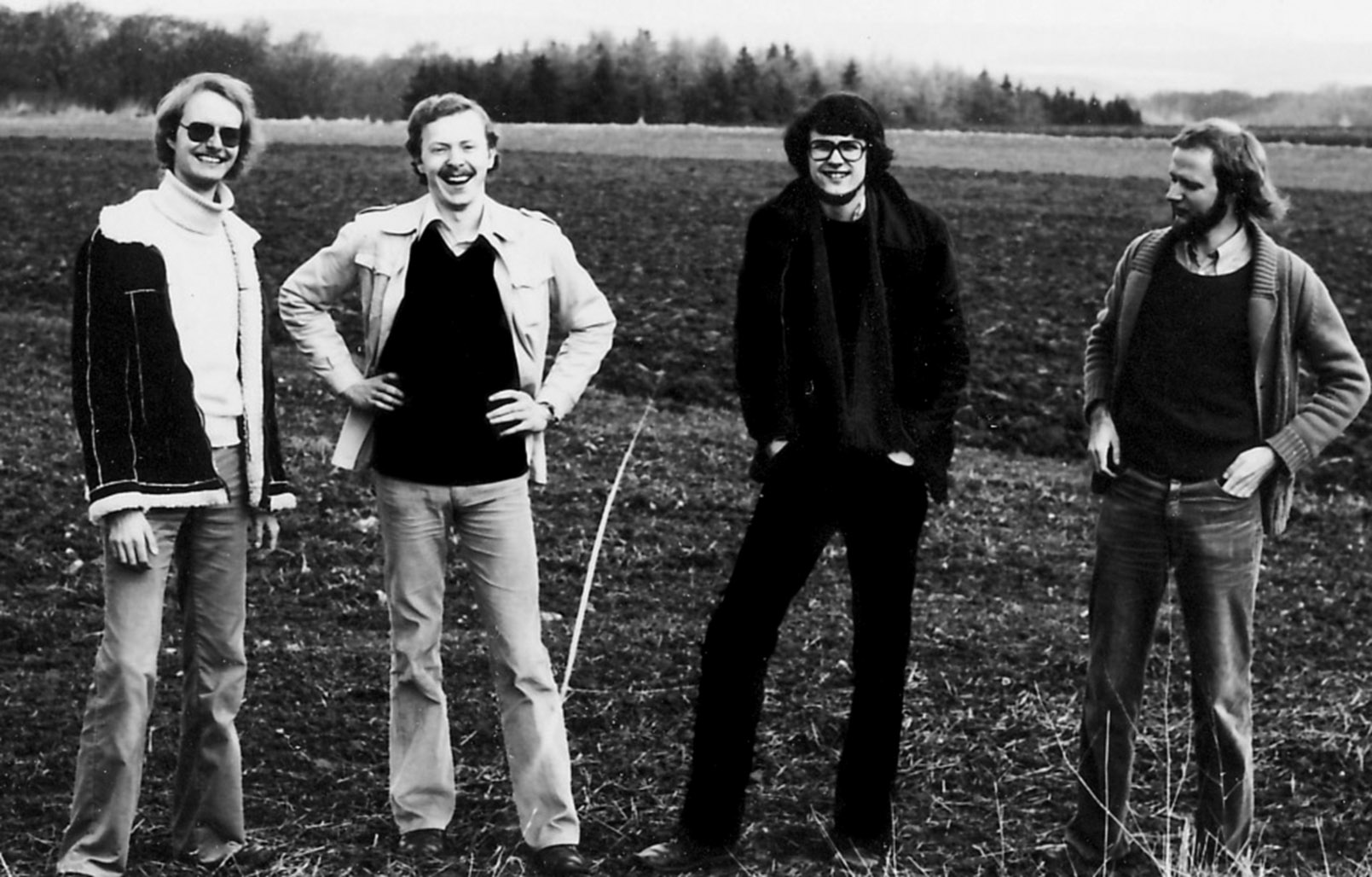
The Bandcamp release of ‘Morgenmusiken’ comes with three bonus tracks, ‘McBrösel,’ ‘Narayan’ and ‘Joe’s Tune,’ what should the listener know about these tracks?
The three bonus tracks on Bandcamp complement the ‘Morgenmusiken’ LP with some additional material. ‘McBrösel”’is a composition of drummer Alfred Franke in a Coltranesque mood, recorded at an early live concert of Green Cosmos on July 25th, 1991 at the Art Gallery.
‘Narayan’ is the second track from the recording session with Indian sitar master Narayan Govande on April 9th, 1982. While the tune ‘Govande’ from the LP ‘Morgenmusiken’ is more in a silent mood, ‘Narayan’ starts quite similarly, developing into increasing dynamics and an extended groove. Both tunes are “live compositions.”
‘Joe’s Tune’ is named after the nickname “Joe” of the bass player Ulrich Franke. It starts with Kalimba followed by the bass line, which is keeping the music together. The unique bass playing is representative of the sound of Green Cosmos.
Photos: Copyright Green Cosmos / Frederiksberg Records
Frederiksberg Records Facebook / Instagram / Bandcamp