
The Mekons’ Tom Greenhalgh: “There’s Never Been a Plan”
Nearly fifty years after forming in Leeds, the Mekons are still finding reasons to carry on. Tom Greenhalgh talks about ‘HORROR’, Tony Maimone’s dub reworking ‘HORRORble’, discovering Jamaican records as a teenager, and why the band still feels unfinished.
When Jon Langford spoke to us in 2020, he compared the Mekons to “a knackered old bus driving down a country road.” It seems a fair description of a band that started in Leeds in 1977 and has somehow kept going without ever settling into what a band is supposed to be.
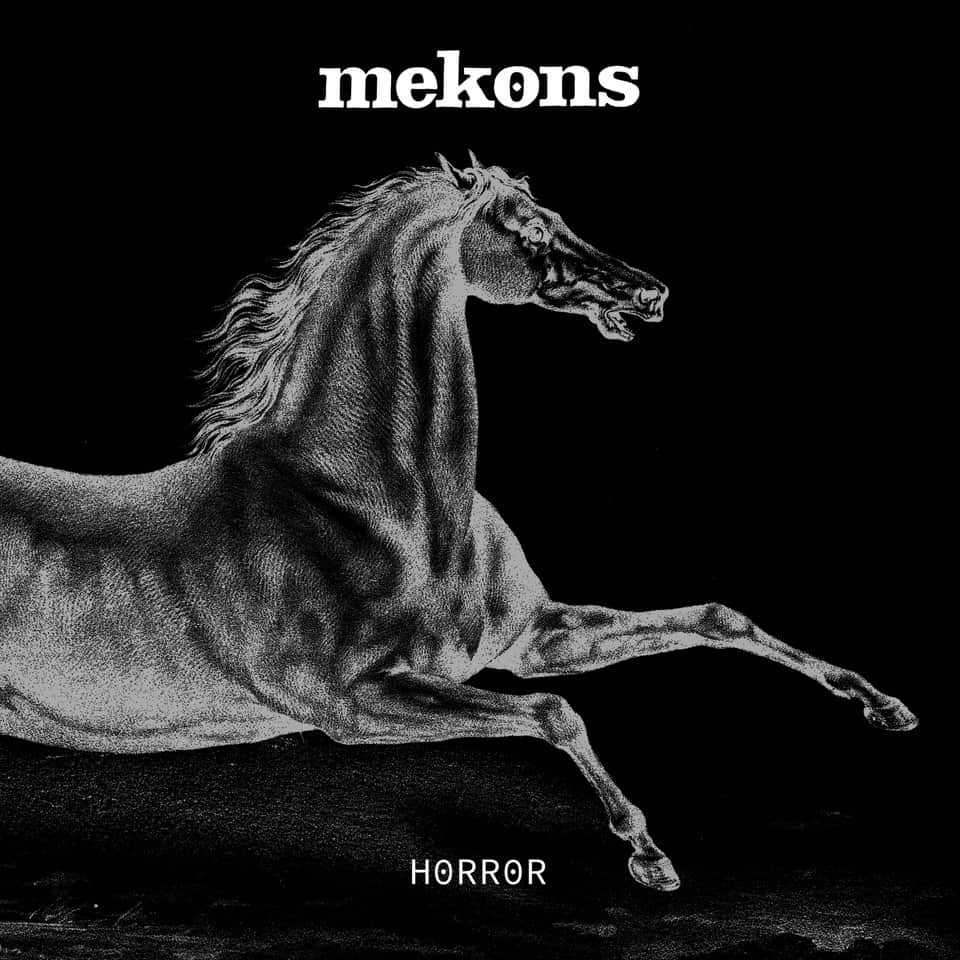
Tom Greenhalgh has been there since the beginning. Nearly fifty years on, the Mekons are still making records together, with much the same collective approach they had when they started. In April 2025, they released ‘HORROR’, recorded in Valencia three years earlier. It’s a record concerned with war, imperialism, migration, climate catastrophe and the darker side of human history, though there’s plenty of humour and musical mischief in there too.
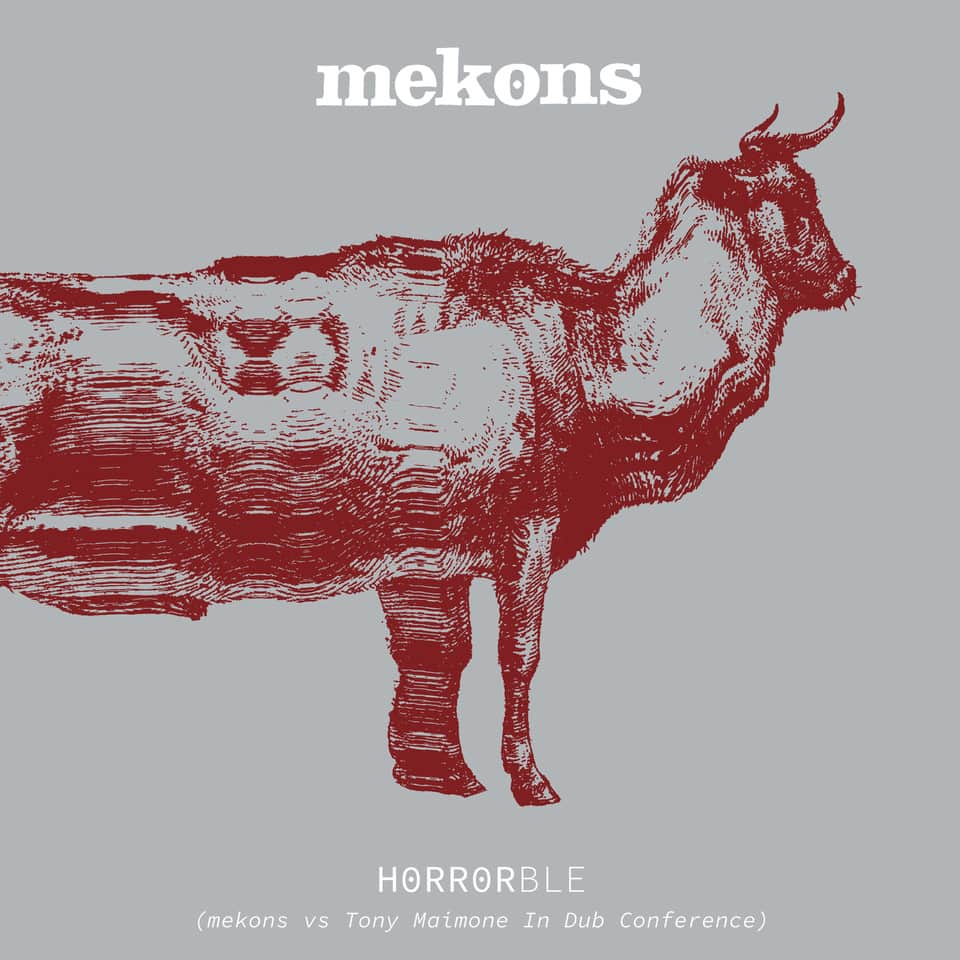
Then came ‘HORRORble’ in June 2026, a dub reworking of the entire album by Tony Maimone of Pere Ubu. Tony and the Mekons go back a long way. They toured together in 1988, he later played bass with the band, and in 2015 he recorded the performances that became ‘Existentialism’. This time he was given the recordings and told to make them as horrible as possible.
We caught up with Tom to talk about the two records, his early love of dub, the band’s politics, and the rather unlikely business of keeping the Mekons together for almost five decades.
“There’s never been a plan – certainly no long-term plan.”
You have been a band for nearly fifty years, which is already strange enough, but maybe the stranger thing is that the Mekons still feel unfinished. A lot of bands become monuments to themselves after a while, but you still seem like a problem that has not been solved. Is that part of the point? Do you survive because there was never a fixed idea of what the Mekons were supposed to be?
That’s pretty much it in a nutshell – there’s never been a plan, certainly no long-term plan. When we started, we just wanted to be as different as possible from a normal idea of a band. We wanted no difference in hierarchy between audience and band. But it meant we were always compromising and adapting to keep going, even if no one else was interested.
Another reason might be because it’s a relatively large group of people, seven or eight people. And I guess we find it interesting enough just between ourselves to come up with different ideas and challenge one another. But you’re right, the idea of this being 50 years on is totally crazy and as much of a weird surprise to us as anybody else.
Also, I really like your suggestion that the Mekons still feel ‘unfinished’. It kind of does feel that way.
I love the idea of ‘HORRORble’ being a record made from the wreckage of another record. When you first heard Tony Maimone’s versions, did it feel like he’d uncovered something hidden in those songs, or had he made something entirely new out of them?
Tony had a free hand to do whatever he wanted – the only instruction from us was to make it as ‘horrible’ as possible. But I guess you can rip apart any piece of music and find hidden things in there that weren’t necessarily part of the original intention.
I like that idea of making a record out of the wreckage of another one, like destroying it first and then putting it back together all mangled and jumbled up. Maybe that’s what was going on here!
Dub is often treated as a studio method, but it can also be a political method: removing the centre, letting ghosts speak, making absence as important as presence. That seems very close to the Mekons in a way. Did ‘HORRORble’ make you think differently about your own songs? Did it show you that some of the strongest parts of the record were not the lyrics or the melodies, but the spaces between them?
Wow! Excellent commentary on the concept of dub… We were lucky enough as teenagers to experience the golden age of dub, when King Tubby and Lee Perry and all the Jamaican greats were firing on all cylinders and that music filtered through to the UK. So at the age of 14 or 15, me and a friend found ‘Revolution Dub’ by Lee Perry and ‘Pick a Dub’ by Keith Hudson in a record shop. We didn’t know what it was, but it was like accidentally finding the musical holy grail – and that was it! Later dub and punk became inextricably linked. All the music between the bands at the early punk gigs was strictly reggae. Dub and reggae are absolutely a palimpsest as far as I’m concerned.
Generally and ideally, I think the listener contributes 50% of the music – without their ears for the sound to pour into, it’s just noises in the wind. So we don’t have a strong ‘it must sound like this’ attitude to our own songs, so I’m always thinking differently about what our music is depending a lot on context, who’s listening, etc.
You first crossed paths with Tony Maimone through Pere Ubu back in the late 1980s, and then he became part of the Mekons story in different ways, including later work around Existentialism. That is a long friendship, but also a long musical argument. What does Tony understand about the Mekons that perhaps a more polite producer or remixer would miss?
First and foremost, he’s a longtime mate and has actually been IN the band, so he’s not coming to it from the outside. He will have absorbed a lot of the dynamics as to what went into the creation of the songs and contributes as an equal partner. I was really happy Tony could do this – I feel it belongs as much to him as it does to us.
You recorded ‘HORROR’ in Valencia in 2022, but so much of it sounds like it could have been written yesterday. Did you already have a sense of where things were heading, or has the record taken on a different meaning with everything that’s happened since?
As you say, all the elements of the horrors of today were in play in 2022, but obviously not as fully metastasised. To pick just one utter horror that hadn’t happened yet in August of ’22 is the ongoing live-streamed genocide in Gaza. There had always been some thin veneer maintained that the ‘West’ was a keeper of civilised values, but the US and (most of) Europe’s full-throated support and granting of Israel’s impunity to slaughter children means that mask has now completely slipped, revealing what the downtrodden have always known – that Western Values are nothing but a cynical grinning rictus that represents only the most unimaginably horrific death, violence, rape and torture. A searchlight has been turned on. People can see more clearly that the history of the last 400 years shows you nothing but.
There are some terribly bleak subjects on ‘HORROR’, from war and slavery to climate catastrophe and exploitation. But the music itself is anything but lifeless. How do you keep songs about such things from becoming what you might call dead music?
Some people say you shouldn’t mix politics and music or politics and sport, but obviously they are absolutely inextricable. Just look at the World Cup if you can! The dead music is the Spotified machine music piped into your prison.
If you’re saying how do you keep political music from being depressing? That’s a different question. It’s not that hard – music that points to mystery or even actually says something is always inspiring.
‘Mudcrawlers’ has a very specific historical root, with Irish economic refugees crossing to the mouth of the River Usk and being left to crawl through mud in the dark. Then on ‘HORRORble’, Benji Webbe comes in and the song takes on another voice and another geography. Did you immediately see a connection between that story and what refugees are going through today?
Your questions contain all the answers! It was a piece of local history from a few hundred years ago that screamingly clearly applied to the situation of refugees today. Then as now, conditions are imposed on people that make them take desperate measures just to survive.
There is a line in the Mekons story from “the personal is political” to “the political is political” and now, maybe, “organize and resist.” Do you think the old countercultural idea of personal liberation has failed, or has it just been swallowed by the market? Where does a band fit now, when even dissent is so easily turned into content?
Yet another knockout question! Huge swathes of previously countercultural ideas have been commodified to the hilt, the latest being the adoption of psychedelics by the Silicon Valley nazis. While protest and dissent can now be easily organised via social media, it doesn’t seem to turn into something that can last. Look at the rapid rise and decline of something like Black Lives Matter, a huge global protest that seemed to dissipate really fast.
Being a cultural worker is a tricky job. If you’re not careful, most of the time you’re just supporting the status quo even if you think you don’t want to. The Mekons were lucky to be (mostly) ignored and have never fitted in anywhere anyway.
Maybe right now is time to be very, very careful, lay low, watch and listen. Talk to your friends IRL, look after each other.
After all this time, how does a Mekons song actually get made? Is there still a moment where nobody quite knows whose idea it was anymore?
Absolutely! That’s always been the way. We never turn up to the recording session with individually fully finished songs. We throw a tune, a verse, a lyric around till something starts to gel. Then we build a picture where someone might say, ‘I’ve got an idea for this bit,’ etc., etc., and something starts to emerge. Then it’s put through the mangle so it’s impossible to attribute in that way.

A lot of people say they admire the Mekons because you kept going without playing by the normal rules, but that can make survival sound romantic. I imagine it has also involved boredom, logistics, no money, geography, bad communication, missed chances, and people being tired. So after nearly fifty years, what is the real reason the band still exists? Is it friendship, stubbornness, politics, unfinished business, or just the fact that the Mekons are still the best place to put certain kinds of trouble?
How are you coming up with these excellent, perceptive questions?! Boredom, logistics, no money and so on… I could not have put it better myself, and your suggestions – friendship, stubbornness, politics, unfinished business – are totally on the nail!
I sometimes imagine an ideal longtime listener who will be faintly amused by our little games and in-jokes. We have been self-referentially playing with the whole idea of the Mekons for years, for example calling an album ‘Honky Tonkin’’ or ‘The Mekons Rock ’n’ Roll’ to both try and explain what’s going on and also take the piss.
At the same time, there’s always been a solid kind of connection to politics. So when we started in the late ’70s, it was completely normal for bands to be involved in things like Rock Against Racism and supporting women’s right to choose and other movements we got involved in, and then a bit later doing miners’ benefits supporting the historic miners’ strike of ’84/’85 in the UK. So even now we’ll be on stage and kind of see our role as basically providing a bit of light entertainment for the troops out there on the streets. So we’ll end the show saying something like, ‘Goodnight, Free Palestine, Fuck ICE and the racist fascist government.’
Hmm… maybe the Mekons is the best place to put certain kinds of trouble.
Klemen Breznikar
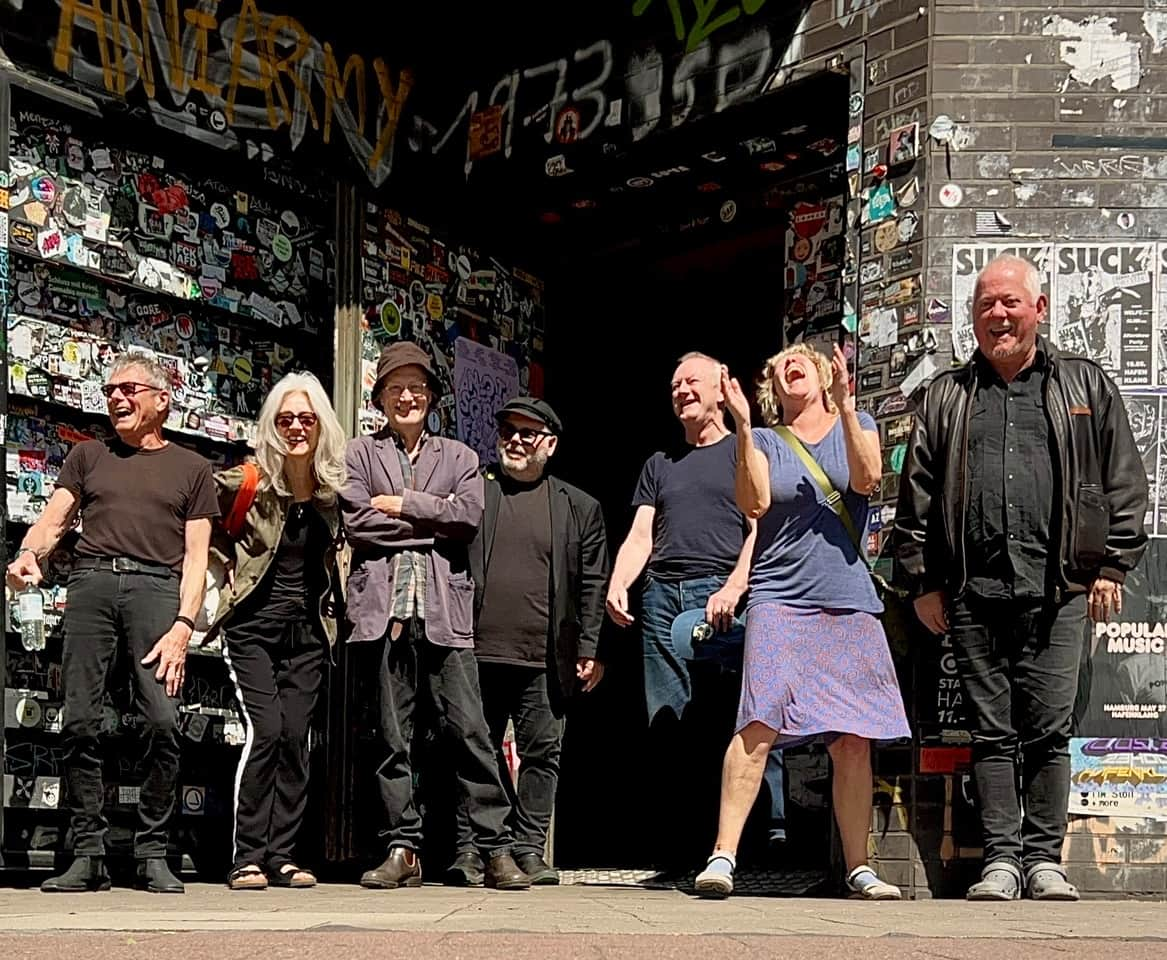
Photographs courtesy of the Mekons.
Mekons Facebook / Instagram / Bandcamp / Fire Records
Fire Records Official Website / Bandcamp