
Simon Finn | Interview | ‘Pass the Distance,’ London in the Sixties and the Long Road Back
Simon Finn talks about his early years in London, recording ‘Pass the Distance’ with Vic Keary and finding an audience again after more than thirty years.
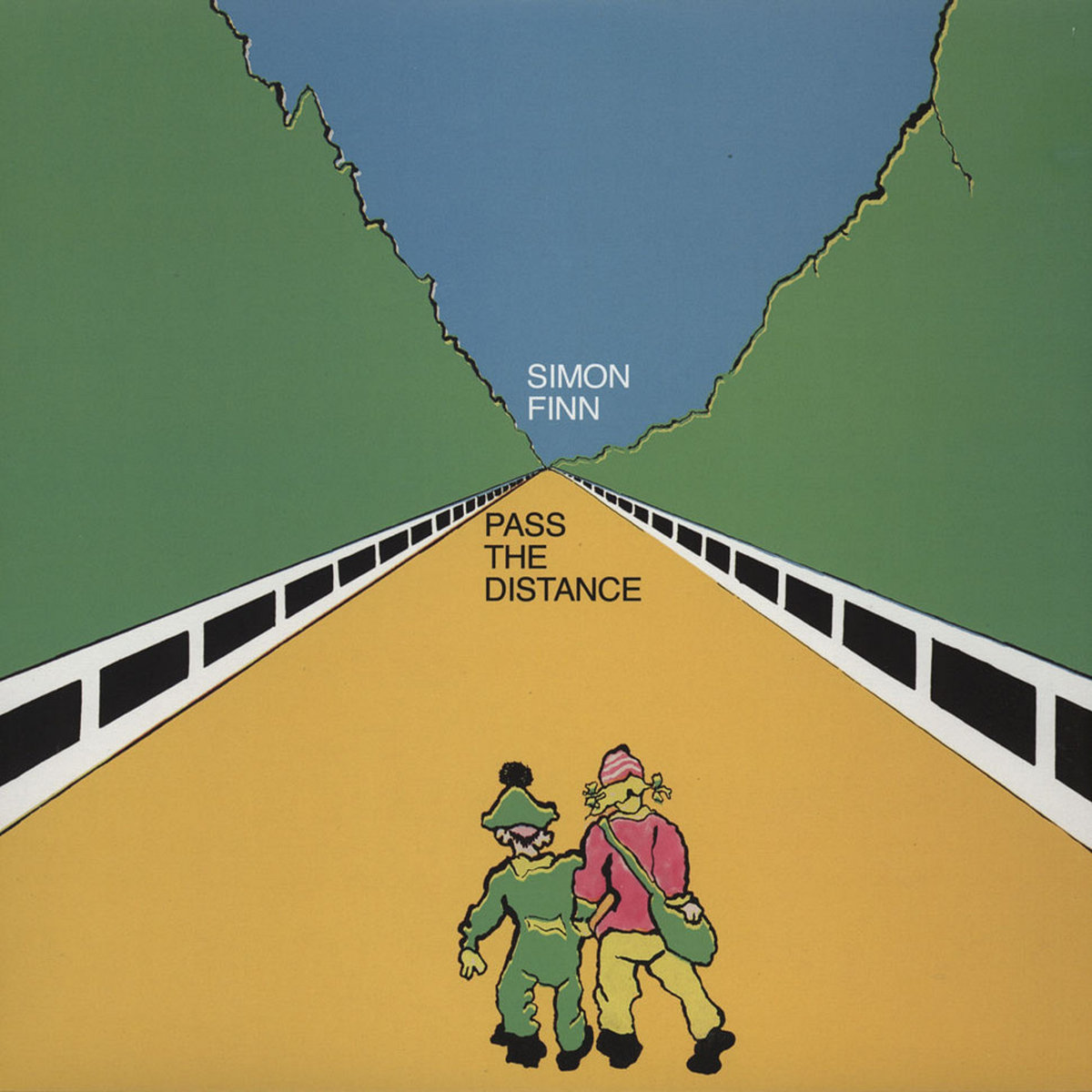
Simon Finn arrived in London in 1967 with a cheap guitar and the money he’d saved over two years. Within weeks he was sleeping rough, spending his days visiting studios and record companies, hoping someone would listen to his songs. He eventually found himself opening for Al Stewart at the Marquee, and a chance reunion with producer Vic Keary led to the recording of ‘Pass the Distance’ at Chalk Farm Studios, with David Toop, Paul Burwell, Ken Elliott and Robert Buckland. Released on Mushroom Records in 1970, the album was withdrawn after Clarks Shoes objected to the sleeve. Finn later moved to Canada and largely left public performance behind. It wasn’t until 2003, when he searched for his own name on Google, that he discovered people were still looking for him.
“The mere sniff of possibility is often just enough fuel to keep your engine running.”
You were born in Godalming, Surrey, in 1951. What was your childhood like, and what did you hear at home? When did you first begin playing guitar and writing songs of your own?
The first 4 years of my life were spent on a farm, some of which I can still remember: the house, the various people around my life in that period.
My mother, father, and grandparents all lived on it, though in separate houses. My mother and father were actors and they split up when I was 2. My mother subsequently became quite well known as one of the earlier ’50s TV personalities; she used her married name, Pamela Russell. I didn’t see a lot of them then, or as it was to turn out, later. My grandparents moved to London around 1954 and less than a year later I went to live with them. I was looked after by the young couple that had been helping my mother. They were good to me and I learned a lot from Ray, for which I’ve always been grateful.
But no, it was not a particularly musical environment. My earlier memories of songs came largely from my grandfather’s skimpy record collection which consisted mainly of musicals: My Fair Lady, Gigi, a smattering of Bing Crosby, and one classical, Tchaikovsky’s 1812. Most of the melodies from these records are still strangely hard-wired into my brain. I would listen to the radio sometimes if someone had it turned on, but songs on the radio you were not certain to be able to hear again. Some years later I got given a small red transistor radio around 1962 and on TV a few weekly pop programs had started; Juke Box Jury, Ready Steady Go, Top of the Pops. There may have been others but those are the ones I remember.
I picked up a soft-stringed guitar around the age of 11 or 12 and would sometimes bang away at a piano. My first song was Good Morning to You, which was written a few weeks after learning my first chords.
You arrived in London in 1967, still in your teens, and soon found yourself opening for Al Stewart at the Marquee Club. What brought you to London, and how did the Marquee performance come about? Where were you living, and how did you manage from day to day?
Yes, I arrived in London in early 1967 with only the clothes I wore, the same very cheap soft-stringed guitar and the money I’d been saving for about two years; it seemed a small fortune to a 15-year-old. In a week or two it was gone and I was sleeping rough, mainly on benches around the Notting Hill and Kensington area.
I spent most of my days in that period going to every studio, label or promoter I could unearth the address of, then trying to convince them to let me play them a song. The cassette hadn’t been born yet, so when I say play, I mean they had to be willing to let a tramp unpack his guitar from its dubious box and bang out a number. I was lucky, about 1 in 10 actually did. A more open time in that respect.
Vic (Keary) was one of them; he had a studio on the Old Kent Road and a production company called Maximum Sound which he ran with his business partner whose name I’ve forgotten. He made a demo, liked it, and signed me – then he and his partner split up about 3 months later and Vic sold the studio to Manfred Mann and Mike Hugg. I wouldn’t see Vic for some time.
I had a bit more luck with a promoter called Roy Guest; he was organizing Wednesday folk nights at the Marquee. He tried me out for one night opening for Al Stewart, it went down well and we ended up doing it together for the next four Wednesdays. Sheer fluke, I was very, very inexperienced and had never played to more than seven people and that was at school.
I arrived at the Marquee with the soft-stringed guitar I carried around all day, the second gig Al lent me his electric, which was very decent of him. I got paid £1 a show, which back then got me 4 or 5 meals in cafés. I was ecstatic.
“I was usually completely broke, often hungry, sometimes scared and got bad bronchitis.”
What was London like when you first arrived? Were there people or places that made a difference to you in those early months, or were you mostly finding your way on your own?
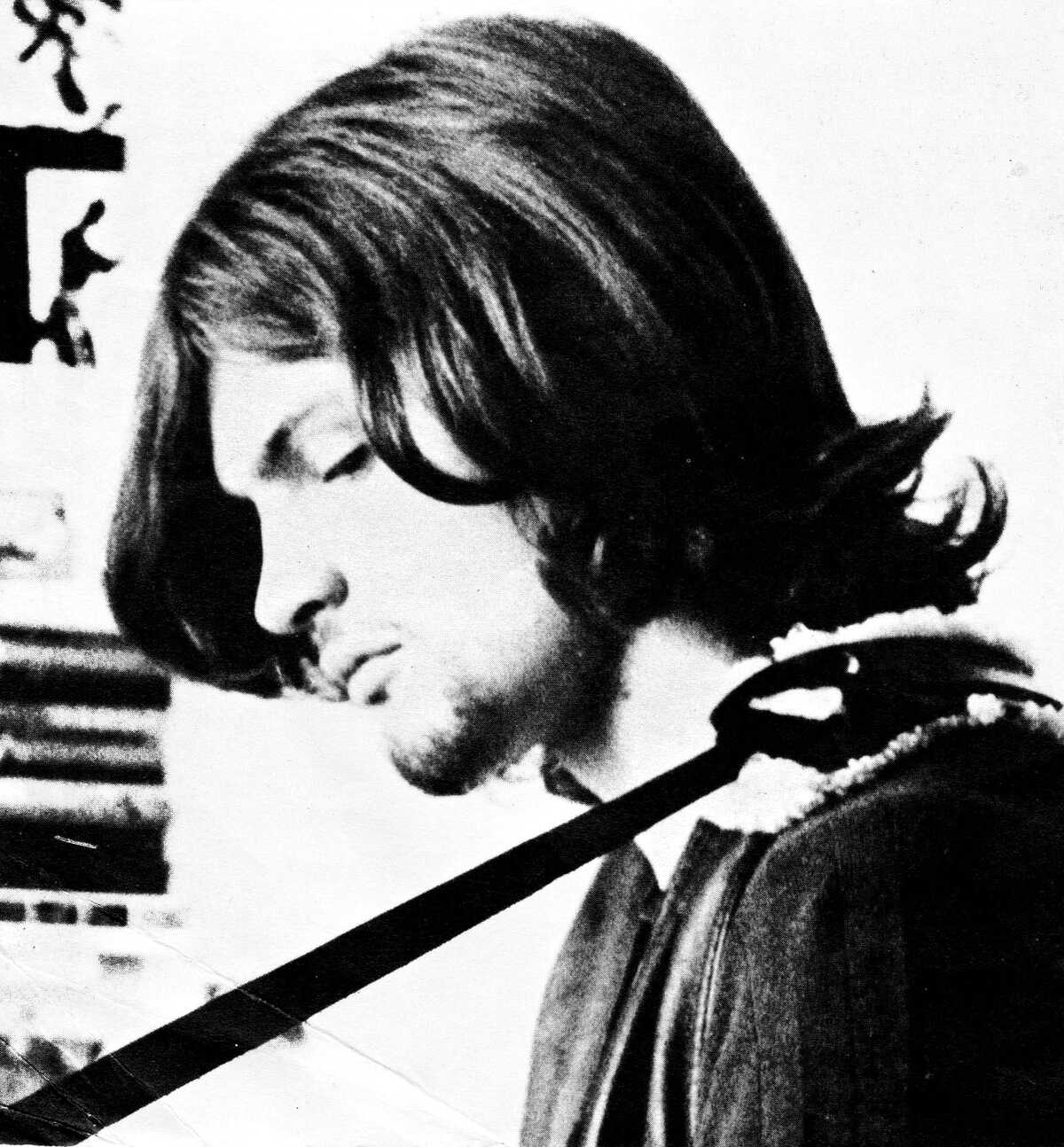
London was in the main a lonely experience, living on the streets is a fairly solitary and not a very friend-making world. I wouldn’t say totally bleak as I was often excited and pretty focused on songs and/or trying to sell them – but I was usually completely broke, often hungry, sometimes scared and got bad bronchitis. But I was fortunate to have one friend, a prospective, but not quite yet confirmed, girlfriend, Jane. We’re still close friends today and speak often. Unfortunately she lives in Tasmania, well, not unfortunate for her, it’s a lovely place, but it does make having a coffee together tricky. I’m not sure how well I would have survived that first 6 months in London without her company and affection. A bit later I would also meet a few people who were surprisingly kind to a young, very naive, but unceasingly inquiring, 16-year-old. I spent some time with Ron Geesin, who’d excited me greatly at a small show in a pub; very crazy and wild stuff, I think it would still be considered unique today, and similarly, Bert Jansch, who would play for hours on end at a pub I’d find my way to often. He had a guitar playing style that I hadn’t run across before and could watch forever. Bert was kind enough to direct me to some people and places that might help me find a gig.
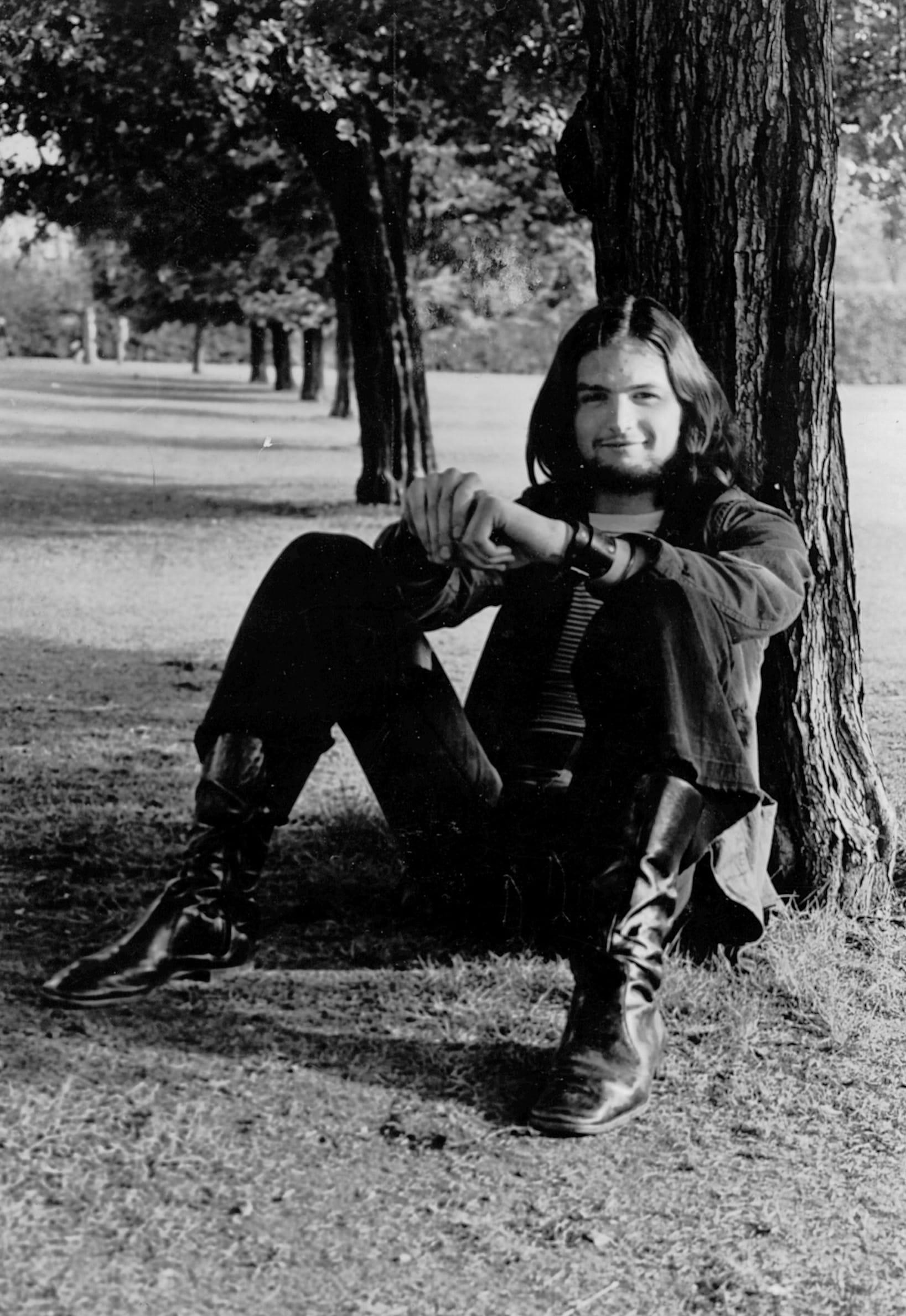
On another front, Jane’s sister’s landlord, David Henage (not sure how it was spelt), liked a couple of my songs and knew and took me to meet Teddy Holmes, who worked at Chappell Music – he had played one of my very early songs “Goodbye People” to Judy Garland while she was over (or so they told me!); meanwhile another song, Restless Harmony, had been played to Tom Jones. Nothing came of either, but as is true in all the arts; the mere sniff of possibility is often just enough fuel to keep your engine running.
How did you come to work with Vic Keary on ‘Pass the Distance’? At what point did it begin to take shape as an album rather than a collection of separate songs?
I bumped into Vic again in late 68. We met by chance on the street and he mentioned that he was setting up a new studio in Chalk Farm and invited me to come by. Some weeks later I popped by his flat above the studio and played him and his then partner, Pam, Jerusalem. I’d had no luck in interesting anyone in it.
I think a couple of things had kept me trying. Ron (Geesin) had had a record put out without restraining himself at all (at least not from an outsider’s perspective), that seemed encouraging. The other thing was living in Spain for 5 or 6 months in 1968-69. At that time in Spain it seemed almost every other small bar would have one or two people playing and singing Flamenco. Not at all produced or fancy, just someone howling their heart out and whipping their guitar up a storm. They’d likely been doing it for decades, in the way that the Russians played chess, but to me it was brand new and trance-inducing. Watching them close their eyes, screw up their face into an unimaginable grimace and howl with emotion, enthralled me. It was totally different to the “yeah” yell in a pop song, it seemed less restrained, more raw and connected to emotion. Sometimes there’d be someone clapping their hands. Sometimes there’d be someone stamping their feet. I’d go to a bar many times a week, nurse a beer and sandwich for hours, watching.
When you’re young “firsts” have a huge impact.
You’re not bogged down with the baggage of preformed ideas – it’s just “Wow, Wow, Wow! This is amazing!” Like your first kiss, and your first love, you feel nothing will be the same after – and it often isn’t. Of course, the same is true for the dark side, but in this instance I’m talking of life’s very occasional gifts.
Vic paused for a while after I’d finished, then said, “Bit different to the songs you were playing a couple of years back.” I was waiting for the polite axe to fall, but he then said, “Got any others?” I played him Big White Car and one or two others and Pass the Distance, if not born, had at least been conceived.
“I didn’t like doing re-takes as they always seem like they’ve lost some of the energy somehow.”
Robert Buckland, Paul Burwell, Ken Elliott and David Toop all played on ‘Pass the Distance’. How did each of them become involved? Had you worked through the arrangements before entering the studio, or did much of the instrumentation develop during the sessions?
Most arrangements developed in the studio and were very ad-lib, as is often very apparent. Kenny and I met through Vic; he was in a group called Second Hand that Vic was also managing. Vic also worked a fair bit with John Weider in that period and John was going to add some violin to a couple of tracks. He’d played with The Animals, a group I was completely bowled over by in the 60s, so I was very excited by the idea, but syncing his schedule with the very “fitted in” (time-wise) recording sessions never worked out. And he was now working pretty full on with Family and doing less session work.
Robert Buckland was one of the people I shared a flat with on Moscow Road in ’69; he had a beautiful tenor recorder he’d sometimes play of an evening, I’d never seen one before, and I asked if he’d like to put something on Patrice. Vic recorded it – it worked, it was a lovely fit.
David Toop and Paul Burwell I met by chance at the Roundhouse.
Vic had suggested it might be good to find a couple of musicians to play a live show with me if I knew any (I did not). My stuff no longer really qualified as folk, which was a more specific category back then, and my screaming without some kind of backup group might have seemed a bit off to a 60s folk audience.
I guess part of Vic’s reason for booking a venue was to see how “off” and check audience response.
The Roundhouse was less than two minutes from the studio and I often popped over the road to their cafe after recording or visiting Vic.
Like a few places in the 60s, the Roundhouse was very informal, people would hang out in its very spacious and rudimentary cafe for hours, playing and talking, and it was there that I met David Toop and Paul Burwell. They both worked there on and off, they already knew each other and played experimental music together. Paul was a drummer who was keen on learning Tabla at the time. David played around and experimented with a variety of instruments.
In the cafe I was playing some tune or other and they just came over and joined in and after a few songs I said I was doing a gig at The Enterprise, Saturday week, did they want to play with me, they said yes, and that was it. We hardly knew one another and we’d only played a couple of songs for about half an hour.
On the night of the gig a mysterious additional drummer also turned up, he was tripping and had just shaved all his locks off, leaving a scalp full of minor wounds. It was a slightly unsettling sight even to my fairly easy-going sensibilities. I had a very vague memory of possibly having seen him at some point in the Roundhouse (with a full head of hair), David and Paul knew him a little better I think, though David can’t now remember his name. Additionally surprising, a man I didn’t know at all arrived, strapped on a saxophone, and then proceeded to play many and various notes throughout the whole evening, they were not bad notes, and he was seemingly quite undisturbed by song changes, bridging the gaps between them with perhaps a slightly sparser selection of notes for a few moments and then adapting himself to any change in key and rhythm he felt the next song demanded. He looked fully absorbed (and perhaps hard to stop!) so, like the additional drummer, he was left to mingle his output with ours for the whole gig.
So … from solo act to a five-piece!
The audience were either very open-minded, very drunk or very forgiving, perhaps all of the above or maybe just stunned. Whichever, the gig ended with what looked like most of them still intact. As we were packing up Vic asked what I thought about David and Paul playing on PTD. (The other two were a bit too far gone even for Vic.) Sounded good to me.
I’d be curious to hear a recording of that evening, though I doubt very much I’d be keen on sharing it. But the cassette player still wasn’t around, so no one could record discreetly. Nowadays, for better or worse, it’s a given that every time you play someone will have a copy.
We messed around in the studio over about 6–8 months as I recall, it had to be fitted in between Vic’s main source of income which was recording reggae bands.
Though perhaps missing the more swanky look of EMI or Decca, but in 1969 Vic’s studio had one very big drawing factor: he had one of the first eight-track machines in London (there were only two). I’m not sure which label had the other but most of the big studios were still on four-track. This made Chalk Farm Studios quite sought after, despite its rugged appearance, (at least one wall was covered in glued-on egg cartons for soundproofing).
But they were also getting Vic, who was a very brilliant engineer – his ability to hear things and then mic them was remarkable. He engineered Acker Bilk’s Stranger on the Shore, a clarinet piece that reached number one in the early sixties, I think maybe in the US as well. Sadly engineers didn’t get credits back then. But he should – he did an amazing job!
I wasn’t then, and am likely still not, the easiest person to record. I like to play guitar and sing together, so it’s basically live, and many songs start softly and then at some point I let go of voice or guitar or both – and I also dislike repeating songs, so one or two takes is all I’m really up for, at least in one session. Now add to that mix David and Paul, who were very often playing live with me. Even if on separate tracks, instruments would bleed into each other’s mics, so there was no real easy going back on things. You mainly accepted the track or re-recorded it, and as I’ve said, I didn’t like doing retakes as they always seem like they’ve lost some of the energy somehow.
I have no idea how many tracks are possible now, perhaps limitless. And certainly limitless sound adjustments. Humans can’t help but fall for new tech, we always have, but I’m not convinced it always adds as much as advertised, and in the case of the arts can often take away something. The best way I can think to describe what I mean is a rather Canadian country experience; when you’re in a wood at dusk and you hear a wolf howl it can’t help but raise the hairs on the back of your neck and give you some magical shivers, who knows why? Not at all in fear, but in some unexplainable mysterious delight, a kind of natural primal opera. When you watch a horror movie and have that wolf howl cleaned up, jacked up and perfected, it has, (for me at least), lost something of its hair-raising qualities. We live in a world of very smooth duplication, in all fields. We’re now capable of duplicating, imitating, cleaning, copying things like never before. But much of it has perhaps led to a loss of neck hair sensations. But I only speak for myself, could be my neck hairs have their own agenda.
You’ve mentioned how the sessions were fitted in around Vic’s other recording work. How involved were you in the final mixes, and what was he like to work with as a producer?
A lot of this is answered in the previous section. Vic was largely responsible for the final master mixes. But he was never dogmatic; if I thought something didn’t work in the way I’d imagined, he’d listen. From a musician’s point of view he was a wonderful engineer/producer to work with.
‘Jerusalem’ remains the most intense performance on the album. What was behind its religious imagery? Was the gradual rise in the voice and instrumentation something you had planned, or did it develop naturally during the recording?
Jerusalem was always different every time I played it, including recordings, sometimes longer sometimes shorter depending on my state of being. But it would always start softly and always end extremely. It finishes very abruptly on the album because I apparently failed to see Vic waving his arms through the glass desperately trying to get me to wind up the song, as the tape was near the end of the roll. As luck would have it I did … just.
Though the imagery is religious the song was about hypocrisy, which is rife and virtually obligatory in religion and politics so an easy target. Christianity just happened to be the religion I was most familiar with then. Big White Car is also about hypocrisy, wealth can hold its own in the hypocrisy department pretty well also. Seemed fitting to me at the time that they end each side of the album.
I was young and naive, but really I can’t say my basic feelings have changed that much. The world’s a very crazy and in the main unsympathetic process. There’s a wonderful scene in a Simpsons episode where a teacher is explaining to Bart what compassion is: “Compassion is where you feel someone else’s pain”
“Why would I want that?!!” Bart chirps.
Why indeed. Not a common thing, compassion, as against pity which is wonderfully painless – and consequently fucking everywhere.
The album contains very quiet songs alongside pieces that become dense and almost chaotic. Was that contrast already present in the songs, or did it emerge through the arrangements? How did you decide on the final running order?
The recordings were as I wrote and played them in my flat. In the studio David and Paul would play what came to mind while I was playing it. Children’s Eyes I did write in the studio as a stream of consciousness thing while waiting for someone to arrive, and Kenny put his Hammond on it as I was playing it and Vic recorded it, so a chance thing. Listening back to the recording a week or so later Vic thought it might be good as the flip side of a proposed single, Jeanine, that Polydor were considering, but it never got released.
In 2004 we found a few song bits and bobs that Vic had stashed at the end of the Pass the Distance master tape, some from a lot earlier, 67. How or why I’m not sure, maybe when winding up and clearing out Chalk Farm Studios. I was amazed he even still had the PTD master.
The running order was a mix of Vic and myself nattering. There was a big selection to choose from as there was close to another album’s worth of material.
The original sleeve of ‘Pass the Distance’ caused problems soon after the album came out. What actually happened? Do you know how many copies had already reached the shops before the record was withdrawn?
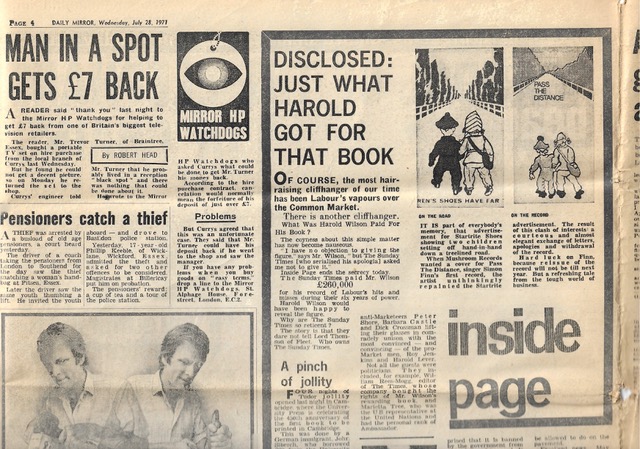
Yes, less than a year after its release Clarks Shoes asked that it be taken out of the shops. I guess it took that long before one of its execs saw it in a record shop window. The Daily Mirror did a little story on it at the time that I still have somewhere or other. I have no idea how many copies had been distributed. Not many. It was in shops in the UK, of which there were a fair number in 1970, but probably only to the tune of one copy or at most two in the right area, so likely only 1,000 or so distributed, not sure how many vinyl records would actually have been pressed, it would’ve depended I suppose on the discount economics of manufacture at the time of which I know nothing. I was told that there were some sold with plain white covers later, but I never saw one myself.
After ‘Pass the Distance’ came out, were you planning to make another album? What happened to those plans?
Yes, there were plans for another album. I worked with a producer called Shel Talmy, briefly, but he didn’t like my new material, which was in the vein of Golden Golden and Baron Leaves; he didn’t like “weird open” tunings and wanted to do things more like Feeling in my Feet. In any case, the company he worked for got taken over and he moved on, and that was that.
You moved to Canada in 1974 and spent time working as a farmer and karate teacher before making Montreal your home. What took you to Canada, what kind of life did you build there, and did you continue writing songs or other work privately?
I moved to Canada permanently in 1974. But I’d spent 6 months of 1973 there. I returned to the UK and immediately applied to immigrate. I loved it there.
Yes, I taught karate at various colleges and privately. I’d started practising when I was fairly young, actually to get out of doing rugby, but quite unexpectedly I found I enjoyed it. Always the key to things when you’re a kid. This was around 64. It likely sounds strange now but at that time very few people I mentioned it to had even heard of it – ten years later and, thanks to Bruce Lee and a TV show called Kung Fu, starring David Carradine, just about everyone had – and colleges were suddenly looking for teachers.
I had an organic farm with my then partner, Emily. She taught me everything I know about organic gardening. (which was zero before). We lived there together for about 5 years, I was pretty at peace on the farm. I’d still play guitar, but I don’t think I wrote more than one song the whole time I was there.
How did the 2004 reissue of ‘Pass the Distance’ and your connection with David Tibet come about? Did you have any idea that people were still looking for the album, or did the whole thing come as a surprise?
Again, sheer chance, my friend Anne and I were gossiping on the phone, this would be in 2003, and she told me she’d “Googled” someone. I’d never heard the verb before, it had an intriguing quality; to goggle extendedly perhaps, with a seductive oo sound in the middle, thrown in for good measure? After she explained this new vocabulary to me I went off and “Googled” myself, a surprisingly large number of entries; reviews, sales, and crazy bio stuff – some of which was suggesting with some authority, that I’d killed myself. I then Googled David (Toop) who was easy to find as he’d just had a successful book on music out called, The Rap Attack.
David got back in touch and said, “Hello, Simon, people are looking for you – Do you want to be found?” All in all, it seemed to hold no particular drawback over being dead, so I said sure, if they seem sane, and after that I started receiving a lot of emails.
David (Tibet) was one of the first. His letter was enthusiastic and unusually articulate (for the record label world types I was familiar with). After swapping a few emails and sending each other packages of music in the mail we arranged to meet in London in early 2004 and spent about a month getting to know one another.
Your return to the stage took place in Toronto in 2004, in connection with Current 93, after more than three decades away. What do you remember about that first performance? How did it feel to be playing those old songs again?
The re-issue was an easy decision, there was no real down side to that that I could see, people either liked it or they didn’t. But… playing live after 30 years…solo. Yes, I was mind-bendingly nervous!
Also, because of the whole Google thing there’d been a lot more press and radio interviews than I’d envisaged. And a documentary filmmaker had thought the finding yourself on Google made an interesting story and had got money from CBC to shoot the show and interviews. It all added up to a lot of opening night nerves. It was a rush but pretty terrifying. I felt somewhat less insecure playing the newer songs, tuning into your 19 year old self is harder, but also pretty important if you’re hoping for the performance to have some resonance with the material. As I mentioned, my basic feelings about many things in life haven’t completely changed – I found I could kind of hotwire myself into the feelings I had at the time.
‘Magic Moments’, ‘Silent City Creep’ and ‘Subjunctive Mood’ introduced newly recorded music after the long gap. Were those songs written during your years away, or mainly after your return? The recordings are much more spare than ‘Pass the Distance’. Was that a deliberate decision?
The new recordings had a couple of older songs; Golden Golden and Silent City Creep, Feeling in my Feet, which were written in 1970 for a follow-up album. Wanted You was written in the 80s sometime, Wounded Tiger was from the 90s. Malcolm, like Silent City Creep, was written about my father, the former in 1970 the latter after he died in 2000.
Yes, I kept things simple. Magic Moments was recorded in one or two sessions at a small studio above a garage. Efrim, who at the time played guitar in a band called Godspeed You! Black Emperor, recorded it. Steve Guimond, a DJ at a local radio station had put us in touch.
‘Accidental Life’ brought you back together with David Toop and also included Joolie Wood, Karl Blake, Danielle Dax, Rose McDowall, Tony Uter and others. How did you go about bringing everyone together, and what do you remember about those sessions?
Yes, Accidental Life went out on 10 to 1, it was the first of my albums to go out on 10 to 1 Records and the last to have the benefit of a high-end studio; it was both recorded and mixed at the Premises. It also had Vic once more doing both the recording and mixing, along with Nick Terry. Nick also recorded/produced the Klaxons and the Libertines I think.
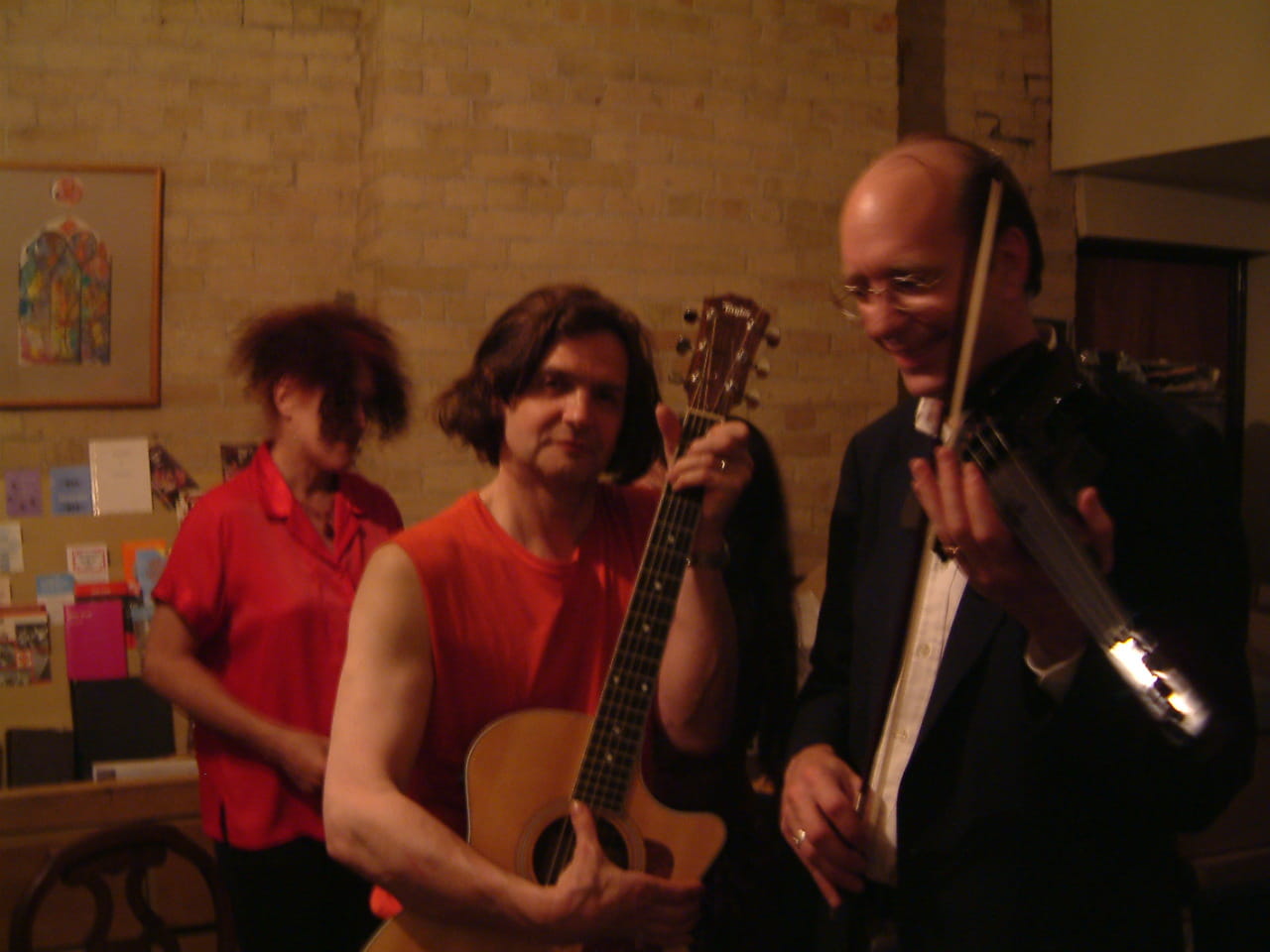
It all just sort of unfolded, I asked Joolie and David Toop, I would also have liked Paul Burwell whom David had said he was still in touch with, but sadly he was too ill. Vic had managed to get hold of Kenny, but he too was too ill and Vic said he rarely left the house now. Joolie suggested Rose and Karl, they’d known each other from way back and Karl asked Danielle Dax if she’d like to come along. Tony Uter, Vic knew from his reggae years. Everyone got on wonderfully, it was a very pleasurable couple of weeks, and was reminiscent of recording in the old days. I’m very pleased it happened when it did, a few months after that the whole music industry changed forever, and sadly Vic is no longer around.
Klemen Breznikar
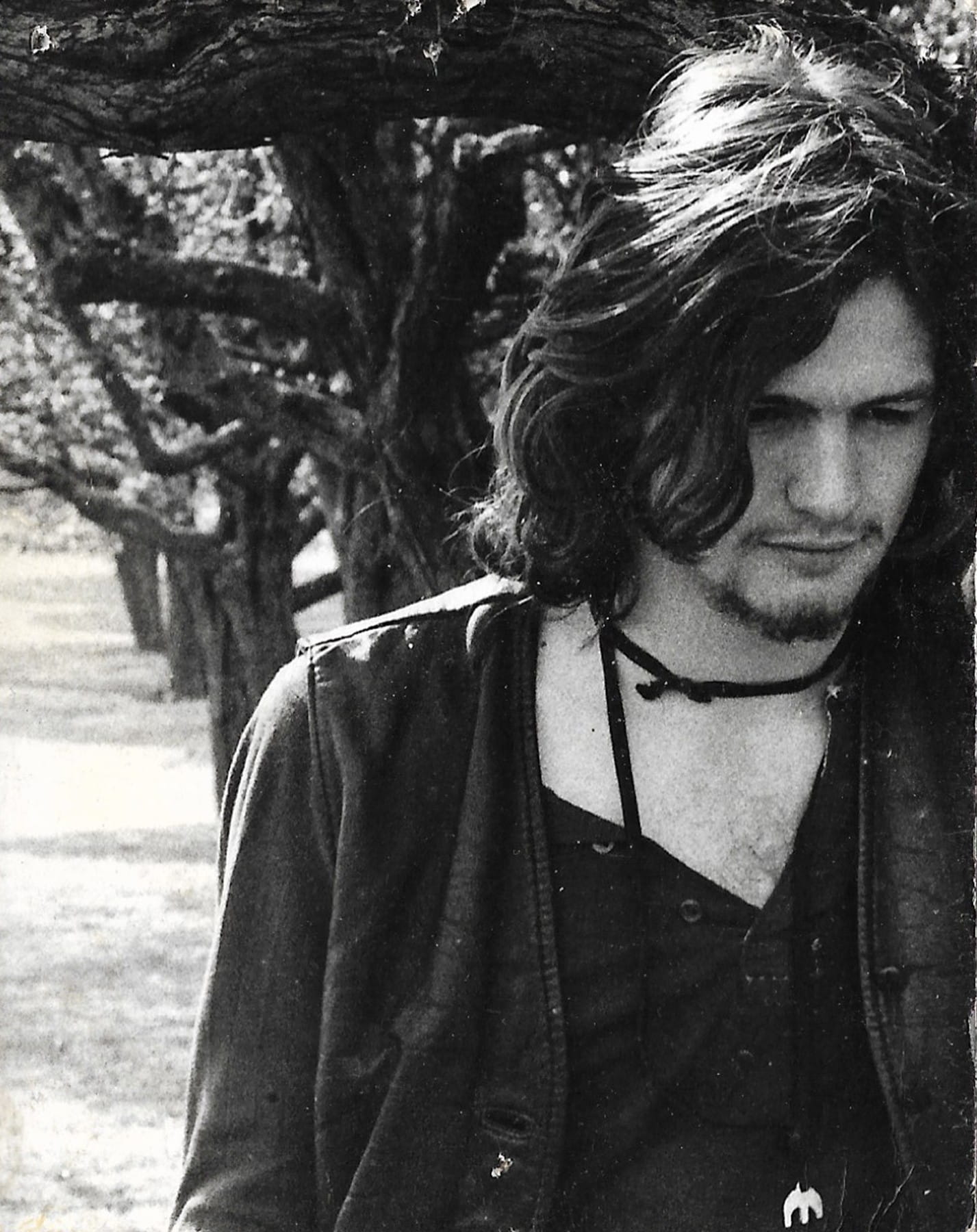
Headline credit: Simon Finn in 1969. Photograph: Patricia. Courtesy of Simon Finn.
Simon Finn Bandcamp