
GX Jupitter-Larsen on The Haters, Noise and Destruction
GX Jupitter-Larsen looks back on nearly five decades of The Haters, from the early New York performances and international noise underground to his recordings, films and lifelong fascination with entropy.
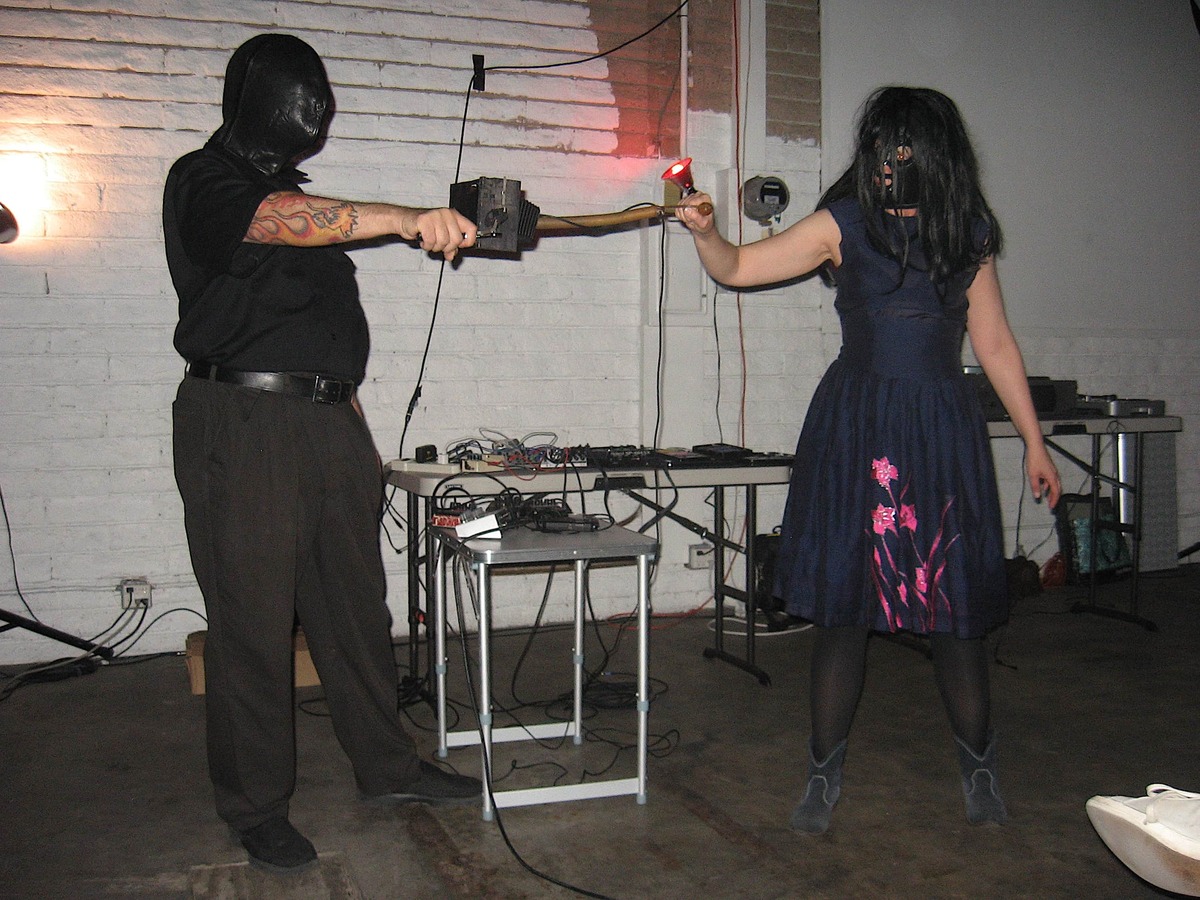
GX Jupitter-Larsen founded The Haters in New York in 1979. Their first performance involved hitting videotapes with a video camera. In the years that followed, the shows became increasingly destructive, often with the audience joining in. Some of the earliest Haters performances, however, were almost silent, involving such simple actions as watching dust accumulate or counting garbage cans.
GX came out of punk and mail art and became involved in the international cassette underground, exchanging recordings and ideas with artists around the world. He released a record that listeners had to scratch before playing, used amplified hole-punches, sandpaper and power tools in his performances, and worked closely with Mark Pauline and Survival Research Laboratories. He has also made films, written novels and invented his own systems of numbers and measurement.
The Haters are still active. In February 2025, GX returned to New York for a performance that ended with the audience smashing a large wooden clock. He has also recently remastered ‘Autoficial’, a compilation featuring Smell & Quim, Chop Shop, Con-Dom and The Haters, originally released in 1996.
We talked about the early days of The Haters, the people he met through the underground, his recordings and performances, and the ideas that have occupied him ever since.
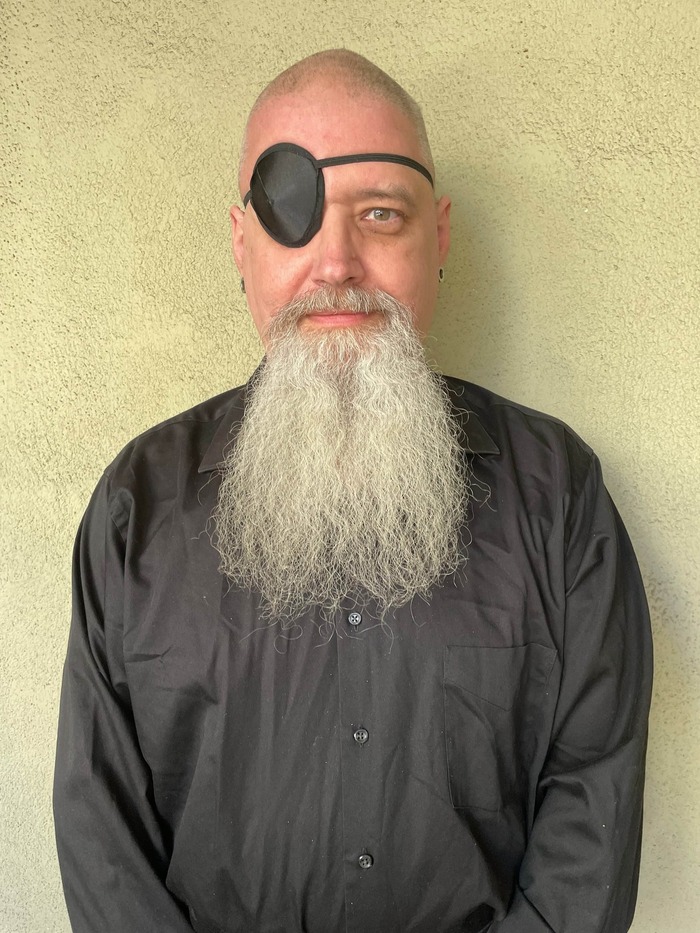
“Punks always talked about making noise, but their concept of noise was very different than mine.”
Can we begin before The Haters? What were you like when you were young, and what first got you interested in making things? Were you already interested in sound?
GX Jupitter-Larsen: When I was a teenager I was very active in a number of leftist groups. Mostly far-left action committees in school and local elections. Somehow I was the one who ended up designing and making all the groups’ posters and pamphlets. I don’t know if sound was ever an obsession. I did collect sound effect records, however. I never really got into music when I was young, but I did enjoy sound effects and field recordings. I found those much more interesting than the pop charts.
You played in punk bands in the late 1970s, but eventually found that punk wasn’t noisy enough. What were those bands like, and what frustrated you about playing music in that form?
Got kicked out of more bands than I actually played in. Punks always talked about making noise, but their concept of noise was very different than mine. Or perhaps I should say my concept of noise was very different from theirs. The thing I found really lame was how punks would say they wanted to make noise but then all they’d end up doing was making music, badly. If you say you’re going to make noise, then that’s what you should be doing. Make noise. And you shouldn’t discourage the audience from attacking the band on stage. You should be encouraging it. That’s what got me into punk, the direct interaction between the performers and the audience at live events.
The first Haters performance took place at Kick Art in New York in 1979, with you smashing videotapes using a video camera. What do you remember about that night? Did it already feel like the beginning of something?
It felt like the beginning of something big. That’s for sure. At the time I wasn’t sure what it was the beginning of, but whatever it was there was no going back.
You’ve described what you were looking for at the time as “social distortion” rather than noise heard through the ears. What did you actually want to disturb?
Everything. Just, everything.
Some of the earliest Haters performances were almost silent, things like watching dust accumulate or counting garbage cans. Looking back, do you think The Haters began closer to conceptual art than to what people now call noise?
Oh, absolutely. At the time I was much more influenced by things like conceptual art and performance art. Still am in many ways.
“In many ways it was the happiest group of people I was ever involved with.”
You became involved quite early with mail art and the international cassette underground. What was that network like from the inside? Did it feel like a scene, or simply a collection of strange individuals finding one another?
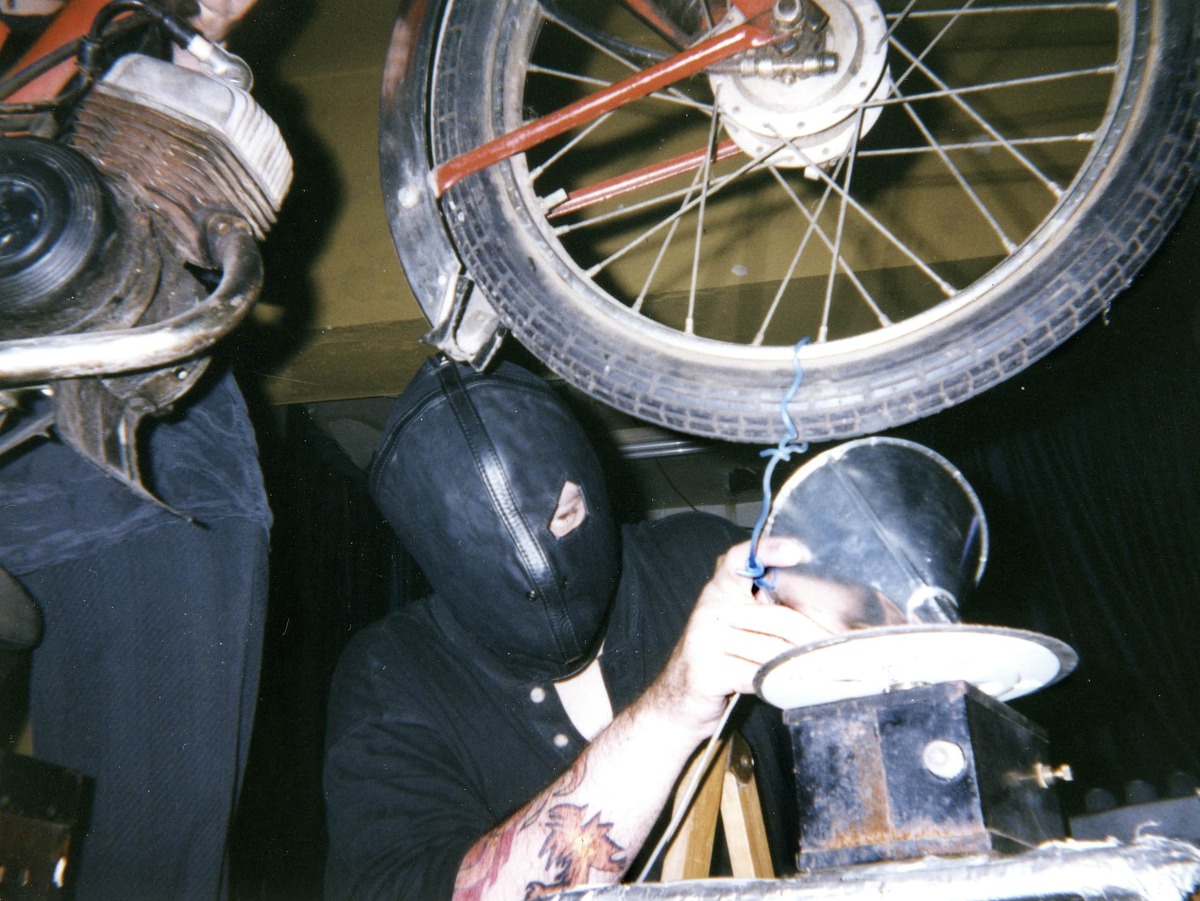
A bit of both really. Yes, it was a bunch of strangers at first, but it quickly developed into a pretty tight scene. We’d end up visiting face to face and found out we actually enjoyed each other’s company. In many ways it was the happiest group of people I was ever involved with.
The 1983 Haters 7-inch was described as a silent record, but listeners were instructed to scratch it before playing it. What interested you about having other people complete the record themselves?
It was never meant to be a silent record. It was meant to be a record of scratches. Having other people complete the record was my way of making the record sound like me. That direct interaction between audience and artist, completely blurring the boundaries.
In 1985 you invented the Transexpansion Numeral Units. Where did the idea come from? Was there a particular moment when ordinary numbers and measurements no longer seemed enough?
I was living with this biker gang at the time. I just remember waking up one morning after an all-night debate. Somehow these bikers got into this passionate argument on the validity of zero as a number. Don’t ask me how this happened. It just did. It was just a random thought. I think I was still half asleep. I woke up asking myself, what would a number look like if it was in between one and four but not two and three? For me, that question would become a different kind of paint by numbers.
With ‘In the Shade of Fire’ in 1986, you were already making recordings from the sounds of things falling apart. How did you put those pieces together? How much was carefully edited, and how much happened by accident?
A little bit of both. But definitely taking advantage of consumer-grade samplers.
The Haters performances became increasingly destructive during the 1980s. At first you even had people planted in the audience to encourage others to join in. What happened when audiences began doing it without any prompting? Did it ever become less interesting when you knew what was going to happen?
Less interesting? No; not at first. I thought it was great. Maybe people were finally starting to get what it was all about. But after a decade or more it was just time for a change. I just wanted to try other things.
‘Wind Licked Dirt’ took the idea of a record somewhere else entirely, with a blank disc played by rubbing dirt across it. Then there were works such as ‘Oxygen Is Flammable’ and ‘Shear’. By that point, what did the word “recording” mean to you?
An opportunity to confuse people into seeing things differently.
Around 1990, amplified sound became much more central to the live performances, including the calculators rubbed against sandpaper and the story of Ross Rhesymolwaith. How did that story fit into what you were doing?
The performances have always been about entropy, and the process of entropy always implies a narrative.
The first clici-clic performance at Generator in New York involved amplified hole-punches and piles of paper and cardboard. It’s such a simple action, but you’ve returned to it many times. What was it about that sound that kept you interested?
It’s such a happy sound and I’m a happy kind of guy. No; really.
You first met Mark Pauline after interviewing him in 1986 and later spent years around Survival Research Laboratories, making live soundtracks for several of their performances. How much did that experience influence what you were doing with The Haters?
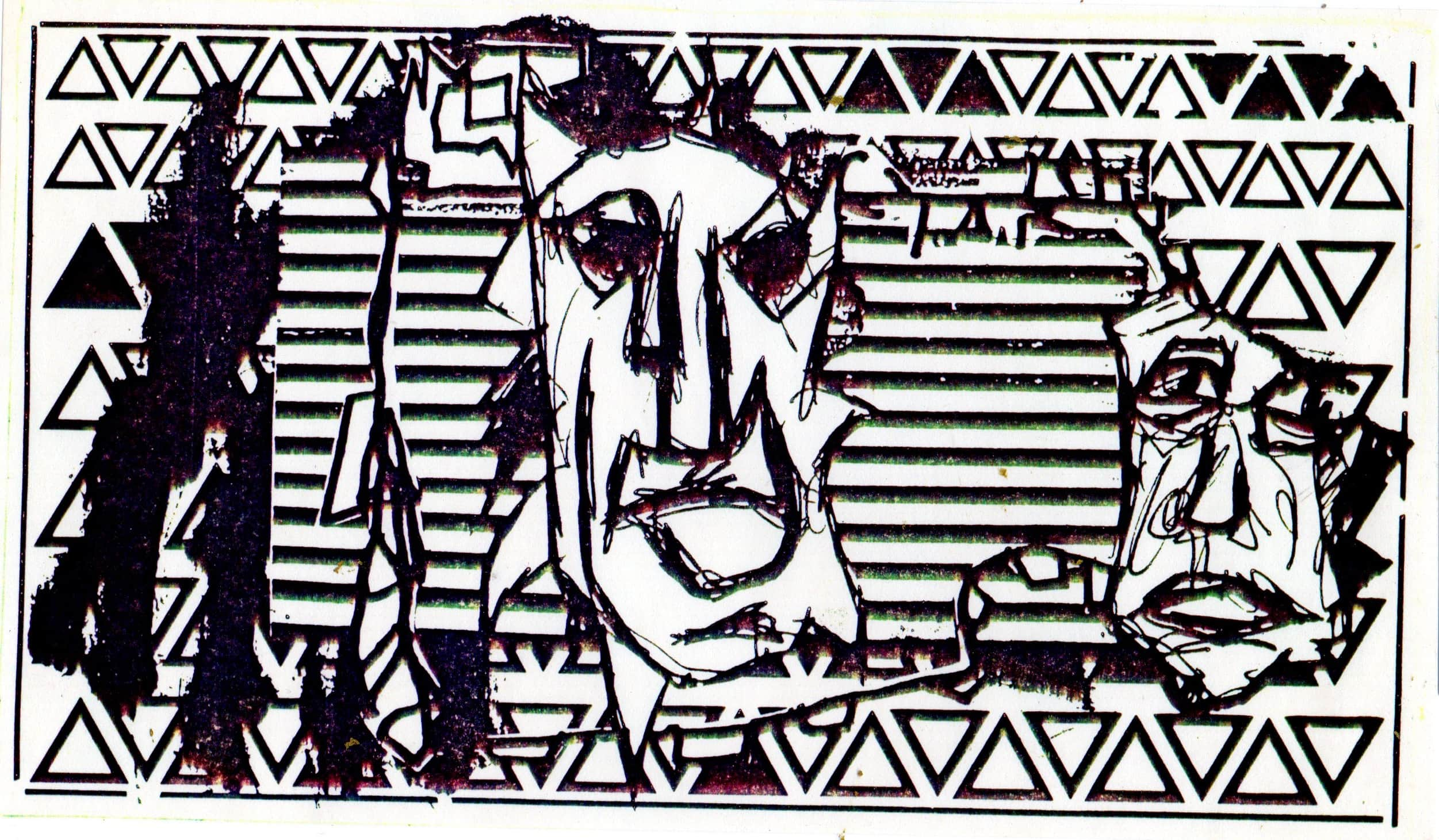
Again; a bit of both. Mark and the gang had a major impact on me. Never mind that many from SRL would join me on stage as members of The Haters. The whole idea of using erosion as both your sound source and your choreography. Power grinders, ion-guns, mechanical piles of garbage, oversized metal puppets, and explosions both small and large would become central to The Haters.
In 1994 you went skydiving carrying a large drill bit, effectively drilling a hole through the sky. How did that idea come about?
I’d pretty much drilled a hole in just about everything else; so why not the sky.
You recently sent me the remastered ‘Autoficial’ compilation, which you originally put together while travelling through England and New York in 1994 and 1995. It featured Smell & Quim, Chop Shop, Con-Dom and The Haters. What do you remember about those people and that period? And what strikes you about hearing the recordings again after thirty years?
So back then, noisicians weren’t really obsessed with sound in and of itself. They had other obsessions and sound was just the means of expressing those obsessions. Volume wasn’t an issue for many of us. Most of us never used a table on stage. It’s all very different now.
Professional wrestling has been a recurring interest throughout your work, from the Untitled Title Belt to the Giant Baba record. What do you love about wrestling? Is it the theatre, the physicality, the invented rules, or something else entirely?
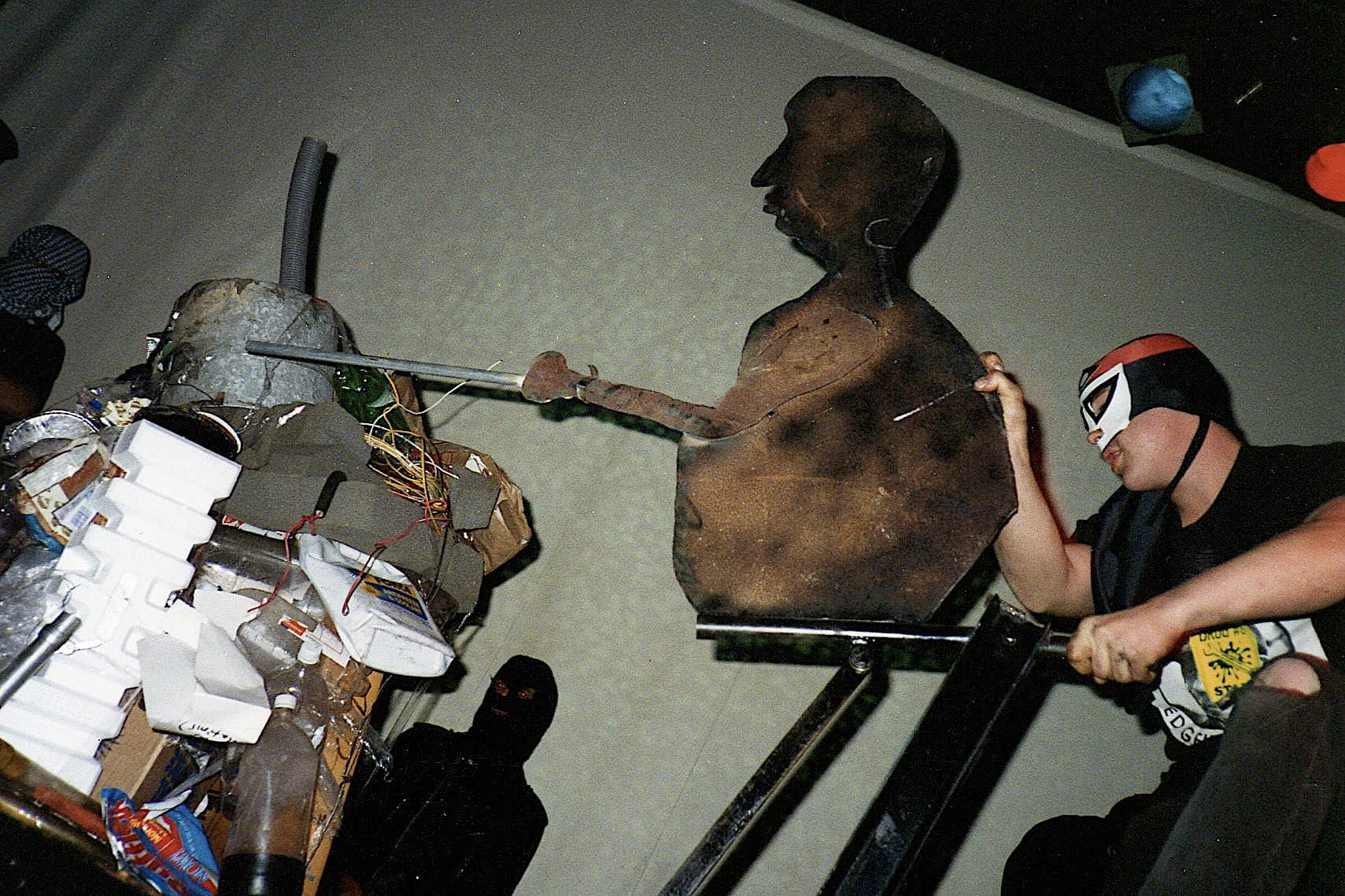
No; you pretty much summed it all up; the theatre, physicality, and invented rules.
You’ve developed your own vocabulary over the years, with the polywave, permawave, xylowave, totimorphous and your own rulers and measurements. Rather than asking you to explain all those terms again, I’m curious whether inventing your own measurements changed the way you looked at the world.
It didn’t change the way I looked at things, but it did allow me to be able to express the way I already saw the world.
After years of large-scale destruction, you began working with smaller actions and devices, including ‘Loud Luggage’, the Pump-Powered Permawave and the Totimorphous Ubiety Guide with Jessica King. Was it difficult to scale things back after so many years of smashing everything?
From large-scale demolition to slight-of-hand minimization; that’s entropy for you.
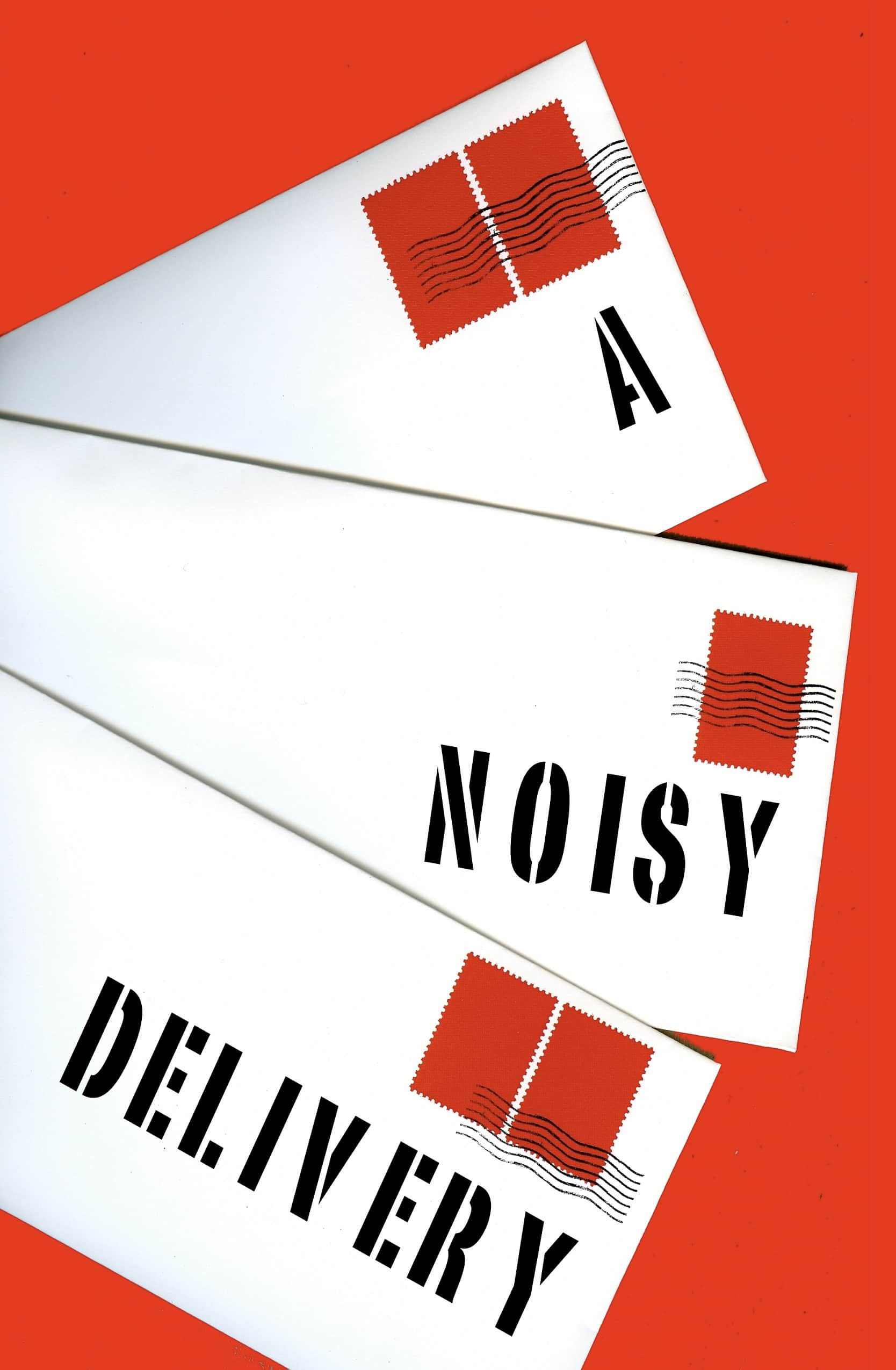
Film and writing have also been part of your work for decades, from ‘Blank Banner’ and ‘Holes on the Neck’ to ‘A Noisy Delivery’ and your novels. How do you know whether an idea should become a performance, a recording, a film or something written?
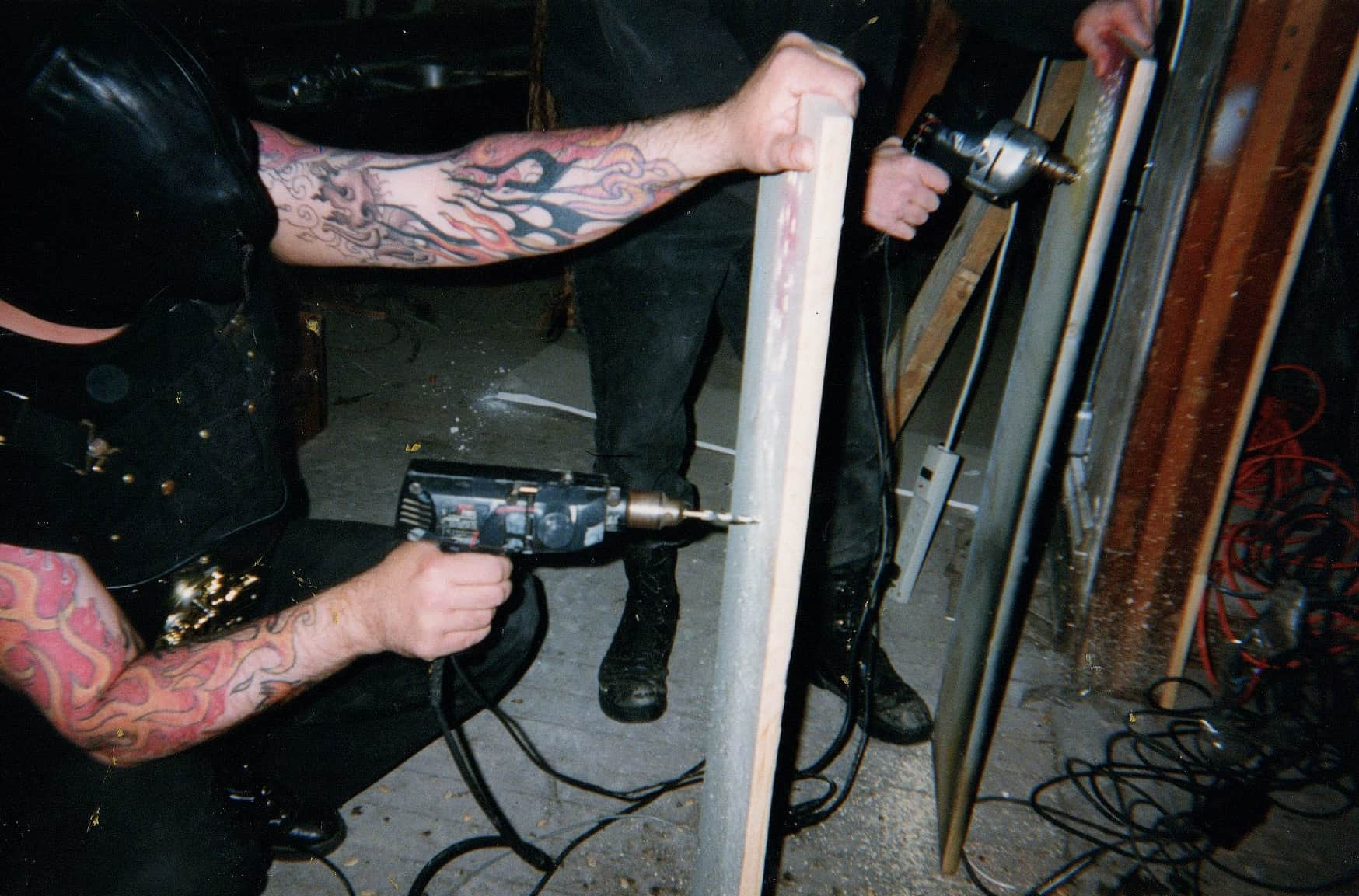
Each medium works as a different filter. Different filters reveal different details. I find it very interesting to see how the same subject is filtered by each medium. Different details are revealed by each medium.
You’ve kept remarkably detailed records of your performances, and ‘Digging Through Time’ brings more than four decades of them together in a kind of journal. ‘New York About The Polywave’ also puts performances from 1991, 2001 and 2025 alongside one another. What is it like revisiting your own past this way? Do those earlier performances mean something different to you now?
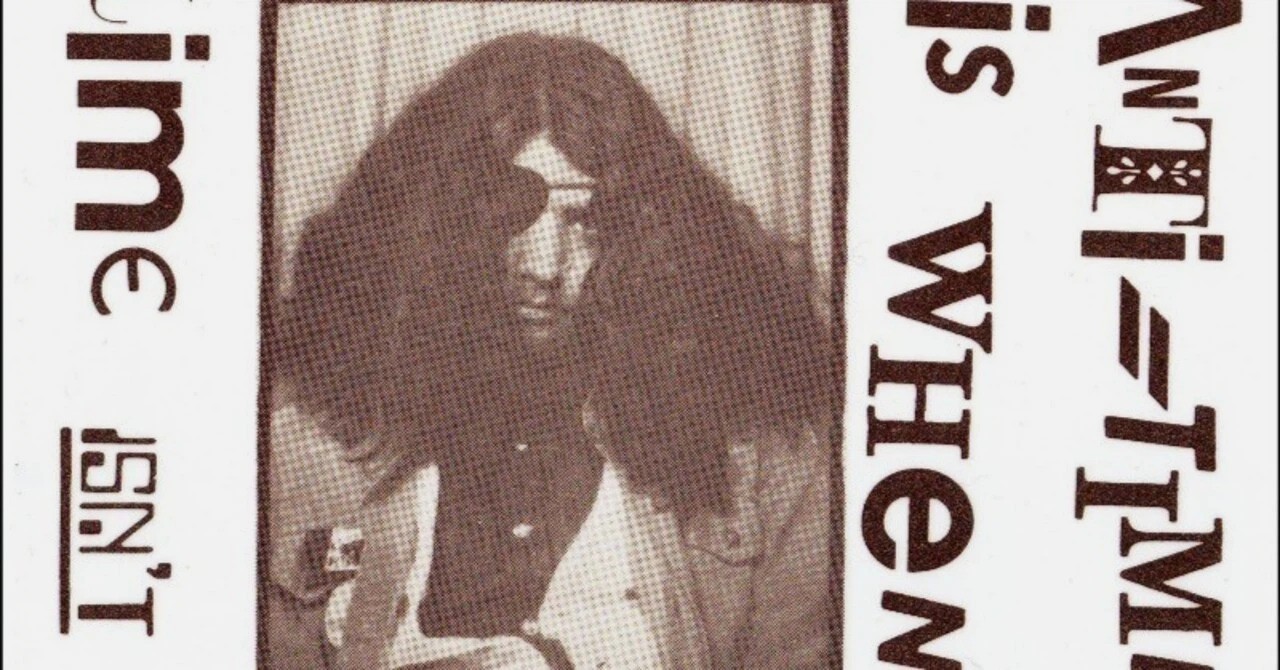
Time is a stationary void located in between the passing of events. Anti-Time being the motion of matter, the passing of events, or the velocity of a metabolism. Will future futurists rely on yesteryear’s futurism, and continue the tradition of techno-fetishism, or will the superfuturists of tomorrowland surpass the superseded futurists of the past with a clean and decisive break from history? Is the future such an old-fashioned idea? The future, I think, should be our means of getting past ourselves. It should be about seeing beyond our own constraints.
At the 2025 New York show, you threw that enormous wooden clock into the audience and they smashed it to pieces. It sounds almost like something that could have happened at a Haters show thirty-five years earlier. What did you make of that reaction?
I was delighted.
You’ve been doing this since 1979, yet The Haters still doesn’t fit neatly into noise, performance art, conceptual art or theatre. Is the word “noise” still useful to you after all these years?
Truth is neither an abstract nor an absolute. Within the context of language, truth is the adjective or adverb form of the concept of entropy. Words are always misread or misheard. The sender’s intent is consistently filtered by a receiver’s anticipations. This unavoidable relationship is constantly active. At best, all symbols, be they words, numbers, or pictograms, can only function as approximations. Language is a probability model of potential meanings. No symbol is an absolute. All of this, of course, almost never happens. Numbers are always miscounted.
After nearly half a century of The Haters, is there still something you’ve always wanted to do but haven’t managed to pull off?
Shot out of a cannon; I’d still really like to get shot out of a cannon.
Klemen Breznikar
Headline credit: Photo courtesy of GX Jupitter-Larsen’s personal archive.
GX Jupitter-Larsen Website / Facebook / Instagram / X / YouTube / Bandcamp