
Gentle Giant Interview: “We Took Our Music Seriously, But We Didn’t Take Ourselves Seriously”
Dereck Higgins has been listening to Gentle Giant since he was young. He remembers the records he bought, the bass lines he tried to learn and the comfort he found in ‘Aspirations’ when he was homeless. When he speaks with the members of the band, he brings those memories with him.
Between 2022 and 2025, Dereck recorded five video conversations with Derek Shulman, Gary Green, John Weathers and Kerry Minnear. They talk about their early bands, how Gentle Giant’s music was written and rehearsed, the touring years and the difficult decisions towards the end. There are some very funny stories, alongside more personal moments, especially when they remember Ray Shulman. Dereck was kind enough to share these interviews with It’s Psychedelic Baby!, and we’ve brought them together here in one written feature.
“We didn’t play to be a legend. We just played what we wanted to at the time.”
What was music like in your homes growing up, and what first made you want to play?
Derek Shulman: My father was a jazz musician. He was a trumpet player and led a dance band of those times, a seven- or ten-piece band. They played every night at different venues, but his love was always modern jazz, actually, and classical music. He always brought musical friends back after the shows. Music was always around. It was part of the household. I guess genetically it rolled down to the kids. There were always musical instruments around the house, so that was part of our lives. It was organic, if you like.
We had American musicians and British musicians come back after the gig and literally hang until the morning. We weren’t in London; we were on the south coast, in Portsmouth. That was part of my growing up, and I thought it was normal. Going to grammar school the next day, I realised that my household was a little different from most others.
I loved being in a band. I loved being surrounded by musicians who could support me, and I could support them. In England at that time, obviously the Beatles started everything. Most of my peers at school were going to be scientists or doctors, and I knew, even as a kid, that I wanted to be a rock star, a pop star or whatever. For a minute or two, it happened.
Gary Green: Not players so much, but fans, for sure. My dad was a sort of aspiring musician. He played trombone a little bit, but he loved jazz. He took me to my first concert, which was Louis Armstrong, in Shepherd’s Bush in London. It was fantastic. There was always jazz playing in our house. My brother is a guitar player. My brother who’s since passed was a huge music fan, a jazz fan, and a drummer. It’s always been around the family.
I’m British, and I grew up on British blues, pretty much Clapton and Beck and all those guys, which I loved. But I also very much love B.B. King and Buddy Guy. Peter Green was my favourite of the British blues players. If I had to say who my favourite blues player was, I’d probably say Muddy Waters.
John Weathers: I started quite late, actually, at about thirteen years of age. I was into rock and roll and heard ‘All Shook Up’ by Elvis Presley. I just loved what the drummer was doing. There’s a great snare sound on that record.
Then I ended up going to a St Patrick’s Day dance at my Catholic school. There was a skiffle band playing, and they had a drummer. I saw this guy playing and went, “Oh, wow!” That was it. It was the old knitting needles and wooden chair job, playing along with the records. I picked it up in no time.
John, how did those first bands lead you from rock and roll into the music you were making with Eyes of Blue?
John Weathers: I had trouble with my parents. I fell out with them big time and ran away to some relatives in Liverpool. My father was Liverpudlian, you see. I ran straight into Beatlemania. The Beatles had just kind of made it, and the whole place was music, rock and roll. I lived there for about eighteen months, something like that. I got an old, beat-up drum kit and started playing with another couple of guys around the pubs.
Then I decided to come home to Wales. When I got home, the best local band were very impressed that I’d just been to Liverpool and played good drums. They said, “We don’t like the drummer we’ve got. Can you play this Merseybeat?” All right, yeah. They were a very good little rock band. That was in ’62. These guys could really play. They had Gibson and Fender guitars, decent amplifiers, and I inherited a fair drum kit. Eyes of Blue was my second band.
I think the groove came from playing with different bands. I played with a very good rock band to begin with, then moved on to a good band that went through soul. Al Jackson Jr. was my man. He didn’t have to play anything; he just made the groove. That’s the kind of thing I was playing when I was twenty years old.
We went from rock and roll to soul, to West Coast, and then on to experimental, all in the one band. For me, that was the beginning of progressive. One of the guys was classically trained, so we were drawing in classical influences and stuff like that.
Later, with Neutrons, Man were going through some changes and two of the guys left who’d been in Eyes of Blue. Phil Ryan and the bass player were very good friends of mine. I’d known them for years and years. There were only the two of them, and they asked me to guest on the album. I was with Giant at the time, so we went into Rockfield and I guested on it. It was written in the studio. They were great players, nice guys and very good friends.
Derek, what made you leave Simon Dupree and the Big Sound behind and start again?
Derek Shulman: The name Simon Dupree and the Big Sound was given to us by our first quasi-manager, because we needed a better name than the one we had. We’d come from a group called the Road Runners, playing R&B and blues.
In that first group, we worked very hard. We played non-stop all over Europe and got a very good following. We had a couple of very big hits, but the hits became almost millstones around our necks. We started playing to crowds that were expecting the hit, ‘Kites’. It became a very, very big hit, but it stymied our musical aspirations. We’d tour, and the people who came to see us would expect the hit songs. Ultimately, it became very frustrating.
In 1969, when you start playing to a crowd in Stockton-on-Tees who are eating scampi or fish and chips and waiting for the hits, that’s when you say, “You know what? This isn’t going to work for us.” We said we were going to stop and do something we’d always wanted to do: progress personally and musically, and do something completely different. Playing the same hits to the same people was becoming very depressing in certain respects.
We decided to break that band up. Fortunately, we had a manager who believed in the brothers, and we were given a period of time to put together a band with a vision of doing something completely different, absolutely 180 degrees from where we were.
For us, it wasn’t brave. It was a necessity. We had to move on, and we had to get better for each other. Thankfully, we recruited some fantastic musicians, Kerry Minnear being the most important initially.
How did the first Gentle Giant line-up come together, and how much time did you have to find out what the band could do?
Derek Shulman: Kerry brought classical music training to the brothers, which Ray had as well, of course. But Kerry had a degree in composition as well as percussion. We basically saved him. He was in a group in Germany, having left the Royal Academy of Music, and was penniless. We said, “We have a band, and I think we’ll have a pretty good salary,” because we were being supported by our first manager. That was unheard of in those days. It was incredible that we were able to convince him.
Then we looked for a guitarist. God knows how many interviews we had with guitarists, maybe fifty, sixty, seventy. Gary showed up with his brother, and he was probably one of the first to say, “Can I tune up?” That’s pretty important! This is someone who might be good. It wasn’t, “Give me an E.” You’re close; you’re halfway to getting the gig already. Gary’s originally from London.
Kerry Minnear: The first album took us eight months to find out who we were. We were very, very fortunate to be allowed, and paid, by the previous management of Simon Dupree and the Big Sound. They were very generous and kept us going for about eight months while we wrote basically a live show, which became our first album.
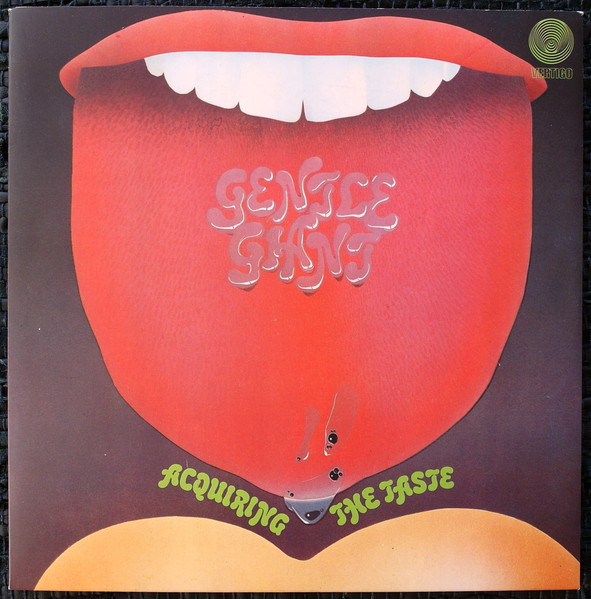
The second one, ‘Acquiring the Taste’, we would have got the basis for most of it done in a fairly short space of time, but a lot of it was done in the studio. I guess we were just following our noses. We didn’t have a preconceived idea of where we were going, which is probably why it’s never been hugely successful. If you don’t like one track, wait and try the next one. You might like that one. There wasn’t anything particularly consistent. We just followed each track where it went. I loved that period. It was probably my favourite period.
It was a whole miracle how I got into the band in the first place. Somebody was calling at one of the Shulmans’ houses to pick up his mate and overheard a conversation. So I got a phone call from a band I’d never heard of. I’m so grateful.
John, what do you remember about joining Gentle Giant and finding your place in the band?
John Weathers: I play well with people I get along with, very much so. I haven’t got any time for fools. I spent some time in the Grease Band, and they were very tough guys to work with. They were crazies: too many drugs, too much alcohol, the whole bit. I didn’t enjoy that at all. I had the bass player in my face all the time: “You’re slowing down, you’re slowing down, you’re slowing down.” I was sitting there terrified. My next band was Gentle Giant.
When Malcolm had his accident, I was number two on the list. It was only a temporary job when I initially joined. There was an upcoming tour happening in two weeks, so they needed somebody like yesterday.
We started rehearsals, and there was all this fancy stuff going on. I said, “Hang on. How about I play straight through that? I’ll let you get on with all the fancy stuff and give you something solid underneath. Let’s try that.” They loved it. I think it clarified a lot of the stuff going on on top. You knew exactly where the beat was.
Even when I tried out for the band, I went down to Portsmouth and they said, “We’ll give you a ring, but we think you’ll do.” They didn’t want to give the game away straight away. Anyway, Derek and Phil started getting into it, and I thought they were going to kill each other. “Oh, here we go again.” Gary said, “Don’t worry. They’re always like this. It doesn’t mean a thing. Ignore it completely.” They were hammer and tongs all the time. He was quite right.
How did you divide the writing, and how did an idea become a piece the whole band could play?
Kerry Minnear: We did write different things. The main music writers were Ray and myself. Gary and John both contributed a song to our catalogue, but as a general rule it was Ray and myself who did the material. Derek did quite a few as well.
I very often helped Ray, and he often helped me if we were a bit stuck. We usually only had two or three weeks to write for an album. We’d separate after a tour and settle down to write, and after two or three weeks we’d start to share our ideas with each other, to encourage and help if necessary. It was a lovely relationship I had with Ray. I miss him so much.
Gary Green: It’s sort of hard to pinpoint. Most of the writing was done by Ray and Kerry, and Derek too. There was a bunch of stuff Derek came up with that was then rearranged by Ray. ‘Another Show’, perhaps ‘Timing’; there might be a little bit of Derek in there. Derek contributed an awful lot to the music of the band, not just the lyrics. But the main bulk of the writing was done by Ray and Kerry.
Kerry would give me guitar parts, and I’d rearrange them or alter them. I didn’t do any writing per se in the band. Who could, when you’ve got Ray and Kerry in there? They’re amazing. It’s not that I don’t want to compose; I don’t have the chops of a Ray or a Kerry to do that. I have some noodles of my own that I find interesting, and I’ve come up with little tunes. But when you talk about composing in the classical, written sense that Kerry does, I’m not that guy.
I don’t read music. I learned it all by ear. We’d have sessions where particularly difficult parts, and a lot of them were, were recorded on cassette. We’re going back to the Dark Ages here. Cassette recorders had really only just become available, and portable ones that ran on batteries were rare as hens’ teeth. But we had access to them, so my parts were recorded and I’d learn them with the tape.
I’d sit down with Kerry and Ray and learn the parts that way. In those situations, the parts got altered a little bit to be more playable and sound more natural on a guitar, rather than being just a keyboard part now played on guitar. You’ve got to make it sound as though it was on the guitar. That kind of finessing would happen in those situations.
John Weathers: I only wrote one tune in Gentle Giant, ‘Friends’, on ‘Giant for a Day’. I’m just one of these guys who can knock a tune out on anything, as long as it’s not a saxophone!
I never wanted more of my material done in the band. Those guys write like crazy. How do you say to Kerry Minnear, “Oh, I don’t like that. You’ve got to change it, change the key, do something, fix that”? No, no, no. I was quite happy to play Ray and Kerry and Derek’s stuff. It was so lovely. It was wonderful music.
Gary, how did you turn those demos into guitar parts without losing the detail of the writing?
Gary Green: Both Ray and Kerry play guitar, so they’re familiar with it and its role in rock and roll, shall we say. Kerry’s compositions, particularly, were composed on a piano. Between the notes, the right hand is going to be keyboard and/or guitar, and the left hand is basically the bass. You can hear all the parts in his demonstration tapes. I guess it was an equal division of work for each person. But the guitar is a strong instrument.
Oftentimes Kerry would have complete demos, and all the parts you can hear within his playing. Something like ‘Mister Class and Quality?’: if you hear that all played on the keyboard, it sounds great. It’s still a great piece of music. But you can start nitpicking and getting into it, and pick out where the bass is, where the guitar part is. Then there’s embellishments and passing notes you add in, but mostly they’re all there in the keyboard part.
The tricky thing becomes how you divide those parts up into something coming at you from two speakers, so it doesn’t sound all cloudy and muddled and all in the middle. Make the separation so you hear the instruments, and they stay as a natural guitar part, a natural keyboard part and a proper bass line.
I still love listening to Ray’s bass playing, just what the bass line is. Some of them are so wonderful on their own, you could just listen to them on their own. ‘Prologue’, for instance, has a great bass line weaving all the way through. There are many examples.
The title track of ‘In a Glass House’ is a guitar-driven tune. It needed a strong guitar voice, and I was that guy. I am that guy. I still play that way. But none of us wanted to project ourselves into the front or the limelight. We really, truly wanted to be a group, an ensemble. That was the strength of the band in the end: great writers, but also good players who could make the songs sound like something. There are songs that don’t sound much until somebody with an empathetic ear can play them properly.
Kerry, where did the church music, percussion and counterpoint in your playing come from?
Kerry Minnear: If you’re thinking about the big anthem at the end of ‘Three Friends’, it’s like a kind of judgement of everything we’ve been listening to: how people are very different, but they’ve still got memories of when they were together at school. I think that has an anthemic sort of flavour about it. I’ve got a great love of church music. That’s what I went to college to study, the history of music composition from Palestrina forward. I’ve loved it all. Anything that’s big and grand, I love it.
I do love the clavinet. It draws it out of you, doesn’t it, when you hit those keys and get that front-end attack? I was a percussionist before I became a proper keyboard player, and the combination of playing a percussive thing between the hands led to funky phrasing and so on.
I love counterpoint too, when the harmony isn’t blocked, but is created by the moving parts. It’s quite hard to do, though. That’s why I don’t do it so much nowadays. Too much like hard work! But I love it. It kind of overwhelms you when you listen to a whole lot of parts moving together.
I went to Bach’s ‘Mass in B Minor’ the other year with my best man, my friend. We sat near the front, and all the parts were coming at you from the stage. It’s just lovely. It’s almost like you can’t follow it.
Gary, how much of your guitar playing was worked out beforehand, and how much happened in the moment?
Gary Green: Being recognised after a couple of notes is the best compliment you could pay me. That’s what I always say about players too. You find your voice, and that’s what comes through. You only need a couple of notes to go, “Yeah, that’s B.B.; that’s Miles.”
The solo on ‘His Last Voyage’ was off the cuff. I just played it. I don’t remember if it was the first take or the second, but it would only have been one or the other. I always played solos like that in a studio. I didn’t ever have anything prepared.
Well, tell a lie: I guess I had a little bit of preparation, or an idea, for the solo on ‘Peel the Paint’, with Malcolm. Only in that it starts loud, goes quiet, I introduce the Echoplex and play some sort of rhythmic thing, then we get up and become loud, finish, and go back to the tune. That’s as much planning as there was in it. I didn’t have notes written out. It was off the cuff.
If it didn’t work, you’d do another take. If that didn’t work, you’d do another. But beyond four or five goes, I’d get stale and not have any sparks to it. That was the approach we had to recording anyway: keep them fresh and not overplay them. John approached playing the same way. John and I were roommates and buddies all through Giant. We were the bad boys, the party room and all that.
“The magic is in your hands and your heart, and that’s where it stays.”
What mattered to you when choosing instruments, sounds and even the clothes you played in?
Gary Green: The main guitar I had in Giant was an actual 1960 Les Paul Standard. If I had it today, it would be worth a fortune. Someone’s got it, and it’s worth a fortune. Judy, my wife, and I got divorced in 1993, but the divorce didn’t really work out, so we got married again a year later. I sold that guitar to finance getting back together. No regrets about it, but somebody’s got a very nice guitar somewhere.
What I’ve found over the years is that instruments come and go. They’re not the Holy Grail of why you’re a good player or not. The magic is in your hands and your heart, and that’s where it stays. You can pick up any old piece of crap with strings in it and make a pretty good noise. Most of my guitars are under five hundred dollars. The Yamaha was 476 bucks off eBay, I think. I can make the noises I need to make on it.
In the studio, the guitar amps were generally our guitar amps. There were a couple of times when there was a Twin Reverb or a Marshall head in there, but typically it was our gear. We recorded direct quite often later on, when desks got bigger. Usually it was an attempt to recreate the guitar sound Ray had probably got straight through his Revox, rather than a big amplified, ambient room sound. ‘Take Me’, on ‘Giant for a Day’, has a lot of direct guitar in it.
My credo is whatever works for the tune. I’m not hard and fast for one or the other. What are you looking for? What’s the result? Is it appropriate for the tune? That’s what I’ll side with every time. I love a big stack of Marshalls, though!
These days I’m a single-coil man. I’ve given up on humbuckers. They’re a bit muddy, generally. They’re fine for certain applications, very hard-rocking stuff, but tone-wise I like single coils best, P90s particularly. I don’t have very big hands, so I like a nice neck to get around.
I don’t have the old stage clothes anymore. I auctioned them off at our annual gathering of friends and fans. It’s a fairly intimate sort of thing, and it was best for the clothes to go to them, because they helped us stay alive.
The first one I had, with the long sleeves and the castellated bottom, sort of brown and then green, was made by a tailor just off Carnaby Street. We went there and had some stage clothes made. It was a weird experience. The tailor was saying you should have your trousers really high because it helps you move around. To demonstrate it, he did a couple of flips in the store, landed on his feet with a big flourish. That was a little weird!
My mother-in-law later made me a couple of silky, blousy things that were comfortable to play in, because I sweat a lot. You want something loose, and you don’t want sleeves dripping over the strings. It was always towards athletic gear. I had a tracksuit kind of thing. I did not like that. John, of course, had his Oakland A’s outfit, which was perfect to play in, although it was pretty heavy material.
How did you approach lyrics and the stories running through the records?
Derek Shulman: Some of the songs on ‘Acquiring the Taste’ were based on literature. That was my brother Phil, who was more of a literature-based lyricist. I did the more realistic stuff. Rabelais was the writer of ‘Gargantua and Pantagruel’, and it was pretty bawdy. We figured, “Let’s go out there and tell the tale of being bawdy and not living within the confines of where we live.” Gargantua was a giant, so it fitted together with some of the lyrics and songs we put together.
We had a couple of minor offers to put something together, I think in the middle period, about Robin Hood, but it didn’t come to any fruition. We wrote about things that were either based in literature or surrounding us, what was happening. We wrote about what we felt was important, including mental health and political issues.
What do you remember about the artwork, and the different covers used for the American releases?
Derek Shulman: The ‘Acquiring the Taste’ cover wasn’t my idea. I think my brother Phil had more of the idea than anyone. It was basically telling the world we weren’t going to do something that was expected of us. If you thought that was going to happen, don’t even bother. A declaration of intent, exactly.
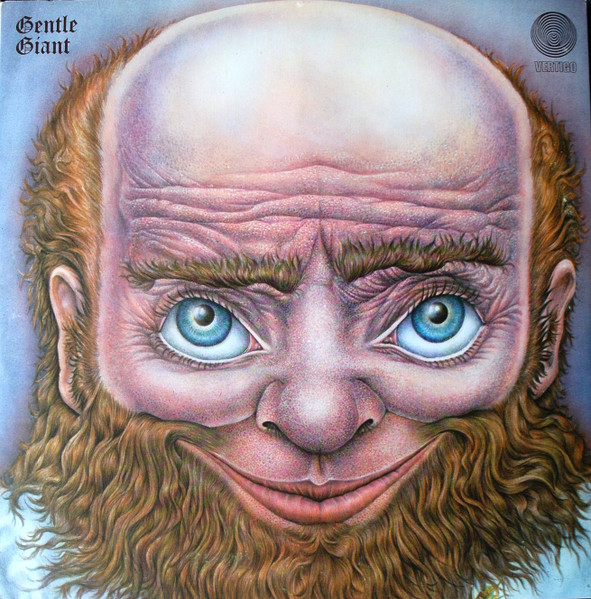
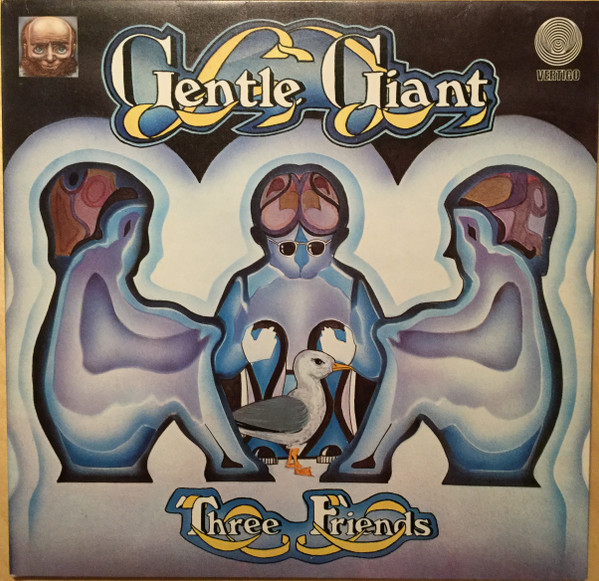
I believe Columbia thought the first album’s image was a good one to use for ‘Three Friends’ in America. They thought the UK ‘Three Friends’ cover was less catchy. They used the giant’s face, and in fact the giant’s face became iconic. Ultimately, they may well have been right. Who knows? The record companies in those days dictated, and everyone went along with it. They paid the money.
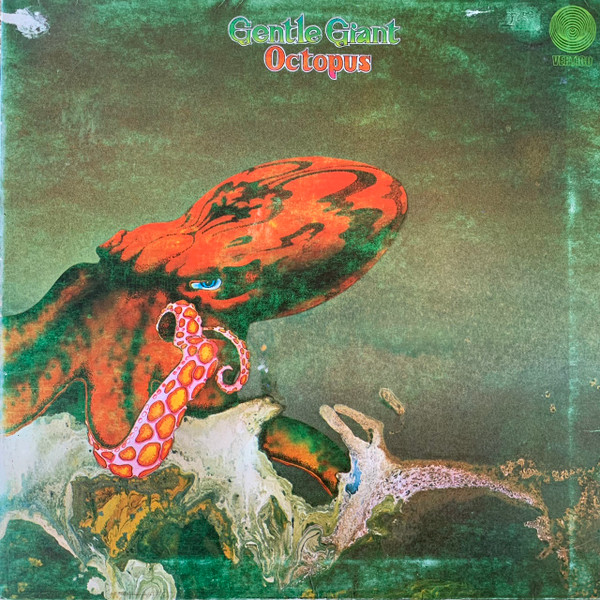
Gary Green: I don’t know how it came about that Roger Dean did the ‘Octopus’ cover. Obviously, he had a signature look. I don’t recall us thinking or discussing, “Let’s get Roger Dean to do us a cover.” I don’t recall that conversation ever. But somehow we ended up with that. I’ve subsequently met Roger Dean loads of times, and I have a signed print of it.
I don’t think we really liked the ‘Three Friends’ cover. I don’t think it was very well executed. It was a good idea, but it didn’t translate into the best cover. Since that album was going to be our first official release in America, we thought we’d better go with the proper giant logo from the first album. You want to put your best foot forward. You’re stepping out in a new place.
I’ve got to say I’ve grown to hate him over the years, because he got used on everything. Everything we did, it was the giant. By ourselves, no less! It never seemed to me we had the coolest covers. XTC always had the coolest covers.
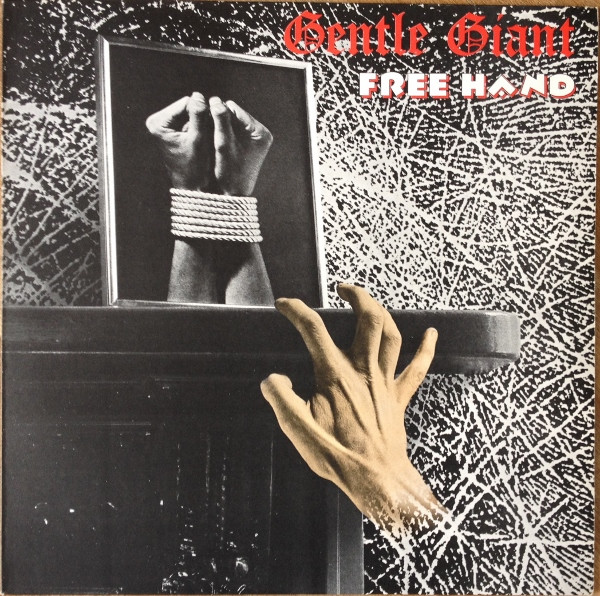
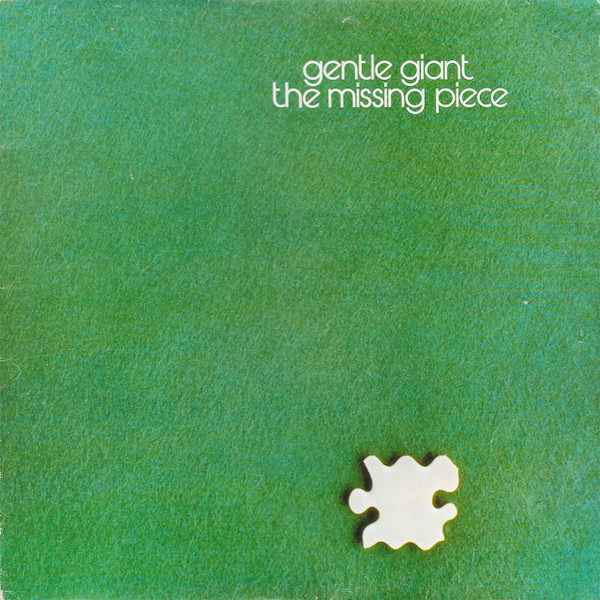
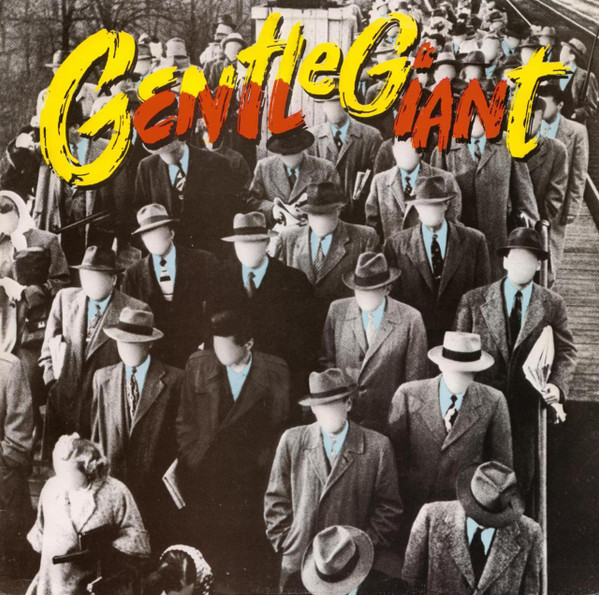
‘Octopus’ was great, ‘Free Hand’ was pretty good, and ‘Civilian’ was pretty good. That’s Ray’s hand on ‘Free Hand’, by the way. I took the picture for ‘The Missing Piece’. I’m credited on the back, GG photography, I think. It’s a nice concept, but it didn’t quite work. I didn’t think the title was brilliant: the missing piece, obviously searching for a hit record, or maybe this album was the missing piece of what was missing in Giant.
What memories do ‘Acquiring the Taste’ and ‘Three Friends’ bring back?
Kerry Minnear: I was the person who brought the vibraphone into the band. ‘The Moon Is Down’ is one of Ray’s. I know I love listening to it, all that kind of mysterious feeling. I remember recording it. I believe it was AIR Studios. We did an awful lot of that album to a metronome. Not all of it was complete musically when we went into the studio, so we used to lay down a metronome speed and build the tracks on top of that. I think that was the only album. There was a lot of layering and experiment. I ought to give that another listen.
‘Three Friends’ is a nostalgic dream. I’ve always enjoyed that album. If people ask me what my favourite album is, it depends on my mood. I’m not consistent. Now I’m old, I’m obviously nostalgic about how great it all was in the old days.
In his conversation with Gary Green, Dereck recalled an early encounter with Gentle Giant’s records.
Dereck Higgins: When I was in my sophomore year of high school, I was at the record store and I could only buy one record. I was looking at ‘Three Friends’ and a Uriah Heep album. The clerk said, “You don’t want that Gentle Giant, get that Uriah Heep.” I didn’t know, so I bought the Uriah Heep. I loved it, but less than a year later I finally picked up ‘Three Friends’ and said, “That’s what I was looking for all along.”
Gary Green: Uriah Heep were with the same management as us, Jerry Bron. We’d see them in the office all the time, and we played a few very early gigs with them. Mick Box was a good guy. I bumped into him years later. He lived round the corner from my brother, of all things. I’d just been to the store across the street, and this car pulls up at the kerb. This guy gets out, Mick Box, thirty years after the fact. “Yeah, I remember you.”
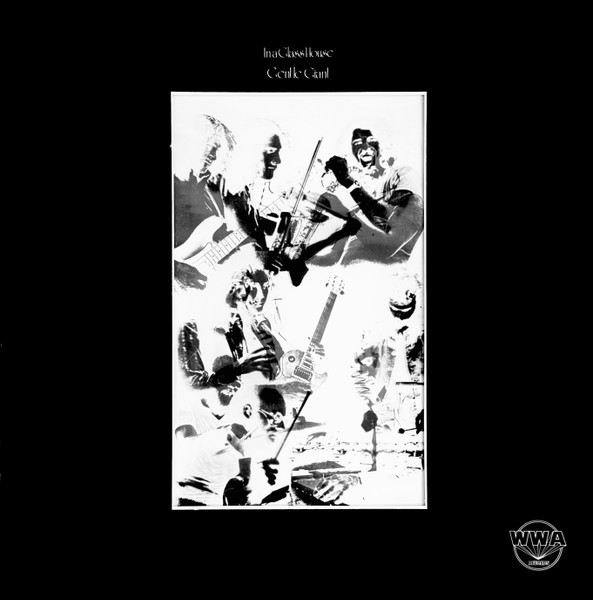
What changed in the band by the time you made ‘In a Glass House’?
John Weathers: I love the album. I thought it was great. But when we recorded ‘Octopus’, I don’t think I was quite ready, because I’d only been in the band six months or so, if that. We hadn’t grown together. By the time we’d finished ‘Octopus’ and gone to America and played together some more, Phil left the band. It became a bit more concise with the writing and stuff like that.
I felt more at home in the band, because all of a sudden we were all the same age. Phil was the elder brother, ten years older than us. He was the boss of the band. When he left, it was like, “Okay, the kids can go and play now.”
With ‘In a Glass House’, we all felt really comfortable. There are some great tunes. I felt a lot more confident in the band, and I think the band were more confident with me. They knew what I was capable of and what I did best, so that made things they wrote easier. ‘The Runaway’, you know, is a fantastic song. It’s in 6/8, and yet I’m thrashing away.
We played quite a lot of that stuff live. We opened the show with ‘The Runaway’. We had a tape of the breaking glass. We’d go on in darkness, the breaking glass would start on the PA, and then we were in. Off we went.
We had a point to prove, because the American record company, Columbia, didn’t want to put it out. In fact, they refused to put it out. That’s what we got told, so it was all sold on import. It was great to work on. We were very, very happy. We were getting some success in Europe, getting really big, playing five-thousand-seaters, and making headway in America.
We never went out east. I think we’ve sold quite a lot of records out there since, but we were never invited to Japan.
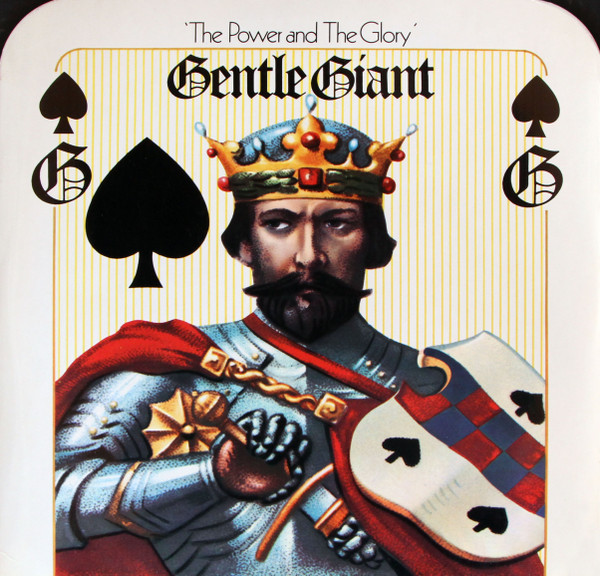
What was behind ‘The Power and the Glory’, and how did ‘Aspirations’ come together?
Derek Shulman: ‘The Power and the Glory’ was written, to be honest with you, about Nixon and the corruption of power. That’s even more applicable today than it was then.
It would have been nice if ‘Playing the Game’ could have been a single, but we were never able to break that barrier between being a progressive, I would say cult, band playing to an audience that enjoyed our music, and being a Top 40 album band. There were bands we were placed alongside that were able to do that. We never were. I don’t think the record companies really believed or thought we could get on the radio. We didn’t think about it. All we thought about was making the music, rehearsing, putting it on stage and touring. We were very hard-working.
John Weathers: I like all the albums as a complete entity. I think my favourite would be ‘The Power and the Glory’, because it tells a story, and there’s also some great tracks on there. Every song.
Kerry Minnear: ‘Aspirations’ was one of my songs. The words were by Derek, but the melody and harmony were mine. Whenever I used to write, I always had Derek in mind as the lyricist at that stage of the band. I would just feel stuff: confusion, rejection, all these emotions. Usually I start with chords and then sing something over the top of them.
Looking back to that one, I’d say that’s definitely what would have happened. I’d have played the melody through, felt what it was saying to me, tried to feel what emotions were coming, and then just sung it. I can’t explain. I think it’s a kind of God-given thing when you get a tune and can feel an emotion coming through it.
I’d like to say I did the words as well, but I didn’t. Obviously, Derek locked into what I was feeling. It was a good marriage, the words and the music.
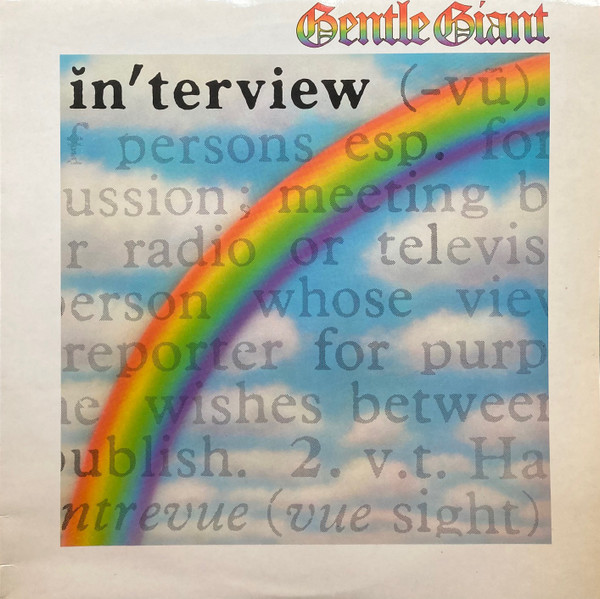
John, how did you find your way through the rhythms on ‘In’terview’?
John Weathers: ‘Give It Back’ was Ray’s tune. He said, “I’ve written this reggae kind of thing. It’s in 5/4. How do you want to do it?” I said, “Let’s hear it. Let’s play around with it and see what you like.” I played around with it and left the snare off. He said, “Yeah, that’s great. I like that.” “Okay, let’s go.”
I do put a bass drum in there. The one drop would have made it a little strange.
We never played ‘Another Show’ live, for some reason. We played ‘Timing’, but used it for a violin solo and, later on, a drum solo kind of thing.
On ‘Another Show’, what I do is follow the tune. It’s two bars of three and a bar of four, which is a really weird one. To play straight with that, you have to put an extra bass drum beat in. The fun was playing breaks over that and coming back in on the two bars of three. A lot of fun. I loved recording that.
What did you want a Gentle Giant show to feel like for the people watching?
Derek Shulman: When we went on stage, we wanted the audience to enjoy the music, but also to realise we were enjoying it too. I hope there were smiles on our faces, and therefore we could put smiles on our audience’s faces when there were surprises or different things going on.
We weren’t a band that took ourselves seriously. We took our music seriously, but we didn’t take ourselves seriously. I think that always came through as a live band. We enjoyed playing some of the complex pieces with various sources, but we also enjoyed the audience looking, smiling and enjoying what we were doing.
We played tons of festivals, but honestly the festival setting wasn’t as good for the group. We played big places in parts of Europe, twenty- or thirty-thousand-seaters, headlining, and even in Canada. But when you can’t see to the end of the audience, when it’s like a blur, it becomes less personal. It’s great that that many people show up, though. We didn’t do Reading or Glastonbury.
“There wasn’t one ounce of ego on that stage. Not one ounce.”
John Weathers: What’s there to hate? All of it is a challenge. For me, Shulman and Minnear wrote some of the best tunes around, the most challenging. To be able to play those and try to get them spot on! I was always out there to enjoy myself. All of us were. That was the nature of the band: get out there and give people their money’s worth, enjoy ourselves at the same time, put a show on. I’d run around for four or five minutes before going on stage, so I’d be right up there.
There wasn’t one ounce of ego on that stage. Not one ounce. We all loved each other’s playing and respected each other’s playing, because everybody in the band could really play. That was the secret of it.
Gary Green: There’s a point about live albums: you’re there one night only to impress these people. It’s not just showing off. In a literal sense, yes, you’re showing what you can do, but it wasn’t too vaudevillian. There’d be no point in that.
How did the arrangements change when you took the songs on stage?
Gary Green: We were rehearsing ‘Free Hand’ for the tour, taking it out on stage. We had the tune, obviously, but as written on the album, the whole middle bit wasn’t going to work live. It wouldn’t translate well, so we needed to do something else with it, because otherwise it was such a rocking tune.
We played it through in rehearsal and scratched our heads: “What are we going to do?” Then we went home for the day. The next day, Ray came back with this whole other middle section, totally fleshed out, that he’d played on a sound-on-sound recording, on the Revox, I guess. It was finished. The whole middle bit, the transition for the guitar solo, all this. Brilliant.
I was listening on YouTube to a version of the ‘Three Friends’ album with a live ‘Prologue’ on the end. It’s ridiculously fast, but the band is just cooking along. There’s this part at the end, a different ending we did live, and I’d forgotten it. There are all these keyboard parts. I’d never heard them before, or I don’t remember them, so I’m still discovering stuff in it even today.
There were a lot of classic Giant tunes we never played live, for whatever reason. If you were opening for Sabbath, you weren’t going to play something like ‘Schooldays’. It’s too trying for a big audience sometimes to play something like that. With Three Friends, we were able to bring these things to life. We did ‘Empty City’, an unsung song that’s really good, ‘Schooldays’ and a few others. In that regard, I really feel it was a successful adventure.
Kerry, what stays with you about the touring years?
Kerry Minnear: We weren’t close to Black Sabbath, but we were definitely thrown together. The opening gig in Los Angeles, at the Hollywood Bowl, wasn’t a bad starting point for our experiences. But we suffered a bit at the hands of Black Sabbath fans, as you might imagine, when we got the cello, violin and vibraphone out.
Anaheim Stadium, which we played with Yes, Peter Frampton and somebody else, was the biggest audience we’d ever had, I think. I remember those as extremes. But I remember some of the people, the friends I made, and we’re still friends with a few of them. There were some good times.
We always got on well as a band, so I can’t blame the band at all. We managed really well and kept good relationships. Obviously, you get on each other’s nerves when you’re together, but only a little bit, and it was always good. It was the actual separation from anything I had any control over. I did enjoy the travel. It was a privilege to see places.
The band used to do most of Europe, North America and Canada. We gave up on England eventually.
What did you learn from the producers and engineers you worked with?
Gary Green: We never played with David Bowie. The only link we had was Tony Visconti, who produced the first and second albums and had worked with Bowie and Marc Bolan.
Tony absolutely helped us. I was a complete newbie to recording in proper studios. The Shulmans, Derek, Ray and Phil, had been around a while and recorded in bigger places, but recording was still in its infancy. It was four- and eight-track stuff. As Giant blossomed, so did the technology. Studios became bigger and more complicated: eight-track, sixteen, twenty-four. Twenty-four-track was the biggest thing when we finished. There was no computer recording or digital recording. It was all analogue.
Tony shepherded us through the recording process, and we learned more through him. He was, and is, a very creative guy. It’s a mercurial thing, what producers do. Good producers tease performances out of you. You can’t be dogmatic about requiring a performance: “Go out there and play the solo.” It’s a very subtle thing. It’s psychology, hands-on technical stuff and musicianship. A person who combines those qualities, who you like and who works with you, is a rare find. He was one of those guys for us.
Geoff Emerick, on the last album, was great. He was primarily an engineer and, because of his fame, I guess, a de facto producer. He was much more hands-on, getting the sounds. He’d been an engineer all his life. Tony was more of an artistic producer. Geoff would stay there to the end until you played it right and encourage you all the time. He had great ideas about how to achieve the noises we were after.
He was very workmanlike. He’d come into the studio and immediately turn the thermostat down so it was cooler. He’d get rid of the comfy chair and get a hard wooden chair and sit on that. He didn’t want to relax. His focus was all there.
What other sessions and encounters from those years stand out?
John Weathers: Being into soul in a huge way, I was into black music. I had the very great honour of working with Quincy Jones when I was in Eyes of Blue. He was a great friend of our producer, Lou Reizner. We were doing a week at the Playboy Club in London. Quincy was there finishing off the music to a movie, and Lou brought him down to see the band. He walked in and said, “I want to marry that drummer!” He loved the band.
He had a film score coming up, so he asked us if we’d do it with him. We were recording another album at the time in the evenings, but in the afternoons we’d work with Quincy doing the film score. We’d go to his house in the mornings and learn the day’s music, then go into the studio in the afternoon and do all the bits and pieces. With movie music, it’s thirty seconds here, two minutes there, a bit of blues. There was lots of stuff. We got on really well with him. He’s a lovely, lovely man.
The movie was called ‘The Toy Grabbers’ at the time, but now it’s called ‘The Seduction of a Nerd’. Wally Cox was in it, Victor Buono and Julie Newmar. The film was a huge flop. I’ve got a copy of it. It’s a crazy movie. When you work with somebody like Quincy Jones, you get an education.
I almost did an album with Mick Taylor from the Stones. When he left the Stones, he booked into Island Studios to do a solo album. The engineer who did ‘Interview’, Paul Northfield, was going to produce it. Mick said he needed a drummer, and Paul said, “I’ve got the man for you. He can play anything.” It was just drums and guitar, no bass, which was a bit difficult.
The trouble was, at that time he was having chemical problems. We couldn’t actually finish a track. We kept going over and over and over. I was doing my best, but I don’t know whatever became of it. After, I think, two days, he decided to give up the ghost.
I could never afford that sort of lifestyle. We were never a rich band. The first American tour we went on was with Black Sabbath, so we could see the effects of that kind of thing, cancelling a show in the afternoon. At one point, they didn’t tell the promoter they were going to cancel. We actually went and opened the show, then got the hell out of there as quickly as we could. That kind of thing goes into the brain bank.
Let’s be quite honest: I’ve had little brushes with this, that and the other. But to me it was, “Whoa, hang on now, I’m not feeling too good.” The next day, “This isn’t doing me any good at all.” You realise, you wake up. A little bit of something doesn’t do you any harm, but a lot of something does you a lot of harm.
Gary Green: John Mayall opened for us somewhere in California. We were coming off soundcheck, I think, and John, this suntanned, healthy guy, sprung up the stairs and said, “Hi, I’m John Mayall.” My shyness didn’t allow me to talk to him and say thank you for all the music he’d given me. I was thinking about it the other day: what an idiot I was not to do that. It didn’t seem right that he was opening for us, although we usually didn’t know who was opening until we got to wherever we were going.
John Lee Hooker opened for us once. He’s sitting there, and I’m standing in my platform boots and puffy shirt, thinking, “It’s John Lee Hooker. I should go over and talk to him.” I felt like the Jerry Seinfeld character wearing the puffy shirt, thinking what an idiot I looked. So I didn’t.
Making the first album at Trident, in this tiny little alley in Soho, I opened the door and went bang, straight into George Harrison, who was coming out. I was dumbfounded. It was George Harrison. “Oh, sorry,” and he walked down the alley and off into the sunset.
George Martin came to one of our sessions when we were making the last album, obviously through the Geoff Emerick connection. He came in to hear how it was going. A gentleman, a really nice fellow. We toyed with recording at AIR Studios in Montserrat, I think, for the last album. We went to the opening party they had in Los Angeles while we were making ‘Civilian’. There were a few famous faces. I think Pat Benatar was there.
When we mixed that last album at Wessex in North London, Pete Townshend was there mixing ‘Empty Glass’, one of my favourite albums. The Pretenders were doing their first album, and the Clash were doing ‘London Calling’. You’ll notice those were very successful albums, except for ours! I played Space Invaders against Pete Townshend.
Pete is one of my heroes. I’ve come to like Led Zeppelin more as I’ve got older, but for me it’s really all about John Bonham. He pulls that thing together.
What was happening within the band as you moved towards ‘The Missing Piece’ and the later records?
Kerry Minnear: It was a challenge for me. On those albums, ‘The Missing Piece’, ‘Giant for a Day’ and the later albums, I found it difficult to know how to contribute to the composition. Some of the tracks I really do like. Ray’s ‘Memories of Old Days’ is a lovely track. There were tracks I found I could enjoy, but I found it harder to think, “How can I really help this?”
I wasn’t unhappy, I’ll be honest. It was still a good environment to be in. I felt creatively a little frustrated with myself that I didn’t know how I could embrace what we were doing and bring in some of the elements I love.
I’m still struggling now to find something relevant to ordinary folk, not just musicians, that takes them on a little journey where they weren’t expecting.
Gary Green: We were trying to stay alive as a band, just keep going. Everybody has this idea that if you’re in a rock and roll band you’ve got several houses around the world and money. It’s not true, especially in our case, because we never sold a load of records. It got very difficult in that period. The income stream was pretty thin. I took another job.
I was booking cars on a ferry. Portsmouth had a car ferry over to the Isle of Wight. I did all-night sessions on Saturday nights, I think thirty pounds for an all-night session. I’d sit there and pick up the phone: “Hello, yes, you need a car going from…” I did that for a couple of months. Pay the bills.
The main riff of ‘Betcha Thought We Couldn’t Do It’ began life as a really sweet, gentle tune Ray had written when I first joined the band. It was one of the things we learned to play early on. It was a song called, I forget, ‘Autumn’, I think. Years later, the riff gets resurrected. Maybe that’s why my thoughts about it are so coloured. I’d remembered it as this sweet little thing, and then it became the monster it became.
‘Memories of Old Days’ is a great tune. ‘Mountain Time’, as I remember it, has the distinction of being, I think, the only tune that came about as a result of a jam we did. We were rehearsing in the back room of a pub somewhere, finished with rehearsals, a bit bored, and Kerry started playing something. We all joined in, and then the other bits came. We left for the day, and a couple of days later, maybe the next day, Ray, I think, cobbled together an arrangement of the rest of the tune. But it started in the rehearsal room. Ray was really clever at taking an idea and running with it.
John Weathers: Things were troublesome, I must admit. The record companies in particular were behaving very badly. They just wanted hits. They wanted to sell records, a hit single, and they wanted it now. They started to demand stuff: “You’ve got to change a little bit. You’ve got to move stuff around. Look at Yes, look at Genesis. ‘Roundabout’, ‘A Trick of the Tail’. We can sell that.” So we were trying to follow the prog norm, like cattle down into the slaughterhouse.
How do you feel about ‘Giant for a Day’ when you look back at it?
Gary Green: There’s a video for the title track with Derek standing with a mask and a guy in front of a Rolls-Royce. It’s all pretty hokey. We also did ‘Thank You’ in the same session. They’re all rented instruments; you can tell it’s not my guitar. I don’t know where they were done. It could have been at Capitol Studios, perhaps.
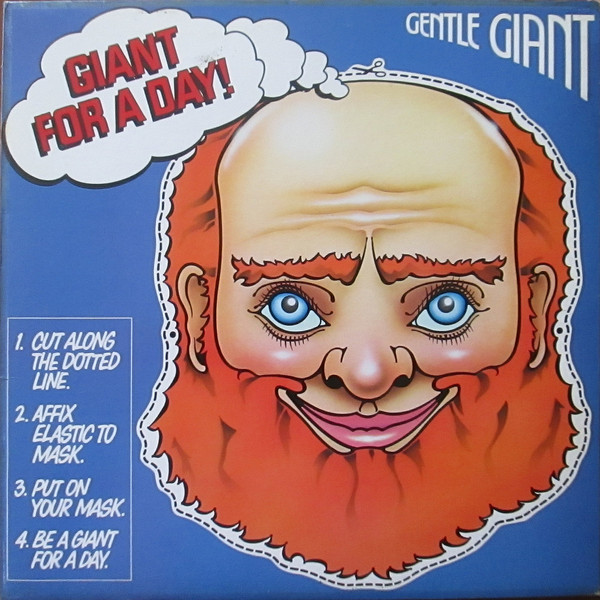
I’m going to take the Fifth on whose idea the cut-out cover was! I think we lost our minds. We were trying to be somebody else. There is Giant in there, but we didn’t display it on the best platform. It’s a strange cover. I don’t know what to say about it; it’s just not very good.
Strangely, we saw a bunch of those masks at gigs, people wearing them in front of their faces. That’s pretty cool. That kind of worked. The title was okay, ‘Giant for a Day’, but it needed something different. It was partly because we needed to survive. I don’t know if that was the best way.
John Weathers: There was no way I was going to give up, even if I didn’t like the tune. I wasn’t going to spoil the recording because I didn’t like it. Something like ‘Spooky Boogie’, that’s right up my street, sir.
How do you feel about ‘Civilian’ and the final records now?
Derek Shulman: ‘Inside Out’ gives me chills, for personal reasons as well as the intensity it’s played with. Me saying that is going to sound embarrassing and bizarre, but it’s an incredibly intense song. It’s not a song with all these musical breaks, 7/4 and 3/4 and different arrangements inside an arrangement. I think it’s very well done. That one I wish could have got on the radio, but again it got lost.
‘Civilian’ was the only album we recorded in North America. We recorded it in California. It was a weird physical experience, honestly, because I was living in LA, but the rest of the guys were still living in the UK. I got everyone over to LA to do the album.
I think it was an attempt to slim down some of the band’s complexities and go straight ahead as a rock band, but a rock band with a different feel. When it came out, the fans weren’t sure whether it was right or wrong, and Columbia basically said it wouldn’t work. The album got lost in the shuffle.
Looking back, I think it was one of the albums that was forgotten. It wasn’t even put on streaming services by Columbia. We figured, “We’ve got the rights back, so let’s reintroduce this album to a new audience and see the reaction.” Apparently, there have been some good reactions from people who didn’t really know about it.
Gary Green: This is a really good album. I like it. It’s a Gentle Giant album, six years on from ‘Free Hand’, or whatever it is. A band grows before it stops. I don’t know if we knew it was the last album at the time, but we certainly needed to be more mainstream.
Had the internet been around then, I’m sure we could have continued making albums more like the Gentle Giant everybody reveres. But it wasn’t possible.
It’s influenced many players. We’re all quite proud that we’ve stimulated young guys to pick up instruments. I’ve heard that a lot: “You guys were the inspiration for me starting to play music.” We can’t ask for a better legacy than having more musicians in the world.
John Weathers: I really, really like the last album. It’s a compromise, there’s no two ways about that, but in my humble opinion there are some great Giant tunes on there. ‘Inside Out’ is a cracker.
Dereck also told John how his feelings about the band’s later albums had changed over the years.
Dereck Higgins: After talking to different members, I’ve gone back and listened to ‘Civilian’ and ‘Giant for a Day’, and I’ve been able to reassess my initial response. At first they were a bit disappointing. As an old fan, all I wanted was more of what I wanted. With perspective, I see you were trying to survive in the business. Since then I’ve been listening to ‘Giant for a Day’ and enjoying it. I ripped you a good one, but I came around. I didn’t give up on you.
John Weathers: I didn’t hate you for not liking it, because it’s your opinion. That’s all it is, your opinion.
I loved it from the moment we finished mixing it. “Wow, this sounds so good.” It was 1979, and it sounded like a million dollars. We were only doing the mixing and vocals at Wessex in London. We did the rest in LA. Pete Townshend was doing his solo album there, and Chrissie Hynde was there with the Pretenders. We didn’t really hang out with them. We were only doing the mixing and vocals.
Gary, how did you see punk and the changes happening around you towards the end of the seventies?
Gary Green: It was weird. Punk was coming in the door and pushing Giant and Pete Townshend out. ‘Giant for a Day’ was influenced by what was happening. Albums are a product of what’s going on around you at the time, typically, a reflection of the moment.
I think everybody of that prog generation felt there was a bunch of upstarts coming in who couldn’t play, we thought. It turned out that was wrong. That’s not “us”; that’s the general, universal, royal “we”. We were misinterpreting what they were doing, negating it and not realising the whole thrust, the social significance of it. Missing that entirely. It was just, “Oh, they can’t play.” That’s not really the issue. We learned quite a lot from that, as we needed to.
I see Giant mentioned all the time in forums and things I read online. It’s great. We’ve somehow cemented our place there.
What do you remember about the end of the band, and what came afterwards?
John Weathers: The last show was the Roxy in 1980. I remember it like it was yesterday. We knew it was the last show ever. It was one of the best we ever played.
Gary Green: I married Judy, who’s from the little town we live in in Illinois. We lived in England from ’76 to about 1980, then sold the house and moved over here after Giant broke up.
Ray and I tried to continue as a duo. We even got a record deal, but it fizzled apart. Ray decided he was going to stay in London, and I’d already got all my furniture halfway down the St Lawrence Seaway in containers. In those days there was no internet, and phone calls were a million dollars a minute, kind of thing. It wasn’t sustainable.
We called ourselves Shout and actually released a single, ‘Starting Line’. It was in a new-wave vein. Punk had hit in Britain and sort of killed off prog, but there were new-wave bands coming out, and it was more in that vein. It wasn’t prog music and wasn’t Giant by any means. Guitar-driven stuff. It’s okay. Obviously, it wasn’t great, because it didn’t last, but we did it.
There’s material on ‘Scraping the Barrel’ or ‘Under Construction’. ‘Scraping the Barrel’ is a huge resource: Kerry’s original demos, Ray’s original demos, some of mine, unrecorded stuff, bits and pieces. It’s interesting for somebody who really likes Giant. It’s not something you put on at a party. There are samples on it, for God’s sake! John’s favourite snare drum sound is on there.
With Eddie Jobson, Derek called me after I’d moved to the States. He’d been talking to Eddie, who was looking to make an album and wanted to see if I’d play on it. I said yes, called Eddie, and we had a great conversation. I’ve since got to know him a little bit, and he’s a great guy. I went out to Connecticut, where he lived, stayed with him for three or four days and learned parts from him. I played on his album, although you can’t tell too much. It’s quite buried in there.
Brad Elvis and I played in a band together, Big Hello. At one stage it was Brad, me and a bass player from our local area called Rick Sullins. We spent about a year together playing gigs. Great fun. Brad’s a great drummer, and he really knows everything about all the bands. The internet was built for a guy like Brad. He used to write everything out in tiny script, so diligent about set lists, informing everybody and writing updates.
Gary, after everything, how do you feel about your time in the music business?
Gary Green: If I thought about it in critical terms more, I think I’d come out quite angry, and that doesn’t do a soul much good. You know what the music industry is like. It’s a bunch of cutthroats. I think most businesses are. You can get drawn into that and pulled along with it.
I loved playing. That’s what it comes down to. It’s supposed to be all about the playing, all about music. Anything else gets in the way of that. Greed is all over the place. It’s an evil thing that sucks the joy, momentum and creativity out of the whole thing, which is so contrary to what it’s supposed to be about. There are millions of stories about how jazzers were screwed over. I have my own stories.
What was it like returning to the music after Gentle Giant had ended?
Gary Green: A Gentle Giant reunion is completely off the books. It’s not ever going to happen, and it never was ever going to happen. I’m absolutely fine with that.
When Malcolm Mortimore and I put together Three Friends, it sounded really good. It was a great band, but there was no way we were going to call it Gentle Giant. There’s only one Gentle Giant, those five, six or seven guys who played on all those albums. Any other iteration isn’t Gentle Giant. It’s not a tribute band, because we know how the tunes are supposed to go. But the idea was to reproduce the music faithfully for generations of people who never got a chance to hear it live, and give it more of an airing. It didn’t quite get its fair shake back then. Technology was different. There wasn’t an internet.
We didn’t make a recording, although there are loads of videos. I don’t know; we felt we were on sticky ground about rights, publishing and all that. I was happy just to play the music to people and have them realise how good it was, played properly. Well, you try to play it properly.
I’d gone to loads of prog festivals and thought there was such a love for Gentle Giant, it’d be nice to play. So I told a few people I was thinking about playing out again. I told enough people that I couldn’t go back! That’s part of my method: tell enough people there are things I should do, they encourage me, and then I feel guilty for not following my friends’ suggestions. I have to be forced into doing it.
Kerry Minnear: I joined a tribute band for a little while. I discovered this tribute band to Gentle Giant and thought I’d like to join and try to wake my brain up a bit, try to play the old parts. I didn’t stay for long, because it didn’t feel good to be part of that indefinitely. But they went to Japan, so we played a club in Tokyo for a couple of weeks. It was a unique experience. Gentle Giant never went there.
What held you together as people, and how have those friendships continued?
Kerry Minnear: I felt part of the Shulmans’ family quite often. They were very good to me. They were a Jewish family, and quite often they’d get together with their relatives. I’d love to go along. I remember going along to someone who lived in Glasgow, and there were other people in San Francisco. I enjoyed that, especially being on the road. I always missed the family feel. You’re dealing with fans, if you’ve got any, and travel and all of that.
Any excuse to visit somebody in their family was a pleasure. I did feel part of the family, and I still do. I’m still very close to Derek, and we’re still getting together.
Gary Green: I spoke to Derek a couple of weeks before this conversation, doing one of these with an Italian guy. He didn’t tell me Derek was going to be on it until the last minute. John and I swap stuff now and again. We’re the best of friends, and we always pick up where we left off. It makes no difference.
Kerry I don’t talk to from one year’s end to the other, but I talk with Leslie, his wife, often, or rather email. She’s in charge of Alucard, where the royalties come through, and any sort of business Giant does, which is still ongoing. I communicate through Leslie. Between Leslie and Kerry, they’re the funnel through which Giant stuff happens.
I talk to Malcolm quite a lot, by the way. His wife, Lynn, is a fabulous cook and was a lot of the reason Three Friends worked well. We all rehearsed at Malcolm’s house, and she’d cook dinner for everyone. I’ve got photos of her coming out of the car with literally a wheelbarrow full of food for everybody. All done with love. She’s just great.
John Weathers: I’m starting to come to terms with losing Ray. It was obviously a great shock, a wonderful musician to get taken like that, and a friend too. We never had a cross word. In fact, I don’t think I had more than half a dozen cross words with any of the band in all the eight years we were together.
Ray’s bass lines were just so outrageous. I’m embarrassed by all the praise. I’m only a drummer from South Wales, man.
What place does music have in your lives now?
Derek Shulman: I didn’t stop writing after the band broke up. I’ve got my computer here and my little Logic system, and I still do it. It’s only for my ears.
Gary Green: I’m not playing in the sense of, “I’m playing wherever tonight.” I’m playing in my living room, doing a little home recording and fighting arthritis. I’ve been trying to learn all my Giant parts, which I’m finding are tricky things to play. Playing more helps, and I’m enjoying it more. I’m discovering again how much I don’t know about it all. Music is always revealing. I don’t understand theory. I wish I did. I just need someone to explain it in terms I can understand.
I’m retired. I turned seventy-two just the other day. I exercise and eat well. I don’t smoke anymore, and I don’t drink to excess anymore. I keep busy with house repairs, woodworking and things like that. I’ve got a big yard. I play with some friends, so I keep my hand in.
We’re just guys, regular people. I go out and mow my lawn, pick up the dog do in the yard and put it out on the curb. It’s just living. I love London. It’s where I grew up, North London, and I still miss it, the countryside and everything. Going back is like falling off a bike. It’s home.
I was always, and still am, kind of shy and not very confident about my own ability. I wasn’t a pushy guy, one to make things happen. That’s why Derek and Ray were the leaders of the band, because that’s more their personality. To my regret, I didn’t take advantage of the place we had in the British music scene. Looking back, I could have phoned up anybody and said, “I’m Gary Green from Gentle Giant. Would you like to get together and play?” I didn’t do any of that. I club myself over the head for not doing things like that.
I was very camera-shy back then, an insecure, shy kid. There’s a particular Italian interview where we’re sitting at a table and the camera comes to me. At the same time Derek falls over backwards. It’s classic. I’m all shy, “I’m Gary Green and I play the guitar,” apologising for it. John says, “I play drums and nothing else.” It’s really funny.
I have a few musical ideas I put on a four-track years ago, and I want to make them into proper tunes. Whether that makes an album or not, I think there may be a few people interested. It’s not anything like Giant. It’s more back to my roots. I have one thing I call ‘James Brown’, because it’s got that “ants in my pants” kind of feel, really rhythmic. Rhythm is what my thing is. Some of them are sparse musically. There’s another with an Eastern sort of feel that a friend heard around the time of the Iraq invasion.
I love Grant Green and Wes Montgomery, but I can’t really play that authentically. It’s not my wheelhouse. Wes is undeniably one of the true greats of the guitar. My brother, however, can play all of that. He’s a wonderful player. There’s a video of him from years ago playing with Stéphane Grappelli.
John Weathers: I don’t play anymore. I’ve got a thing called spinocerebellar ataxia, a brain condition. I got that in about 1998, I think. I first noticed when the bass drum wasn’t right, when I wasn’t in control of it. I kept on trying and trying, and in the end I was losing the feeling in my right leg.
I haven’t played since about 2002, something like that. I tried really hard. I did everything, but once it got to a stage where I was trying to play and it wasn’t happening, and it started to become embarrassing, I just went, “That’s it.”
They told me then I’d be in a wheelchair in five years. I’m still getting around. I have to use a walker, but I can move. I’m not one of those guys who sits in a corner and feels sorry for himself.
If I ever get down, I put something on, particularly part of the BBC Giant show from Golders Green. I think the band played particularly well on that, and I’ve got a few very nice moments that cheer me up.
Kerry Minnear: It’s all a big internet surprise. We’ve never been busier. My dear wife Leslie does all the admin for the group, trying to deal with different record company problems and stuff. It’s a mixed blessing in your late seventies.
I do a lot of music, a lot of playing for my own benefit and to keep myself active. I listen to a lot now. We’re so blessed that we can hear things from so many different sources, always discovering new things. I’m well into music.
My eldest daughter is touring as a singer, so I follow her career, a lot, I suppose. My youngest daughter also sings very well but hasn’t chosen it as a career as yet. The two of them together are a bit special, so I’m still trying to write songs with them in mind.
My son, who’s in the middle of the two girls, is a drummer, and he lets me play in his functions band. We do the odd wedding for a friend, for nothing, just for a laugh. I get a lot of pleasure from playing with them. I play at my church, a happy-clappy church, quite a lot, and enjoy that very much. I’m very actively playing.
I do lack quite a lot of self-confidence in terms of what I come up with. I could do with the Shulmans back, you know. You described my singing voice as kind and calming, almost like a choirboy. I’ve never heard that. That’s nice. We’ll have that.
How do you feel about the music reaching listeners across generations and different musical communities?
Derek Shulman: I had no idea it would last this long. We did it because it was what we had to do personally and professionally. We didn’t think about tomorrow. We thought about today, making ourselves better musicians for each other first, writing and recording, but live was even more important for us. We were hard workers. We wrote and put ourselves on stage, and thankfully people showed up and paid their money, so we were able to make a living as professional musicians.
The idea that we’re talking about a group that broke up forty or forty-two years ago is gratifying. Never in a million years would I have thought anybody would care about, worry about or even know what we were doing in 1973, ’74 or ’75. It’s probably as well known, if not more well known, in today’s marketplace.
Truthfully, I had no idea the music crossed boundaries of ethnicity and culture. We didn’t live in London. We brought the band down to Portsmouth, where we lived, and we were kind of in a cocoon. We played for ourselves first. We wanted to get better as musicians, composers and writers, put it on stage, and whoever came was welcome. I didn’t look at an audience as one thing or another. I was just happy people showed up and paid their way through the gate, so we could put bread on the table the next day.
Most bands of my era, the mid-to-late sixties, were raised on music from America that was African American. Many Americans had no clue this was going on. The music was played on American Forces Network and Radio Luxembourg in England. You’d tune in to a little radio and hear the Miracles, Joe Tex, Howlin’ Wolf, Sonny Boy Williamson and the jazzers. These were really popular in England. That’s where the Beatles and the Stones started. So did we. I was influenced by Motown, Chess and the R&B world, of course.
What’s happened in the last several years, which I think is fantastic, is the musicality of my band being recognised by the hip-hop world. Some people think it’s wrong. I think it’s fantastic. The hip-hop world is probably the new progressive for me. There’s some really far-out stuff going on, really interesting music. They take little bits and pieces and move them around. It’s superb.
We went to see Killer Mike and El-P at a show, and they knew all our music. One of our biggest fans, who we possibly may well be working with, is Questlove. I can’t get into it too much right now. He’s a huge record collector, an amazing musicologist. Some of the most progressive music comes out of this world, people interested in the music of today, yesterday and the day before.
Music, people and humanity know no boundaries. The fact that racism is still a major issue in this country in particular, and most other places, is disgraceful to me. I’m living in the States as well, but I’m British. There are things in this country that are fantastic, and things that are not so fantastic.
We didn’t play to be a legend. We just played what we wanted to at the time.
Gary Green: I think the renewed awareness is incredible, wonderful. Before the pandemic, I used to go regularly to progressive music festivals. NEARfest was a big one, on the East Coast. Since it closed there have been others. I’ve met tons of people who love Gentle Giant, and the influence it has on bands is wonderful. It’s a testament to the music. It’s not of its time; it’s timeless. It’s a cliché, but it’s true.
I don’t want passive listening. I want something a bit challenging that you have to listen to, not all the time, but mostly. I’m listening to music to be emotionally involved and intellectually involved too.
When you say people recognised that we didn’t fake the soul, I’m really proud of that. That’s the point for me. It’s what I play.
I don’t know anything about The Roots doing something with Giant. Maybe there’s something, but I don’t know. Maybe that’s between them and Derek. I know Derek’s met Questlove and he’s a huge fan. I hope it happens. Questlove’s ‘Summer of Soul’ was brilliant. I don’t know where that footage had been hiding all those years. The sound and the performances are incredible.
John Weathers: The interest in the music has been a great surprise, a very, very pleasant surprise. I watch the young guys and girls reacting, because I’m interested to see what they think. Some of them say lovely things about the band. I hadn’t heard about The Roots wanting to do something with Gentle Giant.
Gary Green: That’s what’s nice about it, meeting people where what you’ve done has affected them, and you can share that.
“I’ve never been part of anything as fulfilling and fun and rich.”
One of the most personal moments came when Dereck told Kerry how much ‘Aspirations’ had meant to him during a difficult period in his life.
Dereck Higgins: The first time I ended up homeless was in Colorado. I’d moved out there to try to work after getting out of high school, and ‘The Power and the Glory’ was one of the albums I took with me. Things fell apart, and I ended up on the streets for a while. I was on the road, hitchhiking with a box of records. ‘Aspirations’ and the sound of Kerry’s voice kept me going. It helped me be hopeful that I was going to get back on my feet. That song brought me so much comfort.
I can’t read music, and one of the ways I was able to improve my bass playing was learning Gentle Giant bass lines. ‘In a Glass House’ in particular: “I’m going to learn this damn song.” You really put the challenge on it.
Gentle Giant’s music has made a difference in my life many times. Here in Nebraska, the music spoke to me because it was different, and it helped me create a world of my own to live in mentally. My brothers and other musicians and friends, white and black, recognised a natural funk in Gentle Giant. My older brother was a much better musician than me. I turned him on to Gentle Giant, and he kept stealing my records to play for other musicians. The rhythms were important. Derek’s emotion was real. You didn’t fake the soul; you really felt it.
Kerry Minnear: Bless you. Thank you for that. I’m so glad you’ve come to this place of security and fun and musical achievements. It’s very encouraging. I see it as a great privilege to have been part of the band.
I’ve never been part of anything as fulfilling and fun and rich. When I first heard the latest release, I got quite emotional. I remember thinking, “I’ve just not done anything like this since 1980.”
Derek, looking back on everything you’ve done, what advice would you give to young musicians today?
Derek Shulman: The most important thing for any musician who wants to make it in a major way is to be authentic, not to follow, but to lead. That’s something I brought from being a musician into being an executive.
We didn’t listen to other people and say, “Let’s sound like this.” Maybe that’s why we’re still talking about it forty-plus years later. We had no clue we were even going to survive the next day. Who knows?
Original video conversations
Derek Shulman, 31 May 2022
Gary Green, 1 December 2022
Gary Green, 28 February 2023
John Weathers, 15 May 2023
Kerry Minnear, 21 July 2025
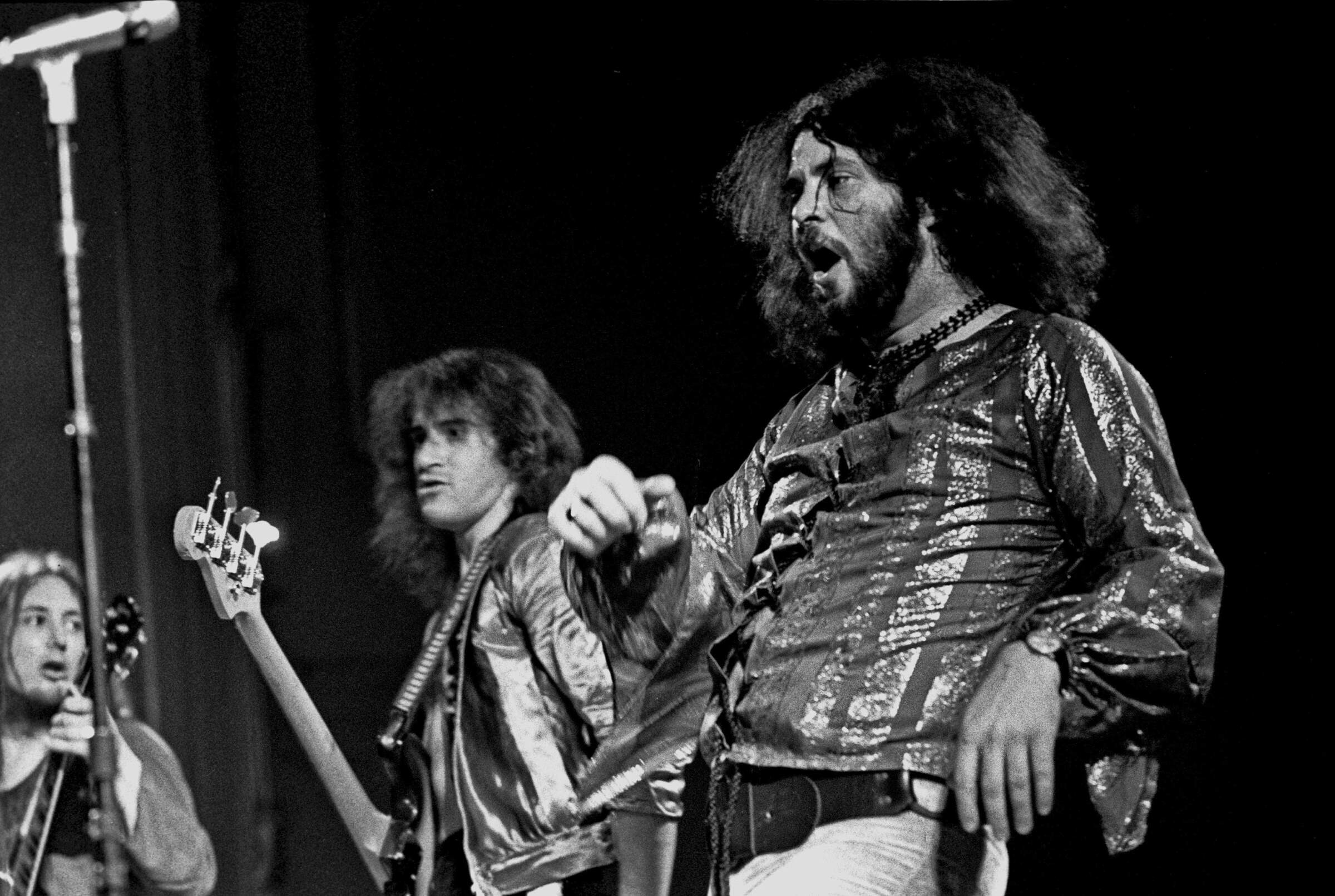
Headline credit: Gentle Giant at the Musikhalle, Hamburg, April 1974. From left: Gary Green, Ray Shulman and Derek Shulman. Photo: Heinrich Klaffs / Wikimedia Commons. Licensed under CC BY-SA 2.0.