
The Summerlands Talk Bonfante Gardens Forever
Bonfante Gardens is still there. It’s just not called Bonfante Gardens anymore. The Gilroy theme park got renamed back in 2007, and for Grant Simmons, that small, kind of dumb bit of corporate rebranding turned into a way of talking about something bigger: what it’s like to go back to a place that hasn’t disappeared, but doesn’t feel like itself anymore either.
That’s the feeling running underneath ‘Bonfante Gardens Forever,’ the debut full-length from Portland’s The Summerlands. Simmons began thinking about the record after the 2020 CZU fires, when he was back home in Santa Cruz and eventually drove as far as Utah just to get away from the smoke, and from there the songs grew outward into housing, climate change, Silicon Valley, California history and the uneasy business of being nostalgic for somewhere you probably couldn’t afford to move back to.
Titus Andronicus’ The Monitor showed Simmons how big and messy a punk record could get away with being. Mark Arax’s The Dreamt Land — his book on California’s long, ugly relationship with water — mattered enough that Simmons just emailed Arax and asked if he’d be part of it. Arax said yes, and his spoken-word passages are woven through the album.
Even so, ‘Bonfante Gardens Forever’ doesn’t really act like a concept record. It swings from big, ragged rock songs into emo and hardcore, drops into quieter folk stretches, and takes a nearly seven-minute detour into the history of the SS Palo Alto. The concrete ship built for World War I that never once saw duty and has just been sitting off Seacliff Beach ever since.
We talked to Grant Simmons about making the album, leaving Santa Cruz during the fires, why nostalgia is tricky to write about honestly, how Mark Arax ended up on the record, and why building something massive doesn’t guarantee it’ll matter.
“Having the past completely overshadow the present? That shit will ruin your whole life if you let it.”
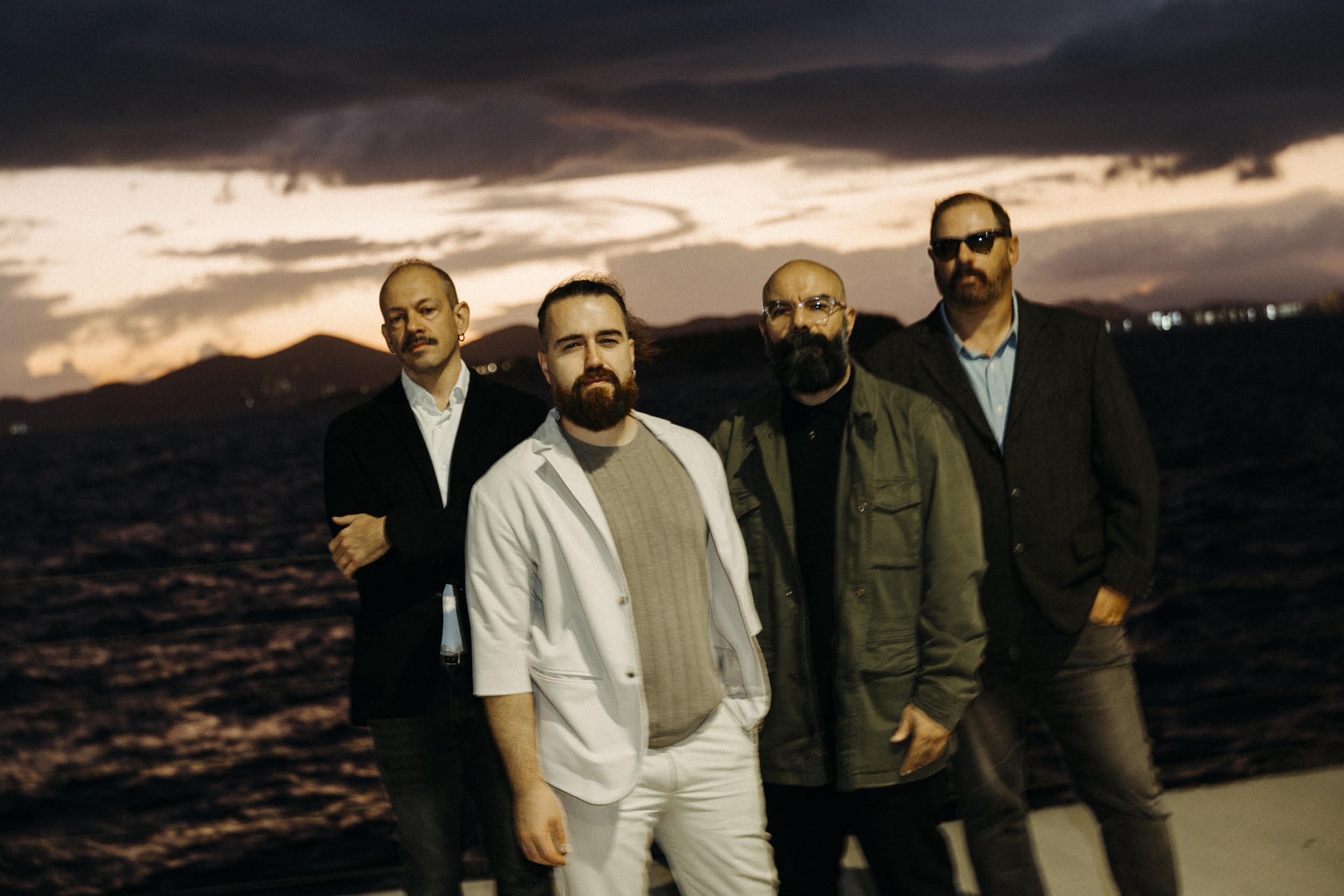
The Summerlands started as your own project and gradually became a proper four-piece. When did it begin to feel like something you couldn’t have made on your own?
The goal with The Summerlands was always to have a proper band. When the project started, it was just me making demos by myself on my computer, and I always felt like I was pushing it more and more toward becoming a proper band.
The moment it really felt like something beyond what I could do was when we made *Unnatural History II* and Jacob, our drummer, came in and laid down those tracks. Previously, I had been doing the drums myself, and not nearly as well.
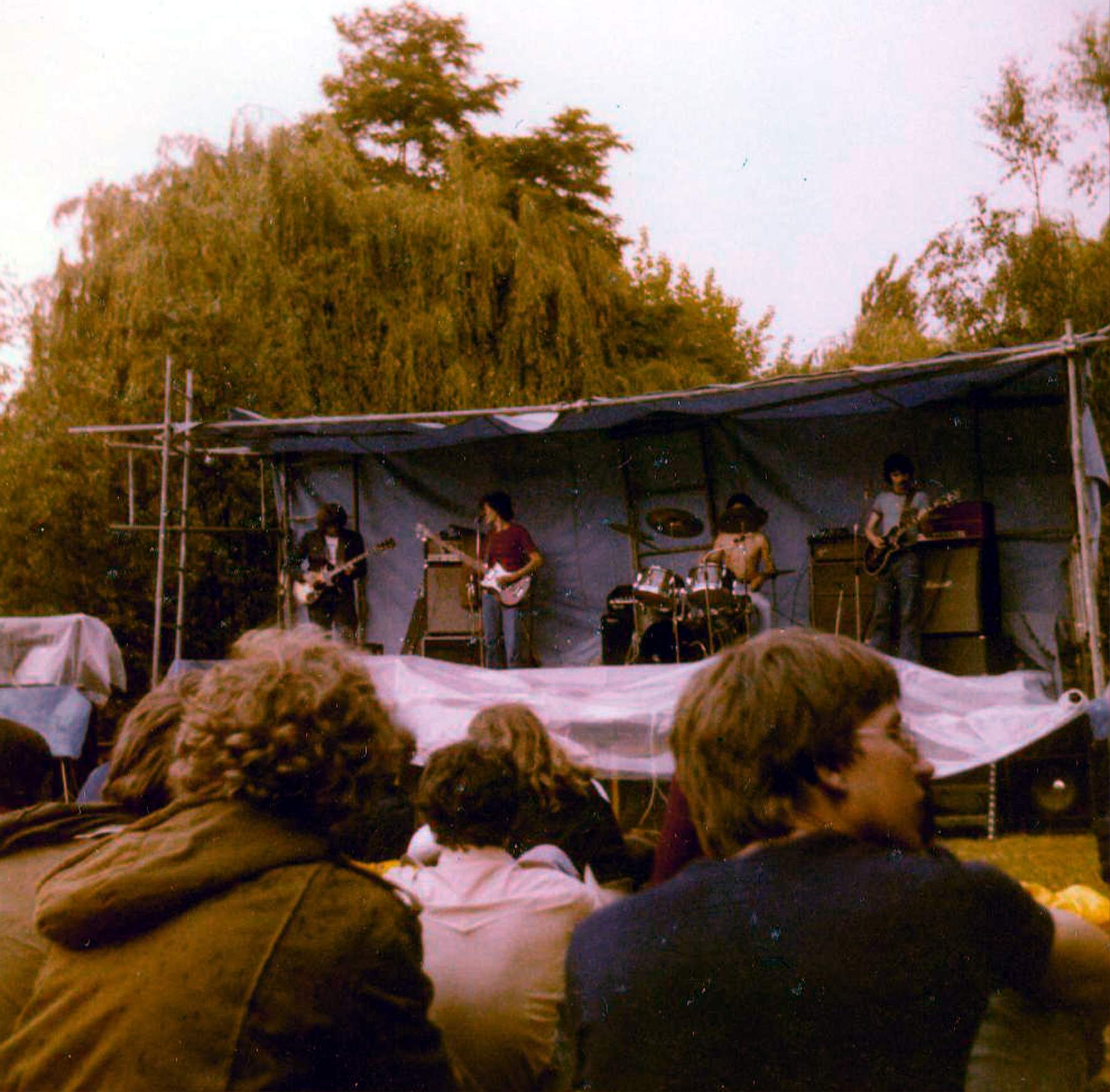
That feeling only got bigger when recording *Bonfante Gardens Forever*. From the liner notes, you can see that a lot of other Portland music friends, members of Myriads, Swiss Army Wife, OSHA Violations, etc., came in and contributed, which really rounded the sound out way beyond whatever I could do on my own.
A lot of the album goes back to the 2020 CZU fires. What do you remember most clearly about that time?
I was back home for COVID and working a job in downtown Santa Cruz. I remember waking up in the middle of the night to the dry lightning storm that caused it. The next few days felt like a sequence in a movie where everything that could go wrong was going wrong.
At first it was supposed to be contained in one area of the mountains. Then it expanded beyond that, then there weren’t enough fire resources due to the other nearby fires in NorCal, and it just kept going.
I ended up driving all the way to Utah during that time just to escape the smoke. I remember AQI being well over 100 all the way out to Elko, Nevada, from the fires at that time. That whole experience really put natural disasters in a new perspective for me, just the sheer scale that you’re up against.
When did you realise all these songs belonged together as one record?
One of the first songs written for this record was ‘East of Swanton,’ which I think in many ways acted as a north star for the rest of the songs here. I knew I wanted to create something cohesive, and I knew early on I wanted to focus on the change of the West Coast.
After writing a few songs, the process then became very intentional. For instance, ‘Sellwood Bridge Blues’ was me very much trying to write an opener track specifically. ‘SS Palo Alto’ was very much gauged to be a mid-album epic, and so on.
Why ‘Bonfante Gardens Forever’? What did that place mean to you growing up?
The “joke” of the album title is that Bonfante Gardens still exists, it just has a different and more boring name now, Gilroy Gardens.
I think there’s something very California about that, creating something cool and with character and charm, and then as the 21st century moves on, making that thing a little more corporate, more boring, and so on.
It’s not that something is dead and gone forever and I am at its grave with makeup running down my face crying, wishing desperately for it to be back. It’s a more complicated feeling when the thing actually is still around, but it’s just changed slightly for the worse than when you were young.
That, to me, is a much more accurate description of what feels like it is happening to the West Coast and the places that made us who we are.
You’ve said you wanted to make your own version of Titus Andronicus’ ‘The Monitor’. Why did that record hit you so hard?
To be honest, I don’t fully know why it landed so hard for me. I just know that when I heard *The Monitor*, it felt like, “Well, of course this album exists.” It seemed so obvious and natural that an album like that would be made.
Also, I was 18 when I first discovered that album and it was my first time living far away from home. So when it hit, it hit big. I think it’s both a super ambitious and well-made album that I also happened to discover at exactly the right place and time in my life.
Mark Arax’s ‘The Dreamt Land’ was another important influence, and you ended up getting Arax himself onto the album. How did that happen?
It was actually surprisingly simple. I sent him an email explaining the project and he simply called me a couple of days later.
We talked for a while, and I think he understood pretty quickly what I was going for and why *The Dreamt Land* worked well with it. I’m a big fan of the book, so it was a fun fanboy moment for me to chat with him and, of course, have his voice officially be a part of the album.
There’s a tension throughout the record between missing the past and distrusting nostalgia. Was that difficult to write about without slipping too far in either direction?
Not as difficult as balancing that tension in real life! My male role model Tony said it best, but I never want to be someone who sits around and talks about how good things used to be.
Reminiscing on the past is one thing, dwelling on it is another. And having the past completely overshadow the present? That shit will ruin your whole life if you let it.
That being said, when things aren’t going super well, like if you’re a young adult in America in 2026, it’s only natural that we turn to the past for inspiration and guidance, even if the past probably wasn’t as great as we remember it to be.
So yes, it was a difficult balance to write about. It also carries over sonically: how can I take all these bands and influences that I’ve grown up with, that made me the musician I am, but use those elements to make something new?
‘SS Palo Alto’ takes this strange old concrete ship and turns it into a nearly seven-minute song. What fascinated you about it?
The SS Palo Alto was a landmark of growing up in Santa Cruz, although everyone simply calls it “The Cement Ship.”
I’ve always thought the story of it was sort of hilariously pointless. This huge ship gets built, arguably a huge feat of engineering, all for the ship to end up sitting on a beach doing fuck all. It doesn’t go anywhere, it doesn’t perform any service, it doesn’t add or provide any real value to the world.
Not to be cynical, but I do find it funny how many big projects in our world just end up as total busts. I think it’s a good reminder, especially in this day and age, that going big doesn’t necessarily amount to anything.
The album moves through quite a few different sounds. How much of that was already there in the demos?
A lot of it was pretty intentional in the demo phase. Many of the songs were genre experiments. For instance, ‘The Award Show’ was me explicitly trying to make a hardcore song, simply because me and Jacob had been listening to a lot of that stuff at that time.
That being said, once we were actually rehearsing the songs as a band, that’s when the fun idiosyncrasies started to pop up.
Near the end of ‘The Henrys’ you sing, “The future is deliberate, I run towards it.” Did you always know the record needed to arrive somewhere hopeful?
Yes. I can’t write an album that says, “Uhhhh, doesn’t everything suck?” That is pointless and, worse, not even true.
One thing I think I’ve gathered just from reading history is that shit can always change, and sometimes it does unexpectedly. We live in an era where a lot of young people have very little faith or hope in their institutions and systems. That is understandable, but I also think it’s exciting to live in a time where we will probably see some major social changes in our lives and, if we’re lucky, we may even be the agents of those changes.
That’s what I don’t want people to lose sight of, that ultimately a better world is possible and is up to us.
Klemen Breznikar
Headline credit: Dayne Allen
The Summerlands Instagram / Bandcamp / YouTube