


Peter Hammill Interview: New Album ‘Tears in Time’ and the Van der Graaf Generator Years
As a founding member of Van der Graaf Generator and a prolific solo songwriter, Peter Hammill has spent more than half a century making music with an unusually personal vocabulary.
His voice is central to it: tender, sometimes startlingly fierce, able to make a private doubt sound like an argument being conducted in front of you. The records cover considerable ground, from the concentrated drama of ‘Pawn Hearts’ to the short, abrasive songs of ‘Nadir’s Big Chance’, with room along the way for piano ballads, tape experiments and an opera.
With that much music behind him, you might expect performing to have become a matter of familiarity. An hour or two before a show, though, Hammill writes his set list, then tries to forget it. This allows for the occasional moment onstage when he looks down and thinks, ‘Oh blimey, I’m playing that one now.’ He likes to leave himself a little work to do.
His new album, ‘Tears in Time’, arrives on 25 September through Esoteric Antenna. Its eleven songs draw on recordings made between 1991 and 2026, including two pieces he originally approached as experimental instrumentals. He hadn’t expected to sing over them. They stayed among the unfinished recordings he occasionally revisited, until something suggested a way forward.
Across twelve questions, Hammill discusses the early band, writing and recording, and what happens to a song over years of performing it. He is generous with the details and quite prepared to correct the premise. Asked what surprised him about watching footage of Van der Graaf in 1976, he offers a useful reminder: ‘I mean, I was there, so I kind of knew about it.’
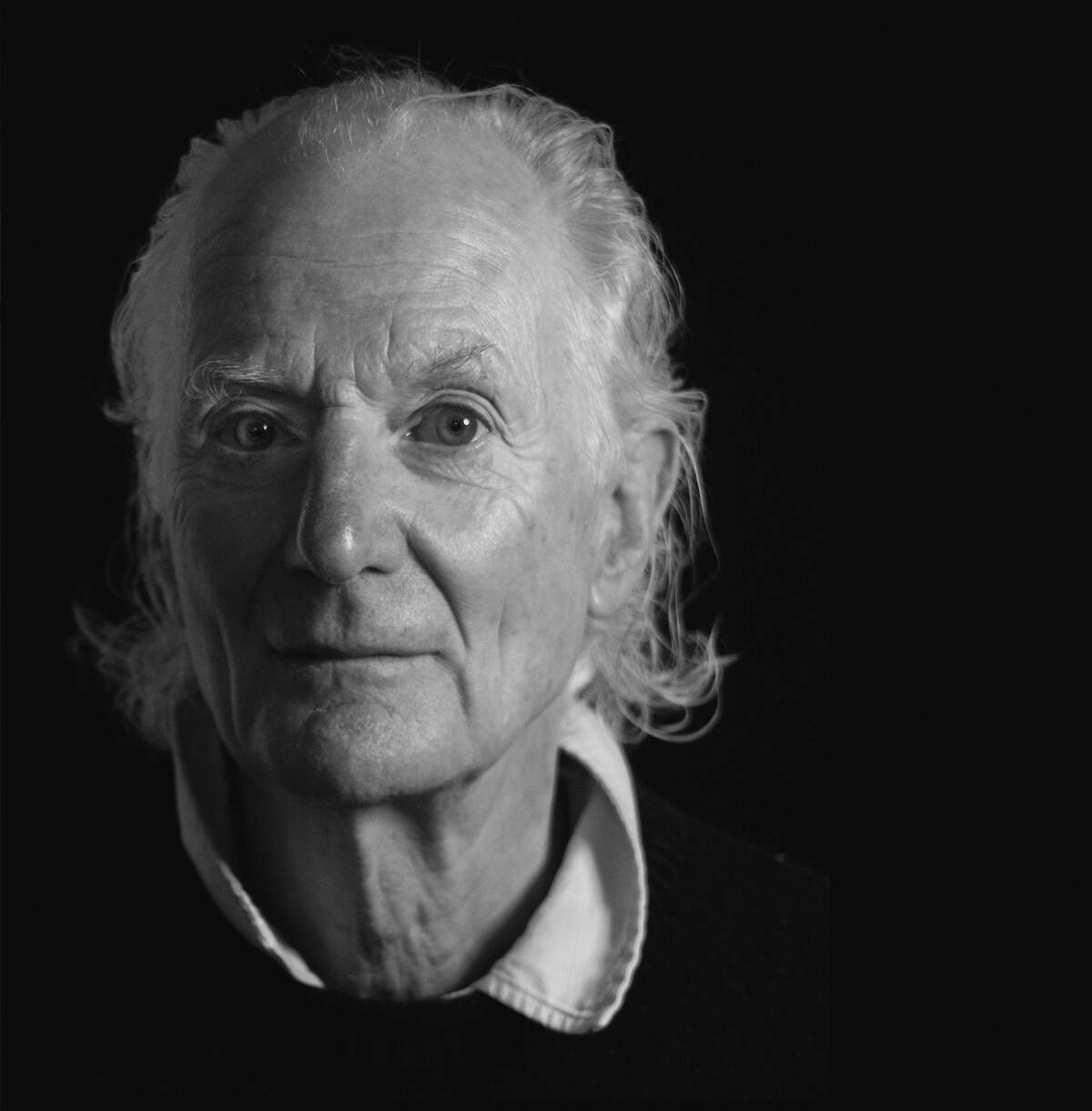
“A song needs to tell its own truth.”
‘Tears in Time’ gathers recordings made at different versions of Terra Incognita between 1991 and 2026. What made these eleven pieces belong together now, and did working on the oldest material feel at all like collaborating with an earlier version of yourself?
Peter Hammill: It’s noted in the sleeve notes that it was recorded between 1991 and the present day. That’s because two of the tracks, ‘Heavy Weather’ and ‘Tabula Rasa’, were almost complete things that I recorded when I was in Terra Incognita in Bath. Originally they existed as kind of experimental instrumental pieces. They never became songs, and I didn’t really think about them becoming songs.
Each project goes along and you end up with things that haven’t made the cut for some reason or another, but which have engaged me for a considerable amount of time in the process of working on them. So these things sit there, and every so often a couple come up and kind of make themselves known. In this case, songs came out of it.
‘Heavy Weather’, in fact, originally became a song slightly simpler than the one that’s on the record now, because I was asked to contribute a piece to a CD or CD-R in support of Ukraine very early in the Ukraine conflict. So that informs the lyrics.
I was working on a number of different pieces, some of which have now gone into the pending file and doubtless I’ll come back to in a bit. Working for a long period of time just generally on stuff, without consciously thinking, ‘What is the album going to be?’ Eventually, at a certain point, these eleven songs, even though they’re kind of wildly disparate in style and content, seemed to me to have some kind of connection with each other and seemed to me to be a collection.
Once that had happened, I carried on overdubbing and orchestrating, arranging in the knowledge that they were going to be a group. So a degree of instrumental cohesion took place once I realised that they were a cohesive group.
As for collaborating with an earlier version of myself, that’s kind of the deal of recording in any case these days. Obviously it takes me much longer to make a record than it used to in the past. I used to like to do things in maybe a maximum of a couple of months. These days it’s a matter of years. And obviously the person who ends up doing the recording is not the same person as started it, if it’s years.
But yeah, there’s a degree of time travel and there’s a degree of meeting up with yourself and there’s a degree of learning that goes on all the time.
In a 1973 interview, you said almost in passing that, if funds allowed, you would like to record with a symphony orchestra. More than fifty years later, you sang ‘Refugees’ with the BBC Concert Orchestra at the Royal Albert Hall. Did that old wish cross your mind, and what did Adam Dennis’s arrangement uncover in the song?
Adam Dennis’s arrangement was really great. Absolutely true to the original version of the song. And that’s kind of why I couldn’t refuse to do this, even though it was a big thing and a bit of a daunting project.
Because I was the only original singer who was going to be in the performance, and because it was effectively more or less the original arrangement… Well, it isn’t the original arrangement, but it’s true to it. And because I can still sing, I felt I had to do it.
I don’t really have that inkling to record myself with a symphony orchestra anymore. This is actually the third time that I’ve sung with an orchestra. The first time was in Munich. The second time I sang with the Orchestre National de Lille. Both of these a long, long way back in the past.
It’s a great experience, but not something I want to carry on doing forever. Although there is talk that maybe there’ll be more prog performances. And I had a great time in that show, I have to say.
In the way of things, what was great about it was the sense of collaboration and sense of community between everybody involved: orchestra, conductor, arrangers, organisers and particularly the other singers, and indeed Carl Palmer, the instrumentalist in the thing. So yeah, it was altogether a really good experience.
When you and Judge Smith first imagined Van der Graaf Generator at Manchester, it was as much a theatrical idea as a conventional group. Once Hugh Banton, Guy Evans and David Jackson were in place, what survived from that original conception?
The theatrical ideas kind of began and ended with Judge. There were some pretty wacky ideas there. Indeed, we did some pretty wacky photo shoots in the early days, with Banton dressed up as Beethoven and me dressed up as… I don’t know what. Judge in some kind of Witchfinder General uniform.
Judge was studying drama at Manchester, so that was a natural thing. And also we were both very keen on some kind of theatrical stuff à la Arthur Brown, who was a big influence on us in the early days.
Almost as soon as Judge left, at which point the band was Keith Ellis, Guy and HB, there was no question of any kind of theatrical thing going on in the future. Particularly Keith Ellis, who was by that time already a seasoned pro, and as a seasoned pro taught me, and us, a hell of a lot about how we were meant to go about things.
I don’t think he would have stood for flaming drumsticks and latex wolf masks and blood capsules and so on. He was more dedicated to doing the music properly. And that’s kind of the route that we began to go down almost immediately.
On the 1971 Six Bob tour, Van der Graaf, Lindisfarne and Genesis shared the bill for six shillings, although the three groups sounded nothing alike. Listening to one another night after night, did you feel you were opening new ground together, or already travelling separate roads?
Well, it was kind of travelling separate roads, but in parallel, I would say. Obviously Lindisfarne were a great folkish band, real feel-good, lovely songs, lovely chaps. And Genesis, everybody knows where Genesis are. And we were… Well, we were always Van der Graaf, even at those early stages.
Lindisfarne was obviously coming from a different place to Genesis and us. But there was a sense of commonality and a sense of common purpose.
The main difference between us and Genesis, even at that early stage, was they rehearsed and they played their set, and you could time it to the second every night they played it. So for them, a good night or a bad night was how well they played the preordained stuff, the preordained solos.
Whereas we were always a little bit more… Well, a little bit more chaotic. And that meant in turn that out of every five shows we’d have one really, really good one, a couple of okay and probably a couple of pretty abysmal. But when the really great one came along, it was really great. And when the abysmal one came along, it was abysmal. So we were on a much more up-and-down roller coaster than Genesis.
But yeah, there was a sense of, ‘We’re young, we’re on tour, we’re playing these great places, we’re in a bus together. This is what we wanted to do. This is being a musician.’ So from that point of view, we were all in it together.
Songs such as ‘(In the) Black Room’ and ‘A Louse Is Not a Home’ began as Van der Graaf material but found their way onto solo records. Then ‘Nadir’s Big Chance’ was recorded with the reunited quartet but remained a solo album. Did a song usually tell you where it belonged, or was that decided by the people and circumstances around it?
In the case of ‘Black Room’ and ‘Louse’, we had been playing those in the touring that followed on from ‘Pawn Hearts’ and led up to the point at which we split back then. They would have been on the next Van der Graaf album, along with another couple of pieces.
At that time there was no conception that Van der Graaf was ever going to reform or exist. And yet these songs existed which had a certain value and a certain validity. It seemed to me that it would be a shame for them never to appear just because the band had died. In other words, songs shouldn’t die just because the band had died at that point.
There were no objections from any of the others, and so they were indeed recorded for ‘Chameleon’ and ‘Silent Corner’, slightly differently arranged. Obviously we had been playing them live, so that was strictly as a four-piece. In this form they are much more heavily overdubbed. They don’t sound exactly as they would have done if Van der Graaf had recorded them. So they became solo in that kind of way.
‘Nadir’ is not the same, but it sort of has a family resemblance to ‘Fool’s Mate’, the very first solo album that was made while Van der Graaf was still going, in that they are snappy, short songs. Kind of as close, I suppose, as I’ve come to doing pop music.
The point about ‘Nadir’ was we had decided that we were going to reform, but we hadn’t started rehearsing yet. I had started writing, I believe, for the upcoming stuff, but we hadn’t actually done any rehearsal. That was still to come. So this was the first time that we actually played together as a group prior to the ‘Godbluff’-era reformation, which had a significant effect.
It was always a solo record, in terms of answering the question. It was a solo record even though we were all playing on it. It was definitely not Van der Graaf. But it had a significant effect, I think, because in the previous incarnation we’d gone overdub-happy, into studio experimentation.
Because ‘Nadir’ has this absolute directness, and all playing together, that definitely informed the way that we then went about things when we actually reformed, going into ‘Godbluff’ and ‘Still Life’. There were a couple of overdubs, obviously, but the main thing is the backing tracks are almost complete in live performance.
So yeah, those were always meant to be solo records, but one thing always feeds into another. And the whole story, the whole development, whether it’s between solo and band or whether it’s just solo development, whatever you do in the past does feed in some way into the future.
In general, though, coming up to the most modern versions of Van der Graaf, it has been clear that certain things represent Van der Graaf and are Van der Graaf tunes, and other things are solo. But it’s an entirely subjective debate, basically.
You brought the forgotten Super 8 film of Van der Graaf’s 1976 Beacon Theatre concert out of your desk, and Jim Christopulos turned it into a documentary. Watching that younger band from the outside, what surprised you about the way the four of you listened and reacted to one another?
I wasn’t surprised, really. I mean, I was there, so I kind of knew about it. Yeah, we were very responsive to each other. We were very out there, particularly in that era. We were definitely out there. But it was kind of as I remembered it.
I’m never entirely comfortable watching myself performing. I like watching HB [Hugh Banton] and Brain [Guy Evans] and David [Jackson]. For myself… Yeah, I’m okay.
But yeah, I wasn’t particularly surprised. It was more or less as I remembered it, but long, long ago and far away.
You once described yourself as a ‘singing actor’ and said that the ‘I’ in a song should not automatically be read as Peter Hammill. Has that distance between writer and character changed with age, or does a song still need it in order to tell the truth?
A song needs to tell its own truth. Sometimes, obviously, my life experience is what informs the writing of music, but very, very rarely am I actually writing ‘I’ as in me, Peter Hammill.
A song is setting up a story, a screenplay, a circumstance in which certain things can be debated, explored. And so when I sing, I am inhabiting a character. That is something that’s been there throughout and continues to be the case now.
To say it’s a distance between writer and character… As a writer, I’m also inhabiting the character, so I’m also committing myself as a writer. And, as I said, trying to tell the truth about any given situation. That does continue to be the case.
It’s the same as any screenwriter, novelist, playwright. You take your own experience, or you take your own projections of what you imagine things to be, or what you imagine a problem or subject is, and put your thoughts and your explorations into it. But that doesn’t necessarily mean that you’re spouting an endless sequence of autobiographical stuff onto the page.
In the early days, you imagined music might lead towards becoming a novelist. Instead, songs became large enough to hold stories, characters, arguments and whole worlds. What did you discover a song could do that prose could not?
First of all, a song is a linear process, so it happens in time. You hope that each time you sing it, each time you listen to it, you go on a linear journey and it ends up being slightly different at the end than it was at the start.
That’s something that isn’t there, obviously, in terms of the written word. Even though you are reading a novel sequentially, you’re not kind of embedded in the time in which it’s happening.
I think I realised that I don’t have the patience to be a novelist. I don’t have the work ethic. It’s not that… I mean, obviously I have a certain work ethic that I go for in terms of writing songs, but I don’t think I have the patience or the skill, to be honest. At a certain point I realised that I was always going to be much, much better as a songwriter than I would have been as a novelist, or even a short-story writer.
I learned to love the obliqueness. Novels, again, don’t absolutely state the alpha and omega of what they’re about. They allude to things, they go off on diversions, so on and so forth, the same as songs do. But I realised that I could do better work if I did it in music and in song than ever in writing novels.
I should say as well, of course, that a large part of this is the stories that are told by the music itself, not just stories that are told by lyrics. Music is a language as well. Over time I stumbled into, and I learnt, a way to use that and to do, I hope, decent stuff in terms of that.
Rooms, doors, walls and stages recur through songs such as ‘House With No Door’, ‘(In the) Black Room’, ‘A Louse Is Not a Home’ and ‘My Room’. Do you naturally imagine inner life as a physical space, or was that a pattern you only recognised later?
Oh, that’s interesting. Yeah, I could present as well ‘Room 1210’ from the recent Van der Graaf record.
I’ve always had a fascination with that person alone in a room. I’ve spent the best part of my life in that circumstance, admittedly with a studio and all of the action of music going on in there. But basically my working life is spent alone in rooms and kind of fishing things out from there. That’s where writing happens.
And also it’s true to say that in my imagination I am inside a room, and the outside world doesn’t get in there when I’m actually doing the work. So yeah, it’s a very good point.
I suppose it’s a physical space. It’s almost a meditational space, waiting for the song to arrive, waiting for the tune to arrive and so on and so forth. So yeah, it is solitary, and usually it is in a room. Rather than striding the highways and byways, the ups and downs and the lakes and the mountains and so on. For me, usually it’s in a room.
“I could carry on making music even if it wasn’t being released.”
Buying the TEAC four-track was partly an act of survival, but you soon realised that the whole recording chain could become an instrument. Now that you have passed the curation of Fie! to Cherry Red, has letting go of the business side returned any of the freedom you were seeking when you first established Sofa Sound?
It was an absolutely conscious decision that I would have the means of production should the music business at any moment decide that it didn’t want to have anything more to do with me. I could carry on making music even if it wasn’t being released. So yeah, that was first of all kind of a business decision.
Then, as you say, I realised that doing that would mean, in turn, going back to the person in the room. I would create a different sort of music by solo recording, both in terms of learning how to play different instruments myself, learning more about arrangement myself, and also in terms of not performing, if you see what I mean.
Obviously in a studio, when you go down to do the lead vocal, everyone knows what kind of mood you’ve been in in the control room before. And therefore the appreciation for the vocal that you put down is affected by that personal performance aspect. Whereas if it’s just me in a room, I’m only trying to put down the stuff that goes on tape, or these days on digital.
So that was kind of the stuff that I was thinking of. In terms of the business side, I’m very, very glad not to be being a record label anymore. I had great fun doing it, but doing that is running a business, and it does take up a great deal of time.
But running Fie! Records and recording the albums were always two entirely distinct things. I put on one hat and took off the other, and vice versa. I never really had a conscious business plan about the albums that I was making, as in the record company talking to me. And I never had any grief as a recording artist, once I’d finished an album, from me, the record company.
I kept the things very much apart, so I wasn’t compromised at all in making the music by being a business. As evidenced, I suppose, by the variety of stuff that Fie! put out in its existence. Obviously there are kind of conventional records. There’s the whole ‘Sonix’ series. There are things like ‘Usher’, various collaborations and so on and so forth.
There was never any grand plan. Fie! was effectively a conduit through which I could put out my stuff and not be controlled by anybody else. And obviously there was a degree of stand or fall. I had to stand or fall in a business sense by what I did.
So yeah, I wasn’t compromised in any way, and therefore that hasn’t changed in any way now that Cherry Red and Esoteric are curating the catalogue.
You have said that songs remain alive only while they can still change onstage. When you return now to something written in your twenties, does the older voice merely interpret it differently, or can the meaning of the song itself change?
I don’t really think about the meaning of a song when I’m performing it live. Again, it goes back to this inhabiting question. I know what the song is kind of meant to be. Obviously I like to find something new in it.
I don’t over-rehearse, and I don’t play the same thing. As in talking about Genesis on the Six Bob tour, I definitely don’t play the same thing. I’ll try to do something different in a certain way, try to have a run through in time in the song as it goes on, and try to inhabit whatever character is involved there in the course of it.
Obviously I’ve got a large catalogue of songs, and I very rarely play a song two nights in a row. Never play the same set in a row. Usually on a tour, say a tour of five or six dates, I’ll have, I don’t know, forty, fifty songs that I’ll be choosing from, of which I’ll play fifteen or so on a given night.
There’s always a mix, as you say, of old and new. And the new ones, I’m actually right now starting to rehearse the new material from the new album, which of course I’ve never played until now. So I’m actually having to learn that.
When I do a set list, I write it out about, I don’t know, an hour, a couple of hours before the show and then forget about it. So that when I’m actually onstage I can look down and go, ‘Oh blimey, I’m playing that one now. That’s a bit of a surprise. That’s quite difficult,’ or what have you.
I can honestly say that when the next song comes up on the list, I don’t think, “Oh, this one’s from ‘Fool’s Mate’, that one’s from ‘Silent Corner’, that one’s from just last year,” and so on. I don’t think about where they come from. They have their life when they’re performed.
The point about them being alive is that, fortunately or unfortunately, as and when I actually stop performing those songs, their life of going out into the air in real time, live, will cease. I can’t see a future generation of tribute acts coming out and doing them.
So yeah, the meanings do kind of change along the way. Obviously I have very different attitudes to the eighteen-year-old me, but the life continues.
Beyond ‘Tears in Time’, you have mentioned another album taking shape from ‘slabs of noise’. After all the different ways in which you have made records, what can still surprise you when you enter the studio?
Oh, I’m always surprised. These days I have an enormous amount of software instruments. It’s all obviously kind of a computer-based system. I’ve had loads of guitars, and I do have a few keyboards, but I have a lot of software synths. And not even software synths: I have a lot of stuff that’s actually kind of designed for soundtrack work, soundstage work.
I’m still surprised about how a song can arrive. If it’s keyboard-based or guitar-based, usually that comes from improvisation of some kind or another. Obviously, after all these years, coming up with a new tune is itself something of a surprise. But that’s kind of ordered, and I kind of know what I’m doing, although I try not to impose any preconceptions or rigid, ‘I’m going to write in C minor,’ or what have you.
A whole other load of stuff does come about, as you say, from noise. In fact, some of the stuff on this album, ‘Tabula Rasa’, for instance, was purely experimental. A number of elements of the record have just that sonic bash. So there I’ll discern something out of what actually is just musique concrète.
That is something that’s actually been there for years and years and years, going back to ‘A Motor-Bike in Africa’, ‘Accidents’, that kind of thing. So I always look to be surprised.
What I do not do is go in saying, ‘I’m going to write a song about X. It’s going to be like this. It’s going to have this structure.’ I’m drawn along by the structure. And again, this has always been the case.
Even though I’m obviously now working with computers, the essence of the work is still quite similar to analogue tape. With analogue tape I used to record a load of stuff, edit, crossfade and assemble songs, sometimes just because this bit goes with that bit, rather than it’s section A, it’s section B, it’s section C.
That kind of thing does still exist, and it is possible to work like that with sequencing. I use Cubase as an audio platform. But yeah, I still try not to do the same thing one song after another. I still try to find something different, and I hope I manage to do it.
Klemen Breznikar
Headline credit: Courtesy of Peter Hammill.
Peter Hammill Website / Facebook

 Steven Hargraves
Thanks for this, Klemen; a brilliant interview. I’ve been a fan of PH long enough to read and hear the same questions doing the rounds time and time again, so this was really insightful. Great questions prompting some (unsurprisingly) illuminating responses from the man himself.