
EABS Interview: From Wrocław Beat Sessions to Komeda, Sun Ra and Stańko
As EABS prepare to open the Polish Jazz Festival in London, Marek ‘Latarnik’ Pędziwiatr talks about the beginnings of the group in Wrocław, making beats from records, Komeda, Sun Ra, Jaubi, Tomasz Stańko and the ideas that have kept EABS moving forward.
EABS have spent much of their history going back to records and finding something in them that can still be taken somewhere new. That has taken them through the music of Krzysztof Komeda, Sun Ra and Tomasz Stańko, but the habit of listening this way began much earlier.
Before EABS was a band, the name belonged to the Electro-Acoustic Beat Sessions at Puzzle in Wrocław. Musicians came and went, hip-hop and jazz met without much concern for where one ended and the other began, and a small piece of music could be treated much as a producer might treat a sample, taken apart, repeated, stretched and played with until something else appeared.
That way of thinking never really left them.
On 11 September, EABS open the Polish Jazz Festival at Cadogan Hall with the first live performance of ‘Wstęp Wzbroniony’, the music Tomasz Stańko recorded with Andrzej Trzaskowski and the Studio S-1 orchestra. It’s another return to Polish jazz history, although, as Marek ‘Latarnik’ Pędziwiatr explains here, these projects have never simply been about looking backwards.
We spoke about his early years making beats from vinyl, the nights at Puzzle that slowly turned into EABS, what they found in Komeda’s music, the thinking behind ‘Slavic Spirits’, freedom and discipline in Sun Ra, recording with Jan Ptaszyn Wróblewski, the friendship that grew out of working with Jaubi, and why a record made in 1973 can still sound futuristic today.

“There is no freedom without discipline.”
Maybe we can start right at the beginning. Where did you all come from musically before EABS? What were you listening to and playing before your paths crossed in Wrocław?
Marek ‘Latarnik’ Pędziwiatr: Each EABS member has a different story. If we were to describe our blend of characters in keywords, they would be: hip-hop, jazz, soul, electronic music, gospel, folk and metal. I was raised on the first three genres. I was introduced to hip-hop culture very early on by my older brother and cousin. As a young b-boy, I was more keen on the magical world of breakbeats than on breaking itself. At the same time, I was attending classical piano lessons at music school. Unfortunately, I never finished my classical education because of a serious illness. When I recovered at the age of 12, I went back to music on my own terms. I wanted to create. Thanks to my brother Chris, we found a way to create beats using a PC and vinyl samples as our only creative source material. We never used stock samples, keeping our beats unique, obscure and original. The less high frequencies, the better. Meanwhile, I realized that I could not only sample from vinyl, but also… listen to it. This episode brought me into a new era. I started to devour jazz classics, Polish jazz, soul, funk, Polish folk and world music. At the same time, I found my way back to playing the piano, so I could incorporate it into my music. With a little bit of self-education and the help of my first jazz piano teacher, Tomasz Zyrmont, I became confident enough to start my own jazz bands, playing my original compositions, and to play with the punk improvisers from Ludojad. All these stories happened on a small Polish island – Świnoujście. At some point, I felt that the island’s possibilities were running out, so I moved to Wrocław in search of new vibes. The new chapter began when I went with Adam Kabaciński to Lulu Belle club, where we met DJ Spisek Jednego. We started Night Marks Electric Trio as a musicians’ and producers’ collective. Occasionally, Spisek was a resident DJ at the famous Wrocław club Puzzle. During one of the Night Marks rehearsals, he mentioned that he wanted to start jam sessions at the club. So we needed a house band. I was playing keys, Adam was on bass, and Spisek was on the turntables. We needed a solid drummer. The only right person I knew at the time was Marcin Rak. So the three of us met with Marcin and started jamming in the spirit of jazz- and hip-hop-oriented, beat-driven sessions.
EABS grew out of the Electro-Acoustic Beat Sessions at Puzzle. What was the club like at the time, and why did it become such an important place for musicians in Wrocław?
Puzzle Club was located in the heart of Wrocław. Believe it or not, whenever I happened to drop by, there was always something going on. The place was always oriented towards fresh sounds. The early 2010s were the era of beatmakers and live acts. So organizing beat-oriented live music jam sessions was something completely new in Poland at the time.
Those early sessions were very open, with different musicians, rappers and guests coming through. What were you actually trying to do at that point? Was there already an idea behind EABS, or were you simply playing and seeing what happened?
That was EABS at the time. EABS stands for Electro-Acoustic Beat Sessions, so it was not a band but an event. The name was inspired by Madlib’s one-man orchestra, The Last Electro-Acoustic Space Jazz & Percussion Ensemble. We had our core members, whom I’ve mentioned before. I wrote a songbook that included tiny loops derived from original samples used by famous hip-hop producers. I don’t have to mention that these written-down loops were snippets of real songs that came out of a rich musical heritage of jazz, funk, soul and world music. These loops and tiny motifs were extremely playable and ready to be explored and developed. Many musicians came by. Some of them didn’t know how to relate to this material, so they just walked off stage and never came back.
At some point the same musicians began coming back and EABS became a band rather than a series of sessions. Do you remember when you first noticed that change?
It started to change when we began inviting special guests. This required more commitment and work from us, so we needed to have a solid band on stage during the shows. The crew consisted of the house band, Janek Michalec on trumpet (later replaced by Jakub Kurek), Olaf Węgier on saxophone (he joined a little later), and Vojto Monteur on guitar, with whom we had a great time playing during the jams. We played with Jeru the Damaja, Raashan Ahmad, Jesse Boykins III and many, many more. In 2015, we got an offer to play Miles Davis’ music at the Memorial to Miles Festival in Kielce. It was our first attempt at creating our own instrumental arrangements. It went so well that we started thinking about recording and releasing them. Then, all of a sudden, Robert Glasper released his ‘Everything’s Beautiful’ project. So, fortunately, there was no longer much point in releasing ours. After that, we got booked to play film music at a festival in Wrocław. We chose to flip Komeda’s music. We released ‘Puzzle Mixtape’ on cassette to close that chapter, and then we recorded ‘Repetitions’. It was a new beginning.
Hip-hop was very important in those early years, not only the beats but the whole idea of sampling and taking older music apart. Has that way of listening stayed with you as EABS has gone in other directions?
It stays, and it’s here to stay. It’s not only about hip-hop, but about searching for sounds that are infectious. It’s like a producer finding the perfect loop on a record. These tiny loops come from the context of the song. So we have full songs, but we’re focused on the loopiness within the full context. We don’t need to literally loop anything. We’re generating live the sounds that a producer would loop and play all day.
How does a piece usually begin in EABS now? Does somebody bring in something fairly complete, or does much of it take shape once everybody starts playing?
It depends. But usually, a composer delivers a more or less finished demo. The compositions are not always complete in terms of arrangement, so we have the freedom to work on them collectively and suggest where the music should go.
With ‘Repetitions (Letters to Krzysztof Komeda)’, you didn’t simply choose the best-known Komeda pieces. You went much further into his film, documentary, ballet and poetry music. What did you find there that you might have missed if you had stayed with the obvious records?
From a digger’s perspective I found out that this music is timeless. Not only because of what’s played, but what’s not played. I believe that Komeda’s tunes had so much soul, space and patience that he left this space to fill for future generations. It wasn’t his intention, of course, but it’s so easy to feel and to build on. It has so much soul that it doesn’t need to be complicated. It’s infectious.
“Slavic melancholy is not just a sound. It’s a feeling.”
After spending so much time with Komeda, you moved into your own material with ‘Slavic Spirits’. Did working so closely with his music change the way you thought about your own Polish or Slavic musical identity?
Yes, Komeda changed our mindset. It would be pointless to present Miles’ music to the world just for the sake of it. Komeda is much deeper in our context. Our manager and A&R, Sebastian Jóźwiak, did thorough research into Slavic melancholy, which he included in his book that came with the vinyl and CD versions. To create ‘Slavic Spirits’, we went deep into our identity, not only in musical terms. Slavic people carry the trauma of ancient lost beliefs that were erased from our collective memory after the Christianization of our lands. We have experienced many traumas throughout history, including 123 years of absence from the world map and the stripping away of the peasants’ national identity. These traumas have influenced people’s mindsets and, in some ways, their art. They are passed down emotionally from generation to generation. Slavic melancholy is not just a sound. It’s a feeling.
‘Slavic Spirits’ went well beyond music into history, identity, lost culture and what you called Slavic melancholy. Do those ideas still feel the same to you now?
Yes, they will stay forever. It may seem miserable but there’s always a hope. We always play with that hope.
Then came ‘Discipline of Sun Ra’. Sun Ra is often associated with complete freedom, although discipline was also a huge part of his work. Did spending time with his music change anything about the way you approached improvisation?
There is no freedom without discipline. We are still evolving as improvisers. To improvise, you have to come prepared, with your heart and ears open. You also need a solid background to be able to flow on a certain level. Sometimes, ironically, that solid background can work against you because you start overthinking. You can come prepared with all your knowledge hidden in your pocket. You don’t have to use it all the time. You don’t need to prove it… You still got it! Just let yourself go.
The writing on ‘2061’ became more collective. What changed when more people in the band began bringing compositions of their own?
On the one hand, this made everyone feel more confident and boosted team morale. On the other hand, the more composers in the band, the more different workflows we encounter. All in all, this introduced different kinds of sensitivities to the music, not just mine. More colors. I think our unique sound is the glue.
Jan Ptaszyn Wróblewski appears at the end of ‘2061’. How did that happen, and what do you remember most clearly about recording with him?
It was such a pleasure. I remember when Ptaszyn heard us for the first time and played our Komeda rework, ‘Free Witch No Bra Queen’, with Michał Urbaniak on his legendary radio show, ‘3 Kwadranse Jazzu’. I remember he just said, “This is unbelievable.” It sounded so enigmatic.
When we were working on ‘2061’, it was an impulse from our sax player, Olaf Węgier. He said, “Why not ask Ptaszyn to be on our record?” So I started to chase that dream. I had his number. I called him and introduced myself. I told him that we had a new album that was already recorded, but there was a special space in the final track, which was my composition, and that we would be honored if he could play on it. He didn’t say no. He just wanted to listen to it first, so he gave me his home address. I burned the track onto an audio CD and wrote him a letter explaining the structure of the tune and the story behind the album. The tune was called ‘A Farewell to Mother Earth’. He couldn’t read the letter himself, so his wife read it to him. When he listened to the CD, he called me back. He said yes! I was so happy. When we were playing in Warsaw, we went to his house with some compact recording equipment and recorded a couple of takes in his office. Then we went outside and took a picture. We said goodbye, and that was the last time I talked to him. We are so grateful for these moments.
‘In Search of a Better Tomorrow’ brought EABS together with Jaubi. You came from very different places, musically and culturally. What did you discover in playing together that you probably wouldn’t have found within your own scene?
I’ve learned that we are just as exotic to each other as they are to us. However, we all can unite in the name of music, spirituality, beauty and brotherhood. I’ve also found a deep friendship and love with Jaubi. I recorded three albums with them. So many beautiful memories…
Members of EABS are also involved in Błoto, Zima Stulecia and plenty of other projects. When everyone comes back to EABS after doing something else, how much of that experience comes back with them?
It works well. We’re trying to keep the balance.
With ‘Reflections of Purple Sun’, you stayed with one Tomasz Stańko album rather than choosing pieces from across his career. Why did ‘Purple Sun’ keep pulling you back?
Once again, we approached it from a digger’s perspective. This is probably the rarest and hardest-to-find of Stańko’s records. What’s more, this music has stayed with us ever since ‘Slavic Spirits’. We were even thinking about adding ‘My Night, My Day’ to the ‘Slavic Spirits’ repertoire, but in the end, we wanted to keep it 100% EABS. Anyway, the original ‘Purple Sun’ is timeless, a true expression of improvisation, with an incredible sound and atmosphere.
Some of your versions bring Stańko’s music surprisingly close to electronic and club music. When you hear an older recording, what makes you notice that another rhythm or possibility is already sitting inside it?
Again, ‘My Night, My Day’… I’ve always been blown away by how futuristic this tune sounds on the original recording. From the ambient intro to the crossfade between the intro and the beat, with that hypnotic melody on top. It sounds almost like a modern, deep, mystical DJ transition… but it’s from 1973. So our club-oriented approach came naturally from this experience with the original material.
Something interesting seems to happen when EABS spend a long time with another composer’s music. Komeda was followed by ‘Slavic Spirits’, while Sun Ra was followed by ‘2061’. Do you notice those connections while you’re working, or only later?
It just happens. We find these connections by chance. We also realized that all our albums have something to do with light: ‘Step into the Light’, ‘Przywitanie Słońca (Sun Worship)’, ‘Discipline of SUN Ra’, ‘Lucifer (the New Sun)’, ‘Sun’ (on ‘EABS Meets Jaubi’), ‘Reflections of Purple SUN’… Strange, isn’t it? What’s next? Radiation?!
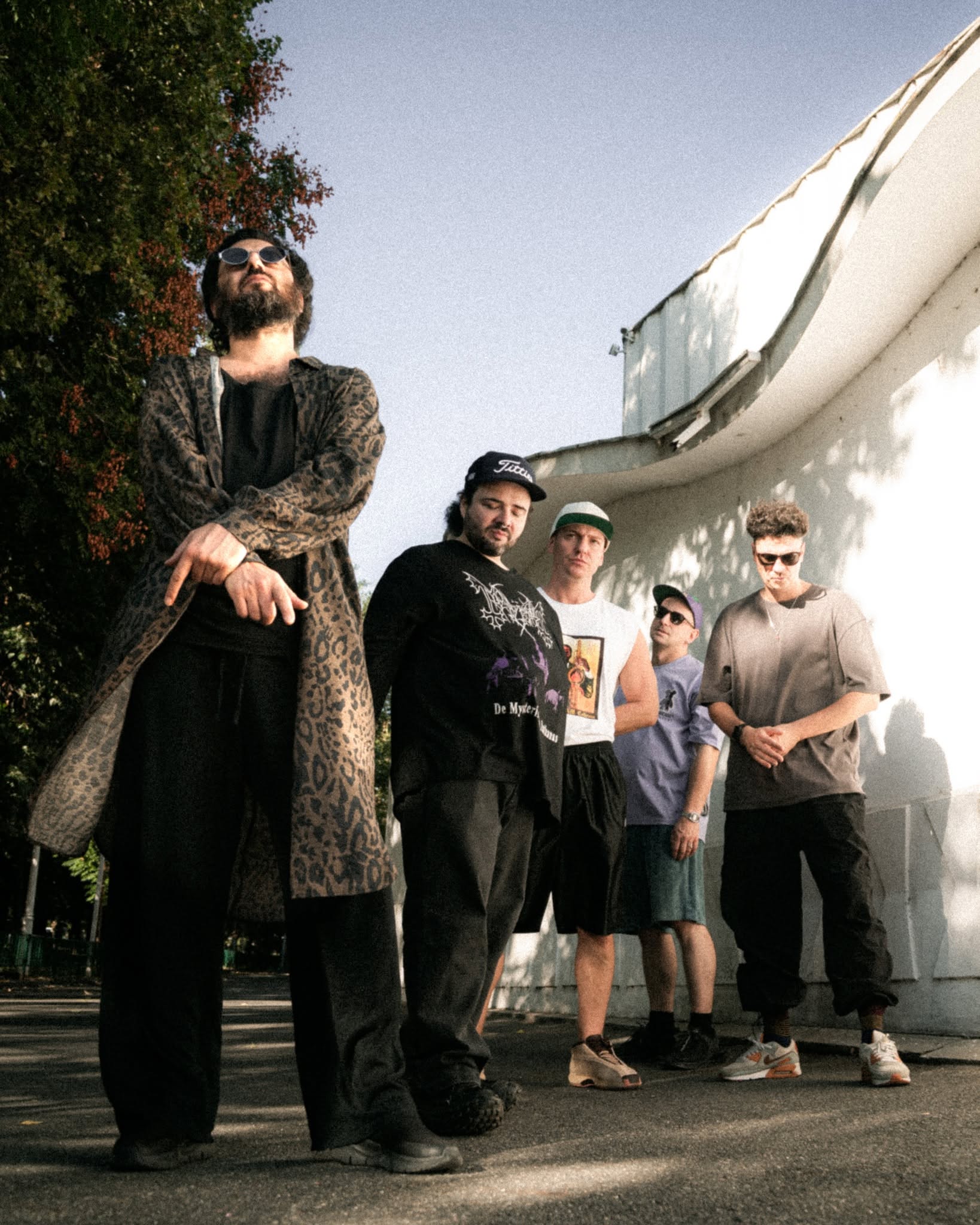
You’re now returning to Stańko with ‘Wstęp Wzbroniony’, the music he recorded with Andrzej Trzaskowski and the Studio S-1 orchestra. It’s very different from ‘Purple Sun’. What interested you in it, and how do you bring music written on that scale into the world of EABS?
We were invited to the Polish Jazz Festival to rework this music.
The large-scale orchestral source material is not a burden. Each piece has its own main melody and mood. We will build the arrangements around these elements.
In fact, Trzaskowski was a great pianist, but on this particular album he’s conducting the band, while Stańko is playing the trumpet. More importantly, this is a tribute to lesser-known Polish composers such as Wojciech Zieliński, Waldemar Parzyński, Marian Siejka and Władysław Sendecki. There is also one composition by Keith Jarrett, which we will leave untouched. He is not part of our research for this project.
Klemen Breznikar
The Polish Jazz Festival takes place across London from 11–27 September 2026. Presented in partnership with the Polish Tourism Organisation, Warsaw Tourism Organisation, and co-financed by the Ministry of Culture and National Heritage.
More information at polishjazzfestival.com.
EABS Website / Facebook / Instagram / Bandcamp