
Chika Asamoto Interview | From Art Pepper to Jeff Mills
Chika Asamoto did not set out to become a musician. A part-time job at a Los Angeles jazz club changed that.
She was a Japanese student in the United States and knew little about jazz when she heard Art Pepper perform one evening. Afterwards, Asamoto asked him whether he memorised the long pieces he played each night. Pepper explained that he was creating the music in the moment. Soon afterwards, she bought a second-hand alto saxophone.
Asamoto later studied at Berklee College of Music. While many of the alto players around her were studying Charlie Parker or, on the fusion side, David Sanborn, she found herself drawn towards ECM and Jan Garbarek. The soprano saxophone gradually became her main instrument. Its range was closer to her own voice and, as she explains below, allowed her to play more like a singer.
Her debut album, ‘Gypsy Moon’, was released by Nippon Columbia in 1988. The record drew on jazz and fusion, but Asamoto was also listening closely to film composers such as Henry Mancini and Michel Legrand. She was already trying to make music that reflected where she came from rather than fit comfortably into one category.
At the same time, the Japanese record industry often presented her first as a woman playing saxophone. Asamoto has mixed feelings about this. She believes it may have helped her secure a recording contract early in her career, but it also meant that some people questioned whether she had been signed for her playing.
As recording technology changed, so did her interests. She became involved with programming, electronic music and techno, experimented with effects on her saxophone and followed what was happening in club music. Seeing Jeff Mills work with three turntables made her reconsider what improvisation could mean outside the usual language of jazz.
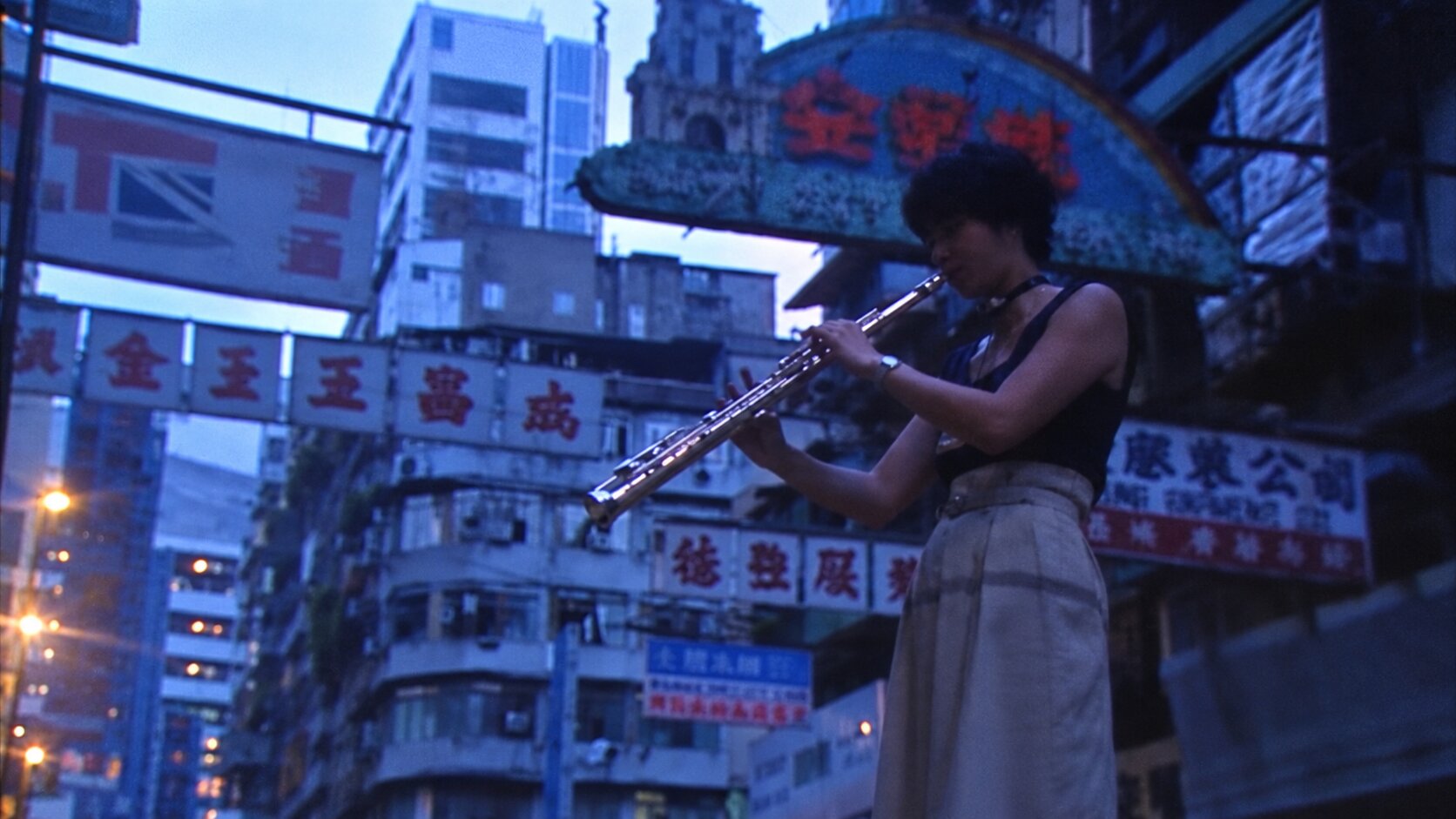
More recently, footage from a documentary she made in Hong Kong before the 1997 handover has begun circulating online again. During the filming, Asamoto walked through Temple Street early one morning and decided to play alone, without accompaniment. The tune that came to her was ‘God Bless the Child’.
We spoke about Art Pepper, Berklee and Jan Garbarek, ‘Gypsy Moon’, the soprano saxophone, the Japanese record industry, electronics and improvisation, and her memories of filming in Hong Kong.
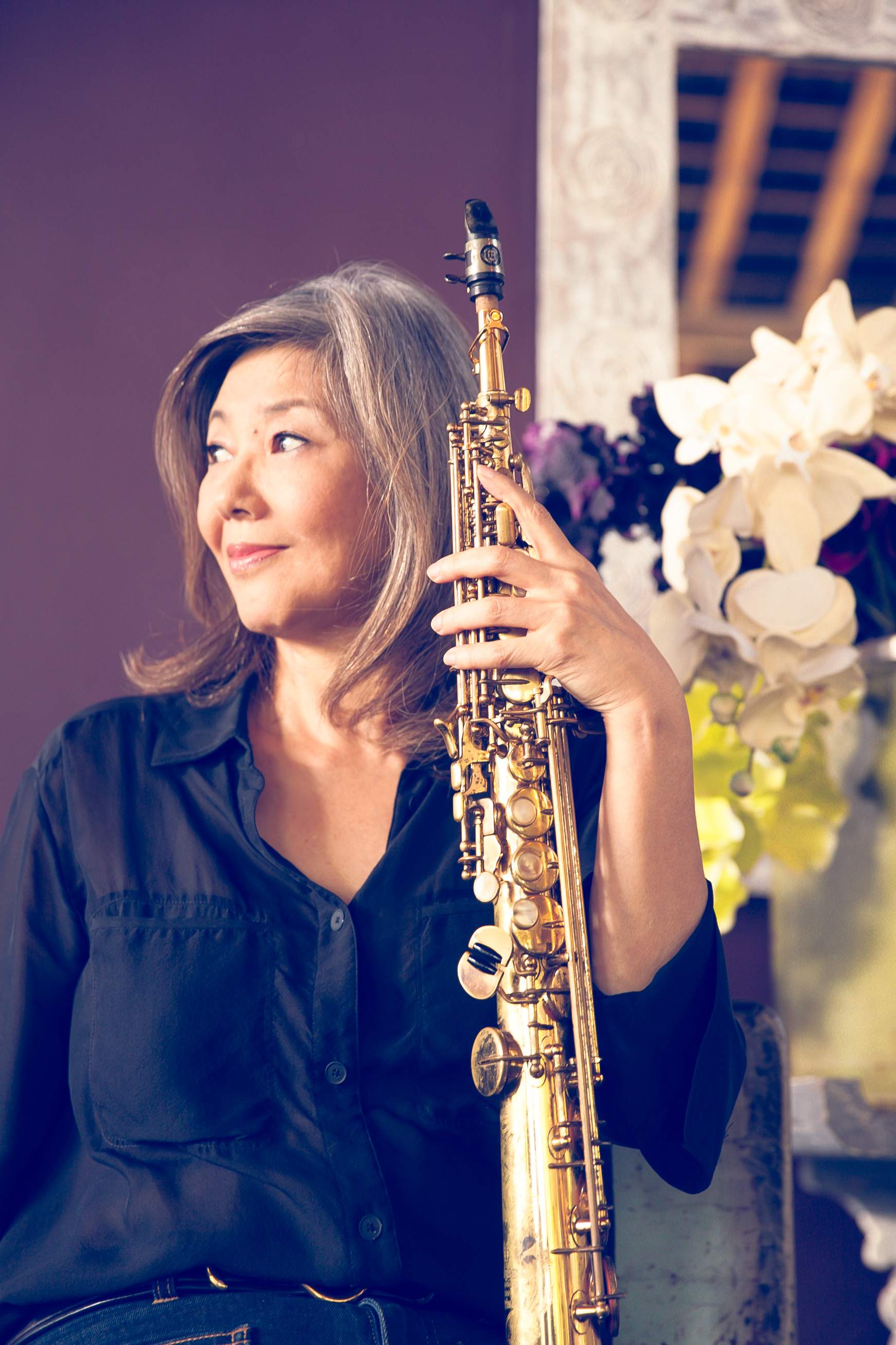
“I wanted listeners to hear the music before they thought about whether I was a woman or a man.”
You didn’t originally set out to become a musician. How did the saxophone enter your life, and what happened when you heard Art Pepper?
Chika Asamoto: I didn’t grow up dreaming of becoming a musician or a saxophone player. Music was always something I loved to listen to, but I never imagined it would become my life’s work.
As a young student, I was studying at a university in the United States as an international student. During that time, I found a part-time job at a jazz club in Los Angeles. They were looking for a waitress who could speak Japanese because many Japanese tourists visited the club. Ironically, I knew almost nothing about jazz at the time.
Every night, some of the finest jazz musicians performed there. It was simply part of my job to serve customers while listening to the music.
Then one evening, everything changed.
The featured artist was the legendary alto saxophonist Art Pepper. As I listened to him play, I was completely captivated by the beauty of his tone, the incredible speed and freedom of his playing, and the emotion he could express through a single instrument. I had never experienced anything like it.
After the performance, I had the opportunity to speak with him. I innocently asked,
“Your performance was amazing. Do you memorize those long pieces and play them every night?”
Looking back, it’s an embarrassing question. At that time, I didn’t even know that jazz was based on improvisation.
Art Pepper smiled kindly and said,
“No. I create it right there on the spot.”
That single sentence completely changed my life.
I was astonished that someone could create such moving, emotional music in the moment, without a written score. I had never imagined that music could be so free, so spontaneous, and yet so deeply expressive.
At that moment I thought, I want to do that too.
Soon afterward, I bought a second-hand alto saxophone and enrolled in a local music school. From there, I fell deeper and deeper in love with jazz.
When I look back now, I realize that everything began with that one evening. If I had never heard Art Pepper perform, I honestly don’t think I would have become a saxophonist.
Sometimes a single encounter can quietly change the entire direction of your life. For me, that night was the beginning of everything.
You began on alto, but the soprano gradually became your main instrument. What did you find in the soprano that felt closer to your own voice?
Chika Asamoto: At first, the alto saxophone was my primary instrument, and the soprano was my second instrument. However, my goal was always to play as if I were singing. I wanted to express beautiful melodies with a beautiful tone.
Over time, I realized that the soprano saxophone suited the range of my own voice and allowed me to express myself more naturally. It felt closer to the way I heard melodies inside myself, and that is why it gradually became my main instrument.
When I was studying at Berklee College of Music, many alto saxophone players were trying to master bebop in the tradition of Charlie Parker. Others, especially those interested in fusion, were aiming for a more powerful and funky style influenced by David Sanborn.
My own musical interests were different. I was deeply attracted to the music of the European label ECM, and I was especially influenced by Jan Garbarek. His soprano saxophone had a transparent, beautiful, almost floating quality. There was space in his sound, and that sense of openness and clarity spoke very strongly to me.
The soprano saxophone is, in many ways, more difficult to control than the alto. The pitch, tone and balance are extremely sensitive, and even a small change in breath or embouchure can affect the sound. It took a long time to learn how to make the instrument respond to what I was hearing internally.
But emotionally, the most important thing was to stop thinking of the soprano merely as an instrument. I had to learn to let it become my own voice.
Now, after many years, it feels like a part of my body. I no longer feel that I am simply playing the soprano saxophone. It has become the instrument through which I sing.
Your debut album, ‘Gypsy Moon’, came out on Nippon Columbia in 1988. What were you trying to make musically, and how closely did that match the way the Japanese record industry saw you at the time?
Chika Asamoto: When I made ‘Gypsy Moon’, I was not especially interested in creating purely improvisational music. I wanted to play music that was jazzy and strongly influenced by fusion, while still placing melody and atmosphere at the center.
Ultimately, however, I was searching for something closer to the spirit of ECM, music that could express the place where I was born and raised, and something that felt as deeply rooted in me as blood. I was drawn to what might now be called world music: music with a strong sense of geography, culture and personal identity.
At the time, however, the Japanese music industry viewed me somewhat differently. A female saxophone player was still very unusual, and much of the initial attention I received was based on the image of a woman playing the saxophone. In many ways, the industry tried to present and market me through that image before fully understanding the music I wanted to create.
I have mixed feelings about that. Had I been a man, it might have been much more difficult for me to secure a recording contract so early in my career. In that respect, I was very fortunate, and I remain grateful for the opportunity.
At the same time, that opportunity came with a price. Some people dismissed me by saying that I had been given a recording contract only because I was a woman, not because of my ability. There was jealousy, and I often felt that I had to prove that I deserved to be there.
I was also criticized because I did not play mainstream jazz. In the Japanese jazz world of that period, there were strong expectations about what a serious jazz musician should play and how that music should sound. Because I was interested in fusion, cinematic atmosphere, melody and music that crossed cultural and stylistic boundaries, some people did not consider what I was doing to be authentic jazz.
But even then, I did not want to belong completely to one category. I was still searching for my own language. ‘Gypsy Moon’ existed somewhere between jazz, fusion and pop, but underneath it was already the beginning of my desire to create music connected to memory, landscape and identity.
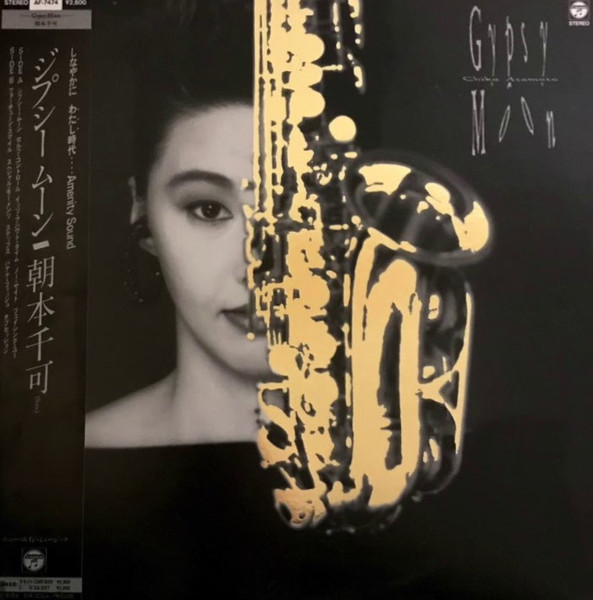
Pieces such as ‘Gypsy Moon’, ‘Facing You’, ‘Banana Fish’ and ‘Obsession’ often seem to suggest images or scenes. When you compose, what usually comes first: the music itself, or an image or feeling?
Chika Asamoto: Emotion always comes first.
I don’t usually begin with harmony, chord progressions, or saxophone lines. I begin with a feeling, sometimes a memory, sometimes an image, sometimes simply an atmosphere that I want to express.
I also believe that music does not appear out of nowhere. There are no sudden mutations in music. A melody or harmony that no one has ever heard before does not simply emerge from nothing.
Everything we have listened to throughout our lives becomes part of us. It settles somewhere inside us, layer upon layer, often without our even realizing it.
For me, the music of great film composers such as Henry Mancini and Michel Legrand has always been deeply rooted within me. I have listened to their music for many years, and I think those melodies, harmonies and cinematic colors have become part of my musical DNA.
When I compose, I feel that I am not inventing something from nothing. Rather, I am uncovering those layers one by one and allowing them to emerge in my own voice.
That is probably why many people say my music feels visual or cinematic. I am not trying to describe chord changes. I am trying to let people see and feel a scene through sound.
The Japanese music industry often presented you first as a woman playing saxophone. How did you deal with that at the time?
Chika Asamoto: I was never trying to fight against anyone. I simply wanted to keep creating the music that I truly believed was beautiful. In doing so, I think I was gradually able to move beyond the boundaries of both genre and gender.
By the late 1980s and early 1990s, technology was becoming increasingly important to your music. What did programming, electronics and club culture open up for you? Did you still think of improvisation in specifically jazz terms?
Chika Asamoto: To be honest, I never thought very much about musical borders.
The late 1980s was a period when digital technology was transforming the music industry. Computers were becoming part of music production, programming was opening completely new possibilities, and the entire recording process was changing. I was fascinated by that revolution.
I became deeply involved in programming and electronic music, and eventually formed a techno group. I experimented with heavy effects on my saxophone, almost like dub music, because I wanted to create soundscapes that could never be produced by an acoustic instrument alone. I wasn’t interested in simply reproducing the traditional sound of the saxophone. I wanted to discover what the instrument could become through technology.
At the same time, DJs were beginning to redefine what music performance could be. Drum & Bass especially excited me because of its energy and rhythmic imagination.
Many jazz musicians were still demonstrating their virtuosity by improvising bebop lines. I admired that tradition, but when I saw Jeff Mills performing with three turntables, creating an entirely new musical world in real time, I remember thinking, this is improvisation.
For me, improvisation has never been limited to playing fast notes over chord changes. It is the ability to create something alive in the present moment, regardless of the tools you use.
That is why I never felt confined by labels such as jazz, fusion, electronic music or soundtrack music. I simply followed whatever musical language could best express what I wanted to say. To me, music has always been one open landscape where the saxophone is free to travel between different colors, technologies and emotions.
Footage from the Hong Kong documentary you made before the 1997 handover has recently found a new audience online. What do you remember about making it, particularly the morning you played alone on Temple Street?
Chika Asamoto: It has been a wonderful surprise to discover that those clips from the documentary have taken on a new life online. Recently, a musician friend told me that even the legendary bassist Ron Carter had shared one of them. I was honestly amazed. When we filmed it, I could never have imagined that people around the world would still be watching it decades later, let alone remixing and sharing it.
The documentary was filmed before Hong Kong was returned to China. At that time, Kowloon Walled City still existed, along with the floating communities and ways of life that have now disappeared. The program was intended to introduce viewers to a Hong Kong that belonged entirely to that unique period in history, neither completely British nor completely Chinese, but something all its own.
I still remember walking through Temple Street early in the morning. The streets were beginning to wake up, and there was a special atmosphere that is difficult to describe. It wasn’t something I had planned, but suddenly I felt that I wanted to play my saxophone there, completely alone and without any accompaniment.
The melody that came out was ‘God Bless the Child’.
Even today, I don’t really know why I chose that song. I didn’t think about it intellectually. It simply felt like the music that belonged to that place, at that moment.
Looking back now, I think that performance was less about me than about the city itself. I was simply listening to Hong Kong and letting the saxophone become another voice within it. That is probably why the footage still speaks to people today. It captured not only a performance, but a place and a moment in history that no longer exists.
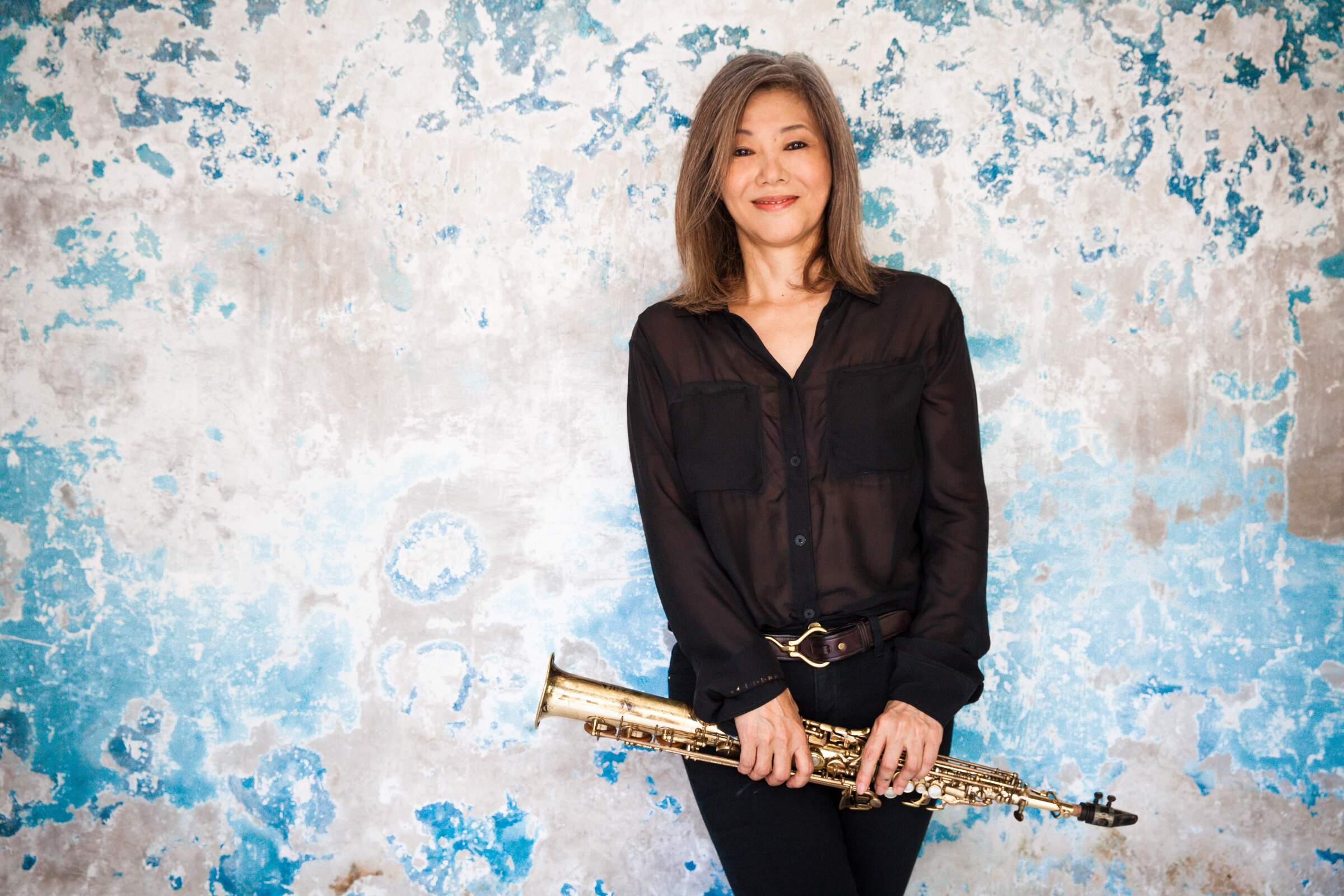
How did things change for you after ‘Gypsy Moon’, particularly on ‘Heartland Chic’ and ‘Embouchure’? Were you taking more control over the production and arrangement of your records by then?
Chika Asamoto: When I made my debut, I was naturally aware of both the record company’s expectations and the musical trends of the time. As a new artist, I wanted my music to reach as many people as possible, so those things inevitably influenced my decisions.
But with each album, something gradually changed.
I became less interested in making music that would simply sell, and more interested in making music that truly reflected who I was. I became much more involved in producing, arranging and shaping every aspect of my recordings. Little by little, I felt that I was finding my own musical language.
At the same time, however, I began to question something else.
No matter how much my music evolved, I was still often introduced first as a female saxophonist. Of course, I understood why. At that time, there were very few women playing the saxophone professionally in Japan, and that was considered unusual.
But I gradually began to wonder why my gender should be the first thing people noticed. I wanted listeners to hear the music before they thought about whether I was a woman or a man.
Ultimately, I realized that I couldn’t change other people’s expectations. The only thing I could do was continue creating music that was honest and unmistakably my own.
Looking back, I think those later albums became more personal because I had stopped trying to fit into an image. I was simply trying to become a better composer, producer and musician.
Klemen Breznikar
Headline credit: Chika Asamoto performing in Hong Kong, from archival video footage. Image enhanced for clarity.
Chika Asamoto Facebook / Instagram