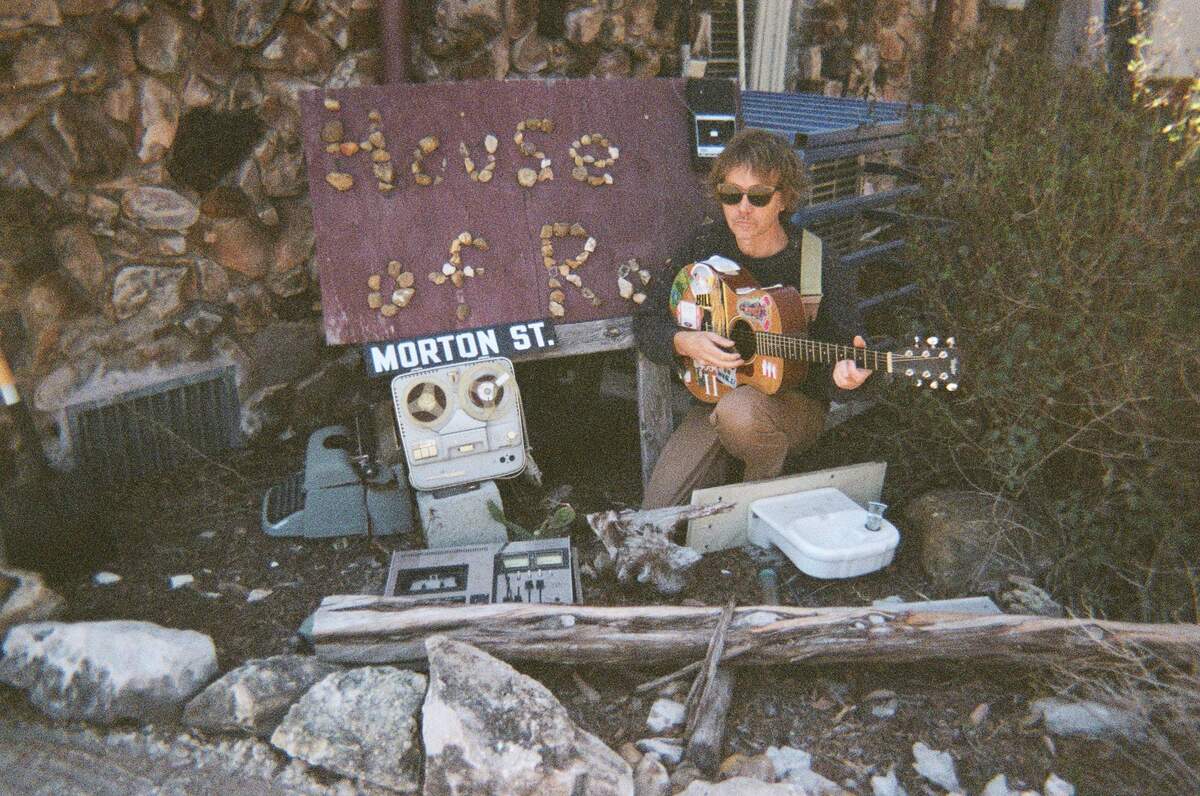

Bill Baird Premieres ‘Life Creates Itself’, Recorded in a Day at Sear Sound
Bill Baird returns with ‘Life Creates Itself’, a new album recorded largely in a single day at Sear Sound in New York and released September 25 through Royal Oakie Records.
The record grew out of Baird’s long friendship with producer Jasper Leach. The two originally bonded over Texas psychedelia and Captain Beefheart, and Leach later became Baird’s regular guitarist during his years in the Bay Area. By the time Leach was working as an engineer at Sear Sound, he managed to arrange a day in the studio at a price they could afford.
Baird’s part of the bargain was fairly simple: he needed some songs.
“I cranked ’em out, and we recorded the full album in a day,” he says.
Two more days of overdubs followed at Phil Carluzzo’s apartment in Washington, DC, but most of what became ‘Life Creates Itself’ came from that first session. Baird describes it as “a songwriter record, through and through”, and it does sit a little apart from much of his earlier work.
The album begins with a curveball. ‘Fixin’ to Die’ is a cover of a song by underground filmmaker Jon Jost, taken from his 1977 film ‘Last Chants for a Slow Dance’. It was Leach’s suggestion, and Baird recorded it first on the day, with the vocal captured live on the first take.
From there, things get stranger.
The title track grew out of Baird’s reading of spiritual texts and the idea that the divine might exist in everything. He follows that thought far enough to arrive at an oyster talking to a pearl and a couch discussing bong-water stains with a loveseat. Baird has even considered taking the idea further and making an entire record of conversations between supposedly inanimate objects.
‘Karma Loan’ came after a period of listening heavily to Bach. Baird reckons there may be seventeen chords in it, although he does not seem especially interested in counting them. Clara Kennedy plays cello, while the ending turns into a collage of spiritual gurus selling rather suspiciously easy routes towards enlightenment.
Then there is ‘Yanaguana’, one of the record’s most personal songs. Baird returned to San Antonio after the pandemic, the same city he had once been in a hurry to leave. Yanaguana is the name used for the area by the Payaya people, usually translated as “land of many waters”. Baird had also heard it translated as “where I am right now”, a definition of home that stayed with him.
For somebody who spent years moving around, that landed differently.
“I road-dogged it for many years, and in my heart I’m still basically couch surfing through life, even though I now have a proper home,” he writes in his notes for the song. “But over time, you realize that home is inside your heart.”
That tension between wandering and coming back crops up more than once on the album, though Baird rarely leaves an earnest idea alone for very long.
‘In Dog We Trust’ began with modular electronics and ended up featuring a barking dog named Ernie, who belonged to Carluzzo and Kristin Barlett. Ernie kept interrupting while Baird was working on the track in their apartment, so Baird simply left him in. There is also a whip sound effect, whose purpose even Baird admits he cannot entirely explain.
‘Horse Moon’ is his favourite song on the record. Pedrum Siadatian of Allah-Las and PAINT plays lead guitar, while the lyrics came from a night spent walking across New York. After recording it, Baird went onto the roof of Sear Sound and watched a full moon over Manhattan.
“The pedal steel sound collage sounds like rays of moonlight to me,” he says.
Elsewhere, ‘If True Love is Blind’ finds him approaching country music through Hank Williams rather than cowboy mythology, while Austin Day plays what Baird describes, rather wonderfully, as “some Japanese autoharp thing”. ‘Where’s Your Hair?’ owes something to two shared heroes of Baird and Leach, Captain Beefheart and Arthur Russell, and makes a fairly convincing case for absurdity as its own way of understanding the world.
‘Endless Blue’ may be the most cheerful song here about dying. Baird calls it “a happy sounding song about being miserable”, concerned with disappearing back into the universe while still giving you something to nod your head to.
The album closes with ‘I Can’t Run Away from Me’. The song appeared while Baird was teaching a songwriting class at the Esalen Institute, something he considers a slightly ridiculous proposition in itself.
“How can you teach someone to have an existential crisis?” he asks.
His answer was largely to describe his own method: take in books, poetry, music, art and whatever life happens to throw at you, then try to forget all of it long enough for something useful to come back out.
The song itself arrived while he was sitting on a couch. The first studio version was recorded in the wrong key, so they eventually redid it in Carluzzo’s closet in DC, with Kennedy once again adding cello.
Jasper Leach produced ‘Life Creates Itself’, with KRAMER mastering. Alongside Leach and Baird, the sessions include contributions from Pedrum Siadatian, Phil Carluzzo, Austin Day, Oliver O’Haver, Jordan Johns, Michael Vattuone, Clara Kennedy and, on one particularly important occasion, Ernie the dog.
‘Life Creates Itself’ is released September 25 through Royal Oakie Records.
Bill Baird Instagram / Bandcamp
Royal Oakie Records Official Website / Facebook / Instagram / X