


Maisy Owen has released ‘Dark on a Sunny Day’, her debut album for Tompkins Square
Out now on Tompkins Square, ‘Dark on a Sunny Day’ is the debut album by Nashville songwriter Maisy Owen. Its eight songs were written during what she describes as an unstable and transitional period, before she had told anyone that she intended to pursue music. For a while, she simply added them to a ‘secret collection’.
Songwriting was already part of family life in Nashville. Owen’s father, Gwil Owen, co-wrote ‘A Soft Place to Fall’, which was nominated for an Academy Award. He also knew what it was to live ‘the life of a starving artist’ and initially hoped his daughter would choose something more stable. Once an album became inevitable, he helped her edit her lyrics and steer clear of clichés.
Her first instrument was viola. The pieces she studied changed time signatures, split bars and moved between keys, leaving her with a less conventional sense of what a guitar part could do. David Olney later taught her to fingerpick. Nick Drake, Mazzy Star and Bert Jansch each came into her listening at different points, although she says Nashville itself has had little effect on her writing. The city gave her somewhere to learn how to perform; its music industry still feels ‘a bit alien’ to her.
Most of ‘Dark on a Sunny Day’ was recorded with Robin Eaton. Two songs were completed under quite different circumstances. Owen made ‘The Rest of Me’ in a day after Tompkins Square found that the vinyl edition needed one more track. James Russell recorded ‘It All Ends the Same’ on the first take while a party carried on elsewhere at Club Roar. Owen heard the rough mix at around five in the morning and knew it should close the album.
Owen has only recently begun to think of herself as a singer. She prefers the emotion to remain in the words and instrumentation. ‘In my mind, I am just here to deliver the songs,’ she says. The album’s title came from one of her poems. ‘I find a lot of sweetness within pain, and a lot of darkness in joy. It’s a pendulum.’
In the following interview, Owen talks about learning to write, the making of the album, abandoned places, belief, her London performance with BJ Cole and the music she is working on now.
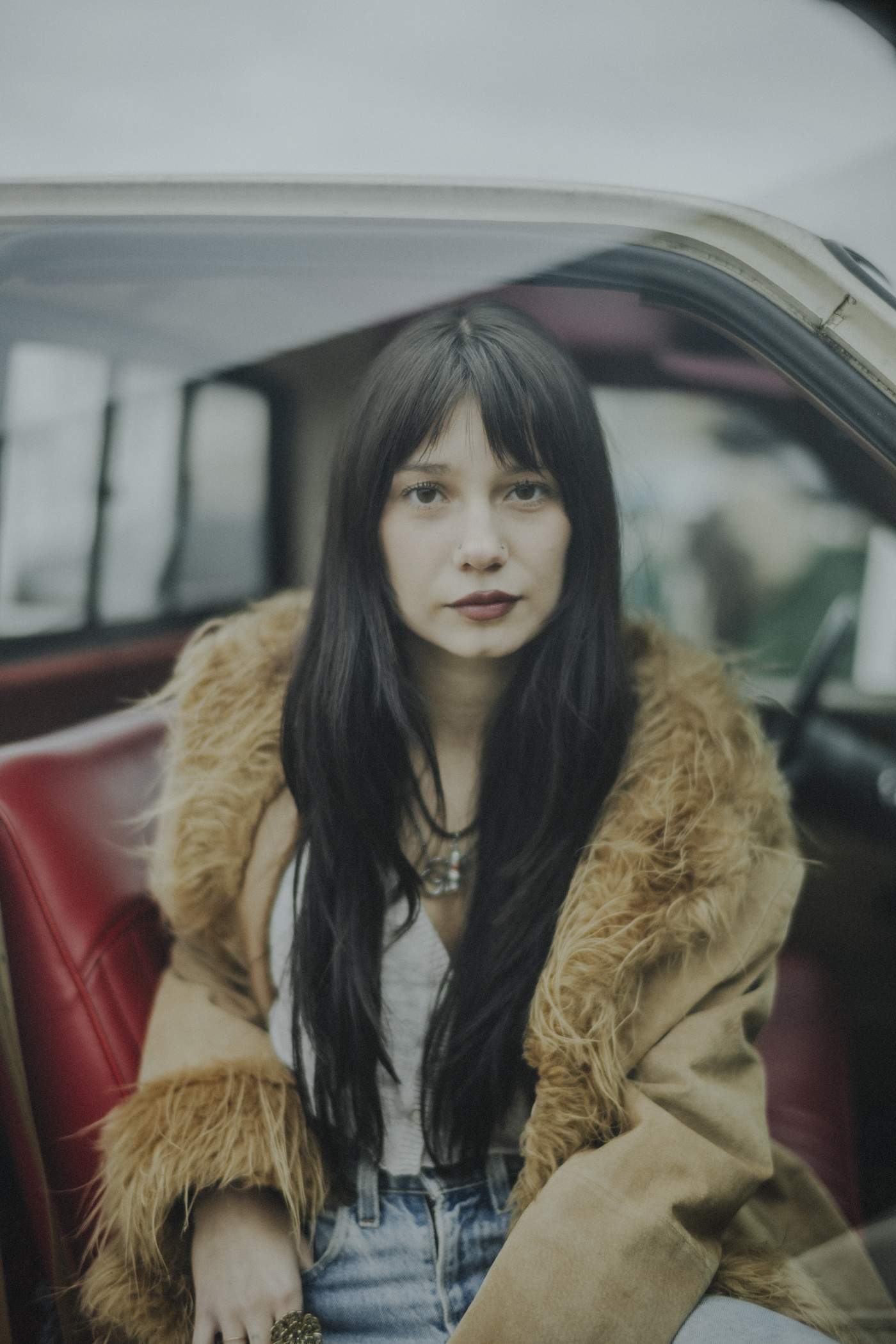
“I find a lot of sweetness within pain, and a lot of darkness in joy. It’s a pendulum.”
Your father, Gwil Owen, knew both the success and the uncertainty of working as a songwriter. Did that make you cautious about pursuing music yourself? What did he teach you once you decided to make an album?
Maisy Owen: I was actually quite apprehensive about pursuing a career in music. I didn’t tell anyone I wanted to take it seriously until years after I had started writing songs. My dad would never change a thing about the path he took, but he knows what it’s like to live the life of a starving artist, and I think he originally wanted more stability for me. Eventually, I had enough songs and enough desire to make an album that there was no denying it. At that point, my dad worked with me a lot, mostly on avoiding lyrical clichés and teaching me how to edit myself.
You began playing viola at nine. Did that early training shape the way you later composed on guitar?
The viola definitely influenced the way I compose my guitar parts. I actually had my viola teacher from elementary and middle school accompany me at a show, and we talked a little bit about that. The pieces she chose to teach me often switched time signatures, split bars and changed keys. I think that, because of this, I had a less traditional approach to guitar and more freedom to take the songs wherever I wanted them to go.
What has Nashville contributed to your writing and live experience? How comfortable do you feel with the city’s music industry?
I never really thought about my songs as being distinct or indistinct; they have always just felt like a direct channel of me. I don’t feel that Nashville has impacted my writing at all, but it has given me a lot of experience in terms of live performance. Writing is usually an isolated and intense process, hard to permeate with outside influence. The music industry side of Nashville is a bit alien to me.
When did you first hear David Olney, Nick Drake, Mazzy Star and Bert Jansch, and what stayed with you from each of them?
When I first started playing guitar, I tried to emulate David Olney so many times. His lyrics, specifically. Forced poetry is no good, and his influence came back through my dreams years later in a much more natural way. He taught me how to fingerpick pretty early on, and that stuck with me. I love the sparseness and the forlornness of it. I started listening to Mazzy Star in high school, and I loved the trance of Hope Sandoval’s voice. I think rhythmic fingerstyle guitar can build an atmosphere similar to Mazzy Star’s really dreamy, dusky soundscape. I was in a choir at school from first through eighth grade, and we sang a lot of folk songs, including really old English and Irish tunes. I was introduced to Nick Drake right around the time I started playing guitar, and his melodies brought back a strong interest in folk from that area and period. Bert Jansch is actually a newer find for me. My dad showed me ‘L.A. Turnaround’ while I was halfway through making the record. He’s been a huge inspiration to hone my guitar playing; his fingerstyle is incredible.
What does your daily writing look like? How quickly can an experience find its way into a song?
The songs strike really randomly. I try to write every day. Just phrases, feelings, memories, whatever comes to mind. Sometimes it’s poetry, but often it’s just a train of thought. I refer back to these writings a lot. ‘My Youth Is All For You’ was almost entirely pulled from my journal. I don’t need much distance at all from the experiences I’m writing about; the more personal something is, the better. When you think back on something intense, it’s the details that stand out in your memory. I like to write the details instead of the big picture; I think it captures the heaviness more aptly.
Have you always thought of yourself as a singer? How do you approach a song when the lyric is emotionally heavy?
I have actually never thought of myself as a singer until recently. It’s easy not to oversing because, in my mind, I am just here to deliver the songs. I much prefer to hear pain in the instrumentation or the lyrics when I am listening to music; a good example of that is ‘Needle of Death’ by Bert Jansch. You don’t realise how devastating it is until you really pay attention, and then it’s even more so. I like the lyrics to speak for themselves.
When did these songs begin to feel like an album? How did Rob Bleetstein bring the record to Tompkins Square?
Almost all of the songs were written during an unstable and transitional period of my life. I wasn’t thinking in terms of making an album at that point; the songs would appear, and I would add them to my secret collection. They feel very cohesive to me thematically. I was introduced to Tompkins Square through a family friend, Rob Bleetstein. He offered to shop the record for me, and soon I got a call from Josh Rosenthal of Tompkins Square. Josh flew to Nashville three days later, and right off the bat, he seemed to understand the project. As we were working out the deal, he sent me a welcome box of sorts that included a Michael Hurley 78 and material from Gwenifer Raymond and Charlie Louvin. I was honoured to be among such good company!
The album has eight songs. Was that length intentional? How did you settle on the sequence and title?
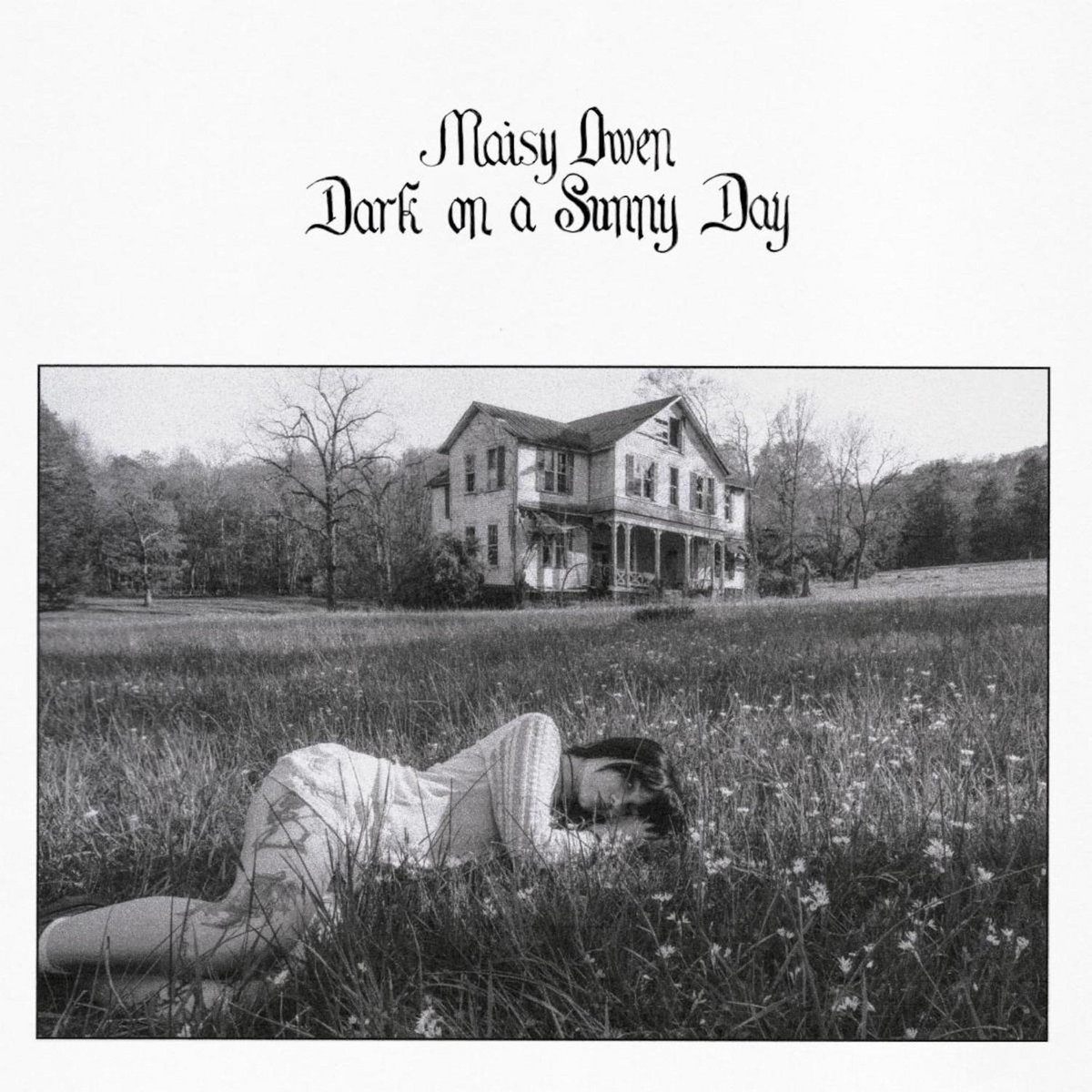
I think the length is more due to budget and time constraints than anything else. The record took so long to make because of Robin’s and my busy schedules. It concluded pretty naturally, though. I didn’t leave anything off that I felt needed to be there, and I wanted to leave room for my next project. The running order ended up being very similar to the order in which the songs were written, but not on purpose. The title ‘Dark on a Sunny Day’ came from a poem I wrote. It’s applicable in a lot of ways. I find a lot of sweetness within pain, and a lot of darkness in joy. It’s a pendulum.
‘My Youth Is All For You’ opens the album and was also chosen as the first single. Why did it make sense as an introduction, and how do you understand the song now?
I like that song as an introduction because it’s one of the most unedited. It’s also one of the first songs I ever wrote, which is why I sequenced it to begin the album. It was Tompkins Square’s decision for it to be the first single, and I’m glad it worked out that way. The song has been interpreted as a love song by some, and maybe it is, but it is one of resignation. Giving away something as irreplaceable as youth is a dark idea; within the song, it’s more of a lamentation.
You wanted the record to remain close to your live performances. How did you and Robin Eaton decide what to add to the songs and what to leave alone?
I loved working with Robin. We experimented with a lot of different sounds, but I knew I wanted it to be stripped-down and similar to my live performances. I wanted to play all of the instruments on the record, but Robin talked me out of it. Probably for the best! I did play every instrument on ‘My Youth Is All For You’. Robin has a great ear for atmosphere; he wrote beautiful bass parts for many of the songs, and we worked closely together.
‘The Rest of Me’ and ‘It All Ends the Same’ were made outside the main sessions with Robin Eaton. How did those two recordings come together?
‘The Rest of Me’ was actually a last-minute addition to the record. Robin and I had wrapped up the project by the time I became connected to Tompkins Square. The label wanted to make vinyl, and we were one track short. I wrote it just after the title track, and it fit well into the sequence. Production for ‘The Rest of Me’ was always meant to be minimal. I did it in a day, with just Dan Seymour and me on bowed upright bass. The bass part is intentionally a little dissonant and eerie; the song is sweet, and I wanted to convey a darker undercurrent. I loved that day in the studio.
‘It All Ends the Same’ was much more spontaneous. I ran into a friend at a bar, and he invited me to a party at Robin’s studio, Club Roar. James Russell was there, and we started talking. I played him the song in the isolation booth as the party went on around us. He recorded it then and there on the first take. I followed his vision for the song, and he played piano on it. We wrapped up around 5 a.m., and when I heard the rough mix, I knew I wanted it to close the record.
“It’s about decay. It’s about drinking. It’s about death. I think it’s comforting.”
What was behind ‘God Fear’? Why did the phrase ‘It All Ends the Same’ stay with you after the song was written?
I’ve always been somewhat fascinated by religion. I was raised without it. ‘God Fear’ was born from a night of conversation with my friend Paige: good cannot exist without its opposite. I was in a relationship with someone who wanted desperately to believe in something greater and never found it. I liked to attach godlike qualities to the people I loved. The song came together quickly.
‘It All Ends the Same’ was different; it’s one of those songs that could be about almost anything. I like that it means different things to different people. The phrase haunted me in my dreams for months after I wrote it. It’s about decay. It’s about drinking. It’s about death. I think it’s comforting.
Abandoned places appear throughout the album’s visual world and in ‘It All Ends the Same’. When did you start visiting and photographing them? Do you see them mainly as physical places, or as reflections of an emotional state?
Definitely the latter. I love the isolation of those places, and I love how everything continues on around them. I’ve been interested in visiting and photographing them since I was a teenager. There is something so dreamlike about a place that both falls victim to time and is simultaneously preserved in it. ‘It All Ends the Same’ is the song connected to the abandoned nuclear plant.

What was it like performing with BJ Cole in London without rehearsing? How did that lead to his playing on the EP, and what can you tell us about the new material?
I had such a wonderful time in London. I didn’t know what BJ Cole was going to play, as we didn’t have a chance to rehearse, and I loved that. I was lucky enough to have him play on a song for the EP afterwards. It’s always fun to see what direction different accompaniment takes the songs in. The EP is very much in line with the album. I produced it myself. Recently, I have been focusing a lot on my guitar playing, and that is becoming more and more important to me as time goes on. The themes in my songwriting are still dark, but changing.
Klemen Breznikar
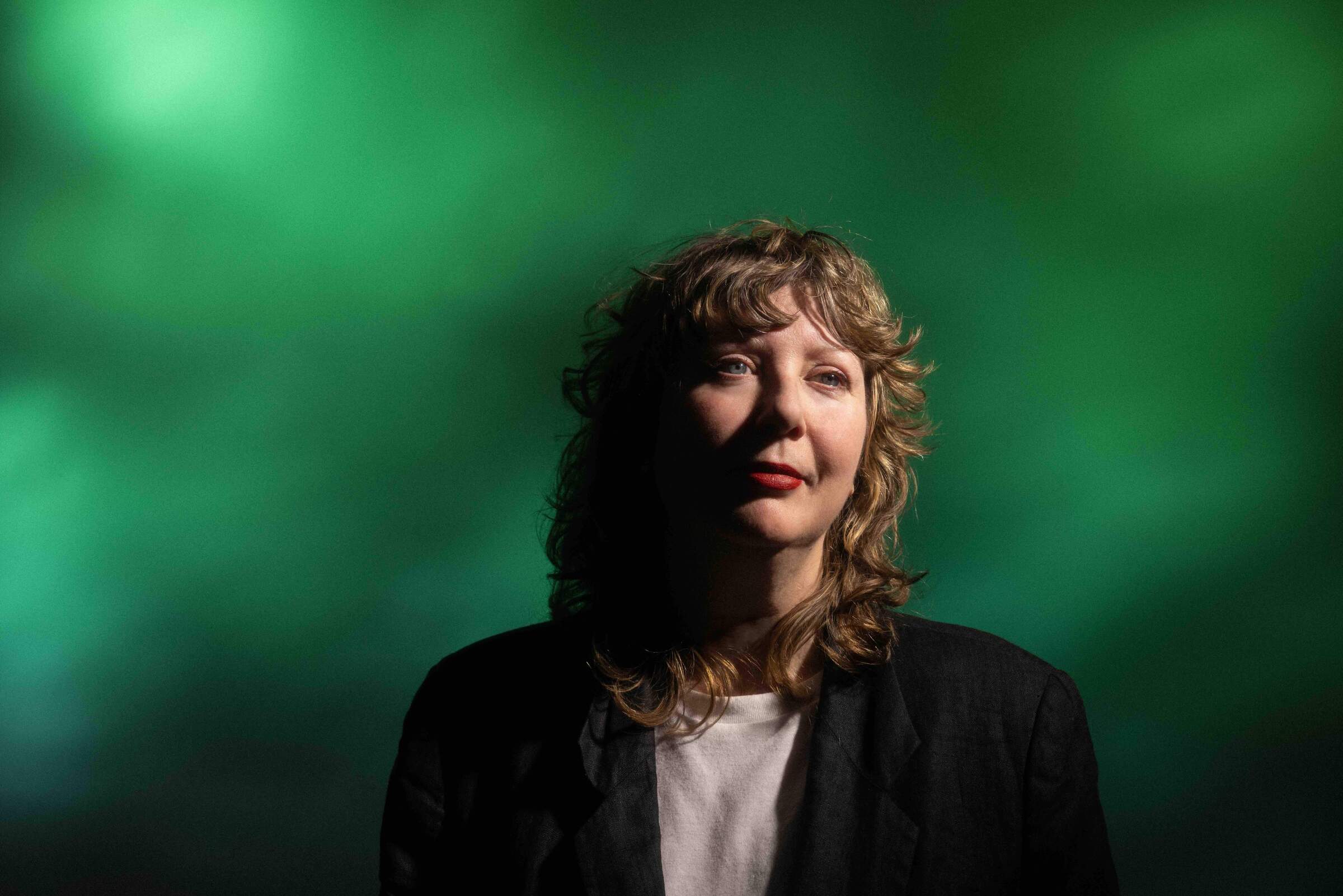
Headline credit: Joshua Black Wilkins
Maisy Owen Official Website / Facebook / Instagram / YouTube / Bandcamp
Tompkins Square Official Website / Facebook / Instagram / SoundCloud / Twitter / YouTube / Bandcamp

 Klemen Breznikar
Don’t you guys, like, have a byline, or a dateline, on your stories? Who wrote this? When was it posted? If I were going to quote something from this, I couldn’t do it. This is not journalism. I don’t know what it is.