
John Phillips | The Outsider Folk Mystery of ‘Songs of Gentleness 1969–1976’
Gordon Phillips discusses the life, music and rediscovery of his brother John, a mysterious outsider folk songwriter from Rhodesia whose surviving recordings have finally been brought together in ‘Songs of Gentleness 1969–1976’.
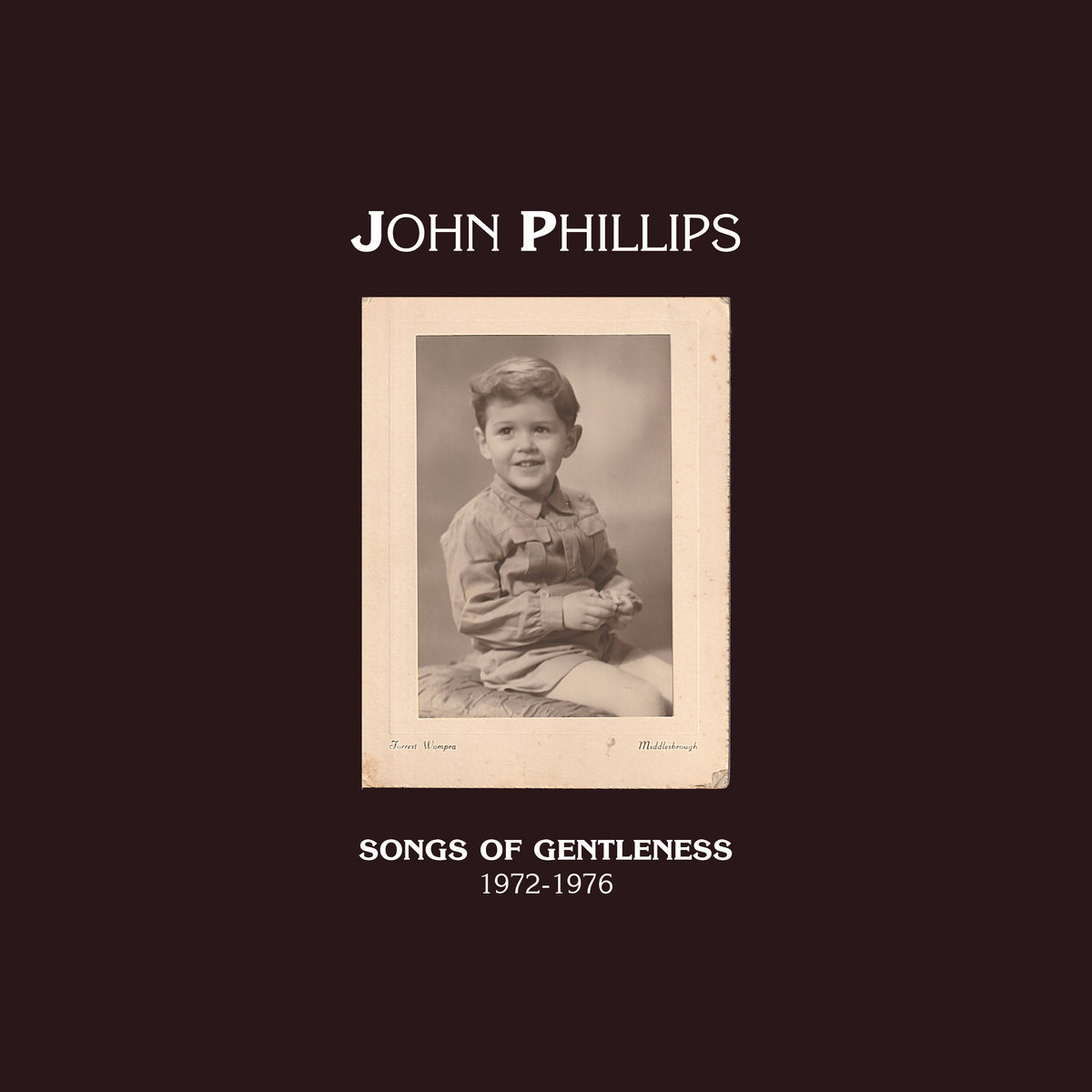
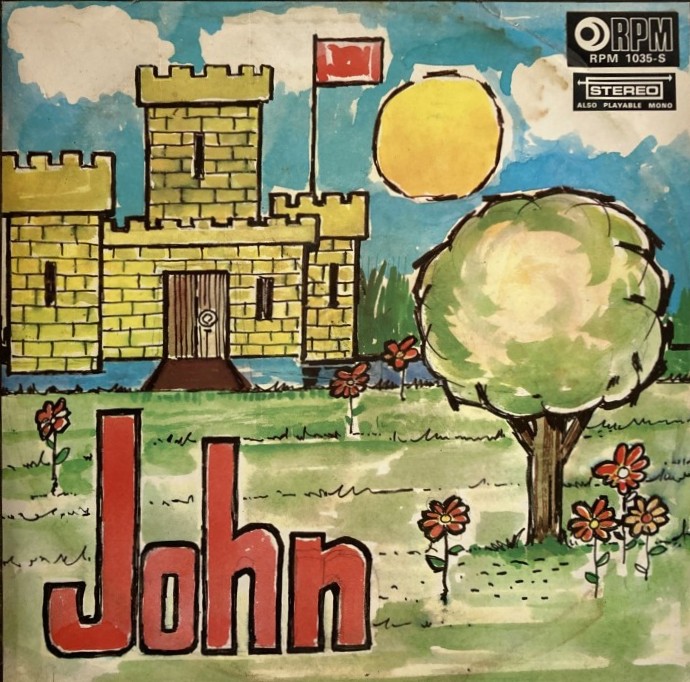
Until fairly recently, John Phillips’ story could be held in a single record sleeve. ‘John’, recorded in Johannesburg and released by RPM in 1969, had no international distribution and almost no public history attached to it. What survived was the album itself: a small, strange set of songs and a cover that looked as though it had come from a child’s storybook.
The music is just as deceptive. ‘Paint Box Jester’, ‘Peppermint Wind’ and ‘The Bird with Plastic Feathers’ sound playful and inviting, but loneliness and unease are never far away. Phillips wrote about beauty without pretending the world was beautiful. Even his lightest songs seem to be holding something back.
‘Songs of Gentleness 1969–1976’ changes what can be known about him. The four-LP box set, released by Sharp-Flat Records and Strawberry Rain Music, places the first reissue of ‘John’ alongside three previously unheard albums: ‘John 1972’, ‘John 1976’ and ‘Demos 1976’. The later tapes do not explain away the mystery of the first record. They show how much music existed beyond it.
The survival of that music has its own unlikely history. A copy of ‘John’ donated to a charity shop near Colchester in 2010 found its way to a collector and then online. Thirty-eight deadstock copies surfaced in a Durban warehouse in 2016. Later, three reel-to-reel tapes and a group of notebooks containing lyrics, photographs and drawings were found in the New Zealand attic of John’s brother Brian. One of those notebooks was called ‘Songs of Gentleness’.
At the centre of it all is a family story. Gordon Phillips does not romanticise his brother or try to make every part of John’s life fit neatly into the songs. He remembers a quiet, fiercely independent man: a journalist, guitarist and writer who wanted to live on his own terms. The title came from John’s notebook, but Gordon’s words give it a deeper meaning. These songs are gentle, but they are not slight. Their grace lies in the way they say difficult things without insisting on themselves.
The interview was completed with the kind assistance of Calum MacNaughton.
“John’s songs are very gentle on the surface, but deeper crevices hold the reasons and emotions behind them.”
Before John became an outsider folk mystery to collectors, who was he to you at home? What was he really like as a brother?
John was a quiet, reclusive person who got on with life on his own terms. He had an extremely quick brain and an ability to learn fast. Always an avid fan of music, be it classical or rock, he followed the local charts and spent hours listening to the radio. The John I knew as a child was academic and tended to keep his thoughts to himself, though I think he shared them in his lyrics once he found an attentive audience. He left school and started a career in journalism, which was quite an absorbing occupation. He didn’t have many friends at school, as he was ahead of his peers intellectually, so getting into journalism also allowed him to meet like-minded, free-thinking people who didn’t conform to strict social norms, were into modern music, recreational drugs and progressive lifestyles, and provided a safe space for him to grow into and develop himself. I think he discovered a passion for life that he had missed when he was a youngster and then put all of his energy into it.
I didn’t really know him in his wandering hippie phase, and I still can’t make up my mind about the free and sometimes strange lifestyle he entered. He and a couple of others opened a venue for developing and emerging folk and blues talents, and I attended some shows with friends. It was all very relaxed and fitted in with the general swing in youth culture in the USA, England and Germany in pursuit of a more liberated and non-conforming attitude to life, similar to that in ‘Hair’, with the dawning of the “Age of Aquarius”.
John was born in India, spent some time in England and then settled with the family in Southern Rhodesia. Did all that moving affect him, or did Rhodesia quickly feel like home?
We were always aware that our parents were not the same as most others. Our mother, who had grown up as a foster child in Burma, was very influenced by the Shan people and fluent in that language. Dad had spent quite a while as an officer in the Rajputana Rifles, so he was fluent in Urdu. They had both lived for extended periods of their lives in warm climates and, after the partition of India in 1947, had to return to England. As kids, we were always reminded of their dislike for the UK in terms of weather and rationing, so when the opportunity arose, our family moved to Africa.
At the time, there were a lot of people moving to Rhodesia and putting roots down and, having already lived abroad, becoming Rhodesian felt very natural to us. Due to the political situation in the country, John identified with the black independence parties. Though not completely outspoken on these matters, he saw the difference between races from a political standpoint and felt that justice was out of balance.
What was everyday life like for the two of you growing up? Did you play music yourself?
I think John and I had different attitudes towards life from a young age. He had a very sharp and hungry mind, especially towards aesthetic subjects. Time and resources that would normally be channelled into sport were directed towards increasing his knowledge. I didn’t have the same natural ability for music and was amazed by John’s playing and writing. His girlfriend gave me a guitar on one of my visits from working in the bush, and that’s when I started to learn to play. John’s versatility on various instruments also inspired and challenged me to try out as many as I could.
What first drew John towards music and writing? Were there particular records, books, radio programmes or people that meant a lot to him?
Our mother had a serious love of all music but mainly classical, and I’m sure that this was a thread that John picked up and developed at home, but attending local concerts was a luxury when we were growing up and not something our family entertained. Poetry in its various forms also became a passion for John, as did descriptive writing in general, which I think was the motivation for his journalistic career.
Do you remember when he began writing songs of his own? Would he play them at home, or did he tend to keep that side of himself private?
I moved away after leaving school, and John got his own flat when he became a reporter, so I wasn’t around when he really started blooming as a guitarist and songwriter. In later years, I know that he was never without a guitar or other instruments and would spend entire days working on new songs or studying the works of Gerard Manley Hopkins, who was a key inspiration for the poetry he was writing.
“This is our gift back to the person who gave us this music.”
How did John get into journalism, and what did that work mean to him? What took him to Zambia?
He started as a cub reporter with ‘The Rhodesia Herald’, which was the main national newspaper. He kept cutouts of his work in a scrapbook, and they’re very interesting to read, especially the pieces where they allowed him to write freely about the likes and dislikes of Rhodesian youth. Zambia was going through a staff shortage, so John was sent to work with the sister company of the Herald there. On his return, he was really keen to start a local venue for emerging artists. I don’t think there was much room for growth at the Herald, so he joined Reuters Inter-Africa News Agency, where his ability on a typewriter was astonishing, receiving incoming articles, correcting spelling and grammar mistakes and typing them out again for distribution. This was at the time of the Unilateral Declaration of Independence in Rhodesia, so there was more than enough content to keep him well occupied.
How did John end up recording ‘John’ for RPM in Johannesburg in 1969? What did your family make of it, and did he ever tell you what the sessions were like?
John’s first adventure into South Africa was in early 1966, when he moved to Durban. This didn’t work out very well as, later that year, I was asked to go down and get him from hospital. He was in a very sorry state and didn’t even recognise me. There is quite a lot of speculation about what happened to him. When I got him home to our mom’s house and was sorting through his things, I came across a big stash of illegal drugs in his guitar case. These made their way directly into the sewage system, which was my personal policy on such things.
When John went down to South Africa to record the album, I was on a working holiday in the UK and only learned of his adventures around 1972. He had left South Africa and became friends with Donovan through Mickie Most. He had no reason to make anything up to impress me and told me about various situations he had gotten into in quite a casual way. Mickie Most had invited him to the UK on the back of the ‘John’ album, as Mickie was no fool when it came to talent. Because of the similarity of their lifestyles and interests, he linked up with Donovan and moved up to Skye, where Donovan lived. I’m pretty sure John said that he even stayed in Donovan’s house.
At the end of 1969, he went across Scotland to be with my mother, who had remarried and was living in a picturesque town called Tain. At this stage, John had totally embraced a hippie way of life and had long hair. I also spent some time up in Tain and worked with my stepfather in his cobbling business. Back in Salisbury around 1975, I recall going through his music with him and suggested that he do something a bit more commercial. I think the 1976 recordings were inspired by that conversation. In the late 1970s, we went our separate ways again, sadly until his demise in Oxford. We stayed in contact, but I was married with young children and we never got around to meeting up.
‘Paint Box Jester’, ‘Peppermint Wind’, ‘Willow Brook’ and ‘The Bird with Plastic Feathers’ sound playful at first, but there is sadness underneath. Did that remind you of John himself?
It is rather difficult to try and analyse John’s personality through his songs. He definitely had his own imaginative and idealised universe, and certain things were not allowed there. I think he had seen enough of man’s cruelty and determination for technological advance to voice his feelings about that, albeit in a subtle way and with tongue in cheek. It would be a mistake to describe John as soft in any way. He may have projected this with his way of dressing, but he knew what he wanted in life and was quite prepared to suffer hardships to accomplish it.
Do comparisons with Donovan, Nick Drake and Linda Perhacs make sense to you, or do they miss what made John different?
It makes complete sense for people to compare him with other artists of that era. John could actually imitate Donovan both instrumentally and vocally to the point where it was difficult to tell who was who, and he would use this as a gimmick in his performances. His guitar heroes were John Williams, Julian Bream and Bert Jansch, and he preferred their emotional touch to the virtuosity of some of the emerging group guitarists. He was very happy to learn anything new, and I recall him being able to work through ‘Alice’s Restaurant’ in no time after hearing Arlo Guthrie’s album. His performances were essentially to please rather than make a statement, but his personal repertoire had much deeper songs in it.
The cover of ‘John’ looks like a world from a children’s story. Did John have much say in it? Do you think it matched the world of the songs?
I think the cover is exactly what John had in mind for the album: a childlike package with songs that reveal greater depth on closer inspection. This wasn’t a lecture from a professor, but rather an artist showing what they had to offer and leaving the rest up to the listener. I can’t remember a time when John would try to analyse a song for anyone.
David Marks remembered John performing in drag at the Troubadour Club in Hillbrow. Did John feel especially free in places like that? Was it easier for him to be himself there?
I believe that John felt totally at home with the people who offered a platform to him and his music. John found places and spaces where he could be himself, and this was not just restricted to bohemian communities like Hillbrow.
What do you remember about John Oakley-Smith and the 1972 recordings? When you heard those tapes again, did John seem to have changed much since the first album?
I have no specific recollections of John Oakley-Smith, but I am grateful for the friendship and unity he shared with John. Over time, I have connected with other artists who contributed to John’s music, and everybody has remarked on his professional approach to things. John asked me to do vocals for some adverts he was commissioned to produce, and his musical command of the studio was a lovely surprise for me to experience too.
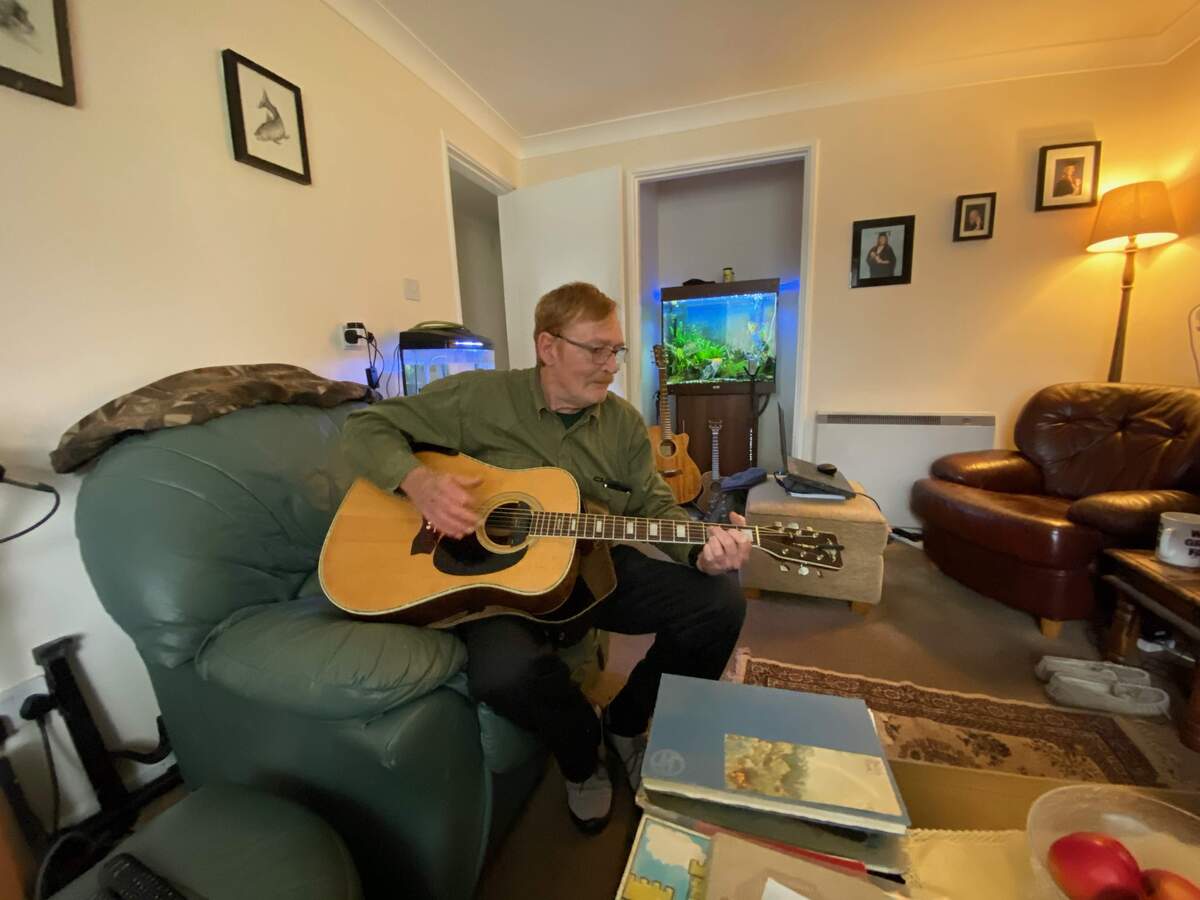
John struggled with depression, substance abuse and gender dysphoria during the 1970s. How do you feel about that part of his life being discussed now?
The albums are about his music and not his idiosyncrasies. It is very easy and natural to speculate about somebody’s personal life, but these subjects are not what draws listeners to sit and enjoy the gifts he has to offer. They have no real substance other than as a distraction.
How did the rediscovery begin from your side? What happened after the copy of ‘John’ went to the charity shop?
The rediscovery story would never have happened if I hadn’t decided to get remarried. My wife couldn’t handle my piles of LPs, and John’s album went in with the lot going to the local charity shop. It was really a case of what will be, will be. The record went to the charity shop and then got into the mechanics of the rediscovery without my intention. When the collector who bought it got in touch with me, I was more than happy to talk to him about it, and we even became friends.
What does the title ‘Songs of Gentleness’ mean to you? If John could see this collection now, what would you want him to know?
I hadn’t thought about it, but my physiotherapist is a guitarist, and we listened to some of John’s music on my phone and he even got me walking to it. He remarked on the peacefulness of the music and shared it with some of his colleagues, so gentleness is definitely a good description for the music. John’s songs are very gentle on the surface, but deeper crevices hold the reasons and emotions behind them. He presents his words in pretty packages and maintains that all the way through, but there’s a depth to some of the writing that you can’t grasp in one hearing. I don’t have a thesaurus on hand, but gentleness, to me, is not just a soft pat on the head. Gentleness is a way of teaching so that a spoonful of syrup makes the medicine go down. John’s songs are the spoonful of syrup, and the medicine is for those who are sensitive enough to receive it. The receiver of the medicine will know who they are without anybody telling them. Some people might enjoy the frivolous dimension of the songs, but then realise on the third or fourth listen that this guy is talking to them. It’s not an open discussion but a private message, if you know what I mean. I think the main thrust of the songs is to be long-lasting, not just a temporal listening experience. He’s trying to do his part spiritually to warn people about their desire for money or status and how to recognise where we’re going wrong. He’s also writing about his private world and inviting us in.
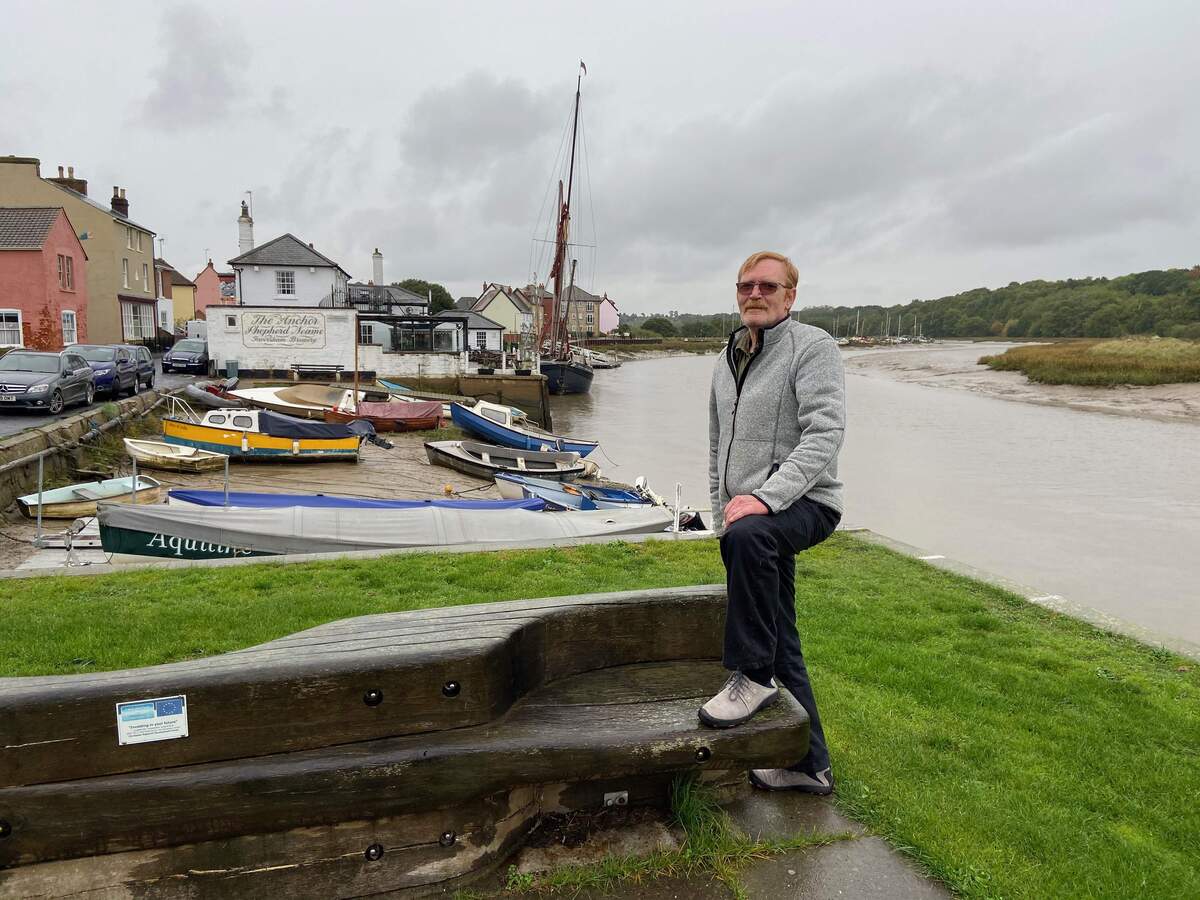
What was it like working with Sharp-Flat and Strawberry Rain to put the collection together?
The project has taken a lot of time. It’s been very enjoyable, but there have also been some frustrating moments. As with any project you embark on, it’s never a straight cruise down the river, but the final result is one of great pleasure and satisfaction. With Sharp-Flat, everything was done to make the experience as smooth as possible, while Strawberry Rain dealt with technical hurdles that are beyond my full understanding. It’s been an adventure that I’m very happy to have been a part of, and I’m extremely grateful for the outcome of it all. This is our gift back to the person who gave us this music.
Klemen Breznikar
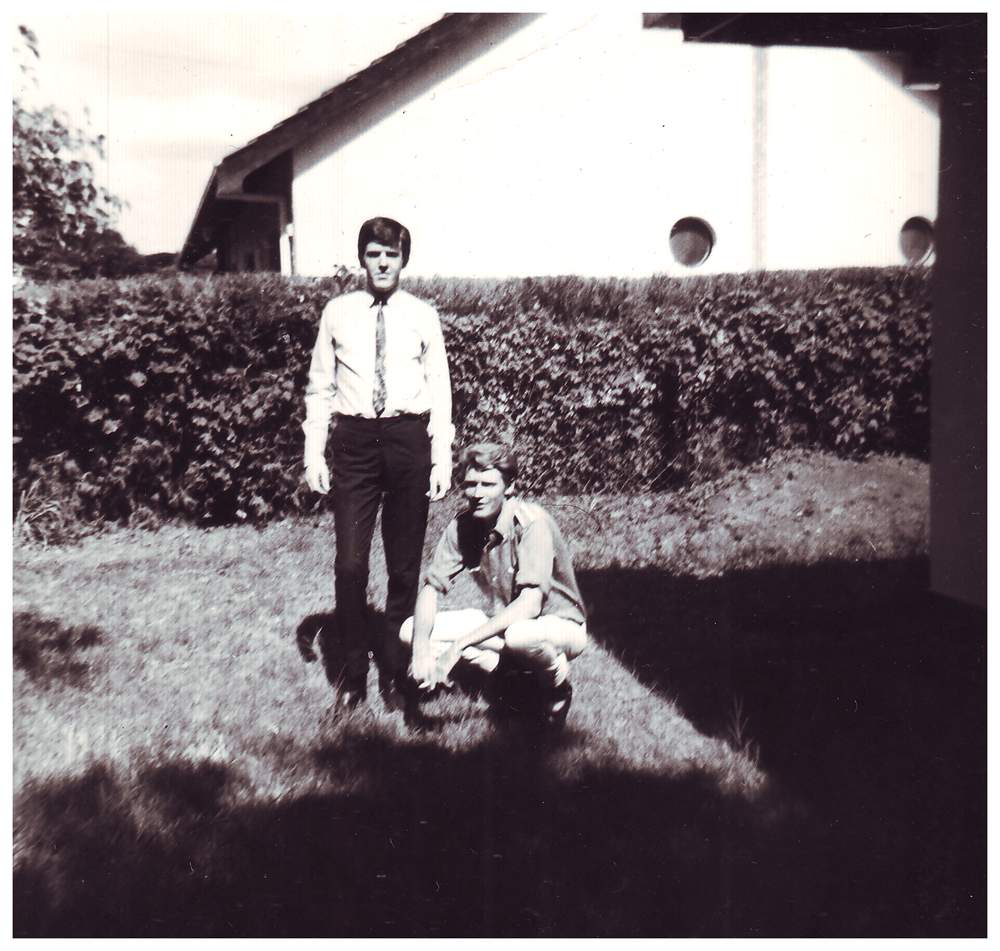
Headline credit: John and Gordon in Rhodesia. Photograph courtesy of the John Phillips Family Archive
Sharp-Flat Records Website / Instagram
Strawberry Rain Website / Facebook / Instagram / YouTube