
Michael Giles Interview | “The Passage of Time Became Part of the Composition Itself”
Michael Giles holds a unique spot in British music history. For many, his name remains tied to the first King Crimson line-up, and it is easy to see why.
The 1969 band, with Robert Fripp, Ian McDonald, Greg Lake, Peter Sinfield, and Giles, didn’t last long, but they created one of the era’s defining albums, ‘In the Court of the Crimson King’. Giles’ drumming is a big reason the album still has a sense of movement. His playing isn’t just powerful, though it can be. It’s unusually responsive, full of movement, space, colour, and sudden changes in atmosphere. He brought a touch of jazz to music that wasn’t quite jazz, a bit of rock to music already moving past rock, and something deeply personal into a group situation where every part had to carry meaning.
Before King Crimson, there had already been another important chapter. Giles, Giles and Fripp, the trio he formed with his brother Peter Giles and Robert Fripp, released ‘The Cheerful Insanity of Giles, Giles and Fripp’ in 1968. It was an eccentric, very English record, full of humour, craft, odd corners and musical intelligence. It did not make them famous, but it belongs to that late sixties moment when different strands of popular and experimental music seemed to overlap freely, without any clear sense yet of where the boundaries lay. Out of that atmosphere came King Crimson, but it is worth remembering that Giles was not simply someone who arrived at the beginning of what later became known as progressive rock. He was already part of the strange workshop from which some of that language was being made.
The first King Crimson album changed the scale of everything. It gathered the intensity of the London underground, the ambition of the late sixties album form, the discipline of players who listened hard to each other, and the unease of a time that was turning darker. Giles’ contribution was central because he shaped the music from inside it. On ’21st Century Schizoid Man’, he could be explosive without becoming crude. On ‘I Talk to the Wind’ and ‘Moonchild’, he understood quietness as an active force. In that early Crimson music, the drum part often behaves almost like an arranger. It opens space, closes it, changes the emotional temperature, and helps the music move without making it sound overdetermined.
After that first period, Giles and Ian McDonald left King Crimson, though Giles was still heard on ‘In the Wake of Poseidon’ in 1970. He and McDonald then made ‘McDonald and Giles’, a record with its own lighter, more pastoral, but still highly arranged character. From there, Giles moved through a wide range of work: studio sessions, collaborations, film music, and later projects connected to the Crimson family, including the 21st Century Schizoid Band. His credits and associations tell one story, but they do not tell all of it. The deeper story is that of a musician who seems to have kept working without always needing to place himself in the centre of the public picture.
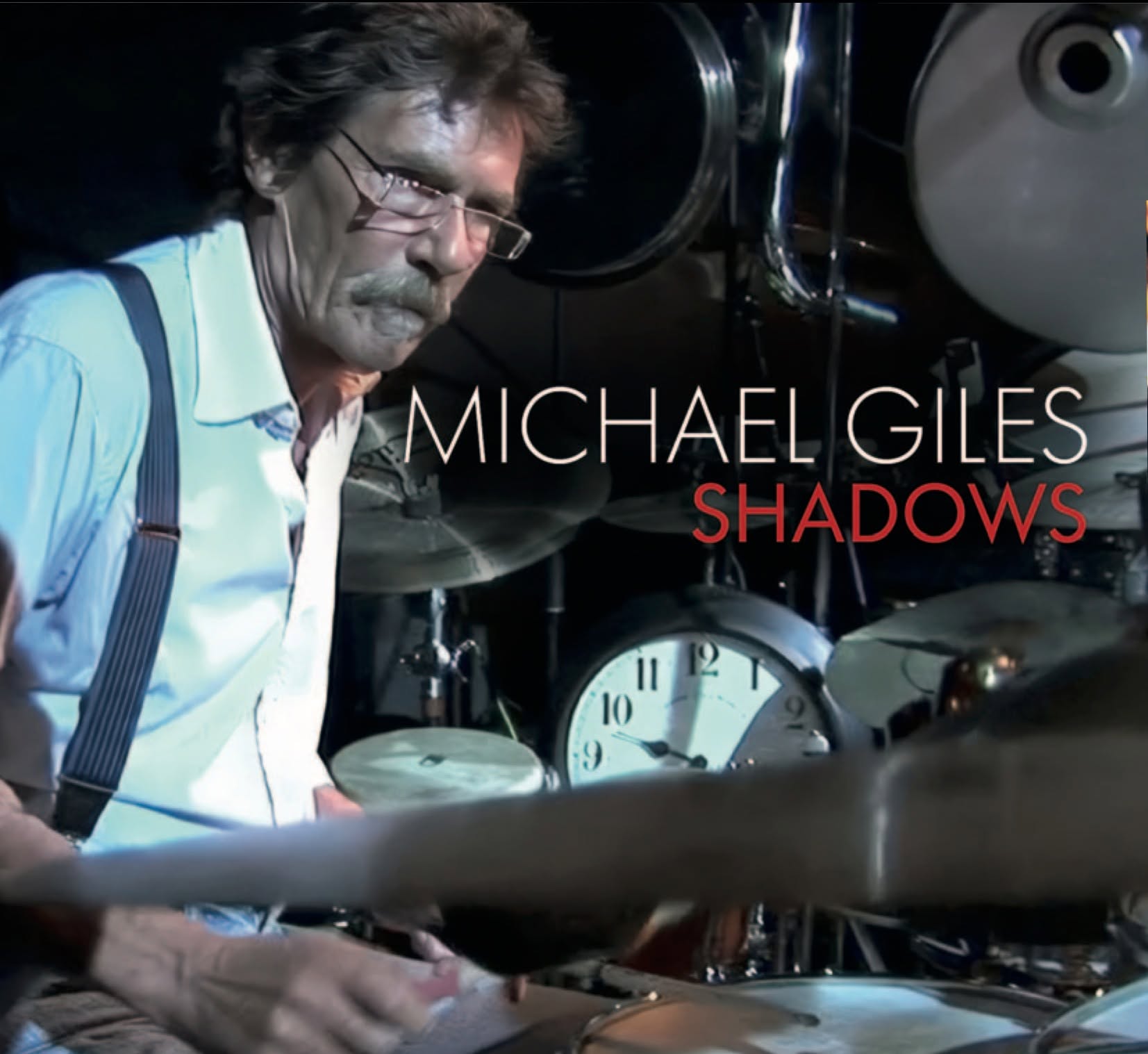
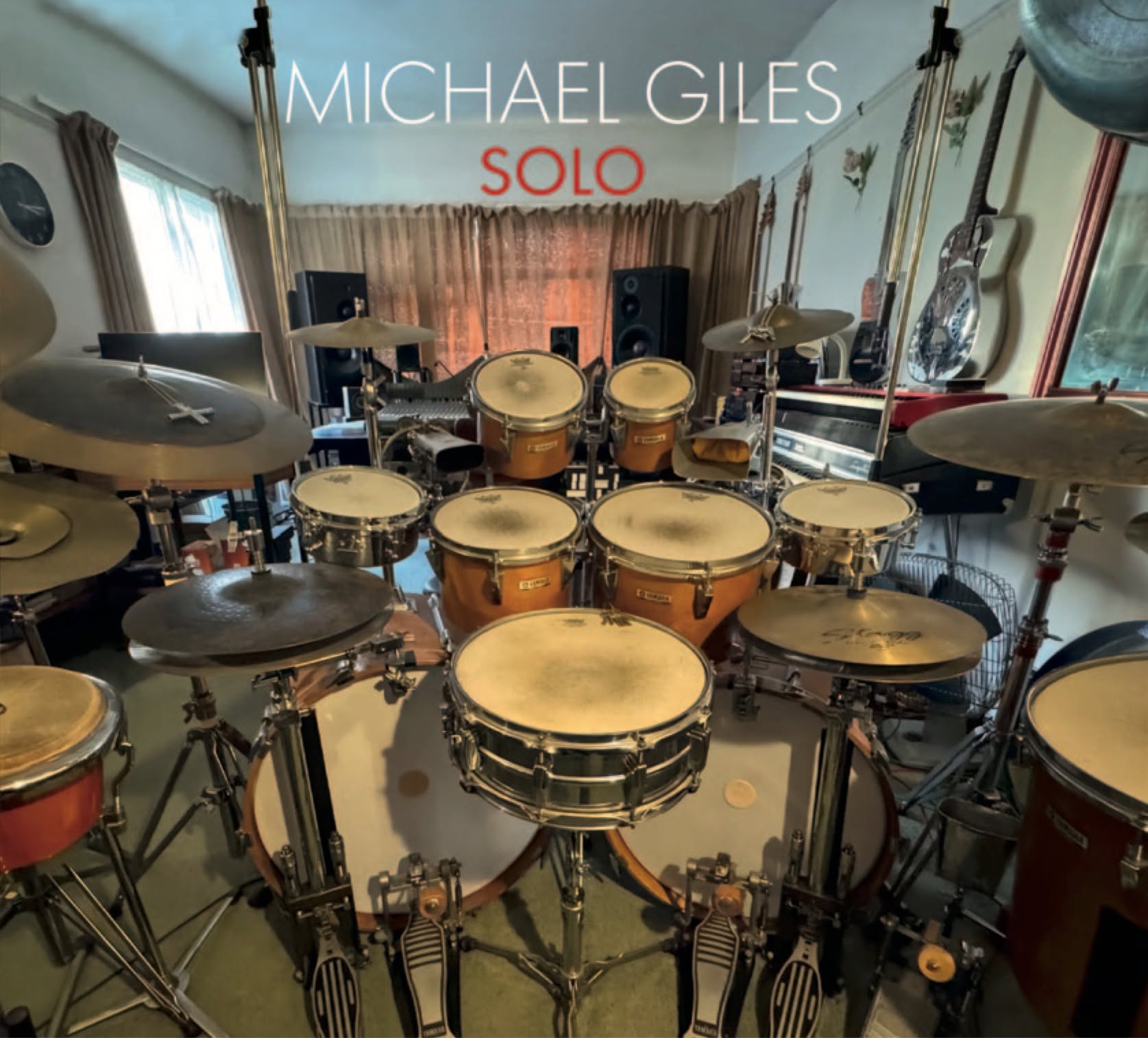
That is part of what makes ‘Shadows / Solo’ so interesting. It is not merely another archival release from a respected musician associated with an important band. It gives us Michael Giles outside the usual King Crimson frame, and to consider his work on its own terms. These recordings were made across many years, often away from the pressure of a band identity. Some of the music came from earlier periods, some from his current Bungalow studio, yet Giles speaks of these pieces as belonging to a single, larger conception, music “intended to become part of one body of work.”
In the interview that follows, Giles is careful not to romanticise the process. He describes the work as something that developed slowly, sometimes being revisited years later with another understanding. He says that “the passage of time became part of the composition itself,” which may be the key to the whole release. These pieces allow the distance between one period of life and another to remain intact. The younger musician and the older musician meet in the same space, with the feeling of a conversation across time.
There is also a marked difference between the collaborative tension of King Crimson and the solitary nature of these recordings. Giles speaks very clearly about that. In a group, the music tends to take its shape from the interplay of personalities and the pressures that arise between them. Alone, the decisions become inward. The music is guided more by memory. This does not necessarily make the process easier, as it removes the support that a group can provide. Giles describes the result of stripping away supporting material as being “almost naked.”
For listeners who know Giles mainly through the force and imagination of early King Crimson, the patience of ‘Shadows / Solo’ may be one of its most revealing qualities. The playing is not concerned with proving anything. It is more concerned with what can be left alone, what can remain unresolved, and what appears when a musician stops forcing the music towards a conclusion. In that sense, the album does not contradict his earlier work. It makes the earlier work easier to hear in another way.
This interview arrives at a useful moment because ‘Shadows / Solo’ also opens the door to further archival releases, including sessions connected with Jamie Muir and Morris Pert, and a larger body of studio recordings. His remark that “it will be ready when it is ready” gives a clear indication of how he has worked.
The conversation that follows turns upon time and memory, and on the curious afterlife of recordings that waited a long time to be heard. Michael Giles has been part of some of the most discussed music of the late sixties and early seventies, but ‘Shadows / Solo’ gives us another angle on him: not just King Crimson’s original drummer, but a musician still listening carefully to what his own work has been trying to say.
A very special thank you to Adrian Chivers for making this interview possible.
“There is nowhere to hide within the music.”
‘Shadows / Solo’ brings together recordings made across several decades, many of which remained unheard until now. You have described the project not as a retrospective, but as the completion of a circle. When you began putting the album together, did the pieces feel tied to different periods of your life, or did they start to sound like one continuous body of work?
Michael Giles: Yes, some of the material on ‘Shadows’ was recorded across a few decades. However, these recordings were always intended to become part of one body of work. The tracks developed and evolved gradually over time, sometimes being revisited years later with a different understanding or perspective, but there was always a sense that they belonged together.
Because of that, I never really heard them as disconnected fragments from different periods of my life. What became clearer as I assembled the pieces was the continuity between them. Even when the recordings were separated by years, they seemed to carry the same emotional atmosphere and the same underlying intent. In many ways, the passage of time became part of the composition itself.
So for me, the process was less about compiling archival material and more about finally completing something that had been unfolding slowly over time.
‘Solo’ emerged from sessions recorded at my current Bungalow studio, a spontaneous and untethered emotional response to the creative energy of Keith, Adrian and Daniel. It was immediate and instinctive, shaped entirely by the atmosphere and emotion of that particular moment.
A fascinating result of stripping away the supporting music was being left completely exposed, almost naked. Without the surrounding instrumentation to lean on, every gesture and nuance became far more vulnerable and immediate. At first, that exposure felt unsettling, but it also revealed an honesty within the performances that might otherwise have remained hidden.
Much of this material was recorded in your own studios, over many years, away from a band situation. How different did the decision-making feel compared with King Crimson, where the music was shaped by other people in the room, and by all the pressure and instinct that comes with that?
The decision-making was very different on my own because there was no sense of negotiation taking place. In a group like King Crimson, the music develops through the tension and interaction between different personalities, ideas and disciplines. That friction can be incredibly productive because the music is constantly being challenged, reshaped and pushed somewhere until each player is happy with the result.
Working alone in the studio was a much more internal process. The decisions were quieter and often instinctive. Rather than responding to other musicians in real time, I was responding to atmosphere, memory and emotion. Sometimes that meant allowing pieces to remain unresolved for years until I understood what they were asking for.
At the same time, solitude creates a different kind of honesty. There is nowhere to hide within the music. A fascinating result of stripping away the supporting framework was being left completely exposed, almost naked. Without the dynamic of collaboration or arrangement to lean on, every sound and gesture carried a greater emotional weight. That vulnerability became an important part of ‘Solo’ in particular, because the recordings were not shaped by structure but by immediate emotional responses, with awareness of “less is more.”
There is a lot of patience in these recordings. Not only in the pace, but in the way you allow ideas to remain open. That feels very different from the intensity people often associate with your early work. Do you hear that as something that changed in your playing over the years, or was it always there, just harder to hear in a band like King Crimson?
I think that aspect was probably always present, although it may have been less audible within earlier contexts. In the early years, particularly within King Crimson, there was often an intensity and momentum that naturally pushed the music forward. The energy of collaboration can create a kind of urgency, and that became part of the character people associated with the work.
But even then, I was always interested in space, restraint and atmosphere, in allowing music to breathe rather than constantly filling it. Over time, I became more comfortable trusting silence and incompleteness, allowing ideas to remain unresolved if that felt emotionally true. I no longer felt the same need to force a conclusion or impose structure simply for the sake of resolution.
Age and experience probably deepen your relationship with patience as well. You become less concerned with proving something and more interested in listening carefully to what the music itself requires. In these recordings, especially the more solitary pieces, that patience became much more exposed and much more central to the work. The music could simply exist in its own time without needing to justify itself through intensity or forced movement.
This release comes after a long gap between solo albums. What changed for you that made this feel like the right time to gather these recordings and let people hear them?
I never consciously viewed the recordings as a private archive, although for a long time they existed in a very personal space and without any real expectation that they would eventually be released. The pieces developed slowly and often without any fixed destination, so there was never a sense of working towards a conventional album in the usual way.
Over time, I began to understand the relationship between the recordings more clearly, not simply as isolated experiments or sketches, but as connected parts of a larger emotional and musical statement. Once that became apparent, it no longer felt right to leave them unfinished or unheard.
I also think time changes your perspective on what it means to share work. Earlier in life, there can be a tendency to hold material back until it feels fully resolved or finished. With these recordings, particularly ‘Solo’, I became more comfortable with vulnerability and openness, even allowing certain ambiguities to remain. The imperfections and unfinished edges became part of the honesty of the music rather than something to conceal.
So the release emerged less from a desire to revisit the past and more from a feeling that the circle had finally closed and the work was ready to exist outside of myself.
When you listened back to recordings made many years apart, you were hearing music made by earlier versions of yourself. How did that affect the way you chose what belonged on ‘Shadows / Solo’? Did you find yourself leaving things alone that you might once have changed?
That distance was actually one of the most interesting aspects of assembling the tracks. Listening to performances captured many years apart, I was very aware that the person evaluating the music was no longer entirely the same person who had originally created it. In some cases, I could still recognise the emotional intention immediately, while in others, it felt almost like listening to somebody else, which I enjoyed.
What became important was resisting the temptation to overcorrect or reinterpret everything through the perspective of the present. Earlier in life, I might have been more inclined to refine, restructure or even replace certain things in pursuit of perfection or control. With time, I became more interested in preserving the honesty of the moment in which the recordings were made, even if that meant leaving imperfections or unresolved elements intact.
The distance between the person who recorded the music and the person assembling it eventually became part of the work itself. The recordings carry traces of different versions of myself across different periods of life, but rather than trying to erase those differences, I wanted the music to acknowledge and preserve them.
“I have always preferred to allow the music to pass through me like a conduit”
This release brings together recordings from many different years. When you were putting it together, were you thinking about how it might tell the story of your musical life, or did you simply choose the pieces that still felt strongest to you?
I was aware that bringing together recordings from such a long period of time would inevitably create a kind of narrative, although I did not approach the project with the intention of constructing a definitive statement about my musical life. In many ways, the album reveals its own continuity rather than imposing one artificially.
What interested me more was emotional and atmospheric coherence rather than chronology. I was not trying to document progression in a linear sense or present a carefully curated retrospective. Instead, I wanted the recordings to exist alongside one another honestly, allowing listeners to hear the connections, contrasts and gradual shifts that emerged naturally over time.
At the same time, I do recognise that ‘Shadows / Solo’ reflects aspects of my musical life that may not always have been fully visible in earlier contexts. Certain elements, the patience, the restraint, the vulnerability and the attention to atmosphere, were always present to some degree, but often existed beneath the surface of more collaborative or externally driven work.
So while I would hesitate to describe the release as a summary or autobiography, it probably does reveal a more private and continuous thread running through the different phases of my life as a musician. In that sense, the narrative was discovered rather than consciously designed.
What has always been important to me is to remain honest and genuine in the creative process, to make music only when it feels natural and truthful to do so. I have never wanted to force creativity simply for the sake of productivity, because that can very quickly become predictable and formulaic. I have always preferred to allow the music to pass through me like a conduit, in its own time, rather than trying to impose something artificial upon it.
That is still very much how I work now. I am currently developing new material which feels as though it is unfolding with a natural flow. There is no sense of urgency surrounding it, so it will be ready when it is ready.
At the same time, I am also looking towards releasing other recordings from earlier periods. Initially, this will include a double CD, provisionally scheduled for release on 3rd September, featuring two sessions recorded in the early 1980s with fellow King Crimson member Jamie Muir, with whom I worked on the film ‘Ghost Dance’, alongside Morris Pert, best known for his work with Brand X and many other internationally renowned artists, including Peter Gabriel and Kate Bush.
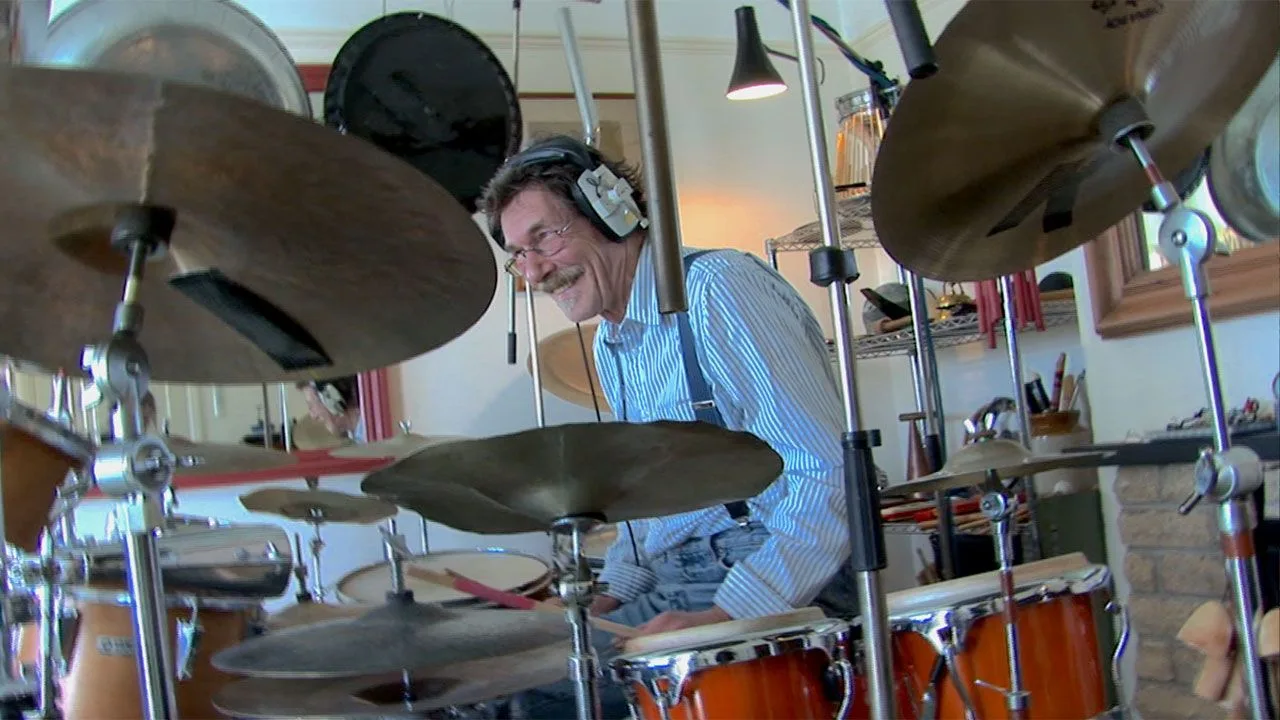
There will also be a further release early next year in the form of a five CD box set, bringing together a wide range of recordings, including drum recordings taken from sound checks, lo-fi sessions, experiments, rough sketches and unfinished ideas. These are raw process recordings, material captured very much in the moment, and they reveal another side of the creative process, less concerned with completion and more with exploration, instinct and discovery.
Klemen Breznikar
Michael Giles YouTube