
Joachim Kühn: “The Best Improvisation Happens When Your Head Is Completely Empty”
Joachim Kühn has spent more than six decades pursuing musical freedom, but the freedom in his playing has always been founded on discipline.
Born in Leipzig in 1944, he gave his first piano concert at six and grew up hearing jazz through his older brother, the clarinettist Rolf Kühn. After seeing the Chet Baker Quintet in West Berlin at eleven, he decided that music would be his life. At fourteen, he committed himself to practising ten hours a day for ten years.
That preparation allowed him to move easily between musical worlds. He absorbed James P. Johnson, Teddy Wilson and Bobby Timmons, but Ornette Coleman’s ‘The Shape of Jazz to Come’ proved decisive. Its freedom from conventional chord changes helped Kühn recognise the direction his own music could take.
After leaving East Germany in 1966, he became part of the rapidly changing European jazz scene. Paris brought collaborations with Don Cherry, Gato Barbieri, Jean-François Jenny-Clark, Aldo Romano, Michel Portal and many others. Free improvisation, composition, jazz-rock, electronics and a later return to acoustic piano were not separate careers, but stages in the same search for new possibilities.
Among Kühn’s most important partnerships was his trio with Jenny-Clark and Daniel Humair, which he calls “the trio of my life”. Another was his work with Coleman, with whom he played sixteen concerts between 1995 and 2000. Coleman gave him unusual harmonic freedom, telling him simply: “You make the chords.”
Now based in Ibiza, Kühn continues to compose and to work with younger musicians, although he describes himself as largely retired. At 82, his central belief remains unchanged: the musician prepares with complete seriousness, but must eventually let everything go. “The best improvisation happens when your head is completely empty,” he says. “When you think, it is already too late.”
In the interview that follows, Kühn reflects on Leipzig, Paris, California and Ibiza, on his brother, Coleman and the musicians who shaped him, and on a lifetime spent resisting musical limits.
“The best improvisation happens when your head is completely empty”
You gave your first piano concert when you were six and received a rigorous classical education, yet jazz was present from the beginning through your brother Rolf and the records he played. At fourteen, you decided that you would need to practise ten hours a day for ten years if you wanted to play with the musicians you admired. Did that discipline make musical freedom possible, or did you also have to learn how to set it aside when you began improvising?
My mother took me to a piano teacher when I was five. I suppose I was a little talented because I was able to play my first concert when I was six. Since then, I do not think a single year has passed in which I have not played concerts. I am 82 now.
Jazz was already around me when I was a baby. My brother practised the clarinet and played jazz records, so I heard jazz before I could even sing. When we visited him in West Berlin, I would listen to his records. The music was there from the beginning.
When I was seven or eight, I had a record by James P. Johnson. I really liked it, and I tried to play boogie-woogie by listening to the record. As soon as I could play that left-hand line, I began improvising. Improvising came naturally to me, perhaps because of my brother and everything I had heard. It was never a problem.
In 1955, when I was eleven, my brother took me to see the Chet Baker Quintet in West Berlin. During that concert, I made my decision. I said, “This is what I want to do later, and nothing else.”
At first, I wanted to be a trumpet player. When I was eight, my brother gave me a trumpet, and I played in a Dixieland band. When I was twelve or thirteen, I had a little swing group in Leipzig. This was all in East Germany, where nothing was easy.
By the time I was fourteen or fifteen, I had come naturally to modern jazz. Records were extremely important to me. I listened closely to my favourite pianists, beginning with James P. Johnson and then Teddy Wilson and Bobby Timmons.
At fourteen, I made a very clear decision. I thought that, if I wanted to play with very good musicians, I would have to practise ten hours a day for ten years. I was also certain that I could make a living playing only the music I wanted to play.
I believe those ten years of practising the right things eventually led me towards my own style. I began making records when I was nineteen, in 1963, and I have never stopped. Making records is still one of my favourite things in life. Almost every year since then, I have made at least one album.
Around 1959 or 1960, my brother told me about Ornette Coleman, who was improvising without chord changes. I wondered how that could possibly work, so he sent me ‘The Shape of Jazz to Come’. I loved the music so much that I practised with that record for weeks, trying to understand how to improvise in that way.
That helped me find my own style very early. You can already hear it on ‘Re-Union in Berlin’, which I recorded in 1965 with my brother and my East German trio. I also made recordings in Poland around that time at the Jazz Jamboree. When I hear those recordings, I can already recognise my own way of playing.
Composition always played an important role as well. The musical freedom was already there once I had heard Ornette Coleman and begun to understand what he was doing.
Of course, when you improvise, you do not think about theory. The best improvisation happens when your head is completely empty. You do not think while you play. When you think, it is already too late.
You have to learn not to think when you are performing. Practising is something else. When you practise, you have to think carefully about what you are doing. During a concert, however, you have to let it go.
You describe what you were doing in East Germany not as political protest but as “musical protest”. What did that distinction mean to you, and how did leaving in 1966 change the relationship between freedom in your life and freedom in your music?
It was not political protest. It was musical protest.
After I escaped from East Germany and came to the West, the feeling of freedom became stronger and stronger. My life was suddenly free, and the music became freer at the same time.
It was important to forget the musical rules and simply play. The music was about energy. The music itself was leading us. That was the music of the 1960s.
It was a musical protest against rules. The freedom was there because life itself had suddenly become free.
Rolf was fourteen years older than you. He introduced you to much of the music that shaped you and helped arrange the invitation from Friedrich Gulda that allowed you to leave East Germany safely. How did you understand his place in your life, as an older brother, a guide and a musical partner, and what did he give you that nobody else could?
My brother had played with Friedrich Gulda, and he asked Gulda to invite me to take part in his competition. That invitation was extremely important because it allowed me to escape safely.
I travelled on a night train and slept through much of the journey. Soon I was in Vienna, where I could go to the West German embassy. From that point, everything became relatively easy.
Rolf was, first of all, my brother. It was because of him that I became so deeply involved in music and jazz. He was my big brother who had gone to America and become a star. He helped me enter the professional music scene, and having a brother with such a well-known name made things much easier for me.
I learned a great deal from him, but he was never simply another musician. He was my brother.
We played very closely together until his death. In one way or another, we played together throughout our lives. We were always connected.
You first came to Paris in 1968 and moved there permanently in May 1969. By then, you had recorded ‘Sound of Feelings’ in Hamburg, and BYG went on to release that album and ‘Paris Is Wonderful’. What did Paris and the relationship with BYG make possible for you at that stage, and how quickly did you feel that you had become part of the city’s international musical community?
The first time I went to Paris was in 1968. My friend Aldo Romano took me there. The moment I saw the city, I had a very strong wish to live there. It was fantastic. There were so many jazz clubs and so many musicians.
On my first night, Aldo took me around the jazz clubs. I sat in and played with different musicians, and by the next day people were already talking about me. I thought, “I have to move here.”
I finally moved to Paris in May 1969. In the meantime, I had recorded ‘Sound of Feelings’ in Hamburg with Jean-François Jenny-Clark and Aldo Romano. We made the album in about three hours.
I took the tapes to the German producer Klaus Lorenzen, whom I knew through my brother. He called Jean-Luc Young at BYG Records and told him, “I have just listened to a new Joachim Kühn album. It is fantastic.”
In fact, he had not listened to it. But they bought the album immediately. I sold my first record without the person buying it having heard the music. It was unbelievable.
‘Sound of Feelings’ came out in 1969 and was successful. There were television appearances, interviews and many other opportunities.
Even before I moved permanently to Paris, many things were already happening. In 1968, I played for several weeks with Slide Hampton at Le Chat Qui Pêche. In January 1969, we also made ‘The Fabulous Slide Hampton Quartet’ with Niels-Henning Ørsted Pedersen and Philly Joe Jones. The music was becoming freer and freer.
When I finally moved to Paris, my car broke down in Belgium. I arrived without any money and almost without enough petrol to reach the city. I went directly to BYG Records and spoke to Jean Georgakarakos. I told him that I had no money but wanted to move to Paris.
He put his hand in his pocket and gave me 10,000 francs in cash. I had arrived in Paris with nothing, gone directly to the record company and immediately received the money I needed. Something like that would be impossible today, but it was unusual even then.
Within a week, I had found an apartment. The following Friday afternoon, I went back to the record company without calling first. I told him that I needed some more money. He gave it to me and said, “This is for your new album.”
Shortly afterwards, I made my second album for BYG, ‘Paris Is Wonderful’. That was how my life in Paris began.
One day, Aldo Romano and I were walking through Saint-Germain when we happened to meet Don Cherry in the street. He said, “I need a band for next week. I am playing for two weeks at Le Chat Qui Pêche.”
He remembered me from a jam session in Prague in 1965. At that time, Don’s group included Aldo Romano, Jean-François Jenny-Clark, Karl Berger and Gato Barbieri. Their concert had been incredible, and afterwards I was able to jam with them.
That was one of the key jam sessions of my life. After I escaped from East Germany, it allowed me to reconnect with Aldo, Jean-François, Karl Berger and the other musicians.
Later, when my brother and I played at the Newport Jazz Festival, I invited Aldo to join us. Jean-François could not play because he was doing his military service, so Rolf called Jimmy Garrison. It was an extraordinary time.
When Don Cherry asked me to play with him in Paris, I was immediately part of that world again. Sunny Murray, who had played with Albert Ayler, heard me with Don and asked me to join his group for the following two weeks. I ended up playing at Le Chat Qui Pêche for four weeks.
After that came work with Michel Portal and many other musicians. Sometimes I played in groups with two drummers, including Jacques Thollot and Aldo Romano. I also appeared on Michel Portal’s album ‘Our Meanings and Our Feelings’.
Everything became international almost immediately. I played with Don Cherry for a while, and then with Gato Barbieri. We played mainly in Italy, but also in Germany and other countries.
Around the same time, I recorded ‘Transfiguration’ with my brother, Karl Berger and Aldo Romano. Everything seemed to happen at once. It was an almost unbelievable period.
I also worked with Eje Thelin, whom I had previously met in Hamburg. He was my favourite trombone player alongside Albert Mangelsdorff. Even today, I do not think Eje is as well known as he deserves to be. He was absolutely fantastic.
In 1970, we made ‘The New Joachim Kühn–Eje Thelin Group in Paris’ with Adelhard Roidinger and Jacques Thollot.
On ‘Sound of Feelings’, you played not only piano but also alto saxophone, flute, shenai and percussion. Was the piano beginning to feel too connected to your classical education, or were you simply trying to reach sounds that the piano could not produce?
There were two expressions that were very important to me during the 1960s and early 1970s. I wanted to be a multi-instrumentalist, and I wanted to be an avant-gardist.
For me, being avant-garde meant playing at the edge, being as free as possible and also exploring atonal music. I took all those instruments with me because I wanted to do that.
Playing more instruments gave me a wider range of expression. It allowed me to create different sounds and simply play according to feeling.
After ‘Sound of Feelings’, I received a contract with MPS Records. On my first MPS album, ‘Bold Music’, I continued playing many of those instruments.
That was simply the period I was living through and the way I wanted to express myself.
Paris also brought you into contact with Don Cherry, Gato Barbieri, Michel Portal, Jean-Luc Ponty and many other musicians with very different ideas about improvisation. What did you learn from Don Cherry about giving shape to free music, and what stayed with you from Gato Barbieri’s approach to sound and intensity? Did those years make you feel that European musicians could finally contribute something of their own to jazz rather than measure themselves against American players?
Jean-Luc Ponty asked me to join his group around 1970. I played with his band for approximately two years, before he moved to the United States.
I learned something from every one of those musicians, particularly about sound and intensity.
At the beginning of the 1960s, there were not many European musicians playing free music. There were a few, but not very many. Through free music, however, some European musicians began to find their own identities. Perhaps it was not a large number of people, but it was a very important development.
I should also mention that I played with Gato during the period of ‘Last Tango in Paris’ and recorded piano solos connected with that music. The film made him very famous.
Before that, Gato had played extremely free jazz. He had an incredible sound, unlike anybody else. His intensity was very special.
Every musician I played with taught me something. You can always learn from another musician when you really listen.
In the 1970s, you became deeply involved with electric keyboards, jazz-rock and the California scene, working with musicians such as Alphonse Mouzon and making records including ‘Hip Elegy’ and ‘Springfever’. Some musicians and listeners regarded fusion as a retreat from the ideals of free jazz. Did it ever feel like a change of direction to you, or was it the same search carried out with different sounds? What could electricity, volume and a strong groove give you that an acoustic group could not?
In 1973, I decided to make a record with more time, more chords and more defined structures. I even recorded two standards. The album was called ‘This Way Out’.
The title meant a way out of playing only free jazz. Free jazz was still included, but it had become one part of the music rather than the whole music.
That was my first album with Daniel Humair, who is still my friend more than fifty years later.
In 1975, I went to New York. I had remained in touch with Joe Henderson because we had played together for two weeks at the Club Saint-Germain in Paris and had begun making a record together. He invited me to California so that we could finish the album by recording two more pieces.
I went to California for the first time and immediately loved it. Orrin Keepnews of Milestone Records was the producer. The label paid for a hotel for one week, and everything was very comfortable.
I liked the life, the people, the weather and the music. There was another kind of music happening there, with electric rock groups and long guitar solos. It opened something new for me.
After that first week, I stayed in California for another six weeks. I travelled around with new friends and began writing new music.
Then I returned to Germany to finish my contract with MPS. Joachim-Ernst Berendt produced ‘Hip Elegy’. The influence of California was already there. I had written the compositions in California, Hawaii and places connected with that journey. It was another new direction.
I could have made a comfortable living playing only free jazz, but I felt that it had become limited. I wanted to explore jazz-rock and make records that could reach more people.
I developed a relationship with Roland, and they supplied me with keyboards and synthesisers. I began seriously exploring those instruments.
At the same time, Siggi Loch contacted me about joining Atlantic Records. Atlantic was one of the great jazz labels, and the contract gave me the opportunity to develop this music.
The first album, ‘Springfever’, did very well. By then, I had moved to California, initially to San Francisco.
Jan Akkerman, the guitarist from Focus, was making a solo album and invited me to record with him in Los Angeles. Billy Cobham also called and asked me to play on his first album for CBS, recorded at Electric Lady Studios in New York.
I continued going back and forth while exploring this new kind of music. My second Atlantic album, ‘Sunshower’, also sold very well. I began thinking, “It is easy to sell records.”
I had received a good musical education and felt that I could play any kind of music. I was not trapped inside free jazz.
I enjoyed the new sounds I could produce with electronic instruments, pedals and amplifiers. Electricity also gave me volume. I could finally play loudly, which was difficult on an acoustic piano.
A saxophone can sustain a long note, but a piano cannot. Electronic instruments allowed me to create and hold sounds that were impossible on an acoustic piano. I became deeply involved with those possibilities.
Eventually, I made ‘Don’t Stop Me Now’. It was a failure. By then, I had gone a little too far. I dismissed the producers and said, “I can do everything myself.”
The failure was good for me because it woke me up. After five years in California, I realised that I did not want to continue in that direction.
I returned to New York and began playing only acoustic piano again. In 1981, I made ‘Nightline New York’ with Michael Brecker, Eddie Gómez and Billy Hart, with Bob Mintzer appearing as a guest.
You have called the group with Jean-François Jenny-Clark and Daniel Humair “the trio of my life.” You have also said that the trio hardly ever rehearsed and often learned new pieces during the soundcheck because Jean-François and Daniel did not want to practise them beforehand. Why did that method work so well for more than two decades? What could they understand about your music before you had explained it, and when Jean-François died, did you lose only a band or also a way of thinking that could not be replaced?
I moved back to Paris in 1984 and immediately reconnected with my friends Daniel Humair, Michel Portal and Jean-François Jenny-Clark. I began playing in Michel’s quartet again, and Jean-François, Daniel and I re-formed our trio.
Our first concert together had been in 1974. I left for the United States in 1975, and when I returned, we formed the trio again. We continued until Jean-François died in 1998. Otherwise, I believe we would still be playing together.
As I have always said, it was the trio of my life.
Jean-François was also one of my closest friends. I learned a great deal from him musically. He introduced me to some of the finest music by French composers, including Debussy and Ravel.
He could play anything. He knew classical music, all the standards and modern composers such as Stockhausen and Pierre Boulez.
With him, I felt that I could play free music without playing anything wrong. We were always connected. Perhaps it also helped that we were the same age.
Jean-François died in 1998, and I lost a very close friend. I continued playing with Daniel, but that trio was finished.
We made twelve albums together. More recently, an album was released from live tapes recorded in 1992 and 1993, called ‘On Tour 1992–93’. I think it is an amazing record.
What can I say about Daniel? For me, he was one of the first European drummers who could swing as strongly as the Americans, and he was already doing that at the end of the 1950s. He remained at the highest level throughout his life.
He is a great artist and a great friend. We are planning to play a concert together in Paris in January 2027. It may be our final concert because he is now 88.
Voilà.
“You have to learn not to think”
Ornette Coleman generally avoided the piano, yet when you finally played together, you felt that he treated you as an equal partner rather than as his pianist. What did he hear in your playing that allowed the piano to belong in his music? For your sixteen concerts between 1995 and 2000, he wrote new pieces for each performance and gave you unusual freedom in shaping the harmony. Around the same period, you developed your Diminished Augmented System and returned towards Bach. How did playing with Ornette connect those apparently distant parts of your musical life?
That was a story by itself. I had practised with Ornette Coleman’s records from the time I was young, and I had also played with Don Cherry. There was also Don’s album ‘Eternal Rhythm’, which we recorded for MPS in 1968.
Working with Ornette himself was something completely different, but I was prepared. From the first moment, I could play with him as though we had always played together.
I somehow knew that I was the right person for him. To give yourself one hundred per cent to this profession, you have to be fanatical. Ornette was as fanatical about music as I am. We understood each other immediately on a personal level.
Our first concert was in a large arena in Italy, in front of around 12,000 people. Then I invited him to play at the festival in Leipzig.
Ornette had every concert recorded. One night, he called me in Ibiza and said, “I like the tapes. I want to put this out.” Suddenly, I had a record with Ornette Coleman. It was amazing. That became ‘Colors: Live from Leipzig’, and it was only our second concert together.
After that, he said, “From now on, you come to New York for one week before every concert.”
From 1995 to 2000, we played sixteen concerts together. Before each concert, Ornette wrote ten new compositions. I would travel to New York, and we would spend one week working in his Harmolodic studio in Harlem. Then I would return home, and the concerts were mostly in Europe, particularly Italy and France.
He was an incredibly generous person in every respect. He was one of the most beautiful human beings I have known.
During rehearsals, he would show me his ten new compositions and say, “You make the chords.” That meant I was directly involved in the development of the music. He gave me complete freedom.
Sometimes we played for ten or twelve hours a day in the studio, and everything was recorded. By the fifth or sixth day, those compositions felt as though they were yours. There are some incredible tapes. I hope they will all come out one day.
After the concert with Ornette, Bert Noglik had the idea that the next step should be a concert with the Thomanerchor at St. Thomas Church in Leipzig.
I had my confirmation in St. Thomas Church, and the choir is, of course, closely associated with Johann Sebastian Bach. Georg Christoph Biller, who was the Thomaskantor at the time, liked my improvisation.
He said, “Bach would have improvised like you do.”
Can you imagine? I was playing extremely free improvised music with Ornette Coleman and then working on Bach with the choir and improvising around that music. We played about fifteen concerts together.
That experience was better than any university. I was already in my late fifties, but I could still learn and explore something completely new. It helped me enormously with my own music.
The way Ornette first heard me was also very simple. He was spending time with my French manager, Geneviève Peyrègne, and said to her, “Play me some music that you like.”
She played him one of the trio records with Jean-François and Daniel. Ornette listened to me and said, “This guy is a real musician.”
Geneviève told him, “You have to play with him.”
He said, “Okay.”
It was as easy as that. But after our first concert, we really connected, and the relationship continued for about five years. For me, it was incredible.
After years in Leipzig, Hamburg, Paris, New York and California, Ibiza gave you a quieter place where you could organise your life around composing and playing every day. Your long relationship with Siggi Loch and ACT has also allowed you to work in very different settings, from ‘Europeana’ and solo piano to the groups with Majid Bekkas and Ramón López, the duo with Michael Wollny and your various trios. How important have that personal isolation and that stable label relationship been to your freedom? When you have a new musical idea, how do you decide whether it needs one piano, a small group or something much larger?
Siggi Loch first contacted me in the mid-1970s and brought me to Atlantic Records. Then, in the early 1990s, he contacted me again to record ‘Europeana’. By that time, he had established his own label, ACT Music.
We reconnected and have remained together until today. Apart from a period of approximately twelve years when I recorded for other labels, our relationship has lasted around fifty years.
I do not think that happens very often anywhere in the world, a producer working with the same artist for fifty years. For me, ACT has become one of the great independent jazz labels, alongside ECM.
Moving from one place to another can also be healthy. When you move, the music changes.
All of a sudden, for example, I became interested in African music and met Majid Bekkas. He invited me to play at his festival. I thought, “This is something from which I can learn again.”
I went to Morocco many times. We played together frequently and formed a trio with Ramón López. It goes on and on. I do not know where to stop because one project always leads to another.
Jazz provides stories that often happen by accident. I met Thibault Cellier, the bass player in my French Trio, while having breakfast in Paris during a festival. I invited him to come and play.
When we started playing, we did not know that we were going to make a record. I simply arranged for the music to be recorded, and that became ‘The Way’.
At the time of this conversation, a second album with the French Trio was planned for release on ACT in January 2027.
Siggi always had an open ear for my ideas, but he also brought ideas of his own. It was his idea that I should play with Michael Wollny.
What Siggi had done with me in the 1970s, he later did with Michael. At first, I said, “I do not like playing with other pianists.”
Then I listened to Michael’s records and realised that he was a very good musician, so we began to play together. Siggi released our first concert as our first album.
It now seems that Michael and I will play another four concerts together in 2027.
For me, it is very easy to play with him because I can be completely myself. I do not have to think about him or change what I am doing because he knows my music very well. He has even studied my playing.
Michael is the great exception for me among pianists. I could not do this with somebody else.
That relationship with Siggi has always involved taking and giving. He had ideas, and I had ideas. Without him, I would have had a completely different recording career. He has been extremely important.
First there was Joachim-Ernst Berendt, and then there was Siggi Loch. What can I say? Fifty years together makes us world champions.
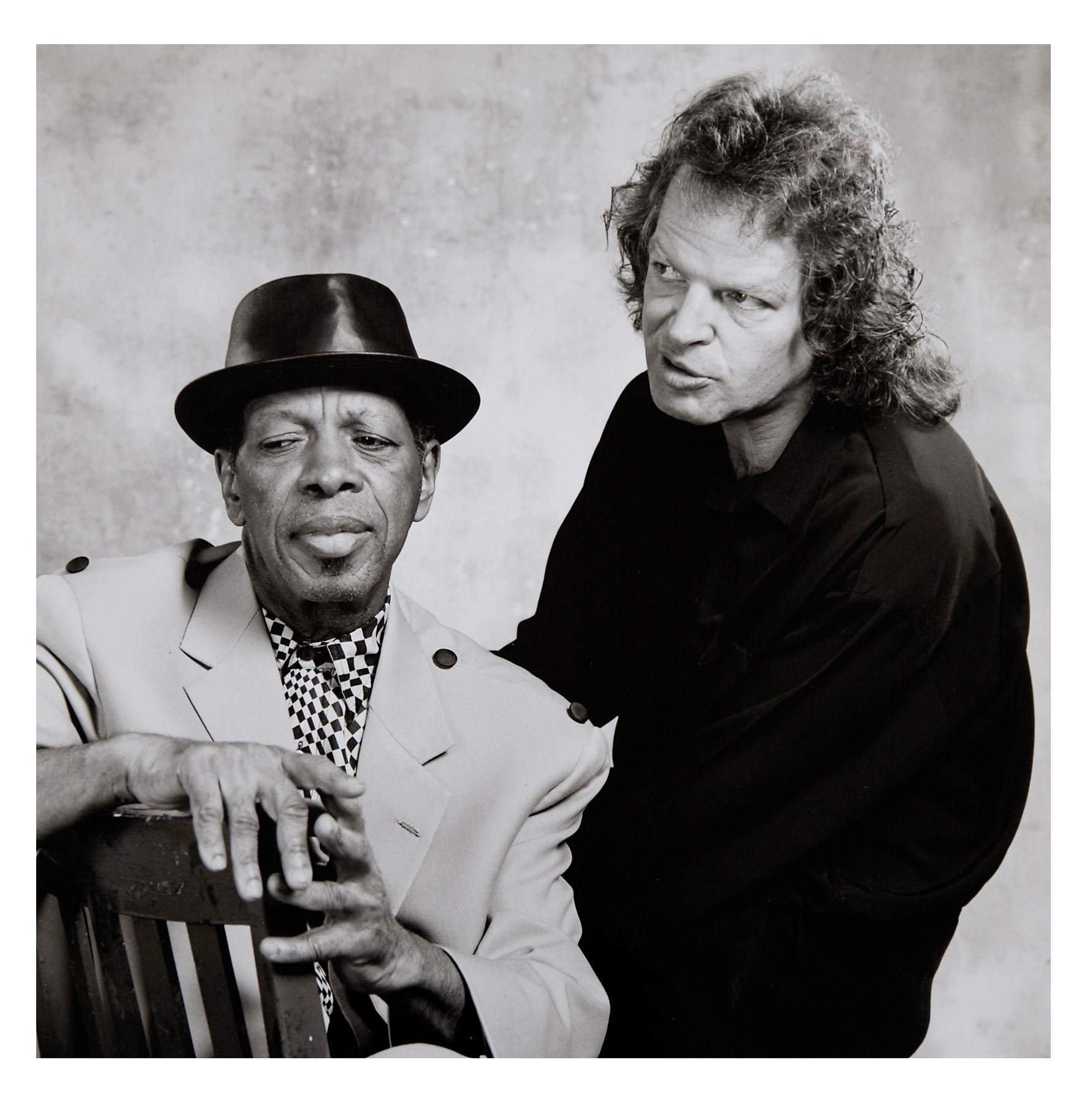
After recording ‘The Way’, you said that the music represented how you wanted to sound at that moment. Soon afterwards, you formed ‘Joachim Kühn & Young Lions’ with four much younger musicians and wrote new music around the sound of trumpet and marimba. How quickly does a sound that feels right become something you need to leave behind? What did those younger musicians reveal about your music or your habits, and what are you still trying to play that you cannot yet play?
I compose in many different places. I do not need a piano in order to compose. I can compose entirely in my head.
I had written this new music and thought that I would like to record it with musicians with whom I had never played before. I wanted to record with very young musicians who had exceptional talent and who were as fanatical about music as I was when I was twenty-one or twenty-two.
I found Andrés Coll here in Ibiza. As far as I know, he is the only jazz musician ever born in Ibiza. I have known him since he came to see me when he was nineteen, and I could immediately recognise his talent.
The progress he has made in five years is incredible. I recently recorded another album with him. I liked him so much from the beginning that I knew he had to be part of Young Lions.
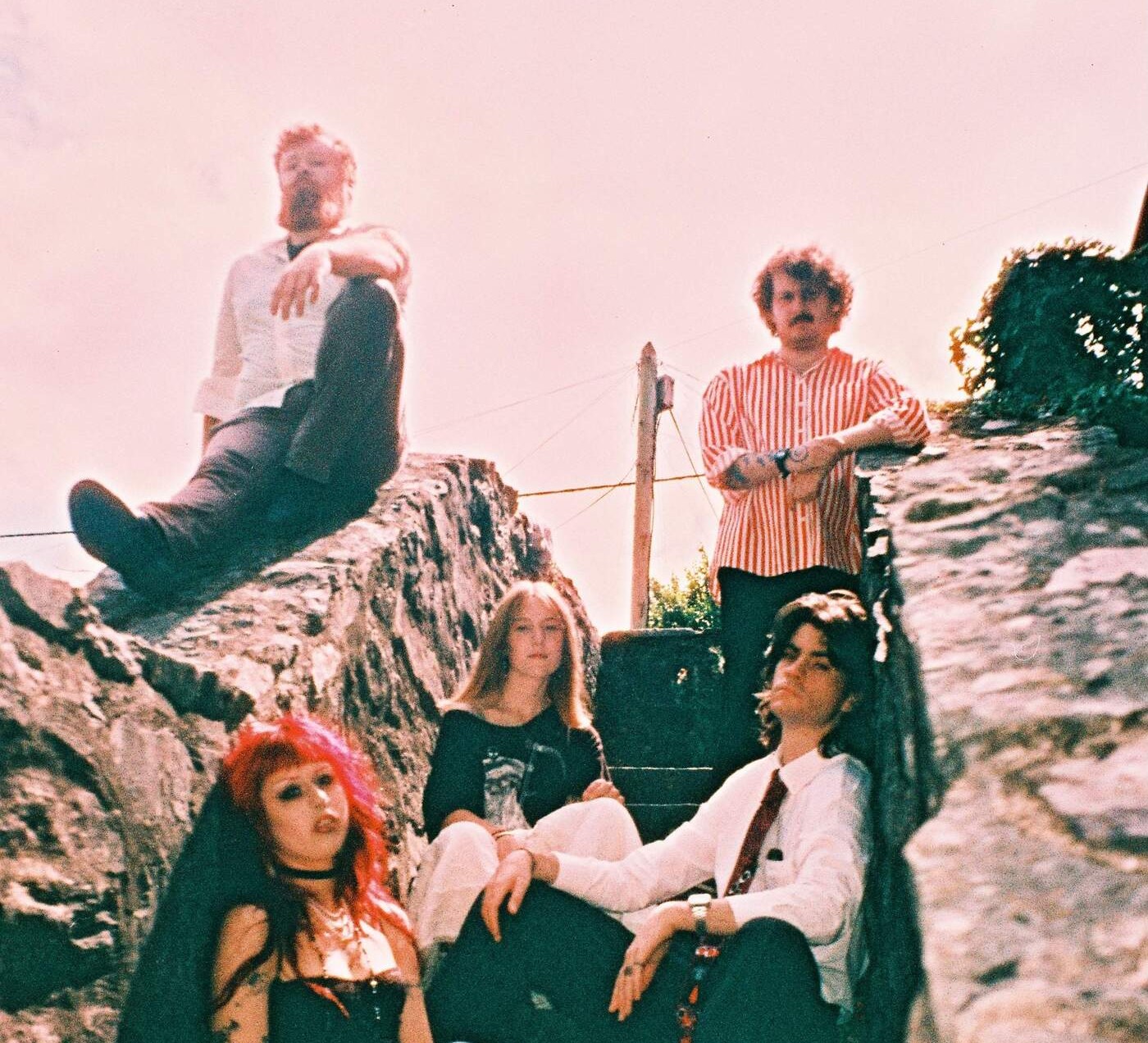
Then there is Jakob Bänsch on trumpet, Nils Kugelmann on bass and Sebastian Wolfgruber on drums. They are incredible talents. The bass and drums are burning. I love playing with these musicians.
We played only one concert after the record was released, and I thought it was incredible. I would very much like to play more concerts with this group.
Apart from that, I am retired. I only play concerts when I really feel like playing them.
There are only four or five concerts planned for 2027. For me, that is now the maximum.
Klemen Breznikar
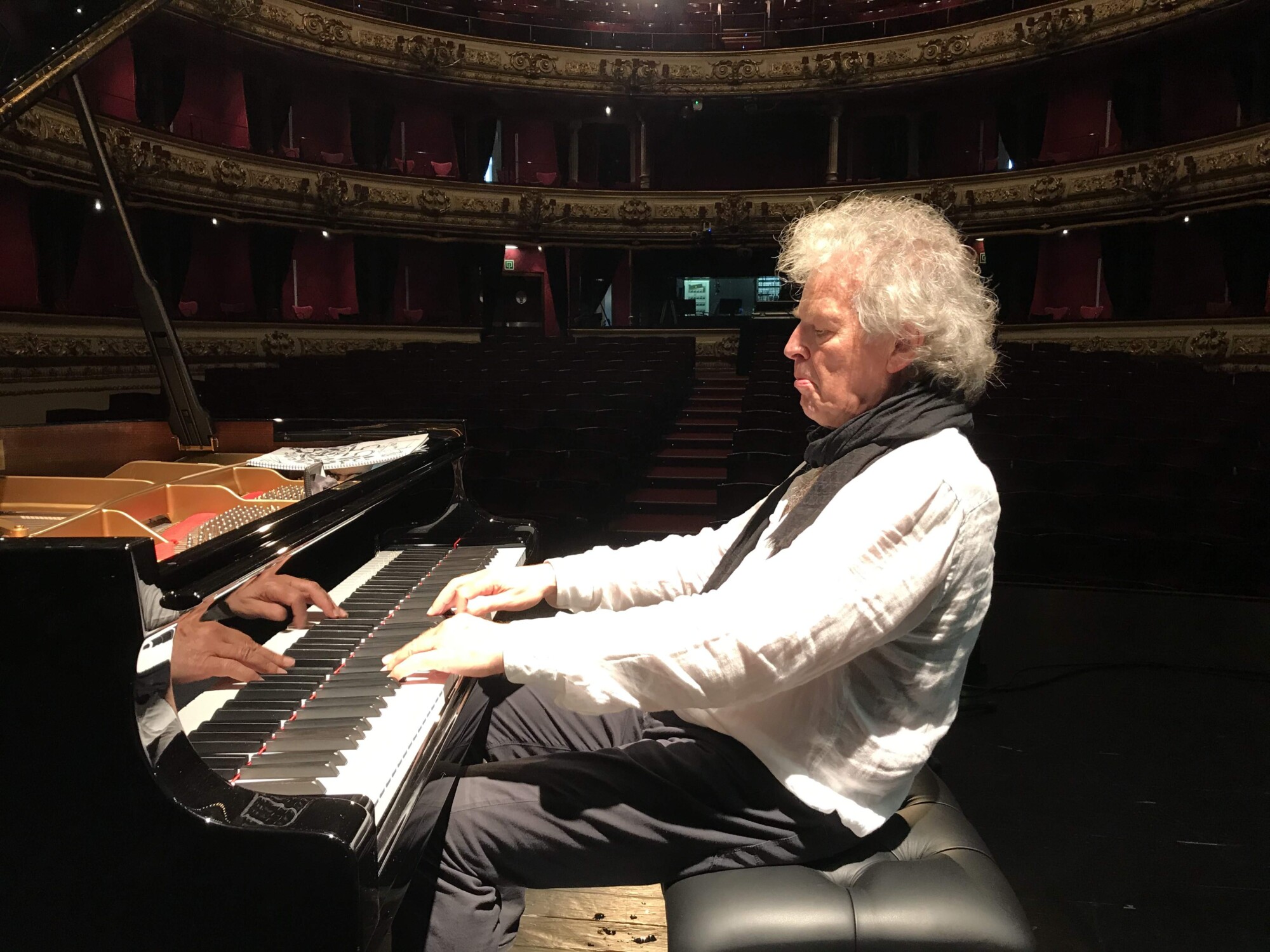
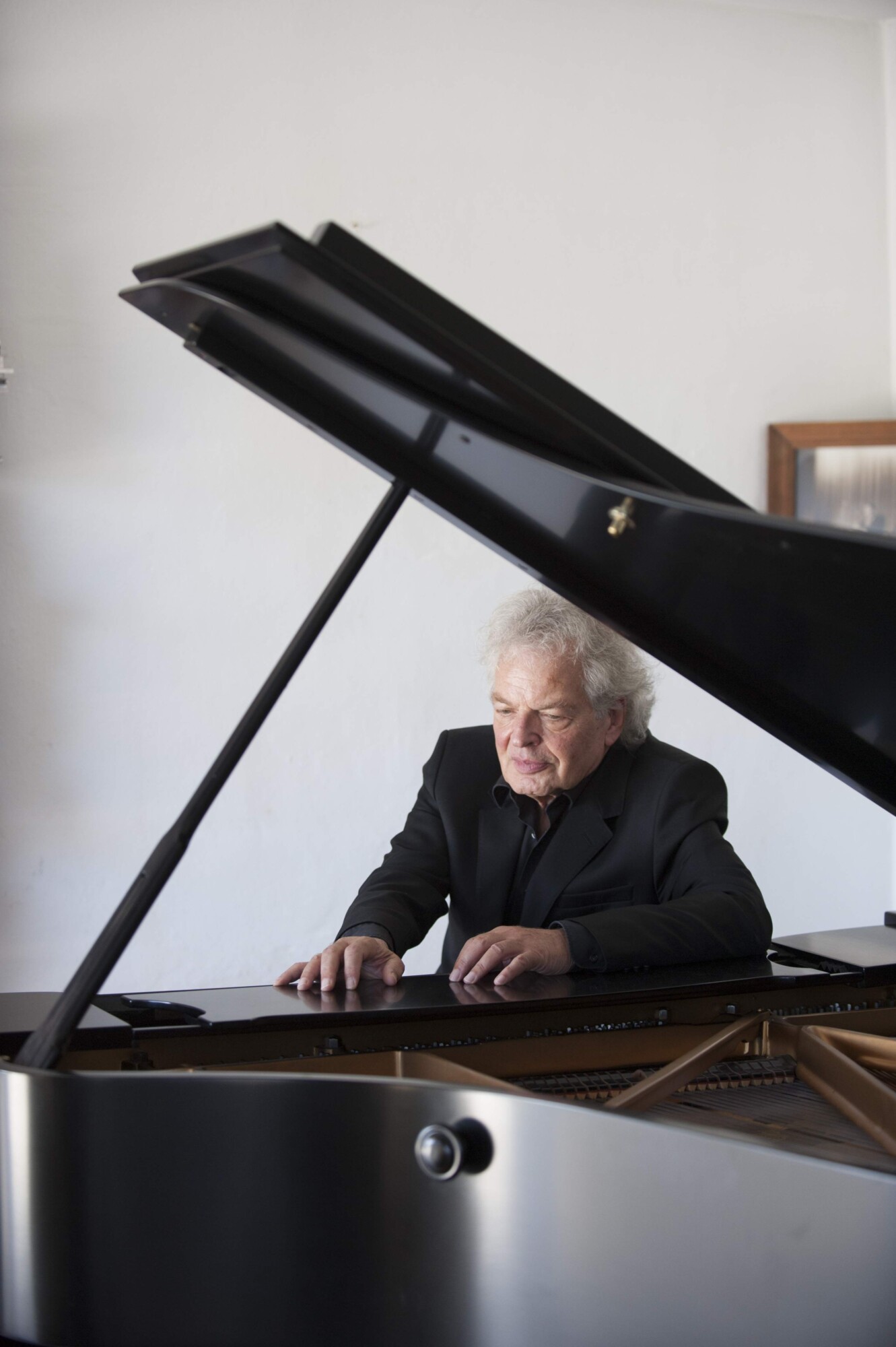
Headline photo: Joachim Kühn. Photo: Uli Fild
Joachim Kühn Bandcamp