
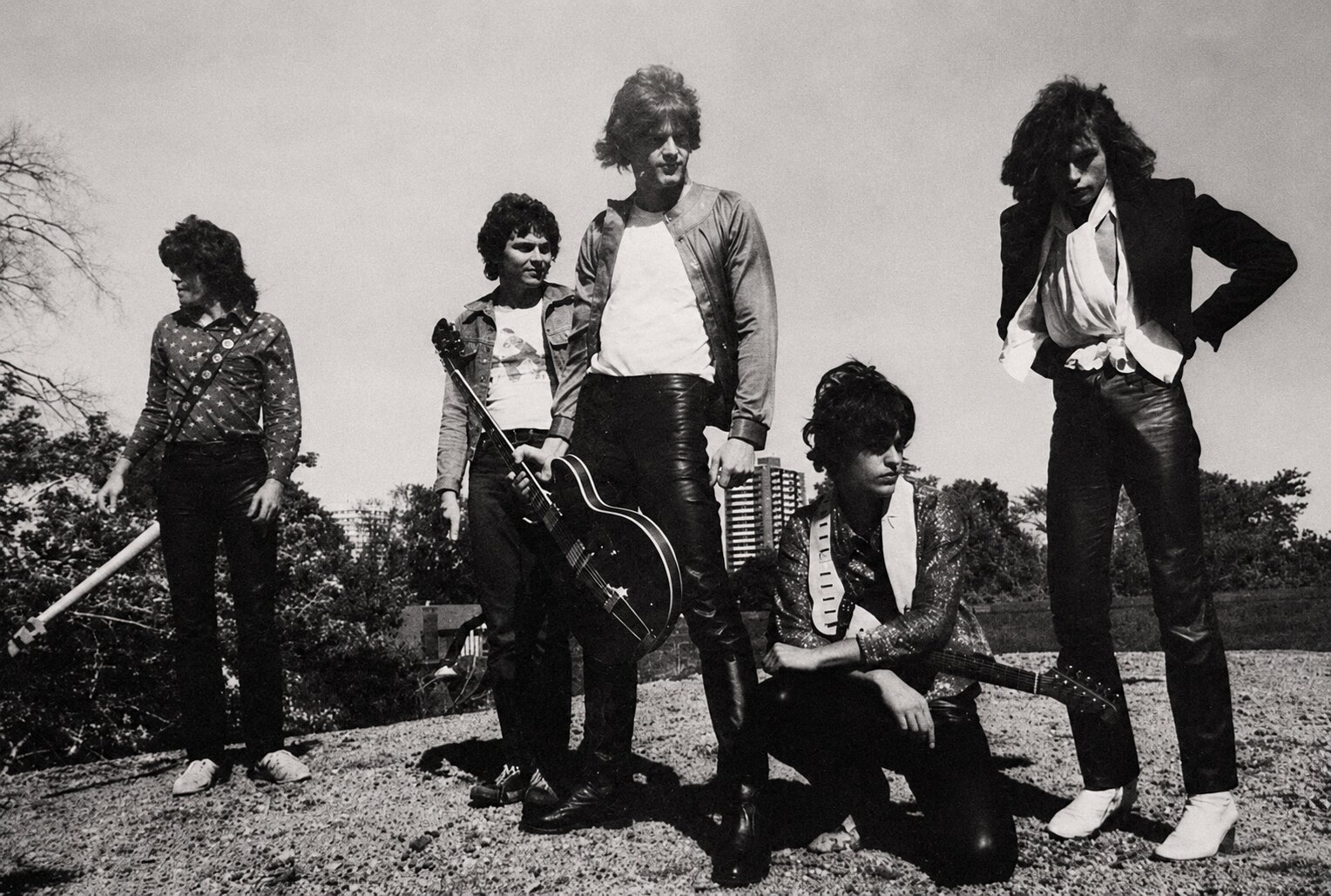

The Action: Ottawa’s First Punk Band and the EP That Should Have Been an Album
The Action came out of Ottawa in 1976, which was not exactly London, New York, or Toronto. Ted Axe remembers the city as sleepy, dull and restrictive, a government town where nothing much happened. That made the band stand out even more.
Axe had been to London just as punk was breaking open. He saw The Vibrators and The Jam at the 100 Club, saw the look forming around King’s Road, and came back to Ottawa with the sound, the hair, and a plan to make trouble. The Action took shape with the Fenton brothers, a loud rehearsal room, half-stacks, slide guitar in open G tuning, and enough practice to make the band tight rather than sloppy.
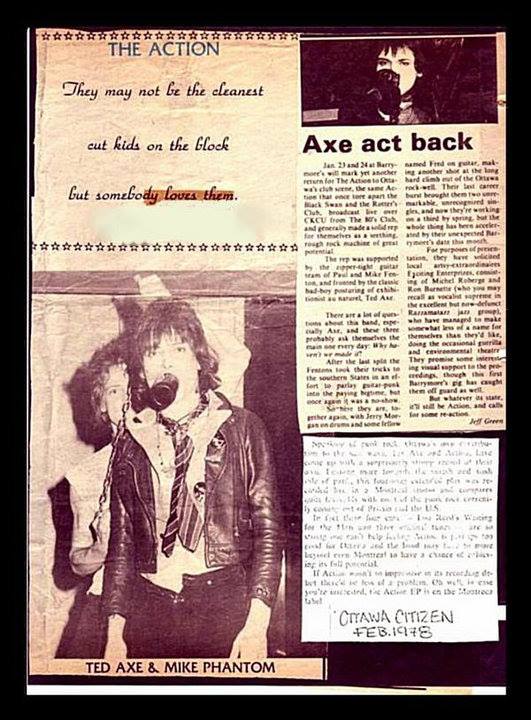
Their first EP, released on Montreco, was recorded live at Tempo Studios in Montreal. It had ‘TV’s on the Blink’, ‘Do the Strangle’, ‘Downtown Boy’ and Lou Reed’s ‘Waiting for the Man’. It was rough, fast and cheap, with a black cardboard sleeve and a safety-pin logo. Axe says the label deal was bad, but the record still opened doors.
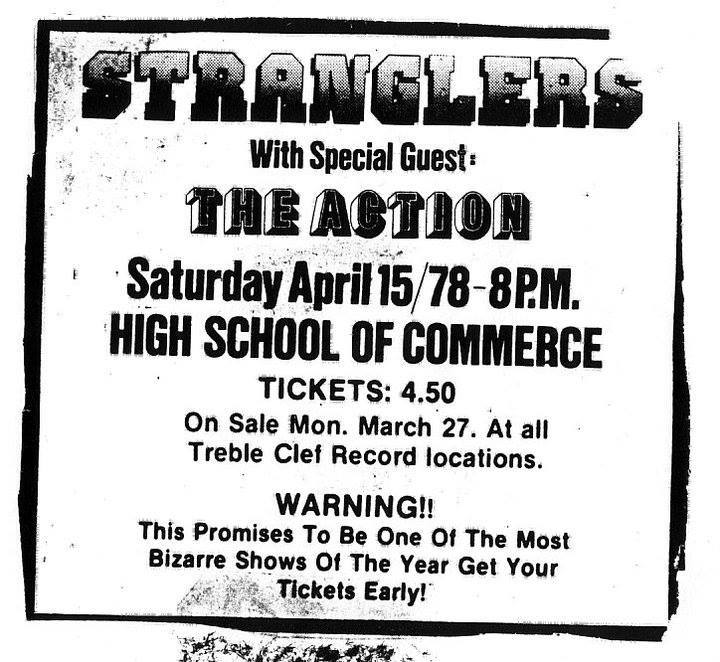
The band opened for The Stranglers at their first North American show, toured with the Ramones in 1978, and played with the Dead Boys in Cleveland. For a young band out of Ottawa, that was no small thing. “For a band green out of a small town,” Axe says, “let’s just say it was an education in everything.”
Axe sees The Action as Ottawa’s first punk band, and part of the earliest Canadian punk story. The recordings have been reissued and passed around since, but he still thinks there should have been more. “There should’ve been an album,” he says. Listening back now, though, he does not sound bitter about the EP itself. “I don’t think I would change a thing,” he says. “It has just the right amount of production.”
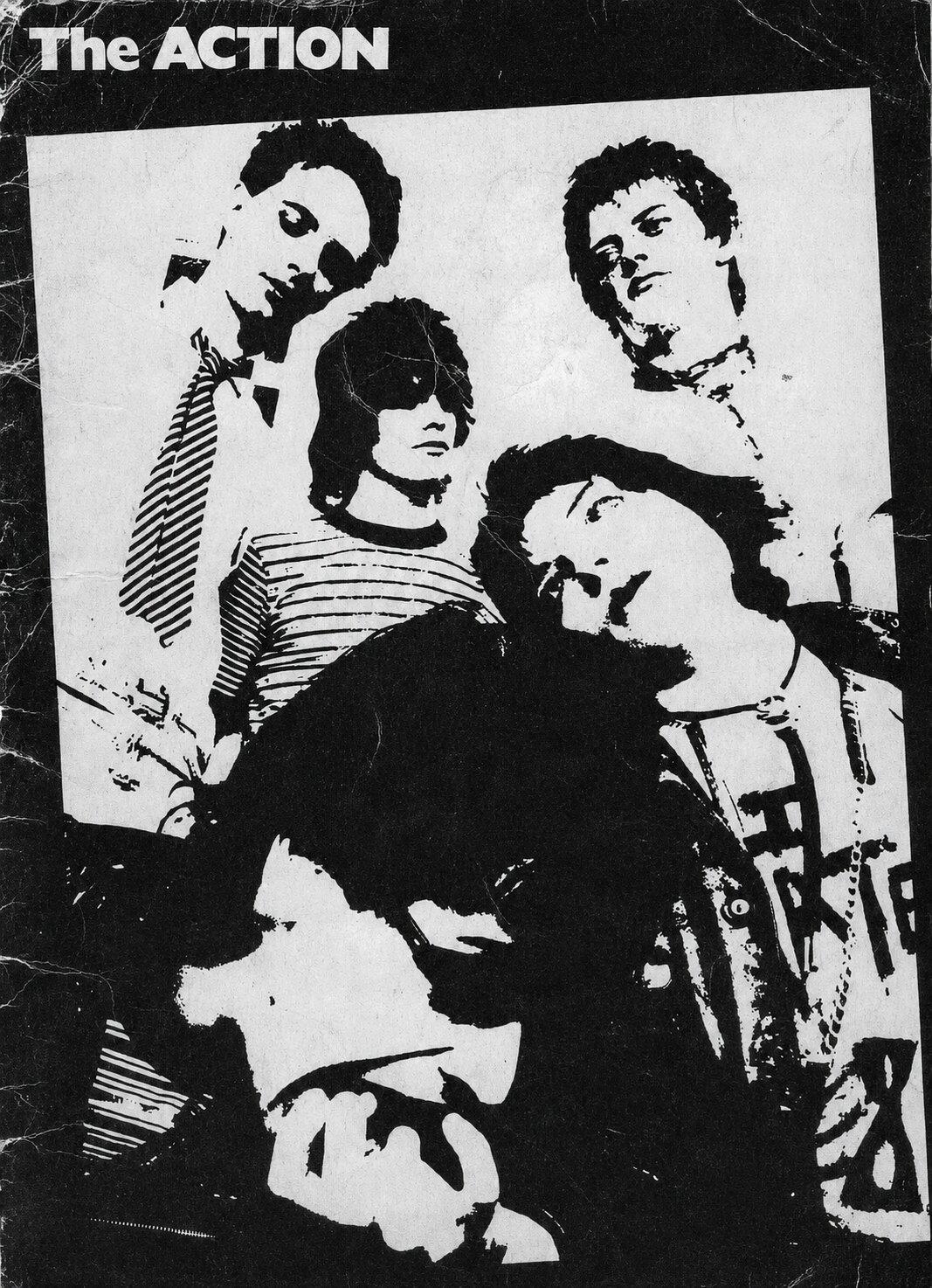
“We became the first punk band in Ottawa”
Good to have you here. There’s not a lot written down about The Action, so it makes sense to start at the beginning and get things clear. You formed in Ottawa in 1976, which puts you right at the front edge of punk in Canada outside Toronto. What was actually happening around you at that time, and how did the band first come together?
Ted Axe: We were all doing our thing in 1975. I was a guitarist and answered an ad in the music classifieds for a guitarist. It was a band with slide guitarist Paul Fenton in it, a female singer, and his friend, a bassist known as “Raygun,” who later became The Action’s roadie. So I was in this band that didn’t have a name yet, and somewhere along the way, in 1976, I went to London.
London was in the throes of a declining Thatcher government and punk was just starting, and it was at its most extreme. ‘New Rose’ by The Damned had gotten on the radio, and I went to the 100 Club and saw The Vibrators and The Jam. Yet Peter Frampton advertisements were everywhere, even on the sides of the double-decker buses. So mainstream rock was very much alive. I saw AC/DC at the Hammersmith, a famous old theatre, and Motorhead.
The punk scene audiences were all male, young boys pogoing and dancing violently. I remember the guitarist for The Vibrators throwing his mic into the wall. Gangs of disenchanted kids in leather jackets with patches of green, red and yellow hair could be seen on King’s Road, and SEX, Vivienne Westwood and Malcolm McLaren’s store, was central to the punk look and stood out on that street.
I ran out of money very fast and ended up in a squat, council houses that had been boarded up but could legally be taken over by people who could not pay rent. It was full of methadone addicts and speedos, and I had to get tough real fast. I sold my stereo and records, the first things I bought when I arrived, and flew back to Ottawa.
Ottawa is and was a very dull town. Nothing ever happens there and nothing ever will happen there. Sleepy and pastoral, it is the capital city of Canada, with its parliament buildings up on Parliament Hill. The band I had been in had broken up, and Paul Fenton had joined forces with his brother John. They had an American bassist and a square-looking drummer. Paul brought me in to audition, and I did not pass the audition. I went up to my parents’ cottage and screamed into a pillow for two weeks, auditioned again and got in the band.
I brought back the idea of playing the punk sound and the look. I cut my hair, and the first thing I did was invite every news media outlet down to our practice place, affectionately known as “the Pit.” I crumpled newspapers and garbage and threw it all on the floor, so that when the news cameras rolled in with a dozen or so reporters, they all had to wade through the trash that was up to their knees. I also got my girlfriend and her friends to drip non-toxic fake blood into each other’s mouths while they danced to our new song, ‘TV’s on the Blink’. The next day we were all over the news, with “Punk Hits Ottawa” on the front pages, and we even made the 6pm news on the only two channels that there were.
The rock climate at the time was The Doobie Brothers, The Eagles, etc., and we played the clubs in Ottawa and across the river in Hull, Quebec, where the French bikers and hookers had no idea what the f–ck we were playing. I remember a couple of lumber-jacket dudes asking each other what they were supposed to do, like how to react, and one told the other one, “I think you are supposed to throw your beer on them and spit on them!” It was a joke.
So we became the first punk band in Ottawa, and we got a record deal and management out of Montreal, headed by an aging French singer. He allegedly had Mafia connections, and he had us play live in a theatre that was part of a famous studio, Tempo Studios, where a very mainstream guitarist, Mahogany Rush, was recording next door. The Action, which I had dubbed the band, was so tight after practicing five nights a week that the live session, with me being very drunk singing, became The Action four-song EP, pioneering the EP format in Canada. It had ‘TV’s on the Blink’, our hit, ‘Do the Strangle’, ‘Downtown Boy’ and Lou Reed’s ‘Waiting for the Man’ on it.
The label was Montreco Records, and it turned out we signed a very bad deal. The EP was released with the cheapest possible black cardboard record sleeve, with a safety-pin logo on the corner, and radio DJs who managed to play it were confused and played the EP at 33 RPM, thinking it was an album, but EPs had to be played at 45 RPM.
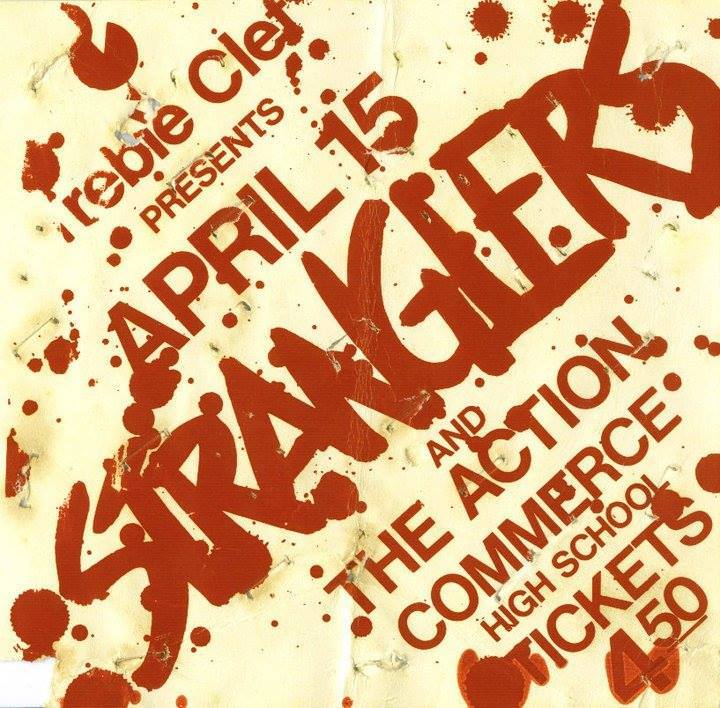
We opened up for the very first performance in North America by The Stranglers, fresh off the plane from London. It was at a local high school. I had canary-yellow hair, and we made sure that we nicked The Stranglers’ beer from their dressing room, thinking we were more punk than them. Unfortunately, their road manager caught us and we had to put it all back. Again, there was a media storm of reviews of the show, and the press dubbed me “The Prince of Punk.” Ted Axe and The Action, Canada’s first punk band, opened for The Stranglers’ debut North American show, with ‘TV’s on the Blink’ over the live footage of The Action and The Stranglers.
If we stepped into your world back then, what would we have seen? Records, amps, rehearsal spots, flyers. What were you living inside musically day to day?
I remember going into record stores, leafing through albums as one of my main pastimes. Once, I was in a record store and I heard a song like I had never heard before: “I’m an alligator, I’m a mama-papa coming for you!” I asked who the dude with red hair was, and he told me it was David Bowie. So I was also heavily influenced by glam, or glitter rock as it was known at the time. I incorporated that look into my punk persona. I made up punk names for the Fenton brothers, who by this time had their very young brother Michael on bass, and they became known as the Phantom brothers. They played through half-stacks, not little cheesy-sounding amps, and because we practiced so much, we became incredibly tight and solid, with the slide guitarist, who played in open G tuning, giving the band a unique sound.
What did Ottawa feel like in those years? Quiet, restrictive, or just waiting for something to break through?
Yes, sleepy, boring, one-horse town. Very restrictive. A government town. I don’t think it was waiting for anything, but we broke down all the doors. I fancied myself as the Malcolm McLaren of the band and was always causing a stir when I did radio interviews, etc.
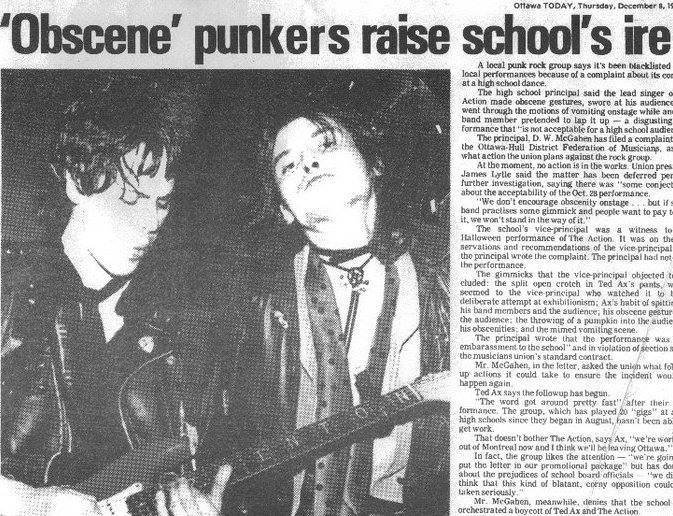
We played a Halloween show at a high school in some very small country town just outside the city, and I smashed the jack-o’-lanterns that the students had carved for the holiday that were on the stage. I had this toy called green slime that was sold at the time, a green jelly-like slimy substance in a can, and pretended I was vomiting on stage. I also had a lengthening rip in the crotch of my leather trousers. The poor students were cowering in the hallway with their teacher. The next day I was on the phone, phoning the newspapers and making up a story about how we had been banned from the Ottawa Federation of Musicians, the musicians’ union. Again, The Action were in the papers. “Obscene Punk Band Banned!” read the headlines.
Before The Action, were you already playing in bands or figuring things out on your own, or did everything really start once you formed this group?
The Action was my first band.
You’ve mentioned being heavily influenced by British punk. Which records or bands hit you first, and what changed after that? Was there a clear before and after moment?
The Pistols, The Vibrators, Gen X. Not so much The Clash or The Damned.
When you started rehearsing, what did it sound like in the room? Tight and intentional, or raw and barely controlled?
Very tight and intentional, always with a feeling that John Fenton was calling the shots.
The band started with the Fenton brothers and Rick McDonough, then shifted into a five-piece with different roles and identities. How did that transition happen in practice, and what did it do to the sound?
I’d rather you not use my real name in this interview. I became Ted Axe. Rick left the band early and was replaced by Mike Fenton, who played with a pick, which gave it a punkier sound.
There’s also the shift in names. Paul and John Phantom, Shot Spot McDonald. Where did that come from? Was that about building a presence, or just something that happened without much thought?
It was intentional on my part, devising the names. Actually, it was my young girlfriend who thought the names up: Ted Axe to go with The Action, and the Phantoms to be a close match to the Fentons.
At what point did things stop feeling like friends playing together and start feeling like a real band with direction?
Once the band decided to go full-on punk as a direction, it would have to be around 1977. It was only once we started getting full-on into the punk sound, but I did feel resistance from within the band.
You’ve described yourselves as one of the first Canadian punk bands to get out and play with major acts, including touring with Ramones in 1978 and opening for The Stranglers and Dead Boys. How did those shows actually come about, and what do you remember from being on those bills?
Our management got us the Ramones tour. How, I don’t know, and I am not sure how The Stranglers came about. The Dead Boys was a one-off while we were on the Ramones tour in Cleveland, and our management got that one. The Stranglers was wild. I remember seeing all the orange little lights from cigarettes in the large crowd in the dark, and I remember getting pissed and recruiting our drummer to steal The Stranglers’ beer from their dressing room. We got caught by their tour manager.
I also remember being snotty-nosed to a reporter named Johnathan Gross, who wrote for a local paper. It was my first big show. The Ramones was kind of a big blur, but it was so exciting. Flint, Michigan was the first date, and it was an incredible experience. The whole tour was a heady mix of sex, drugs and rock and roll. The crowds were right up to the stage in those days, and one guy handcuffed himself to my mic stand while a girl beckoned me to come closer and then smushed a piece of birthday cake in my face. For a band green out of a small town, let’s just say it was an education in everything.
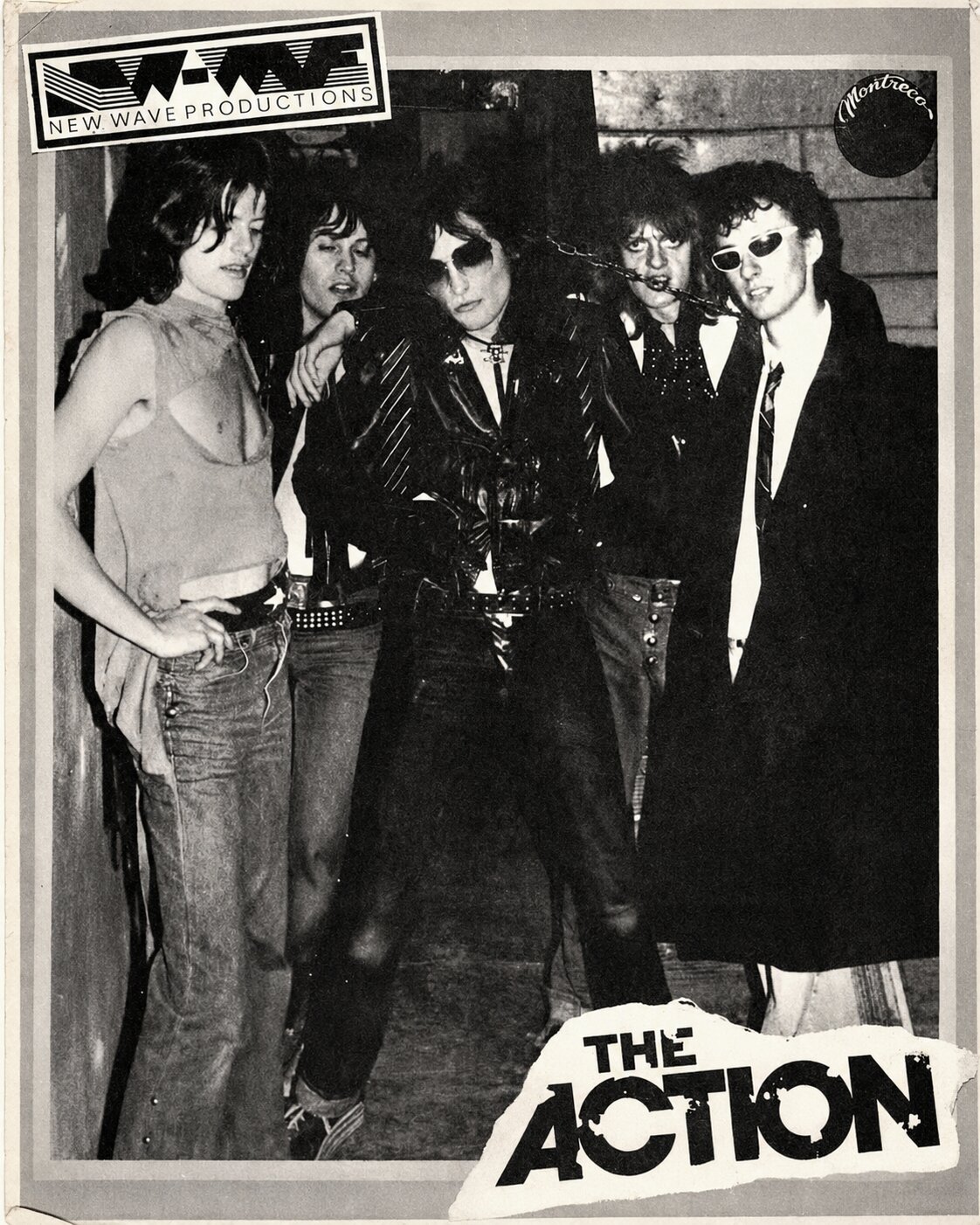
What was it like stepping onto those stages alongside bands who were already defining the sound? Did it sharpen what you were doing, or confirm you were already on the right track?
Yes, it clearly defined my role as a frontman and as a band. We felt like we were part of something much bigger, and we had a purpose as pioneers of a genre, although we always felt second best to the Ramones. But we were a different kettle of fish, and the crowd really wanted the 1-2-3-4 of the main act.
The live side seems central to the band. What were your own shows like in Ottawa and elsewhere? Small rooms, unpredictable crowds, or something else entirely?
The Rotters Den, the only punk venue in Ottawa, became our new home. We were kings there, and the live compilation album released in 2009 was a live radio fundraiser performance from there. It was actually the basement of a Lebanese restaurant. Other clubs we played there were scary, as people did not know how to react.
When it came to writing your own material, how did songs usually come together? Was it driven by riffs, lyrics, or just playing until something locked in?
John or Paul would come in with a riff, and I came up with the lyrics or wrote them on the spot.
I want to get into ‘TV’s on the Blink’. It’s direct, fast, and doesn’t overthink anything. Do you remember how that track came together, and how much it changed from rehearsal to recording?
That track came together in the same way. Paul came in with the chords, and John started playing the crazy lead guitar riff. My girlfriend’s mother’s TV was out of commission, and the lyrics came out of that. The EP recording was all live, with a small crowd of the producer’s friends. It really remained the same arrangement from the start.
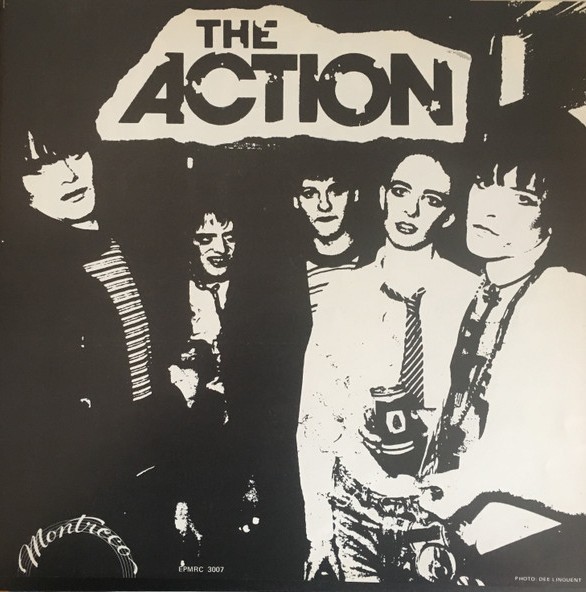
The EP as a whole has a very stripped feel. Was that deliberate, or simply how the band sounded when recorded?
Yes, it was recorded live at Tempo Studios in Montreal with a small crowd, and the producer/label owner cut his costs that way. We just played everything live, and we were not present at the mix. I am sure the producer wanted to keep the raw sound, and I like the instances where there were effects in the right places.
Fast, tense, loose, or more organized than people might expect?
As I said, it was recorded on a stage in the studio’s live room. We were tight, but the session was very loose. Tony Roman, the label owner, brought in a million McDonald’s hamburgers and a huge case of beer to ensure my lack of sobriety. I thought it was cheap of him. We also felt that he should’ve brought more of a crowd in instead of the 20 or 30 close friends of his.
How did the release on Montreco happen? Did you push for it, or did someone pick up on what you were doing?
John got the deal. I think it was like the only tape he sent out, and we sold ourselves short. We stupidly enlisted the legal help of Tony Roman’s lawyer. That’s how green we were. The band could’ve easily gotten a major label interested, I have always felt. The label was out of Montreal, so we played a lot of shows there. Cheap company that came with cheap management.
Once the EP was out, what kind of response did you actually see? Did it change the number of shows, the crowd, or the way the band was perceived?
It opened a lot of doors, but we did not use it to enlist the interest of other labels, nor did we try to get out of the label. Some of the mainstream reviews of the EP were not so kind. I remember one Ottawa review that said, “That’s the one where the singer sounds like he is singing with mouthwash!”
Inside the band, was there a shared direction everyone agreed on, or were there different ideas about where things should go?
I wanted to go punk, but the Fentons wanted to forge ahead with their rock roots. There was a conflict, to be sure. They were blues guys at heart. John liked Ten Years After and Queen, and Paul was dead into The Stones and The Beatles.
By 1979, John Fenton had left, and later Rick McDonough as well. How did those changes affect the group in real terms, not just musically but day to day?
Rick was replaced by Michael Fenton much earlier, which was another brother for me to go up against. John leaving the group took away the edge of his very edgy and aggressive guitar, and the band at that point lacked clear leadership. While I was glad on one hand that John was gone, because we never really got along, I can see now that Paul getting another guitar player in who did not have the required edge made the band lack something and allowed Paul to write in less of a punky style.
There’s also the point where you left and things started to fall apart.
I don’t remember a formal “firing.” The Fentons did not know what hit them or how to react once I started to get the media involved. They loved the attention, but also resented me, as they thought I was taking over. This started to happen right off the bat. It was their band, and when I became the Malcolm McLaren Jr. of the band, they became very, very jealous of the attention I was getting as spokesman and all-around guy at the wheel of the direction, style, press, etc.
When I started to bring in theatre effects, like working with my silhouette live, and more of my Bowie influence in 1980, Paul got very intimidated and has said in interviews that he fired me. I had started another band and moved to Toronto to pursue my dreams. He was so dismayed by my departure that he has said that he fired me in a desperate attempt to be the leader. He did not like David Bowie at all.
By the end around 1981, did it feel like a slow breakdown or something that happened quickly once things tipped?
Once John left, it was a gradual breakdown. Paul was writing less and less punk songs, and Michael and him were very much jealous of me. Just the usual band trials and tribulations.
Looking back, do you see The Action as part of a wider Canadian punk movement, or more like something that existed on its own terms in Ottawa?
The Action is widely accepted as Ottawa’s first punk band and also as Canada’s first, though Toronto has always thought that some of their punk bands should bear that title. While Paul’s slide gave the band an original sound in terms of punk, it also was the total opposite of punk if you look at his influences, which were and are Rory Gallagher, The Allman Brothers, Dave Gilmour, Syd Barrett and The Beatles.
In terms of punk, we should’ve played much more in Toronto and Vancouver than we did, but again, the Fentons were reticent to leave the confines of their cottage life and Ottawa. That would’ve given the band more of a feeling of being part of the greater Canadian punk movement. The problem with Canuck and American punk, for that matter, is that in the UK, punk came from an economic oppression that never existed in Canada or the States. UK punks grew up poor in small and narrow houses in Thatcher’s failing post-war climate, while Canadian and American kids were well-fed kids with full cupboards of food, etc. The lack of hunger and amenities showed up in the sound.
Years later, the recordings were compiled and reissued, and people started paying attention again. When did you first notice that shift, that the band was being rediscovered?
I was living in Seattle when Paul and John easily found those two companies, Sudden Death and Rave Up. They signed another bad deal, though, and I found out that in 2019, Joey Shithead of D.O.A., who was owner of Sudden Death, was still selling it online and keeping any profit. I got him to give me and Paul some money and had him stop selling it. If you look on Discogs, it’s amazing how many companies are selling it without having to give us a cent.
Hearing those tracks now, what stands out to you first? The energy, the flaws, or things you would have handled differently?
The EP is what it is, and listening to it now, I don’t think I would change a thing. It has just the right amount of production.
Do you feel recordings represent what the band really was, or only a slice of it?
Just a slice. There should’ve been an album. I think we were sold short, and John took the first guy that was interested instead of courting a major.
You’ve mentioned bringing the band back now in some form. What pushed you to revisit it after all this time, and what does The Action look like in the present compared to then?
I am doing a 50th Anniversary Tour and have a booking agent. There are big shows to be played, and I already have a few dates, including the Dominion Tavern in Ottawa, where the band sold out two shows back to back in 2009. I think the potential now is far greater than it ever has been as far as going beyond bar shows and moving into theatres and festivals here and in Europe. I will take my rightful place as The Prince of Punk.
Paul did not want to do it, saying there is no money in it. That is dead wrong, as we are getting substantial guarantees, and people are coming out of the woodwork to be involved and fans are excited. I own the name, and being the original member and out there, I own the trademark. I will keep this going in the coming years instead of a one-off thing. I think I have not pursued it for the last 40 years because of the slide guitar solos, but I realised it doesn’t need to be slide to be dynamic. My band is the same guys I have in The Ted Axe Band, and they are young and hot to trot.
If the band had continued without those breaks and lineup changes, what do you think would have changed first? The sound, the writing, or the way you approached being a band?
I think the band could have become something much greater if we had only kept it going. I realise now that I should’ve just kept it going, just like I am now without the Fentons. After all, I am the voice of the band, The Axe factor.
And to finish on something simple. If we were sitting around after this, putting records on, what would you choose first? One of the records that kicked this off for you, or something completely outside that world?
I think it is unrealistic to think that all those punk guys in the UK were only into punk. Everyone at that time was into rock: Mott the Hoople, ‘Ziggy Stardust.’ Gen X appeared on Marc Bolan’s TV show, for instance. I love all that ’70s glitter rock, so I would probably pick something from that era. Maybe ‘The Rise and Fall of Ziggy Stardust’, an iconic album. “I’m an alligator! I’m a mama-papa coming for you!”
Klemen Breznikar
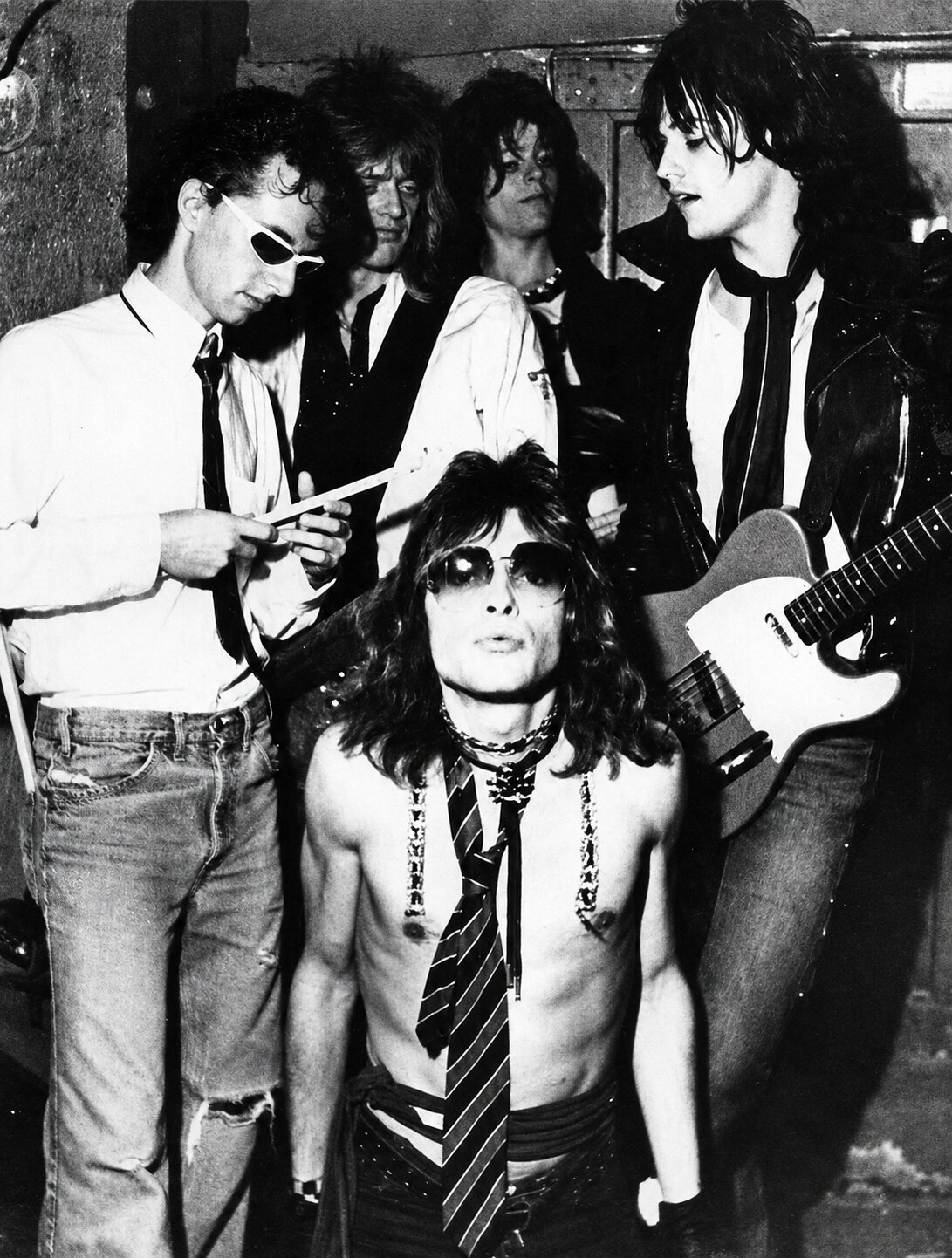
The Action, seen in promotional photographs from Ted Axe’s private collection. Photographs courtesy of their respective photographers; images have been lightly enhanced for publication, with their archival character preserved.
The Action Facebook


YOU are an incredible interviewer!Thanks so much,Ted