


Paweł Nawara’s ‘A Record Guide: Rock Behind the Iron Curtain’ Redraws the Map of Czechoslovak Rock
Paweł Nawara’s ‘A Record Guide: Rock Behind the Iron Curtain, Volume 1, Czechoslovakia 1964-1979’ is, if you like, the sort of book that comes from a great deal of careful listening, a fair bit of collecting, and a long-standing grumble about how much has been overlooked.
It takes a look at rock records made in former Czechoslovakia between 1964 and 1979, not as odd little curios from some shut-off corner of Europe, but as records that deserve the same sort of attention usually reserved for British and American albums of the time.
Nawara is Polish, and his way into all this began, as these things often do, at home. As a youngster, he says, he rather assumed rock music belonged chiefly to England, the United States and Poland. Then he started coming across Czechoslovak, Hungarian and East German records in Polish households, often brought in through the cultural centres dotted about the socialist bloc. Years on, that early curiosity has turned into something rather more substantial. This Czechoslovak volume is meant as the first instalment of a broader guide to rock records released behind the Iron Curtain up to 1979.
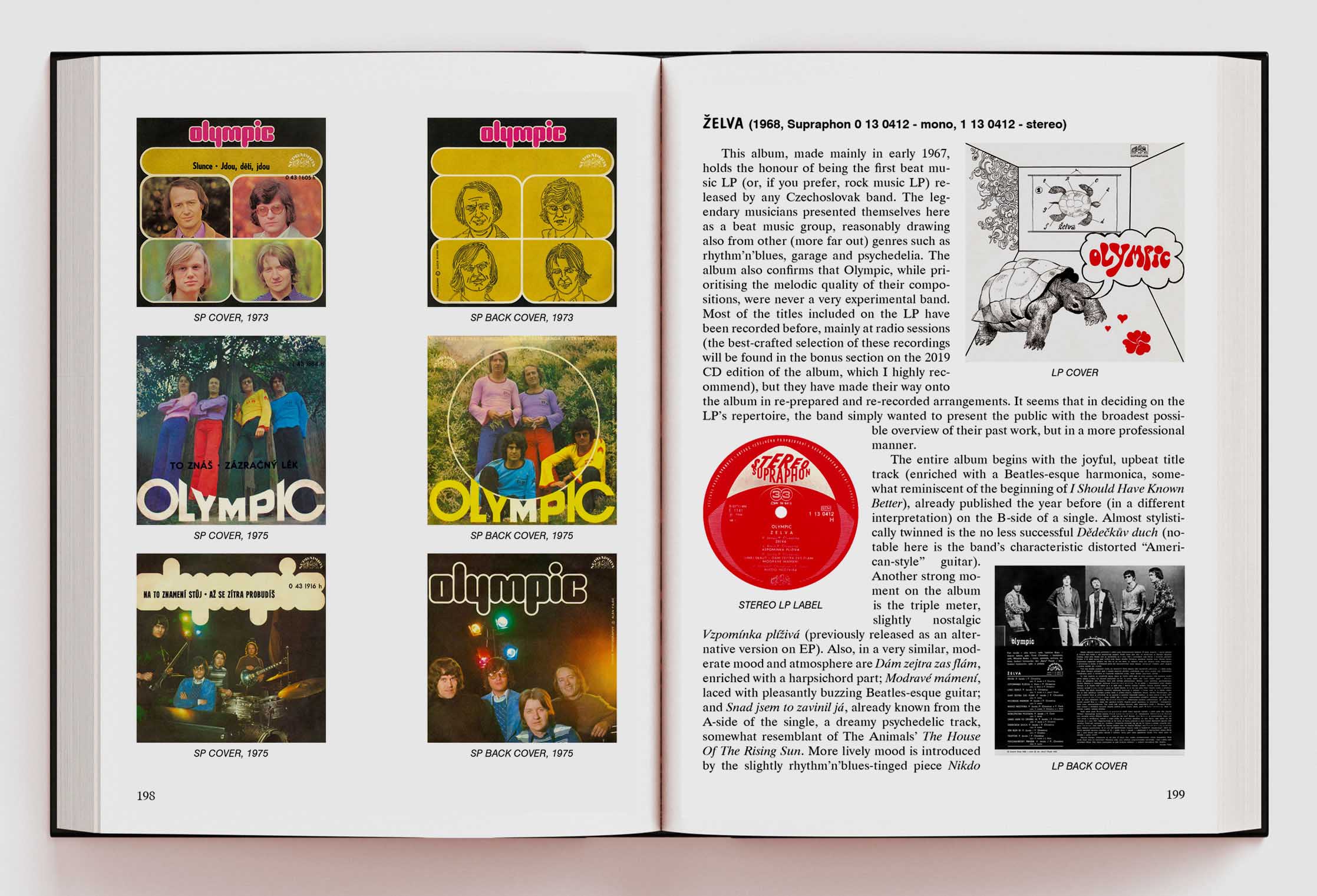
The book is both a listening guide and, in its way, a collector’s piece. Nawara goes into the music in some detail, but he also pays proper attention to sleeves, labels, gatefolds, first pressings and all those physical bits and bobs. He regards that as part of the story. Original records, he says, let you hear the music on “an entirely different emotional and aesthetic level” compared with a digital file.
What gives the book its real weight is that Nawara doesn’t treat these albums as second-rate imitations of Western rock. He’s well aware that the influence of Cream, Jethro Tull, King Crimson, The Beatles and Pink Floyd is there, but he’s more interested in what happens when those influences are filtered through Czech and Slovak language, folk tunes, classical training, censorship and the realities of local studios. “The book was written precisely so that rock music from behind the Iron Curtain might finally be treated seriously,” he says, “with due attention and thoroughness.”
He’s also quite clear about where the story stops. The guide sticks to records that were actually released on vinyl at the time, which means some unofficial or unreleased corners of the scene are left out. Nawara doesn’t beat about the bush on that point. “Those who are absent have no say,” he says. For someone interested in original-era vinyl, the surviving object is what counts.
That doesn’t make the book narrow, mind you. If anything, it gives it a bit of backbone. Nawara writes about well-known names such as Blue Effect, Flamengo, Collegium Musicum, Olympic and Dežo Ursiny, but also about singles and lesser-known releases that haven’t often been given this sort of attention. He’s not out to swap one canon for another. Rather, he’s trying to show that the story of European rock is a good deal broader, odder and more rooted in local circumstances than the usual map would have you believe.
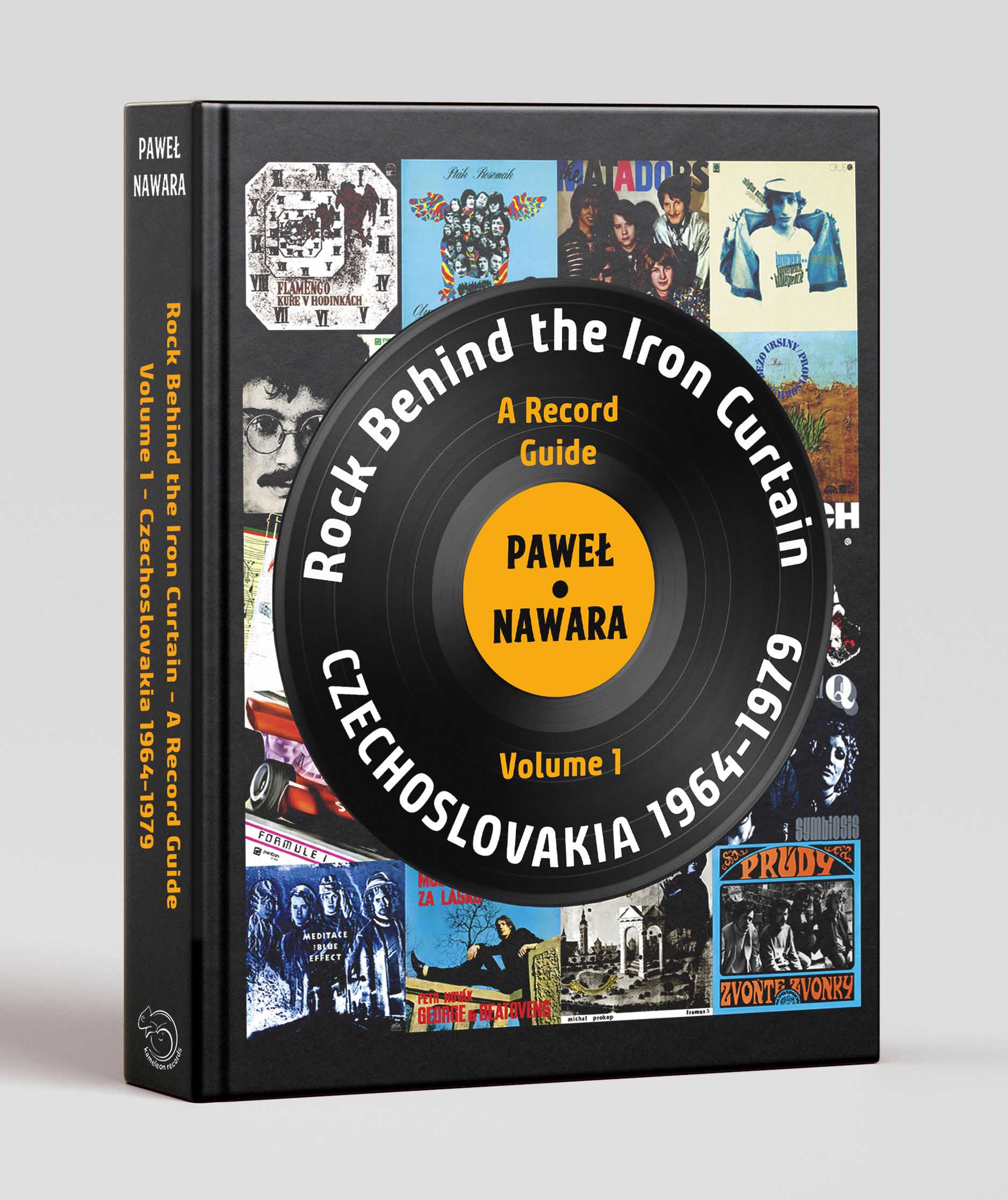
“Paweł Nawara on ‘Rock Behind the Iron Curtain’: “This Music Might Finally Be Treated Seriously”
When you set out to write this book, were you driven more by a collector’s instinct to catalogue, or by a historian’s urge to correct the narrative of European rock? At what point did it stop being a discography and become something closer to cultural archaeology?
Pawel Nawara: The main reason for writing this book was the desire to present, describe and bring music from behind the Iron Curtain closer to the widest possible audience of listeners around the world. I am fully aware that this subject still remains little known and, perhaps, somewhat unjustly overlooked within collectors’ circles. Of course, factors such as the need to catalogue, research and explore this music were also far from insignificant. It is also impossible to overstate the fact that, while working on the book, I considerably expanded my own knowledge of Czechoslovak rock.
There’s a quiet radicalism in treating Czechoslovak rock records with the same forensic attention typically reserved for Western canon albums. Did you feel you were pushing against an inherited hierarchy of “important music,” and if so, where do you think that hierarchy still distorts how we listen today?
A precise and, as far as possible, reliable description of the albums reviewed is one of the main aims of this guide. It was of no importance to me that albums from behind the Iron Curtain are not as well known as the classic Western records with which we are all familiar. The book was written precisely so that rock music from behind the Iron Curtain might finally be treated seriously, with due attention and thoroughness. It is obvious that, for example, albums by Olympic do not have the same status as those by The Beatles. I do not believe, however, that this should be a reason to treat this music any less attentively. On the contrary, I tried to bring out and point to the most interesting passages on individual albums and recordings, which in many cases are by no means as inferior to the classic Western models as one might assume. I also wanted to encourage listeners unfamiliar with this subject to explore them.
You limit the scope to 1964 to 1979, which feels very deliberate. Was that boundary about politics, aesthetics, or something more intangible, like a certain spirit that disappears once normalization fully sets in after 1968?
The chronological scope of the material included in the book is the result of two factors. First of all, my main interest lies in classic rock from the 1960s and the first half of the 1970s. For this reason, I feel that if I were to describe a later period as well, especially the 1980s, I would no longer be sufficiently professional, reliable or credible. It would also be difficult for me to find the right enthusiasm and passion for the task. The year 1979 seemed to me a good cut-off point: the end of a decade and, at the same time, the end of a certain musical era. Most of the groups active in the 1960s and 1970s were either ending their careers around that time or making clear stylistic shifts. As for 1964, I have not managed to find any Czechoslovak record, and by this I also mean singles, from before that year which could be regarded, without major reservations, as rock. Of course, such a boundary always remains somewhat conventional. Before 1964, small-format records were released in Czechoslovakia, for example recordings by Miroslav Kefurt and Karel Duba, guitarists whose sound referred both to Duane Eddy and to the instrumental beat associated with The Shadows or The Ventures.
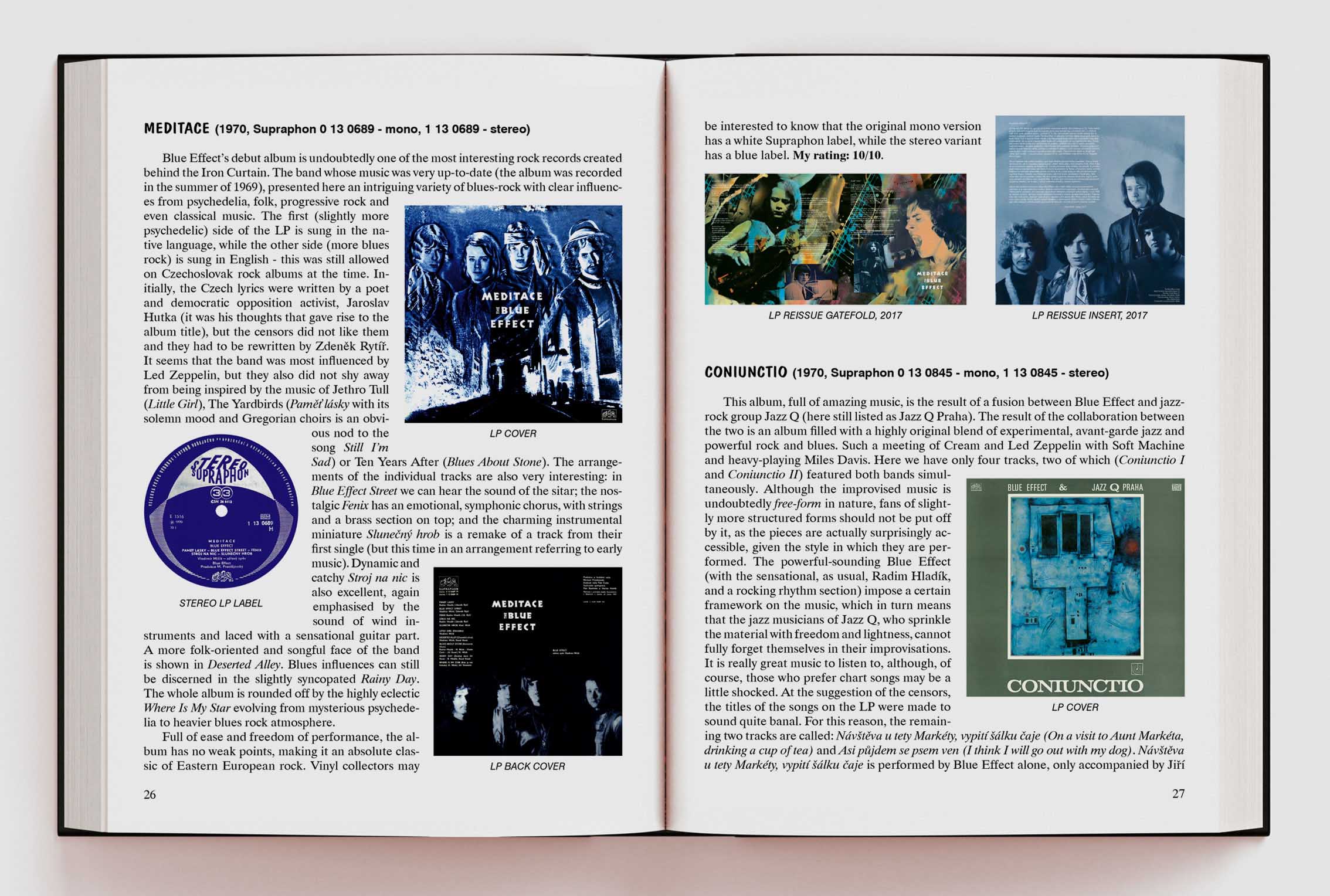
Reading your track-by-track analyses, you’re not just documenting records, you’re listening very closely, almost against expectation. Did anything genuinely surprise you while revisiting these albums, moments where the music broke free of the historical context and felt completely universal?
As I mentioned earlier, a detailed description and presentation of the material contained on the albums discussed was one of the basic assumptions behind the guide. It was equally important to me that each of the albums described should be listened to carefully and in its entirety, so that I would not be writing about music I had not properly familiarised myself with. While working on the guide and returning to material I had heard before, I most often caught myself thinking that I had forgotten just how good these recordings were. And that, although they were obviously inspired by Western models, in many cases they were by no means inferior to them. Certainly, several of the best albums from former Czechoslovakia can easily find a place on a collector’s shelf alongside records from other, more highly regarded rock regions of the world. As far as LPs are concerned, I already knew the vast majority of them well, so there were no major surprises for me in that respect. The situation was different with singles. While searching for material for the book, I discovered recordings by several groups that left behind only small-format records, and some of them struck me as very interesting. A good example is the Slovak group Meditating Four / For Meditation, who made only one seven-inch single. On that record they were unable to fully develop their freakbeat and psychedelic leanings, which were captured much more clearly in their radio recordings, but it was undoubtedly a very positive and surprising discovery for me.
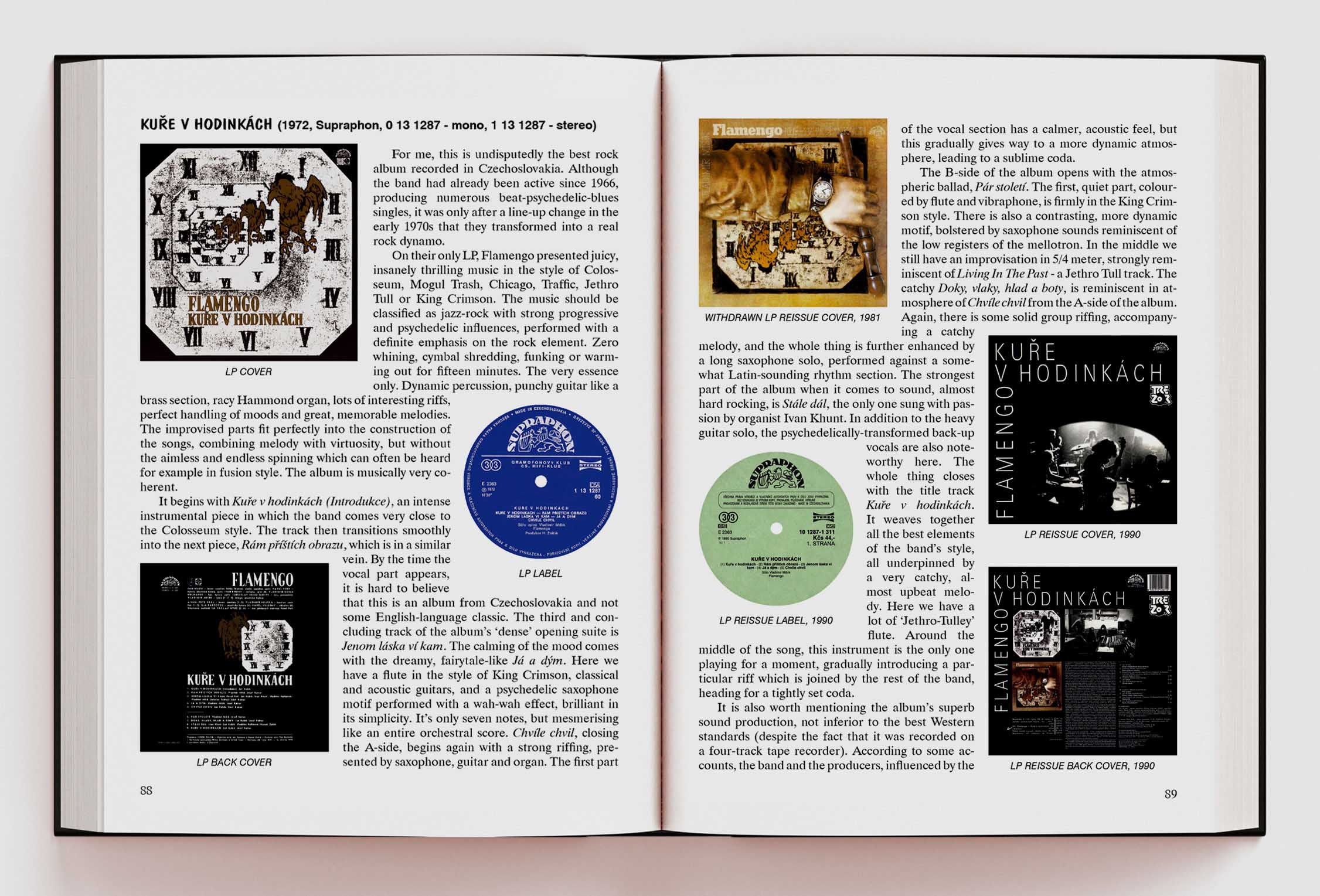
That tension you trace between restriction and invention never feels abstract in the book, it’s right there in the grooves. When you listen closely to something like ‘Kuře v hodinkách’ or the early Olympic recordings, you can almost hear the limits pressing in, whether it’s studio time, gear, or what could safely be said. I’m curious how you personally hear that now after living with this material for so long. Do those pressures end up sharpening the music, forcing bands into more inventive, idiosyncratic solutions, or do you still sense a kind of negative space, the records these musicians might have made if the conditions had been even slightly different?
In fact, when listening to these recordings, I never had the impression that these groups were significantly restricted in any essential way. Of course, we know what the realities of the time were. The recording, amplification and playback equipment available to musicians behind the Iron Curtain did not fully match what was available in the West. Censorship interfered with lyrics and looked unfavourably upon overly innovative sounds or the exploration of more experimental musical directions. On the other hand, however, this certainly forced artists to be more creative and inventive. I think they were remarkably successful in ensuring that all these inconveniences did not have a fundamental impact on the final shape and sound of their work. When we listen to recordings by Blue Effect, Collegium Musicum or the aforementioned Flamengo, with their brilliant album ‘Kuře v hodinkách’, we are more likely to be delighted by the music itself than to wonder whether it would have been better had it been created under more favourable political and social conditions. In fact, I find it hard to imagine that the finest albums by these artists could have been any better.
It should certainly be emphasised that the greatest restrictions concerned song lyrics. After the Prague Spring of 1968, the authorities gradually limited the possibility of singing in English and using English-language band names. This is why the famous Blue Effect had to start using the native Czech name Modrý Efekt. Perhaps not many people know that the lyrics on the aforementioned album ‘Kuře v hodinkách’ were originally intended to be in English. However, both the producer and the band agreed that, in 1972, this would no longer have been acceptable to the censors. In the end, they were written by the Czech poet and jazzman Josef Kainar, an artist to some extent rooted in the system of the time, but undoubtedly a very talented one.
It is also worth mentioning that the book covers only those groups which released some kind of vinyl record during the period in question. Meanwhile, Czechoslovakia had a genuinely large scene of bands playing bold music, often highly displeasing to the censors, which had no opportunity to record their work professionally. The only such group that managed to release an LP at the time was The Plastic People of the Universe, although even that release became possible only in France, after semi-professional tapes had been smuggled across the border. I have come across the opinion, expressed by several Czechs, that the best of their rock music was in fact never recorded or released. I do not agree with this, because regardless of the circumstances, the brutal truth is that those who are absent have no say. It is a little like claiming that The Rolling Stones in 1964 were not sufficiently rock-oriented or pioneering because, in the basement next door, there was a band which admittedly never recorded anything, but was even wilder and rawer. Even if that were true, from the point of view of a collector of original-era vinyl records, it is of tertiary importance.
As for the restrictions imposed by censorship, it is worth mentioning ‘Odyssea’, an album prepared by the group Atlantis. The recordings were made in 1969, but the record was stopped by the censors at the very last moment, and all copies of the master tapes were destroyed. One copy was miraculously preserved by its producer, and it was this tape that eventually served as the basis for the LP release as late as 1990. The album is a true psychedelic, theatrical, folk and avant-garde mystery play, and one of the most interesting rock records created behind the Iron Curtain at the end of the 1960s.
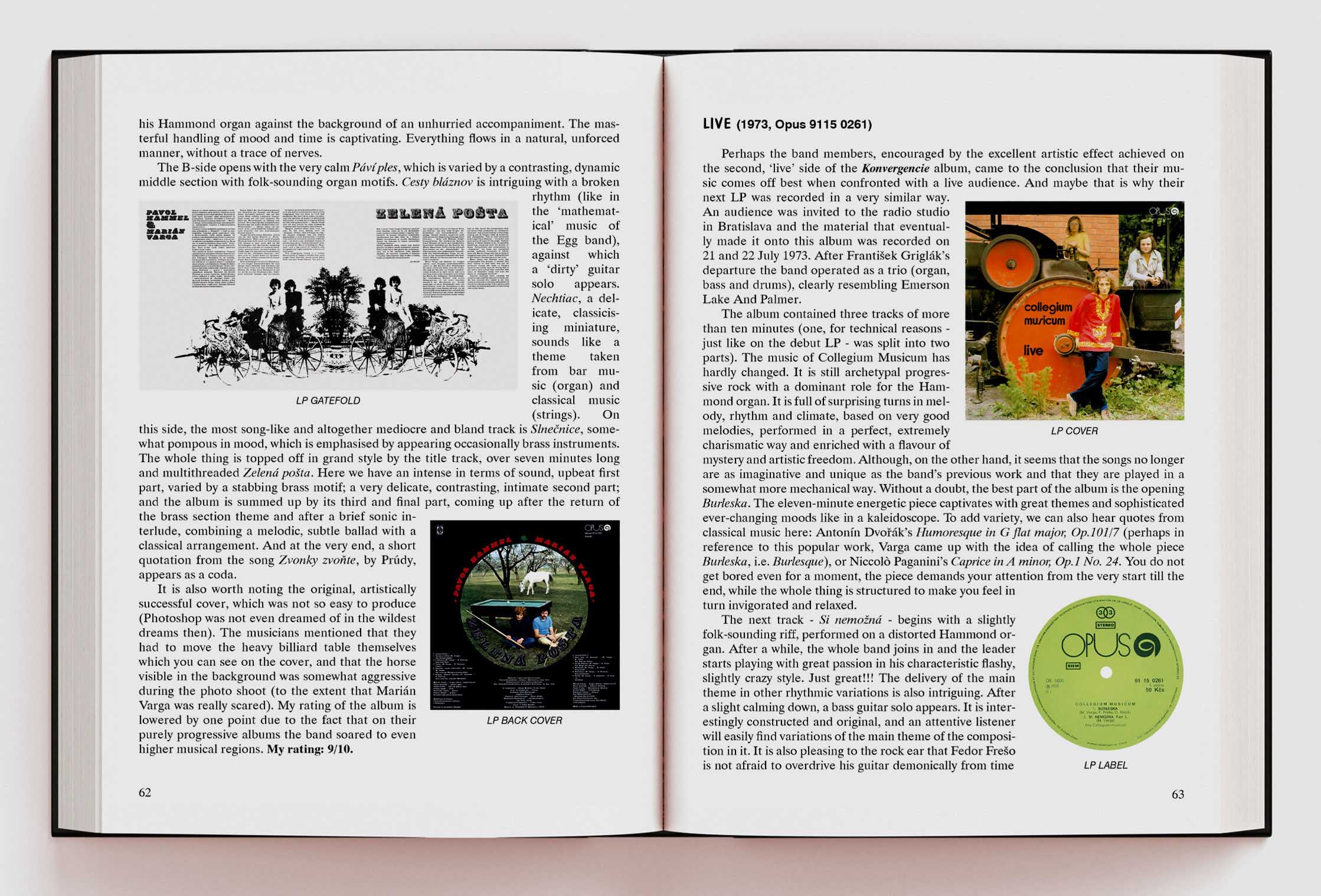
The physical object matters enormously in your work. Labels, inserts, first pressings, even subtle variations. In a digital era, what do these tactile details tell us that streaming-era listening simply cannot?
Apart from its informative aspect, the book also has a second, very important value: that of a collector’s item. In fact, it constitutes an almost complete catalogue of rock record releases from former Czechoslovakia. I can say with full confidence that never before has there been a publication presenting all these covers, labels, gatefolds and other elements of the original editions in full colour and in such high quality. On the one hand, this is an attempt to save the original graphic designs of these records from oblivion; on the other, it is an encouragement to reach for the original vinyl editions instead of the somewhat dehumanised digital form, stripped of the magic of physical contact with the object itself. It is precisely these original records that allow this music to be experienced on an entirely different emotional and aesthetic level. The reproductions of the first editions of the records discussed are also intended to help collectors identify and choose original pressings. Although it should be added here that the extremely easy availability of almost all the material I discuss on streaming services may provide a quick way of verifying the arguments I put forward, while at the same time allowing the reader to gain an immediate, preliminary familiarity with those recordings which, on the basis of the description, seem particularly interesting to them.
Some of the records you cover, like those by Flamengo or Blue Effect, feel almost mythologized among collectors, while others remain obscure. How did you navigate the line between canon-building and rescuing forgotten material without imposing your own bias too heavily?
Drawing on my knowledge and experience, I tried to describe all Czechoslovak albums which I subjectively regarded as rock records and which were released during the period covered by the book. The phonographic rock market in the countries of the former Eastern Bloc was not particularly large. This music was not always welcome, and there were in fact relatively few artists who were given the opportunity to record an LP. Suffice it to say that, according to the data in my guide, by 1979 around one hundred rock LPs had been released in former Czechoslovakia, of which nearly half were recorded by just five to seven artists. For this reason, I am not sure whether one can really speak here of rescuing anything from oblivion. For foreign listeners, a certain canon has long existed, let us say around ten Czechoslovak albums which are known, sought after and highly regarded. For someone who has been dealing with this subject for years, however, the remaining albums do not seem especially forgotten, nor do they require any particular effort to be dragged out of the depths of obscurity. In writing a book of this kind, it seems impossible to avoid one’s own preferences entirely. I nevertheless tried, as far as I could, to approach the subject honestly and to include and review fairly also albums from genres of which I am not an especially great enthusiast, such as fusion or jazz-rock leaning strongly towards jazz. I simply wanted every album which seemed to me to have clearly perceptible links with broadly understood rock music to be included in the guide and presented as objectively as possible.
You assign ratings to albums, which is always a bold move in a historical work. Did you struggle with the idea of judging records that were created under such different conditions from Western contemporaries, or was it important for you to place them on equal footing?
I will begin by saying that, in publications of this kind, a grading system seems to me almost indispensable and very helpful. I myself very much like it when, while reading a record guide, I can immediately familiarise myself with the author’s numerical ratings as well. In the introduction, I explain in detail the principles of the rating system I use. I am aware that the records to which I have given a score of 10 are not, on a global scale, as important or groundbreaking as the most significant albums by The Beatles or Pink Floyd. Therefore, if a given LP receives a rating of 10 in the guide, it does not mean that I am directly comparing it with albums that are outstanding on a worldwide scale or pioneering for particular subgenres of rock. A more accurate interpretation would be that, in my opinion, such an album had a similar significance and impact on the Eastern European rock market as the records by the aforementioned artists had on a global level. The scores awarded to individual records, however, may be directly compared with the ratings of LPs by artists from other former communist countries, which will be discussed in subsequent volumes of the guide.
There is one more point I should add regarding the way I rate albums. As far as possible, I tried to avoid controversial or overly original assessments. There is, after all, a certain canon which, even when one’s personal opinions differ somewhat, should not be completely overturned. For example, I am not a particular enthusiast of Jethro Tull’s ‘Aqualung’ or Pink Floyd’s ‘Wish You Were Here’, considering them much weaker than the albums that preceded them in those artists’ discographies, namely ‘Benefit’ and ‘The Dark Side of the Moon’. Being fully aware, however, of how important, highly regarded and beloved by countless listeners around the world these records are, I would never rate them lower than 10, perhaps only presenting my reservations in the album descriptions.
There’s an undercurrent in the book of musicians listening outward, absorbing influences from bands like Cream, Jethro Tull or King Crimson, then translating that language into something distinctly local. Do you hear these records as imitations, adaptations, or something closer to parallel evolution?
In the work of rock artists from various parts of the world, inspiration drawn from Anglo-Saxon music is something entirely natural. I also emphasise this in the descriptions and reviews in order to help readers place the recordings stylistically and assess which of them may best suit their taste. Undoubtedly, one of the greatest strengths of rock productions created outside the main Anglo-Saxon current is the local element present in them, to a greater or lesser degree. In the case of music from former Czechoslovakia, as in the work of artists from other cultural spheres, the penetration of regional folk traditions into rock is of particular importance. This can be heard in the melodies, rhythms, harmonies and, at times, also in the character and timbre of the voices. The influence of native classical music should not be underestimated either. Perhaps even subconsciously, it was deeply rooted in the sensibility of the artists active at the time. It is worth remembering that these recordings were made in an era when radio stations regularly broadcast folk and classical music. Perhaps this is precisely why rock music of the 1960s and 1970s was so rich in original, non-obvious harmonic, melodic and rhythmic solutions. In today’s world of advanced globalisation, and of an almost complete lack of connection between popular music and local traditions, this quality seems all the more valuable and precious.
How much of this music’s identity is shaped by language? When bands switch between Czech, Slovak and English, does it change the emotional or cultural weight of the material in a way that non-native listeners might miss?
It is difficult for me to assess how foreign listeners respond to songs performed in Czech or Slovak. It is clear that English remains the most universal language of rock. However, as a result of many years spent listening to rock music from all over the world, I have undergone a certain evolution: the native languages of individual groups not only do not bother me, but actually help me in receiving their music. I definitely prefer Czechoslovak groups singing in their own languages, just as I prefer Hungarian bands singing in Hungarian. The same also applies to Romanian or Serbo-Croatian, which seem to me exceptionally accessible in a rock context. At the same time, I realise that for less experienced listeners, accustomed primarily to English, the language barrier may make it somewhat more difficult to engage with certain recordings. On the other hand, a great deal of strictly instrumental music was recorded in former Czechoslovakia. Some albums, such as the progressive classic ‘Dežo Ursiny & Provisorium’ from 1973 or the debut LP by Collegium Musicum from 1971, are performed entirely in English.
In many Western narratives, Eastern European rock is framed as a footnote or curiosity. After immersing yourself so deeply, what do you think Western listeners consistently misunderstand about this scene?
For listeners from Western countries in particular, rock music from behind the Iron Curtain seems to be an almost completely unknown subject. To be honest, I still wonder what the reasons for this might be. At serious international record fairs, records from the former Eastern Bloc are practically impossible to find. Most collectors and dealers I speak to admit that they know very little about them. When these albums do appear somewhere, their prices, with a few exceptions, are not especially high. I find it difficult to understand why, for example, records from Turkey, Nigeria or Malaysia can command really high prices, while Czechoslovak, Hungarian or Polish albums remain, in this respect, rather modestly valued. Of course, the rarity of particular titles plays a role here. However, when it comes to the actual musical content, I do not believe that the rather rough-hewn recordings from Nigeria, the very successful but ultimately not outstanding Turkish records, or the decent yet hardly overwhelming albums from Southeast Asia can compare with the finest achievements of Polish, Czechoslovak or Hungarian rock, such as albums by Czesław Niemen, Skaldowie, Blue Effect, Collegium Musicum, Omega or Syrius. I think this is partly a consequence of the fact that the inhabitants of the former Eastern Bloc failed, at the right time, to promote their own culture properly. They often wrongly regarded it as less valuable than the difficult-to-access culture coming from the West, and treated it somewhat neglectfully themselves. This book is therefore also intended as an attempt to break that stereotype.
The book carries official recognition from both Czech and Slovak embassies, which is quite unusual for a record guide. Did that institutional acknowledgement feel validating, or did it complicate your sense of independence as a writer documenting something that was often unofficial, even oppositional, at the time?
The honorary patronage of the Embassy of the Czech Republic and the Embassy of the Slovak Republic in Warsaw was granted to the book when it had already been written. This means that these institutions did not interfere with my authorial independence while I was working on the guide, but rather recognised and appreciated it. I decided to apply for this distinction because I felt that the book, apart from its informative value for those interested in the subject, also represents an excellent and pioneering form of promoting Czech and Slovak culture around the world. I have very good relations with the Slovak Institute in Warsaw, which even invited me to give a lecture on Slovak rock music. A particularly pleasant event for me was meeting one of the figures featured in the book at the Institute, the legendary Slovak musician Pavol Hammel, with whom I had a long and extremely engaging conversation about the broader context of Czechoslovak music of the 1960s and 1970s. I am also very pleased that Pavol Hammel was greatly impressed by the guide.
You’ve built something that is both exhaustive and deeply personal. Looking back, were there records you couldn’t include, either due to lack of access or uncertainty, that still haunt you a bit?
As I have mentioned, in the guide I tried to describe all records from former Czechoslovakia which, in my opinion, can be classified as rock in the broad sense of the term, and which were released between 1964 and 1979. So far, I have not come across any item which I failed to include and which, in my view, should have found its way into the book. Of course, this does not mean that such records definitely do not exist. I did, however, have quite a few doubts about certain titles, whether they really should, or should not, be included in the guide, and I spent a great deal of time considering several of them. The biggest problem arose when a given artist or compilation album contained one genuinely exciting rock track, while the rest of the material was clearly far removed from rock. As an example, I could mention Pavel Novák and VOX’s 1970 LP ‘Cesty’, which opens with the excellent freakbeat track ‘Kočičí král Felix’, whereas the rest of the album is rather infantile and not especially rock-oriented. In the end, I mentioned several such releases in the book, but did not devote separate entries to them.
This is only the first volume in a much larger project. Having spent years inside this particular musical ecosystem, how has it changed your ear? When you now listen to rock from, say, Britain or the US, do you hear it differently, perhaps less as the “center” and more as just one thread in a much wider story?
Because I am Polish, my first experiences with rock music concerned almost exclusively Polish artists and Anglo-Saxon performers who were so popular worldwide that it would simply have been difficult not to know them. To be honest, I remember that as a very young boy I thought rock was played only in England, the United States and Poland. Quite quickly, however, I began to discover that interesting rock bands were also active in other countries behind the Iron Curtain. During the communist period, all the countries of the former Eastern Bloc had so-called cultural centres of other socialist states. There one could buy publications from a given country: books, magazines and, above all, records. That is why Czechoslovak, Hungarian or East German albums were present in many Polish homes. Thanks to this, when visiting friends and looking through the records collected by their parents, I would often find unfamiliar LPs by artists from behind the Iron Curtain, which I usually tried to borrow and tape for myself. And that is how it began. I think that years later, having managed to become fairly deeply acquainted with old rock music from probably every corner of the world, I now have a well-formed view of what was being played at the time, where, and in what way. For this reason, the statement that rock from behind the Iron Curtain is for me “part of a broader story” seems very apt here, although of course it would be difficult to dispute the fact that the main centres shaping the directions in which rock developed were unquestionably England and the United States.

What’s next?
As I wrote in the introduction to the guide, the aim of the project is to describe all rock records released in the countries behind the Iron Curtain up to 1979. Given the breadth of the subject, I have divided the whole undertaking into several parts. The second volume, which has already been written for the most part but still requires very time-consuming graphic and editorial preparation, will be devoted to music from my native Poland. Ultimately, I am planning four or five volumes of the guide. They will certainly include, among others, countries such as Hungary, Romania and Bulgaria, but also Yugoslavia, a state functioning at the crossroads of East and West, and one that always eluded clear-cut political and cultural divisions.
Klemen Breznikar
Kameleon Records Website /